
Chapter 3 : Maximizing Storage Space

Effective museum storage requires careful planning to maximize space, enhance accessibility, and ensure preservation. In this chapter, we’ll discuss essential considerations for optimizing storage space, from evaluating the intended use of the area to assessing physical room elements and the unique needs of the collection.

Key Space Considerations

Start by defining how the storage space will be used and who will access it:

  • Usage Type:

    • Research: Will the space support research activities, requiring tables and accessible materials?
    • Storage-Specific: Is the space dedicated solely to storage?
    • Mixed-Use: Will it serve both storage and research or other functions?
  • Access Requirements:

    • Collection Staff Only: Restricted access to trained staff only.
    • Select Individuals: Limited access to designated personnel.
    • General Public: Open access may impact design due to security needs.
Mobile shelving units with handles and multiple compartments, some filled with books and folders, echo the design of Utah Museum Shelving. Mounted on tracks for easy sliding, they ensure efficient storage and organization.
A close-up of a buildings facade showcases the word MUSEUM in large, bold letters. The golden letters with red outlines stand out against classical architectural elements like columns and molding, seamlessly blending tradition with modern innovation, much like electric mobile shelving inside.

Physical Elements of the Room

Consider the physical constraints and features of the space to plan for efficient storage:

  • Height Restrictions: Determine the maximum storage height based on room dimensions.
  • Fire Suppression and HVAC: These systems may influence storage layout to maintain airflow and access to fire suppression.
  • Lighting: Existing lights can affect both layout and access; additional lighting may be necessary for visibility.
  • Structural Elements:
    • Columns and Bump-Outs: These can limit usable floor space and may require custom storage configurations.
    • Floor Obstructions: Ensure the floor is clear or assess any need for structural reinforcement for load-bearing.
    • Floor Loading Restrictions: Evaluate weight limits to ensure the space can handle heavy storage units.

Collection-Specific Considerations

To ensure optimal storage conditions, tailor the storage layout based on the characteristics of the collection:

  • Range of Item Sizes:

    • Small Items: Compact storage solutions for smaller artifacts.
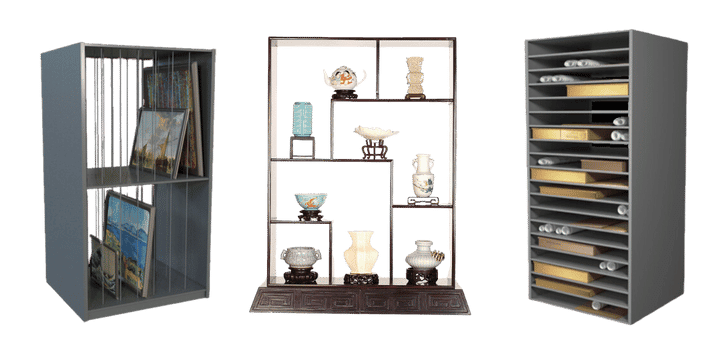
    • Bulky Items: Reinforced or open shelving for larger, heavy items.
    • Mixed Sizes: Configurable storage that accommodates a variety of item dimensions.
  • Access Needs:

    • Carts: Ensure aisles and pathways are wide enough for carts.
    • Rolling Ladders: Plan for vertical storage access if items will be stored above reachable heights.
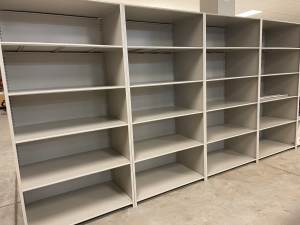
A large, empty shelving unit reminiscent of those used in the Utah Museum, featuring five columns and three rows of light-colored wood. It stands on a gray concrete floor with evenly spaced shelves, ready for storage or display against an off-white wall.

By addressing these considerations, museums can maximize their storage space while maintaining accessibility, security, and preservation standards. Chapter 3 provides a foundational approach to designing a storage space that meets diverse collection needs and physical constraints.

City skyline with tall buildings set against snow-capped mountains under a partly cloudy sky. The logo Material Handling USA appears in the upper left corner, highlighting our case studies and innovations in urban landscapes.

We Are MATERIAL HANDLING USA

At MATERIAL HANDLING USA, we specialize in providing innovative storage solutions that are tailored to your specific needs. As a trusted name in the material handling industry, we understand the importance of efficient storage planning and the role it plays in optimizing space and productivity. Our team is dedicated to helping architects, designers, and businesses create storage systems that are not only functional but also compliant with all federal regulations.

With years of experience in delivering high-quality storage products and services, we bring expertise and reliability to every project. Whether you’re taking the AIA Storage Planning Course or looking for customized storage solutions, MATERIAL HANDLING USA is here to support you every step of the way.

Contact MH USA today for personalized assistance and discover how our tailored museum storage solutions can improve your business operations. Let us help you maximize efficiency and cost-effectiveness with a solution designed specifically for you.