
Home › Manufacturing Material Handling Solutions
Manufacturing Material Handling Solutions
Storage and handling for the whole plant — receiving, line-side stock, kitting, assembly, the maintenance storeroom and shipping. Start here, then go deep on the system you need.
1997
Serving the West
50
States shipped
6
Plant zones covered
1
Point of contact
One Plant, Six Storage Problems

A manufacturing plant does not have a storage problem. It has six of them, and one product rarely solves them all: bulk raw material near receiving, work in process moving between cells, kits that need labeled locations, tooling that has to be found in seconds, a maintenance storeroom full of low-value parts whose only job is to be there at 2 a.m., and finished goods that stage, count and ship.
This page is the map: what a plant stores and moves, what belongs in each area, and how to choose between shelving, carts, workstations, rack, cages, mezzanines and offices. Where a topic deserves full treatment we link to the page that owns it.
MH-USA has laid out plant floors from Salt Lake City since 1997 and ships nationwide. Most of our manufacturing projects start the same way: a walk through the building with a notebook, counting how many times each part gets picked up before it becomes product.
What a Manufacturing Plant Actually Stores and Moves
Name the material before you specify anything. Each category behaves and fails differently when stored wrong.
| Material | How it behaves | What it needs | What goes wrong |
|---|---|---|---|
| Raw material | Arrives in bulk on pallets, coils, bars or gaylords; turns slowly in large units | Pallet rack, cantilever, bulk floor storage near receiving | Stored where the line runs, eating production floor |
| Work in process (WIP) | Moves in small batches between operations, several times a shift | Carts, shallow shelving, tote transport, staging lanes | Parks on the floor and becomes invisible inventory |
| Kits | Built for one job, consumed quickly, must be complete | Kitting benches, bin shelving, labeled locations, kit carts | Staged on random surfaces; one missing part stops the build |
| Tooling and fixtures | High value, low quantity, needed instantly | Tool crib, security shelving, shadowed drawers, sign-out | It walks, or turns up after the machine went down |
| MRO / maintenance stores | Thousands of low-cost SKUs, unpredictable demand | Bin shelving, labeled locations, min/max counting | No locations, so duplicates get bought and parts stay lost |
| Finished goods | Counted, packed and staged in shipping sequence | Rack, pallet staging, pick carts, packing stations | Staged in the dock aisle, damaged and miscounted |
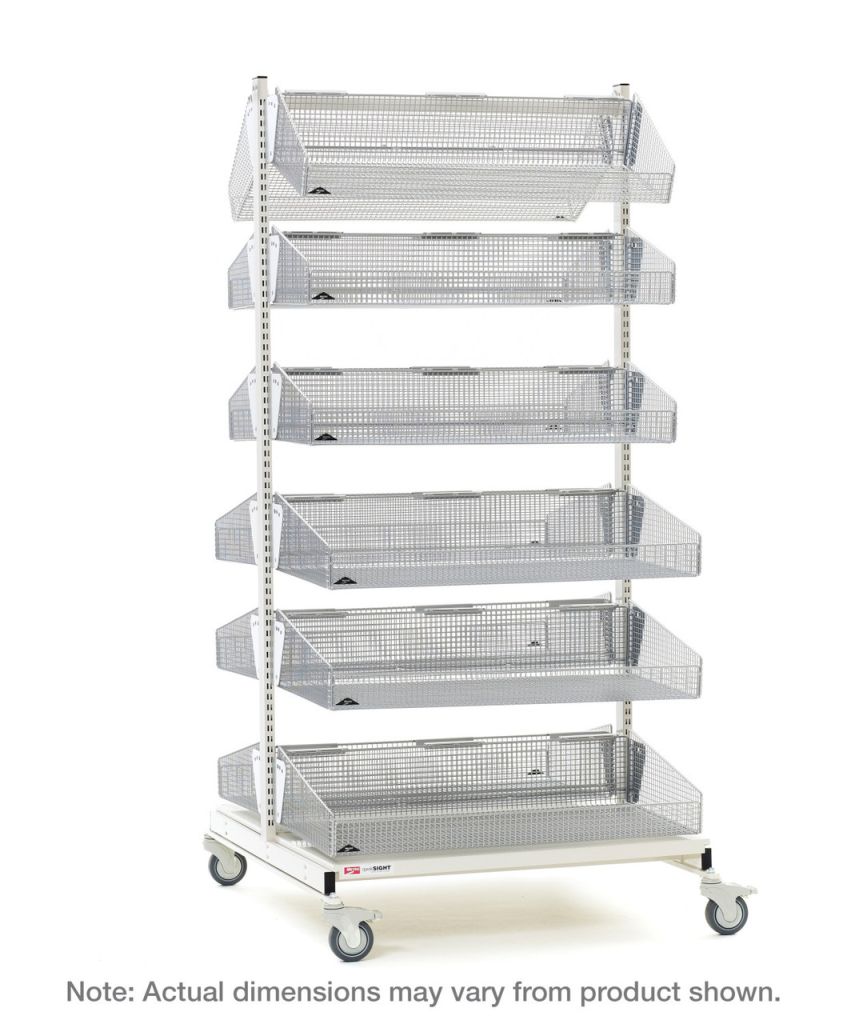
Two categories are under-served. Kitting is where labor compounds or evaporates: pulled from labeled bin locations at a bench sized for the job, a kit takes minutes; pulled from a wall of cases it takes ten and one part is missing. MRO is where money hides — a storeroom with no location system reorders parts it already owns while a machine waits.
The rule that pays for itself: store product at the smallest package the consuming operation needs. A case of fasteners belongs in the storeroom; two hours of fasteners belong at the bench in a bin.
Storage by Area: Receiving to Shipping
Walk the building in flow order. Storage belonging to a different zone is the most common cause of congestion.
Two zone rules matter more than product choice. Every zone needs a defined overflow location, or material lands in the nearest open floor space. And aisles are equipment: decide the handling method first, then draw the aisle.
Label discipline holds it together. A location system — aisle, bay, level, position — costs almost nothing next to the shelving, and it is what converts storage into inventory you can count.
Shelving and Cart Choices at the Line
At the line the decision is material, mobility and depth. Get those right and the rest is sizing.
| Material | Best in | Strengths | Watch out for |
|---|---|---|---|
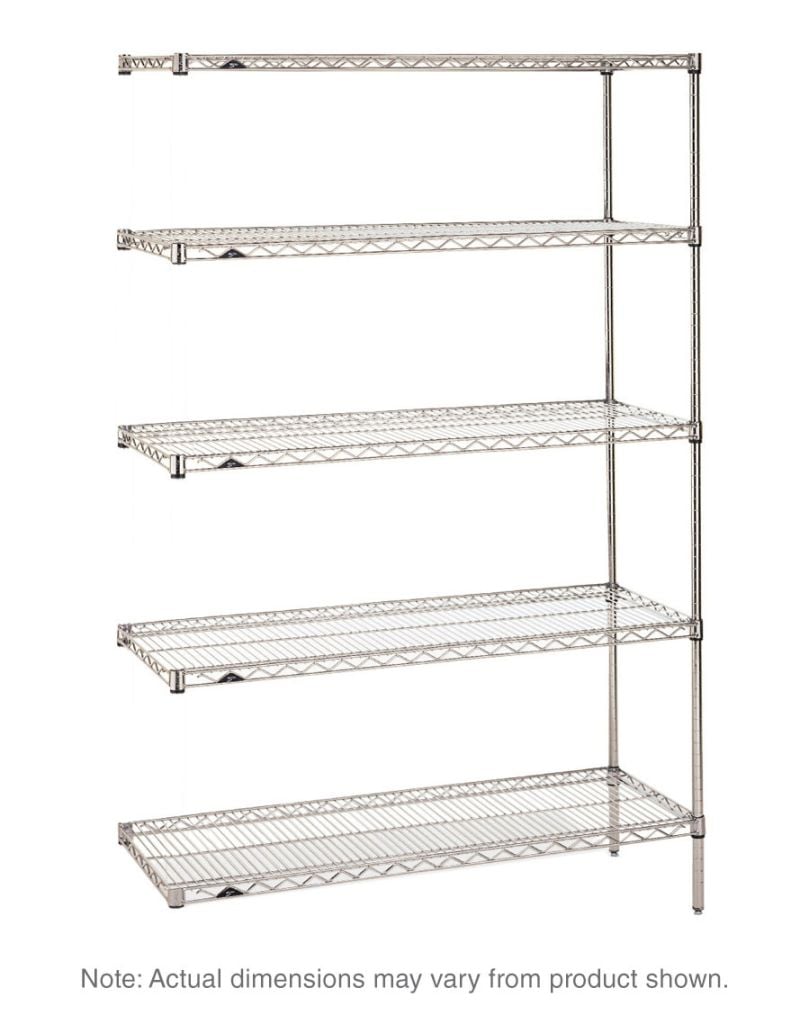
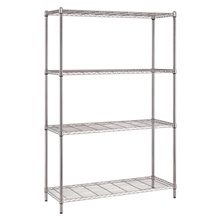
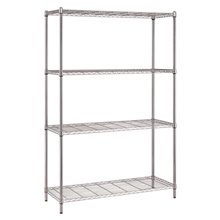
| Chrome / plated wire | Dry assembly, storerooms, general plant | Lowest cost per shelf, adjustable, open to air and light | Corrodes in wet or chemical areas; small parts fall through |
| Polymer | Washdown, coolant, humid or corrosive areas | Shelves lift out for cleaning, will not rust, reconfigure easily | Lower shelf load than heavy steel; not for point loads |
| Stainless steel | Food, pharma, cleanroom-adjacent, aggressive chemicals | Corrosion resistance and a wipe-clean surface | Highest cost; specify only where the environment requires it |
| ESD-safe | Electronics, PCB and static-sensitive assembly | Conductive shelving, carts, trays and casters for a grounded path | One non-ESD cart in the aisle defeats the whole program |
| Basket & bin shelving | Kitting, MRO, small-part picking | Parts stay visible and contained; fast to pick and count | Needs labels and dividers or bins end up mixed |
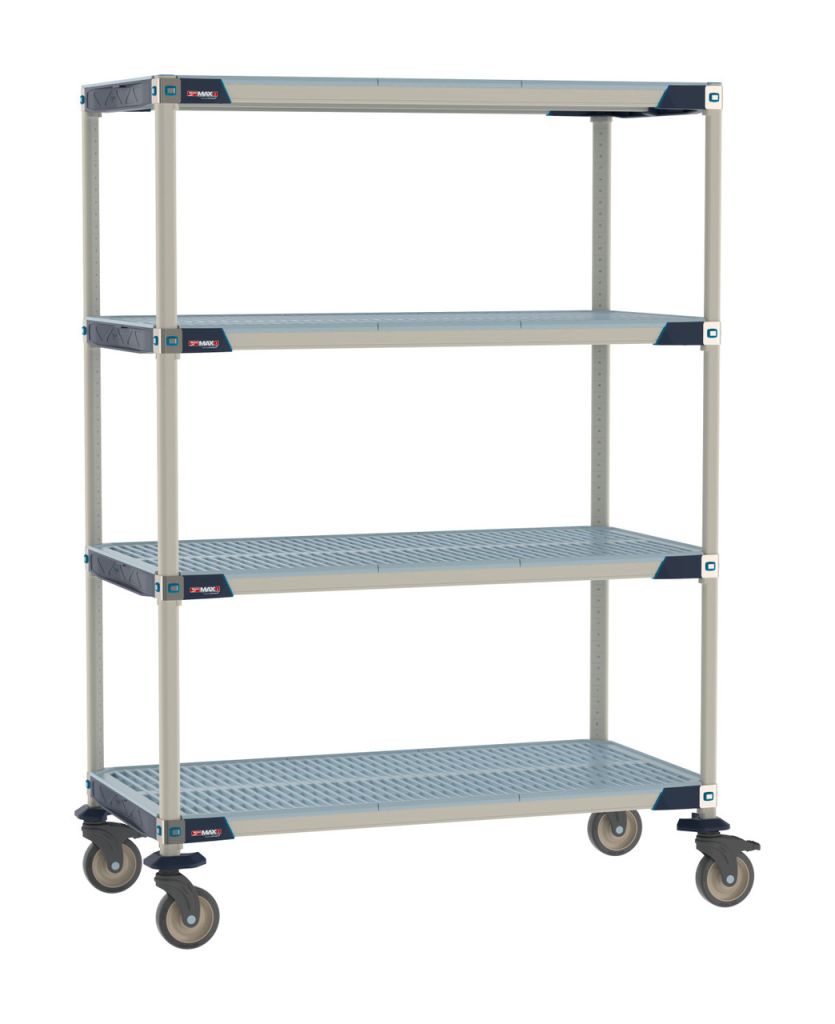
Mobility is next. Stationary units are cheaper and hold more; mobile units de-rate but let a cell be reconfigured over a weekend. Utility, feed, picking and enclosed transport carts each solve a different trip.
Depth is the one people get wrong. Deep shelves at the line look efficient and behave terribly: the operator picks front-only and the back row ages. Shallow shelves with more levels win almost everywhere.
For the full generic catalog of shelving families, sizes and finishes, see shelving solutions. Static-sensitive lines should start at ESD shelving and electronics storage, and boltless steel shelving for heavier plant loads is covered on manufacturing storage shelving.
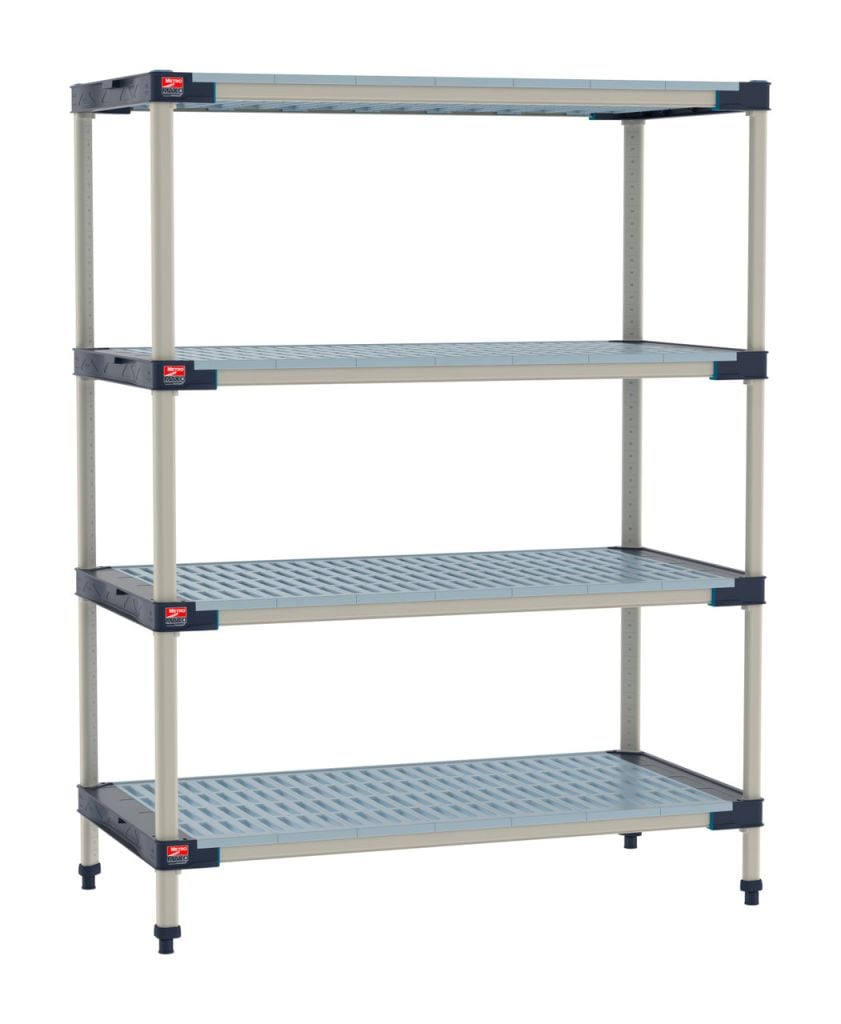 Polymer ShelvingRemovable shelves that go through a wash, wherever coolant or water reaches the storage.
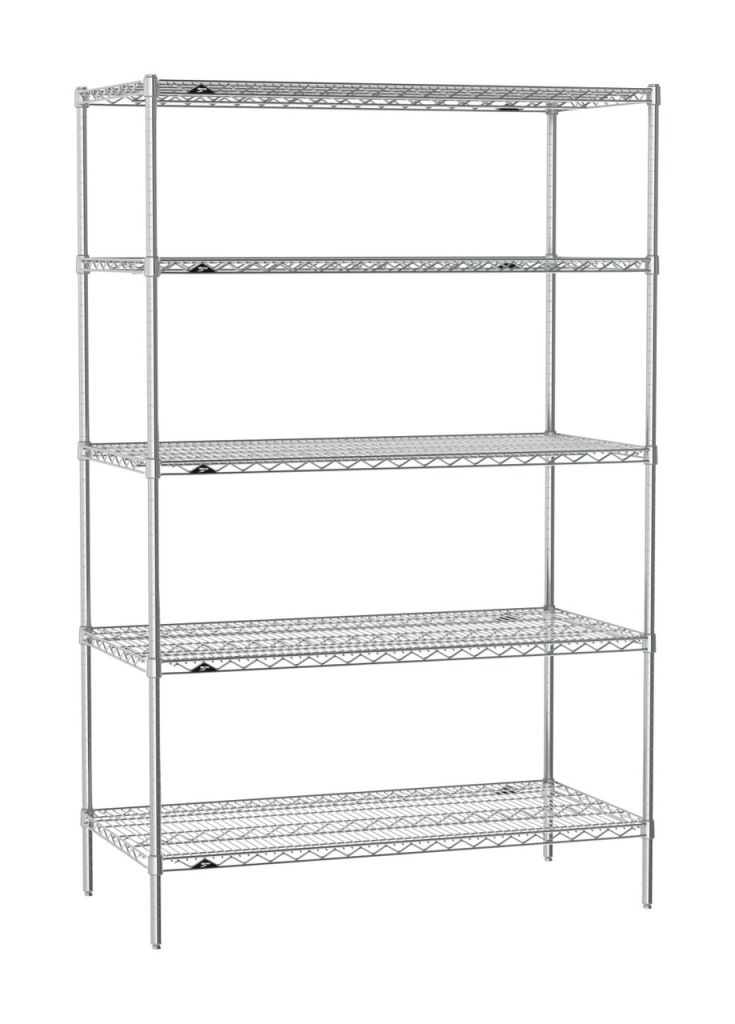 ESD-Safe ShelvingConductive shelving and casters keep a grounded path under static-sensitive parts.
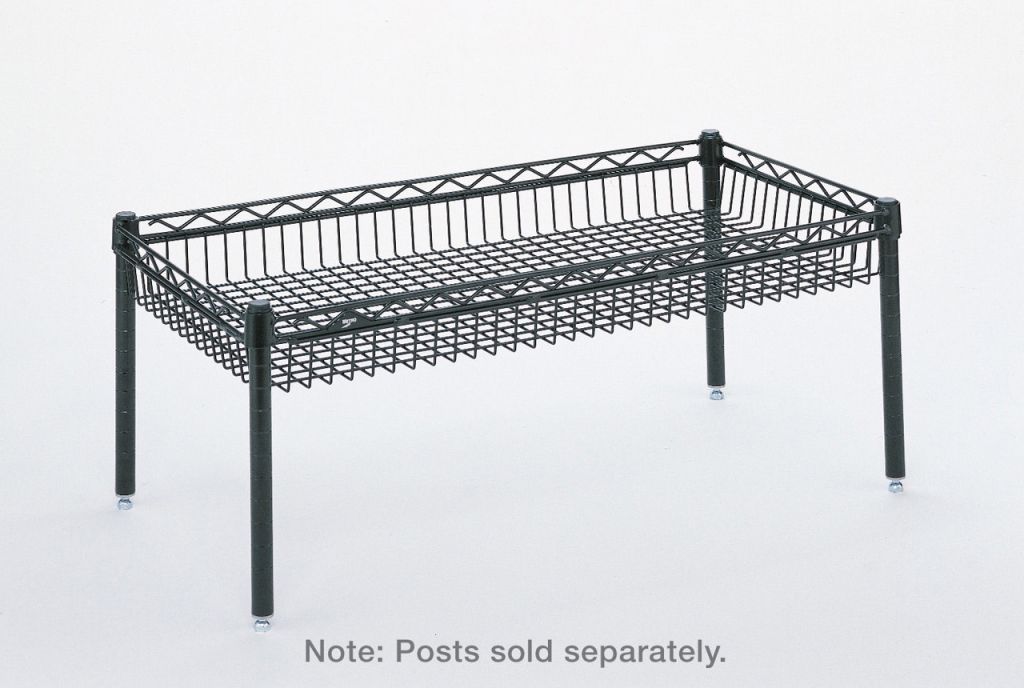 Basket and Bin ShelvingFront-facing small-part storage for kitting benches and the MRO storeroom.
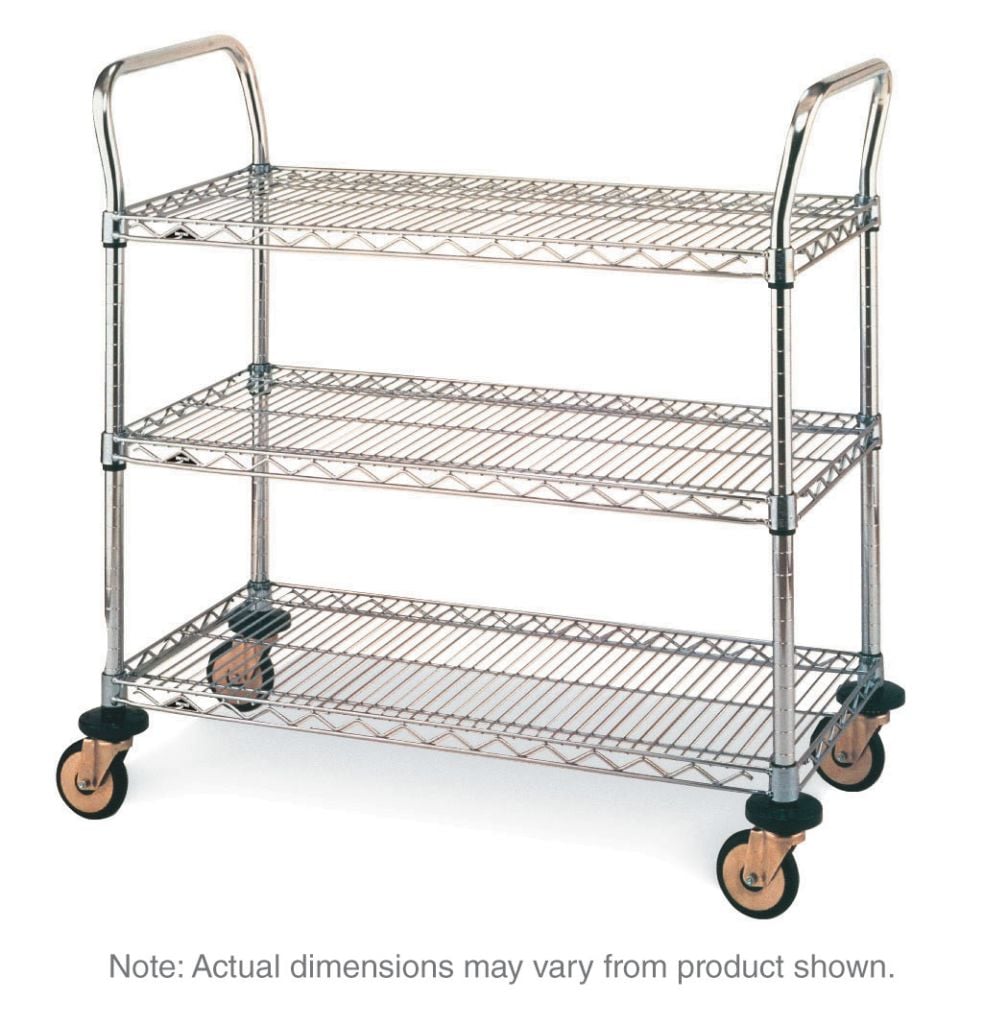 Utility and WIP CartsMove work in process between cells without staging it on the floor.
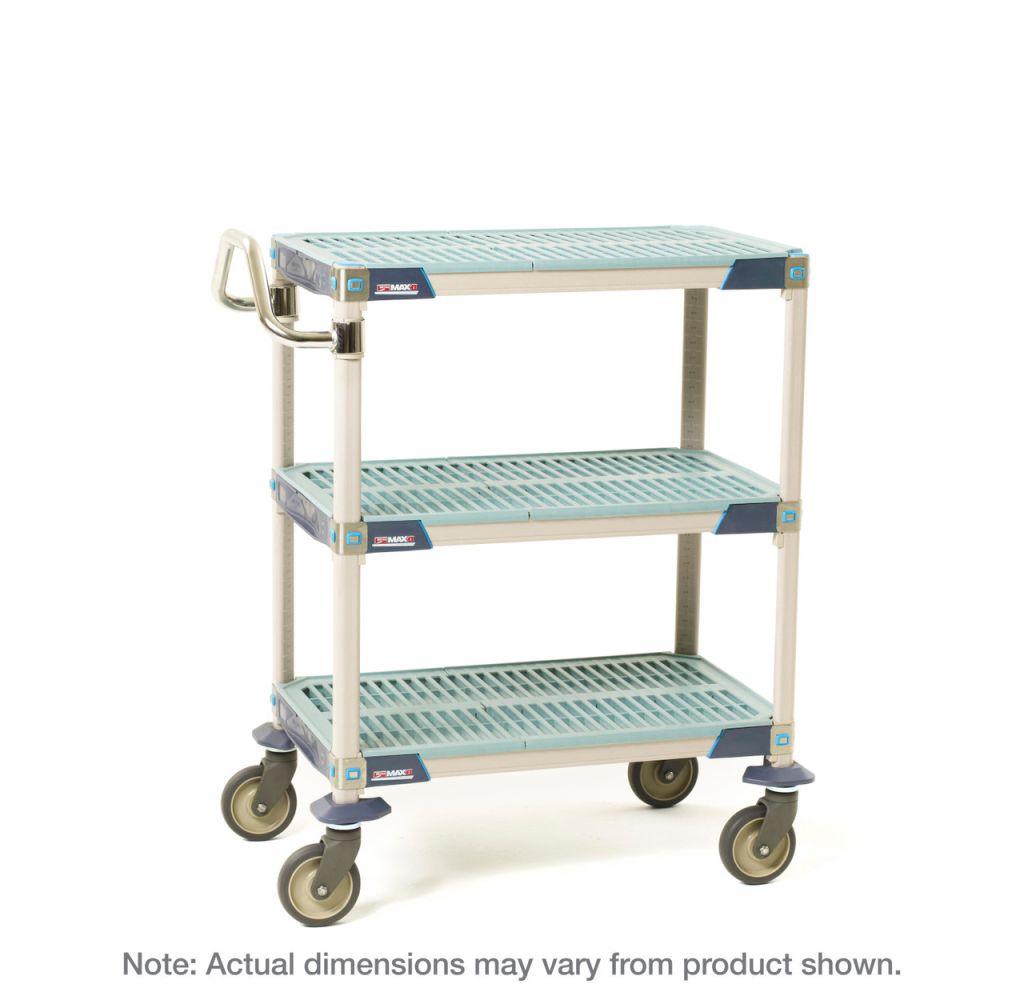 Line-Side Delivery CartsDeliver parts to the point of use and go back for the next round.
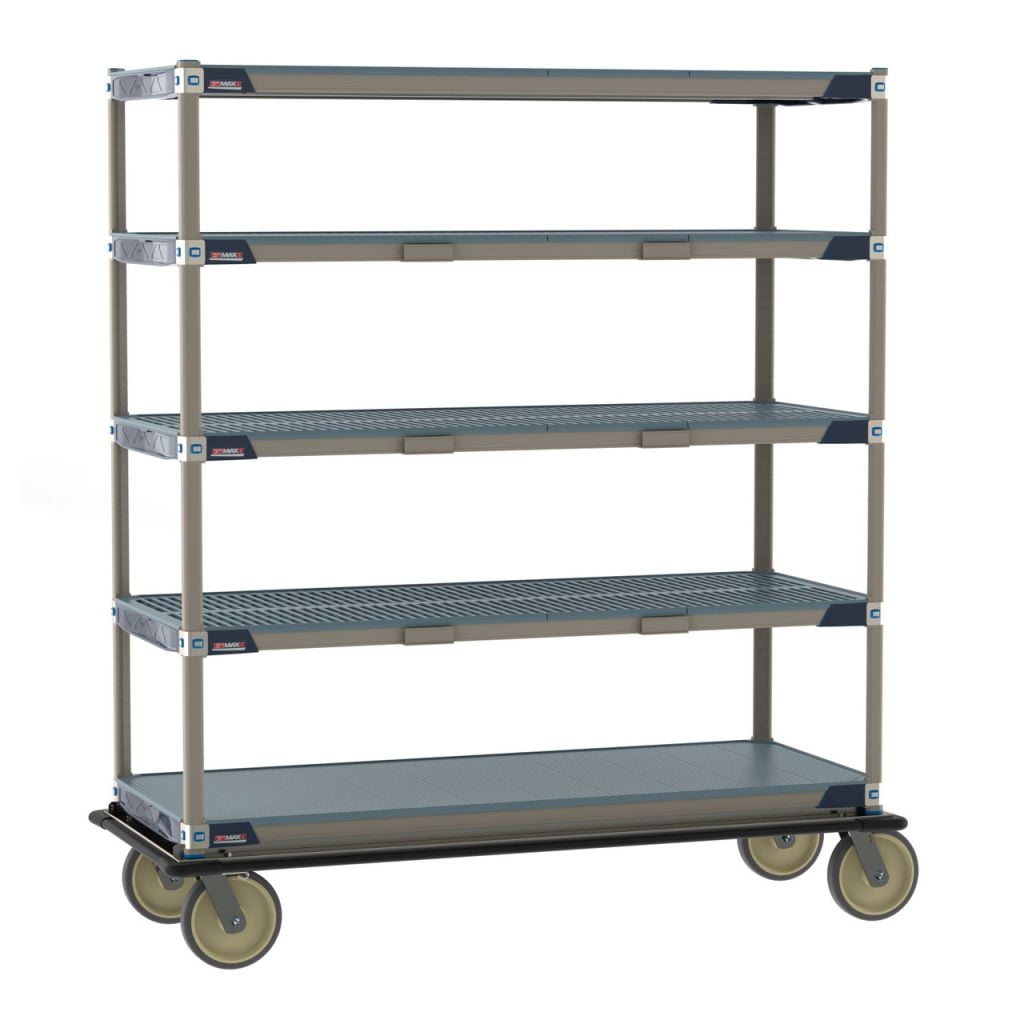 Enclosed Transport CartsProtect kits and sub-assemblies as they cross the plant.
Do not mix cart fleets
A plant with five kinds of cart has five kinds of caster, five shelf heights and no spare parts. Standardize on one or two cart platforms with common casters and accessories, and buy accessories rather than new cart types when a new need shows up.
Workstations and Assembly Benches
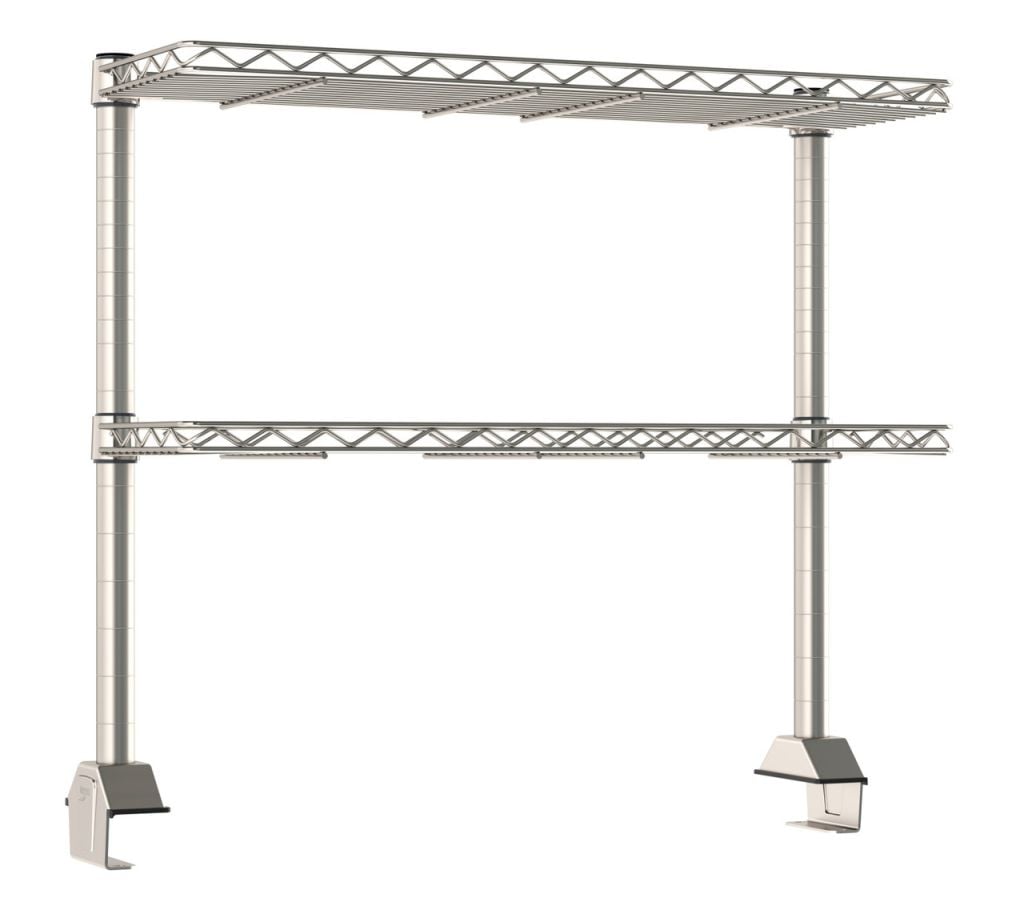
An assembly bench is a productivity device, not furniture. What matters is surface height, reach envelope, what sits above the surface and what the surface has to survive. Get height wrong and you buy fatigue and quality problems for the life of the cell.
Height first: seated precision work, standing assembly and heavy work want different surface heights, and a mixed-use cell wants an adjustable bench. Surface second: laminate for light dry assembly, steel or stainless where tools and fluids land, ESD-safe surfaces for electronics.
Above the surface is where benches are won. A riser with cantilevered shelves gets bins, fixtures and instructions off the work surface and into the operator’s line of sight. Task light and power belong on the riser, not clamped to the bench edge.
The detailed treatment of bench types, heights, accessories and cell layout lives on assembly workstations.
Pallet Rack and Bulk Storage
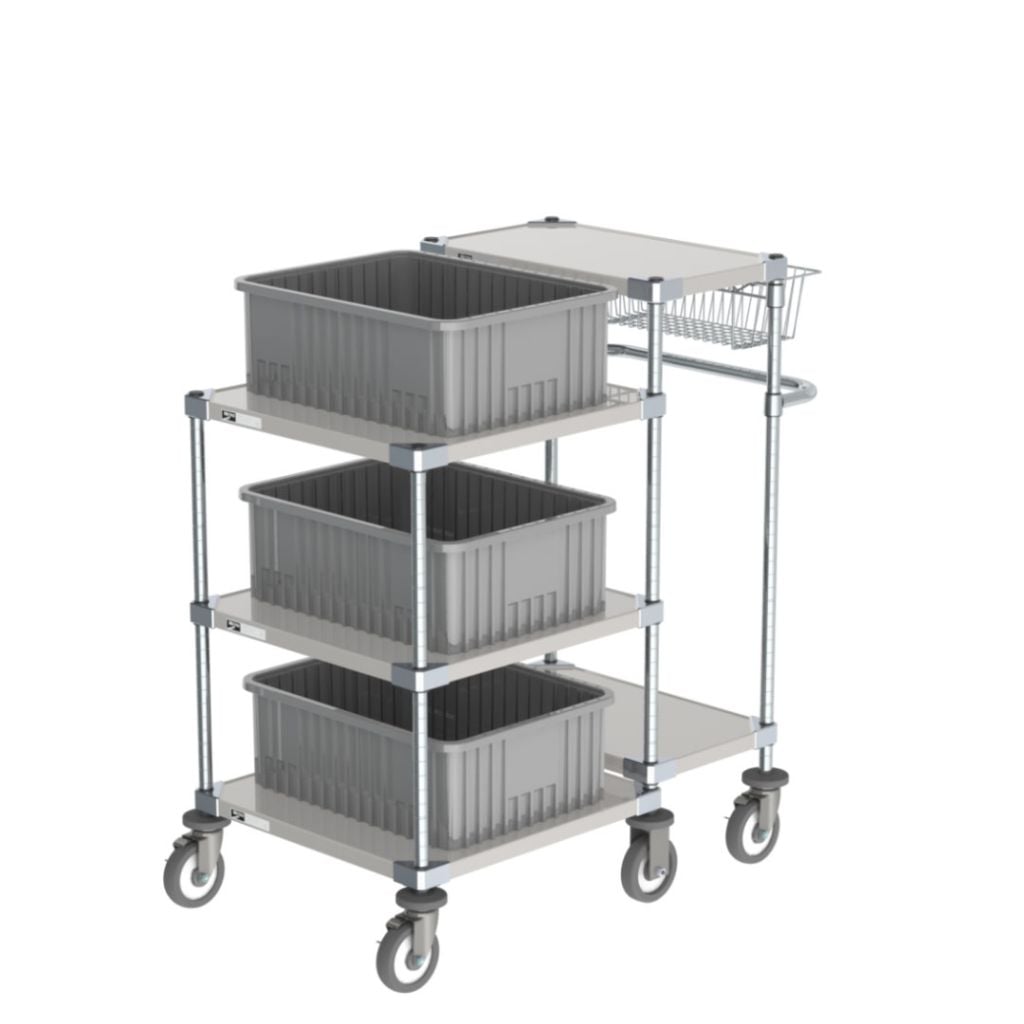
Everything that arrives or leaves on a pallet belongs on rack, not the floor. Selective rack is the default: every pallet is directly accessible and it is easiest to reconfigure. Where the plant stores many pallets of few SKUs, drive-in, push-back and pallet-flow trade access for density.
Long, awkward material — bar stock, tube, extrusion, sheet goods — belongs on cantilever rack, which carries it on arms with no front column in the way. Bulk shelving and stack racks cover what is too big for shelving and too small for a pallet position.
Three numbers drive every rack quote: the heaviest pallet load, the clear height available under sprinklers and lights, and the lift equipment’s aisle requirement. Rack for manufacturing plants specifically is covered on pallet rack for manufacturing storage.
Two habits keep rack safe: protect every upright a forklift can reach, and repair damage rather than live with it. A creased column is not cosmetic.
Not sure which of these your plant needs first?
Send a floor plan or a few photos and we will walk the flow with you, mark the zones that are costing you labor, and quote the package in the order it should be installed.
Security Cages and Controlled Tool Cribs

Controlled storage exists for three reasons, and the reason picks the product. Accountability — knowing who has the fixture — needs sign-out discipline and defined locations more than a lock. Loss prevention needs a real barrier. Segregation — quarantine, customer-owned or hazardous material — needs a defined, restricted area.
The lightest solution is security shelving: enclosure panels and locking sliding doors turn a standard unit into a lockable cabinet in the same footprint, stationary or mobile. Whole areas — a tool crib, a hazmat corner, a dock cage — use welded wire partitions.
A good tool crib has a location for every item, one controlled door, a pass-through, and a sign-out method somebody enforces. Perishable tooling belongs on min/max like MRO.
For welded wire partitions, dock cages and full plant enclosures, see manufacturing security cages.
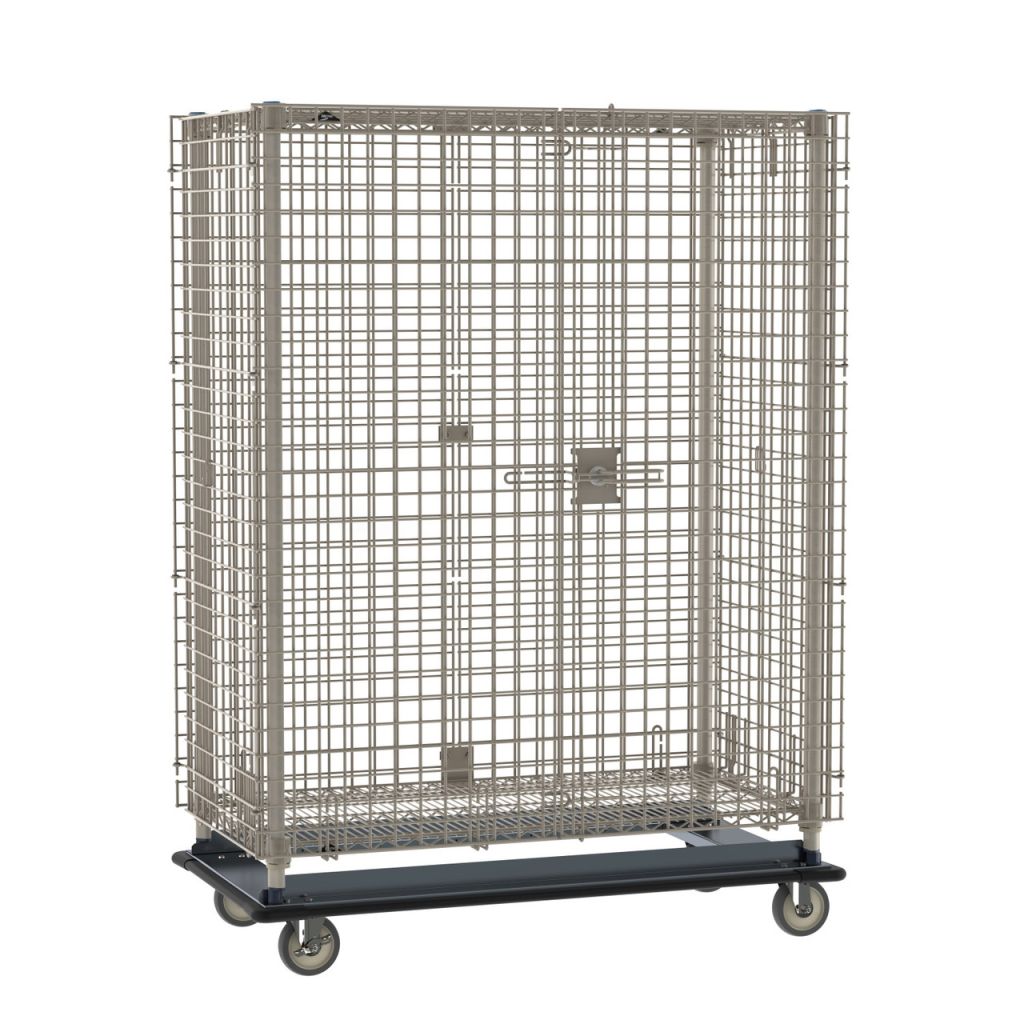 Heavy-Duty Mobile Security UnitsLockable mobile units for tooling that moves with the cell.
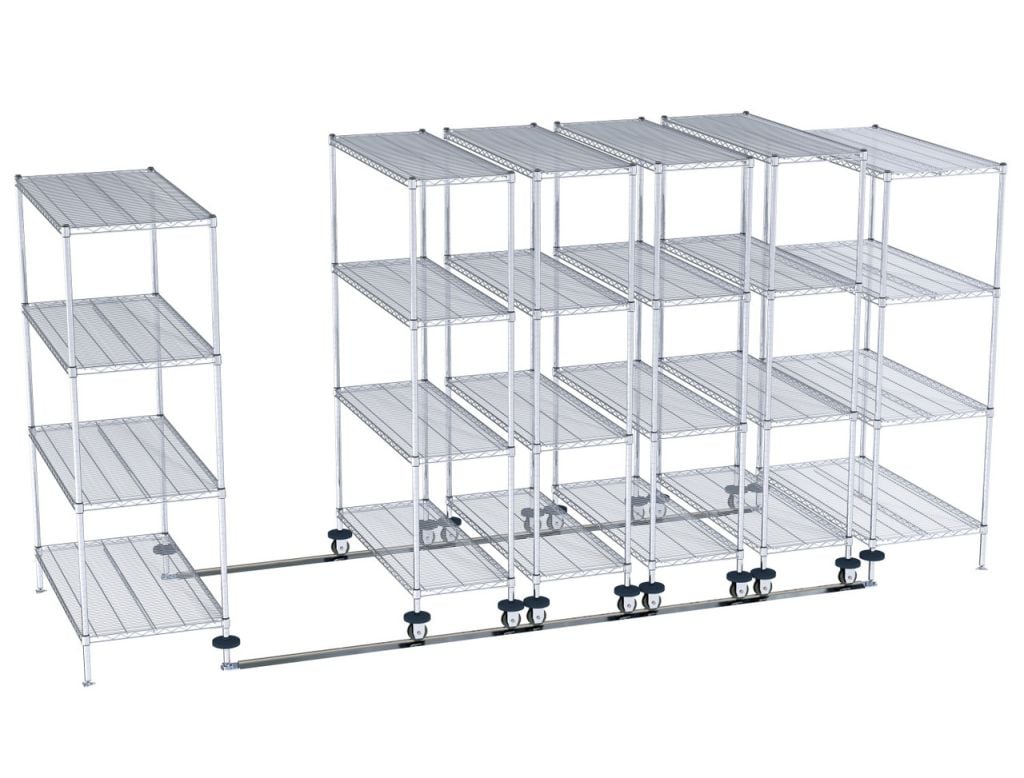 High-Density Track ShelvingClosing empty aisles recovers floor space without a building change.
 Enclosure PanelsClose in an existing unit so high-value stock is not open to the aisle.
Mezzanines, In-Plant Offices and Floor-Space Recovery
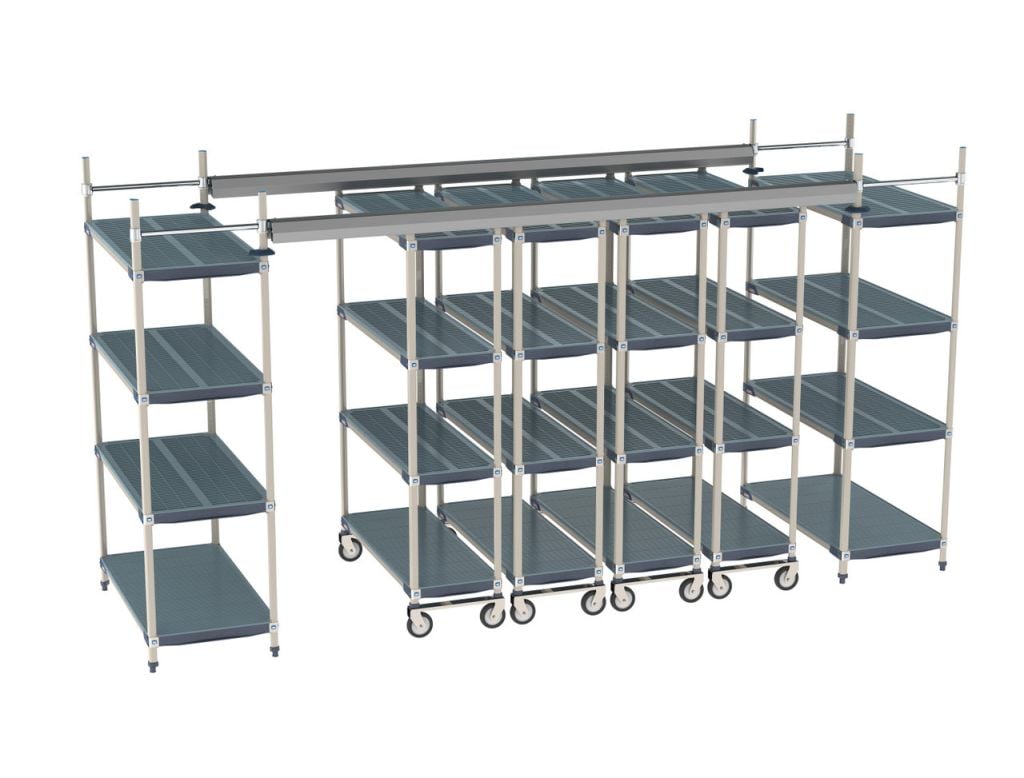
When a plant runs out of room, the first instinct is to lease more building — usually the most expensive option available. Most plants have unused cube above head height and floor space consumed by storage that could be denser.
Mezzanines add a second level over an existing area — a storeroom, a packaging line, a tool crib — with stairs, handrail and a material gate or a lift for getting product up and down. They are a structure, so expect permits, egress review, drawings and lead time rather than a quick install.
In-plant offices and modular rooms put supervision, quality, training and meeting space on the floor without pouring foundations or framing walls. Pre-engineered modular buildings are relocatable, can be climate-controlled, and can be stacked or built under a mezzanine. See manufacturing modular buildings.
Density is the cheapest recovery: track shelving closes the empty aisles between units, narrower aisles reclaim travel space, and taller storage uses cube you already pay for. To put numbers on it, use the manufacturing floor space recovery calculator.
Seismic Anchoring in Utah
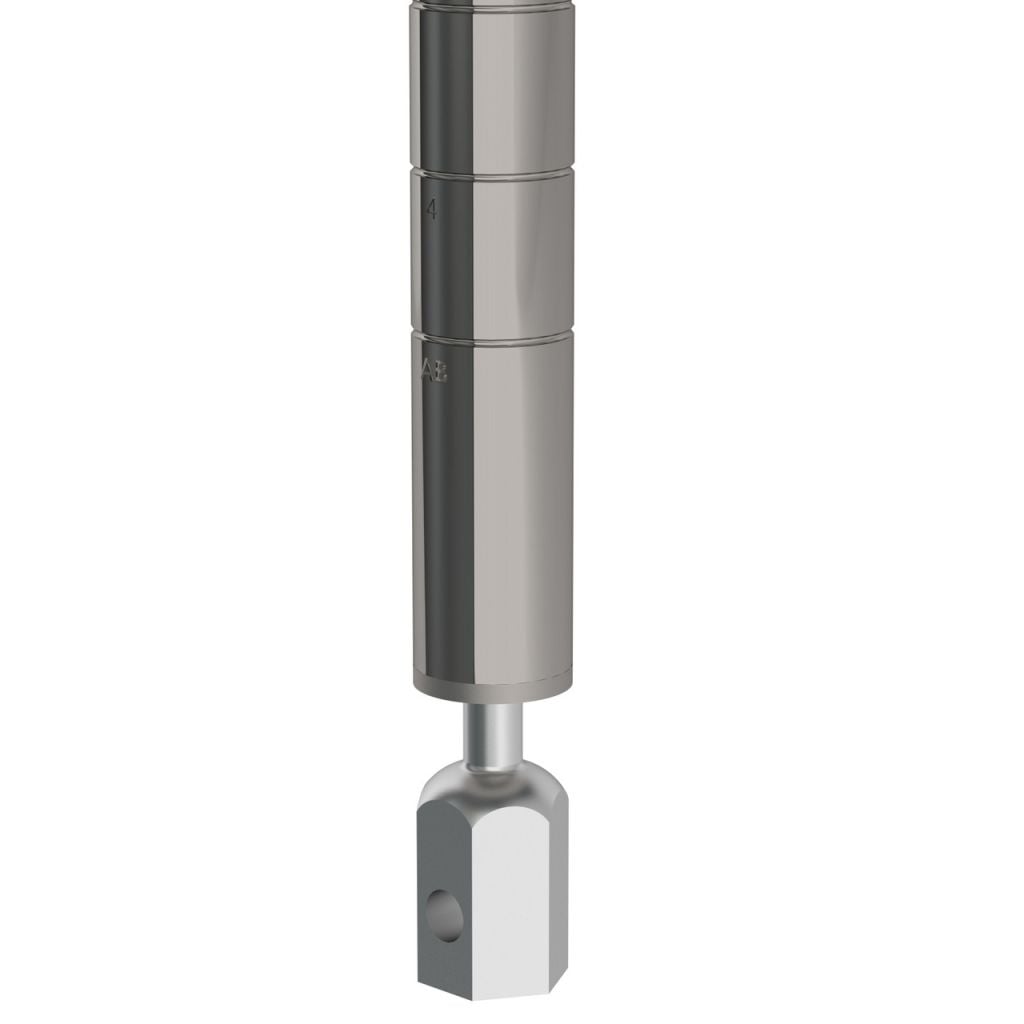
Utah plants sit in an active seismic region along the Wasatch Front, and storage is one of the things building departments look at. Tall shelving and rack are heavy and top-loaded, and unanchored they are among the first things to move in an earthquake — a life-safety issue in the aisles where people work before it is an inventory issue.
Anchoring is a system, not a bolt. Seismic posts, base plates, post clamps that tie adjacent units together, foot plate kits and sway brace kits exist so a unit transfers load into the slab instead of walking across it. Rack adds its own footplates, anchors and row ties.
Sort out three things early: the slab, the height-to-depth ratio of the unit, and whether the jurisdiction wants an engineer-stamped drawing — that last one drives schedule more than product availability. The habit that pairs with anchoring: heavy on the bottom, light on top, nothing above the top shelf.
Where Do I Start?
Plant storage projects fail when they start with a product catalog and succeed when they start with a walk.
Walk the flow
Follow one part from the receiving door to the shipping door. Write down every place it is set down.
Count the touches
The zone with the most touches and searches is where the money goes. That is your first project, regardless of how it looks.
Fix locations before buying
Label and define locations with what you already own. Half of most storeroom problems disappear, and the rest become obvious.
Size to real demand
Store what the zone consumes per shift at the point of use — not a case, not a pallet.
Phase the purchase
Shelving, carts and workstations install in days; rack, mezzanines and offices take weeks. Buy the fast items first.
Re-walk in 90 days
Look for material back on the floor. That is the zone whose overflow location you never defined.
Plant-Walk Checklist
Answer every line for each zone before anybody quotes anything.
- Is anything stored directly on the floor? Photograph each spot — that is unplanned storage demand.
- Does every stored item have a labeled location, and does the label match what is actually there?
- Is line-side stock sized in shift quantities, or are pallets parked at the line?
- Where does a zone overflow to when it is full, and has anybody decided that on purpose?
- Is there a defined, controlled location for tooling, fixtures and gauges, with a sign-out method?
- Does the MRO storeroom have min/max levels and a counting routine?
- Does storage in wet or coolant areas match the environment, or is it rusting?
- Are static-sensitive parts on ESD-safe shelving and carts from receiving to the line?
Shop Plant Storage Products Online
Buy select items directly from our online store, or request a quote for volume, custom sizes and freight-rated orders.


Go Deeper: Manufacturing Storage Pages
Each page below owns its subject in full detail.
- Advanced manufacturing storage solutions — the full cluster for precision, electronics, medical device and aerospace manufacturing
- Parts storage and kitting — kit design, bin strategy and small-part location systems in depth
- Material handling for robotic manufacturers — storage and presentation around automated cells
- Metro shelving, carts and workstations — the brand catalog behind much of the equipment shown on this page
Manufacturing Storage FAQ
Where should a manufacturing plant start with a storage project?
What is the difference between line-side and storeroom storage?
Which shelving material should we use on the plant floor?
How much weight can industrial shelving hold?
Does shelving need to be anchored in Utah?
Do you handle layout, installation and phasing?
Get a Plant Storage Plan
Send a floor plan, a parts list or a few photos. We will walk the flow, quote the package and phase the install around your production schedule.