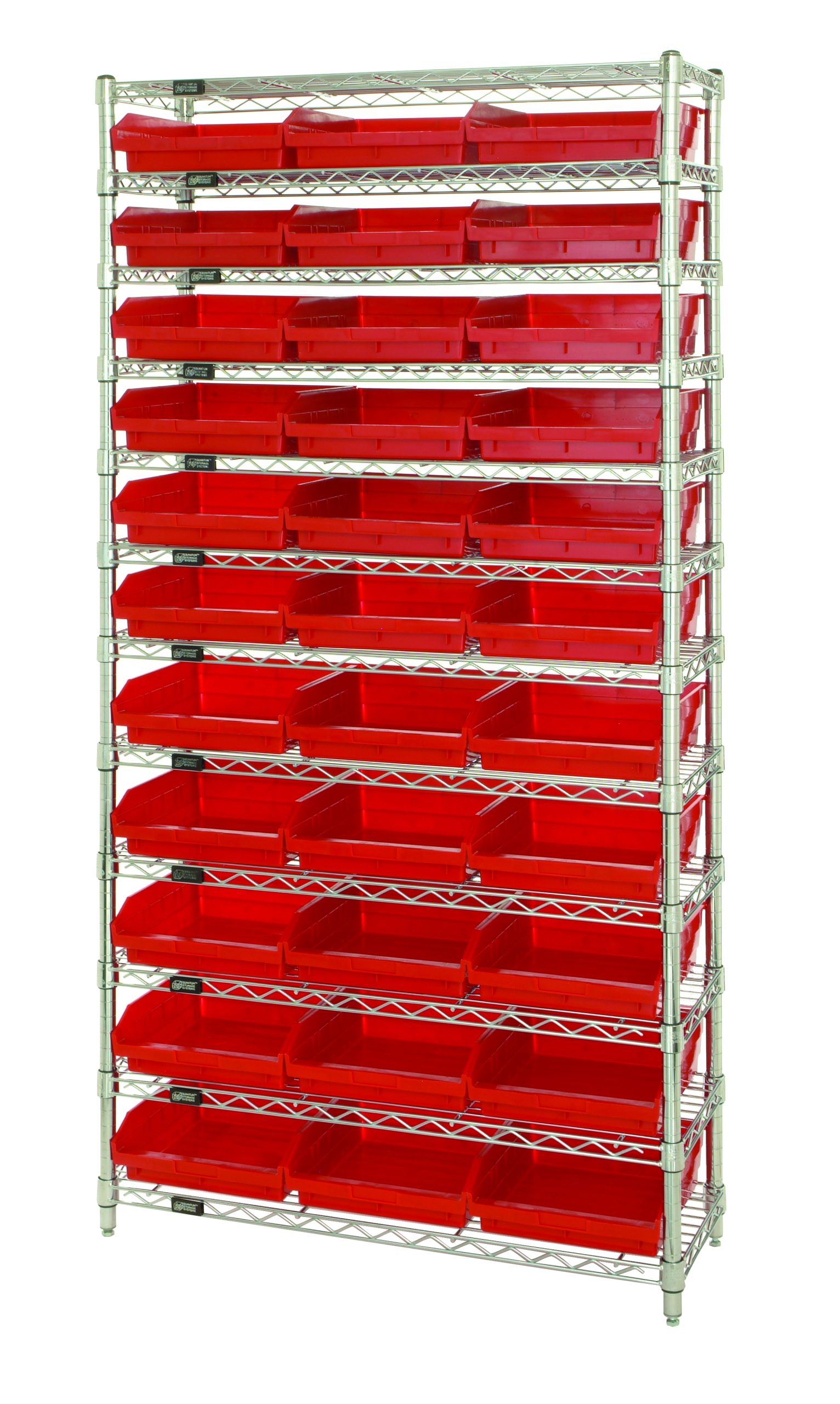
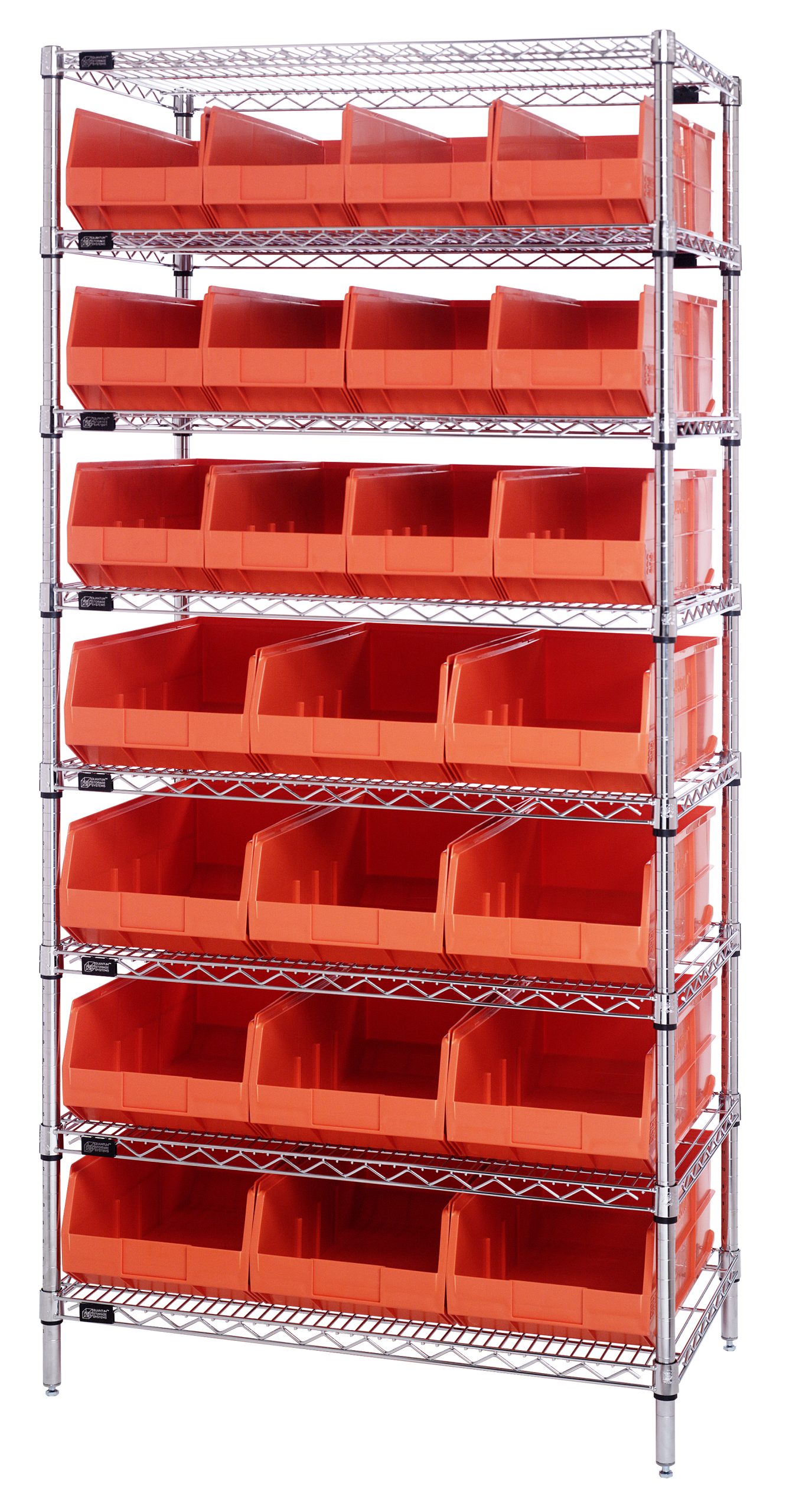
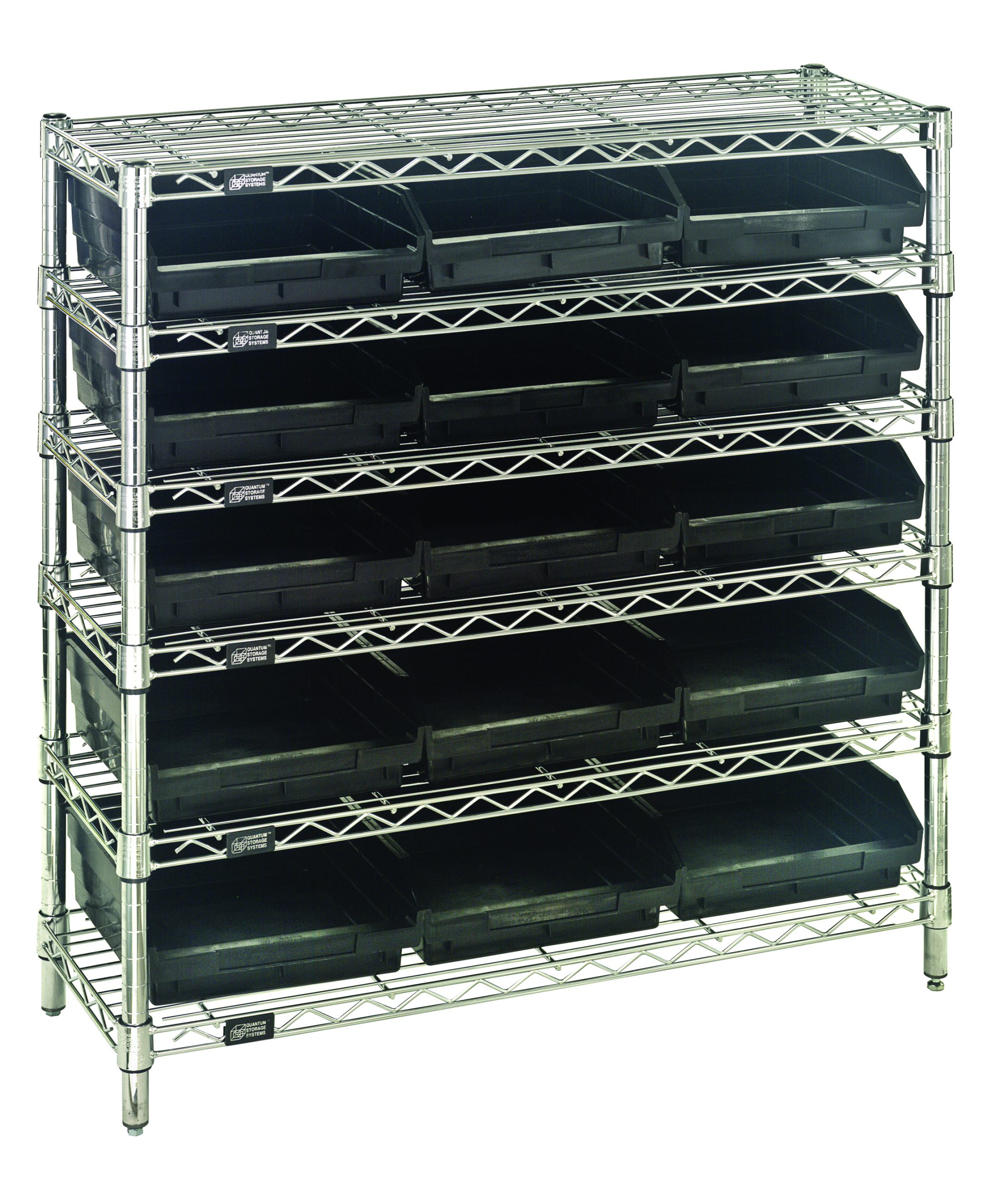
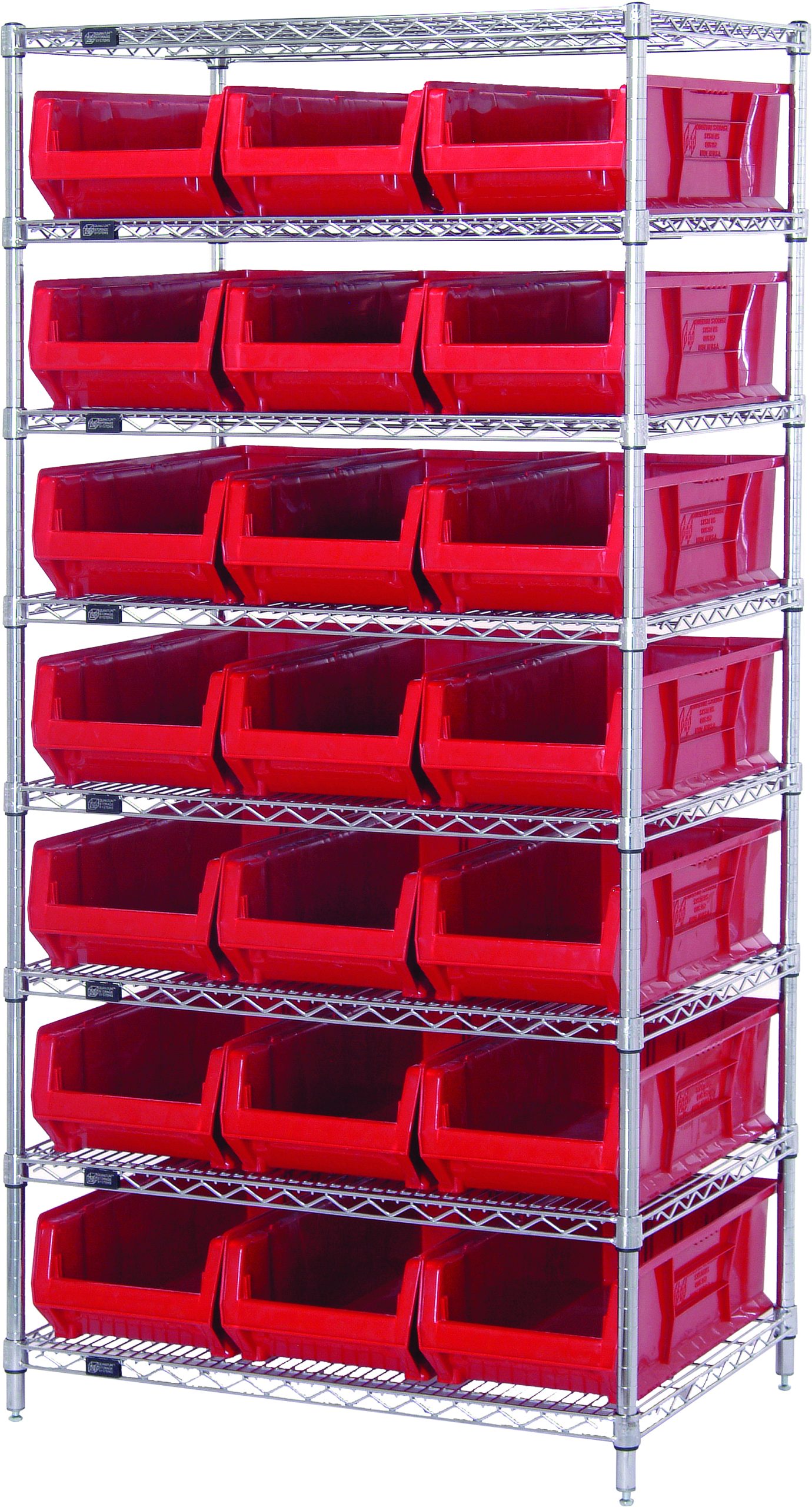
Parts Storage & Kitting Solutions for Manufacturing
Kitting carts, kitting stations, point-of-use bins, line-side supermarkets and high-density small-parts storage — designed around how your work orders actually release to the floor.
Talk with a specialist. Call (800) 326-4403 or email Sales@MH-USA.com
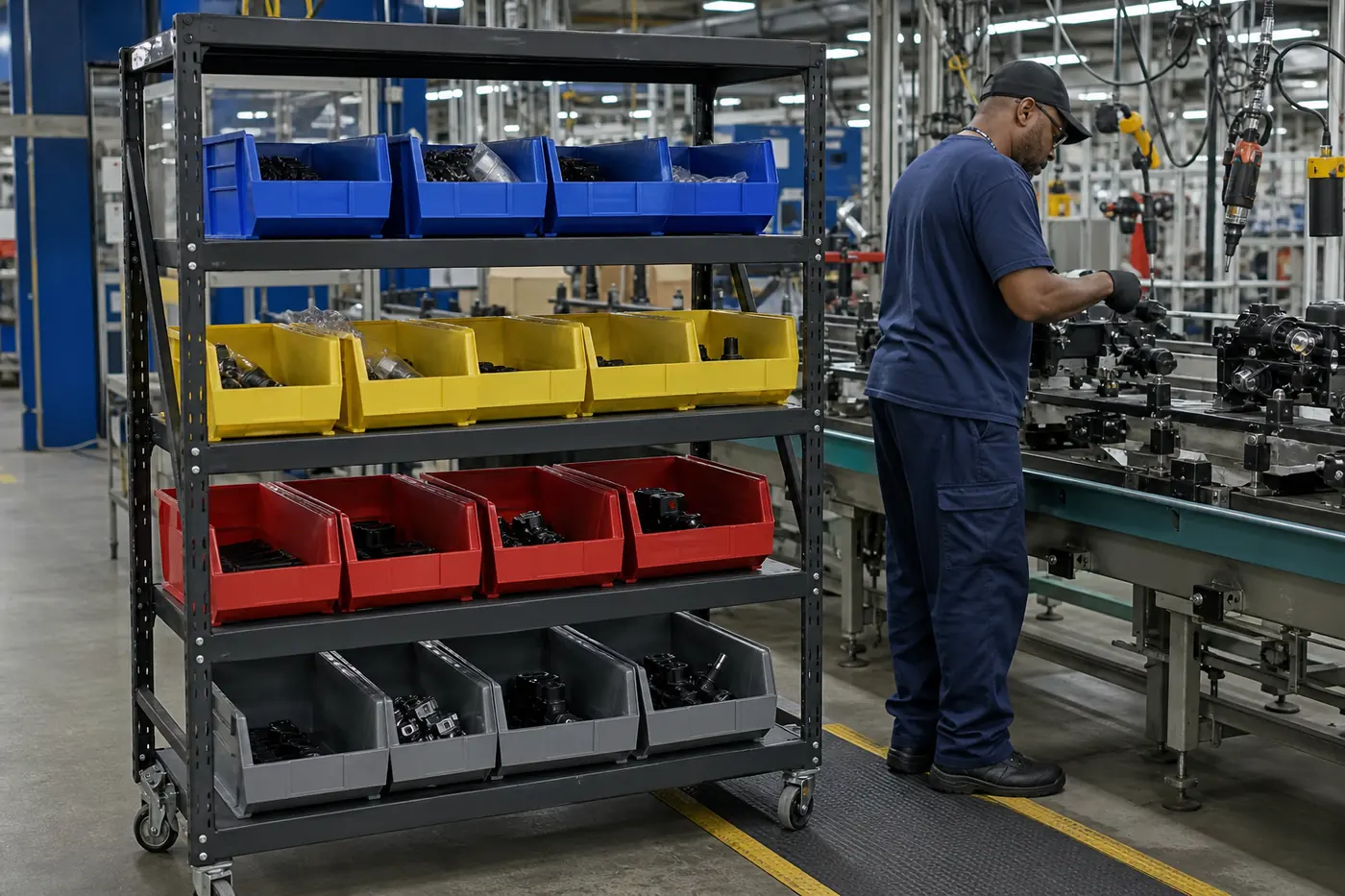
Production Kitting Starts With Where the Parts Live
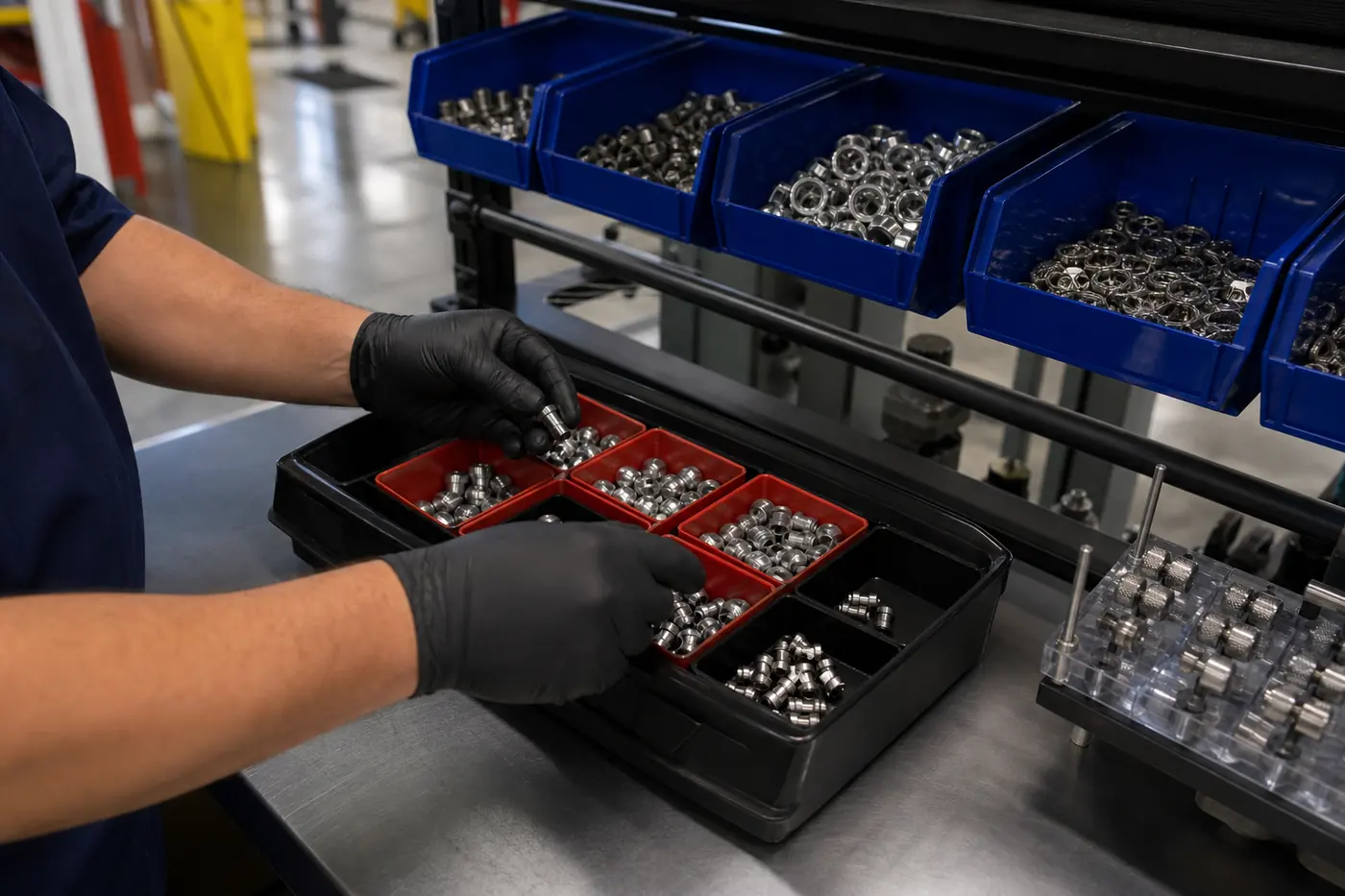
Kitting is the practice of gathering every component a work order needs into one container — a tray, a tote, a cart, or a shadowed insert — before that work order reaches the assembly cell. Done well, the assembler never leaves the station, never hunts for a fastener, and never builds a unit that has to be reworked because a revision-B bracket got mixed with revision-A stock.
Most kitting problems are not kitting problems. They are storage problems wearing a kitting costume. If the parts are spread across three buildings, stored in unlabeled corrugate on the floor, or buried behind slow-moving stock in the same shelving bay, no amount of process discipline will make the kit accurate. The fix starts with slotting and storage media, then works outward to carts, stations, and replenishment loops.
Material Handling USA designs those systems for manufacturers, contract assemblers and equipment OEMs across Utah and the Mountain West. We look at your bills of material, your release schedule, and your floor plan together, then specify the storage and handling equipment that supports the flow you actually run — not a catalog page.
The Six Building Blocks of a Kitting System
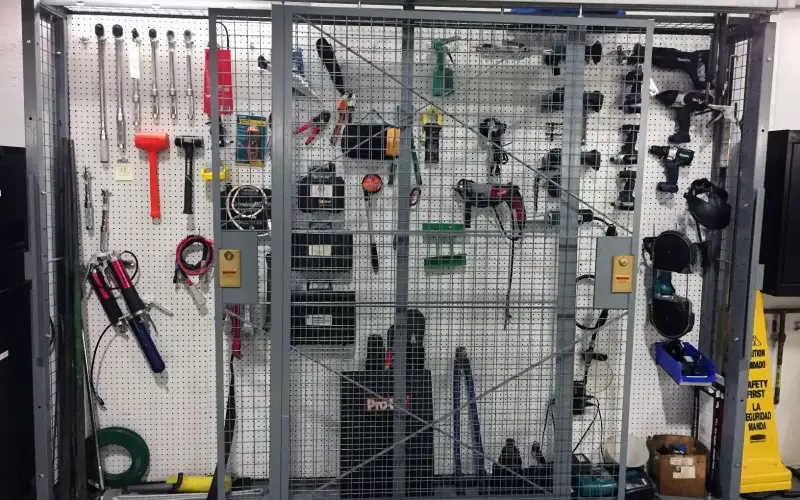
Nearly every production kitting operation is assembled from the same six elements. The design work is deciding how much of each you need, and where each one sits relative to the line.


Kit It, or Keep It Line-Side? A Practical Rule
The most common design mistake is kitting everything. Kitting adds a touch: someone picks the part, someone stages it, someone transports it. That touch is worth paying for when it removes ambiguity or travel from the assembler — and pure waste when it doesn’t. Use part characteristics to decide, and revisit the decision whenever the product mix changes.
| Part characteristic | Better kitted | Better point-of-use |
|---|---|---|
| Unit value | High — you want it counted and traceable | Low — counting costs more than the part |
| Variety across models | Many similar-looking variants per model | Common to every model built on the line |
| Error consequence | Wrong part means teardown or rework | Wrong part is caught instantly and swapped |
| Size / cube | Small enough to fit the kit container | Bulky, or consumed in loose quantity |
| Traceability | Serialized, lot-controlled or revision-sensitive | Commodity hardware, no lot control required |
| Storage footprint at the line | No room for a permanent location at the cell | A bin rail at the bench is enough |
The practical outcome is usually a hybrid: serialized and model-specific parts travel in the kit, commodity hardware lives in two-bin kanban at the station, and bulky components are staged separately on a pallet position or cart beside the cell. Design the storage for all three streams at the same time, or the ones you ignore will end up on the floor.
Four Kitting Models — and the Storage Each One Needs
The way you release work orders determines the equipment. Pick your model first; the hardware list falls out of it.
Batch kitting
One kitter builds many identical kits in a run. Needs a deep pick face, a staging lane for completed kits, and enough cart parking that a whole batch can wait without blocking an aisle.
Sequential / build-to-order kitting
One kit per unique work order, released in build sequence. Needs a compact pick face reachable without walking, clear labeling for near-identical variants, and a scan step at pack-out.
Traveling kit
The cart moves with the unit through several stations. Cart ergonomics and casters matter more than anything else here, and each station needs a defined cart position that keeps egress paths clear.
Kanban replenishment (no kit)
Parts are pulled from line-side bins and replenished on a signal. Needs disciplined bin sizing, two locations per SKU, and a supermarket close enough that the replenishment loop stays short.

Designing the Kitting Station Itself
A kitting station is a small warehouse with one operator in it. Everything that makes a pick module work — travel, reach, labeling, lighting, replenishment access — applies at bench scale.
- ✓Golden zone first. The fastest-moving SKUs belong between roughly hip and shoulder height, directly in front of the operator. Slow movers go high or low.
- ✓One label standard. Part number, description and a scannable code on every location and every bin — not handwriting, not memory, not “the blue tote.”
- ✓Separate look-alike parts. Never slot two visually similar variants adjacent to each other. Physical distance is the cheapest error-proofing available.
- ✓Replenish from behind or from above. Restocking should never interrupt picking, and the restocker should never have to enter the kitter’s work envelope.
- ✓Define an empty-cart in and full-cart out position. If completed kits have no home, they end up in the aisle.
- ✓Light the work surface, not the ceiling. Small-parts identification is a visual task; general high-bay lighting is rarely sufficient at the bench.
- ✓Verify at pack-out. A scan, a weight check or a shadowed tray that visibly shows a missing part — pick one and apply it to every kit.

Common mistakes we see on plant walks
Kitting from the same rack the line picks from. Two people competing for one pick face turns into waiting, blocked aisles and miscounts.
Carts sized for the biggest kit ever built. Oversized carts eat aisle width and floor space every day to accommodate an exception that happens quarterly.
No location for empty containers. Empty totes and carts accumulate faster than anyone plans for; give them a marked return lane.
Growth handled by adding shelving in the aisle. When the pick face outgrows the space, the answer is density or a second level — not narrowing the travel path.
Service & Spare Parts Warehouses for Equipment OEMs
If you build capital equipment, your aftermarket parts operation has a different problem than your production line. Demand per SKU is low and unpredictable, the SKU count only grows — every machine you have ever shipped has to stay supported — and order lines are small. Slotting by velocity alone breaks down, because most of the catalog has almost no velocity at all.
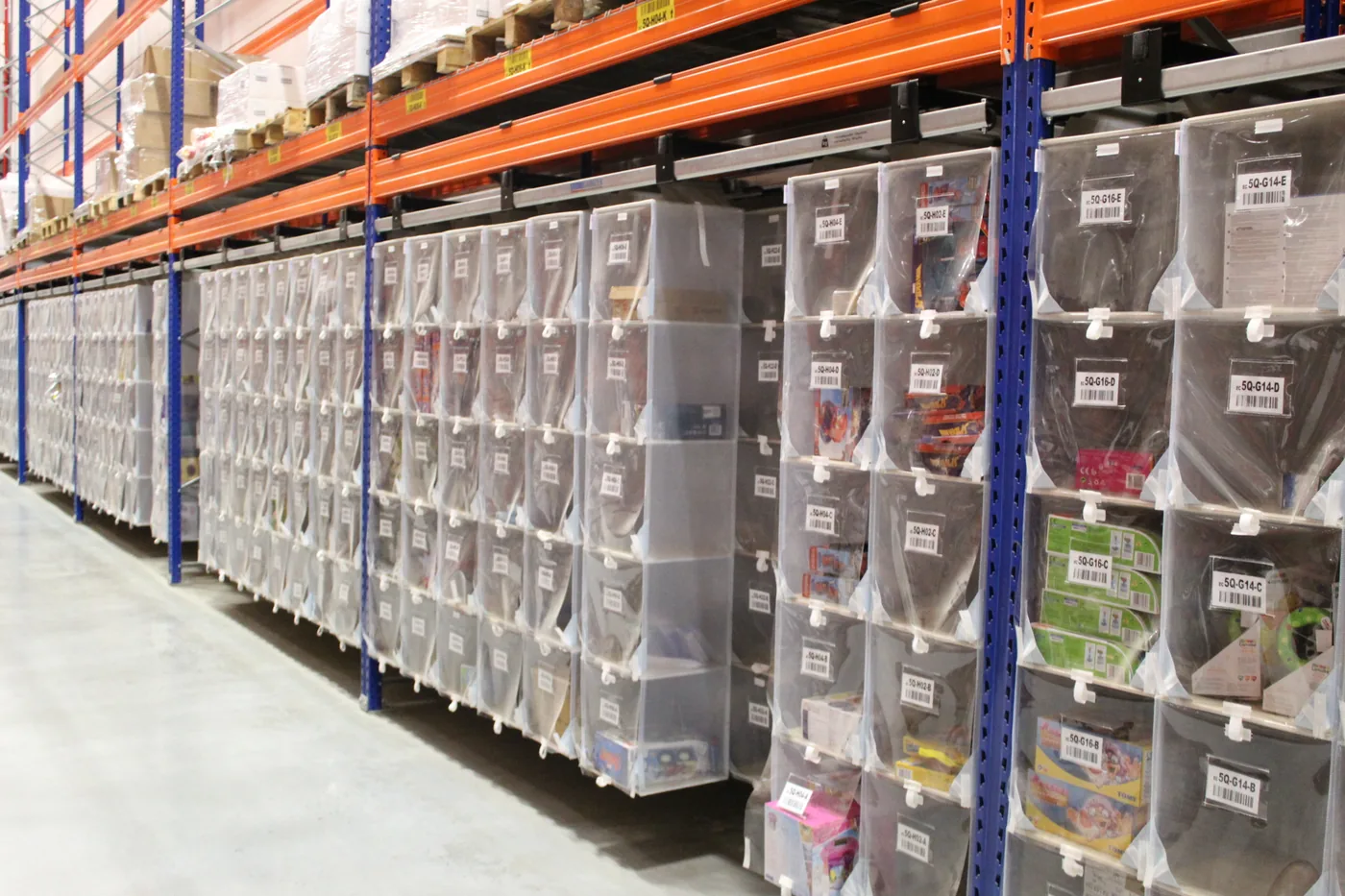
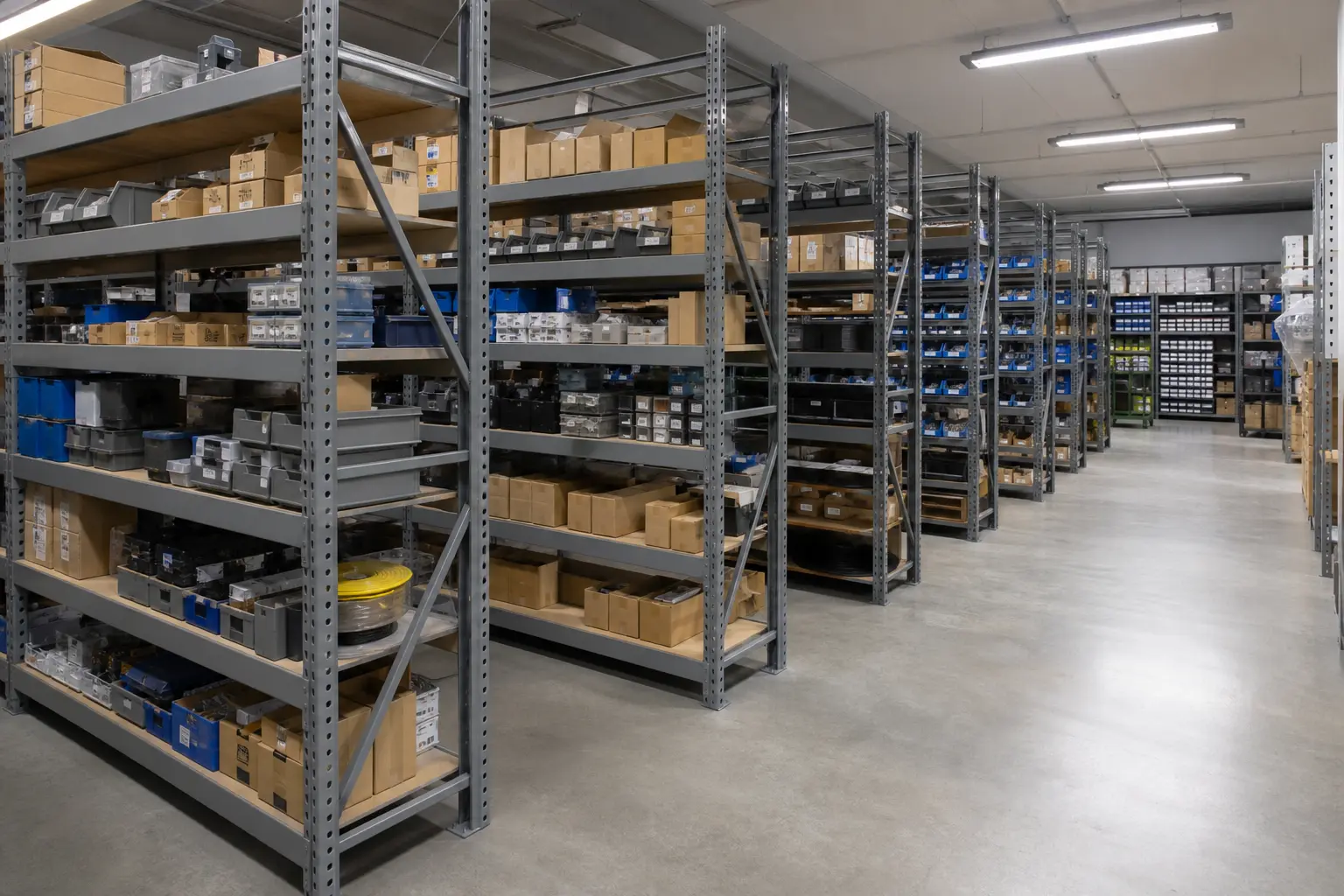
What works is separating the catalog by movement class and giving each class its own storage medium: a fast pick face at the front for the handful of consumables and wear parts that drive most order lines, a dense mid-zone for the long tail of small components, and bulk or rack positions for large assemblies. Vertical pocket storage is particularly effective for that long tail because it converts aisle length into vertical density without automation, which keeps a slow-moving catalog from consuming the whole building.
We cover this in more depth on the spare parts & MRO storage page, and the trade-off between adding rack and adding density is worked through with numbers on the SKU slotting and rack ROI page. For regulated or high-traceability programs, see aerospace and defense parts storage.
Questions worth answering before you buy anything
- How many SKUs have moved in the last 12 months, and how many haven’t moved in 24?
- What share of order lines comes from the top 50 parts?
- What is the largest part that must live in the small-parts area, and can it be relocated?
- How many new SKUs does a new product launch add, and where will they physically go?
- Is the constraint floor space, pick travel, accuracy, or all three?
When the Pick Face Runs Out of Room
Kitting areas grow. New models add SKUs, the aisle gets narrower, and eventually the kitter is walking farther than they are picking. There are four honest options, and the right one depends on what you are actually short of.
Go denser
Replace long runs of static shelving with vertical pocket storage to shorten the pick face and cut travel. Start with STOREGANIZER or model a layout with the STOREGANIZER configurator.
Go vertical, mechanically
Bring the part to the picker instead of the picker to the part. See vertical carousels and Vidir vertical storage systems, plus this VLM vs. carousel comparison.
Move bulk out of the cell
Push raw material, WIP and finished goods into proper racking so the kitting area only holds pick quantities. See manufacturing pallet rack and the wider pallet rack systems range.
Add a second level
A platform over the kitting area buys square footage without a building addition. See industrial mezzanines and the mezzanine cost guide.
In most plants the answer is a combination, sequenced over a couple of budget cycles. What matters is choosing the sequence deliberately instead of reacting to whichever aisle became impassable first.
How We Work a Kitting Project
Walk the flow
We follow a work order from release to the finished unit and mark every touch, every stop, and every place material sits on the floor.
Profile the parts
SKU count, cube, movement class and which parts are kit candidates versus point-of-use. This drives the storage media selection.
Lay out options
We produce a preliminary layout with equipment options and trade-offs. It is a planning document, not an engineered or stamped design.
Phase and install
Most kitting conversions are staged line by line or zone by zone so production keeps running while the area is rebuilt.
Not sure where the constraint is? Run the warehouse opportunity scanner or browse all of our planning tools and design tools first.
Parts Storage & Kitting FAQs
What is production kitting?
Production kitting is the practice of gathering all the components required for one work order, unit or assembly step into a single container before that work reaches the assembly cell. The goal is that the assembler receives everything needed in one place, in the right quantity, and does not have to leave the station to find parts.
Should we kit every part on the bill of material?
Usually not. Kitting adds handling touches, so it pays off on parts that are model-specific, easy to confuse, serialized or lot-controlled, or expensive. Common fasteners and consumables are normally cheaper to hold in two-bin kanban at the station. Most plants land on a hybrid of both.
What is a line-side supermarket?
A supermarket is a small, densely slotted buffer holding only the parts a specific line or cell consumes, positioned close to that line and replenished on a timed loop from bulk storage. It keeps bulk inventory out of the production aisle while shortening travel for the kitter or water spider.
How do we stop kits going out with missing or wrong parts?
Three things help most: never slot look-alike variants next to each other, use one consistent scannable label standard on every location and bin, and add a single verification step at pack-out — a scan, a check weight, or a shadowed tray where a missing item is visible at a glance.
What kind of storage works best for a kitting pick face?
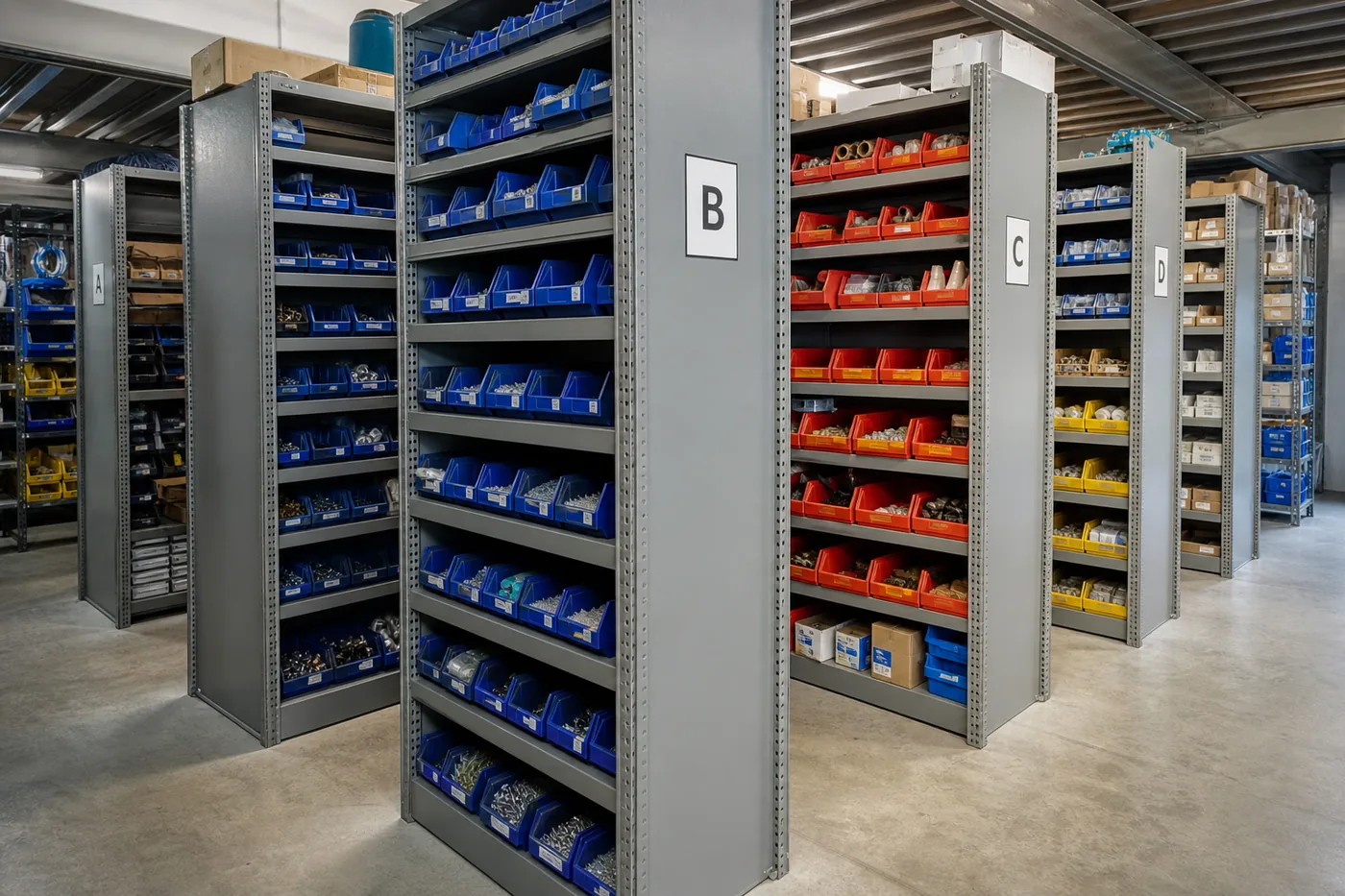
It depends on part size and SKU count. Small components with many SKUs favor high-density vertical pocket storage or bin shelving, since a shorter pick face means less walking. Medium parts consumed in volume suit carton flow rack. Bulky items belong on rack positions outside the kitting envelope.
How much space does a kitting area need?
There is no universal figure — it is driven by SKU count, part cube, the number of kits released per shift, and cart staging. That is exactly what we size during the free storage and material flow review, using your part data and floor plan rather than a rule of thumb.
Can a kitting area be added without shutting the line down?
In most cases yes. Kitting conversions are typically staged zone by zone or line by line: build the new pick face and stations in an adjacent area, cut one line over, verify, then move to the next. Sequencing is planned with your production schedule up front.
Do you work with equipment OEMs on service and spare parts storage?
Yes. Aftermarket parts operations have a very different profile from production lines — a large, slow-moving catalog with small order lines. We separate the catalog by movement class and match each class to the right storage medium, which is covered on our spare parts and MRO storage page.
What does the free Manufacturing Storage & Material Flow Review include?
We review your plant layout and the way parts flow from receiving through the line, identify where storage is creating travel, congestion or errors, and come back with options and a preliminary layout. It is a planning review of your material flow, not a shelving quote — and there is no cost or obligation.
Free Manufacturing Storage & Material Flow Review
Send us your floor plan and a parts list. We will walk your flow, show you where kitting and storage are costing you travel and accuracy, and lay out the options — no cost, no obligation, no generic shelving quote.
Call (800) 326-4403 or email Sales@MH-USA.com
Part of our Advanced Manufacturing Storage Solutions section — see also Assembly Workstations.
Free planning tools
These are the same planning tools our project team uses on a first call. Each one gives you a usable result on screen before it asks for anything, and you can have the full write-up emailed to you.
- Parts & Kitting Storage PlannerPlan bin, shelving and flow-rack storage for parts and kitting so line-side picking, replenishment and kit staging actually fit the space you have.
- SKU & Inventory Upload AnalyzerUpload a SKU or inventory list and get a storage-method breakdown, cube and footprint estimate, and the questions to settle before you buy.
- Manufacturing Floor Space Recovery CalculatorSee how much production floor space your current storage is consuming and how much of it comes back with higher-density or vertical storage.
Shop Bin Storage Systems Online
Buy select items directly from our online store, or request a quote for volume, custom sizes and freight-rated orders.