
Lift Tables
Scissor lift tables, hydraulic and electric lift tables, lift-and-tilt tables, low-profile pallet lift tables and portable lift tables that bring every load to a safe working height. Shop Vestil and MH-USA models online or get a free quote with freight.
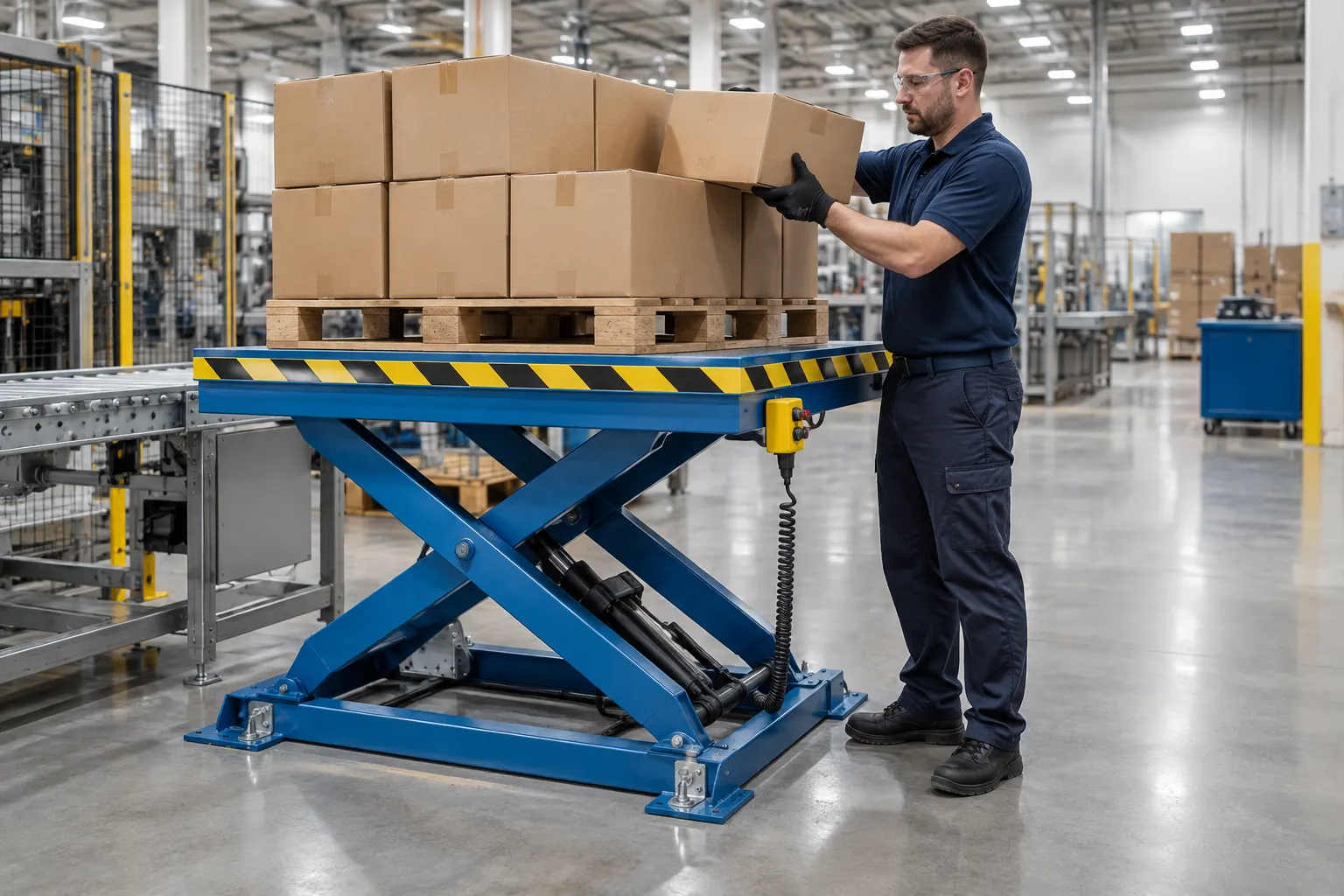
6,000 lb
Top capacity in our store
4
Power types: AC, DC, air, manual
MH29.1
ANSI scissor lift standard
Nationwide
Quote, freight, delivery
Shop Lift Tables Online
Electric scissor lift tables, lift-and-tilt tables, portable lift tables and MH-USA scissor lift tables ship from our online store. More sizes, capacities and voltages are in the categories below, or request a quote and we will match a table to your load.


What Is a Lift Table?
A lift table is a load platform that rises and lowers on a scissor mechanism. It brings parts, pallets, containers or machines to the height where people can work on them without bending, reaching or lifting. Most industrial lift tables use one or more pairs of steel scissor legs pushed open by a hydraulic cylinder. Others use an air bag, a foot pump or a battery-powered pump. The base sits on the floor or in a shallow pit, or rides on casters so the table can move between work areas.
Lift tables are an ergonomic tool first. They cut the stooping and over-reaching that come with loading, unloading and assembling at a fixed height. They also save time: as a pallet empties, the table rises so the next layer is always at waist height. That is why you see them at assembly cells, palletizing stations, packing lines, docks and machine-feeding stations. Our warehouse ergonomics guide covers the injury risks lift tables help remove.
| Lift table | Elevating cart / lift cart | Aerial scissor lift | Work platform | |
|---|---|---|---|---|
| Main job | Raise a load to working height | Move a load and raise it at the destination | Lift people to work overhead | Give people a fixed or mobile place to stand |
| Who rides it | Nobody, unless the maker rates it for people | Nobody | Operators in a guarded basket | People |
| Base | Fixed, pit-mounted or on casters | Casters with a push handle or drive | Self-propelled chassis | Legs, frame or casters |
| Learn more | This page | Height-adjust carts | Lifting equipment guide | Work platforms |
Types of Lift Tables
Lift tables are grouped by how they are powered, what the top does, and how loads get on and off. These are the types buyers ask us about most. Every photo below is the actual product it links to.
 Electric hydraulic scissor lift tablesThe most common industrial lift table. An electric motor drives a hydraulic pump; a hand or foot control raises and lowers the deck. The power unit can sit beside the table.
 Manual and foot-pump lift tablesNo power needed. A foot pump raises the deck and a flow-control valve lowers it smoothly. Good for light loads and occasional height changes.
 Pneumatic (air bag) lift tablesShop air inflates a bellows instead of a hydraulic cylinder, so there is no oil to leak. Needs clean, dry, regulated air with a filter.
 Lift and tilt tablesRaise and tilt the deck toward the worker so parts at the bottom of a bin or container stay in easy reach. A lip keeps the load in place while tilted.
 Low-profile pallet lift tablesA very low lowered height lets a pallet truck roll the pallet on, with the optional approach ramp, so no pit is needed. Raise the pallet to the height your team works at.
 Ground-entry (E-shaped) lift tablesAn open base lets pallet trucks drive the pallet straight onto the platform. Built for areas with no forklift.
 Mobile and portable lift tablesBattery-powered lift tables on casters with a floor lock. Move the load to the job, then raise it to working height. Compare mobile lift tables.
 Hinge-tilt and container tiltersThe deck tilts up from one edge to present large containers, gaylords and bins to the operator.
Other lift table options to know
- Single, tandem and multi-stage scissors: one scissor pair covers most jobs. Tandem scissors carry longer platforms; multi-stage scissors reach higher raised heights from a low start.
- Turntable tops: a rotating deck lets an operator turn the load instead of walking around it. Ask us which models can be fitted with one.
- Pallet positioners: lift tables and spring or powered positioners that keep the top layer of a pallet at the same height as it empties. Compare pallet positioners and pallet carousels, or see the ergonomic solutions category.
- Stainless steel and washdown tables: for food, pharmaceutical and cleanroom areas. Compare fully and partially stainless models on our stainless steel lift tables page. Tell us the washdown chemicals and temperatures so we can confirm what the manufacturer offers.
- Dock lifts: heavy scissor lifts that raise a pallet and a person from the ground to a truck bed. See loading dock equipment.
How to Choose a Lift Table
Start with the load and the person, not the catalog. Work through these questions and you will have everything a quote needs:
- Capacity: the heaviest load the table will ever carry, plus any fixtures, pallets or containers. Leave a margin for heavier future parts. Our store runs from 400 lb foot-pump tables to 6,000 lb lift-and-tilt tables.
- Load type and center of gravity: a uniform pallet load is different from a heavy machine part set near one edge. Tell us if the load is off-center, rolled on, or set down by a forklift or crane.
- Platform size: at least as big as the load footprint. Pallet work usually needs a deck about the size of the pallet, such as 48 x 48 in.
- Lowered height: how the load gets on. Forklift loading works with standard heights. Pallet trucks need a low-profile or ground-entry table, or a pit.
- Raised height and travel: the height the operator works at, usually around elbow height for assembly and waist height for lifting cases. Measure your tallest and shortest operators.
- Power and controls: electric (115V single-phase up to 460V three-phase), 12V DC battery, shop air, or manual foot pump. Hand pendant or foot control, press-and-hold or press-and-release.
- Duty cycle: how many lifts per hour and per shift. High-cycle production lines need a table and power unit rated for continuous duty; occasional height changes don’t.
- Environment: dry plant, washdown, freezer, outdoor or hazardous area. This sets finish, motor enclosure and whether a pneumatic or stainless table makes more sense.
Quick sizing guide by job
| Job | Usually works best | Key spec to confirm |
|---|---|---|
| Assembly and inspection | Electric scissor table or work station lift | Platform size and raised height |
| Loading and unloading pallets by forklift | Standard electric hydraulic lift table | Capacity and platform 48 x 48 in or larger |
| Pallets moved by pallet truck | Low-profile or ground-entry lift table | Lowered height and approach ramp |
| Picking from bins, gaylords and containers | Lift and tilt table or hinge tilter | Tilt angle and container size |
| Moving loads between workstations | Portable lift table or elevating cart | Battery runtime and caster type |
| Light parts, occasional use | Foot-pump or manual lift table | Capacity and number of pumps to full height |
| Washdown or no-oil areas | Pneumatic or stainless lift table | Air supply or washdown rating |
Hydraulic vs. Electric vs. Pneumatic vs. Manual Lift Tables
Most "hydraulic lift tables" and "electric lift tables" are the same machine: an electric motor runs a hydraulic pump that pushes the scissor cylinder. The real choice is how the table gets its power.
| Electric hydraulic (AC) | Battery (12V DC) | Pneumatic (air bag) | Manual / foot pump | |
|---|---|---|---|---|
| Power source | Plant power, 115V to 460V | On-board battery and charger | Clean, dry, regulated shop air | Operator’s foot |
| Best for | Fixed stations, heavy loads, frequent cycles | Mobile tables and places with no outlet | No-oil areas and simple up/down use | Light loads, occasional height changes |
| Capacity in our store | Up to 6,000 lb | Up to 5,000 lb (portable) | Air bag models up to 2,000 lb | 400 to 2,500 lb |
| Watch for | Matching voltage and phase to your plant | Charging routine and battery life | Air filter, regulator and supply pressure | Number of pumps to full height |
| Example | Work station lift | Portable lift table | Air bag scissor table | Foot pump scissor lift |
Lift Table Safety and ANSI MH29.1
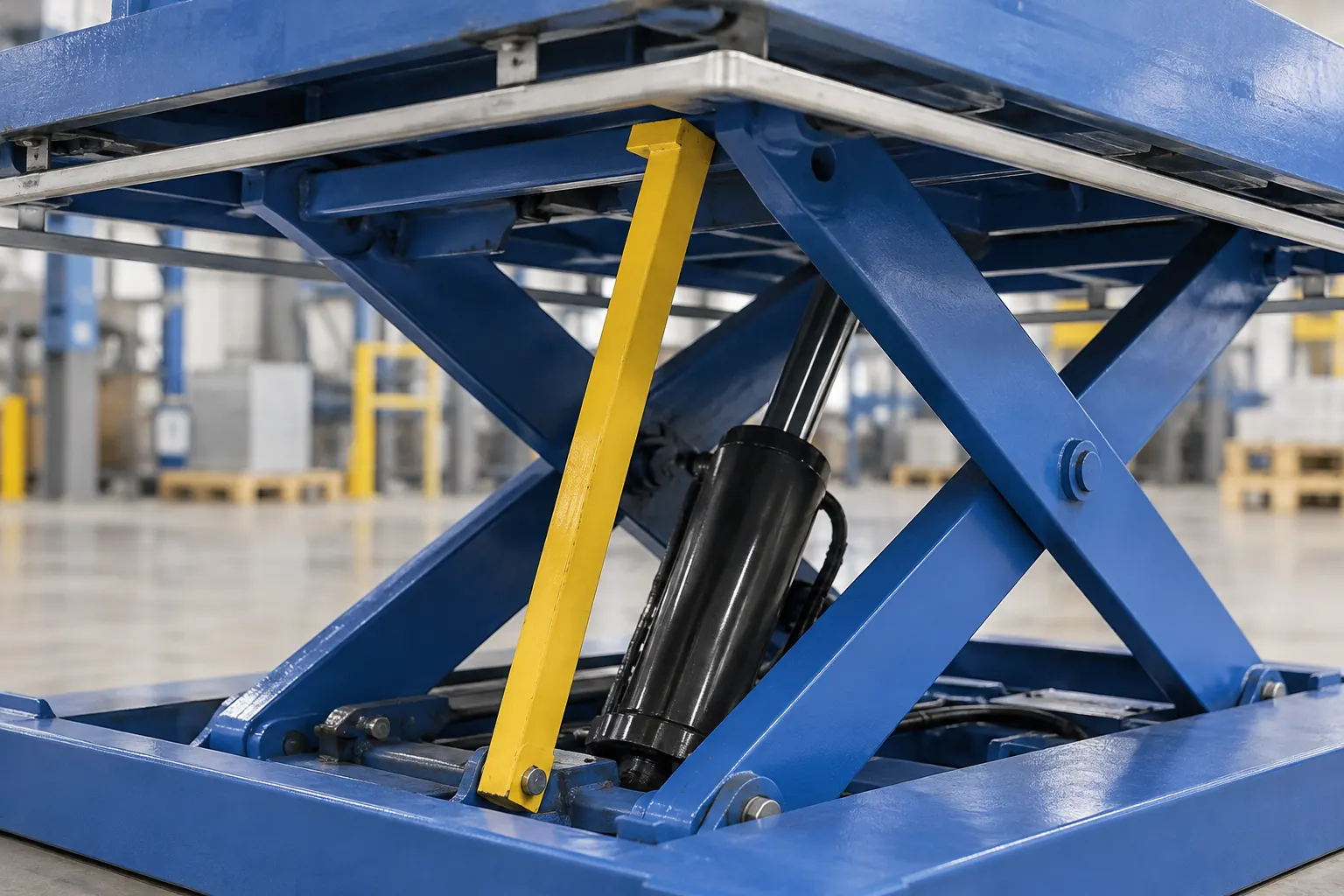
The U.S. safety standard for industrial scissor lifts is ANSI MH29.1, Safety Requirements for Industrial Scissors Lifts, developed by the Lift Manufacturers product group of MHI. It covers stationary and mobile scissor lifts raised by hydraulic, pneumatic or mechanical power and used to position, feed, transfer, load or unload. It sets design and performance criteria and spells out what manufacturers, owners and operators are each responsible for.
Before anyone works under a raised table, the standard’s maintenance precautions apply: remove the load, lower the platform fully if possible, set the maintenance device or blocking, relieve hydraulic pressure and lock out power. Follow the manufacturer’s manual for your model.
Safety features to look for
| Feature | What it does | Found on (examples in our store) |
|---|---|---|
| Toe guard / pinch-point guard | Stops the table when it touches a foot or object while lowering | Vestil lift-and-tilt, ground lift, work station and portable tables |
| Velocity fuse | Holds the platform if a hose or fitting fails | Vestil lift-and-tilt and low-profile tables |
| Maintenance prop or lock | Mechanically blocks the scissors for service | Most Vestil electric and air tables |
| Upper travel limit | Stops the table at full height to reduce motor wear | Vestil lift-and-tilt and ground lift tables |
| Accordion skirting | Encloses the scissor legs so nothing can get caught | Optional on many Vestil models |
| Controlled lowering valve | Lowers the deck at a steady rate | Vestil foot-pump scissor tables |
Lift tables are for materials. Don’t ride one unless the manufacturer rates that model for people. For work at height, use a guarded work platform instead. Fixed tables that must be anchored, like Vestil lift-and-tilt tables, should be lagged to the floor as the manual specifies.
Lift Table Applications
Lift tables pay off wherever people lift, lower or reach for the same loads all day. These are the uses we plan most often, with what to specify for each.
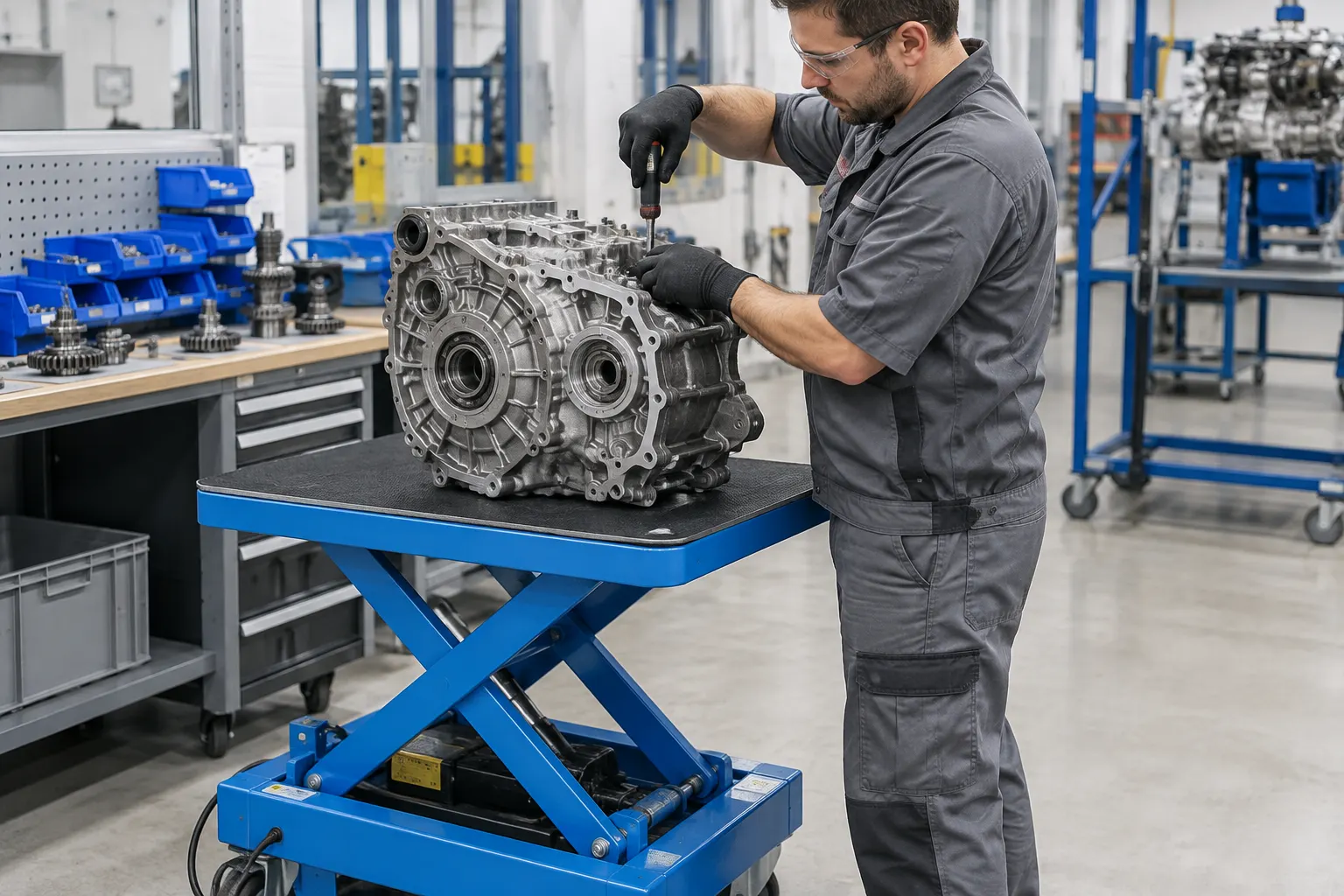 Assembly and workstation ergonomicsRaise heavy parts and subassemblies to elbow height so technicians work standing upright. Pair with industrial workbenches.
 Palletizing and pallet loadingLower the pallet as layers go on, raise it as they come off, so every case is lifted at waist height. Compare pallet lift tables.
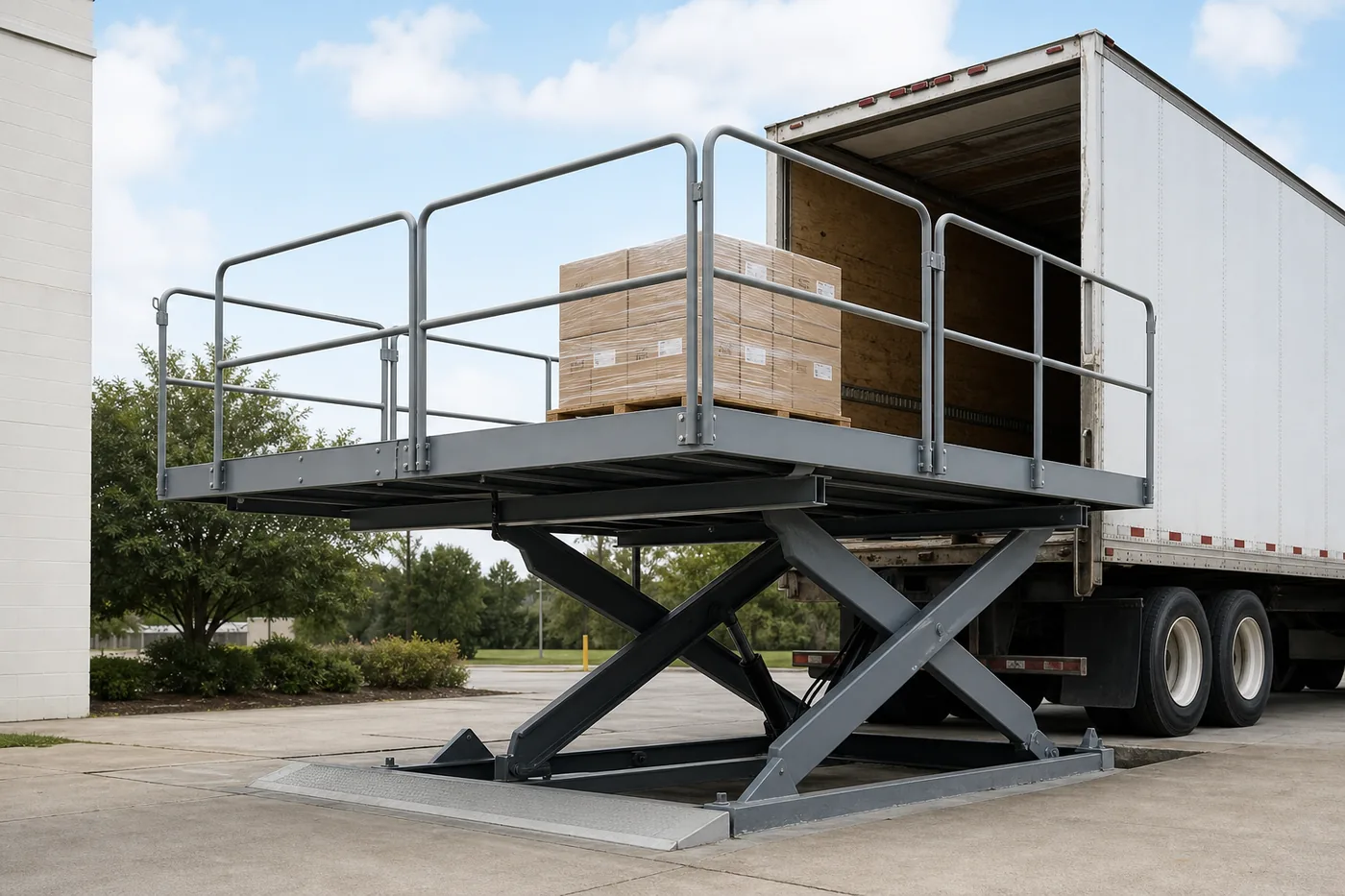 Dock and truck loadingScissor dock lifts bridge ground level and a truck bed where there is no dock. Handrails, toe boards and bridges are options.
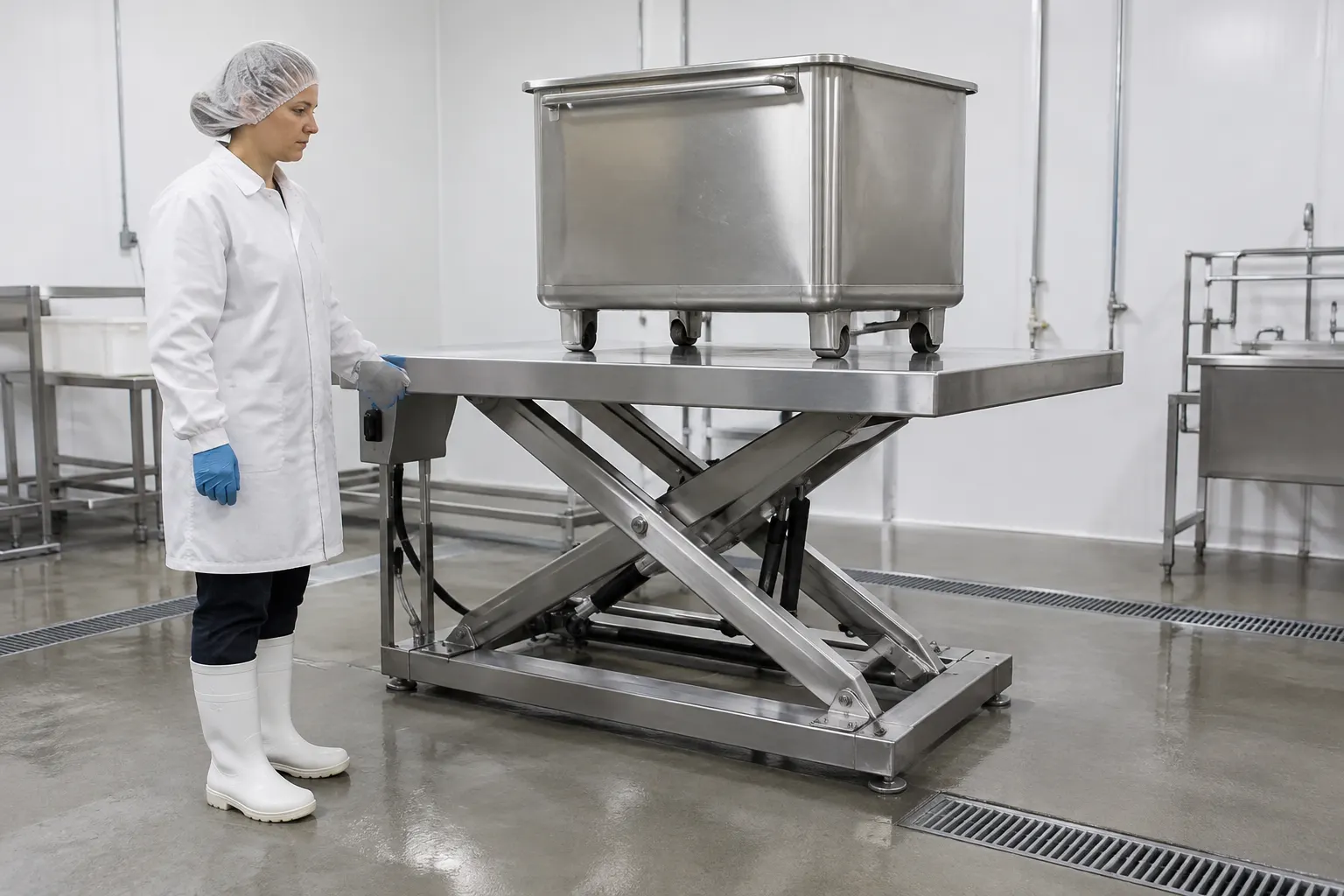 Food, beverage and pharmaceuticalWashdown-friendly lift tables raise totes, kettles and ingredient bins in clean areas. Tell us your sanitation routine.
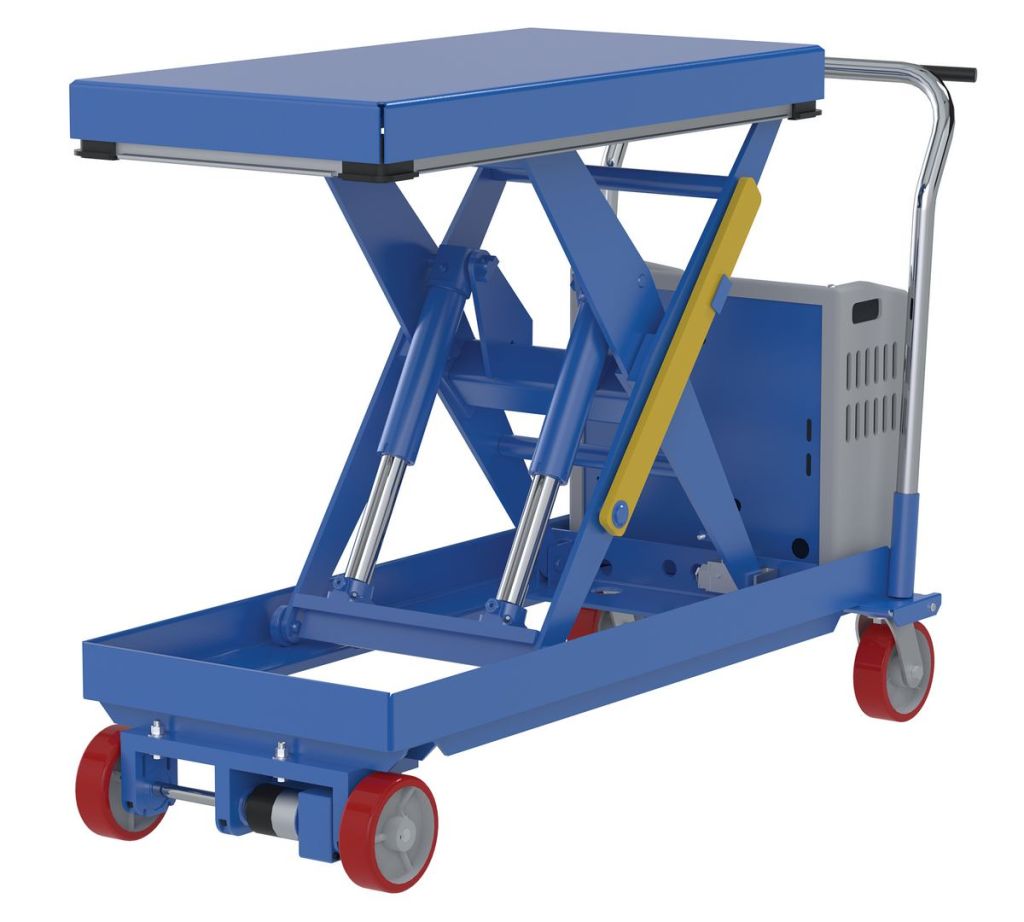 Moving loads between work cellsPowered elevating carts and portable lift tables carry the part to the next station and raise it to working height there.
More lift table uses and guides
- Machine feeding and die handling: keep sheet, blanks or dies level with the machine bed. See the full range of Vestil ergonomic equipment.
- Packing and shipping stations: set cartons and pallets at the right height for packers. See our packing station design guide.
- Container and bin picking: lift-and-tilt tables bring the bottom of a bin up to the operator. See hinge tilt tables.
- Pallet lift tables: compare low-profile, ground lift and forklift-loaded tables by lowered height, capacity and power on our pallet lift tables page.
- Pallet positioners and carousels: spring positioners, pallet stands and pallet turntables that keep loads at waist height and turn them within reach. See pallet positioners.
- Mobile and portable lift tables: battery, AC and foot-pump scissor tables and carts that roll the load to the job and raise it there. See mobile lift tables.
- Choosing across equipment types: carts, pallet trucks, positioners and hoists compared in our lifting and material transport equipment guide.
- Shops, maintenance and light manufacturing: compact MH-USA scissor lift tables lift motors, dies and tooling onto benches and machines without a hoist.
- Building a full equipment list: see the material handling equipment list.
Lift Table Brands We Carry
Need a size, capacity or voltage that isn’t listed? Many Vestil tables are built to order; lead times are shown on each product page and confirmed with your quote.
From Question to Installed Lift Table
Send the basics
Load weight and size, how it gets on the table, working height and your plant voltage.
Match the table
We shortlist tables by capacity, platform, lowered and raised height, power and options.
Quote with freight
Table, options such as skirting or ramps, and freight on one quote.
Deliver and set up
Tables ship ready to place. Fixed tables are anchored per the manual; ask about install help.
Get a free quote
Tell us the load, the working height and how loads get on and off. A project specialist will follow up with lift table options and pricing. Prefer to talk? Call (800) 326-4403.
Lift Table FAQs
What is a lift table used for?
What is the difference between a scissor lift table and a hydraulic lift table?
How do I choose the right lift table capacity?
Can a pallet truck load a lift table?
Are lift tables covered by a safety standard?
Can people ride on a lift table?
Do you sell lift tables online?
Need Help Choosing a Lift Table?
Send the load, working height and how loads get on and off for a free recommendation and a freight-included quote.