
Work Platforms for Warehouses, Plants and Maintenance Shops
Mobile, adjustable, forklift-mounted and fixed work platforms that put your crew at the right working height with guardrails, gates and a solid deck. Compare the types, size one correctly and get a quote from our team.
Mobile
Rolls to the job
Forklift
Fork-mounted cages
Fixed
Over equipment
Nationwide
Quotes and delivery
Shop Work Platforms Online
Vestil forklift work platforms in multi-person, fold-down and standard steel styles, plus an Equipto maintenance access platform for elevated conveyors. Need a different size or a mobile platform? Request a quote.


Browse all forklift attachments and work platforms or the Equipto crossovers and platforms category.
What Is a Work Platform?
A work platform is an elevated deck with steps or a ladder, guardrails and a slip-resistant surface that lets a person stand and work at height with both hands free. Unlike a stepladder, the worker stands on a deck with room for tools and parts, and the open sides are guarded.
Work platforms range from a two-step rolling stand beside a machine, to a cage that mounts on forklift forks, to a fixed steel platform that wraps a production line. What they share is a stable footprint, a rated load and a guarded edge.
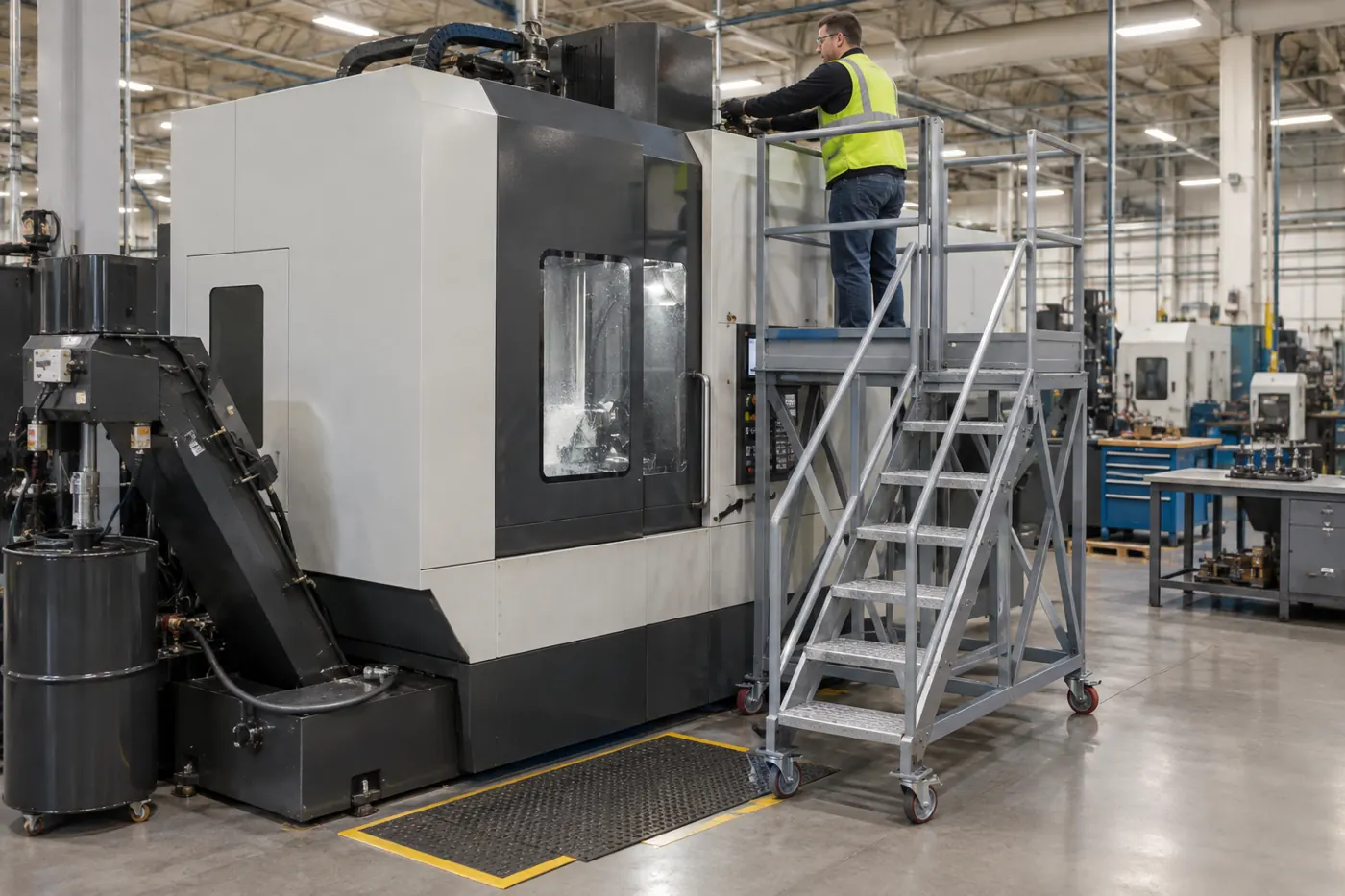
Most buyers come to us with one of four jobs: reaching the top of a machine or vehicle for service, picking or stocking from high shelving, crossing over a conveyor or pipe run, or lifting a person to overhead lights, racks and fixtures. The right platform depends on how high you need to work, how often the job moves, and how many people and tools go up at once.
- Mobile work platforms roll on casters and lock in place. Best for repeat jobs at one height.
- Adjustable-height platforms change deck height with pins or a crank, so one unit covers several jobs.
- Forklift work platforms are guarded cages that attach to forks to lift people for short overhead tasks.
- Fixed and modular platforms bolt or anchor in place over equipment, conveyors and pipe.
- Vehicle and bus maintenance platforms give crews guarded access to roofs of buses, trucks and rail cars.
Work Platform Applications
Use these guides to go deeper on the platform type that matches your job. Each one covers configurations, safety points and what to send us for a quote.


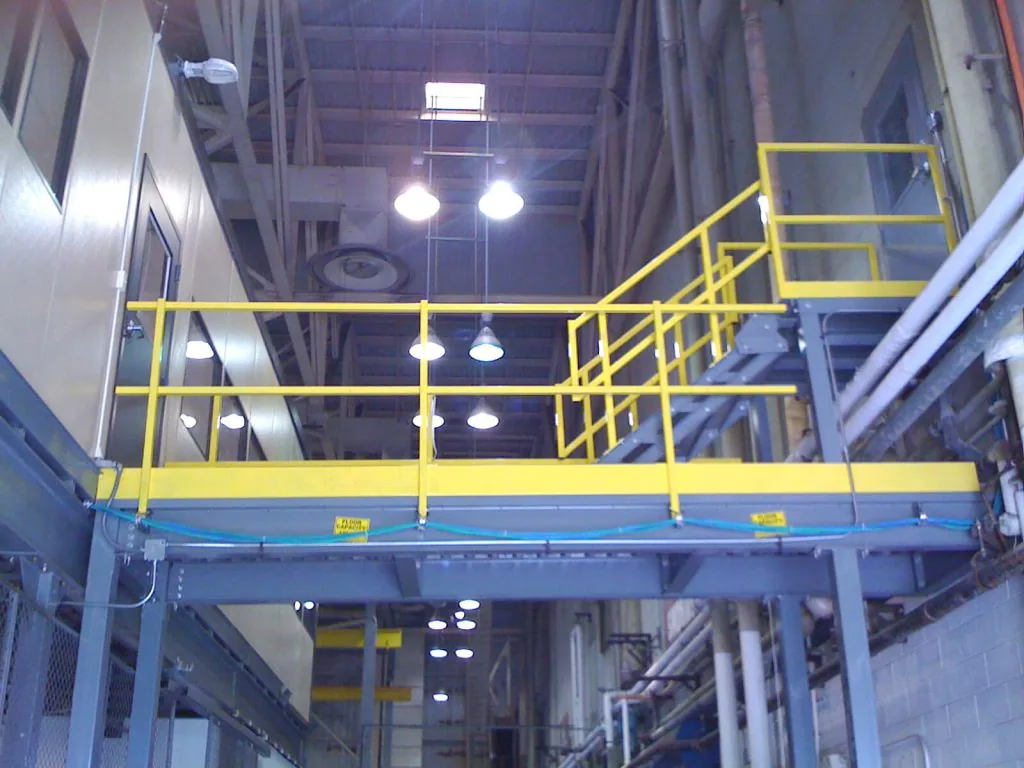
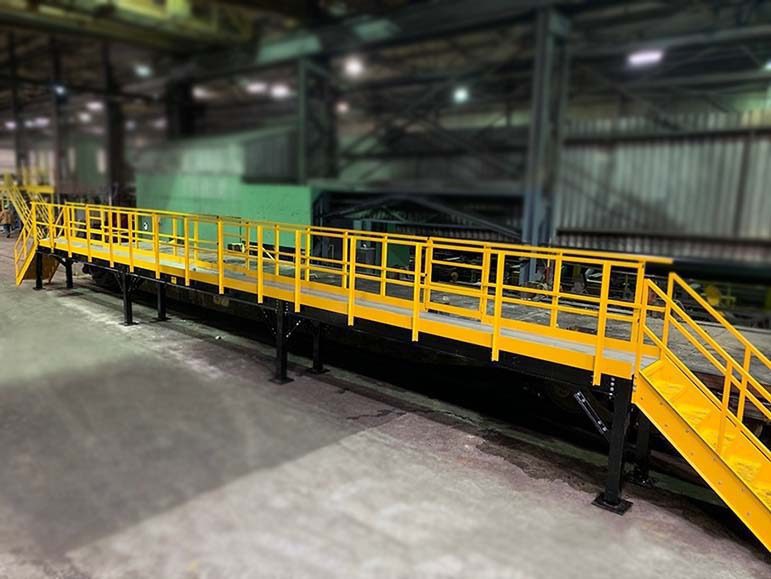
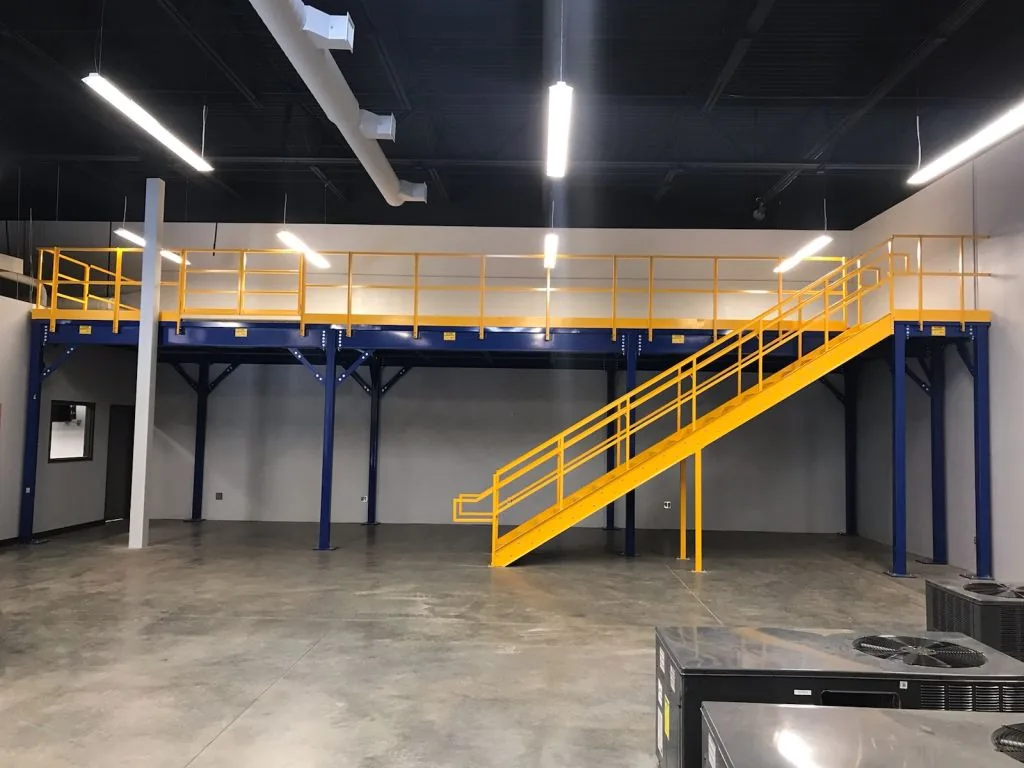
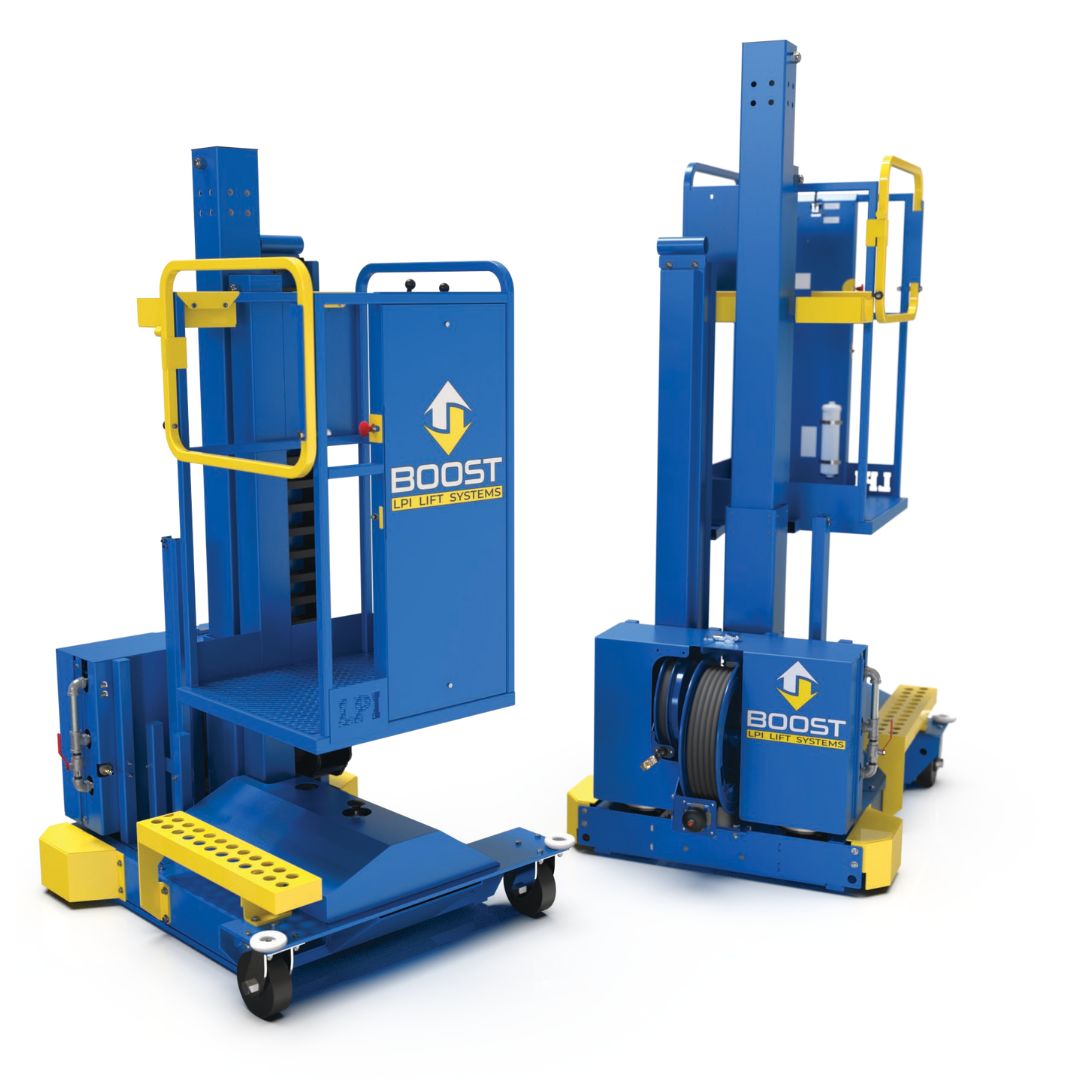
Types of Work Platforms
Mobile and rolling work platforms
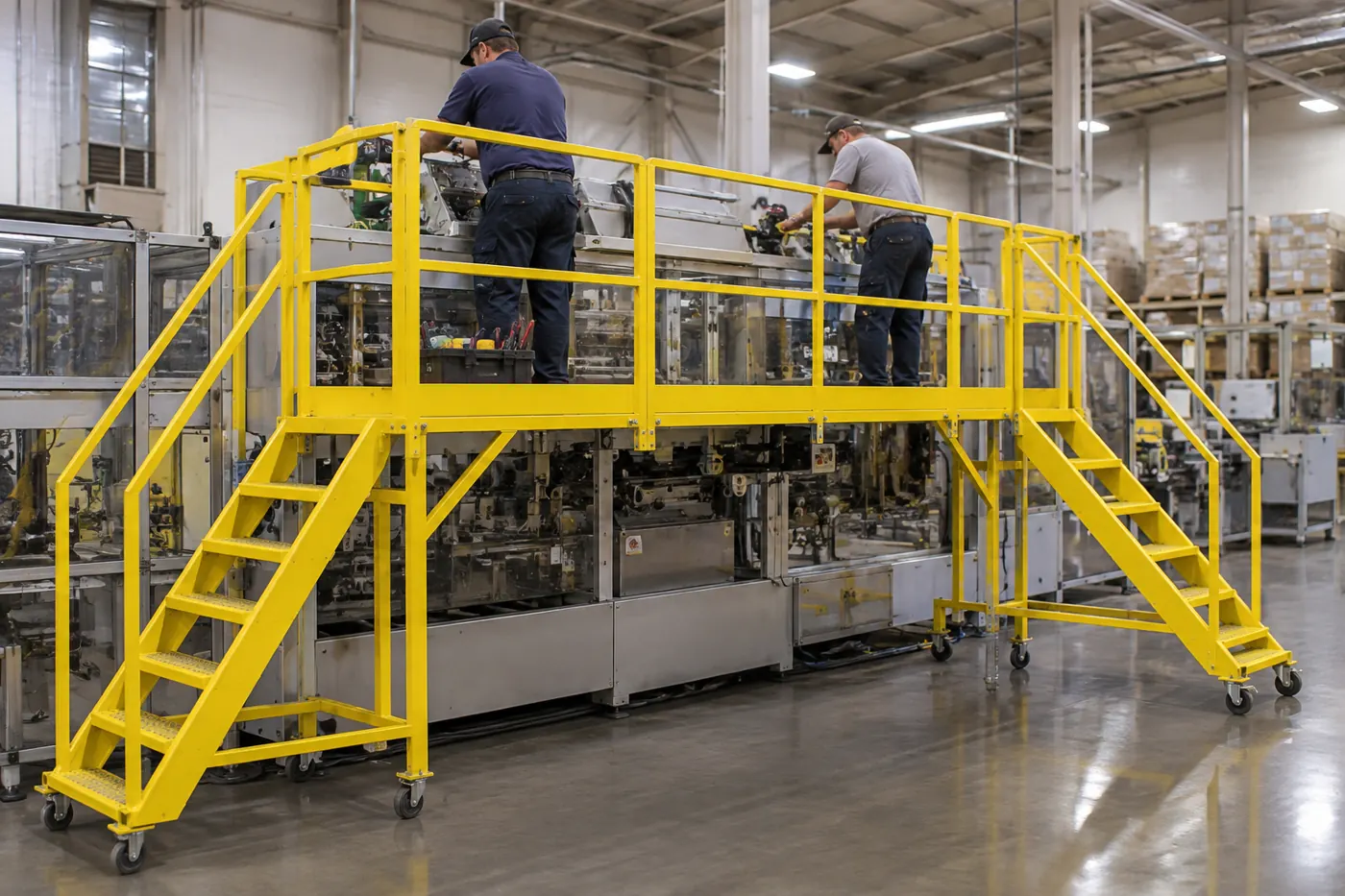
A mobile work platform is a welded or bolted frame with a stair, a top deck and handrails, carried on casters. The crew rolls it to the job, sets the brakes or steps down onto rubber feet, and climbs. Single-entry units have a stair on one end. Dual-entry units have stairs at both ends so people can reach the deck from either side of a machine or aisle.
Rolling platform ladders are the narrow version used in warehouses and stockrooms. Many use spring-loaded casters that retract when someone steps on the first tread, so the ladder sits on its feet while in use. Our industrial ladders guide compares rolling ladders with ship’s, fixed and roof access ladders. To size one by step count and climb angle, see our rolling ladder guide.
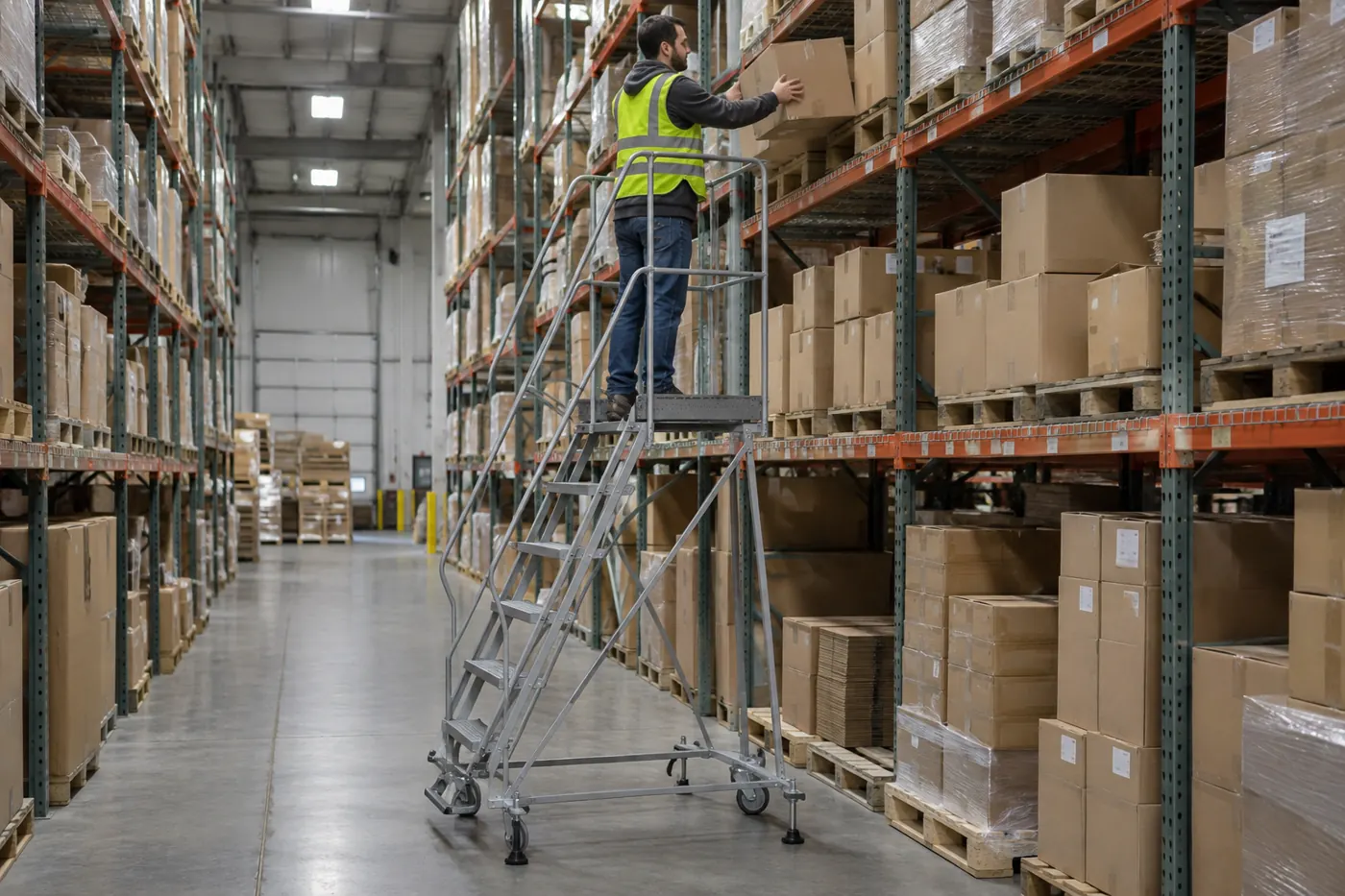
Adjustable-height work platforms
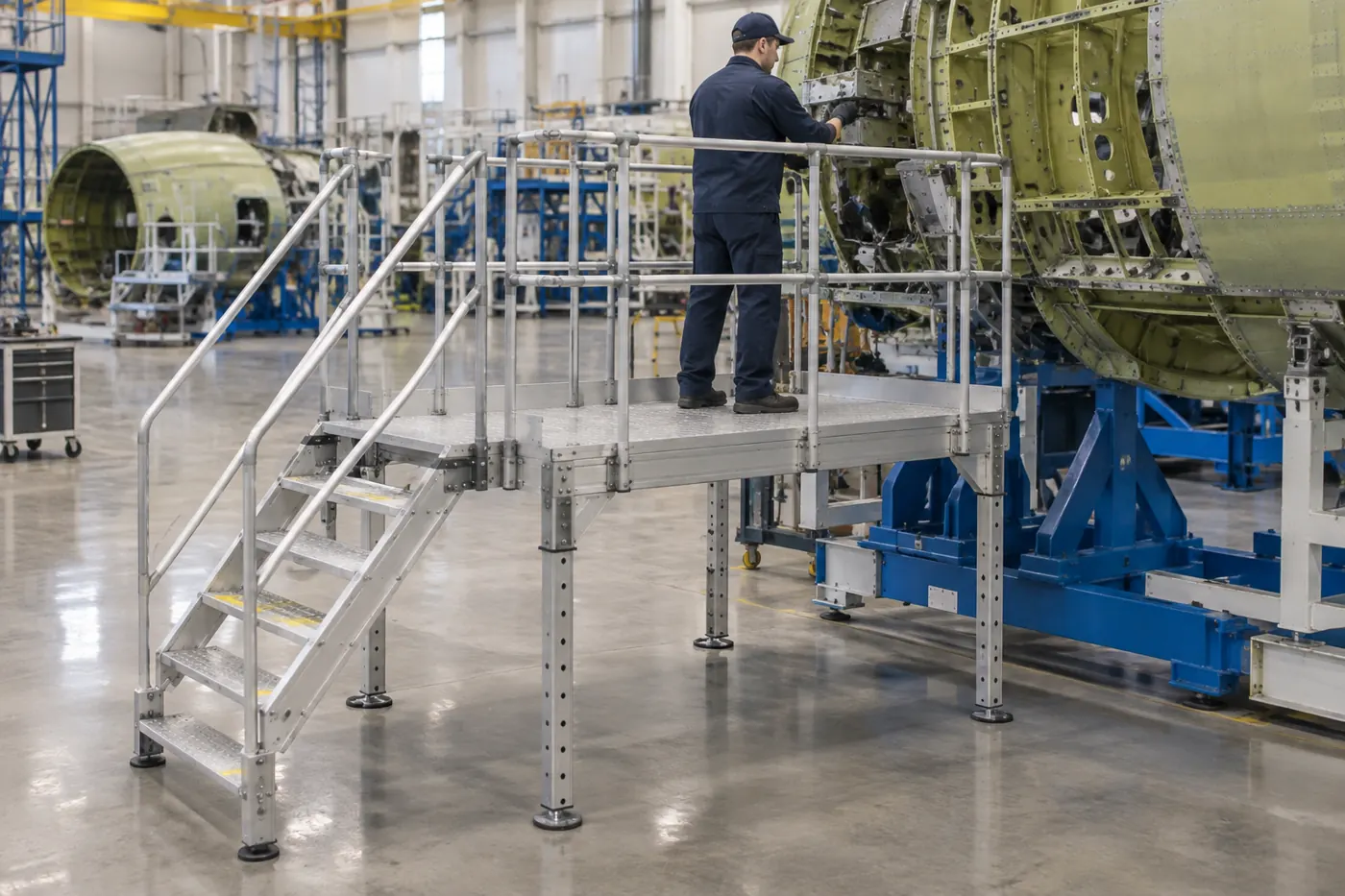
Adjustable platforms change deck height with pinned telescoping legs, a hand crank or a powered lift. They make sense when one crew services several machines or vehicles at different heights, or when a fixture height changes from job to job. Expect a heavier frame and a smaller height range than a custom fixed platform.
Ergonomics is the other reason to adjust. Setting the deck so work sits between waist and chest height reduces reaching and bending on repetitive tasks.
Forklift work platforms
A forklift work platform, sometimes called a man basket or safety cage, slides onto the forks through fork pockets and is secured to the truck. The Vestil platforms we sell online use a checker-plate or slip-resistant deck, guardrails, an expanded metal back guard to keep hands clear of the mast, and a restraint strap or chains that wrap the fork carriage.
Standard steel models are rated for a maximum of two people. Full-featured models add fork locks, an emergency stop button kit and a lanyard with safety harness.

Larger jobs call for a multi-person work platform. Vestil builds them 40 inches deep in 72, 96 and 120 inch widths, with a hinged front gate and pin lock, safety pins behind each fork and chains welded to the back frame. Fold-down models, such as the fold-down platform with an 84 inch back, collapse into their base so one person can move and store them. Units with casters roll off the forks and into storage.
Forklift platforms are for short tasks, not a substitute for a lift
OSHA allows a forklift to elevate people only on a platform secured to the forks or carriage, with a way for the person on the platform to shut off power when needed and overhead protection where the job calls for it (29 CFR 1910.178(m)(12)). The truck operator stays at the controls. For long or frequent work at height, a mobile platform or aerial lift is usually the better tool. Our forklift work platform guide covers inspection and safe use.
Fixed, modular and crossover platforms
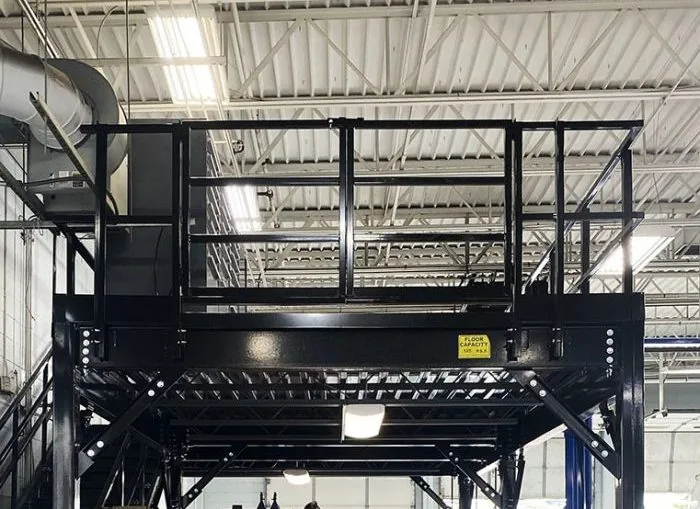
Fixed platforms anchor to the floor beside or over equipment that needs daily access: mixers, presses, packaging lines and tank tops. Modular bolt-together systems use standard stair, deck, handrail and support units, so they can be reconfigured when a line moves. For service points on elevated conveyors and drives, our maintenance access platforms use space-saving ship’s stairs and a self-closing gate.
Crossover platforms are the short version: stairs up, a deck, stairs down, so people walk over a conveyor, pipe run or cable tray instead of around it or under it.
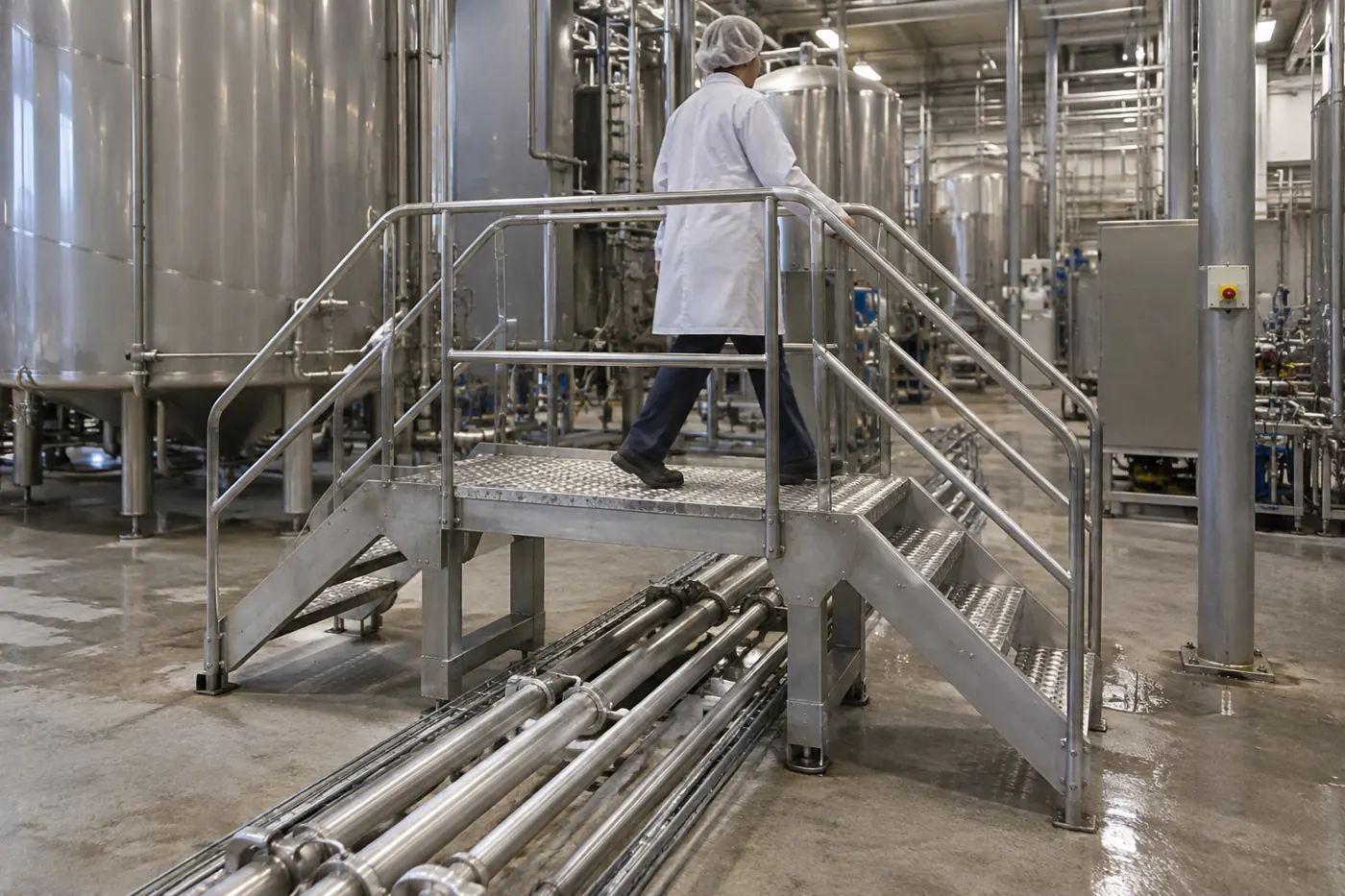
For conveyor lines we sell Equipto conveyor crossovers in single, double, triple and quad stair configurations and Equipto maintenance access platforms for elevated conveyors in single and dual sided versions, all in the crossovers and platforms category. Larger or custom structures are covered on our industrial stairs and work platforms and catwalk pages (standard designs: steel catwalks), and Equipto’s structural options are on our Equipto mezzanines and stairways page.
Vehicle, bus and fleet maintenance platforms
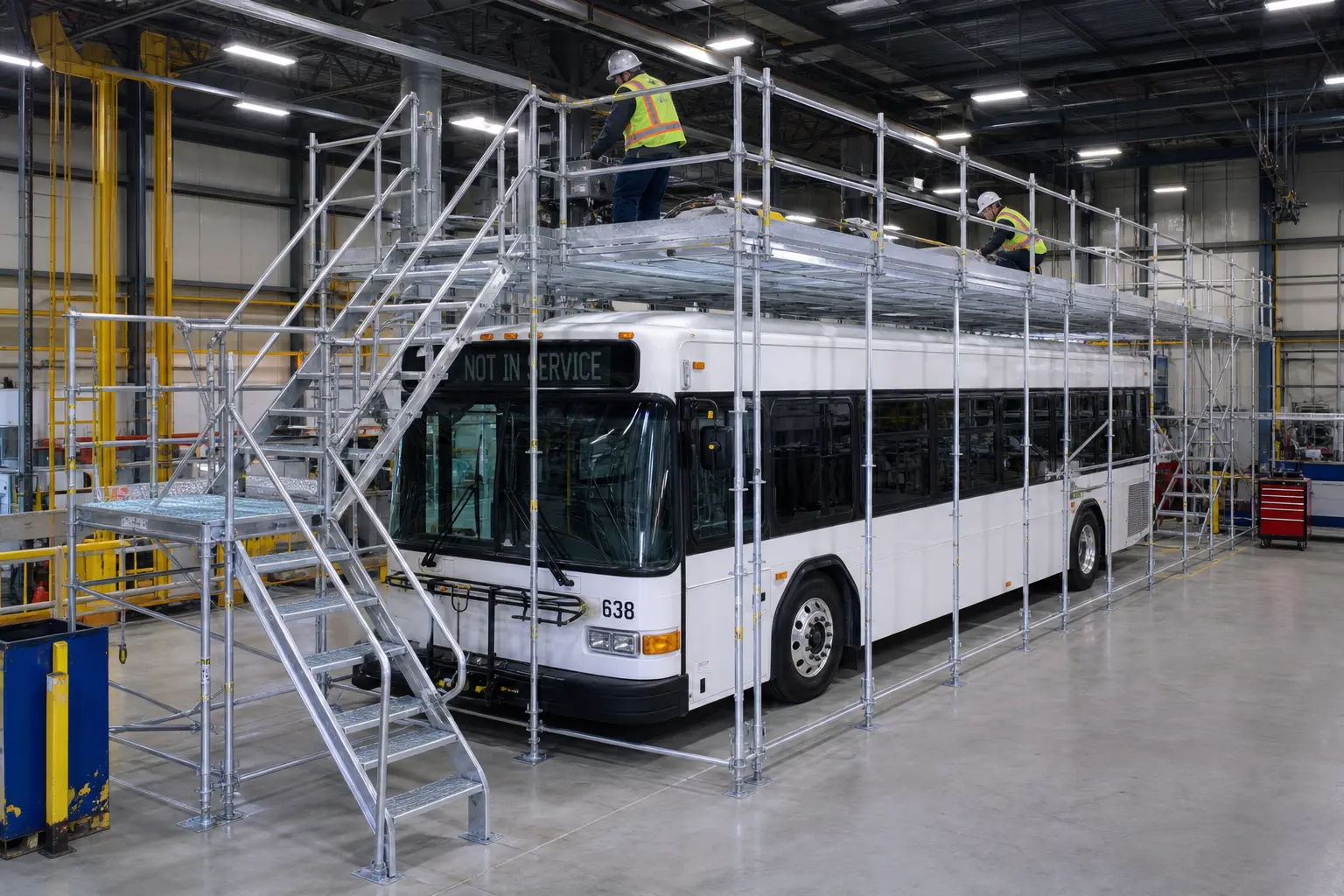
Fleet shops need to reach roof-mounted HVAC, batteries, antennas and fuel systems. Mobile bus platforms roll up beside the vehicle and lock in place, while fixed docks and full scaffold systems suit dedicated bays. See our bus rooftop access and maintenance platforms page and the bus scaffolding guide, and plan the budget with our bus maintenance platform cost guide.
Work Platform vs. Ladder, Scaffold and Lift
A work platform is not always the answer. This table shows where each access method fits best.
| Access method | Best for | Setup | Hands free? | Watch for |
|---|---|---|---|---|
| Mobile work platform | Repeat tasks at a known height | Roll in, lock casters | Yes, guarded deck | Floor must be level; correct height matters |
| Adjustable platform | Several jobs at different heights | Roll in, set height | Yes | Smaller height range, heavier frame |
| Forklift work platform | Short overhead tasks with a truck already on site | Mount on forks, secure | Yes, inside cage | Operator must stay at controls; OSHA 1910.178(m)(12) |
| Fixed or modular platform | Daily access to the same equipment | Installed once | Yes | Floor space and anchoring; may need engineering |
| Stepladder | Quick, occasional reach | Seconds | Limited | Three points of contact; no guarded edge |
| Scaffold | Construction and long jobs | Hours to erect | Yes | Erection, inspection and competent person rules |
| Scissor or boom lift | High or changing work locations | Drive in | Yes | Operator training, cost, floor load |
How to Size a Work Platform
Most sizing mistakes come from ordering by deck height alone. Measure the job first, then pick the platform.
| Measurement | Why it matters | How to measure |
|---|---|---|
| Working height | Where hands need to be | Measure from the floor to the work; a standing adult works comfortably with the deck roughly 4 to 5.5 feet below the work point |
| Deck (top step) height | Sets the climb and the guardrail need | Working height minus your reach allowance |
| Overall height | Must clear doors, lights and sprinklers when moved | Deck height plus guardrail height, usually about 42 inches |
| Base footprint | Taller platforms need wider, longer bases | Check aisle widths, machine clearances and turning room |
| Deck size and capacity | People, tools and parts all count | List the heaviest load that goes up at once |
| Entry and exit | Single, dual or crossover access | Note where people climb on and where they step off |
- Climb angle: steeper stairs (about 60 degrees) save floor space; gentler angles (about 50 degrees) are easier to climb while carrying tools.
- Tread width: wider treads are easier to climb and carry parts on, but take more aisle space.
- Gap to the work: on vehicles and machines, decide how close the deck edge must sit and how gates or cross rails close it.
- Movement: how far it moves, over what floor, and whether it must pass through doorways or be stored out of the way.
- Environment: wash-down, outdoor, cleanroom or hazardous locations change the material and finish.
OSHA and Safety Standards for Work Platforms
In general industry, OSHA’s walking-working surfaces rules (29 CFR 1910 Subpart D) apply to most work platforms. The points buyers ask about most:
- Fall protection at 4 feet. 1910.28 requires protection from falls of 4 feet or more to a lower level, which is why most platforms at that height have guardrails.
- Guardrail height. 1910.29 sets the top rail at 42 inches, plus or minus 3 inches, with a midrail or equivalent below and a top rail that withstands 200 pounds.
- Toeboards. Where tools or parts could fall on people below, toeboards at least 3.5 inches high are required.
- Mobile ladder stands and platforms. 1910.23 covers steps, handrails and locking casters, and ANSI A14.7 is the consensus standard most manufacturers build to.
- Forklift platforms. 1910.178(m)(12) governs lifting people on a forklift, and OSHA points to ANSI/ITSDF B56.1 for platform design.
- Stairs and buildings. Fixed platforms in buildings may also fall under the IBC; your local building official decides.
Platform guardrails are one part of a fall protection program. Your safety team should confirm the setup against your own procedures and the standards that apply to your site. For fleet shops, our OSHA fall protection guide for bus maintenance walks through roof work in detail, and gated openings on elevated decks are covered on our mezzanine safety gates page.
Materials, Decks and Options
How We Quote a Work Platform
Tell us the job
What you need to reach, the working height, how often it moves and how many people go up.
Send photos and measurements
Photos of the machine, vehicle or aisle plus clear heights, aisle widths and door openings.
Compare options
We match stock models or quote a custom platform, and explain the trade-offs.
Approval drawing
For custom units, you review a drawing before production.
Delivery and setup
Freight to your dock, with assembly or installation quoted when you want it.
Availability: some common sizes are in stock at select manufacturers, subject to confirmation when you order. Custom and engineered platforms are built to order, so we confirm current lead times on every quote.
We are based in Salt Lake City and quote, source and coordinate work platforms for facilities across the United States. Call 800-326-4403 or request a quote with your photos and measurements.

Work Platform FAQs
What is a work platform?
What is the difference between a work platform and a rolling ladder?
Are forklift work platforms OSHA compliant?
How many people can stand on a forklift work platform?
Do work platforms need guardrails?
How do I choose the right work platform height?
Can you build a custom work platform?
Do you keep work platforms in stock?
Need a Work Platform Sized for Your Job?
Send us photos and measurements. We will help you compare mobile, forklift and fixed platform options and quote the right one.