“How much does bus scaffolding cost?” is one of the most common questions we receive. The answer depends on your specific configuration, but this guide provides realistic pricing ranges based on actual projects to help you budget effectively.
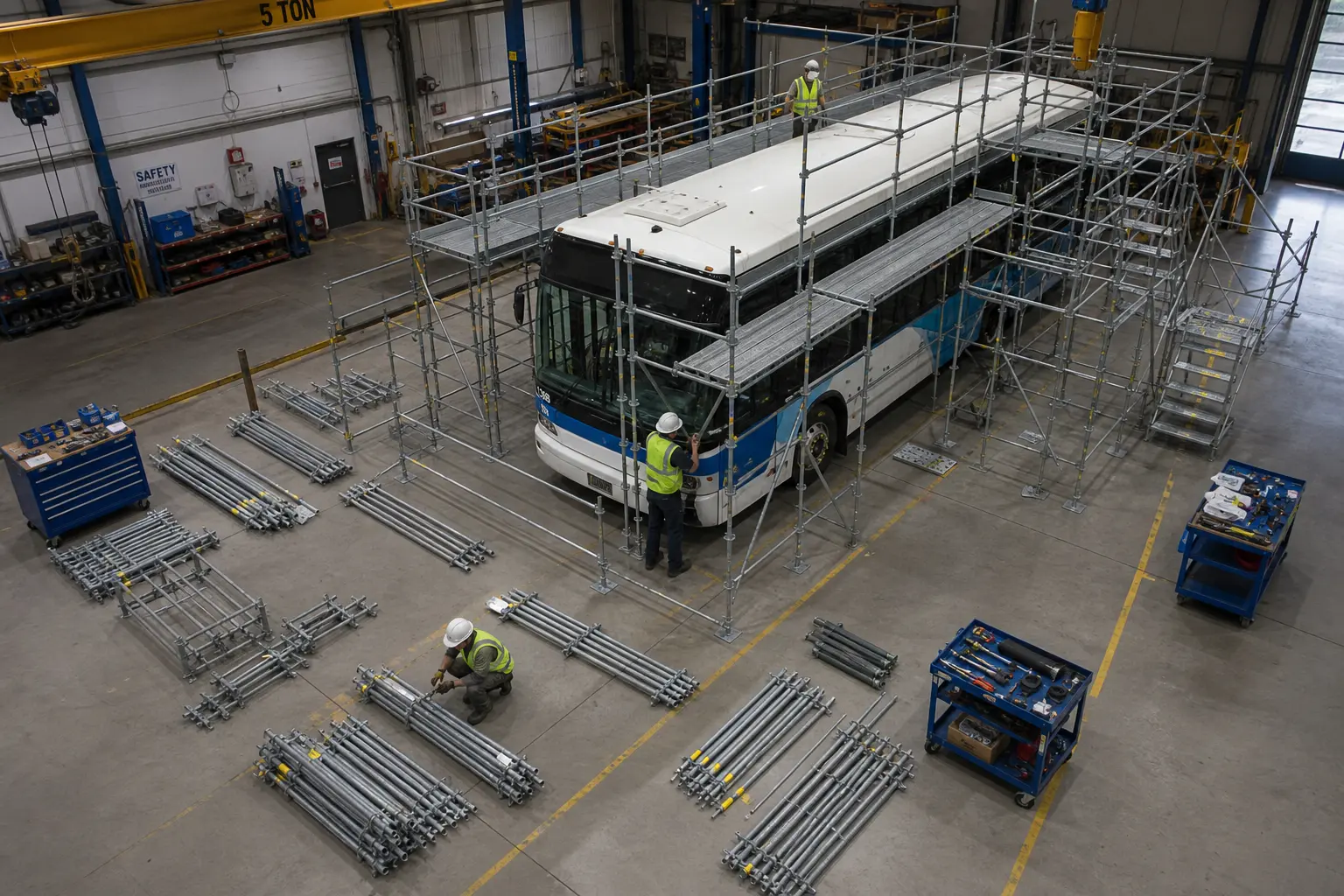
Bus Scaffolding Price Ranges by Type
Entry-Level: Single-Bay Platforms ($12,000–$25,000)
Best for: Small fleet operators, school districts, single-position maintenance bays
- Single or dual-side elevated platforms for one bus position
- OSHA-compliant guardrails, stairs, and anti-slip decking
- Standard galvanized steel construction
- Installation typically included at the higher end of the range
Mid-Range: Multi-Bay Systems ($40,000–$80,000)
Best for: Medium fleets, regional transit agencies, school district maintenance facilities
- 2-4 connected service bay positions
- Catwalks between bays for continuous elevated access
- Multiple stair access points
- Custom-engineered to facility layout
Enterprise: Large Transit Authority Systems ($75,000–$200,000+)
Best for: Metropolitan transit agency depots, high-volume maintenance operations
- 5-10+ bay configurations with full catwalk systems
- Drive-through bay designs
- Mixed-height platforms for diverse fleets
- Integration with overhead cranes and facility systems
Specialty: Electric Bus Platforms ($20,000–$50,000 per bay)
Best for: Zero-emission bus fleets, battery access requirements
- Wider platforms for battery pack access and diagnostic equipment
- Higher load ratings for component staging
- Optional electrically grounded surfaces
- Crane access integration for battery module removal
What Drives the Cost?
Several factors influence bus scaffolding pricing:
- Number of bays: More bays = higher total cost but lower per-bay cost
- Platform width: Wider platforms (36-48″) cost more than narrow ones (24″)
- Platform height: Taller platforms require more structural steel
- Material finish: Hot-dip galvanized costs 15-25% more than painted steel but lasts 3-5x longer
- Customization: Standard modular vs. fully custom-engineered
- Installation complexity: Site conditions, union labor, access constraints
- Shipping distance: Freight costs vary by destination
ROI Analysis: Does Bus Scaffolding Pay for Itself?
In most cases, bus scaffolding pays for itself within 1-3 years through:
Safety Cost Avoidance
- Average ladder fall workers’ comp claim: $50,000+
- OSHA serious violation fine: up to $15,625 each
- OSHA willful violation fine: up to $156,259 each
- Litigation costs from employee injuries: $100,000+
Efficiency Gains
- 30-50% faster rooftop maintenance tasks
- At $50/hour loaded labor cost × 2 hours/day saved × 250 work days = $25,000/year
- Multi-bay systems multiply savings across parallel maintenance operations
Insurance Impact
- Improved safety infrastructure can reduce experience modification rates
- Lower workers’ comp premiums from reduced injury frequency
- Favorable impact on general liability insurance assessments
How to Get an Accurate Quote
For a precise quote, we need:
- Bus types and dimensions in your fleet
- Number of maintenance bays
- Facility layout (rough sketch or dimensions)
- Ceiling height in service area
- Any special requirements (wash bay, electric bus, crane access)
Call (800) 326-4403 or request a quote online. We provide free CAD drawings and detailed pricing breakdowns within 48 hours.
Related Resources
- Security Cages — Explore our complete product line and request a free quote
- Mobile Shelving Systems — Explore our complete product line and request a free quote
- Industrial Mezzanines — Explore our complete product line and request a free quote