
Tire Rack Builder: How Many Bays Do Your Tires Need?
Type in how many tires you store, their sizes and whether they are mounted. The builder works out tires per level, levels, tires per bay and how many bays of tire rack you need, using real catalog rack sizes, then sends the plan to a specialist for a quote.
Any size
Typed off the sidewall
48–144 in
Catalog bay widths
2 rack styles
Boltless or pallet rack
Free
Plan on screen, no email
Shop Tire Storage Racks Online
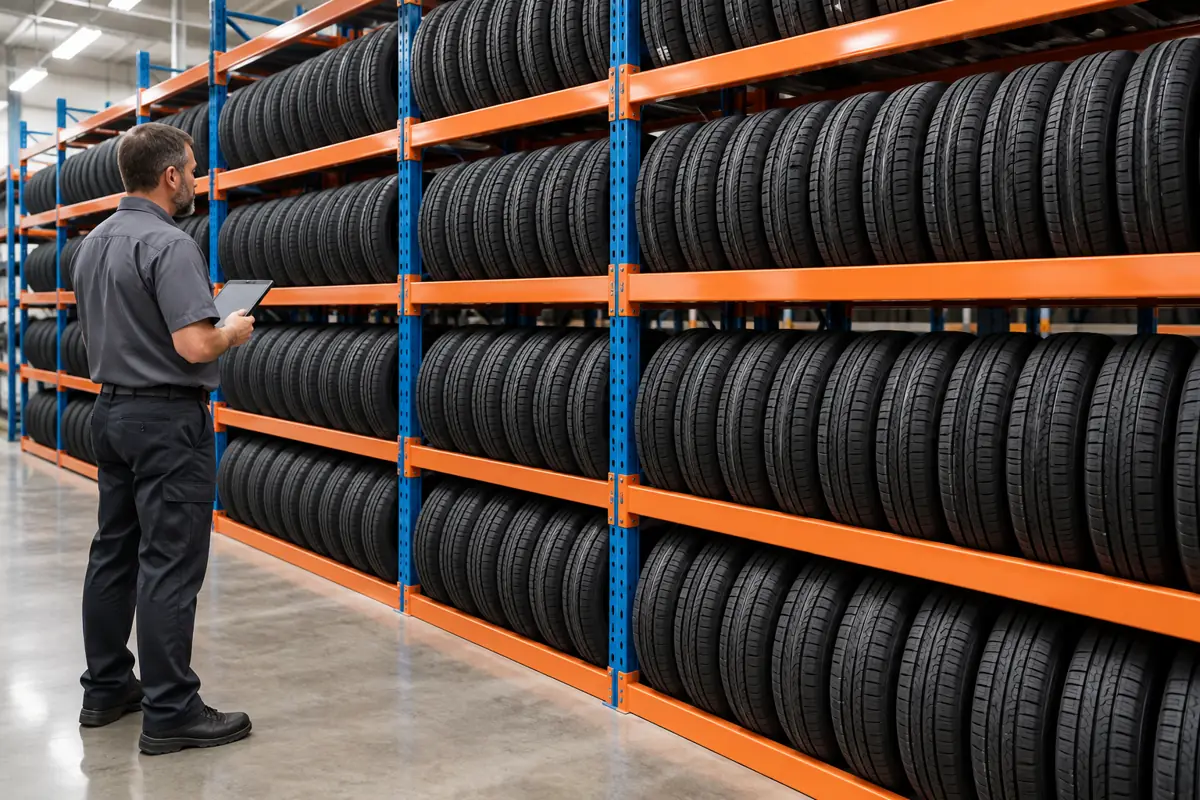
Boltless tire rack starter and add-on units in 48, 72 and 96 inch widths, ready to order online. Use the builder below to work out how many you need; for pallet-rack tire runs, truck tires or full rooms, request a quote.

Shop all tire rack sizes and add-on units → · Not sure how many? Use the builder
Build your tire rack plan
Add one row for each tire size you store in volume, set your maximum storage height and how you load, and press Build my tire rack plan. The full plan appears right here before we ask for anything. Send it in when you want a quote, a call from a tire rack specialist or an emailed copy.
Prefer a full window? Open the tire rack builder in a new tab. Laying out general pallet storage instead? Try the pallet rack configurator.
How the builder sizes a tire rack
A tire rack is sized by the tires on it. The builder uses the same three rules we use across our commercial tire storage racking guides, applied to the sizes you type in.
1. Tires per level
Usable beam length divided by the tire’s section width, rounded down. The builder takes 2 inches off the beam length for handling, and mounted assemblies give up one more unit so a technician can lift one out without dragging it past its neighbour.
2. Levels
The first level sits about 4 inches off the floor. Each level above is spaced at the tire’s diameter plus 3 inches for loose tires, or plus 5 inches for assemblies. Levels stop where the top of the tires would pass your maximum storage height.
3. Bays
Tires per level times levels gives tires per bay. Your count, plus a growth allowance, divided by that number and rounded up, gives the bays.
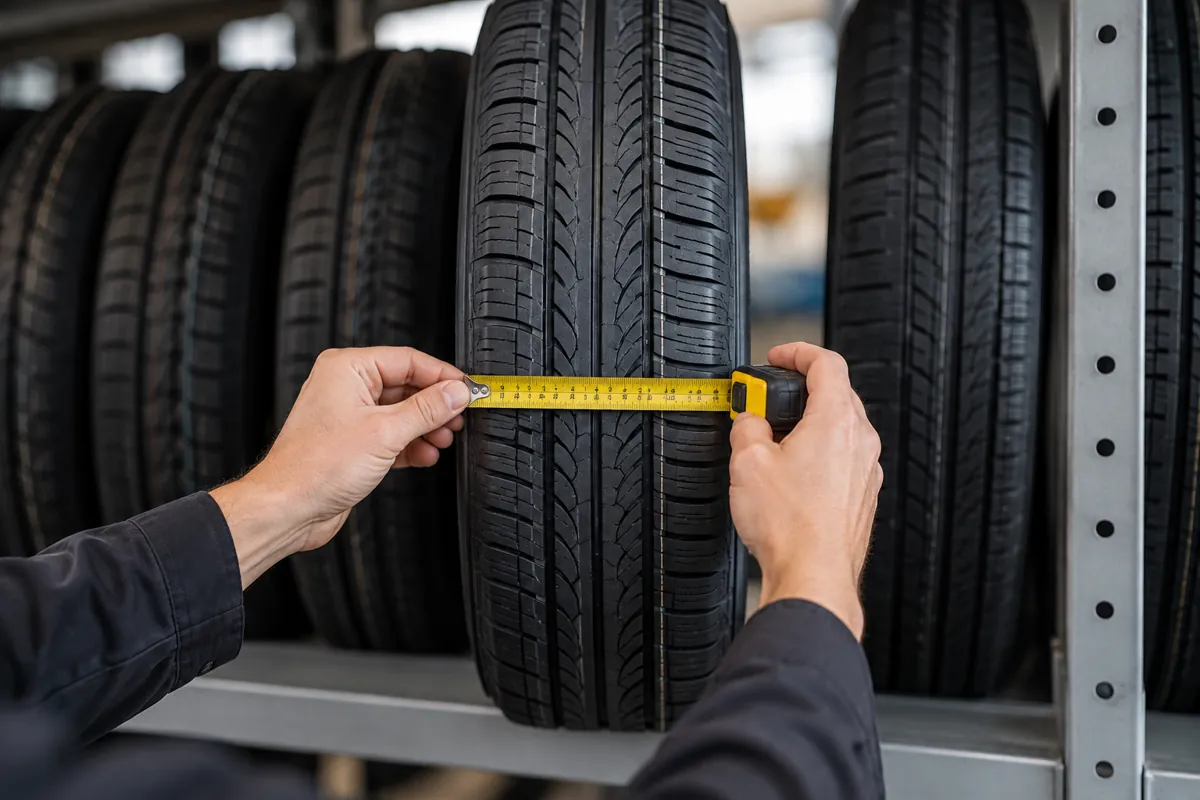
Tire dimensions come from the size, not a guess. For a metric size such as 225/65R17, section width is 225 mm (8.9 inches) and overall diameter is the 17-inch rim plus two sidewalls at 65% of the width, about 28.5 inches. Flotation sizes such as 33×12.50R15 give the diameter and width directly. For sizes like 11R22.5 the builder asks for the width and diameter from the manufacturer’s data sheet rather than inventing them.
Runs and walls. Enter the wall or row length you have and the builder splits the bays into runs that fit, counting 3 inches for every upright. A run of boltless tire rack is one starter unit plus add-on units that share its upright, so the plan lists starters and add-ons separately; pallet-rack runs list frames and beam pairs.
Worked examples: 200 tires in three common sizes
These are real outputs from the builder for 200 tires of one size, loaded by hand, no growth allowance. They show how fast the bay count moves with tire width and diameter.
| Tire | Width × diameter | Rack the builder picks | Levels | Per level | Per bay | Bays for 200 |
|---|---|---|---|---|---|---|
| 225/65R17 passenger, loose | 8.9 × 28.5 in | Boltless tire rack 96″ W × 18″ D × 120″ H (130 in max height) | 4 | 10 | 40 | 5 |
| LT265/70R17 light truck, loose | 10.4 × 31.6 in | Boltless tire rack 96″ W × 18″ D × 96″ H (130 in max height) | 3 | 9 | 27 | 8 |
| 225/65R17 passenger, mounted | 8.9 × 28.5 in | Pallet-rack tire rack, 96″ beams, 36″ deep frames (130 in max height) | 3 | 9 | 27 | 8 |
| 295/75R22.5 commercial truck | 11.6 × 39.9 in | Pallet-rack tire rack, 120″ beams, 42″ deep frames (144 in max height) | 3 | 10 | 30 | 7 |
Two things stand out. The light-truck tire is only 1.5 inches wider than the passenger tire, but it is 3 inches taller, which costs a whole level under a 130-inch ceiling, so 200 tires need 8 bays instead of 5. And mounting the same passenger tire on wheels takes the bay from 40 to 27 tires, because each level gives up a unit for lift-out clearance and the extra level spacing costs a level. That is why the builder plans each size band separately instead of averaging.
Boltless tire rack or pallet-rack-based tire rack?
The builder chooses between two rack styles and tells you why. You can override the choice.
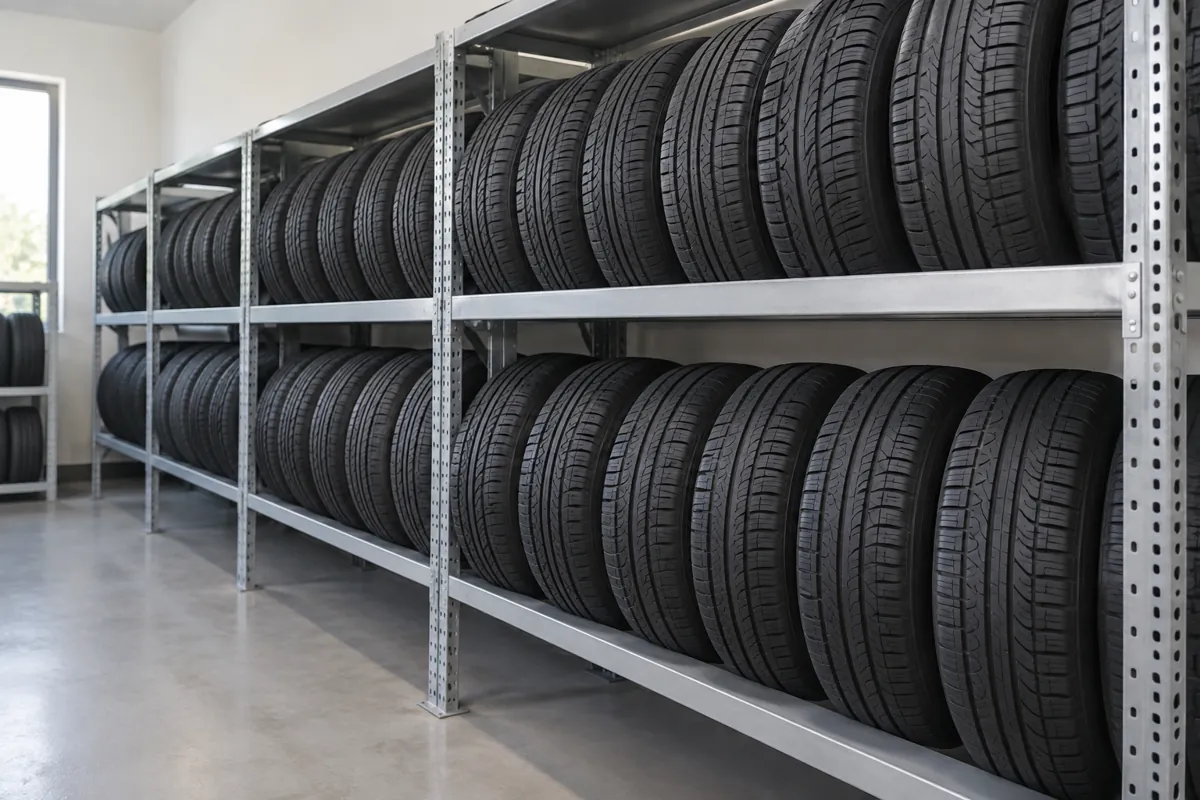
Boltless tire rack for loose passenger and light-truck tires
Hand-loaded tire shelving with an 18-inch depth, sold in 48, 72 and 96 inch widths, 96 inches tall with three adjustable levels or 120 inches tall with four. Units go together without bolts, and a run grows one add-on unit at a time. It suits tire shops, quick-lube bays and dealership service rooms where tires are lifted on and off by a technician.
See tire shop storage racks and dealership tire storage racks for layouts.
Pallet-rack-based tire rack for truck tires, assemblies and height
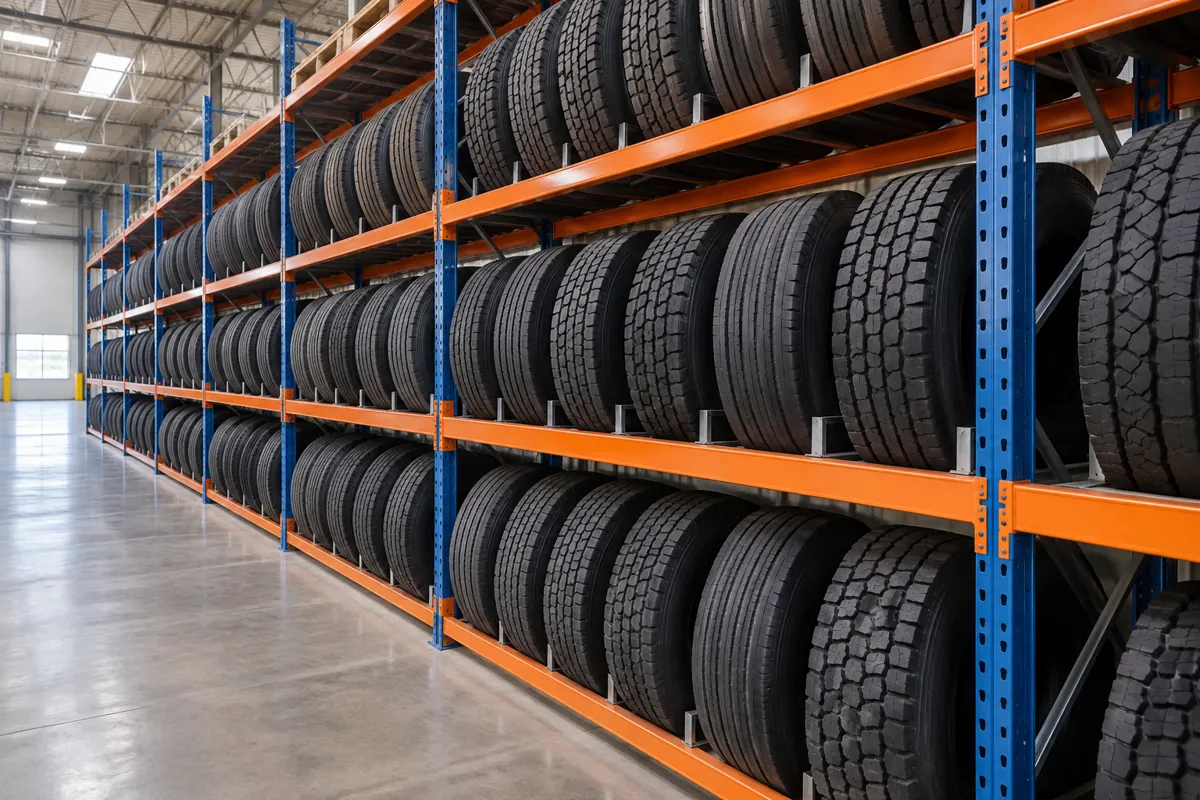
Teardrop pallet rack frames 36, 42 or 48 inches deep, so a 40-inch truck tire sits on the beams without hanging into the aisle, with beams from 48 to 144 inches long and frames up to 288 inches tall. The builder switches to this style for commercial truck tires, mounted assemblies, lift-loaded storage or storage heights well above the tallest boltless frame.
More on heavy-duty truck tire racks, tire and wheel assembly racks and our full pallet rack range.
Plan each size band in its own bays
Level spacing is fixed by the tallest tire on the level. Passenger tires on levels pitched for truck tires waste a third of every opening, and a light-truck tire will not fit a level pitched for passenger tires at all. The builder keeps every band in its own bays, then totals bays, run length and floor footprint for the whole room.
When the total climbs past several hundred positions, taller frames or high-density tire racks usually beat a longer wall run. If floor space itself is the limit, a Vidir tire carousel stores up to 352 tires vertically in a single footprint.

What the plan checks, and what a specialist confirms
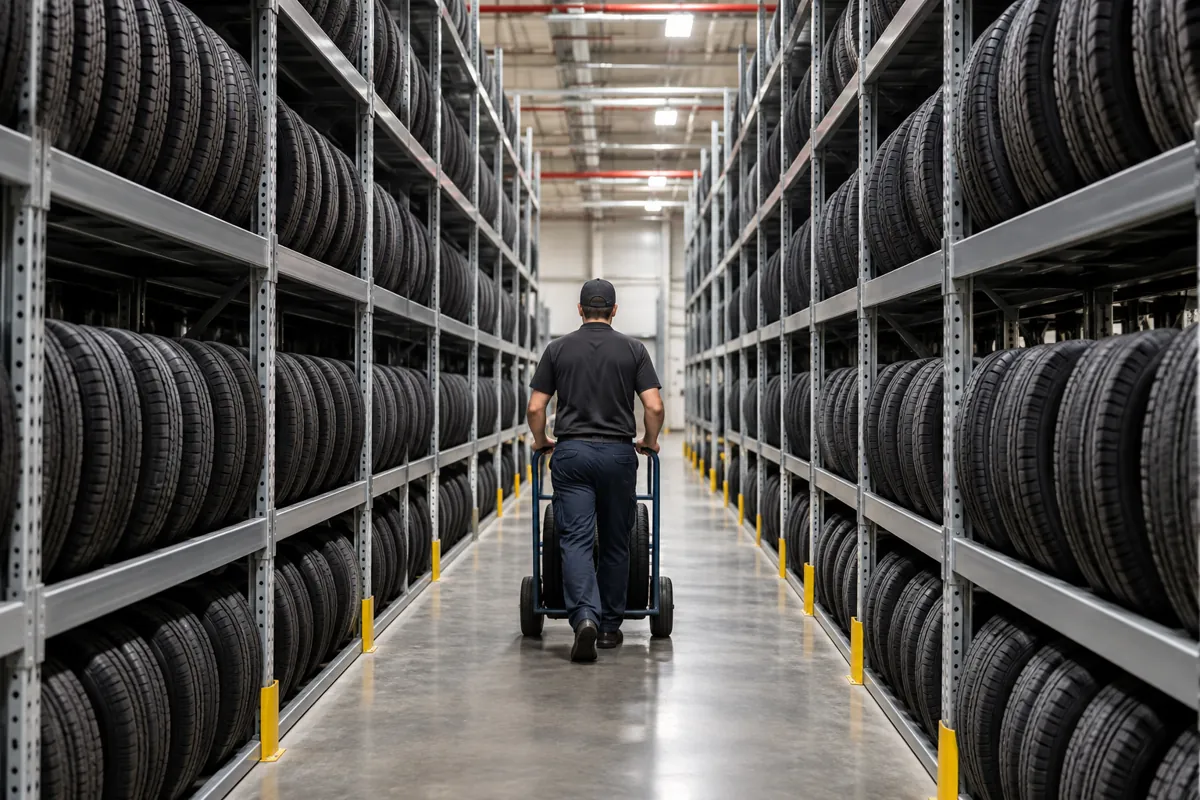
Built into your plan
Top of storage. Every plan shows the top-level height and the height of the tops of the tires, so you can compare them with your ceiling, lights and sprinkler clearance.
Handling. If heavy truck tires or assemblies land high on a hand-loaded rack, the plan flags it so the handling method is settled before the taller frame is chosen.
Load. Enter the weight of your heaviest tire and the plan shows the load per level and per bay, ready to check against rated capacity.
- Rated shelf and beam capacity for the exact rack selected, against your heaviest tire or assembly
- Decking choice: open beams, wire deck or tire cradles for each level
- Aisle widths for tire dollies, tire carts or lift equipment
- Anchoring, and any building permit or fire-code review for your storage height
- Freight, delivery and installation scheduling around your service hours
Fire code and tire storage
Fire codes treat rubber tires as a high-hazard commodity, and NFPA 13 handles them as their own commodity class, so storage-height limits can start lower than for other products. Confirm the current edition and local amendments with your fire-protection engineer and the authority having jurisdiction before going tall.
From plan to quote
Build the plan
Enter sizes, counts, mounted or loose, your storage height and how you load. The bay plan appears on screen.
Send it in
Choose Request a quote, Talk to a specialist or Email me a copy. A quote request asks only for the details a quote needs.
Specialist review
A tire rack specialist checks the sizes, loads, decking and room, and confirms the rack configuration with you.
Pricing and delivery
You receive pricing with freight. Some common sizes are in stock at select manufacturers, subject to confirmation.
Sizing a whole tire room, a seasonal storage program or a distribution center? The builder handles up to six size bands at once. For projects in Salt Lake City and along the Wasatch Front, our Utah tire storage rack team designs, supplies and installs locally. All of our free planning tools live on the planning tools page.
Want a person to check your plan?
Send the plan from the builder, or call with your tire sizes, counts and room dimensions, and a tire rack specialist will confirm bays, levels and load ratings before quoting.
Tire rack builder FAQ
How many tires fit on one tire rack bay?
How do I find my tire’s width and diameter?
How much space should I leave between tire rack levels?
Can I mix passenger, light-truck and truck tires in the same bay?
Why does the builder recommend pallet rack for truck tires and mounted wheels?
Does the tire rack builder give me a price?
Do I need a permit or fire-code review for tire racks?
Ready to size your tire racks?
Build your plan above, or call (800) 326-4403 with your tire sizes and counts. A specialist confirms the configuration and sends pricing.