
Mezzanine Safety Gates & Slide Gates
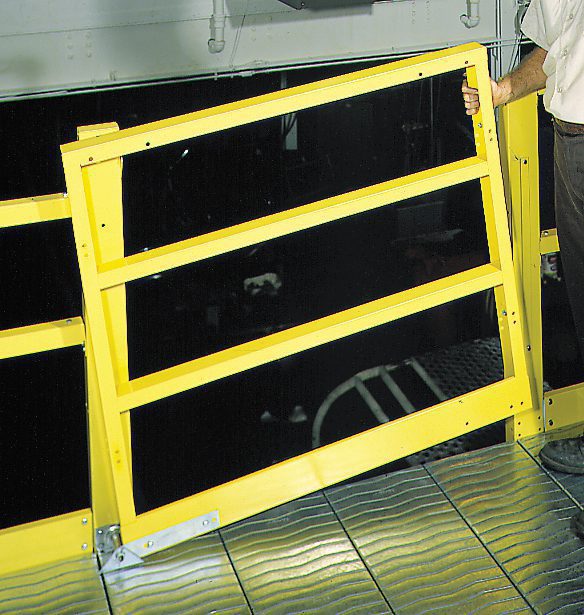
Pivot, reciprocating, slide, swing and pallet drop gates that keep a mezzanine loading edge guarded while forklifts land and pick loads. Sized to your loads and mezzanine, new or retrofit.
Talk with a specialist: (800) 326-4403 or Sales@MH-USA.com

Shop Mezzanine Safety Gates Online
Real mezzanine gates from our online catalog. Some common sizes are in stock at select manufacturers, subject to confirmation; custom widths and finishes are quoted.


Browse the categories: Protective Barriers · Equipto Mezzanine Components & Access
Why the Pallet Drop Is the Riskiest Edge on a Mezzanine
Every other edge gets fixed guardrail. The loading edge has to open.
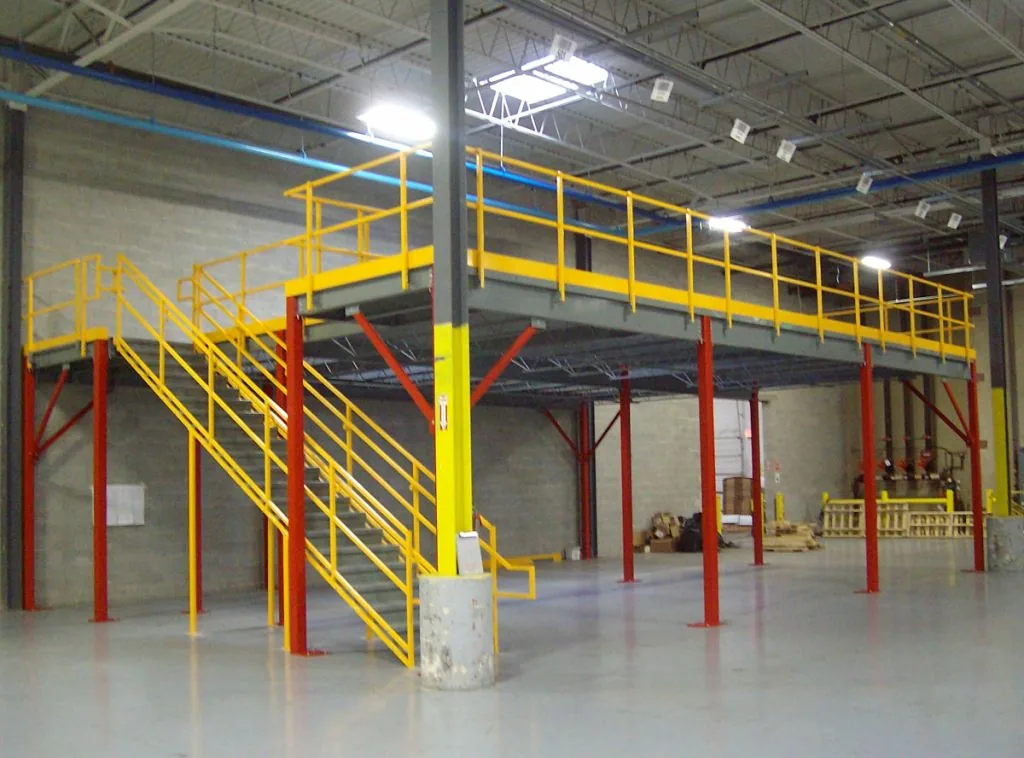
A mezzanine adds floor space without adding building, but it also creates a raised edge that someone has to load. Most mezzanines get product to the upper level by forklift: the driver lifts a pallet over the guardrail line and sets it on the deck, and a picker on top pulls it in. That landing spot, usually called the pallet drop or drop zone, is the one place where the guardrail cannot be fixed in place.
If the drop zone is closed with a chain, a lift-out rail section or a simple gate, the edge is wide open every time the gate is open. Staff on the deck lean out to guide the load, reach for a pallet that stopped short, or step back without looking. A mezzanine safety gate solves that by keeping a barrier between people and the edge for the whole loading cycle. The right gate depends on how often you load, how big the loads are, how much deck space you can give up and whether you are building new or adding to an existing mezzanine.
- Loading frequency: daily pallet traffic points to a reciprocating (pivot) gate; occasional access can use a slide or swing gate.
- Load size: the widest and tallest load sets the clear opening and clear height.
- Deck space: slide and pivot gates keep the deck clear; inward-swing gates need a swing path.
- New or existing: most gates can be retrofitted to an existing mezzanine guardrail.
Mezzanine Safety Gate Types
How each gate works, where it fits and what it costs you in deck space and protection.
Pivot and reciprocating gates (up-and-over)
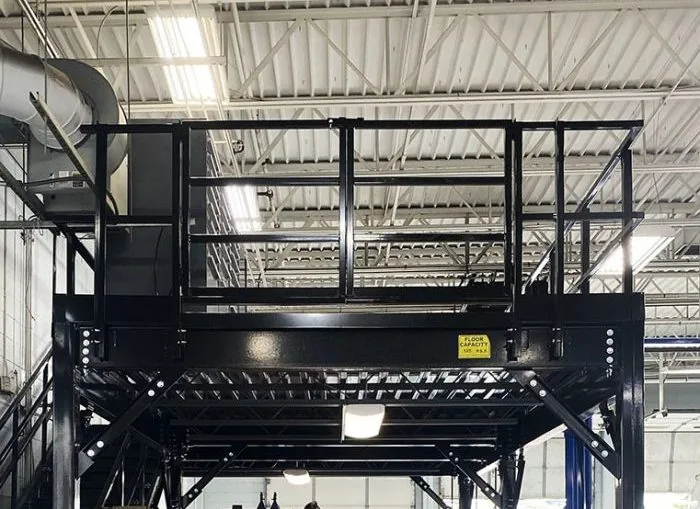
A reciprocating gate has two barriers tied together: one on the forklift side of the drop zone and one on the walkway side. When the forklift side opens, the inner barrier swings or pivots down to close the deck side, so the edge is never open to the people working up top. Most versions rotate on a balanced pivot and do not need springs or power.
This is the gate safety managers pick for daily pallet traffic, pick modules and production platforms. The trade-off is that the pivot frame creates a three-sided pocket on the deck and limits load height, so the load has to be positioned inside the gate.
Slide gates
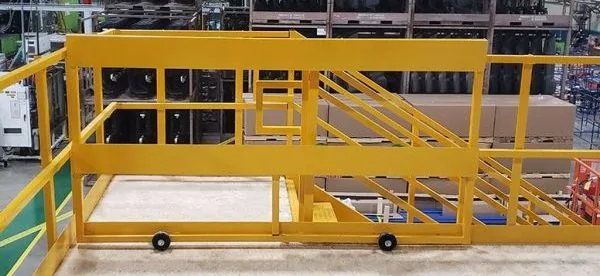
A slide gate is a guardrail section that rolls or slides along the rail line to open the drop zone. It takes no swing space on the deck, so pallets and carts can be staged right up to the opening, and it is easy to operate with a cart or a pallet jack nearby.
Because the edge is open while the gate is slid back, a slide gate suits occasional loading, wider openings and areas where people are trained to stay back or tie off. Add a gate-open alarm or a self-closing return where the gate could be left open.
Swing gates (single and double)
Swing gates hinge off the guardrail posts and open into the mezzanine, never out over the edge. Single gates cover narrow openings; double (bi-parting) gates cover a full pallet width. Spring-loaded hinges can make them self-closing.
They are simple and inexpensive, but they need a clear swing path on the deck and they leave the edge open while open. Use them where loading is occasional, or as a ladderway gate, where OSHA expects a self-closing gate that swings away from the opening.

Enclosed and tall-load pivot gates
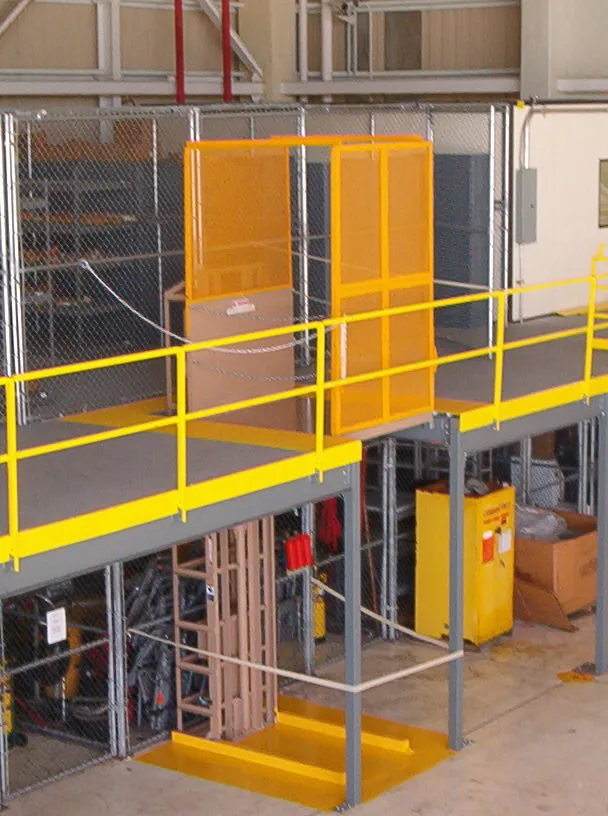
When loads are tall or the gate sits in a busy pick area, the pivot gate can be built as a mesh enclosure. The mesh sides keep cartons from sliding off the pallet into the aisle below, and taller frames or multiple pivot points clear loads that would hit a standard overhead frame.
Double-wide and custom-width versions cover two pallet positions or a cart lane. These are typically quoted to the opening rather than bought off the shelf.
Other gate and drop-zone options
Compare Mezzanine Gate Types
A planning summary. Confirm the final choice with your safety team and the gate manufacturer.
| Gate type | Edge open during loading? | Deck space needed | Best for | Watch-outs |
|---|---|---|---|---|
| Pivot / reciprocating | No: inner barrier closes first | Pocket inside the gate | Daily pallet traffic, pick modules | Load height limit; position load inside gate |
| Double-wide pivot | No | Wider pocket | Two pallets or cart lanes | Larger deck footprint; custom sizes |
| Slide gate | Yes, while slid open | None beyond the rail line | Occasional loading, wide openings | Can be left open; add alarm or closer |
| Swing gate (single/double) | Yes, while open | Swing path on deck | Occasional access, ladderways | Must swing inward; keep path clear |
| Lift-out section / chain | Yes | None | Rare access, backup closure | Equivalency must be shown; PFAS when leaning out |
| Finger / impact gate | Briefly, as load passes | Lane only | Pallet flow and pick lanes | Not a substitute for a drop-zone gate where people work |
Not sure which gate fits your drop zone?
Send a photo of the opening, the deck edge and your largest load. We will recommend a gate type and size and quote it with the guardrail tie-in.
Planning a Mezzanine With a Slide Gate
Where a sliding gate makes sense and how to make it safer.
When a slide gate is the right call
A slide gate shines where the deck is tight and the loading edge is used a few times a day: parts rooms, maintenance mezzanines, records storage and light-duty storage decks. It opens without stealing floor space, so shelving and carts can sit close to the opening, and it works for wide openings where a pivot frame would get large.
On a new mezzanine, plan the slide track and stop posts with the guardrail layout so the gate parks against fixed rail, not in front of a stair or another opening.

Slide gate safety checklist
- Gate rail, midrail and toeboard match the adjacent guardrail when closed.
- Positive latch at the closed position, and an end stop so the gate cannot roll past its post.
- Gate-open alarm or self-closing return if the opening could be left unattended.
- Floor marking and signage at the drop zone; written rule that nobody leans out without fall protection.
- Track and wheels inspected for debris, wear and smooth travel as part of routine mezzanine inspection.
If loading becomes a daily task, a pivot or reciprocating gate is usually the better long-term choice. Many existing slide-gate openings can be converted, as long as the deck edge and opening width suit the new gate.
OSHA 1910.28 and 1910.29: What Applies to Mezzanine Gates
The federal general-industry rules behind guardrails, drop zones and ladderway gates.

The guardrail rules a gate has to meet
Under OSHA 1910.28(b)(1), workers on a walking-working surface with an unprotected edge 4 feet or more above a lower level need fall protection, usually guardrail. A mezzanine gate is part of that guardrail system, so when it is closed it has to perform like the rail around it.
OSHA 1910.29(b) sets the numbers: a top edge 42 inches, plus or minus 3 inches, above the deck; a midrail, mesh or equivalent below it; and strength to resist 200 pounds at the top rail without dropping below 39 inches.
| Requirement | OSHA reference | What it means for a gate |
|---|---|---|
| Edge 4 ft or more above lower level needs fall protection | 1910.28(b)(1) | Every mezzanine loading edge needs a guard; the gate is that guard when closed. |
| Top rail height 42 in. ± 3 in. | 1910.29(b)(1) | Gate top rail should line up with the surrounding guardrail. |
| Midrail, mesh or equivalent intermediate member | 1910.29(b)(2) | Gates need a midrail or infill, not just a single top bar. |
| 200 lb at the top rail; no deflection below 39 in. | 1910.29(b)(3)-(4) | Hinges, pivots, latches and posts must carry the same load as the rail. |
| 150 lb on midrails and infill | 1910.29(b)(5) | Mesh panels and midrails on the gate are load-rated too. |
| Hoist areas: chains or gates only if as safe as guardrail | 1910.29(b)(10) | A chain across a drop zone needs a documented equivalency. |
| Leaning through an open hoist opening requires a personal fall arrest system | 1910.28(b)(2)(ii) | Swing, slide and lift-out gates leave staff exposed; reciprocating gates avoid this. |
| Ladderway openings: self-closing gate or offset | 1910.29(b)(13) | Fixed-ladder and ship-ladder openings get spring-closing gates. |
| Toeboards at least 3.5 in. high where objects could fall | 1910.29(k)(1) | Gates over aisles or work areas should carry a kick plate. |
Codes and the authority having jurisdiction
OSHA covers worker protection; the building code (most U.S. jurisdictions use the IBC, including its guard requirements) and your local building official govern the mezzanine itself. We supply gates designed to meet the OSHA guardrail criteria, but final compliance depends on installation, use and your local AHJ. See the OSHA 1910.29 text for the full rule.
Sizing a Mezzanine Gate: Opening, Height and Load
Measure these before you ask for a quote.
| Measurement | How to take it | Why it matters |
|---|---|---|
| Largest load footprint | Widest pallet or container plus any product overhang | Sets the minimum clear opening; overhang is what usually hits posts. |
| Forklift placement tolerance | Watch a few real drops; note how far loads land off center | Extra side clearance keeps drivers from striking the gate frame. |
| Tallest load height | Pallet plus product, from the deck surface | Pivot and overhead gates limit load height inside the gate. |
| Clear opening (not frame width) | Ask the manufacturer for the clear width between posts | Frame and post sizes reduce the usable opening. |
| Deck edge and beam | Edge type, beam depth, deck material and thickness | Determines side-mount or surface-mount gate posts. |
| Rail height and finish | Measure the existing top rail and note the color | Gate should match the adjacent guardrail. |
| Deck rating at the drop zone | Mezzanine load rating from the drawings or nameplate | Pallets land as concentrated loads; the engineer confirms the deck. |
Single-pallet gates cover the most common drop zones, and double-wide gates cover two pallet positions or a cart lane. For example, one catalog drop gate is 42 inches high with two 44-inch frames for an 88-inch overall width. Odd sizes, extra-tall loads and stainless construction are quoted to the opening. If you are not sure of the deck rating, our mezzanine specifications page explains load ratings, and the mezzanine feasibility screener helps check a new project before engineering.
Finishes and materials
Most mezzanine gates are welded steel with a powder-coat finish, usually safety yellow so the drop zone reads from the floor below. Galvanized gates suit cold storage and damp areas, and stainless steel gates suit food, beverage and pharmaceutical washdown zones.
Mesh infill keeps small cartons from falling through, and kick plates keep product on the deck. Gates can be finished to match the existing rail color where the facility standard is gray, black or blue.

Adding a Safety Gate to an Existing Mezzanine
Most mezzanines can take a new gate without rebuilding the guardrail.
What a retrofit involves
A retrofit gate replaces a section of fixed rail, a chain or a lift-out section at the drop zone. The gate posts bolt to the deck surface or to the face of the mezzanine beam, and the existing guardrail is cut back and re-terminated at the new posts so the rail line stays continuous.
Before ordering, we confirm the opening, the edge and beam details, the rail height and how loads actually arrive. Photos and a few measurements are usually enough for a first quote; a site visit confirms the details.
Send photos and measurements
Opening width, deck edge, rail height, largest load and how often you load.
Choose the gate type
Pivot, slide, swing or custom, matched to traffic and deck space.
Confirm and order
Clear opening, mounting method and finish confirmed before release.
Install and inspect
Gate set, guardrail tied in, operation checked and staff shown how to use it.
Where Mezzanine Safety Gates Are Used
Daily use and inspection
Train staff to keep the inner barrier closed, never ride or climb the gate and never lean through an open drop zone without fall protection. Check pivots, hinges, latches, wheels and fasteners as part of routine mezzanine inspection, and repair a damaged gate before the drop zone is used again.
Mezzanine Safety Gate FAQs
What is a mezzanine safety gate?
What is the difference between a pallet drop gate and a reciprocating gate?
Does OSHA allow a swing or slide gate at a pallet drop?
What size mezzanine gate do I need?
What is a mezzanine with a slide gate?
Can a safety gate be added to an existing mezzanine?
Can the mezzanine and gate be customized?
What are mezzanines and gates made of?
How long does installation take?
Related Mezzanine Resources
Get the Right Gate on Your Mezzanine
Tell us about the opening and your loads. We will recommend a gate, quote it and coordinate installation.