
HVLS Fans & Industrial Ceiling Fans
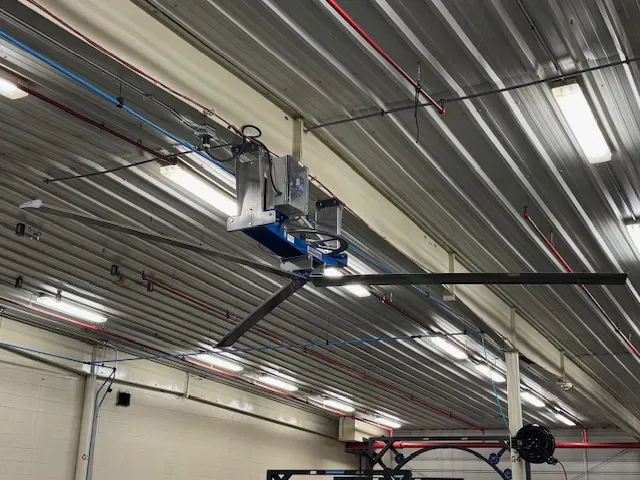
High-volume, low-speed ceiling fans that cool workers in summer and push trapped heat back to the floor in winter. We supply TAB EverBreeze 16 ft and 21 ft HVLS fans for warehouses, plants, shops, barns and gyms, and help you size, place and quote them with freight.
16-21 ft
EverBreeze diameters
45 RPM
Slow, quiet blades
240v-480v
1- or 3-phase
Year-round
Cooling + destrat
What Is an HVLS Fan and How Does It Work?
HVLS stands for high-volume, low-speed. Instead of a small propeller spinning fast, an HVLS fan uses very long airfoil blades, often 8 to 24 feet across, that turn slowly. Each rotation pushes a huge column of air straight down to the floor.
When that column hits the floor it spreads out in every direction as a wide, gentle horizontal current, sometimes called a floor jet. The air keeps rolling outward until it meets walls or equipment, rises, and is drawn back into the top of the fan. One big fan sets the air in a whole zone of the building in motion.
That is why people call them big industrial fans, warehouse ceiling fans or simply industrial ceiling fans. The idea is the same: move a lot of air with little noise and little power.
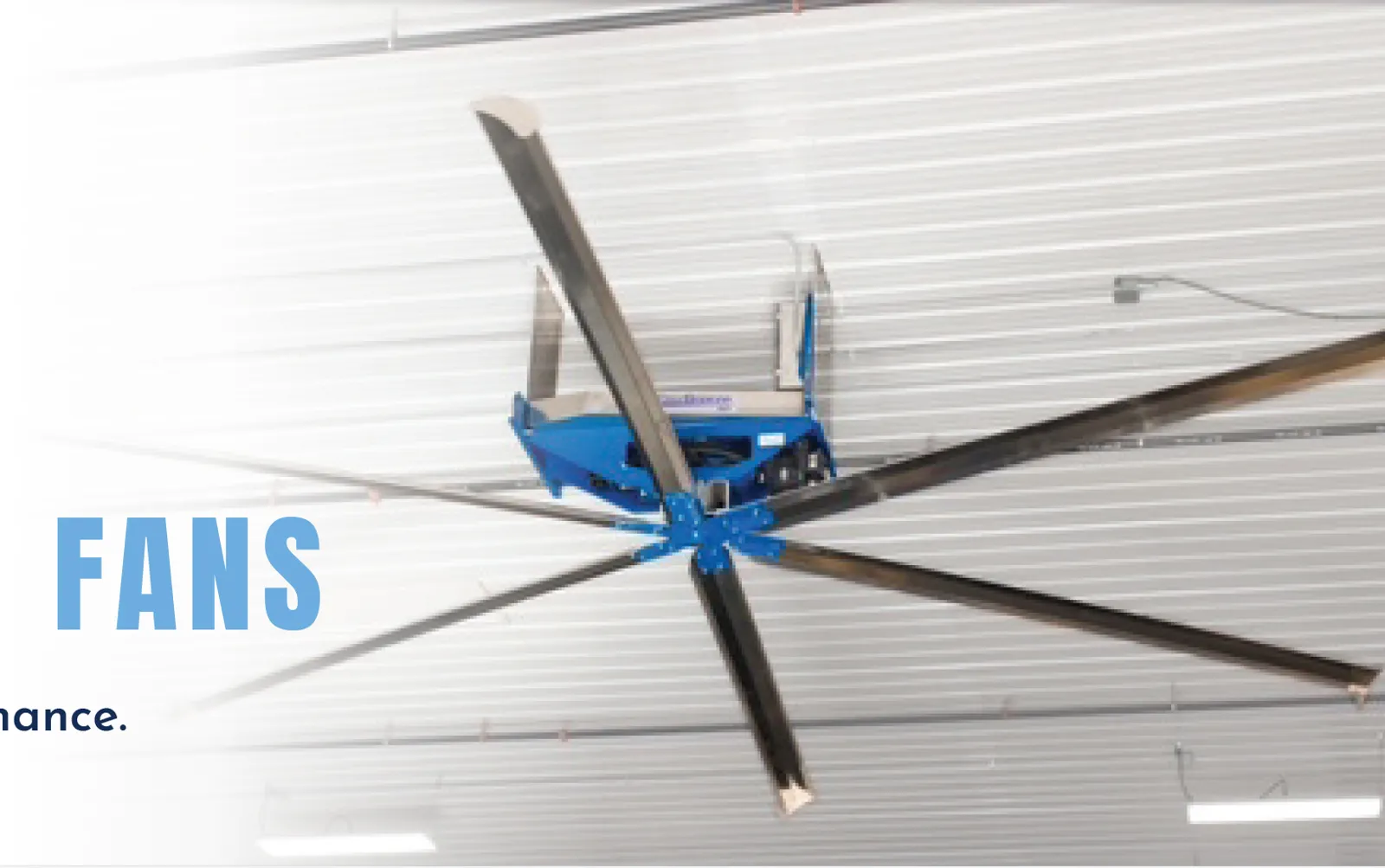
Photo: TAB Industries
HVLS fans vs. floor fans and small ceiling fans
A 24" or 30" pedestal fan throws a fast, narrow stream that cools the one person standing in front of it, blows paperwork and dust around and needs a cord across the floor. Small high-speed ceiling fans help a little, but their airflow fades a few feet below the blades in a tall building. An HVLS fan covers the floor area of a dozen or more floor fans from above, out of the way of forklifts, carts and people, with no cords to trip over and far fewer motors to maintain.
HVLS Fan Sizing: Diameter, Coverage and Ceiling Height
Picking the right size is the single biggest factor in whether a big fan works. The goal is to match the fan diameter to the clear height you have and the floor area you want to influence.
| Fan diameter | Typical clear ceiling height | Rough floor area influenced* | Good fit for |
|---|---|---|---|
| 8-12 ft | 12-20 ft | Up to about 5,000 sq ft | Service bays, small shops, gyms with lower ceilings |
| 14-16 ft | 18-28 ft | About 5,000-12,000 sq ft | Auto shops, fabrication bays, small warehouses |
| 18-21 ft | 22-35 ft | About 10,000-20,000 sq ft | Warehouses, distribution centers, plants, barns |
| 22-24 ft | 28 ft and higher | About 15,000-25,000+ sq ft | Large open DCs, hangars, arenas |
*Planning ranges only. Real coverage depends on racking, walls, equipment, doors and what you want the fan to do. We confirm fan count and spacing for your layout.
Rules of thumb that hold up
- Bigger and slower beats smaller and faster: one 21 ft fan usually does more than two 10 ft fans in a tall space.
- Space fans roughly two and a half to three diameters apart, center to center, so their floor jets meet without fighting.
- Keep blades well below the roof deck and well above the tallest load, lift mast or vehicle that passes underneath.
- Tall racking breaks the floor jet into aisle-sized channels; plan fans over main aisles and open work zones.
- Doors, dock seals and HVAC diffusers change the airflow, so mark them on the floor plan before you size.
As a quick example, a 100 ft by 200 ft (20,000 sq ft) shipping area with a 30 ft clear height is a typical candidate for one or two 21 ft fans, depending on racking and door layout. A 60 ft by 80 ft service shop with an 18 ft eave usually fits a single 16 ft fan over the center bays.
Summer Cooling and Winter Destratification
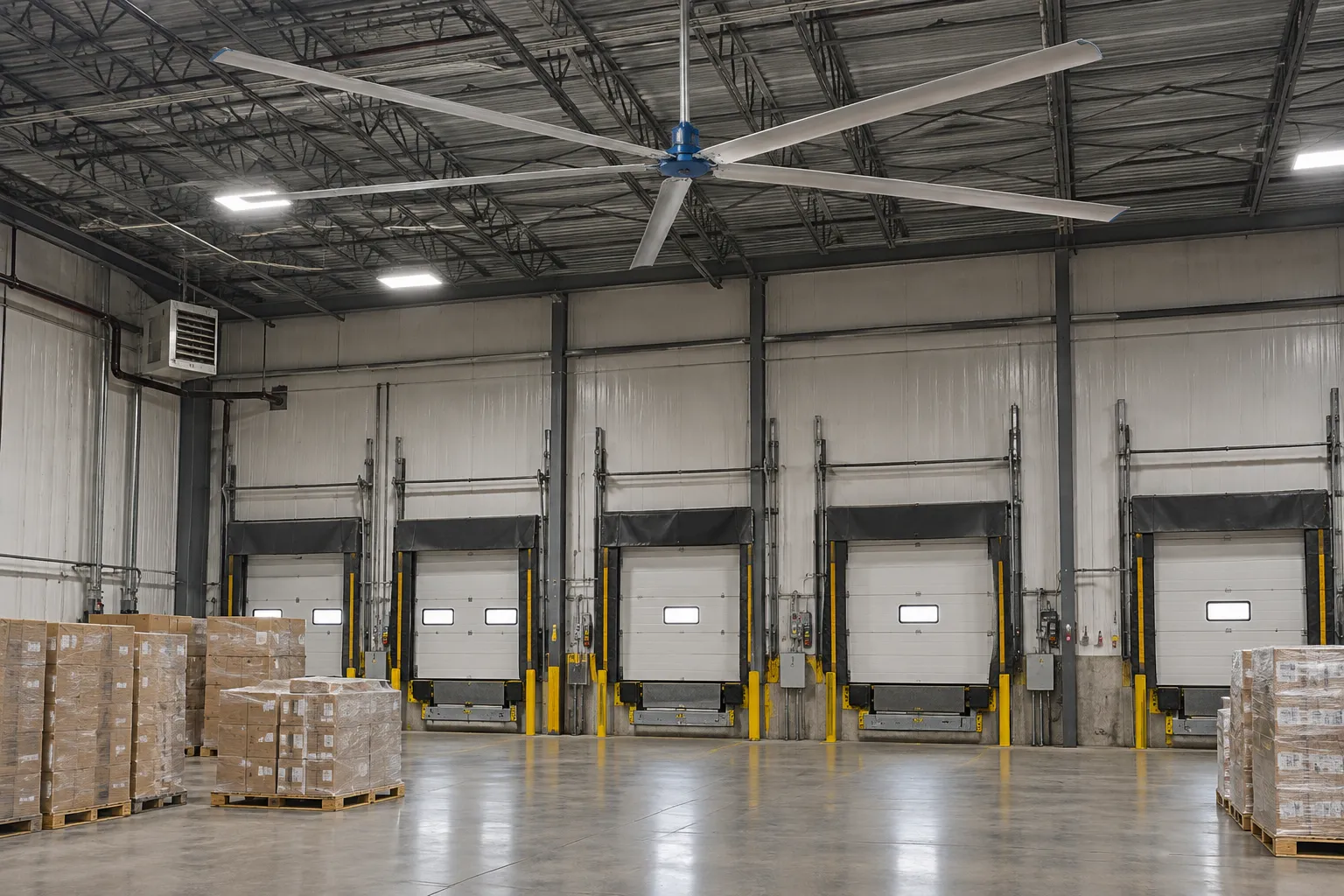
Summer: moving air pulls heat and moisture off skin, so people feel cooler than the thermometer reads. HVLS fan makers commonly describe a perceived cooling effect of several degrees at moderate air speeds. In a warehouse with no air conditioning that can be the difference between a miserable afternoon shift and a workable one. In a cooled building it can let you raise the setpoint without complaints.
Winter: warm air rises and pools under the roof. In a 30 ft building the air at the deck can be much warmer than the air at your workers’ feet. Run slowly, without a noticeable breeze, an HVLS fan mixes that trapped heat back down. This is destratification, and it lets heaters cycle less.
Representative HVLS fan illustration.
Energy and comfort in plain numbers
An HVLS fan motor is small for the area it serves. TAB lists a 2 HP motor on its EverBreeze spec sheet, which draws far less than a fleet of floor fans or the extra tonnage of cooling it can help you avoid. The payback comes from three places: fewer portable fans to buy, power and replace; lower heating fuel in winter from destratification; and comfort that keeps people productive and reduces heat stress. We do not promise a specific percentage, because savings depend on your climate, roof insulation, heating system and how the fans are run, but we can talk through the factors for your building.
TAB EverBreeze HVLS Fans: 16 ft and 21 ft Models
MH-USA is an authorized TAB Industries dealer. TAB, the Pennsylvania maker of TAB Wrapper Tornado stretch wrappers, builds the EverBreeze line of industrial ceiling fans for warehouses and plants. There are two models: the EverBreeze 316 (three blades, 16 ft diameter) and the EverBreeze 621 (six blades, 21 ft diameter).
TAB states that a single EverBreeze fan replaces the work of many floor fans without cords, clutter or upkeep, and that each unit ships with a pre-wired electrical panel and a digital or thermostatic control of the buyer’s choice. The fans are built for continuous duty and quiet operation in occupied spaces.
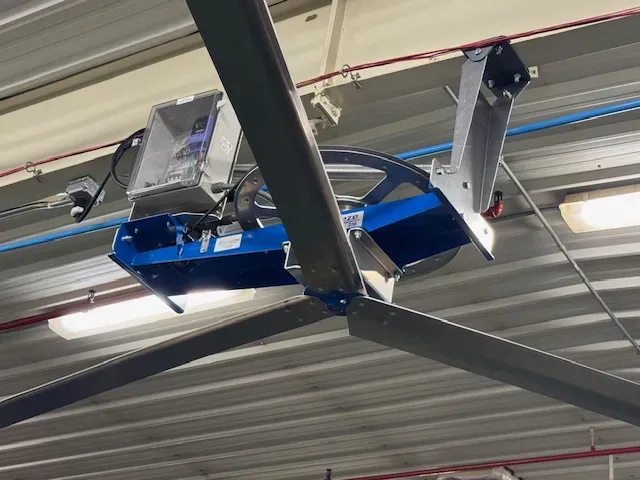
Photo: TAB Industries
EverBreeze specifications (published by TAB)
| Specification | TAB EverBreeze |
|---|---|
| Models | EverBreeze 316 (3 blades, 16 ft) and EverBreeze 621 (6 blades, 21 ft) |
| Published price (TAB) | EverBreeze 316: $4,500 per unit EverBreeze 621: $6,500 per unit |
| Motor | 2 HP, 45 RPM, rated for continuous operation |
| Blades | Contoured blades, listed at 10 ft on TAB’s spec sheet |
| Airflow | Approximately 240,000 CFM listed on TAB’s spec sheet |
| Mounting | Pre-engineered steel, bar joist or wood truss structures |
| Electrical | 240v single phase, or 240v-480v three phase; pre-wired panel |
| Controls | Digital or thermostatic control included, buyer’s choice |
| Noise | Low, designed for occupied industrial and commercial spaces |
Specifications from TAB Industries’ EverBreeze product page and spec sheet (2026). Ask us to confirm model-specific values, such as blade length and airflow per size, for your quote. Prices are TAB’s published per-unit prices for the fan; freight, mounting to your structure and electrical work depend on the building and are quoted for your site.
Comparing Industrial Fan Types
HVLS ceiling fans are not the only way to move air. This comparison helps you decide where each type fits, and many buildings use more than one.
| Fan type | Coverage | Best for | Trade-offs |
|---|---|---|---|
| HVLS ceiling fan (8-24 ft) | Whole zones, thousands of sq ft each | Open floors, aisles, year-round comfort and destrat | Needs structure, clearance and an electrician; higher first cost per unit |
| Small high-speed ceiling fan | A few hundred sq ft | Offices, low ceilings | Little effect at floor level in tall buildings |
| Pedestal or drum fan | One workstation or doorway | Spot cooling, temporary needs | Cords, noise, blows debris, many units to maintain |
| Wall-mount circulator | A work cell or bench line | Fixed stations along walls or columns | Short throw, fixed direction |
| Exhaust / shutter fan | Air changes, not comfort | Removing heat, fumes and humidity | Needs make-up air; not a cooling breeze |
| Evaporative cooler | Local area | Dry climates, outdoor docks | Adds humidity; water and pad upkeep |
Good pairing
In hot climates many facilities run HVLS fans for the main floor, wall circulators at fixed workstations and shutter exhaust fans high on the walls to dump heat. The HVLS fans keep air moving; the exhaust fans remove the heat they stir up.
Applications: Where HVLS Fans Pay Off
Big ceiling fans work wherever people or animals share a large, tall space that is hard to heat or cool evenly. Here is how the guidance changes by building type.
Detailed guides: sizing and layout for warehouse fans (docks, rack aisles, cross-dock lanes, winter destratification) and a type-by-type comparison of big industrial fans (drum, pedestal, wall and HVLS ceiling fans).
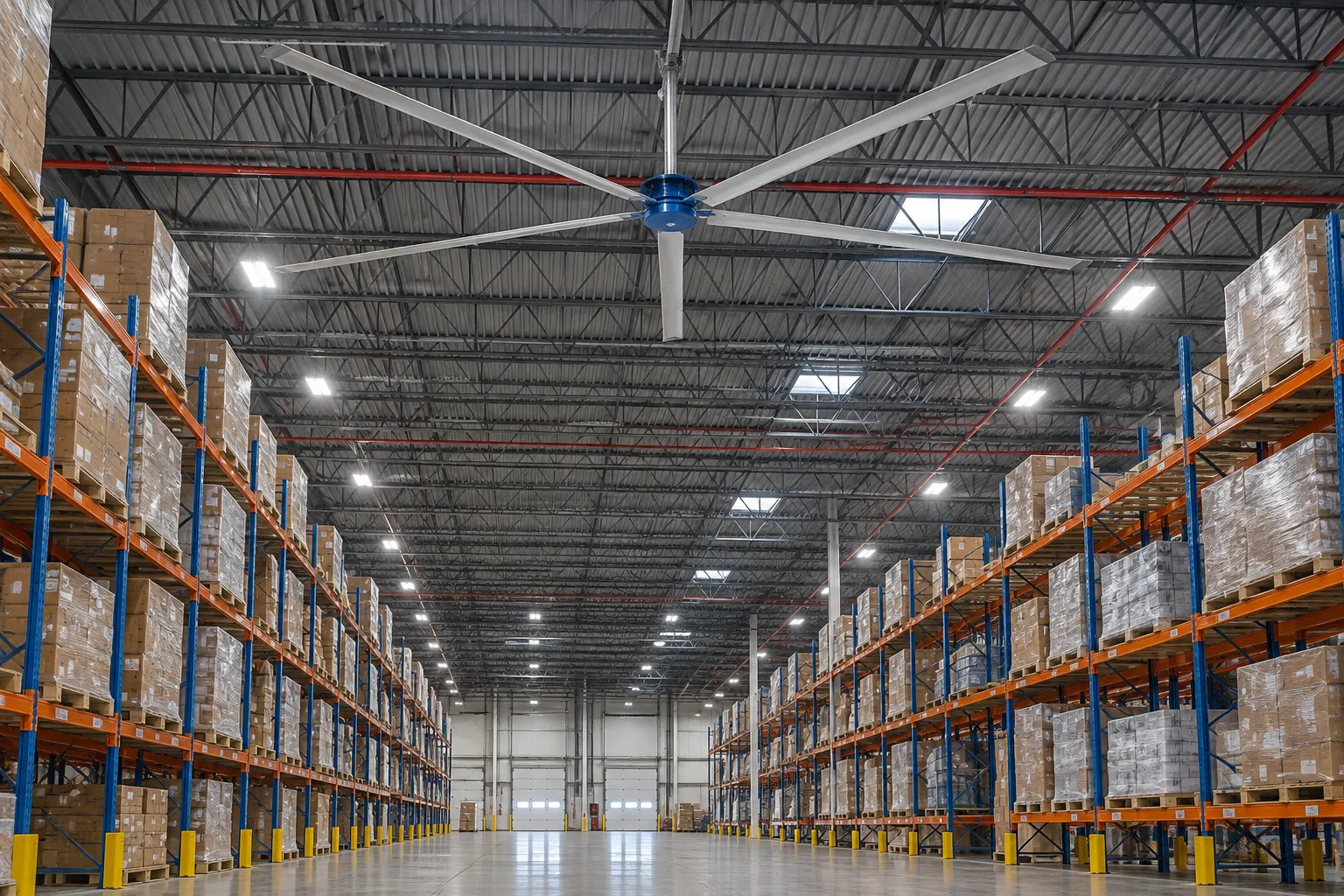 Warehouses & distribution centersPut fans over main aisles, pick zones and the shipping dock, not over tall rack runs. Destrat pays back fast in heated buildings. Plan alongside your rack layout.
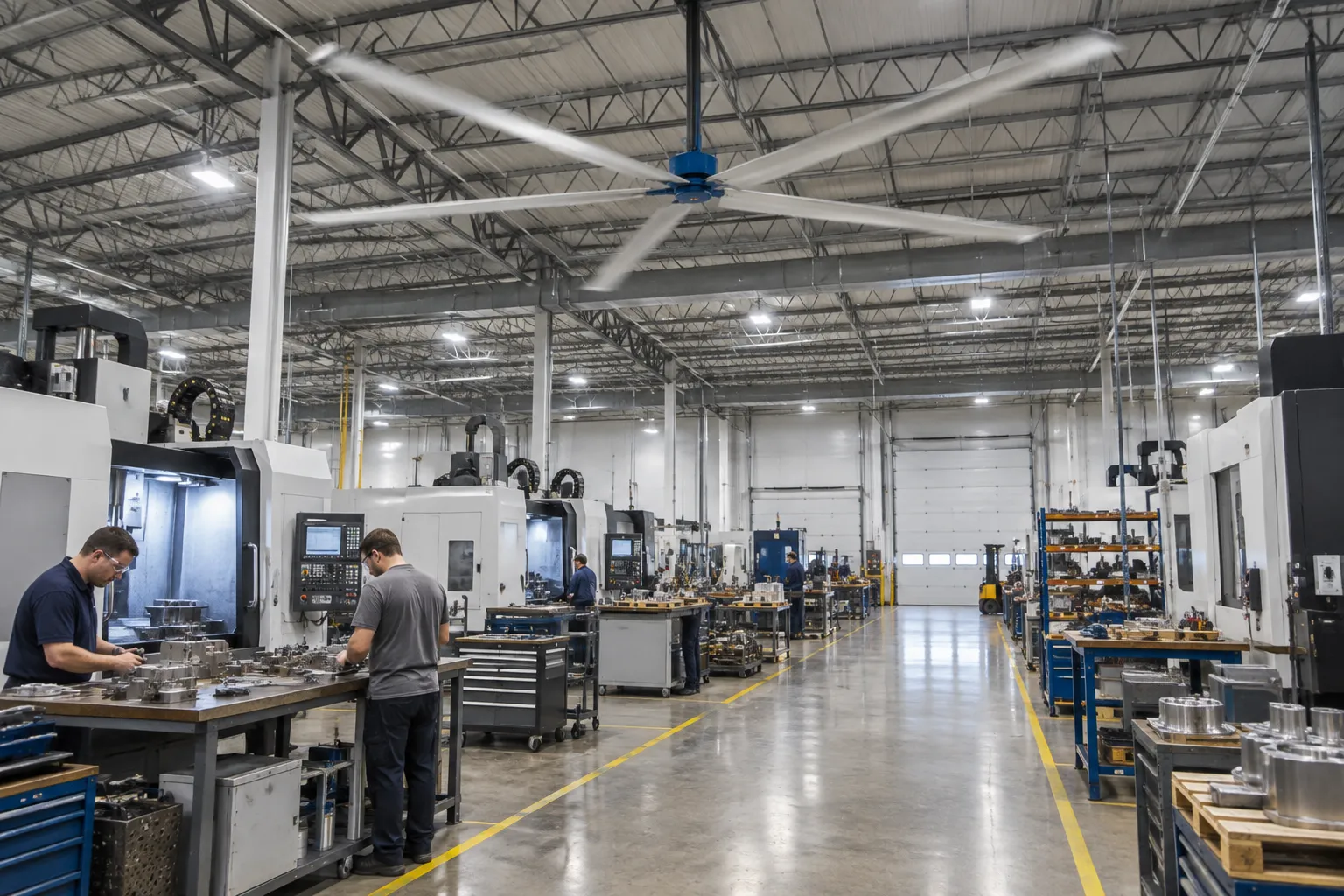 Manufacturing plantsCool assembly lines and machine areas, clear weld smoke and keep product dry. Check that airflow will not upset paint, powder or process exhaust.
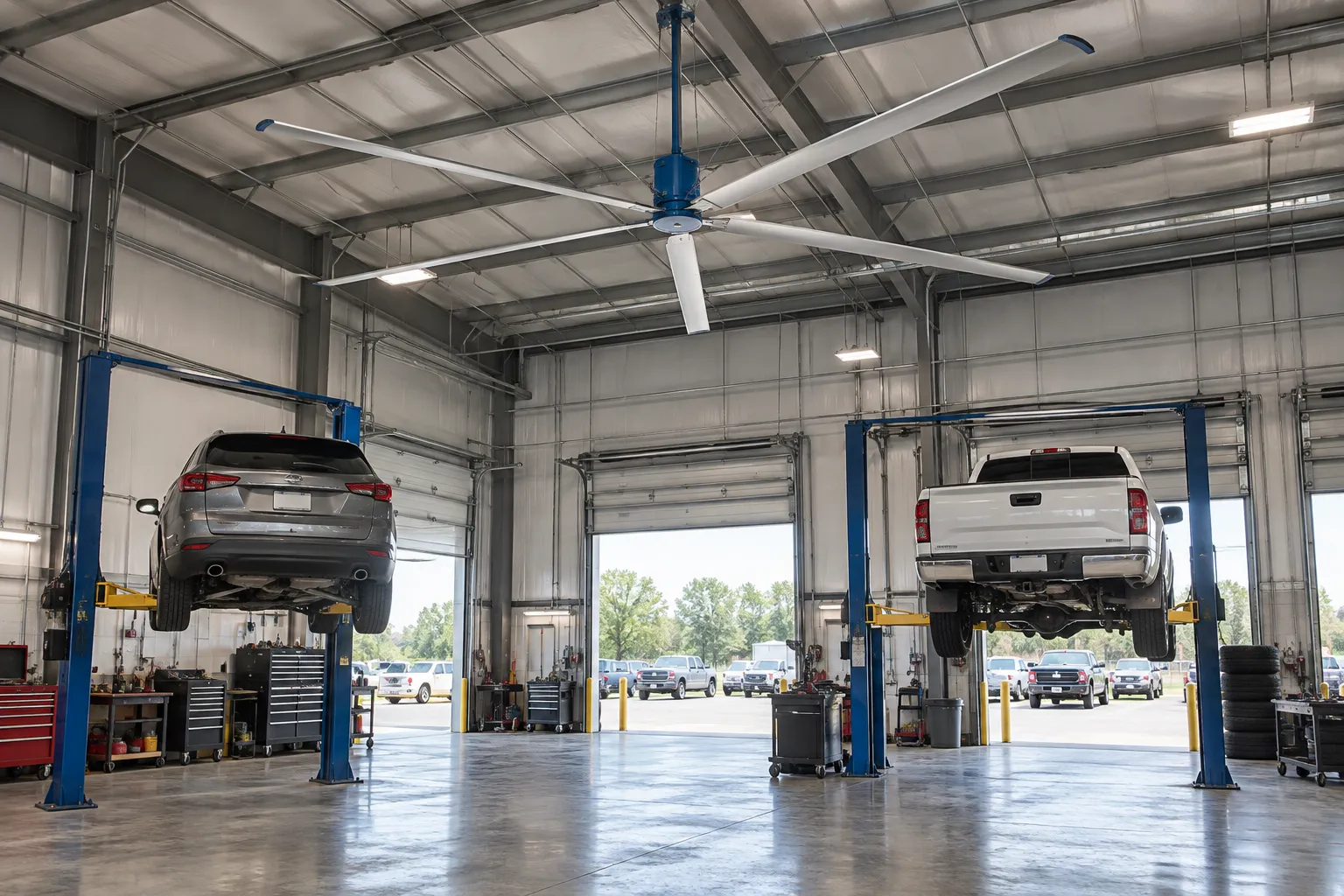 Auto & service shopsMount over the center of the bays and above the highest raised vehicle on a lift. Helps clear exhaust and dries wet floors in winter.
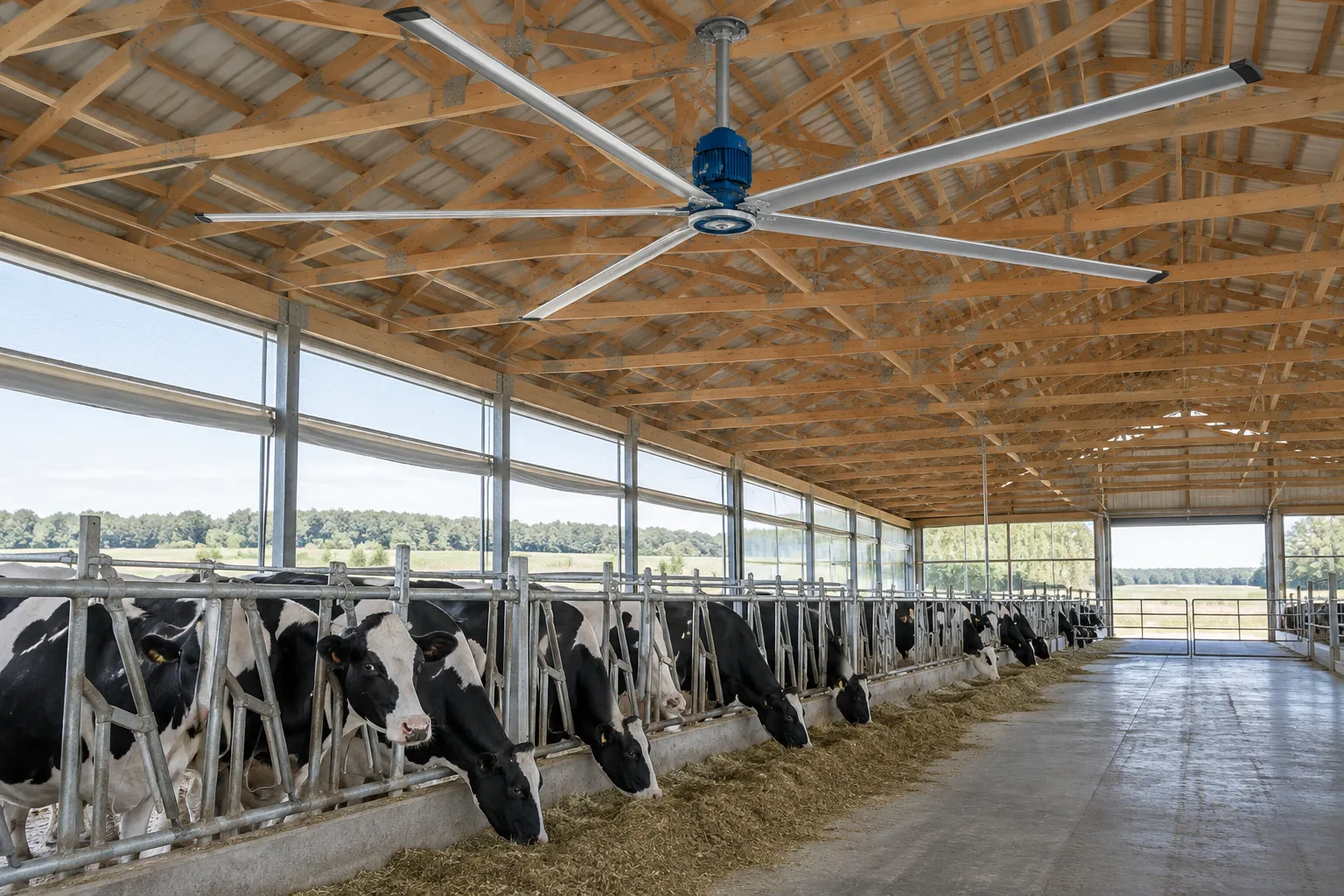 Agriculture & barnsDairy, equine and livestock barns use HVLS fans to cut heat stress and dry bedding. Mount to trusses with the correct kit and keep blades high above animals and equipment.
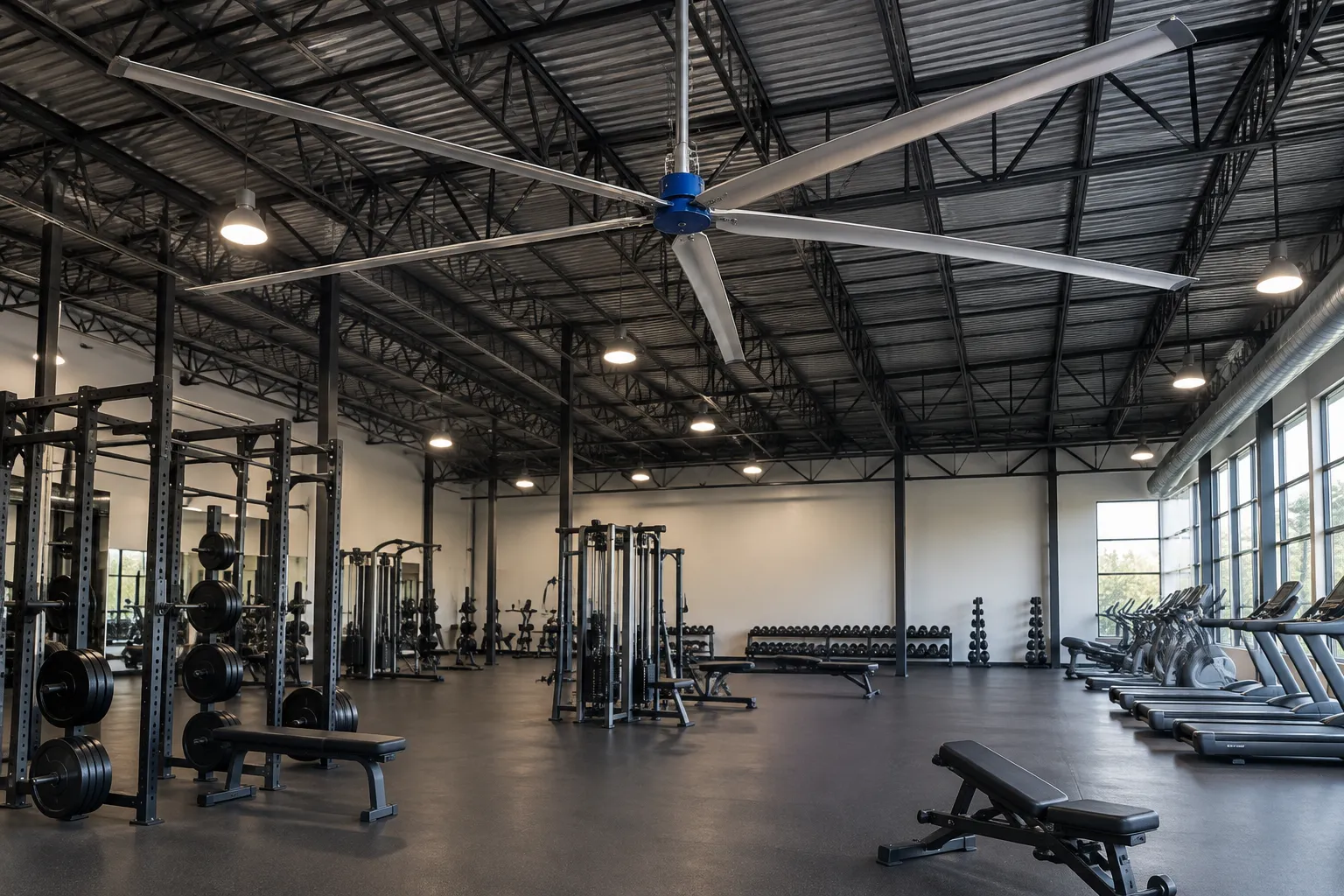 Gyms & fitness centersQuiet, even airflow over the training floor without the noise of pedestal fans. Keep clear of rigs, ropes and basketball hoops.
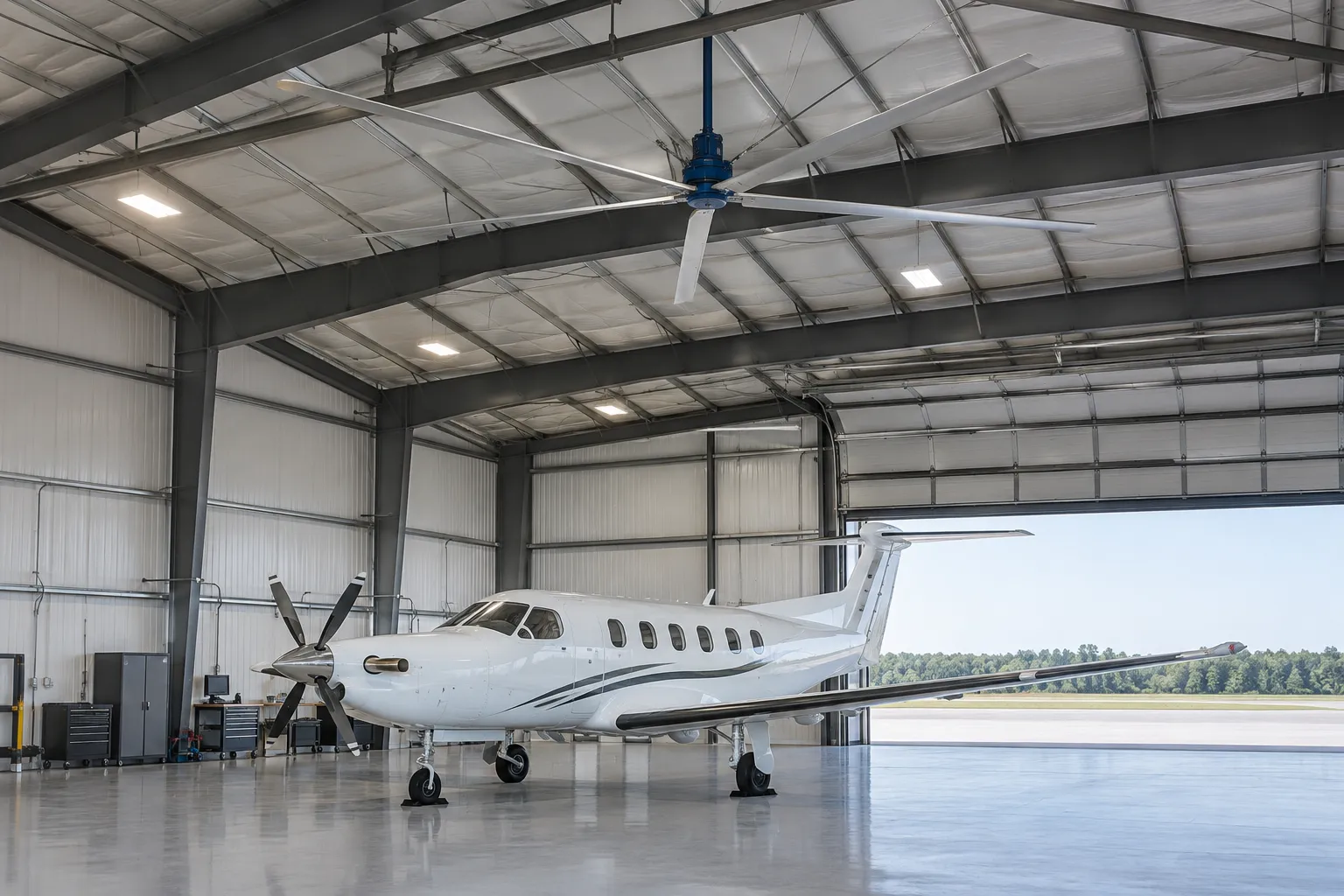 HangarsKeep blades clear of tails and door tracks, and use winter destrat to hold heat that escapes each time the big door opens.
More places HVLS fans work
- Retail and big-box stores: comfortable aisles and checkout areas with lower HVAC run time; place fans clear of signs and fixtures.
- Loading docks: move hot air away from open doors and help keep drivers and dock crews comfortable; pair with loading dock equipment upgrades.
- 3PL and e-commerce fulfillment: long pick shifts in big buildings, see our 3PL warehouse storage solutions.
- Mezzanine work areas: heat collects on upper levels; keep fans well clear of the mezzanine guardrails and people on the deck.
- Churches, schools and event spaces: quiet airflow for large rooms where noise matters.
Mounting and Clearance Near Racking and Sprinklers
Placement is where good fan projects are won or lost. Plan these clearances before you order.
Fire sprinklers and the fire code
This is the part to get right. In sprinklered buildings, the fire sprinkler standard NFPA 13 includes provisions for HVLS fans. In general terms, those provisions deal with where the fan sits relative to sprinkler heads and with shutting the fans down when the sprinkler or fire alarm system activates, so the fans do not disrupt the sprinkler spray pattern. The exact requirements depend on the edition your jurisdiction has adopted, your sprinkler design and your storage commodity.
Confirm with your AHJ
Before installation, confirm fan location and any fire-alarm interlock with your Authority Having Jurisdiction (usually the local fire marshal or building department) and your sprinkler contractor. We will provide fan dimensions and placement drawings to support that review. This page is general guidance, not a code determination.
If you are also adding or reconfiguring pallet rack, coordinate fan placement with the rack plan and any in-rack sprinkler requirements at the same time, so you only go through review once.
Installation and Electrical
Site review
Floor plan, clear heights, structure type, racking, doors, lights and sprinkler layout.
Fan selection
Diameter, count and spacing; control type (digital or thermostatic).
Power
Confirm 240v single phase or 240v-480v three phase and a dedicated circuit at each fan.
Review
Structural and fire-code review with your engineer and AHJ, including any alarm interlock.
Install
Lift equipment, mounting kit, safety cables, blade install, then electrical hookup by a licensed electrician.
Commission
Check balance, rotation and controls; set summer and winter speeds; train your team.
EverBreeze fans ship with a pre-wired panel, which keeps field wiring simple: a properly sized branch circuit and disconnect to each fan panel, plus the control wiring and any interlock your AHJ requires. Plan access with a scissor lift or boom lift and a clear floor area under each fan on install day. Maintenance is light: periodic checks of the mount, safety cables and fasteners, listening for unusual noise, and checking belt condition on belt-drive units, following TAB’s manual for intervals.
HVLS Fan Buying Checklist
Send us these details and we can recommend fan size, count and placement and return a freight-included quote.
- Building length, width and clear height to the lowest roof structure.
- Roof structure type: steel beam, bar joist or wood truss.
- Racking, mezzanines, cranes, lights and other obstructions, with heights.
- Sprinkler type and head locations, and who your fire marshal or AHJ is.
- Available power at the fan locations (voltage and phase).
- Main goal: summer cooling, winter heat savings, moisture, or all three.
- Heated or air-conditioned building, and current heating or cooling system.
- Doors, docks and HVAC diffusers that affect airflow.
- Timeline and whether you want installation coordinated.
Common mistakes to avoid
- Buying a fan too small for the ceiling height, then adding more small fans.
- Hanging fans directly over tall rack runs, where the airflow has nowhere to go.
- Skipping the sprinkler and interlock conversation until after installation.
- Ignoring winter mode: the fan should run in heated months too.
- Placing fans in the same plane as high-bay lights.
Industrial Floor, Wall and Exhaust Fans
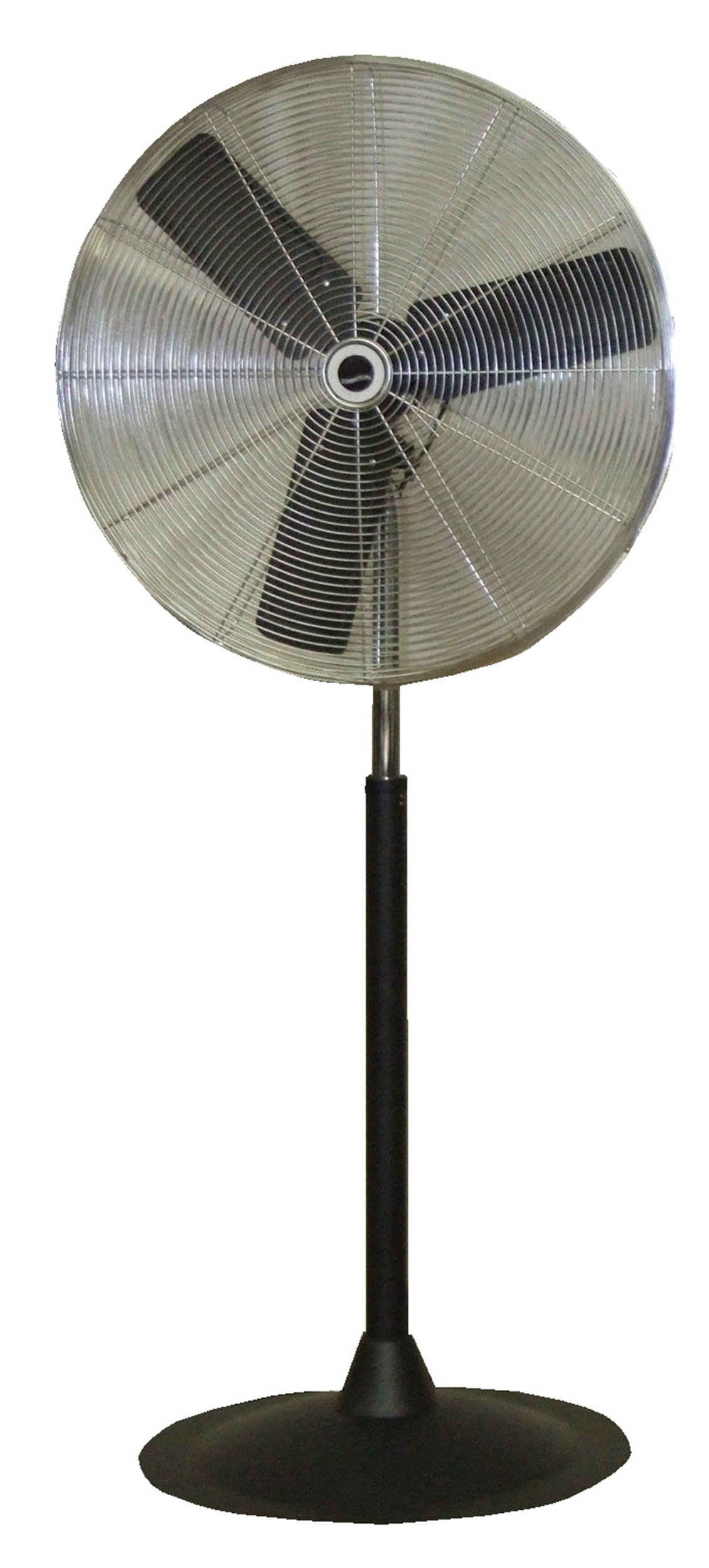
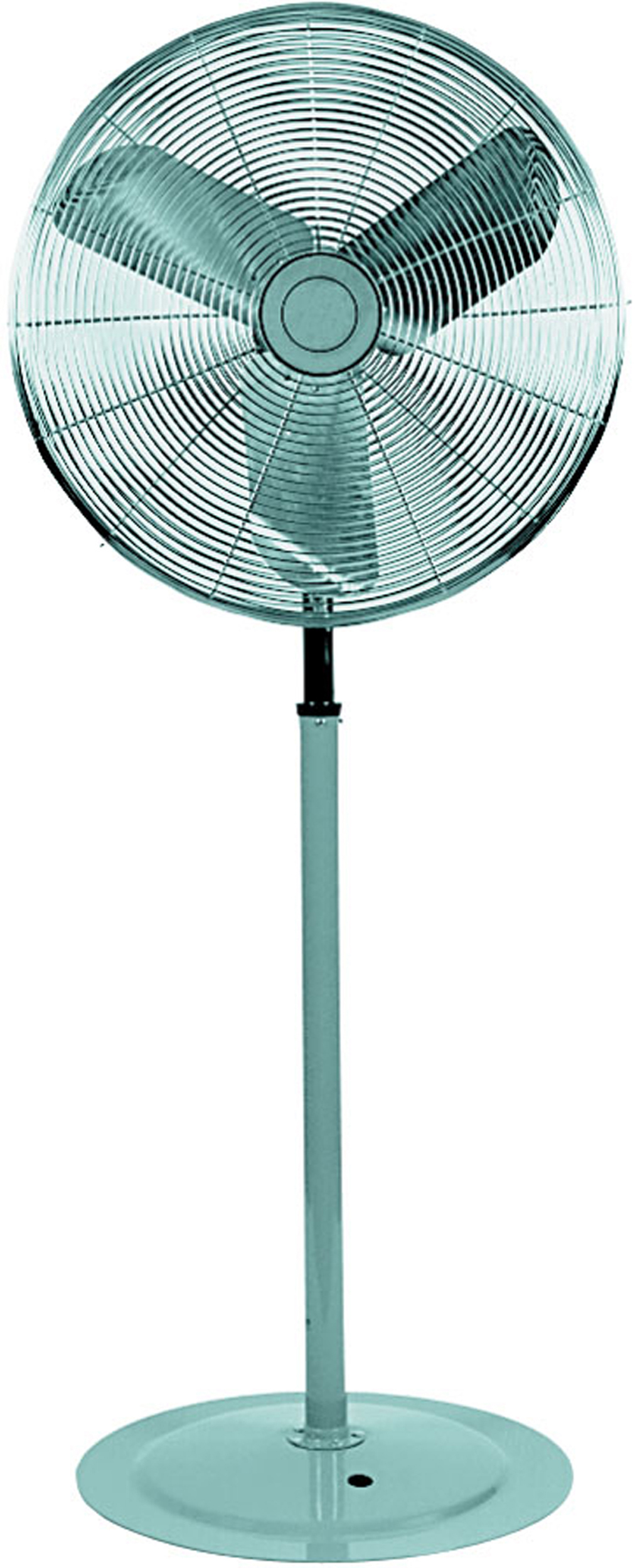
For spot cooling at workstations and docks, or to pair with an HVLS fan, these Vestil industrial fans ship from our online store. HVLS fans are quoted with freight.


Get a free quote
Tell us your building size, clear height and goals for the fans. A project specialist will follow up with fan sizing, placement and pricing. Prefer to talk? Call (800) 326-4403.
HVLS Fan FAQs
What does HVLS fan mean?
What is the difference between an HVLS fan and an industrial ceiling fan?
What size HVLS fan do I need?
How much area does one HVLS fan cover?
Do HVLS fans help in winter?
Are HVLS fans allowed in sprinklered buildings?
What power do TAB EverBreeze fans need?
What sizes do TAB EverBreeze fans come in?
Can HVLS fans be installed over pallet rack?
Planning HVLS Fans for Your Building?
Send a floor plan, clear height and a few photos for fan sizing, placement and a freight-included quote.