
Wire Security Cages and Warehouse Partitions
Heavy-duty wire mesh security cages, tool cribs, server cages, and warehouse partitions from Wire Crafters, SpaceGuard (BeastWire), Wanzl and EQUIPTO. Protect inventory, restrict access, and meet compliance requirements.
Talk with a specialist. Call (800) 326-4403 or email Sales@MH-USA.com

Wire Mesh Security Cages: How They Work in 52 Seconds
What Is a Security Cage?
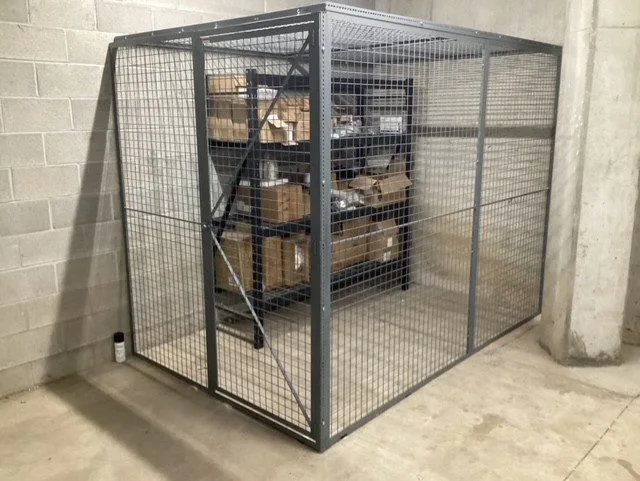
A security cage is a lockable enclosure built from steel wire mesh panels, posts and doors that separates and protects inventory, tools, equipment or controlled materials inside a larger building. Unlike a solid-walled room, its open mesh keeps contents visible and lets light, ventilation and sprinkler water pass through, and the bolt-together panels can be moved or expanded as needs change.
Shop Pre-Configured Wire Mesh Cage Kits Online
Standard-size welded wire cage kits, priced online, for smaller storage needs. Every kit still needs to be anchored to sound concrete — for tall, braced or engineered enclosures, request a quote with your building location and floor details.

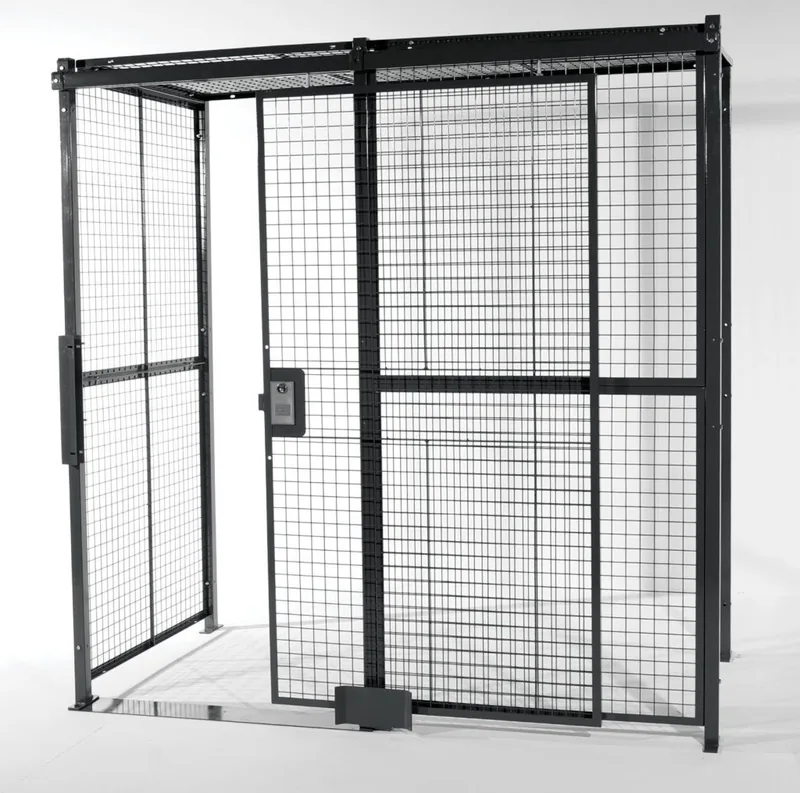
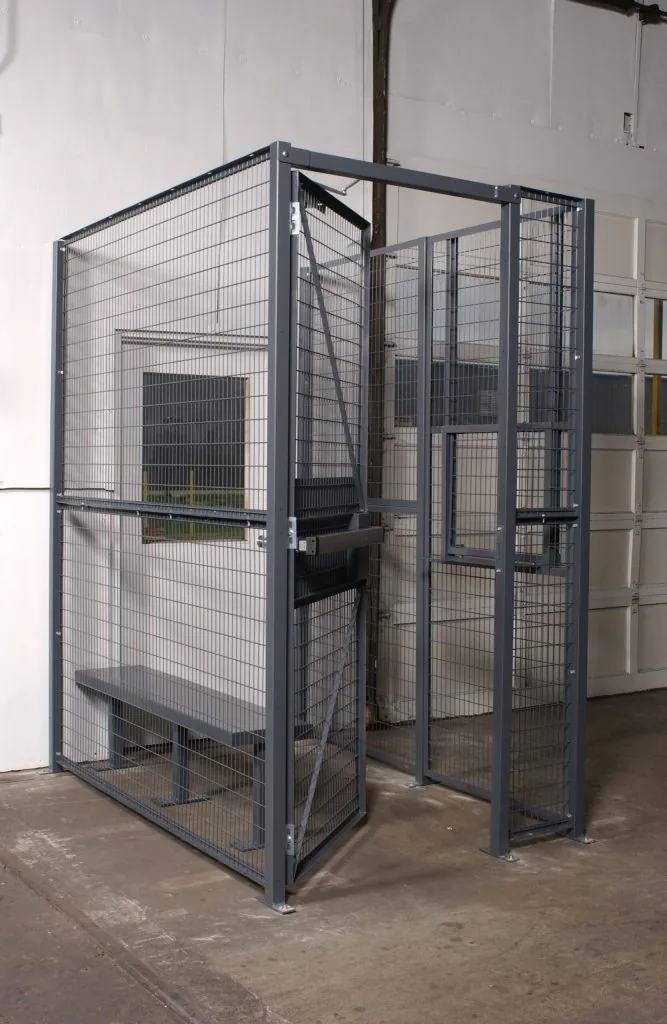
Prices are the current online prices. See all security cage kits · Need a custom size? Request a security cage quote.
Industrial Wire Mesh Security Cages
Wire mesh security cages create controlled-access enclosures inside warehouses, distribution centers, and commercial facilities. Material Handling USA supplies custom wire security cages, tool cribs, server enclosures, tenant storage lockers, and warehouse partitions for facilities nationwide. As an authorized Wire Crafters dealer that also works with SpaceGuard Products and BeastWire, we design, supply and install wire mesh enclosures that protect inventory, restrict access, and support regulatory requirements. Request a free layout and quote — our team produces CAD drawings sized to your space and helps you select the right cage configuration for your application.


Our cage systems range from simple single-door tool cribs to complex multi-room enclosures with sliding doors, access control integration, and ceiling panels. Standard mesh options include 10-gauge woven wire (most popular), welded wire panels, and expanded metal — each offering different security levels and visibility characteristics.
Every cage system is custom-engineered to your facility dimensions. Posts, panels, doors, and hardware arrive pre-cut and ready for bolt-together assembly. Installation time depends on enclosure size, layout and site conditions; send us your dimensions for a quote.
Security Cage Applications
Wire mesh cages protect assets and control access across every industry.
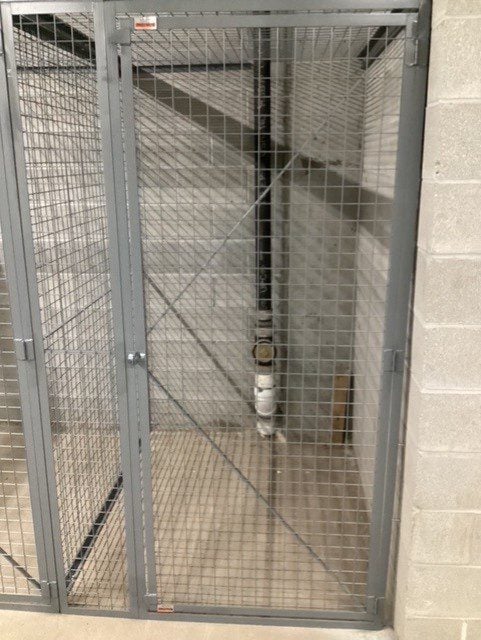
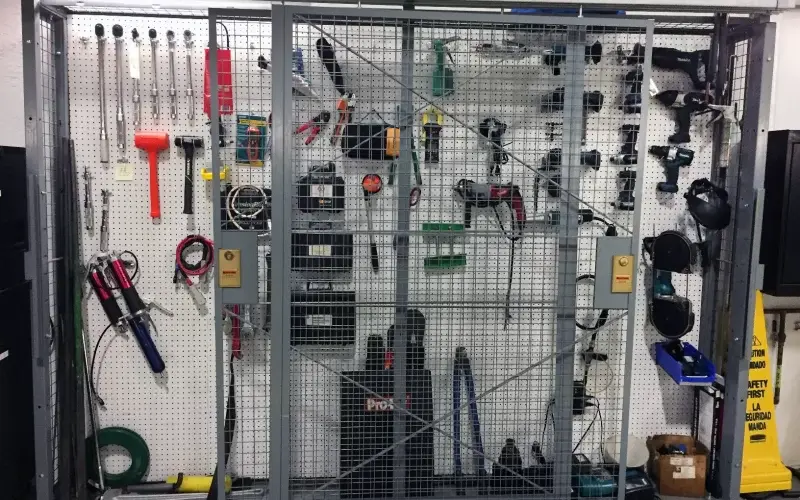

More Security Cage Application Guides
Detailed guides for specific uses, with planning advice, rules to check and products.
Types of Security Cages
Every type below is built from the same wire partition parts — panels, posts, doors and locks — laid out for a different job. Each links to a detailed guide.
Pallet Rack Security Enclosures
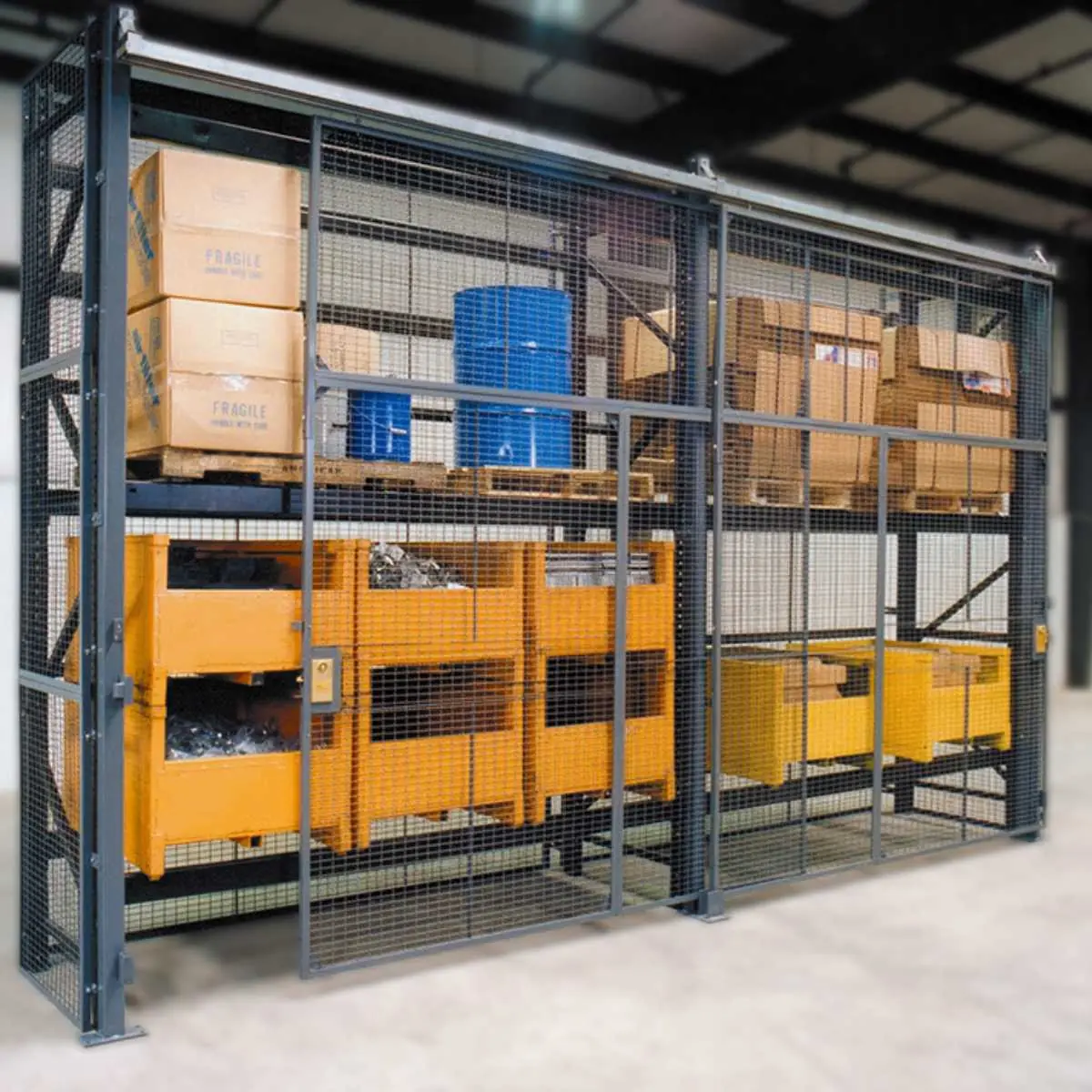
Pallet rack security enclosures integrate directly with existing pallet racking to create locked, access-controlled storage within your warehouse. Instead of building a separate cage room, panels attach directly to rack uprights, beams, and end frames — converting standard pallet rack bays into secure storage zones without sacrificing floor space or workflow efficiency.
Common Applications

Wire Crafters makes RackBack® panels and pallet rack enclosures, and SpaceGuard makes BeastWire pallet rack backing, siding and doors (10 or 6 gauge 2″ welded mesh) with drop-in Grrripper brackets for teardrop rack or bolt-on brackets for structural, slotted and keystone rack, plus Centurion pallet rack repair kits. Panels bolt on, so no welding is needed; see pallet rack security enclosures.
Security Cage Manufacturers Compared: Wire Crafters, SpaceGuard / BeastWire, Cogan, Vestil, EQUIPTO and Wanzl
We supply cages from several manufacturers and pick the system that fits the job. Here is how they compare:
| Manufacturer | Known for | Typical fit | Learn more |
|---|---|---|---|
| Wire Crafters | Style 840 woven wire partitions (2 in. x 1 in. 10 ga), RapidWire welded storage lockers, RackBack rack panels, machine guarding | Warehouse partitions, tool cribs, DEA and aerosol cages, tenant and technician lockers | Wire Crafters partitions and cages |
| SpaceGuard | Woven (FordLogan) and welded (BeastWire) partitions, lockers and rack panels; Seymour, Indiana | Warehouse and DEA cages, tenant storage, pallet rack enclosures | SpaceGuard products · brochures |
| BeastWire (by SpaceGuard) | Fully welded 10 or 6 ga mesh built from one universal panel; heights to 40 ft | Server and retail cages, lockers, rack guarding, rail guards | BeastWire mesh partitions |
| Cogan | Wire mesh partitions and storage lockers | Industrial partitions and locker rooms | Cogan |
| Vestil | Pre-configured welded wire cage kits and driver access cages, priced online | Small standard-size cages bought online | Security cage kits |
| EQUIPTO | Wire mesh partitions alongside its steel shelving and mezzanine lines | Partitions integrated with EQUIPTO shelving | EQUIPTO |
| Wanzl | Partition systems (metal, transparent, stainless steel) and roll cages | Room partitions and theft protection in commercial spaces | Quote on request |
SpaceGuard Products, based in Seymour, Indiana, makes woven and welded wire partitions, wire mesh storage lockers, rack safety panels, rack repair kits and aisle guarding. Its FordLogan line is a woven diamond-mesh partition, and its BeastWire line is welded 10 or 6 gauge mesh. Both leave the space visible for monitoring while keeping hands and goods out.
BeastWire complements the lineup with rigid, flat welded wire mesh panels and a cleaner look. BeastWire panels are popular for server cages, retail cage environments, and applications where a more polished appearance matters. Door, lock and finish options vary by manufacturer and system, and we compare them for you in the quote.

Common finishes include gray and black powder coat, with galvanized and custom colors available on some systems. Wire Crafters manufactures in Louisville, Kentucky, and SpaceGuard in Seymour, Indiana; ask us for the warranty terms on the system you choose.
Evidence Room & Law Enforcement Security Cages
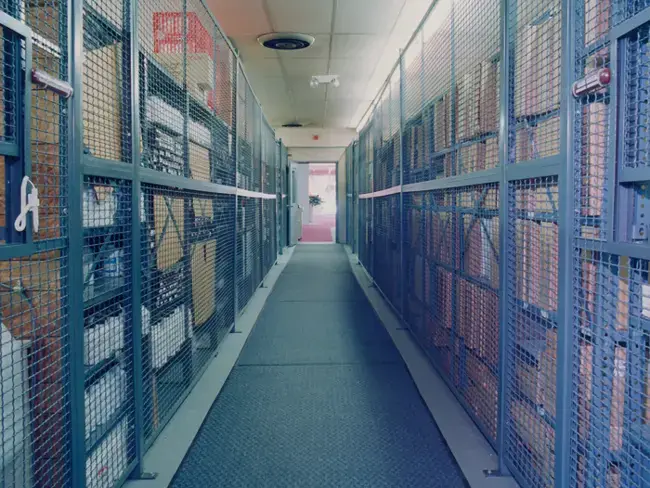
Law enforcement agencies, federal facilities, and military installations require security cages that meet strict chain-of-custody and physical security standards. Wire mesh security cages create tamper-evident, access-controlled spaces for evidence, weapons, and sensitive materials — complementing our complete evidence storage solutions.
See our evidence cages and evidence storage enclosures page for cage layouts, issue windows and access control, and temporary holding cells for supervised short-term confinement.
Law Enforcement Cage Configurations
Our evidence room projects typically combine security cages with high-density mobile shelving systems inside the enclosure — maximizing storage capacity within the secured perimeter.
Door & Access Options
Door styles
- Hinged doors — single or double leaf for people and carts
- Sliding doors — no swing space, good for aisles and forklift openings
- Dutch doors — separate top and bottom leaves with a transaction shelf
- Service windows — hand items out without opening the door (service windows)
Compare every style, including tunnel and vertical rise doors, on security cage doors.
Locks and access control
- Keyed locks and padlock lugs — simple and low-cost
- Keypads — code entry with no keys to track
- Card readers — tie the cage to your building access system and log entries
- Electric strikes, mag locks and interlocks for higher-security rooms
Details and egress considerations are on security cage locks and cage door access control.
Security & Compliance Options
The right options depend on what you store and who reviews the design. Common choices:
- Mesh ceilings and anti-climb tops — close the top of the cage so it cannot be climbed over (security cage ceilings).
- Flush-to-floor panels — panels set close to the floor to limit the gap under the mesh, often specified for controlled-substance cages.
- Mesh style and gauge — 10 gauge woven or welded mesh is the common warehouse choice; heavier wire, tighter mesh and solid or clear infill are available (wire partition components).
- DEA cages — 21 CFR 1301.72 sets physical security controls for DEA registrants and describes a wire-cage option for some; your DEA office makes the final call (DEA drug storage cages).
- Sprinkler-compatible mesh — open mesh generally lets sprinkler water pass, but ceilings and solid panels can affect coverage, so have your fire protection professional and code official review the layout (regulations by industry).
- Anchoring — posts anchored to sound concrete, with bracing where seismic rules apply (anchoring and seismic bracing).
Features & Specifications
Every security cage is configured with these available features and options.
- Wire Mesh Options — 10-gauge woven wire, welded wire panels, and expanded metal in standard 2″×1″ or 2″×2″ mesh openings. Tighter mesh available for small-parts containment.
- Door Types — single and double hinged, sliding, tunnel, vertical-rise and Dutch doors, depending on the manufacturer. Door closers and electric or pneumatic openers, push-bar exits and ADA lever handles available.
- Locking Hardware — cylinder locks, padlock lugs, card readers, keypads and biometric finger readers that operate an electric strike or mag lock. Three-point locking handles are available on storage locker doors. Cage doors can take an electric strike and panic (push-bar) hardware; the card reader or keypad that drives the strike usually comes from your access-control vendor. Panels and doors are woven wire mesh, so solid steel door infill isn’t available.
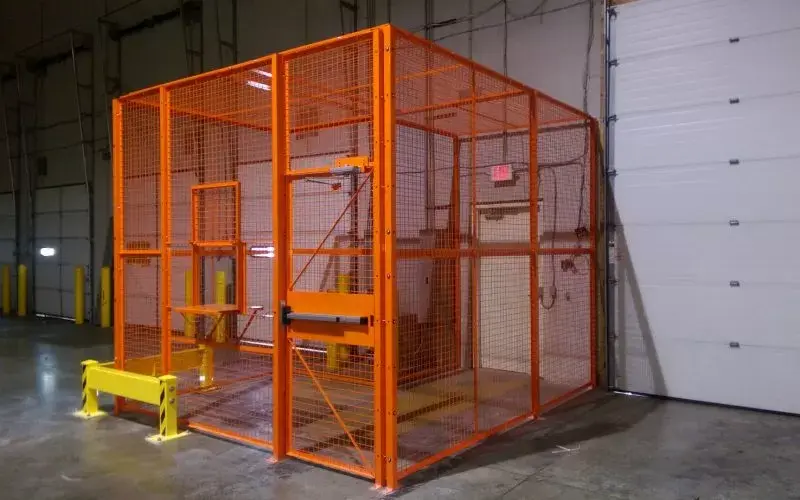
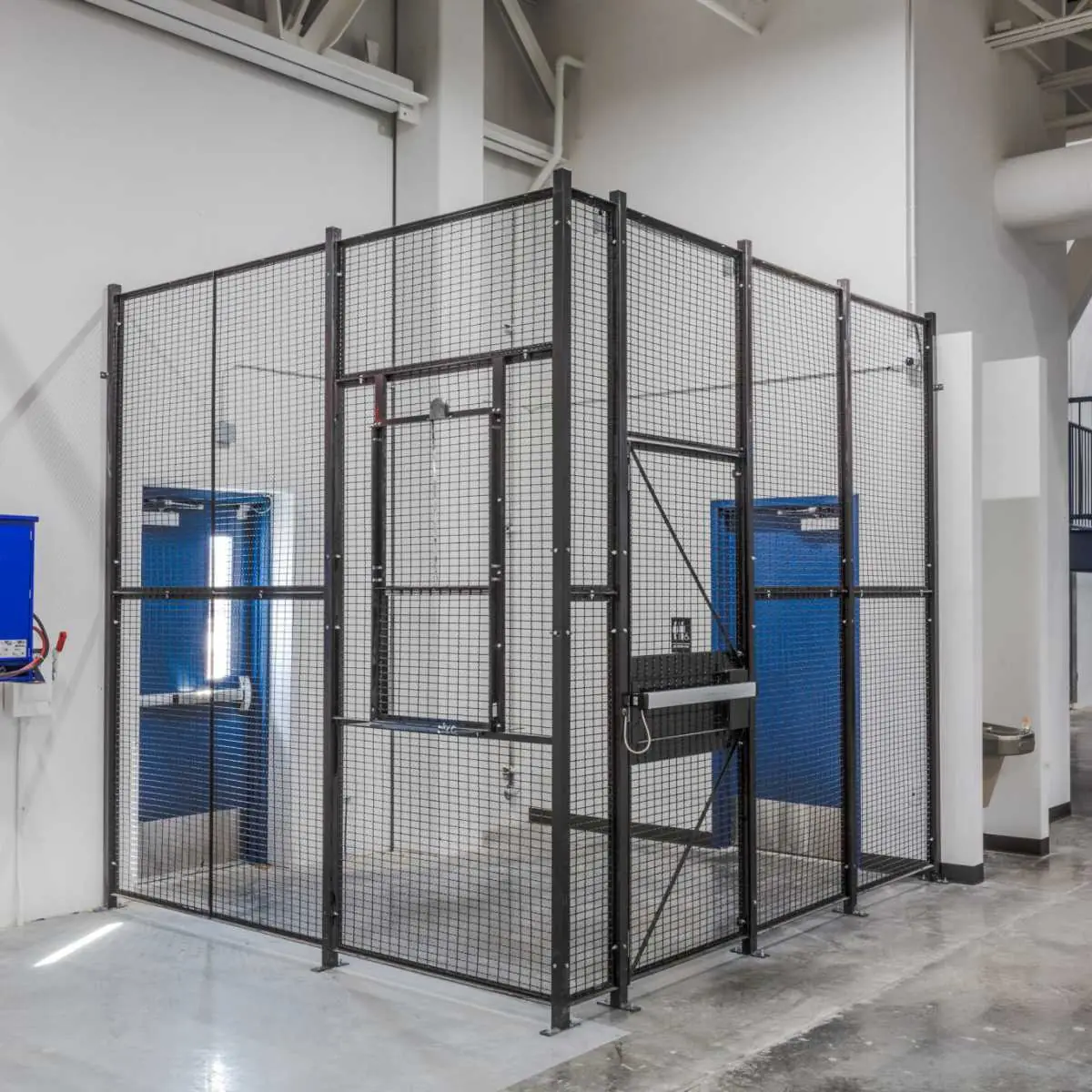
- Ceiling Panels — full wire mesh ceiling enclosure for cages requiring top security. Ceiling panels attach to the top wall panels, and Wire Crafters lists clear spans up to 30 ft.
- Post Systems — heavy-duty steel posts floor-bolted or ceiling-braced. Posts accept panels from both sides for back-to-back cage configurations.
- Service Windows — transaction windows, pass-through openings, and dutch doors for tool-crib and parts-counter operations without full door access.
Industries & Compliance

Security cages serve critical compliance functions across regulated industries. DEA-registered distributors and manufacturers can use a wire cage for Schedule III–V controlled substances when it is built to 21 CFR 1301.72(b)(4); Schedule I–II substances need a safe, steel cabinet or vault, and practitioners such as pharmacies follow the locked-cabinet rule in 21 CFR 1301.75. ATF-licensed dealers use cages for firearms storage that meets federal security requirements.
Military and government facilities deploy security cages for classified document storage, weapon armories, and communication equipment enclosures. Healthcare organizations use cages for pharmaceutical storage, medical device security, and patient records protection.
Warehouse and logistics operations use cages for high-value inventory protection, e-commerce returns processing, and controlled pick areas. Data centers use server cages to isolate customer equipment in colocation environments. Every industry has specific security requirements — we match the cage specification to your compliance standards.
From Concept to Completion
Layout & Sizing
We measure your space and design the cage layout including door placements, post locations, and any ceiling panel requirements.
Specification & Quote
Based on your security level, compliance requirements, and access needs, we specify the right mesh type, door hardware, and finish options.
Manufacturing
Wire Crafters, SpaceGuard or BeastWire fabricates your cage components — posts cut to height, panels sized to fit, doors assembled with hardware — ready for bolt-together installation.
Installation
Components arrive flat-packed. The crew bolts posts to the floor, hangs panels, installs doors, and completes the enclosure. Install time depends on size, layout and site conditions.
Any size, built in sections
The pre-configured kits on this page are starting points, not limits. Wire mesh cages are assembled from standard panel sections and posts, so a cage can be built to any footprint and height you need, including three-sided cages that use an existing wall as the fourth side and open-top cages under low ceilings or sprinklers. Panels are sold in sections, so a large enclosure is priced by the run of wall and the doors, not by a fixed kit size.
Doors can be fitted with a keyed cylinder lock, a padlock hasp, or an electric strike or magnetic lock for badge and swipe-card access tied to your building system. See security cage locks and access control for the hardware options.
Planning a Wire Partition or Security Cage: What to Have Ready
Most quote delays come from a few missing details, not from the cage itself. If you send the items below with your request, we can usually go straight to a layout drawing instead of a round of questions. A rough sketch with dimensions is enough for a budgetary number. A firm quote needs field-verified measurements.
We can quote supply only, or furnish and install the partition or cage for you. General contractors and estimators can send drawings and a spec section for bid support.
1. Footprint and number of sides
- Length and depth of the enclosure, measured to finished wall or column faces
- Four-sided freestanding, three-sided against a wall, or a partition wall across a room
- What each existing wall is made of. Masonry can usually take anchors directly. Drywall and thin metal walls usually need a post at the wall instead.
2. Height: the clear height, not just the ceiling height
- Floor to the lowest obstruction above the cage: sprinkler heads, ducts, pipes, light fixtures, beams
- The height you need the wall to be. Partition systems are listed by overall height, which includes a gap under the panels for floor cleaning and a post cap. On one common system, a nominal 8-ft wall stands about 8 ft 5 in overall, so it won’t fit under an 8-ft ceiling without a custom post height.
3. Roof or no roof
- Is a mesh ceiling required (high-value goods, regulated storage, or walls that stop short of the deck), or can the top stay open?
- Wire partition ceilings are designed to keep people out, not to carry loads. Don’t plan to store anything on top.
- If the cage will be under sprinklers, flag it now (see the fire protection notes below).
4. Doors and locks
- Door location, single or double, hinged or sliding, and which way it swings
- The largest item that has to pass through: a person, a cart, a pallet jack
- Lock type: padlock hasp, keyed cylinder, or electric strike / mag-lock tied to badge access (see security cage locks)
- Who holds keys, and whether cores have to match a building master-key system
5. Floor and anchoring
- Slab type and condition (concrete, post-tensioned slab, raised floor, or tile over concrete)
- Any floor slope or level changes along the run
- Your building’s location, since anchoring and bracing requirements vary by jurisdiction and seismic zone (see anchoring and seismic bracing)
6. Schedule and scope
- Your target date, and whether you need supply only or furnish-and-install
- Union, prevailing-wage or after-hours site requirements, and who pulls any permit
Fire sprinklers and solid vs mesh roofs
A solid sheet-metal roof on a cage usually blocks the overhead sprinklers from reaching what’s inside, and the common fix is adding sprinkler heads within the enclosure. Mesh roofs are used because water and heat pass through them. Even so, NFPA 13 treats overhead mesh much like an open-grid ceiling: it is judged on how open the material is, the size of the openings, and the distance from the sprinkler deflector to the top of the cage. Freestanding walls below sprinklers have their own clearance rules. Which edition and rules apply is up to your fire protection engineer and the authority having jurisdiction. Our part is to mark every sprinkler head, drop and fixture on the layout and offer framed ceiling cutouts, so the design can be reviewed before anything is built. See security cage ceilings for options.
Standard components vs made-to-order
Standard panels, posts and doors in common sizes can ship quickly when the manufacturer has them in stock. A cage built to your exact footprint, with a roof, a keyed cylinder lock, custom heights or a non-standard color, is usually made to order. Manufacturers schedule production only after the approval drawings are signed, and freight time comes on top of that. If your date is fixed, tell us up front. Sometimes a layout using standard sizes and a cut-to-fit adjustable panel can shorten the schedule. Some common sizes are in stock at select manufacturers, subject to confirmation; made-to-order cages are scheduled after the layout drawing is approved, plus freight time. We confirm the ship date with your quote.
Tenant storage lockers for multifamily projects
For apartment, condo and affordable-housing projects, plan the locker program the same way you plan any other room:
- Number of units per building, and the mix of single-tier walk-in and double-tier lockers
- Unit sizes and door widths. Common walk-in sizes run 3–5 ft wide and deep, at roughly 7½–8 ft tall.
- Which lockers sit against a wall and which are back-to-back or freestanding (this changes the panel count)
- Whether ceilings, back panels or shelves are included, and who supplies the padlocks
- Accessibility requirements, sprinkler coverage and lighting, confirmed with the project architect
- Delivery phasing by building, so materials arrive when each storage room is ready
Our tenant locker planning guide covers layout, assignment and bill-of-materials questions in more detail.
Bidding a project? (GCs and estimators)
Wire mesh partitions are usually specified under CSI 10 22 13, and wire mesh storage lockers under 10 51 43. Send the drawings, spec section and bid date. We can respond with manufacturer data sheets and a layout for submittal, and price the scope as supply only or furnish-and-install. See Division 10 Specialty Products.
Quick planning questions
Will a cage fit a shallow nook, like 42 in deep and 8 ft tall?
Often, yes, but check two things. First, the overall height of the system against the true clear height (a standard 8-ft wall can be taller than 8 ft overall). Second, door swing. In a shallow space a 3-ft hinged door swinging inward leaves little room, so an outswing or sliding door may work better. Send a photo and the measurements.
Can I add a roof later?
Usually, yes. If you think you might want a clear-span roof, say so at the start, because post placement may need to change to support it.
Do you only supply, or also install?
Both. We can ship materials for your own crew or contractor to install, or we can furnish and install the cage or partition. Ask us about installation for your location, and tell us about any union, prevailing-wage or after-hours requirements so they are included in the quote.
Design Your Security Cage Online
Design your wire mesh security cage, tool crib, or DEA vault with our free interactive planner. Set dimensions, door placement, lock types, and panel options — see a top-down floor plan with panel counts.
Free online tool — no account required | View All Design Tools
Need a standard size fast? See the priced cage kits at the top of this page or browse all security cage kits in our shop.
Security Cages for Warehouse Inventory: When Do You Need One?
Security cages for warehouse use pay off when a small share of SKUs carries a large share of value or risk: electronics, tools, returns, pharmaceuticals, alcohol or customer-owned stock. A cage separates that inventory from general storage, limits who can enter, and makes shrink visible without building walls. If the problem is falling loads rather than theft, pallet rack backing may be enough; if people work inside, a full warehouse security enclosure fits better. At shipping and receiving doors the risk is people rather than product: driver cages give truck drivers a locked check-in area with a service window, so they never reach the warehouse floor.
Data Center & Server Cage Solutions
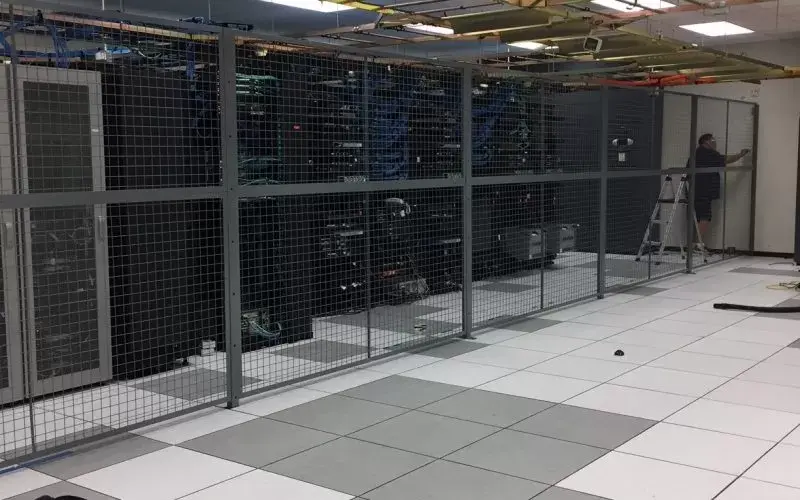
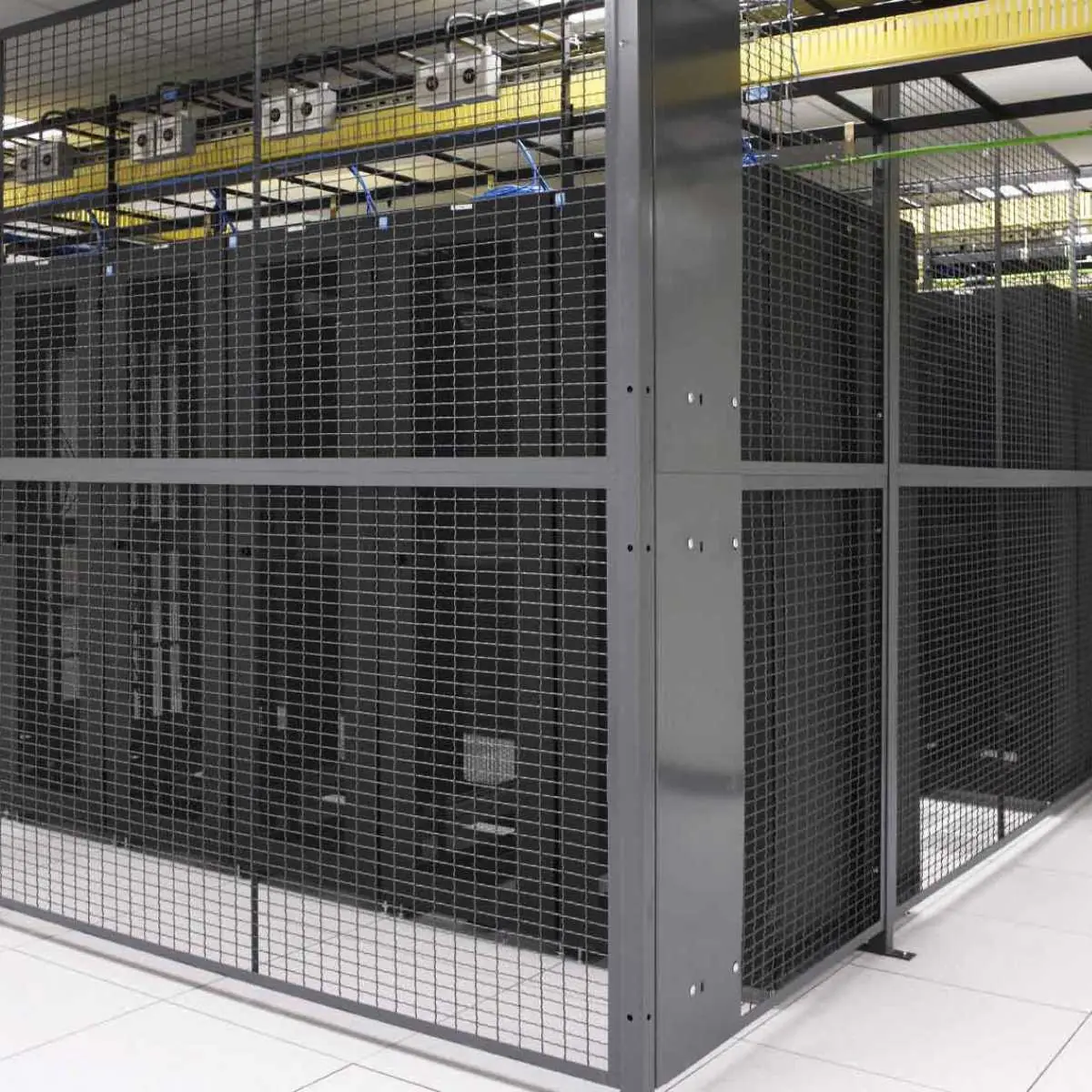
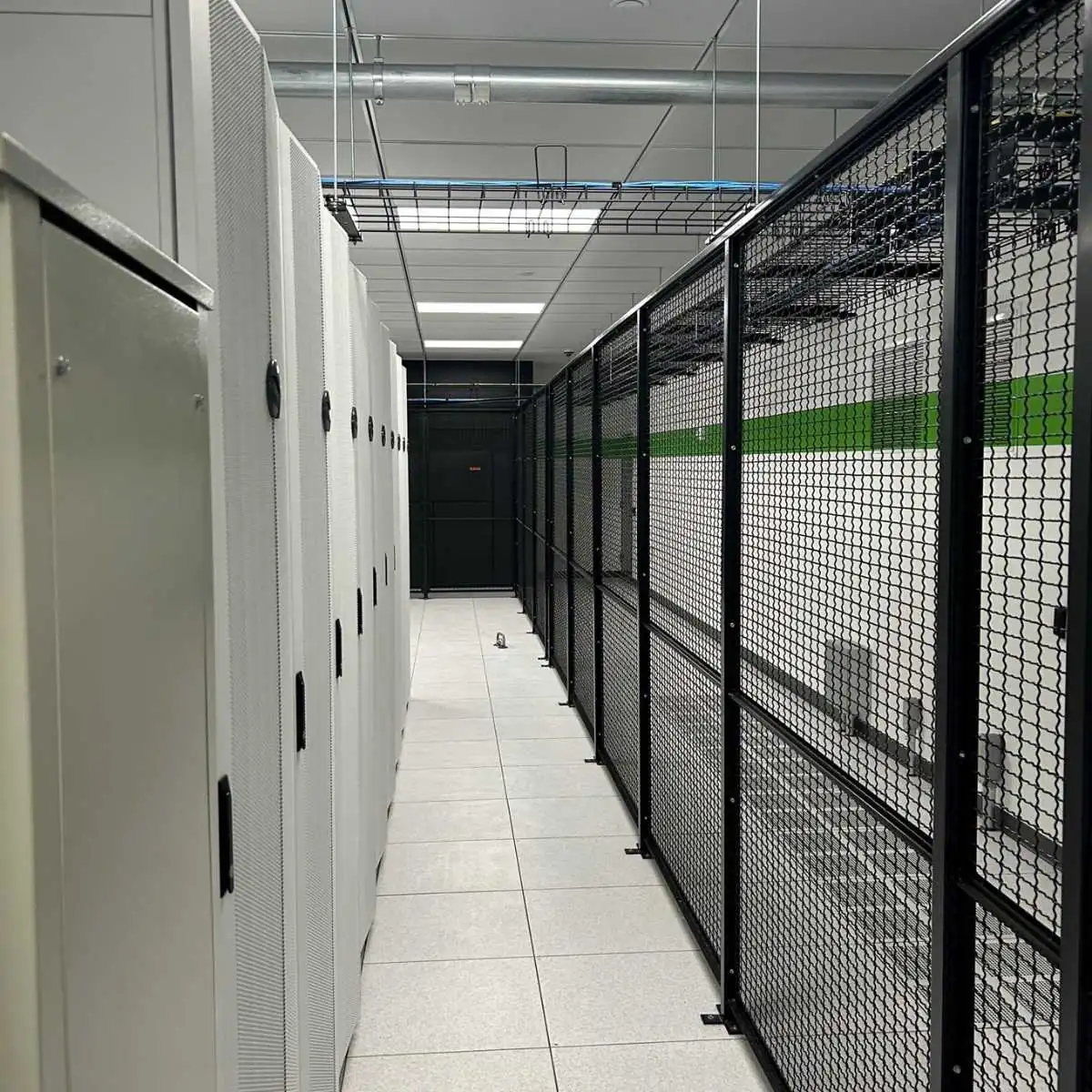
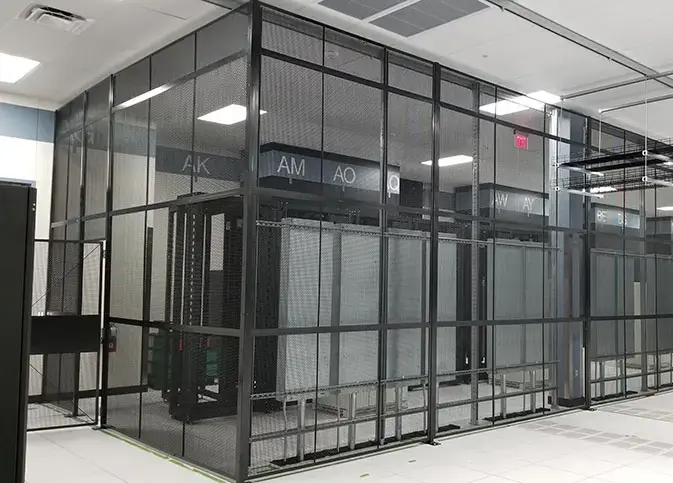
Colocation data centers and enterprise server rooms use wire mesh security cages to create individually secured tenant spaces within shared facilities. Each cage provides physical access control — only authorized personnel with the correct credential can enter the cage containing their servers, networking equipment, and storage arrays. Wire mesh construction maintains airflow critical for data center cooling while providing visual monitoring from outside the cage.

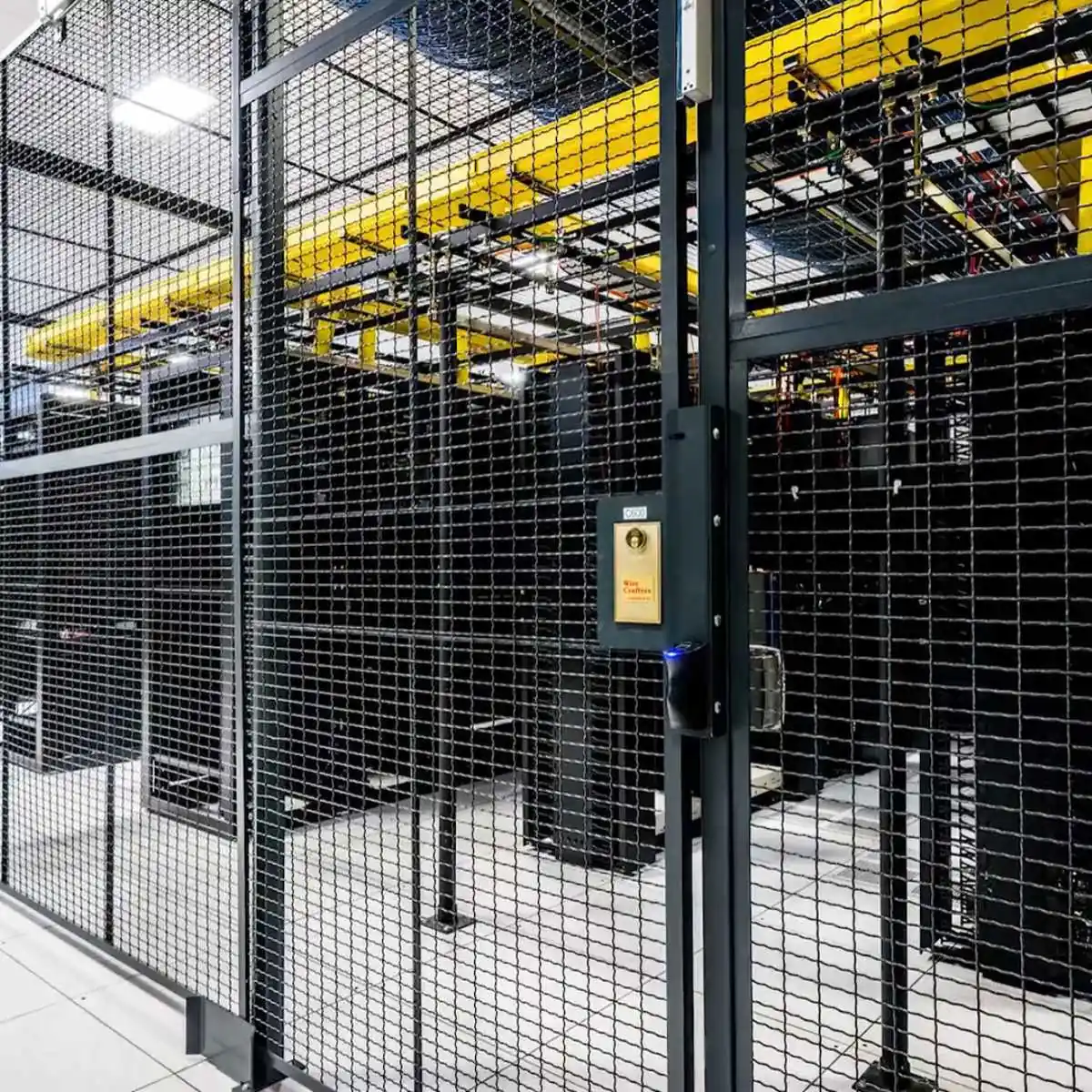
Data center cages have specific requirements that differ from warehouse security cages. Ceiling panels are typically required to prevent over-the-wall access. Mesh openings must be small enough to prevent reaching through to manipulate equipment. Door locks integrate with the facility’s access control system — electronic card readers, biometric scanners, or managed key systems that log every entry and exit. Hot-aisle/cold-aisle containment configurations require cage walls that align with the data center’s airflow management strategy.
Wire Crafters, SpaceGuard and BeastWire mesh can all be laid out as data center cages, coordinated with overhead cable trays and pathways, and specified in mesh patterns that limit reach-through while keeping the open area that cooling depends on. Cage heights can extend to the ceiling deck or stop at 8–10 feet with ceiling panel enclosure to prevent overhead access.

DEA, ATF & Regulatory Compliance

Federal regulations mandate specific physical security measures for facilities that store controlled substances, firearms, and other regulated materials. Wire mesh security cages can be built to support many of these requirements when properly specified and installed; confirm what applies to your registration with your regulator or inspector. DEA physical security controls are in 21 CFR 1301.71–1301.76. For non-practitioners, 1301.72 permits a wire cage for Schedule III–V substances (Schedule I–II need a safe, steel cabinet or vault), and the cage specification includes an alarm system as well as the mesh, posts, ceiling and door.
For DEA cage storage, plan on continuous construction with no gaps that allow reaching through or removing panels without tools. Ceiling panels are required when the cage walls do not extend to the structural ceiling. The door must be No. 10 gauge mesh on a metal frame and self-closing and self-locking (or kept locked and under direct observation), and 21 CFR 1301.72(b)(3)(ii) calls for key locks with limited key control or multiple-position combination locks. Many facilities add a card reader or keypad on an electric strike or mag lock for an access record.
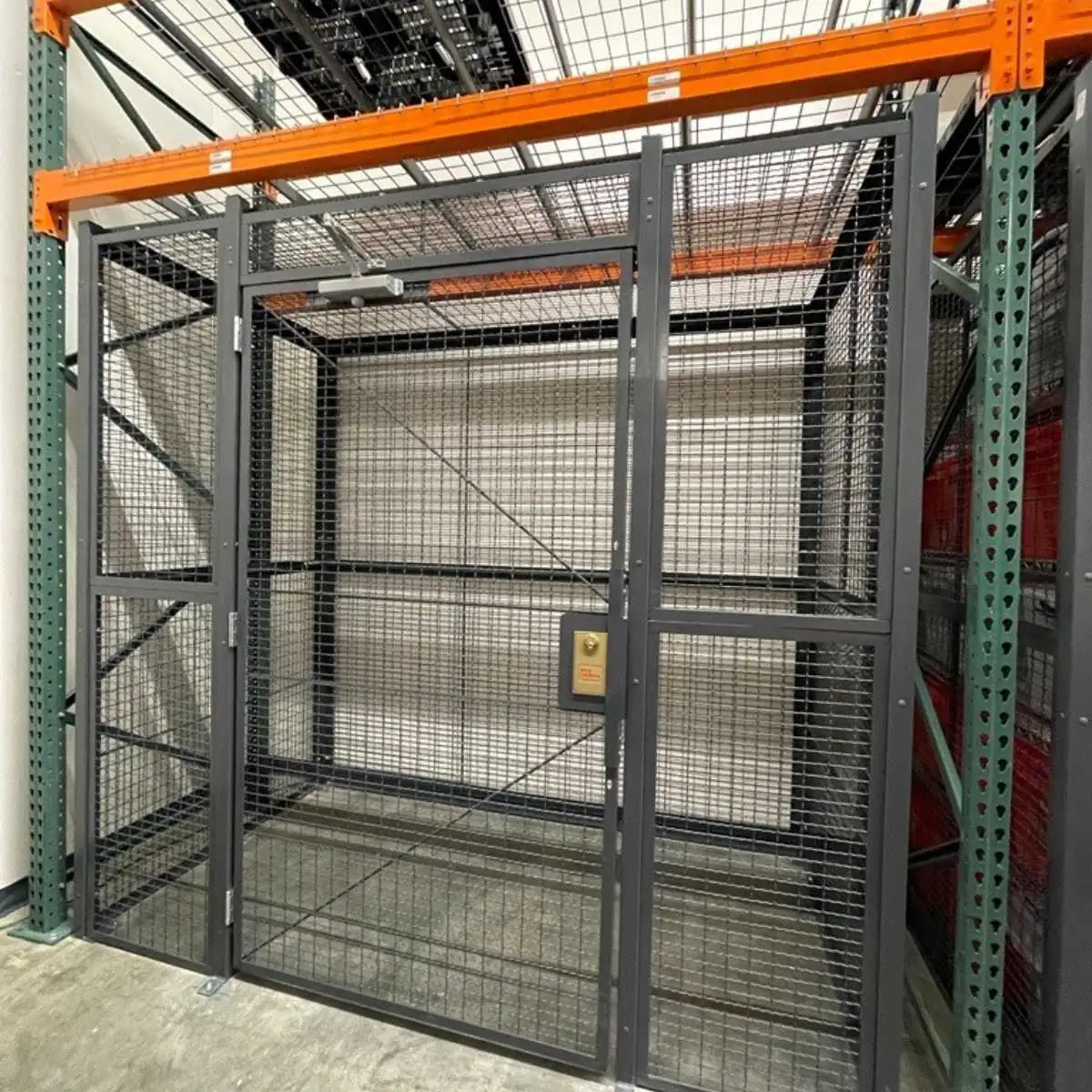

ATF-licensed firearms dealers and manufacturers face separate physical security requirements under federal firearms law. Wire mesh cages with proper locking and construction are commonly used to secure firearms inventory during non-business hours; confirm the specific requirements with your ATF inspector. Military armories and law enforcement evidence rooms have additional chain-of-custody and access-logging requirements that integrate with electronic access control systems on cage doors. We can help you match the cage specification to the requirements your regulator or inspector identifies.
Wire Mesh Specifications
Compare mesh types and their applications to choose the right security level.
| Mesh Type | Wire Gauge | Opening Size | Security Level | Best For |
|---|---|---|---|---|
| Woven Wire | 10 gauge | 2″ × 1″ | High | Warehouse, DEA, ATF |
| Welded Wire | 8–10 gauge | 2″ × 2″ | High | Server cages, retail |
| Expanded Metal | Varies | Small diamond | Very High | Cash rooms, military |
| Welded Wire | 10 gauge | 1″ × 1″ | Very High | Small parts, evidence |
| Chain Link | 9–11 gauge | 2″ diamond | Moderate | General storage |
Wire Mesh Storage Formats: Partitions, Lockers, Rack Panels & Guarding
The same wire mesh storage parts solve different problems. Start with what you need to protect, then pick the format:
| If you need to… | Wire mesh storage format | Spec notes | Guide |
|---|---|---|---|
| Secure a room or area of the warehouse | Wire mesh partitions (bolt-together panels, posts and doors) | 10 ga woven 2″ × 1″ mesh is the common choice; add a mesh ceiling if walls stop short of the deck | Wire mesh partition systems → |
| Give each worker or tech a locked, ventilated space | Wire mesh lockers | Single, double-tier and walk-in styles; contents stay visible for inspections | Wire mesh lockers → |
| Stop loads falling into aisles or lock off rack bays | Rack backing and pallet rack enclosures | Mesh back, end and top panels plus doors fitted to existing rack | Pallet rack enclosures → |
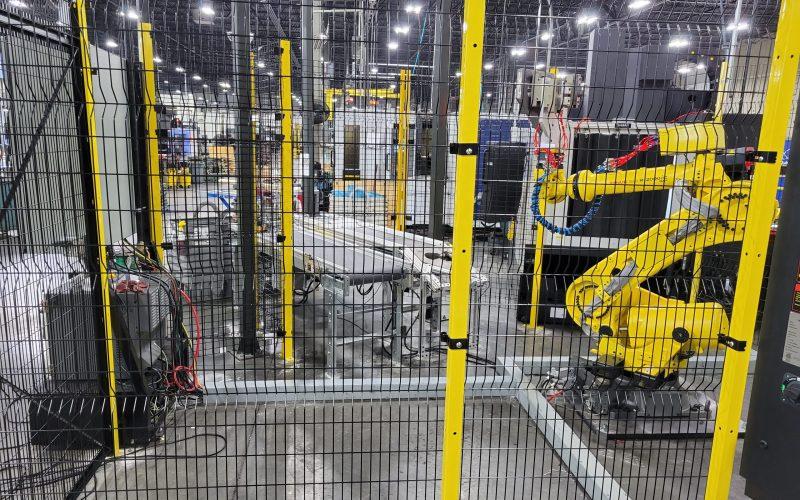
| Keep people away from robots, conveyors or moving machinery | Wire mesh machine-guard partitions | Mesh opening matched to distance from the hazard so hands can’t reach through; interlocked gates; OSHA 1910.212 covers general machine guarding | Machine guarding → |
| Move secured goods between dock, storage and line | Mobile wire mesh cages on casters | Lockable cage carts for parts, returns or liquor | Mobile security cages → |
Customizing wire mesh partitions: panel widths and heights are sized to your space, filler panels are cut to fit around columns, ductwork and sprinkler lines, and solid or clear infill panels can replace mesh where small parts, dust or privacy matter. Gray or black powder coat is standard, with galvanized and custom colors on some systems, and doors can take electric strikes or mag locks tied into your building access control. Options vary by manufacturer, so we compare them in your quote.
Tenant Storage & Multi-Unit Applications
Apartment buildings, condominiums, and self-storage facilities use wire mesh cages to create individual tenant storage lockers in shared spaces. Each tenant receives a dedicated cage with their own padlock — keeping personal belongings secure while leaving the storage area open for visibility, ventilation and sprinkler coverage. Single-tier cages (floor to ceiling, typically 8–10 feet) are the most common configuration, offering maximum storage height for each unit.

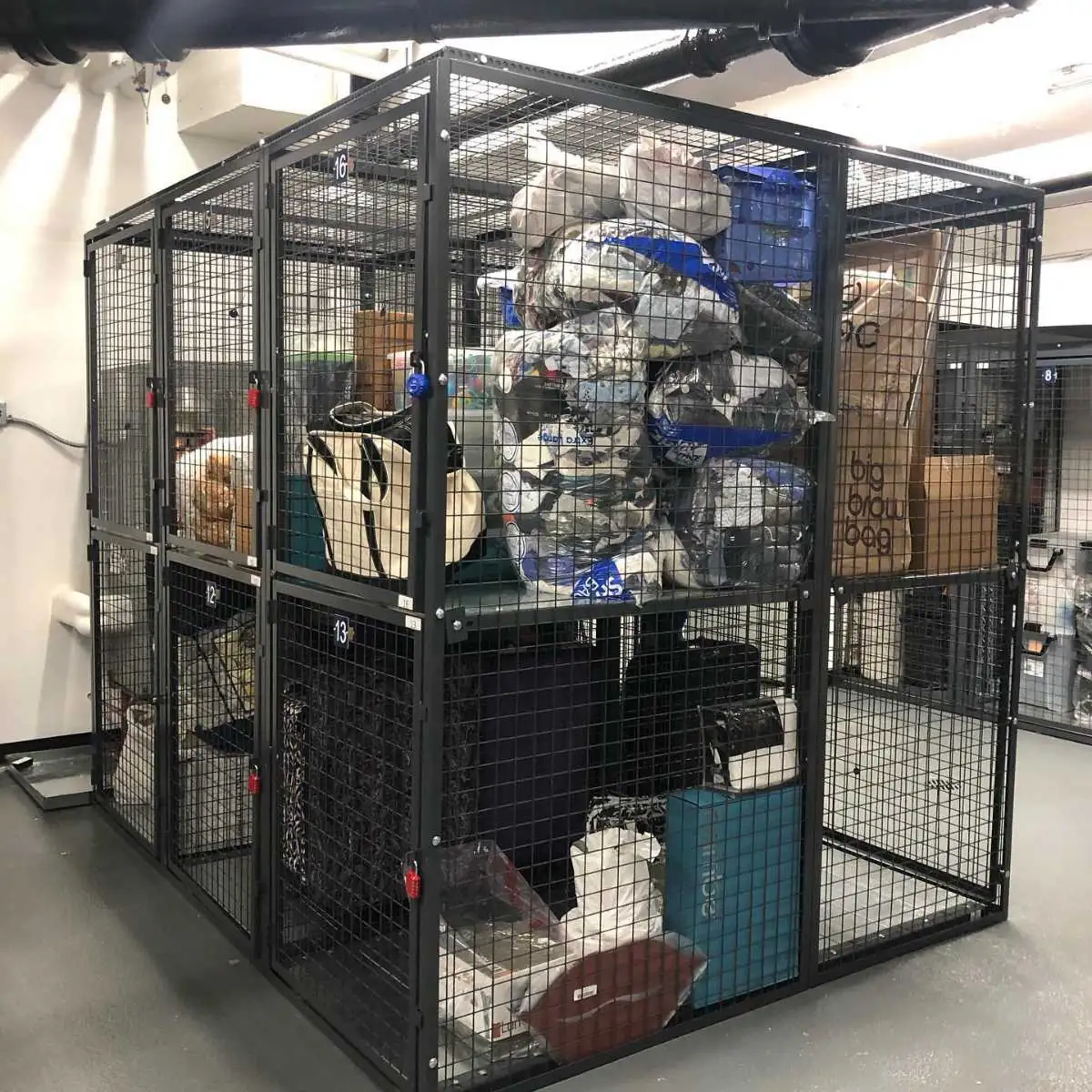
Double-tier cages stack two half-height lockers vertically — creating twice as many tenant storage units in the same floor area. This configuration is popular in buildings with large numbers of small units (studios and one-bedrooms) where tenants need modest storage volume rather than full-height capacity. Double-tier lockers also work well for seasonal storage in hospitality operations, employee lockers in large facilities, and sports equipment storage at schools and recreational complexes.
Installation in existing buildings requires careful planning around fire sprinkler coverage, lighting, ventilation, and emergency egress requirements. Wire mesh lockers are popular because water and heat pass through the mesh, while solid-wall units often need sprinkler heads added inside them. NFPA 13 obstruction and open-grid rules still apply, and the fire protection engineer and the authority having jurisdiction make the final call. Our layout team produces detailed locker plans, with sprinkler heads and fixtures marked, to support fire marshal and building department review.

Where budget or an outdoor location favors woven fence fabric over welded wire mesh, our chain link storage cage page covers lockable chain link cages and cage storage units in the same tenant, warehouse and equipment-yard layouts.
Warehouse Inventory Protection & Loss Prevention
Inventory shrink is a large and growing cost: the National Retail Federation’s 2023 National Retail Security Survey put U.S. retail shrink at $112.1 billion in losses for 2022, up from $93.9 billion in 2021. Wire mesh security cages are one of the most practical physical controls for protecting high-value warehouse inventory from internal and external theft. By creating controlled-access zones within the warehouse, cages restrict who can touch high-value items and create accountability for every person who enters the secured area.


Cage placement strategy matters as much as the cage itself. High-value items should be consolidated into a single secured zone near the shipping area where picking activity is monitored. Cages with service windows or dutch doors allow parts-counter operations where warehouse staff requests items from a dedicated cage attendant — eliminating self-service access to expensive inventory. Access logs from electronic door locks create an audit trail that deters casual theft and simplifies investigation when losses occur.
Insurance is worth a conversation too. A cage combines visual deterrence (everyone can see into it), physical resistance (steel mesh that slows tampering) and access control (locked doors, with logged entries when electronic locks are used), which are the kinds of controls insurers ask about for secured storage areas. Whether a cage changes your coverage or premium depends on your carrier and policy, so ask your insurance broker before counting on any savings.
Cannabis, Alcohol & High-Value Inventory

State-licensed cannabis cultivation, processing, and retail facilities face some of the most stringent physical security requirements of any industry. Wire mesh security cages are widely used to help meet state regulatory requirements for securing cannabis product storage areas, creating vault rooms, and controlling access to cultivation zones. Wire Crafters, SpaceGuard and BeastWire cage systems provide the continuous construction, locked access, and visual monitoring that state cannabis rules often call for (confirm the details with your state regulator) — without the cost and inflexibility of conventional vault construction.
Alcohol distributors and beverage warehouses use security cages to protect high-value wine, spirits, and craft beer inventory from theft and tampering. Temperature-controlled storage areas within wire mesh enclosures maintain the airflow needed for HVAC systems while restricting access to authorized personnel. Cage configurations with multiple locked zones allow beverage distributors to segregate inventory by customer account, brand, or regulatory category (bonded vs. tax-paid) within a shared warehouse.
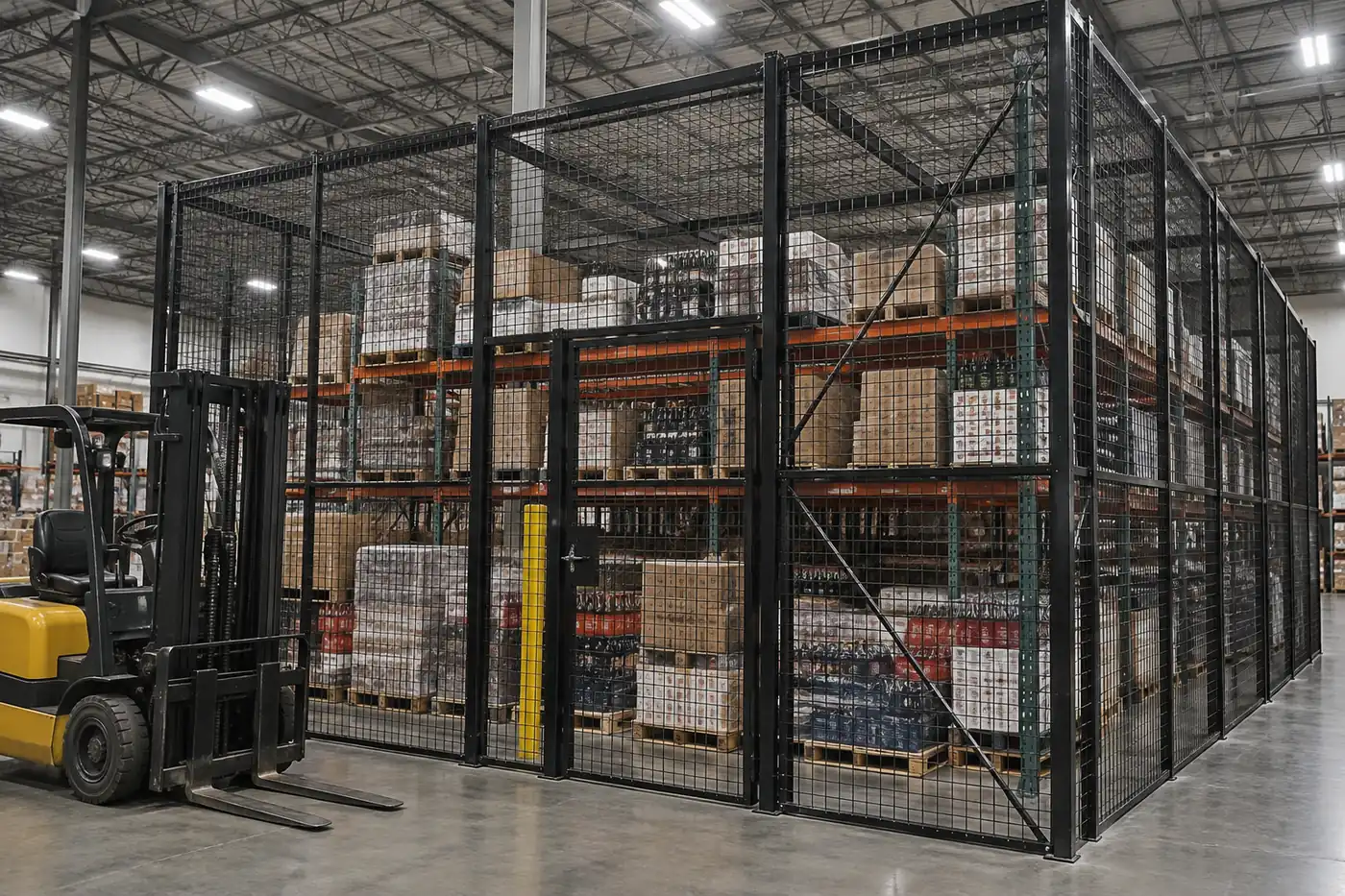
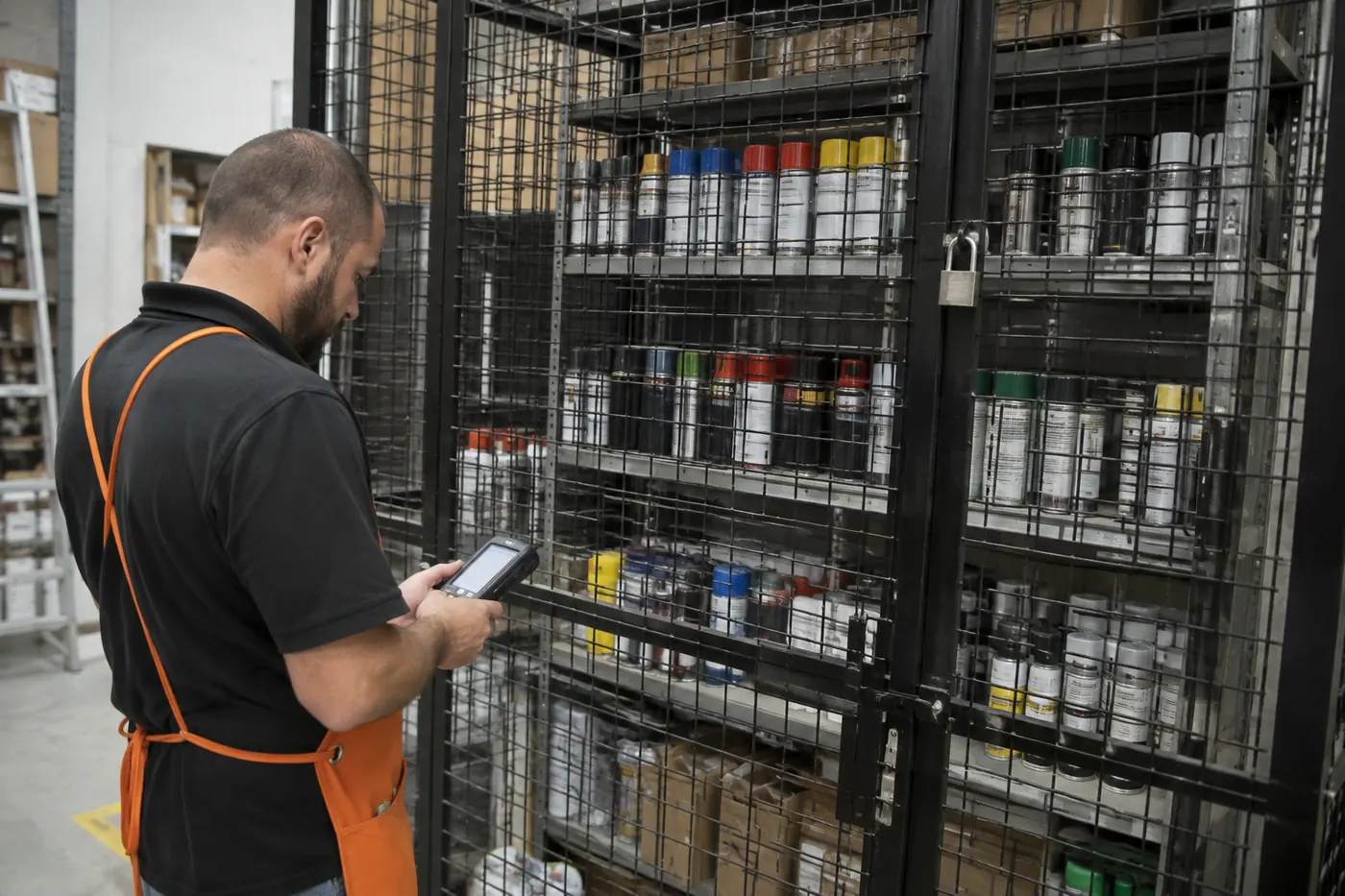
Retail and e-commerce operations use security cages for high-shrinkage merchandise categories — electronics, designer goods, pharmaceuticals, tobacco, and tools that are frequently targeted for internal and external theft. Cages positioned in warehouse pick areas create controlled-access zones where high-value items are picked by designated personnel rather than accessible to all warehouse workers. The visible security of wire mesh construction deters opportunistic theft while maintaining the operational accessibility needed for efficient order fulfillment.
Machine shops, aerospace manufacturers, and defense contractors use security cages to protect tooling, raw materials, and work-in-progress inventory with high material value. Titanium bar stock, exotic alloys, and precision tooling can carry a high cost per piece and are vulnerable to internal theft due to their small size and high resale value. Security cages with access-controlled doors and audit-trail locks create accountability for every person who handles high-value materials.
Design, Ordering & Installation

Every security cage project begins with a site survey — either in person or using your provided floor plans and photographs — to document the area dimensions, ceiling height, sprinkler locations, column positions, and any obstructions that affect cage layout. Our design team produces detailed CAD drawings showing cage panel locations, door positions, ceiling panel coverage, and hardware specifications. You review and approve the layout before we quote materials and installation.
Some common sizes are in stock at select manufacturers, subject to confirmation; made-to-order cages (custom sizes, special mesh patterns and non-standard finishes) are scheduled after the layout drawing is approved, plus freight time. We confirm the ship date with your quote. Installation is performed in your operating facility, and the schedule depends on size, layout and site conditions. Cages are assembled using bolted connections that allow future modification, expansion, or relocation without cutting or welding.
Material Handling USA provides turnkey security cage projects — from initial site survey through design, manufacturing, delivery, installation, and post-installation support. We handle every detail including floor anchoring, ceiling panel suspension, door hardware installation, and coordination with your access control vendor for electronic lock integration. Our single-source approach means one purchase order, one project schedule, and one responsible party for the complete installation. For projects along the Wasatch Front and across the state, see our security cages in Utah page for local survey, seismic anchoring and installation details.
Contact Material Handling USA today for a free security cage site assessment and quotation. Our team evaluates your space, security requirements, and regulatory obligations to design a cage system that protects your assets while maintaining the operational accessibility your team needs for daily work.
Our Security Cage Manufacturers
Material Handling USA partners with multiple leading security cage manufacturers to provide the right solution for every application and budget.
SpaceGuard Products
Manufacturer of woven (FordLogan) and welded (BeastWire) wire partitions, storage lockers and pallet rack panels, based in Seymour, Indiana. Applications include tenant storage, DEA drug storage cages, machine and conveyor guarding, plus AisleGuard guardrail and bollards.
WireCrafters
Maker of Style 840 woven wire partitions (10-gauge wire woven into a 2″×1″ mesh on angle frames, with matching doors and clear-span ceilings) and RapidWire welded-mesh tenant storage lockers. A common choice for warehouse partitions, tool cribs and multifamily locker rooms. See our Wire Crafters partitions and cages page.
Wanzl
Wanzl (North American office in Newton, North Carolina) makes partition systems for organizing rooms and protecting against theft, in metal, transparent and stainless steel versions, along with roll cages and access systems such as turnstiles and swing gates. We quote Wanzl partitions on request.
EQUIPTO
American manufacturer providing wire mesh partitions, conveyor guards, and guard rail systems as part of their broader industrial storage product line. EQUIPTO partitions integrate with their mezzanine and shelving systems for comprehensive facility security solutions.
BeastWire (by SpaceGuard)
Fully welded 10 or 6 gauge mesh built from one universal panel, for cages, lockers and rack guarding. See BeastWire mesh partitions.
Cogan
Wire mesh partitions and storage lockers for industrial partitions and locker rooms. See our Cogan page.
Vestil
Pre-configured welded wire cage kits and driver access cages, priced online. See security cage kits and our Vestil page.
Dasco Security
Specializes in electronic security lockers and access-controlled storage — perfect for pairing with wire security cages. Dasco’s smart lockers and evidence e-lockers provide individual compartment security within larger cage enclosures.
Related Security & Storage Solutions
Utah Security Cages
Security cages, wire partitions and pallet rack enclosures designed, delivered and installed across Utah — Salt Lake City, Utah County, Ogden, Logan, Tooele and St. George — with seismic anchoring and permit-ready drawings.
Philadelphia Security Cages
Wire mesh security cages and partitions for Philadelphia-area warehouses, 3PL, pharma distribution and food warehouses, shipped and installed nationwide from Salt Lake City.
Chain Link Storage Cages
Chain link cages for outdoor storage, large perimeter security, and applications where welded or woven wire mesh isn’t required.
Evidence Storage Solutions
Complete evidence room design including mobile shelving, drying cabinets, and chain-of-custody tracking — secured within wire mesh cages.
Data Center & Server Cages
Wire mesh server cages for colocation data centers, enterprise IT rooms, and telecom closets — with electronic access control and cable management.
Tenant Storage Lockers
Individual wire mesh storage lockers for apartments, condominiums, and multi-unit buildings — modular and fully customizable.
Mobile Shelving Systems
High-density powered shelving often installed inside security cages — doubling protected storage capacity without expanding the cage footprint.
Machine Guarding
Wire mesh machine guarding panels and robotic cell enclosures to meet OSHA and ANSI machine guarding safety standards.
Security Cage Resources
Planning a colocation or server-room enclosure? Read our data center security cage layout and access guide for customer cage boundaries, access points, cable routes, and early coordination details.
Need a smaller lockable enclosure? See our lockable storage cage page for pre-sized cage kits with lockable doors for tools, parts, inventory and personal storage.
Security Cage Case Studies
How distributors, manufacturers, agencies and hospitals use wire mesh cages to secure inventory and control access.
Planning a project in Utah? See security cages in Utah for local projects and installation.
See all security cage case studies — 34 projects grouped by warehouse, pharma and lab, IT, government, manufacturing, contractor and hospitality use.
Security Cage FAQs
How much do security cages cost?
Price depends on size, layout, wire gauge, doors, locks and site conditions. Send us your dimensions and a rough sketch, and we will quote your project.
How long does installation take?
Install time depends on size, layout and site conditions. No welding is required: Wire Crafters and SpaceGuard woven wire systems bolt together with standard hand tools. Send us your dimensions for a quote, and we will confirm the installation schedule with it.
Are wire cages DEA compliant?
They can be. 21 CFR 1301.72 describes a specific wire cage for some DEA registrants: No. 10 gauge or heavier steel fabric on steel posts, a ceiling of the same material or walls attached to the structural ceiling, and a self-closing, self-locking door. We can build cages to those specifications when specified. Whether your storage meets DEA requirements depends on your registration and site, so confirm the design with your regulator or inspector.
Can cages be expanded or reconfigured?
Yes. Modular bolt-together panel construction allows security cages to be extended, reconfigured, or relocated as your storage needs change. Additional panels, doors, and partition walls can be added without dismantling the existing structure.
What security level do wire cages provide?
Wire mesh security cages provide visual accountability (you can see inventory through the mesh) with strong physical deterrence. Standard 10-gauge woven wire resists cutting and forced entry. For higher security, options include welded wire mesh, expanded metal panels, and steel sheet walls. Electronic access control with audit trails adds accountability.
Do you offer quick-ship cages?
For standard components, often. Some common sizes are in stock at select manufacturers, subject to confirmation; made-to-order cages are scheduled after the layout drawing is approved, plus freight time. We confirm the ship date with your quote.
What’s the difference between woven wire and welded wire mesh?
Woven wire mesh is interlocked at each crossing, while welded wire mesh is welded at each junction. Both are used for security cages: woven wire is a common choice for heavy-duty warehouse partitions, and welded mesh gives a flat, clean look that is popular for server cages and lockers. For regulated storage (DEA, ATF, cannabis), confirm the required wire gauge, mesh opening and construction with your regulator or inspector, and we will specify the system to match.
Can security cages be installed around existing pallet racking?
Yes. Pallet rack enclosure panels mount directly to rack uprights and beams, converting standard rack bays into secured storage without separate cage construction. Wire Crafters makes RackBack® panels and pallet rack enclosures, and SpaceGuard makes panels designed to retrofit onto Ridg-U-Rak, Camrack, and other major rack brands.
What are warehouse tool cages?
Warehouse tool cages are wire mesh tool cribs that lock up hand tools, power tools and spare parts while staying visible. Most use a service window or Dutch door so an attendant can issue tools without opening the cage; see our tool cribs page.
What cage door access control options are available?
Options range from keyed locks and padlock lugs to keypads, card readers, electric strikes and mag locks. Card readers log who opened the cage and when. See cage door access control.
Do you build custom outdoor security cages?
Yes. Custom outdoor security cages usually use galvanized or powder-coated mesh, a mesh roof and anchoring for wind. For large outdoor yards, chain link storage cages are often the better value.
What makes industrial security cages different from storage cages?
Industrial security cages use heavier 10 gauge or stronger mesh, steel posts anchored to the floor, secure hardware and lockable doors, and are built to your room size, while light storage cages are often freestanding kits.
Ready to Secure Your Space?
Get a free security cage layout with custom sizing, door placement, and a review of your compliance requirements. Our team typically responds within one business day.
Plan this before you buy
Free planning tools you can use right now — results on screen first, no gate to see them.
- Rack Damage Photo AssessmentDescribe or photograph rack damage and get a triage severity, the applicable inspection references, and what to isolate before repair.
Specifying This for a Construction Project?
Security cages fall under CSI MasterFormat Division 10 (Specialties). See our Division 10 Specialty Products page for the full product map, published CSI spec sections, and submittal support.
Related Security Cage Guides
- Data Center Cage Design: Colocation & Server Room Security Guide
- A Guide to Physical Security Cages for Server Rooms
- Top Server Farm Cage Security Layout Ideas & Best Practices
- Security Cage Buying Guide: Wire Partitions for Warehouses & Facilities
- Wire Partition Cages for Tenant Storage in Apartments & Condos
- Forklift Propane Tank Sizes, Safety and Storage Guide
- Wire Cages vs Security Lockers: Which to Choose
- Warehouse Tool Cages Buyer’s Guide
- Security Cages in Phoenix, AZ
- Warehouse Cage Enclosures: Securing Inventory & Areas
- SpaceGuard Products
- BeastWire Mesh Partitions by SpaceGuard
- Bike Storage Cages and Secure Bike Rooms
- Temporary Holding Cells
- Evidence Cages
- Security Cages For A Credit Union
- Security Cage Sizing and Door Placement Guide
- Wire Mesh Machine Guarding Vs Security Cages: Guide 2026