Home » Security Cages » Regulations & Compliance
Security Cage Regulations by Industry
DEA, OSHA, NFPA, state cannabis laws — know exactly what regulations apply to your security cage project.
Why Compliance Matters for Security Cages
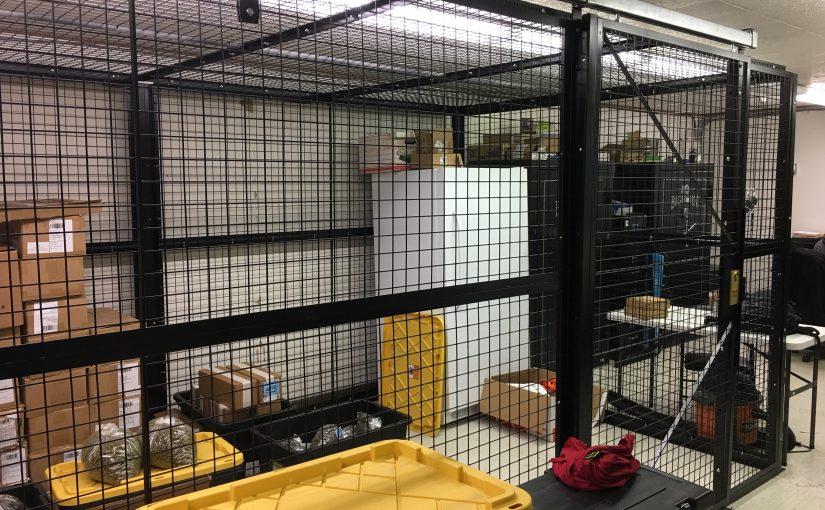
Security Cages aren’t just about keeping things safe — in many industries, they’re legally required. The wrong specification can mean failed inspections, fines, license revocation, or worse. This guide breaks down the specific regulations that apply to each industry so you can spec your project with confidence. Accredited testing laboratories are a good illustration of how physical control supports a quality system — see our laboratory security cage case study.
⚠️ Important Disclaimer:
This guide provides general compliance information. Regulations change, and local jurisdictions may have additional requirements. Always verify current requirements with your local authorities and legal counsel before finalizing a security cage specification.

DEA Controlled Substance Storage (21 CFR 1301.72–76)
The Drug Enforcement Administration has the most specific DEA Drug Storage Cages requirements. Non-compliance can result in license revocation — effectively shutting down your pharmacy, hospital, or distribution operation. Correctional and independent pharmacies face an added layer of complexity here, since DEA physical security requirements apply on top of DSCSA supply-chain recordkeeping obligations — see RxRescue’s breakdown of DSCSA requirements for jail and prison pharmacies for the recordkeeping side of that equation.
Key DEA Cage Requirements:
- Schedule I & II substances — Must be stored in a “substantially constructed” steel cage or vault
- Wall construction: 10-gauge steel fabricorequivalent. Wire Mesh Panel Options must resist cutting, climbing, and forced entry
- Ceiling required: Full Security Cage Ceilings preventing access from above
- Door: Commercial-grade steel with manufacturer’s Security Cage Locks — minimum 3-point locking or padlock with shrouded shackle
- Floor-to-ceiling: No gap larger than the mesh opening at floor or ceiling junctions
- Access log: Record of who accessed the cage and when
- Two-person rule: Some DEA offices recommend dual-lock or two-person access for Schedule II
✅ MH-USA DEA Compliance:

All our DEA Drug Storage Cages systems are designed to meet or exceed 21 CFR 1301.72 requirements. We provide compliance documentation and work with your DEA field office during inspections.
OSHA Machine Guarding (29 CFR 1910.212–219)
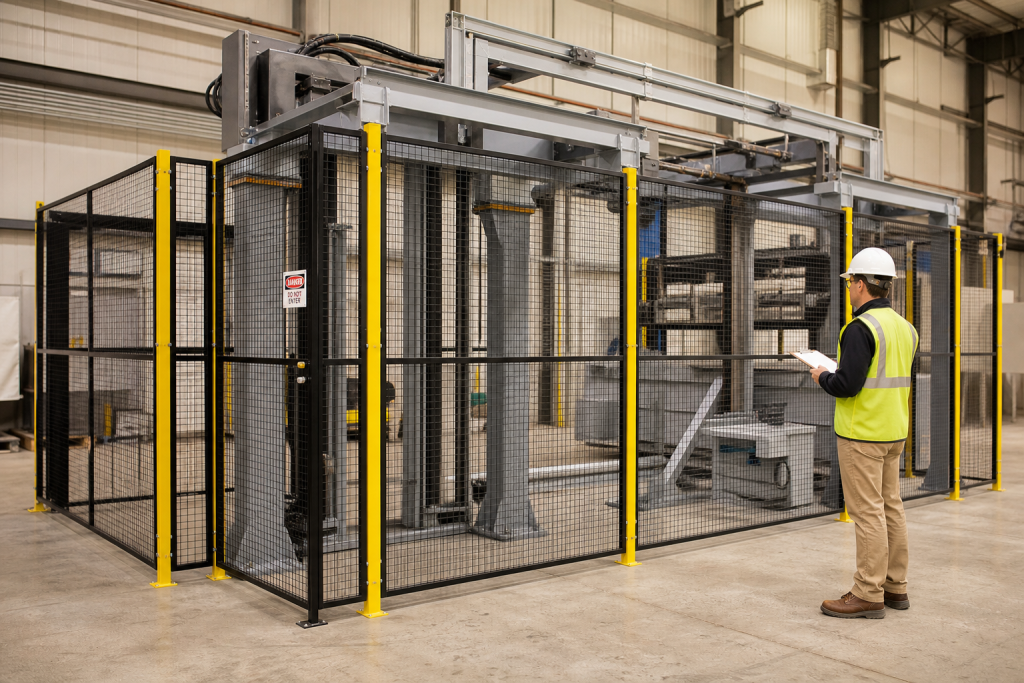
OSHA requires Machine Guarding on any machine component that could cause injury. Violations are among the most commonly cited — and fines can reach $161,323 per willful violation.

Key OSHA Requirements:
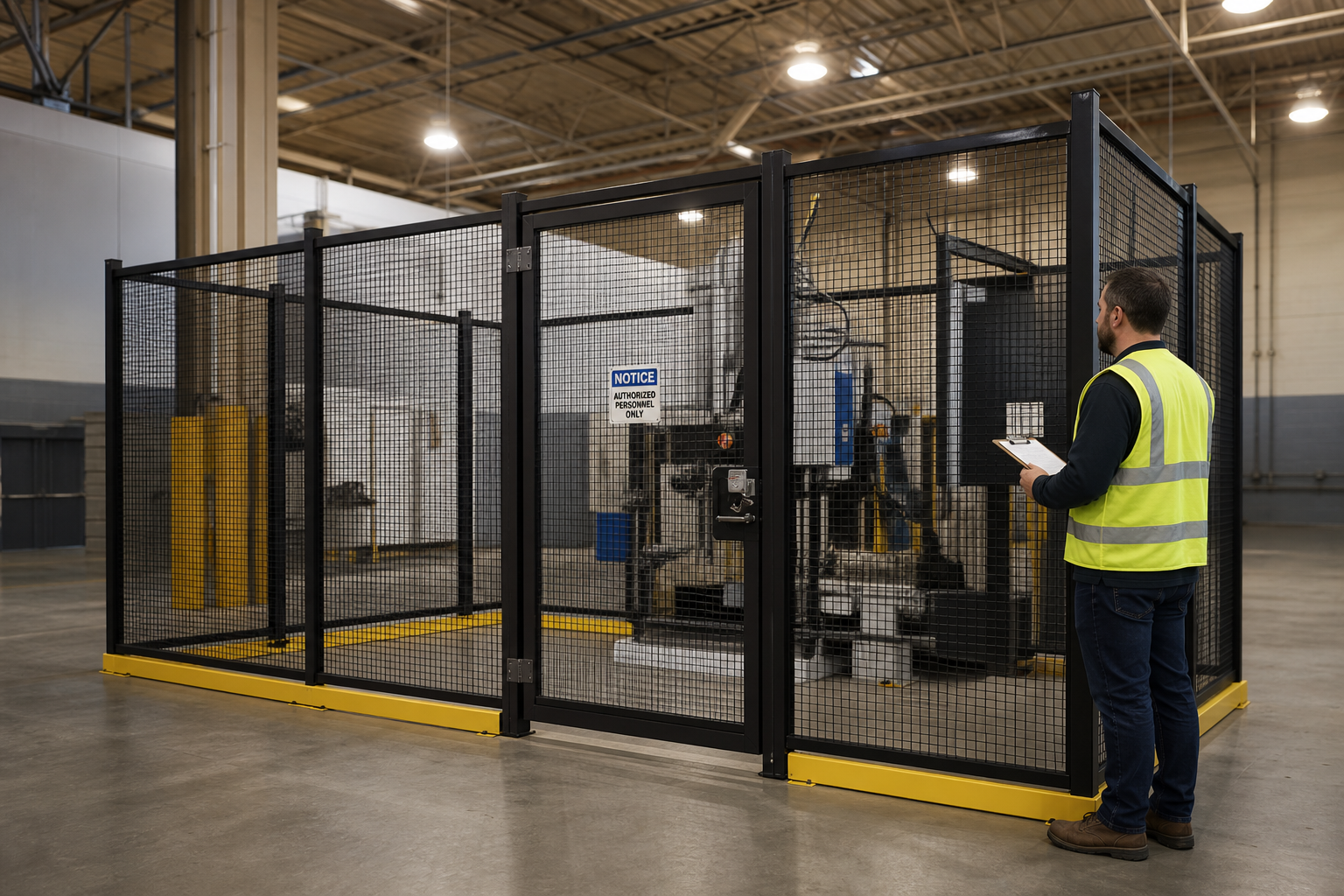
- Point of operation: Guards must prevent any body part from reaching the hazard zone
- Mesh opening size: Based on distance from hazard (¼” to 2″ per ANSI/NFPA 79 tables)
- Interlock switches: Access doors on automated equipment must trigger machine stop
- Anchoring: Guards must be securely mounted — not freestanding or easily moved
- Training: Documented training for all workers near guarded machines
- LOTO compatibility: Guards must work with lockout/tagout procedures
See our detailed guide: OSHA Machine Guarding Requirements

NFPA Fire Code Requirements
NFPA 13 (fire sprinkler) and local fire codes significantly impact security cage design, especially for Tenant Storage Lockers and Warehouse Security Enclosures applications:

- Sprinkler clearance: Top of cage panels must be at least 18″ below sprinkler deflectors (NFPA 13)
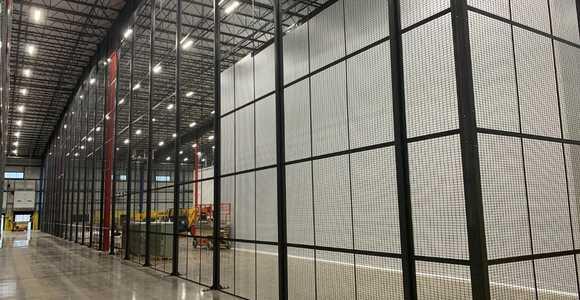
- No solid ceilings: In sprinklered buildings, cage ceilings must be open wire mesh — never solid panels. Security Cage Ceilings with standard mesh openings satisfy this requirement
- Egress: Cage doors must not block emergency exit paths. All occupants inside a cage must have direct access to an exit without a key
- Fire extinguisher access: If a fire extinguisher is inside the cage, it must be accessible without unlocking the cage. If outside, the cage must not block access
- Combustible storage: Caged areas storing combustibles may trigger additional sprinkler density requirements
State Cannabis Security Requirements
Cannabis Storage Cages regulations vary significantly by state. Here are requirements for MH-USA’s service areas:
| State | Key Cage Requirements |
|---|---|
| Utah | Restricted access area with commercial locks, surveillance, access logs. Vault required for concentrates. |
| Colorado | Limited access areas with commercial locks. Video surveillance with 40-day retention. Separate cages for different license types. |
| Nevada | Security cage or vault for inventory storage. Electronic access control with audit trail. 24/7 video monitoring. |
| Arizona | Secure storage with commercial locks. Background-checked employee-only access. Inventory tracking integration. |
| Idaho | Cannabis is not legal in Idaho — no applicable regulations. |
Law Enforcement Evidence Storage Standards
Law Enforcement Evidence Storage facilities must meet standards from CALEA (Commission on Accreditation for Law Enforcement Agencies) and IAPE (International Association for Property and Evidence):
- Chain of custody: Physical barriers between intake, temporary, long-term, and high-value evidence areas
- Pass-through windows: Security Cage Service Windows allow evidence intake without entering the secure area
- Separate compartments: Firearms, drugs, cash, and biological evidence must have separate secured zones
- Climate control: Biological evidence areas need temperature and humidity monitoring
- Access control: Electronic locks with audit trail — who accessed which zone and when
- Inspection ready: Systems must withstand CALEA or state POST commission inspection
Read more: Evidence Storage Best Practices
Data Center Physical Security (SOC 2 / HIPAA / PCI DSS)
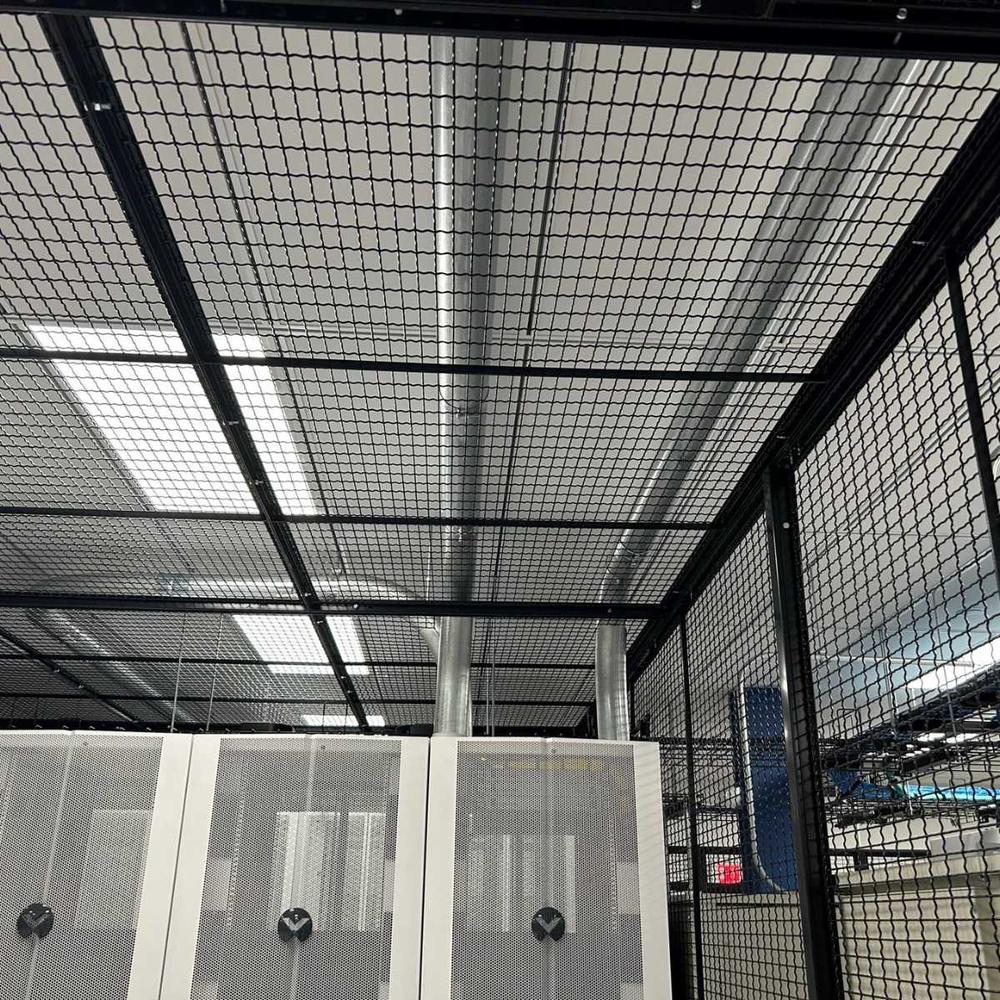
Server & Data Center Cages environments face multiple overlapping compliance frameworks:


| Standard | Physical Security Requirements |
|---|---|
| SOC 2 Type II | Physical barriers restricting access to authorized personnel. Access logs, surveillance, visitor management. |
| HIPAA | Facility access controls limiting physical access to ePHI systems. Workstation security policies. |
| PCI DSS 4.0 | Req. 9: Restrict physical access to cardholder data. Individual cage locking per tenant. Access monitoring. |
| FISMA/FedRAMP | NIST SP 800-53 PE controls. Detailed physical security plan, multi-factor physical access, mantrap entries. |
Tenant Storage and Building Code
Tenant Storage Lockers in apartment and condo buildings must comply with local building codes, typically including:
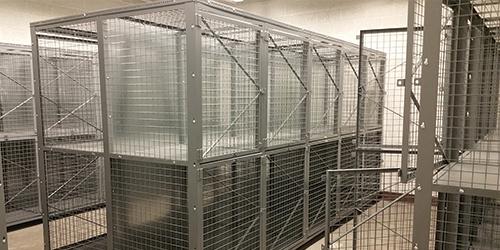
- NFPA 13 sprinkler clearance: 18″ below sprinkler deflectors
- ADA accessibility: Door width minimum 32″ clear, accessible hardware height
- Egress: Storage areas must not block exit paths
- Ventilation: Mesh panels (not solid) ensure proper air circulation
- Permit requirements: Some jurisdictions require building permits for tenant storage installations
Read more: Apartment Storage Cages Guide

Compliance Checklist
Before Specifying Your Security Cage:
- ☐ Identify all applicable federal regulations (DEA, OSHA, HIPAA, etc.)
- ☐ Check state-specific requirements (cannabis, evidence, building code)
- ☐ Review local fire code and building permit requirements
- ☐ Determine sprinkler clearance requirements
- ☐ Identify egress path requirements
- ☐ Determine access control and audit trail needs
- ☐ Review insurance carrier requirements
- ☐ Contact MH-USA for a compliance-focused consultation
Need Help with Compliance?
Our team has designed compliant security cage systems for DEA, OSHA, cannabis, data center, and law enforcement applications across the Intermountain West.

Industry-Specific Security Cage Regulations
DEA Controlled Substance Regulations
The Drug Enforcement Administration regulates controlled substance storage under 21 CFR 1301.72 (Physical Security Controls) and 1301.73 (Employee Security). These regulations apply to pharmacies (retail, hospital, veterinary), pharmaceutical manufacturers and distributors, research laboratories holding Schedule I-V substances, and cannabis facilities in states with medical or recreational programs.
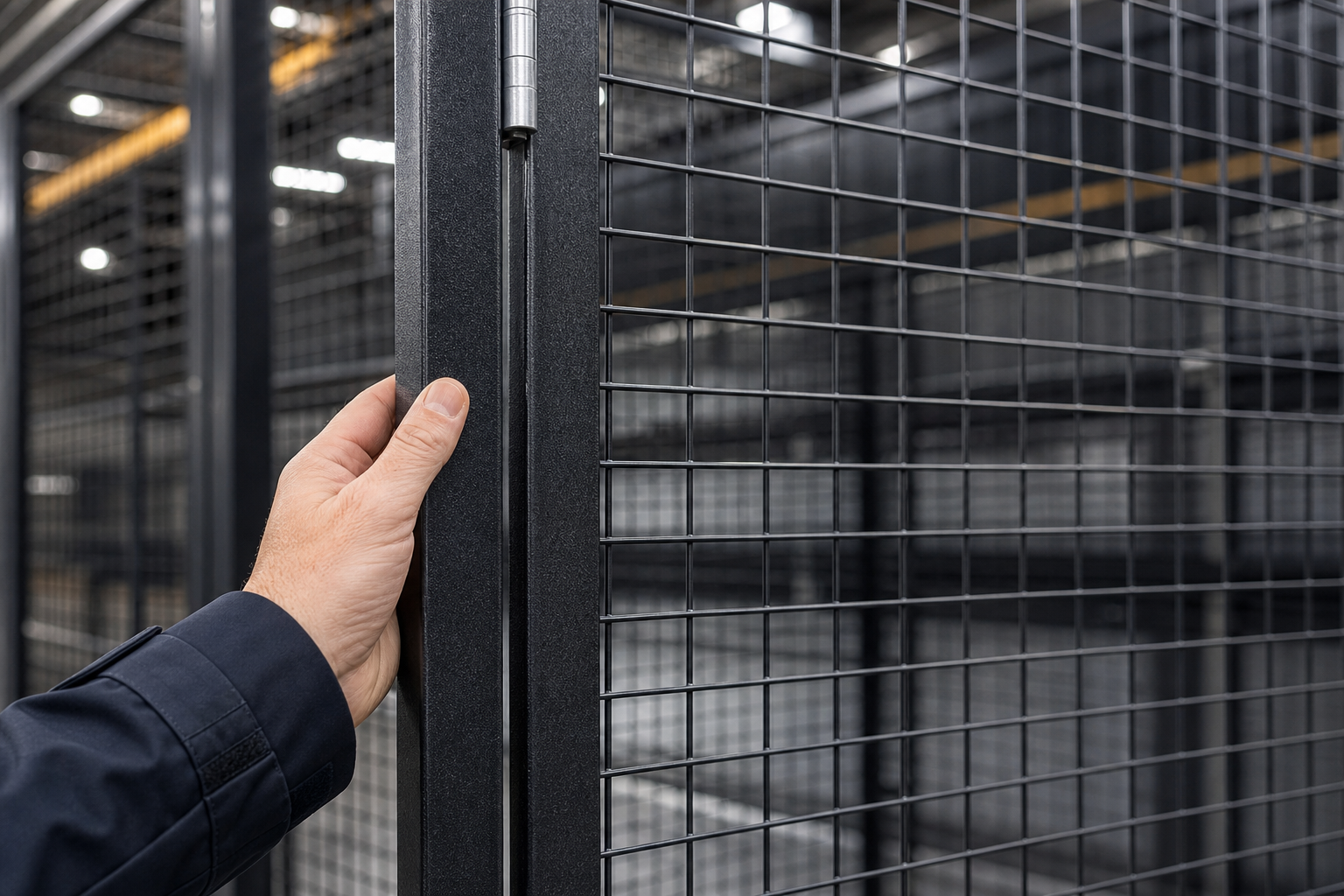
Key requirements include a “substantially constructed” enclosure (industry standard: 10-gauge minimum wire mesh), “commercial quality” lock (ANSI Grade 1 recommended), ceiling panels to prevent over-the-top access, and access limited to DEA-registered individuals. Violations can result in license revocation, fines up to $500,000, and criminal prosecution.
OSHA Workplace Safety Standards
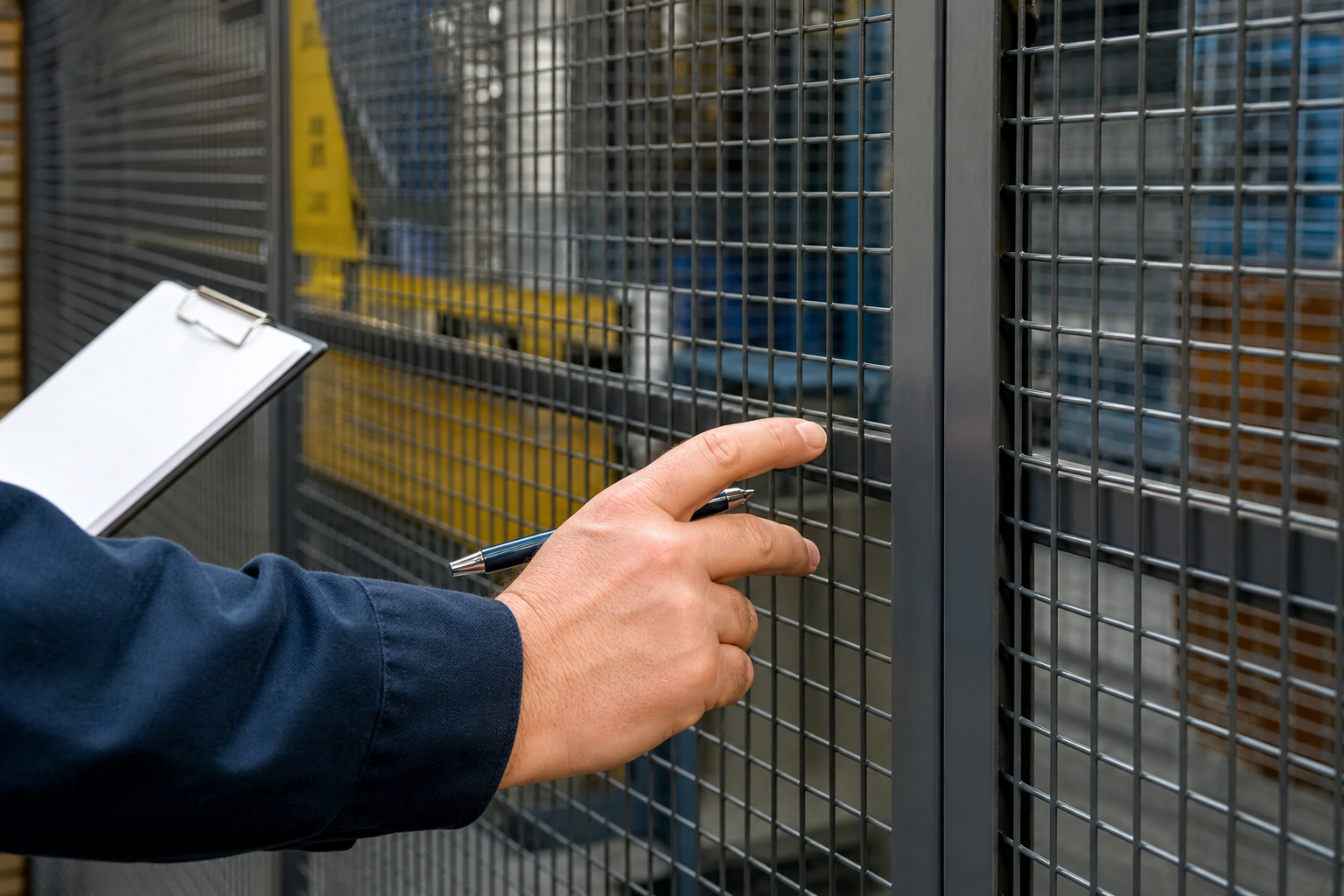
OSHA’s machine guarding standards (29 CFR 1910.211–219) require physical barriers around hazardous machinery. Wire mesh panels are the most common compliant guarding method. See our detailed OSHA Machine Guarding Requirements guide for specific guard sizing, opening calculations, and interlock requirements. OSHA violations for inadequate machine guarding are classified as “Serious” with penalties up to $16,131 per violation, or “Willful” with penalties up to $161,323.
NFPA Fire Code Requirements
NFPA 13 (Standard for the Installation of Sprinkler Systems) affects security cage design by requiring maintained sprinkler coverage inside enclosures. Wire mesh cages are inherently compliant because water penetrates the mesh. Solid-wall enclosures would require separate sprinkler heads — a costly alternative. NFPA 101 (Life Safety Code) requires emergency egress from occupied cages and adequate aisle widths within cage layouts.
Data Center Compliance Frameworks
SOC 2 Type II requires documented physical access controls with audit logging. HIPAA physical safeguards require access controls proportional to the sensitivity of protected health information. PCI DSS Requirement 9 mandates physical security for cardholder data environments. FedRAMP requires NIST SP 800-53 physical controls — the most comprehensive federal standard. Each framework has specific cage, access control, and documentation requirements that our data center cage designs address.
State Cannabis Regulations
Cannabis security requirements are regulated at the state level, creating a patchwork of specifications. Colorado MED, Nevada CCB, Arizona DHS, Utah UDAF, and each state’s regulatory body has unique cage, access control, and surveillance requirements. Multi-state operators face the challenge of meeting different requirements across jurisdictions. Our approach is to design to the most stringent applicable standard, ensuring compliance across all states.
International Standards
Facilities with international compliance requirements may need cages meeting ISO 27001 (Information Security — covering data center physical controls), ISO 45001 (Occupational Health and Safety — covering machine guarding), or EN 13857 (European Standard for Safety Distances). Our engineering team is familiar with international standards and designs cages that satisfy both domestic and international requirements.
Why Choose Material Handling USA for Security Cage Regulations by Industry: DEA, NFPA, OSHA & State Compliance
{
}
Material Handling USA brings over 30 years of experience to every security cage project. Our team has designed and installed thousands of security enclosures across warehouses, distribution centers, manufacturing plants, healthcare facilities, law enforcement agencies, and data centers throughout the Intermountain West and nationwide.
Our Process
Every project begins with a thorough understanding of your requirements. We conduct on-site assessments (or virtual consultations for initial planning), capture detailed measurements, and discuss your security objectives, workflow needs, and budget parameters. Our engineering team creates custom CAD layouts showing exactly how your cage system will look and function — you review and approve the design before we proceed.
{
}
We source panels, doors, locks, and accessories from leading American manufacturers Products — the industry’s most trusted manufacturers. Both offer comprehensive product lines with rapid availability and proven quality. Our bulk purchasing relationships deliver competitive pricing that individual buyers can’t achieve on their own.
Professional Installation & Support
Our trained installation crews handle every aspect of cage assembly — from floor anchoring to door hanging to access control integration. We work around your schedule to minimize operational disruption. Every installation concludes with a formal inspection and documentation package. Post-installation, we remain available for adjustments, expansion, and ongoing maintenance support.
{
}
Serving the Intermountain West & Beyond
Headquartered in Salt Lake City, Utah, Material Handling USA provides direct service throughout Utah, Idaho, Colorado, Nevada, Arizona, Wyoming, and Montana. Nationwide projects are supported through our network of installation partners and direct-ship capabilities. Wherever your facility is located, we deliver the same quality, attention to detail, and customer service that has built our reputation over three decades.
{
}
Request Your Free Quote
Ready to secure your facility? Contact Material Handling USA for a free, no-obligation consultation and quote. Our team responds within one business day with a preliminary assessment and next steps.
- Phone: (800) 326-4403 or (801) 328-8788
- Email: sales@mh-usa.com
- Online: Request a Quote
We look forward to helping you design the right security cage solution for your facility.
Frequently Asked Questions
Do I need a permit to install a security cage?
It depends on your jurisdiction and the scope of work. Simple freestanding cages rarely require permits. Cages that attach to building structure, modify sprinkler systems, or alter egress paths often do. Our Security Cage Installation team checks permit requirements for every project.

Which industries have the strictest cage requirements?
DEA-regulated pharmaceutical storage has the most detailed federal specifications. Data centers serving government contracts (FedRAMP) are a close second. Cannabis varies widely by state but tends to be heavily regulated.
Can one cage system meet multiple compliance standards?
Yes — a well-specified cage can simultaneously meet DEA, NFPA, and ADA requirements. The key is designing to the most stringent applicable standard. Our Custom Security Cages engineering team regularly designs multi-compliance systems.
What documentation do I receive for compliance?
MH-USA provides material certifications, load test reports, installation documentation, and compliance specification sheets for all Security Cages projects. For DEA projects, we provide a compliance letter referencing 21 CFR 1301.72.
What is the installation timeline?
Most security cage projects follow a 2–3 week timeline from initial contact to completed installation. Week 1 covers site assessment and design. Week 2 handles order processing and material preparation. Week 3 is delivery and professional installation. Expedited timelines are available for urgent security needs — some projects can be completed in as little as 5 business days from initial contact.
Do you provide free site assessments?
Yes. Material Handling USA provides complimentary on-site measurements and CAD layout design for all security cage projects. Our assessment includes detailed measurements, obstacle identification, workflow analysis, and a complete proposal with pricing. For projects outside the Wasatch Front, we can conduct virtual assessments using photos and measurements you provide.
Can security cages be customized?
Absolutely. While standard panel sizes handle most configurations, our custom security cage capabilities include non-standard dimensions, angled walls, multiple door types, height transitions, and integration with existing structures. Custom powder coat colors, galvanized finishes, and specialized hardware are also available. Our engineering team designs custom solutions that meet your exact specifications.
What warranty do security cages carry?
All security cages from Material Handling USA include manufacturer warranties covering defects in materials and workmanship. our manufacturing partners both stand behind their products with comprehensive warranty programs. Our installation workmanship is warranted for one year, including a 90-day adjustment period where we return to tighten hardware and verify door alignment at no charge.
Do you serve locations outside Utah?
Yes. While headquartered in Salt Lake City, Material Handling USA serves the entire Intermountain West including Utah, Idaho, Colorado, Nevada, Arizona, Wyoming, and Montana with direct installation crews. Nationwide projects are supported through our installation partner network and direct-ship capabilities. Contact us to discuss your project location.
Explore More Security Cage Solutions
Online Store
Shop at MaterialHandling-USA.com
Need barriers, access control, or secure storage? Shop online:
Lockers
Warehouse Equipment & Supplies
Browse security & access control products →