
Security Cage Panels, Posts and Wire Partition Components
The parts a wire mesh cage is built from — stackable mesh panels, run and corner posts, filler panels, mesh styles and finishes — with the sizes and choices that matter when you plan or extend a partition.
Supplied and installed nationwide from Salt Lake City — call (800) 326-4403.
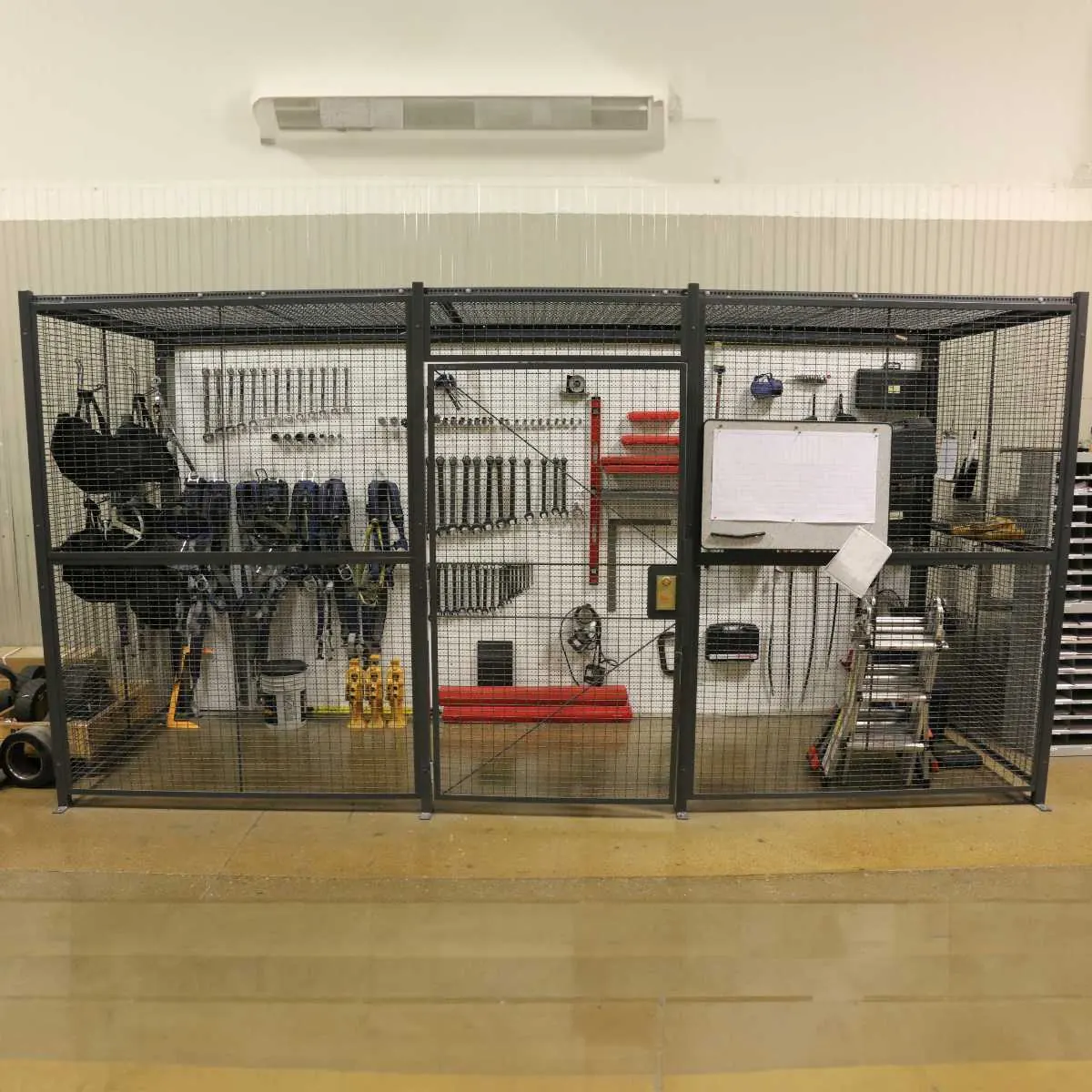
1–10 ft
Panel widths in 1 ft steps
4 ft + 5 ft
Panel heights that stack
8, 10, 12 ft
Standard post heights
7 mesh styles
Woven, welded, solid, clear
What a wire mesh partition is made of
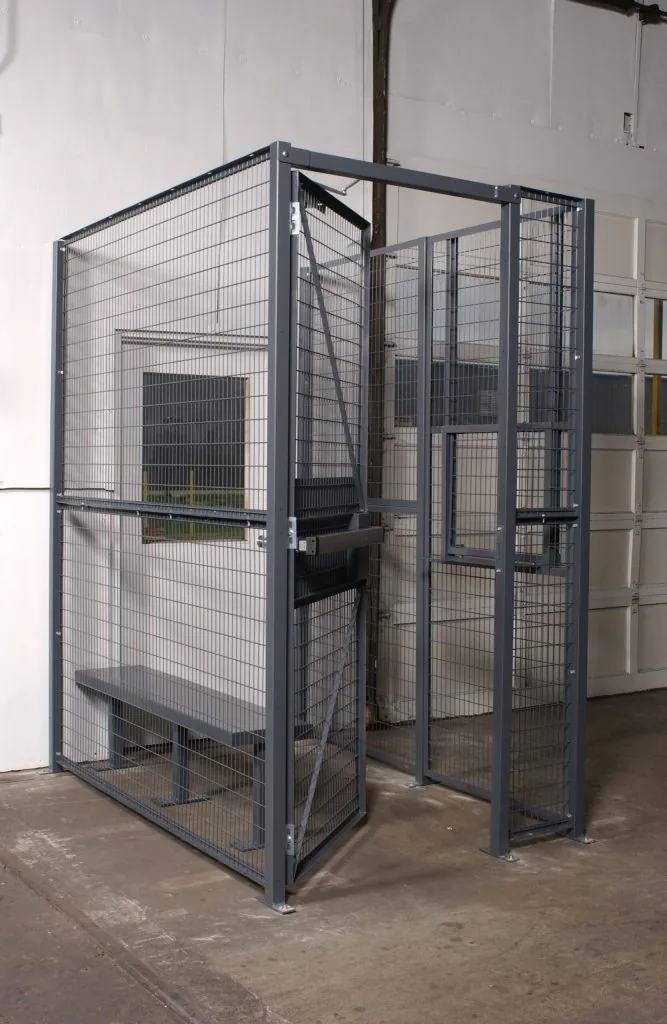
A modular wire mesh partition is a kit of standard parts bolted together on site. Knowing the parts makes it easier to read a quote, extend an existing cage or replace damaged sections:
- Panels — welded or woven mesh in a steel angle frame, stacked between posts to reach full height
- Posts — run, corner and tee posts with welded base plates anchored to the slab
- Doors — hinged, sliding, Dutch, tunnel or vertical rise (see security cage doors)
- Ceilings — mesh roof panels that close the top (see security cage ceilings)
- Hardware — bolts, clamps, filler panels, locks and access control and service windows
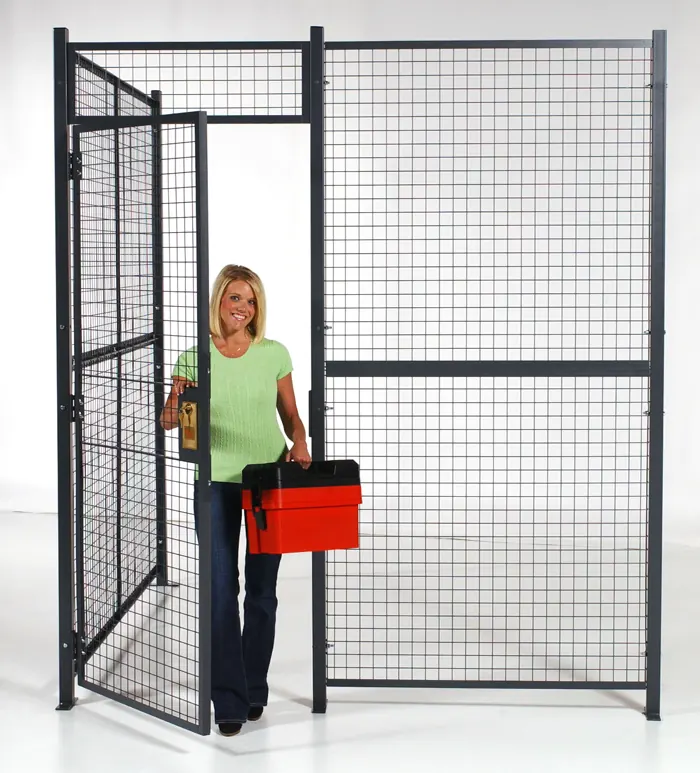
The examples below use the published component line of Wire Crafters, the Louisville, Kentucky wire partition manufacturer MH-USA represents as an authorized dealer. Other brands we supply, including SpaceGuard, follow the same basic panel-and-post logic with their own sizes, so parts from different brands are rarely interchangeable.
Security cage panels: sizes and how they stack
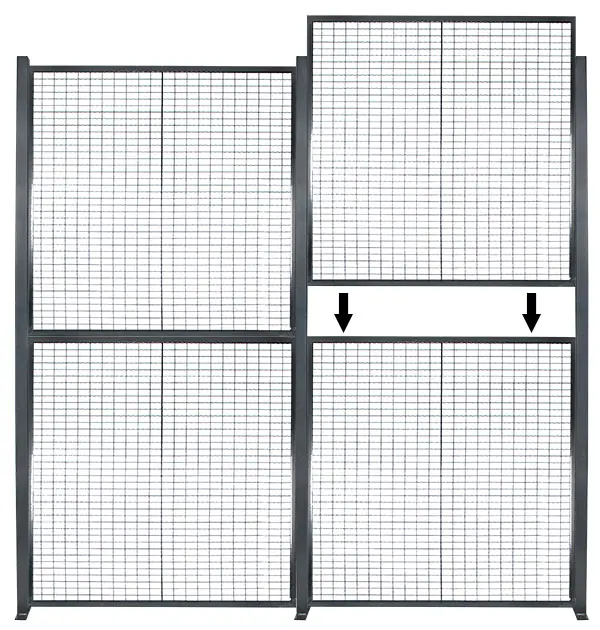
Instead of one tall panel per bay, most systems stack shorter panels between two posts. Wire Crafters makes standard panels in 4 ft and 5 ft heights and widths from 1 ft to 10 ft in one-foot steps (welded panels also come 12 ft wide). Two or more panels stack to reach the height you need, so an 8 ft wall is two 4 ft panels and a 10 ft wall is two 5 ft panels.
Stacking keeps every panel light enough for two people to handle, lets a damaged lower panel be swapped without taking down the whole wall, and makes it easy to add height later.
| Panel | Frame (as published by Wire Crafters) | Widths | Heights | Notes |
|---|---|---|---|---|
| Woven wire panel | 1-1/4 in. x 1-1/4 in. x 1/8 in. steel angle | 1–10 ft | 4 ft, 5 ft | Standard 2 in. x 1 in. 10 ga woven mesh; other meshes available |
| Welded wire panel | 1-1/4 in. x 1-1/4 in. x 13 ga steel angle | 1–10 ft, 12 ft | 4 ft, 5 ft | Lighter; mesh can be cut in the field around obstructions |
| Adjustable filler panel | Solid sheet metal | Covers gaps of 1–11 in. | 4 ft, 5 ft | Closes the leftover gap at the end of a run |
| Custom panels | To order | Any | Any | For odd bays, sloped ceilings and tie-ins to walls |

The filler panel solves the measuring problem. Walls and columns rarely land on a whole foot. An adjustable solid filler panel takes up the last few inches at the end of a run, so the partition can finish tight against a building wall without a custom panel.
If you are sizing a new cage, our security cage sizing guide walks through measuring, door placement and clearances before you count panels.
Wire partition posts and base plates
Posts carry the panels and tie the whole partition to the floor. There are three kinds: run posts along a straight wall, corner posts where the wall turns, and tee posts where a wall branches off. Wire Crafters publishes these standard details:
- Standard post heights of 8 ft 5-1/4 in., 10 ft 5-1/4 in. and 12 ft 5-1/4 in.
- A standard hole layout that leaves about 3-1/4 in. of sweep space under the bottom panel
- Posts that stand about 2 in. above the top panel
- A welded base plate with anchor holes, with 3/8 in. floor anchors included
- Special lengths up to 50 ft and oversized base plates on request

The sweep space keeps the bottom panel off the floor for cleaning and drainage, but some uses need panels flush to the floor — controlled-substance cages are the common example (see DEA drug storage cages). Tall posts, mesh ceilings and seismic regions change how posts are anchored and braced; our anchoring and seismic bracing guide covers that in detail.
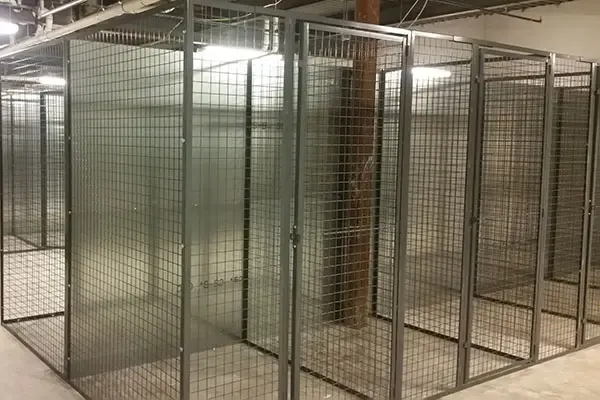
Wire mesh styles for security cages
Mesh is chosen by what must not pass through it and how hard it has to be to cut. Wire Crafters keeps these styles in its standard line:
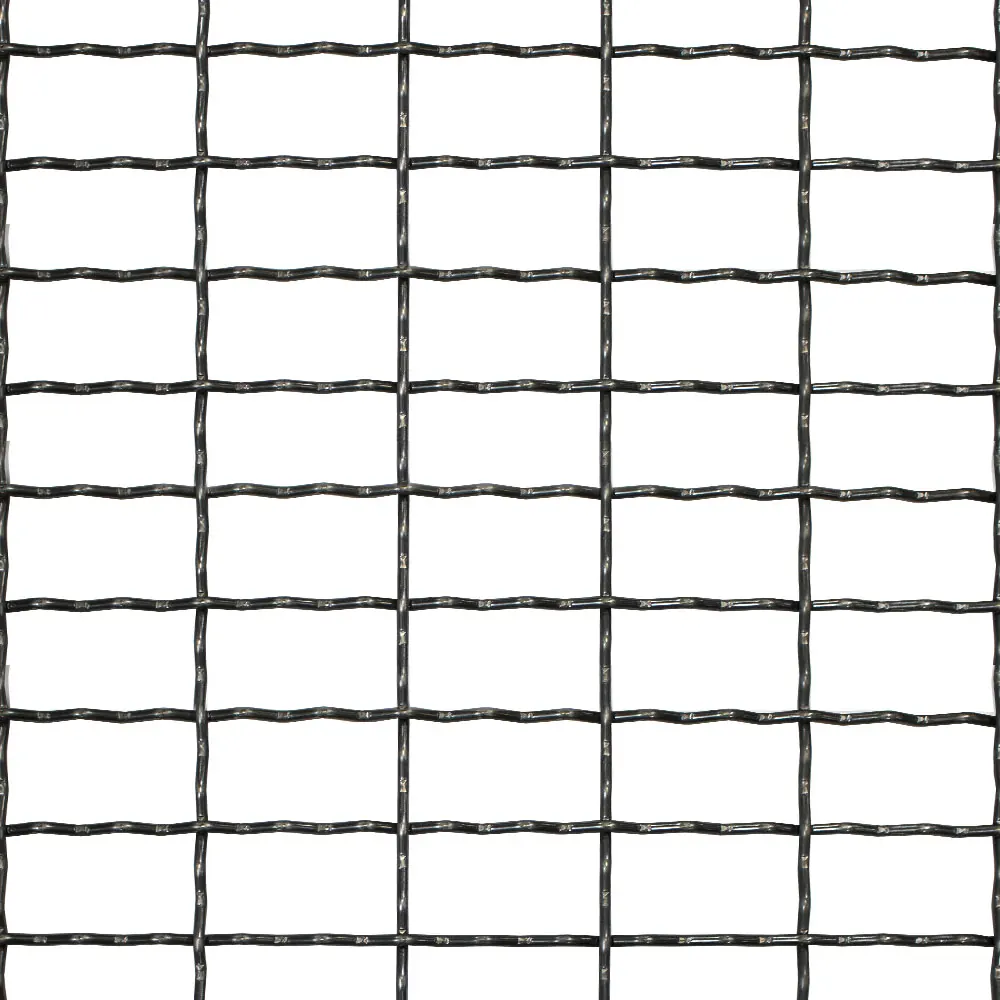
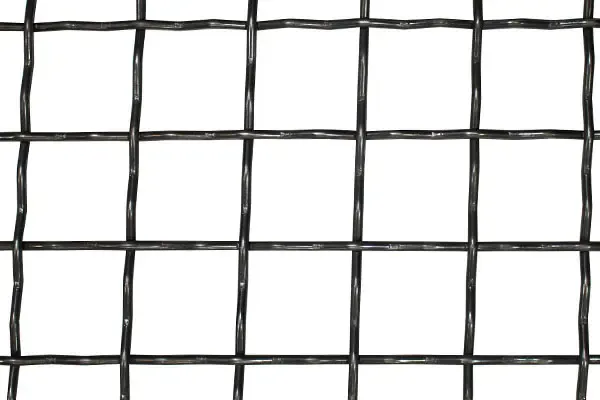
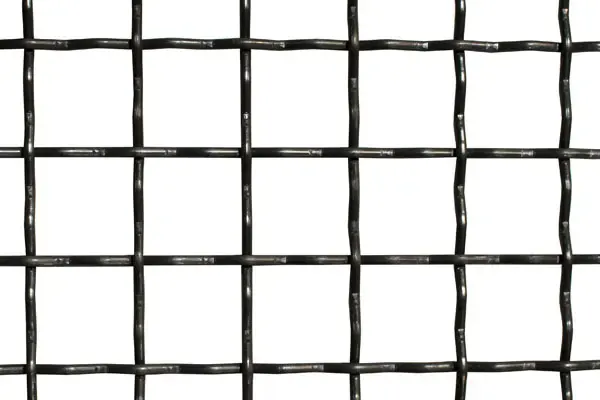


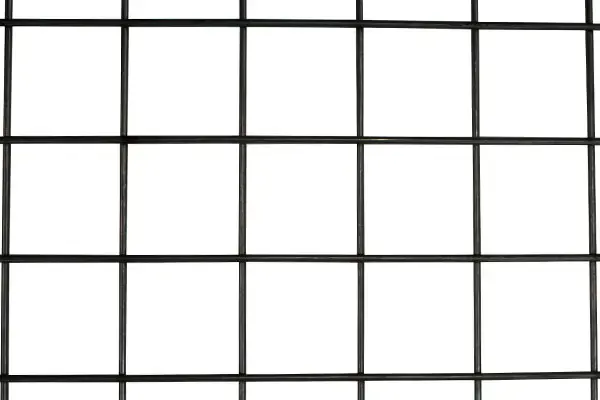
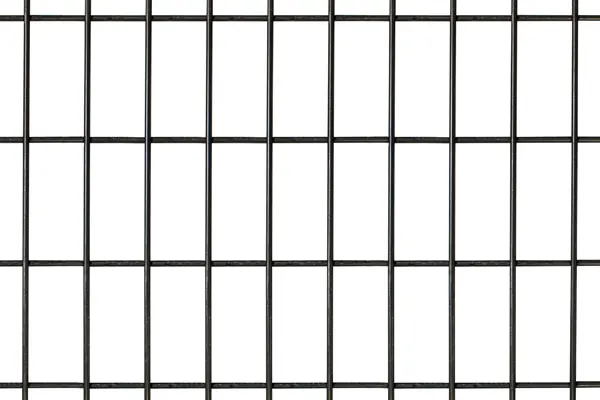
Product photos courtesy of Wire Crafters, the Louisville, Kentucky manufacturer; MH-USA is an authorized Wire Crafters dealer.
For a deeper comparison of gauges and frame materials, see steel vs aluminum security cages and chain link cages vs wire mesh partitions.
Woven vs welded wire mesh panels
| Woven wire | Welded wire | |
|---|---|---|
| How it is made | Wires are crimped and woven over and under each other | Straight wires welded at every intersection |
| Weight | Heavier for the same opening | Lighter — less wire, no crimp |
| Field cutting | Cut ends can loosen; best ordered to size | Holds its shape when cut, so openings can be made on site |
| Typical uses | Storage cages, tool cribs, controlled substances, machine guards | General cages, tenant lockers, rack backs and enclosures |
| Look | Traditional industrial partition | Cleaner, more uniform grid |
Neither is “more secure” on its own — gauge, opening size, frame, hardware and how the panels are fastened matter more. A heavy woven mesh with tamper-resistant bolts inside the cage beats a light welded mesh with exposed fasteners, and the reverse is also true.
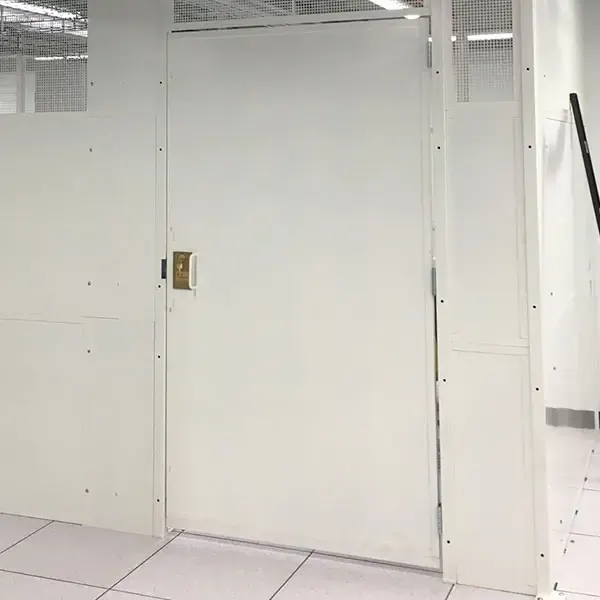
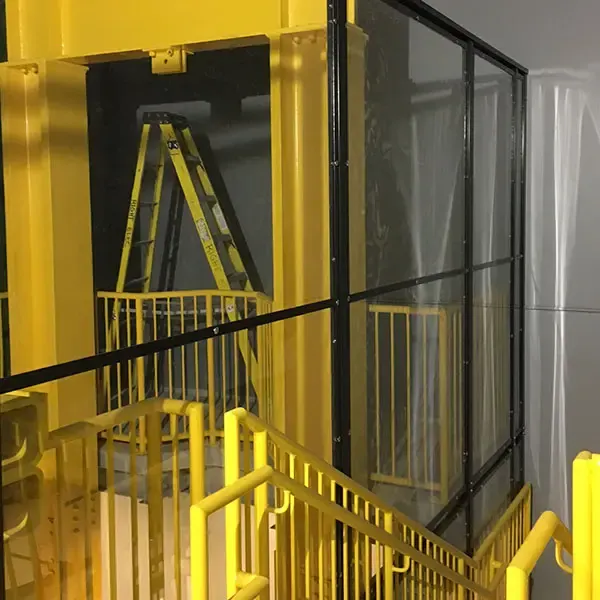
Solid sheet metal and clear polycarbonate panels
Not every bay should be open mesh. The same frames can carry solid or clear infill where privacy, containment or debris control matters:
Finishes and colors
Finishes
- Standard gray enamel — Wire Crafters’ default finish
- Powder coat for a harder, more uniform finish
- Galvanized for damp, cold or outdoor-exposed areas
- Powder coat over galvanized for both
- Plain steel where the buyer will finish on site
Standard powder coat colors
- Black and white for a clean look in offices and data centers
- Safety yellow and orange for machine guarding and walkways
- Blue, tan and red for zoning by department or tenant
- Custom matched colors are available at extra cost and can add time
Ordering components or extending an existing cage
Measure the run
Wall lengths, height to the deck or ceiling, door locations, columns, sprinkler heads and anything that crosses the line.
Pick mesh and height
Choose the mesh by what must stay out, and the height by whether you need a ceiling.
We lay out the parts
We return a drawing with panel, post and door counts so every part is accounted for.
Confirm and install
Parts ship tagged to the drawing; our crews or yours bolt them up and anchor the posts.
Some common panel and post sizes are in stock at select manufacturers, subject to confirmation at the time of order; custom panels, special posts and colors are made to order. If you are extending an existing cage, send photos of a panel, a post and a base plate — brand, frame size and hole pattern decide whether new parts will bolt up. Thinking about reusing a cage from another site? Read used vs new security cages first.
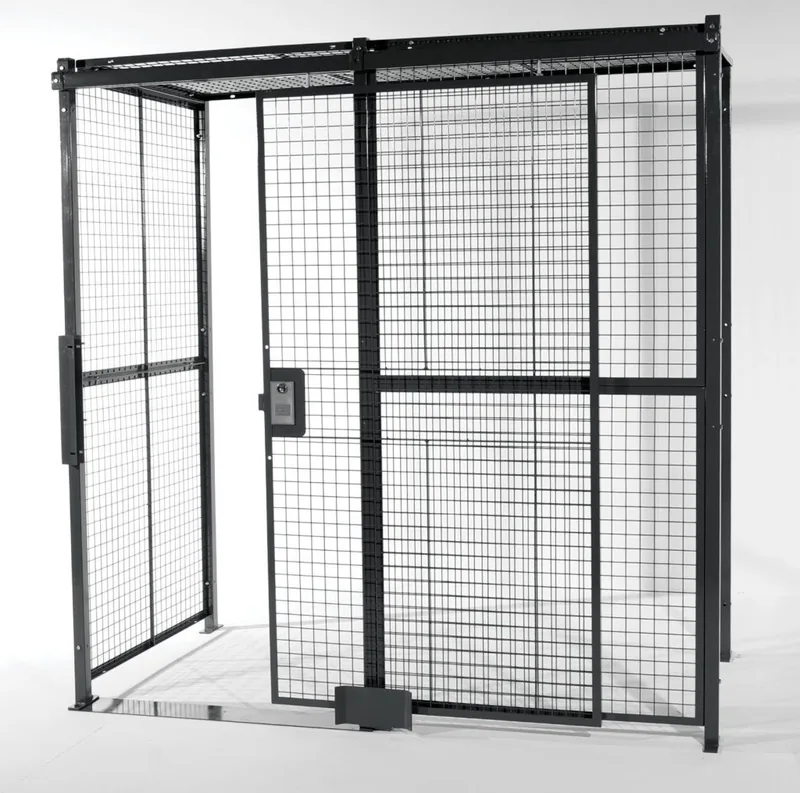
Shop Pre-Configured Wire Mesh Cage Kits Online
Standard-size welded wire cage kits, priced online, for smaller storage needs. Every kit still needs to be anchored to sound concrete — for tall, braced or engineered enclosures, request a quote with your building location and floor details.

Prices are the current online prices. See all security cage kits · Need a custom size? Request a security cage quote.
Security Cage Panel and Post FAQs
What are wire partition components?
What size are security cage panels?
How tall are wire partition posts?
Is woven or welded wire mesh better for a security cage?
Can I add panels to my existing cage?
Which mesh do I need for small items?
Can panels be solid instead of mesh?
Related security cage pages
Need panels, posts or a full partition?
Send a sketch or photos and we will return a parts layout and price — supplied and installed nationwide from Salt Lake City.