
Security Cage Doors: Hinged, Sliding, Dutch, Tunnel & Automated
Single and double hinged, sliding, tunnel and powered doors for wire mesh security cages — with padlock, cylinder, ADA lever, push-bar, keypad and card-reader access. Some common sizes are in stock at select manufacturers, subject to confirmation.
6
Door families
3′–10′
Standard door widths
10′
Full-height sliding openings
8
Lock & access options
Shop Pre-Configured Wire Mesh Cage Kits Online
Standard-size welded wire cage kits, priced online, for smaller storage needs. Every kit still needs to be anchored to sound concrete — for tall, braced or engineered enclosures, request a quote with your building location and floor details.

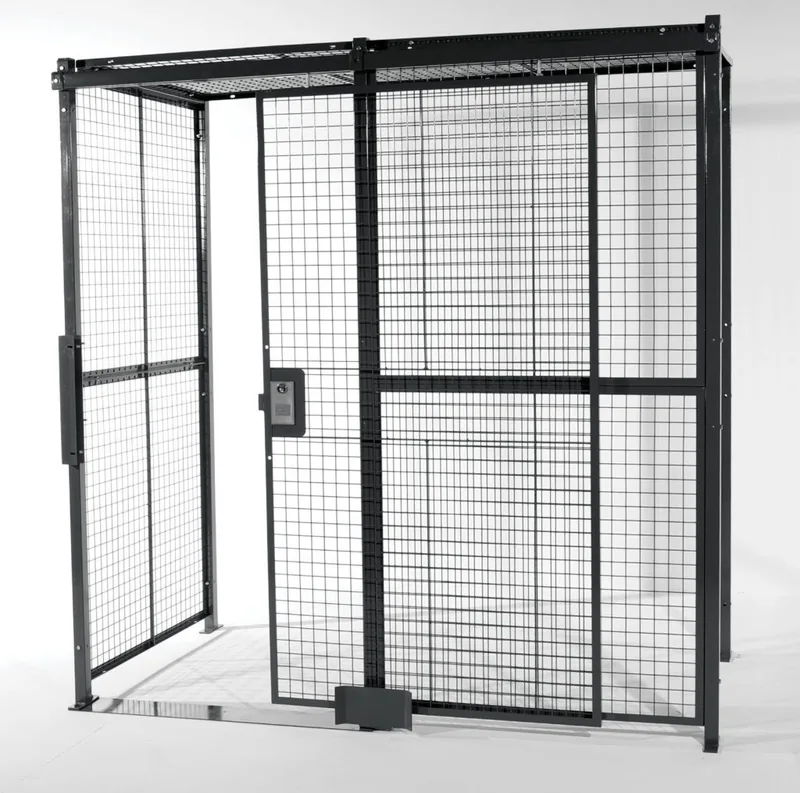
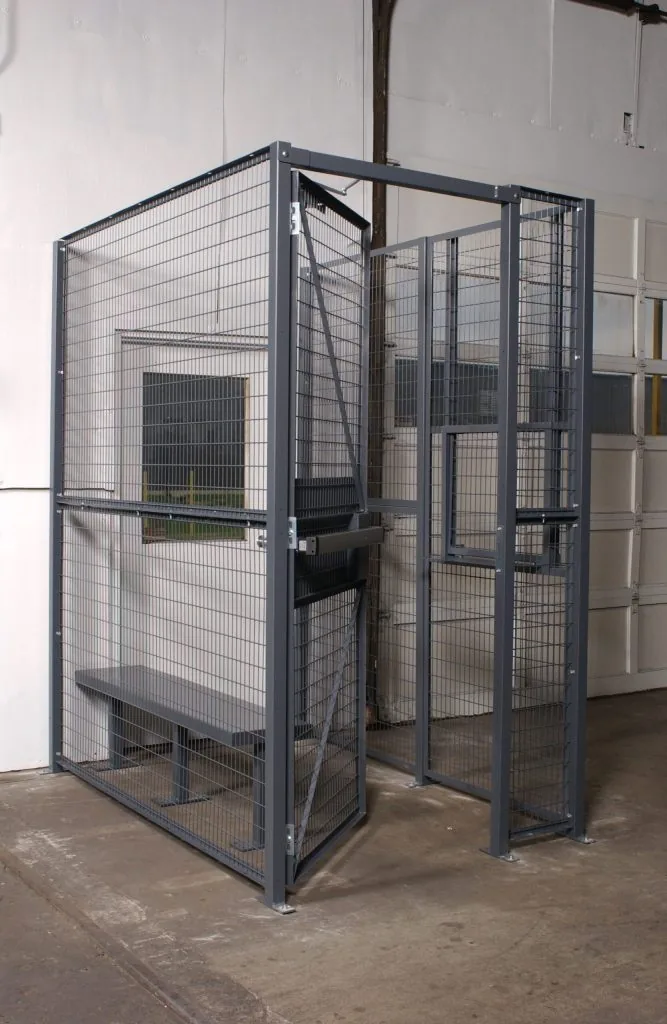
Prices are the current online prices. See all security cage kits · Need a custom size? Request a security cage quote.
The Door Makes or Breaks the Cage
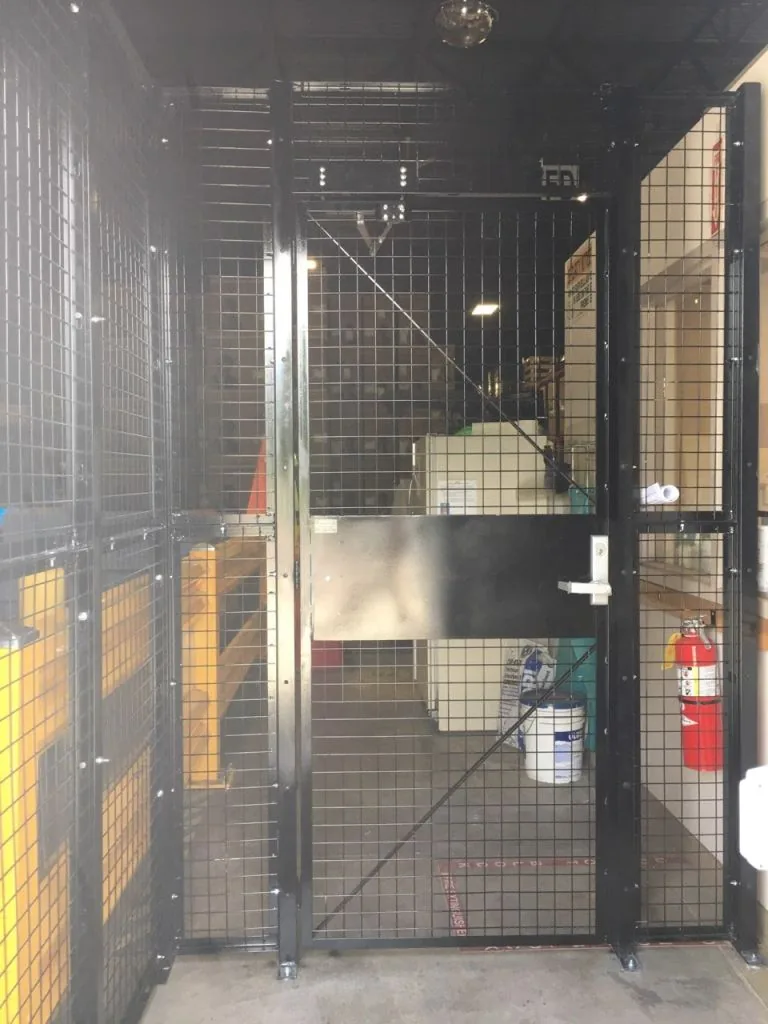
A security cage is only as secure as its access points. The mesh panels are the easy part — every real decision on a partition project happens at the opening: how wide it has to be, whether a leaf can swing into the aisle, who is allowed through, and how people get out in an emergency. For a worked example of choosing between keyed, keypad and credentialed hardware, see our cage door access control case study.
Material Handling USA supplies and installs the full range of security cage doors from our manufacturing partners: single and double hinged, sliding, sliding tunnel, universal hinged in a 14-gauge box frame, and powered sliding doors. Every door ships as a complete assembly with its own door posts, transom panel and hardware, and integrates with standard woven-wire and welded-wire partition systems, so you can add or change an opening on a cage that is already standing.
Below you will find the standard sizes, the lock and access-control options, and the door we normally specify for each type of application. If you already know the opening you need, send us the dimensions and we will quote the door, the posts and the installation together.
Security Cage Door Types
Six standard door families cover almost every opening. Custom sizes and finishes are available on all of them.
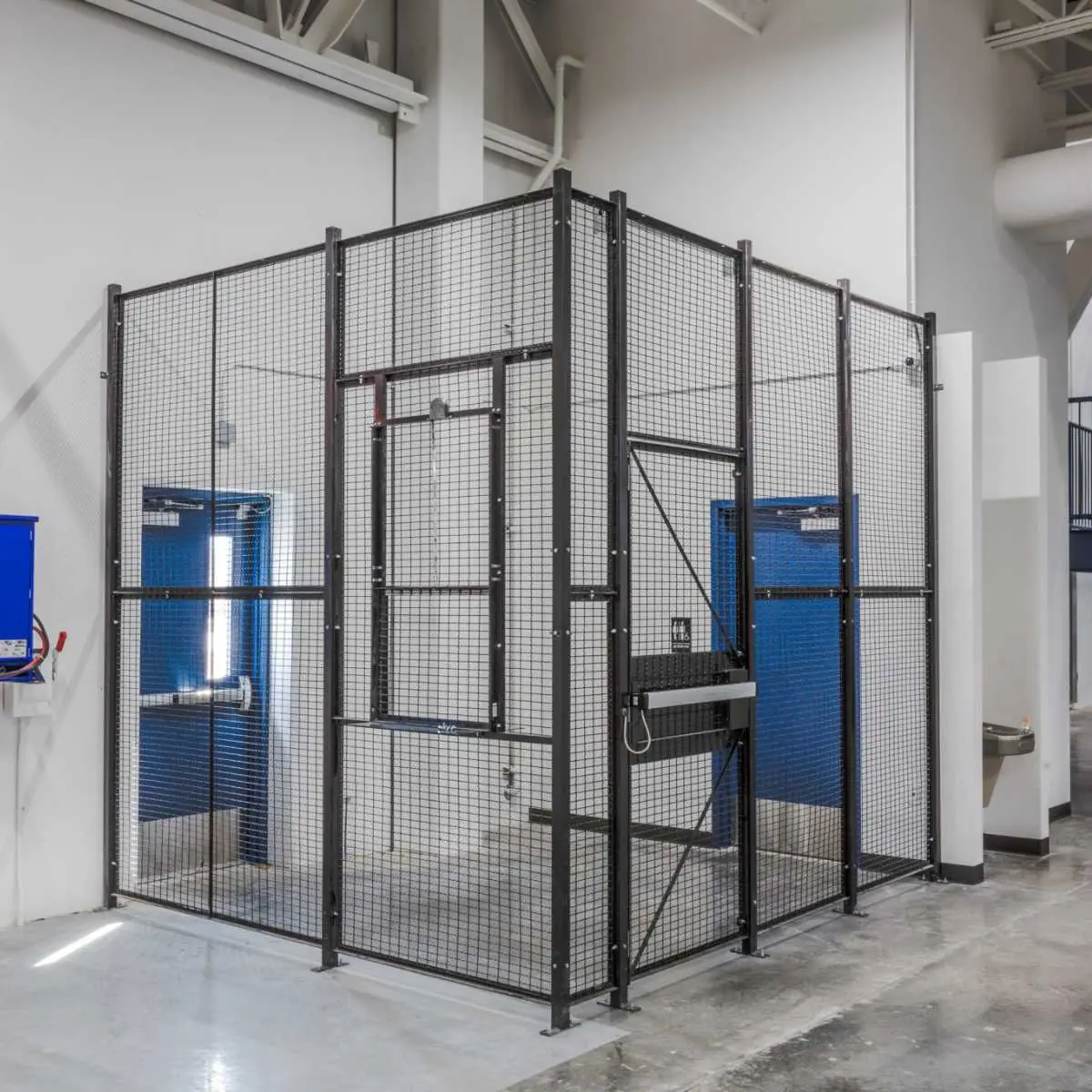 Single Hinged DoorsStandard 3′ or 4′ wide by 7′ 3-1/4″ high opening. Universal construction works left or right hand, inside or outside swing, on three 4″ × 4″ 10-gauge tight-pin hinges. Supplied with two door posts, a transom panel sized to match partition height, padlock lug and all hardware. The most common choice for tool cribs and storage cages.
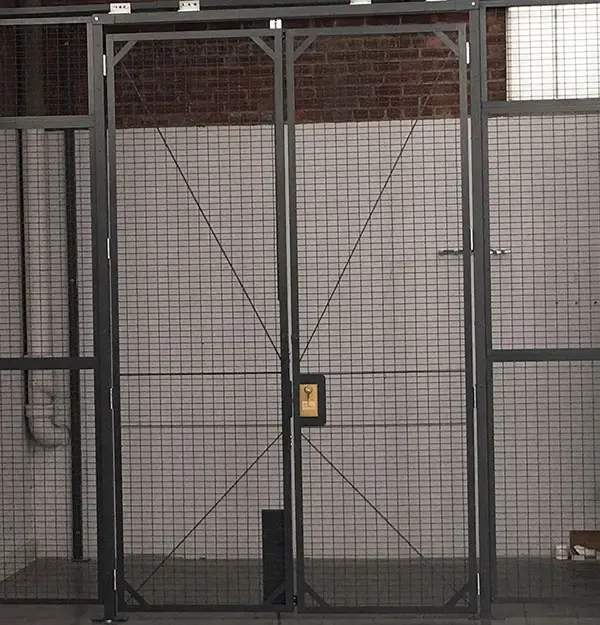 Double Hinged Doors6′ or 8′ wide by 7′ 3-1/4″ high openings for pallets, carts and oversized equipment. The inactive leaf is secured by a cane bolt at the base and a chain bolt at the top, so the opening can be run as a single 3′/4′ leaf day to day and opened wide when you need it. Padlock lugs standard, cylinder locks available.
 Sliding DoorsStandard widths of 3′, 4′, 5′, 6′, 8′ and 10′ with full-height openings of 8′ and 10′. Each door ships with two door posts, two 4-wheel trolley trucks, 16-gauge track and hardware, and uses a patented tamper-resistant sliding-door receiver (U.S. Patent 6,196,034 B1). Ideal where a swinging leaf would block an aisle.
 Sliding Tunnel DoorsFor openings with no overhead structure to hang a track from. The leading edge rolls on floor casters instead of hanging from an overhead track, so the door works under crane bays and low headroom. Common in manufacturing cells and high forklift-traffic aisles.
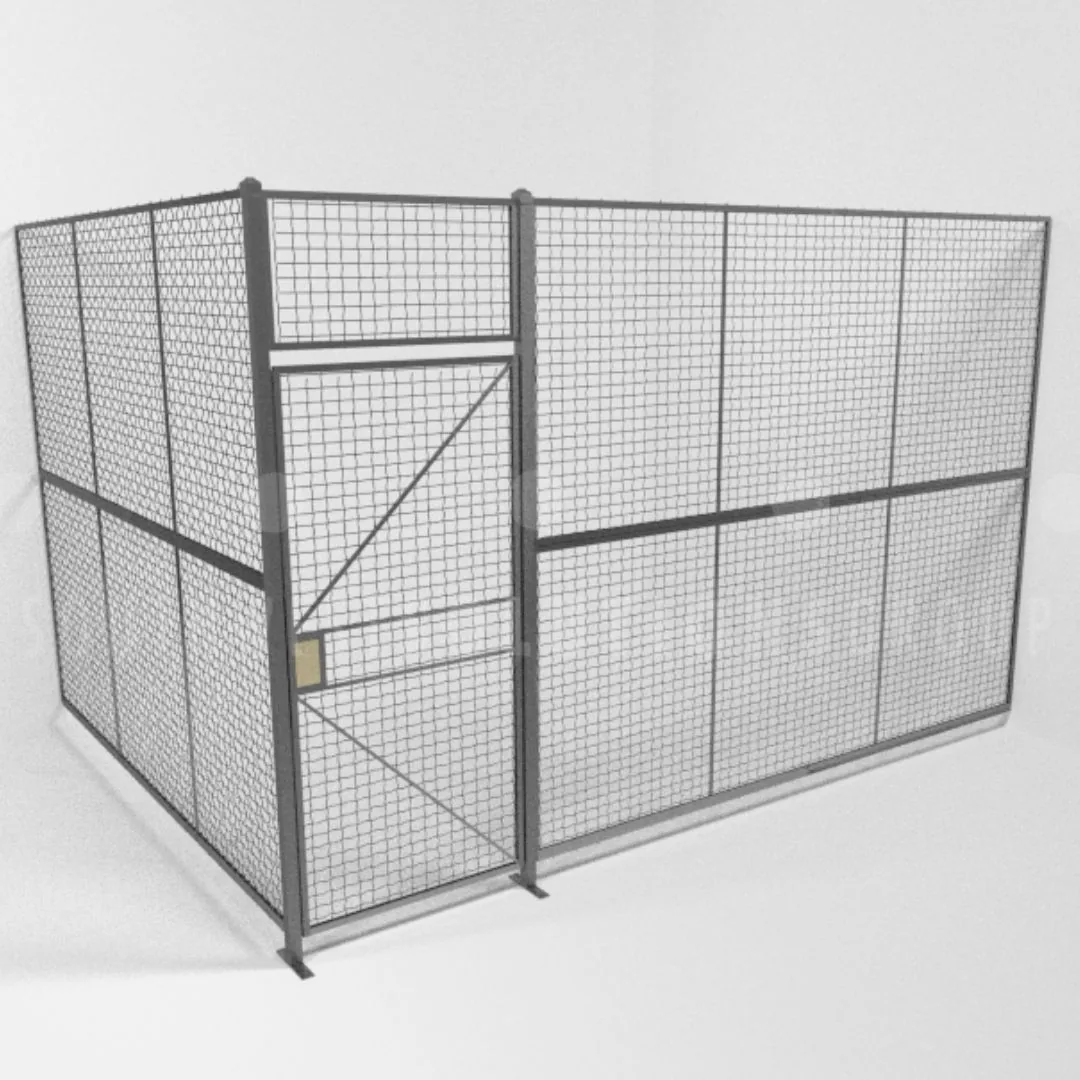 Universal Hinged DoorsPremium door contained in a 14-gauge steel box frame, hinged left or right and swinging in or out. Standard 3′ and 4′ widths with ADA-compliant lever handles, optional push-bar exit and alarm push bar. The usual specification for DEA controlled-substance cages and any enclosure that needs code-compliant egress.
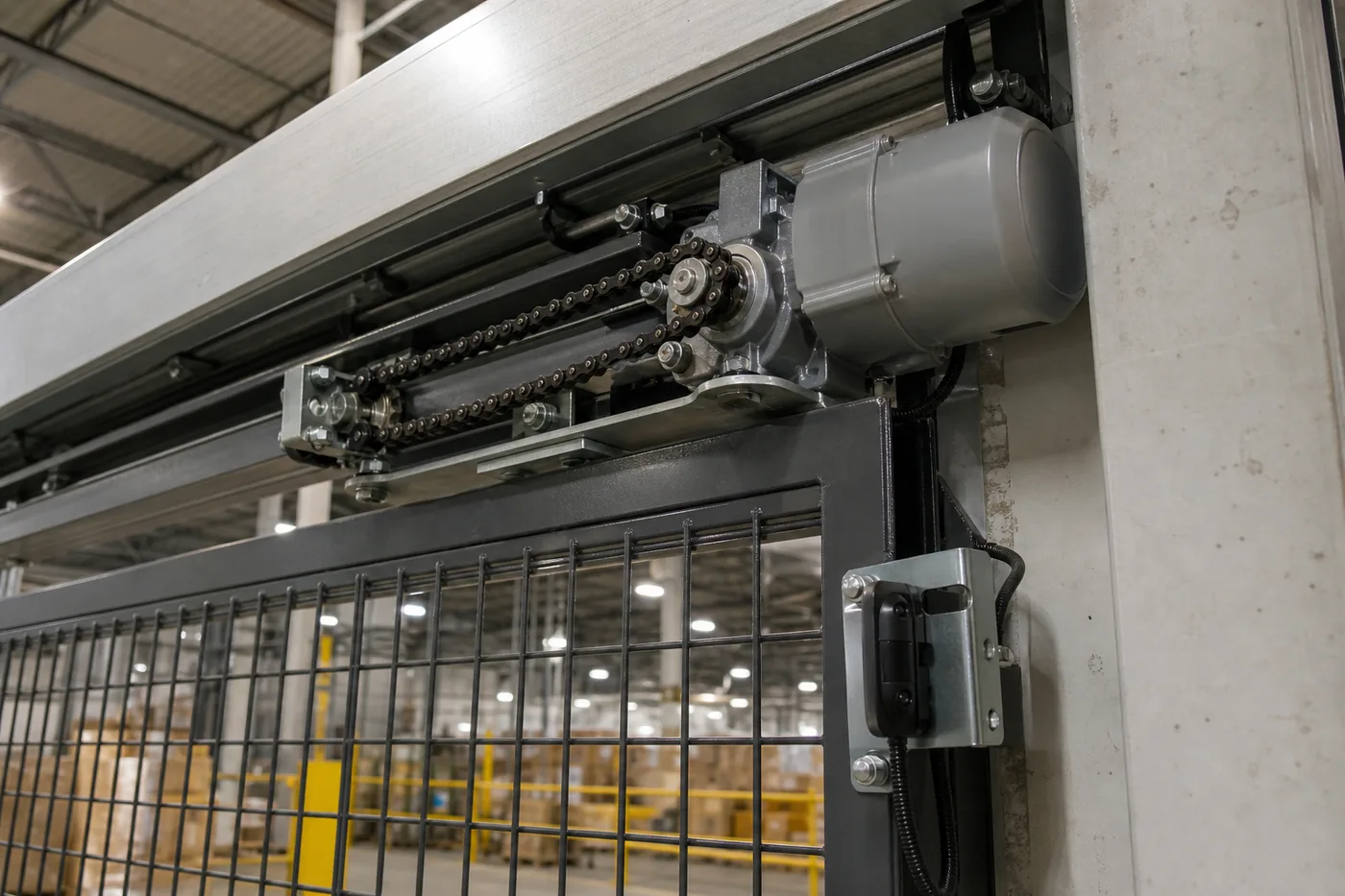 Automated Door SystemsElectric openers for sliding doors run on a standard 110V single-phase motor and are supplied with radio-frequency remotes, a self-closing timer, anti-crush safety switch, photo-eye safety switch and a stationary push-button control. Recommended for sliding doors over 80 sq ft. Electro-magnetic locks optional; hydraulic closers are available for self-closing hinged doors.
Dutch Doors, Vertical Rise Doors and Door Operators
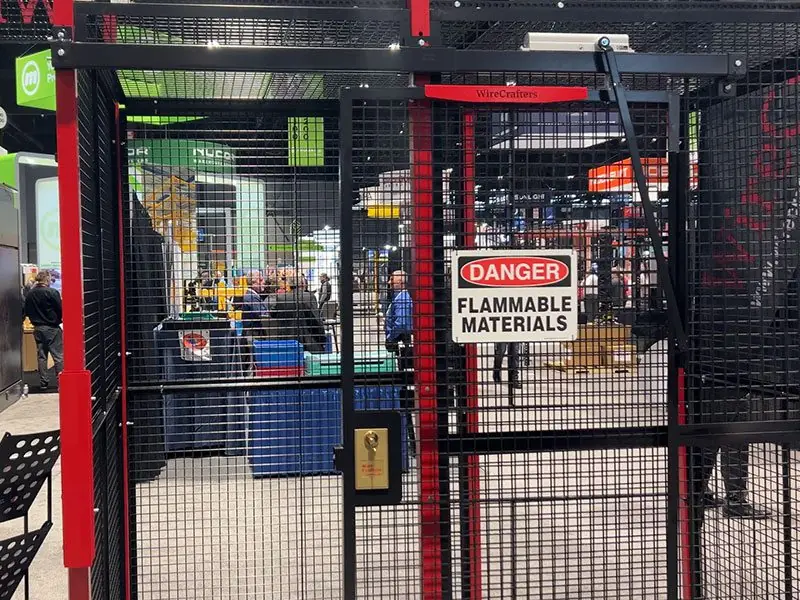
Two door styles solve problems a standard hinged or sliding door cannot, and powered operators take the effort out of large or busy openings. These are part of the Wire Crafters door line we supply as an authorized dealer:
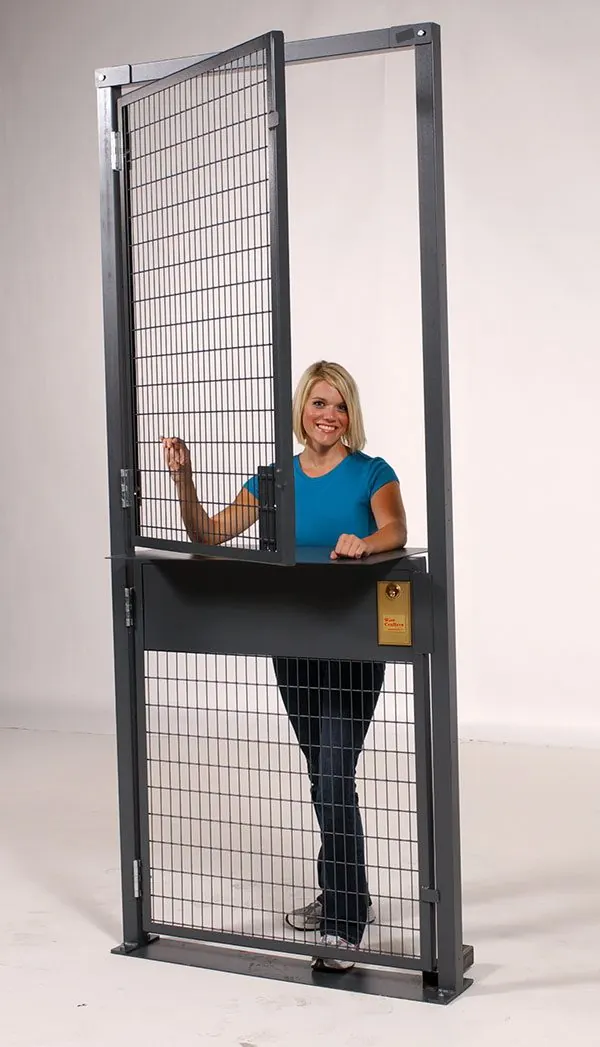
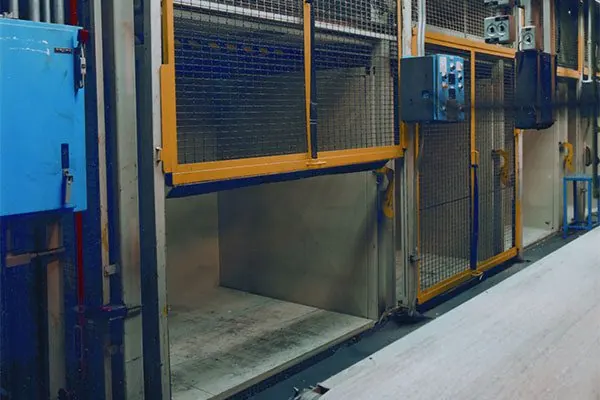

Product photos courtesy of Wire Crafters, the Louisville, Kentucky manufacturer; MH-USA is an authorized Wire Crafters dealer.
Need people served without opening the cage at all? A service window or pass-through is usually cheaper than a Dutch door when the cage already has a door elsewhere. Self-closing doors are also a requirement in some storage uses — see aerosol storage cages.
Sliding vs. Hinged Security Cage Doors: How to Choose
The decision is almost always about floor space and traffic, not about security — both door families use the same mesh, frame and lock hardware.
| Consideration | Hinged door | Sliding door |
|---|---|---|
| Floor space needed | A 3′–4′ swing arc must stay clear inside or outside the cage | None — the leaf travels along the panel line |
| Widest practical opening | 8′ using a double door | 10′ standard, wider on custom runs |
| Forklift traffic | Workable, but leaves get struck and posts go out of plumb | Preferred; pair with an electric opener so drivers stay seated |
| Code-required egress | Standard choice — side-hinged swinging leaf with push-bar exit | Only where the code’s sliding-door exceptions apply |
| Access control | Electric strike with card reader | Electro-magnetic lock with card reader |
| Automation | Hydraulic closer up to 5′W × 10′H | Electric opener, remotes and timer |
| Installed cost | Lowest for a single 3′–4′ opening | Higher — track, trolleys and posts — but no lost floor space |
Not sure which door your layout needs?
Lay the cage out yourself in our free Security Cage Configurator — pick the footprint, door type and access hardware, and send the configuration straight to our team. Or call and we will size the opening with you in a few minutes.
Open the Security Cage Configurator Request a Quote Call (800) 326-4403
Door Specifications at a Glance
| Door type | Standard widths | Opening height | Lock options | Best for |
|---|---|---|---|---|
| Single hinged | 3′, 4′ | 7′ 3-1/4″ | Padlock lug, cylinder, electric strike | Tool cribs, storage cages, service rooms |
| Double hinged | 6′, 8′ | 7′ 3-1/4″ | Padlock lug, cylinder | Pallet and forklift access, wide openings |
| Sliding | 3′–10′ | 8′ or 10′ (full height) | Padlock lug, cylinder, electric strike, mag lock | Tight aisles, automation, high traffic |
| Sliding tunnel | Custom | Custom | Padlock lug, cylinder | No overhead structure, crane bays |
| Universal hinged | 3′, 4′ (custom available) | 7′ 3-1/4″ | ADA lever handle, push bar, alarm push bar, coded entry | DEA cages, egress-critical enclosures |
Standard Sliding Door Sizes
Representative standard sliding doors. Each includes two door posts, two 4-wheel trolley trucks, 16-gauge track and hardware. Additional widths, 12′ overall heights and custom sizes are available.
| Part number | Opening (W × H) | Overall height | Weight (lbs) |
|---|---|---|---|
| SD-38-8 | 3′-0″ × 8′-0 1/4″ | 8′-5 1/4″ | 124 |
| SD-48-8 | 4′-0″ × 8′-0 1/4″ | 8′-5 1/4″ | 137 |
| SD-58-8 | 5′-0″ × 8′-0 1/4″ | 8′-5 1/4″ | 149 |
| SD-68-8 | 6′-0″ × 8′-0 1/4″ | 8′-5 1/4″ | 196 |
| SD-88-8 | 8′-0″ × 8′-0 1/4″ | 8′-5 1/4″ | 230 |
| SD-108-8 | 10′-0″ × 8′-0 1/4″ | 8′-5 1/4″ | 279 |
| SD-310-10 | 3′-0″ × 10′-0 1/4″ | 10′-5 1/4″ | 149 |
| SD-610-10 | 6′-0″ × 10′-0 1/4″ | 10′-5 1/4″ | 234 |
| SD-1010-10 | 10′-0″ × 10′-0 1/4″ | 10′-5 1/4″ | 334 |
Send us your opening dimensions
Give us the clear width and height you need, the partition height, and how the opening is used. We will come back with the exact door, posts and hardware — and the installed price.
Measuring an opening
Gauge a hinged-door opening by the width of the transom panel, and a sliding-door opening by the door width — for example 48″ between posts for a 4′ wide slide door. Slide-door openings can be narrowed by adjusting the length of the adjacent panel run. Send us your panel layout and we will mark the door posts before anything ships.
Locks & Access Control Options
The door body rarely changes; the hardware does. These are the options we specify most often, and all of them can be quoted on a standard door. Some common sizes are in stock at select manufacturers, subject to confirmation.
| Option | Available on | Why you would choose it |
|---|---|---|
| Padlock lug | Standard on hinged, double and sliding doors | Lowest cost, keyed to your existing padlock program |
| Cylinder lock | Optional on all standard doors | Keyed access without a hanging padlock; storeroom function standard |
| ADA lever handle | Universal hinged doors | Meets ADA operable-hardware requirements; alternative to a knob |
| Push bar exit | Universal hinged doors | Free egress from inside the enclosure; pairs with a lever handle outside |
| Alarm push bar | Hinged doors only | Battery-powered local alarm sounds when the door is opened |
| Coded / keypad entry | Universal hinged doors | Five-button coded access where you do not want to issue keys |
| Electric strike | Hinged and sliding doors | Compatible with most card-reader and access-control systems |
| Electro-magnetic lock | Sliding doors | Fail-safe holding force with access control and audit trail |
Service Windows Keep Doors Closed
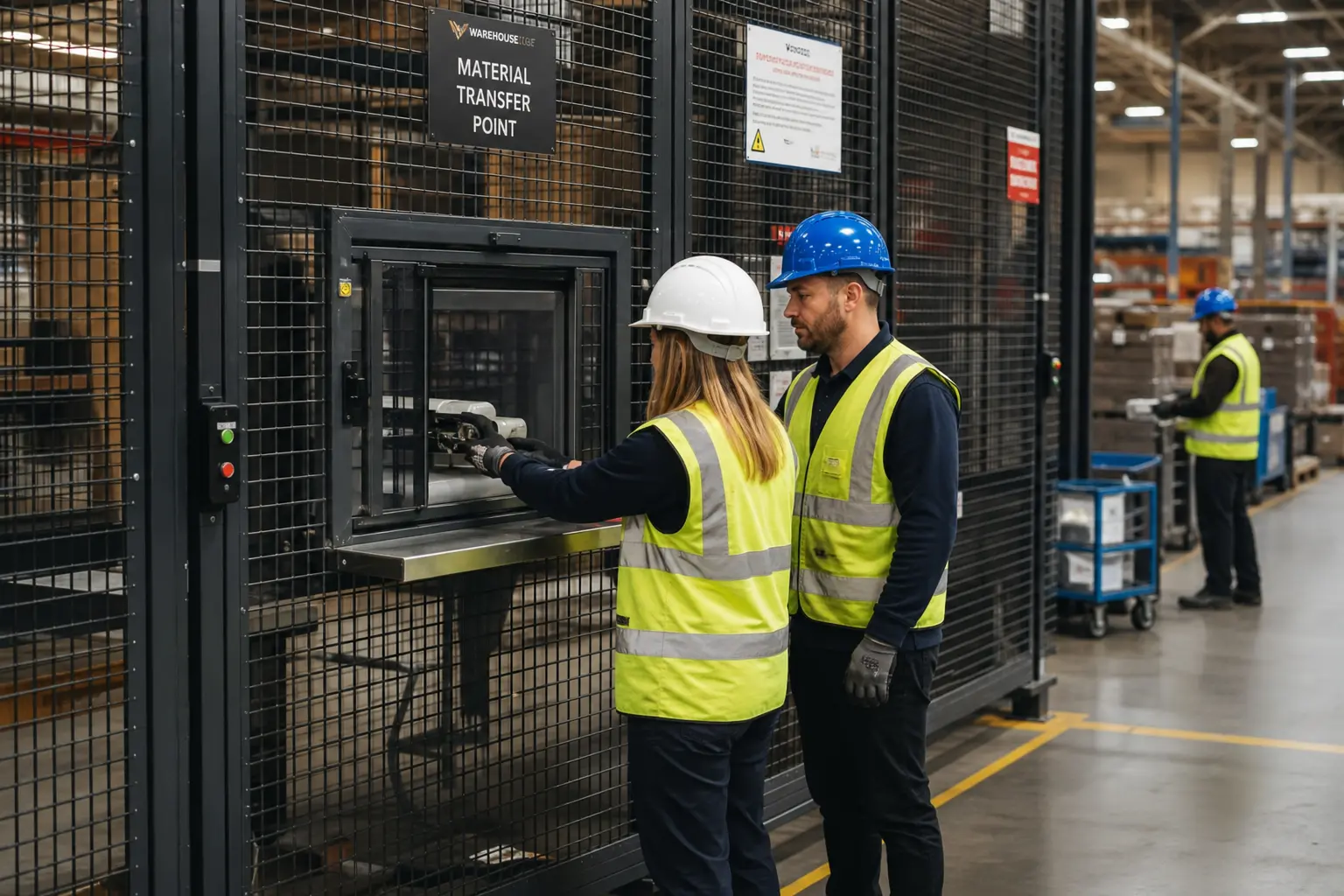
On tool cribs, parts rooms and pharmacy cages, most traffic through the door is a hand-off, not a person. A padlockable, sash-balanced slide-up service window solves that: a 24″ wide × 21″ high opening with a 24″ × 16″ 11-gauge shelf at 42-1/4″ off the floor, built into a 3′-10″ wide panel.
Parts go out and paperwork comes back without unlocking the enclosure, which is both faster and easier to audit. Learn more about security cage service windows.
Which Door Fits Your Application?
The same cage panel gets a different door depending on what moves through the opening and who is allowed to move it.
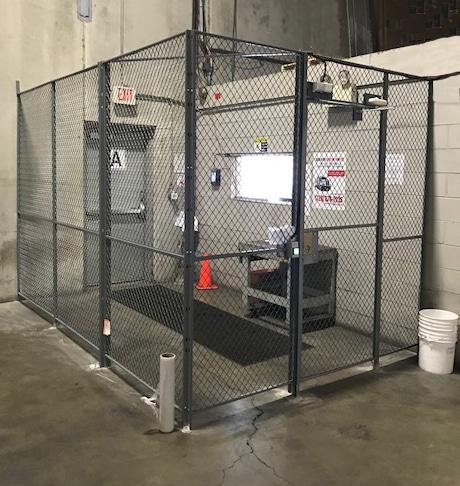 Tool Cribs & Parts RoomsSingle hinged door with a padlockable, sash-balanced slide-up service window (24″ W × 21″ H opening, 11-gauge shelf at 42-1/4″ off the floor) so parts move without opening the cage.
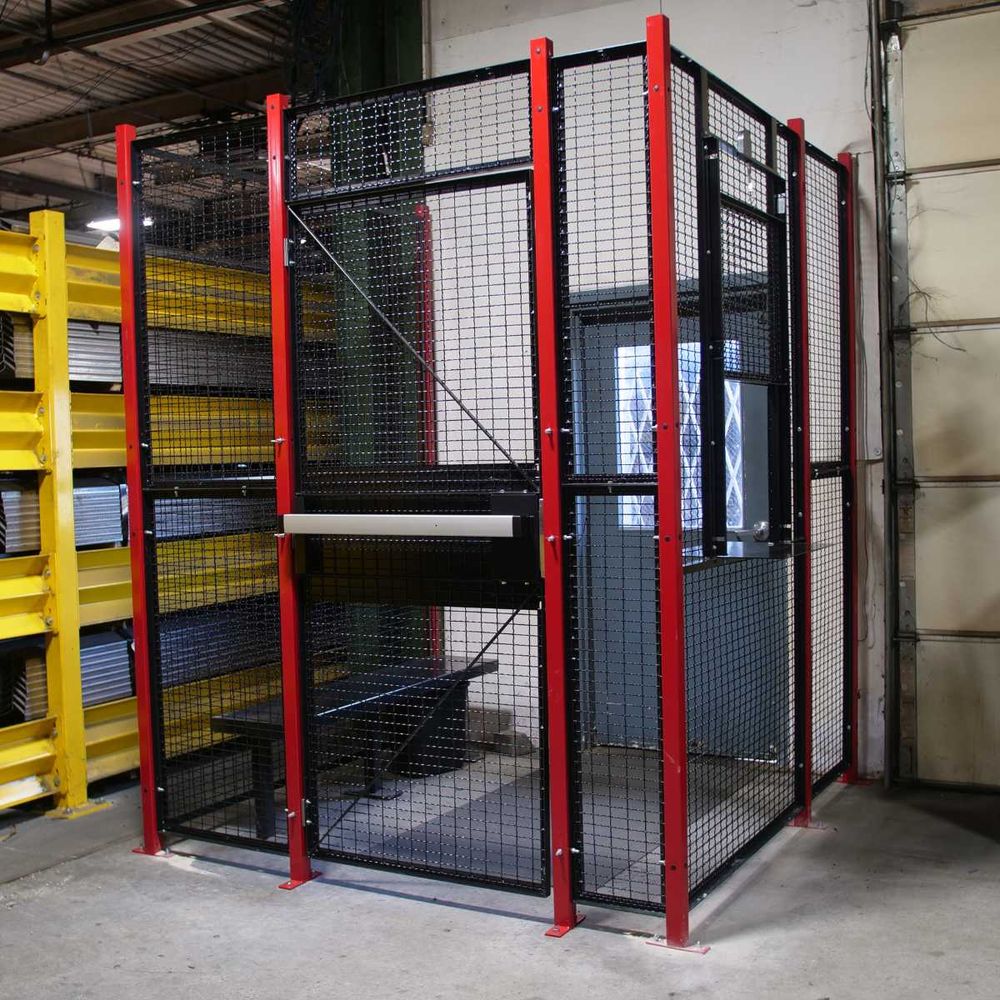 Driver & Trucker Access CagesSelf-closing hinged door with a push-bar exit and an electric strike tied to your card reader — drivers stay in a controlled vestibule and can always get out without help.
 DEA / Controlled SubstancesSelf-closing, self-locking universal hinged door in the 14-gauge box frame, alarm push bar, full ceiling enclosure and tamper-proof hardware accessible only from inside the cage.
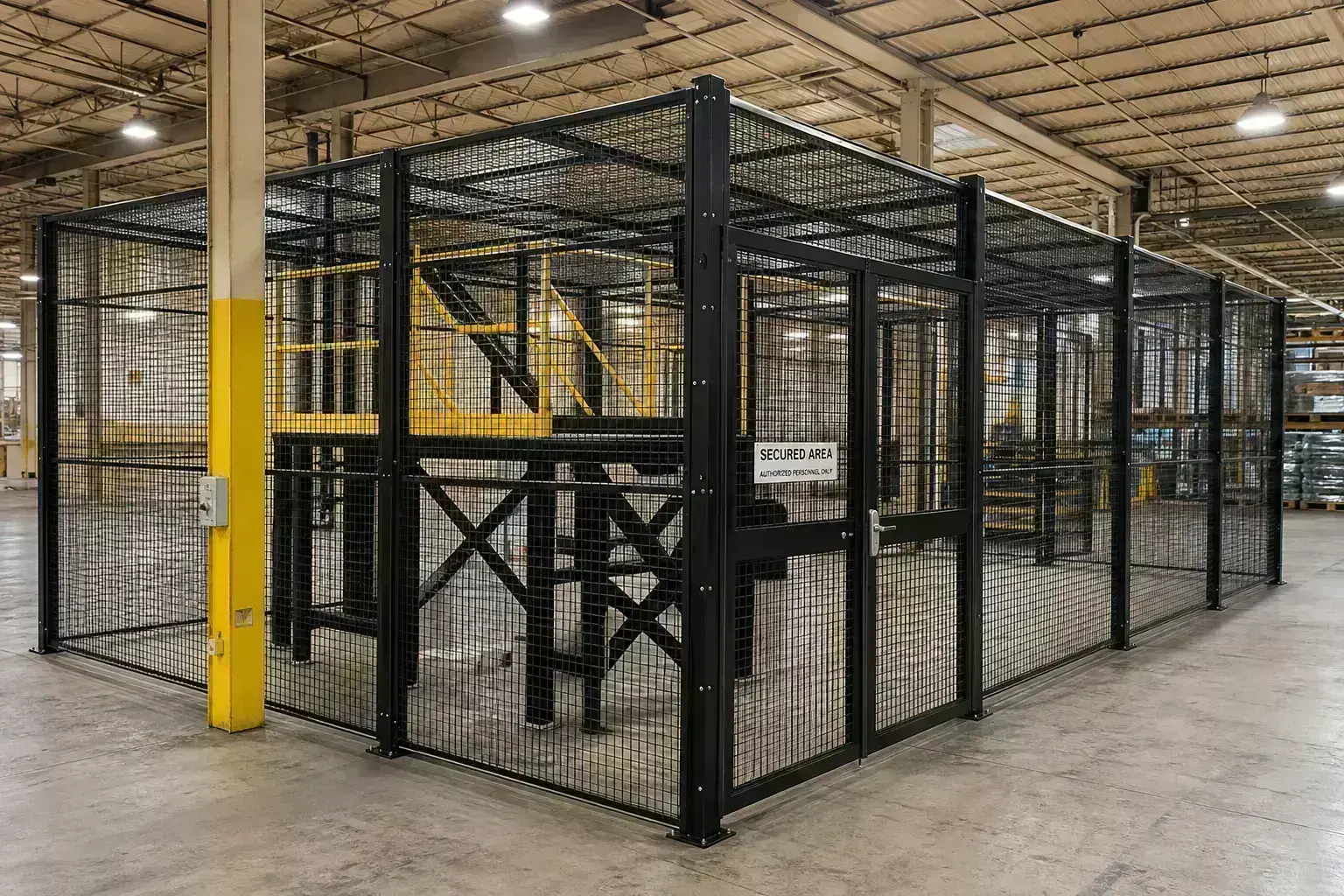 Warehouse & DistributionDouble hinged or 8′–10′ sliding doors for forklift traffic, with electric openers on the larger leaves so drivers never dismount to open a cage.
 Data Centers & ColocationSliding door with electro-magnetic lock and proximity reader, giving you an auditable access trail on every cage without changing the cage footprint.
 Manufacturing & Crane BaysTunnel doors where an overhead crane rules out a track, and powered sliding doors on cells that are opened dozens of times a shift.
Security Cage Door Engineering & Selection
Frame and mesh construction
Standard doors are built from 10-gauge steel wire woven into 2″ × 1″ rectangular mesh, welded to a 1-1/4″ × 1-1/4″ × 1/8″ steel angle frame, with two horizontal and one vertical 1/4″ × 3/4″ steel flat stiffeners welded behind the mesh. That stiffening is why a 10′ sliding leaf does not rack or sag in service — and it is the first thing to compare when someone quotes you a cheaper door.
Hinges, tracks and trolleys
Hinged doors ride on three 4″ × 4″ 10-gauge tight-pin hinges. Sliding doors hang from 16-gauge track on two 4-wheel trolley trucks and latch into a patented tamper-resistant receiver (U.S. Patent 6,196,034 B1) whose overlapping tubular guards close off the gap a bolt cutter would normally reach through. Tunnel doors trade the overhead track for floor casters, which is the only practical answer under a crane rail.
Egress and code review
Any enclosure people work inside needs an egress plan, not just a lock. IBC Chapter 10 generally requires egress doors to be side-hinged swinging doors, with narrow exceptions for storage and factory areas with an occupant load of 10 or fewer and for horizontal sliding doors that meet the code’s breakout and operating-force provisions. In practice we specify a hinged door with push-bar exit hardware wherever staff are inside the cage, keep the swing out of the egress path, and confirm the layout with your local authority having jurisdiction before release.
Maintenance and adjustment
Doors are the only moving part of a partition, so they are the only part with a maintenance interval. Check hinge and trolley fasteners, latch alignment and floor-caster wear each quarter; on powered doors, test the photo eye and the anti-crush switch on the same schedule. Most “the door will not latch” calls we get are a door post pushed out of plumb by a forklift, which is why we recommend guarding every opening that sees powered traffic.
- Confirm the clear opening you actually need — not the panel spacing you have
- Decide whether a leaf can swing into the aisle or into the cage
- Match the lock to how access is managed today (padlock program, keys, badges)
- Specify push-bar egress on any enclosure staff work inside
- Add an electric opener on sliding doors over 80 sq ft or in constant use
- Guard the opening against forklift impact before it knocks the posts out of plumb
Security Cage Door FAQs
What is the standard opening size for a hinged security cage door?
Can I add a door to a cage that is already installed?
Which door should I use where a forklift drives through the opening?
Do security cage doors satisfy building-code egress requirements?
When do I need an electric door opener?
Can doors be locked into our existing access-control system?
Related Security Cage Solutions
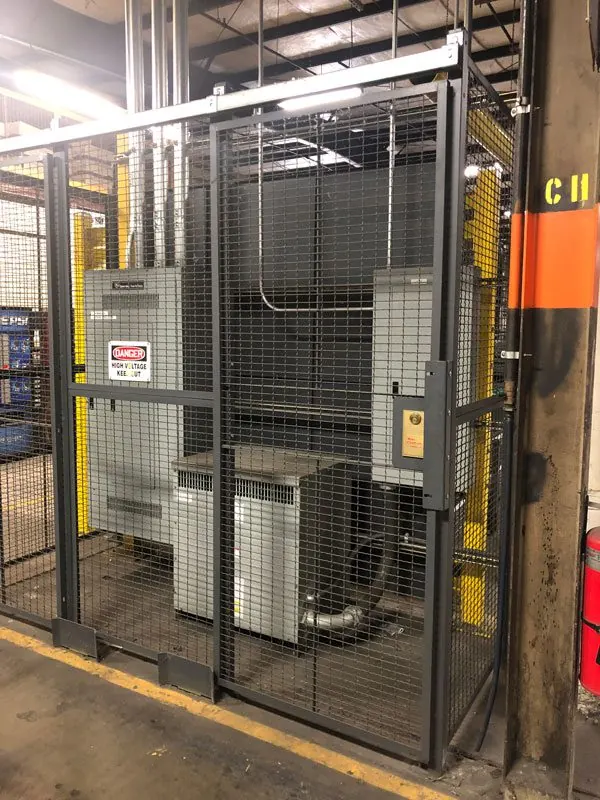 Security CagesWelded and woven wire mesh partitions, tool cribs and storage cages built to your layout.
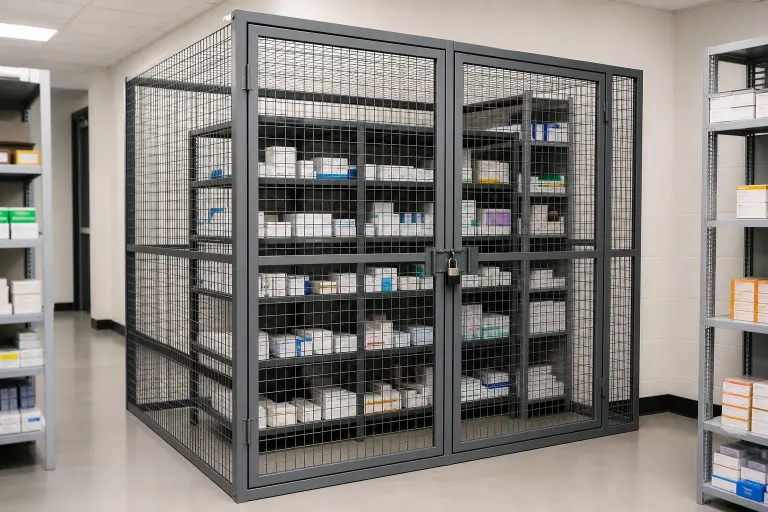 DEA Drug Storage CagesSelf-closing, self-locking cages configured for Schedule III–V controlled substances.
 Security Cage Service WindowsSlide-up, sash-balanced windows with a shelf so parts move without opening the door.
Shop Online at MaterialHandling-USA.com
Need locks, barriers or secure storage you can buy online today? Our e-commerce store sells security and storage products with published pricing.
Need a Security Cage Door?
Send us the opening dimensions and how the door will be used. We will quote the door, posts, hardware and installation — and flag anything a code official will ask about before you buy.