
Aerosol Storage Cages for Warehouses and Distribution Centers
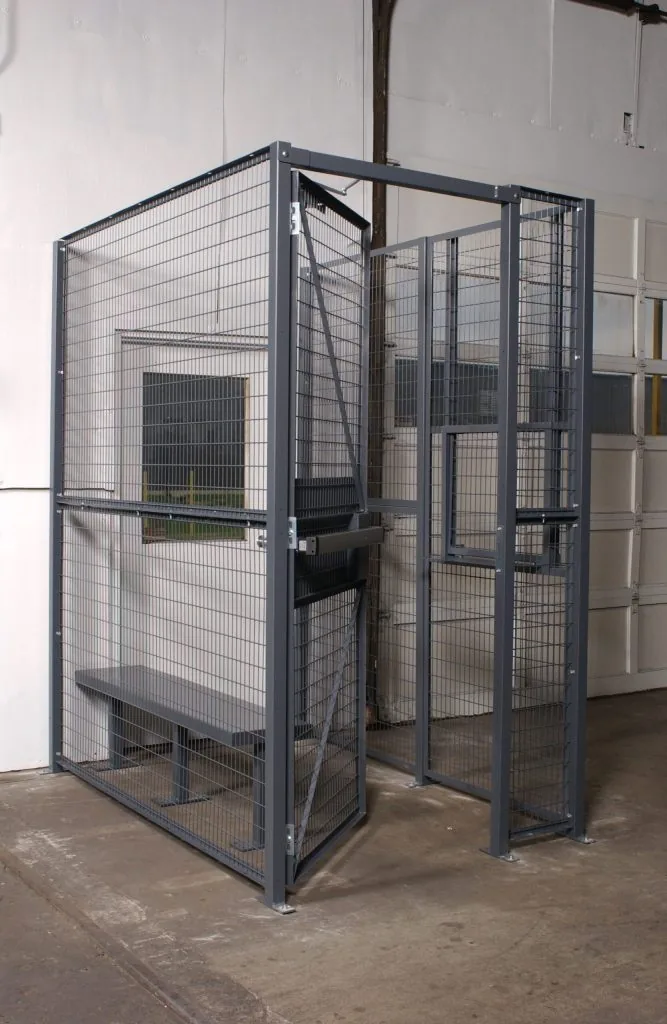
Floor-to-ceiling wire mesh enclosures that segregate aerosol products inside a general warehouse — with self-closing doors, heavy mesh and panels flush to the floor — built from Wire Crafters partition components and laid out around your racking.
Supplied and installed nationwide from Salt Lake City — call (800) 326-4403.
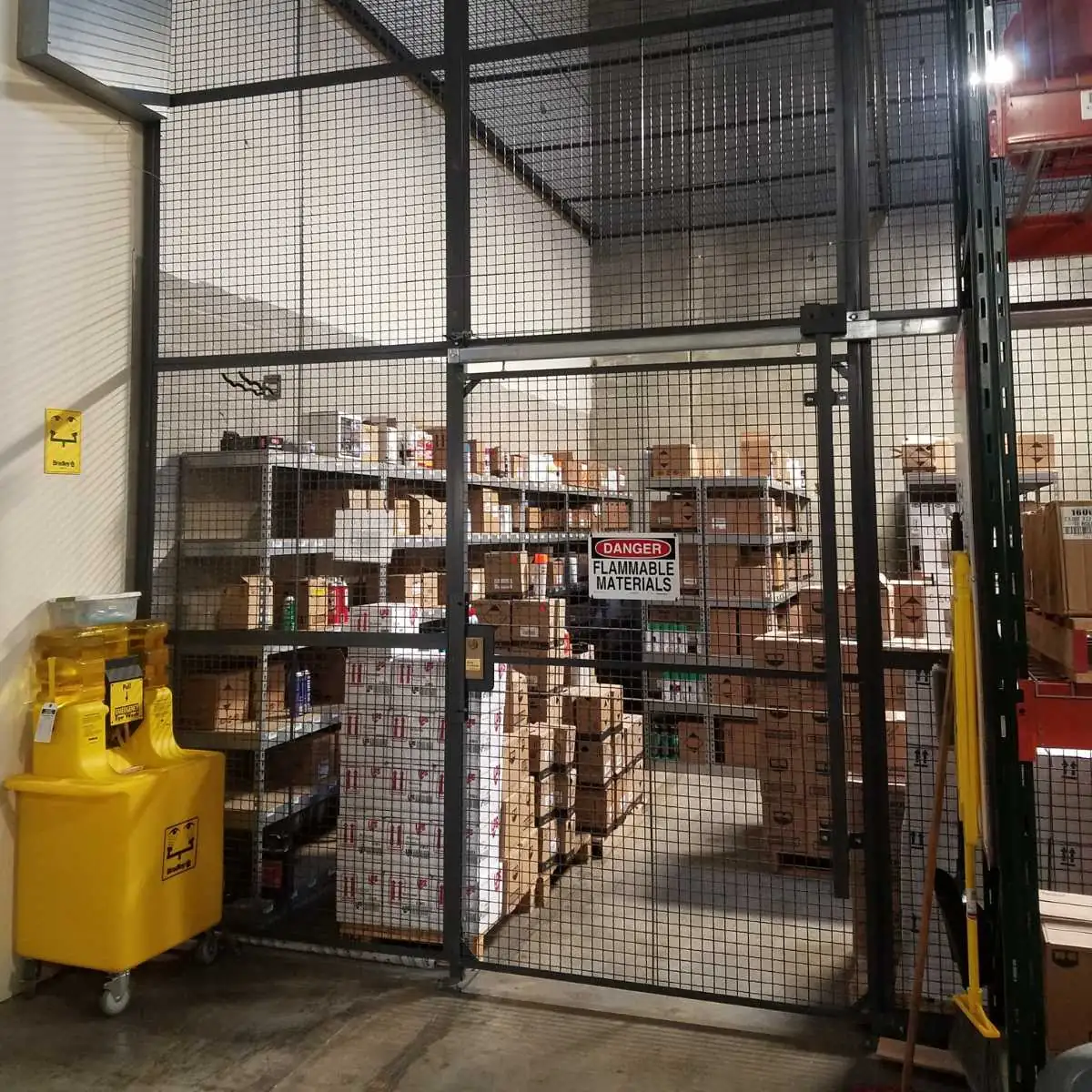
Floor to deck
Panels stack to any height
Self-closing
Hinged and sliding doors
8 ga mesh
1-1/2 in. square opening
Flush to floor
No gap under the panels
Why aerosol products end up behind wire mesh
Aerosol cans behave differently from almost anything else in a warehouse fire. Heated cans can rupture and launch burning product across aisles, spreading fire well beyond where it started. That is why fire codes treat higher-hazard aerosol products as their own storage class and limit how much can sit in general warehouse space without extra protection.
A floor-to-ceiling wire mesh cage is one of the most practical ways to deal with that. It keeps the products in a defined area, contains cans that rupture, and still lets sprinkler water and light reach the stock. It also does what any security cage does: controls who can get to spray paint, solvents and other products that are frequent theft and misuse targets.
What NFPA 30B says about segregating aerosols with fencing
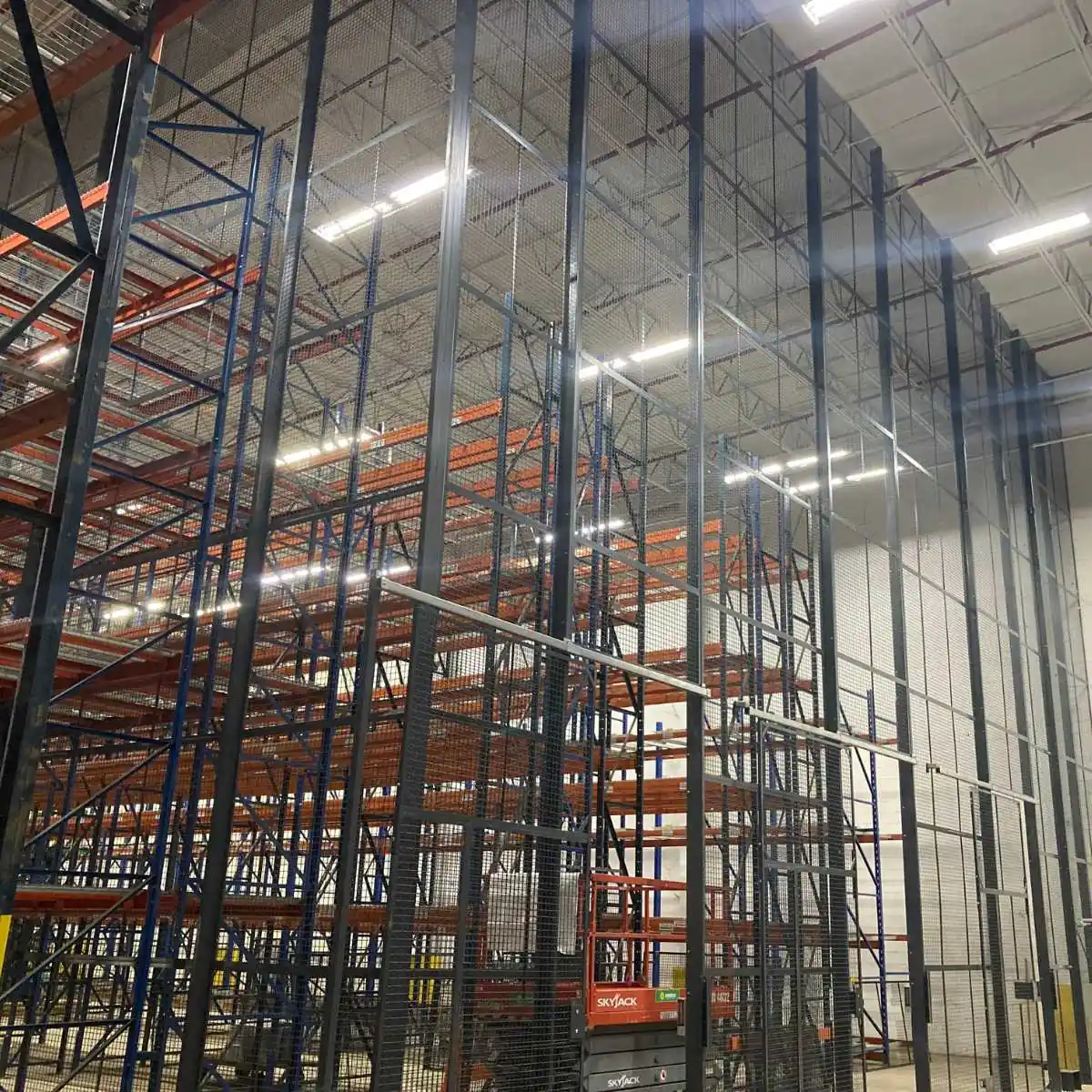
NFPA 30B, Code for the Manufacture and Storage of Aerosol Products, includes provisions for segregating higher-hazard aerosol storage inside a general-purpose warehouse with fencing that runs from the floor to the roof deck or ceiling. As summarized by Wire Crafters from the 2023 edition (section 7.4.5.3.2), those provisions include:
| Provision (summary) | How the cage is built to support it |
|---|---|
| Fencing runs from the floor to the underside of the roof deck or ceiling | Panels stack between posts to any height; tall posts are available |
| Fencing no lighter than 9 gauge steel wire with openings no larger than 2 in. | Standard aerosol mesh is 8 ga woven or welded wire with a 1-1/2 in. square opening |
| Segregated Level 2, Level 3 and plastic aerosol storage limited to 20% of the warehouse area, up to 20,000 sq ft | Layout is drawn to the area your fire protection engineer sets |
| Higher-hazard commodities kept out of the area and at least 8 ft from the fence | Aisles and rack locations planned around the clearance |
| Ceiling sprinkler design area extends 20 ft beyond the segregated area | Coordinated with your sprinkler contractor before the layout is final |
| At least two personnel exits | Two or more doors located for egress |
| Openings have self-closing or automatic-closing gates, or a labyrinth | Hydraulic closers on hinged doors, self-closing or powered sliding doors |
| Automatic-closing gates have manual closure devices next to the opening | Specified with the door operator |
Your fire code official decides. Which edition of NFPA 30B applies, how your products are classified and whether segregation, a separate room or other protection is required depends on your jurisdiction, your sprinkler design and your inventory. We design the cage to the criteria your fire protection engineer and fire code official provide — we do not classify products or approve layouts. For other regulated storage, see security cage regulations by industry.
Aerosol storage cage features
Wire Crafters builds aerosol cages from its Style 840 wire partition system. The published aerosol configuration includes:
- Self-closing doors
- Wall and ceiling panels made with 8 gauge wire, standard 1-1/2 in. square mesh
- 2 in. square steel posts with welded base plates lagged to the floor, set no more than 10 ft apart
- Horizontal reinforcement of at least 1-1/2 in. at intervals of no more than 60 in.
- Panels mounted flush to the floor
- Heavy 3/8 in. hardware that cannot be reached from outside the cage
- Panels that stack to any height, and clear-span ceilings up to 30 ft across
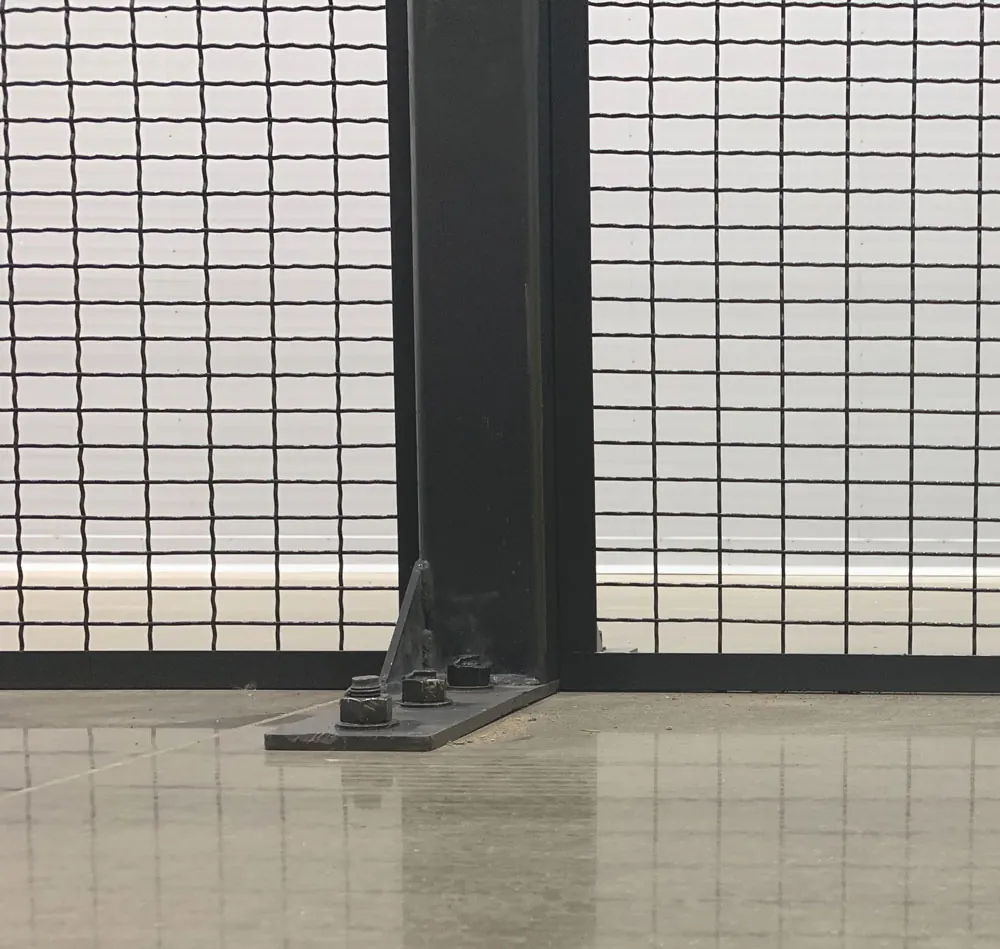
Product photos courtesy of Wire Crafters, the Louisville, Kentucky manufacturer; MH-USA is an authorized Wire Crafters dealer.
Panel and post sizes are explained on our security cage panels and posts page. Cages that need a roof rather than running to the deck are covered under security cage ceilings — a mesh ceiling changes sprinkler coverage, so involve your fire protection engineer before adding one.
Common aerosol cage configurations
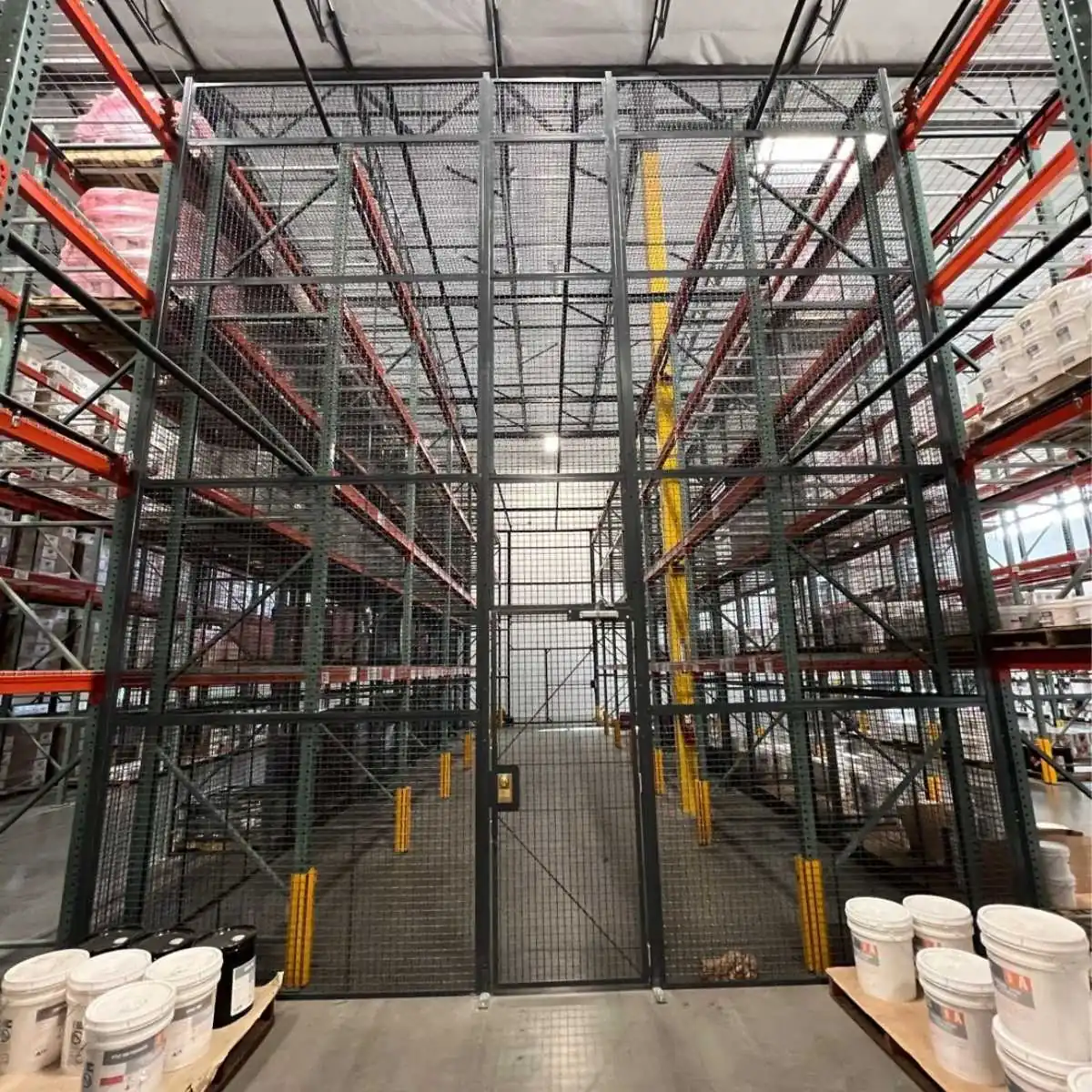
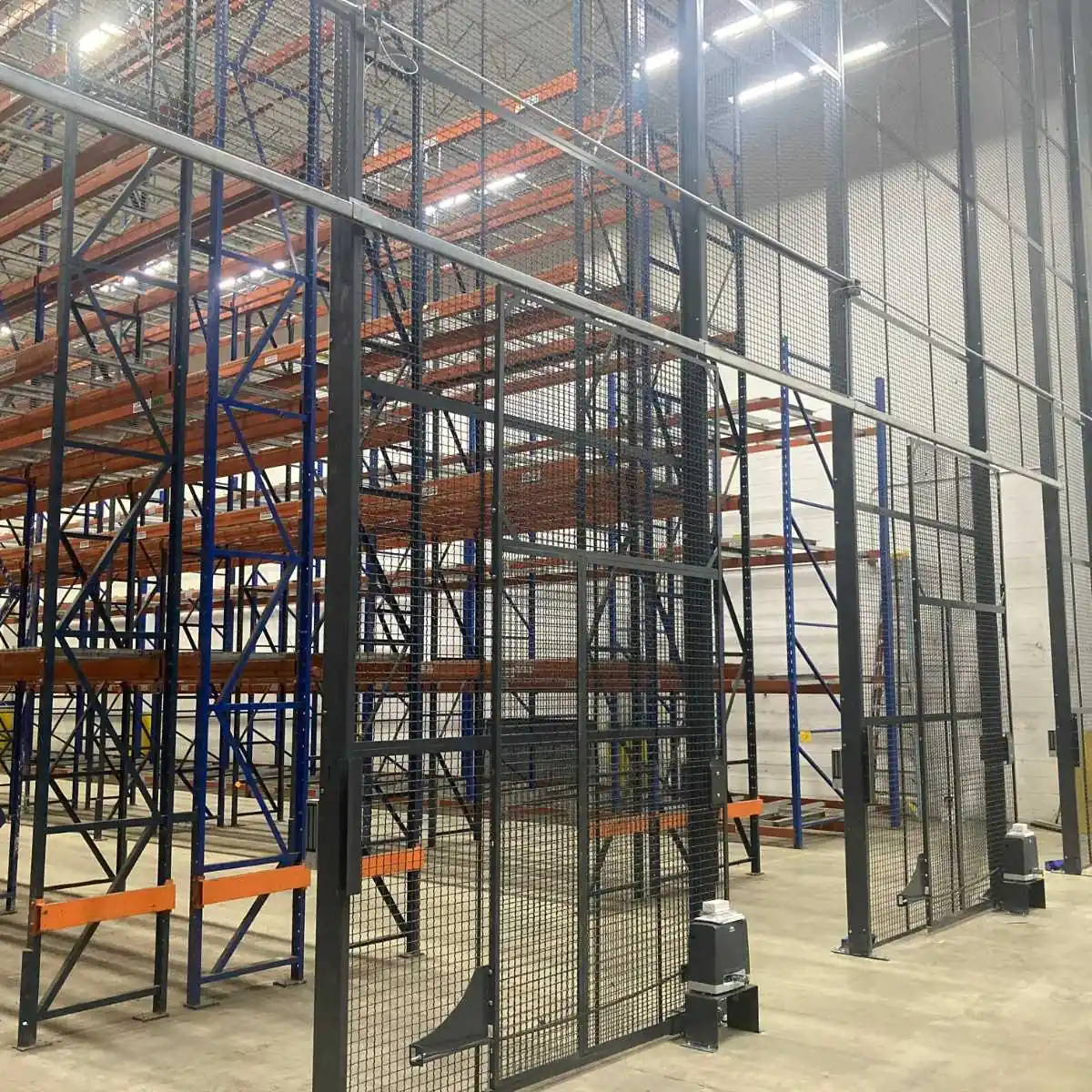
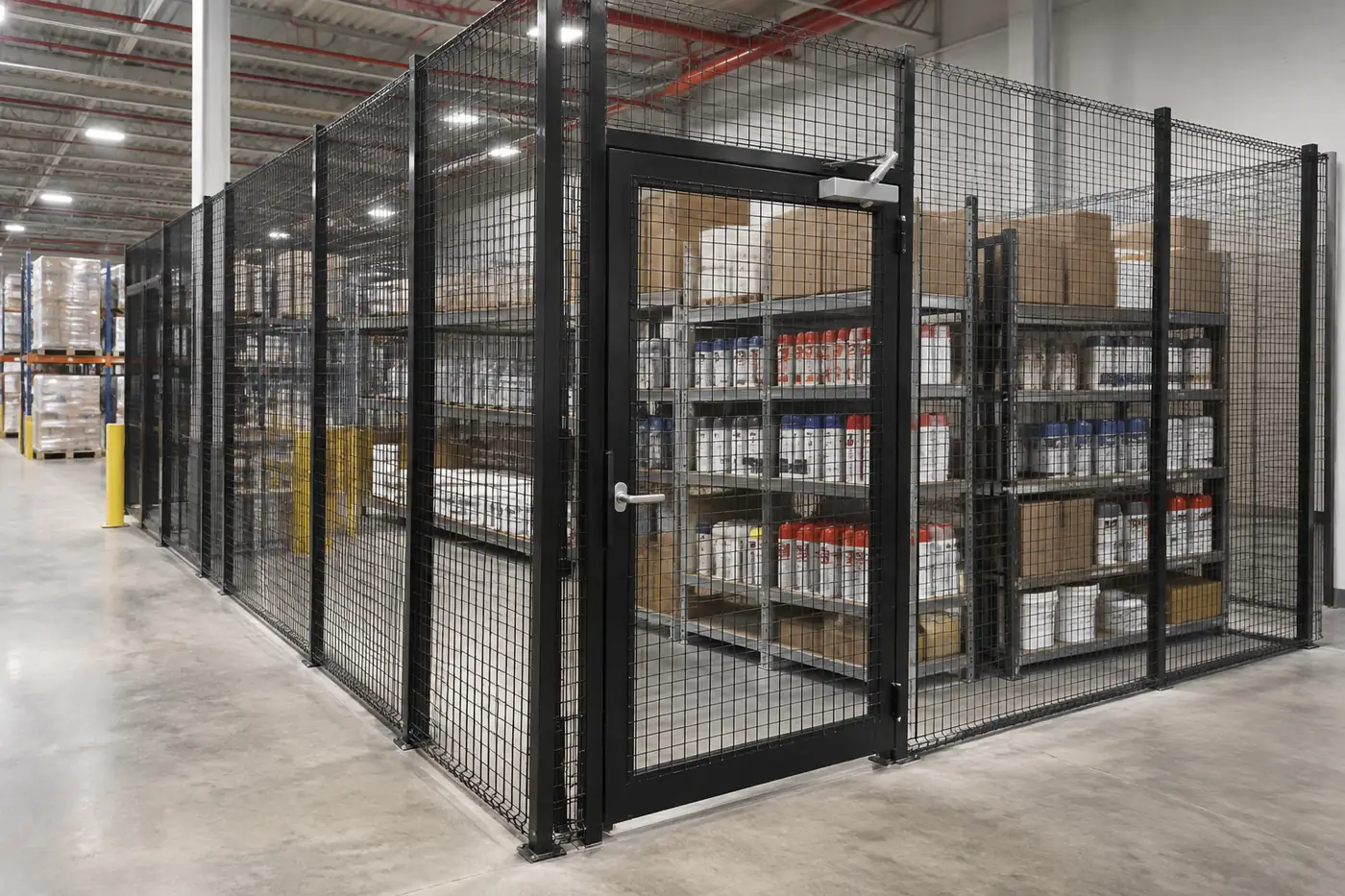

Enclosing existing pallet racking is common; our pallet rack security enclosures page shows how mesh backs, ends and doors attach to rack frames.
Doors and access for aerosol cages
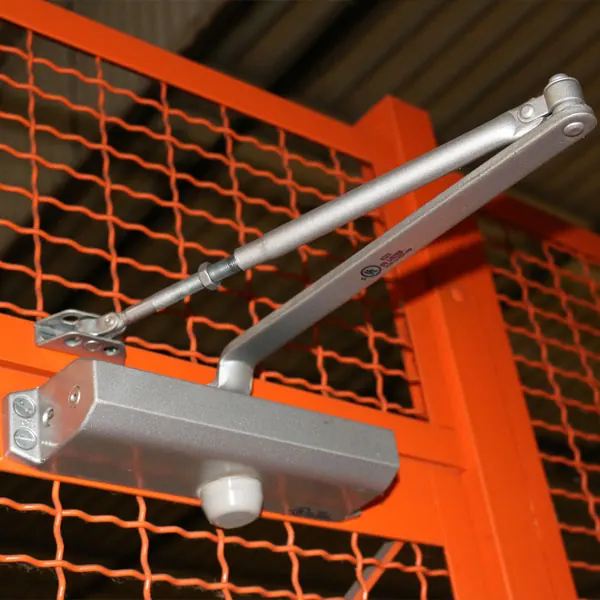
Doors are where most aerosol cages succeed or fail in daily use. A door that is propped open defeats the point, so self-closing hardware matters as much as the mesh:
- Hinged doors with a hydraulic closer that closes and latches the door on release
- Self-closing slide doors that use a hydraulic arm on the track, with no outside power
- Powered sliding doors with timers, photo eyes and anti-crush switches for lift-truck traffic
- Card readers or keypads with an electric strike or mag lock where access should be logged
Compare door styles on our security cage doors page and locking options on security cage locks and access control.
Aerosol cage vs flammable cabinet vs separate room
A cage is not the only way to store aerosols, and it is not always the right one. The choice usually comes down to how much product you hold and how your building is protected:
| Option | Typical scale | Strengths | Limits |
|---|---|---|---|
| Flammable or aerosol storage cabinet | A few cases in a shop or lab | Self-contained, no construction, easy to move | Small capacity; not practical for pallet quantities |
| Wire mesh aerosol cage | Shelving to many pallet positions | Contains rupturing cans, keeps sprinkler water reaching stock, scales with racking, controls access | Must follow the fencing provisions your fire code official applies; needs floor space and clearances |
| Separate rated room or building | Large aerosol inventories | Highest separation from the rest of the warehouse | Construction cost, permits and lost flexibility |
Many operations combine them: a cage around the bulk pallet storage and cabinets at points of use. If your inventory mix changes — a new paint line, a seasonal surge — ask your fire protection engineer to recheck the quantities against the segregated area before the product arrives.
Day-to-day habits that keep an aerosol cage working
- Never prop self-closing doors open; fix closers and latches as soon as they drag
- Keep the clearance zone outside the fence free of other higher-hazard goods
- Store damaged or leaking cans in a designated container, not loose on a shelf
- Keep sprinkler heads clear of stacked stock and do not hang anything from the mesh ceiling
- Check post anchors and panel fasteners after any forklift impact
- Review who has keys or codes, especially for spray paint and solvent cages
Our security cage maintenance and inspection guide covers inspections in more detail.
Planning an aerosol storage cage
Get the criteria
Your fire protection engineer or fire code official confirms the product levels, area limits and protection required.
Send the layout
Building plan, rack locations, roof deck height, sprinkler layout and where doors can go.
We design the cage
Panel, post, door and ceiling layout with self-closing hardware and exits drawn in.
Install and inspect
Posts are anchored, panels set flush to the floor, doors tested, and the cage is ready for your inspection.
Information to send
- Building address and the code edition your jurisdiction uses, if known
- Floor area and clear height of the space to segregate
- Rack or shelving layout and aisle widths
- Required number and location of doors
- Any access control or alarm requirements
Things to keep clear
- Sprinkler heads, branch lines and their spray patterns
- Exit routes, extinguishers and fire department connections
- Electrical panels and equipment that need working clearance
- Floor slab conditions for anchors — see the anchoring guide
Some common panel and post sizes are in stock at select manufacturers, subject to confirmation; tall posts, ceilings and doors are made to the layout.
Shop Pre-Configured Wire Mesh Cage Kits Online
Standard-size welded wire cage kits, priced online, for smaller storage needs. Every kit still needs to be anchored to sound concrete — for tall, braced or engineered enclosures, request a quote with your building location and floor details.

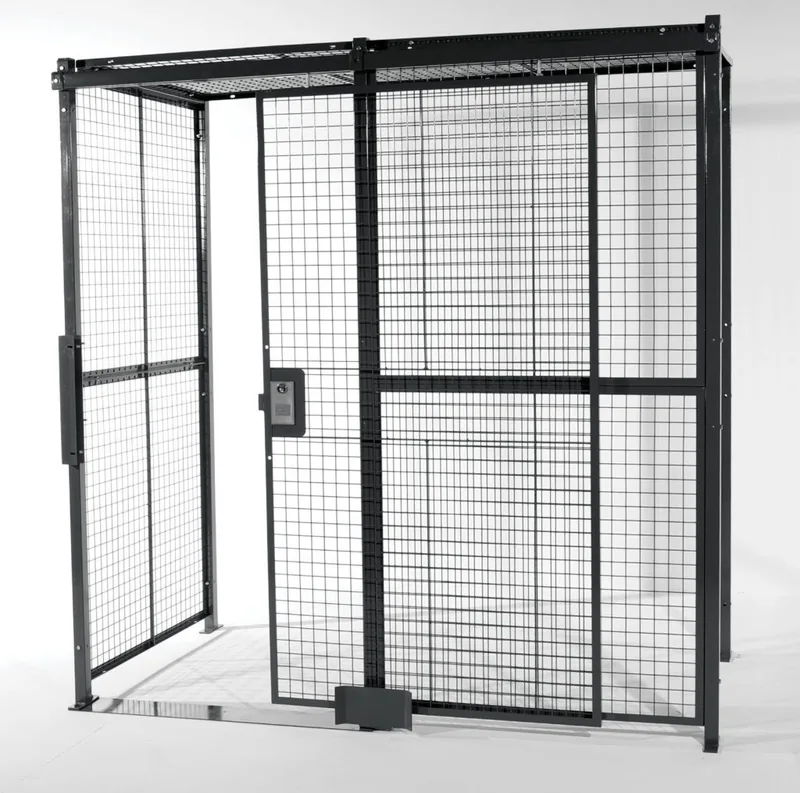
Prices are the current online prices. See all security cage kits · Need a custom size? Request a security cage quote.
Aerosol Storage Cage FAQs
What is an aerosol storage cage?
Does NFPA 30B require an aerosol cage?
What mesh is used for aerosol cages?
Do aerosol cage doors have to be self-closing?
Can an aerosol cage have a ceiling?
Can you enclose our existing pallet racking?
Can a small cage be used for spray paint in a store?
Planning an aerosol storage area?
Send the layout and your fire protection criteria. We will design the cage, doors and exits and quote it, supplied and installed nationwide from Salt Lake City.