
Law Enforcement Material Handling Solutions for Police Stations
Room-by-room storage planning for police stations, sheriff’s offices and public safety buildings, from the intake window and armory to the property room, records and fleet bay.

Shop Police Station Storage Online
Armories, evidence lockers and mobile shelving are quoted per project. These support-room products are sold online at the listed starting prices, with freight quoted by destination. Some common sizes are in stock at select manufacturers, subject to confirmation.


Planning a Police Station Room by Room
Every room in a station moves people, property or equipment. Storage decides how well it flows.
Material handling in a police station is not about forklifts. It is about how items move through the building: a sealed bag from the report room to the property room, a rifle from the armory to a patrol car and back, boxes of case files from records to an off-site archive, uniforms from the quartermaster to a new recruit. When storage is planned around those movements, staff walk less, custody is easier to prove and rooms stop overflowing into hallways. When it is not, agencies end up with property stacked on the floor and armories that cannot take one more weapon.
This page walks through a typical station one room at a time and shows the storage that fits each. For a product-by-product view of lockers, weapon racks and cages, see our law enforcement storage products page. Civilian agencies outside law enforcement are covered on our government storage solutions page, from records rooms to public works.
| Room or area | What moves through it | Storage that fits |
|---|---|---|
| Lobby and report room | Found property, citizen drop-offs, officer submissions | Pass-through intake lockers, refrigerated lockers, drying cabinets |
| Booking and holding | Detainees’ personal property, booking supplies | Property bags and bins, secure lockers, wire mesh holding cells |
| Armory and patrol staging | Rifles, shotguns, tasers, radios, body cameras | Weapon racks and cabinets, charging lockers, smart lockers |
| Locker rooms | Uniforms, armor, duty bags, personal items | Single-tier and tactical lockers, benches, gear lockers |
| Property and evidence room | Long-term property, guns, drugs, cash | Mobile shelving, security cages, bulk racks |
| Records and administration | Case files, archive boxes, forms | Mobile file shelving, closed steel shelving |
| Quartermaster and fleet | Uniform stock, vehicle equipment, parts | Bin shelving, rivet shelving, bulk rack, pallet rack |
Lobby, Report Room, Booking and Holding
Where property and people enter the building, custody starts and must stay documented.
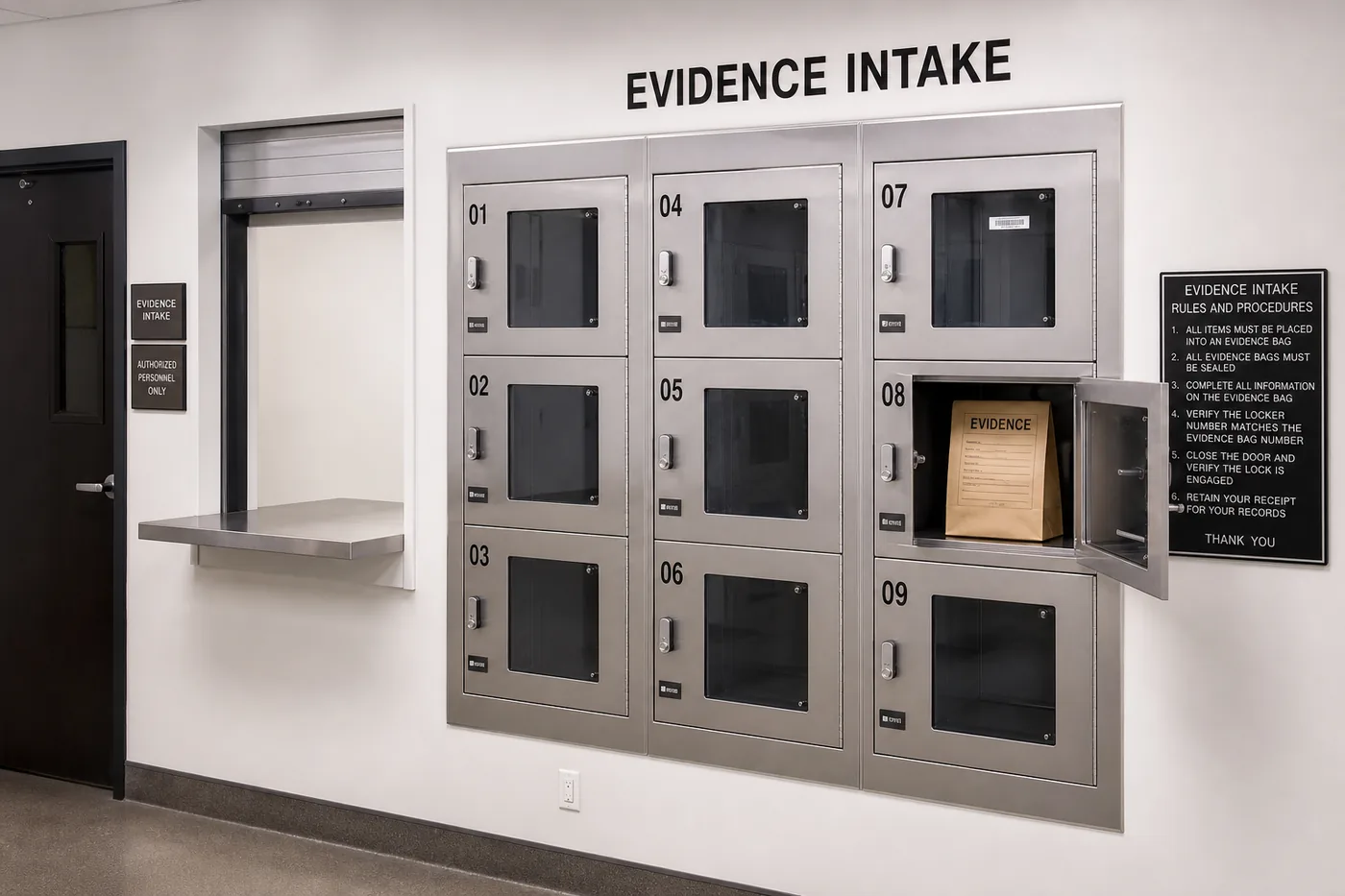
Intake lockers between the report room and property
The report-writing room is the start of most chain-of-custody records. Officers package, label and submit items into pass-through lockers built into the wall, and property staff retrieve them from the secure side. Plan enough small doors for the busiest shift, a few large doors for bags and boxes, refrigerated units for biological items and drying cabinets for wet clothing. The evidence storage room design guide covers sizing in detail, and law enforcement evidence storage lockers covers the lockers themselves.
The public lobby needs storage too. Found property, prescription drug take-back boxes, safe exchange zones and after-hours property release all touch the lobby. Exterior-facing smart lockers let citizens pick up released property without staff at the window, and a small locked room or cabinet behind the counter holds items waiting for an officer. Keep these flows separate from evidence intake so public items never mix with case property.
Booking, holding areas and detention support
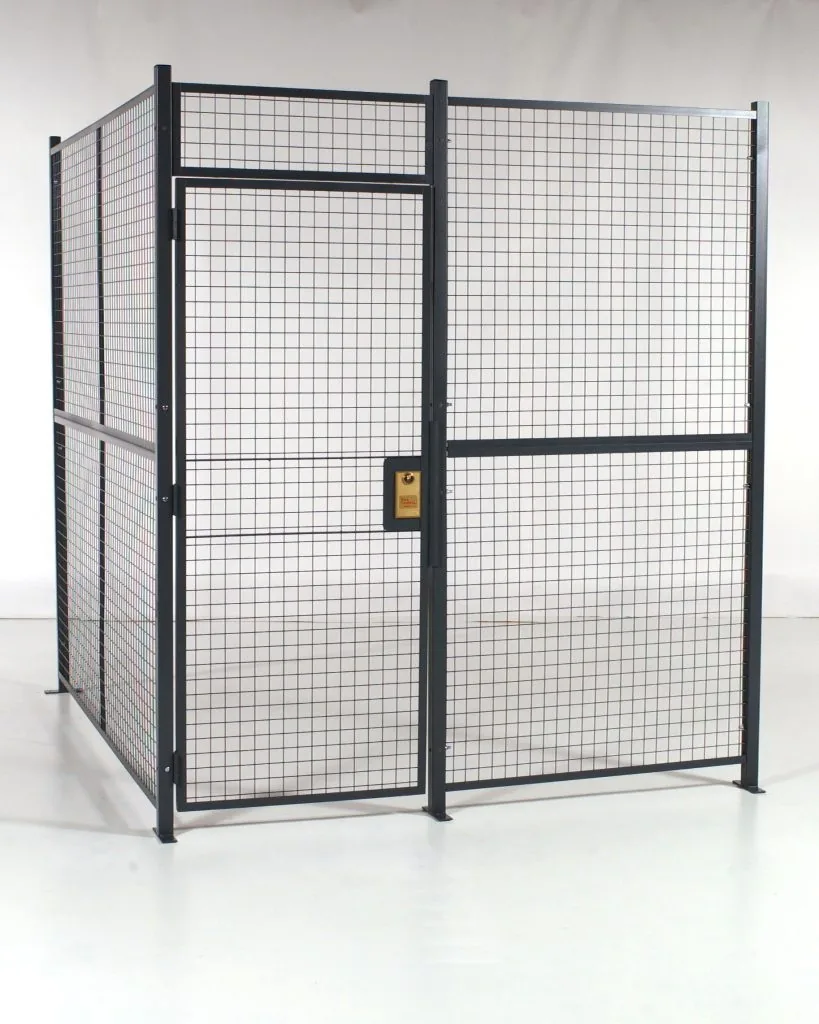
Modern detention equipment is more than cells and doors. Booking areas handle a steady stream of personal property that must be bagged, numbered and returned at release, and holding areas need secure, visible space for short stays. We supply the storage side of that work: property bag racks and numbered bins, secure property lockers, and welded wire mesh panels that build temporary holding cells for processing areas, events and remote substations. Our inmate property storage systems guide explains how to size a jail property room by bed count and average length of stay.
- Booking property: clear bags on hanging racks or numbered bins on shelving, matched to your jail management system numbers.
- Valuables: cash, phones and jewelry in a locked cabinet or cage with a separate log.
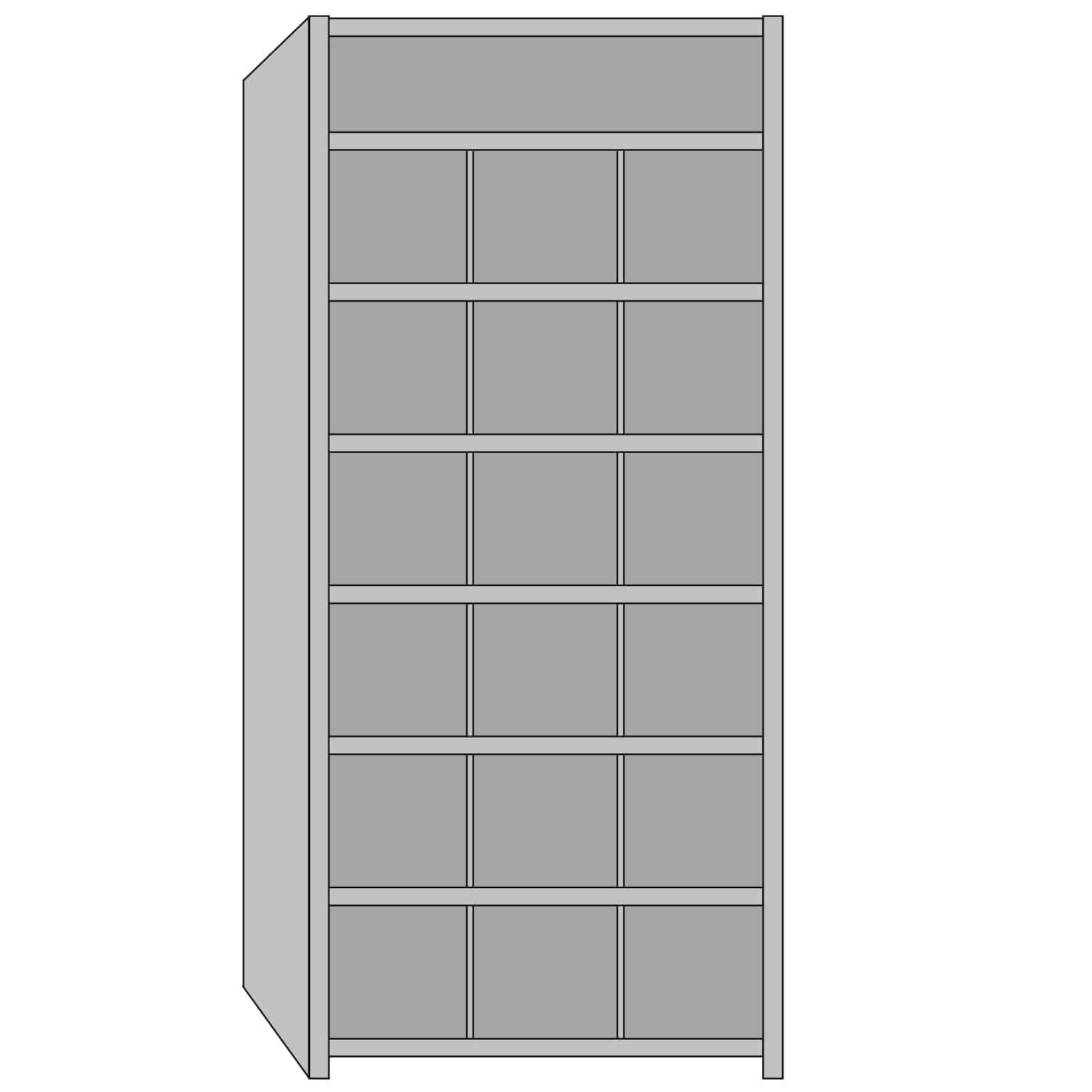
- Clothing and bulky items: bulk racks or mobile shelving with wide shelves for bags and boxes.
- Holding areas: heavy-gauge wire mesh panels, lockable doors and benches, built to your detention consultant’s spec.
Armory and Patrol Staging
The armory should hold today’s inventory with room to grow, and issue gear without a line at shift change.
Weapon storage sized from your inventory
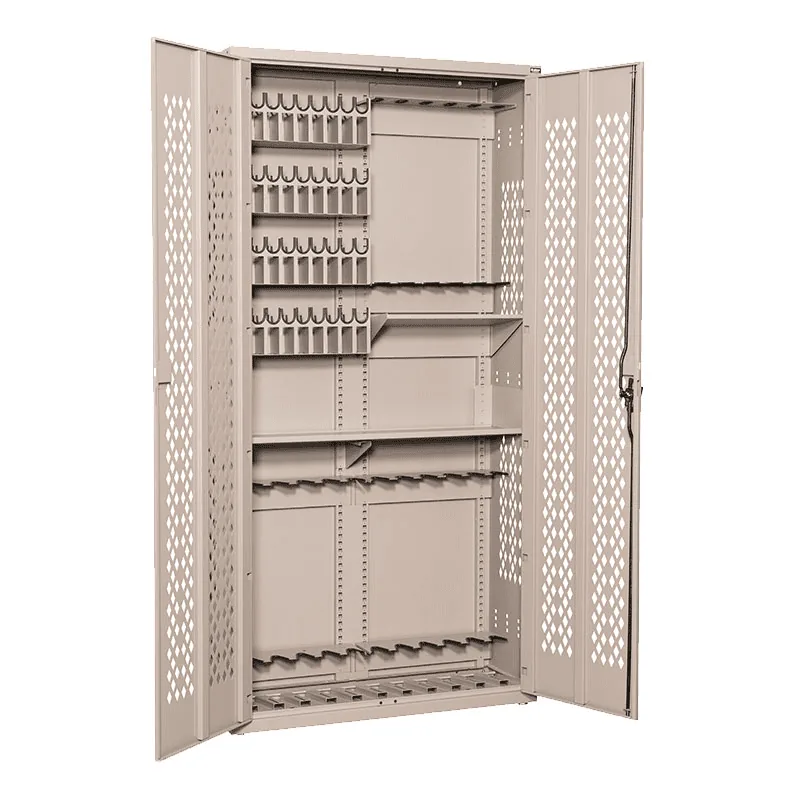
Armory planning starts with a count of patrol rifles, shotguns, sidearms, less-lethal launchers and tasers, plus how they are issued. Shared weapons stay in locked cabinets or racks inside the armory, while assigned weapons may go to individual lockers. Modular interiors let saddles, pistol pegs and shelves move as the inventory changes. Our police weapons storage page covers cabinet types, and Datum and Dasco both build configurable weapon cabinets for agencies of any size.
Patrol staging, often the room between the armory and the sally port, is where radios, body cameras, tasers and car keys go out and come back. Locking charging cabinets keep every device charged in its own slot, and smart lockers record who took what. Putting staging next to the armory and the vehicle entrance keeps shift change short and keeps equipment out of the hallways.
Sally port and vehicle processing
The sally port and vehicle processing bay handle detainee transfers, large property and vehicles held as evidence. Wall-mounted lockers for officers to secure weapons before entering the jail or holding area are standard at the sally port door. Vehicle processing bays need shelving or cabinets for photography, swab and packaging supplies, plus a fenced bulk area for tires, parts and items removed from vehicles. Keep this equipment close to the bay doors so large items never cross the main building.
Locker Rooms and Duty Gear
Officers need space for a full set of duty gear, not just a uniform and a coat.
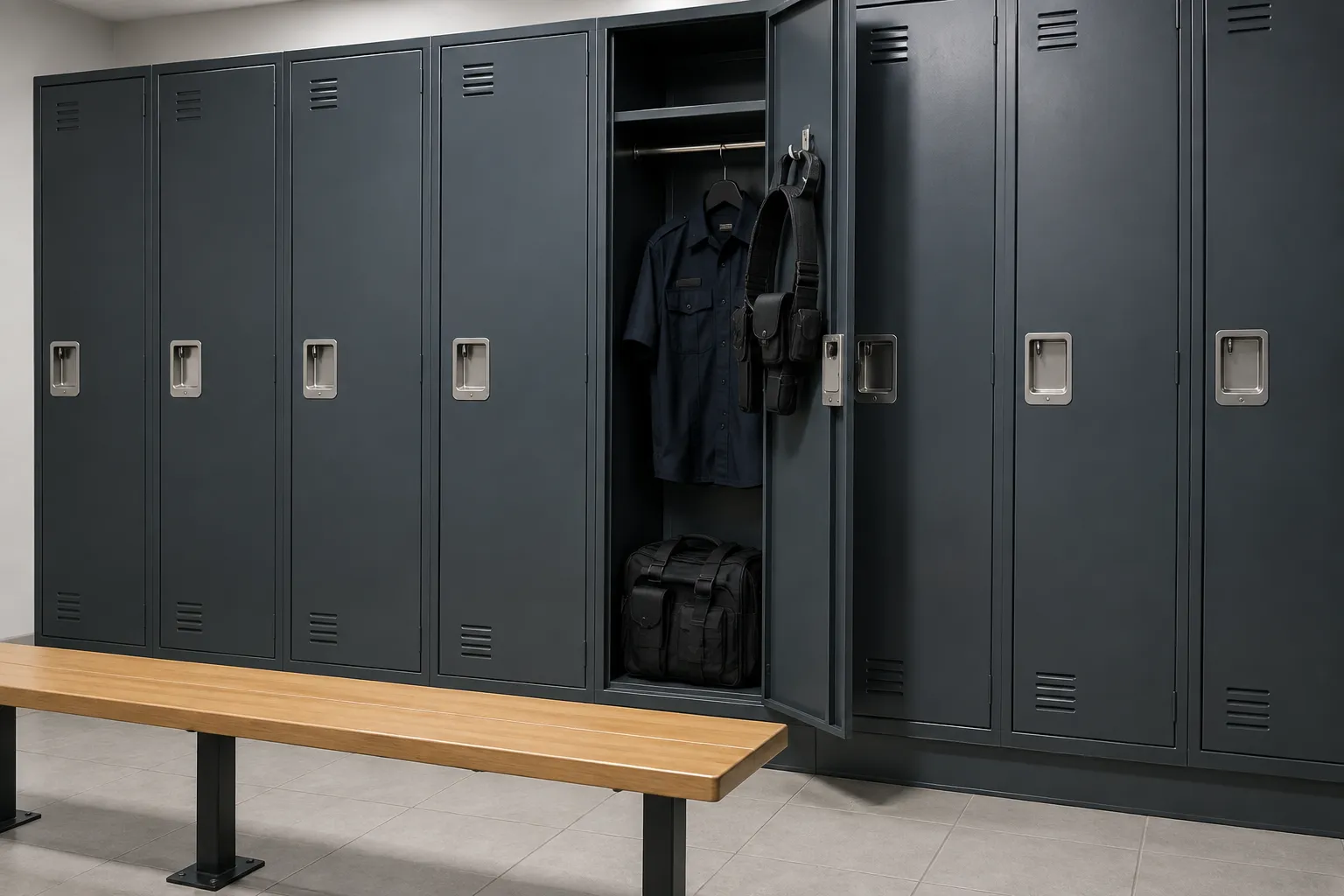
Lockers sized for real duty gear
Body armor, a duty belt, a patrol bag, rain gear, boots and a spare uniform will not fit a 12-inch office locker. Most new stations use 18 to 24 inch wide single-tier lockers with a shelf and coat rod, or tactical lockers with a locking top box and a bench drawer. Ventilated doors help gear dry between shifts. Count sworn officers, civilians and reserves separately, add the next academy class, and plan benches and aisle widths for a full shift changing at once. Browse our lockers and Dasco tactical gear lockers for options.
SWAT, K-9, motor and bike units usually need their own gear room with open, ventilated gear lockers or racks because their equipment is bulky and often comes back wet or dirty. Give these teams a room close to the vehicle bay so heavy gear does not travel through the office areas.
Property and Evidence Room
The room that grows every year. Plan for ten years of growth, not the boxes you have today.
High-density shelving for long-term property
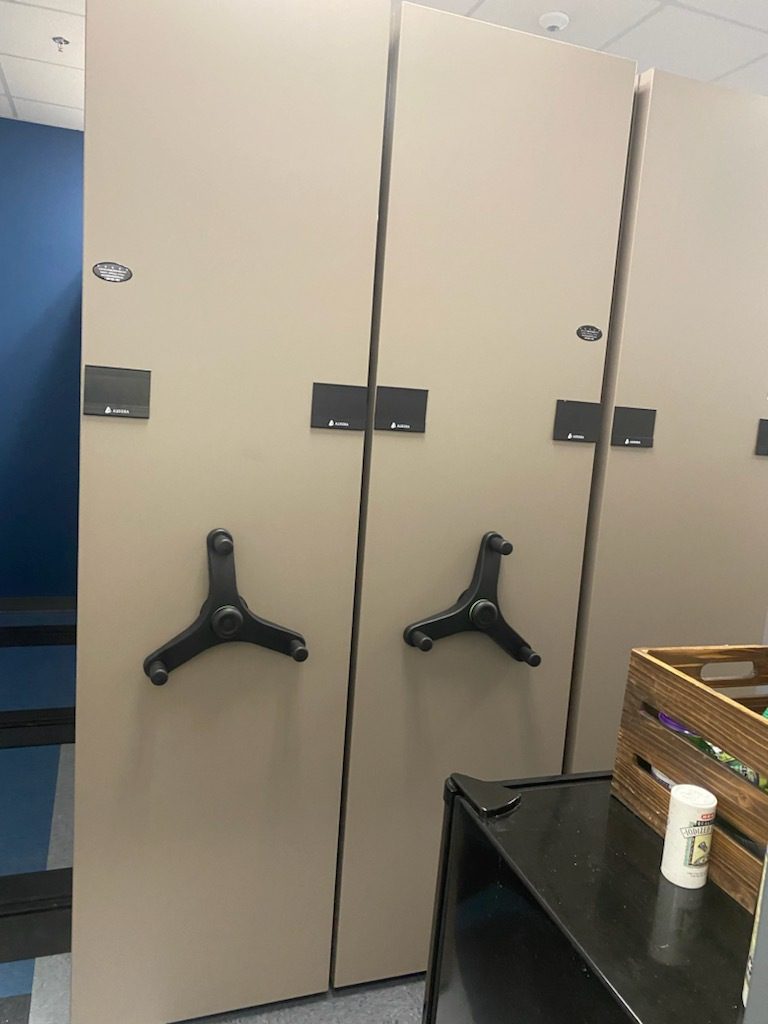
Long-term property and evidence rarely leaves the building quickly, so property rooms fill up. High-density mobile shelving mounts shelving on carriages that roll on floor rails, which removes most fixed aisles and fits far more in the same footprint. Aurora mobile shelving is installed in the property rooms at the Roy Police Department in Utah and the Weslaco Police Department in Texas. Mechanical-assist handwheels move loaded carriages with little effort, and aisle locks secure the system at the end of the day.

Cages for drugs, money and guns
High-risk property such as narcotics, currency, jewelry and firearms needs a second locked layer inside the property room. Welded wire security cages provide that layer while letting sprinkler water, air and auditors’ eyes through. Add shelving inside the cage, a ceiling panel where people could climb over, and a lock that matches your key control or access control system. Bulky items such as bicycles and tires belong in a fenced bulk bay with bulk rack or cantilever arms.
Records, Administration and Archive Storage
Paper still piles up: case files, citations, personnel files and retention boxes.
File and box storage for records units
Even agencies that scan new records keep years of paper under retention schedules. Mobile file shelving puts that paper in the smallest footprint and can be locked. Closed steel shelving or four-post shelving works for archive boxes, and labeled box positions make retention purges and records requests faster. Where scanning is underway, plan a staging area with carts and open shelving for boxes moving through the scanning workflow, then shrink the archive as files are digitized.
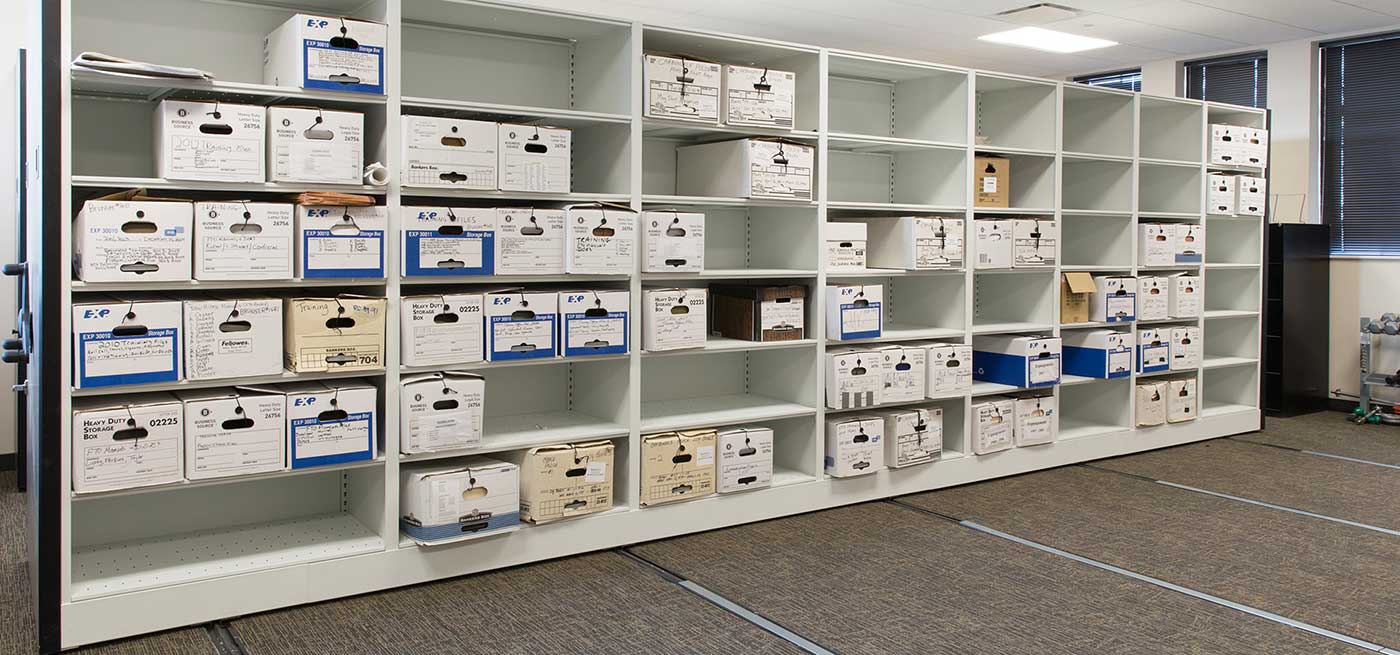
Administrative areas also need supply storage, secure cabinets for personnel files and a lockable space for spare equipment. If the records unit works in a warehouse or annex, a prefabricated modular office can give staff a quiet, climate-controlled room inside the larger building. Training records, policy manuals and accreditation files belong in the same records system so the unit can answer audits from one place. Label every shelf and box position with a location code that matches your records software, and the next records request or retention purge becomes a search instead of a hunt.
Quartermaster, Fleet and Equipment Supply
Uniforms, vehicle equipment and spare parts keep the patrol fleet on the road.
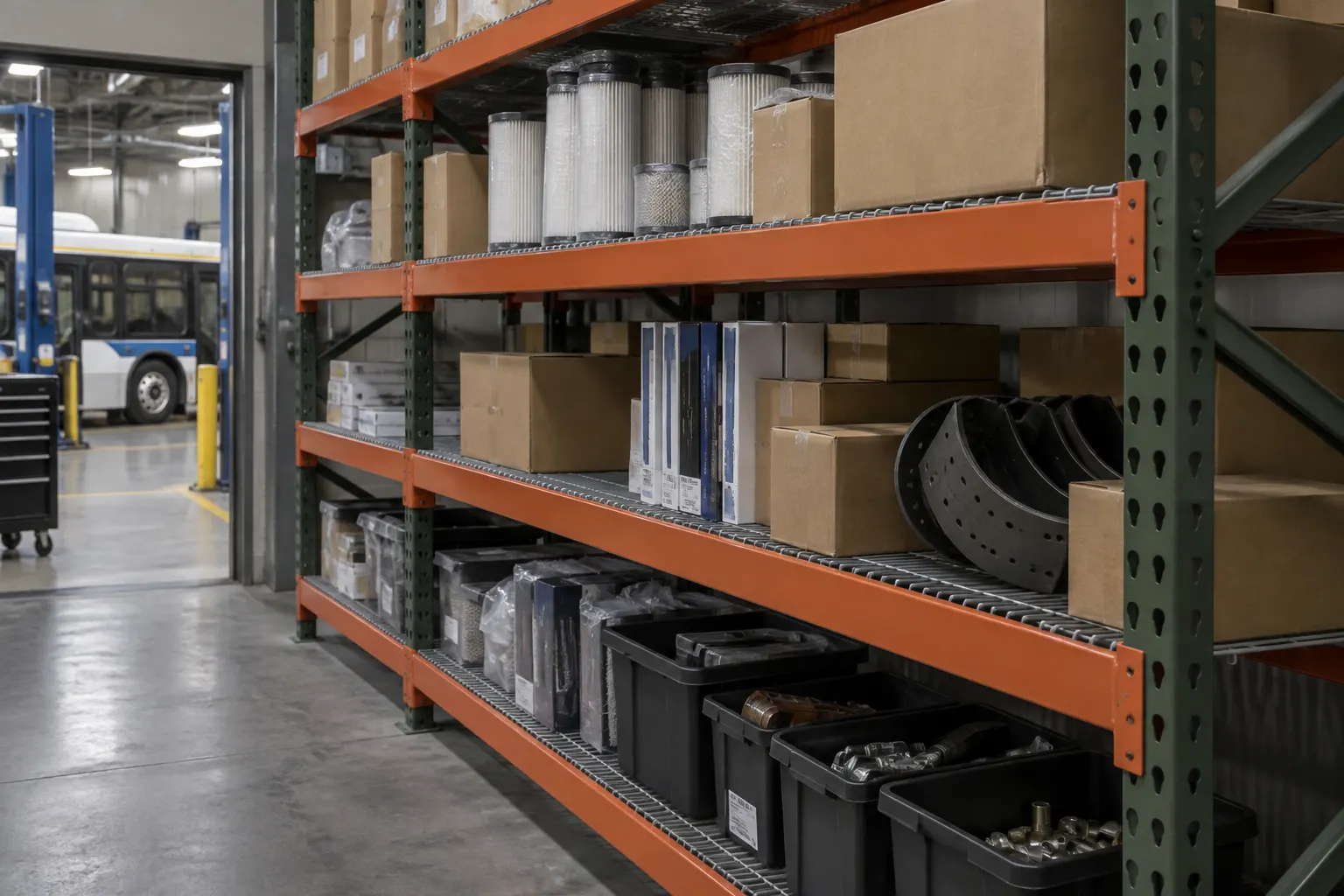
Commercial racks for supply and fleet rooms
Quartermaster rooms store uniforms by size, boots, duty belts, cuffs, flashlights and new-hire kits. Fleet shops store lightbars, consoles, push bumpers, filters, brake parts and tires. Both work best on commercial storage: bin shelving for small parts, rivet shelving for cartons, bulk rack for bulky items and pallet rack for pallet loads of ammunition, tires or paper in larger agencies. Our law enforcement storage page covers the secure products that sit alongside them.
Equipment checkout with smart lockers
Smart lockers let staff check out shared equipment such as spare radios, loaner laptops, fleet keys and specialty tools without a clerk on duty. Each door opens for an authorized badge or PIN and the system logs every transaction. They also handle after-hours release of found property to the public through an exterior-facing bank. See our smart locker systems page.

Shared Public Safety Buildings
Police, fire, EMS and dispatch under one roof need storage planned together.
Fire and EMS gear next to police storage
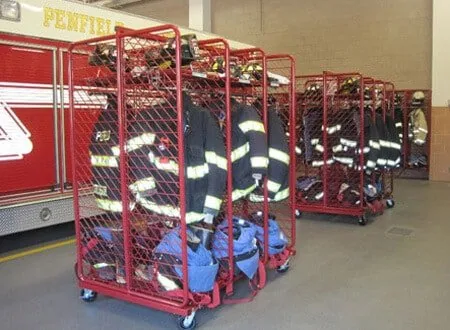
In a combined public safety building, firefighters need ventilated turnout gear racks outside the apparatus bay, EMS needs supply shelving and secure medication storage, and police need locked armory and property space. Planning all of it together avoids duplicated supply rooms and lets one installer handle the project. Forensic units in the same building can work with our sister company on crime lab design and equipment.
Planning Considerations for Police Facilities
Questions to settle with your architect, property manager and command staff before ordering.
- Growth: property rooms and armories typically need room for years of growth; size shelving and cabinets for the inventory you expect, not just today’s count.
- Accreditation and audits: agencies pursuing or keeping CALEA or state accreditation should match storage to their written property, weapons and key-control directives.
- Physical security: rooms that hold criminal justice information, weapons or high-risk property need controlled access; electronic locks and smart lockers add access logs.
- Custom fabrication: odd rooms, sloped floors and special items such as ballistic shields or long guns with optics often need custom-fabricated shelving, cages or cabinet interiors.
- Seismic and floor loading: mobile shelving and tall cabinets need engineered anchoring and a floor that can carry the load, especially in Mountain West seismic zones.
- Occupied renovations: phasing lets a station keep running while rooms are emptied, rebuilt and refilled.
- Substations and small departments: smaller agencies often combine armory, property and supply in one or two rooms; layered cages and lockers keep each function separate.
- Purchasing: we quote to bid specs, purchase orders and cooperative contracts where the manufacturer holds one.
What to send us for a police station layout
- Floor plans: architectural drawings, a PDF of the existing building, or a sketch with room dimensions and door locations.
- Headcount: sworn officers, civilians and reserves today and the planned total in five to ten years.
- Armory list: counts of rifles, shotguns, handguns, less-lethal launchers, tasers and whether optics stay mounted.
- Property volumes: items or containers held today, annual intake, and the largest and bulkiest items you take in.
- Records: linear feet of files or number of archive boxes, and how much will be scanned.
- Shared tenants: fire, EMS, dispatch or courts sharing the building, and which rooms they use.
- Schedule and budget: bid date, move-in date and any grant or funding deadline that drives the timeline.
Material Handling USA plans and installs storage for police departments, sheriff’s offices and public safety buildings, with installers in Utah, Idaho and Nevada and partner crews nationwide. We can work from your architect’s drawings, walk the existing building, or start from a simple room list.
How We Work With Your Agency
Tell us your needs
Share headcount, weapon and property counts, floor plans and any accreditation requirements.
We design it
We lay out the armory, locker rooms, property room, records and supply areas with the right products.
Review and quote
We walk through the layout with your team and provide an itemized quote for your purchasing process.
Install and hand off
Installers anchor, level and test every system, then train staff on locks, carriages and access.
Frequently Asked Questions
What does law enforcement material handling include?
How much space does a police property room need?
Can you work from our architect’s drawings?
Do you provide commercial racks for police stations?
Can storage for a combined police and fire building be planned together?
Do you serve agencies outside Utah?
Plan Your Police Station Storage
Send a floor plan or room list for a free layout and itemized quote.