
Temporary Holding Cells: Wire Mesh Holding Cell Systems
Modular wire mesh holding cells for supervised, short-term confinement while people are processed or detained — for police stations, courthouses, jails, transit and event security.
Supplied and installed nationwide from Salt Lake City — call (800) 326-4403.
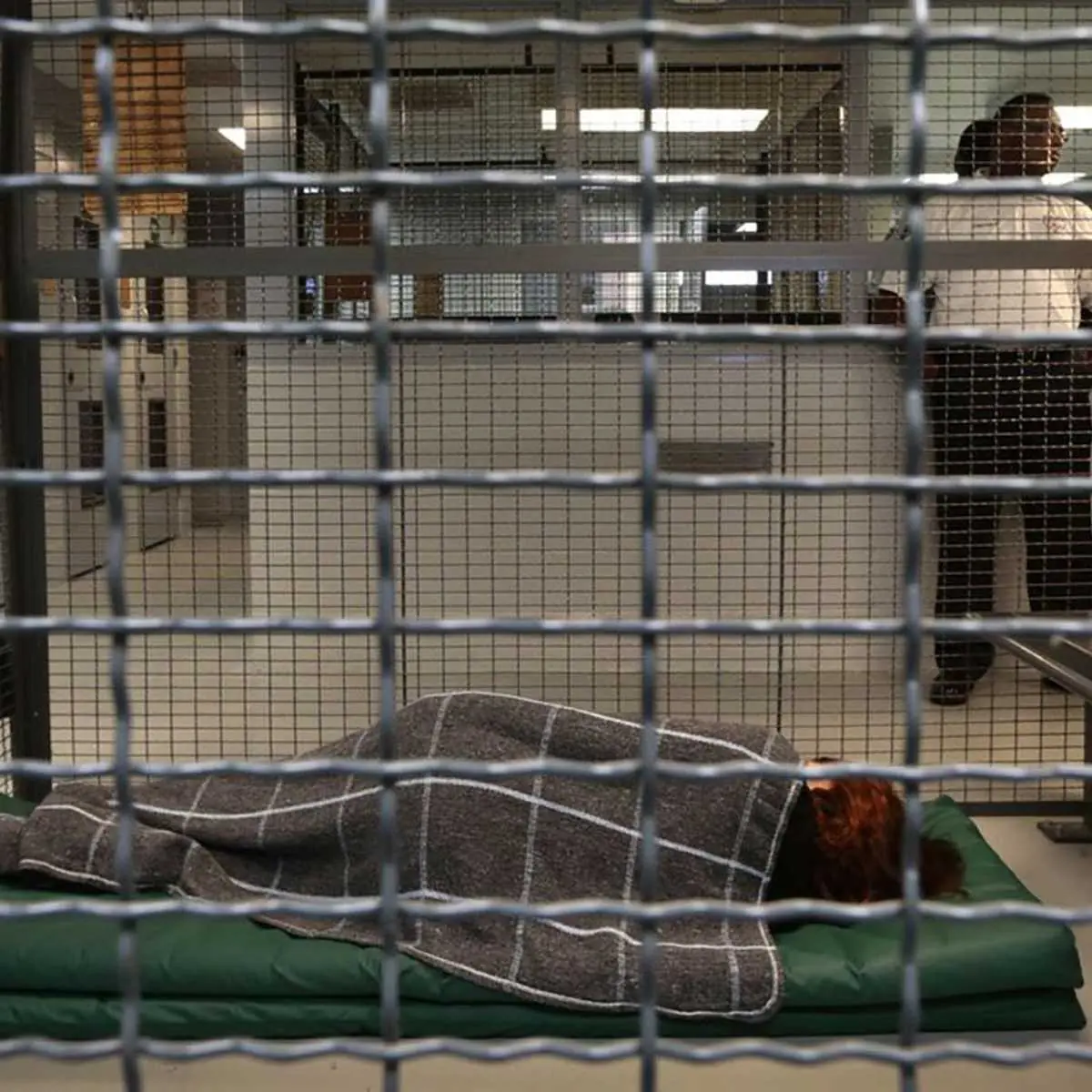
Supervised
Short-term confinement
20 sizes
Standard panels 1–10 ft wide
Secure side
No reachable hardware
11 ga
Anchorable steel benches
What is a temporary holding cell?
A temporary holding cell is a secure enclosure for supervised confinement for a short period — while a person is booked, interviewed, waiting for transport or a court appearance. It is not a housing cell. Because the stay is short and staff are present, a modular wire mesh system is a practical alternative to poured or masonry construction: it goes in quickly, uses the building’s existing lighting, HVAC and fire sprinklers, and lets officers see into the cell at all times.
Wire Crafters’ Style 840 partition system is used to build holding cells in correctional and detention centers across the country. MH-USA is an authorized Wire Crafters dealer and lays out and installs these systems as part of our security cage work.

Holding-cell design is governed by your jurisdiction’s detention standards, building and fire codes, and agency policy. We supply and install the enclosure to the design your facility and authority having jurisdiction approve; we do not set confinement standards.
How wire mesh holding cells are built
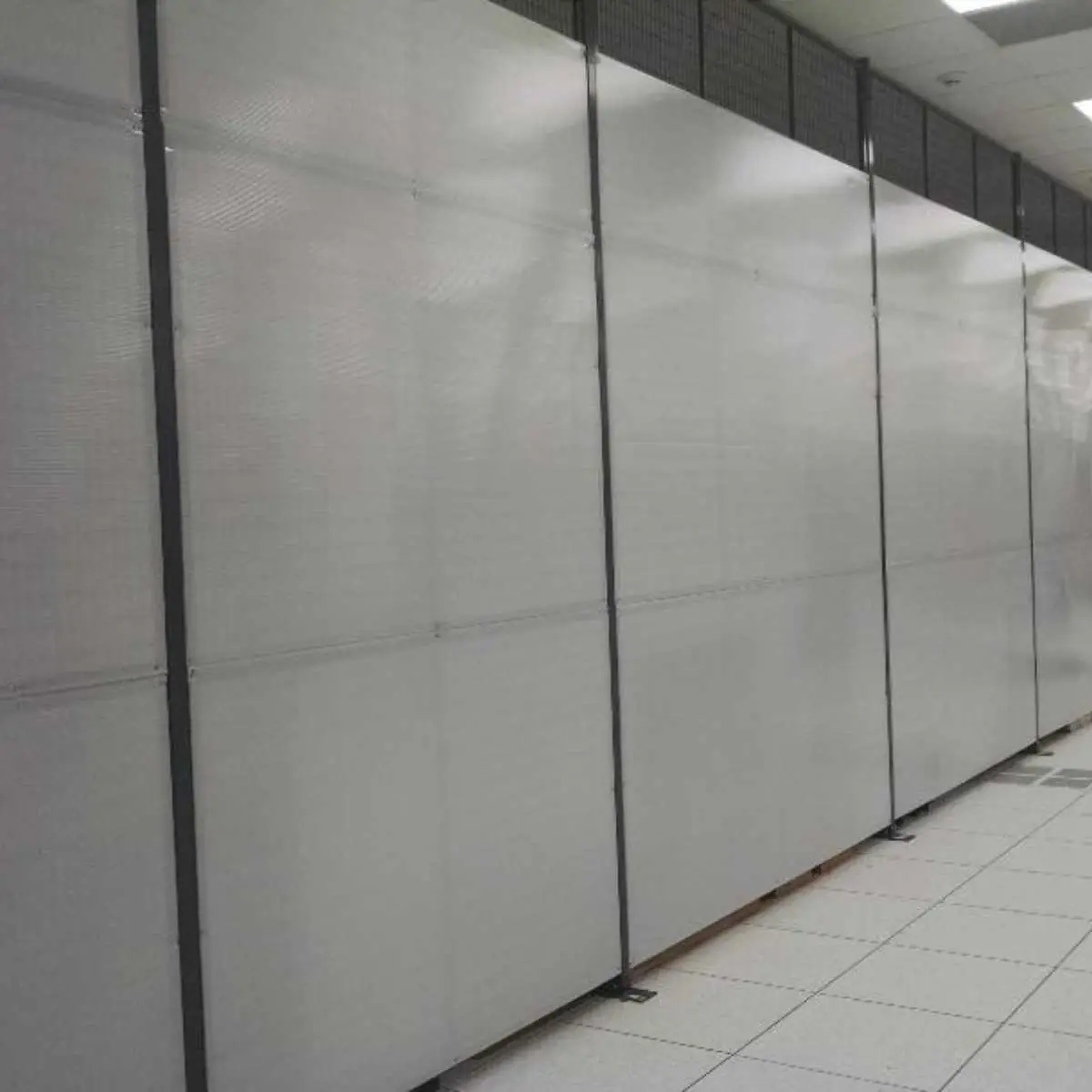
Clear polycarbonate or sheet metal infill is often specified in lower sections or where officers want a solid surface, while open mesh above keeps sightlines and airflow. The cell installs with standard hand tools, and the panels can be reconfigured or relocated if the station is remodeled. Component details are on our wire partition components page.
Product photos courtesy of Wire Crafters, the Louisville, Kentucky manufacturer; MH-USA is an authorized Wire Crafters dealer.
Holding cell doors and locks
A hinged door with a secure locking device is standard; double hinged, sliding and vertical rise doors are also available, and Wire Crafters’ sliding doors use a patented tamper-resistant latch. Published lock options:
- Standard mortise cylinder lock — self-locking, with a spring-action tongue
- Institutional high-security dead latch lock
- Top and bottom slide bolts added to the door
- Customer-specified locks integrated into the system
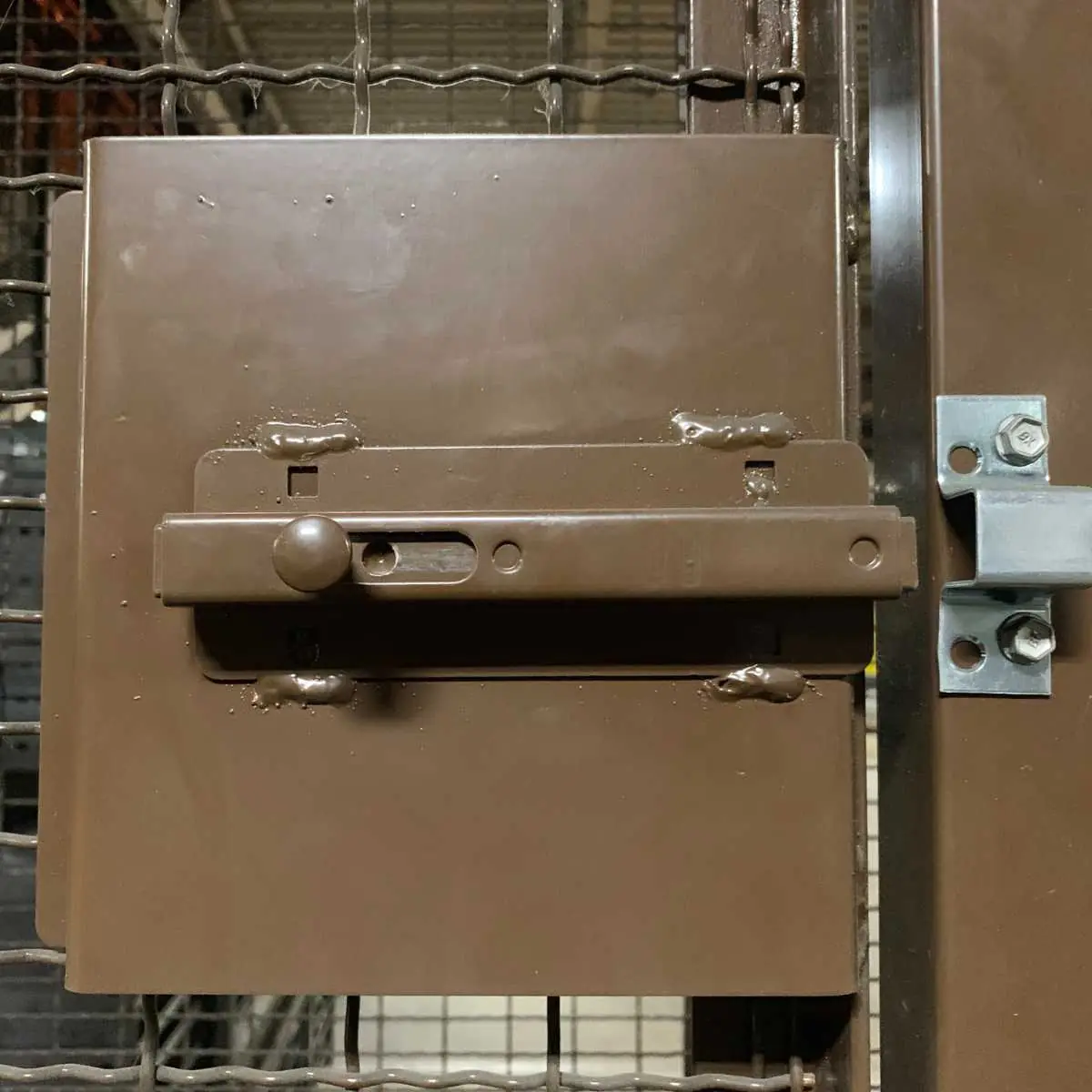
More lock and access hardware is on security cage locks and access control and door styles on security cage doors.
Holding cell benches
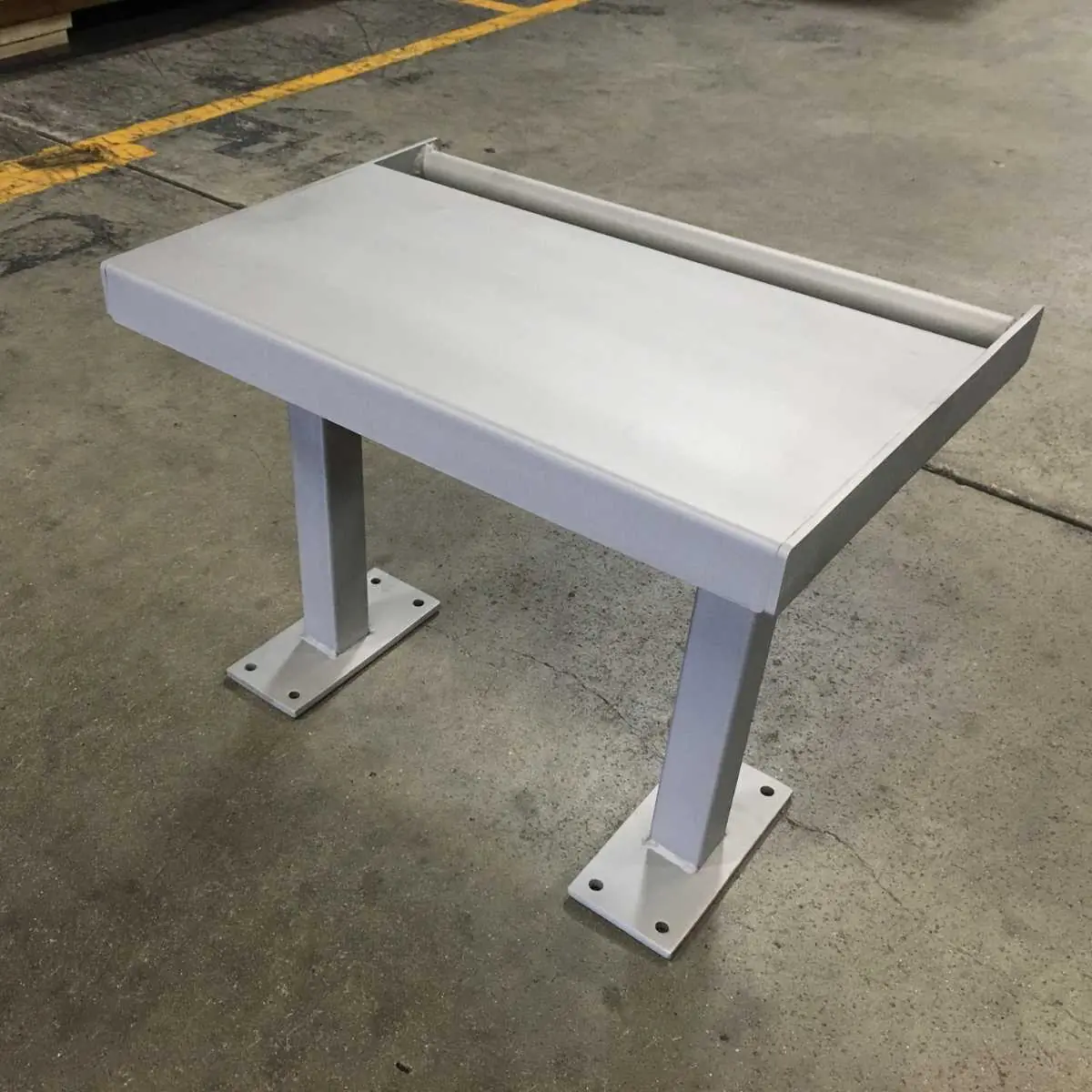
Anchorable steel benches can be added to the cell or bought separately. As published by Wire Crafters:
- Seat of formed 11 gauge sheet metal, 13 in. wide; an optional cuff rail adds 4 in.
- Pedestal-style legs of welded 2 in. x 2 in. x 14 gauge steel
- 4 in. x 9 in. base plates with four 3/8 in. anchors
- Lengths of 4 ft, 6 ft and 8 ft, with corner units available
Holding cell cages for police stations and courthouses
Holding cell cages are the wire mesh version of a holding room: welded or woven partition panels, a mesh ceiling and a locking door, bolted together inside an existing room. Agencies use them where a person must be held for a short, supervised period, and staff need to see in at all times.
Common places we see them planned:
- Police station booking and sally port areas
- Courthouse holding near courtrooms
- Transit, airport, stadium and campus security offices

Because the cell is built from standard panels, the same room can hold one large cell, or be split into two or three smaller cells with a shared corridor for officers. Panel heights stack to the ceiling, and a mesh top closes the cell where the room is taller than the panels.
Inmate holding cells at intake and transport
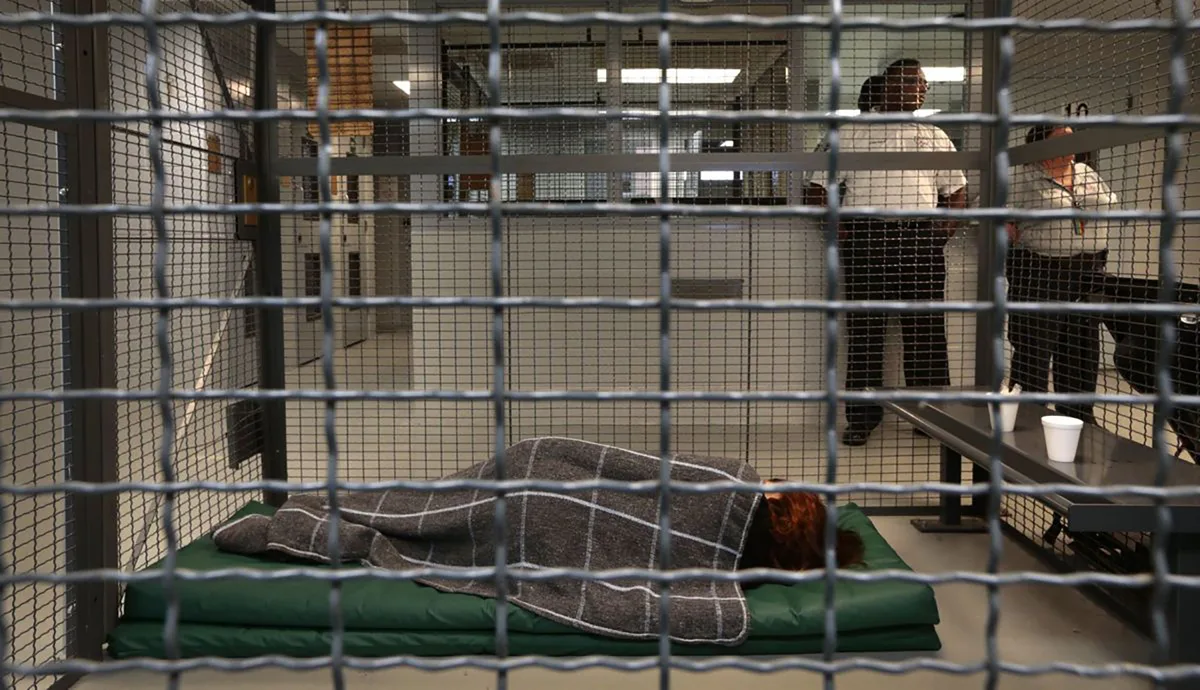
Jails and sheriff’s offices also use wire mesh enclosures for inmate holding cells during intake, release, medical visits and transport staging. The person is held for a short time, under watch, while paperwork, property and searches are handled.
At intake the cell usually sits near the property counter, so it is planned together with inmate property storage and the evidence room. A wire mesh cell lets staff watch the person while working the counter.
Inmate housing is a different design problem. Housing cells and dayrooms are built to detention standards with detention-grade doors, plumbing fixtures and security glazing, and are specified by a detention architect. The wire mesh systems on this page are for short-term, supervised holding only.
Jail cells and modular jail cells: what we supply and what we don’t
People searching for jail cells or modular jail cells are often looking at two very different products. Here is how they compare, so you know which one your project needs:
| Wire mesh holding cell (this page) | Detention-grade modular jail cell | |
|---|---|---|
| Use | Short-term, supervised holding | Housing and long-term detention |
| Construction | Bolted wire mesh partition panels, mesh ceiling, locking door | Prefabricated welded steel or concrete cell modules |
| Fixtures | Optional anchorable steel bench | Bunks, toilet/sink combination, detention lighting |
| Installed by | Hand tools, inside an existing room | Crane-set modules, usually during building construction |
| Who specifies it | Agency with its authority having jurisdiction | Detention architect and engineer |
| From MH-USA | Yes: supplied and installed | No: we can point you to the right specialist |
MH-USA supplies and installs modular wire mesh holding cells built from Wire Crafters partition systems. We do not manufacture or sell detention-rated modular steel jail cells for housing. If your project needs both, we can handle the holding cells, evidence cages and lockers while your detention contractor handles the housing units.
Wire mesh vs masonry holding cells
When a station or courthouse adds holding space, the choice is usually between a built room with block or drywall walls and a modular wire mesh cell inside an existing room. Both can work. The differences are mostly time, visibility and how permanent the space needs to be.
| Modular wire mesh cell | Masonry or framed room | |
|---|---|---|
| Install time | Bolted together with hand tools | Several construction trades in sequence |
| Visibility | See-through on every side | Needs vision panels or cameras |
| Building systems | Light, air and sprinklers pass through mesh | Often needs its own HVAC, lights and sprinkler heads |
| Changes later | Unbolt, reconfigure or move | Demolition |
| Noise and privacy | Open; sound carries | Better acoustic separation |
| Permits | Confirm with your building official | Building permit for new walls |
Many agencies use mesh for the cell itself and add clear polycarbonate or sheet metal in lower panels where they want a solid surface. A mesh cell is also a practical fix when an old station needs holding space during a remodel and the cells must move later.
What to have ready before you call
- A floor plan or hand sketch with dimensions and ceiling height
- Photos of the room, floor and ceiling
- How many cells and the occupancy your agency allows
- Door type, lock preference and who carries keys
- Bench count and lengths
- Any requirements already set by your authority having jurisdiction
With that, we can usually return a first layout and budget quickly, and adjust it after your review.
Sizing a holding cell
Send these details with a sketch and photos. We return a drawing with panels, ceiling, doors, locks and benches for your approval before ordering. Related agency storage is covered on our law enforcement storage page and in our guide to law enforcement evidence storage cages.
Planning a holding cell project
Confirm requirements
Your agency and authority having jurisdiction set occupancy, supervision, sightline, plumbing and fire requirements.
Send a sketch
Room size, ceiling height, door locations, floor type and how many cells.
We lay it out
Panels, ceiling, doors, locks and benches on one drawing for your approval.
Install
Our crews or yours install with hand tools and anchor to the floor.
Holding cells usually sit next to evidence and property functions; see evidence cages, inmate property storage lockers and jail lockers. Floor anchoring is covered in security cage anchoring. Some common panel sizes are in stock at select manufacturers, subject to confirmation.
Shop Wire Mesh Storage Cage Kits Online
These priced kits are storage cages for property, gear and inventory — not holding cells. Holding cells are designed and quoted to your facility.

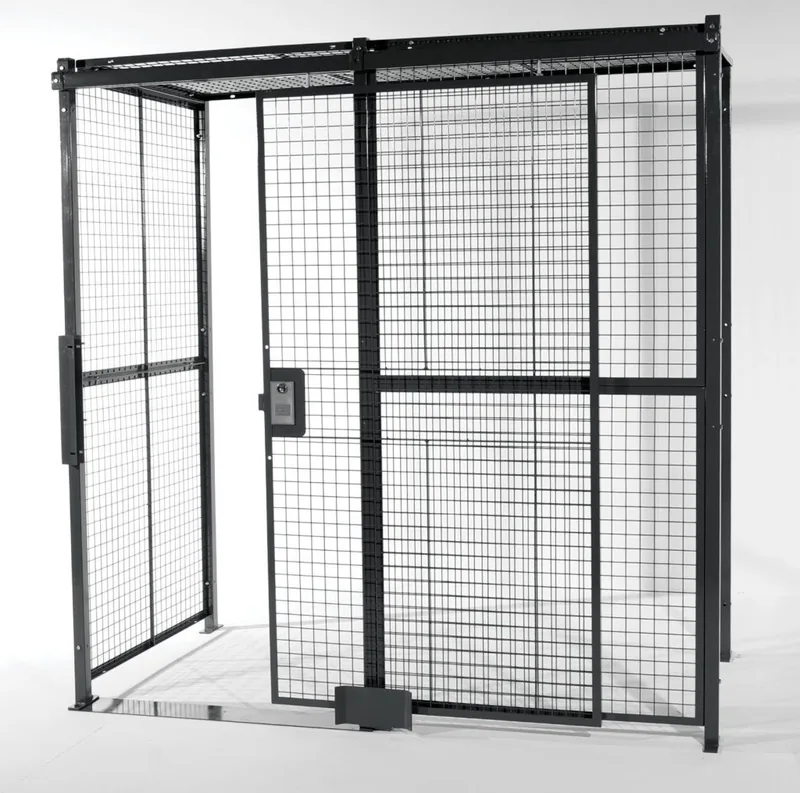
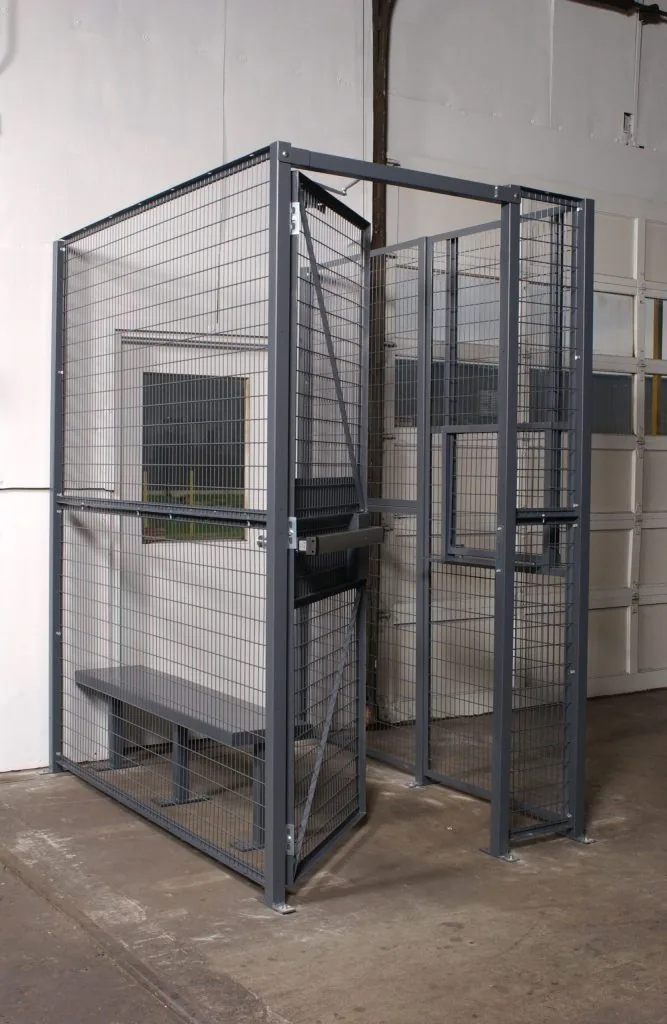
Prices are the current online prices. See all security cage kits · Need a custom size? Request a security cage quote.
Get a free quote
Tell us what you are storing, the room size and your timeline. A project specialist will follow up with layout options and pricing. Prefer to talk? Call (800) 326-4403.
Temporary Holding Cell FAQs
What is a temporary holding cell?
Are wire mesh holding cells secure?
What locks are used on holding cells?
Can benches be added?
Do mesh holding cells work with sprinklers and HVAC?
Can a holding cell be moved later?
What are holding cell cages?
Do you sell modular jail cells?
Can wire mesh holding cells be used for inmate holding at intake?
How is a holding cell different from a jail cell?
How many people can one holding cell hold?
How long does it take to install a wire mesh holding cell?
Can holding cells use solid panels instead of mesh?
Do you install holding cells outside Utah?
Can a holding cell share a room with evidence or property storage?
Planning a holding cell?
Send the room size, number of cells and your requirements. We will lay out panels, doors, locks and benches and quote them, supplied and installed nationwide.