
Inmate Property Storage Lockers
Secure, numbered property storage for jails, prisons and holding facilities — individual compartments, bulk lockers and mobile units, laid out around your intake and release workflow.
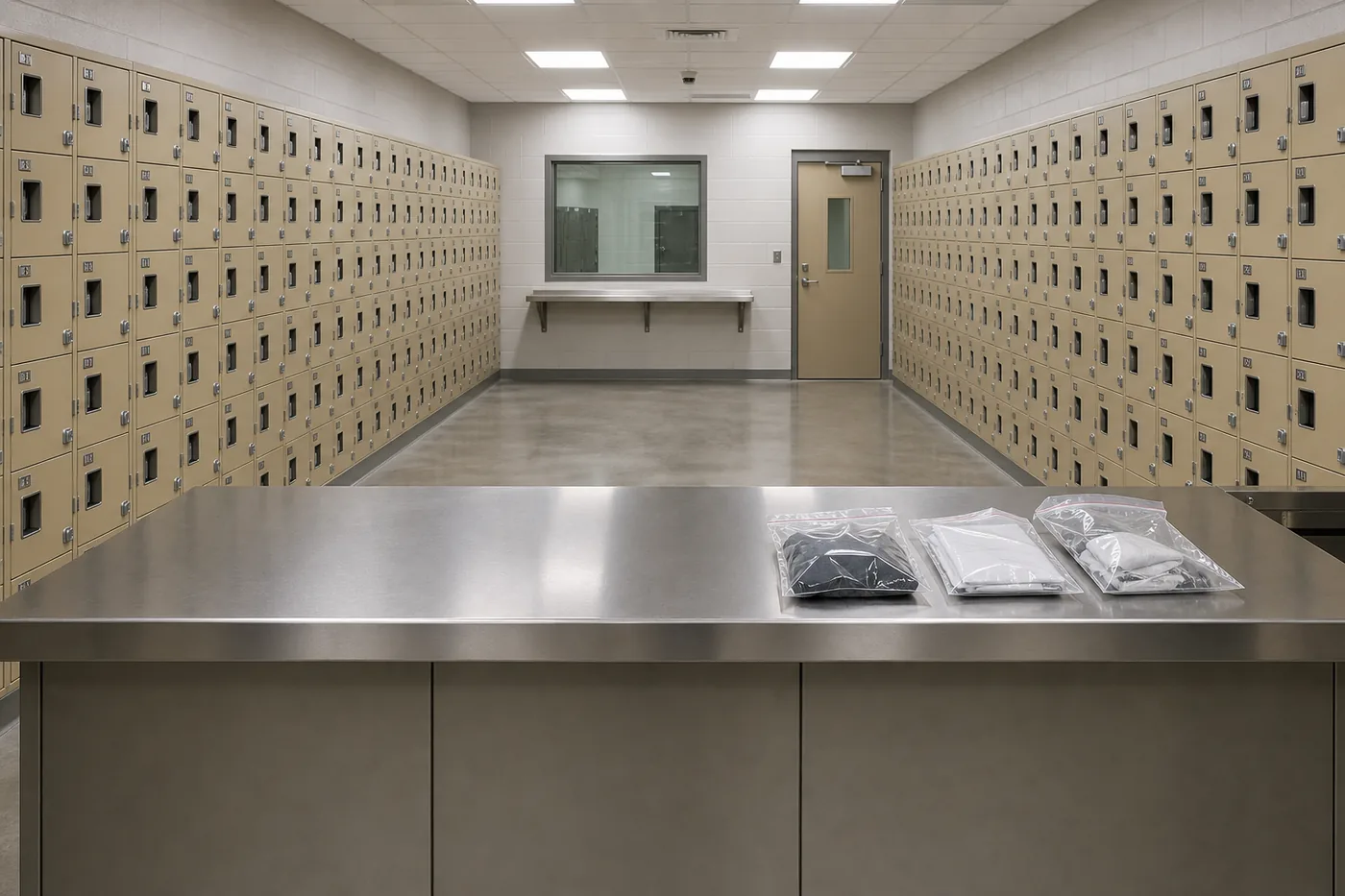
Secure Property Storage From Booking to Release
Inmate property storage lockers are a core part of a correctional facility’s security and accountability system. At booking, personal belongings are inventoried, bagged, tagged and placed in a numbered compartment where they stay secure and traceable until release or transfer. Done well, the property room moves people through intake faster, keeps risk items out of housing units, and protects the agency from property claims.
Material Handling USA supplies and installs property storage for county jails, state facilities, police departments and court holding areas — from a single bank of box lockers to a complete property room with intake counter, bulk storage and mobile transfer units.
- ✓Numbered, individually locked compartments per person
- ✓Louvered doors that let damp clothing dry without losing security
- ✓Bulk lockers and shelving for oversized and long-term property
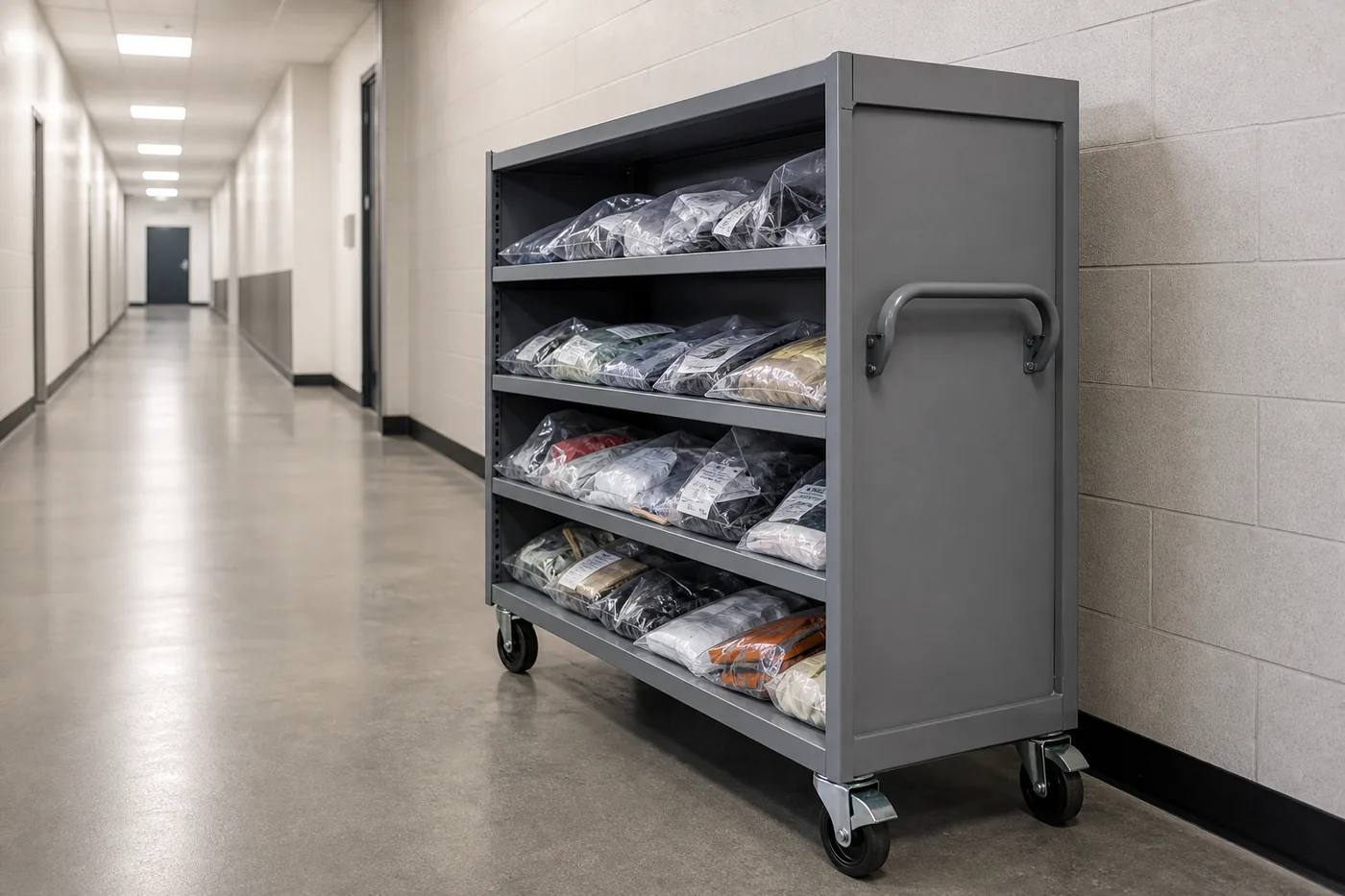
- ✓Mobile units for transfers between booking, housing and release
- ✓Room layout designed around your booking volume and retention policy

Institutional steel locker bank used for personal property storage
Why Property Lockers Matter
Property handling is one of the highest-friction, highest-claim activities in a facility. A properly designed property room fixes four problems at once:
Security
Phones, keys, electronics and other risk items are locked in a controlled area instead of circulating through the facility. That removes the most common contraband path at the front door.
Accountability
One person, one numbered compartment. A documented inventory plus staff-only access produces a record you can defend if property is disputed.
Organization
Designated compartments end the search-and-shuffle through open bins and bulk bags, which is where items get mixed up or lost.
Compliance
Controlled, documented property handling supports facility policy, state jail standards and inspection requirements — and makes an audit a walk-through rather than a scramble.
What facilities actually use them for
Staff collect belongings at intake, log each item, seal it and assign it to a compartment. The compartment holds that property for the length of the stay, is opened only by authorized staff, and is reconciled against the intake sheet at release or transfer. Overflow, oversized items and long-term or unclaimed property move to bulk lockers or shelving so active intake compartments stay available.
Types of Inmate Property Storage Lockers
Most property rooms use two or three of these together — individual compartments for active property, bulk units for oversized and long-term items, and a mobile unit for transfers.


Locker Construction and Security Features
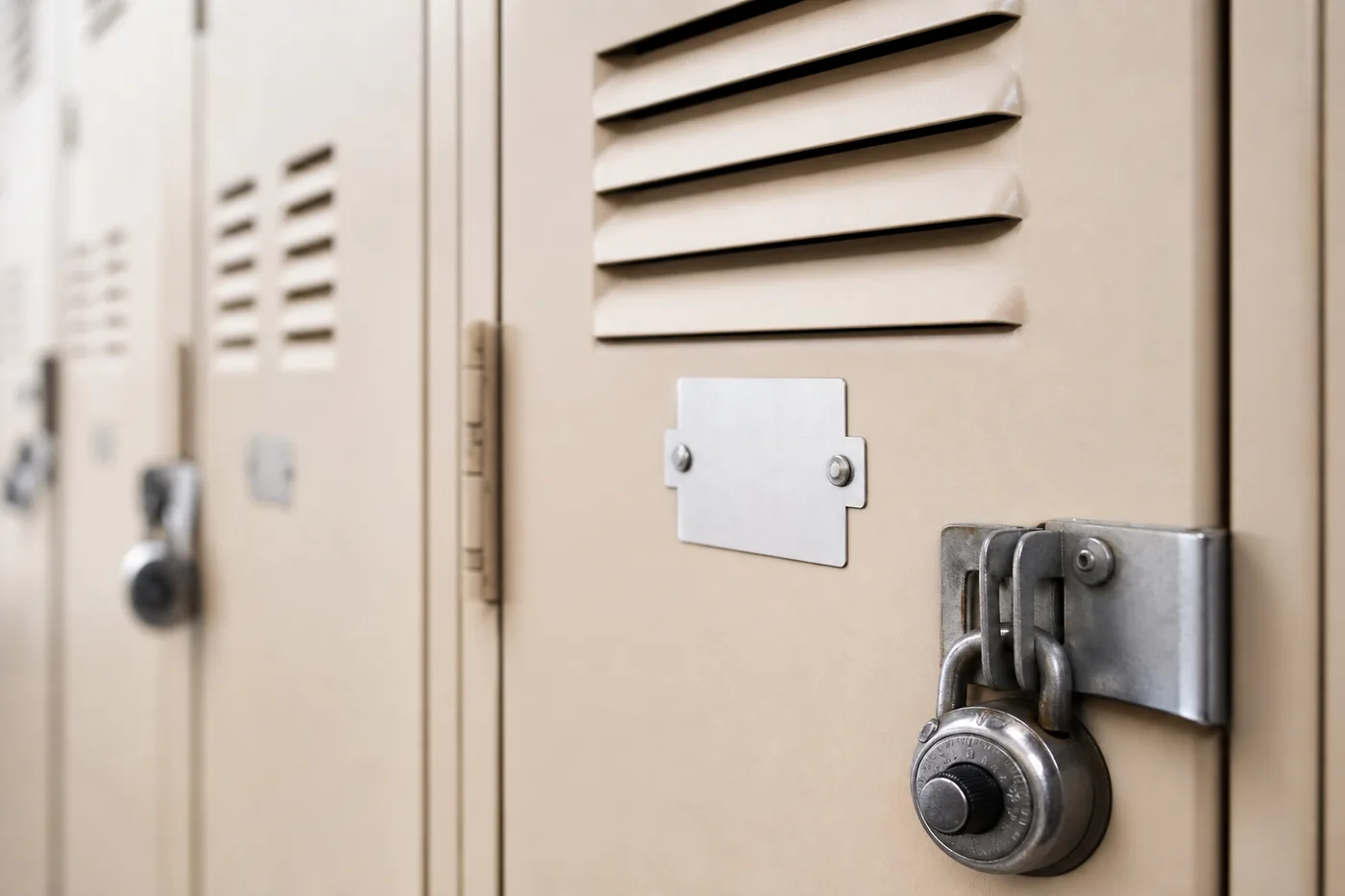
Louvered door, padlock hasp and numbered plate on an institutional property locker
Property lockers are built for institutional abuse, not office use. Bodies and doors are formed from heavy-gauge cold-rolled steel and finished in a baked-on enamel or powder-coat finish that survives years of daily handling and cleaning.
- Tamper-resistant hardware — concealed or full-length continuous hinges, security fasteners and reinforced door frames resist prying and forced entry.
- Institutional locking — padlock hasps, built-in key locks (flat or grooved, deadbolt or spring bolt, reversible for either hand), built-in combination locks with master-key control and re-combinating, or electronic locks with access logging. Locks are always specified separately from the locker.
- Ventilated doors — louvered or perforated panels move air through the compartment so damp clothing dries, while keeping contents visible for contraband checks.
- Numbered identification — factory number plates, barcode labels or RFID tags to tie each compartment to the property record.
- Slope tops and closed bases — angled tops prevent items being hidden on top of a bank; closed bases keep the floor line clean and easy to mop.
- Assembled or knock-down — welded lockers arrive fully assembled with groups up to 54 inches wide shipped as single units, cutting install time; knock-down units ship flat to lower freight cost.
Anchoring and fire safety
Locker banks are anchored to the floor, the wall, or both, per the detail your jurisdiction requires, with seismic anchoring layouts provided on the submittal where applicable. Steel lockers carry no fuel load of their own, but the final review of anchoring, egress clearance and fire protection is made by your authority having jurisdiction on the project drawings.
Specifications at a Glance
| Feature | Details |
|---|---|
| Material | Heavy-gauge cold-rolled steel body, door and frame |
| Finish | Baked-on enamel or powder coat; standard institutional colors |
| Door style | Solid, louvered or perforated panels |
| Locking | Padlock hasp, built-in key lock, built-in combination lock, electronic access |
| Configurations | Single-tier, two-tier, 3–9 tier box lockers, bulk lockers, mobile units |
| Tops & bases | Flat or slope top (contraband prevention), closed base option |
| Anchoring | Floor and/or wall mount; seismic anchoring detail available |
| Identification | Numbered plates, barcode labels or RFID tags |
| Assembly | Welded (shipped assembled, groups to 54″ wide) or knock-down |
| Accessories | End panels, filler panels, benches, coat rods, shelves, recess trim |
Construction and locking detail verified against Penco’s published locker and locker-lock specifications; exact gauges and options are confirmed on your project submittal.
Who Uses Inmate Property Storage Lockers and Why?
Property lockers do more than hold belongings — they protect the facility, the staff and the agency. Here is what a properly designed property room delivers:


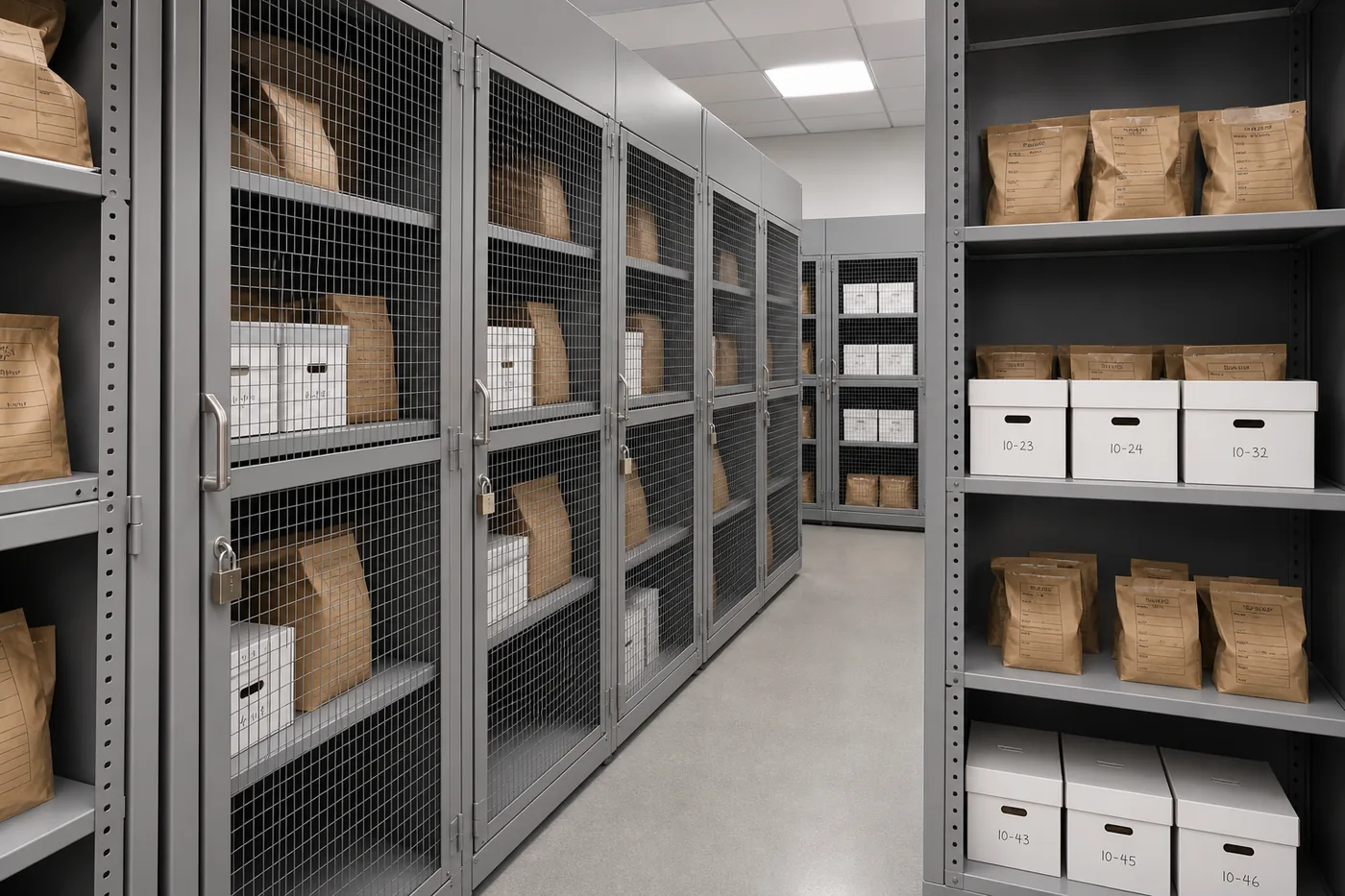


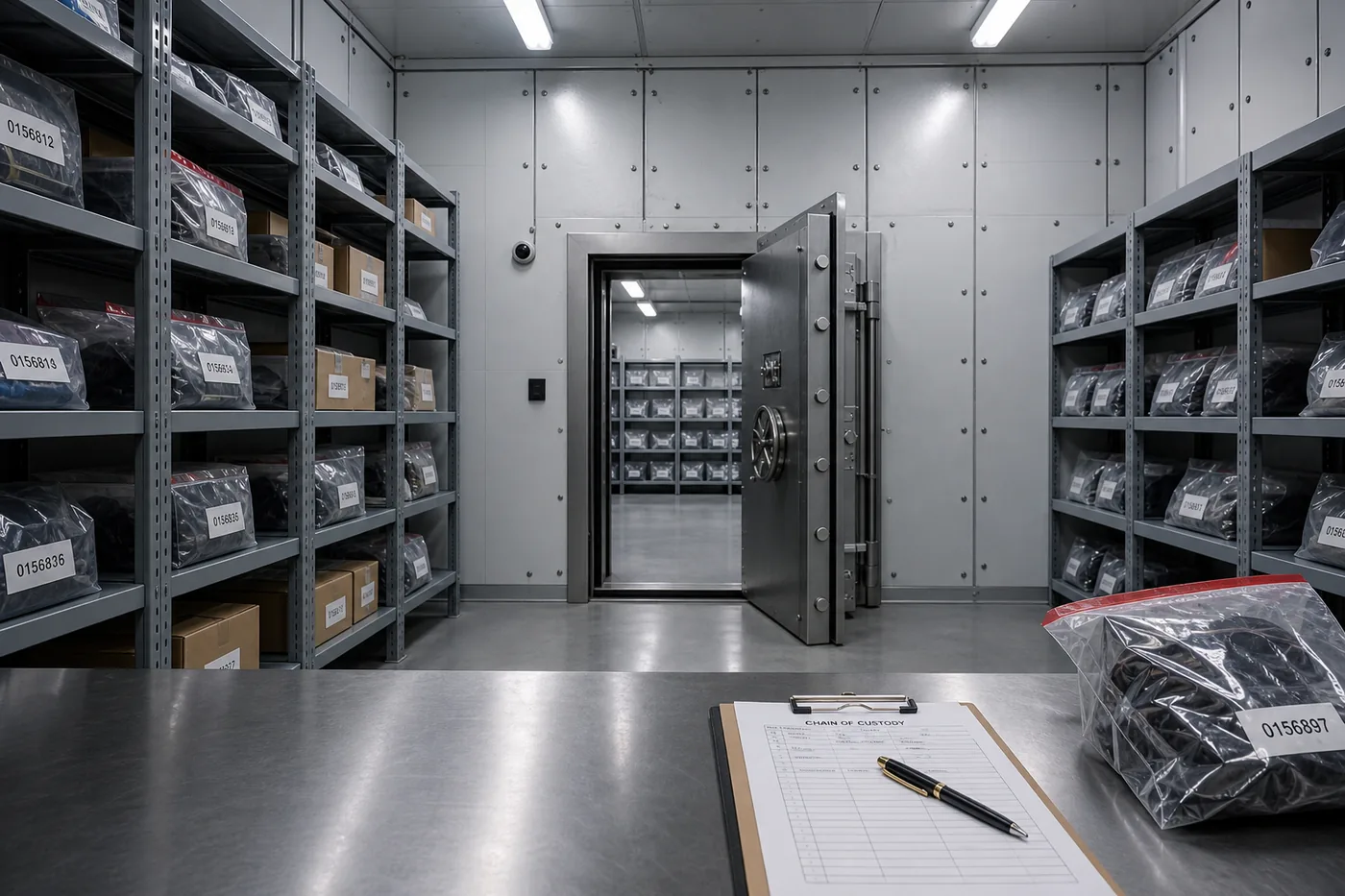
We configure property storage around your intake and release workflow, population size and retention policy. Tell us your compartment count and we will lay out the room.
How Inmate Property Storage Works
The locker layout should follow the workflow, not the other way around. A typical property cycle looks like this:
Collection
Staff collect all personal belongings at intake, in view of the individual and, in most facilities, on camera.
Documentation
Each item is inventoried and the property is bagged, sealed and tagged to the person and the compartment number.
Storage
The sealed property is placed in an assigned, numbered compartment; oversized items go to bulk lockers.
Access control
Only authorized staff open compartments, and each access is logged — by hand, by barcode scan or by the electronic lock itself.
Release or transfer
At discharge the inventory is reconciled against the compartment contents and signed for; transfers move property on a mobile unit.
Audit & maintenance
Regular audits confirm compartment contents and identify damaged doors, locks or hinges before they become a security gap.
Complete Correctional Storage Solutions
Inmate property storage is one component of a facility storage plan. Material Handling USA supplies the full range of corrections and law-enforcement storage:
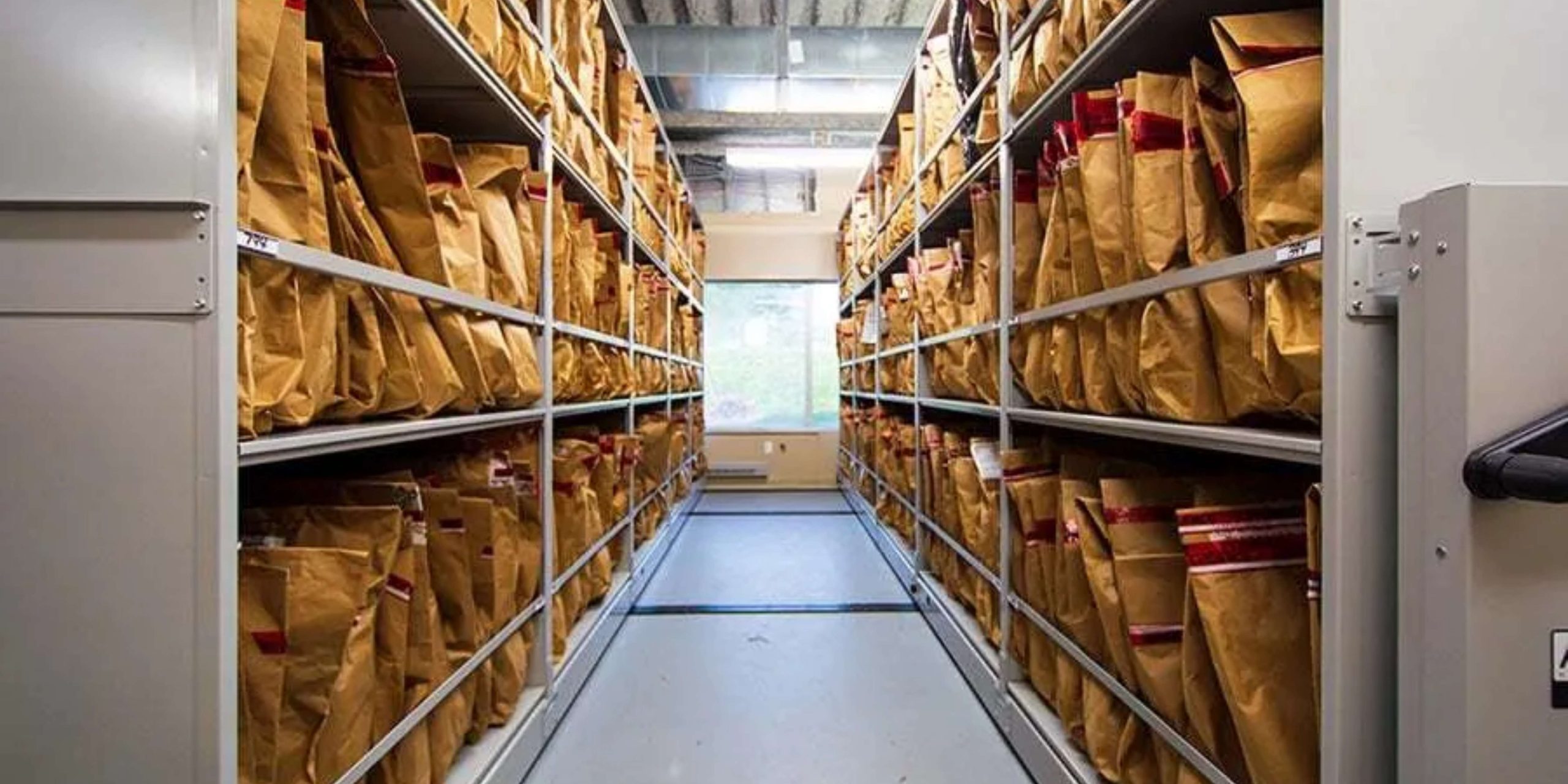
Evidence storage systems
Chain-of-custody lockers, pass-through evidence windows and climate-controlled evidence rooms for secure long-term storage of case materials.
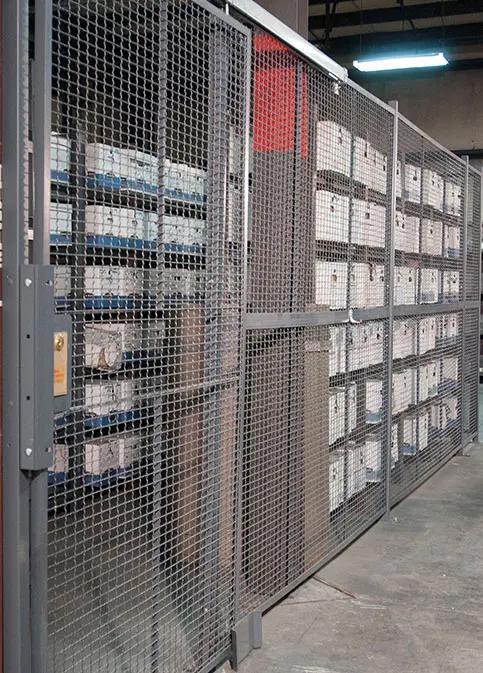
Weapons and armory storage
Duty weapon lockers, armory cabinets and security cage enclosures for controlled access to firearms and tactical equipment.
Gear and uniform storage
Officer duty bag lockers, turnout gear drying systems and personal equipment storage designed around shift-change workflows.
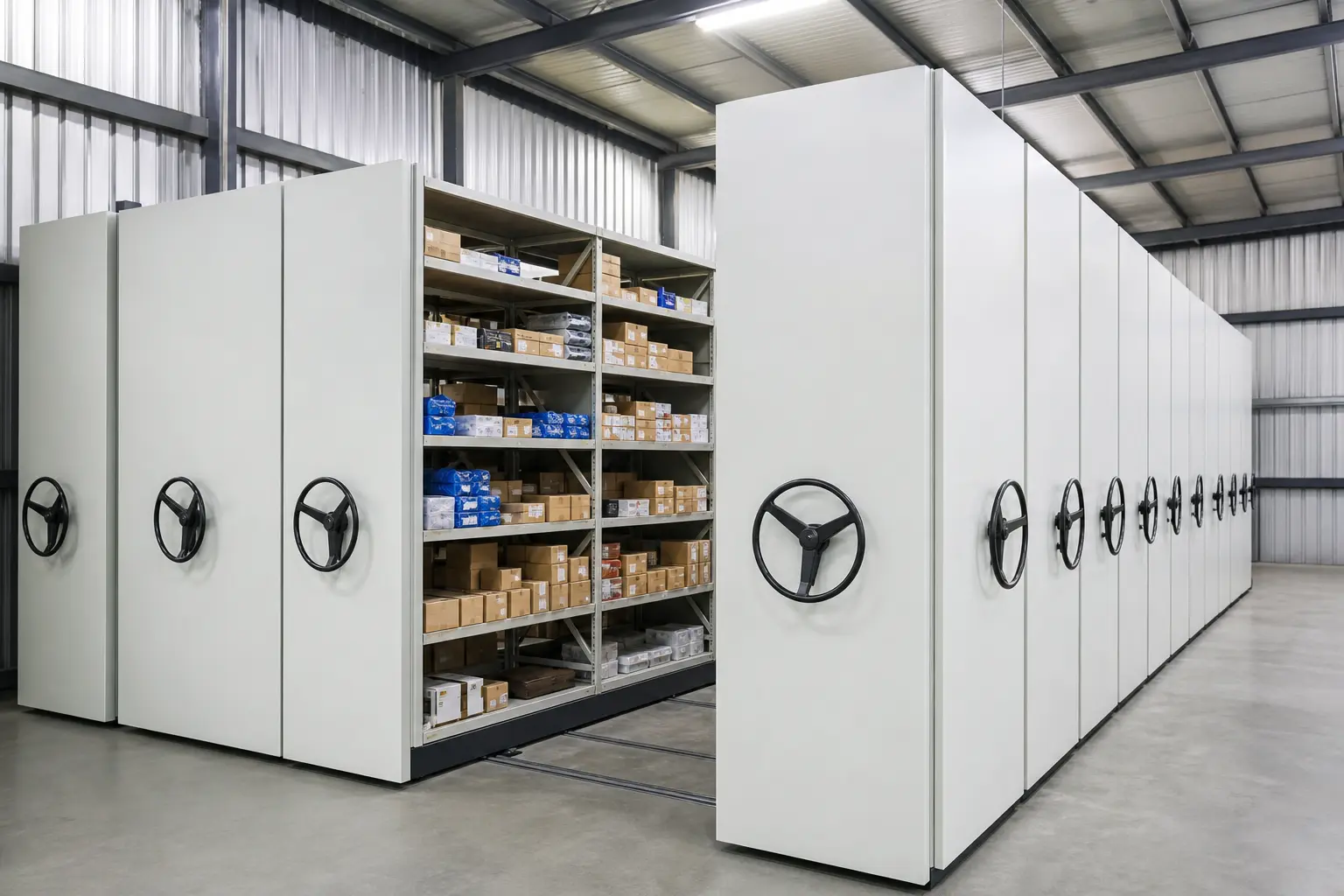
High-density mobile shelving
Mobile shelving for property rooms, file rooms and records — typically cutting the floor space a static shelving layout needs by close to half.
Modular buildings
Prefabricated structures for temporary booking facilities, property processing rooms and secure holding areas.
Room design and layout
Free layouts for property rooms, evidence rooms and armories, including compartment counts, aisle clearances and workflow.
Why Work With Material Handling USA
30+ years in institutional storage
We design and install storage for corrections, law enforcement and government facilities — not just sell lockers out of a catalog.
Layouts built around your workflow
Compartment counts, intake counter placement and bulk storage are sized from your booking volume and retention policy.
Manufacturer-backed products
Institutional locker lines with published specifications, warranties and replacement parts available years after installation.
Installation and support
Delivery, anchoring, keying and staff walkthrough handled by our team, with parts and service after the project closes.
Inmate Property Storage Locker FAQs
What are inmate property storage lockers?
How are inmate property lockers secured?
What items are allowed in inmate property storage lockers?
What sizes and configurations are available?
How do I choose the right locker for a property room?
Are the lockers ventilated?
Can lockers be anchored for seismic requirements?
Are the lockers customizable?
What happens to unclaimed property?
How long does delivery and installation take?
How do property lockers reduce liability for the agency?
Related Products & Resources


Design Your Property Room
Send us your room dimensions, average daily bookings and retention policy. We will size the compartment count, lay out the locker banks and bulk storage, and quote the installed system.