
Government Storage Solutions
Storage and material handling for federal, state, county and city agencies: records and archive storage, supply rooms, secure rooms and cages, courts and clerk offices, public works and emergency management, with procurement support from quote to install.
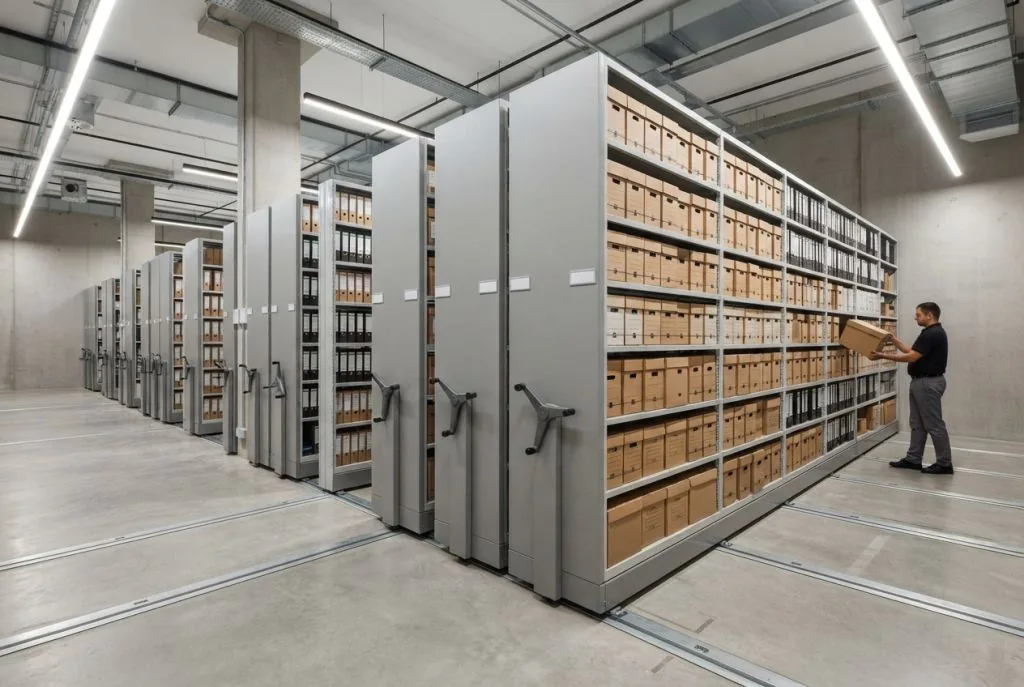
Records
High-density filing & archives
GSA
Manufacturer contract options
Secure
Cages, vaults & lockers
Free
Space review & layout
Shop Government Storage Online
Current online prices for the lowest-priced complete unit in each category. Mobile shelving, records systems and secure rooms are quoted per project. Freight is quoted by destination; some common sizes are in stock at select manufacturers, subject to confirmation.


Storage Planned for How Government Actually Works
Government agencies buy storage under constraints commercial buyers rarely face. Retention schedules keep records on site for years, budgets are set a fiscal year ahead, buildings are older than the mission inside them, and every purchase has to fit a contract vehicle and survive an audit. Storage that ignores those constraints gets value-engineered out of the project or fails its first inspection.
Material Handling USA designs, supplies and installs government storage solutions for federal, state, county and municipal agencies. We start with what you store and how it is retrieved, check the floor and the room, then recommend the system that fits the space and the budget cycle: high-density mobile shelving, static shelving, rotary files, lockers, cages, modular rooms or pallet rack. One team handles layout, quoting, contract paperwork, delivery and installation.
Records and Archive Storage for Agencies
Records are the storage problem nearly every agency shares. Retention rules do not allow early disposal, digitization rarely removes the paper on schedule, and the file room was sized decades ago. Courthouses, recorders, city halls, state agencies and federal field offices all hit the same wall.
High-density mobile shelving is usually the first answer because it removes fixed aisles and puts the same records in a much smaller footprint. Static shelving still fits low-volume or high-traffic files, and rotary cabinets suit active files at a counter.
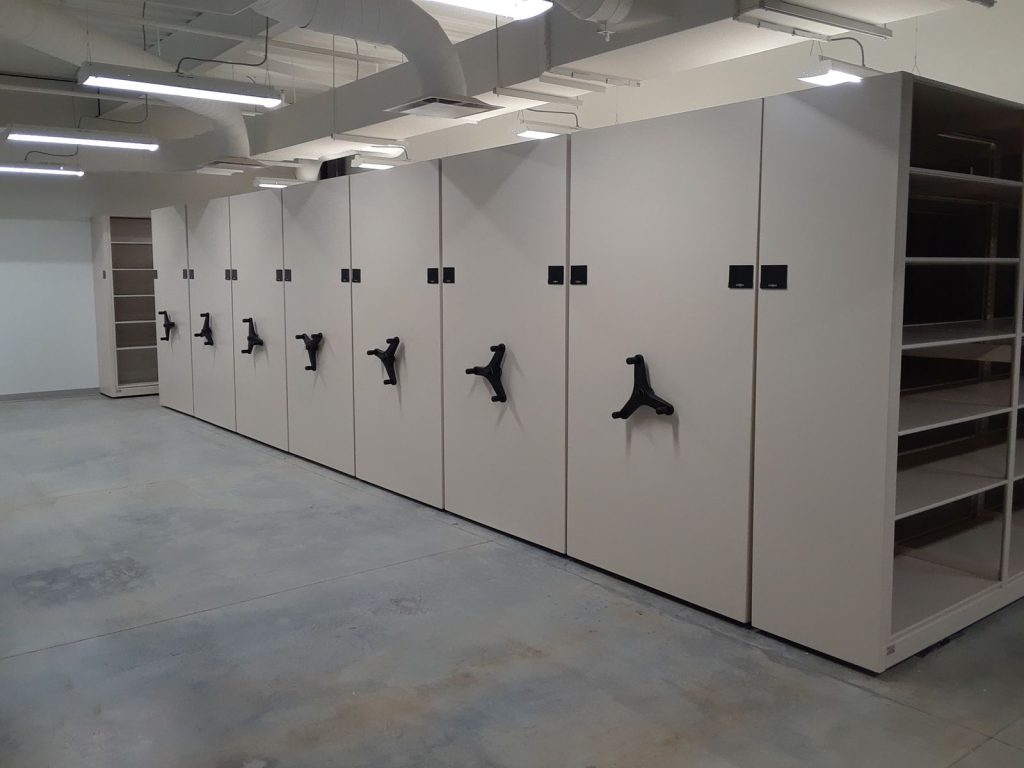
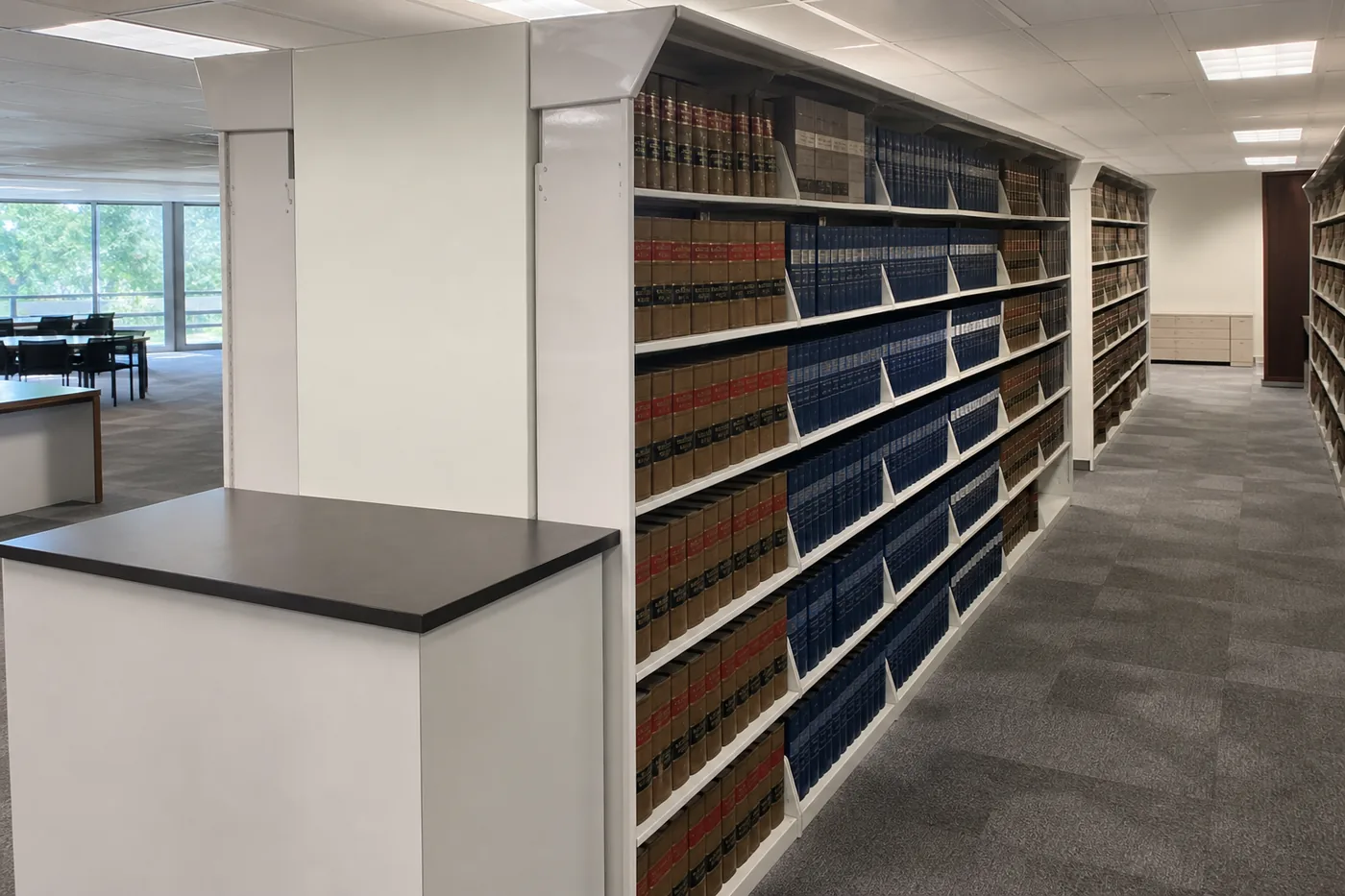
Reference collections and agency libraries need open, browsable shelving with clear labeling, while active counter files work better in rotary cabinets that store files on both faces and lock at the end of the day. See Times-2 speed files and the GSA Times-2 option, plus high-density shelving for archive volumes.
| Records situation | Usually the best fit | Why |
|---|---|---|
| Large boxed archive, low daily retrieval | Mechanical-assist or electric mobile shelving | Highest density; one moving aisle serves the run |
| Active case or permit files at a counter | Rotary file cabinets | Two faces of storage in one footprint, lockable |
| Mixed media: maps, plans, tapes, boxes | Mobile carriages with mixed shelving and plan drawers | One system, organized by media type |
| Overflow or off-site records center | Rivet or bulk rack, pallet rack for cartons | Lowest cost per box at volume |
| Confidential or restricted files | Locking mobile carriages or a cage room | Access control without a new room |
Real examples: state agency records storage at the Utah Department of Natural Resources, federal agency records storage in Salt Lake City, and our guide to planning a records room for a Utah city or county office.
Agency Supply Rooms and Central Stores
Supply rooms and central stores carry office supplies, janitorial stock, uniforms, forms and equipment for every department in the building. Without a layout they turn into a pile that nobody can count, so things get reordered instead of found.
We lay out closed and open steel shelving for small items, rivet rack for cases, bins and drawer cabinets for high-count parts, and staging space for receiving and issue. Surplus and property warehouses add pallet rack and cage partitions to separate disposal items from stock.
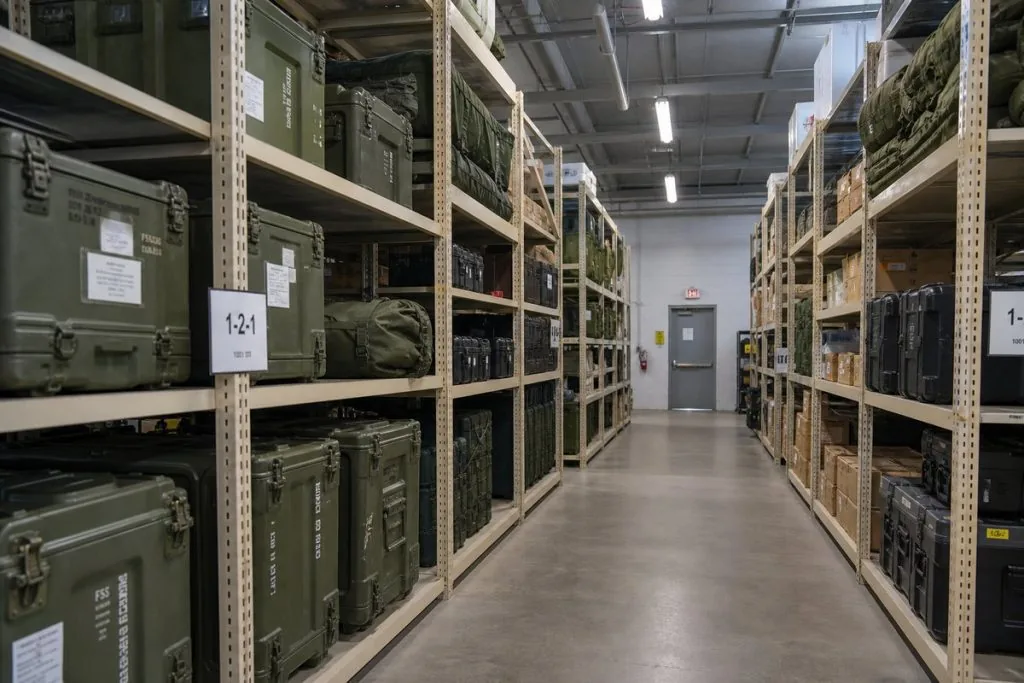
- Shelving zoned by department or cost center so reorders and counts are quick
- Locking cabinets or a cage area for pilferable items such as electronics and gift cards
- Receiving and issue staging kept apart from stored stock
- Labeling and location codes that match the agency inventory system
Shelving specifications are on our government storage shelving page.
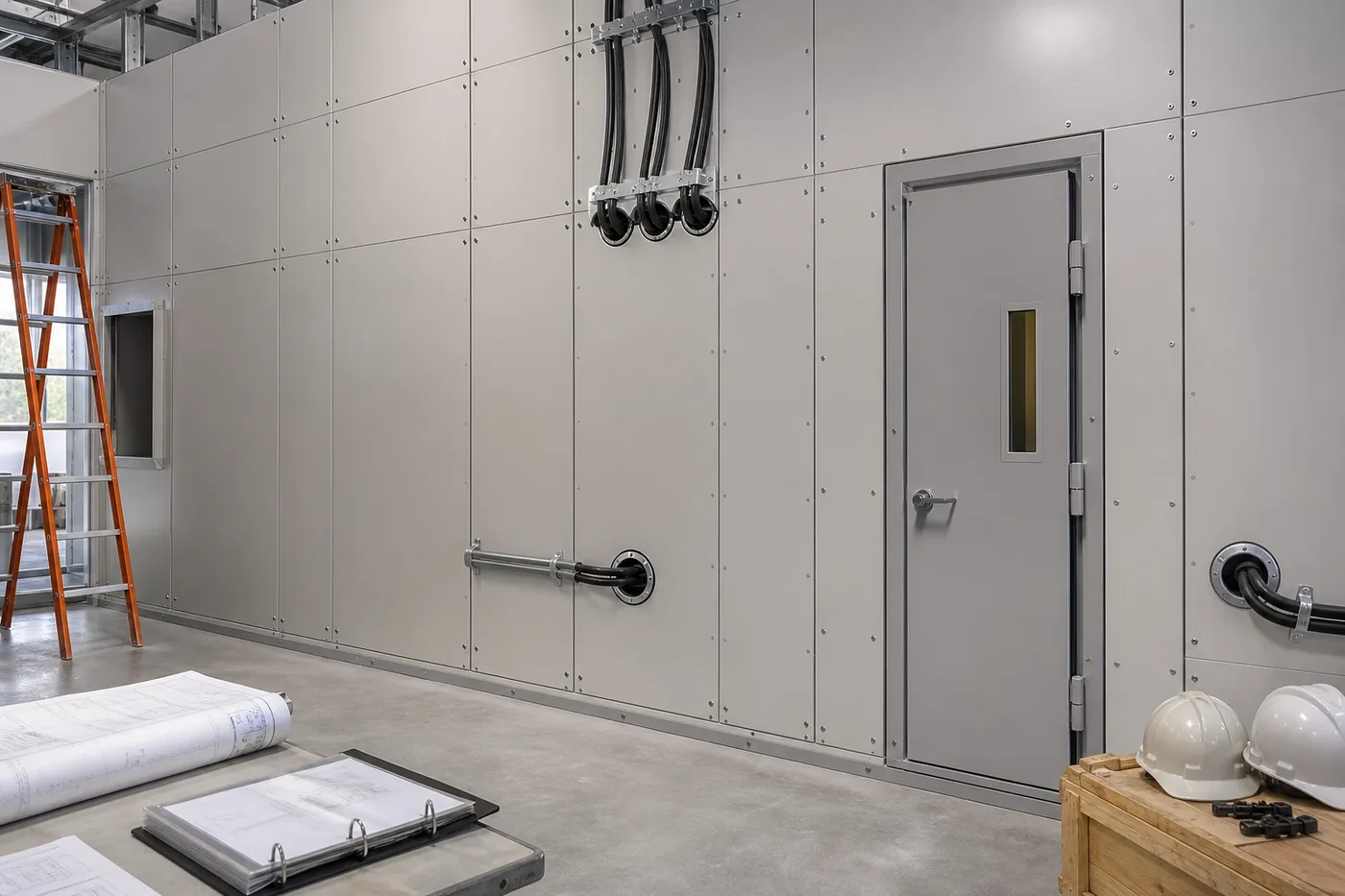
Secure Storage, Cages and Controlled Rooms
Agencies store plenty that needs a boundary as well as a shelf: IT equipment, controlled inventory, seized property, sensitive documents and high-value tools. Welded wire mesh partitions create that boundary inside an existing room without new walls, and they can be moved when the floor plan changes.
For rooms that need full walls, a ceiling and a vault-style door inside an existing building, modular vault panels are an option. Accreditation of secure rooms stays with your security office; we supply and install to the specification you are given.
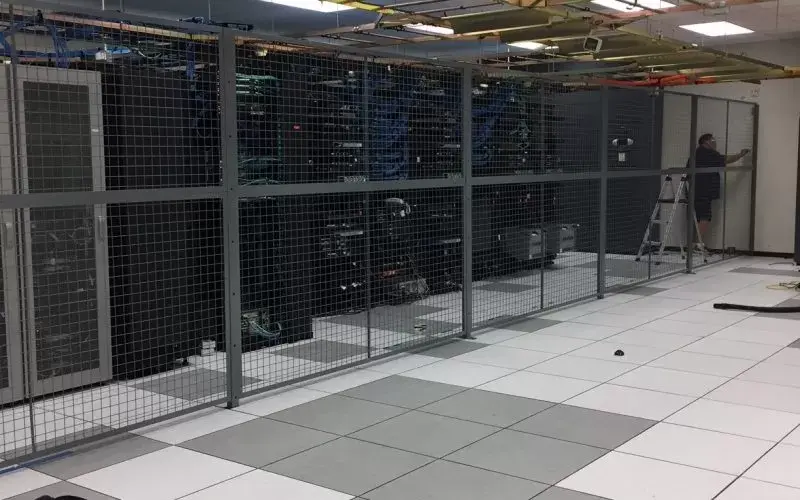 IT and data cagesMesh enclosures for network equipment, spare hardware and agency IT stock.
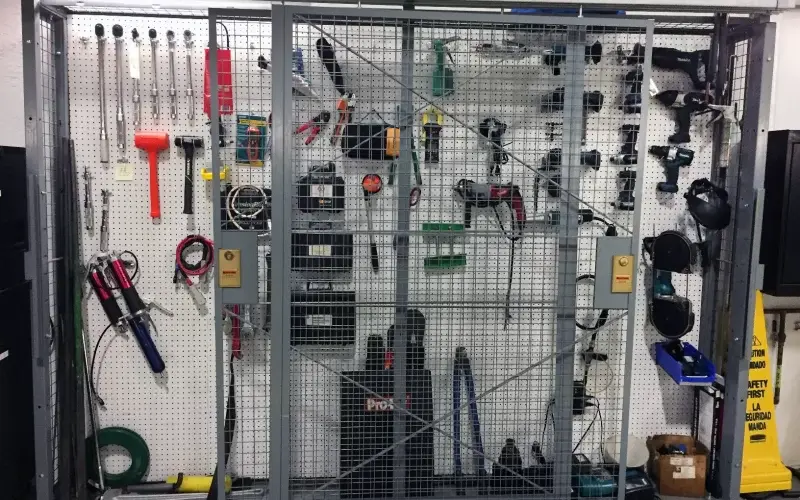 Tool cribs and controlled inventoryLockable cages with pass-through windows for tools and controlled stock.
 Locking file storageRotary and lateral file systems that lock at the end of the day.
More options: modular vaults, staff and personal lockers and smart lockers for equipment and parcel handoff with an audit trail.
Courts, Clerk Offices and Agency Workspaces
Courts and clerk offices combine active files, archived files, exhibits and public counters in the same building. Active files need fast retrieval near the counter, archives can move to dense storage in a back room or basement, and exhibits need locked storage with a sign-out log. We plan those three zones together so files move through them predictably.
Agencies that need extra workspace without new construction often add modular offices inside a warehouse or large hall: a supervisor office overlooking a floor, a quiet room in a shop or a secure records room inside a larger space.
Modular in-plant offices go up inside an existing building with less disruption than conventional construction, and can be relocated later. See modular in-plant offices and government and military modular buildings. Corrections and jail records have their own page: corrections and inmate records shelving.

| Court or clerk zone | What it holds | Typical storage |
|---|---|---|
| Counter and active files | Open cases, recent filings, daily retrieval | Rotary files or static shelving within a few steps of staff |
| Closed and archived files | Retention-schedule records, rarely retrieved | High-density mobile shelving in a back room or basement |
| Exhibits and evidence in court custody | Items admitted at trial, media, oversized exhibits | Locking cabinets or a cage room with a sign-out log |
| Jury and staff areas | Personal belongings, devices | Personal lockers near the assembly room |
Planning all four zones at once keeps files moving one direction, from the counter to the archive, instead of piling up in hallways when the active shelving fills.
Public Works, Fleet and Facilities Storage
City and county shops store the most varied inventory in government: fleet parts, tires, signs and posts, pipe, valves and fittings, electrical stock, small engines and seasonal equipment. A layout that groups items by how crews pull them shortens every work order.
Law enforcement agencies have their own business-type page: law enforcement material handling solutions. Schools and universities are covered under education material handling solutions.
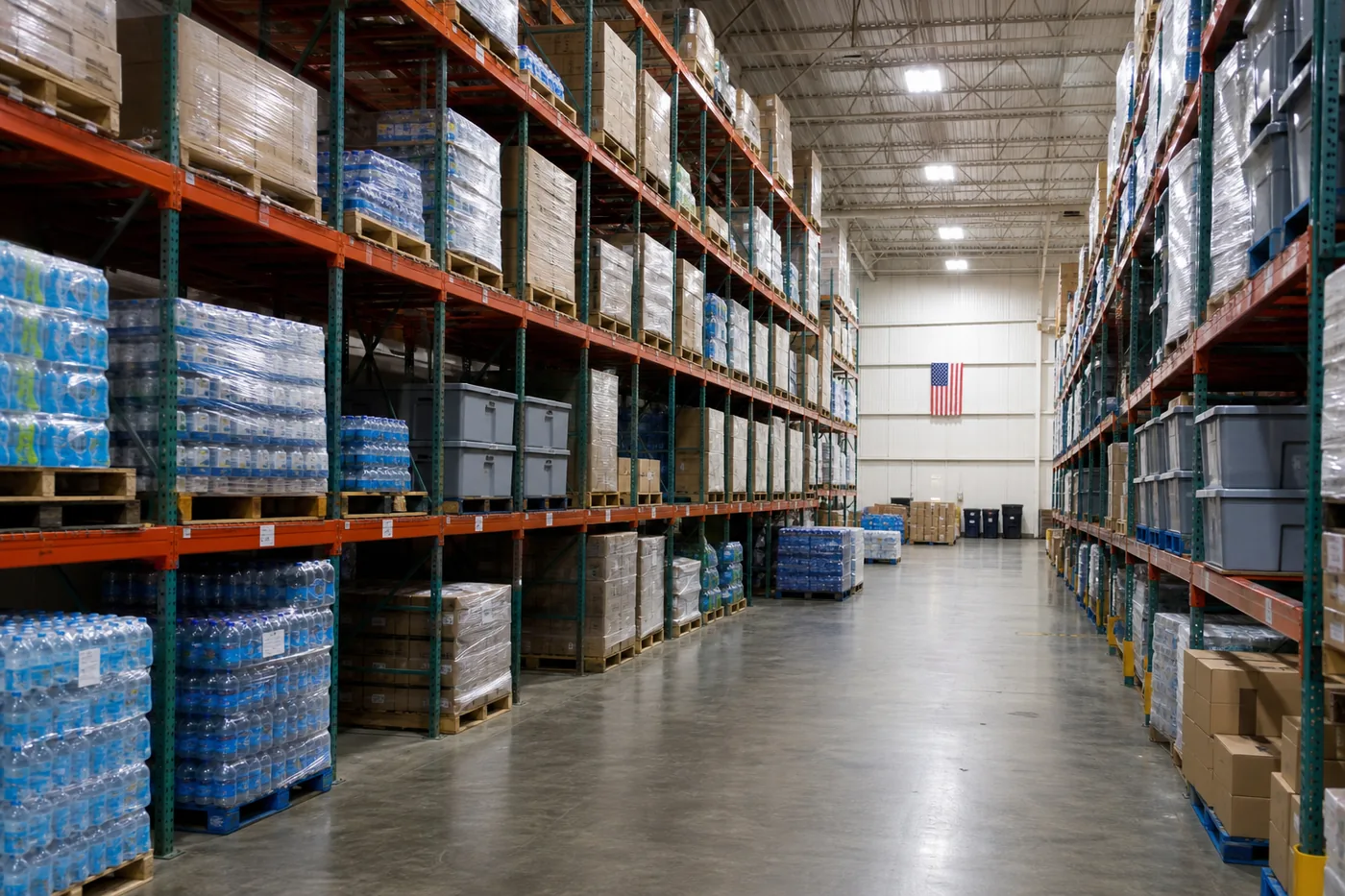
Emergency Management and Preparedness Storage
Emergency management storage has an unusual failure mode: stock can sit untouched for years and then has to be found and moved in hours by people who may never have been in the room. That favors wide aisles, clear labels, low lift heights and a layout that matches the deployment plan rather than maximum density.
We build out EOC supply rooms, PPE and medical stockpiles, shelter supply warehouses and deployable storage with rotation in mind, so expiring stock is used first.
- Pallet rack and bulk shelving for water, cots, blankets and shelter supplies
- PPE and medical supply shelving with first-expiring-first-out rotation
- Mobile carts and rolling shelving that load straight onto trucks
- Generator, fuel and equipment zones separated from general supplies
Site Security: Guard Booths and Entry Points
Many agency storage and facility projects include an entry point: a guard booth at a gate, a visitor screening booth or an access control point at a yard. Prefabricated booths arrive ready to set, with HVAC, electrical and optional bullet-resistant construction, and can be relocated if the site changes.
See guard shacks for government agencies and the guard booth buying guide.


Government Procurement and Contract Vehicles
We treat procurement as part of the project. Many of the manufacturers we supply list products on GSA Multiple Award Schedules and state contracts. We confirm which vehicle covers each product, write line-item quotes that match your requirement language, support competitive bids and RFQs, and coordinate multi-site or multi-year work so a phased project stays on one plan.
See GSA shelving contracts, mobile shelving on GSA contracts and buying through GSA and cooperative contracts.
| Requirement | How we support it |
|---|---|
| Contract vehicle | Manufacturer GSA schedule or state contract options where the product is listed; open-market quotes when better |
| Domestic sourcing | TAA-compliant and U.S.-made options, confirmed per product |
| Bid documents | Line-item quotes, cut sheets, drawings and finish data |
| Building and fire code | Seismic anchoring where required, egress and sprinkler clearances reviewed with your AHJ |
| Accessibility | ADA reach ranges and aisle widths considered in public-facing areas |
| Budget cycles | Phased quotes that let a project span fiscal years |
What to Gather Before a Government Storage Project
The fastest government storage projects start with a short information package. You do not need all of it for a first call, but each item removes a round of back-and-forth once the layout and quote start.
- A floor plan or rough sketch with room dimensions, door locations, columns and ceiling height
- An inventory estimate: linear feet of files, number of boxes or pallets, and the largest items you store
- Retrieval pattern: what is pulled daily, monthly or almost never, and who retrieves it
- Retention rules or growth expectations for the next five to ten years
- Building information: slab type and age, sprinkler heads, HVAC and any seismic requirements
- Purchasing path: GSA schedule, state contract, cooperative contract or open-market quote, and the fiscal-year deadline
- Security needs: who may access each area, and whether keys, combinations or card access are required
With that information we can return two or three layout options with stored capacity per option, so the decision is about trade-offs you can see rather than a single take-it-or-leave-it drawing. If funds are tied to a fiscal-year deadline, tell us early so lead times and submittals are scheduled around it.
How a Government Storage Project Runs
Describe the need
What you store, how often it is retrieved, retention rules and growth.
Survey the space
Room dimensions, floor capacity, power, fire protection and access.
Design options
Layouts with capacity per option so you can compare cost and density.
Quote and contract
Line-item quote, contract vehicle, submittals and written lead times.
Install
Scheduled around public hours, occupied-building safety and final walkthrough.
Our crews install in occupied public buildings, coordinate after-hours work when counters must stay open, and protect floors and finishes. For mobile systems we verify the slab first, because loaded carriages concentrate weight on the rails and older buildings sometimes need a surface rail or lighter configuration.
Government Storage Projects and Related Pages
Related pages
Government Storage FAQs
What are government storage solutions?
Can you sell through GSA or state contracts?
How much space can high-density mobile shelving save in a records room?
Can mobile shelving work in an older government building?
Do your products meet seismic and fire code requirements?
Are TAA-compliant or U.S.-made products available?
Can you phase a project across fiscal years or several buildings?
What information do you need for a first quote?
Do you only work in Utah?
Do you install in occupied public buildings?
Plan Your Government Storage Project
Tell us what you store and where. We will return a layout, capacity comparison and line-item quote.