
Fleet and Municipal Garage Parts Storage
How to plan parts storage for a fleet maintenance shop or municipal garage — criticality-based stocking, shelving and rack selection, fluids and used-oil areas, secure high-value stock, and a parts room that keeps vehicles out of the down line.

42″
OSHA guardrail height ±3″ where a mezzanine or platform is added
60 gal
OSHA cabinet limit for Category 1–3 flammable liquids
1 yr
EPA universal-waste accumulation limit for batteries
1
Bin location per part number, no exceptions
Why a fleet parts room is not a dealership parts room
A dealership parts department stocks one or two franchises, sells across a counter, and lives or dies on the manufacturer’s return and stock-order programs. A fleet maintenance shop or municipal garage has none of that. It stocks for a mixed, aging, multi-manufacturer fleet: patrol cars beside refuse packers, transit buses beside mowers and snowplows, light pickups beside a handful of specialty units nobody else in the region operates. It buys through public procurement rules. It cannot flush slow stock back to a factory. And it is measured on one number that never appears on a parts invoice — vehicles available for service.
That changes what good storage looks like. Fleet parts rooms carry a long tail of low-velocity but mission-critical parts: the relay that only fits the 2013 plow truck, the hydraulic fitting for the sweeper, the transit-specific door component with a twelve-week lead time. The storage system has to make that tail findable rather than merely stackable, keep frequently used consumables at the technician’s fingertips, and survive being used by rotating shifts, seasonal staff and on-call crews at 3 a.m. during a storm event.
Fleet shops also mix uses in one building in a way a retail parts department never does. Fluids, filters, tires, batteries, welding gas, spill kits and small tools live near the same aisles as sheet metal, glass, and shop equipment. Getting that layout right is the difference between a parts room and a storeroom that functions as a safe, code-aware, auditable inventory. The automotive parts storage systems we design for dealerships translate directly, but the zoning, security and compliance choices are different. Fleet shops that also upfit trucks and vans add a third inventory type again — see truck and van upfitter equipment and hardware storage.
Stock what stops a truck: criticality before velocity

Most storage plans start with a shelf drawing. A fleet parts plan should start with a stocking decision, because the storage system is only the physical expression of what you have decided to hold. Two questions decide almost everything:
- How often does the part move? Velocity drives location — fast movers belong between knee and shoulder height near the issue counter, slow movers go high, deep or in the back of the room.
- What happens to the fleet if it is not on the shelf? Criticality drives whether you stock it at all. A $6 sensor with a three-week lead time that grounds a snowplow is worth a permanent bin location; a common filter available same-day from three local suppliers may not be.
Public-sector and utility fleet managers writing in the trade press consistently describe the same discipline: monitor what actually moves, set a sensible minimum against real lead time, and resist stocking “just in case” for equipment that has left the fleet. Published municipal fleet reporting includes shops that cut parts inventory value by roughly a quarter while improving availability, purely by auditing what they held and matching stock to current fleet composition and lead times.
Practically, that produces a four-way split you can lay out on a floor plan: high-velocity consumables, critical low-velocity spares, bulk and oversized items, and controlled stock. Each one wants a different storage product, and mixing them into one wall of identical shelving is the most common and most expensive fleet parts-room mistake.
The four storage zones of a fleet maintenance parts room
Set the room up as zones, not as a single storage type repeated until you run out of wall. Each zone has a different pick frequency, a different item size and a different accountability requirement.
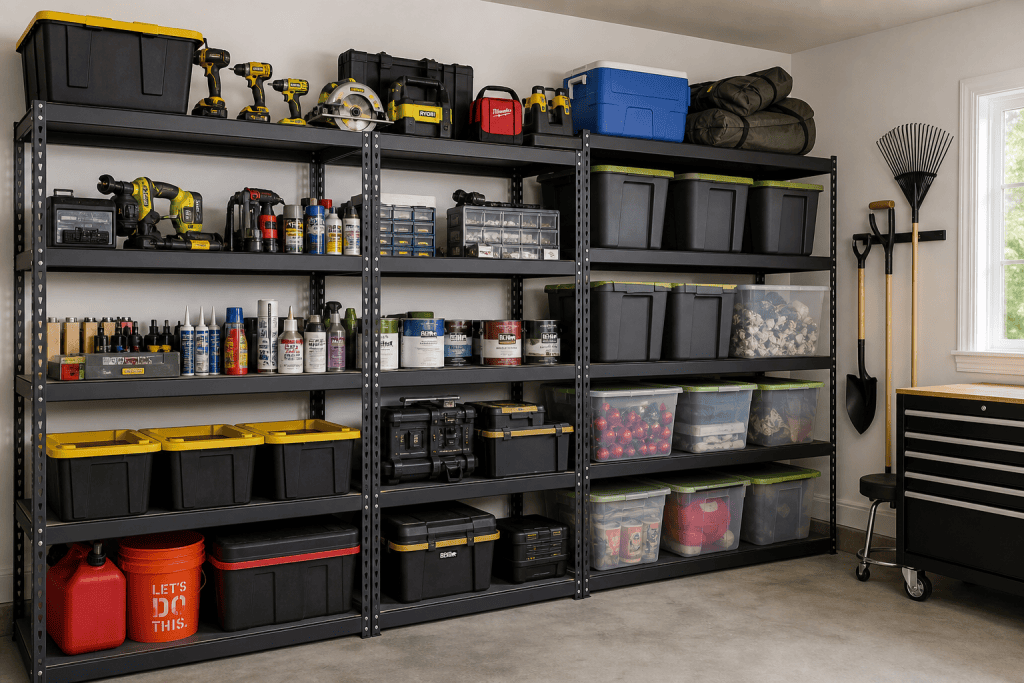 Zone 1 — Fast-moving consumablesFilters, wipers, lamps, fuses, fasteners, fluids in small containers, shop rags, gloves. Keep these closest to the shop door on open shelving with bins, at pick height. This is the zone technicians self-serve most, so labeling and replenishment matter more than density.
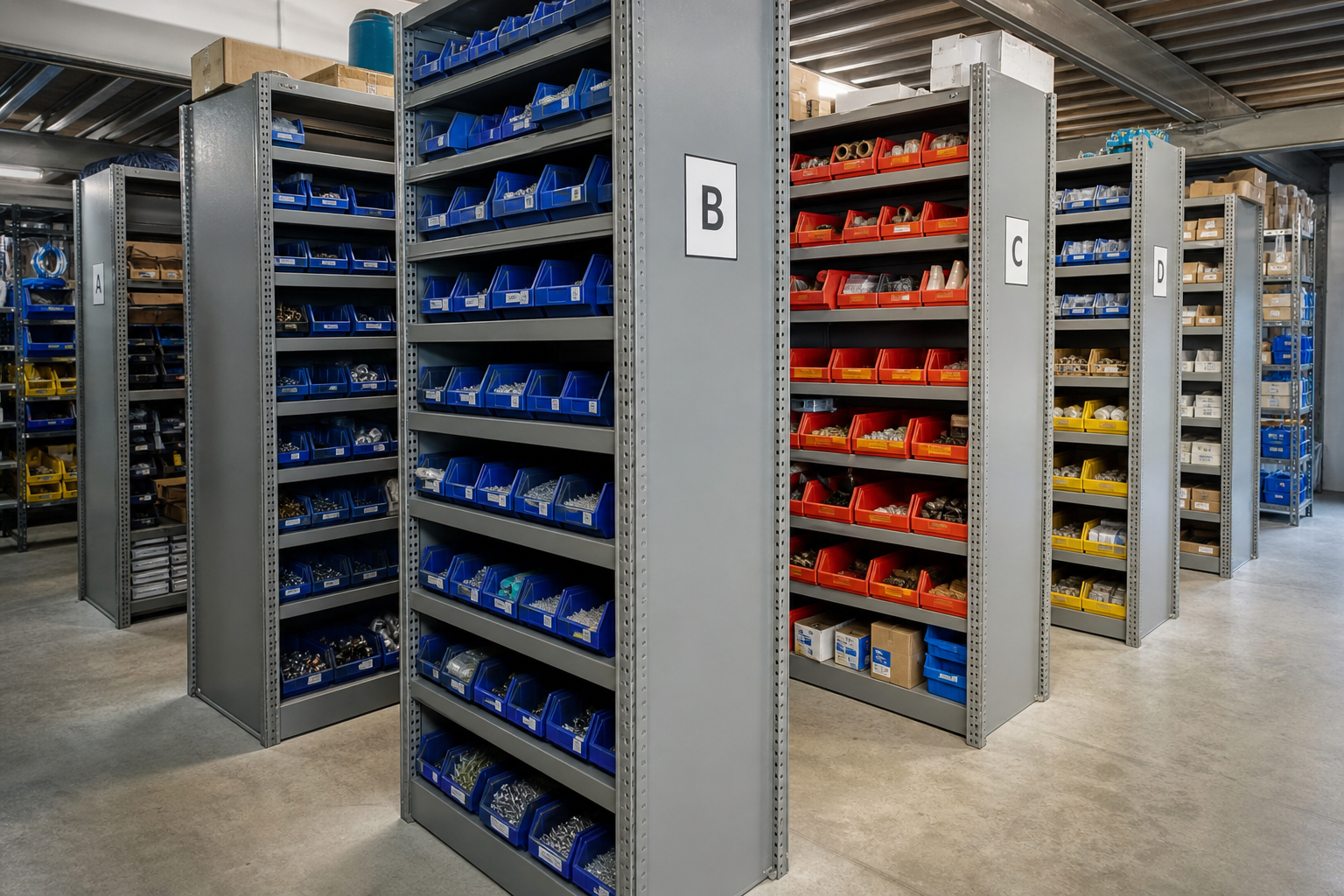 Zone 2 — Critical low-velocity sparesThe parts that only fit one or two units in your fleet. Density and addressability win here: closed-back parts room shelving with dividers, plus modular drawers for anything small enough to be lost on a shelf.
 Zone 3 — Bulk, long and heavyBody panels, glass, exhaust, driveline, tires, batteries, drums and pallets of fluids. This zone needs pallet rack, cantilever arms or floor-level staging with real aisle clearance for a forklift or pallet jack.
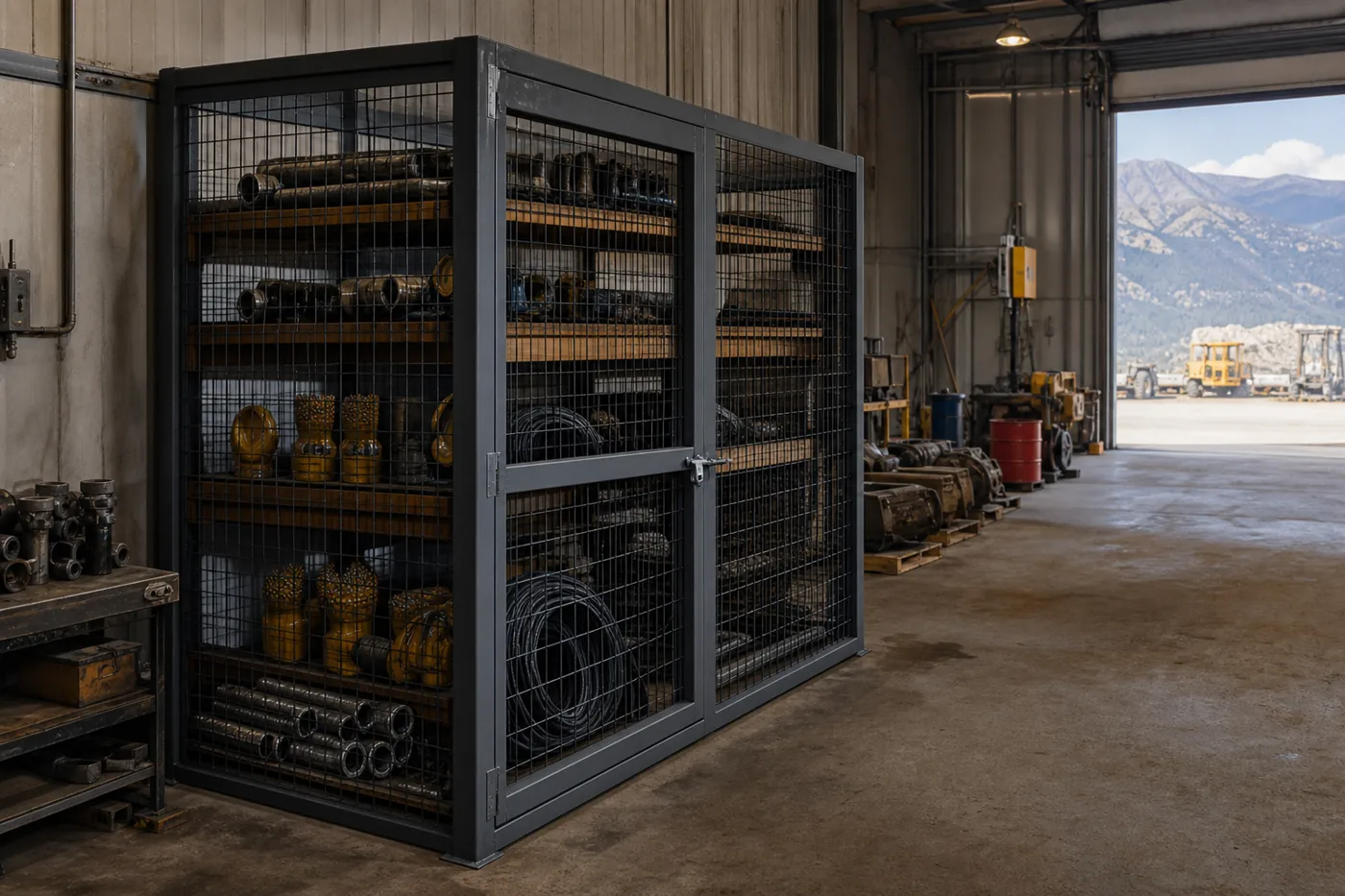 Zone 4 — Controlled and high-value stockCatalytic converters, electronics, radios, batteries, fuel cards, specialty tools. A security cage or lockable cabinet gives you a defensible boundary and a clean audit story for public-sector inventory reviews.
Choosing shelving and rack for a municipal garage
Fleet parts rooms are usually retrofits into an existing building with a fixed footprint, a low or obstructed ceiling, and a floor that is already committed to bays. The selection questions below are the ones that actually change the quote and the layout. Dealers who sell and stock for outside customers face a different mix — see heavy-duty truck dealer parts department storage.
| Storage type | Best fit in a fleet shop | Watch out for |
|---|---|---|
| Boltless (rivet) shelving | General parts, boxed stock, bins, fluids in cases. Fast to install and easy to re-pitch as the fleet changes. | Open decks let small items fall through — specify solid decking where you store loose hardware. |
| Closed steel case shelving | Small parts with dividers and drawers, cleaner appearance in a public-facing storeroom, better dust control. | Costs more per linear foot; plan shelf pitch before ordering because changes are less casual than rivet. |
| Modular drawer cabinets | Sensors, relays, connectors, fasteners, seals, keys, TPMS hardware — anything under about a shoebox. | Only pays off if the drawer plan is enforced; see modular drawer cabinets for parts rooms. |
| Pallet rack | Case-lot fluids, tires, batteries, cores, seasonal stock, and any load moved by forklift or pallet jack. | Aisle width for your actual lift truck, plus column protection at every drive aisle. |
| Cantilever / bar rack | Exhaust, tubing, stock bar, trim, glass crates, plow blades. | Arms need to be specified for the real load and overhang, not the longest thing you own today. |
| High-density vertical or mobile systems | Where the room is fixed and the SKU count keeps rising; also for tires in a tight footprint. | Floor loading and headroom must be verified before you commit. |
Plan for the fleet you will run, not the fleet you inherited
Fleet composition turns over on a five to fifteen year cycle. Specify adjustable shelving pitch, keep 15–20% of bay space unassigned, and re-slot annually as units are added or retired. A parts room that cannot be re-slotted becomes an obsolescence museum.
Fluids, used oil, batteries and code-aware storage
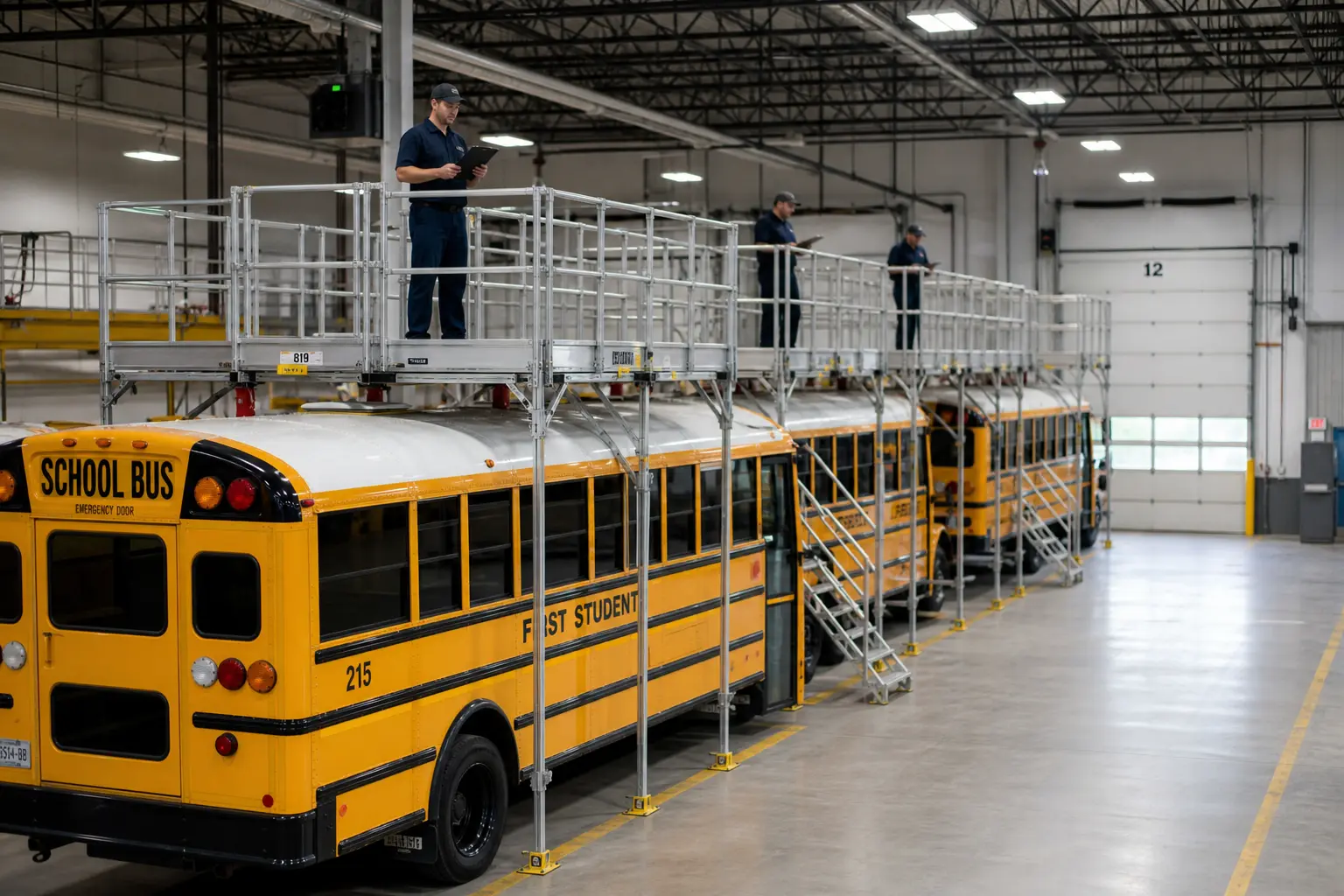
Fleet garages store more regulated material than almost any other automotive facility, and the storage layout is where compliance either works or quietly fails. The requirements below are set by federal rule and apply regardless of who supplies your shelving; your local fire code official and state environmental agency may impose more.
- Flammable liquid cabinets. OSHA 29 CFR 1910.106(d)(3) limits a storage cabinet to no more than 60 gallons of Category 1, 2 or 3 flammable liquids, or 120 gallons of Category 4 liquids, and requires cabinets designed to hold internal temperature below 325 °F in a standardized ten-minute fire test.
- Used oil. EPA’s used-oil rules at 40 CFR 279.22 require generators to store used oil only in tanks or containers, keep them in good condition without leaks or deterioration, fix structural defects immediately, and label tanks and containers “Used Oil.”
- Batteries as universal waste. Under 40 CFR part 273, handlers may accumulate universal waste, including batteries, for no longer than one year from the date it is generated or received. Give the battery accumulation area a dated, labeled, contained location — not a corner of the parts aisle.
- General storage safety. OSHA 1910.176 requires stored material to be stacked, blocked, interlocked and height-limited so it is stable, aisles kept clear and in good repair, and permanent aisles marked.
None of this requires exotic equipment. It requires a floor plan that gives fluids, waste and cores their own defined footprint with containment, ventilation as required by your AHJ, and enough aisle to work safely — then keeps the parts shelving out of that footprint. We size and lay out the storage; the fire and environmental approvals stay with your authority having jurisdiction and your environmental staff.
Laying out the room: issue counter, aisles and travel
The single biggest productivity lever in a fleet parts room is travel distance between the technician, the counter and the top 200 part numbers. Everything else is secondary.
Fix the doors first
Map where technicians enter from the bays, where deliveries arrive, and where waste and cores leave. Those three flows should not cross each other or the pick aisle.
Pull the movement data
Rank part numbers by issues over the last twelve months from your CMMS or fleet system. The top 10–15% of numbers usually cover the large majority of picks.
Slot by velocity, then by size
Fast movers within a few steps of the counter at 30–60 inches of height. Slow movers to the back and to the top and bottom shelves. Bulky and heavy items at floor level near the door they arrive through.
Give every part one address
Aisle, bay, shelf, position. Post the code on the bay and inside the system so a new hire can find any part without asking a person.
Design the aisle for the equipment
Hand-pick aisles can be tight; any aisle a pallet jack or forklift enters must be sized for that truck plus clearance, and marked per OSHA 1910.176(a).
Leave a re-slot lane
Reserve empty bays so seasonal surges — plow season, mowing season, a new vehicle class — do not force parts into the wrong zone permanently.
Labeling, counting and keeping the room honest

Fleet inventories are public assets or corporate assets on a balance sheet, and they get audited. The storage system’s job is to make the count easy and the exceptions visible. Three habits do most of the work.
One address per part number. Every bin, drawer and shelf position gets a durable code in a label holder, not a marker line on the beam. Card holders on shelf edges and bin fronts survive re-slotting; handwriting does not. Our guide to labeling and bin location systems covers the addressing scheme itself in detail.
Cycle count instead of one annual shutdown. Counting a rotating subset continuously — fast movers and high-value items more often than the long tail — finds errors while they are still small and avoids closing the shop for a wall-to-wall count. It also surfaces the parts with no issues in eighteen months, which is the list that funds your next storage project.
Make empty visible. Min/max cards, two-bin systems for consumables, or a simple colored divider at the reorder point turn a stockout into something a technician sees before the truck is on the lift. For high-consumption shop supplies, a spare parts and MRO storage approach with dedicated replenishment positions works better than counting boxes on a shelf.
Planning a fleet or municipal garage parts room?
Send us your floor dimensions, your fleet mix and your top-moving part list. We will lay out zones, shelving, rack and secure storage, and quote the whole package as one project.
Fleet-specific storage problems worth solving early
Fleet garage workbenches and technician stations
A fleet garage is judged by uptime, and bench time is part of it. When technicians share one cluttered bench, hunt for tools or rebuild components on the floor, a truck sits longer on the lift. Fleet benches should be heavy, easy to clean and placed so each bay has its own work surface and tools within a few steps.
High-density drawer walls for shared tools
Municipal garages often run several shifts on the same bays, so shared tools need a fixed, lockable home. Our partner Shure Manufacturing builds walls of full-extension drawer cabinets (listed at 400 lb per drawer) that put shared tools in labeled, lockable drawers along the bay wall. Pair the drawer wall with your shift checkout process so missing tools show up at shift change, not mid-repair.
Photo: Shure Manufacturing


Tear-down benches for component swaps
Fleets that rebuild instead of replacing need a tear-down bench that holds fluid. Shure’s oversized tear-down bench with a stainless-steel top (811150) is listed at 60 x 32 inches with a 1/2-inch lip on all sides, a 3-gallon drain pan, a drawer with optional lock, locking casters and legs that adjust from 29 to 41 inches. The stainless top cleans up between jobs, which helps when one bench serves several vehicle types.
Photo: Shure Manufacturing
Shure reports that its products are made in the USA with a lifetime warranty, which helps public fleets justify a longer equipment life. For heavier rebuilds, see heavy-duty truck parts storage, or compare industrial workbenches.
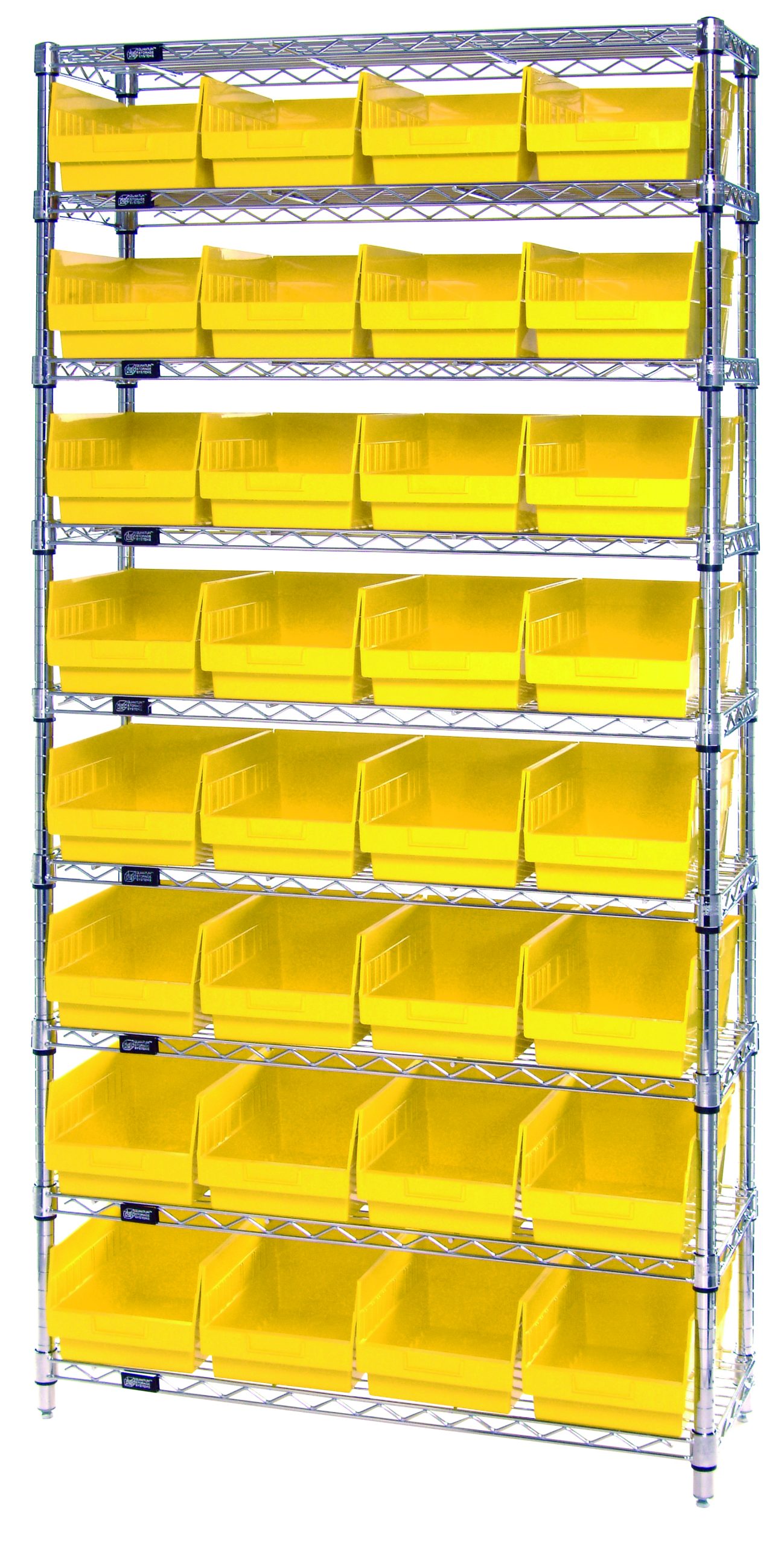
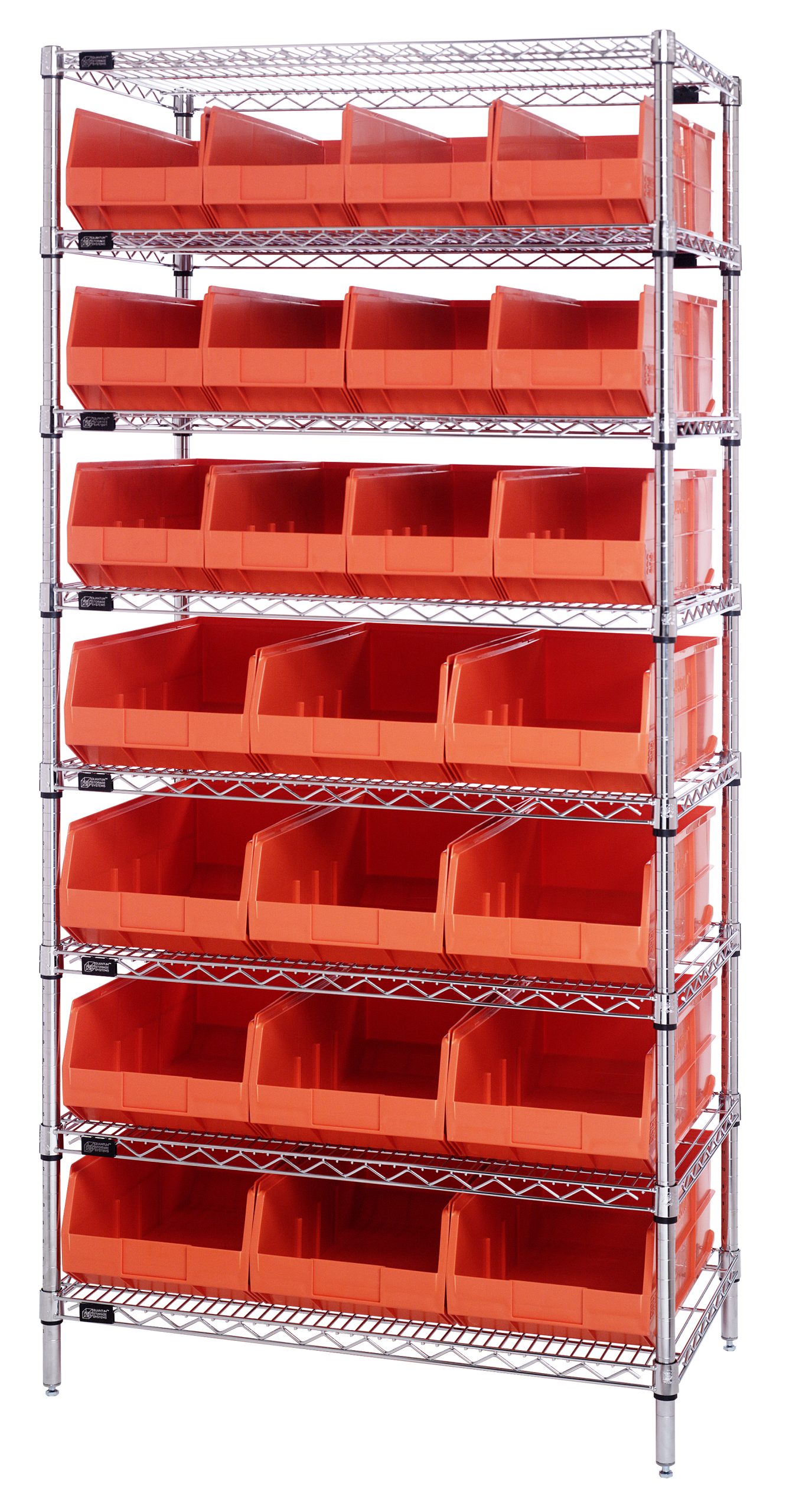
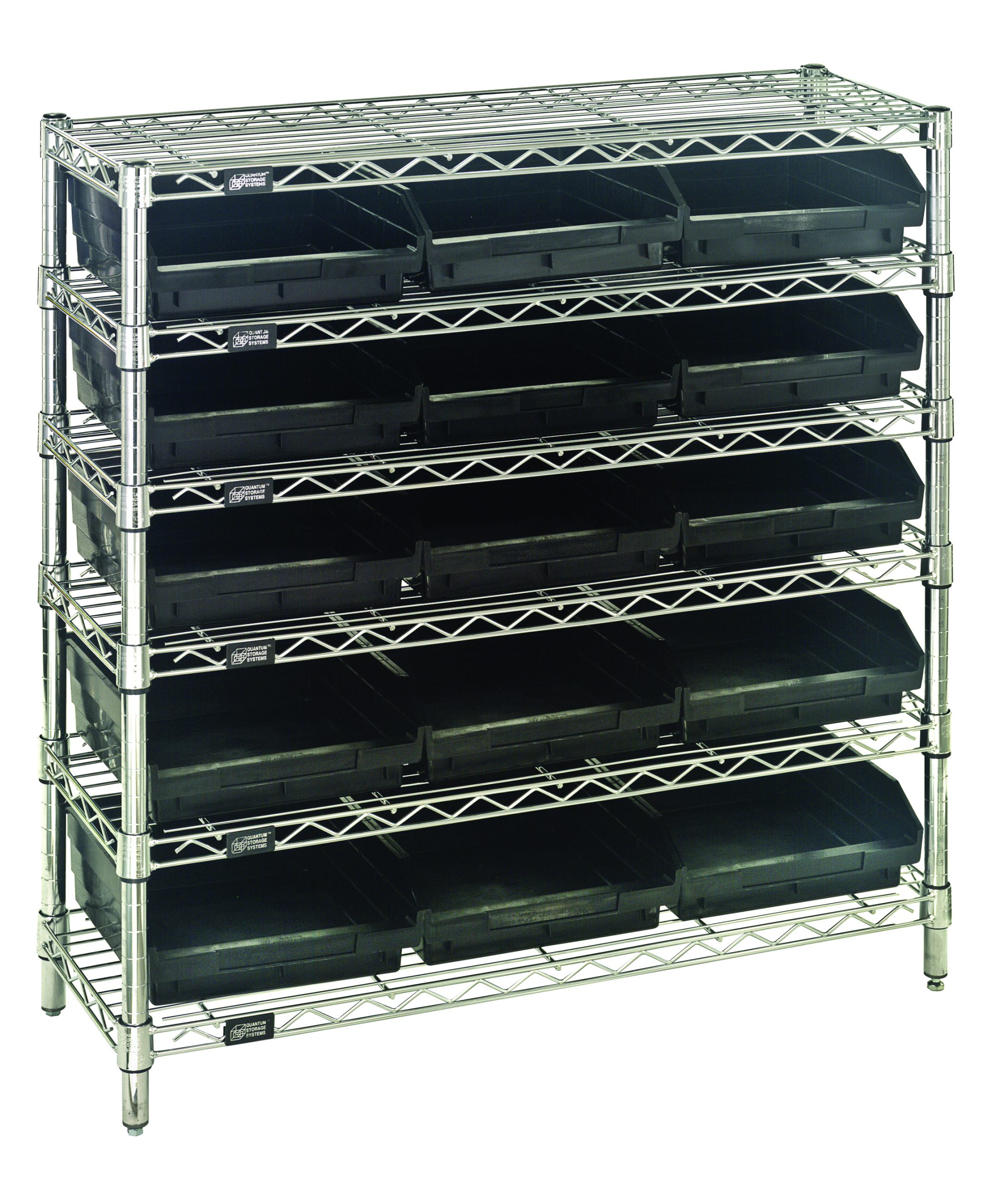
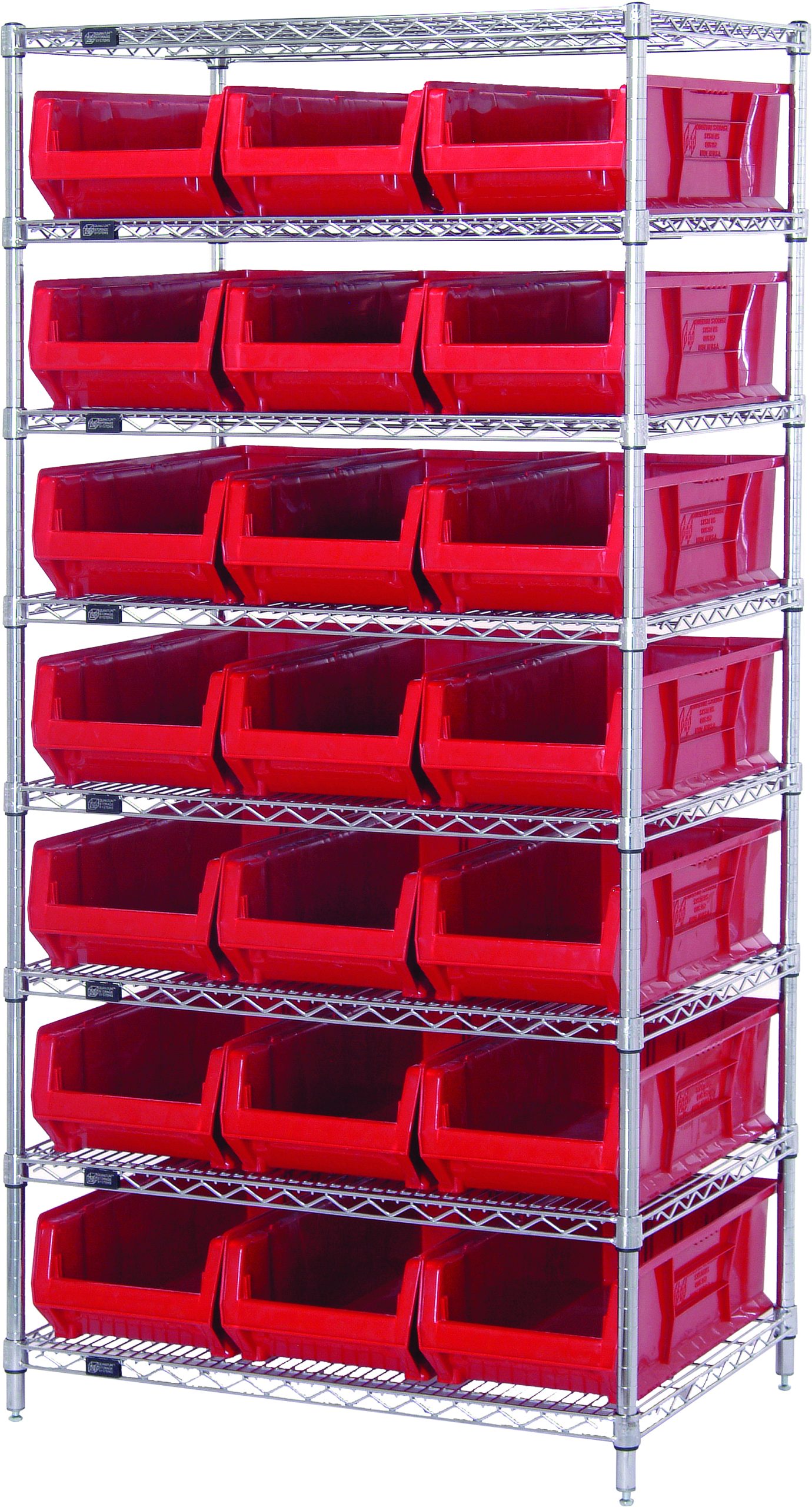
Shop Bin Storage Systems Online
Buy select items directly from our online store, or request a quote for volume, custom sizes and freight-rated orders.
Get a free quote
Tell us what you are storing, the room size and your timeline. A project specialist will follow up with layout options and pricing. Prefer to talk? Call (800) 326-4403.
Fleet parts storage FAQs
What shelving is best for a fleet maintenance parts room?
How much parts inventory should a municipal garage carry?
How do we store used oil and shop fluids correctly?
How long can we keep used batteries in the shop?
Can we add storage without expanding the building?
Do you handle installation and can you work around an operating shop?
Will new shelving fix our inventory accuracy?
Related storage systems
Fleet parts rooms borrow from every part of the automotive cluster. These pages go deeper on the individual systems:
- Automotive storage solutions — the full parts, service and tire storage overview.
- Parts room shelving — boltless and steel shelving for parts departments.
- Borroughs automotive shelving — purpose-built automotive shelving and accessories.
- Modular drawer cabinets — dense, addressable storage for small parts.
- Repair and body shop storage — back-room zoning for service operations.
- Spare parts and MRO storage — consumables and replenishment positions.
Build a fleet parts room that keeps trucks moving
Material Handling USA designs, supplies and installs parts storage for fleet shops, municipal garages and transit facilities across the Mountain West and nationwide.