
Parts Room Shelving Built on Boltless Rivet Units
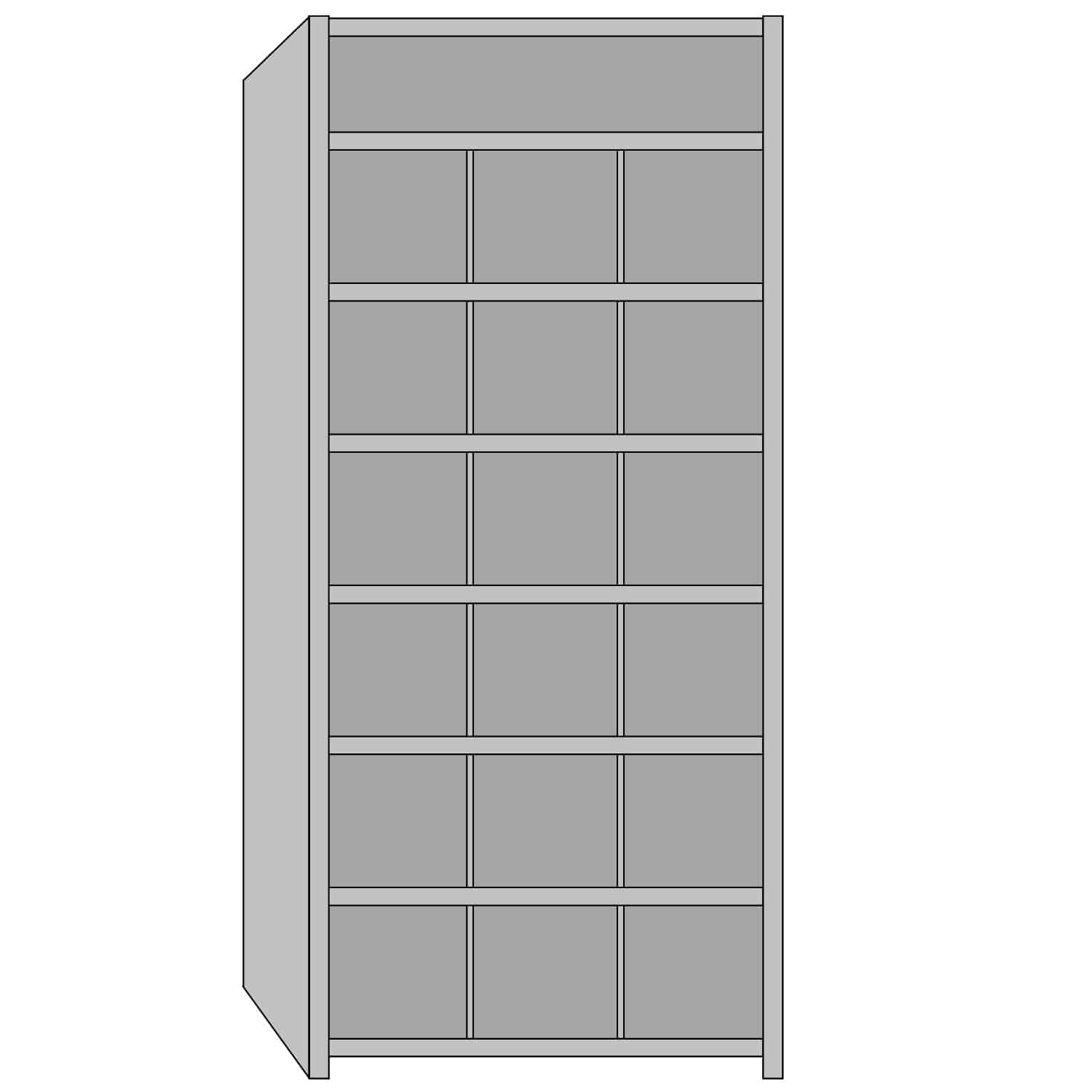
Boltless rivet shelving laid out for parts rooms: bin-friendly shelf spacing, dividers and location labels, heavy-duty bays for big components and lockable sections for high-value parts.

Shop Parts Room Shelving Online
Start with a few bays online or send us your parts list for a full layout. Prices are starting prices; freight is quoted by destination. Some common sizes are in stock at select manufacturers, subject to confirmation.


Why Boltless Shelving Works for Parts Rooms
Parts rooms change constantly. Boltless rivet shelving changes with them.
Fast to adjust, open on every side
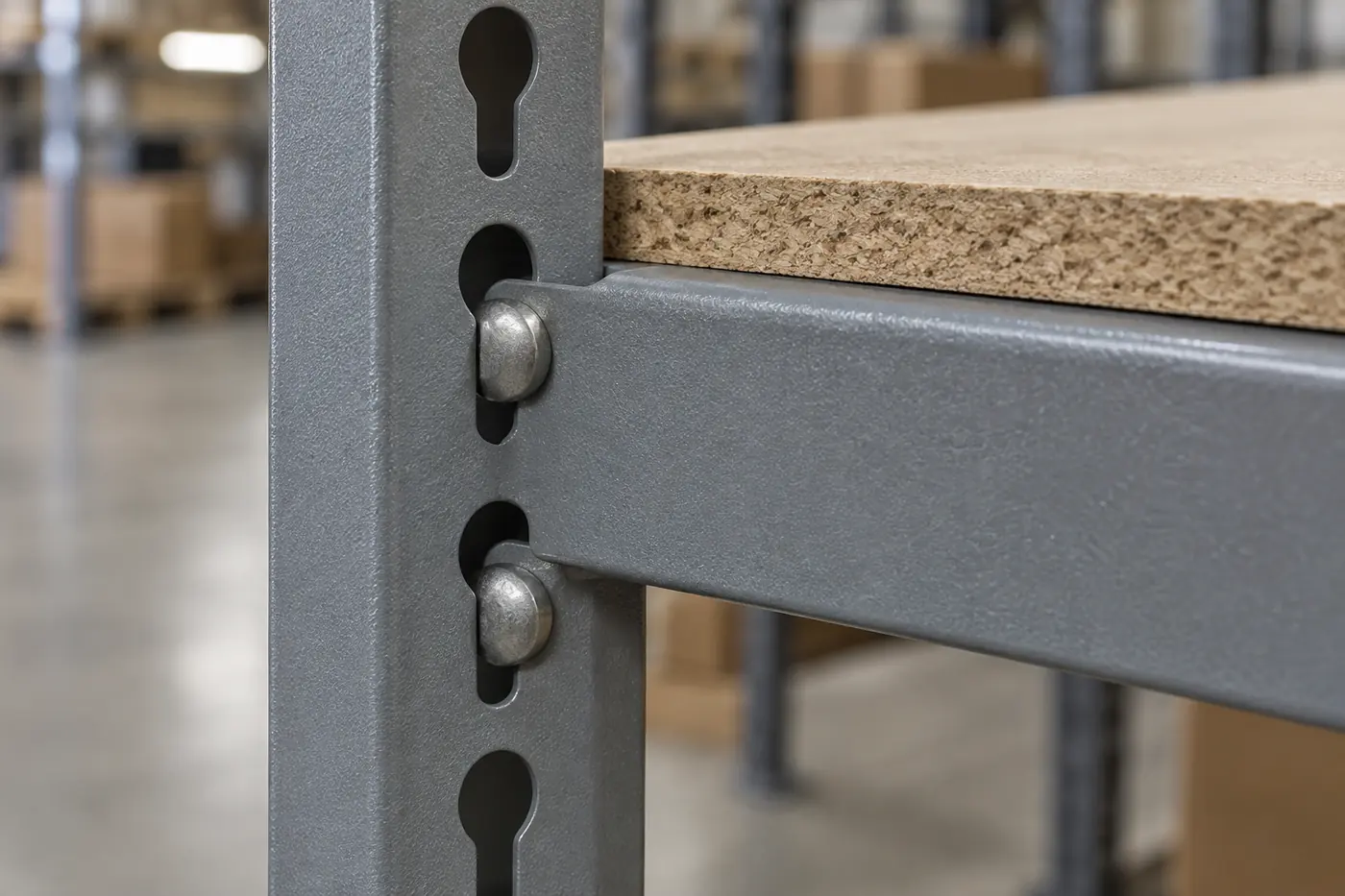
A parts room holds thousands of different items, from O-rings and fuses to starters, pumps and gearboxes, and the mix changes every time equipment is added or retired. Boltless rivet shelving is built from uprights with keyhole slots and beams with rivets that drop into them, so levels move with a rubber mallet instead of a toolbox. There are no sway braces crossing the bay, so bins, boxes and long parts load from the front or either end, and the open frame keeps labels visible and lets sprinkler water reach the parts.
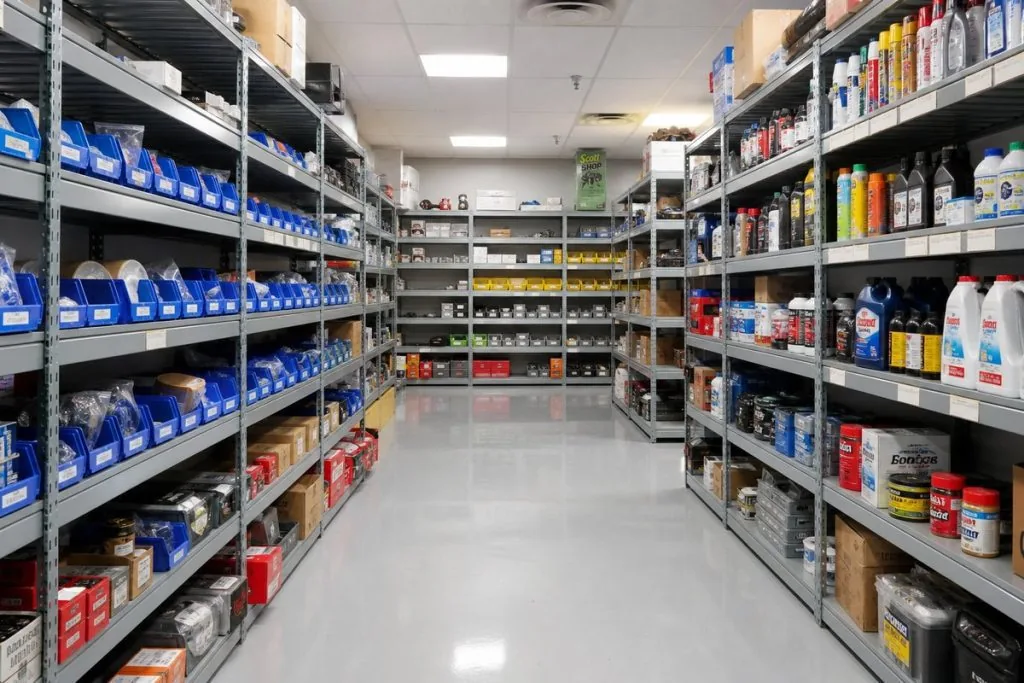
Compared with nut-and-bolt steel shelving, boltless units go up faster, carry heavier loads per level and are easier to reconfigure. Compared with pallet rack, they are sized for hand-picked parts, not forklift loads, and they fit in rooms with normal ceiling heights. That is why most service, maintenance and manufacturing parts rooms use boltless shelving as the backbone, with bin shelving, drawer cabinets and a few heavy-duty bays added where the parts call for them. See the full range on our boltless shelving page.
How Rivet Shelving Works: Beams, Decks and Capacity
Three choices set what a bay can carry: the beam style, the decking and the bay width.
Single rivet, double rivet and heavy-duty beams
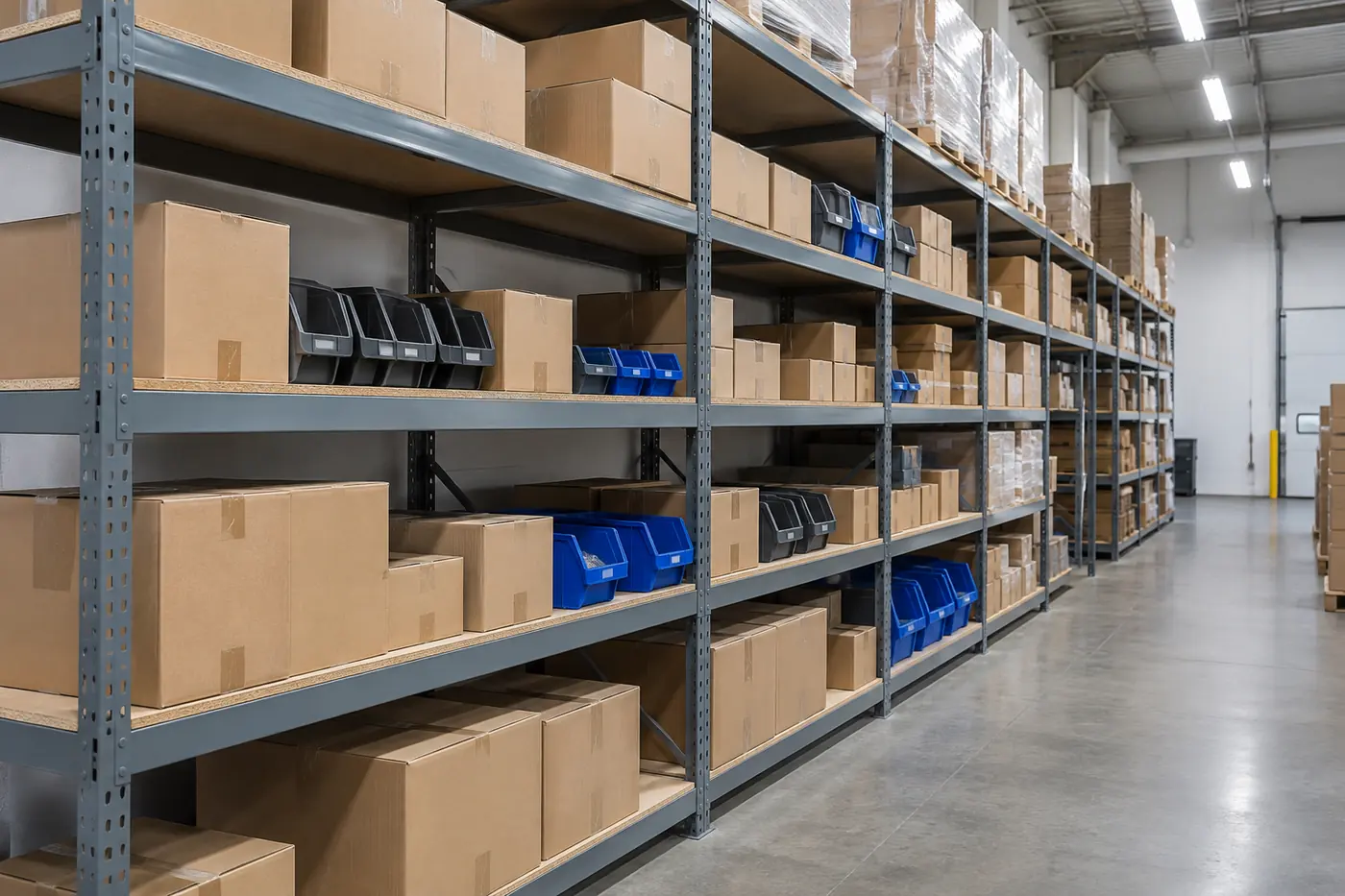
Single-rivet beams suit light boxed parts and are common on starter units. Double-rivet beams lock into the upright at two points, which stiffens the bay and raises capacity, and they are the usual choice for a working parts room. Heavy-duty units, such as Lyon’s 96-inch rivet rack with 14-gauge uprights, are rated up to 1,200 pounds per level and adjust on 1-1/2 inch centers. Pick the beam by the heaviest parts that will ever sit on the level, not the average carton.
Decking that fits the parts
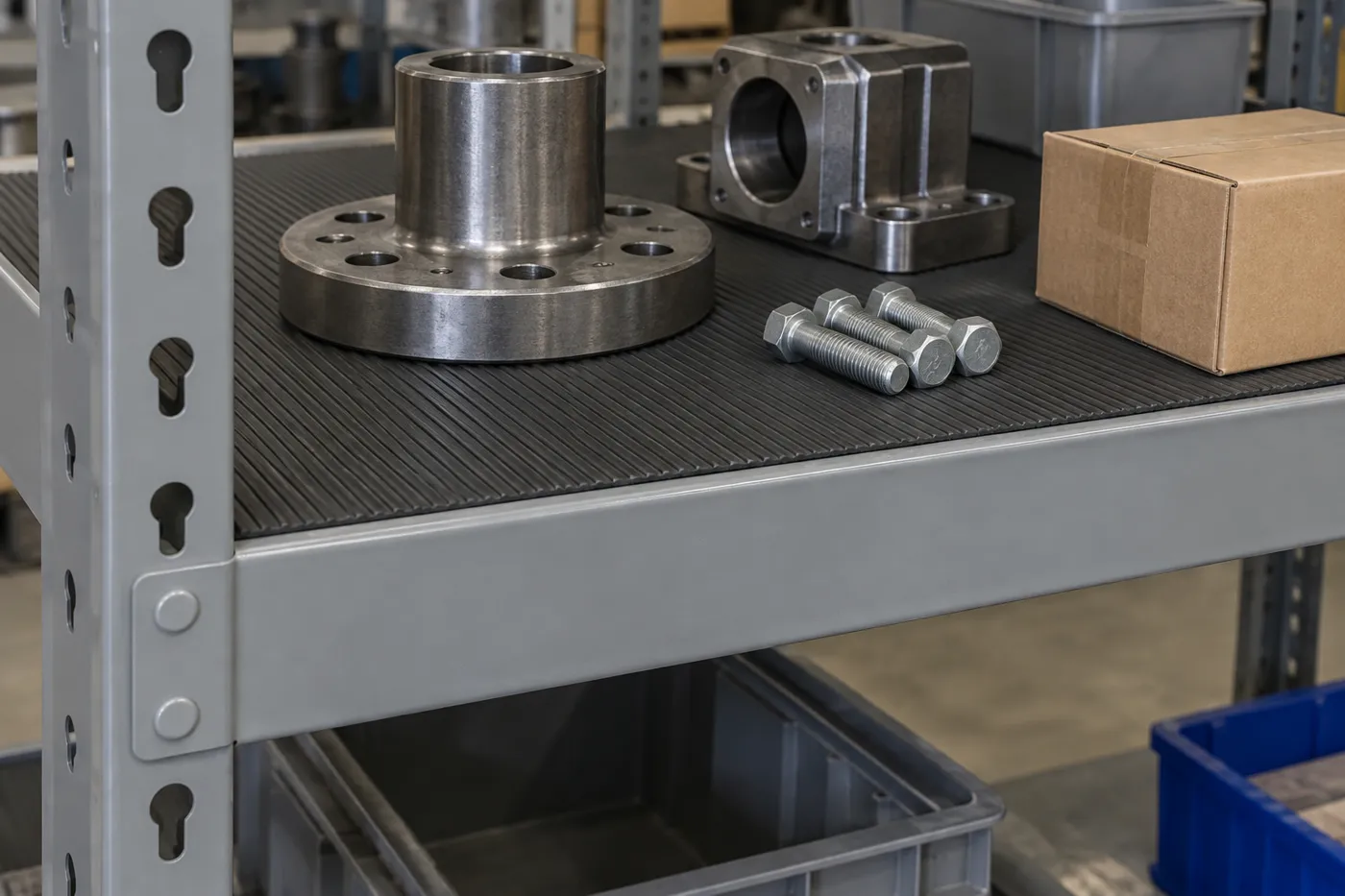
Particleboard decking is the most common choice for boxed parts and bins because small items cannot fall through. Wire decking lets light, air and sprinkler water through and stays clean in oily shops. Steel decking handles concentrated loads such as castings. Add a center support or an extra beam under heavy-duty levels, and use a rubber liner where metal parts would slide or scratch. Capacity is always per level and assumes a load spread evenly across the deck.
Accessories that make it a parts room
Dividers, bin rails, extra beams and locking doors are all on our boltless shelving accessories page.
Bins, Dividers and Drawers for Small Parts
Small parts cause most of the search time in a parts room. Give each one a home.
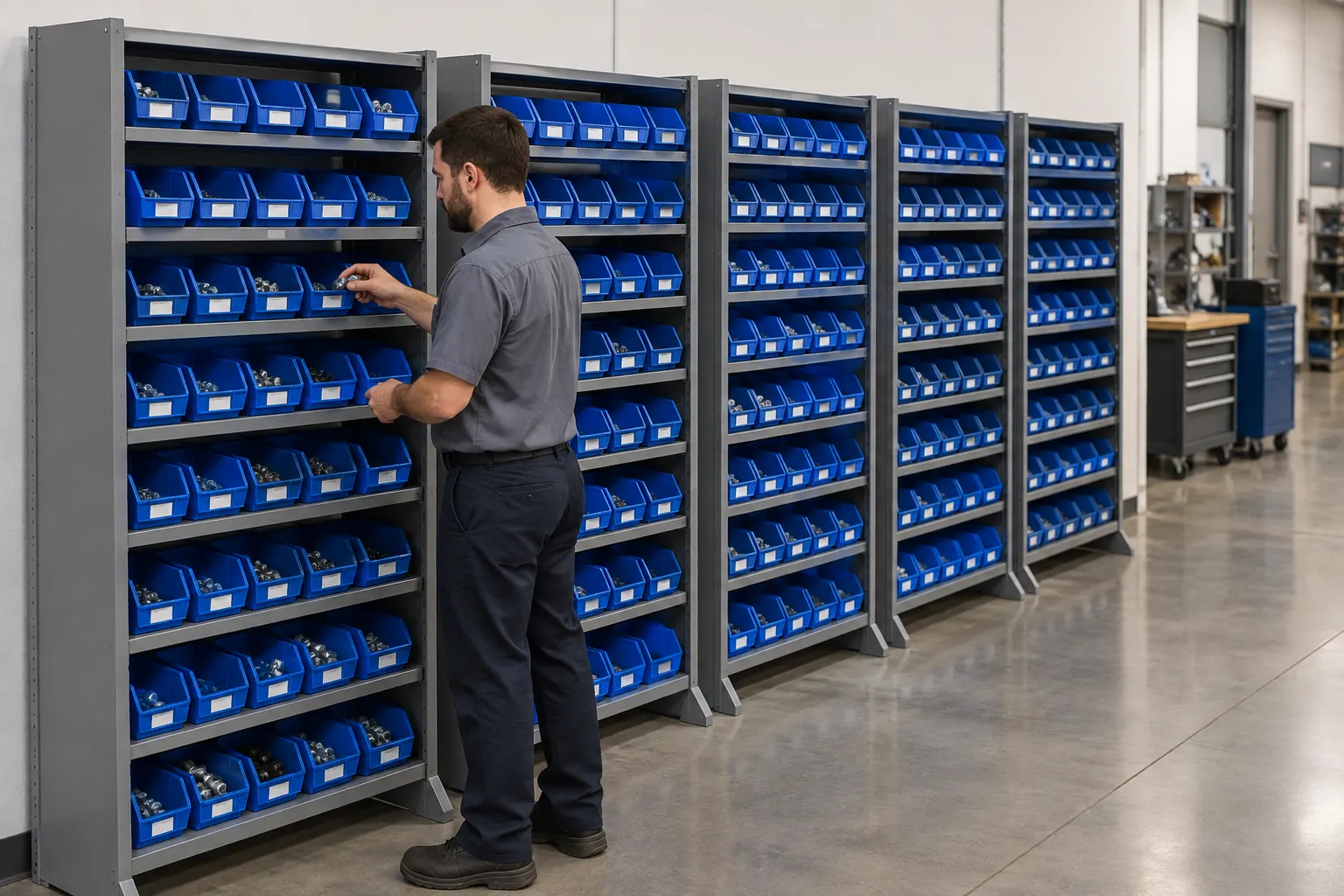
Bins on boltless shelving
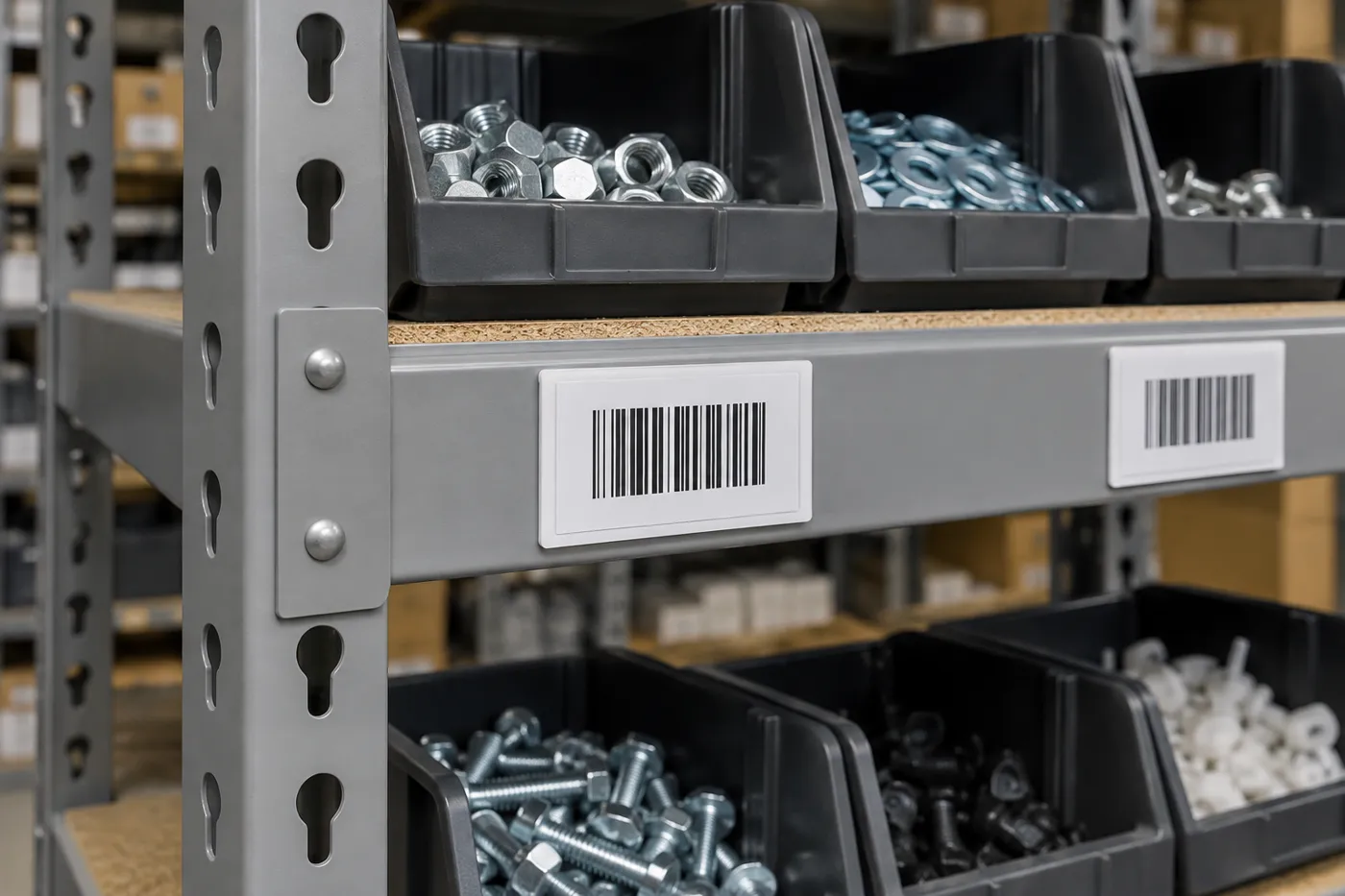
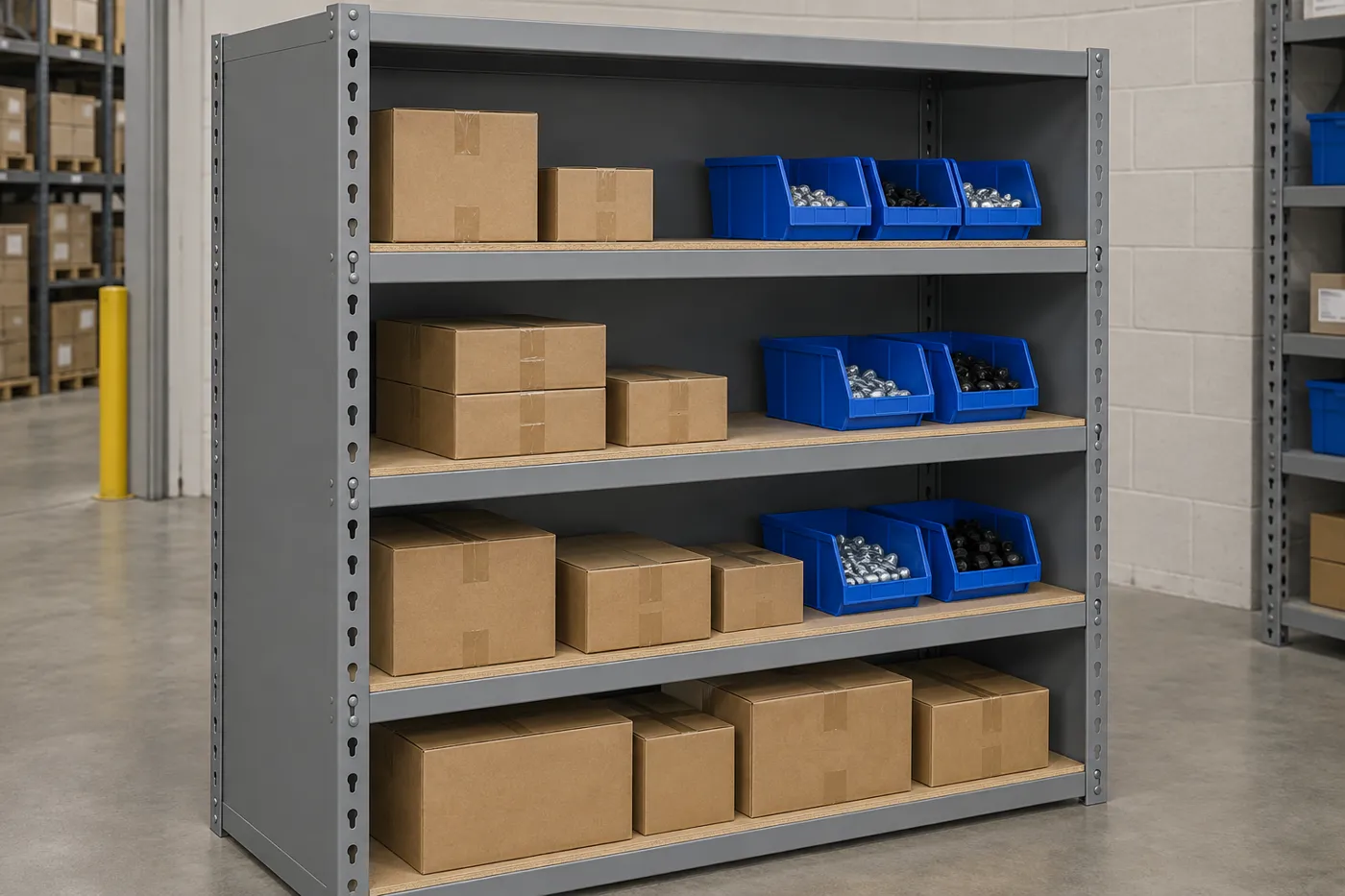
Plastic shelf bins and hopper-front bins turn a boltless level into a row of individually labeled locations. Set level spacing to the bin height plus a hand’s clearance so bins slide out without being lifted. Sloped pick racks tilt bins toward the aisle so a technician can see and reach the part without pulling the bin, which works well for fittings, fuses and fasteners that move every day. For dense small-parts storage in a smaller footprint, metal bin shelving with fixed compartments is another option.
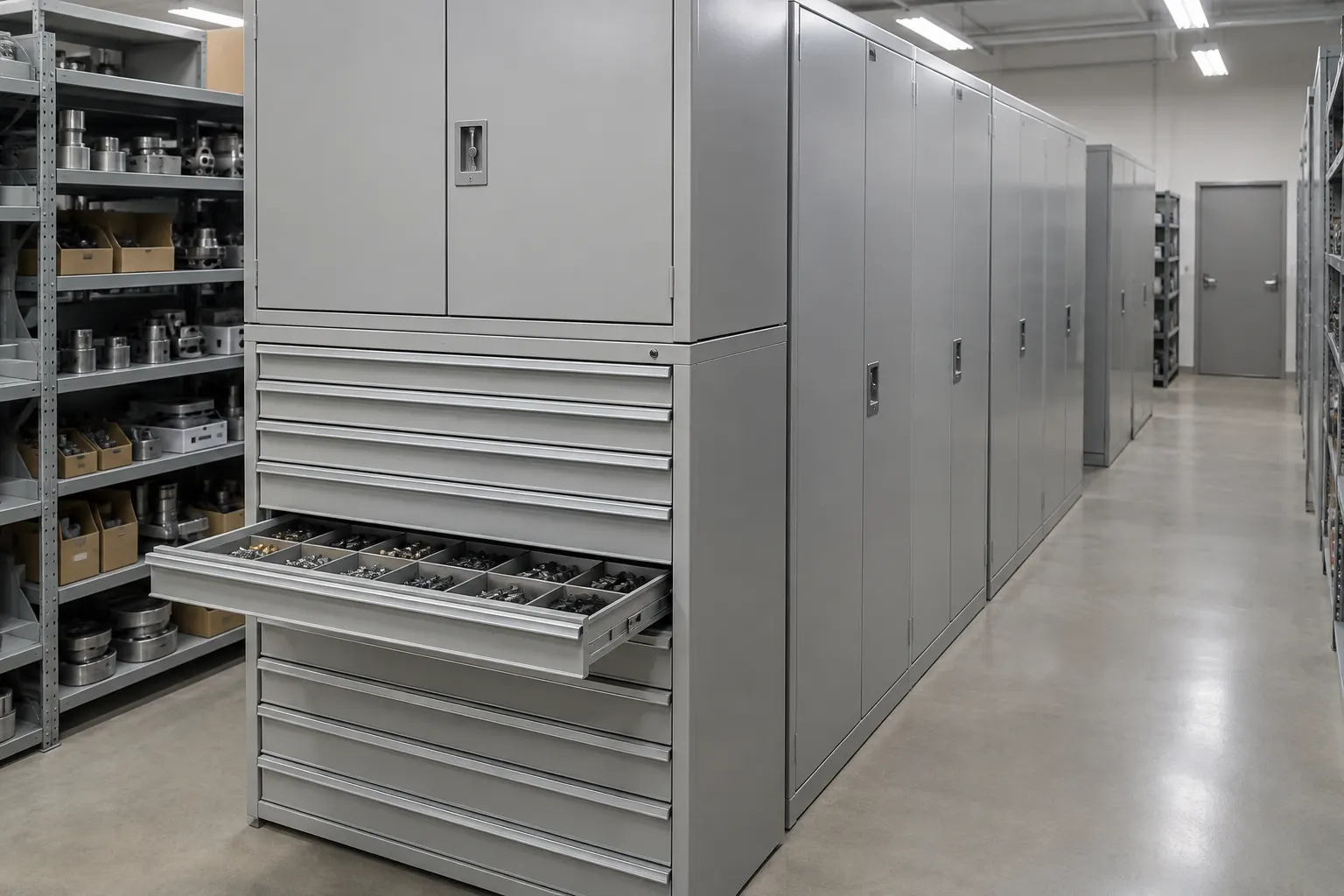
Drawer cabinets for precision parts
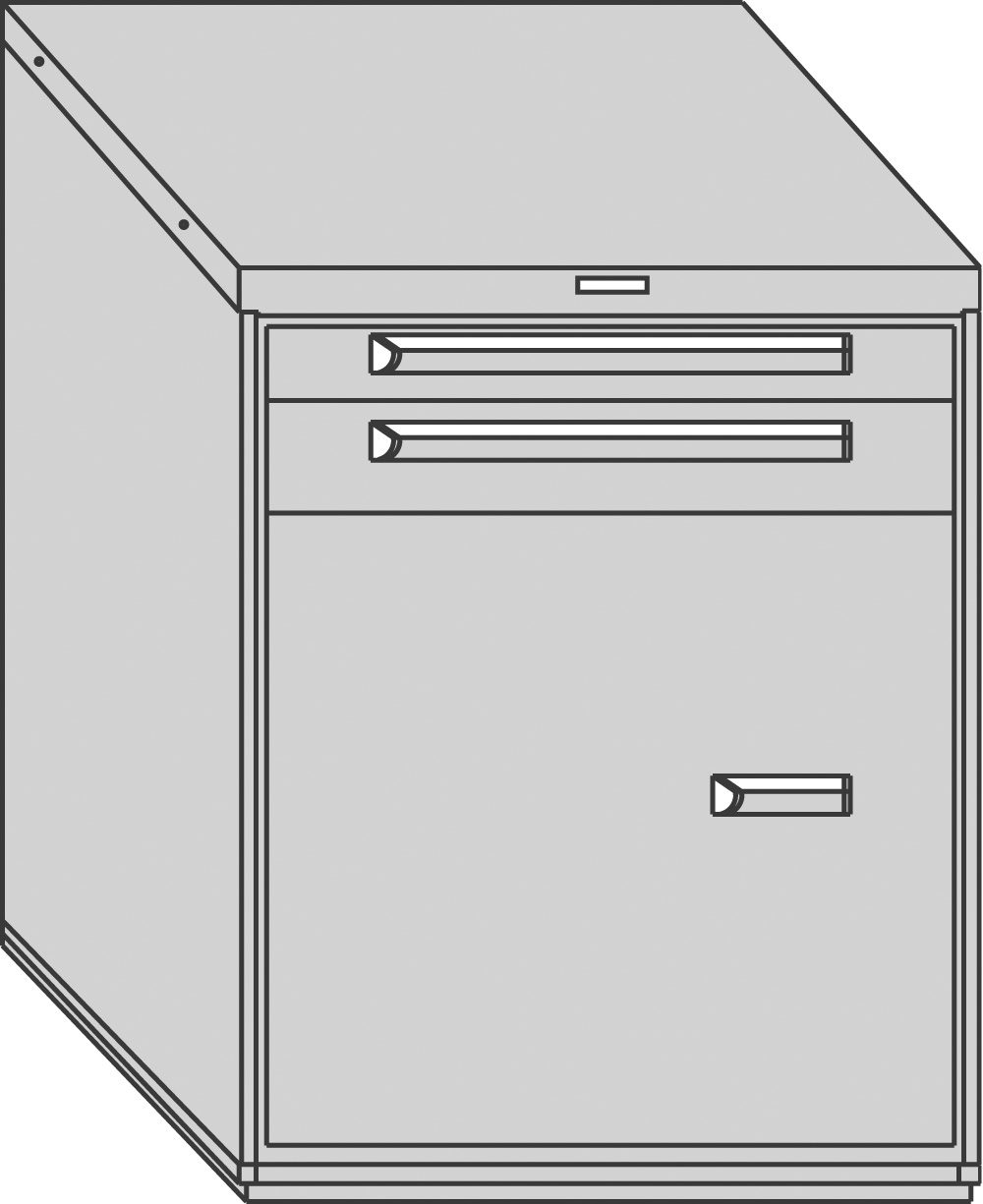
Bearings, seals, sensors, drill bits and calibrated parts are better in modular drawer cabinets than in open bins. Each drawer can be divided into dozens of small compartments, the cabinet locks, and contents stay clean. Drawer cabinets fit under a counter, at the end of a shelving row, or as a separate controlled section. Our tool crib and MRO shelving page shows how maintenance crews combine drawers, shelving and cages.
Shelving for Heavy and Oversized Parts
Motors, gearboxes and long parts need wider bays, stronger beams and low levels.
Wide-span and heavy-duty bays
Put heavy parts on wide 72 or 96-inch heavy-duty bays with steel or reinforced decking, and keep them between knee and waist height so they can be slid rather than lifted. Use the bottom level for the heaviest items and the top level for light, slow-moving stock. Long shafts, hoses and belts fit on deep levels or on dedicated hanging racks at the end of a row. Our heavy-duty boltless shelving page covers higher-capacity units.
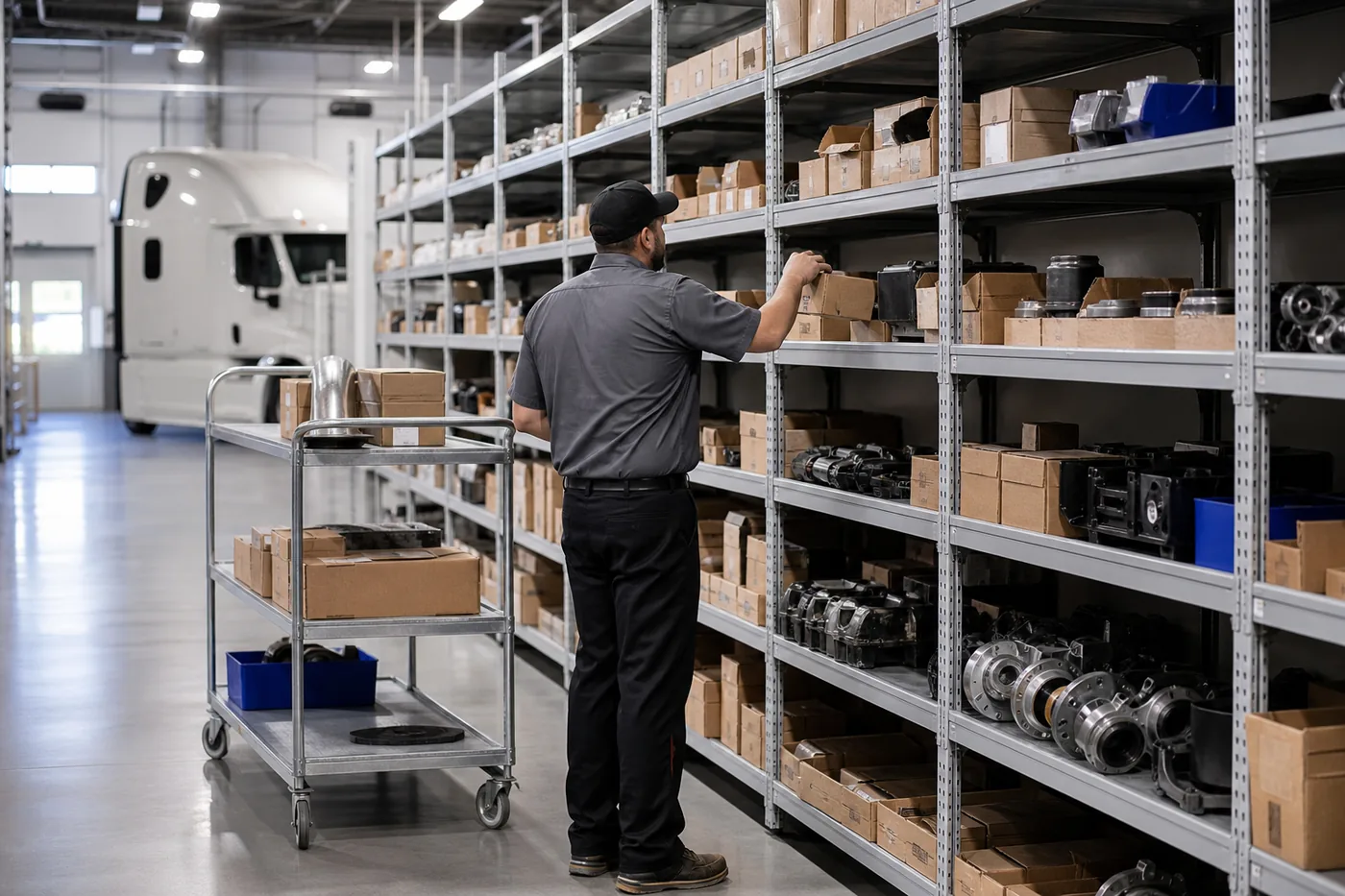
Automotive and truck shops face the same challenge with engines, transmissions and driveline components. See our guidance on engine, transmission and heavy driveline component storage. When parts arrive on pallets or weigh more than a person should handle, move them to pallet rack with forklift access and keep only the picking quantity on shelving.
Parts Room Layout and Organization
Good shelving in a bad layout is still slow. Zone the room before choosing bay counts.
Start with the parts list. Group parts by type, such as electrical, mechanical, hydraulic, filters and consumables, so technicians know which section to search. Within each zone, rank parts by how often they move. Fast movers go at waist to shoulder height near the counter or issue window; slow movers go high, low or in reserve. Leave the aisle wide enough for a parts cart, and plan the run so the most common picks are the shortest walk.
To estimate bay count, count the bins or cartons in each zone, divide by how many fit on one level at your chosen bay width, then divide by the number of usable levels per bay. Add 20 to 30 percent for growth and new equipment, and round each zone up to full runs so aisles stay straight. A parts room with mostly binned small parts typically uses 48-inch bays at 18 to 24 inches deep; one with mostly boxed or heavy parts uses wider, deeper bays and fewer levels. We do this math for you from a parts list or a few photos of your current room.
| Zone | What goes there | Best storage |
|---|---|---|
| Issue counter and fast movers | Daily-use filters, fluids, fasteners, fuses | Bins on boltless shelving, sloped pick racks |
| General parts | Boxed parts in regular rotation | Double-rivet boltless shelving with particleboard decks |
| Small and precision parts | Bearings, seals, sensors, electronics | Modular drawer cabinets, metal bin shelving |
| Heavy and oversized | Motors, pumps, gearboxes, long shafts | Heavy-duty or wide-span bays, pallet rack |
| High-value and controlled | Electronics, specialty tools, warranty returns | Lockable bays or a wire mesh cage |
| Receiving and returns | Inbound orders, cores, warranty parts | Receiving bench, staging shelving, tagged bins |
Receiving, cycle counting and returns
A parts room needs a place to receive, check and label inbound parts before they go to their locations, and a place for cores, warranty returns and parts waiting on paperwork. A receiving bench with bins above it keeps these out of the picking aisles. Location labels on every beam and bin make cycle counts a scan instead of a search, and min/max labels show when a part needs to be reordered. The setup works with any inventory or CMMS system that uses location codes.
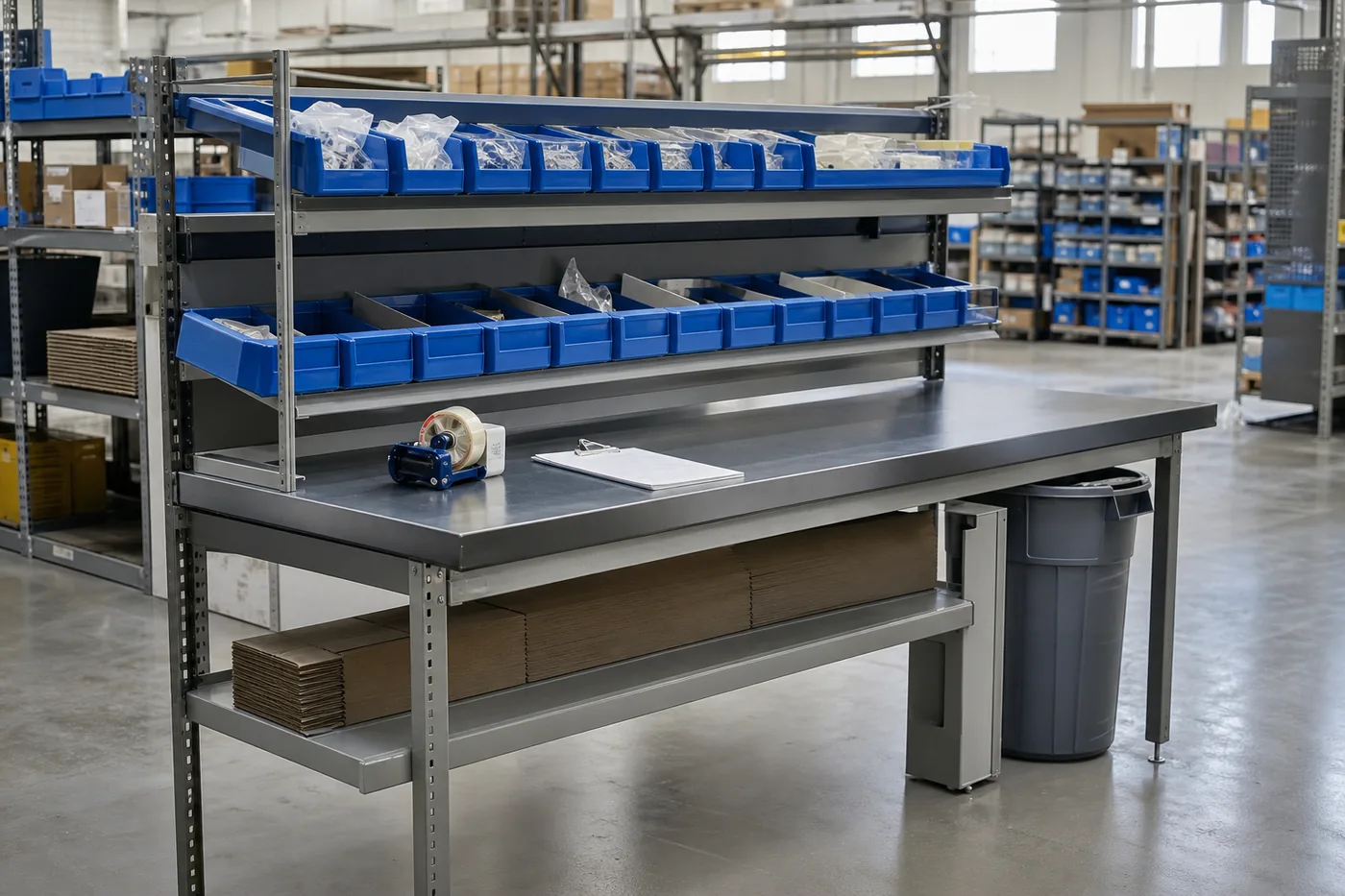

Count and track every location
Once every location has a label, technicians and parts staff can count a zone a day with a tablet or scanner instead of shutting the room down for an annual inventory. Tag warranty and core returns with the work order number and keep them on a separate shelf so they are not reissued by mistake.
Lockable Bays and Secure Parts Storage
Not every part should be open to every person who walks into the room.
Locking doors on boltless bays
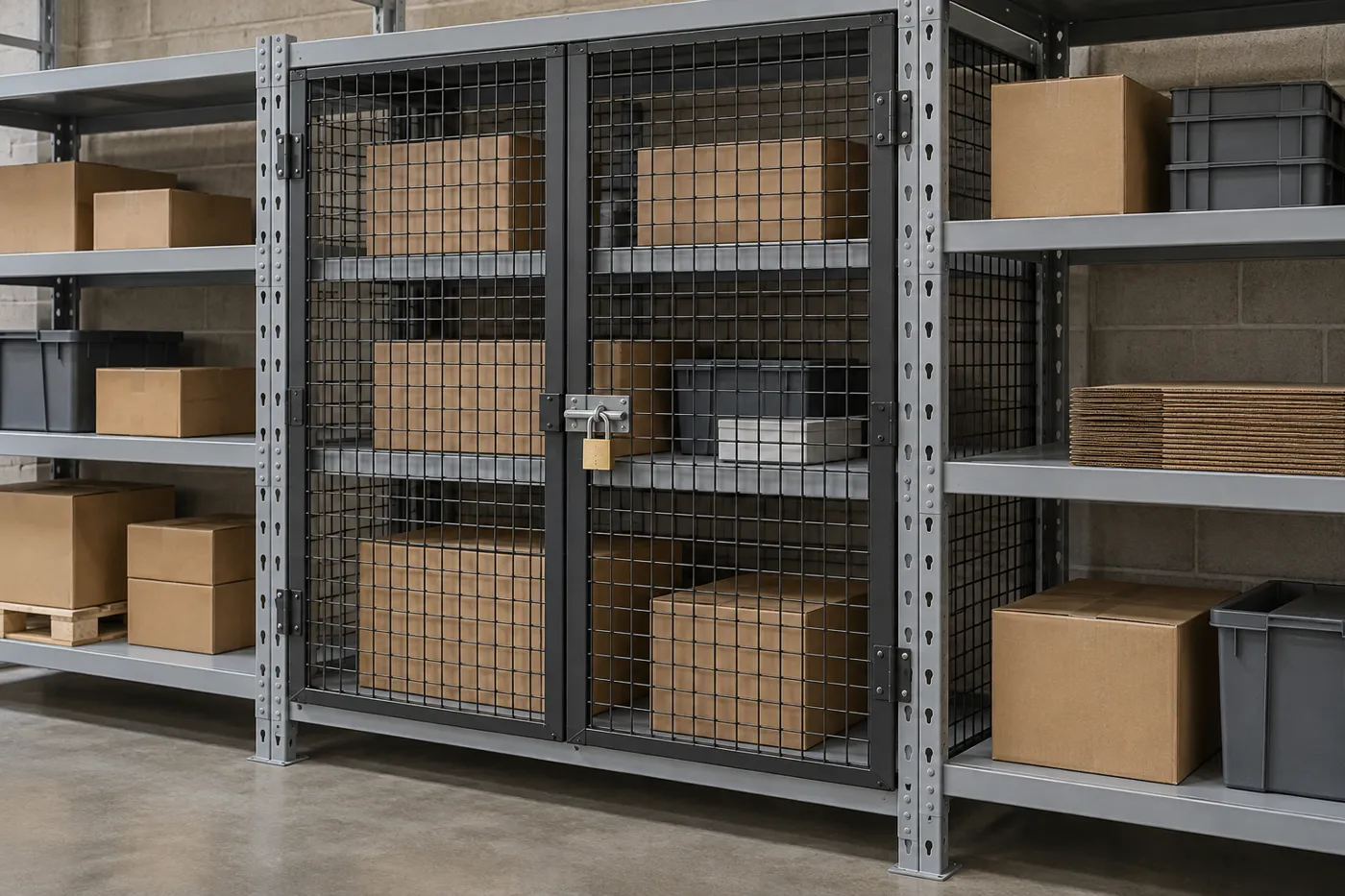
Wire mesh doors with a padlock hasp turn a standard boltless bay into a locked section for electronic modules, specialty tools, precious-metal parts or warranty returns waiting for inspection. Contents stay visible for counts. When a whole area needs control, enclose it with welded wire panels and a service window so parts are issued across a counter. Our security cages page covers full enclosures.
Cores, warranty and quarantined parts
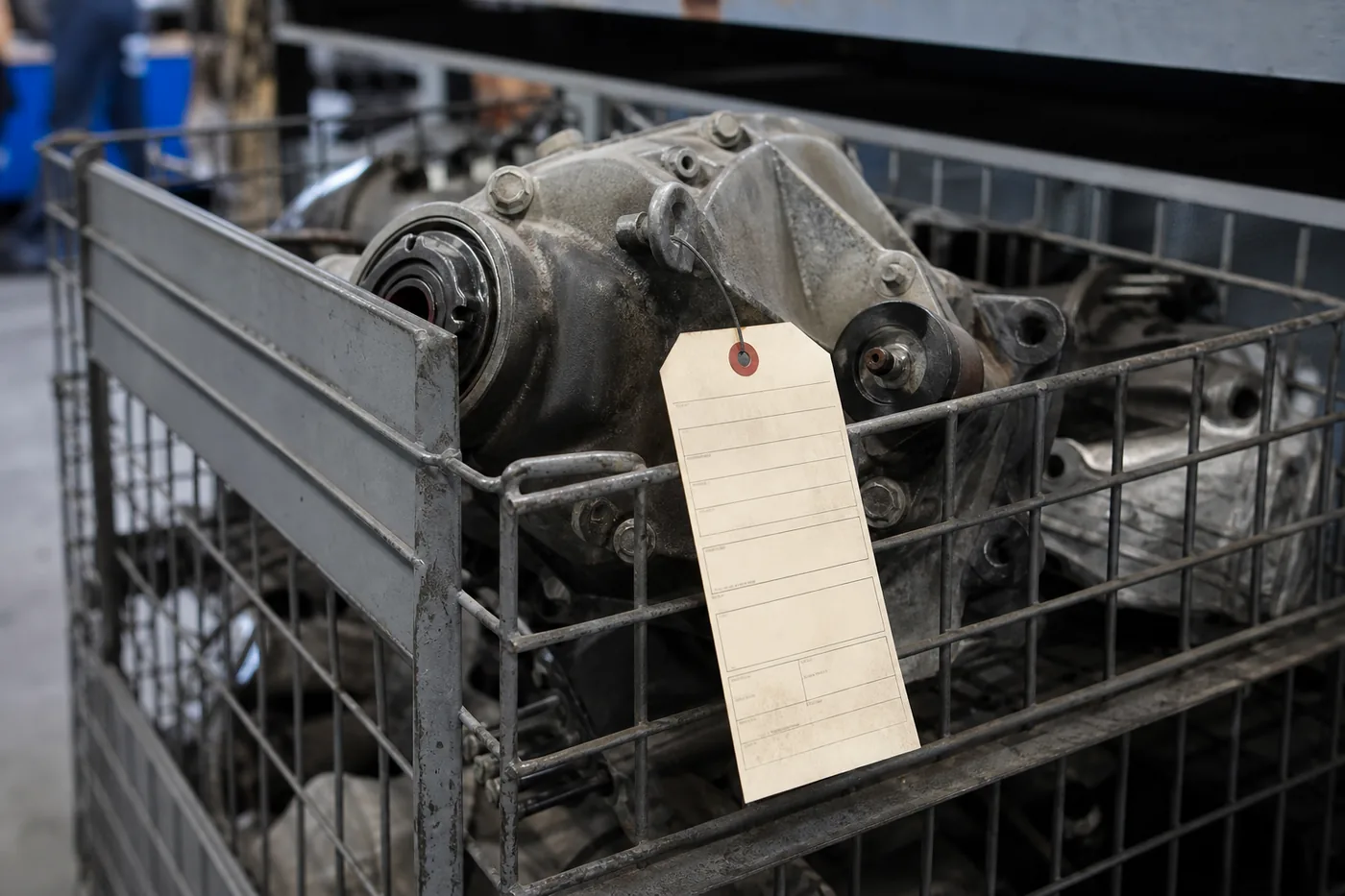
Cores, warranty claims and suspect parts need a clear, separate home. Wire baskets or a locked bay with tags showing the work order and claim number keep these parts from being mixed into stock. Plan this space near receiving so returns move out quickly.
Decide early who can enter the parts room and who is served at the counter. Many shops keep the room open to parts staff only and issue across a counter or Dutch door, while plants with a 24-hour maintenance crew use an unattended room with locked bays for expensive items and a sign-out log or vending system for the rest. The shelving layout should match that choice: counter rooms put fast movers next to the window, while self-serve rooms put them near the door with clear location signs at the end of each row.
Parts Room Shelving by Industry
Every operation with equipment has a parts room. The layout changes with the parts.
Dealerships and service departments
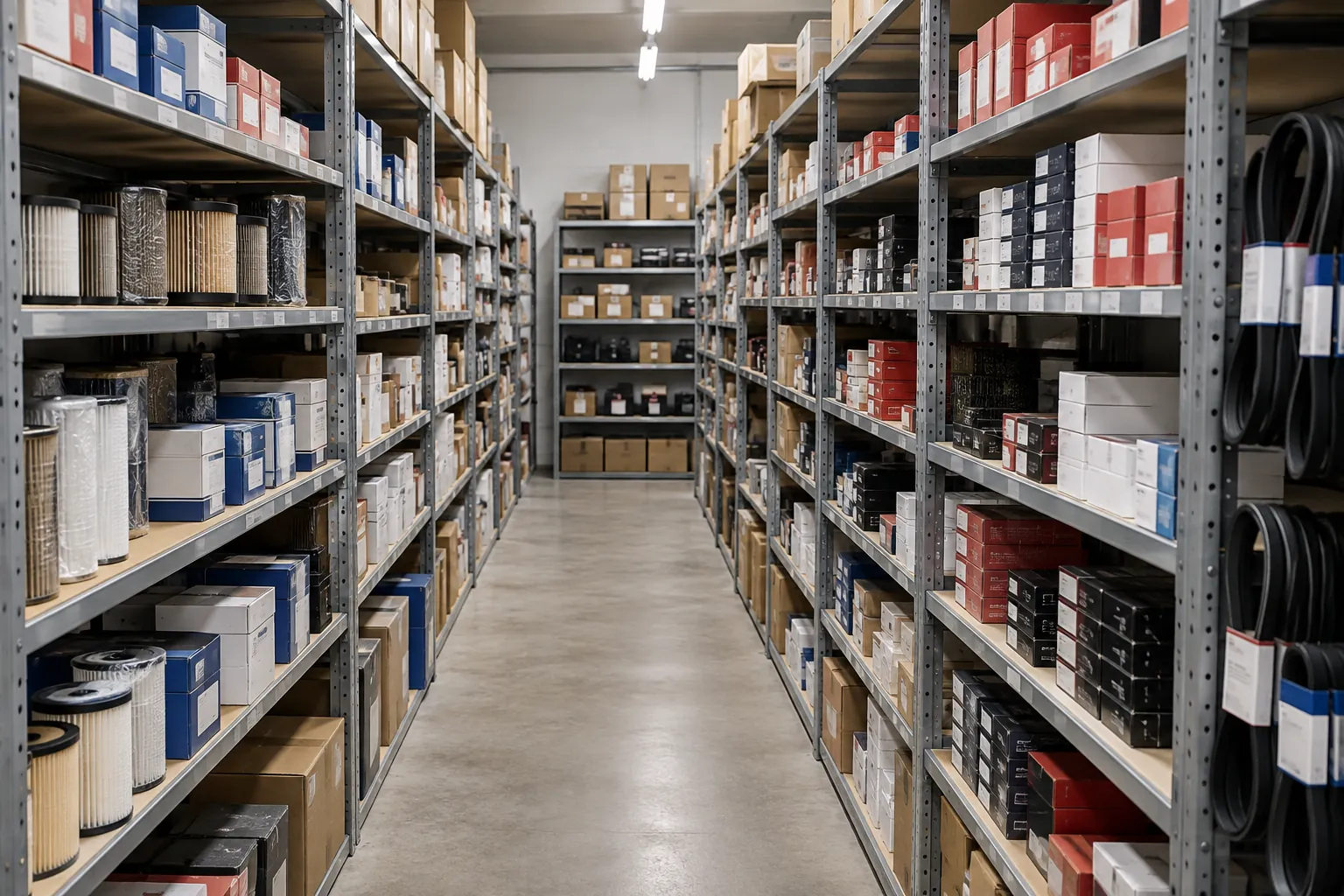
Auto, truck and equipment dealers move hundreds of part numbers a day across a parts counter. Boltless shelving with bins handles most of the room, while dealerships that standardize on dealer-specific systems often choose Borroughs automotive shelving with Box Edge Plus shelving and high-density drawers. For counter-to-bulk-room planning see our parts department storage systems guide, and for the wider automotive picture see automotive parts storage. To compare every shelving type for a parts room, see parts shelving, and for step-by-step tips read how to store auto parts.
- Fleet and municipal shops: filters, brake parts, lighting and tires for trucks, buses and police or public works vehicles.
- Manufacturing maintenance: spare parts for production equipment, conveyors and CNC machines, often beside a tool crib.
- Power, utilities and mining: heavy replacement parts, hydraulic fittings and wear parts, with heavy-duty bays and anchoring.
- Aviation and aerospace: tracked and serialized parts with quarantine areas and locked sections.
- Facility maintenance: HVAC, plumbing and electrical parts for campuses, hospitals and property managers.
For a full worked example that combines shelving with pallet rack, see how we zone a parts warehouse for an equipment dealer by picking velocity. Parts rooms that run out of floor space can go up with a mezzanine or get denser with mobile shelving for slow-moving stock.
Parts Room Shelving Specifications
Typical ranges for industrial boltless shelving. Exact options depend on the manufacturer and model.
| Specification | Typical options | Parts room tip |
|---|---|---|
| Bay width | 36, 48, 60, 72 and 96 inches | 48″ for binned parts; 72–96″ for cartons and heavy parts |
| Depth | 12 to 48 inches | 18–24″ for bins; deeper for boxed parts and assemblies |
| Height | 72 to 96 inches common, taller with ladders | Keep fast movers below about 72″ |
| Beam style | Single rivet, double rivet, heavy-duty | Double rivet for most parts rooms |
| Capacity per level | Light-duty to about 1,200 lb on heavy-duty units | Rate for the heaviest part, evenly distributed |
| Beam adjustment | 1-1/2 inch centers on many models | Set spacing to bin height plus hand clearance |
| Decking | Particleboard, wire, steel | Particleboard for bins; wire in wet or oily areas |
| Accessories | Dividers, panels, doors, labels, liners | Label every beam before loading |
Boltless shelving, bin shelving or drawer cabinets?
Most parts rooms use all three, in different proportions. Boltless rivet shelving is the most flexible and least expensive per cubic foot, so it carries the bulk of boxed and binned parts. Metal bin shelving has fixed steel compartments that hold many small part numbers in a narrow footprint, which suits fasteners and fittings that never need a whole shelf. Modular drawer cabinets pack the most small parts into the least floor space and lock, but cost the most per location, so they are best for precision, high-value or dust-sensitive parts.
| Option | Best for | Trade-off |
|---|---|---|
| Boltless rivet shelving | Boxed parts, bins, mixed sizes, heavy items | Small loose parts need bins or dividers |
| Metal bin shelving | Fasteners, fittings, many small part numbers | Fixed compartments are harder to resize |
| Modular drawer cabinets | Bearings, seals, electronics, tools | Highest cost per location |
Standards and anchoring
Industrial boltless shelving is covered by ANSI MH28.2, which addresses design, testing and use. Tall or heavily loaded runs should be anchored, and seismic zones in the Mountain West and West Coast often require engineered anchoring. We confirm the requirements for your site before installation.
How We Build Your Parts Room
Parts and room review
Send a parts list, photos or a floor plan, and we review volumes, sizes and how parts move.
Layout and zoning
We lay out zones, bay sizes, aisle widths and shelf spacing for your inventory.
Shelving and accessories
We specify shelving, bins, drawers, labels and locking sections, and quote them.
Install and label
Installers assemble, anchor and label the shelving so your team can load and start picking.
Want to price a few bays yourself? Use our boltless shelving configurator to build and price a configuration, or call (800) 326-4403 for a free parts room layout.
Frequently Asked Questions
What is the best shelving for a parts room?
How do I organize a parts room with thousands of part numbers?
How much weight can boltless shelving hold?
Can parts room shelving work with our CMMS or inventory software?
Can I lock part of my parts room shelving?
Is boltless shelving the same as rivet shelving?
Should heavy parts go on shelving or pallet rack?
Do you install parts room shelving?
Design Your Parts Room
Free parts room layout and quote. Send a parts list or floor plan to start.