
Engine, Transmission & Heavy Driveline Component Storage
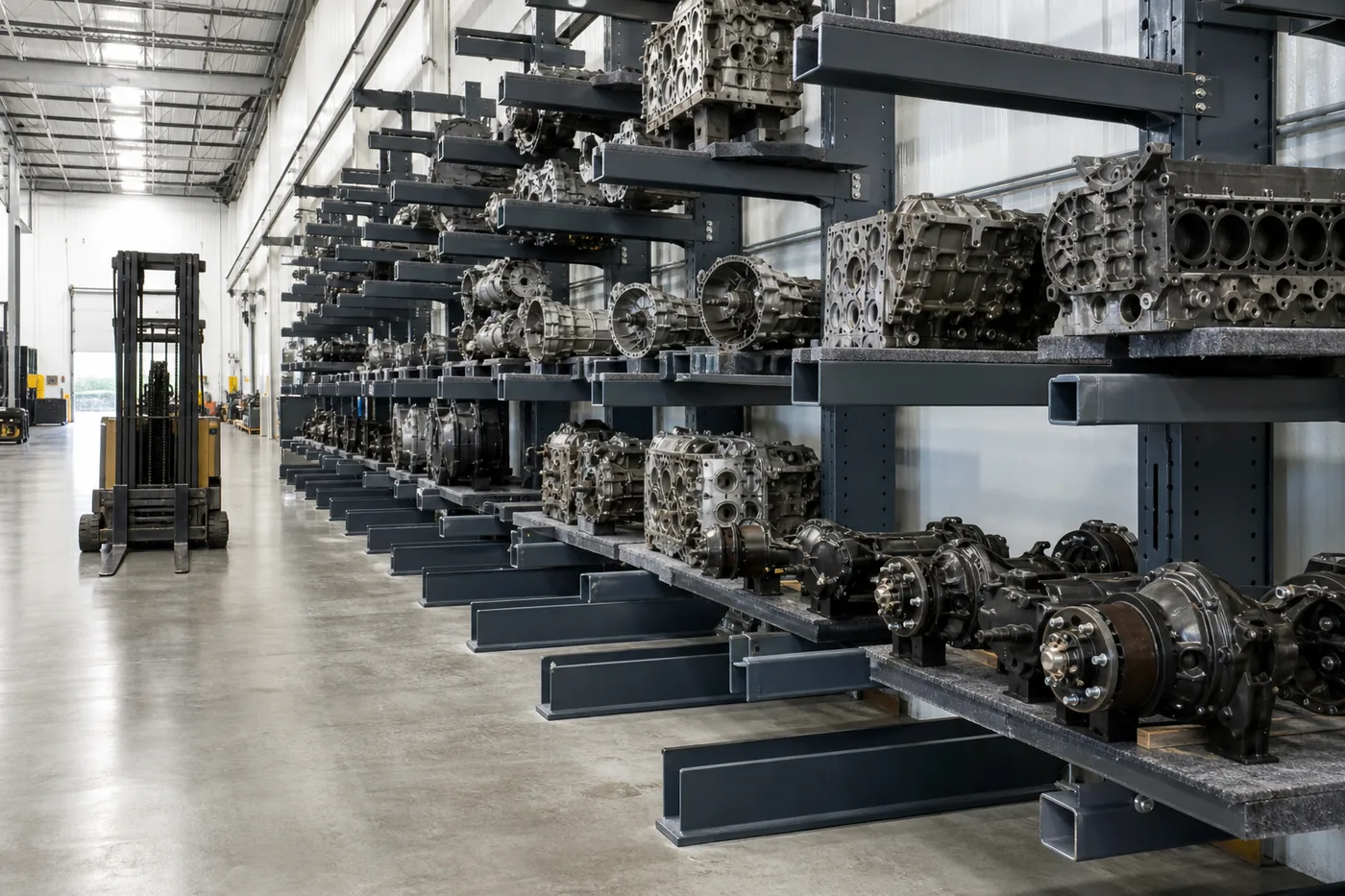
Cantilever racks, wide-span shelving and cradle storage for engines, transmissions, transfer cases, differentials and other heavy driveline components — sized to the load, not stacked on a shelf built for boxes.
Weight decides the system
Long or irregular engine and driveline components are the textbook case for cantilever rather than shelf storage
Contact damage is the top failure
Machined surfaces and mating faces are damaged more often by careless storage than by handling
A cradle prevents rolling
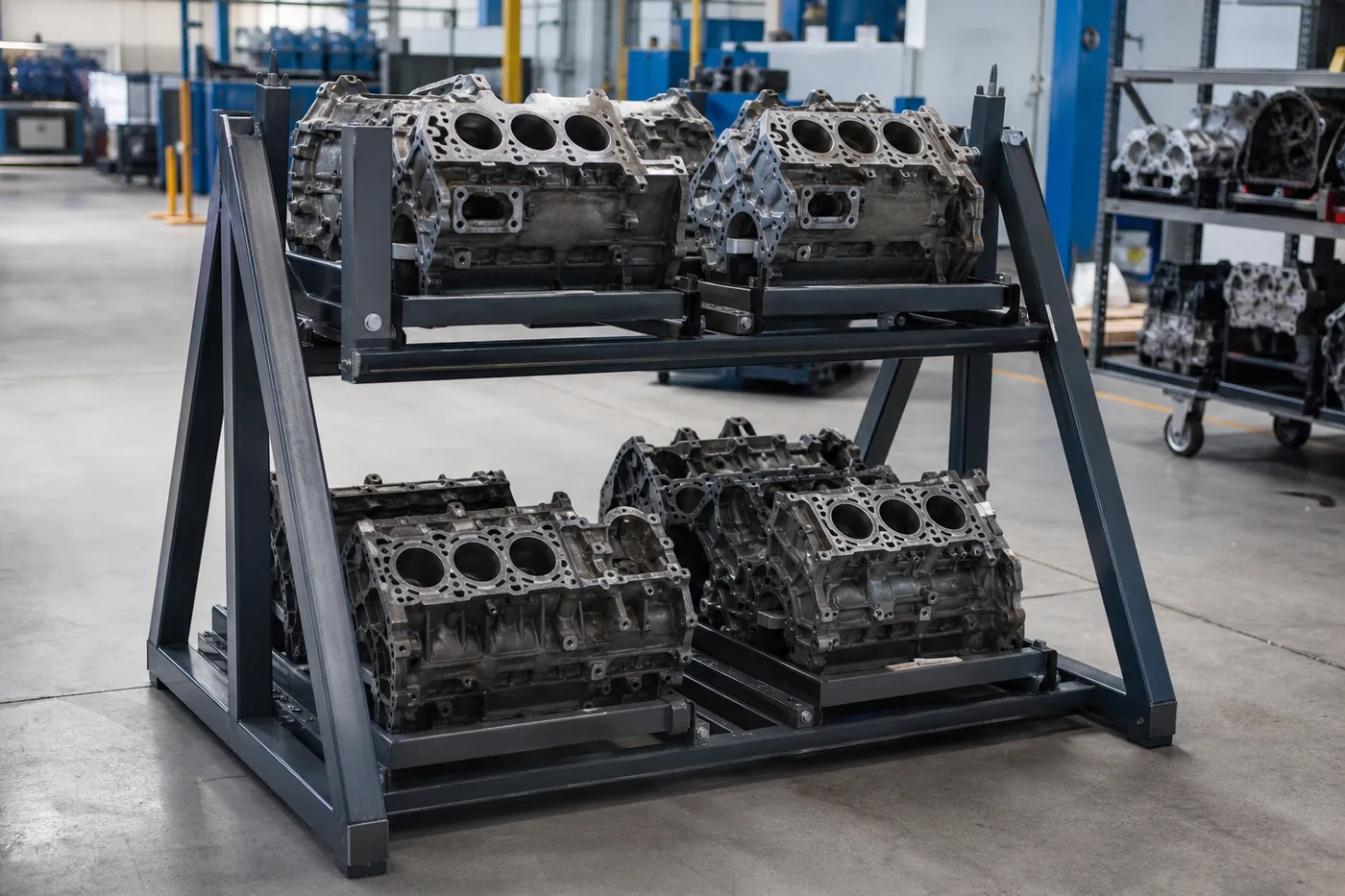
Round or asymmetric components like engine blocks need a rack designed to keep them from shifting
It is its own zone
Engine and driveline storage needs different bays than boxed parts and small components
Why engines and drivelines outgrow standard parts shelving
Most parts room shelving is designed around boxes, bins and cartons: consistent shapes, moderate weight,
even load distribution. Engines, transmissions, transfer cases, differentials, driveshafts and machined
subassemblies break every one of those assumptions. They are heavy, irregularly shaped, expensive to replace if
damaged, and often long enough that a standard shelf span cannot support them without sagging or overhang.
The result, in a lot of dealership, fleet and machine shop back rooms, is engines parked on pallets on the
floor, transmissions stacked with no separation between mating surfaces, and long shafts leaned against a wall
because nothing was built to hold their length. That is a damage and a safety problem at the same time —
components can roll, shift, or crush what is stored beneath them.
This page covers storage systems built for that load class, inside the broader
automotive parts storage systems plan for a shop, dealership or distributor. It complements our
parts room shelving page, which covers the boltless and wide-span systems used for the rest of
the parts inventory around these heavier components.

Matching the rack type to the component
There is no single shelving answer for this category — the right system depends on shape, length and
whether the component sits on a pallet or has to rest directly on arms or a cradle.
| Component type | Typical storage challenge | Rack family that fits |
|---|---|---|
| Long shafts, exhaust and driveline tubing, axle housings | Length exceeds standard shelf spans; components can roll or need support at multiple points along their length. | Cantilever racking — arms extending from a column with no front obstruction, sized and spaced for the load. The RMI/ANSI MH16.3 cantilever rack standard covers the design, testing and utilization criteria for racks carrying long, bulky or irregular loads on load arms from freestanding columns. |
| Engine blocks and short blocks, cylinder heads | Round or irregular shape wants to roll or tip; machined mating surfaces are vulnerable to point-contact damage. | Purpose-built engine stands, cradles or A-frame style storage racks that support the block at designed contact points, keep it off the floor, and prevent lateral movement. Component orientation and support points should follow the engine manufacturer’s or rebuild shop’s handling guidance. |
| Transmissions, transfer cases, differentials | Heavy, dense units with vulnerable input/output shafts and mating faces; often stored temporarily during core exchange or rebuild. | Wide-span or standard pallet racking once units are crated, on skids, or in purpose-built stands; bolt bins or divided shelving for the small parts — covers, pans, seals — that come off during teardown. |
| Machined and finished subassemblies (heads, manifolds, housings) | Any two finished surfaces touching in transit or storage risk scratching or corrosion. | Racks or bins that keep individual components separated rather than stacked directly on one another, following the general principle used in engine-component storage guidance from equipment manufacturers: parts should not be allowed to contact and damage each other on the rack. |
Load ratings are engineering, not habit
Cantilever arm and column capacities, wide-span beam capacities and any cradle or stand load rating are set by the rack manufacturer’s engineering for a specific configuration. Confirm the rated capacity for your actual load and spacing before loading a system — do not assume a rating from a different rack or a different span.
Cantilever racking for long and irregular loads
Cantilever racking is the system most associated with long, awkward loads for a reason: arms extend from a
single column line with nothing in front of the load, so length is not limited by a fixed shelf span the way it
is on boltless or wide-span shelving. That makes it the natural fit for driveshafts, axle housings, long exhaust
components and bar-stock style inventory that a standard parts shelf cannot support cleanly.
- Design and rate to the standard. The RMI/ANSI MH16.3 cantilever rack standard sets out the
design, testing and utilization requirements for these racks — use it as the reference point when
specifying arm length, spacing and capacity with your rack supplier, rather than working from a general steel
rack rating. - Space arms to the load, not the aisle. Arm spacing should match where the component is
actually supported along its length; long shafts sagging between widely spaced arms is a support-point problem,
not a capacity problem. - Keep loads secure against movement. OSHA’s general storage requirement, 29 CFR 1910.176(b),
requires stored material to be stacked, blocked and limited in height so it stays stable and secure against
sliding or collapse — a direct concern with round or cylindrical stock that can roll off an arm. - Separate by turnover. Fast-moving service exchange components belong near the receiving and
staging area covered on our parts receiving and put-away storage page; slow-moving or
specialty long components can sit deeper in the cantilever run.
Handling and layout considerations that protect the components
Specifying cantilever or heavy-component storage?
MH-USA specs and installs cantilever racking, wide-span shelving and heavy-component storage for dealerships, fleets, distributors and machine shops across Utah, Idaho, Nevada and the Mountain West.
Planning the storage bay before you buy the rack
Getting engine and driveline storage right starts before a rack is specified. The questions below decide
which system is actually the right fit — skipping them is how shops end up with cantilever arms too
short for the load or wide-span shelving that cannot take the weight.
Inventory the actual components, not a category
List the specific engines, transmissions, transfer cases, differentials and long components you store by weight, length and shape rather than assuming one rack type covers “driveline parts” as a category.
Separate exchange-program units from long-term stock
Core-exchange engines and transmissions that turn over in days need fast, accessible staging near receiving; long-term or specialty units can sit deeper in the storage bay.
Confirm floor loading and aisle widths
Cantilever and pallet-style racking loaded with heavy components concentrates weight differently than boxed-parts shelving; confirm the floor and aisle clearances support the loaded rack and the equipment used to load it.
Match support points to the component, not the rack
Work from the engine or driveline component’s own support and lifting points — not a generic rack layout — when specifying cradle or arm spacing.
Plan for growth in cube, not just floor footprint
A mezzanine level or taller cantilever bay can multiply capacity in the same footprint; decide early whether vertical expansion is part of the plan so the base rack is specified to support it.
Get the load rating in writing for your configuration
Ask your rack supplier to confirm the rated capacity for your specific arm length, spacing, column height and component weight before the rack goes in service, not after.
What is the best rack type for storing engines and transmissions?
Can engines be stored directly on standard parts shelving?
What standard governs cantilever rack design?
How do you prevent damage to machined surfaces during storage?
What load rating applies to a cantilever arm holding driveline stock?
Where should small hardware removed during teardown be stored?
Does OSHA regulate how heavy components like engines are stored?
Get cantilever and heavy-component storage sized to your inventory
Send us your engine, transmission and driveline component list and dimensions. MH-USA will spec cantilever racking, wide-span shelving and cradle systems rated for the load and lay out the storage bay.