
Dealership Service Department Tool Room Storage and Special Tool Control
Where OEM special service tools live, who signs them out, and how to lay out a dealership tool room so the essential-tool set is findable, controlled and back in place before the next repair order needs it.

1
Home location per special tool, recorded and labeled
3
Storage tiers: bay, tool room, long-term
100%
Sign-out coverage for shared and OEM-supplied tools
2x/yr
Practical audit cadence for an essential-tool set
The tool room is a storage problem disguised as a discipline problem
Every service manager knows the pattern. A technician needs a specialty puller, a spring compressor, a brand-specific alignment fixture or a diagnostic adapter that the dealership bought because the manufacturer’s program required it. Nobody can find it. Twenty minutes later it turns up in the bottom of somebody’s roll cab, or in the back of a cabinet with three other tools that were never returned. The repair order sits, the customer waits, and the shop absorbs the cost of a tool it already owns.
It gets treated as a behavior problem, and behavior is part of it. But shops that fix this permanently fix it with storage: a defined home for every controlled tool, a location scheme that a stranger could follow, and a physical arrangement that makes returning a tool easier than keeping it. That is a layout and equipment decision, and it belongs in the same conversation as the rest of your automotive parts and service storage systems.
This page is about the tool side of that conversation: the special service tools supplied under OEM programs, the shared shop equipment nobody owns personally, and the consumables that vanish. It is not about technicians’ personal tool boxes, which stay personal. Express and quick-lube lanes carry their own storage problem — see quick lube and express service bay storage.
What actually needs controlled storage
Draw the line before you buy anything. In most dealership service departments four categories need a controlled home, and each has a different storage answer.
Personal hand tools are deliberately absent from that list. Technicians own them, store them in their own boxes and are responsible for them. Where the dealership does supply mobile storage — roll cabs, technician carts, bay workstations — it belongs to the bay, not to the tool room, and it should be specified for the work happening at that stall. Our automotive rolling tool carts and technician workstations page covers that equipment in detail; the tool room’s job is everything that is shared or accountable.

Special service tools and the essential-tool program
Vehicle manufacturers publish required and recommended special service tools for their franchised dealerships and supply them through managed tool and equipment programs. The published program materials for these programs describe one-stop purchasing of the manufacturer’s required and recommended special service tools, program billing through the parts account, and support for purchasing, returning defective tools and renting expensive ones, so a dealer can repair the vehicle correctly the first time. Programs of this kind exist across most major franchises.
Two facts follow from that, and both are storage requirements:
- The set grows with every model year. New models bring new required tools. A tool room sized for today’s list is full within a few years, so plan expansion space in the layout rather than adding a cabinet in the aisle later.
- The dealership is accountable for having them. If a required tool cannot be produced during a program review, “we own it somewhere” is not an answer. Storage that supports a fast physical audit is worth real money at review time.
Practical consequence: store the special tool set as a set, in a defined and labeled zone, ideally with the manufacturer’s tool numbers as the location key. Do not scatter required tools across bay cabinets because one technician uses them most often.
Three storage tiers, and what belongs in each
The layout question is not “where do we put the tools” but “how far from the bay does each tool live”. Distance should track frequency of use, exactly like slotting a parts room.
| Tier | What lives there | Typical storage | Control |
|---|---|---|---|
| At the bay | Tools used every day by the technician at that stall | Technician workstation, roll cab, wall cabinet at the stall | Assigned to the stall or the technician; no sign-out |
| Tool room / central | Shared and OEM special tools used weekly to monthly | Steel shelving, modular drawer banks, labeled shadowed positions, lockable cabinets | Sign-out required; one named owner of the room |
| Long-term / overflow | Seasonal, obsolete-model and rarely used equipment | Upper shelving levels, mezzanine, caged storage area | Recorded location; audited, not signed out daily |
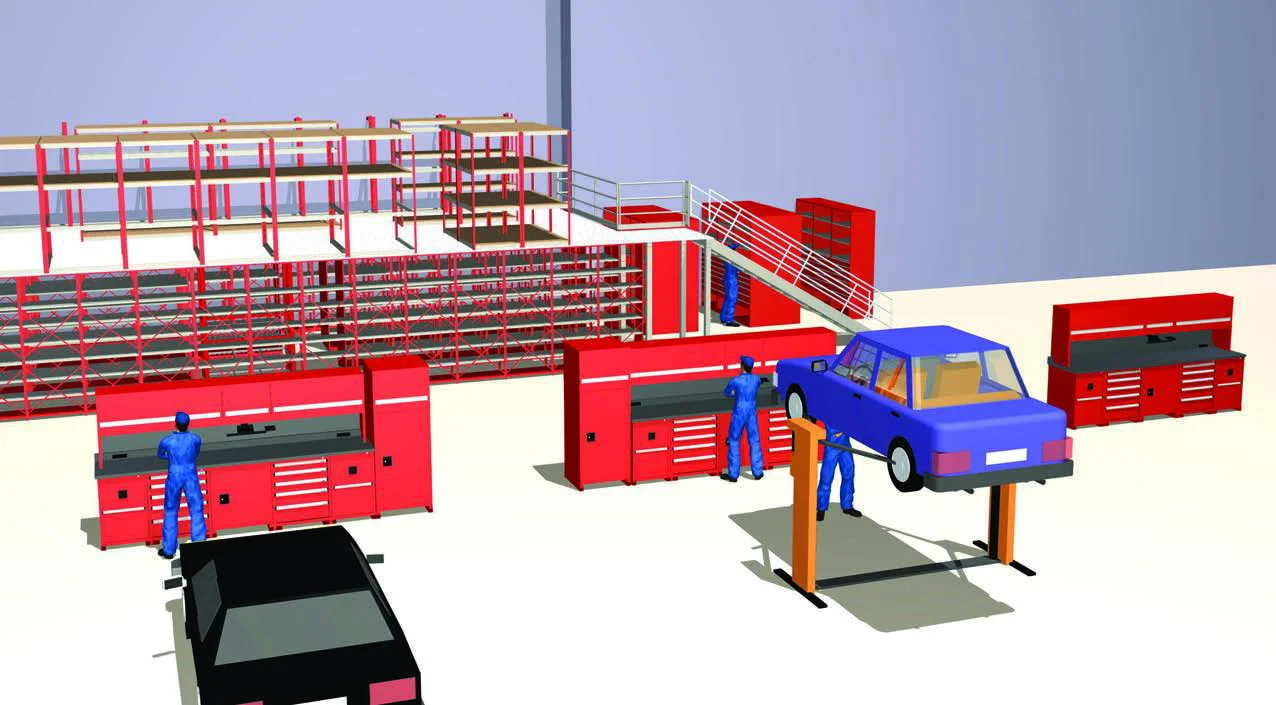
Tier boundaries are worth arguing about once, in a room with the shop foreman. Every tool that gets promoted to the bay tier is a tool that will not be found by anyone else; every tool demoted to overflow is a longer walk. Write the decision down, label accordingly, and revisit it annually rather than letting it drift one tool at a time.

Laying out the tool room itself
A dealership tool room is usually a leftover space: a corner of the shop, a converted office, the end of the parts room. That is workable, but the layout rules are the same as any high-turn picking area.
- One door, one counter, one line of sight. Control is trivially easier when there is a single way in and a person or camera can see it.
- Fast tools nearest the door, at waist to chest height. Heavy items low. Rarely used fixtures high or deep.
- Shadowed or divided positions for loose tools so an empty slot is visible immediately. A tool that is “somewhere in that cabinet” has no location.
- Aisles wide enough for the biggest fixture plus a cart. OSHA’s general storage requirements, 29 CFR 1910.176, call for aisles and passageways to be kept clear, in good repair and marked, with stored material stacked, blocked, interlocked and limited in height so it is stable and secure against sliding or collapse. Heavy pullers and fixtures on a high shelf are exactly what that language is about.
- Power and a bench. Diagnostic equipment needs charging and a place to be checked in and tested before it is put away broken.
For the storage itself, standard steel shelving carries cases and fixtures, modular drawer banks handle loose tools and adapters, and lockable cabinets cover the highest-value items. Where the tool room shares a wall with the parts department, using the same automotive shelving family keeps section sizes, accessories and labeling consistent across both rooms.
Sign-out systems: from a clipboard to vending
Every control system is a trade between friction and accountability. Pick the lightest one that actually gets used.
 Manual logA bound log or whiteboard at the tool room door. Costs nothing, works in small shops with one door and a foreman who enforces it, and fails silently the moment the room is busy or unattended.
 Tool tags and shadow boardsEach tool position carries a tag; the technician leaves their tag in the empty slot. Visual, fast, and self-auditing — you can see who has what from the doorway.
 Industrial vending and smart lockersElectronic dispensing for consumables and controlled issue for high-value tools, with a transaction record per user. Justified where consumable spend is high or the tool room cannot be staffed.
Most dealerships land on a hybrid: shadowed positions and tags for the shared tool set, because it is visual and needs no software; and industrial vending or smart lockers for consumables and a short list of high-value items, because those are the categories where a transaction record pays for itself. Whatever you choose, one person has to own the room. A control system without an owner degrades to a shelf.
Not sure which control level fits your shop?
Tell us how many bays, how many technicians and whether the tool room can be staffed, and we will lay out the storage and the control method that fits — without selling you software you do not need.

Security and the after-hours question
Special service tools are attractive, portable and expensive to replace. The security answer depends on what the rest of the building already does.
- Lockable drawer banks and cabinets are enough when the shop itself is secure and the concern is casual borrowing rather than theft.
- A caged tool room — woven or welded wire partition around the storage zone with a lockable door — suits shops where the tool area sits inside an open bay and cannot be walled in. Our security cage and partition systems cover that configuration.
- Access records matter when several shifts share the room. Keys tell you nothing after the fact; a badge reader, a lockable vending unit or a staffed window tells you who and when.
Key control deserves one blunt sentence: a lock whose key is on a hook by the door is decoration. Decide who holds keys, how many exist, and what happens when someone leaves — before the cabinets arrive.
The same logic covers high-value parts in the adjacent parts room, which is why tool room security and parts security usually get designed together rather than as two projects.
Keeping it working: audits, consumables and the annual reset
Tool rooms decay in predictable ways. These habits keep the layout honest.
- Audit the special tool set on a fixed cadence — twice a year is realistic for most shops — against the manufacturer’s current required list, not against last year’s inventory sheet.
- Re-slot after each audit: promote tools that are being used more, demote the ones nobody has touched.
- Give consumables a visible min/max so the first person to hit the minimum triggers a reorder instead of the last person finding an empty box.
- Check returned diagnostic equipment at the bench before it goes back on the shelf; a broken tool stored as good is worse than a missing one.
- Reserve at least one empty section for next model year’s tools, and defend it.
- Photograph the finished layout and keep the location list with the shop foreman so a new hire can run the room.
None of this is exotic. It is the same slotting, labeling and replenishment discipline that makes a parts room work, applied to a smaller and more valuable inventory. Shops that treat the tool room as a storage system rather than a closet get the time back in effective labor hours, which is where the return actually shows up.
Shop Related Automotive Parts-Room Products
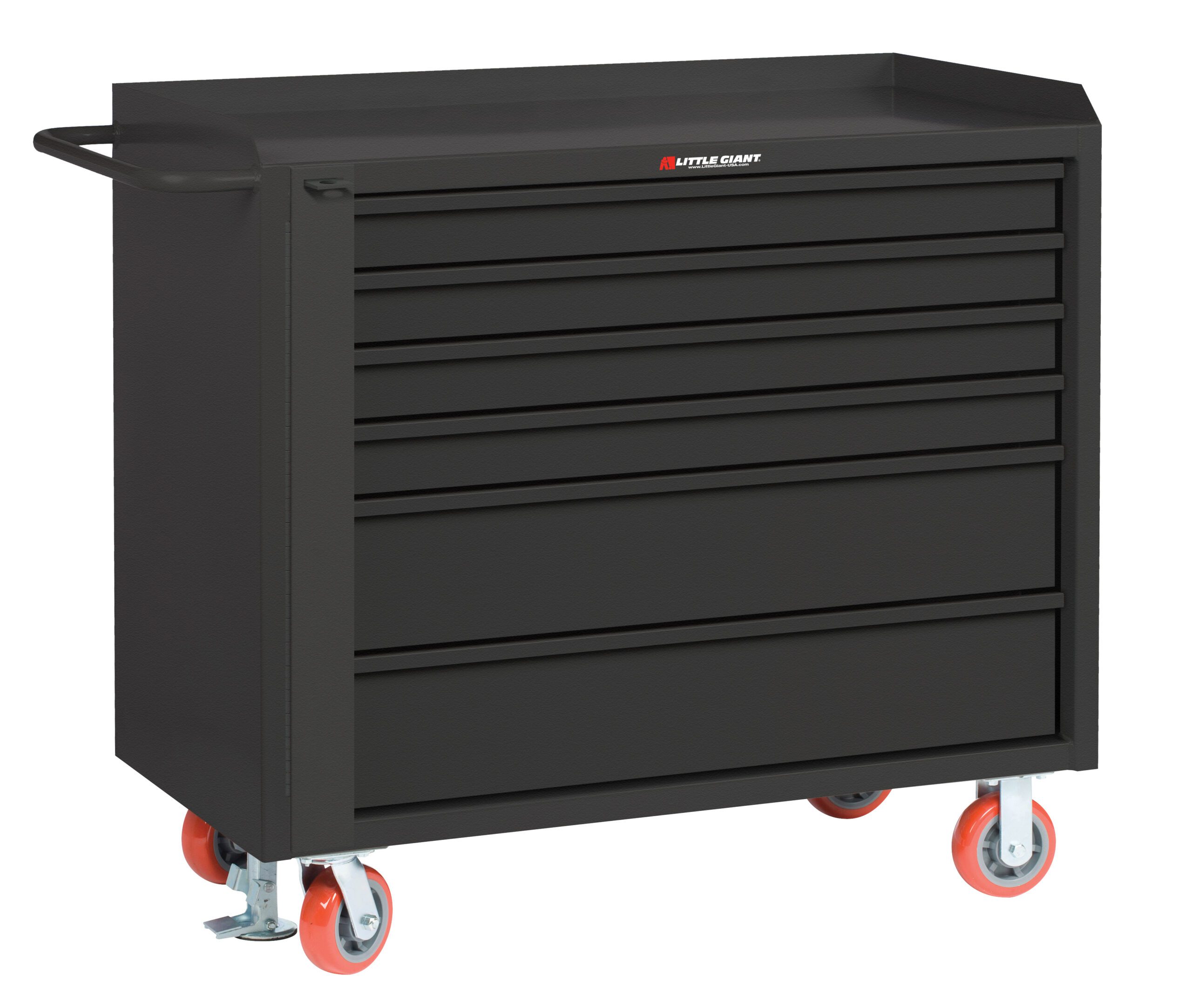
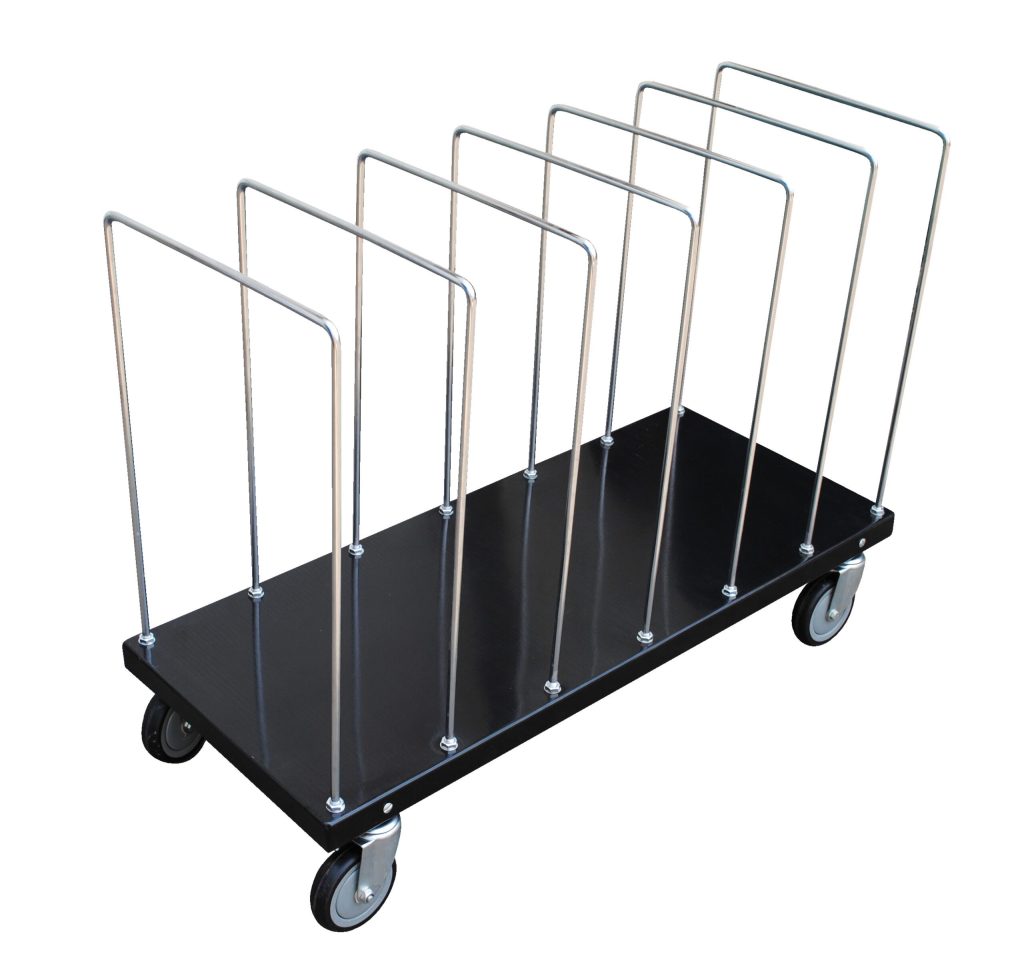
These catalog products support parts organization and handling; they are not a custom-designed automotive storage system. Confirm specifications and project suitability before ordering.

Dealership tool storage questions
Where should OEM special service tools be stored in a dealership?
What is the best way to control tool check-out in a service department?
How much space does a dealership tool room need?
Should technician tool storage be in the bay or in the tool room?
Do we need a cage for the tool room?
How do we keep consumables from disappearing?
Plan your service department tool storage
MH-USA lays out dealership tool rooms, technician workstations and parts storage as one system. Send us your floor plan and tool list.