
Home / Automotive Storage / Rolling Tool Carts
Automotive Rolling Tool Carts
Commercial technician carts and portable tool storage for dealership service bays, independent repair shops, fleet maintenance and parts delivery.

13 models
Current Shure technician-cart lineup
400 lb
Shure tool-storage drawer rating
22″ × 24″
Borroughs basic service-cart footprint
4 swivel casters
Borroughs service-cart mobility
Bring the Work Set to the Vehicle
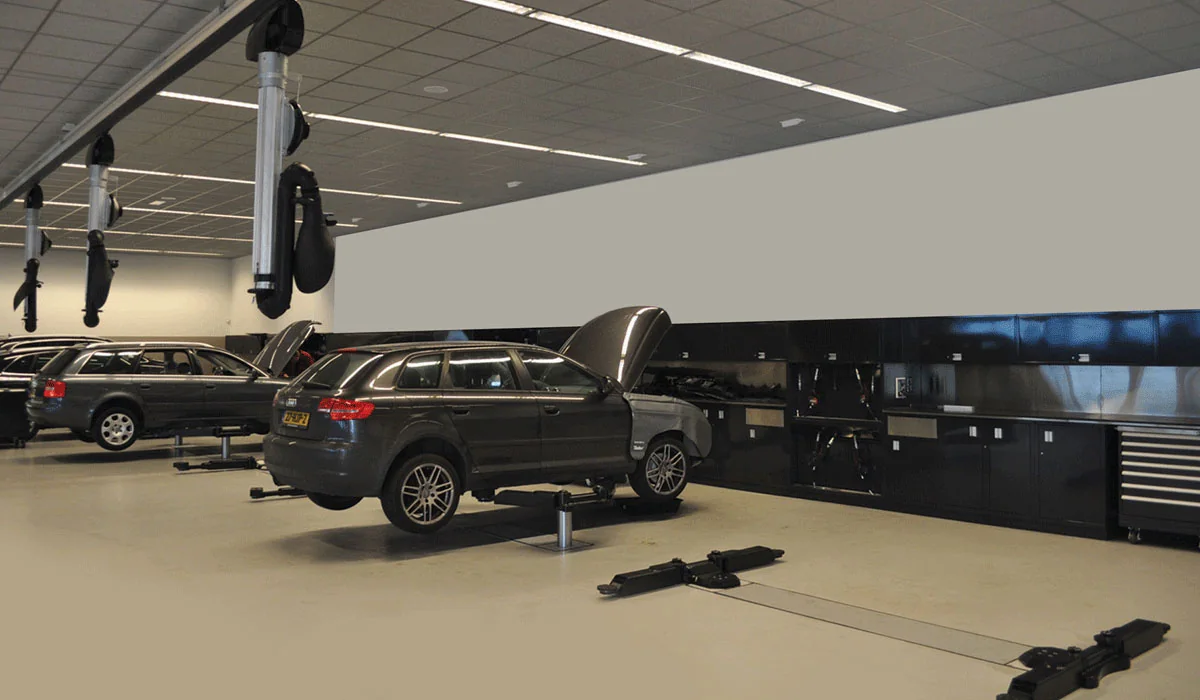
An automotive rolling tool cart is not just a small cabinet with wheels. In a commercial service department, it is the mobile link between the technician’s primary storage, the parts counter and the vehicle. The right cart carries the tools and components needed for the current job without crowding the bay, blocking a lift arm or sending the technician back to a stationary box every few minutes.
That makes cart selection a workflow decision. Drawer count matters, but so do the turning path, caster behavior, work-surface height, security, tool visibility and the difference between what belongs on the cart and what should remain in a full workstation. Material Handling USA plans these elements together for dealerships, independent shops, fleet garages, municipal maintenance and vocational service labs.
Commercial systems, not consumer toolboxes
This page covers shop-grade technician carts, service carts and portable drawer cabinets. It does not treat a lightly loaded DIY cart as interchangeable with a cart that moves through multiple service bays every day.
Automotive Rolling Tool Cart Configurations
Start with the work carried, then choose the enclosure. These six formats cover most professional service-bay needs without inventing a one-size-fits-all cart.
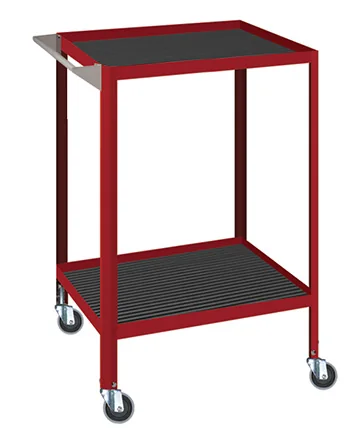
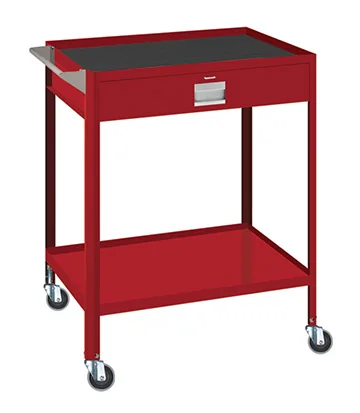 Open Cart + Lockable DrawerA simple bay-side cart for hand tools, meters and the current repair order. The shallow top drawer secures the expensive items; the open lower shelf takes cases, chargers and bulky tools.
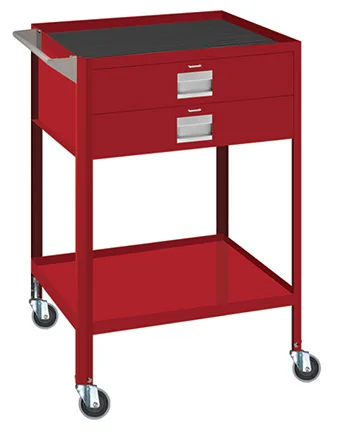
 Two-Drawer Technician CartAdds separation for frequently used hand tools without turning the cart into a large rolling cabinet. A good fit when one technician owns the cart and moves it between adjacent bays.
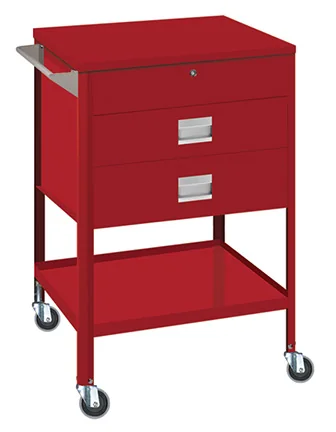
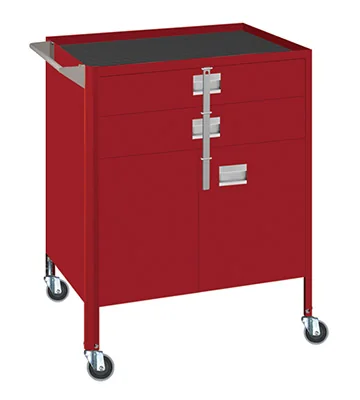 Enclosed Deluxe CartFull-height locking storage protects tools and diagnostic equipment from dust, overspray and casual access. Choose enclosed storage when security matters more than instant shelf access.
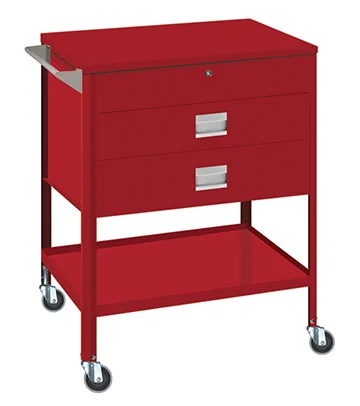 Drawer + Open-Shelf HybridTwo drawers organize small tools while the lower shelf remains open for a scan tool case, battery charger or removed components. This is the most flexible general-service format.
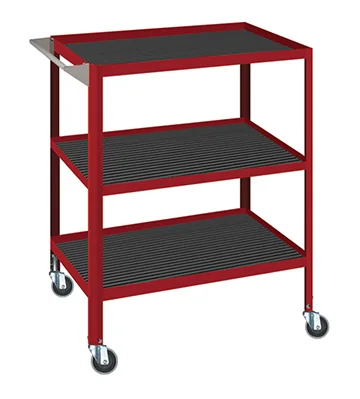 Three-Shelf Service CartOpen shelves make parts and larger tools visible from a distance. Use this format for staging repair parts, brake components and supplies rather than loose precision tools.
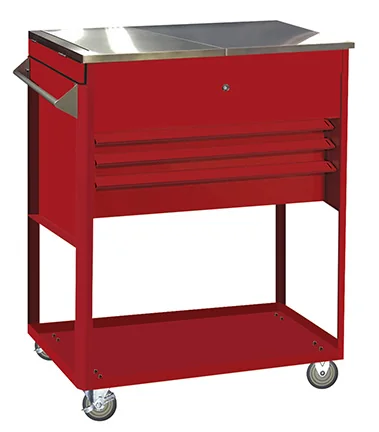 Dual-Lid Tool CartA covered top keeps the working tool set together while shallow drawers organize sockets, wrenches and measurement tools. It suits technicians who need mobile security and fast access.
Compact Cart or Full-Size Rolling Cabinet?
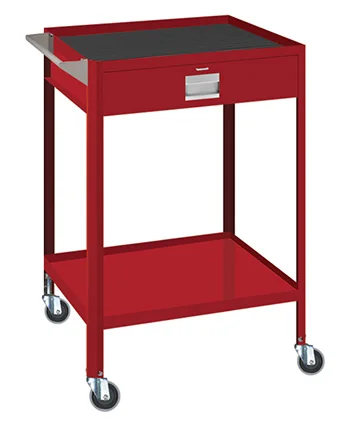 Compact / Mini CartNarrower footprint for dense shops, quick-lube lanes and diagnostic work. The cart should turn inside the bay without entering the vehicle path or blocking a lift arm.
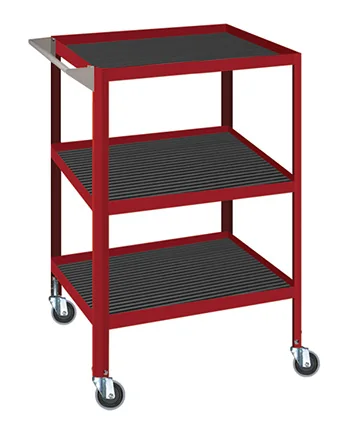 Compact Open-Shelf CartUse when the load is mostly large cases, fluids or staged parts. Open shelves reduce search time but should not carry loose tools where they can roll off during travel.
 Compact Enclosed CartAdds lockable, dust-resistant storage without the footprint of a full cabinet. Appropriate for scan tools, specialty adapters and shared diagnostic kits.
 Standard Technician CartFull-size formats provide more drawer and work-surface capacity for general service. The right configuration is set by the tool kit, not simply by the largest cart that fits the budget.
Size the Entire Operating Envelope
A published cabinet width is only the beginning. Include the push handle, side accessories, open drawer depth and any flip-up shelf. Then walk the route from storage to the farthest bay. Check the narrowest turn, lift posts, floor drains, tire changers, alignment equipment and the space a vehicle door needs when fully open.
A compact cart is better when it carries the same useful mobile set with less obstruction. A larger portable cabinet is justified when it serves as the technician’s primary storage or when high-value specialty tools need more secure drawer capacity. Avoid buying empty volume that makes the cart harder to steer.
Match the Cart to the Service Workflow
The best configuration changes with the work. Use this table as a starting point, then verify the exact load and route in your facility.
| Work pattern | Usually the best starting format | Why |
|---|---|---|
| General mechanical service | Drawer + open-shelf hybrid | Hand tools above; cases, chargers and removed parts below |
| Diagnostics and programming | Locking enclosed or dual-lid cart | Protects scan tools, laptops, adapters and cables |
| Quick-lube / express lane | Compact open cart | Small turning radius and fast access to a limited tool set |
| Brake and suspension work | Three-shelf or hybrid cart | Stages heavier parts separately from clean hand tools |
| Parts delivery to the bay | Open two- or three-shelf cart | Visible totes and boxes; easy loading from the parts counter |
| Shared specialty tools | Locking cart with assigned compartments | Maintains custody and gives every kit a return location |
| Primary technician storage | Portable drawer cabinet | More drawers and worktop area; parked near the assigned bay |
Need a cart and workstation standard for every bay?
Send us the bay count, room plan and mobile tool list. We can build a repeatable package that coordinates carts, drawers, work surfaces, parts storage and technician clearances.
Request a Layout & Quote Browse Design Tools Call (800) 326-4403
Specifications That Matter More Than Drawer Count
A serious cart specification states how the product will be loaded, moved and secured. These are the questions we resolve before narrowing the model list.
| Selection factor | What to verify |
|---|---|
| Overall capacity | Cart, drawer and shelf ratings are separate. Verify each against the planned load; never infer one from another. |
| Caster system | Wheel diameter, tread, swivel pattern and brakes determine how the cart behaves at floor joints, drains and lift posts. |
| Drawer access | Full extension exposes the back of a drawer. Confirm the published rating applies at extension and to the exact family quoted. |
| Security | Choose keyed drawers, enclosed doors or a locking lid according to what must remain controlled after the shift. |
| Work surface | A raised lip retains small items; rubber helps protect tools; stainless steel improves cleanup; hardwood suits clamping and bench work. |
| Footprint | Measure the cart with handles and flip-up shelves deployed, not only the cabinet body. Confirm the turn into every intended bay. |
| Organization | Dividers, partitions, drawer liners and shadowing reduce search time and expose missing tools before a vehicle leaves. |
| Utilities | If power, air, a laptop or a monitor rides on the cart, plan cable routing and charging so cords do not cross a traffic path. |
Capacity Is Not One Number
Overall cart capacity, individual shelf capacity and drawer capacity are different ratings. A strong drawer rating does not automatically increase the capacity of the frame, worktop or casters. Shure, for example, publishes full-extension drawers with a 400 lb capacity for its tool-storage cabinet line. That figure is useful because it is explicit, but it must stay tied to that product family.
The purchase specification should list the exact manufacturer, model or approved configuration and every required capacity. Heavy impact tools and large battery packs belong low in the cart. Frequently used light tools belong in shallow drawers near waist height.
Verified Commercial Cart and Storage Options
Shure Technician Carts and Portable Tool Storage
Shure Manufacturing publishes a 13-model technician-cart lineup ranging from mini two-shelf carts through drawer, enclosed, deluxe and dual-lid configurations. Its tool-storage cabinet line is available in stationary and portable formats; the portable cabinets include a stainless steel top cap. Shure states that the tool-storage drawers are full-extension, locking, lined and rated to 400 lb, with dividers and partitions available.
For a dealership or fleet facility, this breadth makes it possible to standardize by job function rather than forcing one cart into every bay. Open carts can stage parts, drawer carts serve general technicians, and enclosed carts can protect shared diagnostic equipment.
Borroughs Service Carts and Automotive Workstations
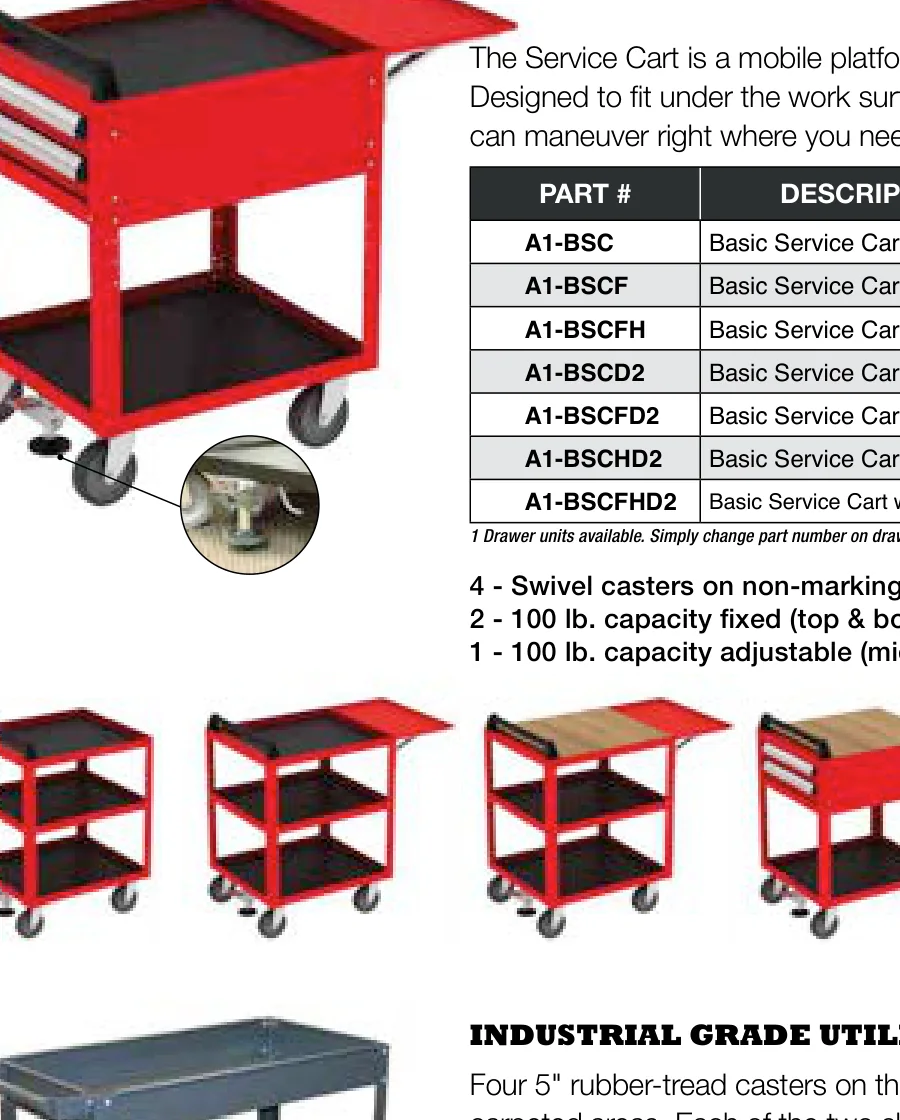
Borroughs describes its service cart as a mobile platform for technicians’ tools and repair parts, designed to fit under a work surface and behind a lockable cart garage. The published basic cart footprint is 22″ wide by 24″ deep by 34″ high. Options include a 12″ flip-up shelf, hardwood top and one- or two-drawer configurations.
The catalog specifies four swivel casters with non-marking impact-resistant treads, two fixed 100 lb-capacity shelves and one adjustable middle shelf rated at 100 lb. Borroughs also offers complete automotive workstations with drawer cabinets, upper cabinets, lift-control and reel cabinets, trash/cart garages and utility integration. That lets the cart dock into a planned bay instead of living wherever floor space happens to remain.
Rolling Cart vs. Portable Cabinet vs. Full Workstation
| Storage format | Best role | Primary strength | Watch for |
|---|---|---|---|
| Open service cart | Parts delivery and large-tool staging | Immediate visibility and simple loading | Loose items can move or fall; limited security |
| Drawer technician cart | Mobile hand-tool set | Fast organization close to the vehicle | Can become overloaded if it replaces all stationary storage |
| Portable drawer cabinet | Primary technician storage near one or two bays | High drawer density plus usable worktop | Larger turning radius and more difficult travel |
| Stationary workstation | Bay infrastructure and long-term storage | Utilities, overheads, secure drawers and broad work surface | Does not bring the task set to the vehicle |

A productive bay normally uses both mobile and stationary storage. The workstation holds the complete tool inventory, power and air connections, manuals, fluids and bulky service equipment. The cart carries the subset needed for the current operation. When the cart returns to a dedicated garage or parking position, the aisle stays open and missing tools are easier to spot. The shared and OEM special tools that belong to nobody in particular need a different home again — see dealership service department tool room storage and special tool control.
This division also improves change management. A new diagnostic device may require a protected cart compartment and charging location, while a larger primary tool set may require another drawer bank in the workstation. Each can change without replacing the other.
How We Specify Automotive Tool Carts
We use a short, evidence-based process so the selected cart works in the real bay rather than only on a product sheet.
List the mobile work set
Separate the tools that must travel to the vehicle from the tools that can stay in a stationary workstation. Record the case sizes and total weight rather than estimating by drawer count.
Map the travel path
Measure bay clearances, lift posts, drains, thresholds and the turn from tool storage into the service lane. A cart that fits the wall may still fail the route.
Match storage to access
Use shallow drawers for frequently used hand tools, deeper drawers for cases, open shelves for staged parts, and enclosed storage for high-value diagnostic or shared equipment.
Specify capacity and control
Confirm published cart, shelf and drawer ratings for the exact model. Add brakes, keyed locks, dividers, liners and worktop options to the written specification.
Standardize the bay
Repeat a proven cart and workstation package across equivalent bays, then label each drawer and return point so technicians can move between bays without relearning the storage system.
What to send for a useful recommendation
A marked floor plan or room dimensions, number of bays, clear width at the tightest turn, photos of thresholds and lift posts, the mobile tool list with approximate weights, and any security or color-standard requirement.
Where Rolling Tool Carts Improve Automotive Operations
 Dealership Service DepartmentsStandardized carts give every technician the same return points and keep premium diagnostic equipment protected while maintaining a consistent customer-facing shop appearance.
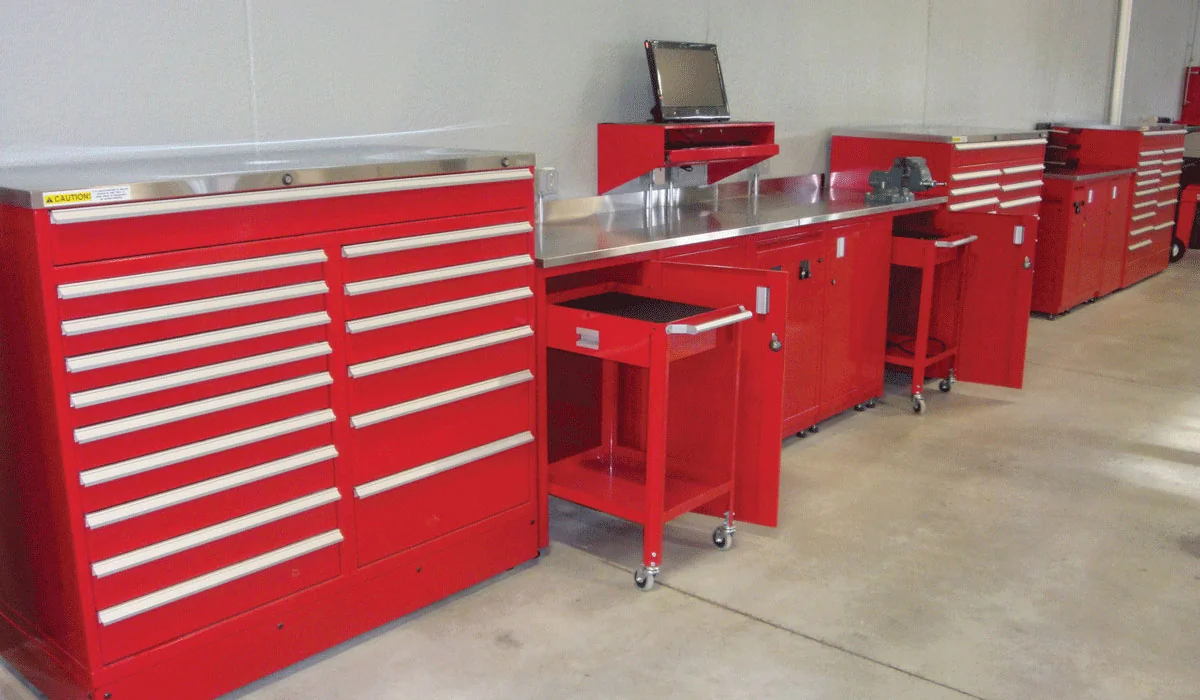 Independent Repair ShopsA flexible open or hybrid cart reduces trips to a shared toolbox and helps a smaller team move between general repair, inspection and tire work without duplicating every tool.
 Fleet and Municipal MaintenanceShared carts can be assigned to PM, brake, electrical or specialty-tool kits, making custody and replenishment clearer across shifts and vehicle classes.
 Diagnostic and Programming WorkLockable enclosed storage protects laptops, scan tools, breakout boxes, adapters and cables while moving between vehicles and during overnight storage.
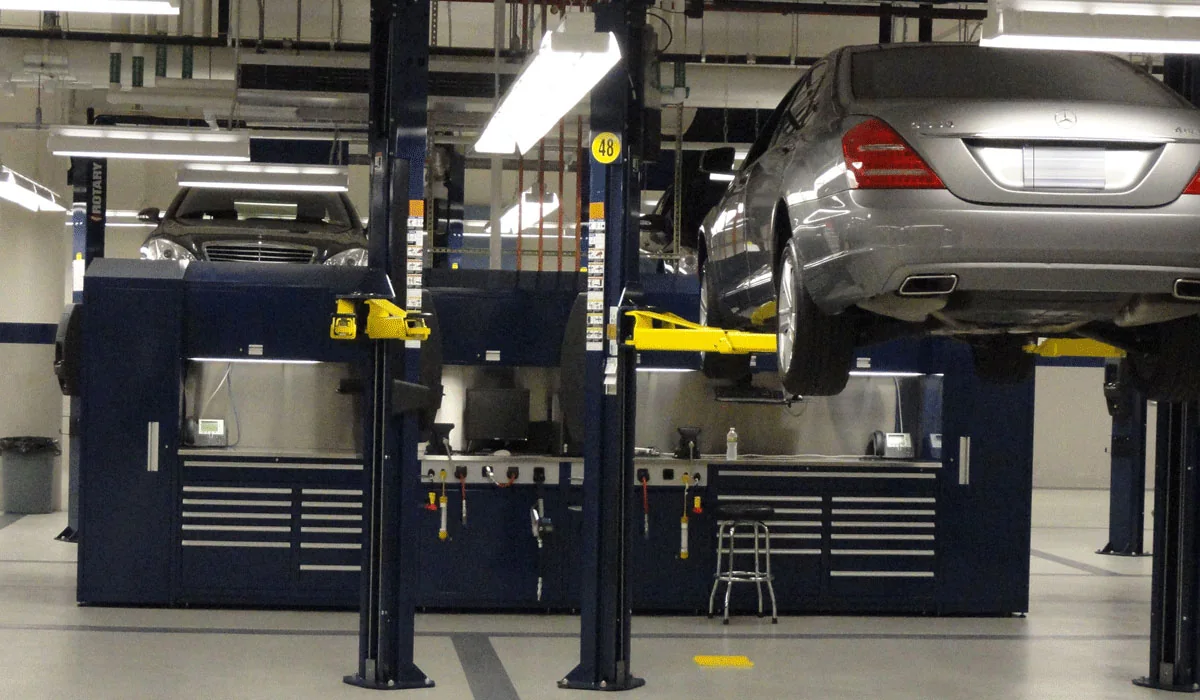 Parts Delivery and KittingOpen shelves carry labeled bins and repair-order parts from the counter to the assigned bay without mixing clean parts with greasy hand tools.
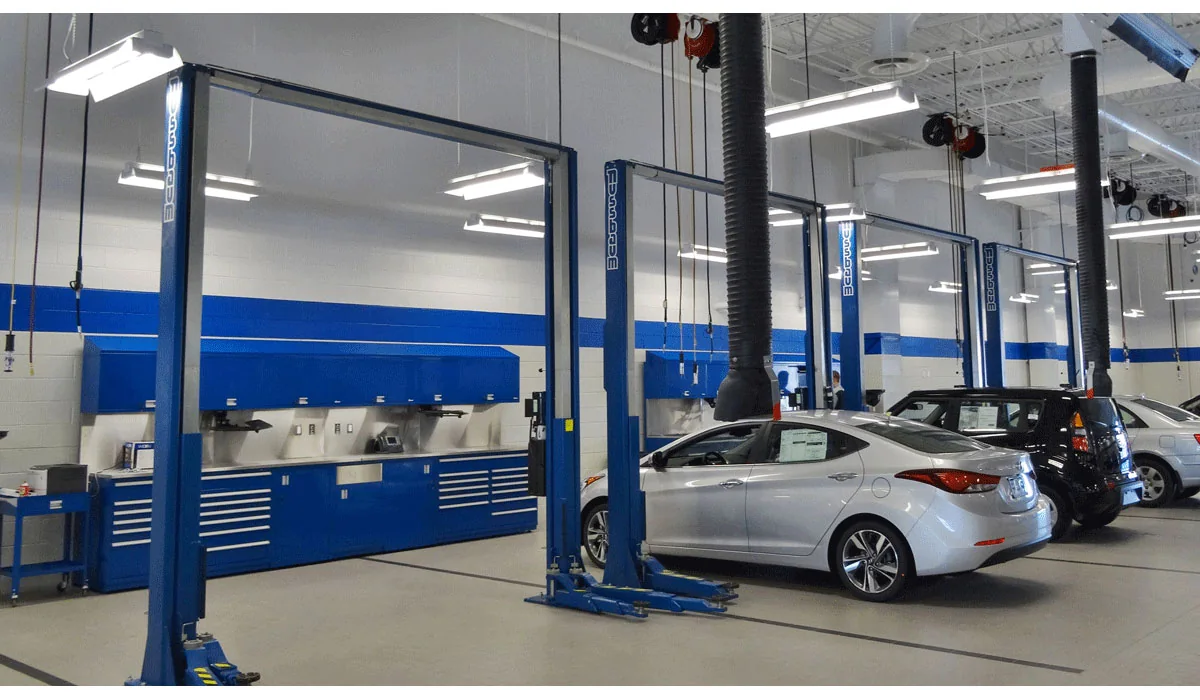 Vocational Automotive LabsLidded or drawer carts keep classroom tool sets together, give instructors a visible check-in point and support repeatable setup for each training station.
Tool Cart Use and Maintenance Checklist
- Engage the caster brakes whenever the cart is parked for work
- Close and latch drawers before moving; never travel with a drawer acting as a shelf
- Keep heavy tools low and stay within every published cart, shelf and drawer rating
- Inspect caster fasteners, wheel tread and brake action on a regular shop schedule
- Replace damaged drawer slides, locks, handles and liners rather than working around them
- Keep cords, hoses and laptop leads routed on the cart and out of walking or vehicle paths
- Clean oil, coolant and brake dust from work surfaces and casters before buildup affects grip
- Give every tool and accessory a labeled return location so missing items are visible
- Do not stand, sit, tow or ride on a cart unless the manufacturer explicitly designed it for that use
Shop Carts & Trucks Online
Buy select items directly from our online store, or request a quote for volume, custom sizes and freight-rated orders.


See our full range of automotive storage solutions for parts rooms, tire storage, shelving and dealership projects.
Automotive Rolling Tool Cart FAQs
What is the best rolling tool cart for a professional automotive shop?
How much weight can an automotive tool-cart drawer hold?
How do I keep a rolling tool cart from moving while I work?
Should I choose drawers, shelves or enclosed storage?
What caster features matter in an automotive service bay?
Can a rolling tool cart replace a full automotive workstation?
How should tool-cart drawers be organized?
Can Material Handling USA lay out carts with the rest of a service department?
Related Products & Resources
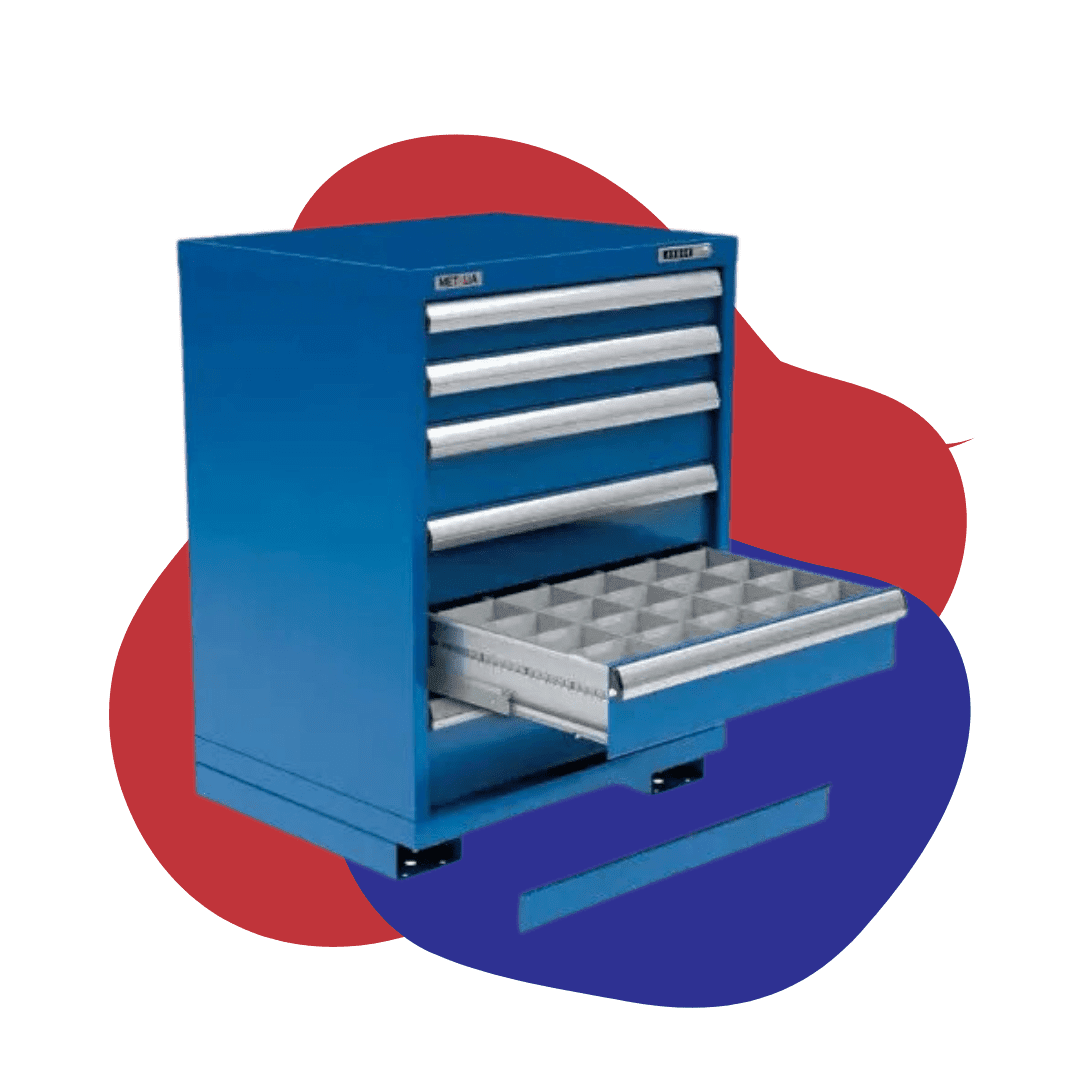 Automotive Modular DrawersHigh-density drawer cabinets for tools, fasteners and service parts in technician bays and parts rooms.
 Automotive ShelvingSteel, bin, drawer, tire and bulk-storage systems for dealership and fleet parts departments.
 Automotive Tool ControlControlled-access tool vending and accountability systems for shared tools and consumables.
 Rivet ShelvingBoltless shelving for cases, bulky tools and reserve parts that do not belong in cart drawers.
 Pallet Rack SystemsBulk and palletized automotive inventory storage designed around handling equipment and aisle needs.
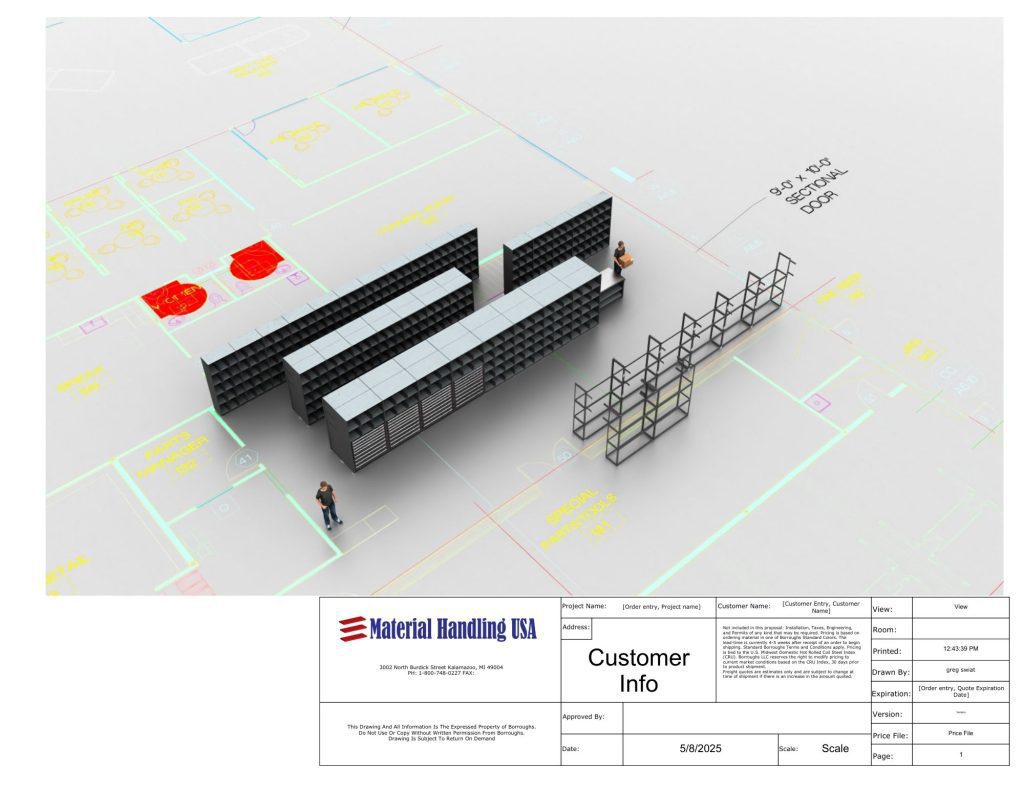 Parts Department Layout PlanningSee how cart routes, shelving and the parts counter come together in an automotive department layout.
Build a Better Mobile Tool-Storage Standard
Send us your bay plan, cart route and mobile tool list. We will help match the right commercial carts, drawer storage and workstations to your service workflow.