
Home › Shelving › Rivet Shelving For help choosing between light-duty single rivet, double rivet and channel beams, see our boltless shelving beam and capacity guide. Considering used rivet shelving? Our used vs new boltless shelving guide explains what to inspect and why parts from different brands rarely mix. Need a size the ready-made kits do not come in? See how custom boltless shelving is built from standard posts, beams and decks.
See a real project built this way: our case study on low-profile boltless rivet shelving bought in phases by an aerospace supplier in Longmont, Colorado, covering single versus double rivet beams and standalone units.
Rivet Shelving
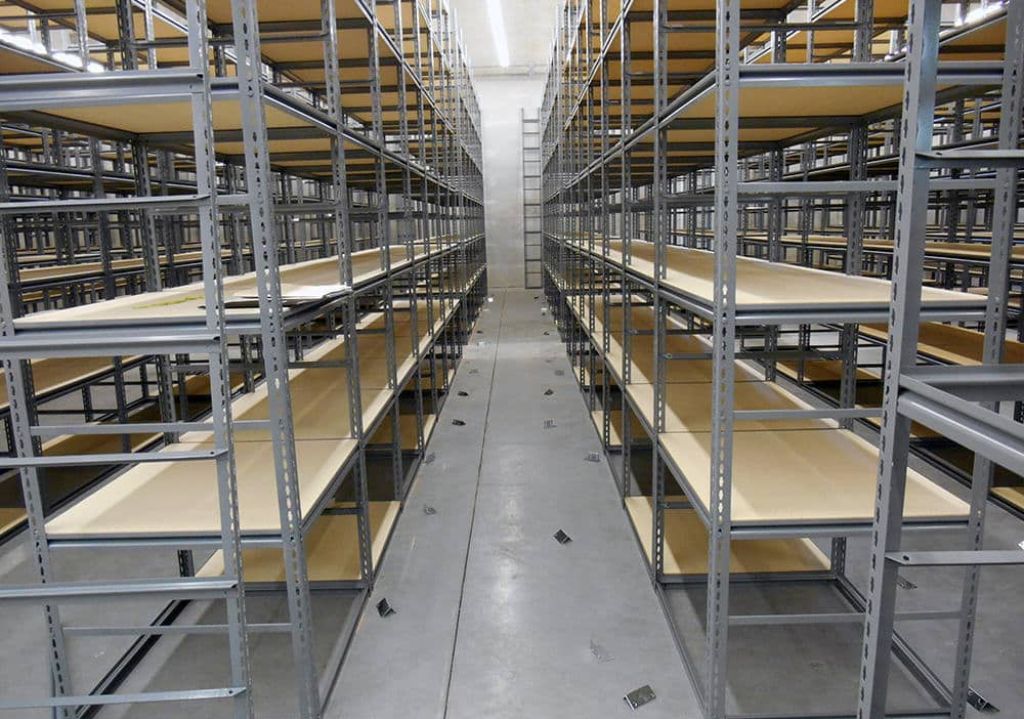
Boltless rivet shelving is the cheapest usable storage per cubic foot you can buy — no nuts, no bolts, no clips, assembled with a rubber mallet. This guide covers capacities, decking choices, sizing, brands, and how to configure a run that will not sag in five years.
0
Nuts, bolts, or shelf clips required
1 in
Shelf height adjustment increment
500–3,000 lb
Per-shelf capacity range by series
1 mallet
Tools needed for assembly
What Rivet Shelving Actually Is
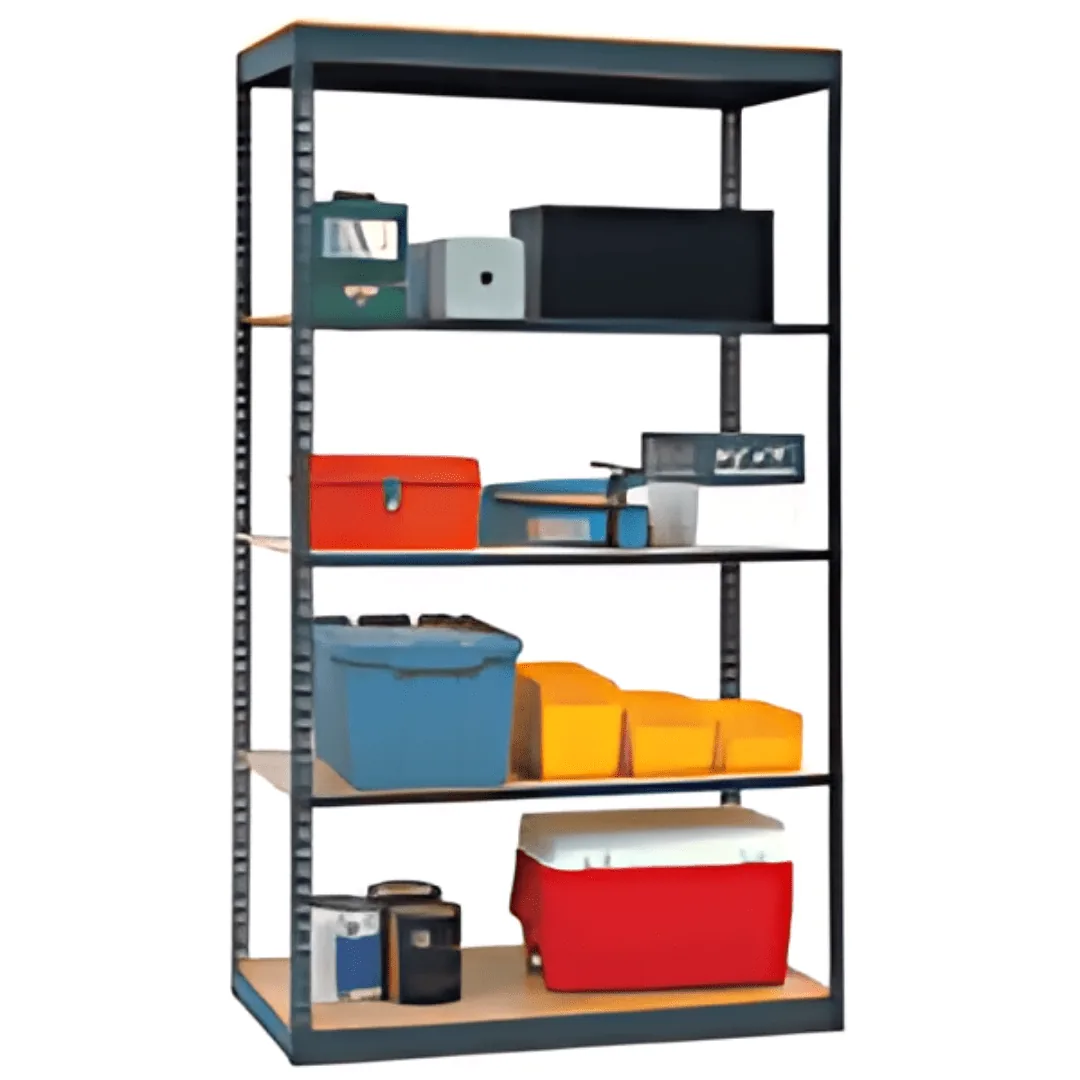
Rivet shelving — also sold as boltless shelving, rivet rack, or widespan shelving depending on the manufacturer — is built from four corner posts and horizontal beams whose ends carry integral rivets. The rivets drop into keyhole slots punched down the posts and lock under load. A rubber mallet seats them. That is the entire fastening system.
Removing hardware from the equation changes the economics of storage. There is nothing to lose, nothing to strip, nothing to torque, and no clip to fall behind the unit when you adjust a level. A two-person crew can put up a full run in an afternoon, and shelf heights can be changed in one-inch increments whenever the inventory changes.
The frame is also open on all four sides. That matters more than it sounds: an open frame means product loads from any direction, so units can back up to each other in double-deep rows, or sit against a wall, or form an island in the middle of a stockroom without wasting an approach.
Rivet, boltless, and widespan are largely the same product
Manufacturers use different names for the same rivet-and-keyhole system. “Widespan” usually signals longer beams (60 to 96 inches) and higher capacities, while “rivet” and “boltless” cover the standard 36- to 48-inch widths. Compare published shelf capacities and post gauge, not the marketing name.
How It Goes Together
Lay out the footprint
Mark post positions on the floor first. On a multi-unit run, chalk the full line so the last unit does not end up an inch out of square against the wall.
Stand two posts and set the bottom beams
Start with the lowest level. Drop the rivets into the keyhole slots and tap down with a rubber mallet until they seat fully. A partially seated rivet is the single most common assembly error.
Add the opposite pair of posts
Complete the rectangle at the bottom level. The unit is floppy at this stage — that is normal and it stiffens as levels go on.
Work upward, level by level
Set each successive level of beams and check for square as you go. Measure both diagonals; they should match within a quarter inch.
Drop in the decking
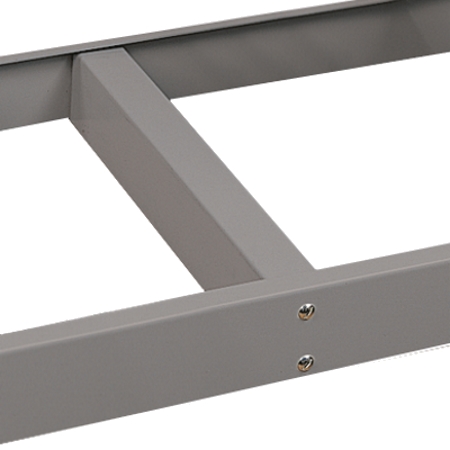
Particle board, wire mesh, or steel deck rests on the beams. On heavy levels, add a center support before loading — this is the difference between a flat shelf and a sagging one.
Level, anchor, and load
Shim posts on uneven slab, anchor tall or narrow units to the wall or floor, and load the heaviest product on the lowest levels.

Assembly mistakes worth avoiding
- Rivets not fully seated. Tap every beam end down until it stops. A high rivet carries a fraction of its rated load.
- Skipping center supports. On beams 60 inches and wider, or any level carrying heavy point loads, the center support is structural — not optional.
- Loading before levelling. A unit racked out of square on uneven slab will keep distorting under load.
- Heavy product on high levels. Load bottom-up. It lowers the center of gravity and keeps the manual handling safe.
- Tall units left unanchored. Anything over roughly a 5:1 height-to-depth ratio should be anchored or braced back-to-back.
- Mixing manufacturers in one run. Keyhole spacing and rivet geometry are not universal. Keep a run on one brand and series.
Checking a Delivery Against Your Quote
Support counts scale with beam length, not just level count — a 6′ beam typically needs one center support per shelf, while a longer 8′ beam needs two. If a quote looks off once parts arrive, ask for an itemized parts list (posts, beams, supports, tie plates, foot plates, decking) so you can check counts against the layout before anything goes back or gets installed.
Series and Capacities
Capacity is set by beam profile, post gauge, and decking — not by height. Published ratings assume evenly distributed load on a properly supported deck, so a point load in the middle of an unsupported span is a different question entirely.
| Series / Duty | Typical Shelf Capacity | Typical Widths | Typical Depths | Best For |
|---|---|---|---|---|
| Light duty | 500–750 lb per shelf | 36–48 in | 12–18 in | Retail backrooms, offices, small parts, records boxes |
| Standard duty | 800–1,200 lb per shelf | 36–72 in | 18–24 in | General stockroom, parts rooms, maintenance shops |
| Heavy duty | 1,200–1,800 lb per shelf | 48–96 in | 24–36 in | Distribution, cases and totes, industrial parts |
| Extra heavy / widespan | 1,800–3,000 lb per shelf | 60–96 in | 36–48 in | Hand-stacked pallets, drums, bulk cases, tire storage |
| Double-rivet beam | Highest in a given width | 48–96 in | 24–48 in | Where you need capacity without dropping to a shorter beam |
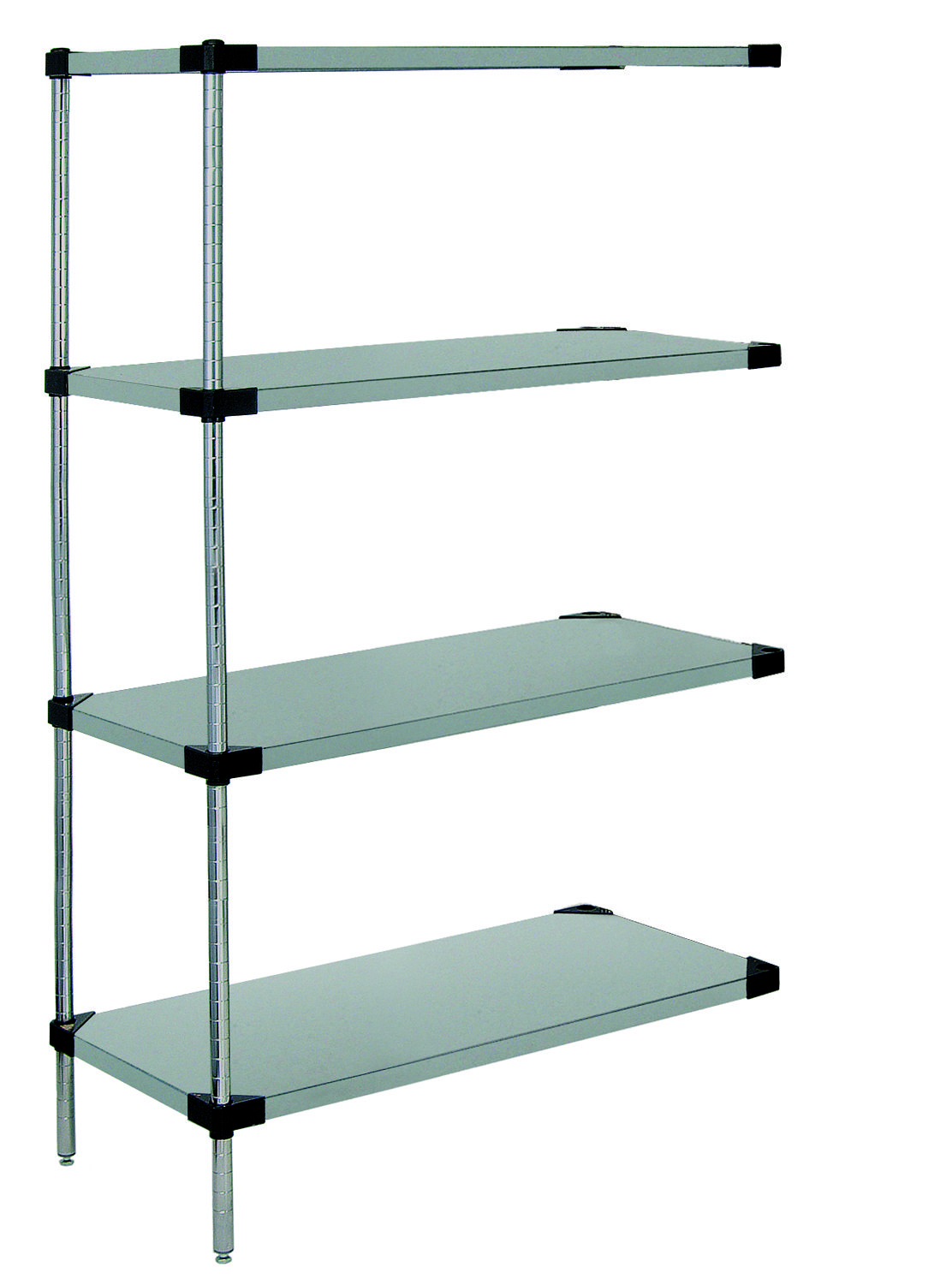
| Stainless steel | Varies by build | 36–72 in | 18–36 in | Food processing, wash-down, lab, and cleanroom environments |
Reading a capacity rating honestly
Three details separate a rating you can trust from a number on a web page:
Per shelf or per unit? A “3,000 lb capacity” unit may mean 3,000 pounds total across five levels. Always confirm the per-shelf figure.
Evenly distributed or point load? Ratings are for uniformly distributed load. A single heavy item centered on an unsupported deck can exceed local capacity well before the shelf total is reached.
With which decking? The same beam pair rates differently under particle board, wire mesh, and steel deck. Match the quote to the decking you are actually buying.
When in doubt, size up one series. The cost difference between standard and heavy duty is small compared with replacing a run that deflects.
Choosing Decking
 Particle BoardThe default and the cheapest. Solid surface holds small loose items, sweeps clean, and takes labels well. Not for wet environments — it swells — and it blocks sprinkler water penetration, which your fire code may care about.
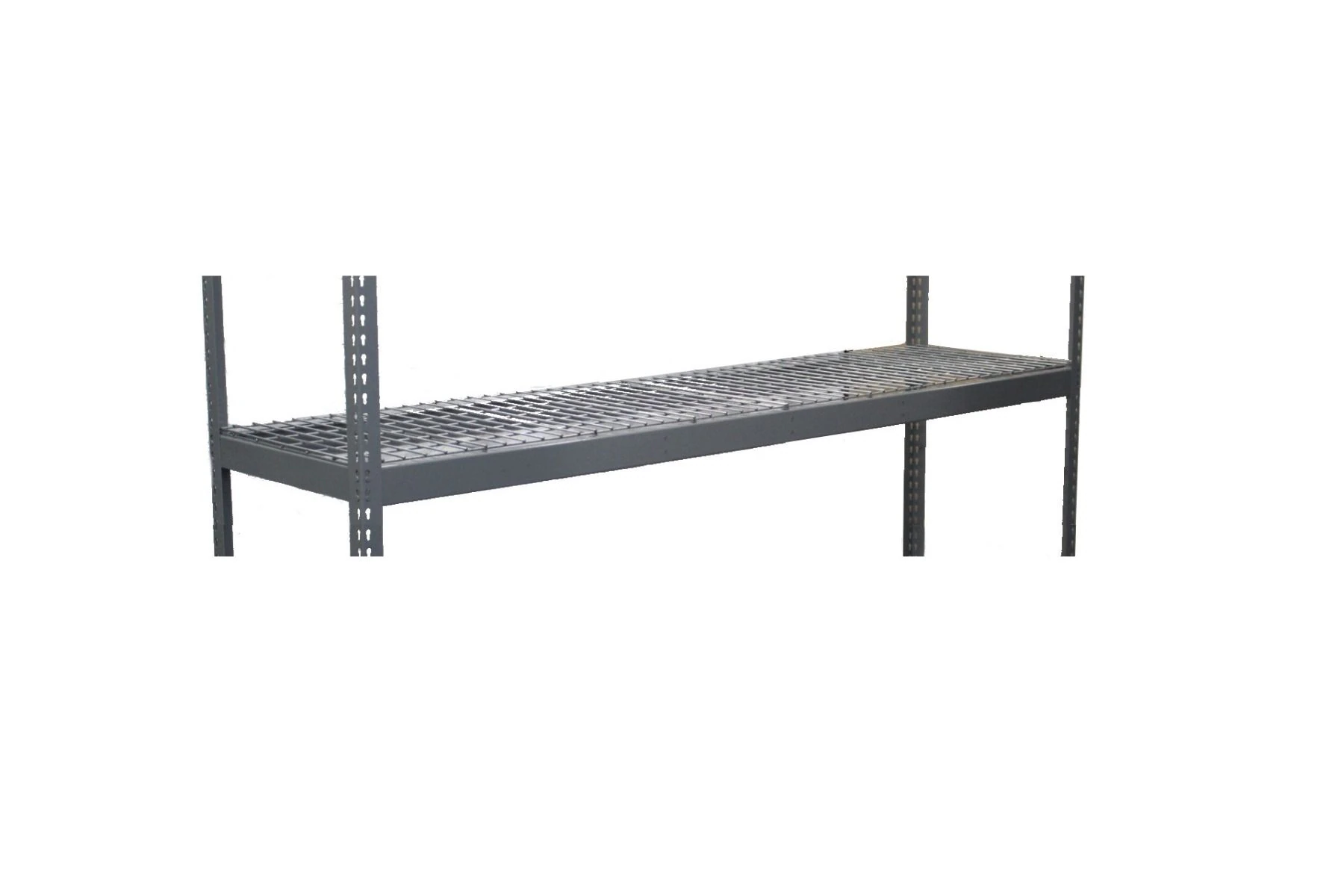 Wire Mesh DeckOpen grid. Lets sprinkler water and light through, does not trap dust or debris, and lets you see product from below. Usually the right call in sprinklered warehouses and anywhere inspections matter. Small loose parts need bins on top of it.
 Steel DeckHighest capacity and best abuse resistance. Choose it for point loads, drums, dies, and anything that will be dragged across the surface. Costs more and adds weight to the assembly.
 PlywoodA step up from particle board in impact resistance and screw retention, useful where the deck takes abuse but the budget will not stretch to steel.
 No Deck (Beams Only)For long or bundled product that spans beam to beam, or where you are dropping in totes and bins sized to the opening. Cheapest configuration available.
 Stainless / Wash-DownStainless posts, beams, and deck for food processing, pharmaceutical, and lab spaces that get sanitized. Specify early — it is a different product line, not an option on a standard unit.
Ask about sprinklers before you buy solid decking
Many jurisdictions restrict solid shelf decking in sprinklered storage areas because it blocks water from reaching a fire below. Wire mesh decking is the standard remedy. Confirm with your fire marshal before ordering a large run of particle board.
Sizing a Run That Fits
Rivet shelving is inexpensive enough that people order it before measuring, then discover the run is two inches too long or the top shelf is unreachable. Five measurements prevent both.
Depth from the product, not the wall. Pick a depth that holds your item with about an inch of clearance. Extra depth is wasted money and creates a dead zone at the back where things get lost.
Width from your handling method. 36 and 48 inches suit hand-picked parts. 60 to 96 inches suit cases and totes and reduce the post count per linear foot — but require center supports and heavier beams.
Height from reach, not from clear height. The top usable level should be no higher than about 72 inches unless you are committing to step stools or ladders on the pick path. Store overstock above that line, not picks.
Levels from the tallest item on each level. Set opening heights per level rather than dividing the unit evenly. Uniform spacing is the most common source of wasted cube.
Aisle from the equipment. 36 inches for hand picking, 48 inches if a cart comes down the aisle, more if a pallet jack does. Check egress requirements before you compress an aisle.
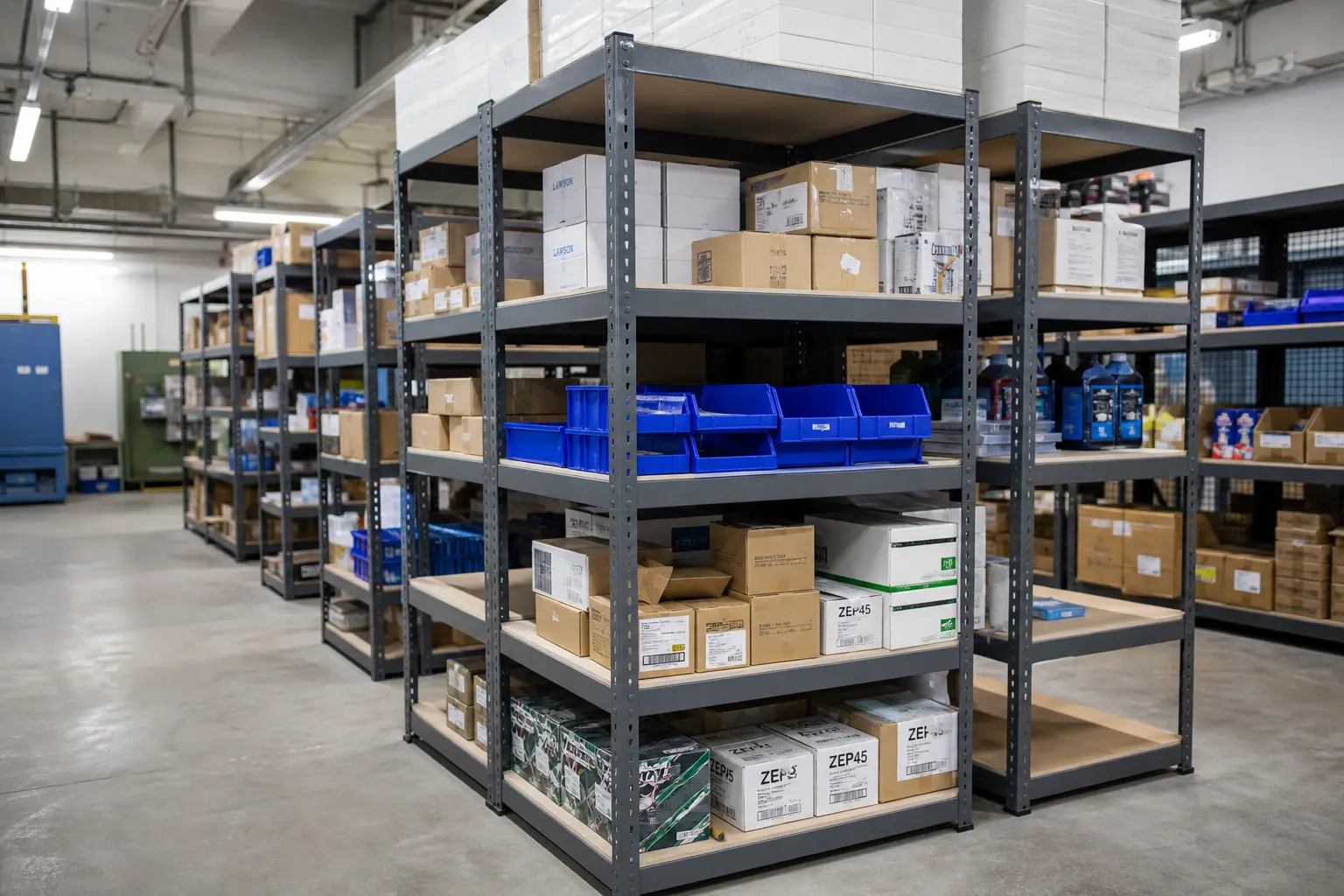
| Decision | Rule of Thumb | Common Mistake |
|---|---|---|
| Shelf depth | Item depth plus about 1 in | Buying 24 in deep for 12 in product and losing the back half |
| Shelf width | Match to handling method and case dimensions | Wide beams ordered without center supports |
| Top usable level | About 72 in for picking; overstock above | Picks on the top level of an 84 in unit |
| Level spacing | Set per level from the tallest item | Dividing the unit into equal openings |
| Aisle width | 36 in hand pick, 48 in with carts | Compressing aisles below egress requirements |
| Starters vs. add-ons | One starter, then add-ons across the run | Ordering all starters and paying for duplicate posts |
Starters, Add-Ons, and Why It Matters to Your Quote
Rivet shelving is sold in two forms, and mixing them up is the most common way to overpay.
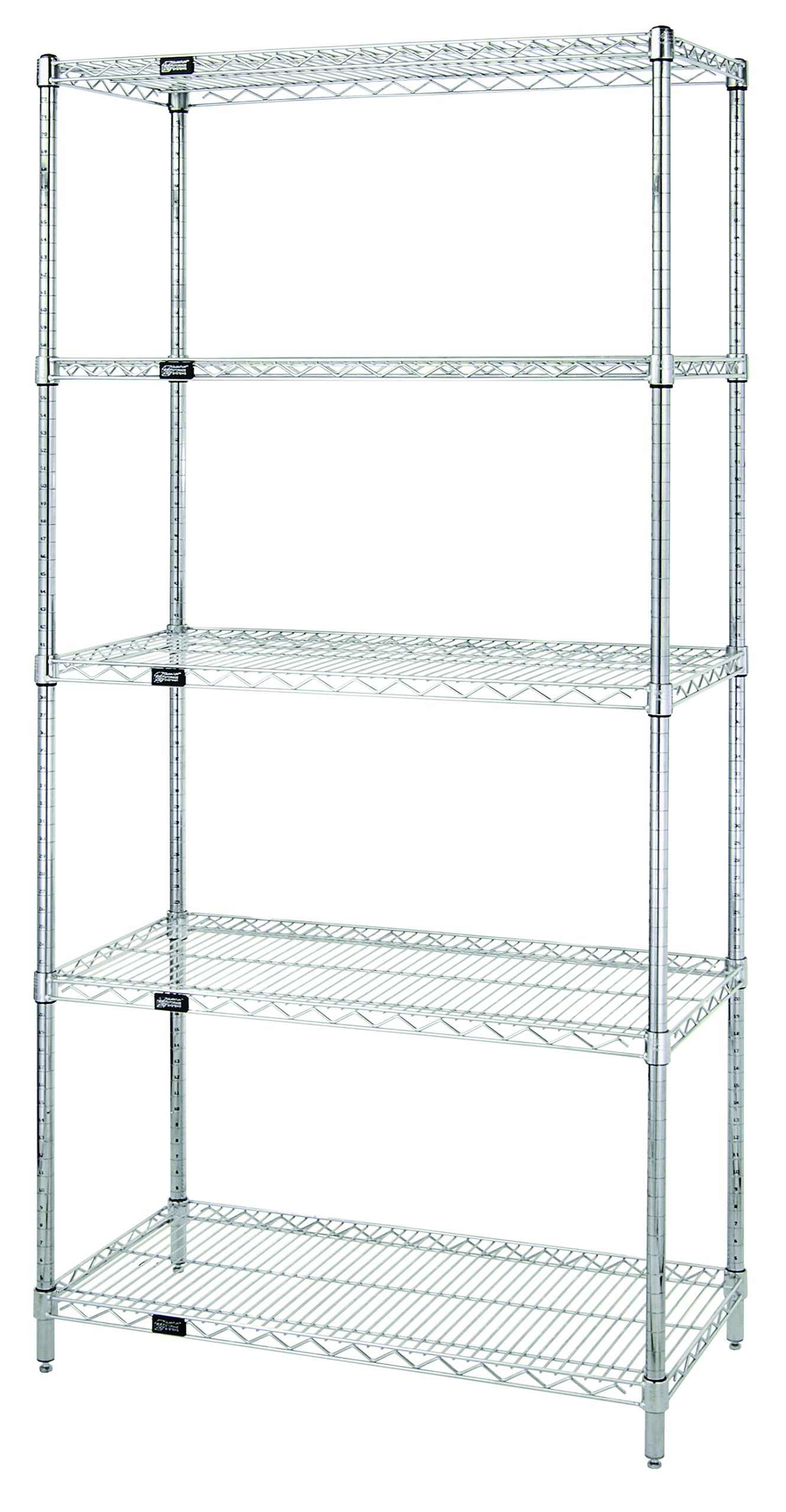
A starter unit is complete: four posts, beams, and decking. It stands alone.
An add-on unit ships with only two posts. It shares the posts of the unit beside it, so a continuous run of five bays needs one starter and four add-ons — not five starters. You save the cost of four sets of posts and you gain floor space, because there is no double post at every joint.
Two things to watch:
- Add-ons must match the starter’s height, depth, and series exactly — keyhole spacing is brand-specific
- Plan the run direction before ordering; an add-on cannot be the end of a run in the other direction
- Order one spare set of posts on large runs so a future extension is not blocked by a discontinued series
- Back-to-back double rows brace each other and reduce anchoring requirements
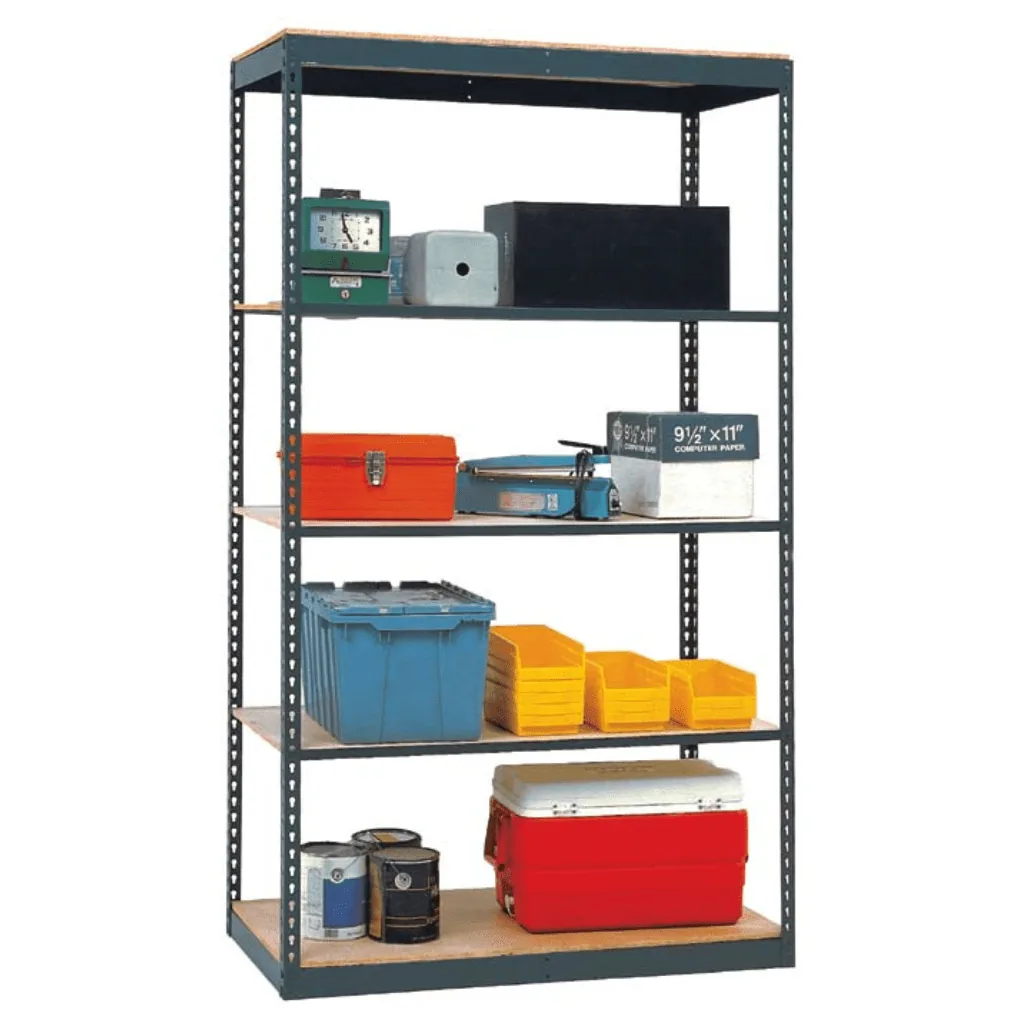
Shop Online at MaterialHandling-USA.com
Rivet rack starters, add-ons, decking, and replacement center supports ship from stock — order online or call for freight pricing on full runs.
Brands We Supply
We are not tied to one manufacturer, which means we can quote the series that actually fits your capacity and lead-time requirements rather than the one we happen to stock.
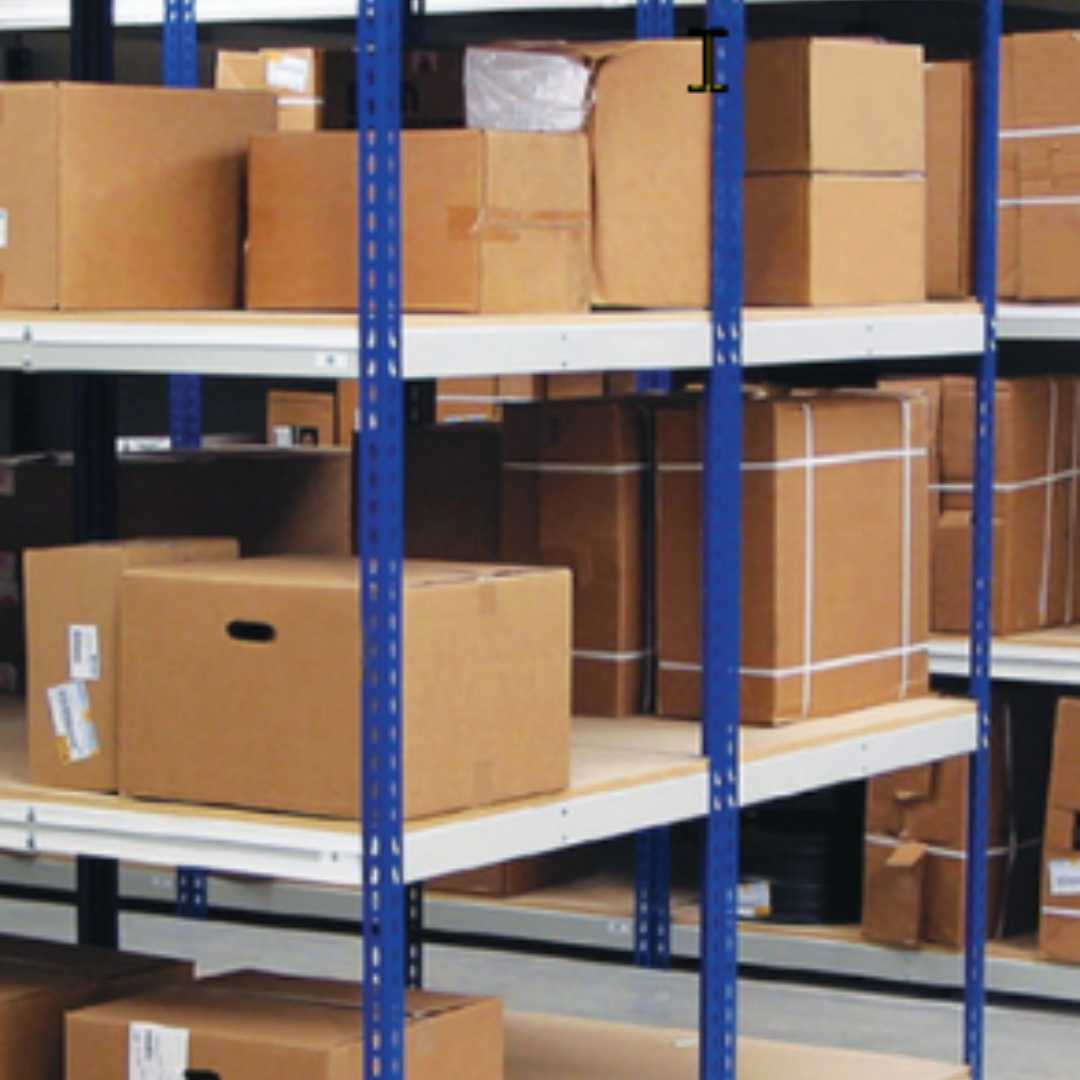
 LyonDeep stock across rivet rack starters, add-ons, decking, and center supports in dove gray. Our most commonly quoted line for general stockroom and parts-room work.
 BorroughsLong-standing U.S. manufacturer with heavy-duty rivet and widespan lines, and strong availability of wide-beam configurations.
 HallowellBroad size range including black and specialty finishes, useful where the shelving is visible in a retail or customer-facing space.
 Hirsh Industries / Iron HorseValue-engineered light and standard duty units. A good fit for backrooms, offices, and records storage where capacity requirements are modest.
 InterlakeIndustrial rivet and widespan shelving with configurations that bridge into hand-stacked pallet storage.
 Western Pacific & Vestil StainlessWestern Pacific for standard industrial runs; Vestil stainless steel for food, lab, and wash-down environments where carbon steel will not survive.
Where Rivet Shelving Earns Its Place
| Environment | Typical Configuration | Why It Works |
|---|---|---|
| Warehouse stockrooms | 48×24 in, five levels, wire deck | Lowest cost per cubic foot for cases, totes, and hand-picked stock |
| Maintenance and parts rooms | 36×18 in with bins on particle board | One-inch adjustability handles a constantly changing parts mix |
| Automotive parts | 60×24 in heavy duty | Long boxes and heavy assemblies span wide beams without a post in the middle |
| Tire storage | Widespan, beams only, no deck | Tires stack directly on beams; no decking cost and open airflow |
| Records and archives | 36×18 in light duty, particle board | Standard box footprints slot cleanly and the deck holds loose files |
| Retail backrooms | Light duty, black or gray finish | Fast to assemble and reconfigure between seasons with no hardware |
| Food processing and labs | Stainless steel, wire deck | Survives sanitation chemicals and wash-down that destroy painted steel |
| Construction and contractor yards | Heavy duty with steel deck | Takes abuse from loaded totes, fittings, and material handled with equipment |
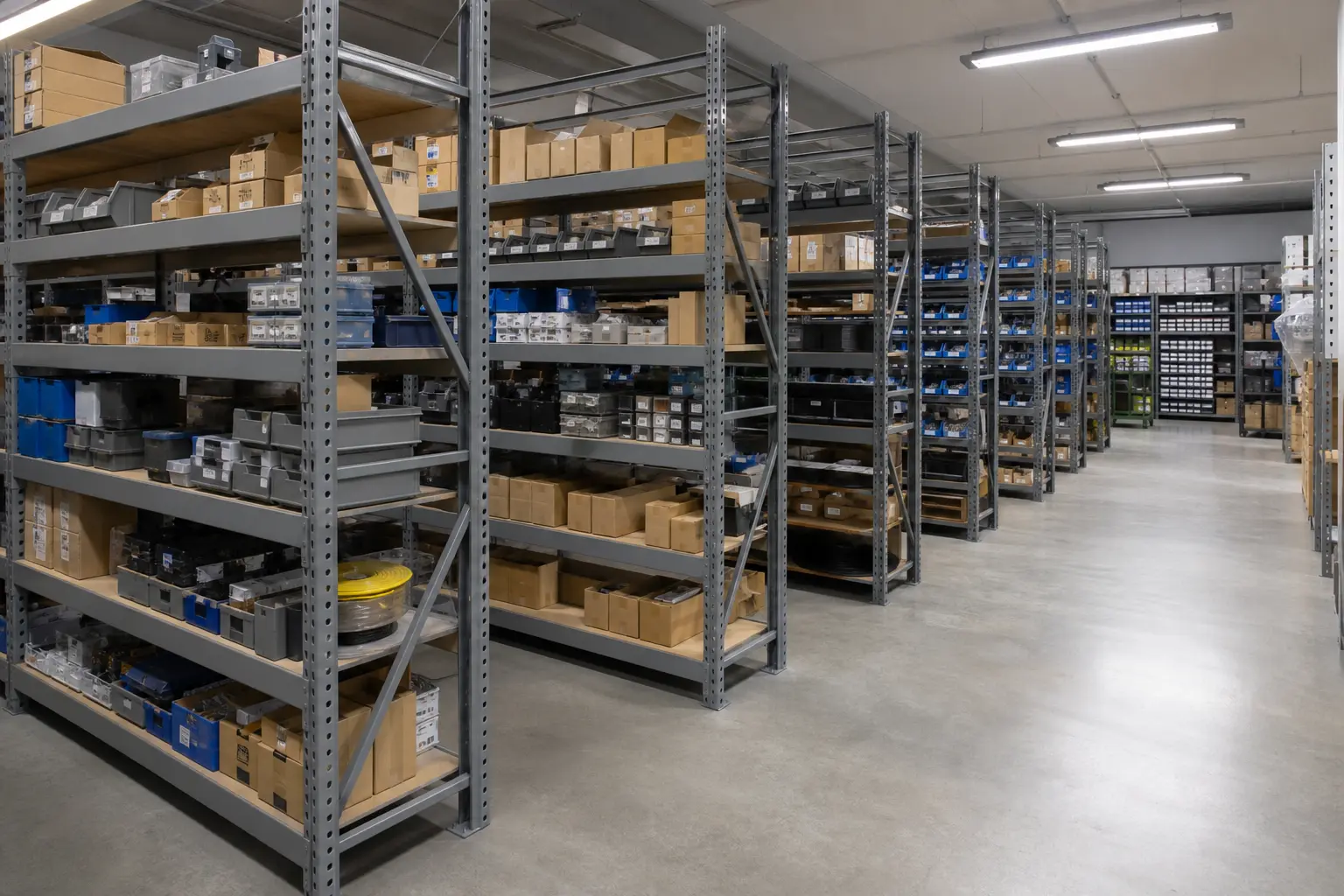
Accessories That Make a Run Work Harder
Rivet Shelving vs. Other Storage
| Option | Cost per Cubic Foot | Assembly | Adjustability | Choose It When |
|---|---|---|---|---|
| Rivet / boltless shelving | Lowest | Mallet, no hardware | 1 in increments | You need the most usable cube for the least money |
| Clip-style steel shelving | Low | Clips required | Fixed clip spacing | You want closed sides and a finished look for offices or retail |
| Wire shelving | Low to medium | Slip-sleeve | Fixed increments | Airflow, visibility, or sanitation drives the choice |
| Mobile high-density shelving | Medium | Rail install required | Good | Floor area is the binding constraint and aisles can be shared |
| Pallet rack | Low for pallets | Bolt or drop-in | Beam increments | Product arrives and leaves on pallets |
| Vertical carousel or VLM | Highest | Professional install | Software-managed | Pick rates and labor cost justify automation |
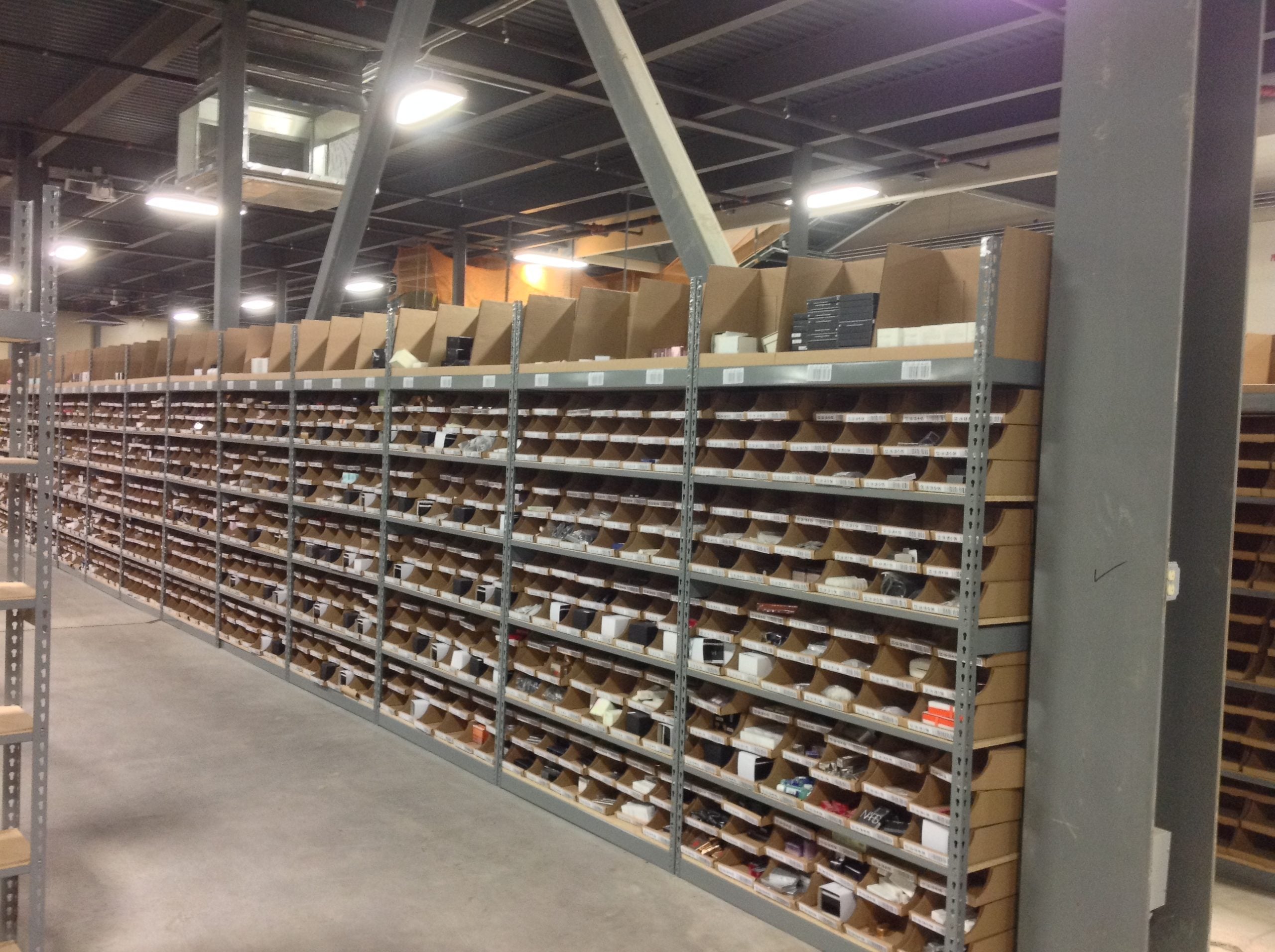 Boltless ShelvingThe full boltless line including accessories, replacement parts, and GSA-approved options.
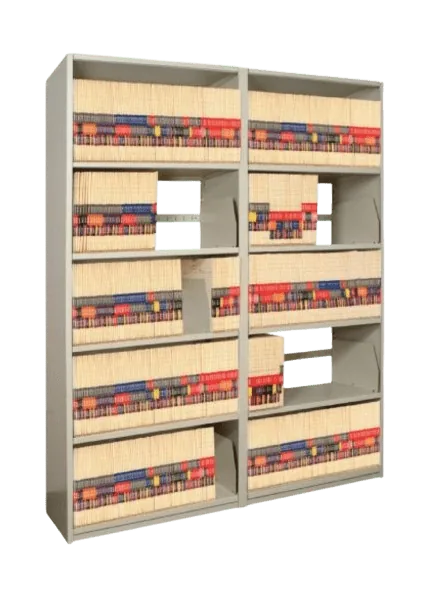 Shelving SolutionsEvery shelving family we supply — metal, wire, plastic, mobile, stationary, and boltless.
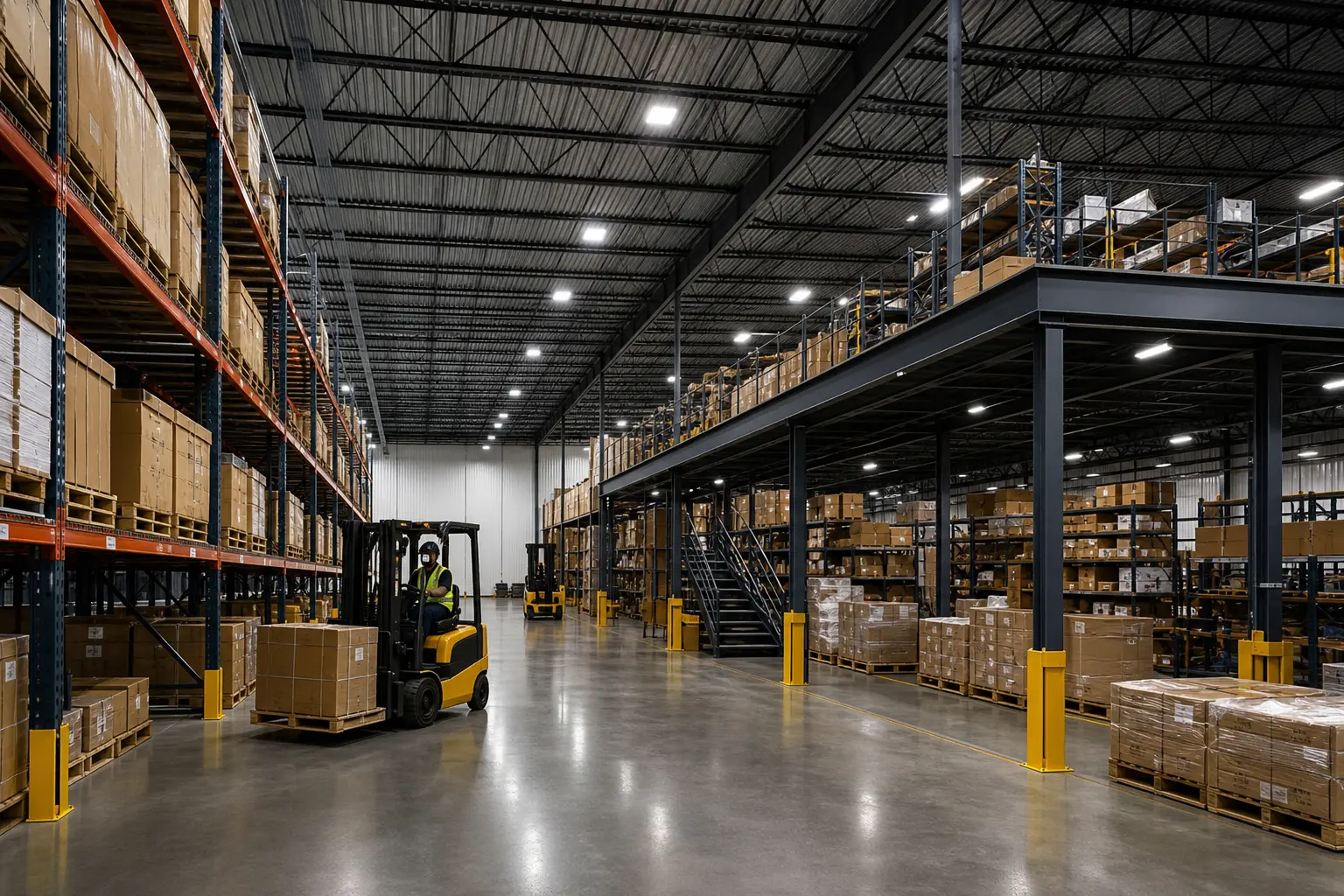 Warehouse DesignLayout, slotting, and flow design so the shelving you buy ends up in the right place.
Shop Shelving Kits Online
Buy select items directly from our online store, or request a quote for volume, custom sizes and freight-rated orders.

Frequently Asked Questions
What is the difference between rivet shelving and boltless shelving?
How much weight will a shelf hold?
Do I need any tools to assemble it?
Which decking should I choose?
Can I add to a run later?
Does rivet shelving need to be anchored?
Can it hold pallets?
Do you install it, or is it customer-assembled?
Get a Rivet Shelving Layout and Quote
Send us your dimensions, the product you are storing, and your capacity requirements. We will size the series, lay out starters and add-ons, and quote freight. Free consultation — call (800) 326-4403.