
Low-Profile Boltless Shelving Bought in Phases: Source Energy Company, Longmont, CO
How an aerospace supplier in Longmont, Colorado built out its stockroom with low-profile boltless rivet shelving, one freestanding unit group at a time, across six orders.

Longmont, CO
Project location
Aerospace
Industry
Boltless rivet
Shelving type
Six orders
Phased buildout
The Project: A Stockroom That Grew One Order at a Time
Source Energy Company is a supplier operating out of Longmont, Colorado, on the northern edge of the Front Range. Its work sits in the aerospace and energy equipment world, which means the stockroom holds exactly the kind of inventory that is hardest to store well: a wide variety of boxed, bagged and kitted components, most of them light, none of them identical, all of them needing to be found quickly.
What makes this project worth writing up is not one large shelving installation. It is the opposite. Between the late summer of 2025 and the middle of 2026, the company placed six separate boltless shelving orders with Material Handling USA, each one adding freestanding units to the same room as floor space, product mix and budget allowed. The buyer described the pattern himself in an email to our director of sales: he keeps whacking away at his open floor space.
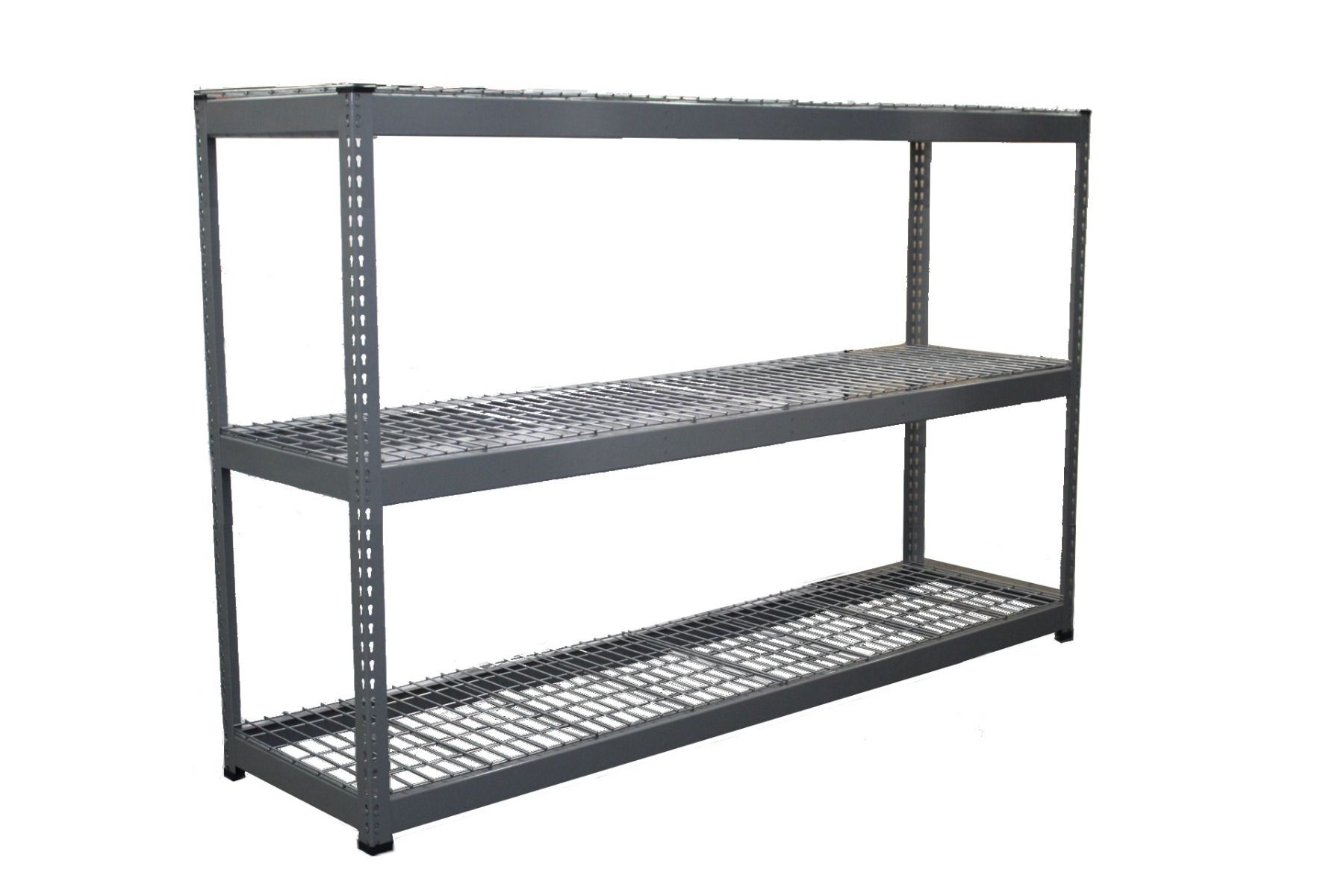
Every order used the same family of product: boltless rivet shelving of the type described on our boltless shelving hub, which sits within the wider shelving solutions range. The steel came from Jaken, one of the rivet shelving lines we supply alongside RiveTier.

Why Low-Profile Shelf Levels Were the Starting Point

The first thing the buyer told us was a design preference, not a size. He liked the low-profile boltless designs, and every order that followed kept them. That preference is worth explaining, because it is one of the few shelving choices that changes how much a room actually holds.
On a rivet shelving unit, each level is carried by beams that sit in the keyhole slots of the angle posts. A standard beam profile is deeper, so the beam itself eats vertical space between one shelf surface and the next. A low-profile beam or shelf support is shallower front to back, so the usable opening between levels grows and, more importantly, more levels fit into the same overall height of unit.
For small parts that is the whole game. A room storing boxed components does not need tall openings; it needs many shelf surfaces at reachable heights. Trading beam depth for an extra level or two per unit can raise the shelf feet in a room noticeably without adding a single square foot of floor space or going taller than a person can safely reach.
Single Rivet or Double Rivet Beams: How the Choice Gets Made
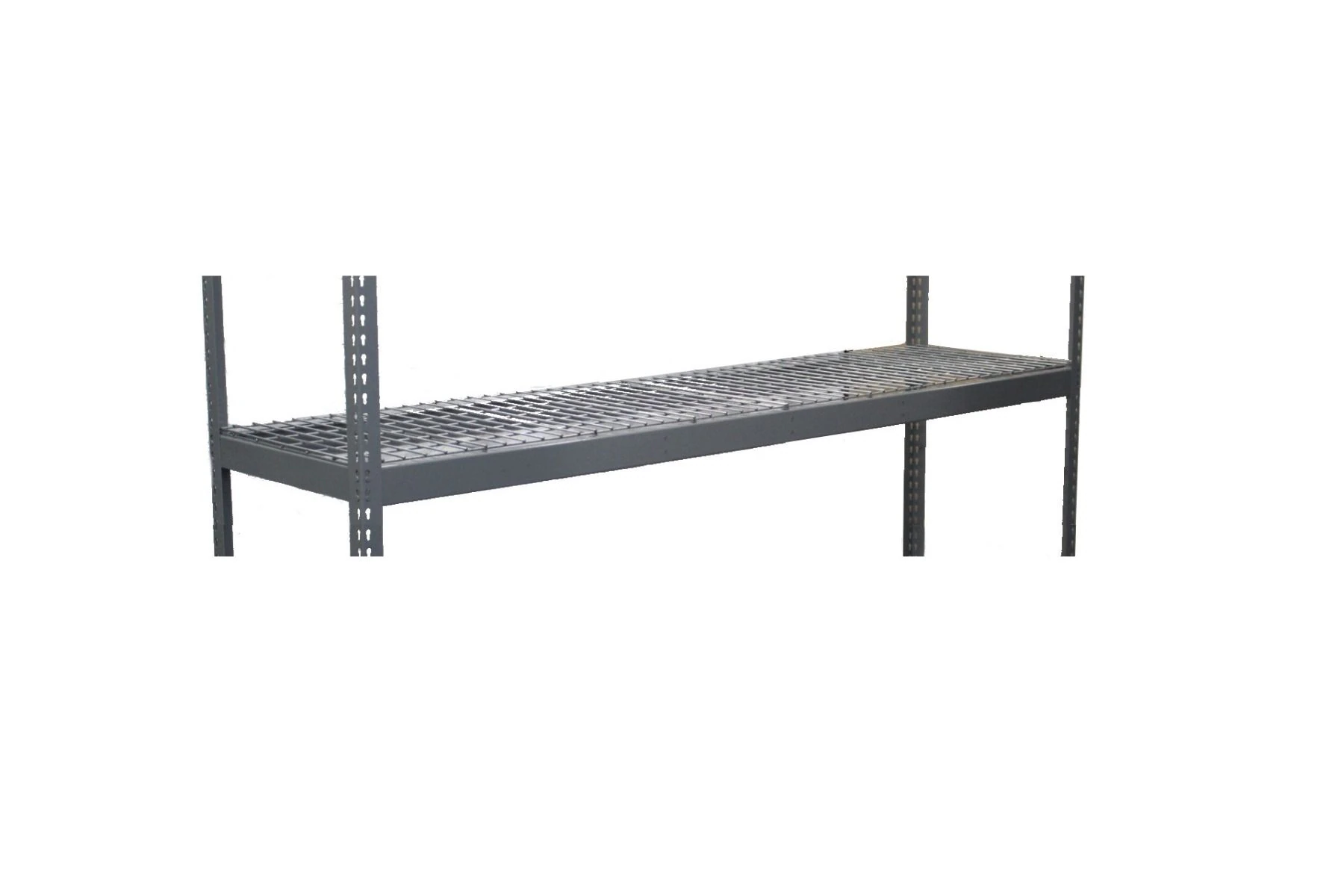
Rivet shelving beams come in single-rivet and double-rivet versions. A single-rivet beam has one rivet at each end engaging the post, and a double-rivet beam has two. The double-rivet beam is the stronger connection and the stiffer level, and it is the normal choice as bays get wider, because a wider beam carries its load over a longer unsupported span.
This customer’s orders show that decision being made in real time rather than applied as a blanket rule. The narrower bays were specified with single-rivet beams, and when the wider bays came up in the same conversation the buyer asked for the double rivets on those. One room, both beam types, chosen per bay width instead of over-buying strength everywhere or running the wide bays light.
That is the approach we recommend. Beams are the part of a rivet shelving system where the money is, and the sensible place to spend it is on the widest levels and the heaviest stored items, not uniformly across a room where most of the shelves hold cartons.
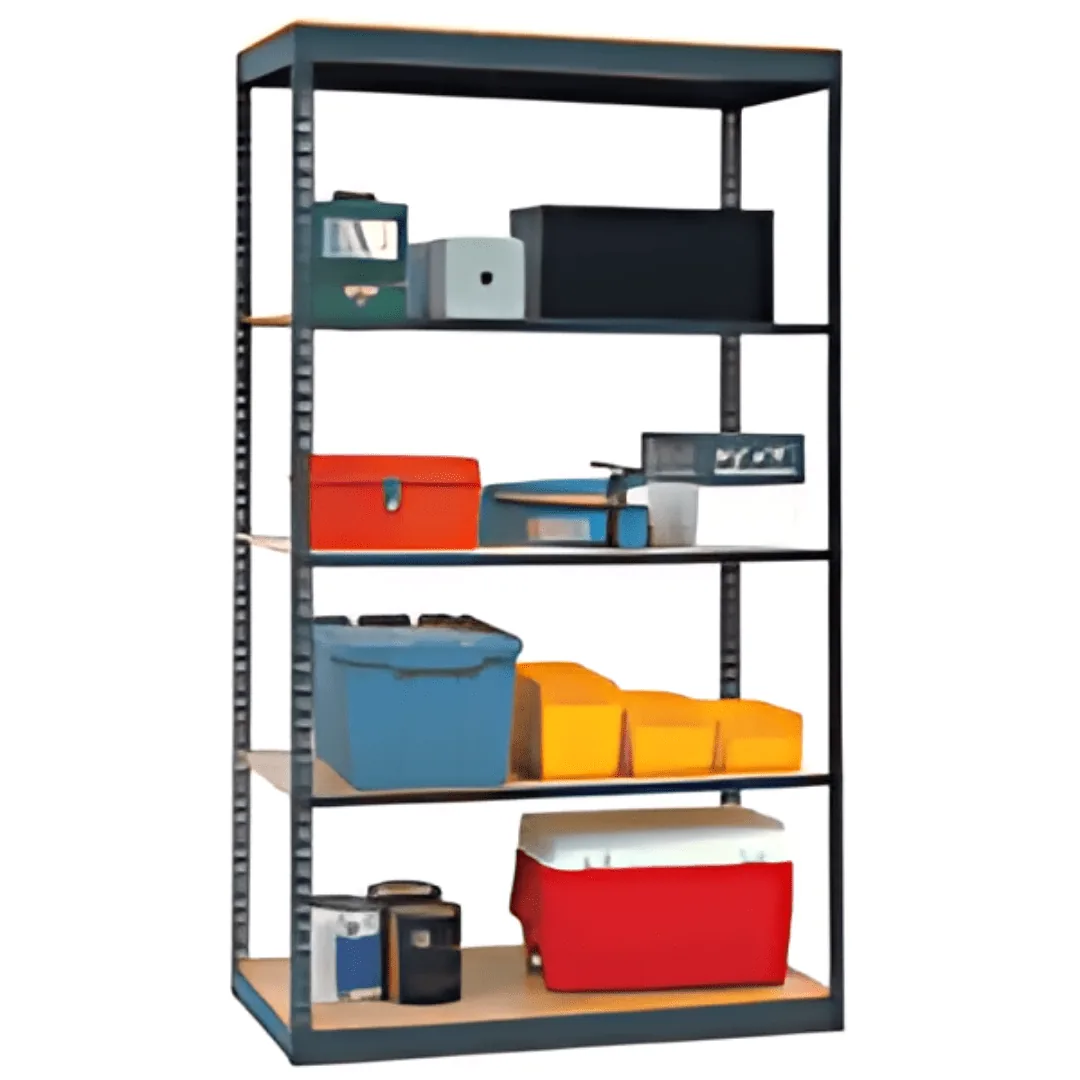
| Situation | Usual beam choice |
|---|---|
| Narrow bays holding boxed or bagged small parts | Single rivet |
| Wider bays, same light stored load | Double rivet for span stiffness |
| Heavy, dense or point-loaded items at any width | Double rivet |
| Mixed room | Choose per bay, not per building |
Buying Shelving in Phases Without Ending Up With a Mismatched Room
Most shelving content assumes a single project with a single budget. Real facilities often work the way this one did. The buyer asked for everything to be quoted together on one document, and said plainly that his budget would not let him buy all of it at once. Over the following months the orders arrived in pieces: a group of units, then a follow-on order, then another, then a later round the next year.
Phased buying only works if the room stays consistent, and that is a specification problem, not a purchasing one. Because every order reused the same product line, the same post style, the same low-profile level design and the same deck material, the units bought eleven months apart still line up, still take the same decks, and can still be re-leveled or reconfigured together. Had the room been bought from whatever was cheapest each quarter, none of that would be true.
Quoting the full scope up front is also what makes the phases affordable. A single quote establishes the component list, so each later order is a repeat of known parts rather than a new design exercise, and the buyer can decide how much of it to release at a time.
Quote the whole room once
Price the full scope on one document even if it will not all be purchased at once.
Lock the component standard
Fix the product line, post style, level design and deck material so later orders match.
Release in affordable groups
Order the units the current budget and current floor space support.
Repeat the known parts
Each follow-on order is a rerun of the same component list, not a new specification.
Keep expanding into the space
Add units as inventory grows and floor area frees up, without reworking what is already built.
Standalone Units Versus Starter and Add-On Rows
Boltless shelving is sold two ways. A starter unit is a complete freestanding bay, and an add-on unit attaches to it and shares one set of posts, so a continuous row costs less per bay as it gets longer. A standalone unit is a complete bay on its own, with its own posts at both ends.
This customer bought standalone units, and that was the right call for a room being filled in over time. Freestanding units can be placed where the floor is currently clear, moved when the space is reorganized, and grouped into a row later. Shared-post rows are cheaper per bay, but they commit you to a wall line and a length before you know what the room needs.
The general rule: buy starter and add-on rows when the layout is settled and the run length is known, and buy standalone units when the buildout is incremental, the aisles are still moving, or individual units will sit in different parts of the building.
| Buildout style | Better fit |
|---|---|
| Fixed wall line, known run length, lowest cost per bay | Starter unit plus add-on units |
| Filling open floor space over months | Standalone freestanding units |
| Units going into separate rooms or areas | Standalone freestanding units |
| Long dense run in a finished layout | Starter unit plus add-on units |
The Part Nobody Plans For: Freight
Shelving of this kind ships as heavy freight on a common carrier, and on this project it moved from the manufacturer’s Illinois warehouse to Colorado. That is a normal, well-worn lane, and most of these shipments are uneventful. This one included a reminder that freight is a third party: on one shipment the assigned carrier did not show up at the factory on the scheduled day, the pickup had to be reassigned, and the delivery slipped.
We mention it because the customer’s own emails show the practical consequence. On an earlier order he asked whether the delivery might land in time to put weekend hours into the buildout. When a receiving team is going to assemble shelving themselves, the delivery date is a labor plan, not just a logistics detail.
Two habits make that easier to manage. First, ask for the ship date and the carrier, not only the lead time, so a slip is visible early. Second, on a phased program, keep the next group of units in the queue so a late shipment delays one phase instead of stopping the project. Freight cost is also usually not known at the time an order is released, so it is invoiced when it is actual rather than guessed at up front.
What we verified for this case study
This page is built from the project’s own records: the Zoho deal history for the account, the shelving purchase orders in each project folder, and the email threads between the buyer and Chris Rodgers covering the design preference, the beam selection, the phased purchasing, the shipping schedule and the carrier delay. Order values, quantities, unit sizes, contact names, the site address and internal layout are deliberately not published.
Planning a Phased Boltless Shelving Buildout
If you are equipping a stockroom, a service parts area or a manufacturing support room over time rather than all at once, these are the decisions that matter most.
- Get the entire room quoted on one document even if you will buy it in pieces.
- Standardize on one product line and one level design so units bought months apart still match.
- Choose low-profile shelf supports where the stored items are small and boxed, to fit more levels per unit.
- Spend on double-rivet beams where bays are wide or loads are dense, and keep single rivet where they are not.
- Use standalone freestanding units while the layout is still changing, and shared-post rows once it is settled.
- Keep the top level within reach from the floor or a step stool rather than chasing the ceiling.
- Ask for the ship date and carrier on every order, and plan assembly labor around it.
- Decide who unloads the freight and with what equipment before the order is released.
Related pages on this site: rivet shelving for the general product, industrial shelving and parts shelving for stockroom applications, aerospace material handling for this industry, and order boltless shelving if you already know what you need. Palletized or much heavier storage is usually better served by pallet rack.
Shop Boltless and Rivet Shelving Online
Buy select items directly from our online store, or request a quote for volume, custom sizes and freight-rated orders.


Frequently Asked Questions
What is low-profile boltless shelving?
What is the difference between single-rivet and double-rivet beams?
Can boltless shelving be bought in phases?
Should I buy standalone units or starter and add-on units?
Is boltless shelving suitable for aerospace and precision component storage?
How is boltless shelving delivered?
Do you supply boltless shelving in Colorado?
Building Out a Stockroom in Stages?
Send us the room and the inventory mix and we will quote the full scope on one document so you can buy it in the phases your budget allows.