
Effortless Storage Solutions with Boltless Shelving
How Can Boltless Shelving Simplify Your Storage Needs?
Talk with a specialist. Call (800) 326-4403 or Email Sales@MH-USA.com
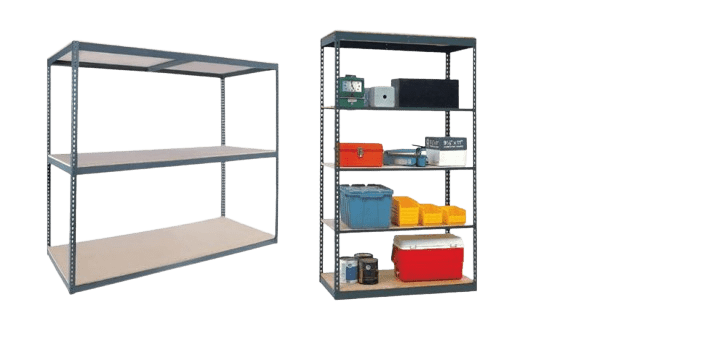
Shop Boltless Shelving by Type
Prices shown are for single units ordered online. For multi-unit rooms, custom sizes or freight to your site, request a quote or call 800-326-4403.
Complete Boltless Shelving Starter Units
Everything for one freestanding unit: uprights, beams and decks. Start here, then add on.

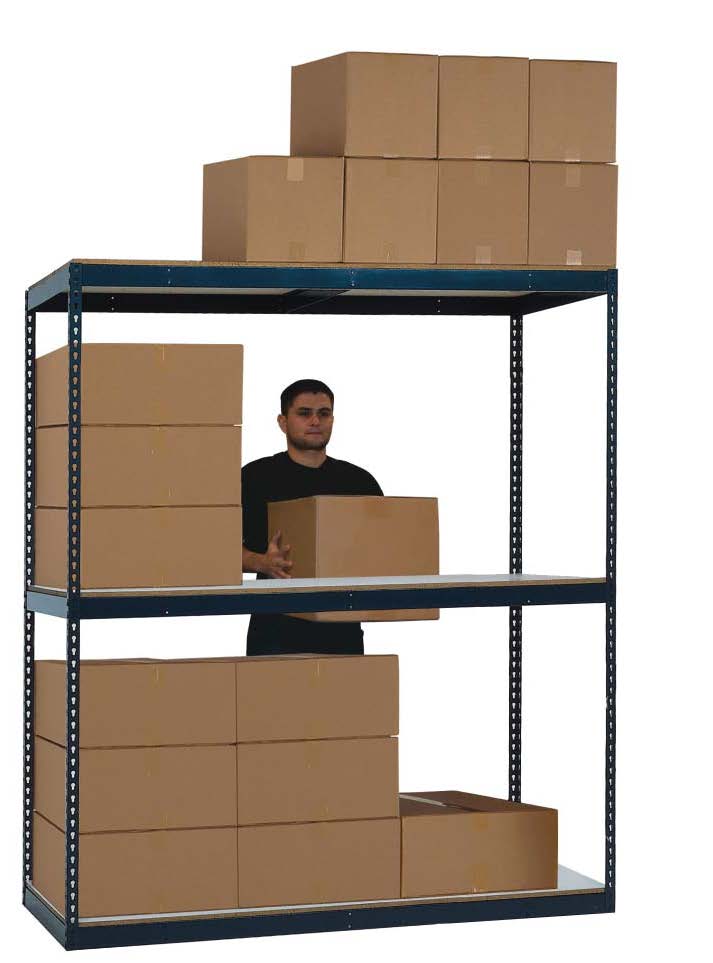


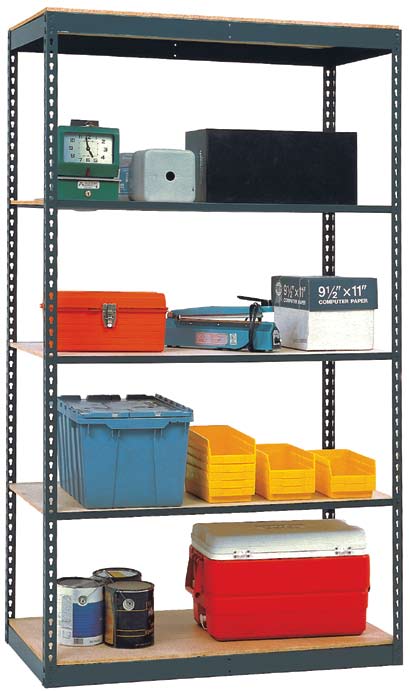
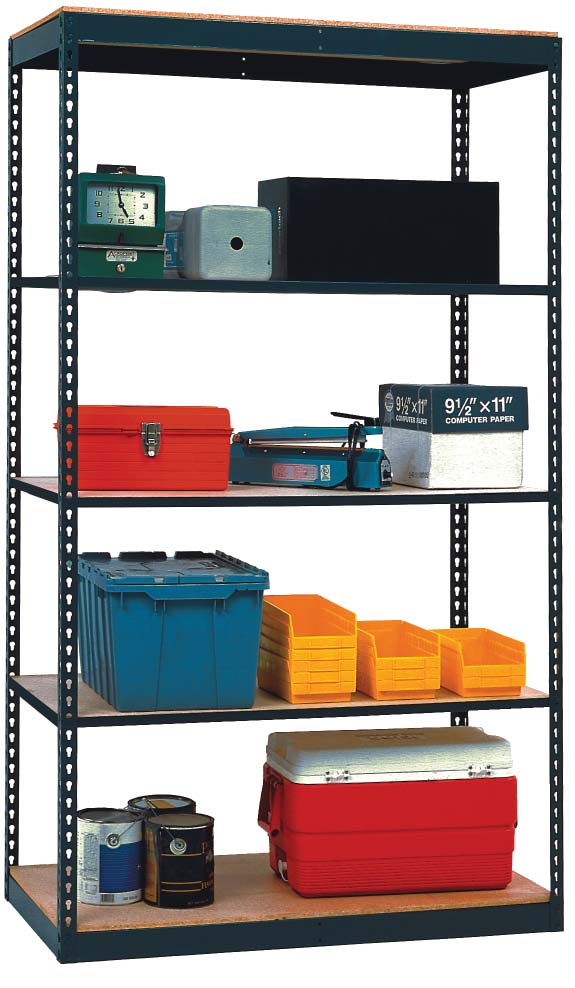
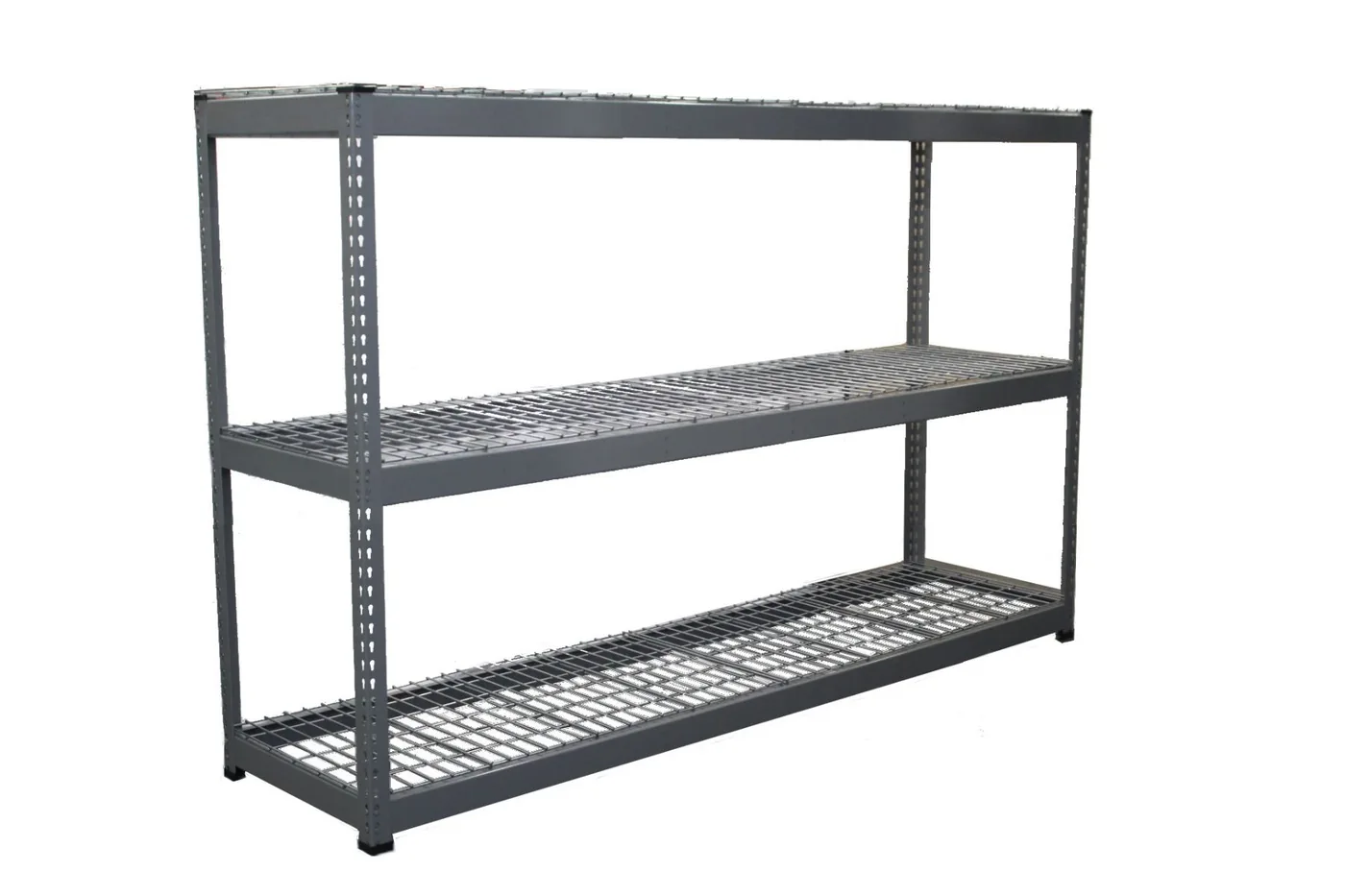
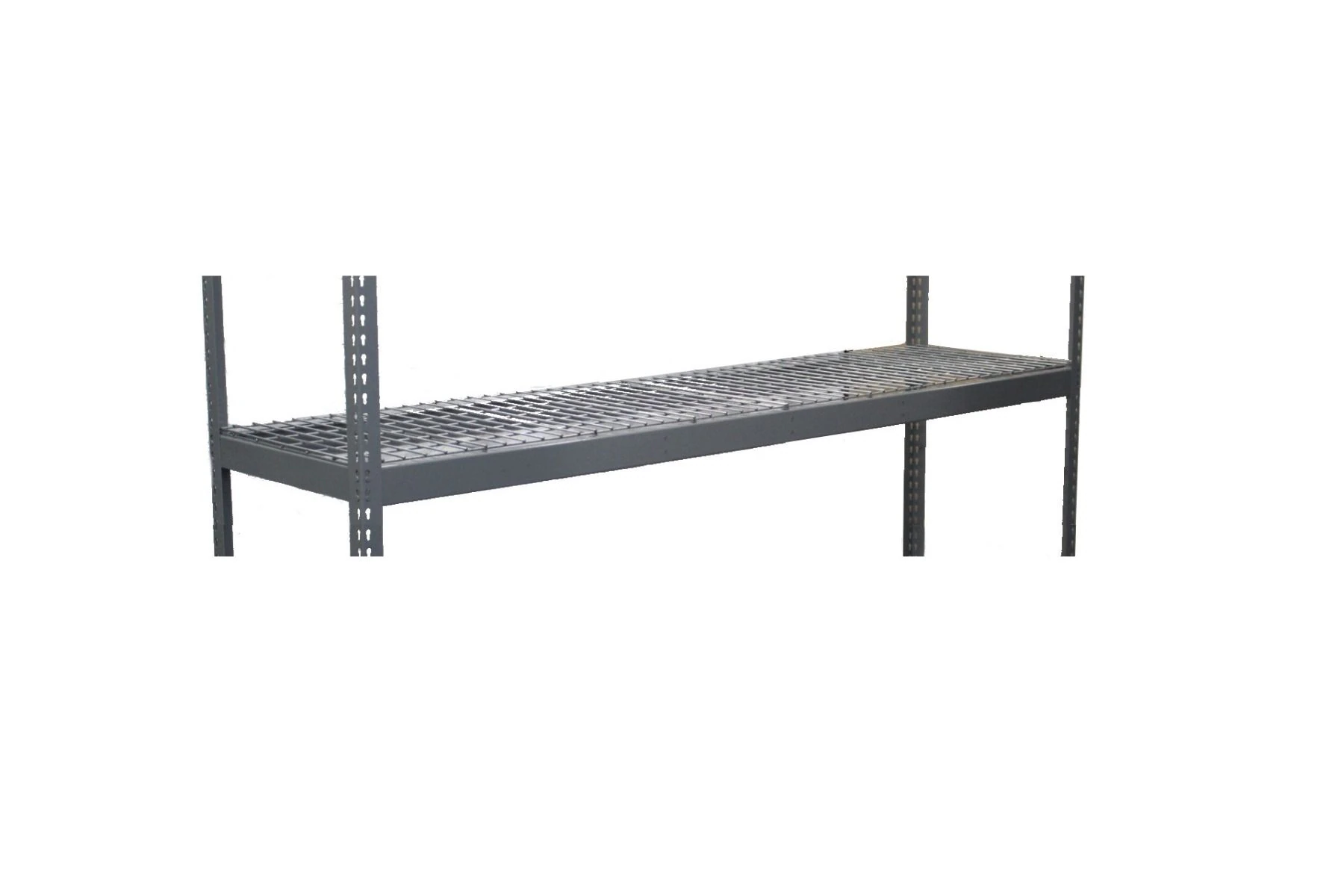
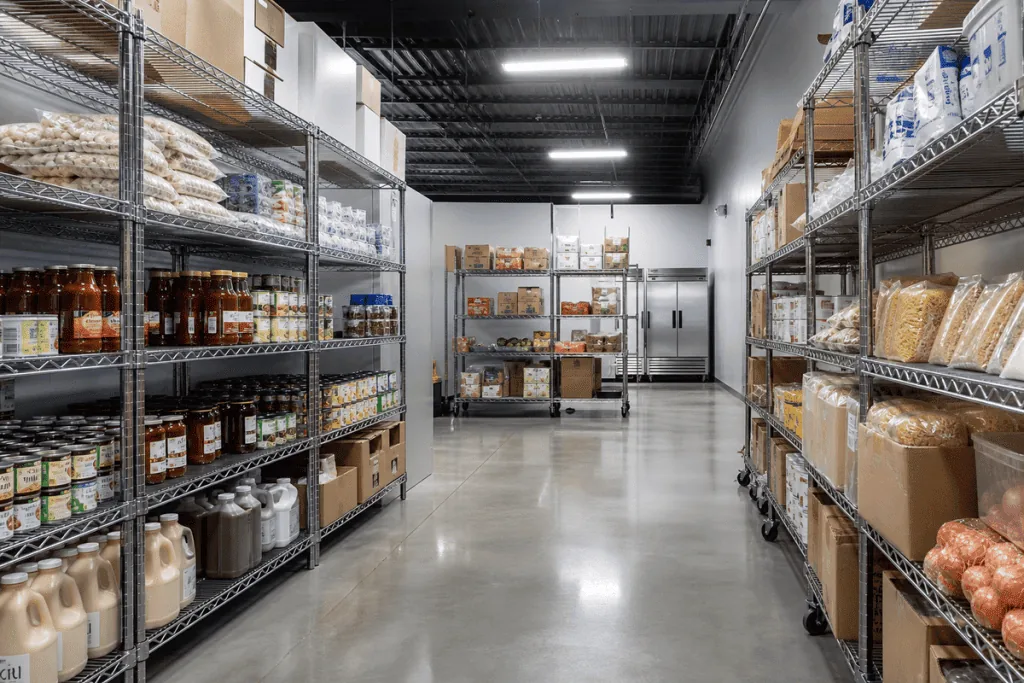
Boltless Shelving with Wire Decking
Wire decks let light, air and sprinkler water through. Add extra wire-deck levels any time.
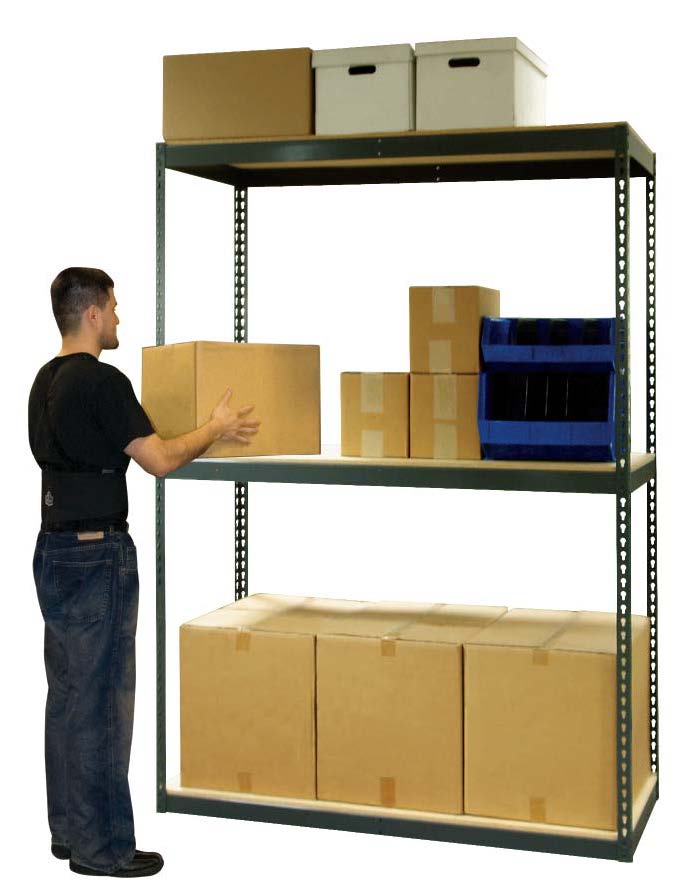
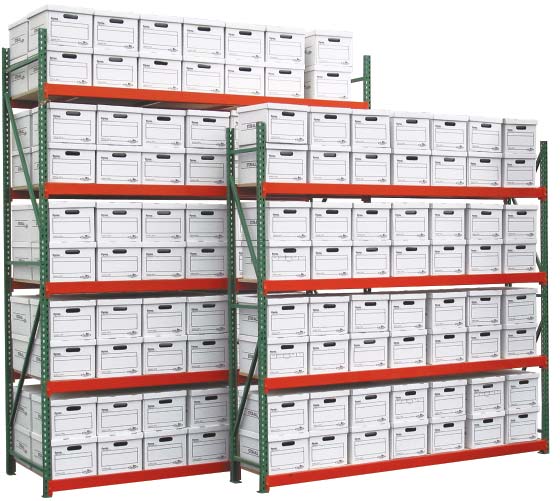
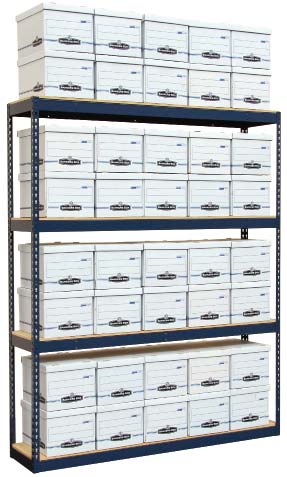
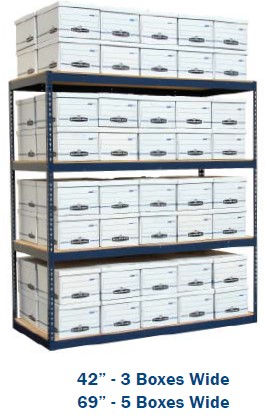
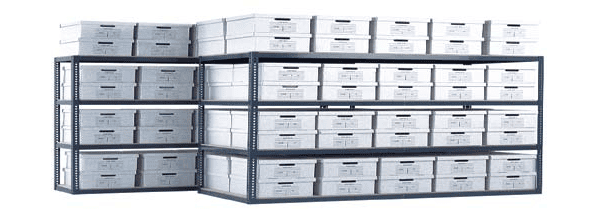
Archive and Record Storage Units
Tall boltless archive units sized for standard file and record boxes.
Add-On Units, Beams and Components
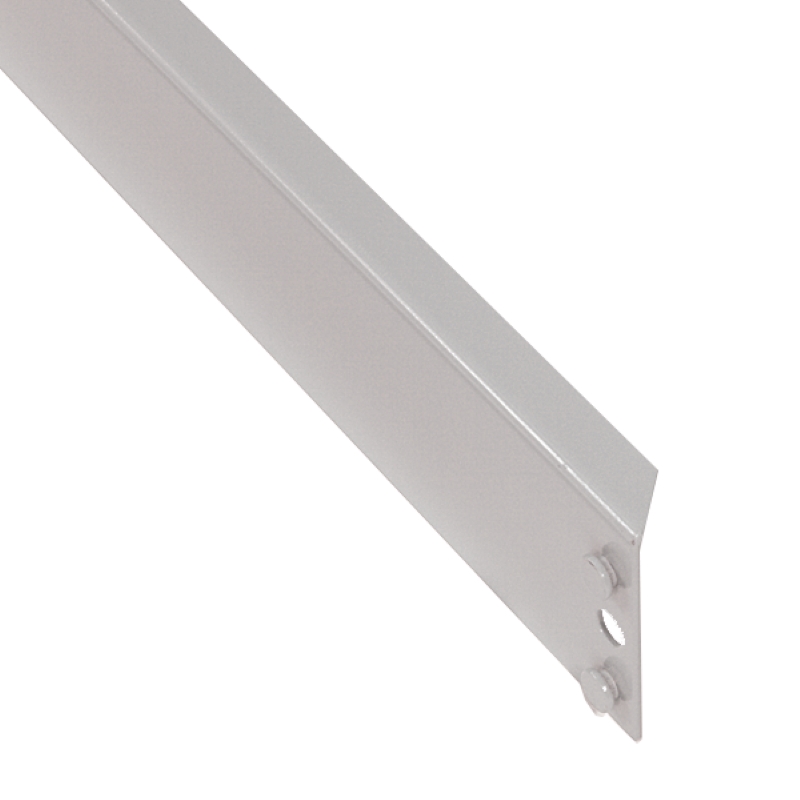
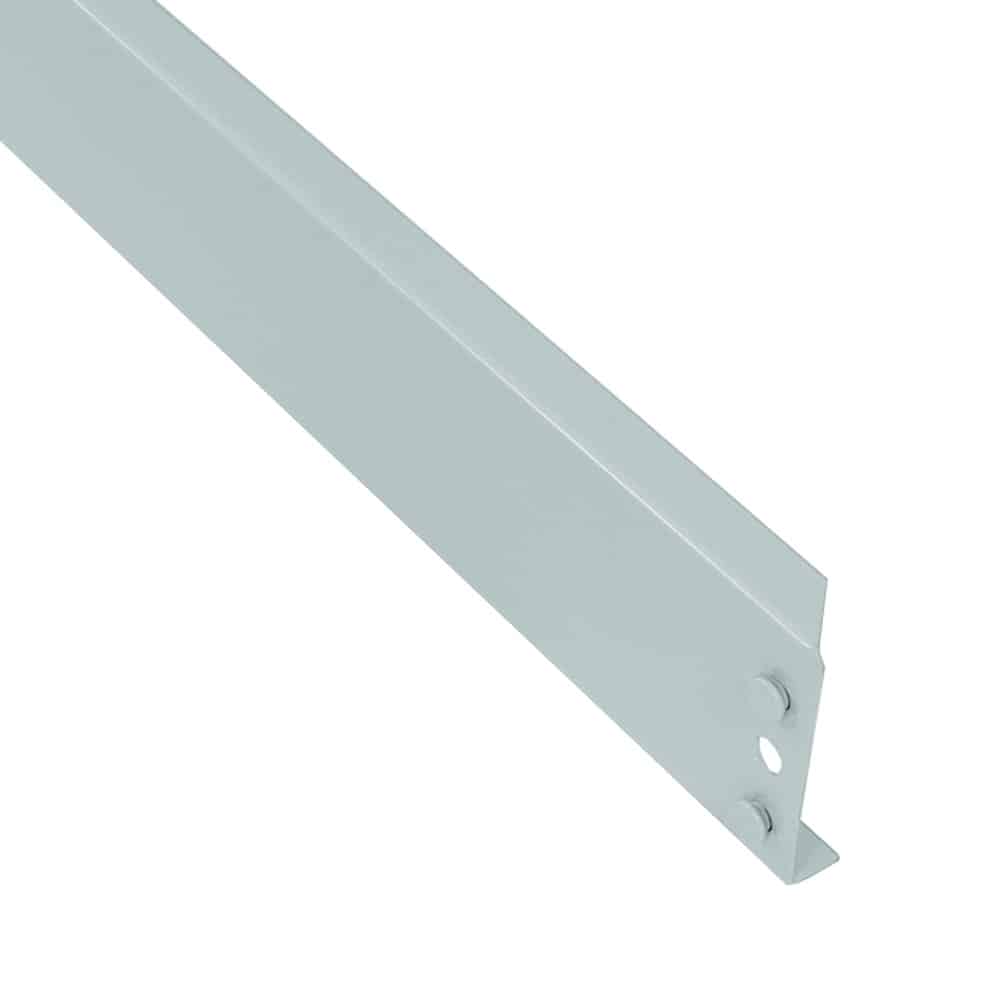
Add-on units share an upright with the unit next to them. Beams add levels to shelving you already own.


What is Boltless Shelving?
Boltless shelving is a type of storage system that requires no nuts or bolts for assembly. It uses a simple slide-and-lock technology to secure shelves and posts to a frame, making it incredibly easy and quick to set up. This system is ideal for both temporary and permanent storage applications, providing a high level of structural rigidity and stability.
Buying boltless shelving for a Utah facility? Our Utah shelving page covers our Salt Lake City service area, local layout help and installation.

Key Benefits of Boltless Shelving
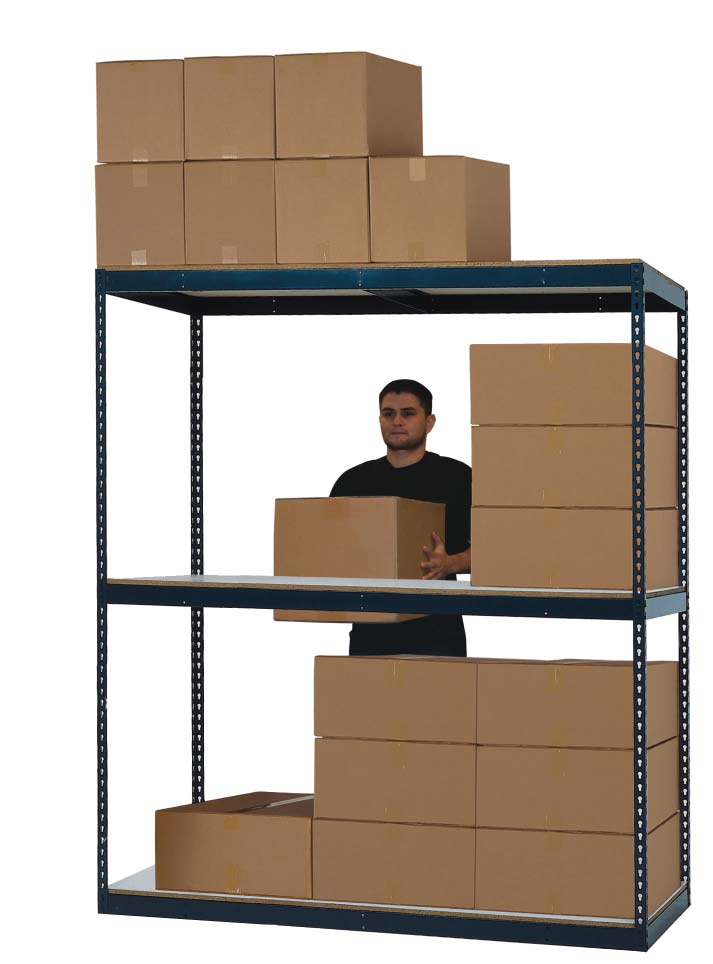
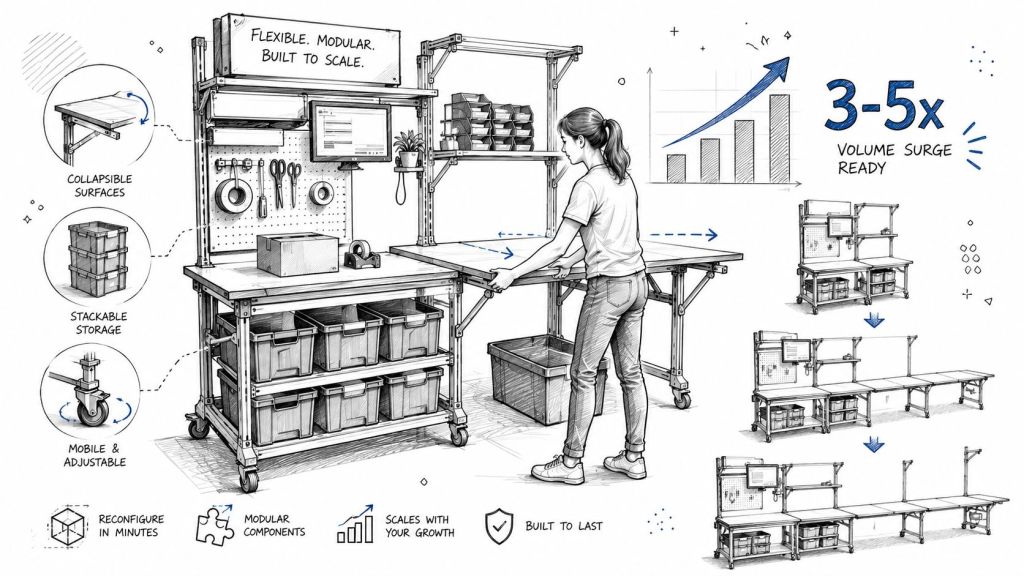

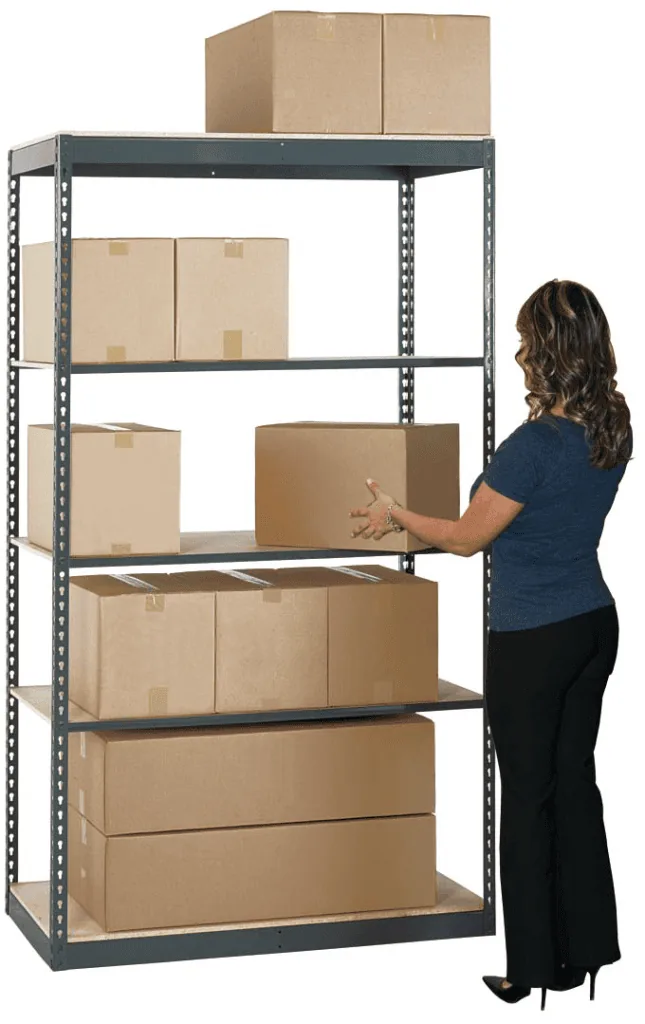
- Durability and strength: built to take heavy daily use and substantial weight in industrial and commercial settings.
- Easy maintenance: the open design is quick to clean, and fewer parts means less upkeep.
Applications of Boltless Shelving
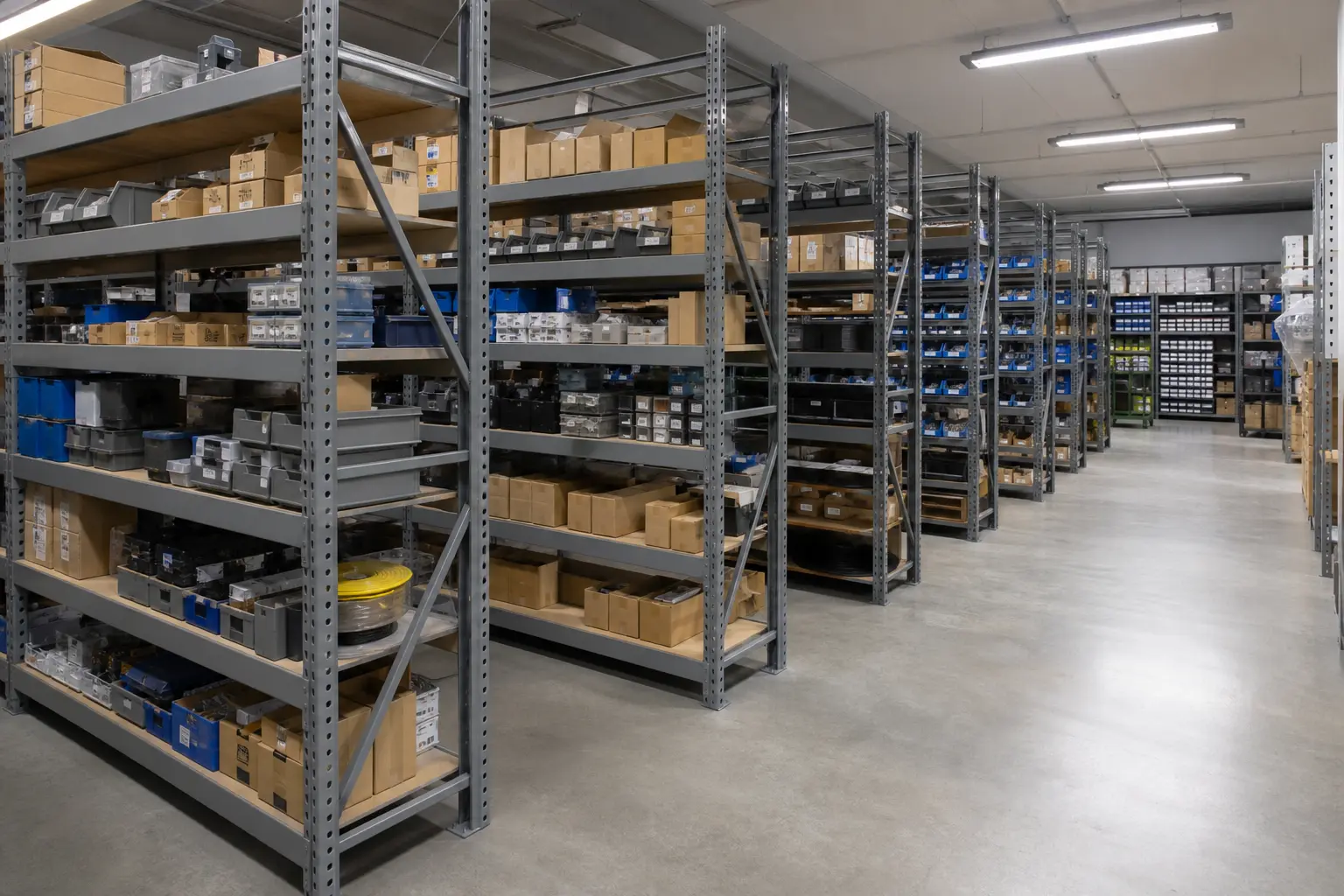
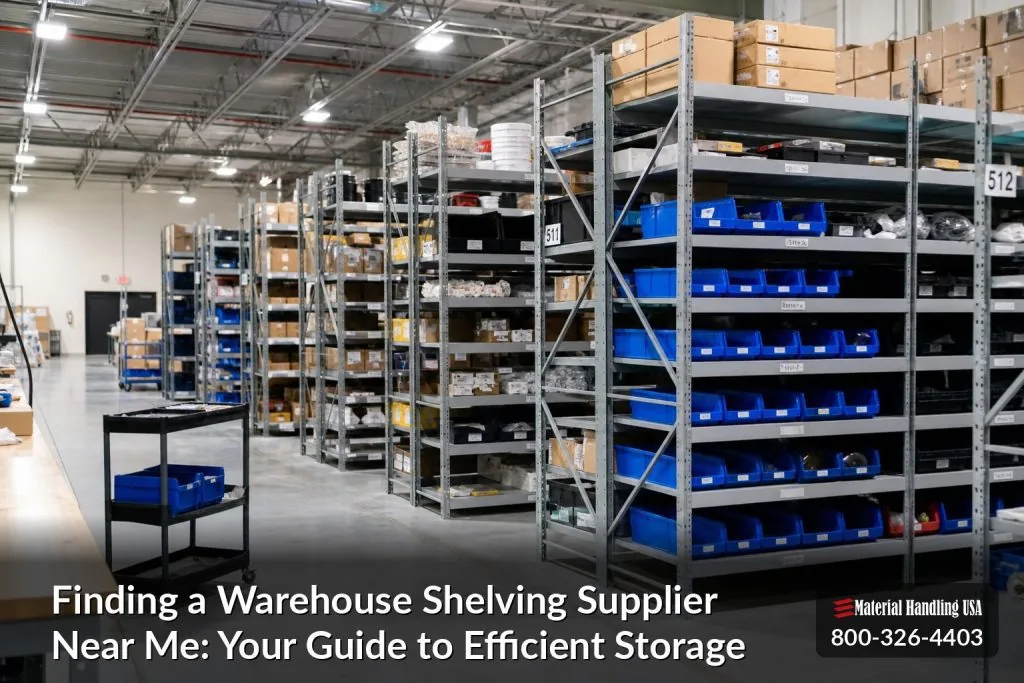
Boltless shelving is used across industries for fast, flexible storage.

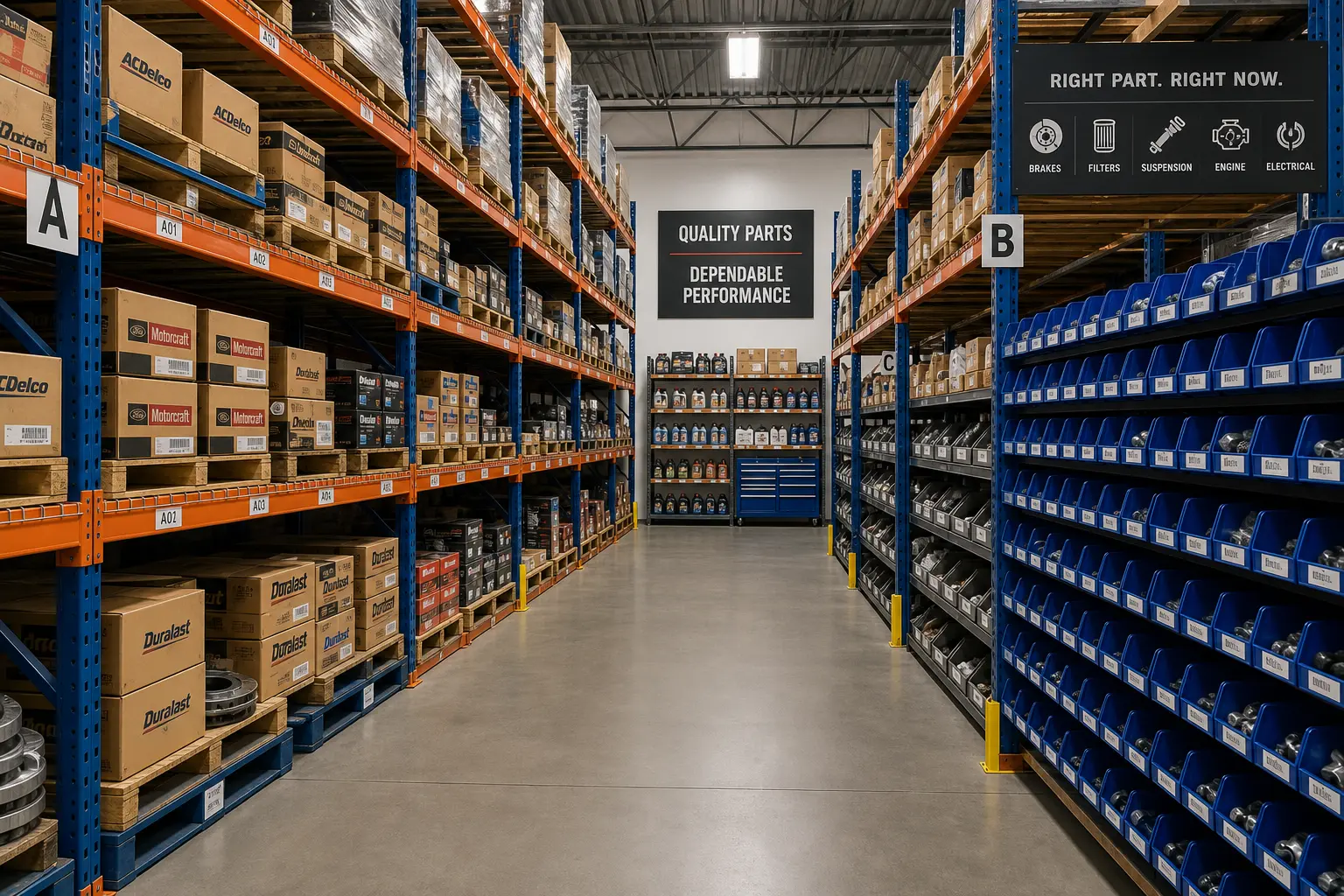




Types of Boltless Shelving
Transform your storage with boltless shelving solutions designed for every industry and application.
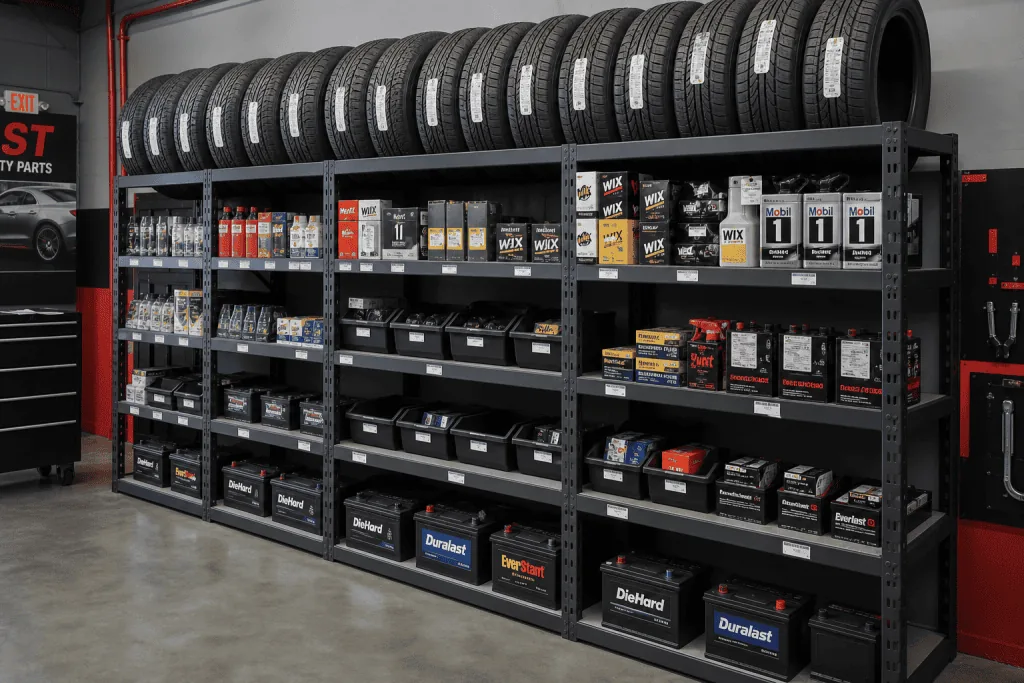
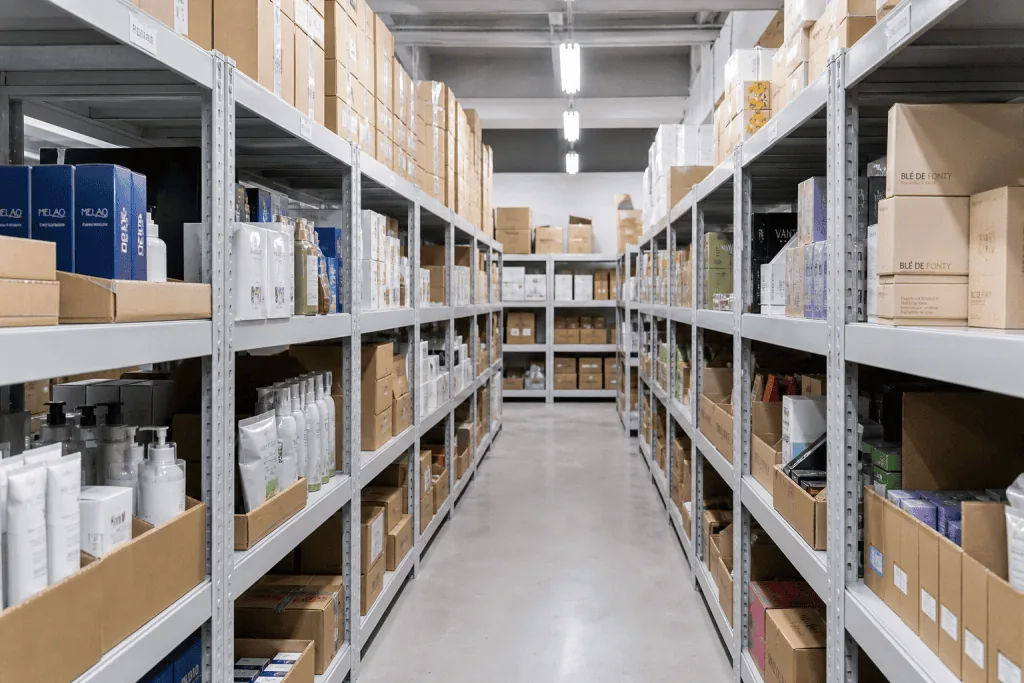
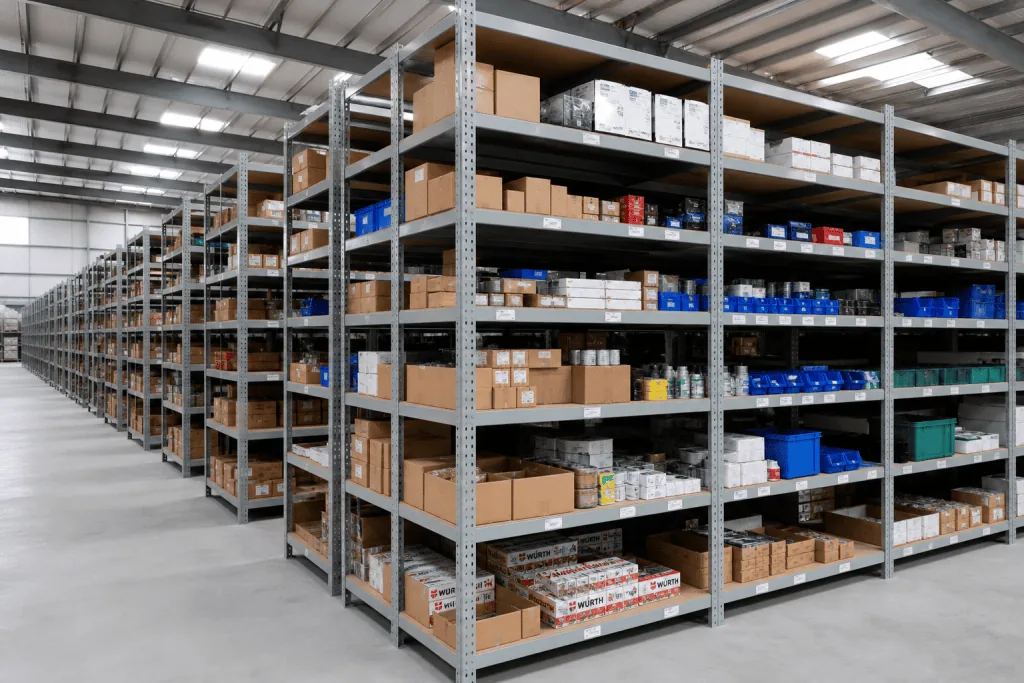
Boltless Shelving Units by Duty Rating
Light duty, medium duty and heavy duty boltless shelving use the same posts and the same keyhole connection. What changes is the beam, the deck and the span, and that is what sets the rating per shelf.
| Duty class | Typical beam | Published per-shelf rating (7 ft unit, evenly loaded) | Good for |
|---|---|---|---|
| Light duty | Single rivet, 1 in. low-profile beam (Jaken Series 200A) | 300 lb at 36 in., 225 lb at 48 in., 150 lb at 60 in. (1/2 in. board); 500 / 375 / 250 lb with 3/4 in. board and side supports | Office supplies, paperwork, small boxed parts, retail back-stock |
| Medium duty | Double rivet, 2-3/4 in. beam (Jaken Series 200B) | 900 lb at 48 in. wide, every depth from 12 to 48 in.; at 72 in. wide, 500 lb standard, 900 lb with deck support or 1,100 lb with heavy-duty beams | Stockrooms, parts rooms, maintenance shops, archive boxes |
| Heavy duty | Double rivet with deck support, channel or heavy-duty channel beams (Jaken Series 300B) | At 72 in. wide: 600 lb board only, 1,000 lb with deck support, 1,500 lb with channel beams, 2,000 lb heavy-duty package | Motors, castings, cased fluids, full cartons of hardware, wide spans |
Ratings are Jaken’s published figures. Series 200A and 200B figures were rechecked with Jaken in October 2026; for wire mesh ratings at every width, see rivet shelving with wire deck. Other brands publish different numbers for their own parts, so always use the rating for the exact product on your quote.
Start with the load, then the span. A light duty unit is not a lower quality unit; it simply spends less steel on beams because the shelf does not need it. Buying heavier beams than your items need costs money and vertical space, while buying lighter beams than you need is the mistake that matters. Our single rivet vs double rivet beam guide walks through the capacity tables by width, and the heavy duty boltless shelving page covers the beams, decks and posts used for the heaviest loads. For shelves wider than six feet, see wide span boltless shelving.
Upgrading an existing unit is often cheaper than replacing it. Extra beams, center deck supports, wire decks and particle board are all sold separately: browse boltless shelving accessories and parts and match the post style and brand you already own. Comparing brands? Our rivet shelving guide covers the series and capacities we stock, and RiveTier shelving covers the Western Pacific line used in our auto parts store project in Cedar City.
Buying in Utah? Our Salt Lake City team quotes, delivers and installs boltless shelving along the Wasatch Front and statewide. See boltless shelving in Salt Lake City for local projects, lead times and installation, or call 801-328-8788.
Related Storage Solutions



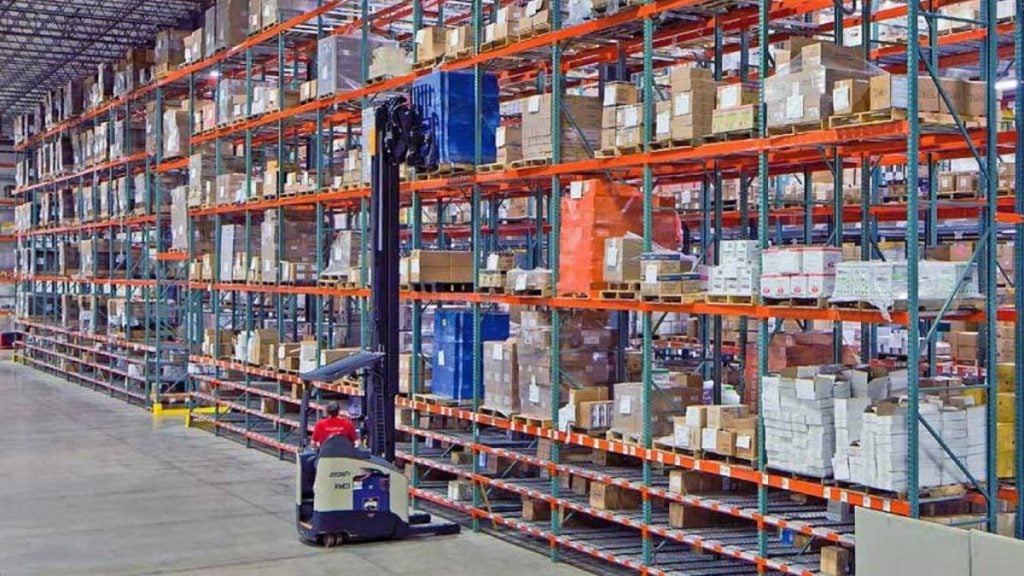
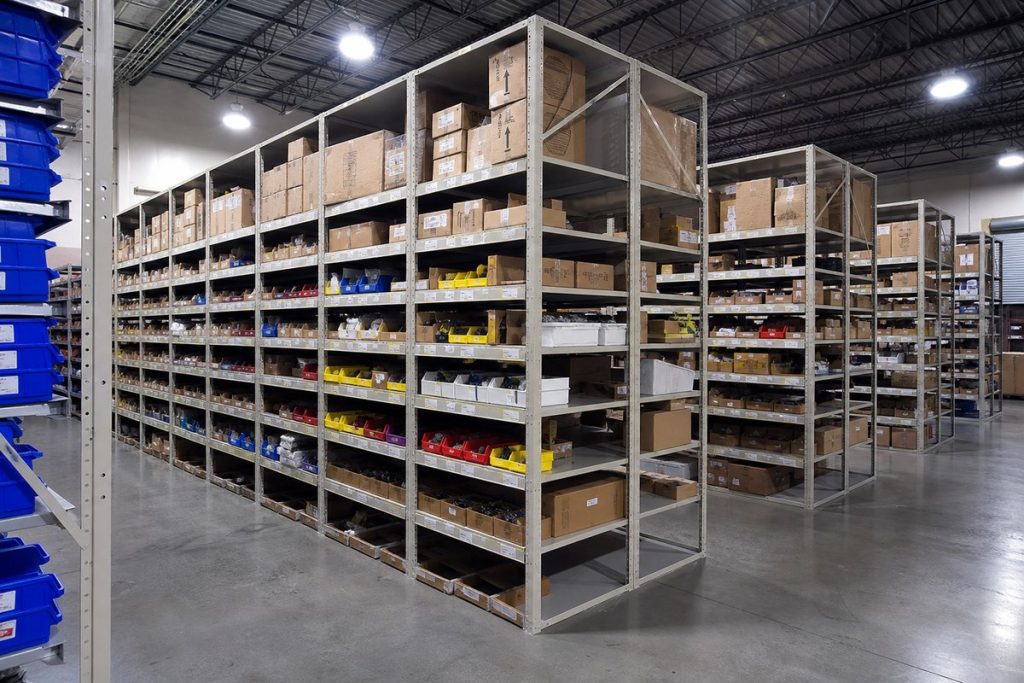
Boltless Shelving Buying Guide
Whether you are outfitting a warehouse, retail backroom, or garage workshop, choosing the right boltless shelving system means matching your storage needs with the correct size, weight capacity, and brand. This buying guide walks you through each decision step so you invest in the right system the first time.
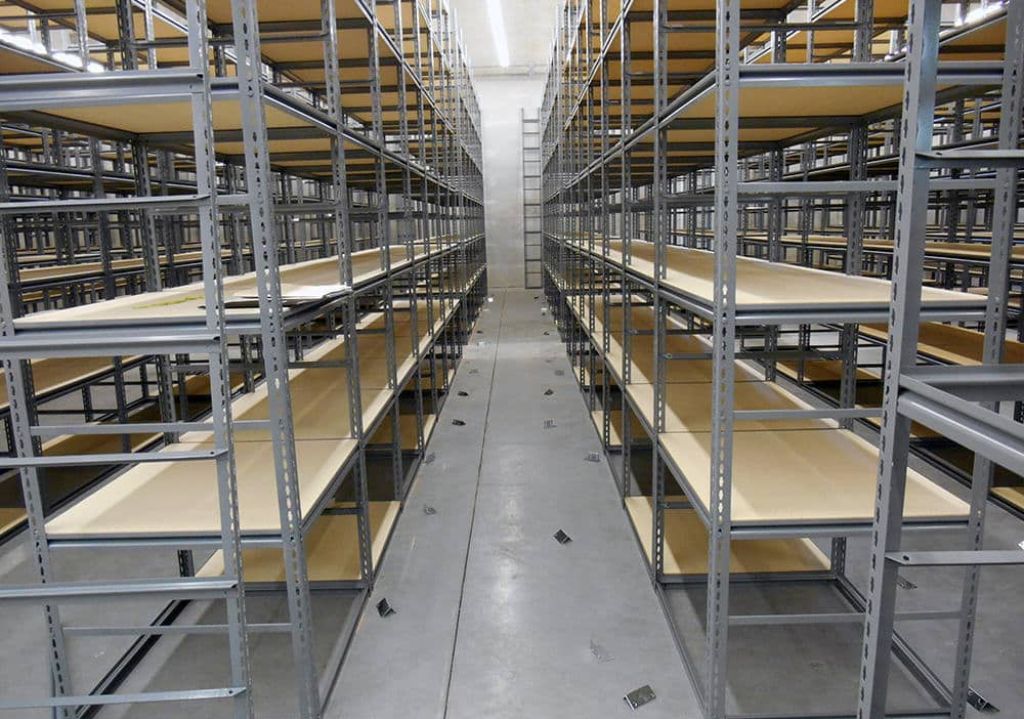
Choosing the Right Size
Boltless shelving comes in standard widths of 36″, 48″, 60″, and 72″ with depths ranging from 12″ to 48″. Heights typically span 60″ to 96″. For stockrooms and warehouses, 48″W × 24″D × 84″H units strike the best balance between capacity and aisle clearance. Deeper 36″ and 48″ shelves work well for bulky items like totes, bins, and automotive parts. Measure your available floor space first, then plan your aisle widths — 36″ minimum for hand-loaded aisles and 60″ or more if forklifts or carts will pass through.
Understanding Weight Capacity
Shelf capacity ratings range from 300 lbs per shelf on light-duty units up to 1,500 lbs or more per shelf on heavy-duty rivet shelving. When evaluating capacity, pay attention to two numbers: per-shelf capacity (how much each individual shelf can hold) and per-unit capacity (total weight the entire frame supports). Always plan for at least 20% more capacity than you think you need — inventory grows, and overloading shelving is both unsafe and voids most warranties. Heavy-duty beams and particle board or steel decking provide maximum strength for parts storage and bulk goods.
Decking Options
The shelf deck determines both strength and usability. Particle board is the most common option — affordable, provides a flat surface, and supports heavy loads. Wire decking allows air circulation and fire sprinkler water to pass through, making it ideal for food storage and fire-code compliance. Steel decking offers maximum strength for extremely heavy items. Some systems offer no deck at all, relying on the beam structure to support pallets or large containers directly.
Go deeper: Boltless shelving parts guide → · Single vs double rivet beams →
Boltless Shelving Brands We Carry
Material Handling USA partners with the leading American boltless shelving manufacturers. Every brand we carry is built for commercial and industrial use with heavy-gauge steel and backed by manufacturer warranties.
Hallowell
A trusted name in industrial storage since 1905, Hallowell manufactures heavy-duty boltless shelving units with capacities up to 1,250 lbs per shelf. Their HiTech and Rivetwell lines feature 14-gauge steel posts and double-rivet beam connections for maximum rigidity in warehouses and distribution centers.
Tennsco →
Tennsco builds their boltless shelving in Dickson, Tennessee, with a focus on quick-ship availability and value pricing. Their Stur-D-Stor line offers 750 lb shelf capacity in a clean, commercial-grade design ideal for office stockrooms, retail backrooms, and light industrial environments. For warehouse-grade storage, compare Tennsco Z-Line boltless shelving units, with double-rivet shelf supports and open access from all four sides.
Tri-Boro (Rivet Rak) →
Tri-Boro’s Rivet Rak system is one of the original rivet shelving designs, engineered for high-density parts storage. Their shelving features hat-shaped steel shelves with rolled edges and double-rivet post connections that deliver up to 1,500 lbs per shelf in heavy industrial applications.
Borroughs (Rivet-Span) →
Borroughs has been manufacturing storage solutions since 1906. Their Rivet-Span boltless shelving uses a unique keyhole-and-tab connection that eliminates hardware while providing rock-solid stability. Popular in automotive parts departments and manufacturing facilities for their quick reconfigurability.
Penco (RivetRite) →
Penco’s RivetRite shelving is designed for medium to heavy-duty storage with shelf capacities from 400 to 1,000 lbs. The beams snap into die-punched slots on the upright posts, creating a rigid connection that resists lateral sway. Penco is a GSA-approved supplier, making their shelving a go-to choice for government and military storage.
Western Pacific
Western Pacific manufactures their boltless shelving at their Oregon facility with a focus on seismic-rated designs suitable for West Coast installations. Their heavy-duty rivet shelving systems feature 2″ vertical adjustability and are available in both single-rivet and double-rivet configurations for varied load requirements.
Sandusky Lee →
Sandusky Lee makes steel storage products in the USA, including boltless and rivet shelving for stockrooms, garages and light industrial storage.
EQUIPTO →
EQUIPTO builds heavy-duty industrial storage, including boltless shelving and modular drawer systems for maintenance shops, parts rooms and manufacturing plants.
Interlake Mecalux →
MH-USA is an authorized Interlake Mecalux distributor. Interlake Mecalux offers rivet shelving alongside its pallet rack lines for warehouses and distribution centers.
MH-USA →
Our own white-label line of boltless shelving and storage products, sourced through our distribution partners for value-focused projects.
Boltless Shelving Assembly Guide
One of the biggest advantages of boltless shelving is its no-tool assembly. Most units go together in 15–30 minutes with just a rubber mallet. Here is the step-by-step process.

Lay Out the Components
Unpack and identify all parts — upright posts, beams (horizontal supports), and shelf decks. Verify quantities match the packing list. Group components by type so assembly goes smoothly.
Connect the Bottom Beams to Two Posts
Stand two upright posts on the floor. Insert the rivet tabs on one front beam and one rear beam into the bottom slots of both posts. Tap with a rubber mallet until the rivets seat fully into the keyhole slots. This creates the first end frame.
Add the Remaining Posts and Beams
Stand the other two upright posts and connect them using the same bottom beams on the opposite end. You should now have a rectangular base frame standing upright. Repeat the beam insertion process for each additional shelf level, working from the bottom up.
Place the Shelf Decks
Drop particle board, wire, or steel shelf decks onto each beam level. Ensure they sit flat and are fully supported by all four beams. The decking should rest securely without any gaps or overhang.
Level and Anchor
Check that the unit is level and plumb. On concrete floors, use anchor bolts to secure the base posts to the floor for stability, especially for units taller than 72″. For seismic zones, anchoring to the floor and optionally to the wall is often required by code.
Pro Tip: A single person can assemble a standard 4-shelf boltless unit in about 15 minutes. For large installations (10+ units), two-person teams typically average 10 minutes per unit once they have a rhythm going. No wrenches, no bolts, no special tools — just a rubber mallet.
Planning the install? See our boltless shelving assembly time and labor guide →
Boltless Shelving vs Wire Shelving vs Pallet Rack
Not sure which storage system is right for your application? Here is a side-by-side comparison to help you decide.
| Feature | Boltless Shelving | Wire Shelving | Pallet Rack |
|---|---|---|---|
| Assembly | No tools — rubber mallet only | Snap-together clips | Bolts, anchors, often professional install |
| Weight Capacity | 300–1,500 lbs/shelf | 250–800 lbs/shelf | 2,000–12,000+ lbs/level |
| Best For | Hand-loaded stockrooms, parts storage, archives | Clean rooms, food storage, medical supply | Palletized goods, bulk warehouse storage |
| Shelf Surface | Particle board, steel, or wire deck | Open wire grid | Wire deck, steel panels, or none |
| Cost | $ — Most affordable | $$ — Mid-range | $$$ — Higher investment |
| Mobility | Easy to move and reconfigure | Very easy, lightweight | Permanent installation |
| NSF Certified | No (not food-grade) | Yes — many models | No |
| Height Range | 5′ to 8′ | 5′ to 7′ | 8′ to 40′+ |
Bottom line: Boltless shelving is the best value for hand-loaded storage where you need strong capacity without forklift access. Choose wire shelving when hygiene, air circulation, or NSF certification matters. Choose pallet rack when you are storing palletized loads and need forklift-accessible levels.
Full comparisons: Boltless shelving vs pallet racking → · Boltless vs welded shelving →
Adding to or Repairing Existing Shelving: Matching Parts
Need a few more posts, beams, shelf levels or accessories for shelving you already own, or replacements for bent parts? That is usually possible, as long as the new parts match the system that is already standing. Here is how to tell what you have and what to send us.
Why parts from different brands rarely mix
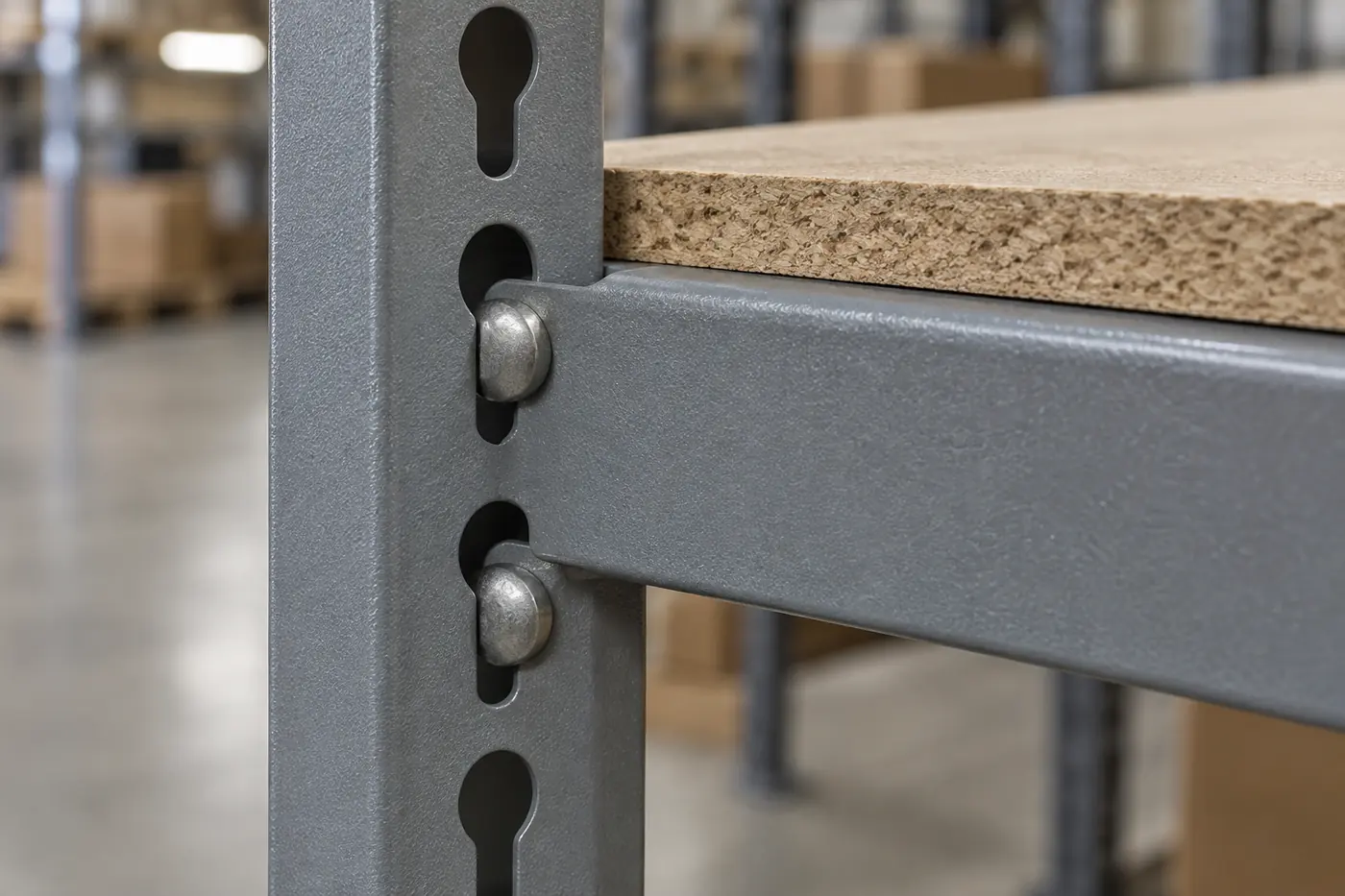
From across the room, most boltless and rivet shelving looks the same. Up close, each manufacturer — and often each series within a brand — uses its own post profile, keyhole or slot spacing, rivet size and placement, and beam-end shape. Differences you can’t see in a catalog photo can keep a beam from seating fully, or leave it seated but loose.
The same goes for clip shelving and wire shelving, and for accessories such as center supports, dividers and hanging rods, which are usually made for one product line. Color is not an identifier: many brands make gray posts. Keep each run on one brand and series.
How to identify the shelving you have
You don’t need to know the brand. Clear photos and a few measurements are usually enough for us to identify it. Measure only parts you can reach safely, and don’t climb shelving.
Photos to take
- The whole unit, straight on, so we can count the levels and see the overall shape
- A close-up of the post face showing the keyhole or slot pattern, with a tape measure alongside
- A close-up of a beam-to-post connection (the rivets, clips or tabs)
- The end or cross-section of a beam (Z-beam, angle/L-beam or channel) and the shelf deck type
- Any manufacturer label, sticker or stamp: check the posts, the beam ends and the underside of shelves
- The part you need to replace or add to, if it’s on hand
Measurements and details
- Unit width, depth and height (overall, in inches)
- Post face width, and the spacing between slots measured center to center
- Beam length end to end, and the height of the beam face
- Deck material and thickness (particle board, wire, steel)
- Color and finish, and how many levels you want to add or replace
- Any invoice, order number or packing list from the original purchase
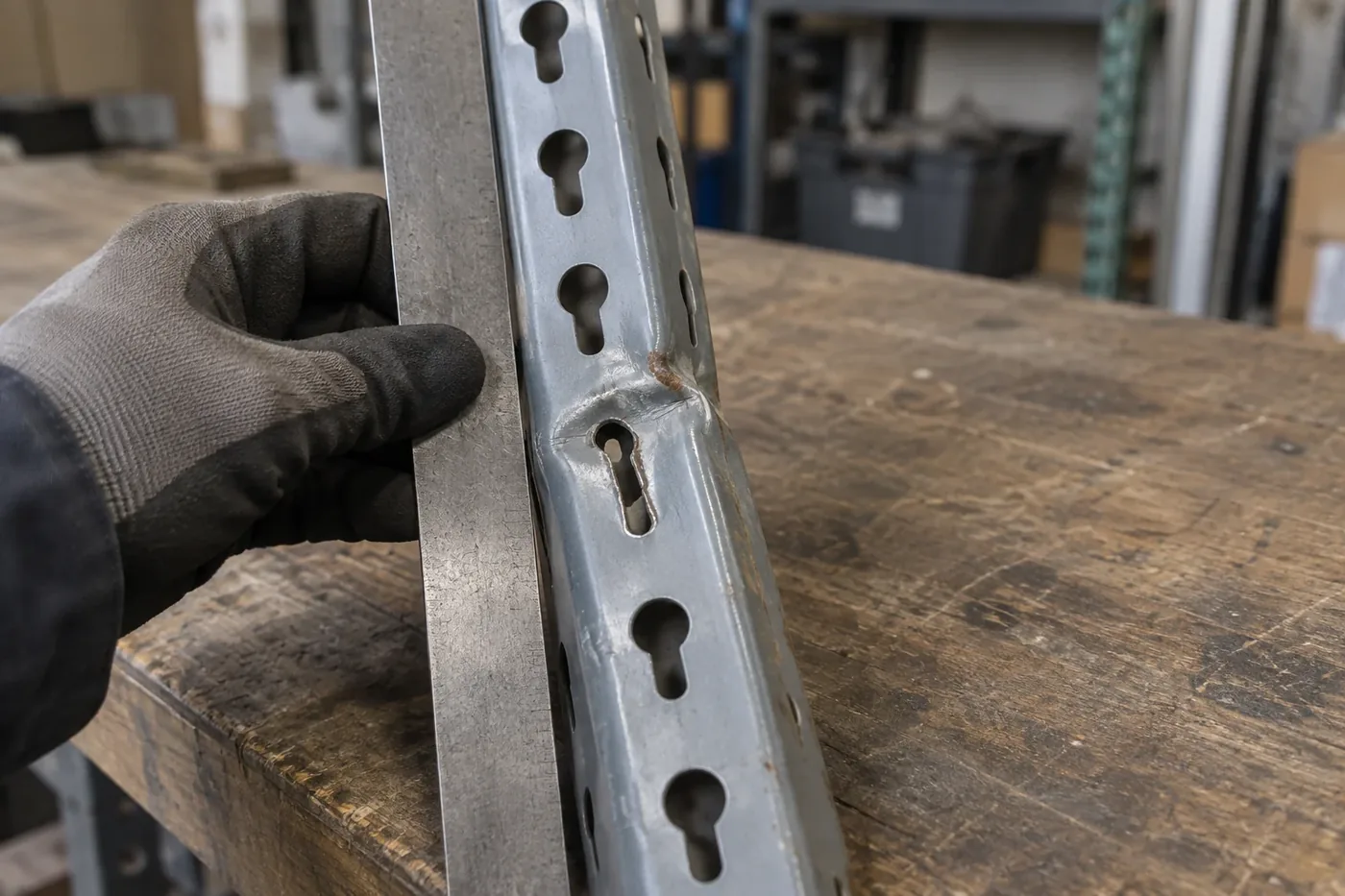
Replacing bent or damaged posts and beams
A dented post, a bent beam or a stretched keyhole can stop beams from locking in, so the usual fix is a matching replacement part. Before anything is removed, unload the shelf levels the damaged part supports.
Photograph the damaged part and a good part beside it with a tape measure in the frame. That lets us match the post height, profile and slot pattern, or the beam length and style.
What happens after you send it
1. Send photos and measurements
Email them to Sales@MH-USA.com or call (800) 326-4403. If you bought the shelving from us, include the company name and roughly when it was ordered so we can check our records.
2. We identify the system
We work out the brand, series and sizes from your labels, paperwork, photos and measurements. If anything is unclear, we ask for another photo or measurement rather than guess.
3. We confirm fit before you order
We confirm that the posts, beams, decks or accessories match what you have before an order is placed. For add-on levels we match the decks, side brackets and long brackets so new levels look and load the same as the ones already installed.
4. If no match is available
We tell you up front. The original manufacturer can sometimes point you to its parts source. If not, replacing a complete unit or section keeps the run on one brand, and a new run can be planned with starter and add-on units.
Matching pallet rack rather than shelving? Use our pallet rack identification and compatibility guide. For beam styles, see single vs. double rivet beams. For how starter and add-on units share posts, see our rivet shelving guide.
More Boltless Shelving Guides
Clip, rivet and bulk-rack variations of boltless shelving, the brands we supply, and a real stockroom example.
Frequently Asked Questions
Common questions about boltless shelving answered by our storage specialists.
What is boltless shelving?
Boltless shelving (also called rivet shelving) is an industrial storage system that assembles without nuts, bolts, or special tools. Steel upright posts have die-punched keyhole slots, and beams have rivet tabs that lock into those slots with a tap from a rubber mallet. This creates a rigid, strong shelving unit in minutes. Boltless shelving is used in warehouses, stockrooms, retail backrooms, garages, and parts departments for hand-loaded storage of boxes, bins, parts, and inventory.
How much weight can boltless shelving hold?
Boltless shelving capacity varies by model and brand. Light-duty units typically hold 300 to 500 lbs per shelf, while heavy-duty rivet shelving models from brands like Hallowell, Tri-Boro, and Penco support 1,000 to 1,500 lbs per shelf. Total unit capacity can range from 1,500 lbs to over 7,500 lbs across all shelves. Always check the manufacturer’s rated capacity and distribute weight evenly across the shelf surface.
How do I assemble boltless shelving?
Boltless shelving requires no tools other than a rubber mallet. Insert the rivet tabs on each beam into the keyhole slots on the upright posts, then tap with the mallet until the rivets seat fully. Start with the bottom beams, then work upward adding beam pairs at each shelf level. Place the shelf decks (particle board, wire, or steel) on top of the beams. A single person can assemble a standard 4-shelf unit in about 15 minutes.
What sizes does boltless shelving come in?
Standard boltless shelving widths are 36, 48, 60, and 72 inches. Depths range from 12 to 48 inches, with 18-inch and 24-inch depths being the most popular. Heights typically run from 60 inches (5 feet) to 96 inches (8 feet). Most units come with 3 to 5 adjustable shelves that can be repositioned in 1.5-inch or 2-inch increments to accommodate different item sizes.
Is boltless shelving better than wire shelving?
Boltless shelving and wire shelving serve different purposes. Boltless shelving is stronger (up to 1,500 lbs per shelf vs 250–800 lbs for wire shelving), more affordable, and ideal for heavy hand-loaded storage in warehouses and stockrooms. Wire shelving is better when you need NSF food-safety certification, antimicrobial coatings, air circulation for coolers and cleanrooms, or chrome and stainless steel finishes for medical and food service environments. Choose boltless for heavy-duty capacity and value; choose wire for hygiene and specialty applications.
Where can I buy boltless shelving replacement parts?
We supply replacement and add-on parts, including upright posts, beams (rivet beams), shelf decks, connectors, shelf clips and foot plates, for the boltless and rivet shelving lines we carry. Parts are brand- and series-specific, so send photos and measurements of your existing unit to Sales@MH-USA.com or call (800) 326-4403. We will confirm the matching parts before you order. See “Adding to or Repairing Existing Shelving: Matching Parts” above for what to send.
What is the difference between rivet shelving and boltless shelving?
Rivet shelving and boltless shelving are the same thing — the terms are used interchangeably. The name ‘rivet shelving’ comes from the rivet-shaped tabs on the beams that lock into keyhole slots on the upright posts. ‘Boltless shelving’ describes the key benefit: no bolts, nuts, or hardware needed for assembly. Some manufacturers use brand names like Rivet Rak (Tri-Boro), Rivet-Span (Borroughs), or RivetRite (Penco) for their specific boltless systems.
Can I mix boltless shelving parts from different brands?
Generally, no. Post profiles, keyhole or slot spacing, rivet placement and beam ends vary by manufacturer and often by series. A beam from another brand may not seat fully, or may seat but stay loose. Keep each run on one brand and series, and have fit confirmed before you order.
I don’t know what brand my shelving is. Can you still help?
Usually, yes. Look for a label or stamp on the posts, beam ends or underside of the shelves. Then send photos of the whole unit, a close-up of the post slot pattern with a tape measure, a beam connection and the beam profile, plus the unit width, depth and height. If you bought the shelving from us, include the company name and roughly when it was ordered so we can check our records.
What if matching parts aren’t available for my shelving?
We will tell you before anything is ordered. The original manufacturer can sometimes point you to its parts source. Otherwise, the dependable fix is to replace a complete unit or section so each run stays on one brand.
Can I add accessories or extra shelf levels to shelving I already have?
For many of the lines we supply, yes: extra beam pairs and decks, center supports, dividers, hanging rods and similar accessories. Accessories are made for specific product lines, so we confirm fit from your photos and measurements before you order.
When shelving is the wrong tool for small parts
Boltless shelving is excellent for heavy and mixed-size items. For a long tail of small, light, low-quantity SKUs it wastes most of its cube, and Storeganizer pocket columns will hold far more pick locations in the same footprint.
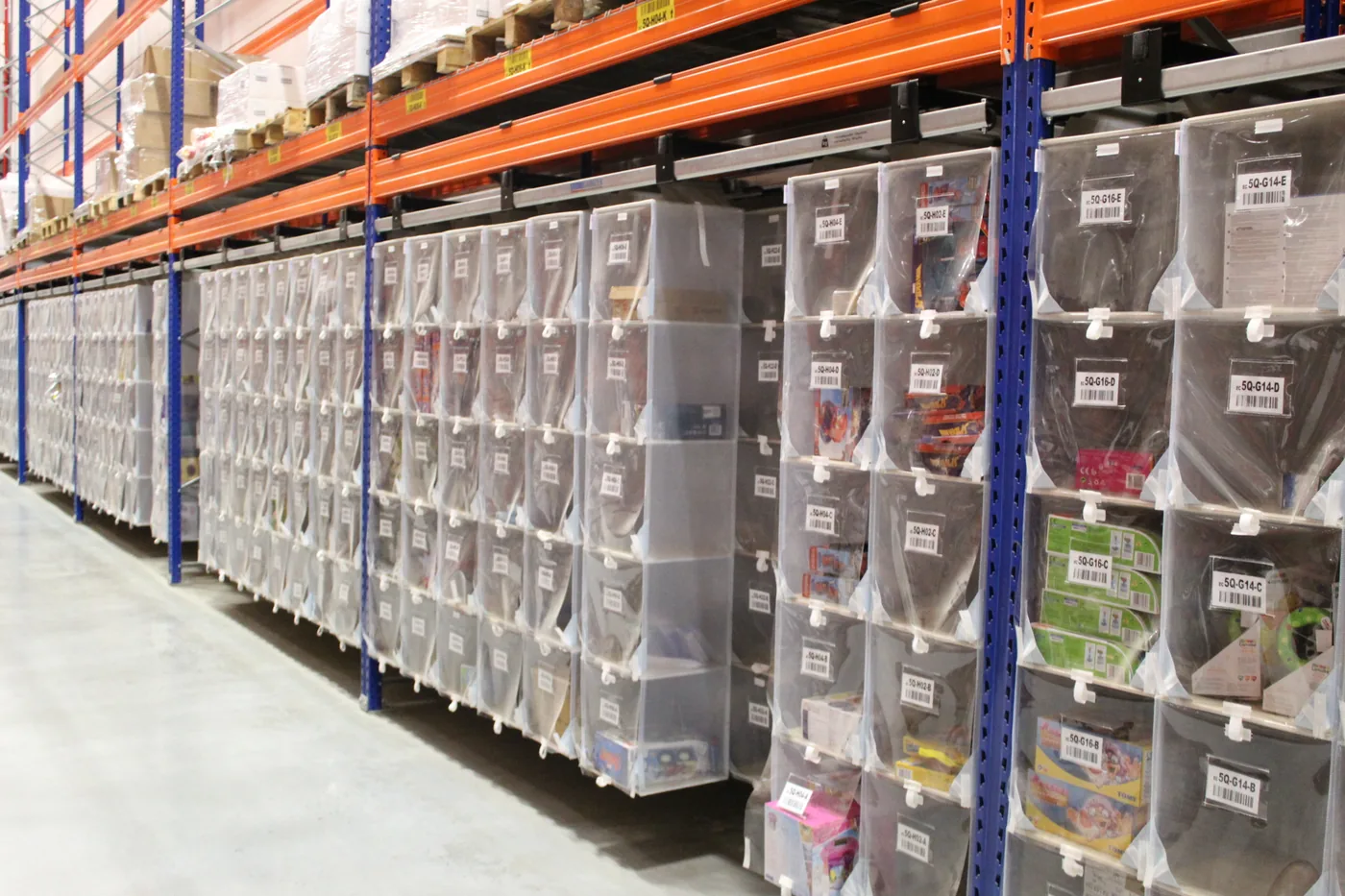 Storeganizer high-density pocket storageVertical columns of textile pockets that hang in existing pallet rack — up to 396 pick locations per bay.
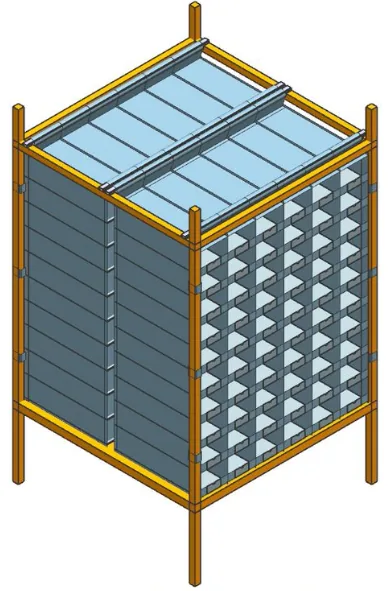 Free Storeganizer ConfiguratorConfigure bay height, pocket size, bay count and options; get a 3D layout, location count and price.
 Storeganizer vs. shelving, flow rack & automationAn honest comparison from a distributor that sells all of them.
Dealership or fleet shop? See Borroughs automotive shelving for Box Edge Plus parts room shelving, 400 lb high-density parts drawers and service workstations.
Ready to Get Started?
Contact our team for a free design consultation and quote.
Build Your Own Storeganizer Layout
Use our free 3D Storeganizer Configurator to size your columns, pick pocket sizes and textile grades, and get a price in minutes — no sales call required to see your configuration.
Open the Storeganizer Configurator →Specifying This for a Construction Project?
Boltless shelving fall under CSI MasterFormat Division 10 (Specialties). See our Division 10 Specialty Products page for the full product map, published CSI spec sections, and submittal support.
Boltless Shelving Case Studies
Real projects we have quoted and supplied, with the decisions behind them. Boltless shelving is one family within our wider shelving solutions line.
- Electrical equipment supplier warehouse shelving, Utah Breakers & Supply, Salt Lake City, UT: one standard 30 inch deep, six-level section, gray finish chosen over tan for a faster delivery.
- Mixed-depth boltless shelving for a public library system, Weber County Library, Ogden, UT: three shelf depths for main library storage, then deeper, lower units for a branch.
- Boltless shelving for City Hall and Public Works, City of Draper, Draper, UT: one 8 ft wide section standardized across two departments, anchored where needed, bought in three orders.
- Data center tool room shelving and workbenches, West Jordan, UT
- Seed Storage Shelving in Salt Lake City
- Library Book Storage Shelving in Eatontown, NJ
- Boltless shelving for a youth cycling league warehouse, Utah High School Cycling League, American Fork, UT: ten and eight foot sections bought in three orders, with shelf levels added later.
- Installed boltless shelving for an apartment building, Ogden Housing Authority, Ogden, UT: storage rooms planned floor by floor, received, delivered and installed.
- Open vs Closed Parts Room Layouts
- Boltless shelving for a school district carpenter shop, Granite School District, Salt Lake City, UT: heavy-duty double rivet shelving bought on a State of Utah contract with freight included.
- Low-profile boltless shelving bought in phases, Source Energy Company, Longmont, CO: an aerospace supplier filling its stockroom with freestanding units across six orders, mixing single and double rivet beams.
- RiveTier rivet shelving for an auto parts store, Tinks Superior Auto Parts, Cedar City, UT — a full parts room reshelved in RiveTier 1 with particle board decks, shipped freight only for in-house assembly.
- Off-site archive box storage on boltless shelving, Kirton McConkie, Lehi, UT — dense records storage sized to a rented storage unit.
- Wire deck levels for an existing boltless shelving system, LF Illumination, Chatsworth, CA — matching add-on levels to installed Jaken shelving, proving fit with sample decks, and beating a long factory lead time.