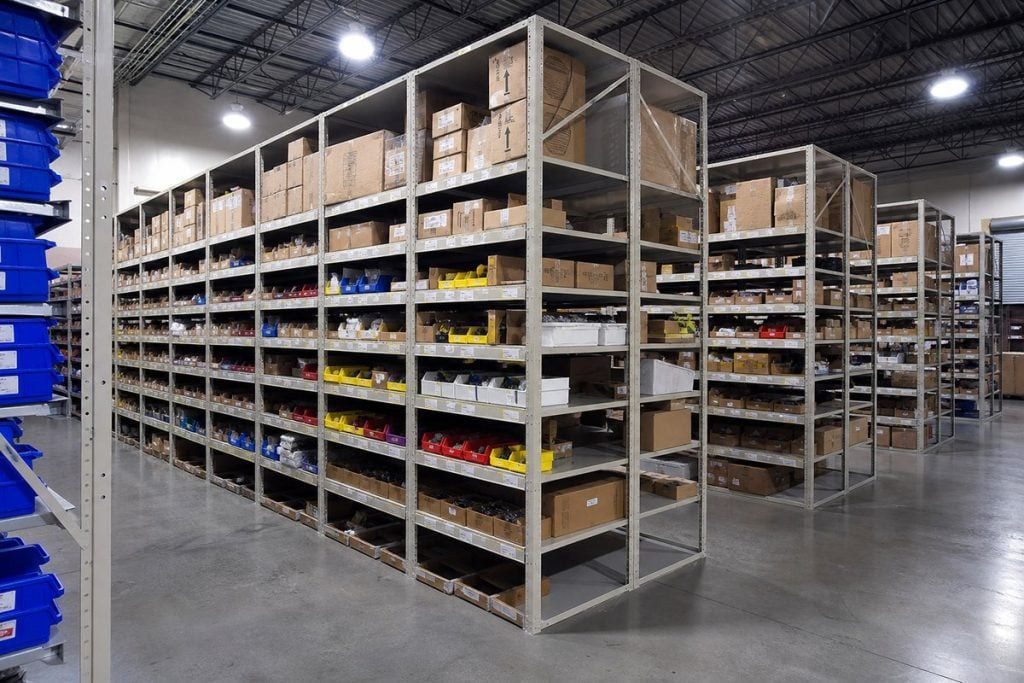
If you are deciding between boltless shelving vs pallet racking, start with how your team handles the load. Boltless shelving is built for hand-loaded cartons, bins, parts, and mixed SKUs. Pallet racking is built for unit loads moved by forklifts or pallet jacks. Choose the wrong one and you waste floor space, slow down picking, or create rework with anchors, aisles, and fire protection.
| Quick answer | Pick boltless shelving | Pick pallet racking |
|---|---|---|
| How goods are handled | People carry cartons, totes, and parts | Forklifts or pallet jacks move full pallets |
| Typical load unit | Item, carton, tote, bin | Palletized unit load |
| Best zones | Stockrooms, parts rooms, records, pick faces | Reserve storage, bulk, distribution, overflow |
| Engineering effort | Lower in most stockroom uses | Higher, with anchors, plaques, and seismic review |
| Change it later | Shelf levels adjust quickly by hand | Beam levels adjust, but layout is more fixed |
Understanding the Core Difference Between Boltless Shelving and Pallet Racking
Boltless shelving and pallet racking solve different workflow problems. Boltless shelving gives workers direct access to individual products, cartons, tools, records, or parts. Shelf levels move as inventory changes, and open designs can allow access from more than one side. That makes it useful in stockrooms, maintenance areas, evidence rooms, and manual picking zones.
Pallet racking is a structural storage system for unit loads. Forklifts place and retrieve pallets at beam levels, so the building can use vertical space for reserve inventory. The frames, beams, anchors, decking, load plaques, slab condition, and building requirements are all part of that system, not optional extras.

The operational question matters more than the product label
Ask how inventory enters, moves through, and leaves the storage area.
- Hand-loaded inventory: Workers carry cartons, totes, bins, or loose items to the location. Boltless shelving usually creates a shorter, simpler picking path.
- Palletized inventory: Forklifts or pallet jacks move full unit loads. Pallet racking provides the beam openings and vertical structure that process needs.
- Mixed inventory: A hybrid layout often wins. Reserve pallets stay in pallet rack while fast-moving cases and parts move to boltless shelving near the pick and pack area.
Pallet racking is also governed by formal engineering standards. In the United States, ANSI MH16.1 is the primary standard for the design, testing, and use of industrial steel storage racks, and building codes reference it. That is the main reason rack projects carry more paperwork than a stockroom shelving order. Shelving is not unregulated, but it rarely triggers the same structural review.
Practical rule: Choose the handling method first. Choose the storage equipment second.
Load Capacity and Weight Requirements for Each System
The capacity gap is usually the fastest way to narrow the decision. Standard selective pallet racking commonly carries 2,000 to 4,000 pounds per beam level, and heavy-duty configurations can reach 3,000 to 10,000 pounds per level, depending on the design. Bay totals of 10,000 to 20,000 pounds are possible when the complete configuration is engineered for them. These figures come from pallet rack capacity guidance, and they are not permission to load every rack to those numbers. The rating belongs to the specified system, not to the product category.
Boltless shelving sits in a lower and wider range. Standard heavy-duty units commonly fall around 300 to 1,200 pounds per shelf, and some industrial configurations go higher, depending on gauge, span, and deck construction. Span length matters more than most buyers expect. The same upright and deck can carry much less at 72 inches wide than at 36 inches wide.

| System type | Capacity range | Typical applications | Access method |
|---|---|---|---|
| Boltless shelving | 300 to 1,200 lb per shelf for standard heavy-duty systems | Parts, cartons, tools, records, mixed SKUs | Manual picking |
| Boltless shelving, heavier configurations | Higher shelf ratings are available, depending on gauge, span, and deck | Dense hand-loaded stock and industrial components | Manual picking |
| Selective pallet racking | 2,000 to 4,000 lb per beam level | Palletized reserve and distribution inventory | Forklift or pallet jack |
| Heavy-duty pallet racking | 3,000 to 10,000 lb per level, depending on design | Dense or high-mass unit loads | Forklift |
Match capacity to the load unit
A standard 48 by 40 inch GMA pallet is often rated at about 2,500 pounds when it spans rack beams, according to load-rating information for pallet racking and mezzanines. That does not mean every pallet is interchangeable. Pallet quality, bottom-board condition, load distribution, beam spacing, and rack design all change the safe rating.
Boltless shelving ratings are shelf-specific and span-specific. A 36-inch span in one industrial line may be rated near 350 pounds, while another line at the same width is rated far higher. Compare the published shelf rating against the real stored weight, not the marketing name of the product family. If you are also weighing welded units, our comparison of boltless shelving vs welded shelving covers that trade-off.
For rack details such as beam sizes, frame depths, and connector styles, review the pallet rack specifications page before you request a quote.
How to Measure and Specify Your Storage System
A good quote starts with a usable site survey. Product dimensions alone will not tell you whether the equipment fits around columns, doors, sprinklers, aisles, and lift trucks.
Collect these inputs in order
- Measure the usable floor area. Record the length and width of the storage zone, then mark columns, walls, drains, electrical panels, doors, and exits.
- Measure clear height. Measure from the finished floor to the lowest obstruction, not to the roof deck. Note lights, ducts, sprinkler piping, beams, and door tracks.
- Record access points. Document door widths, dock positions, turning areas, and the path used to bring equipment into the building.
- Inventory the load. For each major SKU group, record length, width, height, weight, packaging, and whether the product sits on a pallet, tote, carton, or shelf.
- Separate static and moving loads. A shelf supports stored goods. Pallet rack also takes force during placement, retrieval, and possible impact.
- Count the required locations. Estimate pallet positions, shelf levels, bays, and future expansion. Do not fill every inch before confirming replenishment and picking paths.
- Document access frequency. Fast movers belong near packing. Slow-moving reserve stock can go higher in the rack.
- Check pallet geometry. Record pallet size, load overhang, bottom-board condition, and required beam support. A pallet that fits on paper may not sit safely in the opening.
- Confirm the floor condition. Note cracks, slopes, joints, resurfacing, and where anchors will land. Rack anchorage depends on the real slab.
- Identify code and operating requirements. Gather sprinkler details, seismic design data, inspection expectations, forklift type, and any landlord or insurer requirements.

Use those inputs with the boltless shelving buying guide or a design consultation. A good layout shows bay dimensions, aisle clearances, load ratings, access direction, and room to grow. That is what prevents the most common purchasing error, which is buying a product before validating the flow.
Want to see the layout before you buy it? Build a starting configuration in the free shelving designer or the pallet rack designer, then send it to our team for pricing. You can also call (800) 326-4403 and talk it through first.
Fire Code Compliance and Sprinkler System Requirements
Storage density is not only a space-planning issue. Shelf decking, open area, storage height, aisle arrangement, and the relationship between stored goods and sprinkler heads can all change fire protection performance. Some decking is designed around NFPA 13 sprinkler requirements and emphasizes open surface area, but the correct application still depends on the building and the authority having jurisdiction. Explore MH-USA pallet rack solutions shows why decking deserves review during design, not after.
Pallet rack usually needs more documentation because it carries concentrated loads at height and interacts with forklifts, anchors, slabs, and seismic forces. Guidance based on ANSI MH16.1 supports visible load plaques that state the maximum unit load, the average unit load, and the total bay load. Other markets follow the same principle under different numbers. In Australia, for example, AS 4084 and SafeWork NSW guidance also require that rated unit and bay capacities are never exceeded. US projects should be reviewed against local building requirements and the actual structural conditions.
Seismic design changes the specification
Seismic conditions can change rack frame design, anchorage, bracing, and allowable loads. FEMA guidance notes that racks in areas of high seismicity may need a minimum base shear coefficient near 10 percent of rack weight. Floor condition matters here too. A warehouse floor and epoxy resource can help facility teams think about slab preparation, though coating work never replaces structural review or rack engineering.
Boltless shelving is simpler in a low-load stockroom, but the absence of bolts does not make an installation exempt from every rule. Height, location, stored materials, egress, fire protection, and local code still apply. Ask the designer to name what requires engineering, anchoring, permits, placards, or inspection before material is ordered.
Best Use Cases for Boltless Shelving and Pallet Racking
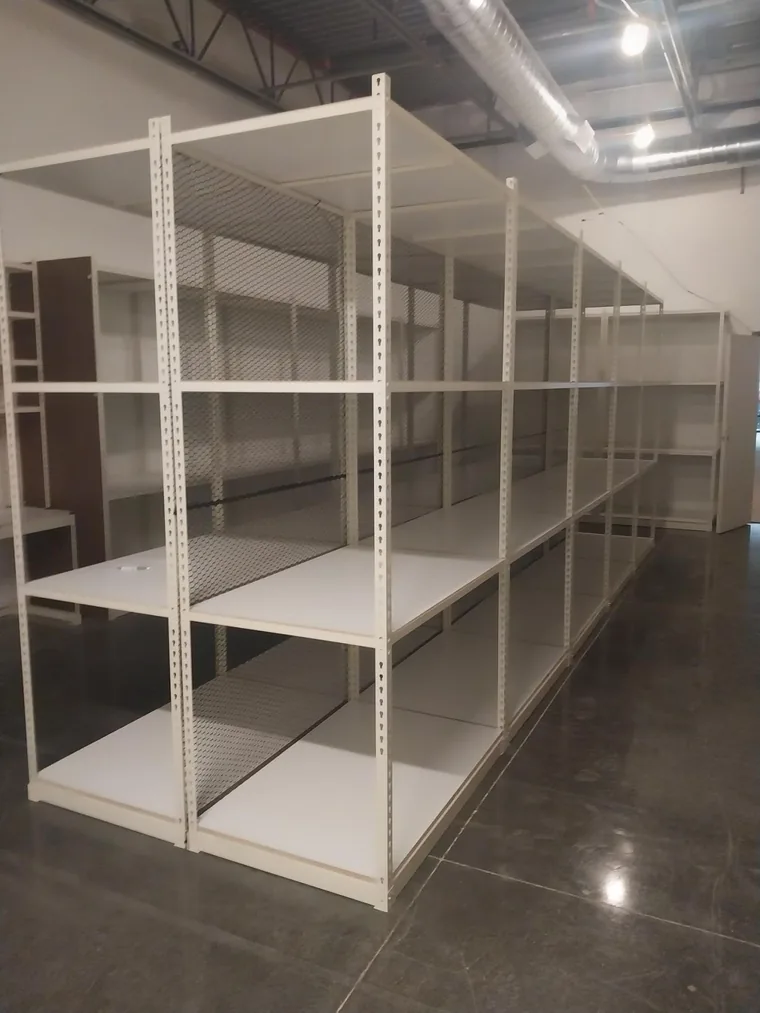
Boltless shelving works well when people, not forklifts, do most of the storing and retrieving. Typical uses include maintenance parts, tools, cartons, evidence, records, lab supplies, and e-commerce pick inventory. Open designs and adjustable levels let a team handle mixed SKUs without rebuilding the bay.

Pallet racking earns its place when inventory arrives on pallets and leaves on pallets. Distribution centers, plants, wholesalers, and overflow areas commonly use selective rack for direct pallet access. Drive-in, push-back, and pallet flow racking can serve different density goals, but the choice still starts with load unit, turnover, access, and lift equipment.
When a hybrid layout is the stronger answer
Many facilities do not have a single inventory profile. A practical arrangement uses pallet rack for full-pallet reserve, boltless shelving for eaches and cases, and a separate work area for inspection or replenishment. That keeps forklift traffic out of the active pick zone while reserve inventory stays organized vertically. Our warehouse design and layout solutions team plans those zones together instead of one product at a time.
Automation readiness also favors a deliberate mix. Modular, tool-free shelving adapts to changing tote and carton sizes, while engineered rack can support reserve storage or automation interfaces where alignment and deflection matter. Deflection limits get tighter when equipment, not a person, has to find the load. Our guide to selecting pallet rack is a good starting point for that kind of project.
The right question is not which system is better. Ask which zones need pallet density, which need human access, and which will change as the SKU mix changes.
Cost Drivers and Lead Time Factors
A low product price can turn into an expensive project if the quote leaves out design, freight, installation, anchoring, permits, or fire protection changes. Compare complete installed scopes, not the price of a single frame, beam, or shelf.
For pallet racking, the main cost drivers are steel gauge, frame height, beam length, decking, rack style, seismic requirements, engineering documents, anchors, guards, plaques, freight, and installation. Custom layouts and unusual slab conditions add review time. Boltless shelving cost varies with shelf rating, bay width and depth, deck type, number of levels, quantity, dividers, bins, labels, and finish.
Lead time depends on readiness
Standard components usually move faster than engineered or custom configurations. Drawings, permit review, manufacturer availability, seasonal demand, freight routing, and crew scheduling all shape the final date. A facility that delays measurements or sprinkler review loses more time than one that changes a shelf color.
Ask for comparable quotes: the same bay sizes, capacities, decking, accessories, delivery terms, installation scope, and documentation. Material Handling USA provides free layouts and designs with no obligation, free quotes, competitive pricing, and fast shipping and delivery options. You can also use the design tools first and bring a preliminary configuration to the quote review.
Common Specification and Installation Mistakes to Avoid
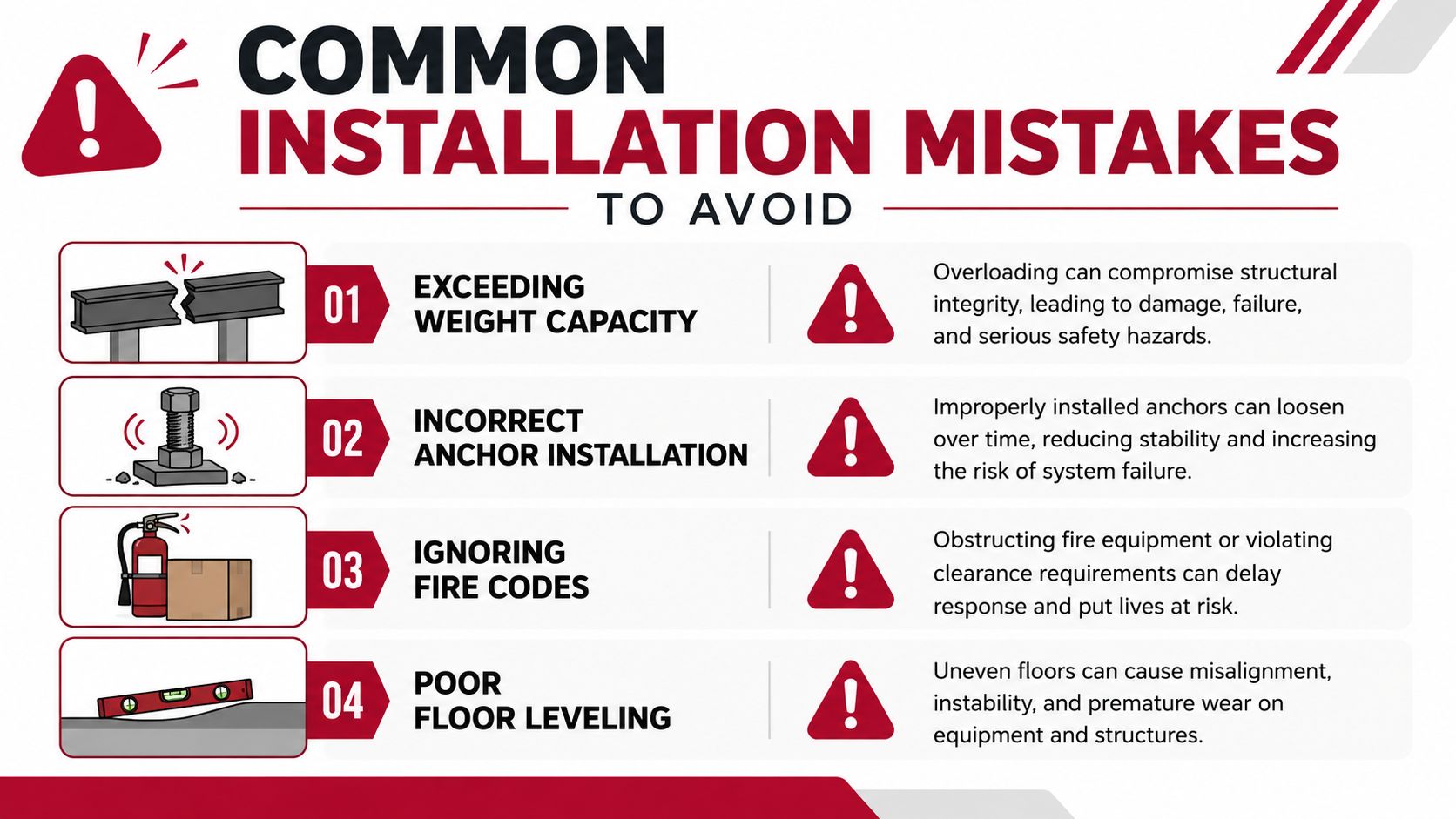
Most rework starts before the crew arrives. Buyers order from a partial list, then find out that the aisle, sprinkler, slab, or pallet assumptions do not match the building.
Problems that create avoidable rework
- Exceeding the rating: A beam or shelf may look capable of more, but the published rating governs. Load plaques and shelf labels must match the installed configuration.
- Ignoring deflection: Rack beams have published deflection limits, and a beam that meets its capacity rating can still sag more than an automated system or a tight pallet opening allows. Confirm the deflection limit used for your configuration. See Explore MH-USA pallet rack solutions.
- Using the wrong anchors: Anchor type, embedment, slab thickness, edge distance, and torque all matter. A cracked or thin slab needs engineering review before anyone drills.
- Missing pallet overhang: Pallet size, load shift, beam spacing, and flue space have to be considered together. A nominal pallet size does not describe every load.
- Mixing incompatible components: Combining frames, beams, connectors, or decking from different systems can void ratings and create responsibility gaps.
- Skipping fire review: Dense storage or solid decking can change sprinkler conditions. Review the layout before installation, not after an inspection.
- Buying without a layout: A bay that fits on an empty drawing can still block a door, column, exit, panel, or forklift turn.
After installation, train operators, keep the documentation, and inspect the system on a schedule. A clean handoff includes the final layout, the ratings, installation records, and any required engineering or permit documents.
Frequently Asked Questions About Boltless Shelving vs Pallet Racking
Can boltless shelving hold pallets?
As a rule, no. Boltless shelving is intended for hand-loaded cartons, bins, tools, and parts rather than forklift-served pallets. Some industrial shelves carry a high shelf rating, but that does not make them a substitute for a rack system engineered around pallet geometry, beam support, forklift clearance, and bay capacity.
Is pallet racking stronger than boltless shelving?
For palletized unit loads, yes. Selective rack commonly supports 2,000 to 4,000 pounds per beam level, while boltless shelving commonly falls around 300 to 1,200 pounds per shelf in standard heavy-duty configurations. Those ratings come from different design frameworks, so do not compare a shelf and a beam pair as if they do the same job.
Can I convert boltless shelving into pallet racking?
Not as a simple parts swap. Pallet racking needs the right frames, beams, connectors, anchors, load ratings, clearances, and engineering review. If the operation is moving toward pallets, design a rack system for the real loads instead of retrofitting shelving.
Does pallet racking require a permit?
It depends on the jurisdiction, building conditions, rack height, seismic design, fire protection, and local interpretation. Pallet rack may require engineering documents, permits, anchoring details, and visible load plaques. Confirm the requirements with the authority having jurisdiction before ordering.
Do seismic requirements affect boltless shelving?
They can. The impact depends on shelving height, load, building location, anchorage, and local code. Pallet rack gets more formal seismic attention because it carries heavy loads at height and has to resist both rack and load forces. FEMA’s steel storage rack guidance covers seismic design considerations for rack systems.
Should a warehouse use both systems?
A hybrid layout is often the practical answer for mixed inventory. Use pallet racking for reserve pallets and boltless shelving for cases, totes, parts, and frequent manual picks. Separate the zones by handling method so forklifts and people are not competing for the same space.
Which one is easier to install and move later?
Boltless shelving is designed for tool-free assembly, so a small crew can build it and adjust shelf levels later. Pallet rack is anchored to the slab and often engineered for the specific bay layout, so moving it is a planned project with new anchors and a fresh review of clearances.
How should I compare total cost?
Compare the full installed solution. Include equipment, decking, accessories, freight, design, engineering, permits, anchors, installation, fire protection changes, and future reconfiguration. A quote that looks cheap on steel and silent on installation is not a lower price, it is an incomplete scope.
What should I do before requesting a quote?
Collect floor dimensions, clear height, columns, doors, sprinkler locations, inventory dimensions, load weights, pallet sizes, access frequency, equipment type, and expansion plans. Send that with a marked-up floor plan so the quote reflects the actual operation.
Material Handling USA can help you compare boltless shelving, pallet racking, or a hybrid layout with free designs and no-obligation quotes. Configure a starting layout with our online tools, then request a quote or call (800) 326-4403 to review capacities, code requirements, shipping, and installation with a systems integrator serving the Mountain West and the rest of the country.
Design it yourself, then get a quote
Use our free online design tools to configure exactly what this article describes, then send the configuration to our team for pricing:
- boltless shelving designer
- pallet rack designer
- warehouse design and layout solutions
- evidence storage solutions
Ready to configure your pallet rack system?
Use our guided BuildQuote tool to choose the right configuration, review your parts and submit it for checkout or a formal quote.
Ready to configure your boltless shelving?
Use our guided BuildQuote tool to choose the right configuration, review your parts and submit it for checkout or a formal quote.