
Home › Healthcare Material Handling Solutions
Healthcare Material Handling Solutions
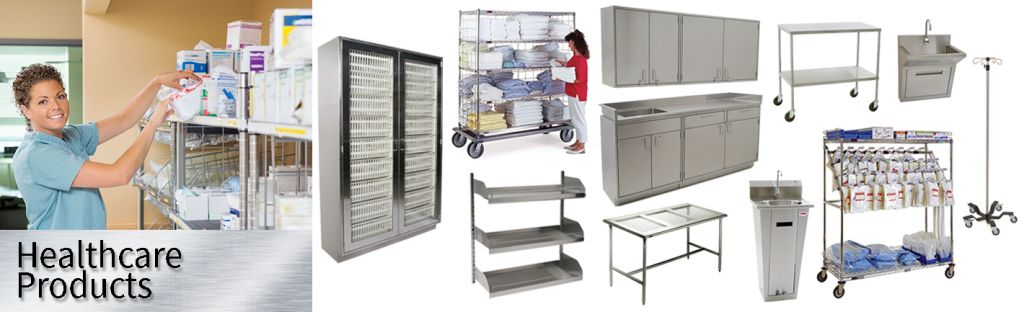
Hospital supply chain storage, sterile processing transport, case and exchange carts, high-density shelving and medical device warehousing — specified, quoted and installed by MH-USA. We represent Eagle Group and its Eagle MHC healthcare division.
1947
Eagle Group founded
1997
MH-USA serving the West
17,000+
Standard Eagle models
50
States shipped
Hospital Material Handling Is a Flow Problem, Not a Shelving Problem

Every hospital moves the same three streams every day: clean supply out to the units, soiled and reprocessed material back to sterile processing, and linen and waste in a loop that never stops. When materials management gets called about “a storage problem,” the problem is almost never the shelf. It is that the dock receives 40 cases at 7 a.m. with nowhere to break them down, that the med-surg clean utility room holds two days of par when the delivery cycle is three, that case carts stack up in decontam because there is nowhere to park them, or that nurses hunt for supplies and quietly build hoarded stashes in patient rooms.
MH-USA specifies healthcare storage and transport around that flow. We represent Eagle Group, founded in 1947 in Clayton, Delaware, with more than 17,000 standard models — and its Eagle MHC division, which builds the healthcare-specific side of the catalog: exchange carts, surgical case carts, linen carts, high-density shelving systems, storage bins, security modules, stainless cabinets and fabricated countertops.
The Six Zones That Set the Equipment List
Before anyone picks a part number, the building gets divided into zones. Each one has a different dominant constraint, and that constraint — not preference — picks the product.
| Zone | Dominant constraint | What usually gets specified |
|---|---|---|
| Dock & receiving | Burst arrivals, breakdown space, cardboard control | Dunnage platforms, wide-span or pallet rack, mobile workstations, staging carts |
| Central storeroom / CSC | Cube per square foot, pick travel, lot rotation | High-density track shelving, wire shelving bays, bins on shelf dividers, security modules |
| Clean utility / unit supply | Par accuracy, small room, nurse pick time | Exchange carts, wall-mounted shelves, cantilever shelving, labeled bin fronts |
| Sterile processing (SPD) | Washability, sterile-to-soiled separation, cart parking | Stainless case carts, wire prep shelving, fabricated stainless countertops, cart wash staging |
| Pharmacy & high-value | Access control, count integrity, temperature zones | Lockable security modules, mini security units, vertical storage cabinets |
| Linen, scrubs & soiled | Route volume, cross-contamination separation | Linen carts, mobile garment racks, dedicated soiled-side transport |
Measure the doorway before you measure the room
The most common cause of a returned healthcare cart is not capacity — it is a 30-inch door frame, a 34-inch elevator opening, or a corridor turn that a 48-inch cart cannot make with a full load. Give us the tightest opening on the route and we will size to it.
Hospital Storerooms and Clean Utility Rooms
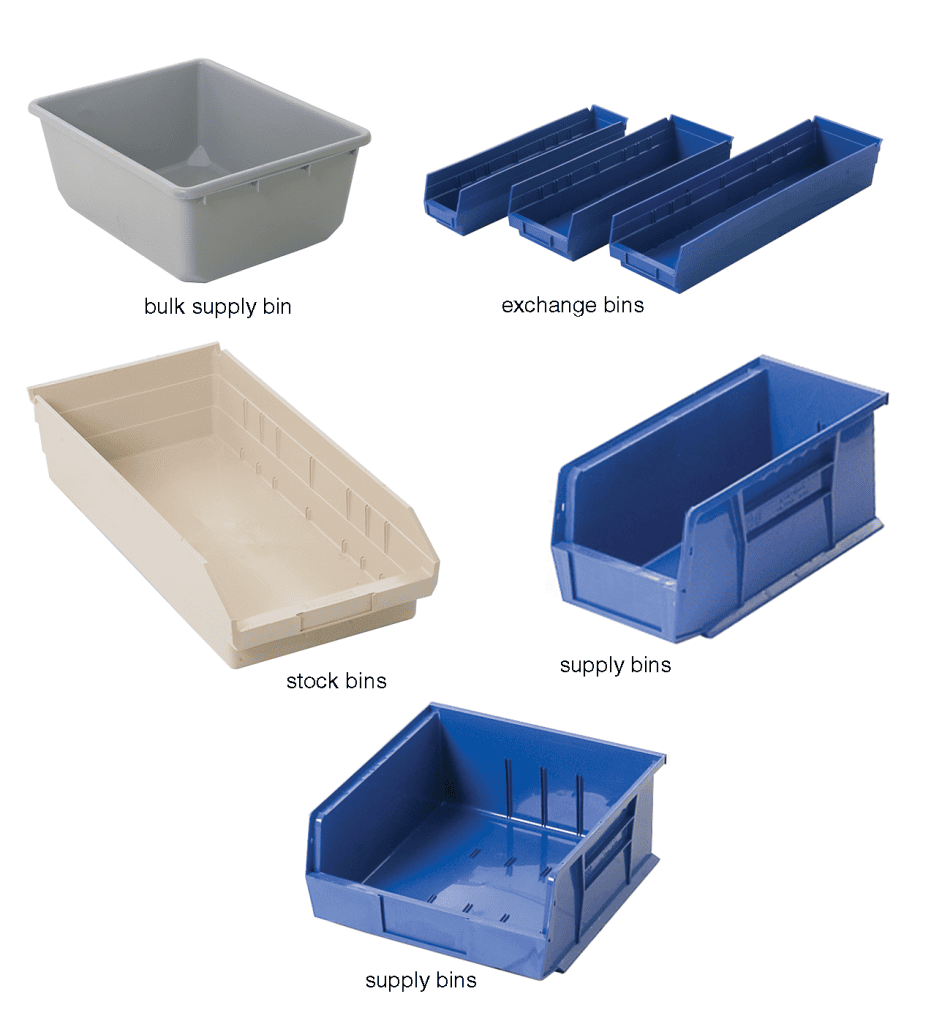
A storeroom bay is a system of posts, shelves and accessories, and the decisions that matter are all small ones. Posts are grooved on 1-inch centers, so shelf heights index to the actual case height plus a hand’s clearance instead of to a factory default — the single fastest way to add usable tiers to an existing room without buying more units. Wire shelving stays the default because open construction moves air, keeps dust from accumulating on a flat surface, and lets staff see the contents from the aisle. Solid shelves go where small items or loose paper would fall through, and polymer goes where cleaning chemistry is aggressive.
For product-level detail on the shelving itself, see sanitation-rated shelving, wire shelving and stainless steel shelving.
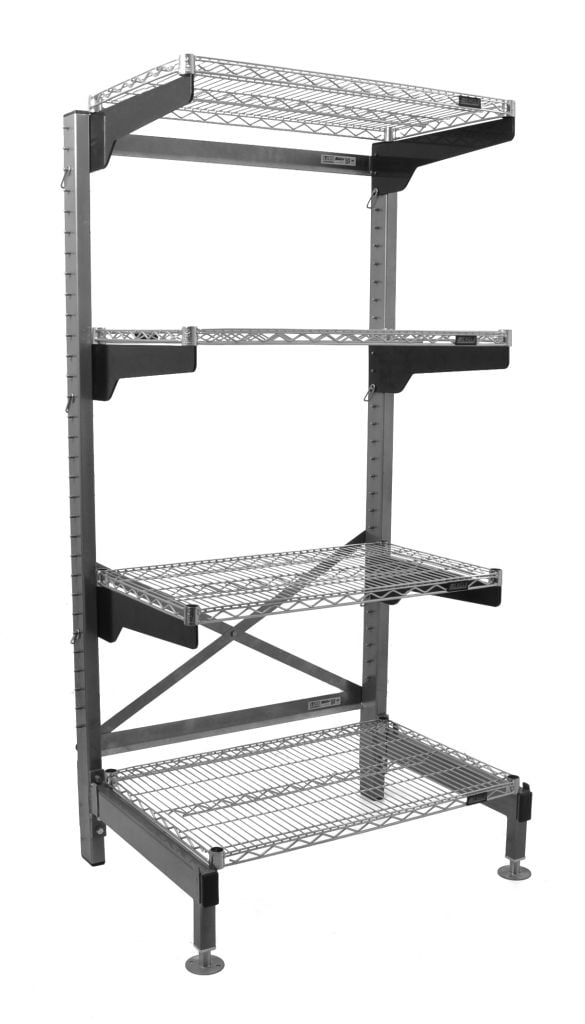 Cantilever ShelvingOne 76-inch upright, all-wire shelves, tool-free adjustment in 2-inch increments, no wall bolting required. Add-on units extend the run.
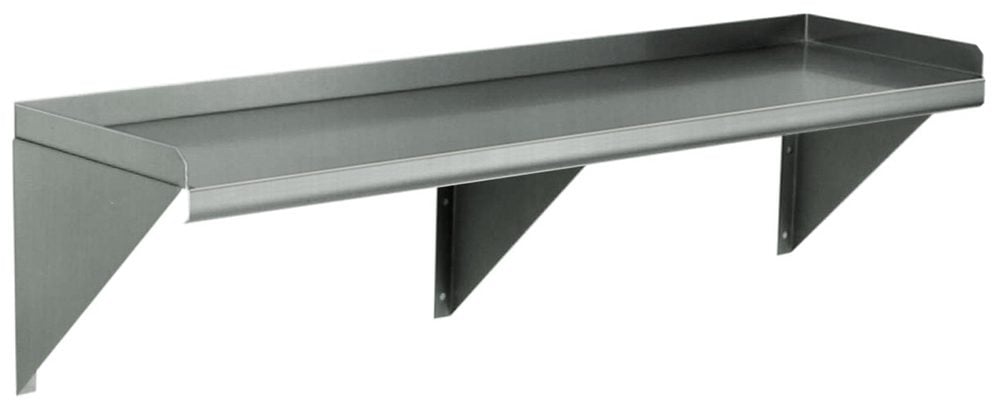 Stainless Wall Shelves16-gauge type 430, 16-gauge type 304 or 14-gauge type 304, with stud-welded stainless brackets and a 1½-inch roll front.
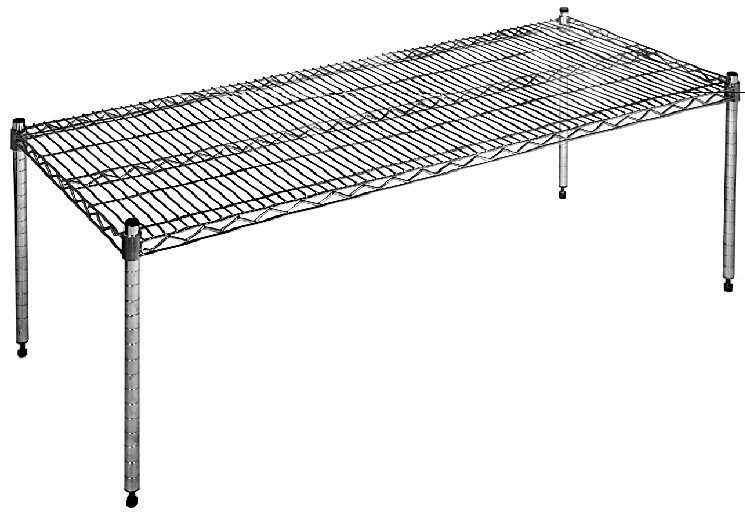 Dunnage Platforms14-inch-high open wire platforms with 1-inch grooved posts and a three-sided frame, keeping bulk cases off the floor where inspectors look first.
High-Density Storage: Buying Back the Aisles
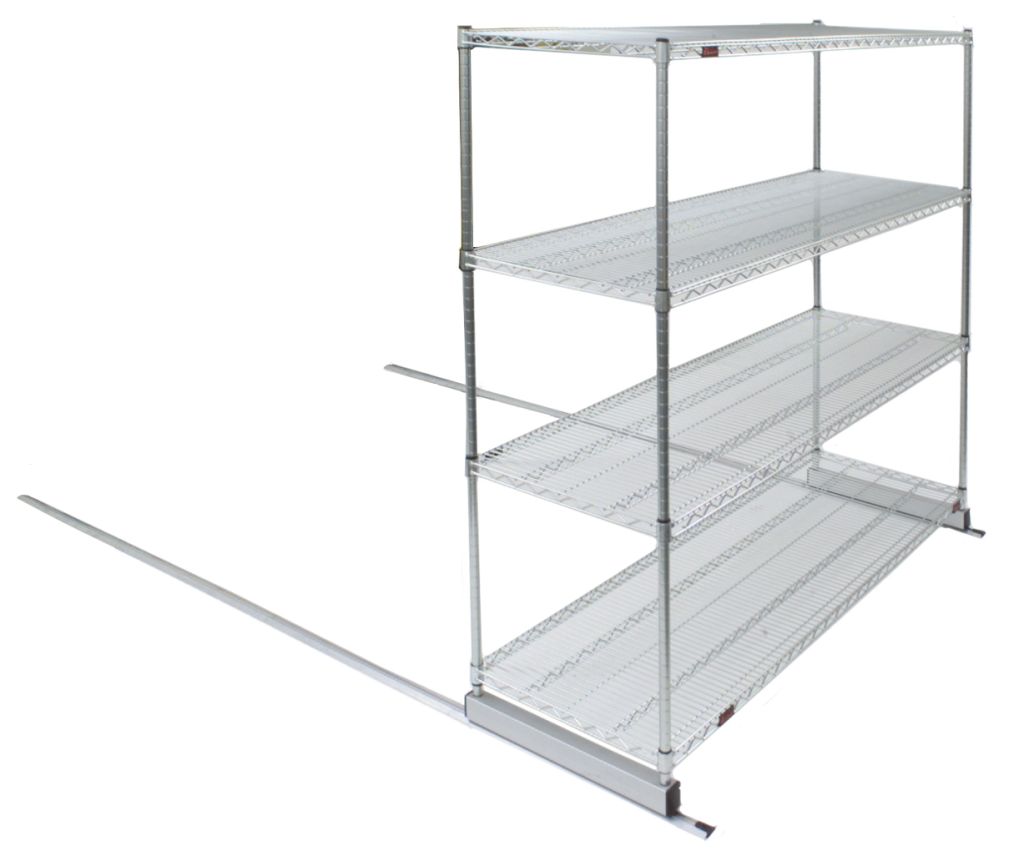
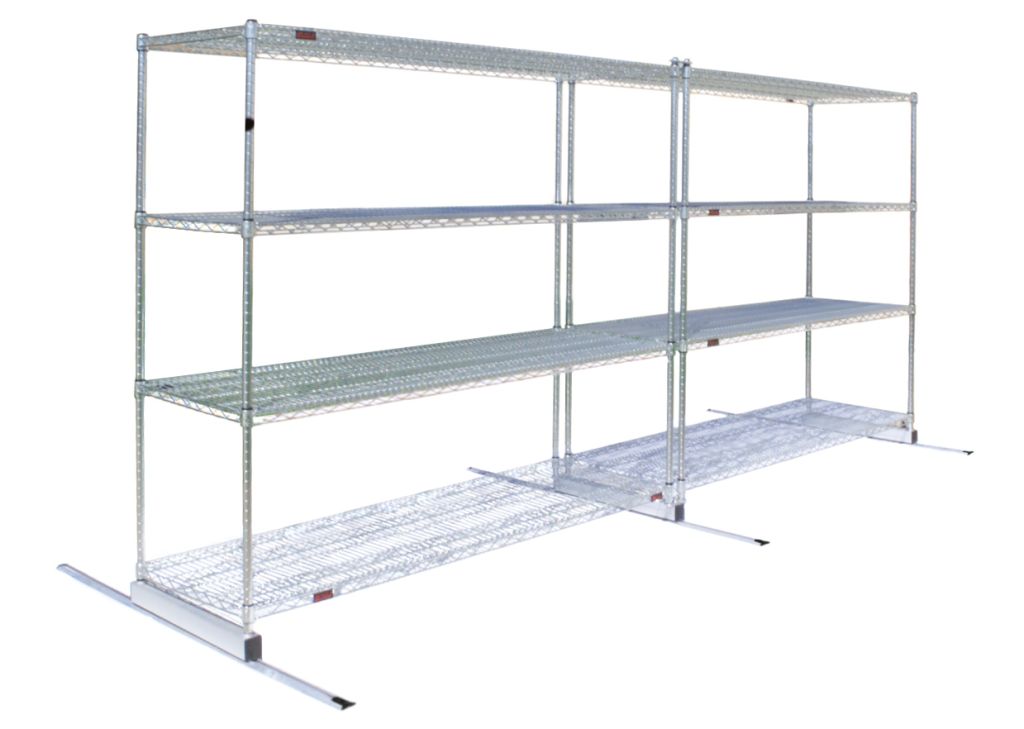
Static shelving spends most of its floor area on aisles that are empty most of the day. A track-mounted high-density system collapses that: the bank of shelving rolls on rails, and one working aisle opens wherever the picker is standing. In a typical hospital storeroom this recovers roughly 40 to 50 percent of the floor — either as reclaimed square footage or, more often, as the extra capacity that keeps a department from taking a second room.
The hardware is straightforward. Non-corrosive aluminum tracks with end stops mount to the floor; each mobile unit gets a skate kit of aircraft-quality aluminum with stainless inserts and hardened steel bearings. Track kits, skate kits, posts and shelving are separate line items, so a quote that only shows “mobile shelving” is usually missing something. Single-deep is the standard; double-deep puts two units per carriage for slow-moving backstock and records.
What to check before committing: the floor must be flat enough for the track run or you are buying a shim package with it; the room needs somewhere for the single aisle to live at every position; and picking has to tolerate serial access — if three people work the room simultaneously at 7 a.m., high density will slow them down. Records, implants, backstock and seasonal PPE are ideal candidates. Daily high-velocity picks usually are not.
If your density problem is a records room or a shared clinical storeroom rather than a warehouse, see our mobile shelving page.
| System | Best fit | Trade-off |
|---|---|---|
| Fixed wire shelving | High-velocity picks, multiple simultaneous pickers, small rooms | Every run needs its own aisle; lowest cube per square foot |
| Single-deep track system | Central supply, records, implants, seasonal and backstock inventory | One open aisle at a time; requires a flat, prepared floor |
| Double-deep track system | Slow-moving backstock and long-term storage | Front unit must be moved to reach the rear unit; not for daily picks |
| Pallet rack & wide-span | Distribution centers, consolidated service centers, cased goods | Needs equipment access and clear height; wrong tool inside a clinical room |
Exchange Carts and Par-Level Replenishment
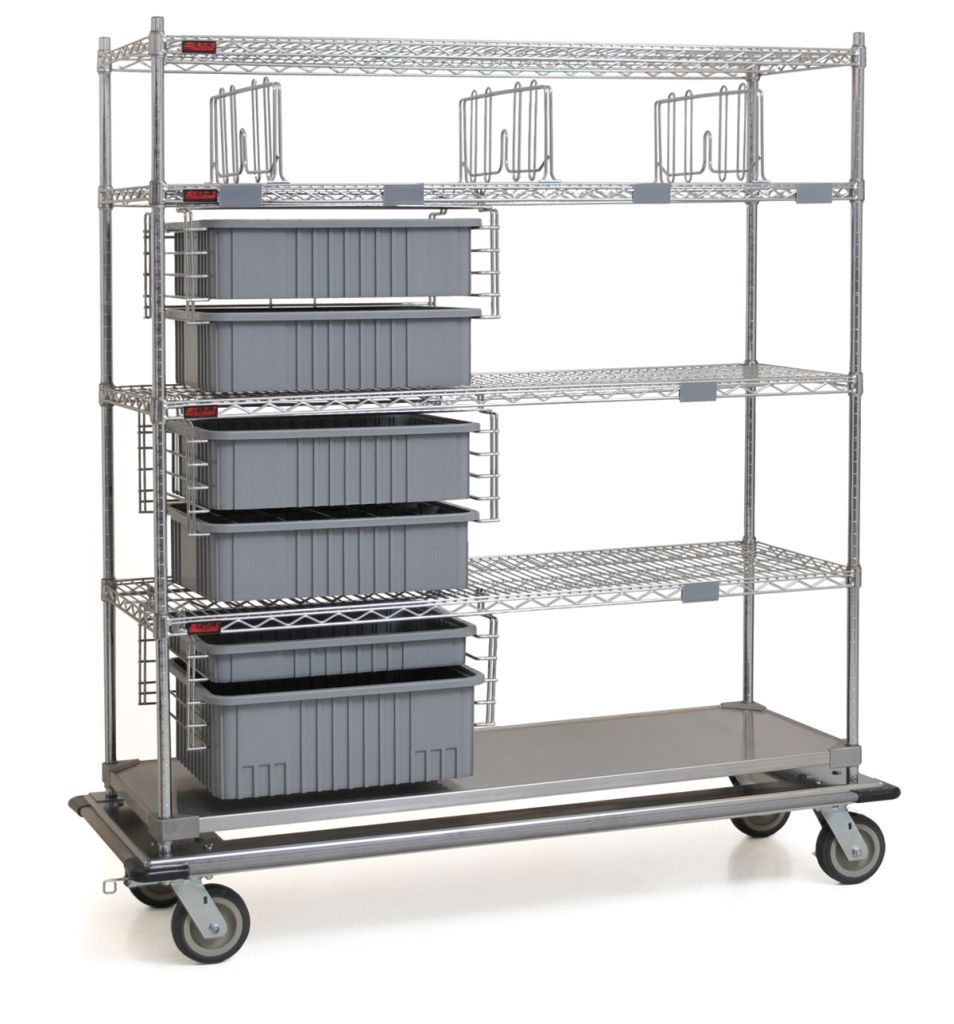
Exchange cart systems move the picking work out of the unit and back into the storeroom, where it happens once, accurately, against a par list. The trade is that you own two carts per location instead of one set of shelves — which is why configuration is worth getting right the first time.
Eagle’s exchange cart families step up in capability. The EC Series is the base configuration: five chrome-plated wire shelves on 63-inch chrome-plated posts, 5-inch resilient stem casters with two brakes, and six plastic shelf markers. The ECD Series adds a chrome dolly frame with a wraparound bumper, upsizes to 6-inch polyurethane casters, and brings a slide assembly with two 6-inch-deep tote boxes with dividers plus shelf dividers — the right answer for corridors where carts take real abuse. The ECDT Series goes further: four wire shelves plus a choice of a wire or solid stainless fifth shelf, three slide assemblies, six tote boxes with box dividers and three shelf dividers, for departments carrying a lot of small, loose items.
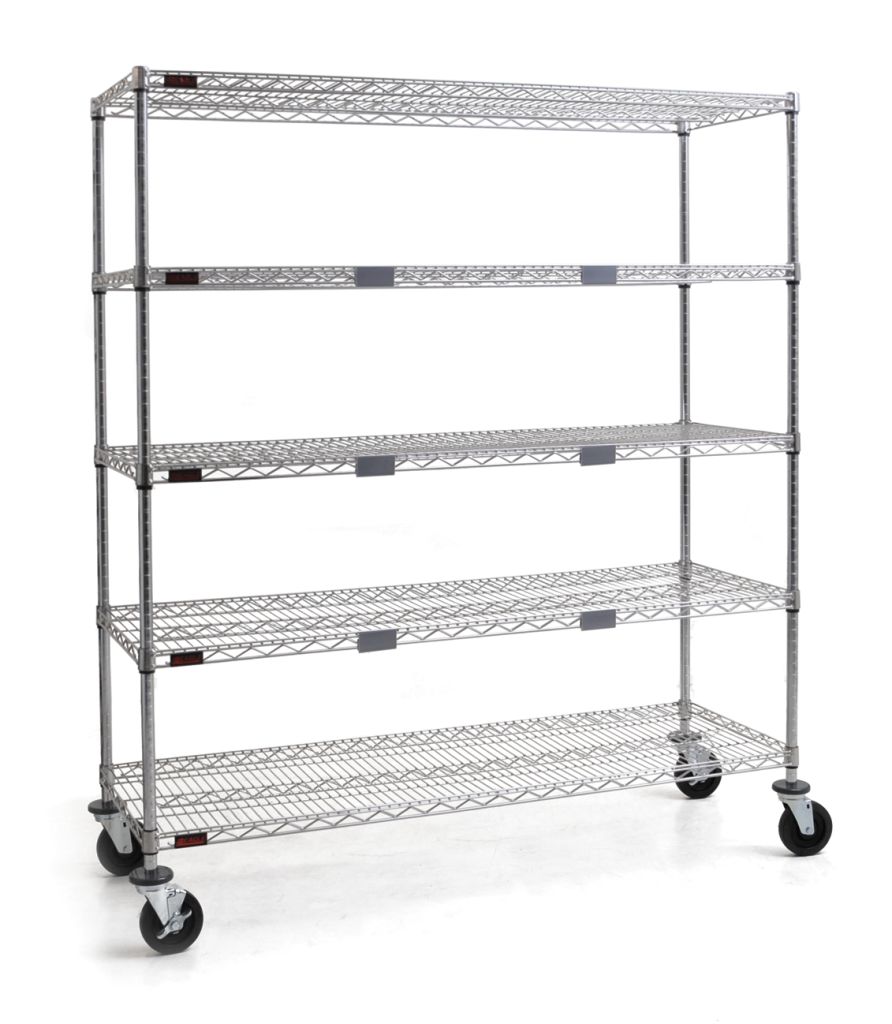 EC SeriesFive chrome-plated wire shelves, 63-inch posts, 5-inch resilient stem casters (two braked), six shelf markers. The straightforward par cart.
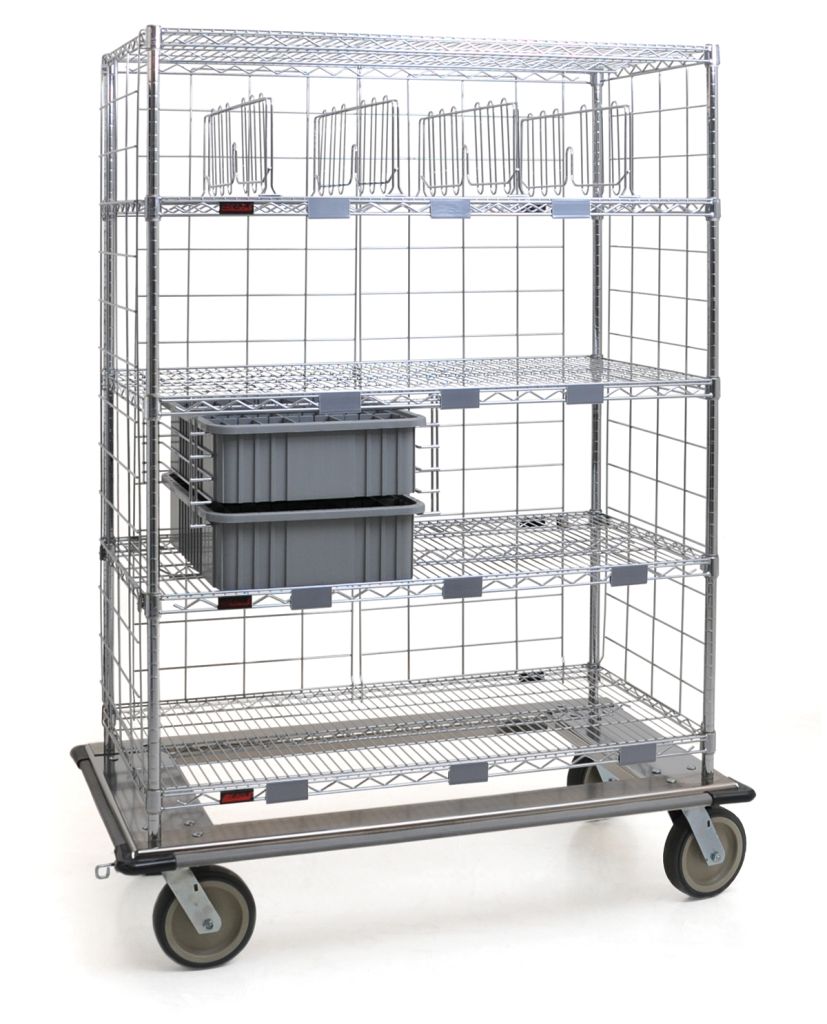 ECD SeriesAdds a chrome dolly frame with wraparound bumper, 6-inch polyurethane casters, one slide assembly with two 6-inch tote boxes and shelf dividers.
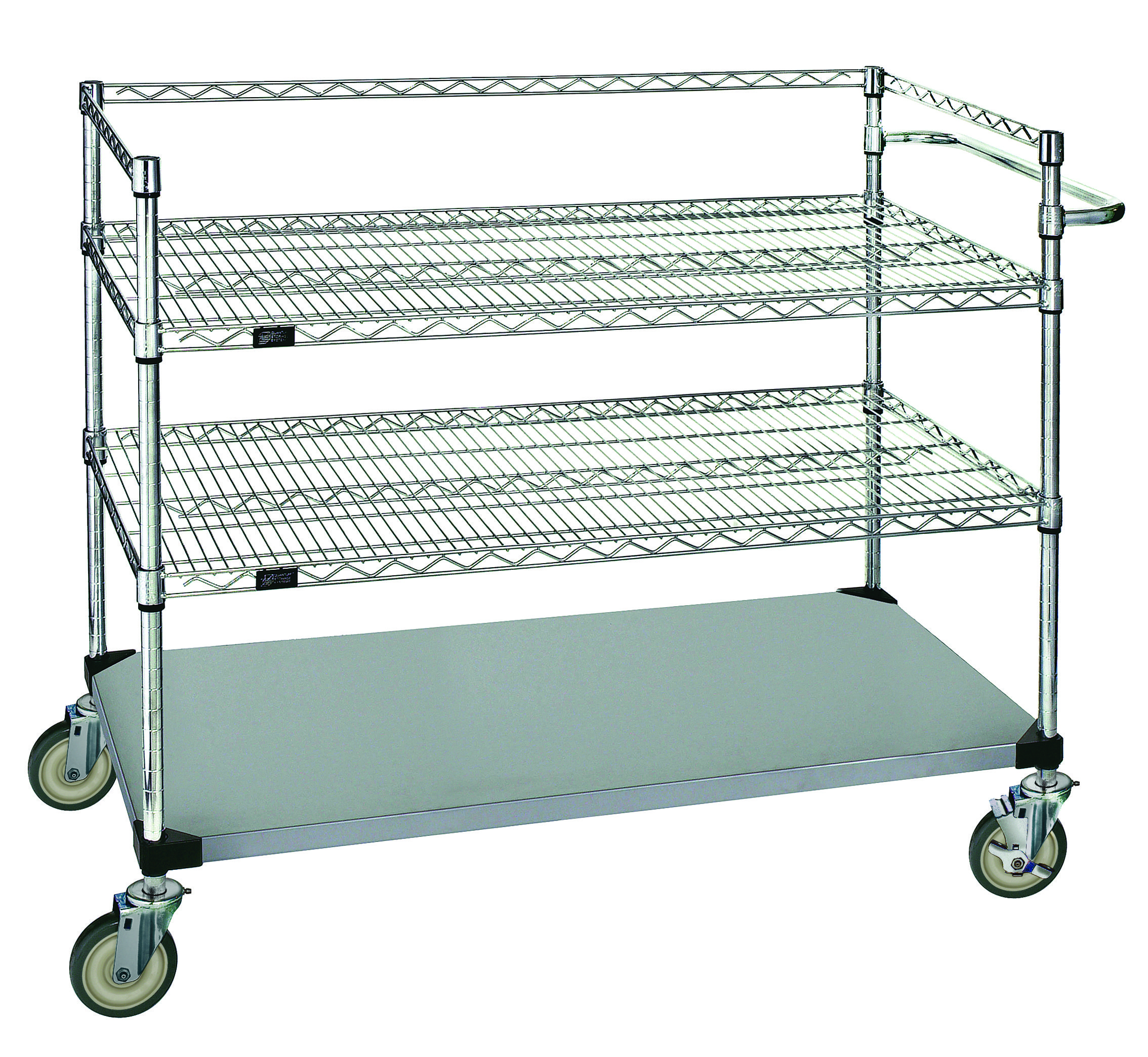
 Wire Basket Utility CartsLight-duty picking and returns. Chrome finish, open wire for airflow, swivel stem casters with bumpers, two push handles.
Send us your par lists and room dimensions
Email the par list, a floor plan or even a phone photo of the clean utility room. We will come back with a cart and shelving configuration, model numbers, lead times and freight — and flag the door widths and turns that will not clear.
Sterile Processing and Surgical Services
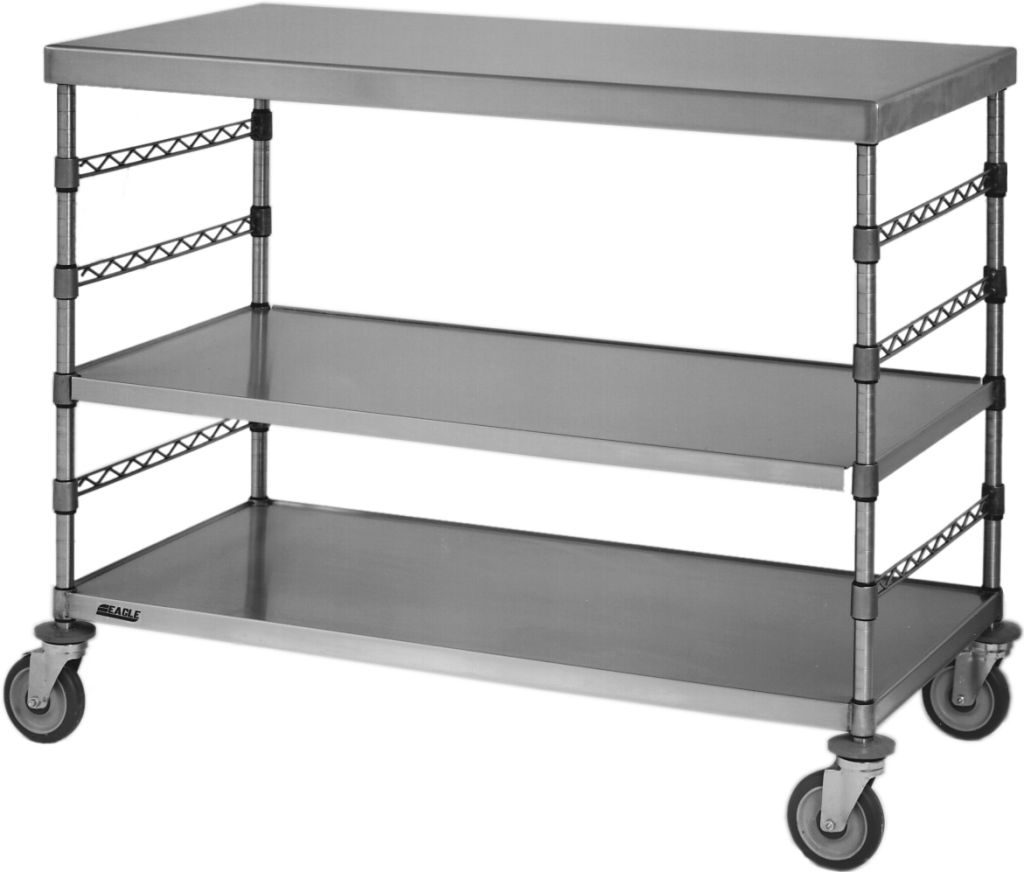
Sterile processing is where equipment selection stops being about capacity and starts being about washability. Everything on the soiled side gets sprayed, and everything on the clean side gets audited. Surgical case carts are built accordingly: type 304 stainless steel, a 16-gauge top, hemmed safety edges on the center shelf, adjustable shelves, a removable center shelf so the interior can actually be cleaned, and no bacteria-gathering crevices for soil to hide in. The cart is washable as a unit — which is the whole point, because a cart that has to be wiped by hand will not be.
Open wire case carts run 24 inches wide, 24 or 48 inches long, and 54 inches tall excluding casters, on four 5-inch stainless steel casters with polyurethane wheels, with four stainless wire shelves on 1-inch-diameter posts adjustable in 1-inch increments. The 24-inch model carries one pair of slides with a tote box; the 48-inch carries two. Open wire carts drain and dry quickly and let staff verify contents at a glance; enclosed carts protect the load through public corridors. Most departments end up with both and route them differently.
Cleanroom, gowning and laboratory-side equipment is a different specification — see gowning room essentials and Eagle cleanroom products.
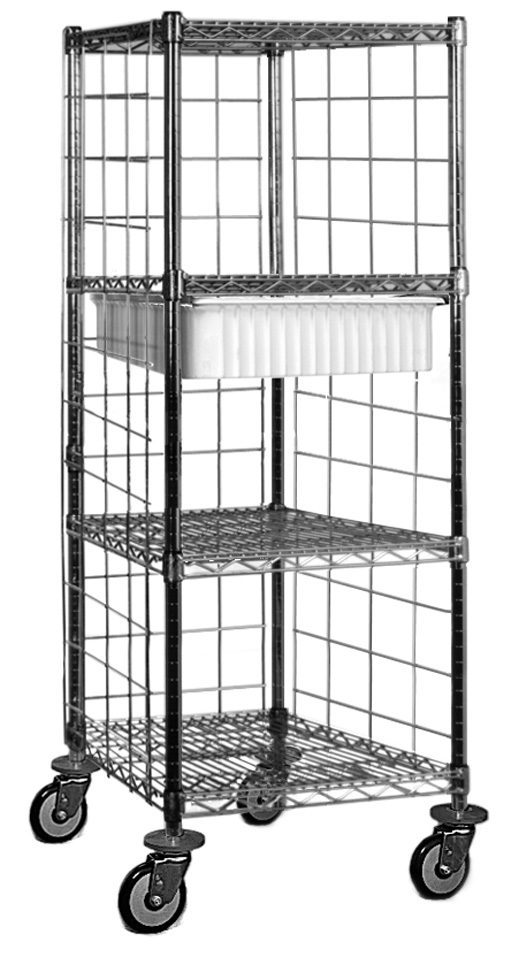 Open Wire Case Carts24″ wide, 24″ or 48″ long, 54″ tall excluding casters. Four stainless wire shelves on 1″ posts, 5″ stainless casters with polyurethane wheels.
 Fabricated Stainless Countertops16- or 14-gauge type 304 or 316, coved sanitary corners, marine or square edge, splashes per spec, seamless to 144″.
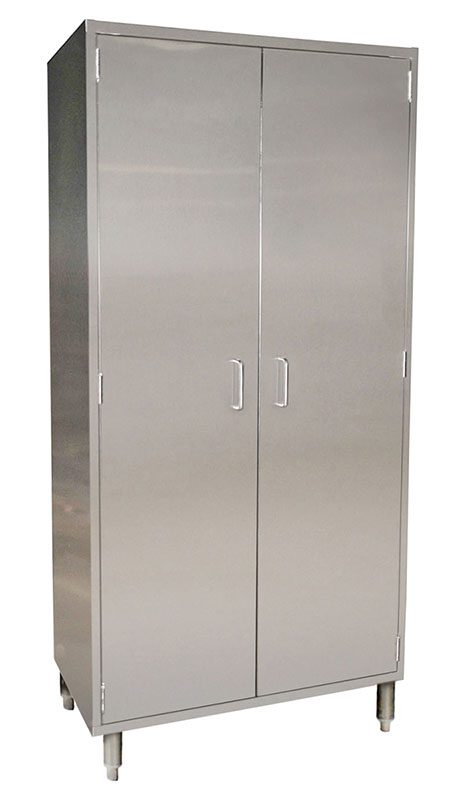 Vertical Storage CabinetsType 430 stainless, 18-gauge body, three shelves adjustable on 4″ centers, 20-gauge double-pan hinged doors with keyed handles, 36″ or 48″ long.
Linen, Scrubs and Departmental Transport

Linen is the highest-volume loop in most hospitals and the one most likely to be running on carts that were bought fifteen years ago and never re-specified. Eagle MHC linen carts use four chrome wire shelves with one solid stainless base shelf, in standard-duty and heavy-duty-with-dolly-frame versions. The solid base shelf is the detail worth paying for: it is what keeps the bottom tier of clean linen away from whatever is on a wet corridor floor. Carts are built to be reconfigured — accessories add and come off as routes change, so one fleet can serve several departments.
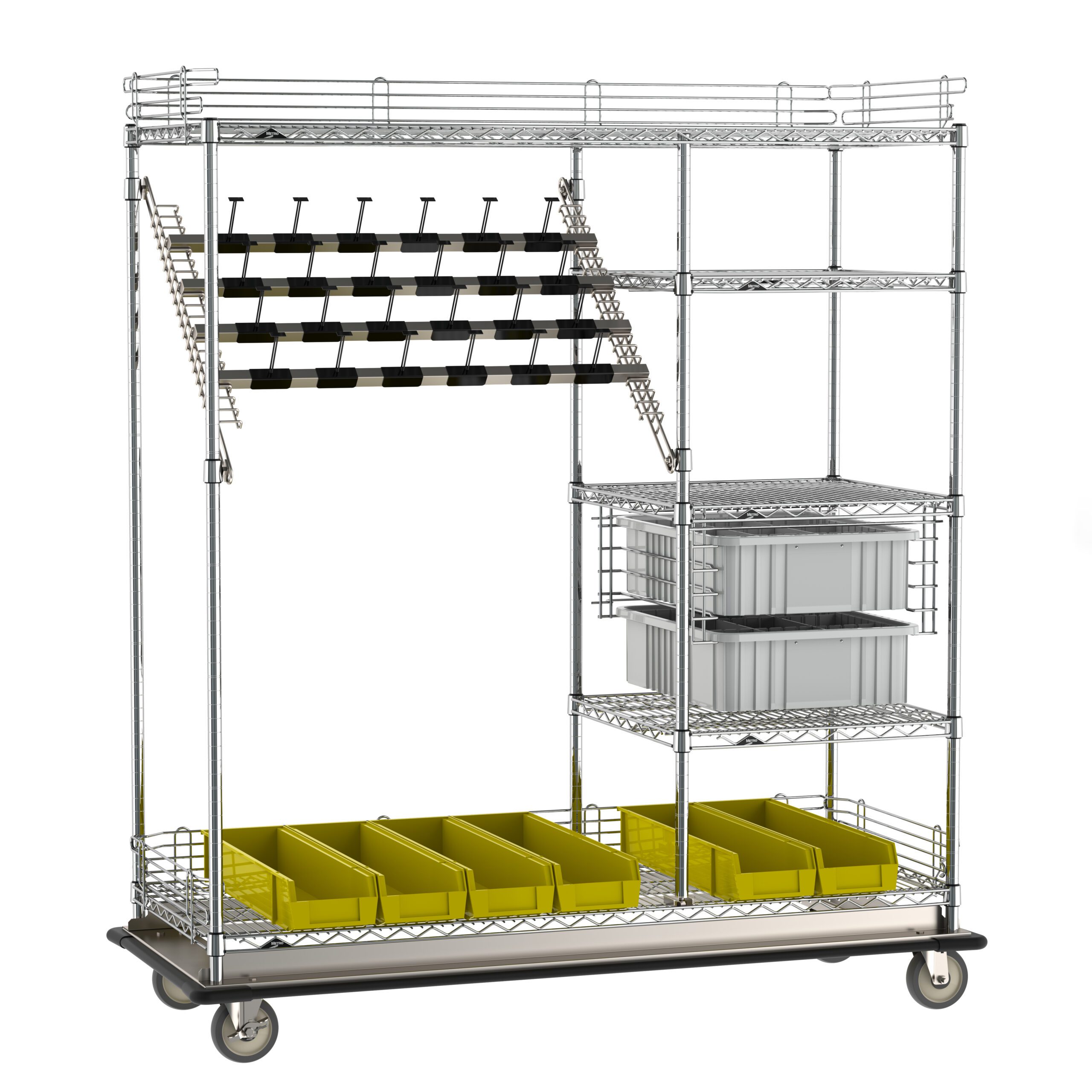
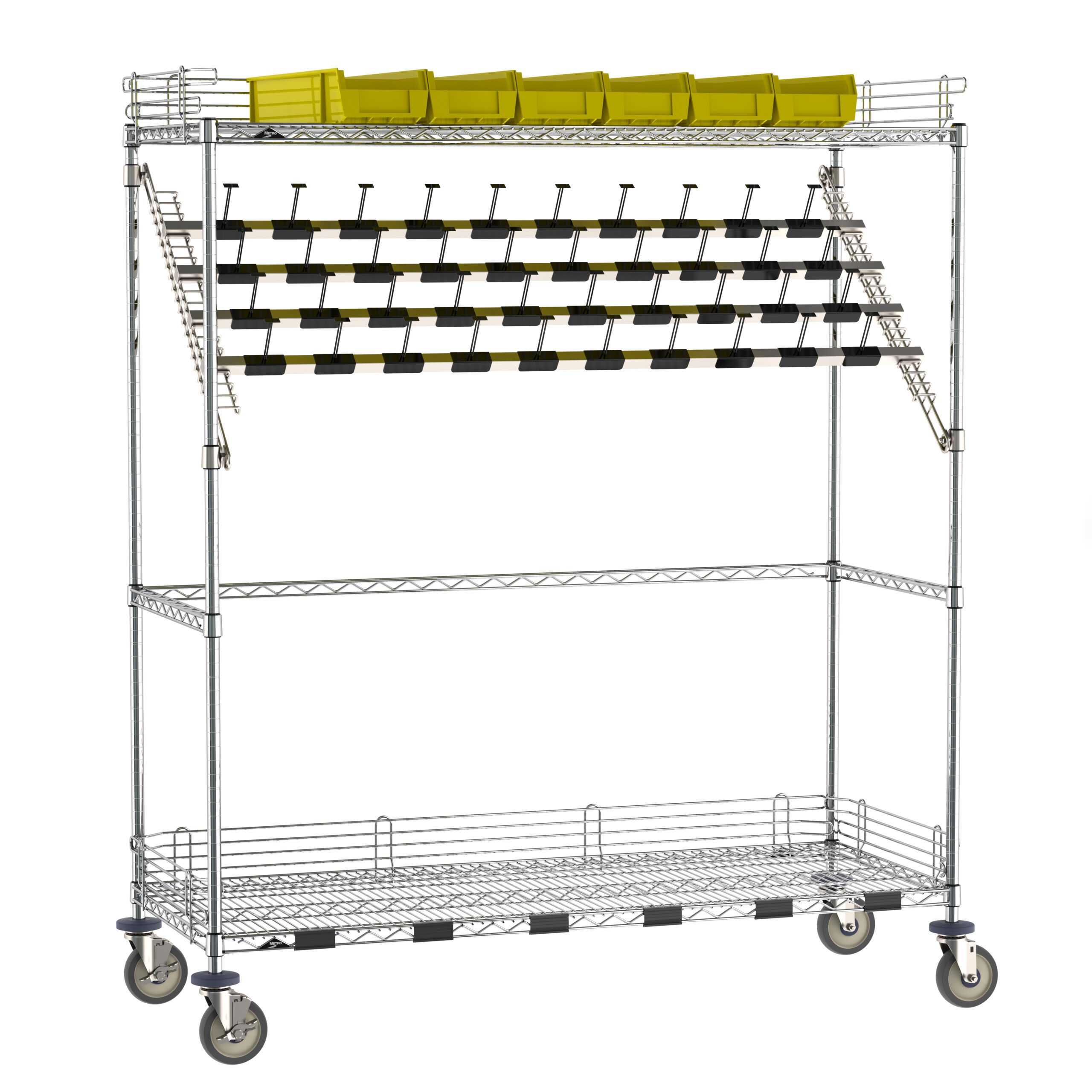
Mobile garment racks handle scrubs, gowns, isolation apparel and anything that has to hang rather than fold. They use QuadTruss chrome-plated wire shelves and posts, 5-inch polyurethane casters with rubber donut bumpers, and a 1-inch chrome-plated hanger bar that takes standard hangers — a rack over a shelf, so the tier above the bar still stores boxed inventory.
For general-purpose transport carts across the facility, see utility carts.
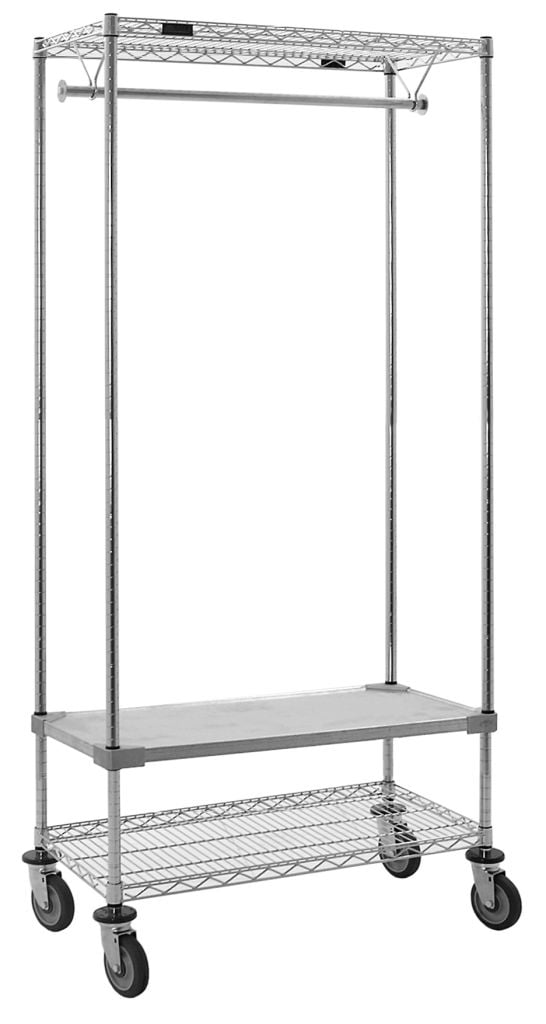 Mobile Garment RacksQuadTruss chrome wire shelves, 5″ polyurethane casters with donut bumpers, 1″ chrome hanger bar for standard hangers.
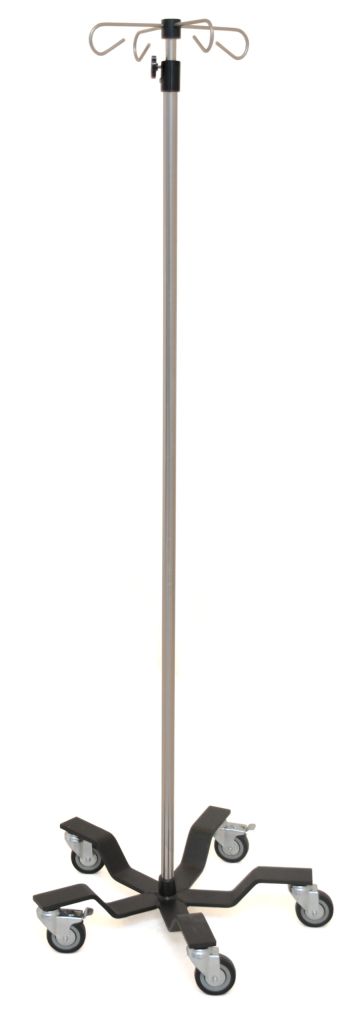 I.V. StandsFive-leg weighted base, 3″ swivel casters (two braked), four-hook stainless top, knob-adjustable from 66″ to 99″.
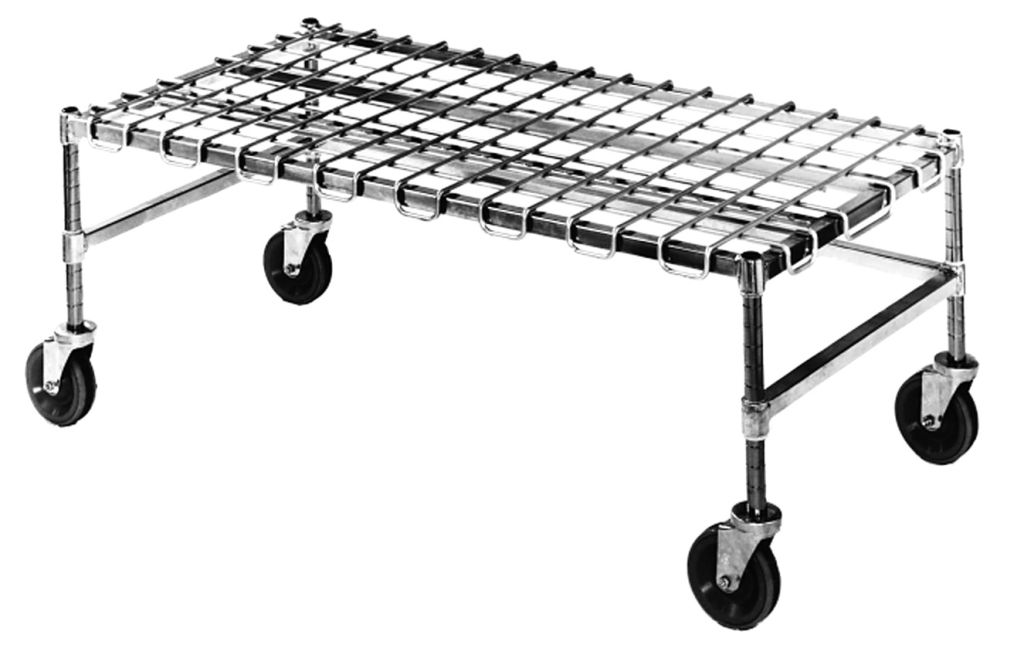 Mobile Dunnage Racks14″ high, open wire, 1″ grooved posts and a three-sided support frame, on four 5″ swivel casters with two brakes.
Pharmacy, Implants and High-Value Inventory
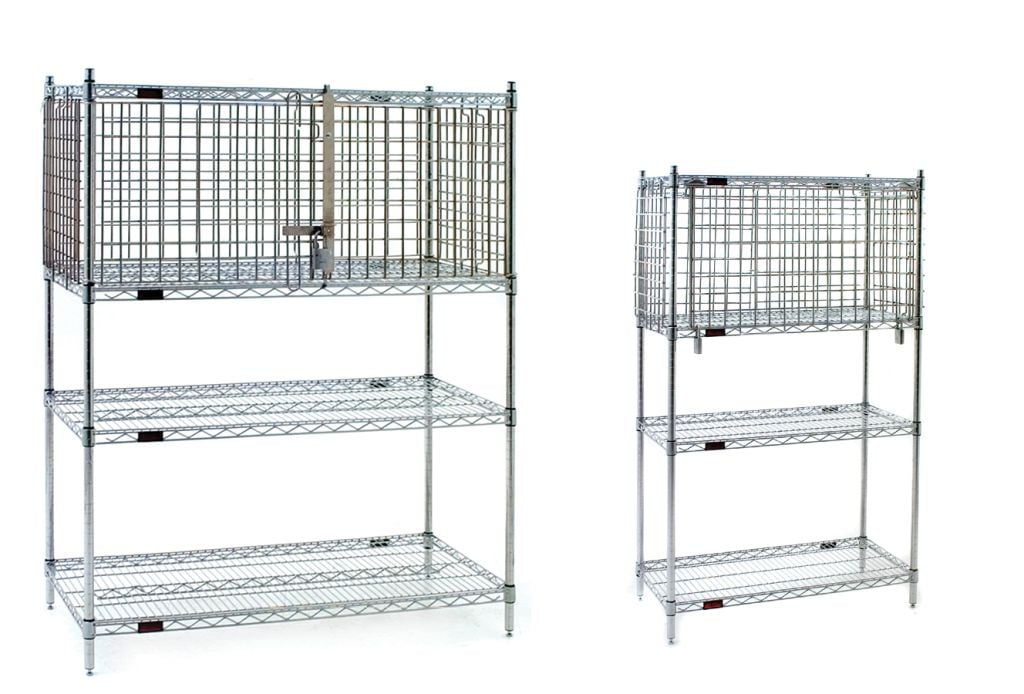
Not every controlled item needs a room. Most hospitals over-build security by dedicating cages and closets to inventory that only needs to be behind a lock and out of the general pick path. Security modules convert a portion of an existing shelving unit into a lockable enclosed compartment, with hinged or flip-up doors, and more than one module can go into the same unit depending on its height — so a single bay can carry open par on top, a locked module in the middle, and dunnage below.
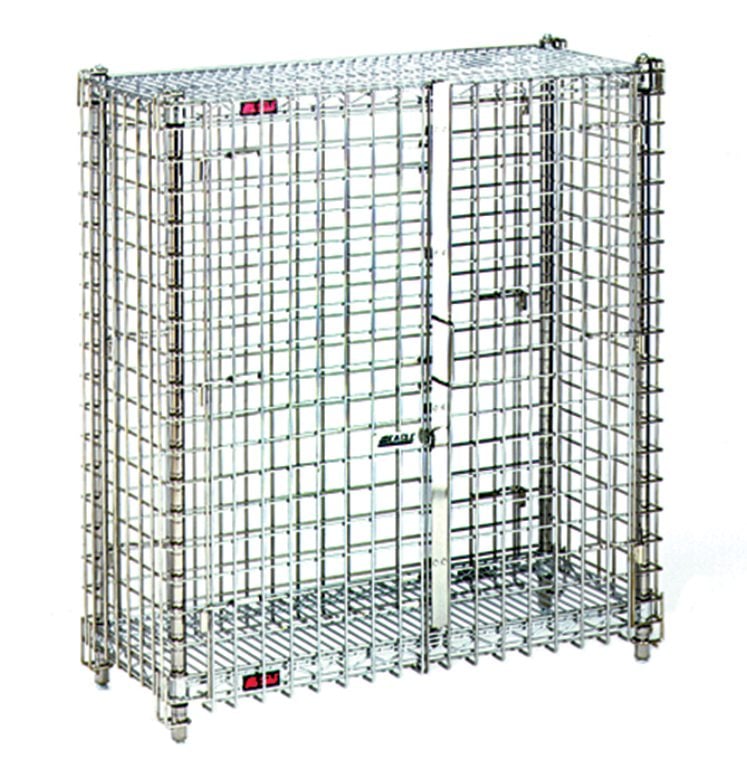 Mini Security UnitsChrome open-wire construction, Quad-Truss shelves, full-access double door with quick-action lock and padlock hasps, 40″ overall height.
 Modular Desk Workstations18-gauge type 304 stainless work surface, three-sided heavy channel frame, cantilever wire overshelves, leveling feet — for receiving and materials offices.
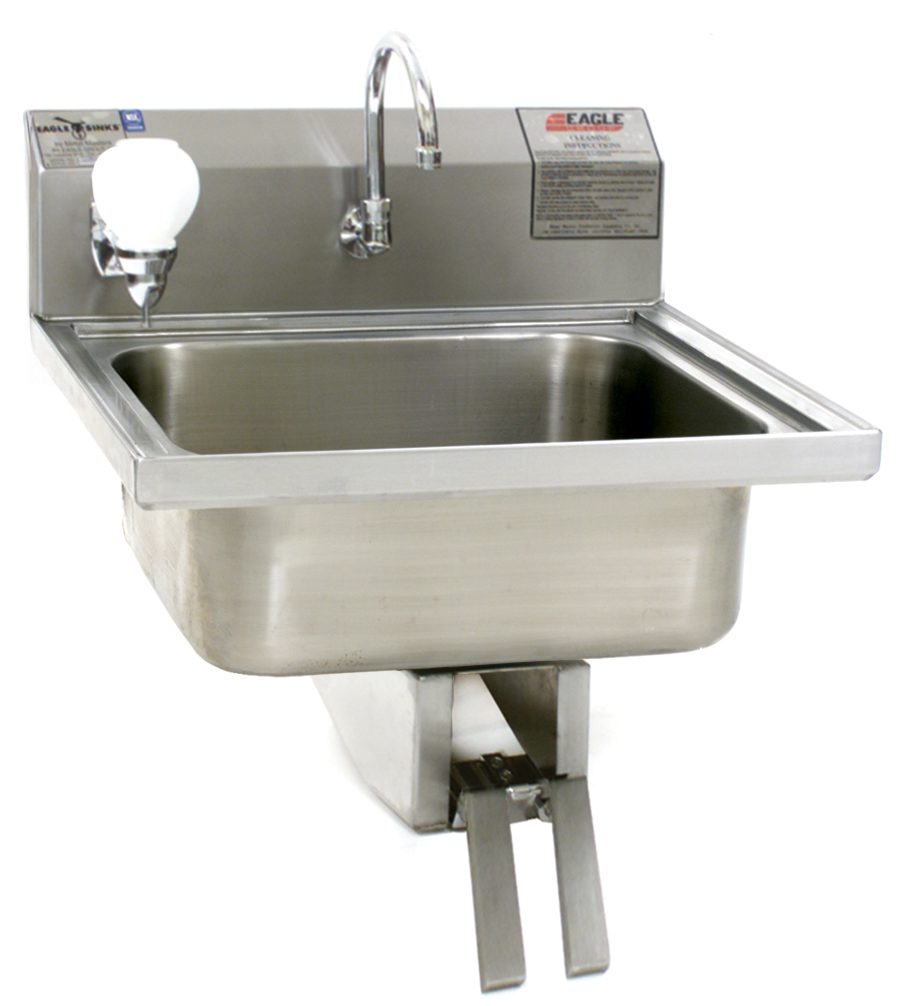 Lavatory SinksType 304 stainless with a marine edge, gooseneck spout faucet, soap dispenser and basket drain, for clinical support and workroom areas.
Medical Device Warehousing and Healthcare Distribution
Upstream of the hospital, the same inventory sits in a distributor’s building, a device manufacturer’s finished-goods warehouse, or a health system’s consolidated service center — and the constraints change. Cube matters more, lot and expiration control becomes the governing rule, and sterile packaging integrity has to survive every touch.
A workable healthcare distribution layout usually mixes four storage media. Pallet rack and wide-span carry cased goods and slow bulk. Carton flow handles the high-velocity picks with genuine FIFO rotation, so the oldest lot leaves first without anyone deciding to make that happen. Wire shelving covers the long tail of low-movers where a pallet position would be wasted. Dunnage platforms keep everything off the floor, at the 14-inch height that survives an audit walk.
Three design rules we apply to medical device storage specifically. First, never store sterile-barrier packaging where it can be compressed or abraded — no crushing under a stacked pallet, no shelf edges that scuff a Tyvek lid. Second, lot segregation beats density: if picking the correct lot requires moving three other lots, staff will pick the wrong one. Third, build a quarantine and recall zone into the layout on day one, physically separated and clearly marked, because it will be needed and adding it later means moving racks.
Specifying, Submittals and Installation Reality
Five things that go wrong on healthcare storage projects
- The room got measured, the route did not. Doors, elevator depth and corridor turns kill more cart orders than capacity ever does.
- Par was copied from the old room. If the delivery cycle changed, the par is wrong and the shelving will be sized to a number nobody uses.
- High density was applied to fast movers. One aisle plus three simultaneous pickers equals a queue. Put density on backstock and records.
- Track systems were quoted incomplete. Track kits, skate kits, posts and shelving are separate line items — confirm all four are on the quote.
- Nobody planned where the old shelving goes. Removal and disposal belongs in the scope, not in a facilities manager’s weekend.
Shop Healthcare Handling Products Online
Buy select items directly from our online store, or request a quote for volume, custom sizes and freight-rated orders.

Healthcare Material Handling FAQs
What is the difference between an exchange cart and a case cart?
How do I size a case cart fleet for our surgical volume?
What does high-density mobile shelving actually gain us in a hospital storeroom?
Can we mix wire, solid and polymer shelves on the same posts?
Do you handle medical device warehousing and distribution storage, not just in-hospital rooms?
Are these products certified for healthcare use?
How long do these projects take, and who installs them?
Get a Healthcare Storage Layout and Quote
Send your floor plan, par list or equipment schedule to Sales@MH-USA.com, or call (800) 326-4403. We will return a layout, model numbers, lead times and freight.