
Home › Laboratory Shelving & Storage
Laboratory Shelving & Storage Systems
Wire, solid, stainless and polymer lab shelving, high-density mobile banks, cold-room storage, secure reagent modules and bench-adjacent shelves — specified, quoted and delivered by MH-USA.

1947
Eagle Group founded
1997
MH-USA serving the West
1″
Post adjustment increments
50
States shipped
Storage Is the Quiet Bottleneck in a Working Lab
Nobody plans a laboratory around its shelving. Benches, hoods and instruments get the drawings; storage gets whatever is left along the back wall. Then consumables arrive by the pallet, the cold room fills in a month, and technicians walk two rooms to find a box of tips. The cost shows up as time, duplicate ordering, and reagents that expire behind other reagents.
Lab storage is worth specifying deliberately: the contents are unusually varied, the environment is hard on hardware, and lab floor space is the most expensive in the building. MH-USA has served the West from Salt Lake City since 1997, and we represent Eagle Group, the Clayton, Delaware manufacturer founded in 1947 whose Eagle MHC division builds wire, polymer, solid and stainless shelving, cantilever systems, high-density track systems and stainless lab casework. Below: how to choose between them, how to size and lay them out, and the details that get missed until installation day.
Wire vs. Solid vs. Stainless vs. Polymer
Every lab shelving decision starts with the shelf surface, because it determines what you can store, how you clean it and how long the unit lasts in that room. Most facilities use at least three of the families below in different rooms.
| Shelf type | Construction notes | Where it works | Where it fails |
|---|---|---|---|
| Open wire | Wire shelves with the patented QuadTruss design, up to 25% stronger, forming a retaining ledge; posts grooved on 1″ centers | Stockrooms, cold rooms, glassware air-drying, anywhere ventilation and visibility help | Small vials tip through the mat; spills drip to the shelf below; strict particulate control |
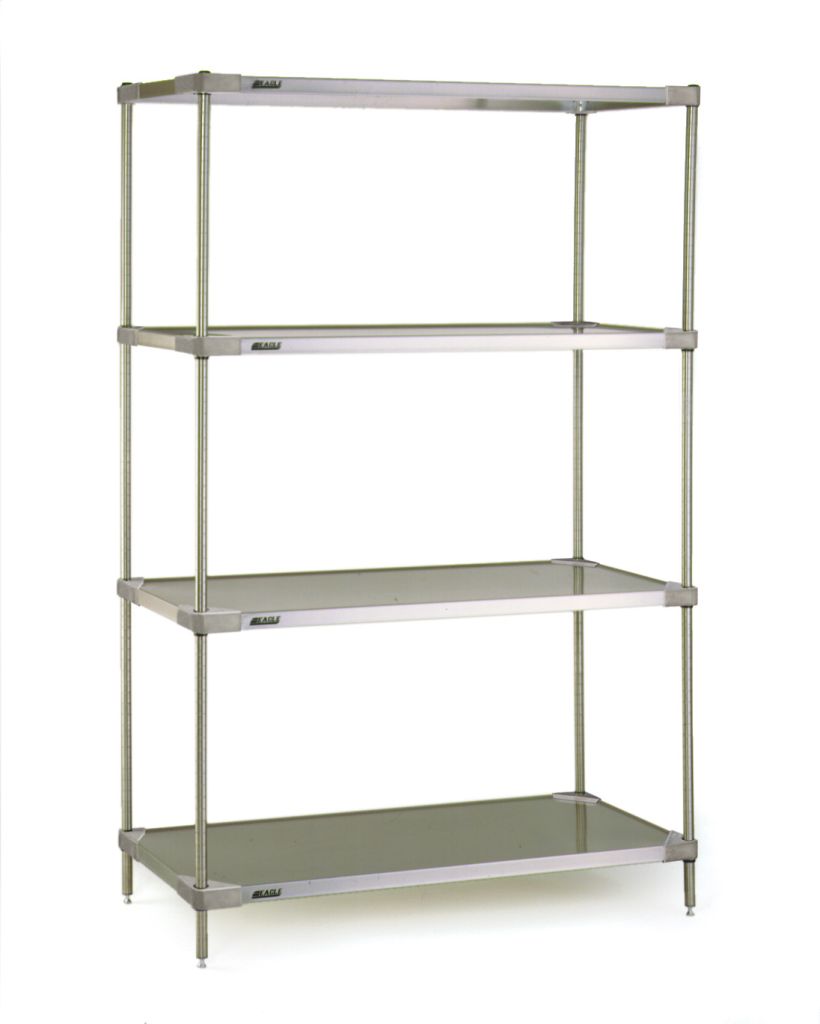
| Solid steel / stainless | Hemmed two-fold heavy gauge steel with a raised marine edge on all four sides; aluminum corner castings lock shelves to calibrated grooved posts | Reagent shelving, chemical rooms, small-item storage, anywhere a spill must stay put | Costs more; blocks airflow, so it holds moisture in a wet room without drainage |
| Heavy-duty solid | 14 or 16 gauge stainless, or galvanized with gray or green epoxy; flat, embossed or louvered; 2″ downturn and marine edge; up to 1,000 lb. evenly distributed per shelf | Bulk reagent cases, instrument storage, receiving and staging | Heavier to reconfigure; overkill for light consumables |
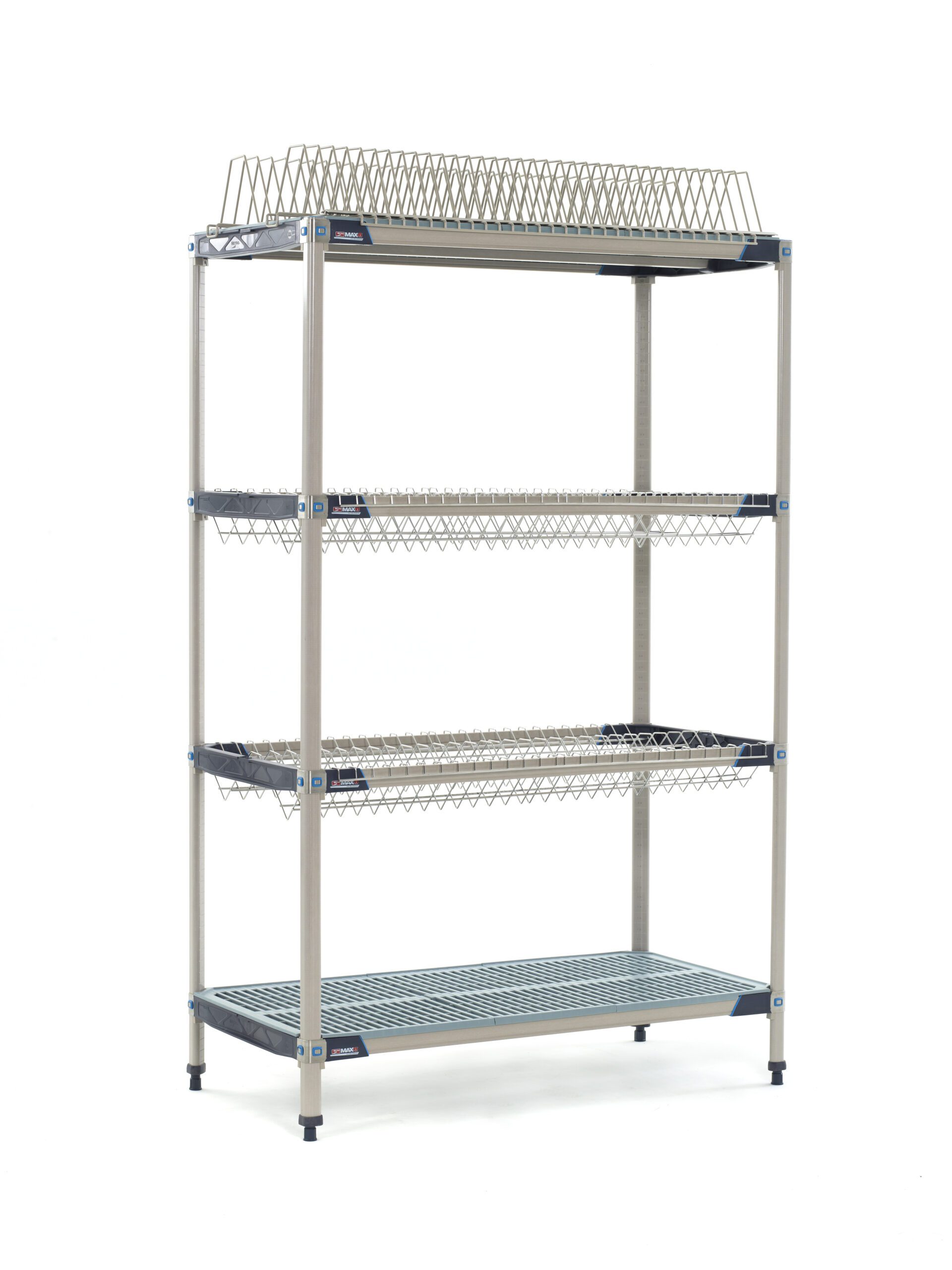
| Polymer mats over wire | Green polymer louvered or solid shelf mats over a wire shelf; assembles without tools | Wet zones, wash-up areas, dunnage duty, aggressive cleaning chemistry | Not a structural upgrade — the wire beneath still sets capacity |
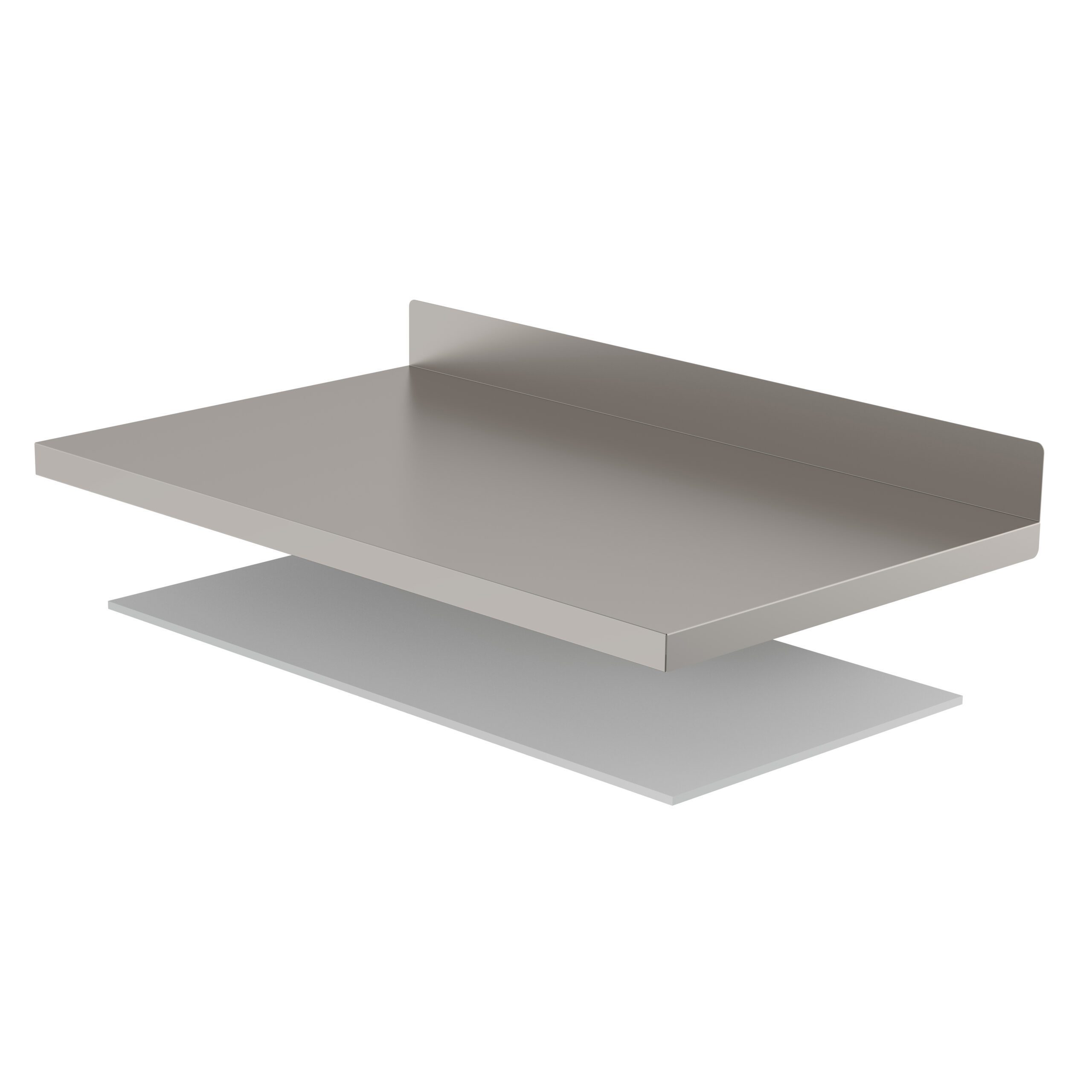
| Stainless lab wall shelves | 16 gauge type 304 with a 1-1/4″ rear upturn, reinforced center hat channel, upturned or downturned bookends, adjustable on 1-1/2″ centerlines | Above benches and sinks, reagent lines, instrument accessories | Fixed to the wall, so it cannot be relocated like a freestanding unit |
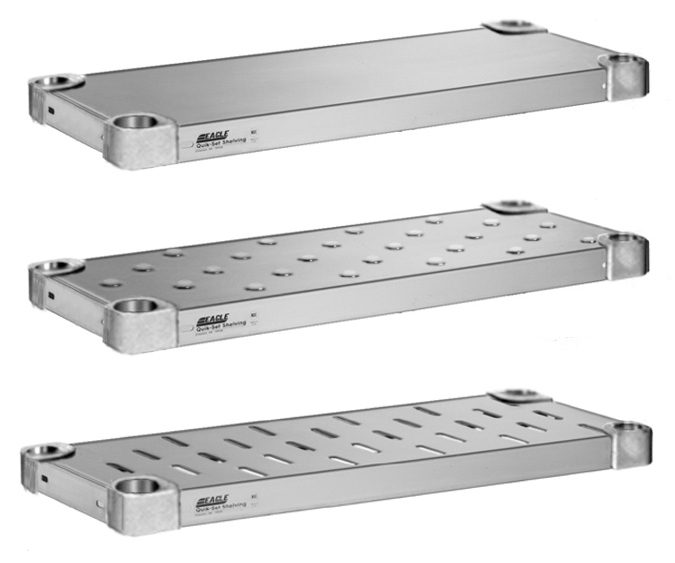
Finish matters as much as shelf type. Chrome is the inexpensive dry-storage finish and pits in humidity. Gray, green and hybrid epoxies add corrosion resistance for cold rooms and wash-adjacent areas. Type 304 stainless is for rooms that are washed down, reached by autoclave steam, or disinfected with aggressive chemistry every shift.
Ask about listings in writing, not on the shelf label
Third-party sanitation and safety listings are model-specific rather than line-wide, and they change. Send us the model numbers and we will confirm the current listing status for each in writing before you order.
Bench-Adjacent Storage: Wall Shelves and Cantilever Systems
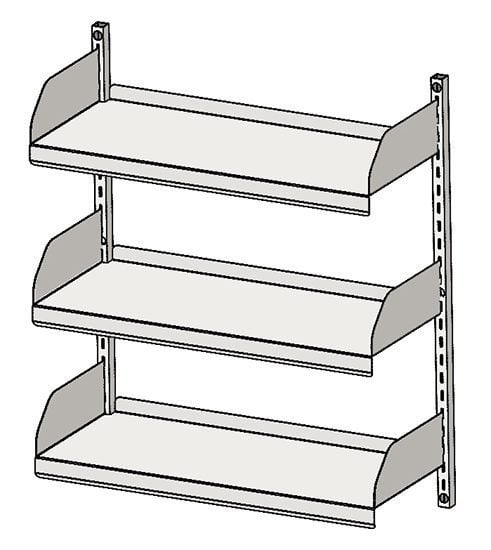
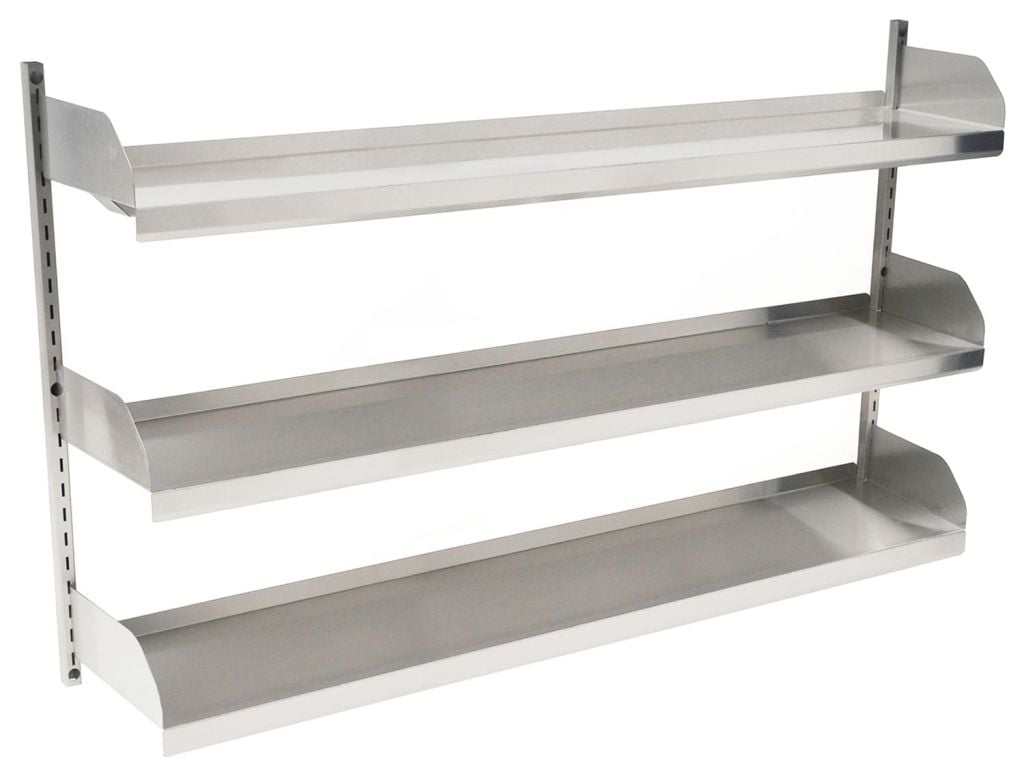
The storage technicians actually use all day is the storage within arm’s reach of the bench, and getting that zone right removes more walking than any stockroom project. Stainless lab wall shelf systems use 16 gauge tubular uprights with laser-cut notches, 16 gauge type 304 shelves with a 1-1/4″ rear upturn and a reinforced center hat channel, and triple hooks per end adjustable on 1-1/2″ centerlines. Bookends are the spec most people skip: upturned bookends contain bottles and boxes, downturned bookends leave the ends open so long items slide through a run. An optional front wire ledge adds a second line of defence for glass.
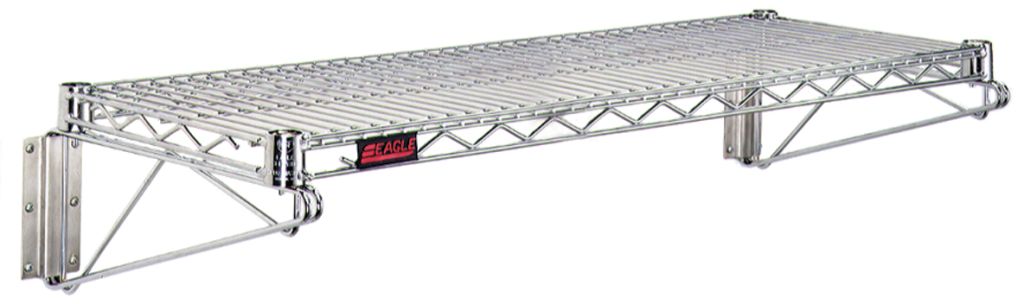
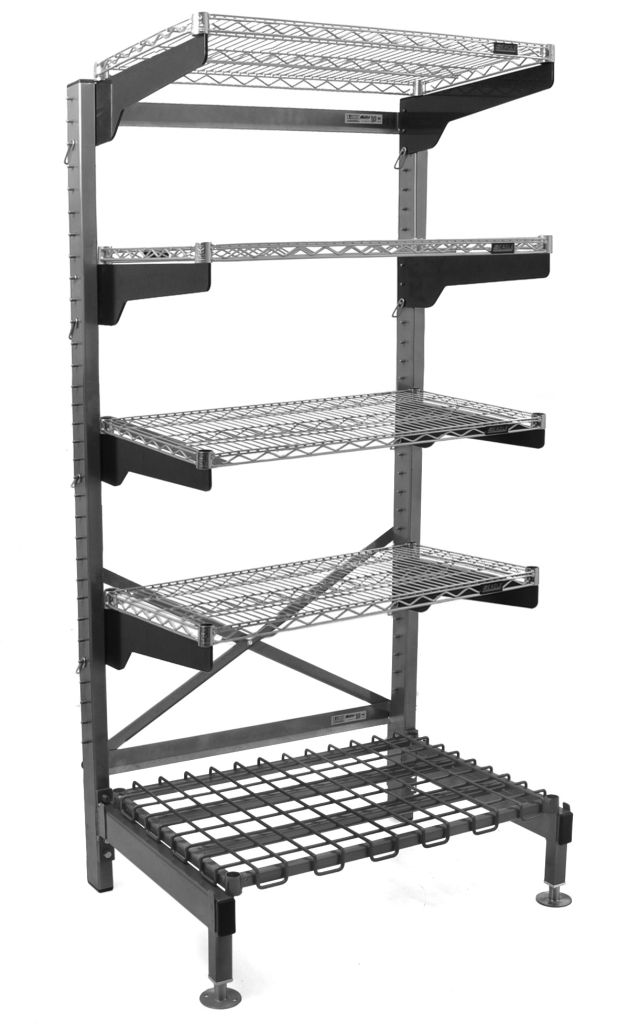
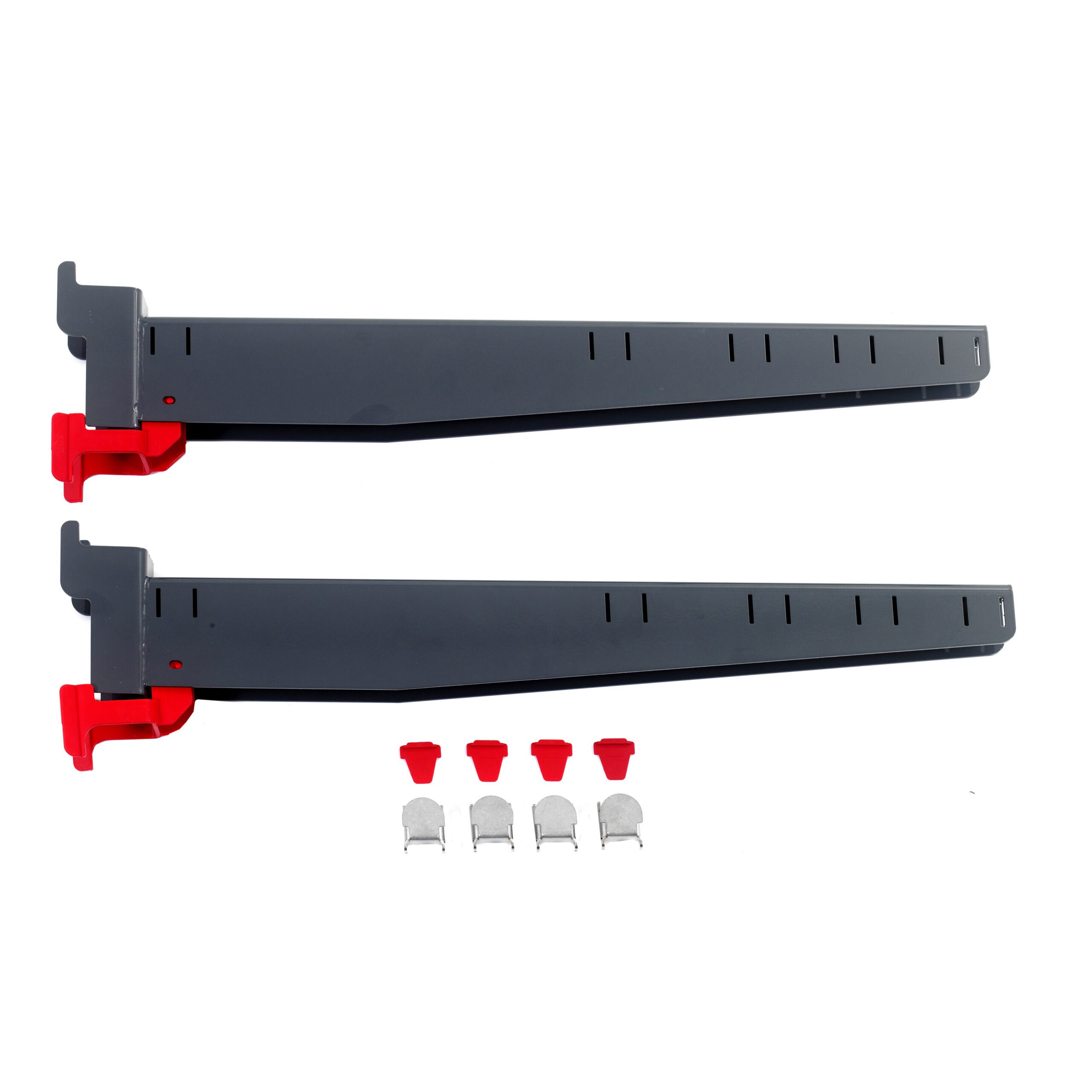
Wire wall shelf kits are the lighter alternative — a shelf plus two wall mounts in 14″ and 18″ widths and 36″ and 48″ lengths, tool-free to attach; Snap-N-Slide shelves are 12″ wide in 24″ to 72″ lengths and mount to studs without added backing. Cantilever shelving suits labs where access beats density: no front uprights, 2″ tool-free adjustment, no wall bolting, wire or sheet metal overlays, 18″–30″ widths and 24″–72″ lengths, with 76″ five-tier add-on units to extend a run later.
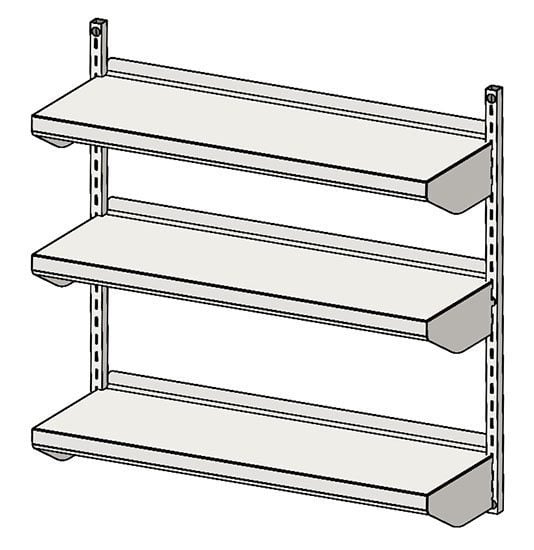 Downturned Bookend Wall ShelvesThree-shelf modular stainless system with laser-cut tubular uprights and open ends for long items.
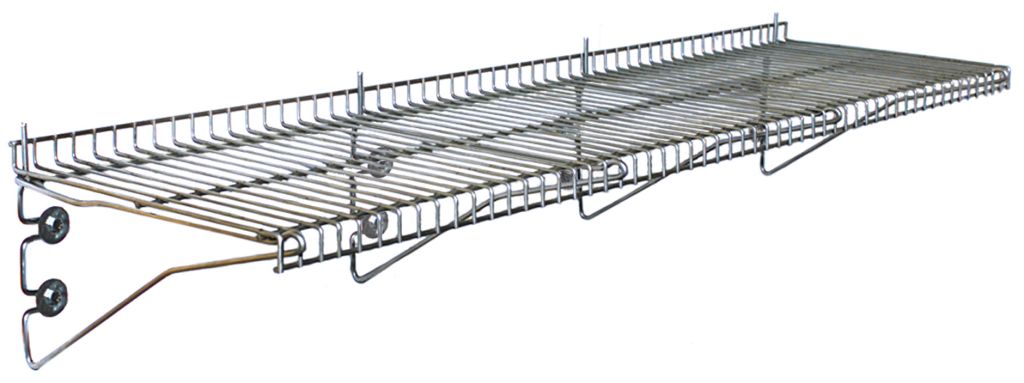 Snap-N-Slide Wire Wall ShelvesTool-free wire wall shelves, 12″ wide in 24″–72″ lengths; brackets mount to studs with no backing.
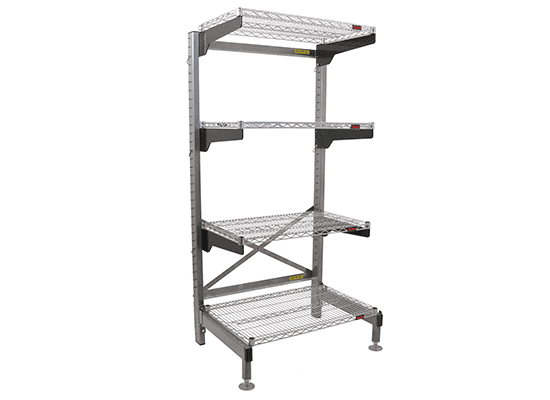 Cantilever Lab ShelvingNo front uprights for full corner access, tool-free 2″ adjustment, wire or solid overlays.
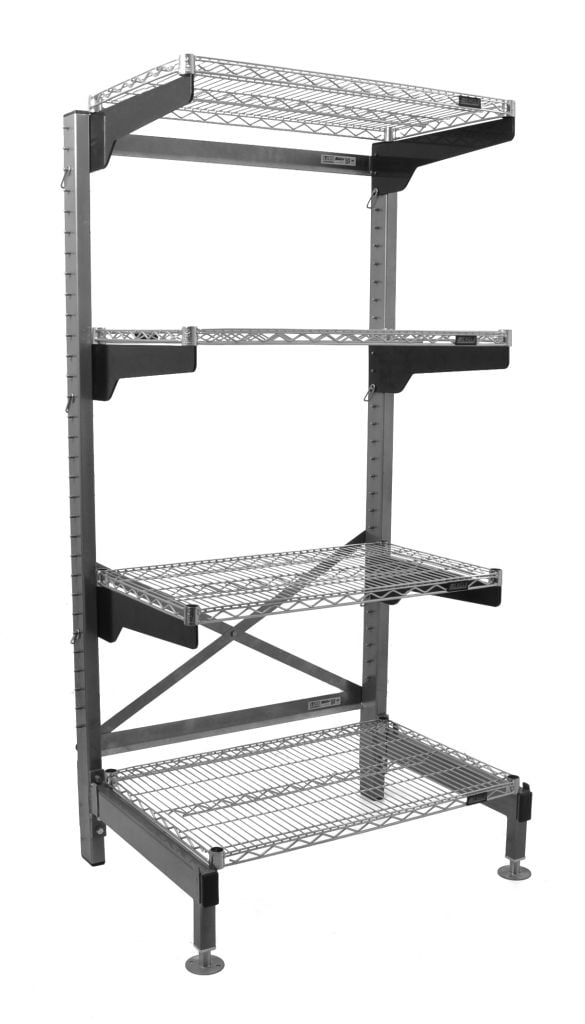 Five-Tier Cantilever Add-Ons76″-high all-wire add-on units that extend an existing cantilever run.
Mobile and High-Density Lab Shelving
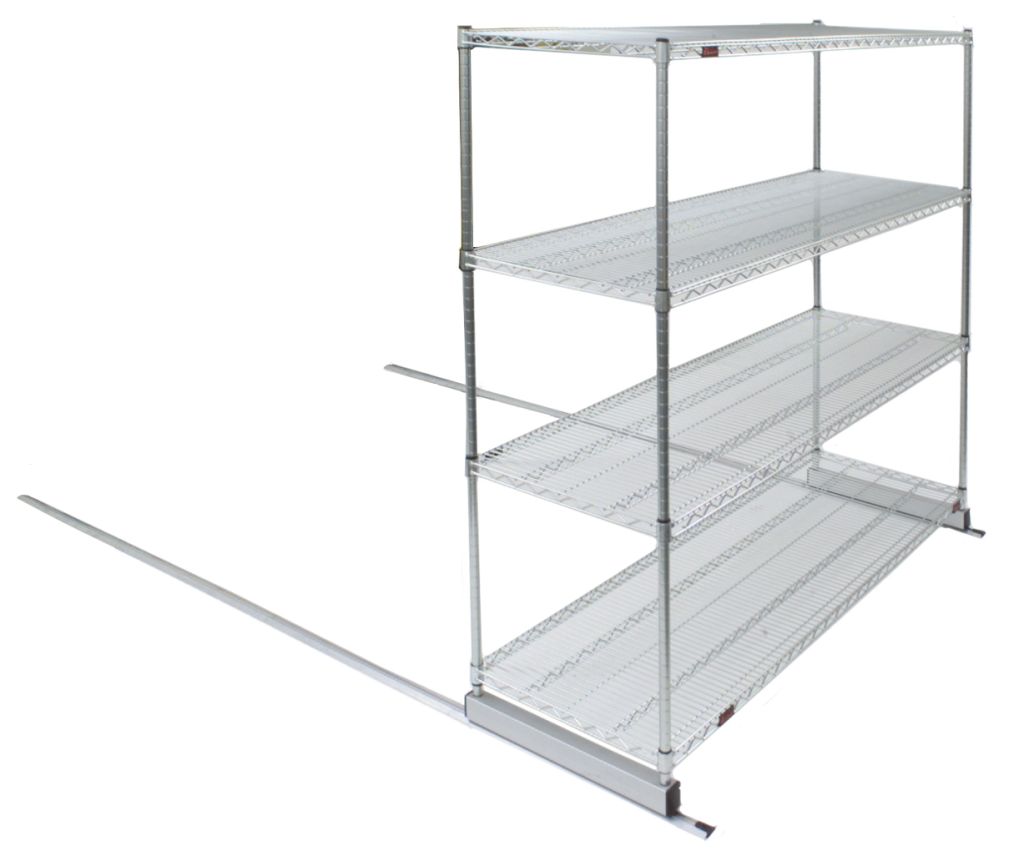
A static bank of shelving spends most of its footprint on aisles nobody is standing in. High-density track systems fix that: each unit rides on a skate kit inside non-corrosive aluminum floor tracks with end stops, so the bank slides sideways and only the aisle in use is open. Skate kits are aircraft-quality aluminum with stainless inserts and hardened steel bearings, one per mobile unit, and the systems are built to be ADA compliant. Single-deep layouts suit most stockrooms; double-deep stores two units front-to-back without impeding rollability, which is the right answer for archives and slow-moving inventory.
Two planning notes save real money. Track kits, skate kits, posts and shelves are ordered as separate components, so the layout has to be drawn before the parts list is built. And floor flatness matters: tracks want a flat, sound slab, and if it dips, the fix belongs in the construction scope rather than a service call after installation.
Where a full bank is overkill, individual units on casters do the job, and mobility costs capacity — polymer dunnage rated up to 1,000 lb. stationary drops to roughly 800 lb. mobile. Polyurethane treads roll better on smooth sealed floors; resilient treads absorb shock over thresholds and drains. Any cart carrying glassware should have at least two brakes the operator can set without reaching across the load.
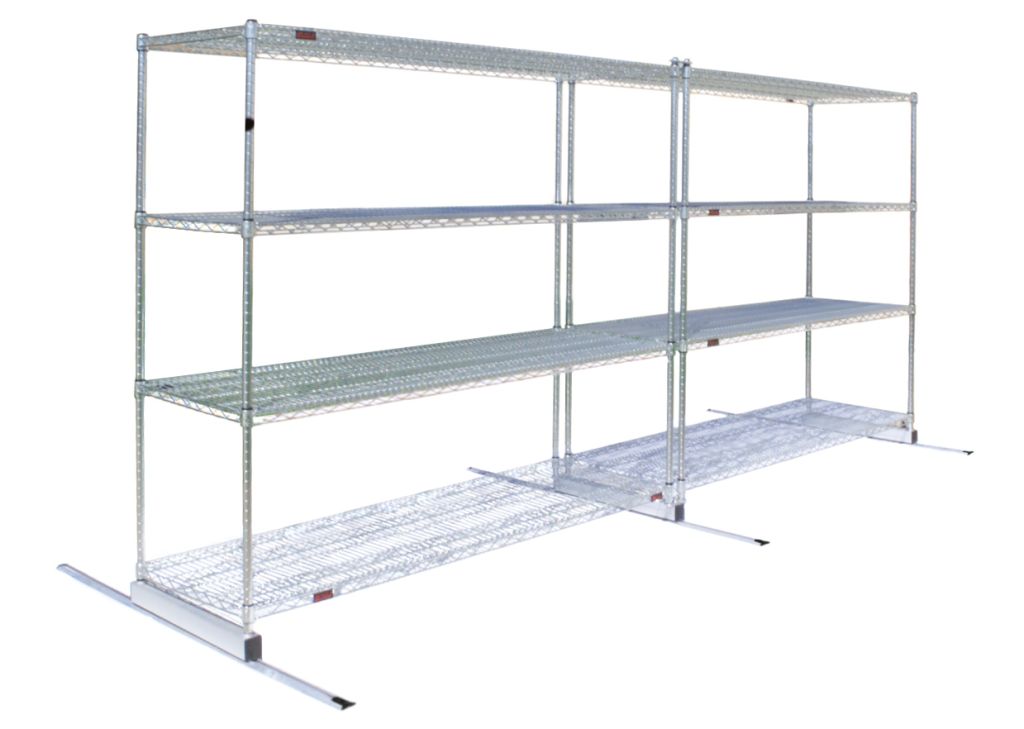 Double-Deep Track SystemsTwo units stored front-to-back on aluminum tracks without impeding rollability — built for archive volume.
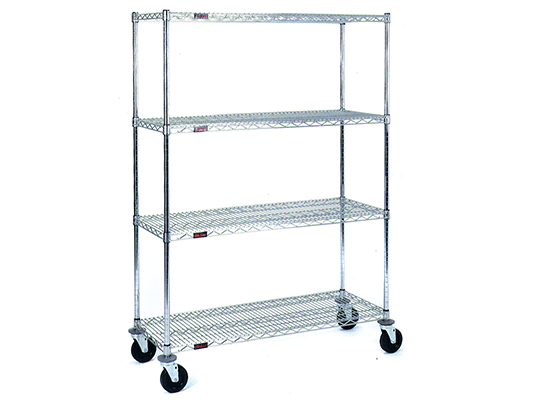 Wire Stem Caster CartsFour shelves, four 63″ posts, zinc or chrome, 5″ casters in swivel, swivel/brake or swivel-rigid.
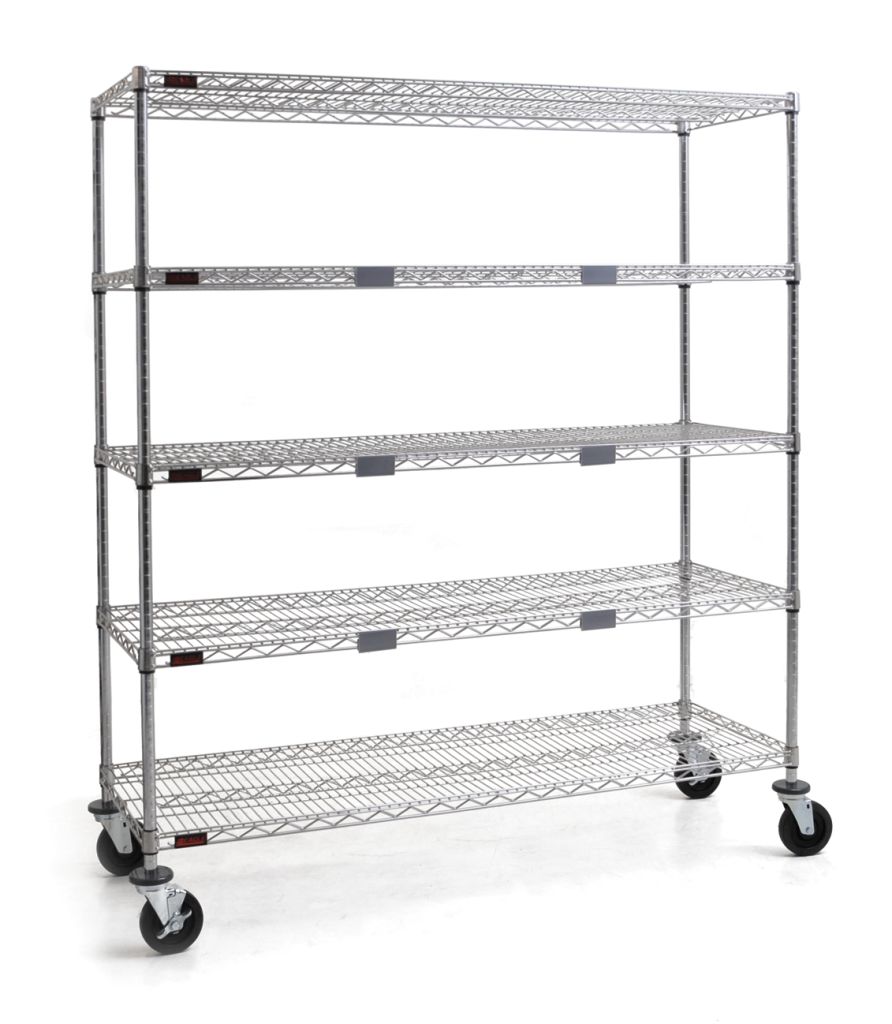 Exchange CartsFive chrome wire shelves, 63″ posts, 5″ resilient stem casters with two brakes and shelf markers for par-level restocking.
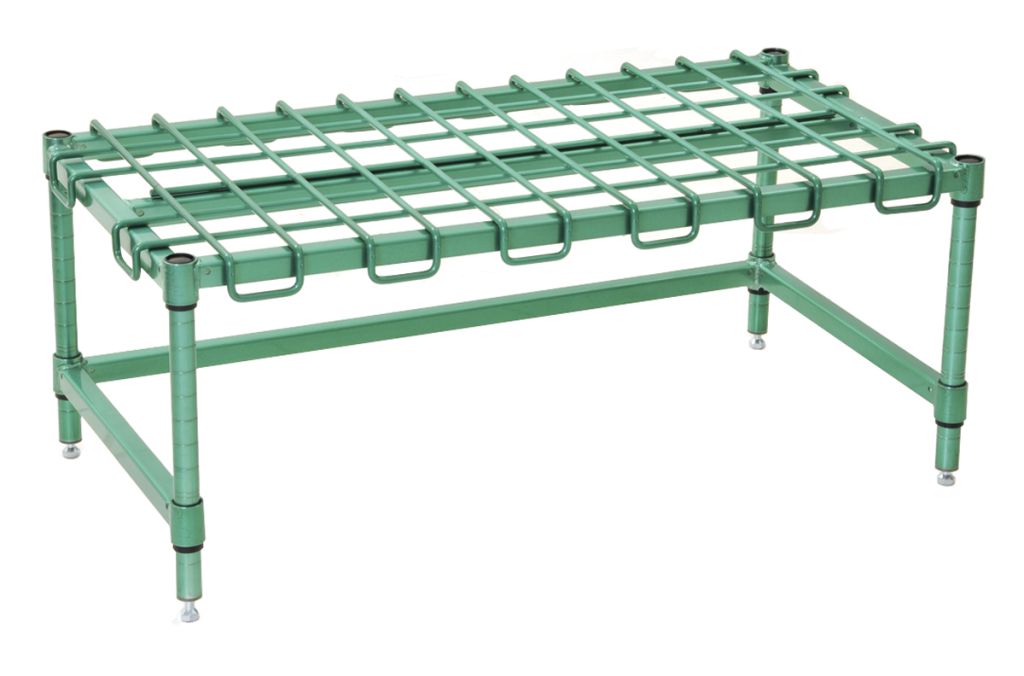
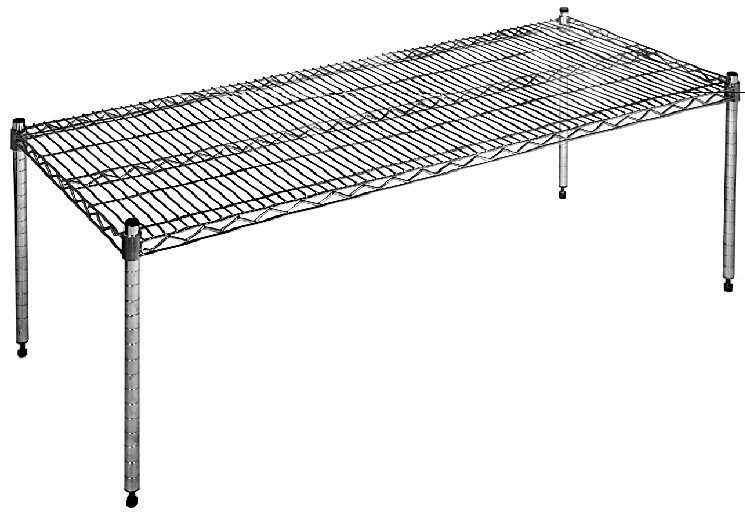
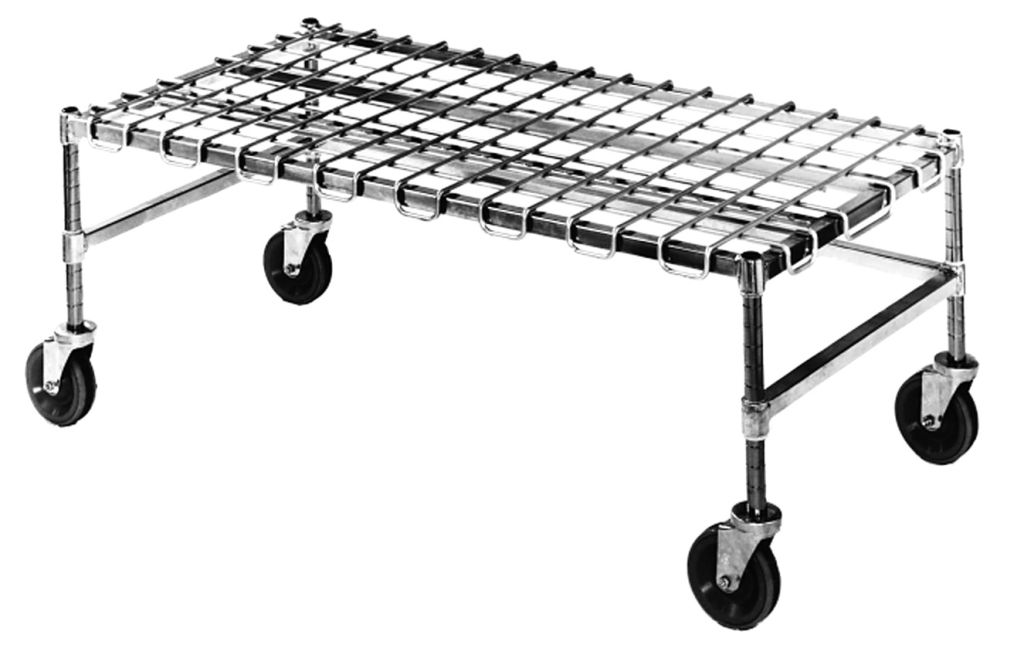 Mobile Dunnage Racks14″-high open-wire dunnage shelf, 1″ posts grooved on 1″ centers, three-sided frame, four 5″ casters.
Cold Rooms, Freezer Rooms and Humid Storage
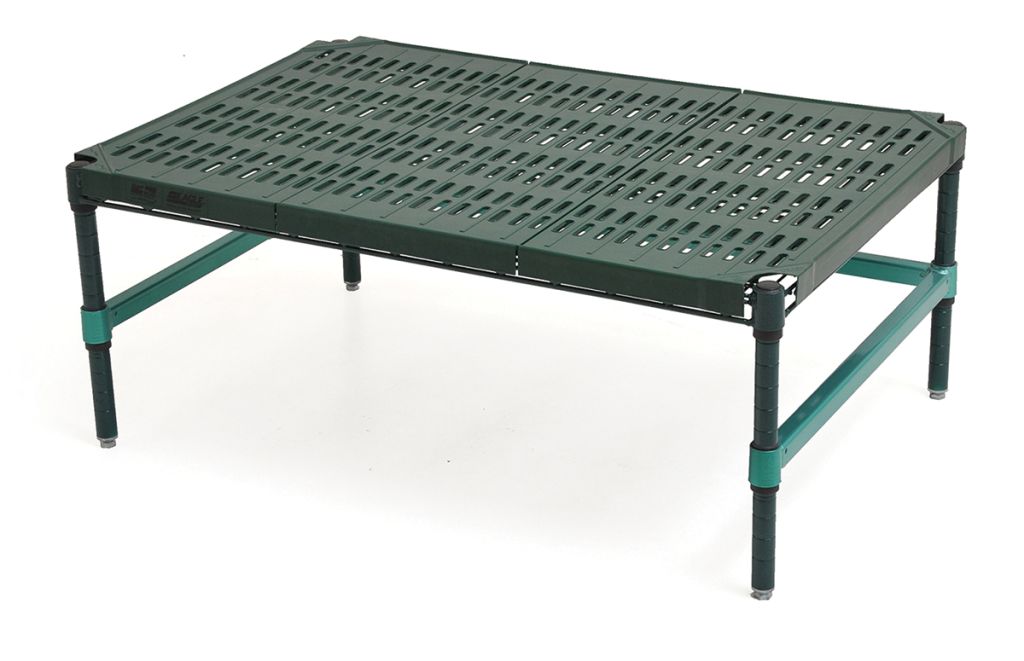
Cold rooms punish shelving: saturated air, running condensate, cycling doors and a floor that is wet more often than dry. Three rules keep a cold room from becoming a corrosion project. Use open wire so air moves through the load and shelves drain rather than pool. Specify epoxy-coated or stainless instead of chrome. And get everything off the floor, because a wet cold-room floor gets squeegeed and mopped, and anything standing on it will be in the way and will wick.
That is what dunnage racks are for: an open-wire dunnage shelf with 1″-diameter posts grooved on 1″ centers and a three-sided frame supports heavy, awkward loads at 14″ height, stationary or mobile. Polymer dunnage adds green louvered or solid mats over the wire, rated up to 1,000 lb. stationary and 800 lb. mobile, assembling without tools — a good choice where carboys and drums would abrade a bare mat. Freezer rooms add one wrinkle: everything is handled with gloves, so keep the top usable shelf below shoulder height, leave a waist-height landing shelf near the door, and favour shallow shelves at tight spacing over deep shelves at wide spacing.
Reagent, Chemical and Secure Storage
Chemical storage is where shelving decisions carry the most consequence, and where we are careful about what we promise. Shelving is hardware; which chemicals may be stored where, in what quantity, with what containment and ventilation, is set by your safety officer and the authority having jurisdiction, not by a catalog page.
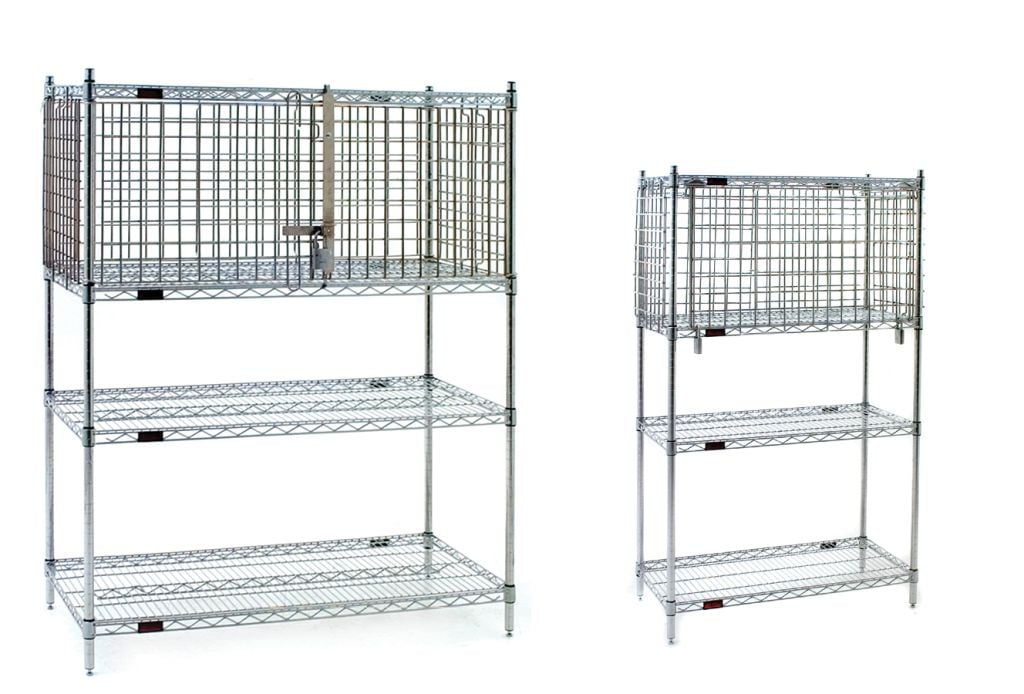
Practically: store liquids on solid or marine-edge shelves so a broken bottle stays on the shelf; keep the heaviest and most hazardous containers low regardless of what the capacity rating allows; separate incompatible classes physically rather than by shelf label alone; keep the ventilation path clear on vented cabinets; and keep an aisle wide enough to carry a full carboy with both hands. Where inventory must be locked, security modules convert part of an existing unit into an enclosed compartment with hinged or flip-up doors, and more than one module can be added to a tall unit — a clean way to secure a stockroom you already own.
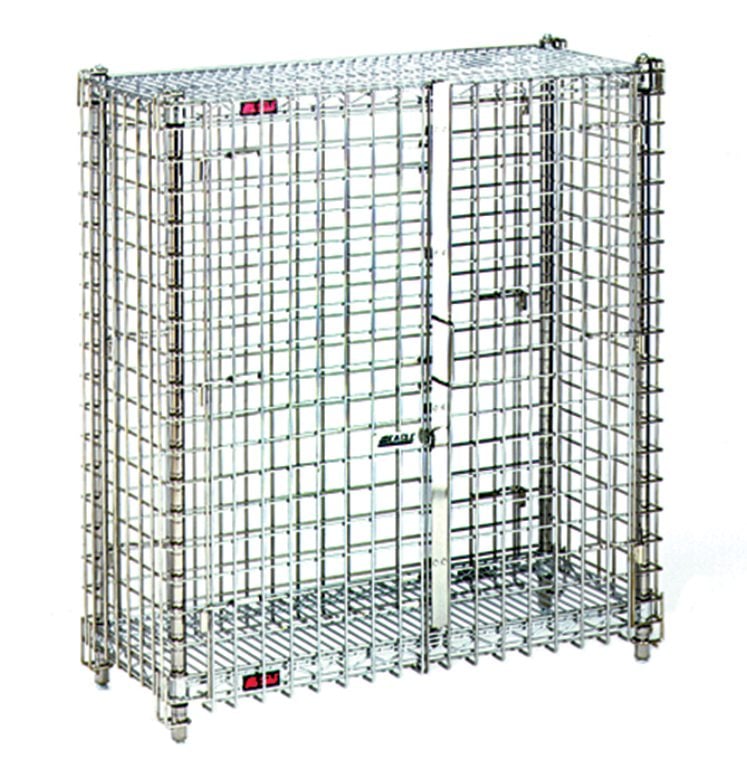 Mini Security Units40″ overall height, chrome open-wire QuadTruss shelves, full-access double door with quick-action lock and padlock hasps.
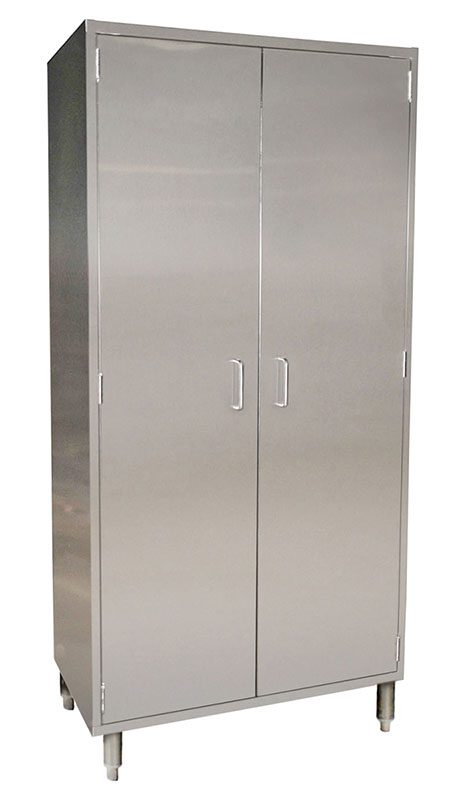 Vertical Storage Cabinets18 gauge type 430 stainless body, three shelves adjustable on 4″ centers, 20 gauge double-pan hinged doors, flat or laminar-flow slanted top.
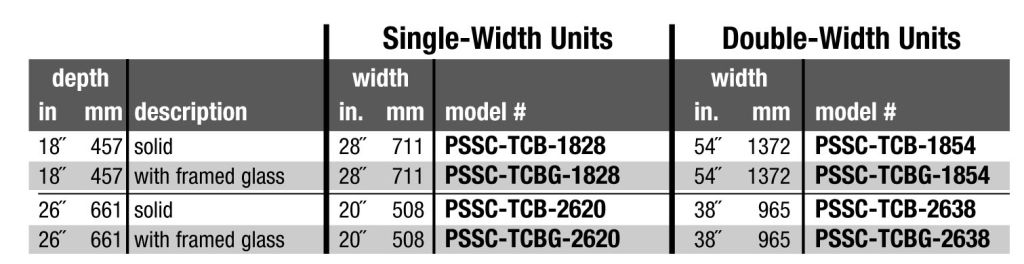 Stainless Storage CabinetsHeavy gauge type 304 stainless with 45 tray slides spaced 1-5/8″ apart, 18″ or 26″ depth, solid or framed glass doors.
Samples, Specimens, Glassware and Consumables
Specimen storage is an accessibility problem more than a capacity problem. A pathology or clinical lab needs to retrieve a specific box on a specific date without unstacking three others: shallow shelves, spacing matched to the box height actually in use, and unambiguous labelling at the shelf edge. Cryo and specimen boxes are small, heavy and uniform — the load where a long wire shelf sags and a solid shelf does not.
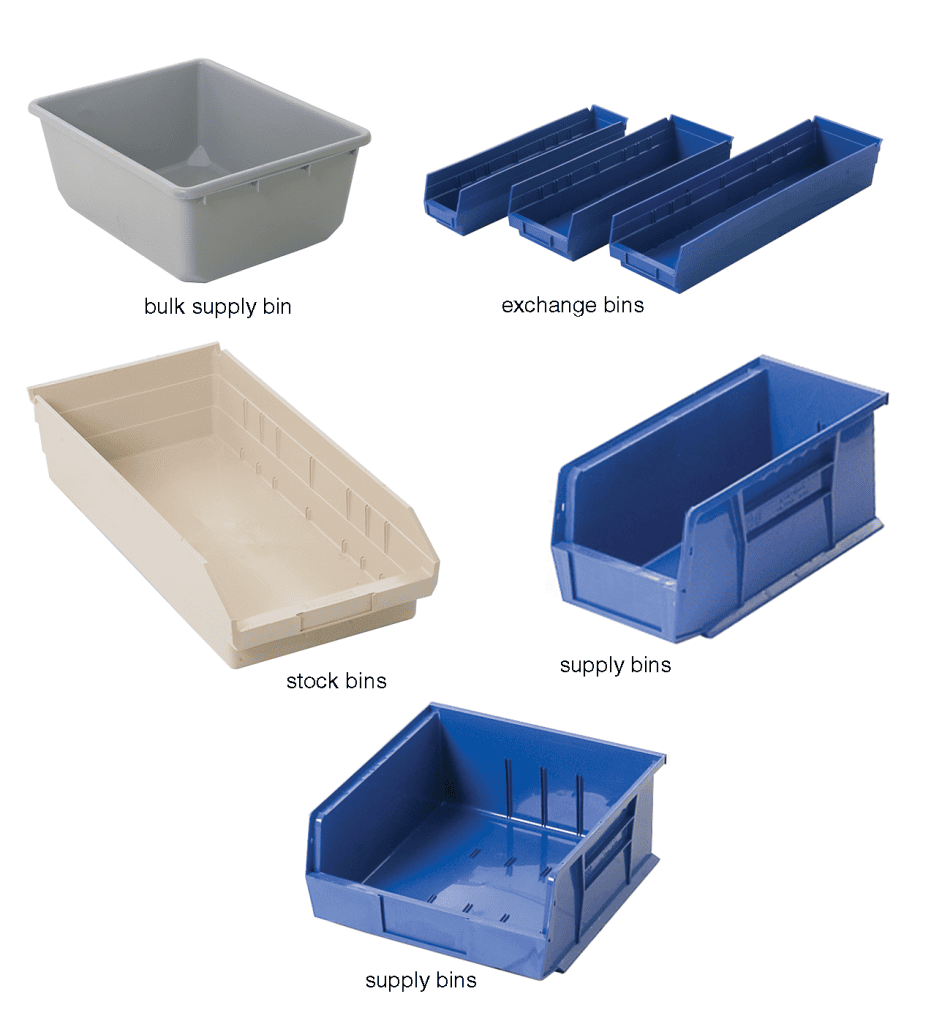
Glassware is the opposite: bulky, fragile and wet after washing, so open wire earns its place because a washed rack air-dries instead of sitting in a puddle. Keep drying shelves out of traffic, use a ledge or bookend on any shelf holding glass, and stage clean glassware at pick-up height rather than overhead. Consumables — tips, tubes, gloves, plates, wipes — belong in stackable, nestable, dividable polypropylene bins with molded label slots, which turn a shelf into a visible par-level system and stop duplicate ordering.
Sizing, Layout and Aisles
Most shelving that gets replaced early was not defective — it was the wrong size for the room or the load. A short checklist before anything is ordered:
- Depth follows the content. 12–14″ over a bench, 18–21″ for reagent bottles and boxed consumables, 24″ for bulk cases and instruments.
- Height follows the ladder policy. If nothing above 72″ will be reached without a step stool, do not buy 86″ posts and fill them.
- Openings follow the tallest recurring item. 1″ post adjustment lets you re-tune spacing once the real inventory arrives.
- Aisles follow the biggest thing that moves. Measure the widest cart, and check door swings and the turn out of the corridor.
- Weight goes low. Heaviest content on the bottom two shelves — better stability, fewer injuries.
- Plan the units you will add later. Add-on units and spare shelves are cheap now and awkward to match in three years.
Send us the room, we will send back a layout
Email a floor plan or room dimensions and a note about what gets stored. We will lay out the shelving, check aisles and capacities, and return an itemized quote with freight and lead times. Call 800-326-4403.
Stability, Anchoring and Seismic Practicalities
In the Intermountain West, anchoring is a live question rather than an afterthought — and whether a given installation must be anchored, and how, is determined by your engineer and the authority having jurisdiction. We do not certify installations. What we can tell you is what tends to be true in practice.
Tall, narrow, heavily loaded units are the ones that concern reviewers. The usual mitigations are simple: keep dense material on the lowest shelves, use leveling feet to take the wobble out of an uneven slab, tie adjacent units together so a run behaves as one assembly, and add a wall tie at the top of tall runs where the wall can accept one. Where it cannot — a stud partition with no backing, a cleanroom panel, a glazed run — say so early, because the fix is blocking added during construction or a different configuration, and both are cheaper before the room is finished. Cantilever systems that need no wall bolting help where drilling is not an option.
Cleanability, Maintenance and Long-Term Cost
Lab shelving is cleaned more often than almost any other storage in a building, and the protocol determines how long it lasts. Ask three questions before specifying: what chemistry is used, how often, and does anything get wet-washed in place? A room wiped with alcohol once a shift and a room hosed down weekly need different hardware.
Wire wipes easily and dries fast, and shelves lift off the posts so a unit can be broken down and washed. Solid shelves with a marine edge disinfect as a continuous surface, but need a drainage plan in a wet room. Stainless is the durable answer for daily aggressive chemistry; polymer mats pull off and wash separately. Maintenance is minor: check leveling feet and caster brakes annually, inspect split sleeves and corner castings when a shelf moves, and replace bent shelves rather than living with them. Shelves, posts, add-on units, security modules, bins and casters are replaceable parts, not reasons to buy a new unit.
Lab Storage Selection Table
A quick way to match a room to a storage type. Capacities are published per configuration — we confirm the rating for the model and length you order.
| Lab area | Recommended storage | Typical finish | Details that matter |
|---|---|---|---|
| Main stockroom | Wire shelving units, plus a high-density track bank if space is tight | Chrome or epoxy | 1″ post adjustment; plan add-on units now |
| Cold room / walk-in | Open wire shelving with dunnage racks or platforms | Epoxy or stainless | Airflow, drainage, nothing on the floor |
| Reagent and chemical room | Solid or marine-edge shelving; lockable units for restricted items | Stainless or epoxy | Containment, segregation, heaviest items low |
| Bench and instrument zone | Stainless lab wall shelves and cantilever overshelves | 16 ga. type 304 stainless | Bookend direction, 1-1/2″ adjustment, wire ledge option |
| Specimen / archive storage | Shallow solid shelves, or double-deep track shelving for volume | Epoxy or stainless | Retrieval speed and labelling beat raw capacity |
| Receiving and staging | Heavy-duty solid shelving with dunnage platforms | Galvanized w/ epoxy or stainless | High per-shelf capacity, off-floor storage, cart access |
How ordering actually works
Common wire and solid configurations generally ship quickly from stock. Stainless casework, cantilever systems, custom sizes and track systems are built to order, and track systems are ordered as separate kits, so the layout comes first. We confirm lead times and freight in writing with every quote, and we pull CAD and Revit files for the models on your schedule.
Shop Lab Shelving & Storage Online
Buy select items directly from our online store, or request a quote for volume, custom sizes and freight-rated orders.

Design & price it online: Metro Polymer Shelving Configurator
Configure MetroMax polymer shelving for wet, cold and corrosive areas in our free Metro Polymer Shelving configurator — build the layout, see a full bill of materials and save or send the quote in minutes. Need a different Metro product? Browse all 17 tools in the Metro configurator hub.
Laboratory Shelving & Storage FAQ
What types of lab shelving are available?
Is wire shelving suitable for every lab environment?
What shelf spacing and depth should I plan for in a lab?
How does high-density mobile lab shelving work?
Can lab shelving be locked for controlled or high-value items?
What is the difference between stainless, epoxy-coated and chrome finishes?
How much weight can a lab shelf carry?
What are typical lead times, and do you help with layout?
Related planning resources: Spacefile mobile shelving.
Get a Laboratory Shelving & Storage Quote
Send a floor plan, a room dimension or a photo of the space. We will specify the shelving, check the aisles and capacities, and return an itemized quote with freight and lead times. Call 800-326-4403.