
Home › Cleanroom Storage, Shelving & Furniture
Cleanroom Storage, Shelving and Furniture
Cleanroom shelving, carts, work tables and gowning furniture specified for the cleanliness class, airflow pattern and cleaning chemistry you actually operate to. MH-USA represents several cleanroom manufacturers and quotes complete packages nationwide.
1997
Serving the West
50
States shipped
ISO 5–8
Rooms we outfit
1 source
Shelving, carts & furniture
Storage Is the Part of a Cleanroom That Gets Specified Last

The enclosure, the air handler, the filters and the monitoring get months of attention. Then, close to move-in, someone has to decide what the gloves, garments, totes, reagents and finished goods actually sit on — and the fastest answer is often whatever shelving the warehouse already buys. That is how chrome-plated wire units and unsealed particleboard benches end up inside rooms that cost a fortune to keep clean.
Cleanroom storage is not a different-colored version of industrial storage. It is chosen against four questions: does the surface shed particles, does the material outgas, can it be cleaned with the chemistry your SOP calls for as often as your SOP calls for it, and does it interfere with the airflow pattern the room was designed around.
MH-USA specifies and supplies cleanroom shelving, carts, stainless work tables, gowning benches and glove storage. We represent several manufacturers here — including Metro (InterMetro Industries), the company that created the original Super Erecta wire shelving system, and Eagle, whose cleanroom product line covers benches and stainless furniture — so the recommendation is driven by your room rather than by a single catalog.
What Changes as the Cleanliness Class Gets Tighter
ISO 14644-1 classifies rooms by allowable airborne particle counts per cubic meter, from ISO 1 through ISO 9 (roughly ordinary room air). Most industrial and life-science work sits between ISO 5 and ISO 8. Classification belongs to the room as tested; equipment cannot carry a class on its own. What equipment can do is stop working against the room. As the class tightens, three properties matter more:
- Particulate shedding. Every surface releases particles when touched, loaded, rolled or wiped. Chipped coatings, worn plating, cardboard and abraded plastic shed; smooth continuous surfaces shed least, and electropolished stainless is the best practical option.
- Outgassing. Some polymers, adhesives, foams and coatings release volatile compounds, and in electronics and optics that molecular contamination can matter more than particles. Avoid soft foams and unsealed composites.
- Cleanability. Equipment gets wiped several times a shift in some rooms. Crevices, blind fasteners, open tube ends and textured coatings collect residue and become the surface that fails a swab. Continuous surfaces, radiused corners and removable mats are what make a unit cleanable.
| Typical class | Where you see it | Storage emphasis |
|---|---|---|
| ISO 5 | Aseptic fill, semiconductor and optics critical areas | Electropolished stainless, minimal equipment in the flow path, nothing porous |
| ISO 6 | Sterile compounding support, device assembly, photonics | Electropolished or passivated stainless, polymer with removable mats, mobile units |
| ISO 7 | Device assembly, pharmacy anterooms, electronics assembly | Stainless or polymer shelving, static control for electronics, solid mats for liquids |
| ISO 8 and controlled | Packaging, staging, gowning, airlocks, storerooms | Polymer or epoxy shelving and wipeable furniture |
A note on claims
We do not sell shelving as “ISO certified” and you should be skeptical of anyone who does. Classification is a measured result for a room in a defined operating state. We will tell you which materials work at your class and confirm in writing what documentation a model carries.
Cleanroom Shelving Materials: What Belongs and What Does Not
Four material families cover nearly all cleanroom shelving, and choosing is mostly a cleaning-chemistry and load question.
Electropolished stainless steel is the top of the range: electropolishing removes the peaks of the mill surface, leaving a finish that holds fewer particles and releases residue more completely. Type 304 covers most environments; 316 adds resistance where chlorides and harsher disinfectants are in play.
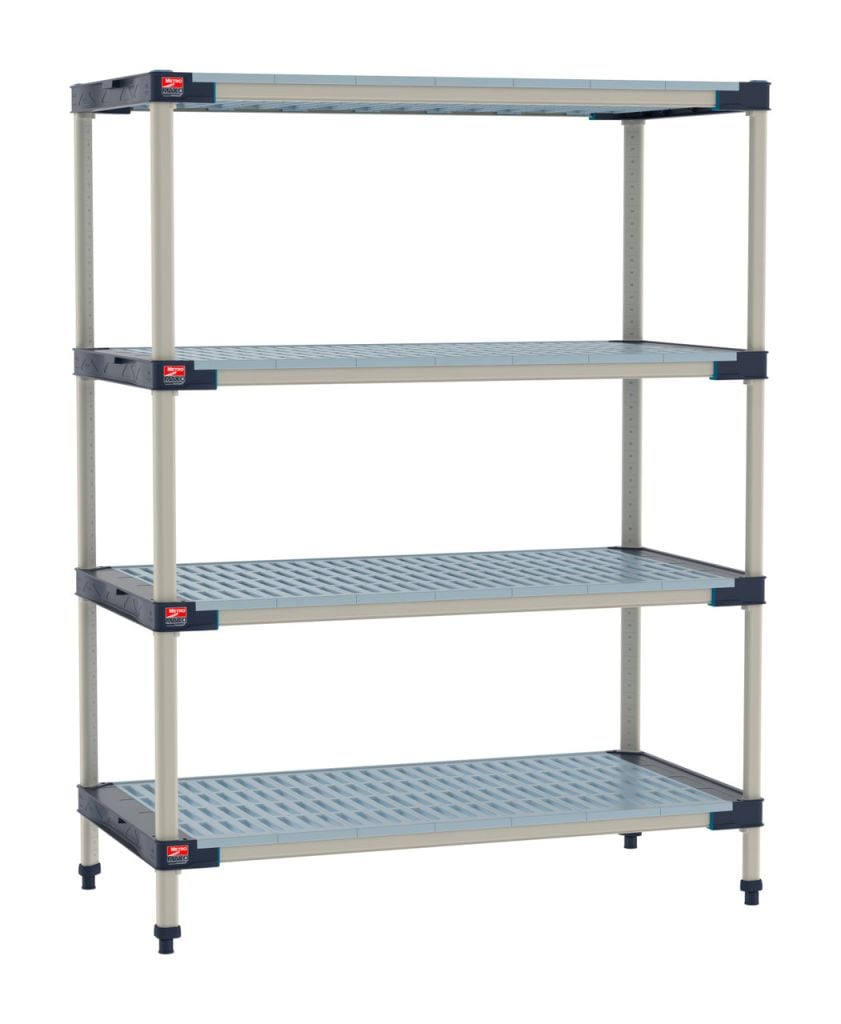
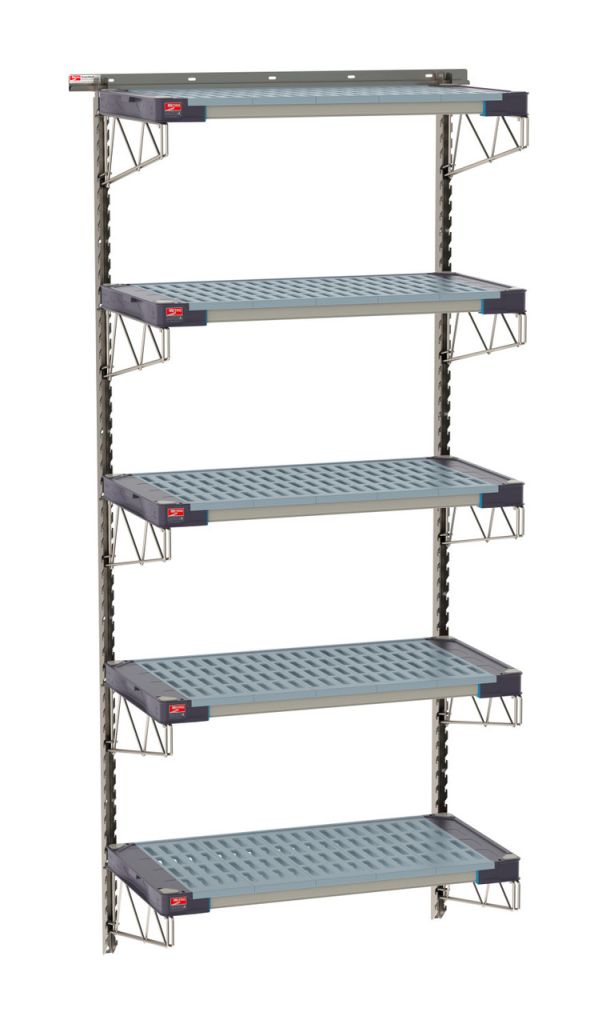
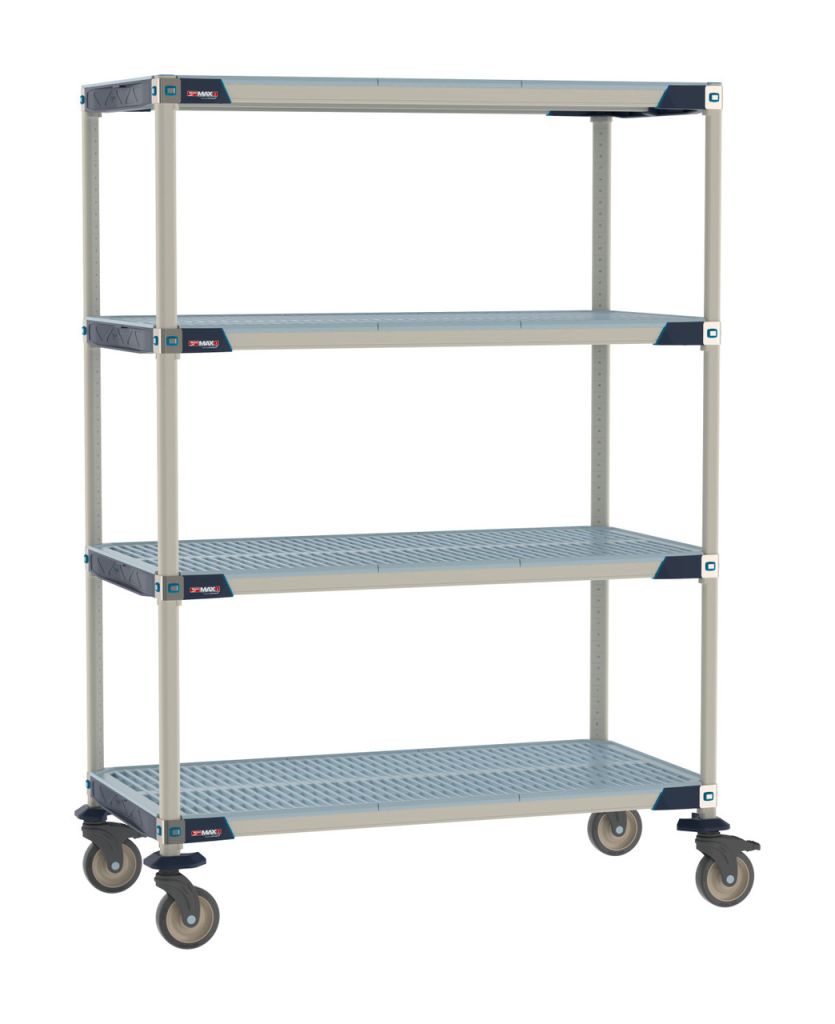
Polymer shelving — the MetroMax family is what we quote most — uses composite frames with removable shelf mats on polymer or stainless posts. Mats lift out for cleaning or replacement, there is no coating to chip, and the material shrugs off water and routine disinfectants — a strong fit for pharmacy, compounding and wet rooms. Our MetroMax polymer shelving page has the series-by-series detail.
Epoxy-coated steel is a baked coating over steel: mid-cost, fine in drier rooms and adjacent storage, and mechanically vulnerable — once a cart corner gouges it, the wound becomes a corrosion and particle source.
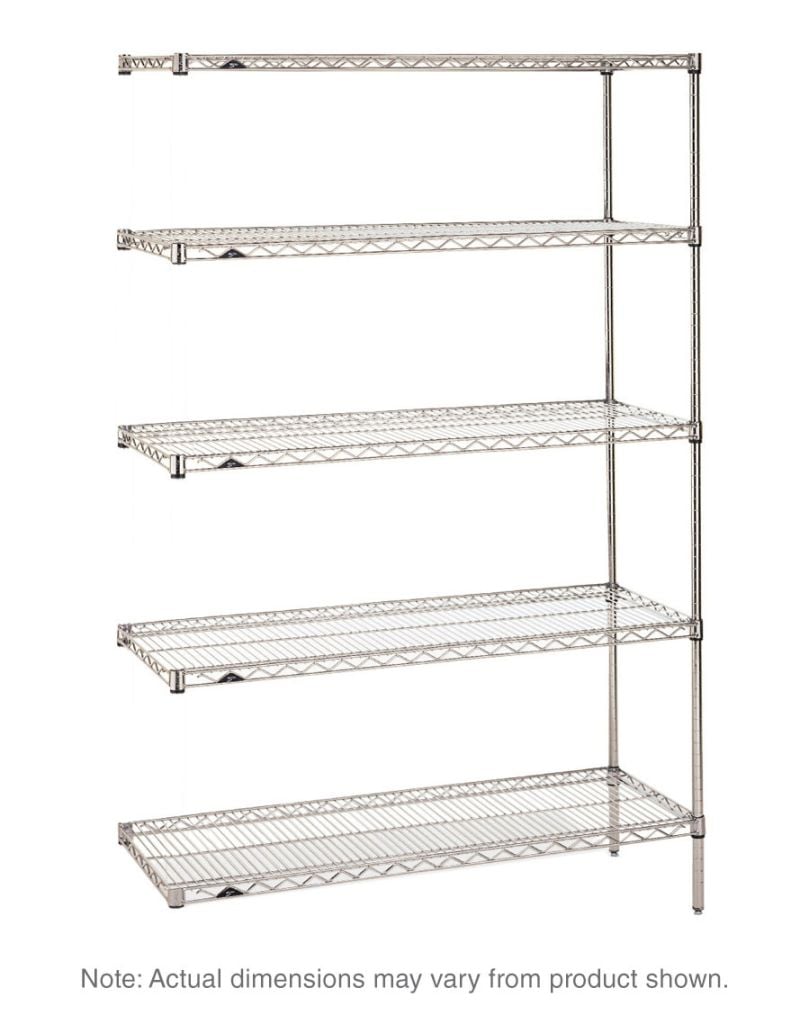
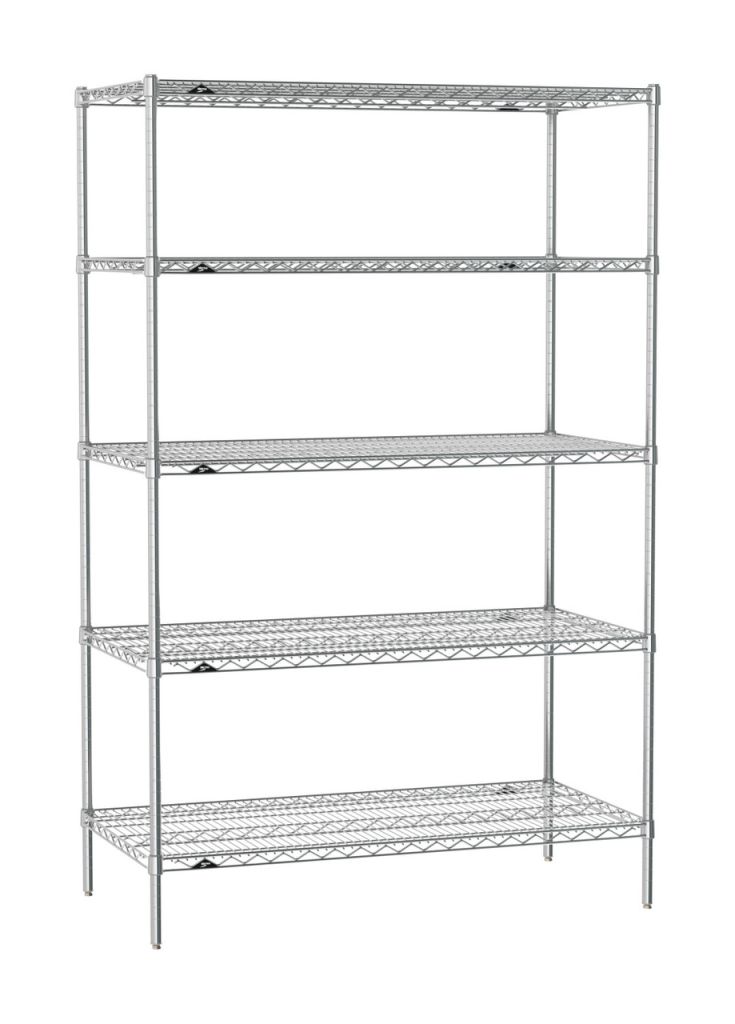
Chrome-plated steel — ordinary bright wire shelving — is usually wrong inside a cleanroom: plating chips under wear and is not intended for repeated disinfectant wipe-down. It still earns its place in adjacent dry storage; see Metro wire shelving for those applications, and stainless steel shelving when the room itself is the priority.
| Material | Cleanability | Chemical tolerance | Best fit |
|---|---|---|---|
| Electropolished stainless (304/316) | Excellent — smooth and non-porous | Highest, including aggressive disinfectants | ISO 5–7 critical rooms |
| Polymer with removable mats | Excellent — mats come out | Good with routine disinfectants | Compounding, device assembly, wet rooms |
| Epoxy-coated steel | Good while the coating is intact | Moderate | ISO 8 and adjacent storage |
| Chrome-plated steel | Fair — plating chips | Low | Dry stockrooms outside the classified space |
Solid, Open or Louvered Shelves Under Unidirectional Flow

Unidirectional downflow moves filtered air from the ceiling to a low-level return in as straight a path as possible, sweeping particles out. Anything horizontal in that path is either something the air passes through or a lid it has to go around.
Open shelves — wire, grid or perforated — let air pass through the level so particles continue toward the return instead of collecting on a flat plane, which is why they are preferred in the flow path of stringent rooms. The cost is containment: nothing stops a spill or a dropped screw from landing below.
Louvered and slotted shelves are the compromise: a mostly continuous surface with directed openings, so air moves through while small items stay put.
Solid shelves and mats block flow and leave a stagnant shadow beneath them — a real cost in ISO 5, and often worth paying when the level holds open liquids or loose hardware. Keep them out of the direct flow path, add a ledge, and clean the underside. Draw the airflow first, then decide level by level whether the risk is airborne particles or falling material.
Cleanroom Carts and Material Transport
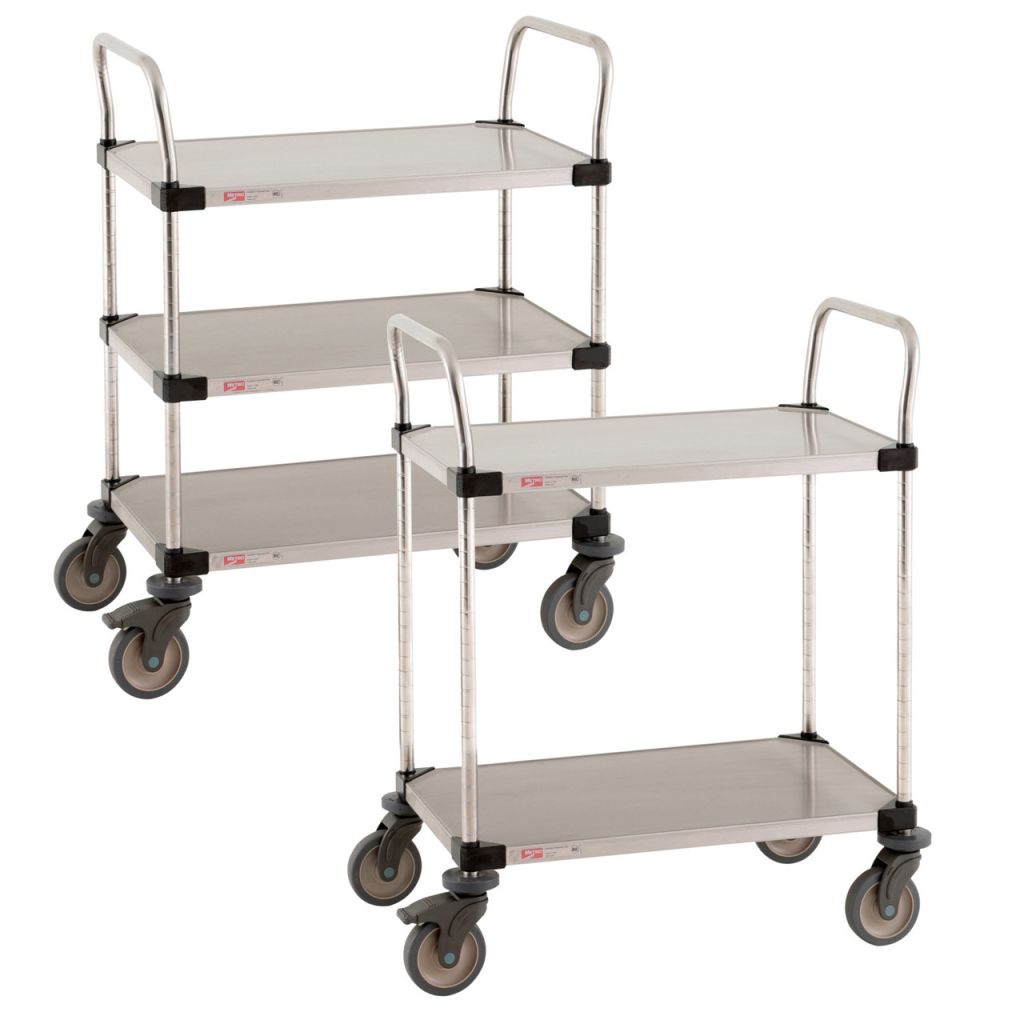
Carts are the highest-risk piece of cleanroom storage, because a cart is the only thing that regularly moves between zones. The risk is managed by dedicating carts: a cart lives inside the classified space and never leaves, or lives outside and never enters, with material transferring between them at a defined point.
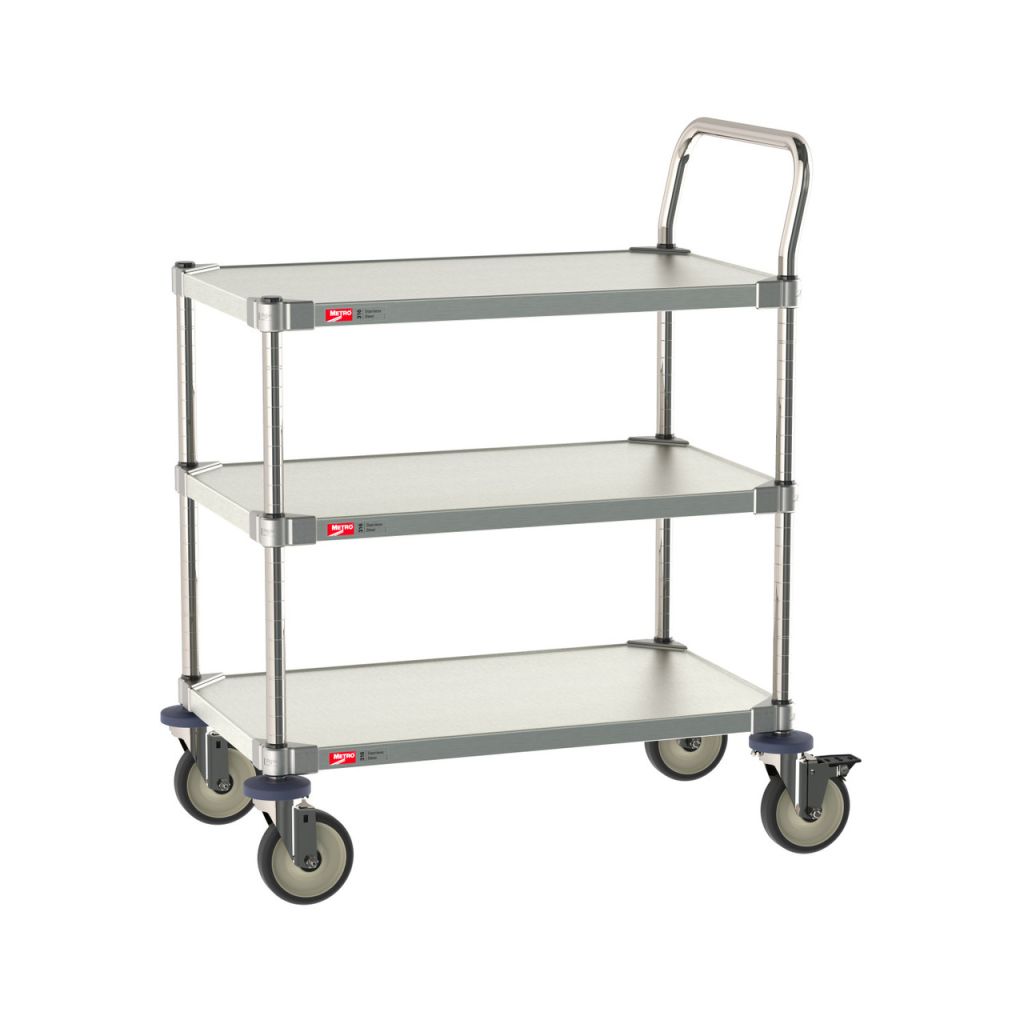
Stainless carts are the default for critical rooms: solid shelves contain liquids, welded radiused construction cleans well, and 316 handles harsher chemistry than 304. Cart-wash and autoclave-capable versions exist where the SOP requires the whole cart to be processed. Polymer carts with removable mats are lighter and easy to strip and clean. Static-dissipative carts belong in electronics rooms, covered below.
Sizing questions that decide the cart: the clear width of the narrowest door, airlock or pass-through it serves; the tallest item it carries; whether it parks under a hood; and how many shelves the work actually needs — three that stay organized beat four that get overloaded. Our Metro utility carts page details the cart series, and laboratory material handling solutions covers the wider lab transport picture.
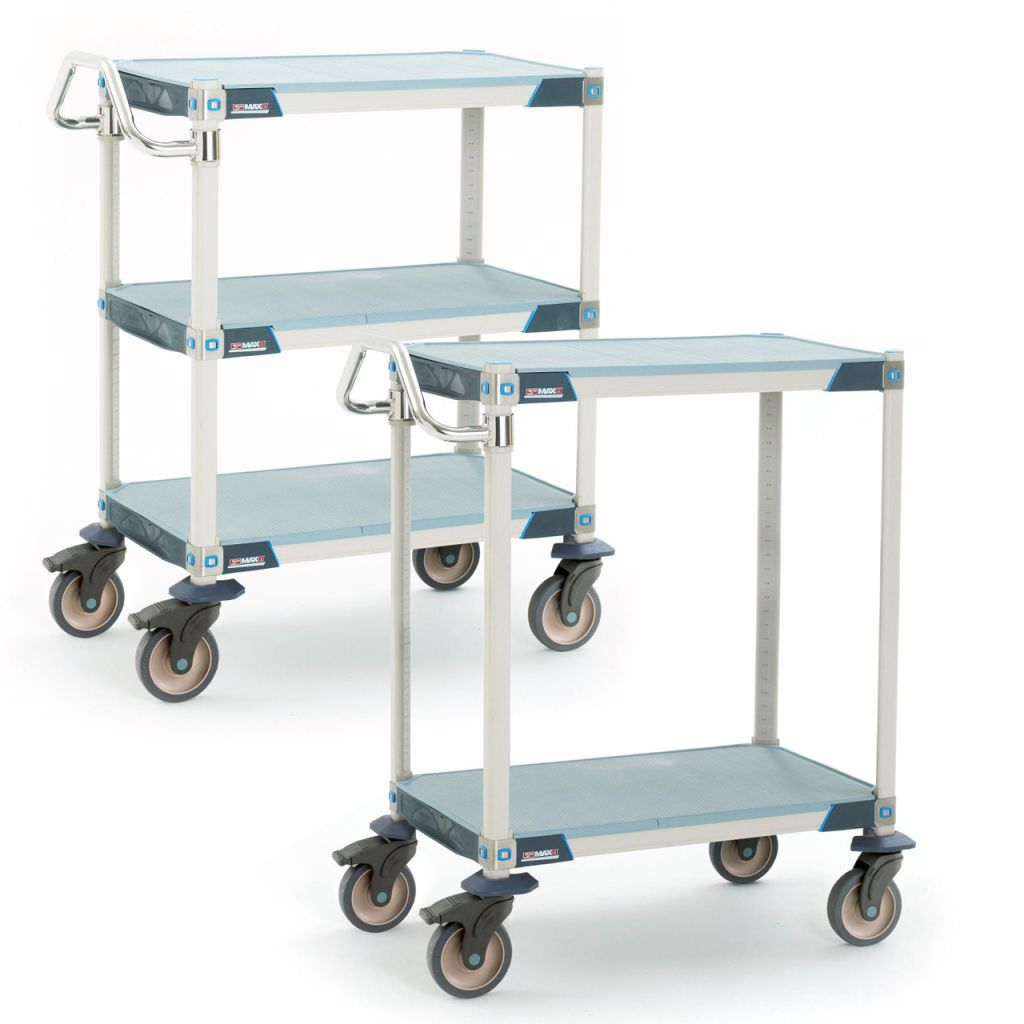 Polymer Shelf-Mat CartsRemovable mats, no coating to chip, light enough to reconfigure.
 Stainless Case and Tote CartsSolid shelves and cleanable welded construction for case and tote moves.
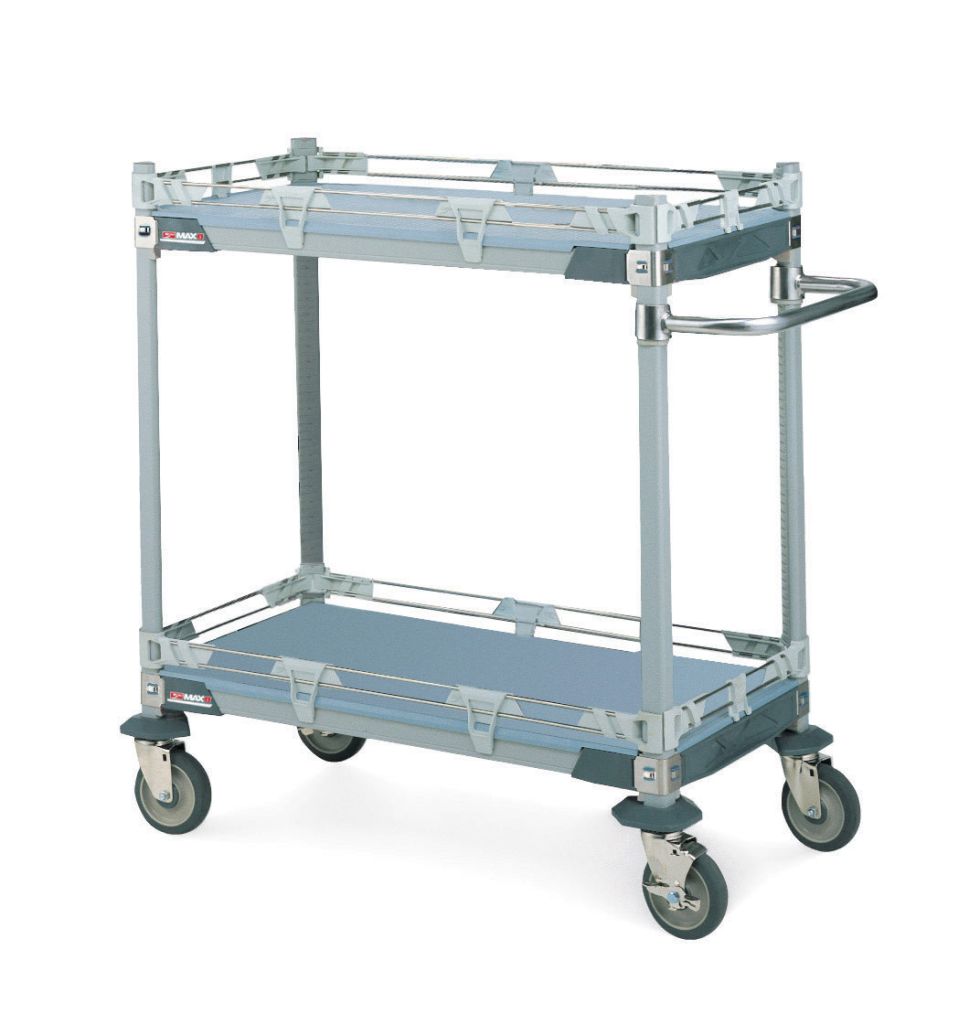 Chemical and Cleaning CartsDedicated transport for disinfectants and wipes, so chemistry is not carried by hand.
Gowning Room Layout, Benches and Garment Storage
The gowning room is where most contamination is actually controlled, and it is usually the most poorly equipped room in the building. It exists to enforce one idea: a clean side and a dirty side, with a line between them that a person crosses once, in order, without backtracking.
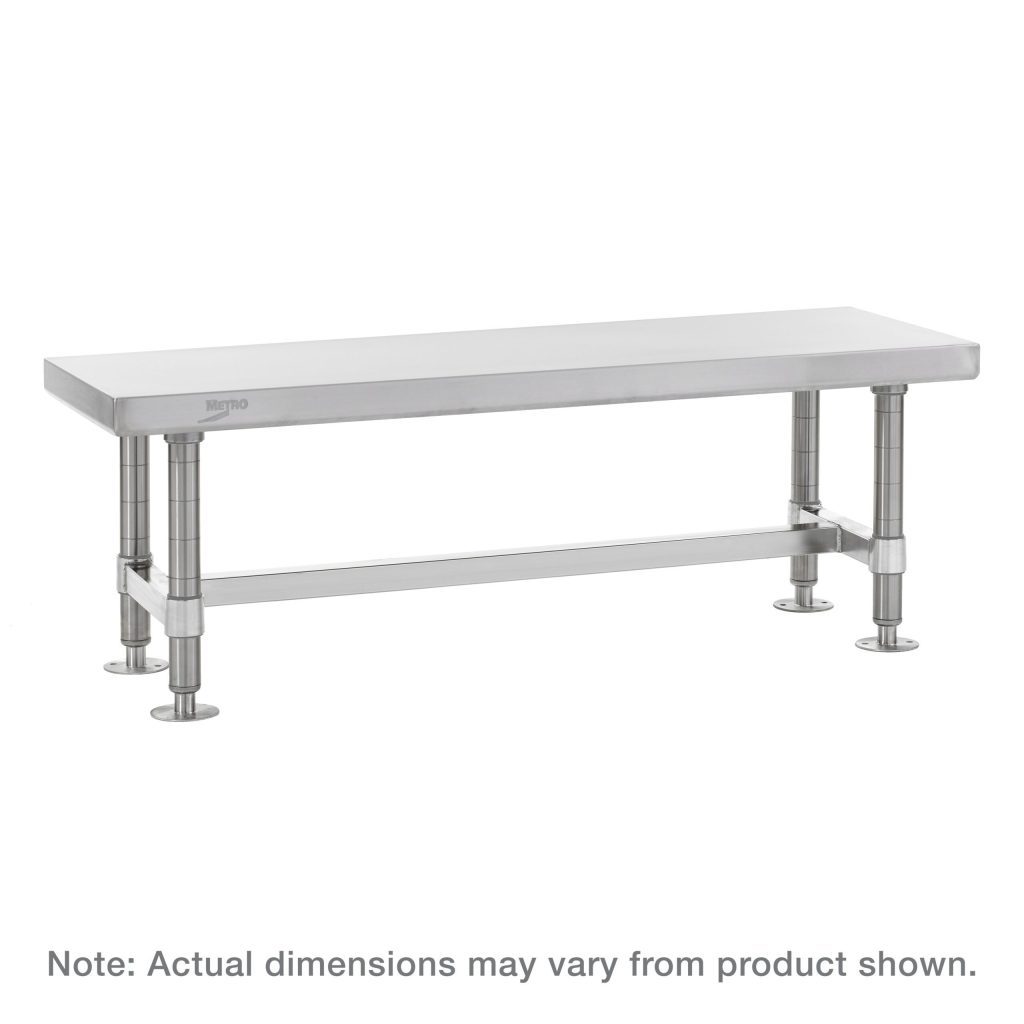
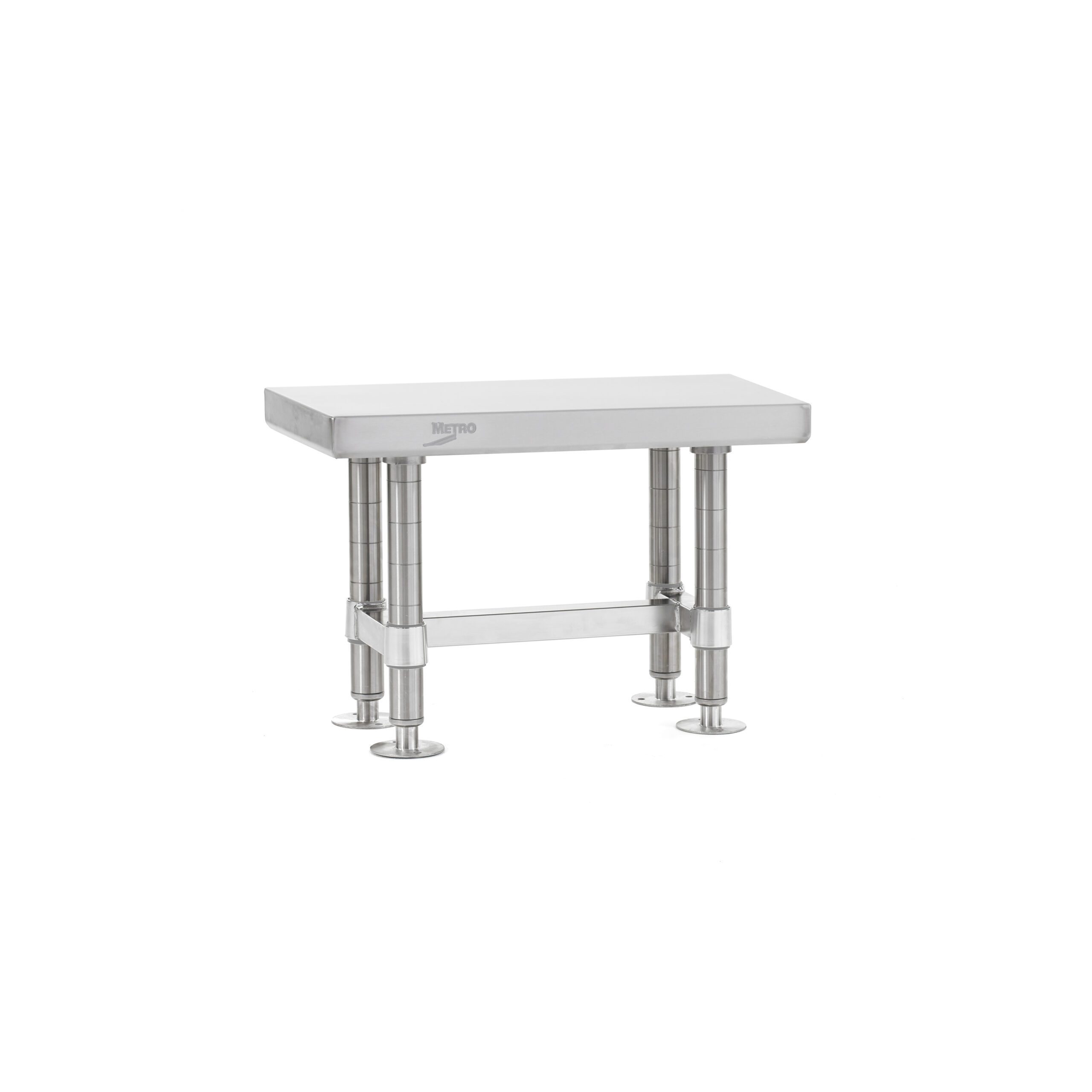
A gowning bench placed on that line is what makes the sequence enforceable: personnel sit on the dirty side, remove street shoes, swing their legs across, and put cleanroom footwear on without their feet touching the dirty floor again. Stainless benches with closed tube ends and radiused corners are the norm because they get wiped constantly; wood and upholstered seating has no place in the room.
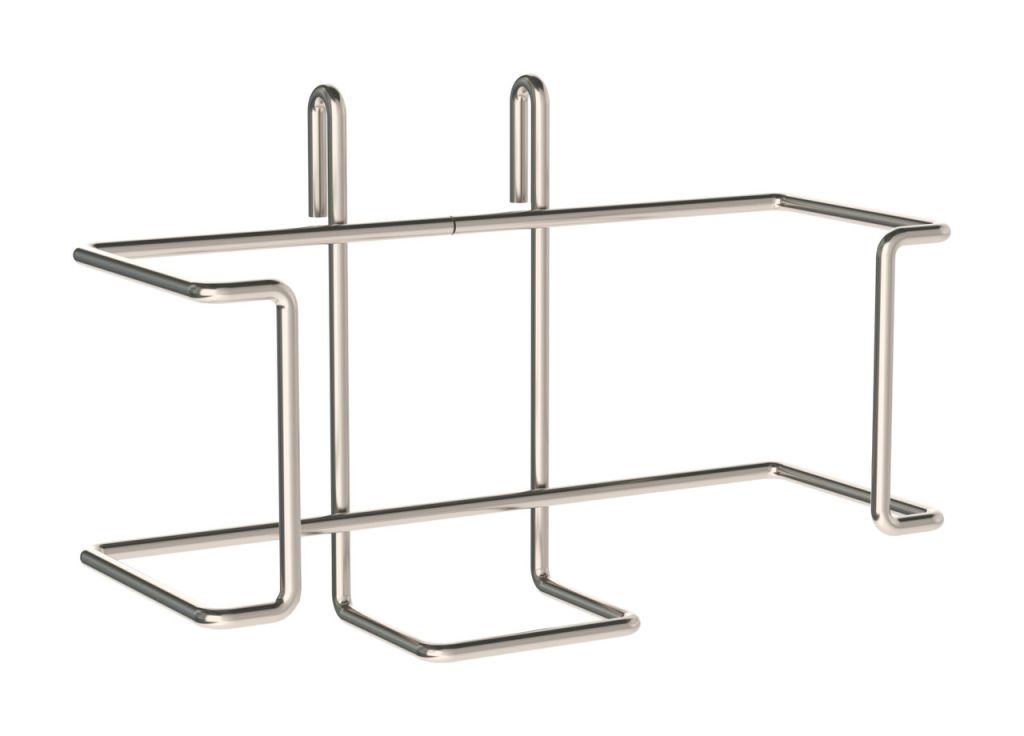
Around the bench the list is short: garment hanging or cubby storage sized to real headcount per shift, glove box holders at working height, hood and bootie dispensers, a wipe station, and covered waste on the exit side. Wall-mounted keeps the floor clear; anything on a cart rolls out for wipe-down. Leave enough bench length for two people to gown at once during shift change, and put a mirror on the clean side.
Bench selection detail lives on our cleanroom gowning benches page, with a specific model breakdown on the Eagle cleanroom gowning bench page.
- Bench on the demarcation line, sized for peak shift change
- Garment storage — hanging space or cubbies, dispensers for disposables, a separate bin for used garments
- Glove and consumable holders wall-mounted at reach height, so boxes never sit on the floor
- Shoe and bootie management — hooks, racks or a cubby, plus a step-in point at the door
- Mirror on the clean side, covered waste on the exit side
Pass-Throughs and Getting Material In and Out
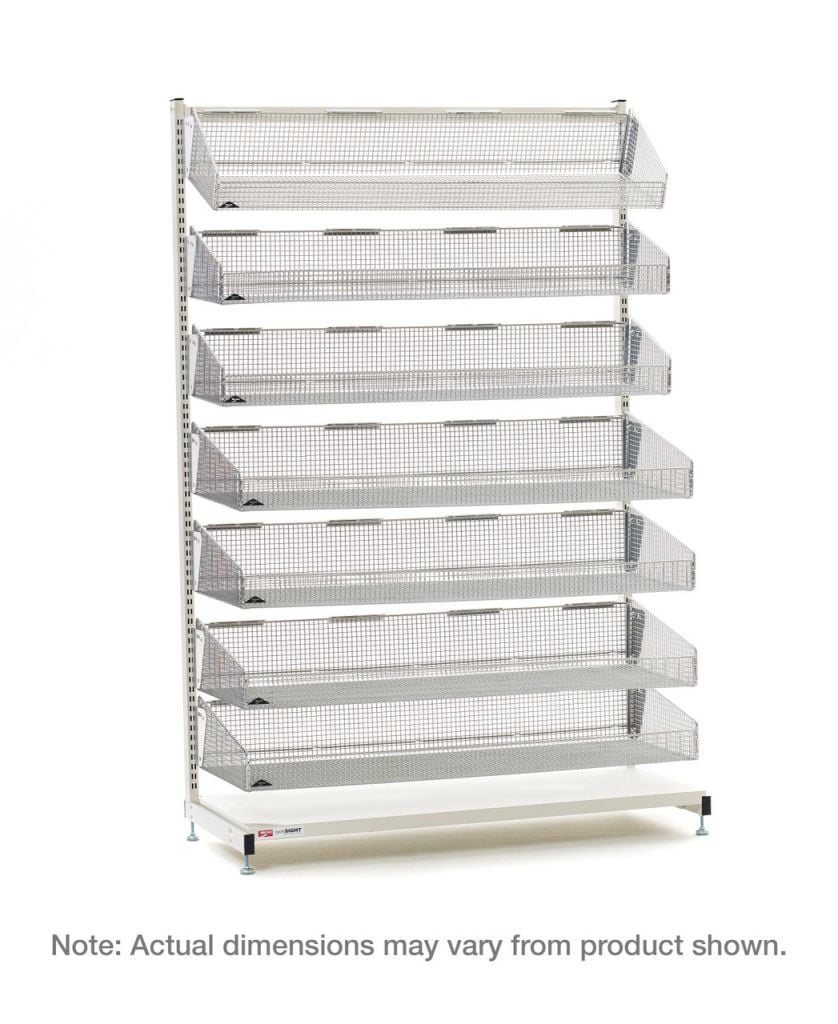
Material transfer is the other half of contamination control, and storage design either supports it or fights it. Packaging stops at a boundary: cardboard is a fiber source, so the outer carton comes off outside the classified space and product moves inward through a pass-through, an airlock or a de-cartoning station with a wipe-down step.
That drives equipment decisions: staging shelving on the dirty side sized for a full receipt, a wipe-down bench at the transfer point with a packaging waste stream, and dedicated in-room totes — enough that the process never stalls waiting for clean containers. Get the pass-through’s internal clear dimensions before you buy totes. Outbound runs backwards, with a separate cart so finished goods never share a surface with receipts.
If the enclosure itself is still on the drawing board, pass-through count, size and position should be settled with the panel layout — see modular cleanrooms. Storage is far cheaper to adapt than a wall.
Cleaning and Wipe-Down Protocols Drive the Material Choice
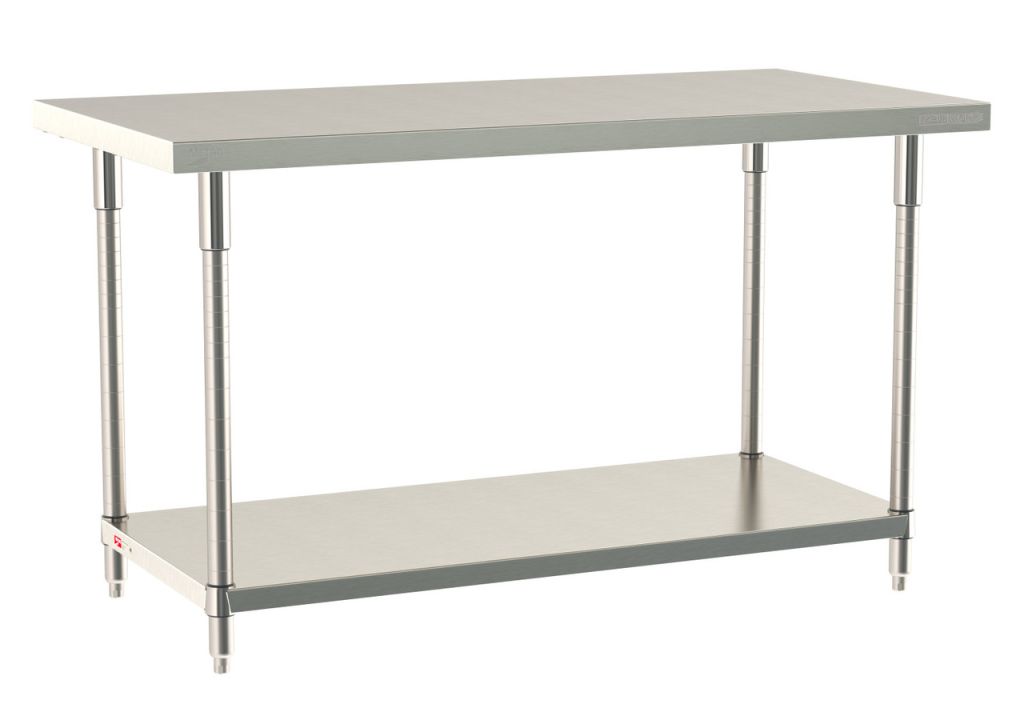
The single most useful piece of information for specifying cleanroom storage is your cleaning SOP: which agents, at what concentration, how often, and whether they rotate. Materials do not fail from being in a cleanroom; they fail from being cleaned.
Quaternary ammonium and neutral detergents are gentle on nearly everything. Alcohols are widely tolerated but can craze some plastics over years. Peroxide and peracetic blends are harder on coatings and some polymers. Bleach separates materials fastest: chlorides attack standard stainless over time, which is why type 316 and thorough rinse steps show up in bleach-rotation facilities.
Frequency compounds all of it — a surface wiped three times a shift is abraded as well as chemically loaded. That is where electropolished stainless earns its cost, and where removable mats win: when a mat looks tired you replace the mat, not the unit.
Design details that make cleaning realistic: continuous surfaces instead of lapped joints, radiused corners, closed post ends, minimal exposed hardware, mobile units that pull away from walls, and levels set at heights a person can reach. If a surface cannot be reached it will not be cleaned — and it will be the one that gets swabbed.
ESD Considerations in Electronics Cleanrooms
In semiconductor, PCB assembly, photonics and medical electronics rooms, storage has a second job: being part of the static control program. Particle control and static control agree on some choices and conflict on others, so specify them together.
The essentials: a static-dissipative shelf surface rather than an insulative one, a continuous grounding path through frames and posts, conductive casters on every mobile unit, and trays, bins and reel storage built for the parts. Insulative bins and standard rubber casters are the two components that quietly break an otherwise good aisle.
Component-level storage deserves its own thought: SMT reel storage keeps reels vertical and traceable, dissipative trays with work-in-process indicators move assemblies without hand-stacking, and tray transport racks keep those trays controlled in transit.
Grounding is a system property, not a product feature: casters, floor finish, personnel grounding, work surfaces and shelving all participate, and the program is verified by measurement in place. We help select components built for static-controlled environments. Full detail is on our ESD shelving and carts page.
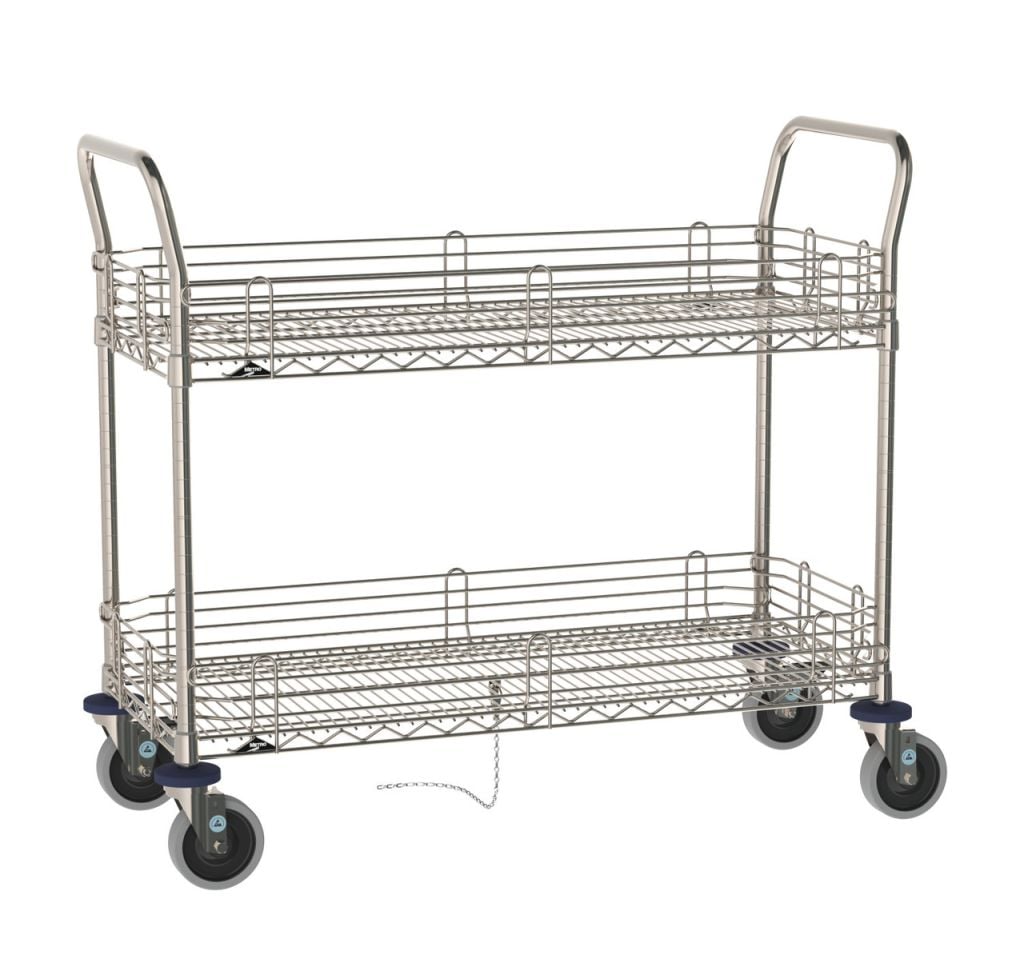 Static-Dissipative CartsDissipative surfaces and conductive casters for moving assemblies between stations.
 Tray Transport RacksRacks that keep dissipative electronics trays organized in transit.
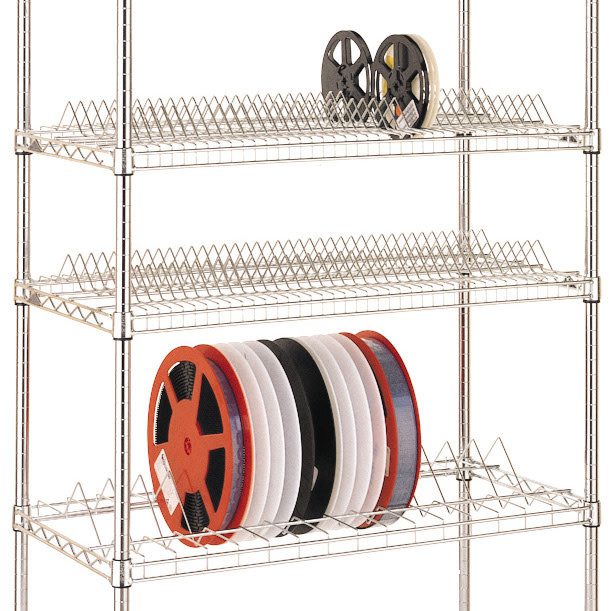 SMT Reel StorageReel shelves that keep components vertical and traceable through line changes.
Casters, Wheels and Floor Protection
Cleanroom floors are usually epoxy, troweled resin, welded vinyl or static-dissipative tile. They are expensive and part of the room’s cleanability, and the fastest way to ruin one is to roll the wrong wheel across it for a year.
| Tread / type | Why you would specify it | Trade-off |
|---|---|---|
| Non-marking polyurethane | Default: quiet, no black marks on epoxy or vinyl | Lower load capacity than hard treads |
| Conductive / static-dissipative | Required where an ESD program applies; keeps the path to ground | Must be kept clean to keep working |
| High-temperature (autoclave / cart wash) | Carts processed through steam or a cart-wash cycle | Harder tread, noisier roll |
| Total-lock brake, sealed swivel | Carts that park under a hood must not drift | Higher cost per caster |
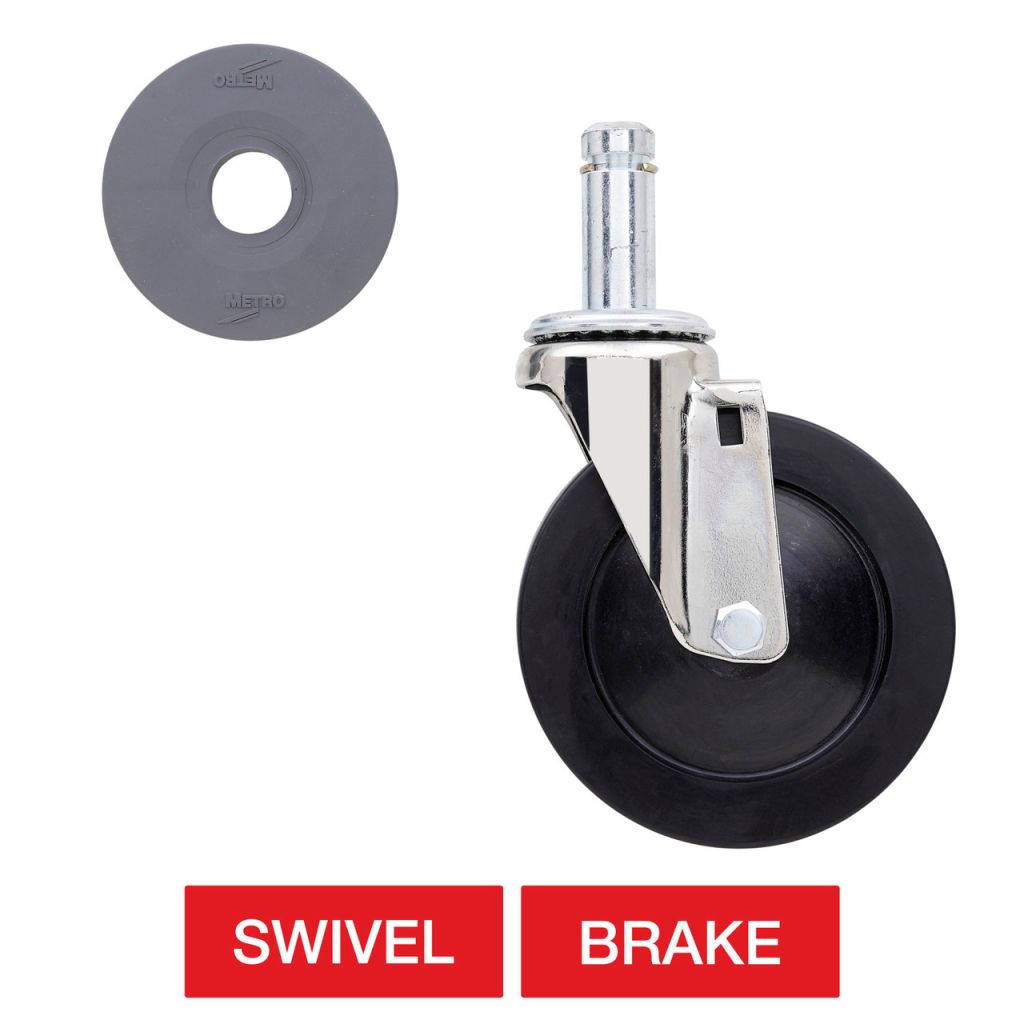
- Match caster height to pass-through and airlock clearances before you order, not after
- Specify brakes on any unit that is loaded, unloaded or leaned on while parked
- Add bumpers or corner guards where carts pass wall panels
- Inspect and clean casters on a schedule — a raceway full of debris is a contamination reservoir

Cleanroom Storage Specification Checklist
This is the list we work through with facility and quality engineers before quoting. Answering it up front removes nearly all change orders.
The one question that changes the most quotes
“What agent do you clean with, and how often?” A room wiped twice a shift with a peroxide blend and one wiped weekly with neutral detergent get genuinely different shelving. Send the SOP section and material selection stops being a guess.
Send us the room and the cleaning SOP
Email a floor plan or sketch with the airflow direction, the class and the cleaning agents you use. We will come back with a laid-out shelving, cart, table and gowning package — model numbers, materials, freight and lead times — and flag the clearance conflicts we find in the drawing. Call (800) 326-4403 if it is faster to talk it through.
Cleanroom Storage in Utah and Salt Lake City
MH-USA has been based in Salt Lake City since 1997, and the Wasatch Front is one of the denser clusters of controlled-environment work in the West: medical device manufacturers along I-15, diagnostics and clinical labs, contract pharmaceutical and nutraceutical production, university and hospital research space, aerospace optics, and a growing set of semiconductor suppliers.
Being local matters more here than on ordinary storage: we can walk the room before it is finished, measure the pass-through and airlock openings ourselves, verify the delivery path, and get replacement mats or casters out quickly. Outside Utah we quote and ship nationwide with the same process.
Utah and Intermountain West customers can reach our Salt Lake office directly at 801-328-8788.
Shop Cleanroom Furniture and Storage Online
Buy select items directly from our online store, or request a quote for volume, custom sizes and freight-rated orders.


Design & price it online: Metro Workcenters & Furniture Configurator
Configure Starsys workcenters, gowning benches and cleanroom furniture in our free Metro Workcenters & Furniture configurator — build the layout, see a full bill of materials and save or send the quote in minutes. Need a different Metro product? Browse all 17 tools in the Metro configurator hub.
Cleanroom Storage FAQ
What shelving material should I use in a cleanroom?
Do you supply cleanroom carts?
Can shelving and furniture be certified for a specific ISO class?
How does static control change the specification?
Do you work with existing cleanroom enclosures?
Get a Cleanroom Storage and Furniture Quote
Send the room plan, the class and the cleaning SOP. We will specify the shelving, carts, tables and gowning furniture as one package and ship it nationwide.