
Home › Metro ESD Shelving & Carts
Metro ESD Shelving & Carts for Electronics
Static-safe storage for electronics assembly — ESD shelving units, ESD carts, SMT reel storage, PCB trays and transport racks from Metro, specified and quoted by MH-USA.
1929
Metro founded
30,000+
Metro products
1997
MH-USA serving the West
50
States shipped
Static-Safe Storage for Electronics Assembly

Electrostatic discharge rarely announces itself. A board is handled, moved on a cart, parked on a shelf and passes test — then fails in the field months later because a junction was weakened, not destroyed, by a discharge nobody saw. Storage and transport belong inside the ESD control program.
MH-USA represents Metro, the brand of InterMetro Industries — founded 1929, headquartered in Wilkes-Barre, Pennsylvania, creator of the original Super Erecta wire shelving system and now more than 30,000 products. Metro builds a dedicated ESD-safe line on that platform: shelving units and carts with static-dissipative shelf mats and conductive posts, SMT reel storage, ESD-safe electronics trays and inlays, and tray transport racks.
This page covers how to specify it: what “ESD safe” means, how a unit gets grounded, how reels and boards are stored, and what to make a vendor put in writing.
Conductive, Static-Dissipative and Insulative
Every material in the assembly area falls into one of three buckets, sorted by how easily charge moves across its surface — resistance, expressed in ohms. The exact ranges belong in your ESD control program document, not on a marketing page.
| Category | How charge behaves | Typical role | Watch out for |
|---|---|---|---|
| Conductive | Moves charge quickly | Grounding hardware, posts, casters, floor systems | Usually a path to ground, not a product-contact surface |
| Static-dissipative | Bleeds charge away in a controlled way | Shelf mats, bench mats, tray inlays | Performance depends on the surface staying clean; the wrong cleaner or a wax can ruin it |
| Insulative | Holds charge for hours or days | Ordinary plastics, cardboard, foam, tape | Cannot be grounded — remove from the EPA or neutralize with ionization |
We do not certify individual models
Surface-resistance values and third-party listings are model-specific. We will not tell you on a web page that a part number meets ANSI/ESD S20.20 or any other standard — send us your model list and we will confirm the current published data in writing before you buy.
Grounding: Why an Ungrounded “ESD” Cart Is Useless
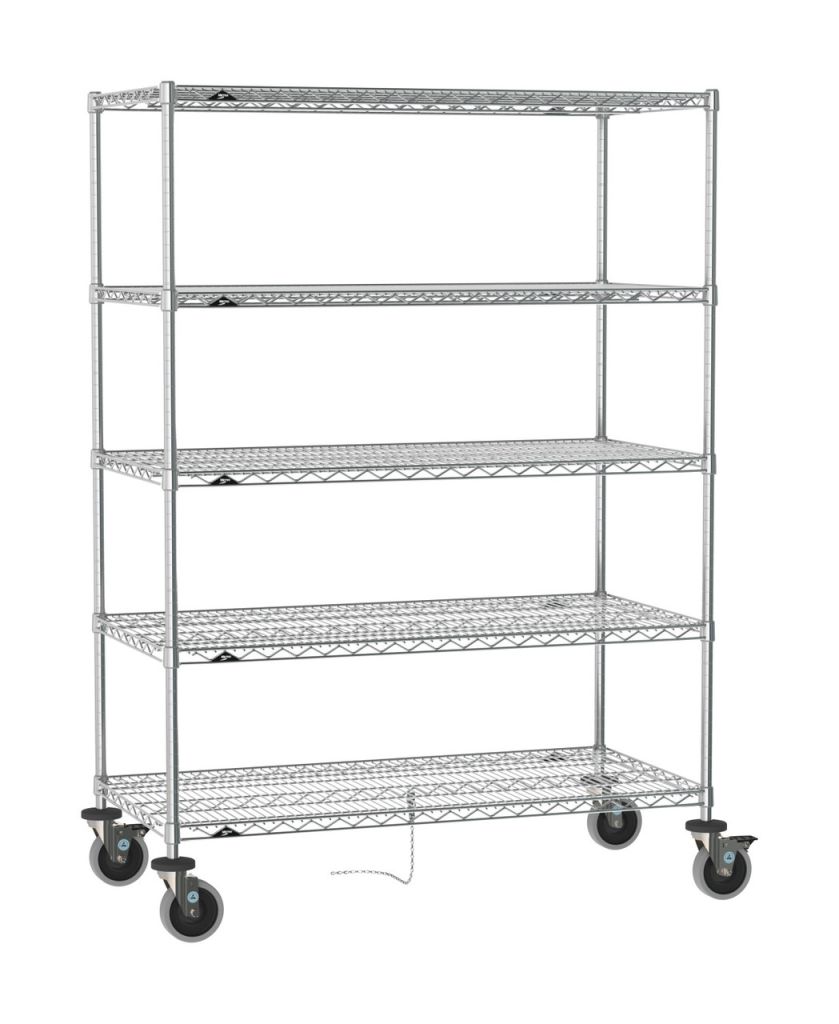
An ESD cart that is not bonded to ground is a cart with an expensive mat on it. Dissipative surfaces work by giving charge somewhere to go; with no path, charge accumulates on the shelf, the frame and the operator, then equalizes the moment someone touches a board.
The chain runs shelf mat → shelf → post → frame → ground path, and that path is either conductive casters on an ESD floor or a ground cord to a common point ground. On sealed concrete or VCT, conductive casters do nothing and you need cords. Painted contact points, labels under a mat, flux residue and the wrong cleaner all raise resistance — which is why periodic resistance-to-ground verification on storage and transport, not just wrist straps, is the item most often missing from an audit trail.
- Decide the ground path first — conductive casters or a ground cord
- Order grounding hardware with the unit; it is often a separate line item
- Verify resistance to ground at installation and record the reading
- Publish a cleaning procedure that will not push surfaces out of range
- Keep insulators — cartons, shrink wrap, non-ESD totes — off ESD shelving
Metro ESD Shelving Units and ESD Carts
The ESD line is built on the Super Erecta platform — the same post, shelf and accessory geometry used elsewhere in the plant, in an ESD-specific configuration, with the same 1-inch shelf adjustment. The families below are named as Metro names them.
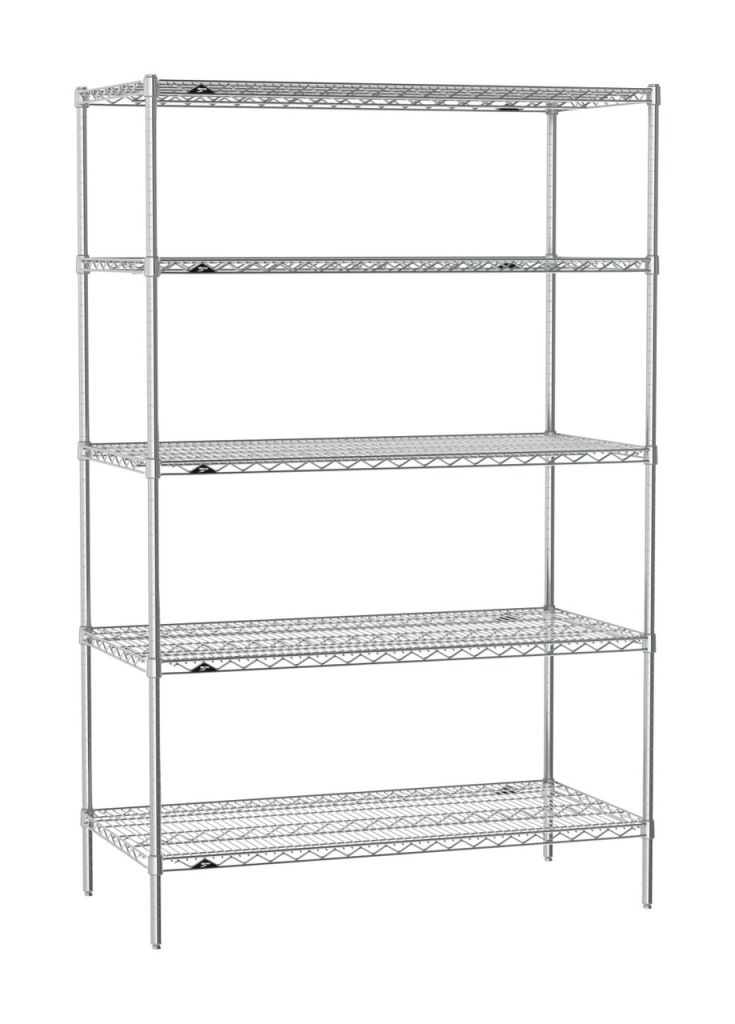
ESD Safe Super Erecta 5-Shelf Wire Shelving UnitStatic-dissipative shelf mats on conductive posts — stockroom and WIP storage inside the EPA.ESD Safe Super Erecta 5-Shelf Wire Shelving CartThe same shelf stack on casters, for high-density mobile WIP staging between cells.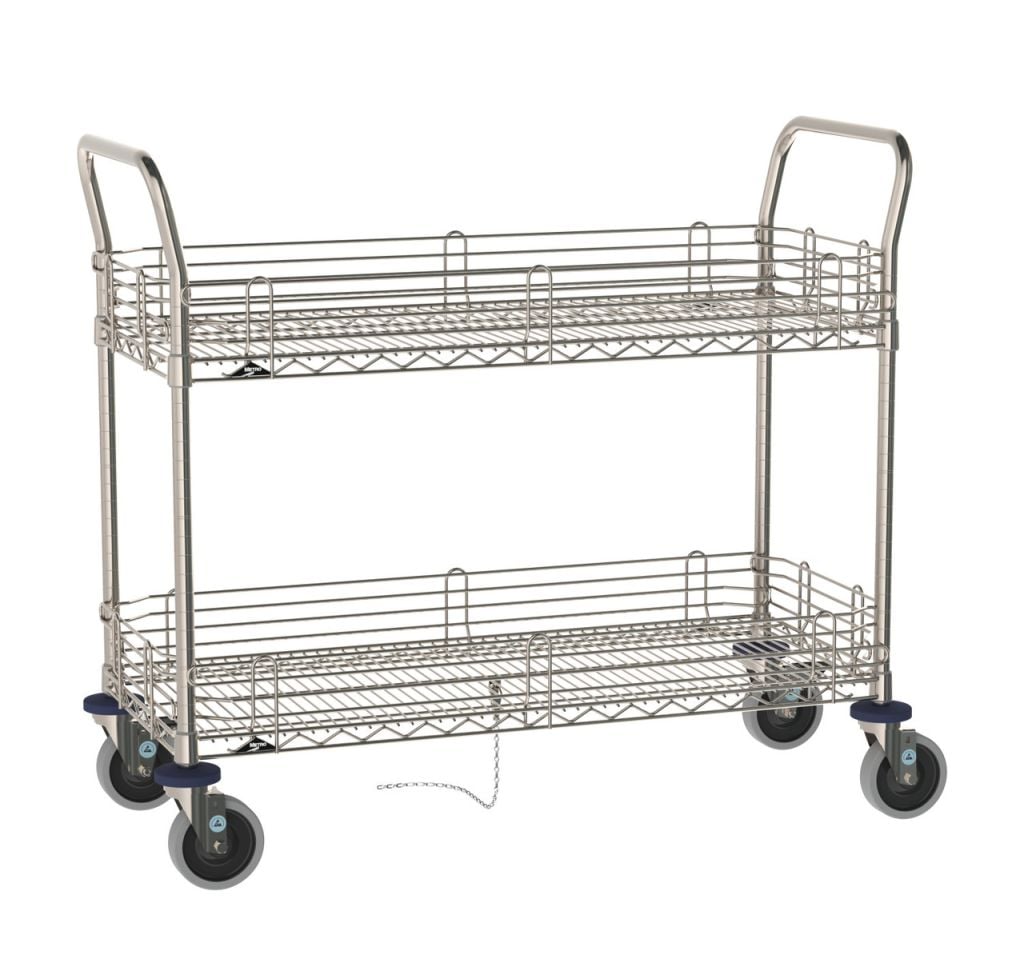 ESD Safe Super Erecta 2-Shelf Utility Cart, Stainless SteelBench-height stainless transport cart between assembly, test and rework.
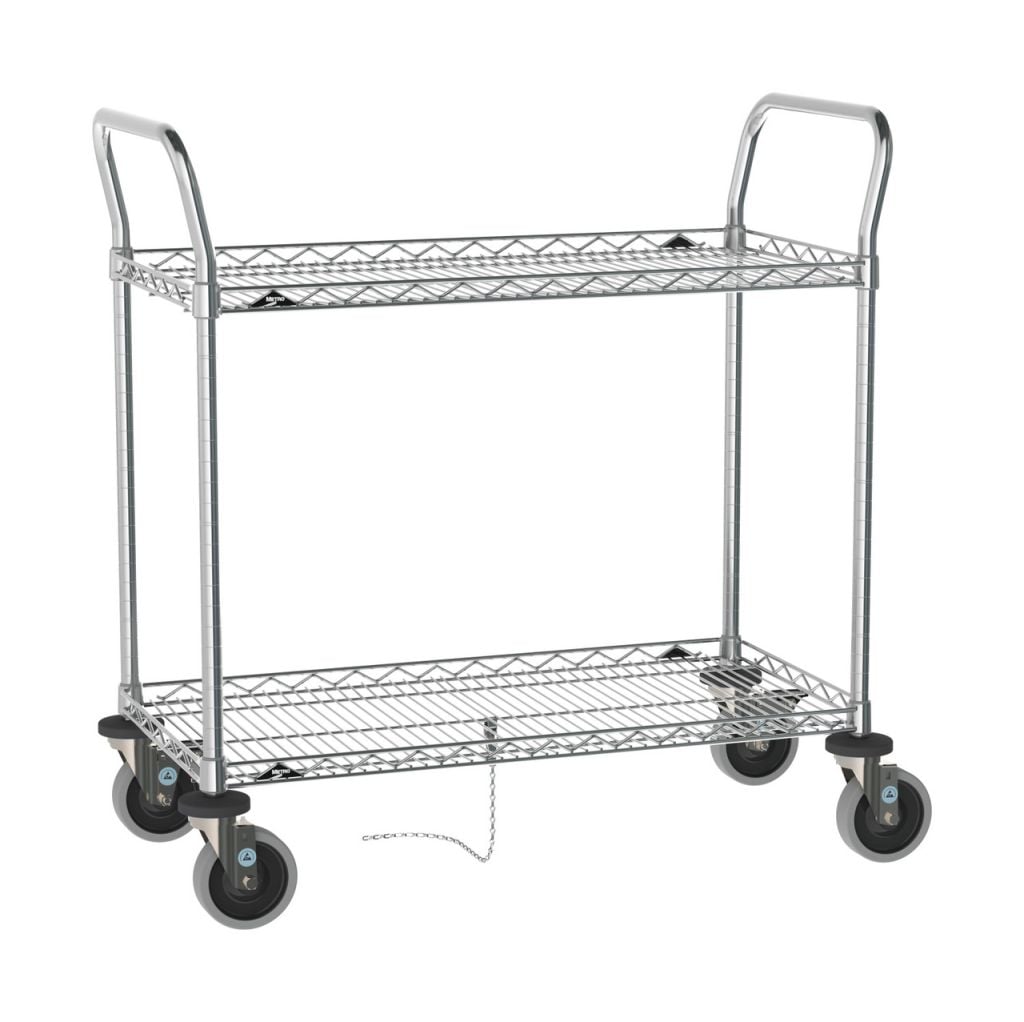 ESD Safe Super Erecta Drop Mat 2-Shelf Utility CartDrop mat shelves give a flat surface instead of open wire — better for small parts.ESD Safe Super Erecta SMT Reel Storage Wire Shelving UnitStockroom reel storage on reel-specific shelves rather than improvised bins.
 ESD Safe Super Erecta SMT Reel Storage Wire Shelving CartThe mobile version — build a job’s reel set and roll it to the feeder bank.
Sizing follows normal Super Erecta rules: shelf size around what you store, post height around door and ceiling clearance, shelf count around the tallest item plus the reach of the shortest operator.
Not every storage problem is a static-safe one: general industrial shelving, standard Metro wire shelving, MetroMax polymer shelving and standard Metro utility carts are all covered on their own pages, linked below.
SMT Reel Storage That Survives Real Kitting
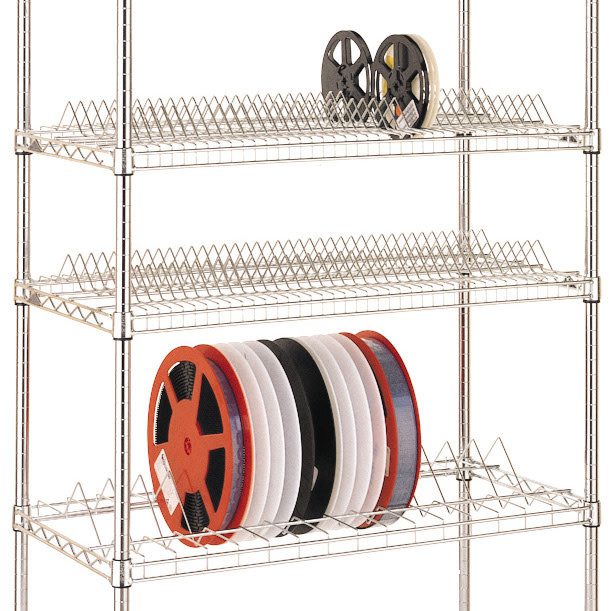
Component reels break improvised storage fastest. They are round, they do not stack, they arrive in several diameters, and one job may pull thirty of them. Stacked flat they slump and scuff labels; crowded on a rail they get dragged across their neighbors on every pull.
Metro’s Super Erecta SMT Reel Shelves hold reels upright and spaced on standard posts, and the ESD Safe Super Erecta SMT Reel Storage Wire Shelving Units and Carts combine those shelves with the ESD configuration, so reel levels and flat mat shelves mix on one unit. Before sizing, count reels by diameter and movement rate, and decide whether partial reels return to the same location or to a quarantine shelf.
PCB Trays, Totes and Work-in-Process Transport
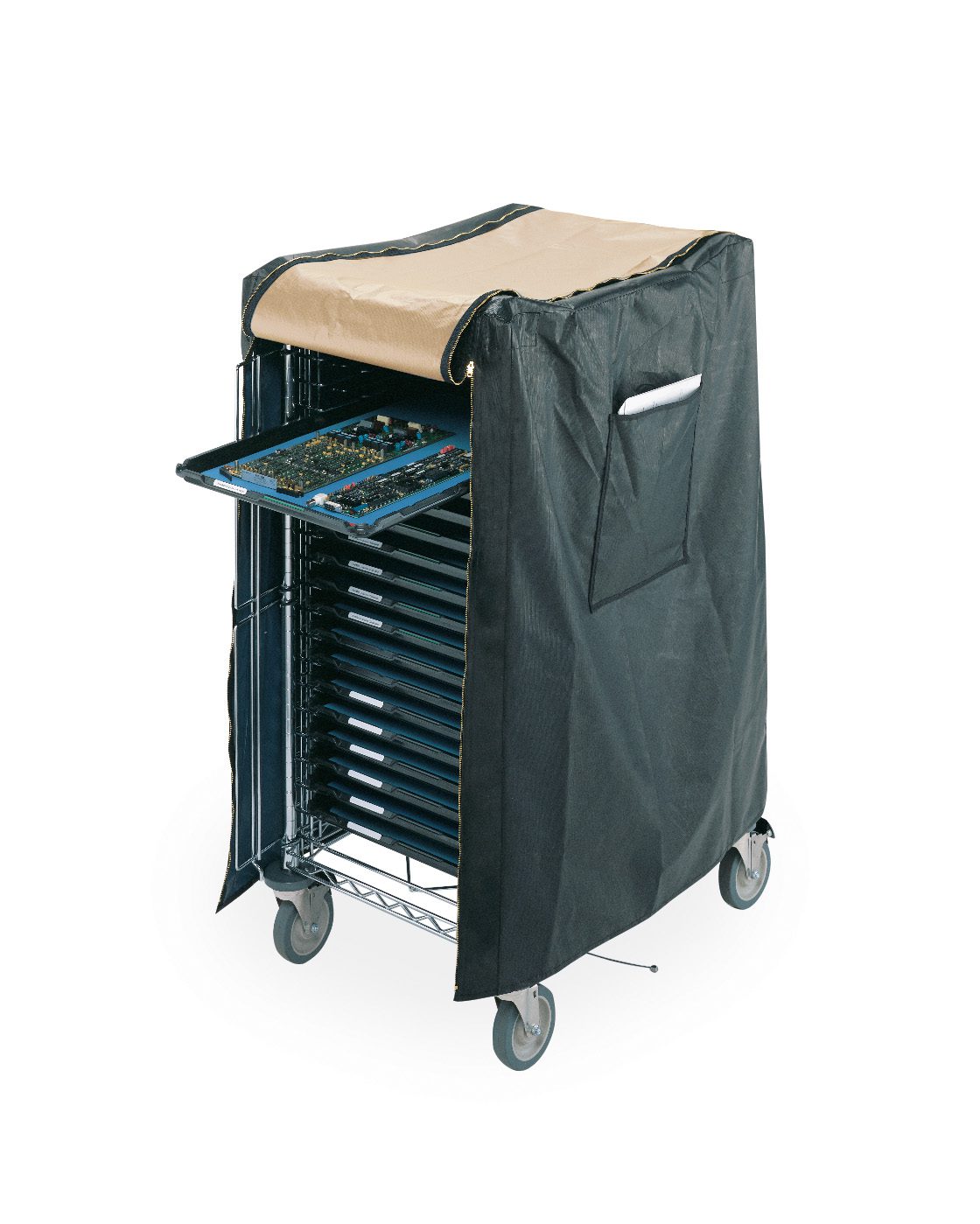
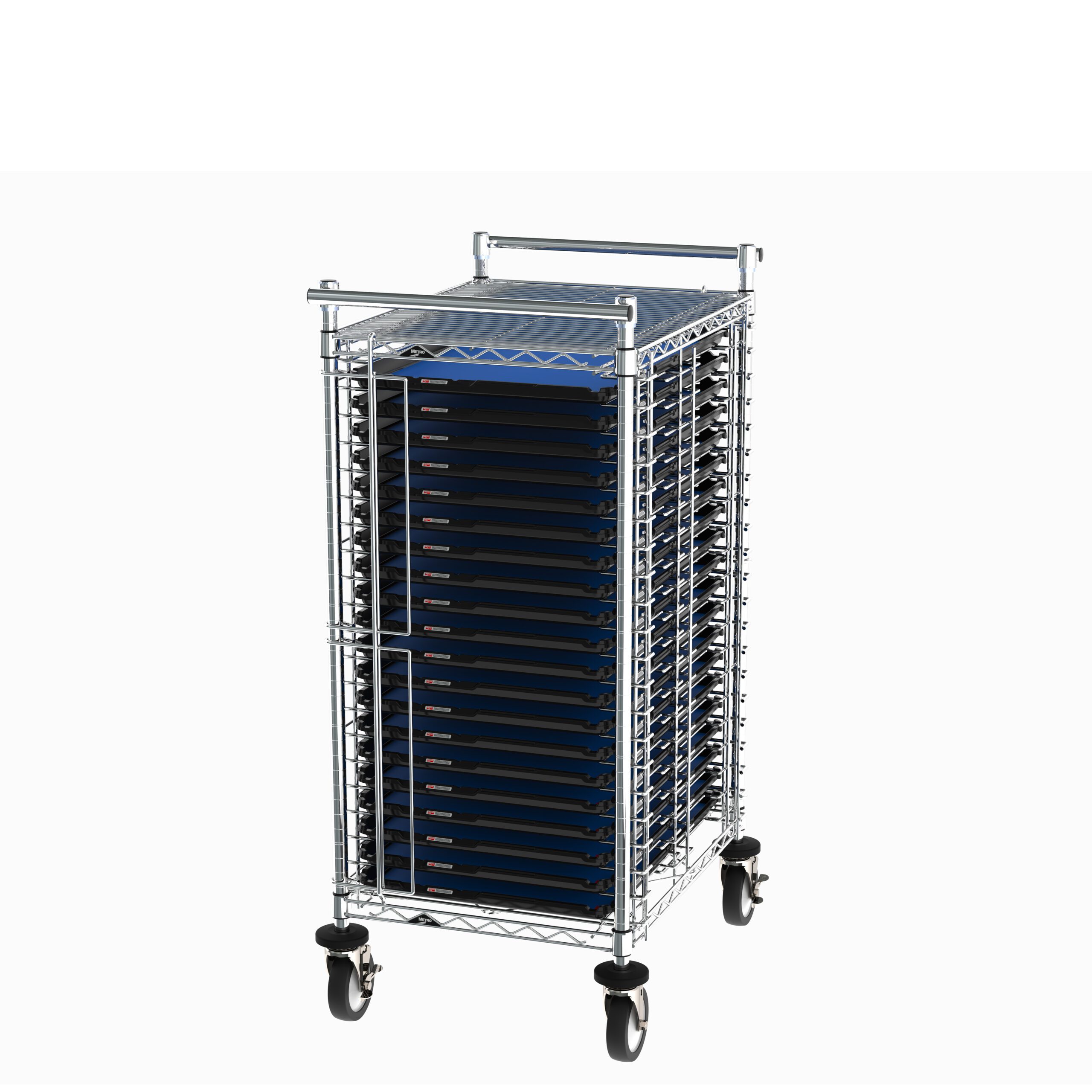
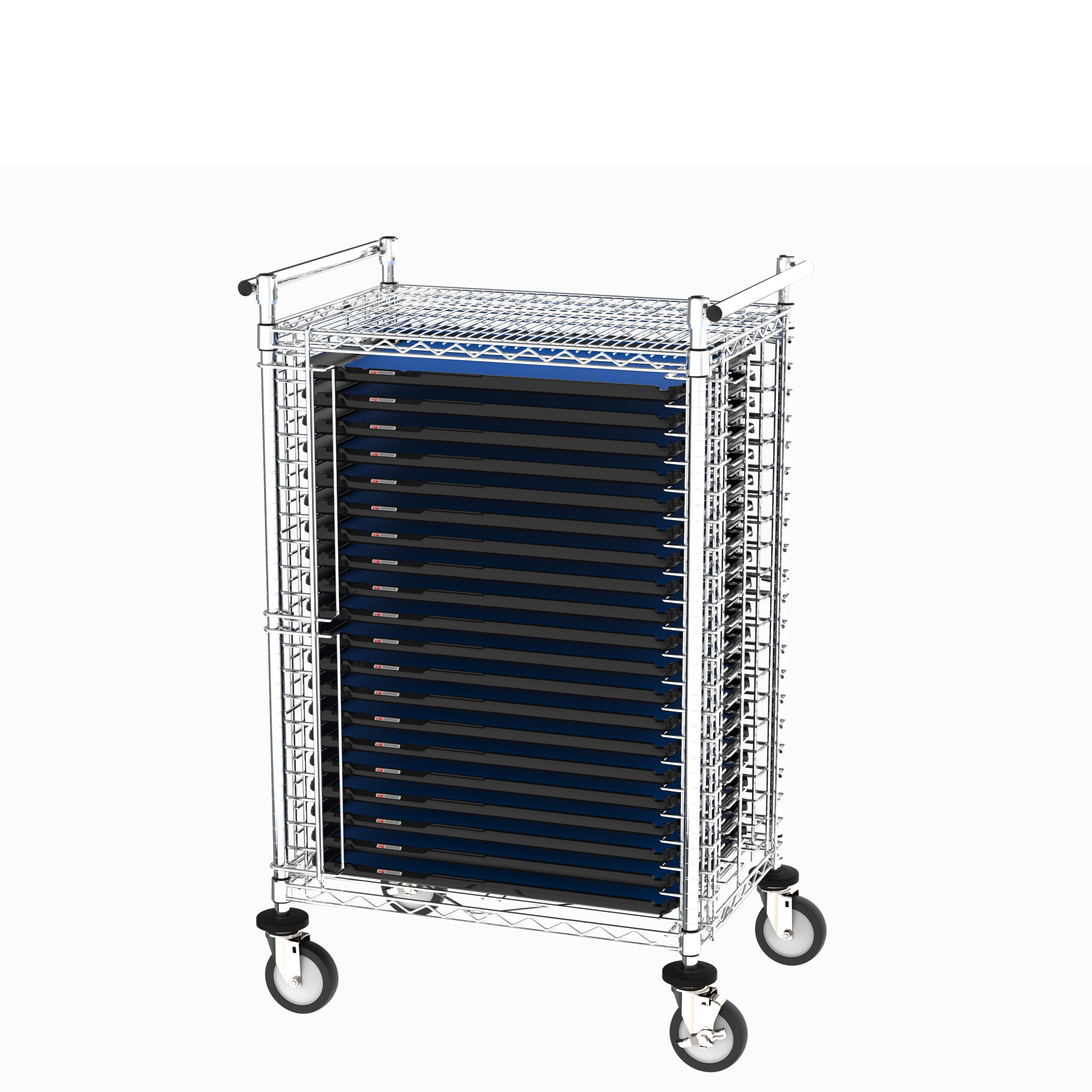
Between operations boards have to go somewhere. Loose stacking scratches edge connectors, and an ordinary plastic tote is an insulator inside your EPA. Metro’s answer is a tray-and-rack system: an ESD-safe tray as the unit load, an inlay that cradles the board, and racks and carts sized to it.
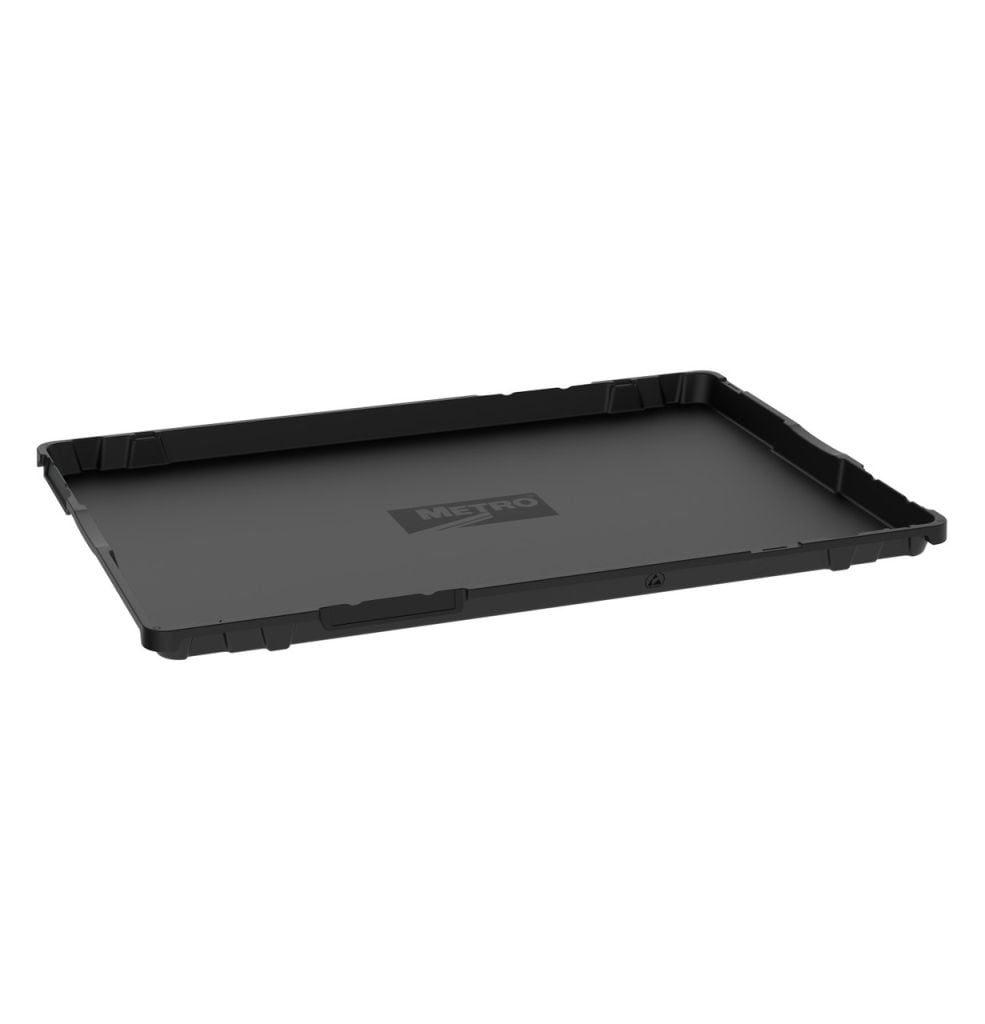 ESD Safe Electronics TraysThe 18″ x 26″ ESD1826T tray is the base unit load for boards between operations.
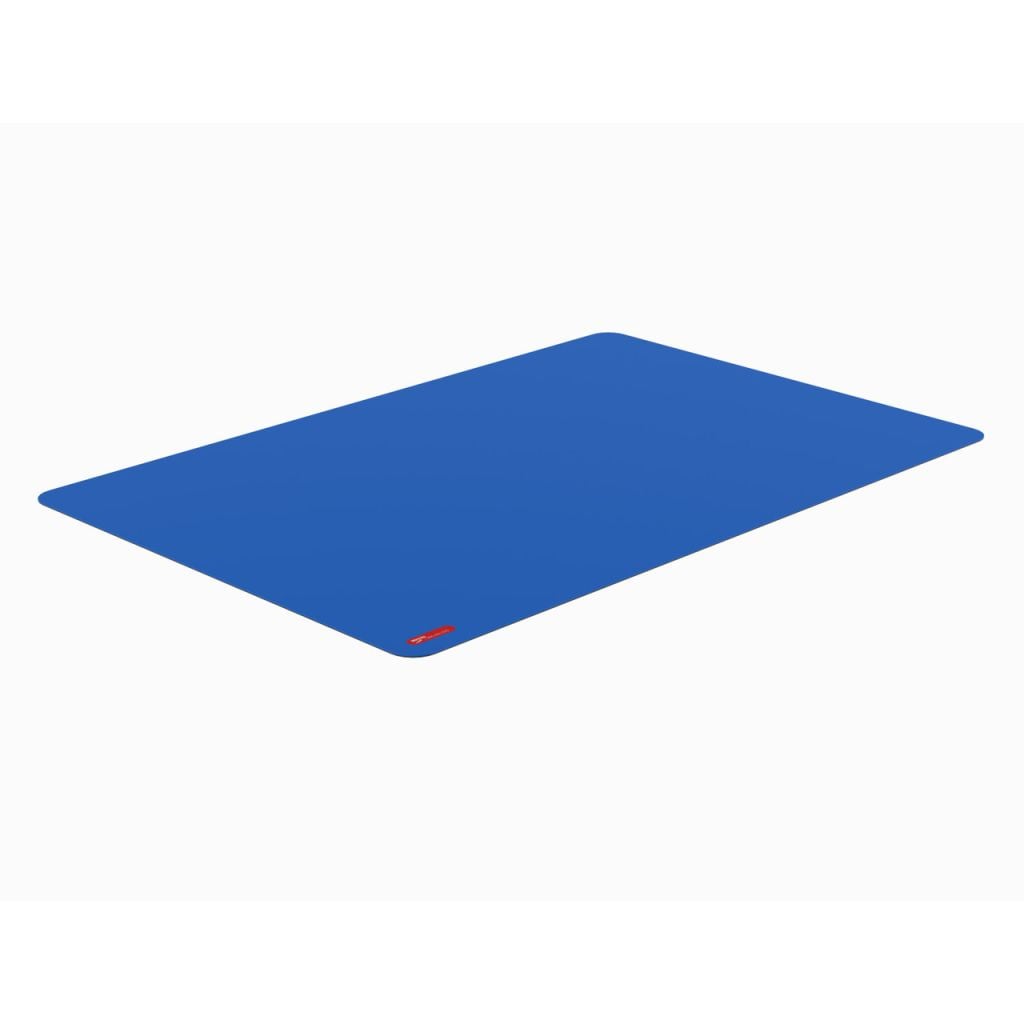 SmartTray ESD Tray InlaysInlays cradle the board so it is not sliding on a flat surface in transit.
 End-Load ESD Safe Tray Transport RacksTrays load from the end — for racks parked against a wall or in a single-face lane.
 Side-Load ESD Safe Tray Transport RacksTrays load from the side — better in an open cell, alongside the operator.
End-load versus side-load is decided by the aisle: a side-load rack shoved against a bench cannot be unloaded, and half-height side-load carts do the same job in a shorter package. Standardize on one tray size floor-wide, and put traveler information on the tray with dry-erase labels and ESD-SLIDER task indicators rather than loose paper — paper is an insulator and it gets separated from the boards.
Bench-Height Units, Assembly Cells and the EPA
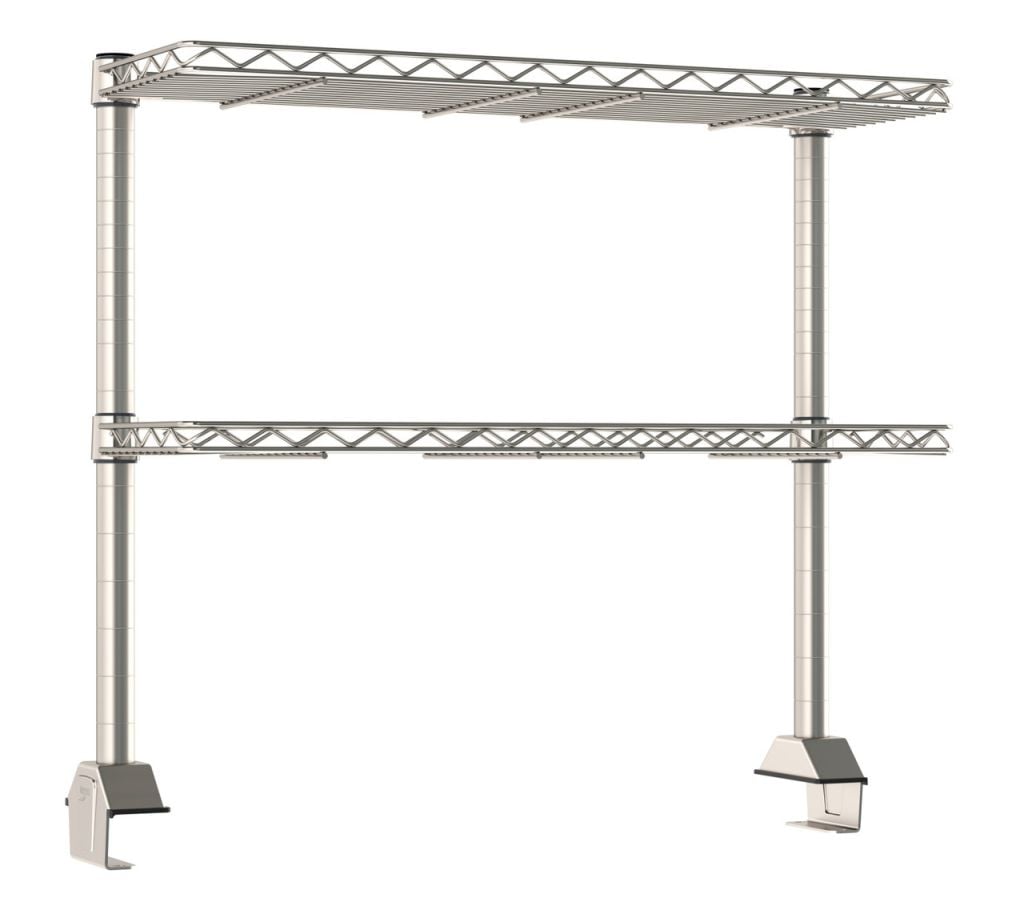
Most ESD storage failures are layout failures: a unit parked twenty feet from the bench guarantees boards get carried by hand. Bench-height Super Erecta units and two-shelf carts sit at worktable height so a tray slides from cart to bench without lifting, and Metro TableWorx work tables and productivity risers cover the bench side.
An EPA is a space where every conductive element bonds to a common point ground and everything entering is grounded or neutralized. Storage participates in that system: the cart an operator pulls trays from must sit at the same potential as the bench mat and wrist strap point. A workable cell has kitted parts on a cart on the supply side, WIP trays within arm’s reach, and finished trays on an outbound rack opposite.
Air quality shares the room: soldering, coating and rework need local fume capture at the bench, and an EPA that must be an enclosed, climate-controlled space inside a larger plant is usually built as an in-plant office with controlled entry. Both are linked below.
Cleanroom Compatibility and Moisture-Sensitive Devices
Cleanroom compatibility is a separate requirement from ESD performance. Cleanroom suitability is about particle generation, cleanability and finishes that tolerate your disinfectants; ESD performance is about resistance and grounding. A unit can satisfy one and fail the other, so put both in the spec with the ISO class and cleaning agents. Our cleanroom equipment page, linked below, covers the environmental side.
Moisture-sensitive devices get discovered late. MSD handling is not an ESD problem — it is moisture absorbed into a plastic package that can flash to steam during reflow, so it needs dry cabinets or barrier bags with desiccant, MSL tracking and floor-life clocks. Dry cabinets need floor space, power and a spot the kitting flow passes through; deciding that after the shelving is installed means moving something.
Specifying, Auditing and What to Ask a Vendor
Use these questions on any ESD storage quote, ours included. They are what an auditor eventually asks for, and collecting them at purchase beats reconstructing them later.
| Question to ask | Why it matters | A good answer |
|---|---|---|
| What is the published resistance data for this exact model? | “ESD safe” is a phrase; resistance data is a specification | A manufacturer document naming the model, property and test conditions |
| How does this unit reach ground, and is that hardware included? | Ground cords and conductive casters are often separate line items | A named ground path plus part numbers on the quote |
| How is it cleaned without degrading the surface? | Wrong cleaners and waxes push dissipative surfaces out of range | Written cleaning instructions from the manufacturer |
| How do I verify it after installation and on a schedule? | Periodic verification is the backbone of an ESD audit | A measurement point, a method and a documented interval |
| Is it compatible with my cleanroom class and cleaning agents? | Cleanroom and ESD are independent requirements | Material and finish data you can check against your protocol |
Get an ESD storage layout and quote
Send your ESD program requirements, floor plan or model list. We will configure the shelving, carts, reel storage and tray transport, confirm published data in writing, and quote it with freight.
Shop ESD-Safe Metro Products Online
Buy select items directly from our online store, or request a quote for volume, custom sizes and freight-rated orders.

ESD Shelving and Cart FAQ
What actually makes shelving or a cart “ESD safe”?
What is the difference between conductive, static-dissipative and insulative?
Do I need conductive casters on an ESD cart?
How should SMT reels be stored?
Does ESD storage handle moisture-sensitive devices?
What documentation should I ask a vendor for?
Specify Your ESD Storage With MH-USA
Metro ESD shelving, carts, SMT reel storage and PCB tray transport — configured to your ESD program, quoted with the data in writing, shipped nationwide.
Need the mobile, track-mounted version of ESD-safe shelving instead of a fixed installation? See mobile (track-mounted) shelving for cleanrooms and controlled environments.