
Home › ESD Shelving and Electronics Storage
ESD Shelving and Electronics Storage
Static-safe shelving, carts, trays, bins and workstation storage for PCB assembly, component stockrooms and electronics repair — specified, grounded correctly and shipped nationwide by MH-USA.
1997
Serving the West Related: Borroughs manufacturing storage solutions.
50
States shipped
100%
Grounded storage plans reviewed
1–3
Day quote turnaround
Storage Is Where Most ESD Programs Leak
Almost every electronics plant has wrist straps at the benches, mats on the surfaces and a sign marking the ESD protected area. Far fewer have thought hard about the shelving unit in the stockroom corner, the cart that moves boards between stations, or the tote a panel sits in between operations. Those are storage decisions, and storage is where disciplined ESD programs quietly leak.
Charge does not care that a part is between operations. A board on an ungrounded shelf, in an ordinary plastic bin, on a cart with insulating casters, in a room at fifteen percent relative humidity in January, accumulates and holds charge for hours. When somebody picks it up, the discharge goes through the device.
ESD storage — static-dissipative shelving, grounded carts, dissipative trays and bins, and the ground path that ties them together — closes that gap. This page covers how static damages components, what conductive, dissipative and insulative mean in a spec, how to ground a shelving unit or cart, and how to lay out a stockroom and WIP flow that protects parts from receiving to final test.
Why Static Control Matters for PCB and Component Storage
Electrostatic discharge damages semiconductors in two ways, and only one of them is obvious to your test department.
| Damage mode | What happens | When you find out | What it costs |
|---|---|---|---|
| Catastrophic failure | A gate oxide punches through or a junction melts; the device stops working. | In-circuit or functional test | Rework or scrap on a board you have already partly built |
| Latent damage | The device is weakened but not killed — a degraded junction or thinned oxide. | Weeks or months later, in the customer’s hands | Warranty returns, field service, reputation, corrective action |
Latent damage is why storage practice matters as much as bench practice: a line that catches every hard failure at test can still ship quietly wounded assemblies, and the field data comes back so far downstream that nobody connects it to a stockroom shelf. Sensitivity keeps getting worse, too — modern MOSFETs, RF front ends and thin-film parts are damaged at voltages far below what a person can feel, so the absence of a noticeable zap tells you nothing.
Charge generation in a stockroom is constant and mundane: sliding a carton across a shelf, peeling tape, pulling shrink film, rolling a cart across tile. Every one of those separates surfaces, and separating surfaces is how charge is created. Storage equipment either bleeds it away or stores it.
Conductive, Static-Dissipative and Insulative, in Plain Terms
Three words appear on every ESD data sheet, and they describe how easily charge moves through a material. Ordering the wrong one is the most common mistake we see.
| Category | How charge behaves | Typical materials | Where it belongs in storage |
|---|---|---|---|
| Conductive | Moves very fast; spreads across the whole part immediately. | Steel and stainless frames, chrome wire, conductive casters, ground cords | Frames, posts, casters, drag chains — the path, not the product surface |
| Static-dissipative | Drains away slowly enough that the discharge is soft, not a spark. | Dissipative polymer shelf mats, trays, bins, bench mats and laminates | Anything a bare board or component contacts — shelves, trays, work surfaces |
| Insulative | Does not move; grounding cannot remove it. | Common polypropylene, cardboard, bubble wrap, shrink film, foam, paint | Keep it out of the protected area, or well away from unprotected parts |
The isolated conductor problem
A conductive object that is not grounded is worse than a dissipative one. A chrome shelf on insulating feet, a metal cart with nylon casters — each can hold a large charge across its whole surface and dump all of it into the first thing that touches it. When you audit storage, look for ungrounded metal as hard as you look for plastic.
When you read a data sheet, separate surface resistance (two points on one surface) from resistance to ground (that surface all the way to the ground point). A shelf can pass the first and fail the second because a coated joint or a plastic caster stem broke the path. Ask for both, and prefer polymers that are dissipative through the bulk of the material rather than topically treated, because topical treatments wear off with cleaning.
Grounding a Shelving Unit or Cart — and What Breaks the Path
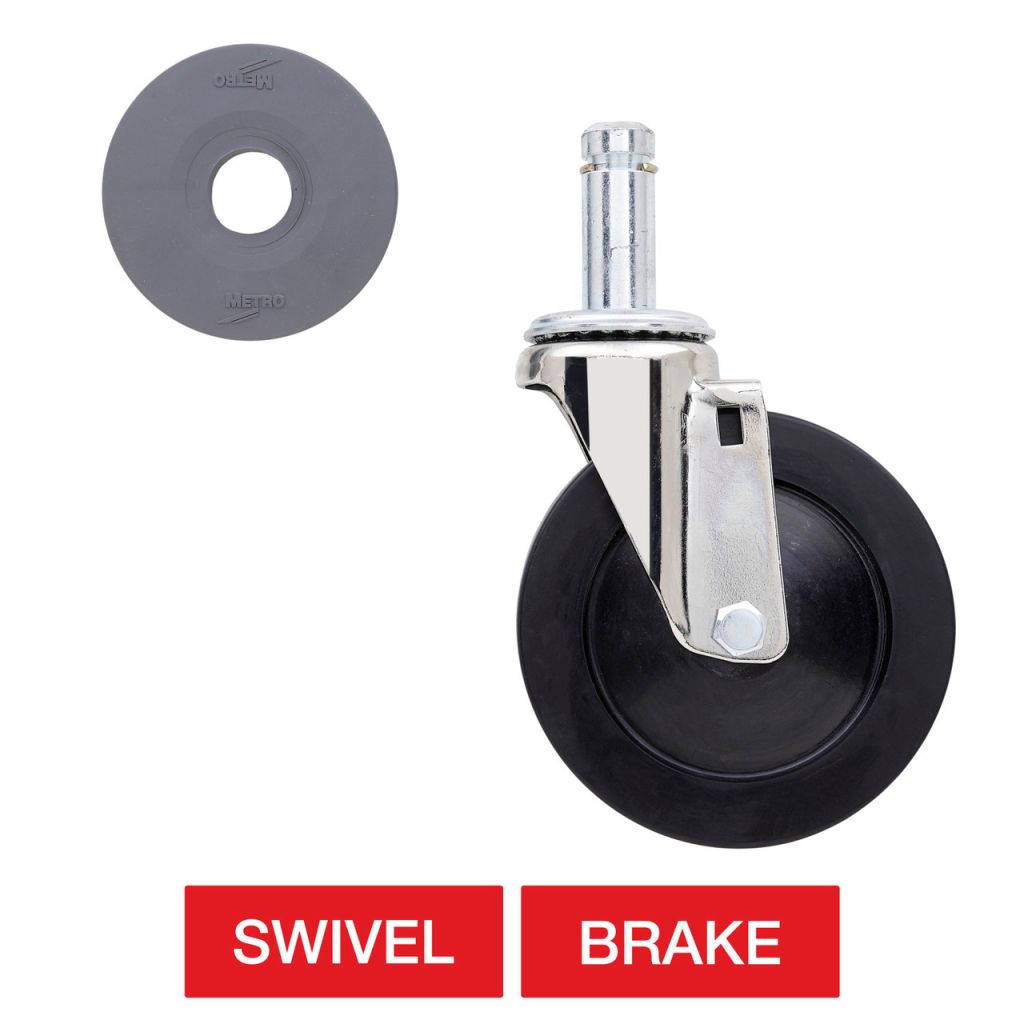
An ESD shelving unit is less a product than a path. It runs from the surface the part touches, through the shelf and post, out to a ground connection, and back to the same equipment ground everything else in the area shares. Break any link and the unit becomes an isolated conductor.
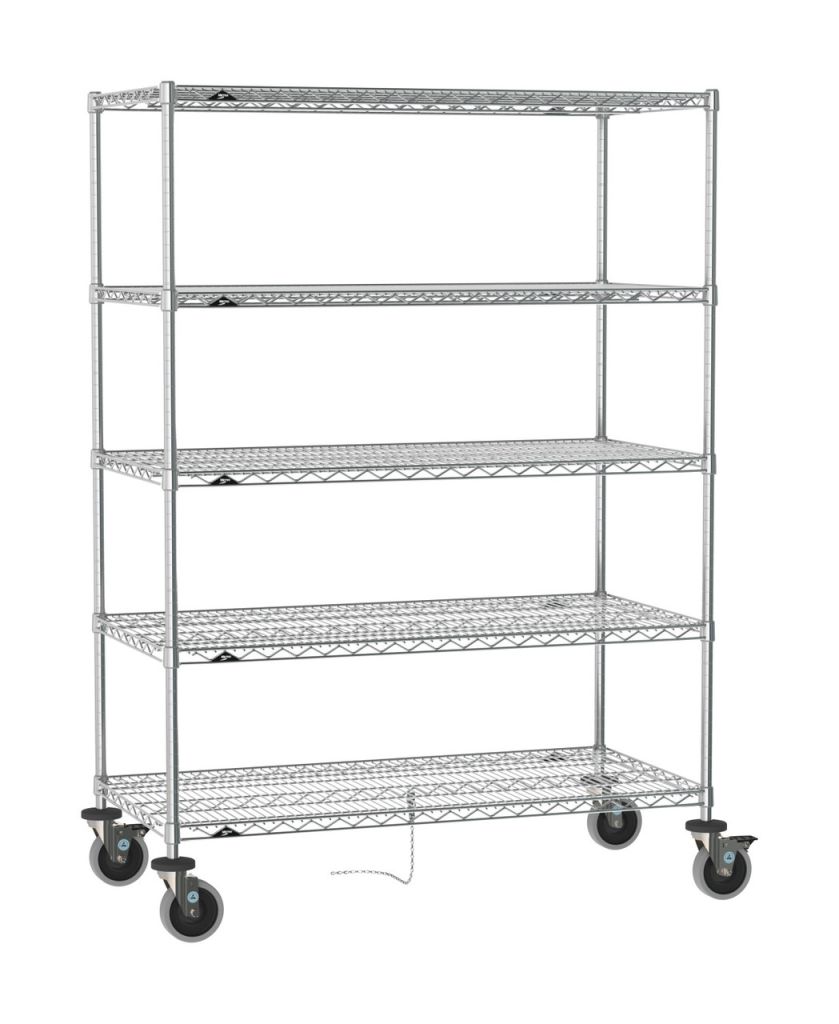
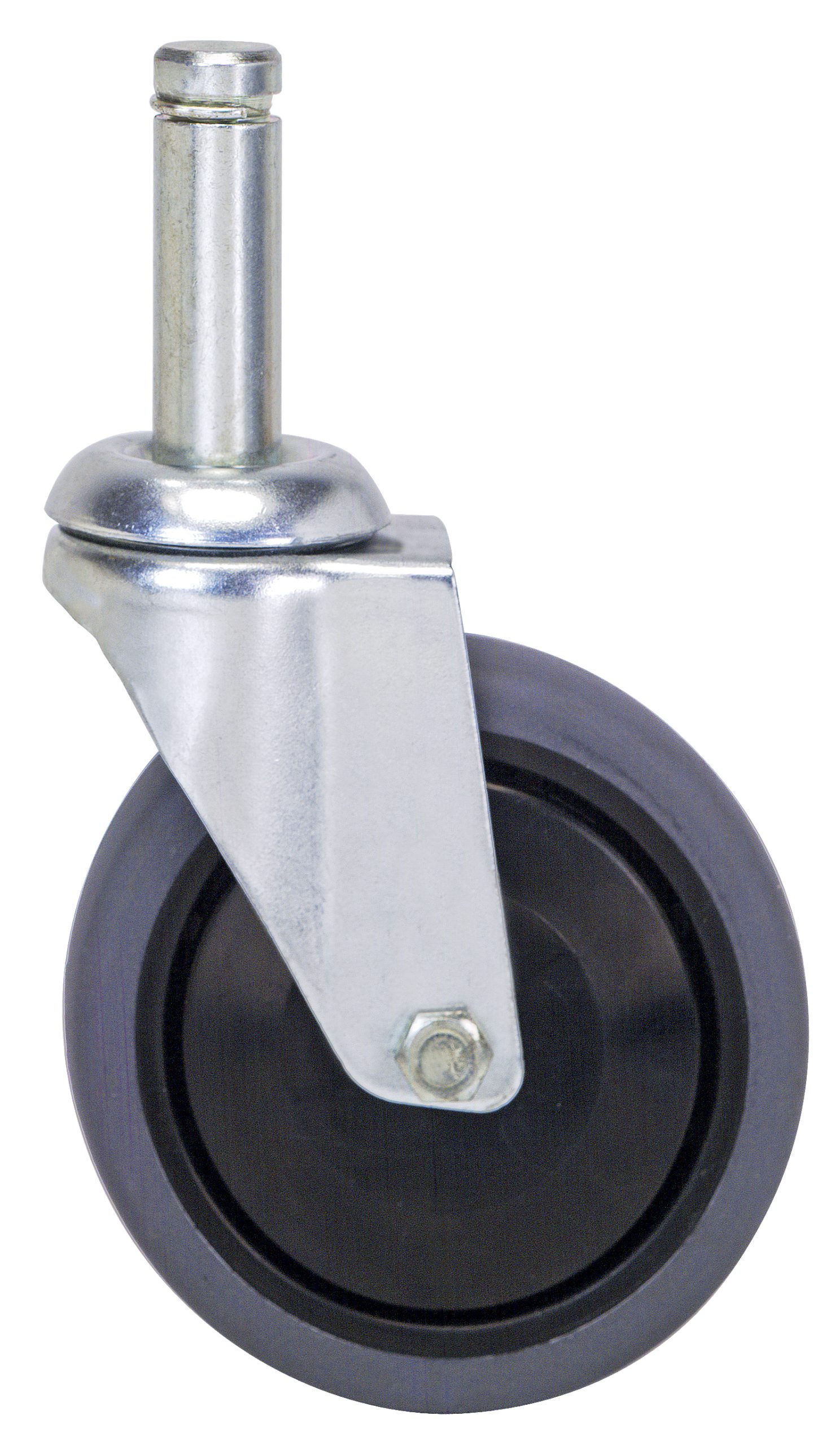
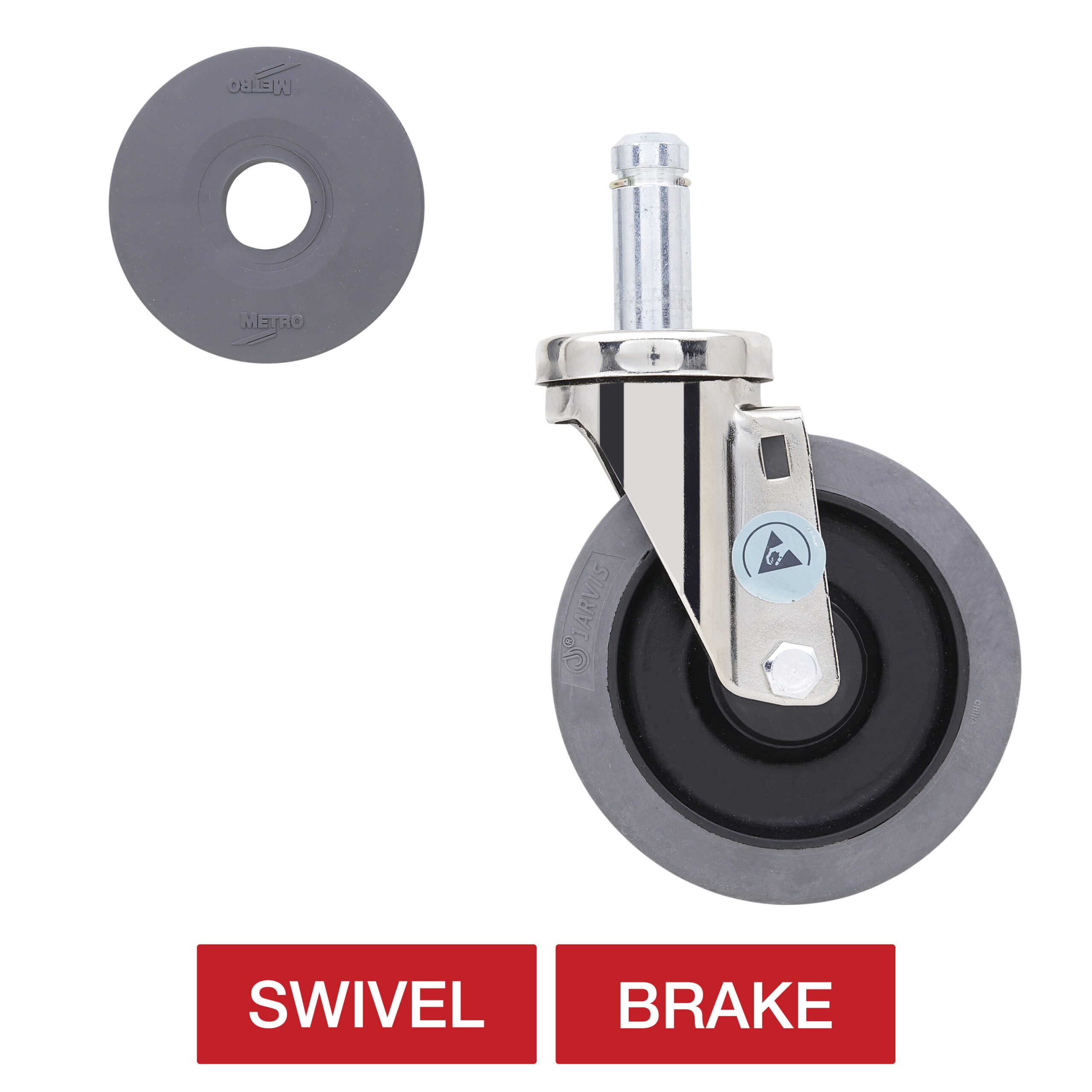
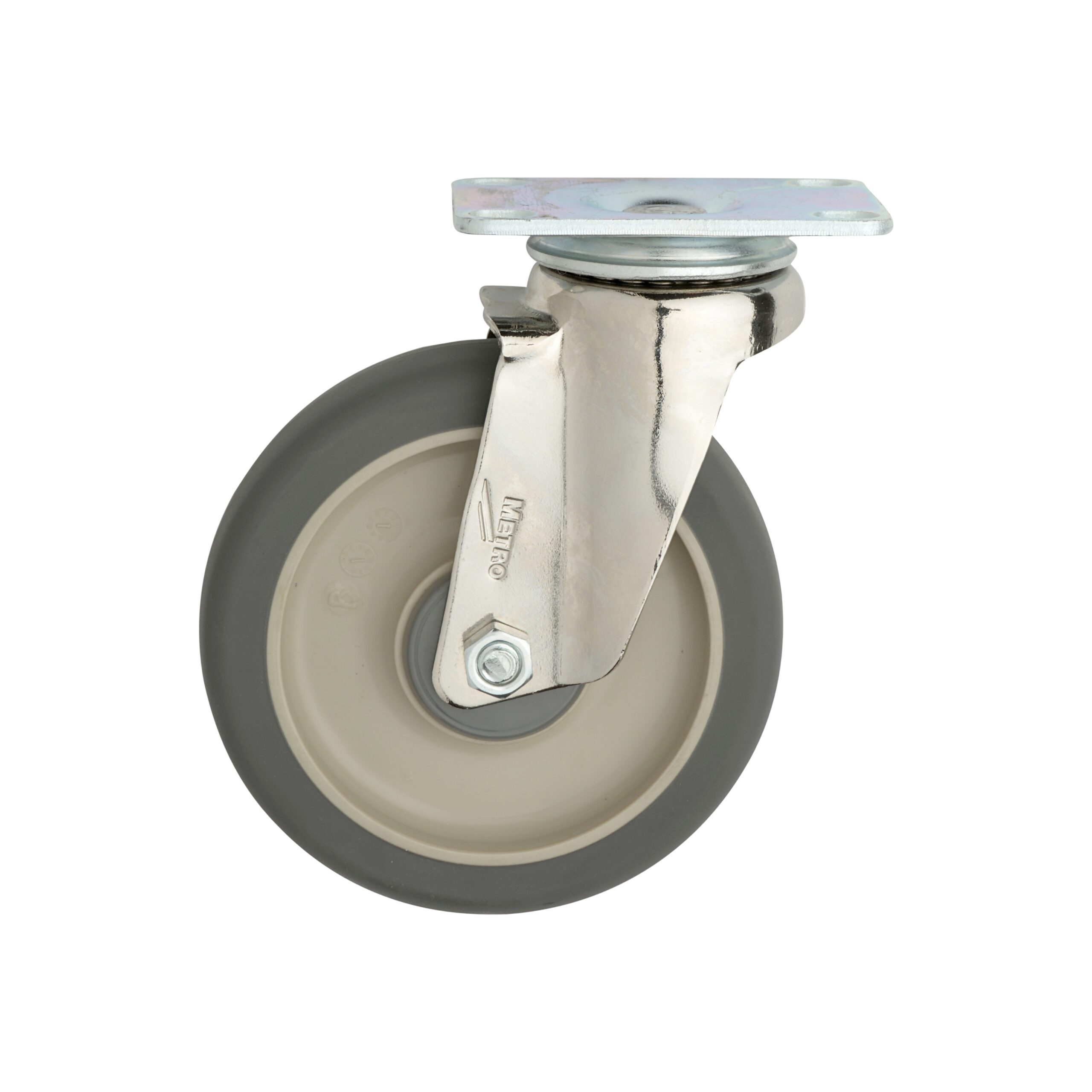
There are two normal ways to ground storage equipment. Ground cords — a clamp on one end, a common point ground on the other — are the reliable method for stationary shelving and for carts that dock at a fixed station. Conductive casters or a drag chain ground a mobile unit through the floor, which only works if the floor is itself conductive or dissipative and clean.
What breaks the ground path
- Paint, powder coat, epoxy and anodizing at joints — a coated post in a coated collar insulates even though both parts are metal.
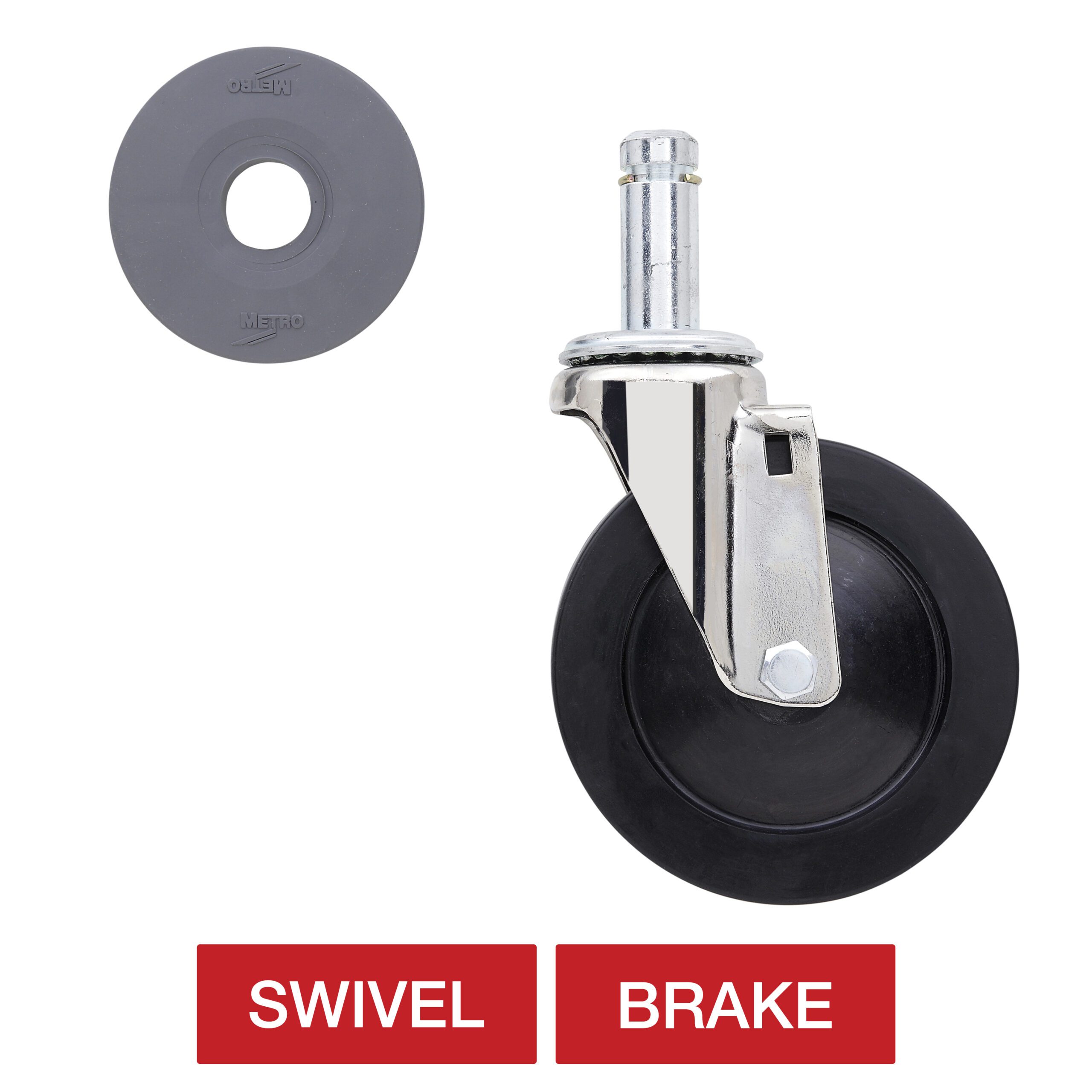
- Standard casters. Nylon, polyurethane and rubber wheels are insulators, and one replacement caster quietly undoes a specified set.
- Waxed, sealed or dirty floors. Floor finish over a conductive floor is an excellent insulator, and so is debris on the caster tread.
- Plastic liners and cardboard. A dissipative shelf with a corrugated sheet on it is a cardboard surface.
- Damaged or disconnected ground cords, and nylon bushings, plastic feet or rubber levelers substituted in during maintenance.
- Additions nobody specified — a plastic bin, a vinyl cover or a taped-on label sheet added to a correct unit.
Test it, then test it again on a schedule
Resistance to ground is a measurement, not a purchase order line. Verify each unit at installation, record the reading, and re-verify on the same interval you use for wrist straps and bench mats. Casters wear, cords fail, and floors get waxed by a contractor who was never told what the floor was for.
The Four Families of ESD Storage Equipment
Most electronics storage programs are built from four equipment families — usually bought separately, by different people, which is exactly why the ground path ends up inconsistent.
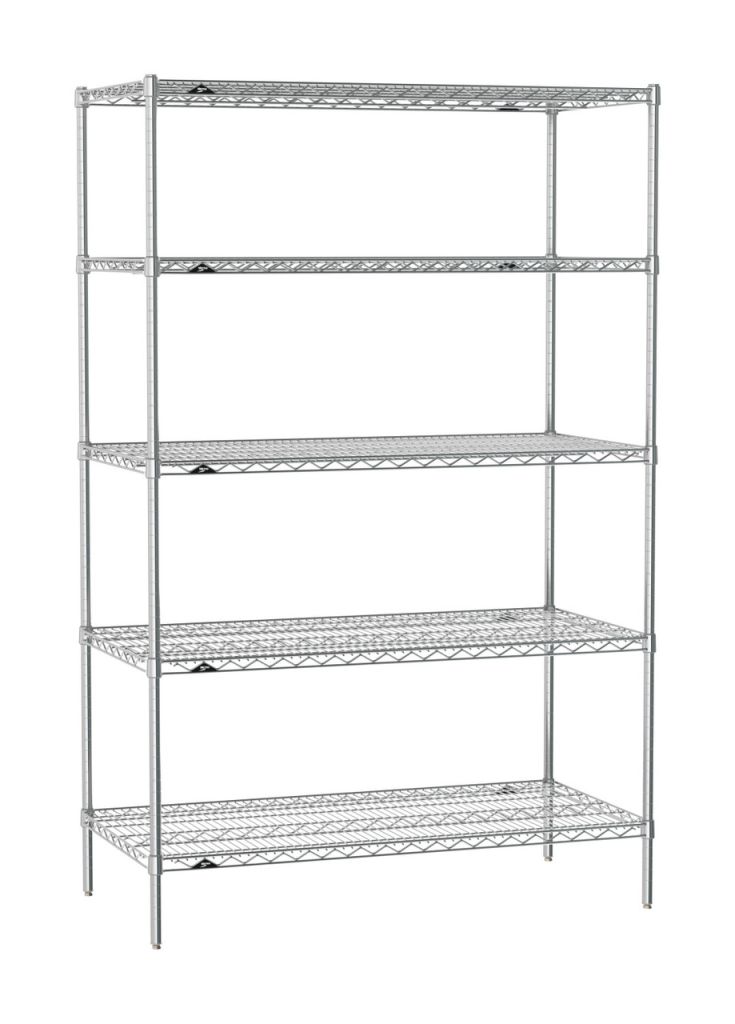
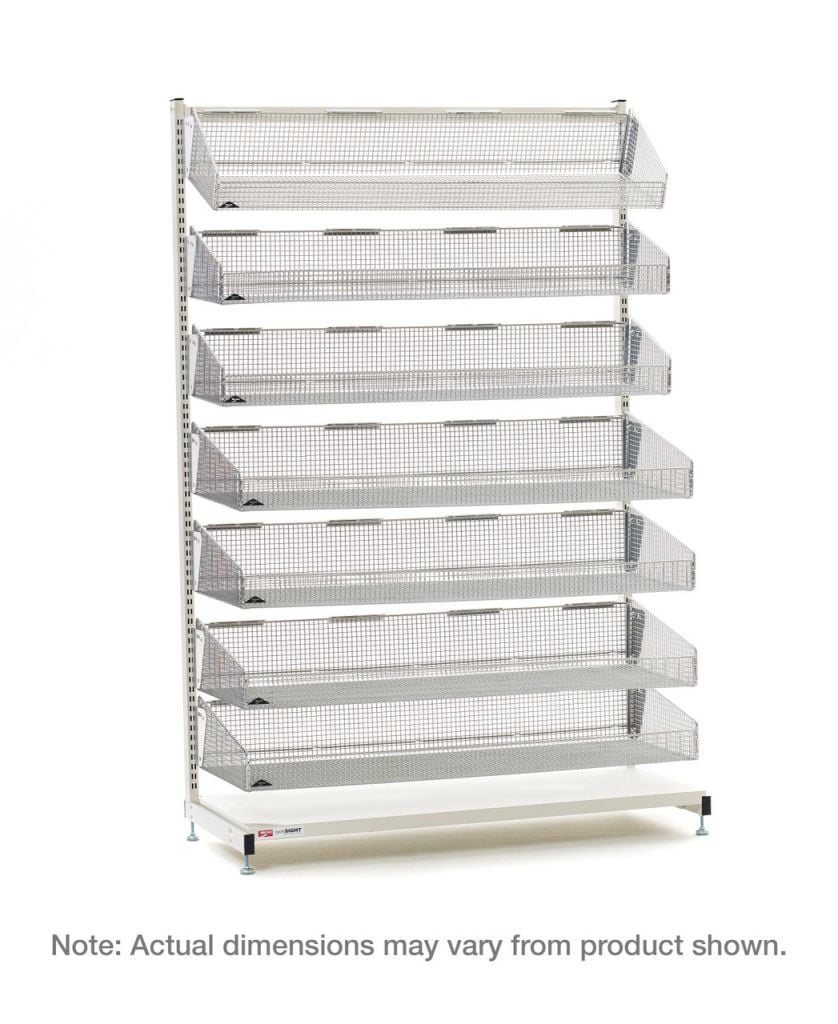
 ESD Shelving SystemsStatic-safe shelving units and add-ons for stockrooms and staging — wire or polymer shelves, dissipative mats, SMT reel shelves and ground cord kits.
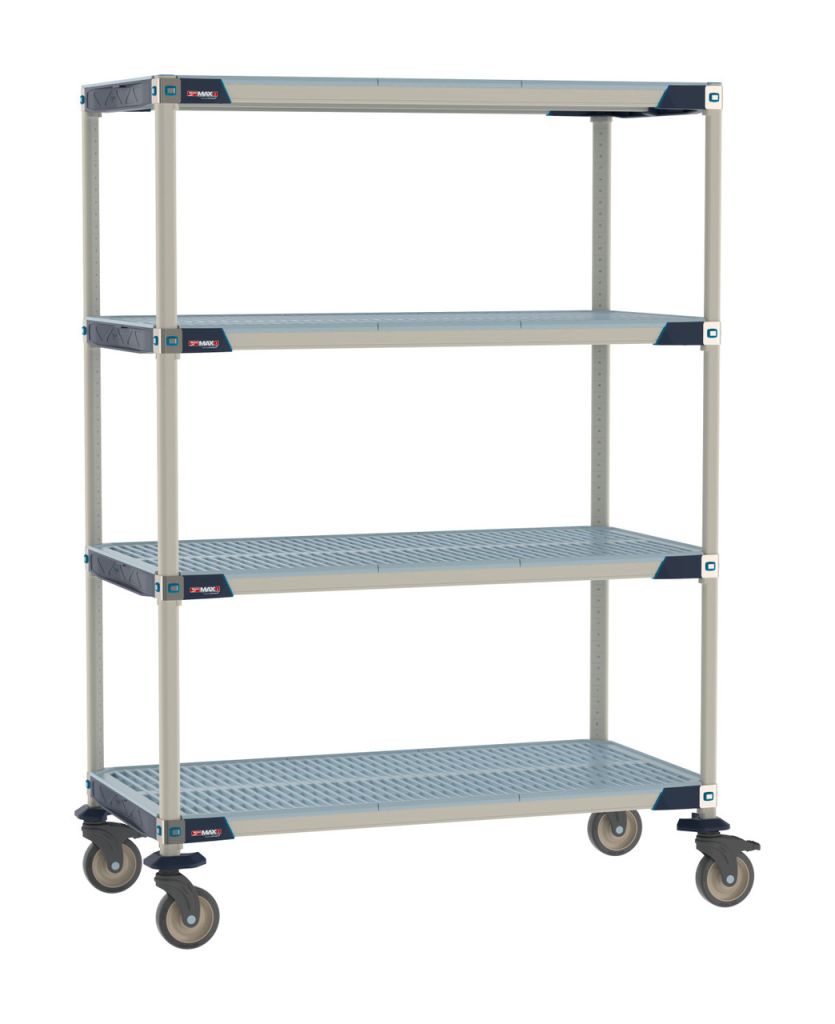
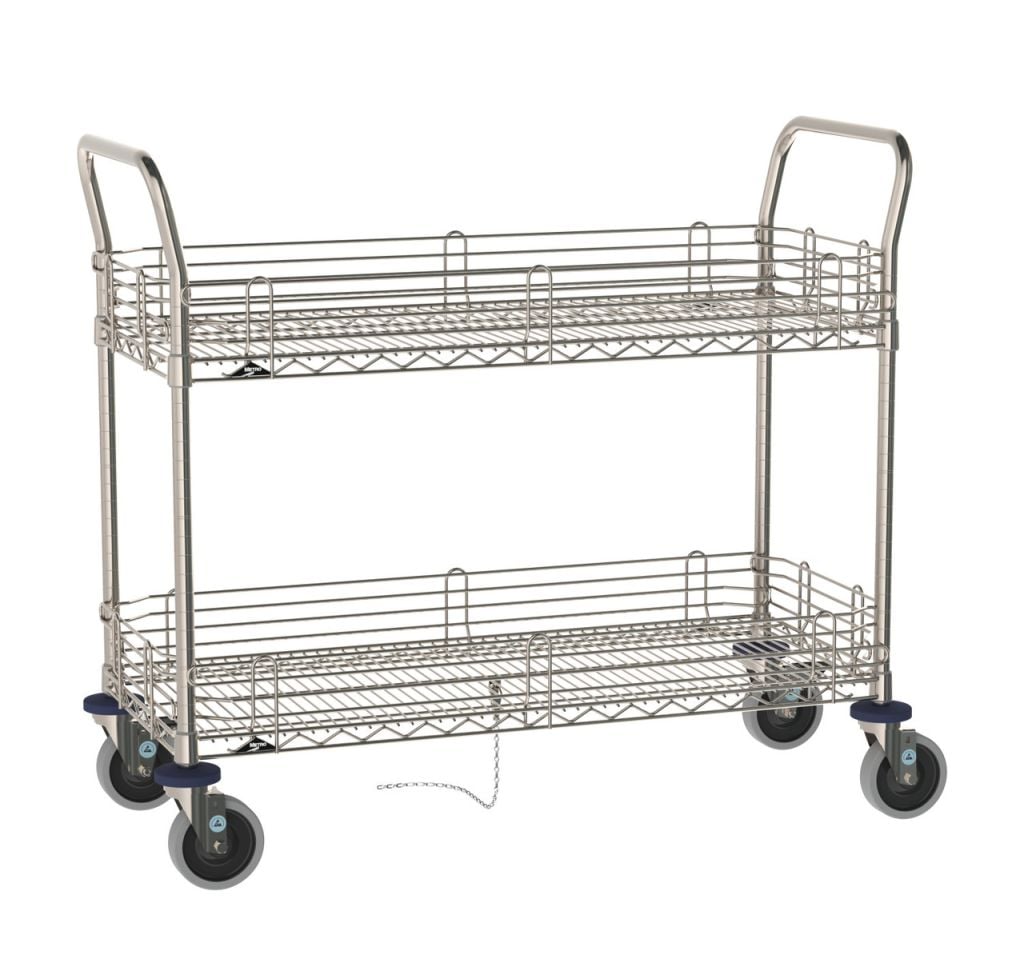 ESD Carts and WorkstationsESD utility carts, drop mat carts, reel carts and mobile workstations that dock at a grounded station.
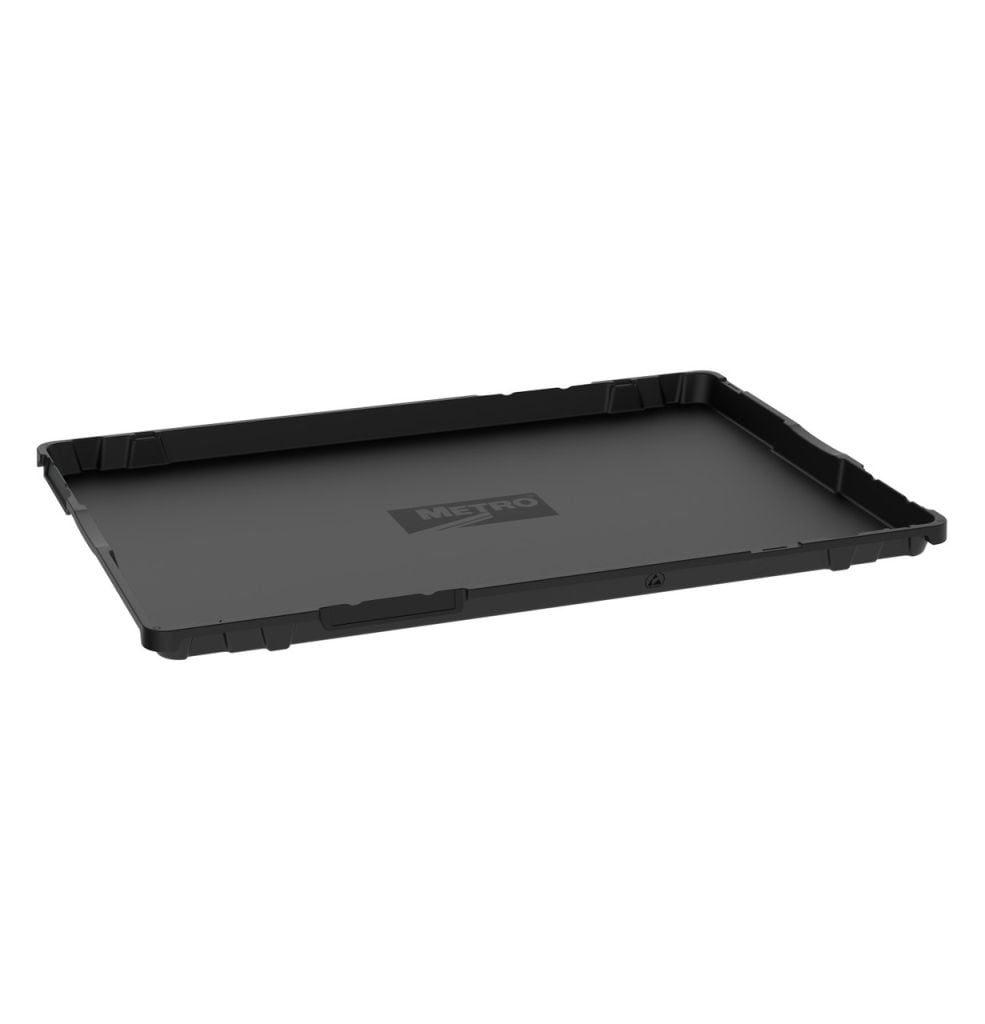
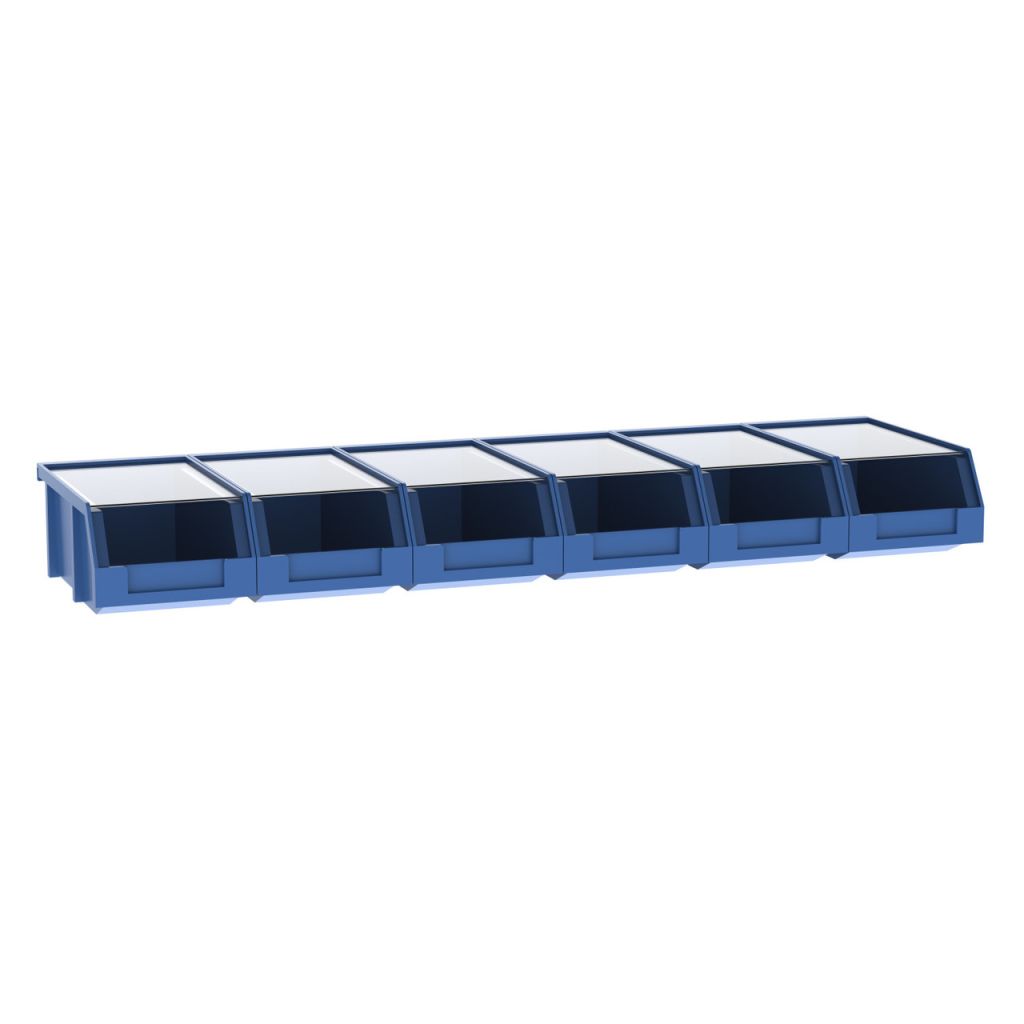 ESD Bins, Totes and TraysDissipative bins, covered totes, PCB trays and inlays that hold boards flat and separated, with labels and dividers.
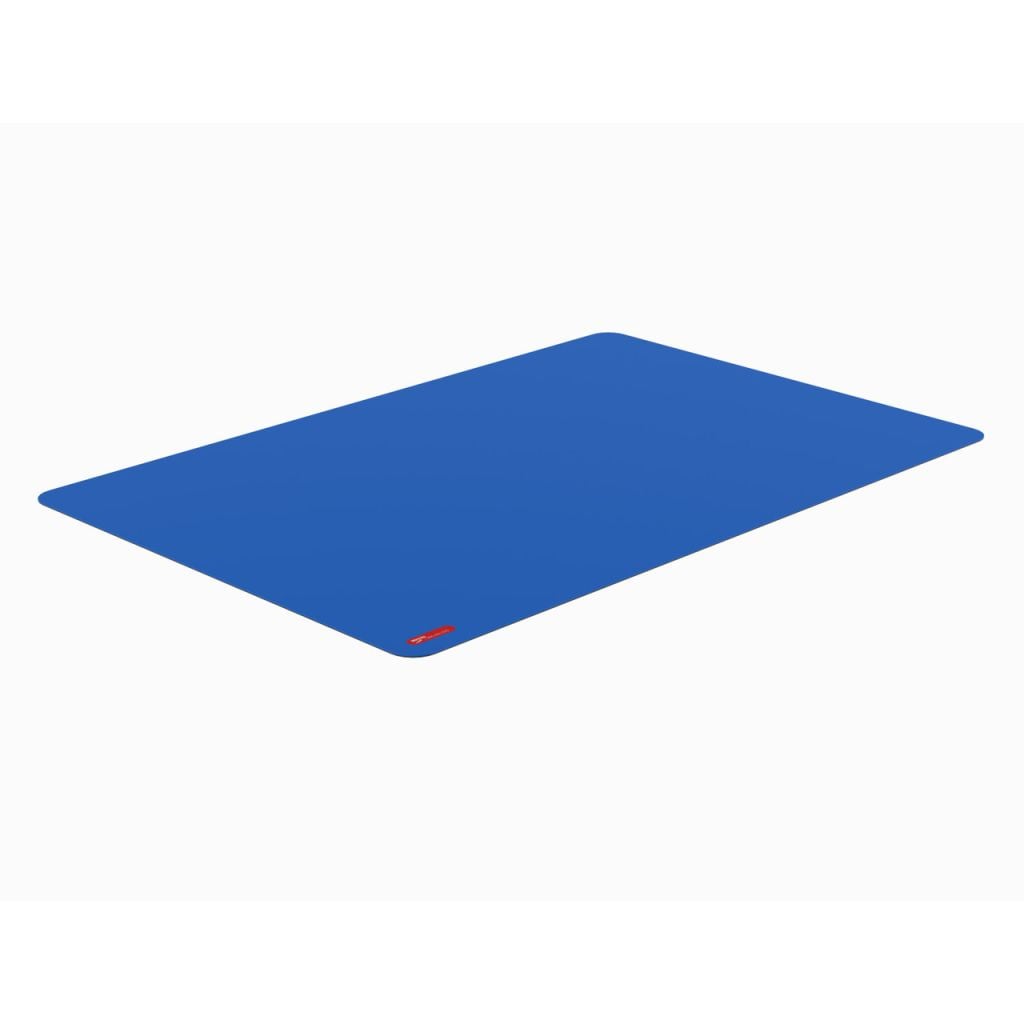
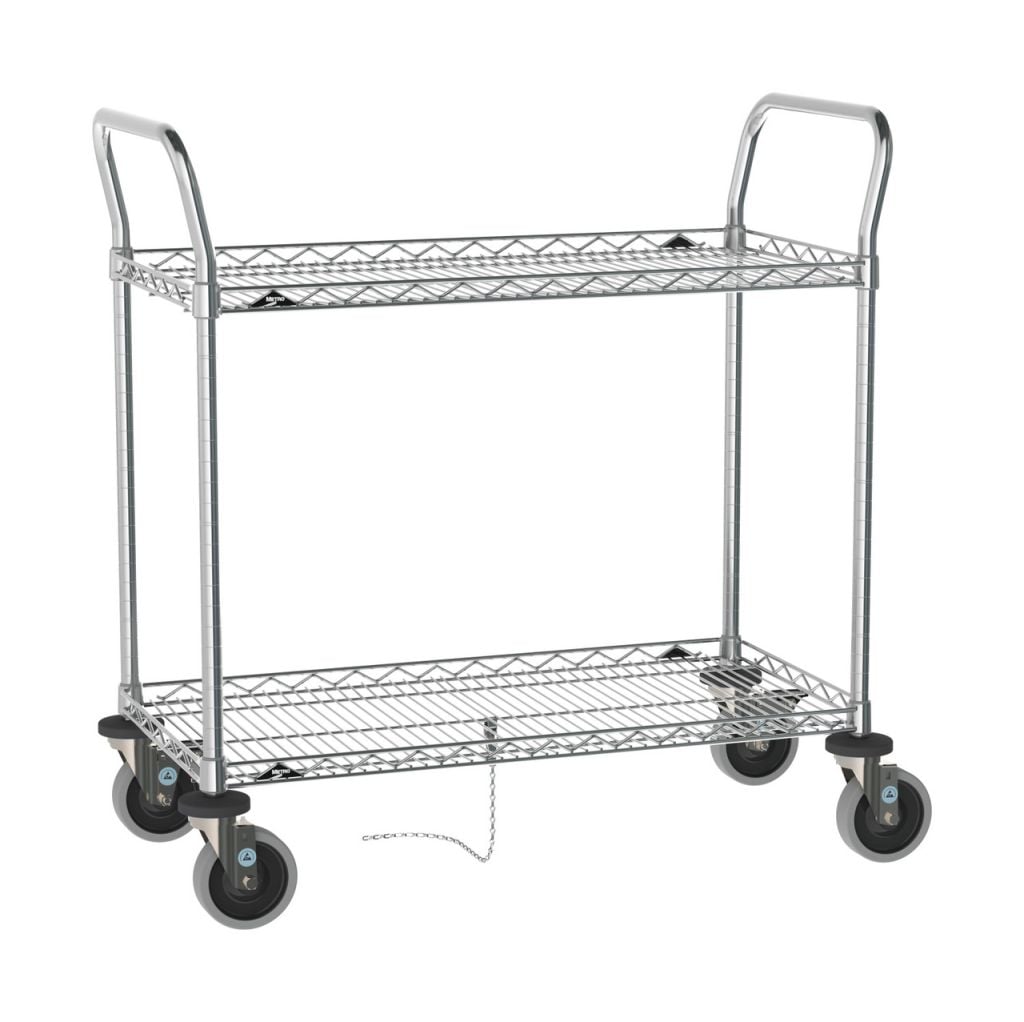 ESD-Safe SurfacesDissipative shelf and drop mats, bench and cart surfaces, and grounded overshelves at the same potential as the operator.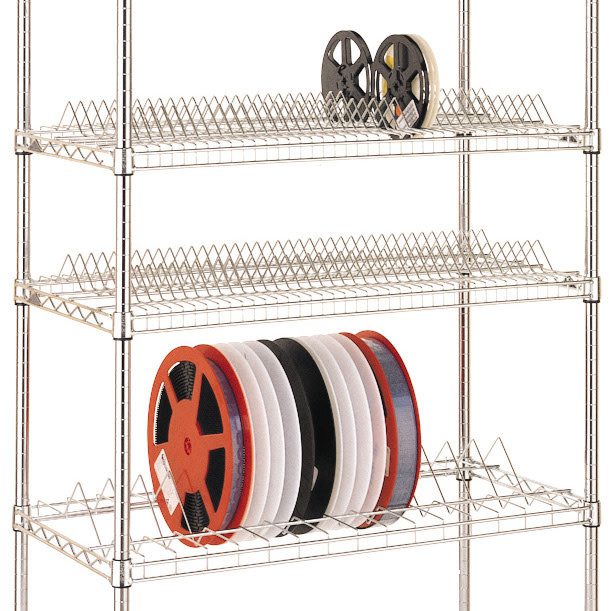
Shelving is the backbone of a stockroom. The decisions are shelf type (open wire moves air and light; a dissipative polymer or solid mat gives a continuous surface and stops small parts falling through), post height, depth, and whether the unit is stationary with a ground cord or mobile on conductive casters. SMT reel shelves hold 7-inch and 13-inch reels upright and visible so nobody is stacking reels flat and pulling from the bottom.
Surfaces — shelf, cart deck, bench, overshelf, inspection table — all need to be dissipative and tied to the same ground as the operator.
Where Dissipative Polymer Beats Epoxy or Chrome
Finish selection drives both ESD performance and service life, and it is the part of a shelving quote most buyers skip.
| Shelf / finish | Static behavior | Practical strengths | Watch out for |
|---|---|---|---|
| Dissipative polymer shelf mat or shelf | Dissipative through the material, so properties survive cleaning and wear | Removable washable mats, open-grid or solid, no chipping, quiet | A dissipative mat on an ungrounded frame is only half the job |
| Chrome-plated wire | Conductive; excellent grounded, an isolated conductor when not | Inexpensive, strong, easy to configure, airflow through the shelf | Plating chips and corrodes; small parts fall through; ground path depends on casters or a cord |
| Epoxy-coated wire | The coating is insulative, so it cannot be the dissipative surface | Corrosion resistance in damp storage, coated colors for zoning | Chips at joints expose steel and break both corrosion and ESD assumptions |
| Stainless steel solid or wire | Conductive; a good ground path when the joints are bare metal | Cleanability, chemical resistance, long life in cleanroom areas | Higher cost; a hard conductive surface is unforgiving to a bare board |
| Painted or powder-coated steel | Insulative surface over conductive steel — the worst combination | Cheap, common in general industrial shelving | Do not put it in an EPA without verifying resistance to ground |
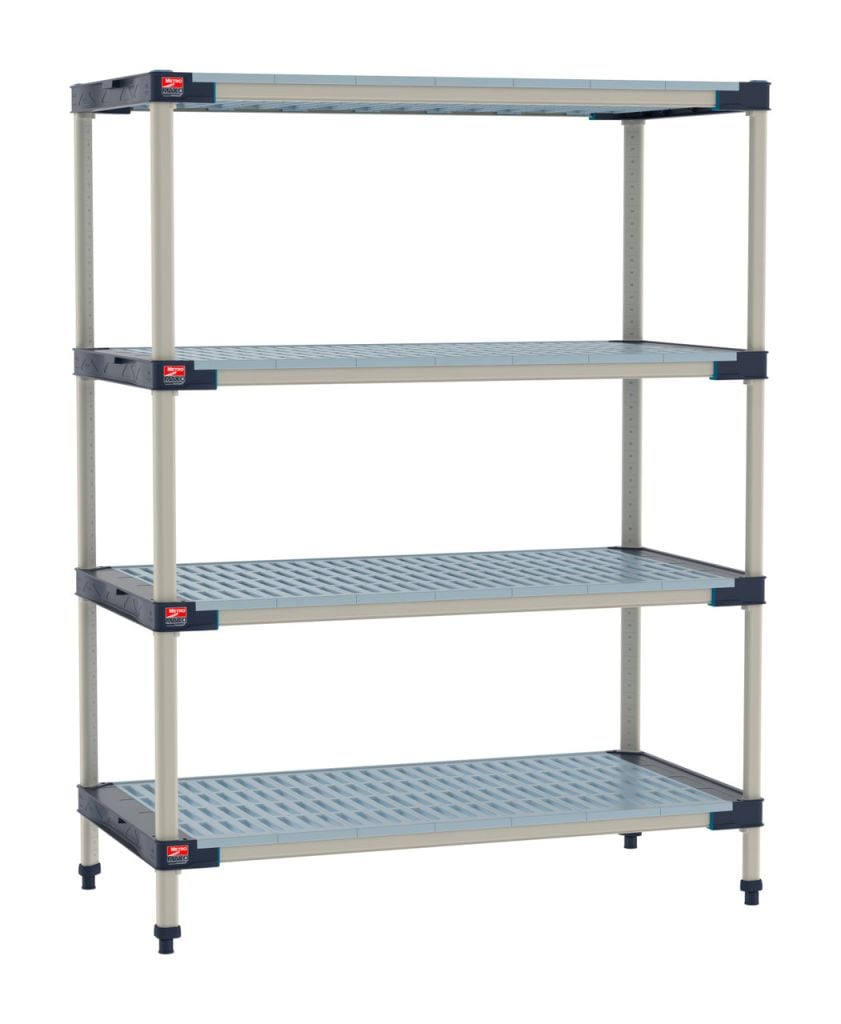
The short version: dissipative polymer wins when parts touch the shelf directly and the unit lives in the protected area for years. Chrome wire wins on price and configurability wherever somebody owns and tests the ground path. Epoxy belongs in humid storage but its coating is insulative; stainless belongs where cleaning chemistry or a cleanroom protocol drives the decision.
Humidity, Packaging and the Rest of the Storage Environment

Charge generation rises sharply as air gets dry. The same operator, same job, same floor generates far more charge in January than in July — and in the Mountain West indoor relative humidity in a heated building can sit in the low teens for weeks.
Packaging is the other half. Shielding bags should stay sealed until the part reaches a grounded station inside the protected area, and moisture-sensitive devices add a separate constraint — desiccant, indicator cards and floor-life tracking — that has to survive your stockroom.
Kitting and WIP Flow on an Electronics Line

Static-safe equipment only pays off if it matches how material actually moves: receive and inspect, stock components, kit to a work order, feed the placement machines, reflow, buffer WIP, test, rework, pack. Storage touches every step, and every hand-off is a chance for a bare board to sit somewhere ungrounded.
Component stock is a small-parts problem with a reel twist: reels upright on reel shelves, cut tape and tubes in dissipative bins. Kitting is where a picking cart earns its cost. WIP buffering between stations is the highest-risk storage in the plant, and tray racks exist for exactly that — boards flat and separated in trays, trays in a rack in order, a task indicator on each tray.
 Feeding the Placement MachinesReel carts stage the next setup so changeover is a cart swap, not a scavenger hunt.
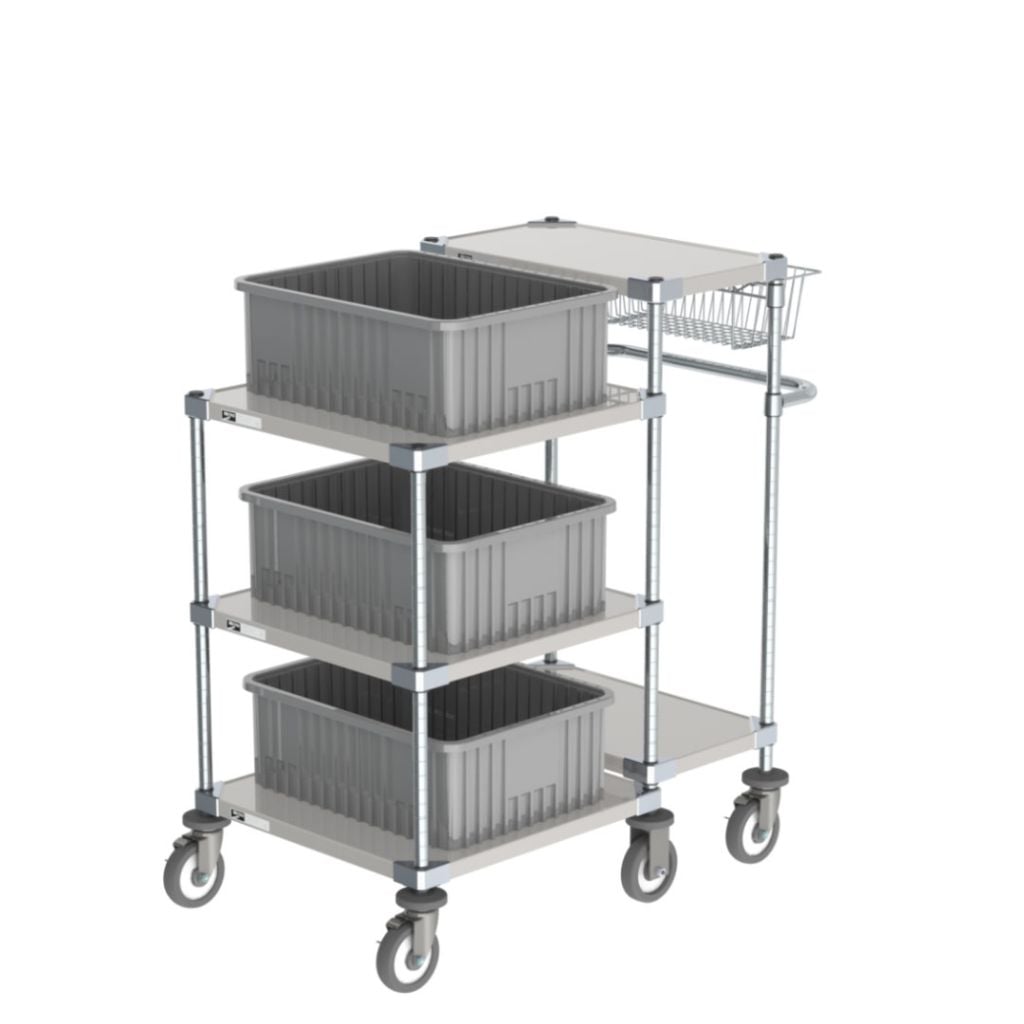 Kitting to a Work OrderAn enclosed picking cart with labeled positions moves a full kit in one trip.
 Buffering WIP Between StationsTray racks hold populated boards flat, separated and in order between operations.
 Feeding Test and ReworkSide-load racks let an operator pull the next tray without lifting a stack.
Two layout rules save more damage than any product. First, every place a board can be set down should be a dissipative, grounded surface — cart deck, overshelf, buffer rack, inspection bench. Second, make the compliant option the easy option; if the grounded cart is across the room and the cardboard box is right there, the box wins.
If the problem is bigger than shelving — pallet loads, bulk backstock, a stockroom that needs to compress — see shelving solutions and advanced manufacturing storage.
Audit Checklist for an EPA Storage Program
An ESD protected area (EPA) is a defined space where everything that touches or approaches unprotected devices is grounded or controlled. Most audits focus on people and benches; use this to audit the storage half of the room.
Equipment
- Every shelving unit and cart in the EPA is identified, numbered and on the test schedule.
- Resistance to ground is measured and recorded per unit, not assumed from a catalog page.
- Ground cords are present, connected and landed on the area’s common point ground.
Surfaces and containers
- Every surface a bare board contacts is dissipative and grounded.
- Bins, totes and trays in the EPA are dissipative; ordinary plastic has been removed.
- No cardboard, bubble wrap, shrink film or foam is stored on or near ESD shelving.
- Boundary. The EPA is marked and shipper packaging stops at a defined unpacking station outside it.
- Floor. If carts ground through the floor, the floor is conductive or dissipative, tested, and not waxed or sealed by facilities.
- Isolated conductors. Someone walks the room looking for ungrounded metal — carts, tool boxes, chairs, fixtures.
- Change control. New storage equipment is reviewed before it enters the EPA.
- Training. Stockroom and material handling staff are trained, not just operators.
- Seasonal review. Humidity is monitored and discipline tightens when the building runs dry.
What we can and cannot tell you
We supply storage equipment and give you the manufacturer’s published ESD data and test methods for the exact models you buy, in writing. We do not certify your program: no shelving unit is compliant on its own, because compliance is a property of the installed, grounded, tested system in your building.
Have an ESD Storage Layout Reviewed
Send us your stockroom footprint, what you store and how the line flows. We will lay out ESD shelving, carts and WIP transport, flag the ground path decisions, and quote it with the manufacturer data attached. Call (800) 326-4403.
Shop ESD and Conductive Storage Items Online
Buy select items directly from our online store, or request a quote for volume, custom sizes and freight-rated orders.
ESD Shelving for Utah and Salt Lake City Electronics Manufacturers
MH-USA has been in Salt Lake City since 1997, and electronics is one of the reasons static control comes up in almost every stockroom conversation we have along the Wasatch Front. Utah’s climate is genuinely difficult for ESD: high elevation, low humidity most of the year, and heated buildings that run very dry from November through March. Plants that would never see a static problem in a coastal facility see them here.
Because we stock and ship from Salt Lake City, we can walk a stockroom, measure the aisles, look at the floor you actually have and come back with a layout instead of a catalog. We deliver and install locally across the Wasatch Front and ship ESD storage nationwide. Local: 801-328-8788. Toll free: (800) 326-4403.
Design & price it online: Metro Ware Handling & Material Transport Configurator
Configure dish carts, dollies, tote carriers, ESD racks and transport trucks in our free Metro Ware Handling & Material Transport configurator — build the layout, see a full bill of materials and save or send the quote in minutes. Need a different Metro product? Browse all 17 tools in the Metro configurator hub.
ESD Storage Questions We Get Asked
What is ESD shelving?
What is the difference between conductive and static-dissipative?
Do ESD carts need conductive casters?
Can I convert standard wire shelving into ESD shelving?
What kind of damage does static do to a circuit board?
Do bins and totes need to be ESD safe if parts are in bags?
How does humidity affect static in a stockroom?
Does MH-USA carry ESD shelving and carts?
Build an ESD Storage Program That Actually Grounds
Static-safe shelving, ESD carts, dissipative trays, bins and WIP transport — specified together, with the ground path designed in and the manufacturer data in writing. Shipped nationwide from Salt Lake City.
Need the mobile, track-mounted version of ESD-safe shelving instead of a fixed installation? See mobile (track-mounted) shelving for cleanrooms and controlled environments.