
3
MetroMax series
1929
Metro founded
1997
MH-USA serving the West
50
States shipped
Shelving That Does Not Care How Wet the Room Gets
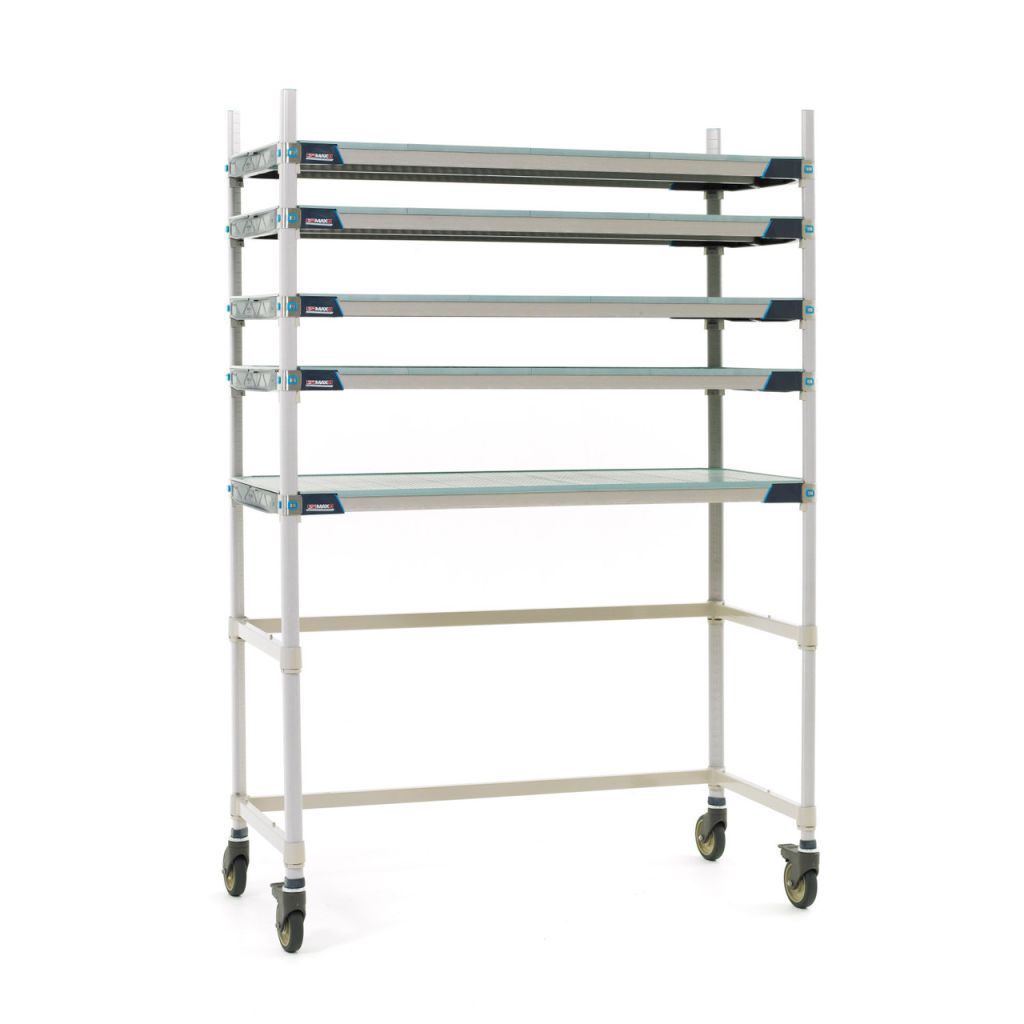
Most shelving failures are not structural. The unit still stands; the finish quit. Chrome blisters in a walk-in, epoxy chips where a cart clipped it, and the storeroom ends up with an orange stripe under every shelf and a sanitation finding.
MetroMax is Metro’s answer to that problem: shelving whose product-contact surfaces are polymer rather than plated or coated steel. The shelf mats or panels sit in a frame carried on posts, so the load path is still steel where strength matters, while the surface that gets splashed, iced over and sprayed with sanitizer has no finish to lose.
MH-USA has specified storage in Salt Lake City since 1997 and we represent Metro. This page covers the three MetroMax families, how they clean, what load ratings mean, and where polymer earns its price over wire. For the broader category, see our generic plastic shelving page.
Why Polymer Instead of Chrome or Epoxy
Every shelving finish is a bet about moisture. Bright chrome is a dry-storage finish and nothing more. Epoxy-coated wire adds a real barrier in humid rooms, but it is a coating over steel and coatings get chipped by pallets and carts. Stainless solves corrosion outright, but it costs more and a stainless wire deck still traps soil at every weld.
Polymer changes the failure mode instead of delaying it. There is no plating to blister and no coating to chip, because the shelf surface is the material. Standing water, brine, sanitizer and freeze-thaw cycling do not start a corrosion site on a polymer mat, which is why polymer dominates in walk-ins, dish rooms, decontamination areas and any room that gets hosed.
| Finish | Best environment | How it typically fails | Consider instead |
|---|---|---|---|
| Chrome wire | Dry storage, offices, retail backroom | Plating blisters and rusts as soon as humidity is constant | Move to epoxy or MetroMax in any wet or cold room |
| Epoxy / Metroseal wire | Humid storerooms, light washdown | Chips at impact points become rust points | MetroMax where carts hit shelves daily |
| Stainless wire | Washdown, food contact, labs | Corrosion-resistant, but welds and wire still trap soil | MetroMax on stainless posts for removable, washable surfaces |
| MetroMax polymer | Walk-ins, dish rooms, sterile processing, labs | Surface does not corrode; damage is physical only | Replace individual mats, not the whole unit |
The post is half the decision
MetroMax posts come in epoxy, Metroseal and stainless steel. A polymer shelf on an epoxy post is a strong cooler unit; on a stainless post it is a full washdown assembly. Specify the post finish for the wettest condition the unit will ever see.
The Three MetroMax Families
The three families share the same post system, footprint logic and most accessories, but they solve different daily problems.
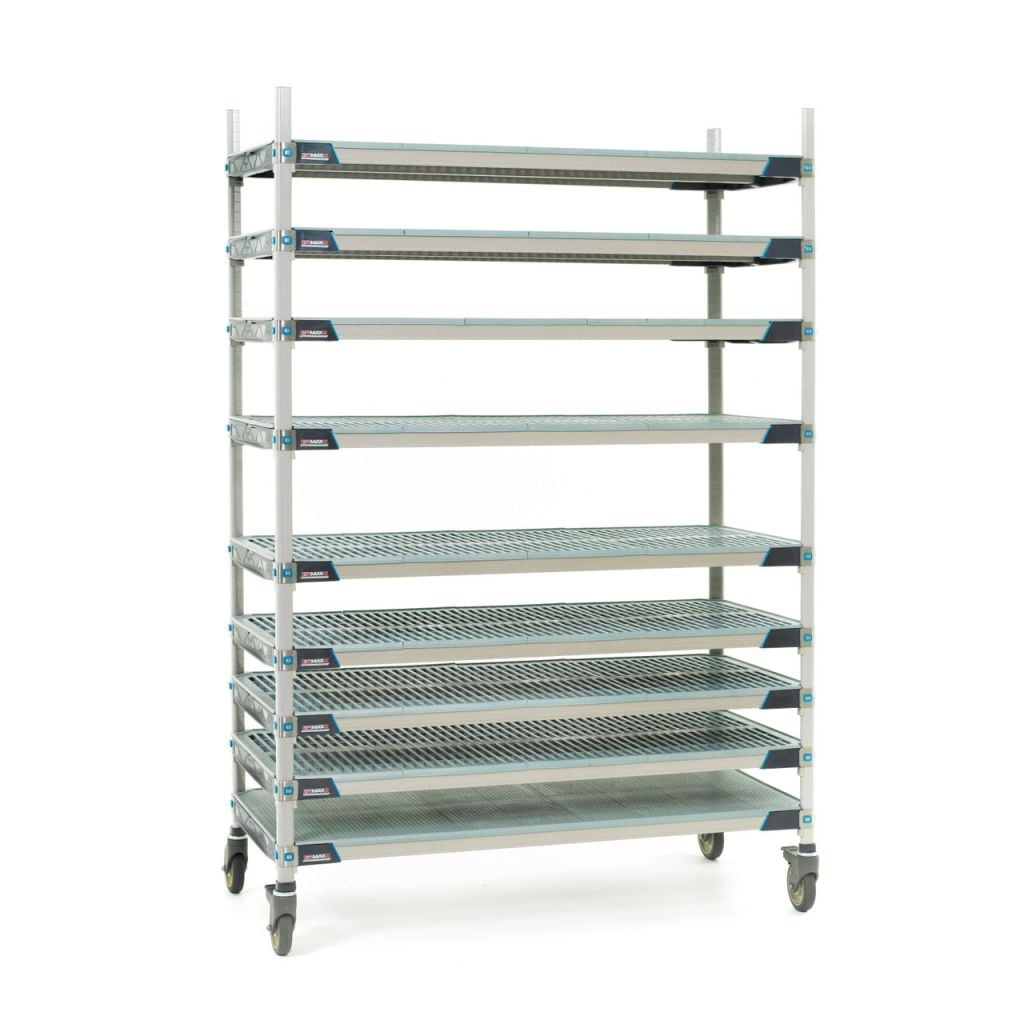
 MetroMax iRemovable open-grid shelf mats on epoxy, Metroseal or stainless posts — the default for coolers, sterile processing and labs.
 MetroMax QQuick-adjust polymer shelving with a corner release: one person changes a shelf height in seconds. Best where product profiles change often, including can racks.
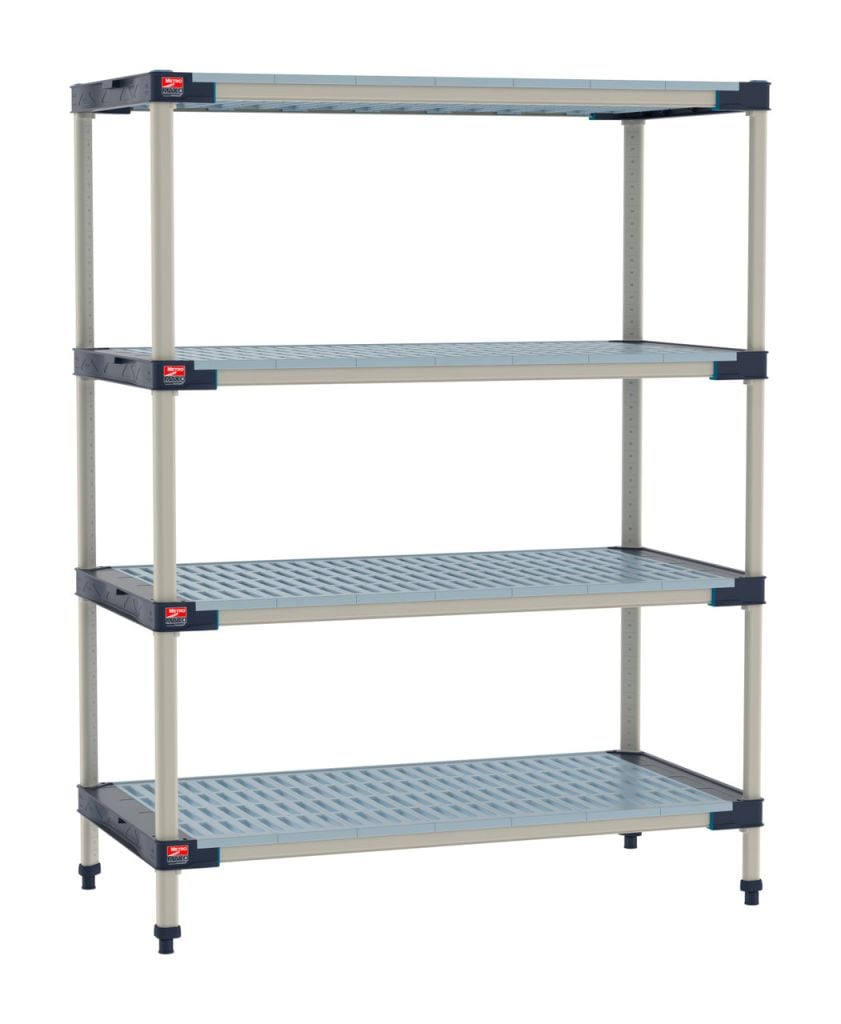 MetroMax 4The industrial-grade line, built heavier and available in open-grid and solid shelf styles. Also the shelf in SmartWall Life wall systems.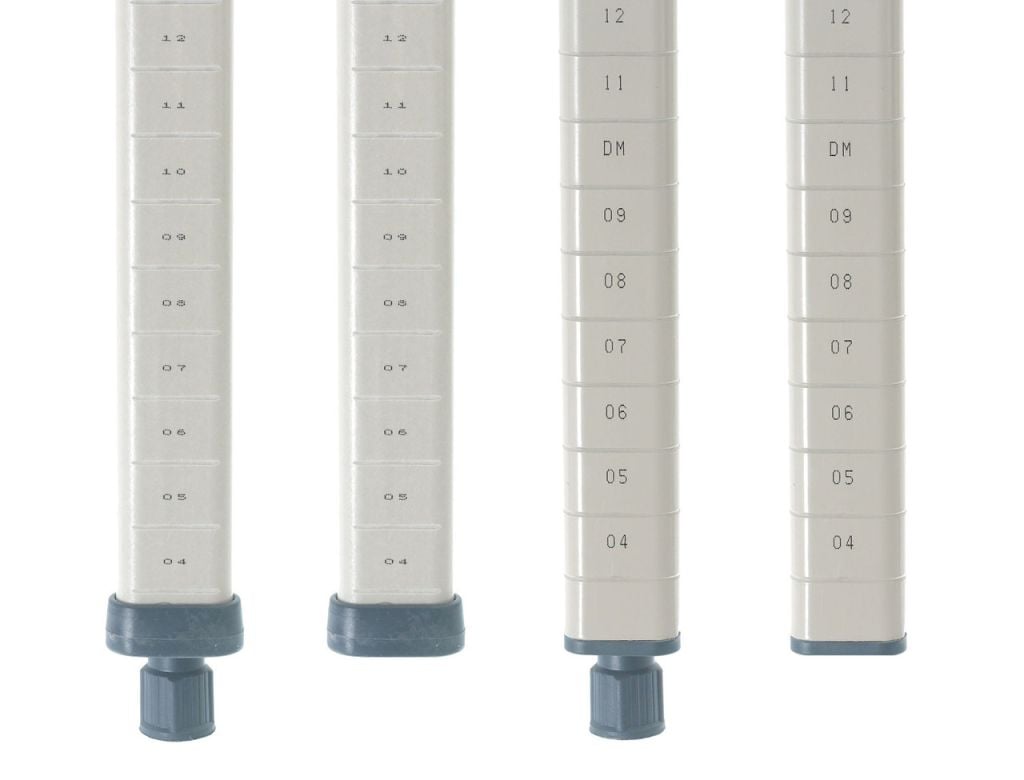
MetroMax i — removable open-grid mats
The shelf comes apart from the frame: mats lift out, go to the dish machine or cart washer, and drop back in. The open grid lets air, light and drips pass through, and posts are ordered in epoxy, Metroseal or stainless depending on how wet the room is.
MetroMax Q — quick adjust
Traditional shelving adjusts by knocking off tapered split sleeves and rebuilding the stack. MetroMax Q replaces that with a corner release, so one stocker can drop a level two inches to fit a new case size mid-shift. In a stockroom that reslots seasonally, that saved labor is the justification.
MetroMax 4 — industrial grade
MetroMax 4 is the heavier build: rougher handling, solid shelf options where small parts would fall through a grid, and the shelf used in SmartWall Life wall-mounted kits.
Removable Shelf Mats and a Cleaning Protocol People Will Actually Follow
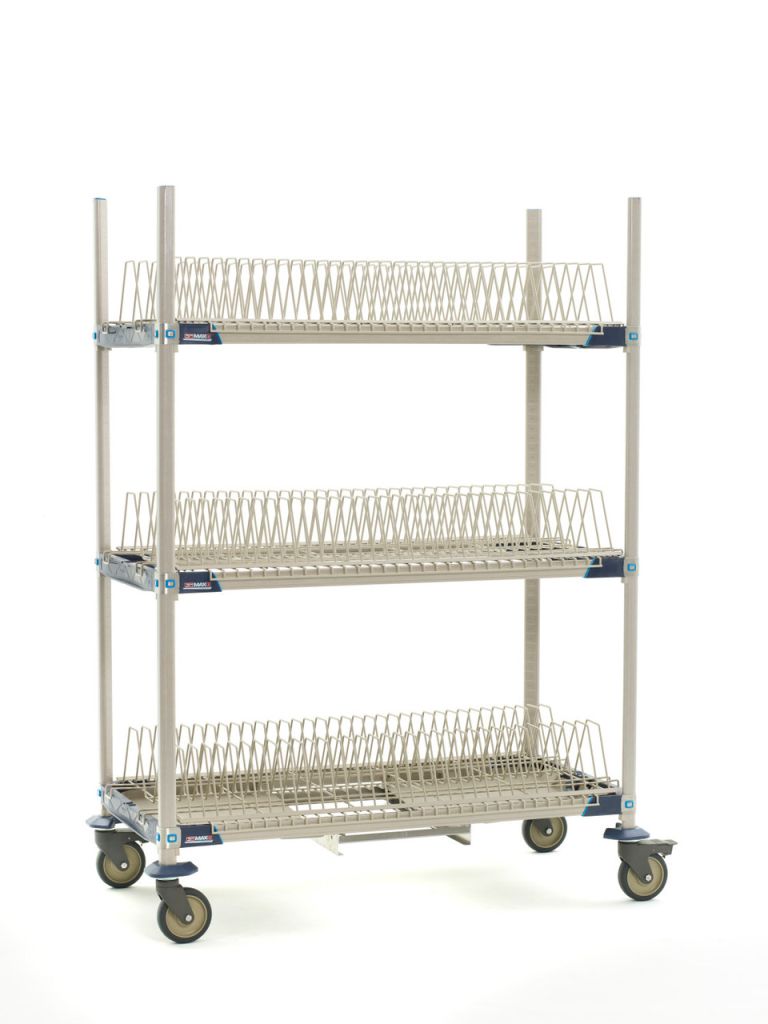
Sanitation programs fail on effort, not intent. A fixed wire shelf in a cooler gets cleaned in place, on a ladder, around product nobody wants to move — so it gets wiped, not washed. MetroMax makes the dirty part removable.
A workable protocol: pull product to a cart, lift the mats out, wash them in the dish machine or cart washer, spray and wipe the frames and posts, air-dry the mats on a drying rack, and reinstall. Mats are interchangeable within a size, so a spare set lets you swap instead of waiting on a wash cycle.
Log shelf mats like any other cleanable component so swaps are documented for audits, and confirm sanitizer concentration and contact time against the component list before you standardize on it — we will get that confirmation from Metro in writing. Metro offers Microban product protection on selected lines; where it applies we will tell you which components include it.
Open Grid, Airflow and Drying Applications
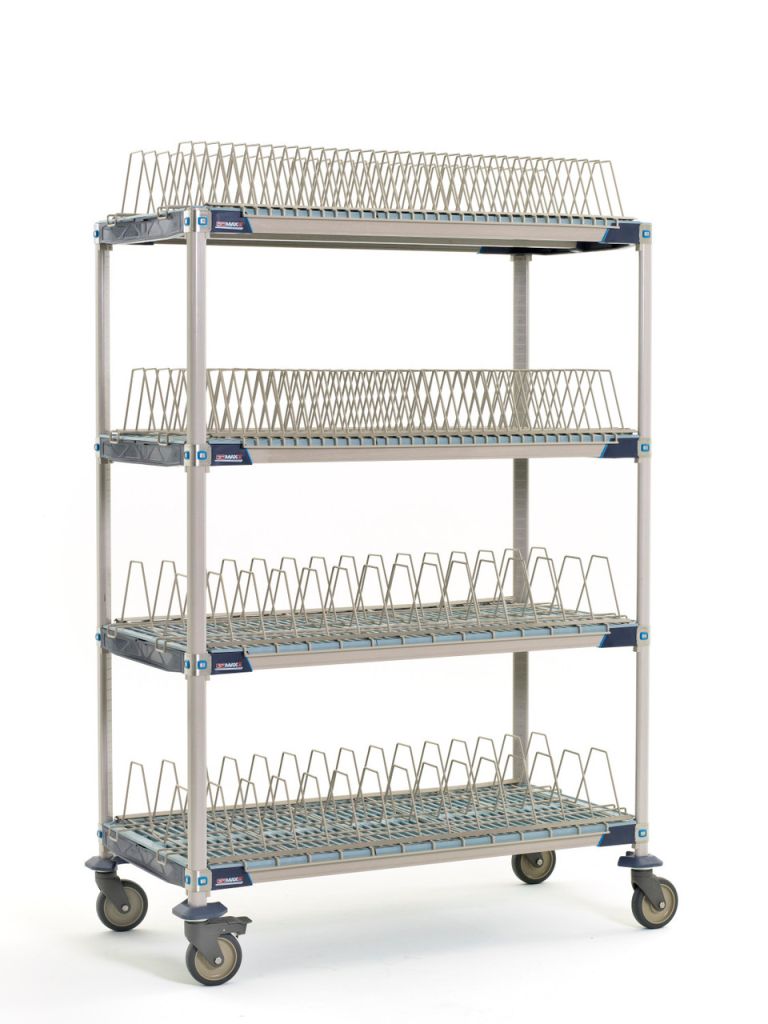
An open-grid shelf is a ventilation decision as much as a storage one. In a walk-in, the evaporator moves air across the room and a solid shelf blocks it; grid shelves let that air pass through the stack and keep the refrigeration cycle honest.
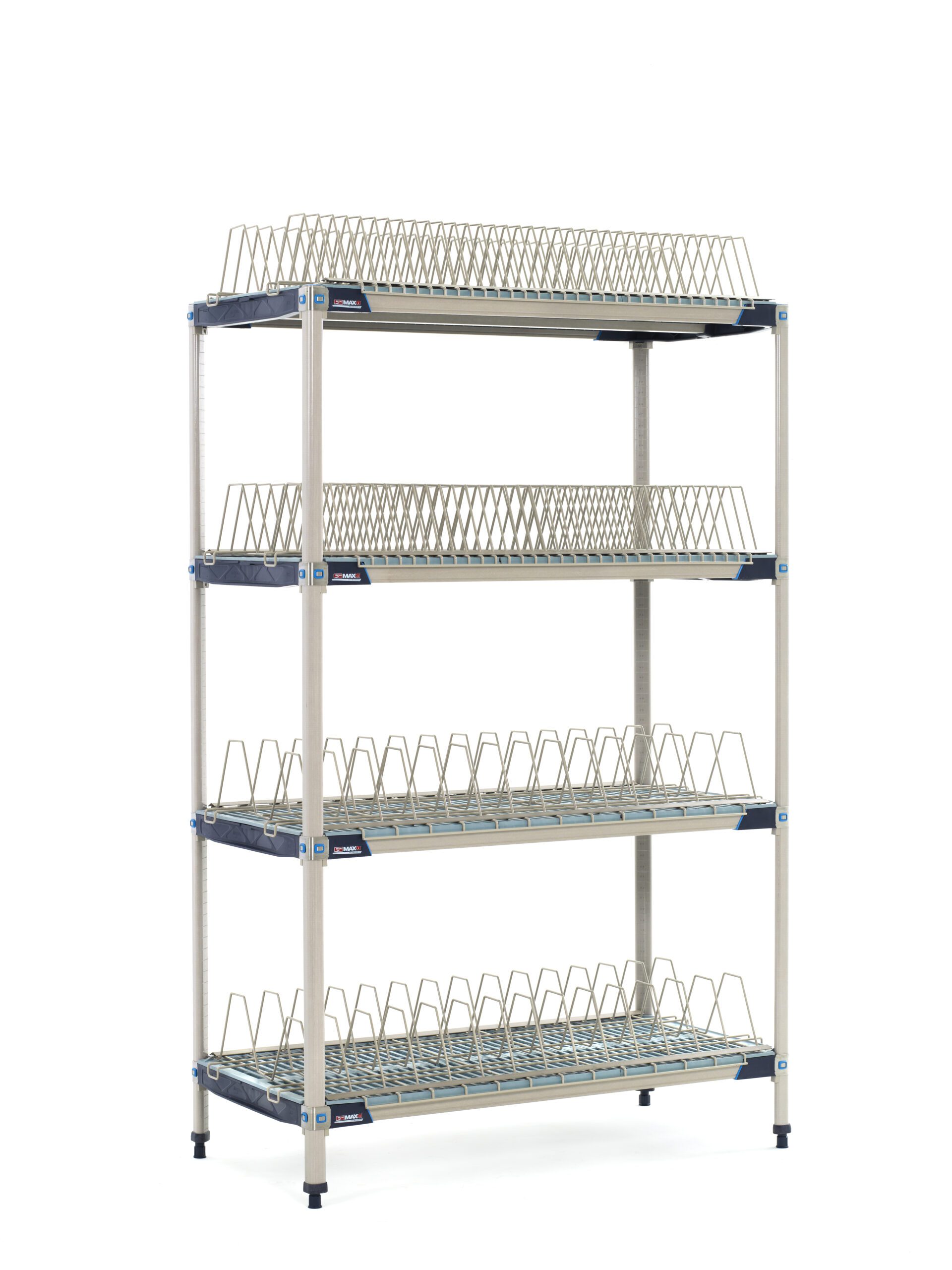
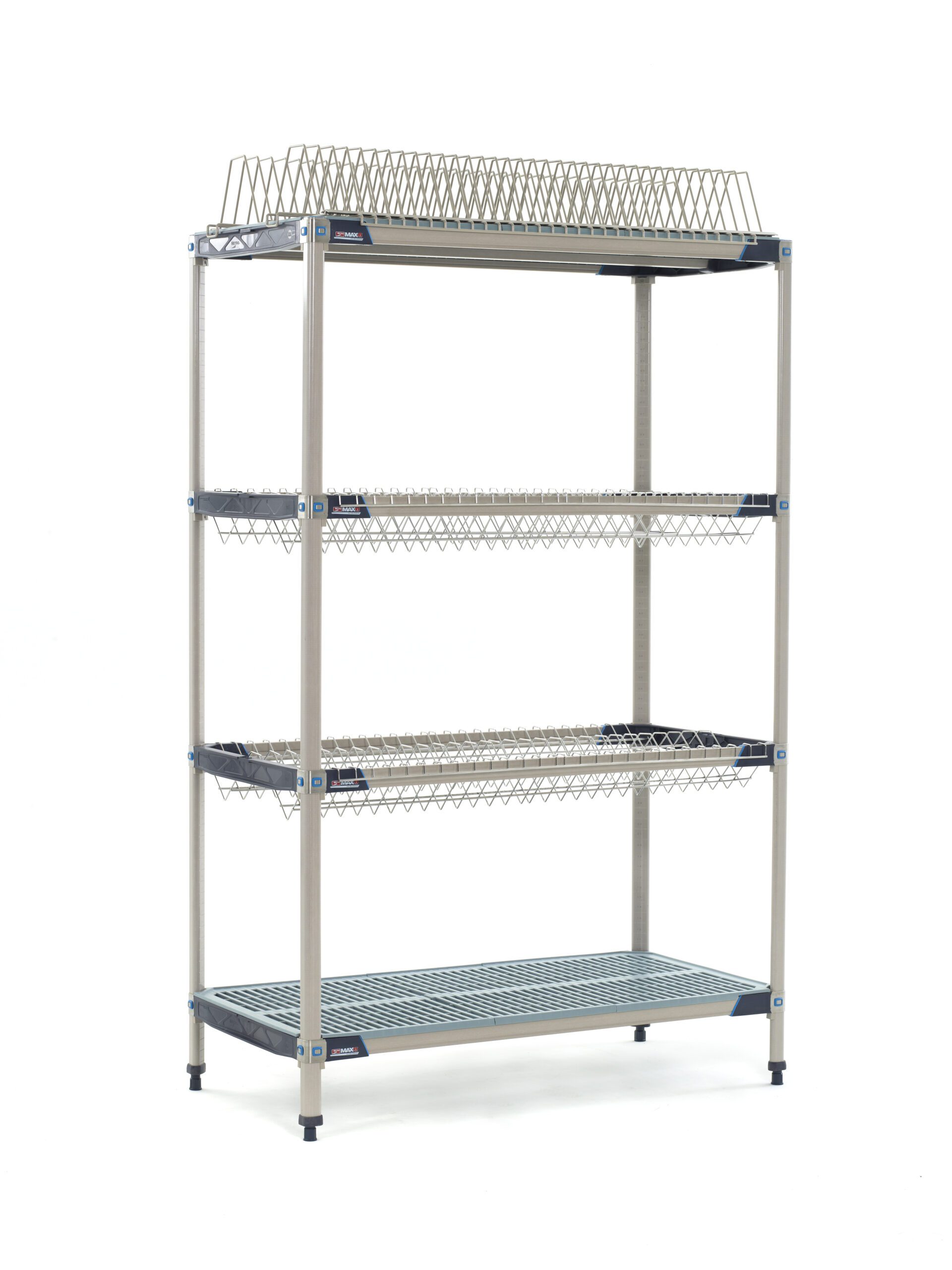
The same property drives drying applications. Washed pans, trays and glassware shed water on a grid shelf instead of sitting in a puddle, and MetroMax drying racks formalize that with tray racks, pan racks, drop-in units, bulk shelves and drip trays on one frame.
Where grid is wrong: small parts, powders, vials and anything that will fall through or tip. That is what solid shelf options and drop-in units are for; mixing grid and solid levels in one unit is normal.
Load Ratings, Spans and Temperature
The most common shelving mistake is quoting one capacity number for a whole line. Capacity is per shelf, it falls as span gets longer, and mobile conversion reduces the rated capacity again.
| Variable | What happens | What to do about it |
|---|---|---|
| Shelf length / span | Capacity falls as the shelf gets longer | Two 36″ units often beat one 72″ unit |
| Stationary vs. mobile | Casters reduce the rated capacity of the unit | Quote the mobile rating up front if the unit will ever roll |
| Series | MetroMax 4 is the heavier industrial build | Use MetroMax 4 where handling is rough or loads are dense |
| Temperature | Freezer, cooler, ambient and washdown are all in scope; high heat is not | Never use polymer shelving as a hot-pan landing or in a heated cabinet |
| Post finish | Sets the corrosion life of the assembly, not the capacity | Stainless posts for daily washdown; epoxy or Metroseal for humid and cold |
| Load distribution | Point loads at mid-span are the worst case | Spread heavy items and keep them near posts |
We quote the number for your shelf, not the headline number
Give us the shelf sizes, levels per unit and whether the units roll, and we will return the rated capacity per shelf for the exact models on the quote — the number your safety file needs.
Mobile Units, Carts, Dollies and Drying Racks
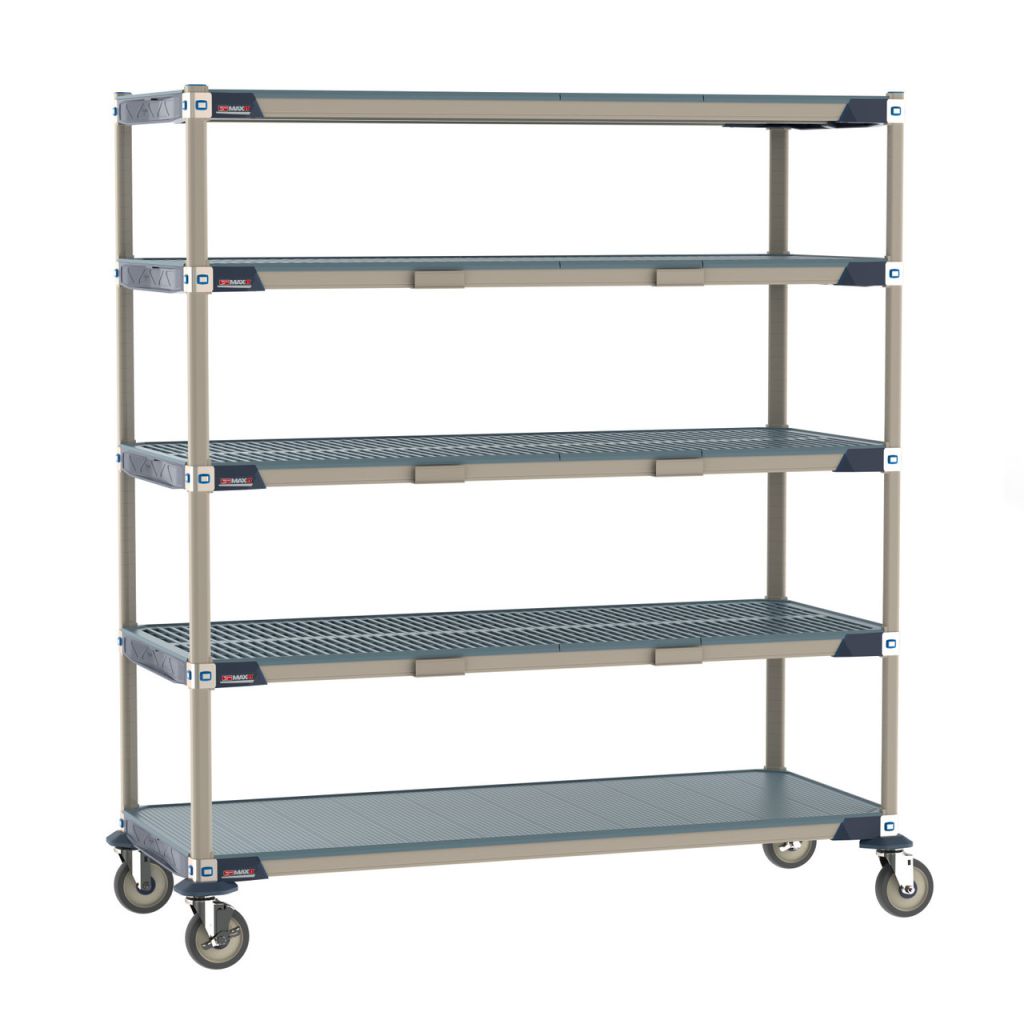
Any stationary MetroMax unit converts to mobile with stem casters — plated casters for general duty, polymer-bodied casters where the caster must survive a washdown. Dollies handle units that only move for floor cleaning.
Metro also builds purpose-designed MetroMax carts: transport and exchange carts move stocked product between departments, and par level carts hold a defined stocking quantity and get exchanged whole rather than restocked in place.
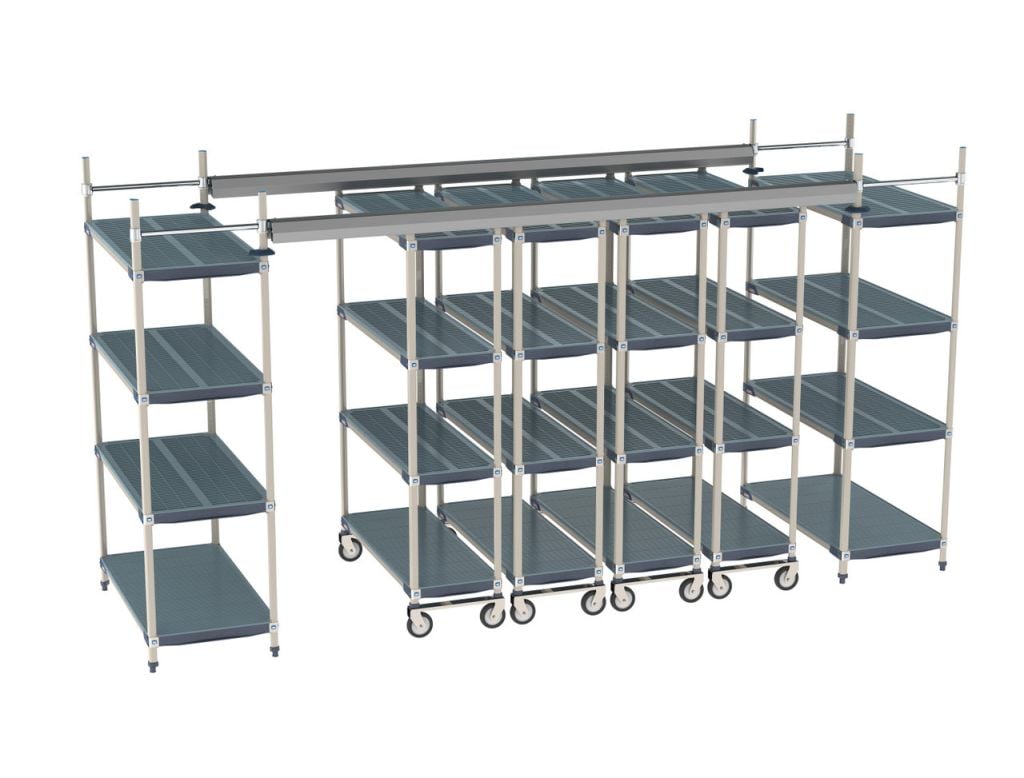
When floor space is the constraint, MetroMax shelves drop into Metro’s Top-Track overhead track and qwikTRAK floor track high-density systems, which collapse the aisles between units — the usual fix for an undersized cooler or an over-stuffed sterile storage room.
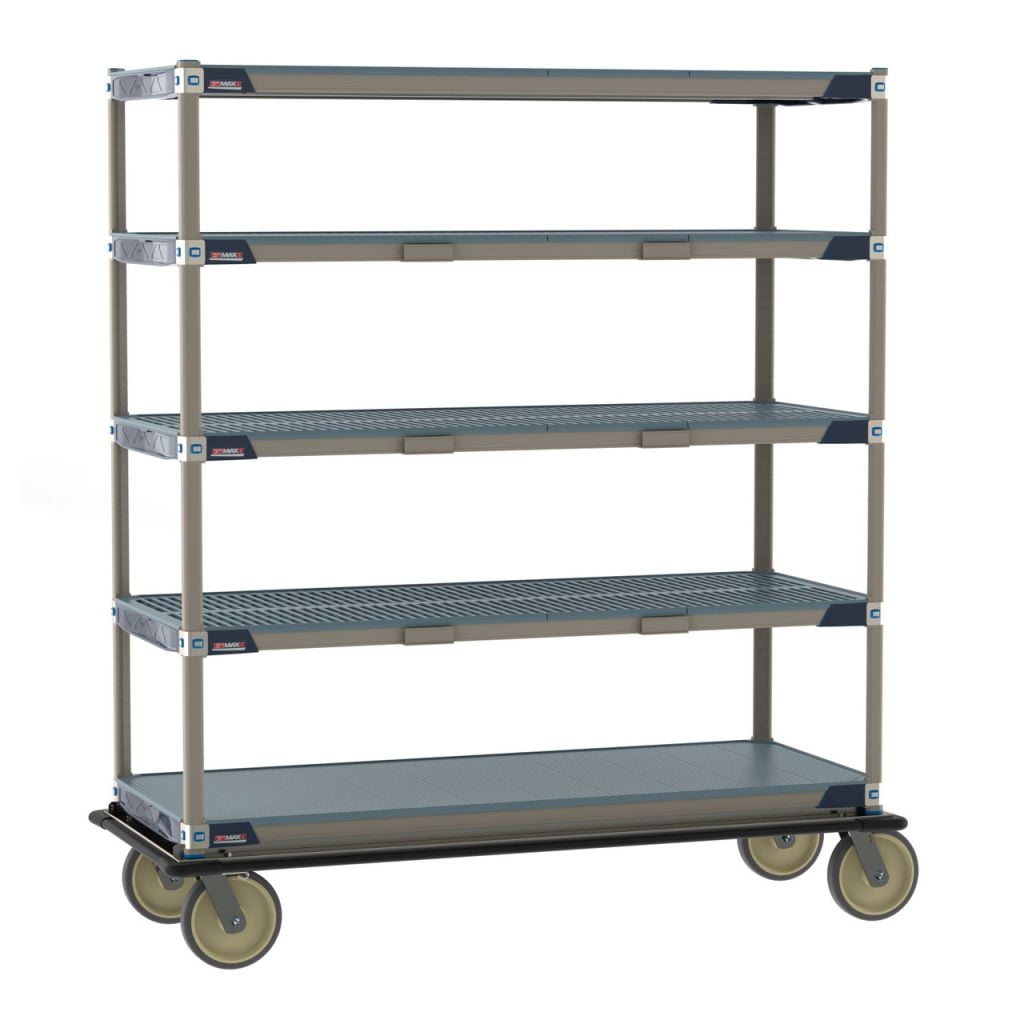 Transport & Exchange CartsMetroMax i carts for moving stocked supply between departments without decanting product.
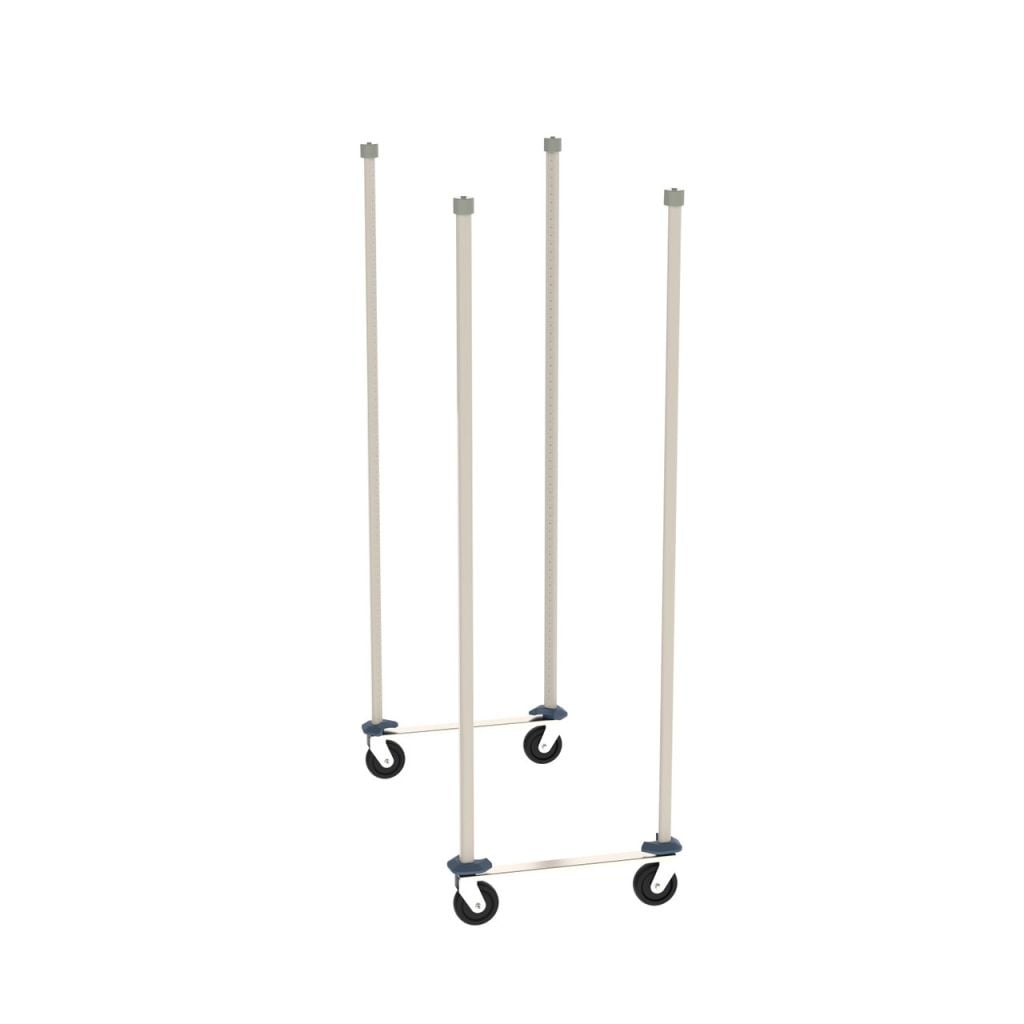 Top-Track High-DensityOverhead track mobile shelving using MetroMax shelves — recovers aisle space.
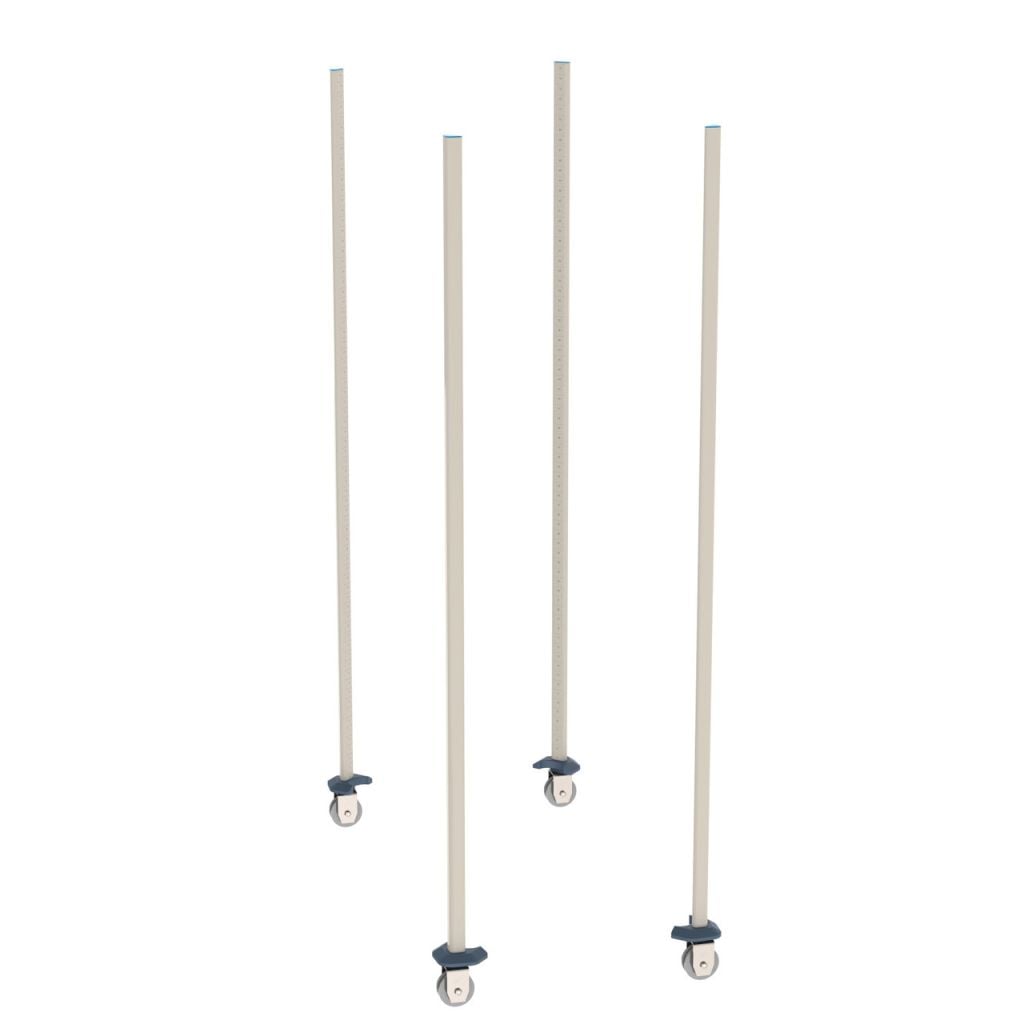 qwikTRAK Floor TrackFloor-track high-density kits for MetroMax shelving where an overhead track is not practical.
 MetroMax 4 Drying RacksIndustrial-grade mobile drying racks with tray racks for high-throughput wash areas.
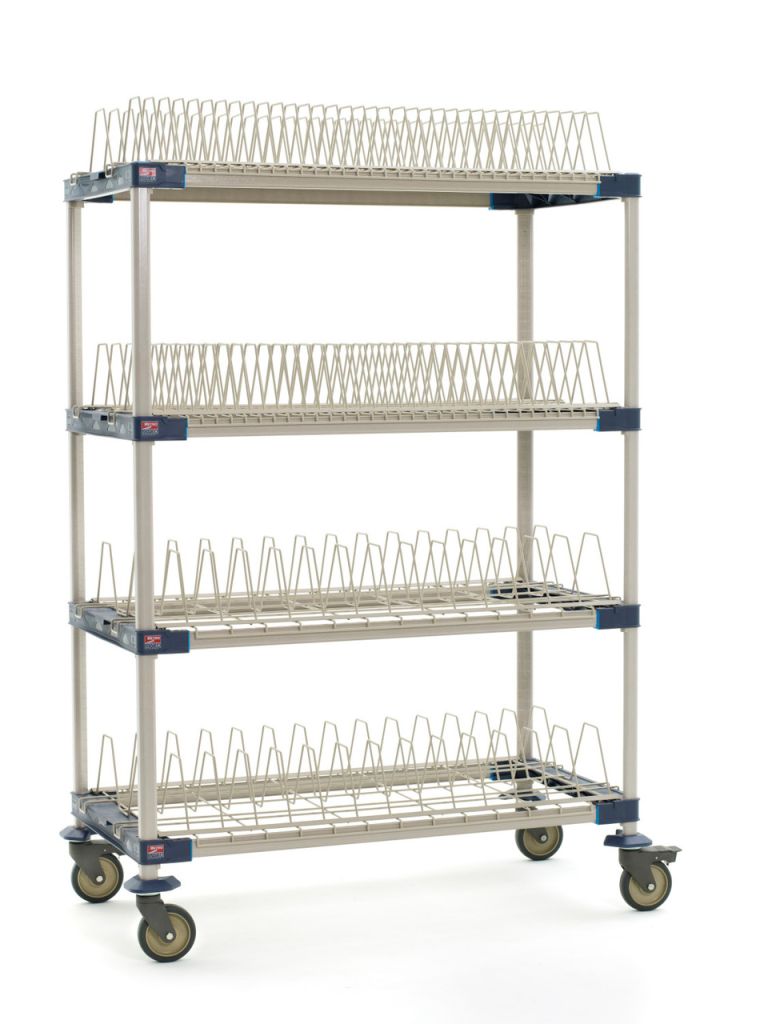 Tray & Pan Rack CombinationsMixed tray and pan rack frames for rooms that wash both formats.
 Casters & DolliesStem casters and dollies convert a stationary unit to mobile — re-check the mobile load rating.
Accessories That Make the Unit Work
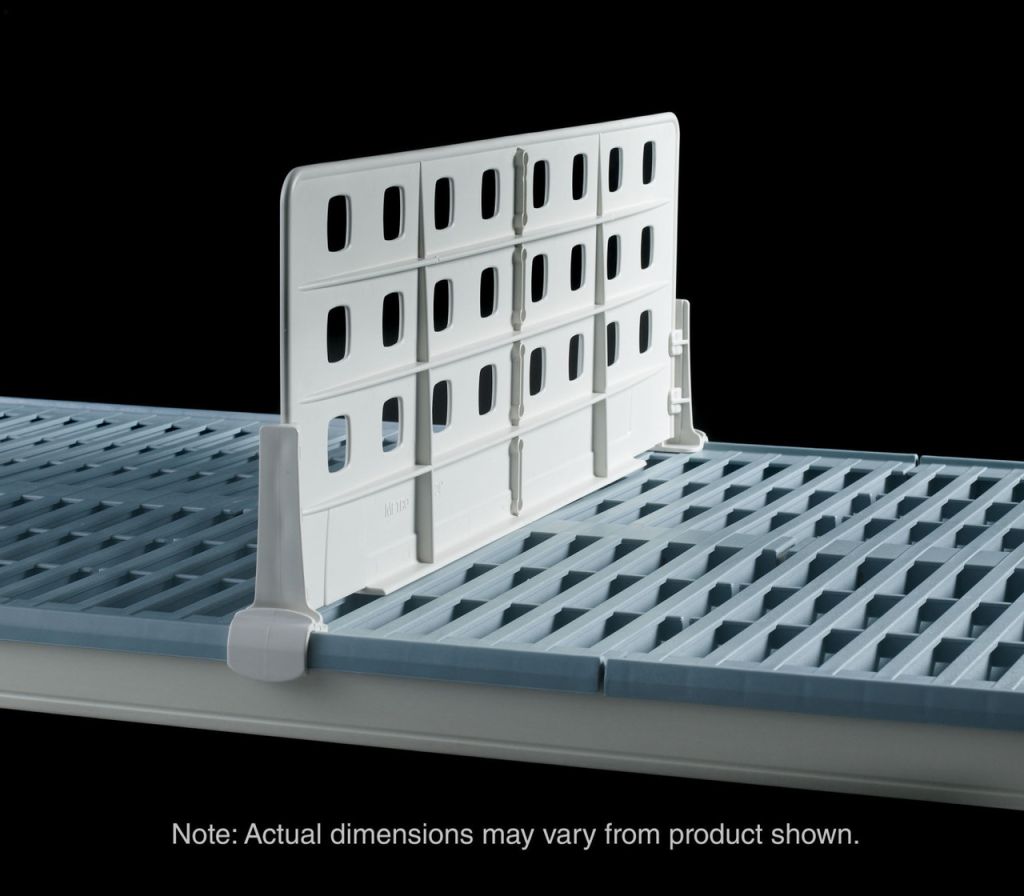
Accessories turn a bare shelf into a storage system, and they are almost always under-ordered on the first purchase.
Shelf dividers snap into the mat and keep boxes, bottles and trays from sliding into each other — the single best fix for a shelf that always looks disorganized. Ledges stop items from being pushed off the edge. Drop-in units replace a shelf level with a tray rack or pan rack insert. Tray slides and pan racks hold trays on edge instead of flat. Label holders clip to the front rail so bin locations survive a reslot, and shelf wedges and post bumpers handle leveling and impact details.
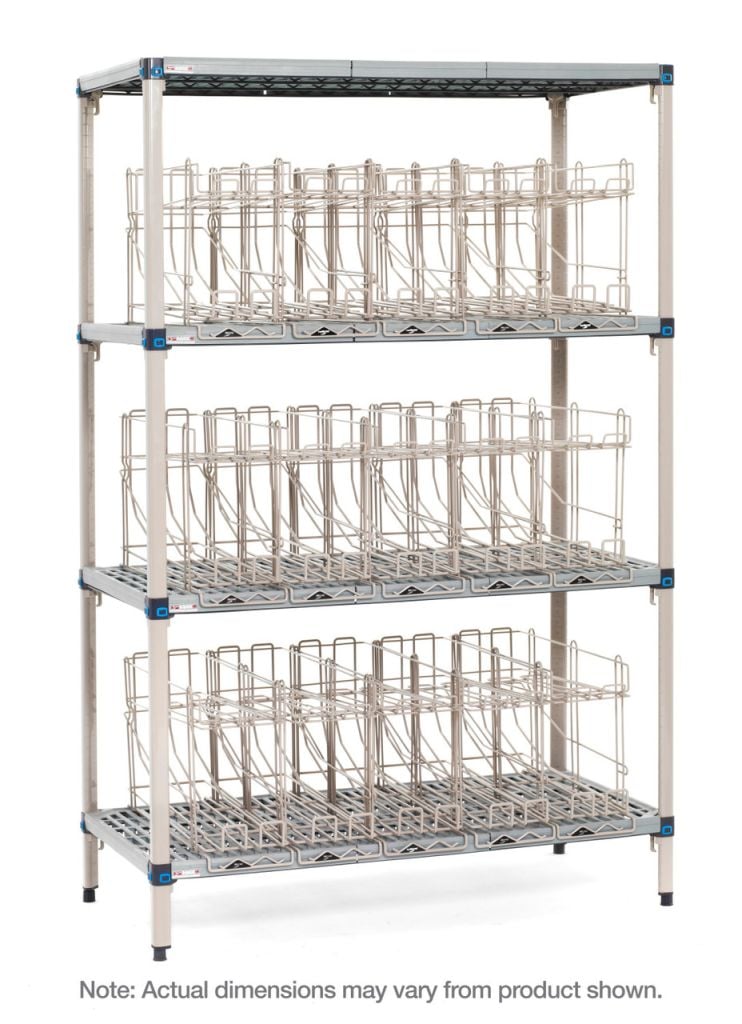
Wall-mounted variants matter too: SmartWall Life kits mount MetroMax 4 shelves on a wall track for prep areas and over sinks. MetroMax Q can rack configurations, including roll-under units, handle gravity-fed #10 can storage in volume kitchens.
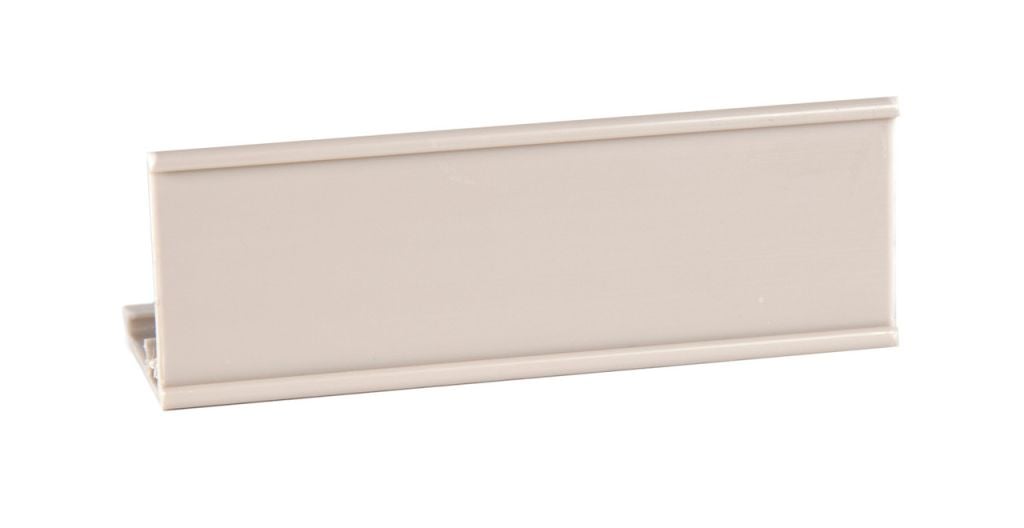 Label HoldersFront-rail label holders keep bin locations legible and reslottable.
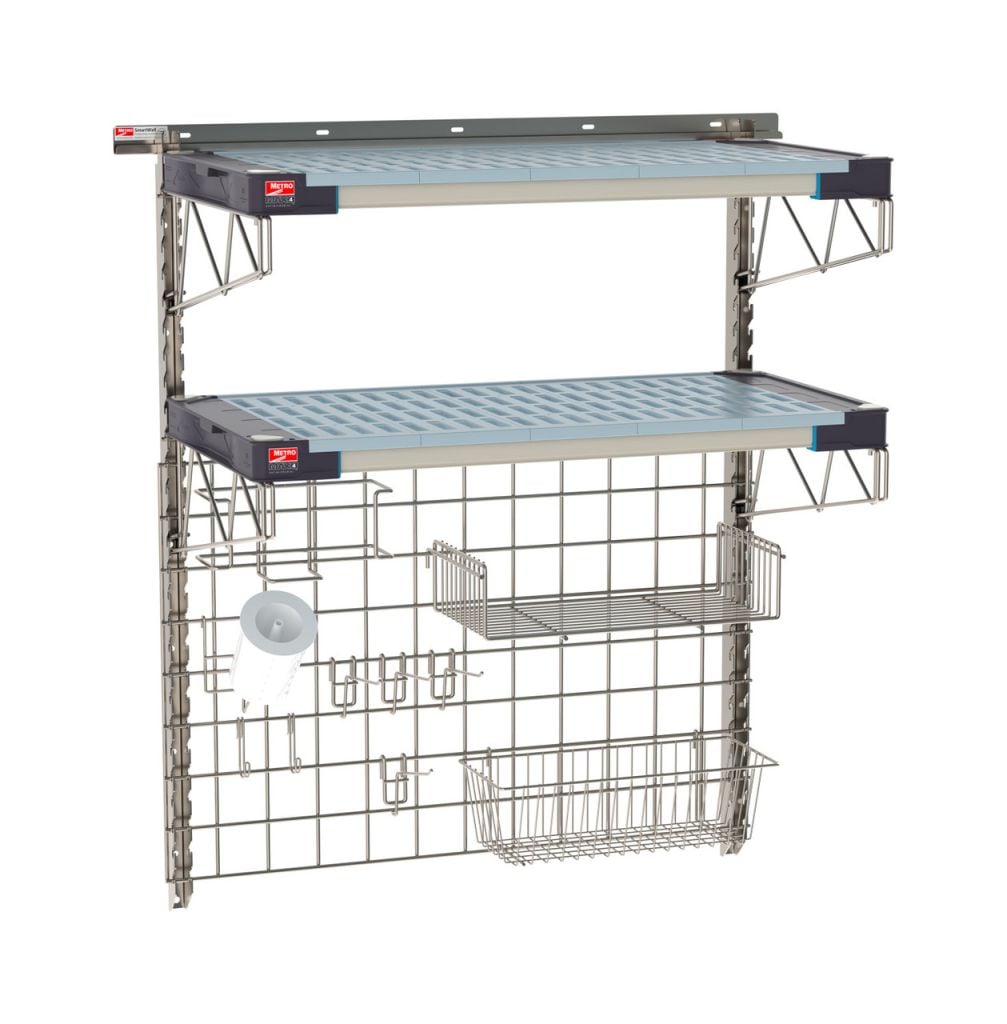 SmartWall Life Wall KitsWall-mounted MetroMax 4 shelf kits for prep and wet areas.
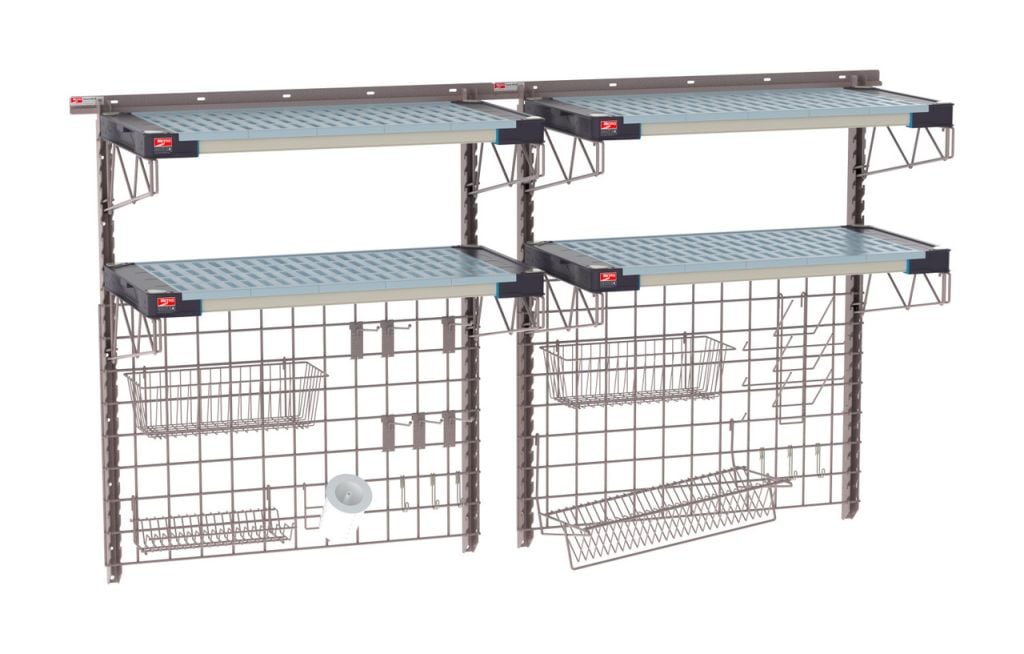 Over-Sink Shelving KitsMetroMax 4 SmartWall sink kits put storage directly above the wash line.
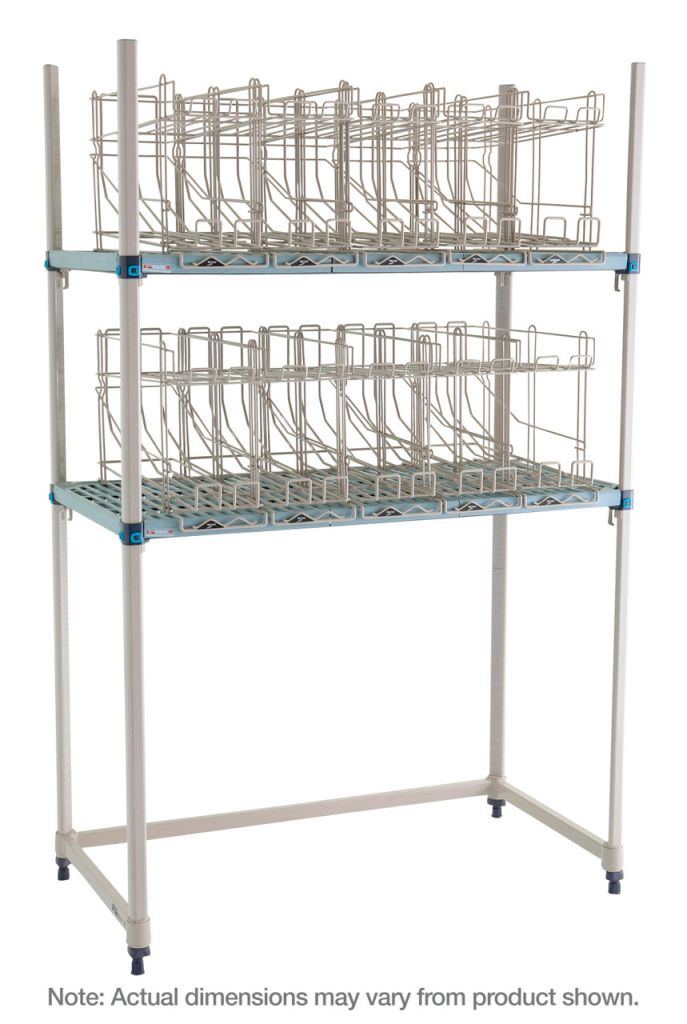 Can Rack UnitsMetroMax Q gravity-fed and roll-under can racks for #10 can rotation.
Send us your room, not just a shelf count
Give us the room dimensions, the temperature, the wash routine and what actually gets stored, and we will lay out the MetroMax units, pick the post finish, size the shelves to real load, and return model numbers, capacities and freight.
Where MetroMax Fits — and Where Wire Still Wins
Polymer is the right answer when moisture, corrosion, cold or a hard cleaning protocol drives the specification. In a dry stockroom, wire is faster and cheaper and will last a career. The rule: if the room gets washed, iced, splashed or audited for sanitation, go polymer; if it is dry, stay with wire.
| Environment | Recommended | Why |
|---|---|---|
| Walk-in cooler or freezer | MetroMax i on epoxy or stainless posts | Grid airflow and a surface that survives freeze-thaw |
| Dish room / washdown kitchen | MetroMax i or 4 on stainless posts | Mats wash in the machine; nothing corrodes under spray |
| Sterile processing | MetroMax i, mobile and roll-under units | Cleanable surfaces and carts that exchange whole |
| Lab and cleanroom | MetroMax i, often on stainless posts | Non-corroding, non-flaking surfaces in wet and chemically active rooms |
| Brewery / winery | MetroMax 4 | Wet floors, sanitizer contact, heavy cased-goods handling |
| Dry goods stockroom | Wire shelving | No corrosion driver — wire is the lower-cost, higher-capacity choice |
Shop MetroMax Polymer Shelving Online
Buy select items directly from our online store, or request a quote for volume, custom sizes and freight-rated orders.
Frequently Asked Questions
What is MetroMax polymer shelving?
What is the difference between MetroMax i, MetroMax Q and MetroMax 4?
Why choose polymer shelving instead of chrome or epoxy wire?
What temperature range does MetroMax handle?
How much weight does a MetroMax shelf hold?
Is MetroMax shelving certified for food or healthcare use?
Get Your MetroMax Polymer Shelving Quote
Send the room, the temperature and what you store. We will spec the series, the post finish and the load, and ship anywhere in the country.