
Home › Metro Healthcare Storage & Medical Carts
Metro Healthcare Storage & Medical Carts
Metro medical carts, healthcare shelving and sterile processing storage for hospitals, surgery centers, clinics, long-term care and pharmacies — specified, quoted and shipped by MH-USA.
1929
Metro founded
30,000+
Metro products
1997
MH-USA serving the West
50
States shipped
Storage Is a Clinical Workflow Problem, Not a Shelf Count
Nobody in a hospital asks for shelving. They ask why the gauze is never where it should be, why the procedure cart is restocked twice a shift, why sterile storage has boxes on the floor. Those questions come down to three decisions: what the supply lives on, where it sits relative to the work, and who refills it.
MH-USA represents Metro, the brand of InterMetro Industries — founded 1929, headquartered in Wilkes-Barre, Pennsylvania, creator of the original Super Erecta wire shelving system, now over 30,000 products. On the healthcare side: Flexline and Starsys medical carts, Nimbl supply and procedure carts, Super Erecta and Super Adjustable Super Erecta wire shelving, MetroMax i / Q / 4 polymer shelving, sterile wrap racks, SmartWall and SmartLever, security shelving and high-density track systems.
Our work is the part that is not in a catalog: reading the room, matching the shelf platform to the wash routine, sizing carts to the procedure, and delivering into a live facility — from Salt Lake City since 1997.
Where Supplies Actually Live in a Healthcare Facility
Six zones, six failure modes. Match equipment to the zone before the budget.
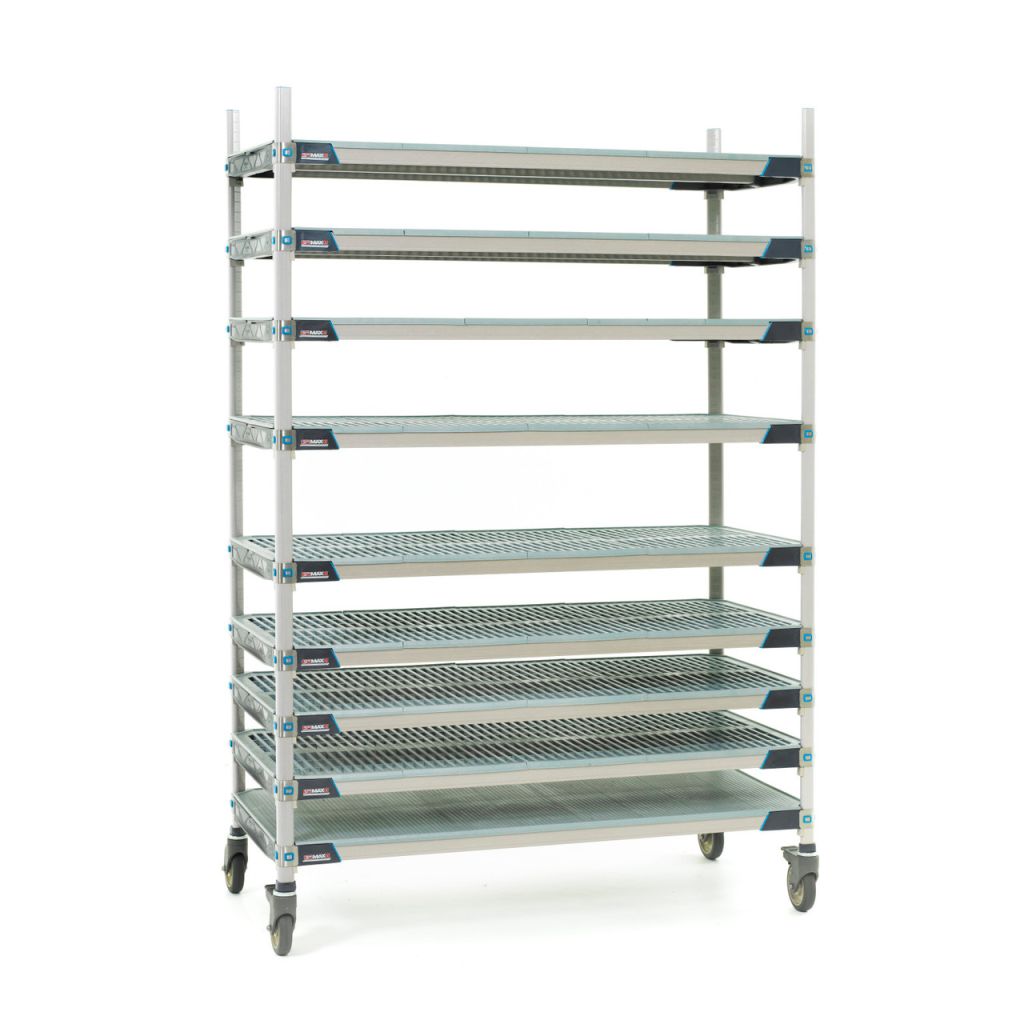
 Central Sterile / SPDWet-area shelving, wrap racks, case carts and wipe-down finishes.
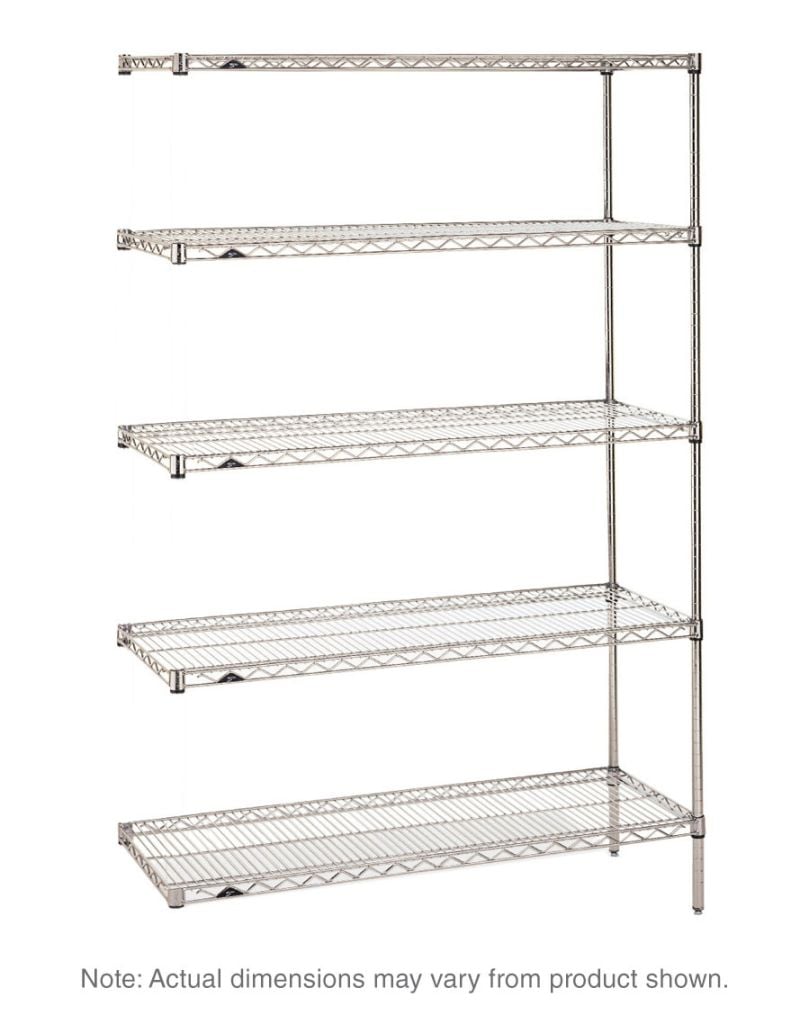 Clean Supply & Med-SurgPar-level stock on open shelving with labeled bins or two-bin lanes.
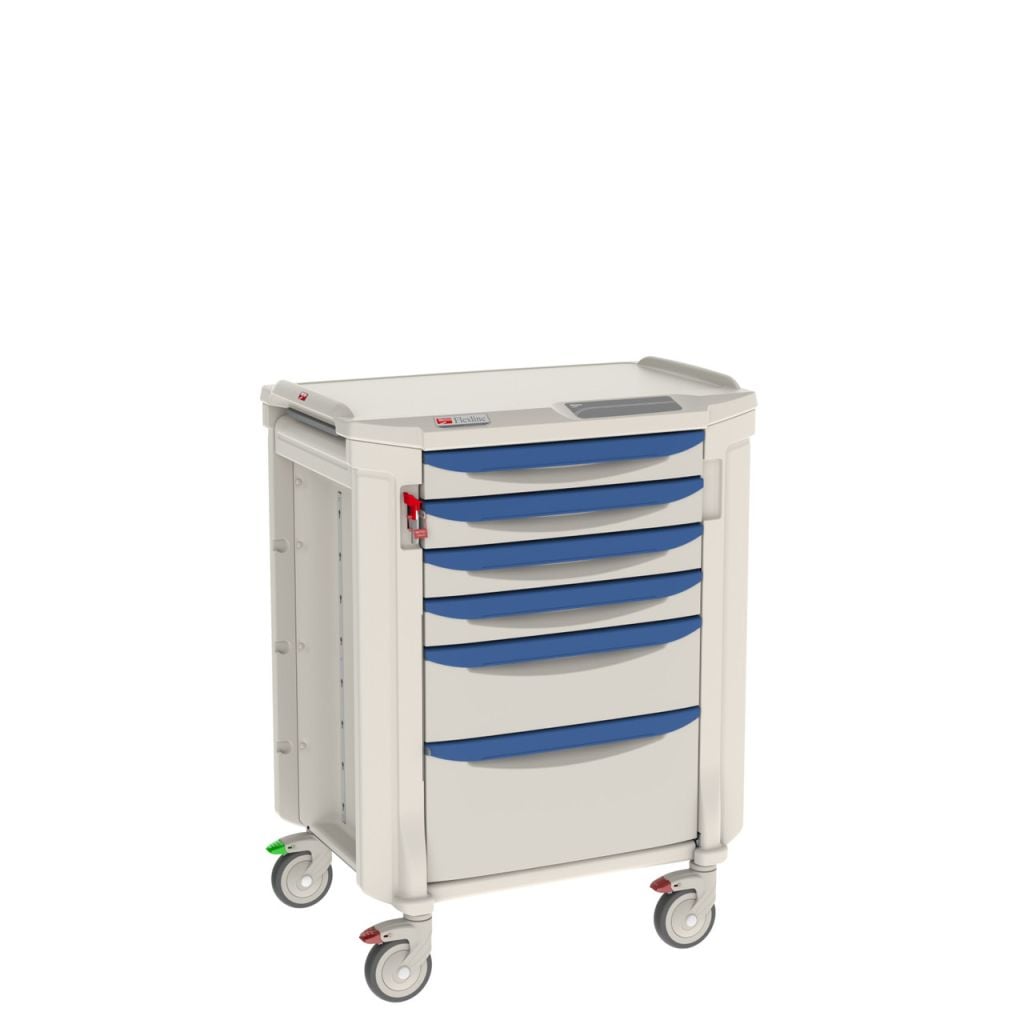 Nursing Units & Exam RoomsNurse-server storage at the room, plus carts that reach the bedside.
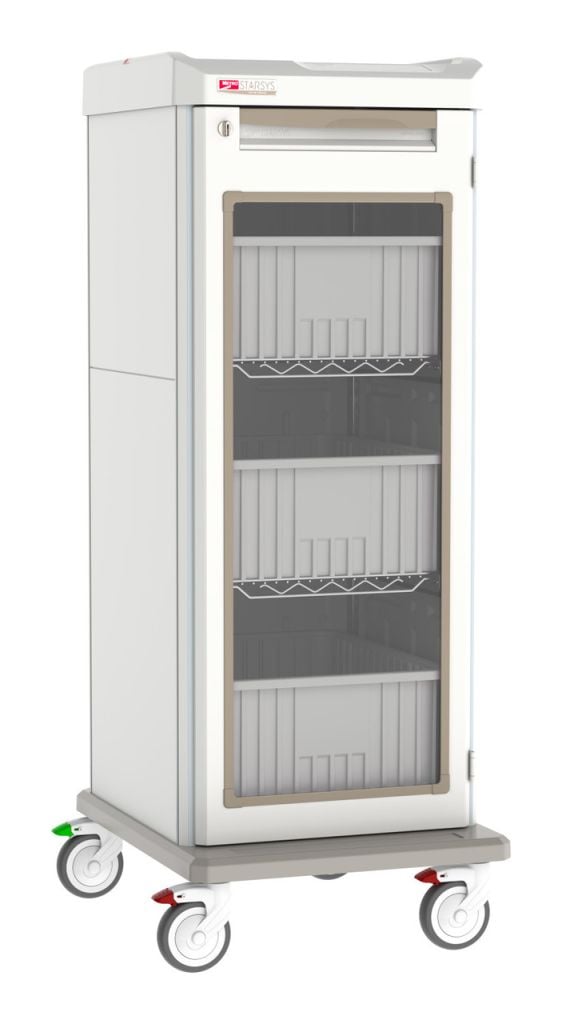 Pharmacy & IV RoomsNarrow aisles, tight shelf pitch, enclosed units for controlled stock.
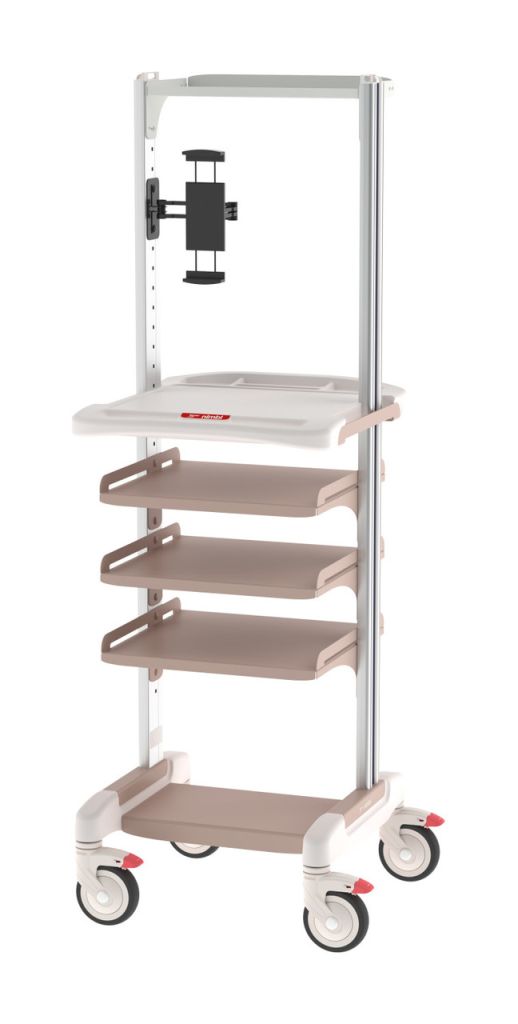 Procedure & Treatment RoomsEndoscopy, phlebotomy and treatment carts configured to one procedure list.
 OR, Surgery Centers & TransportCase carts and transport carts — does it fit the elevator?
Central Sterile and SPD Storage: The Realities
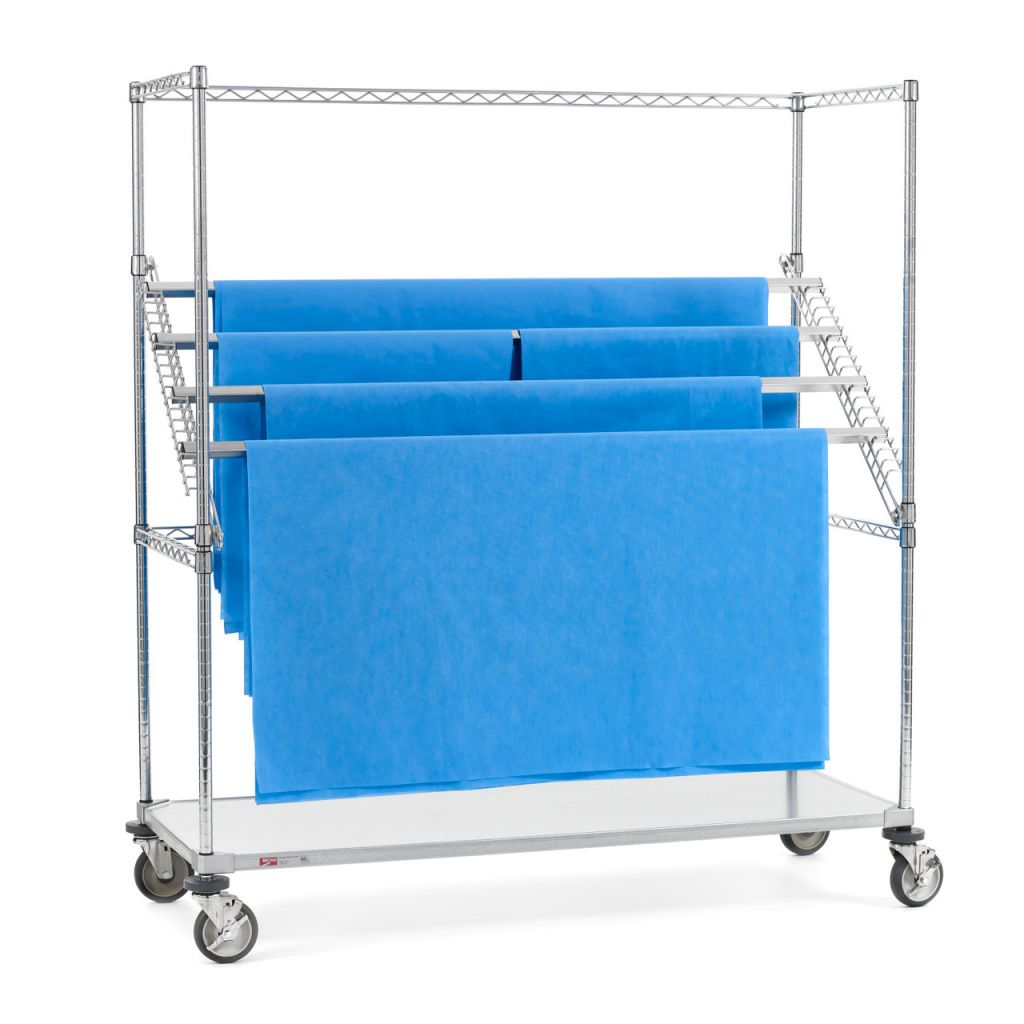
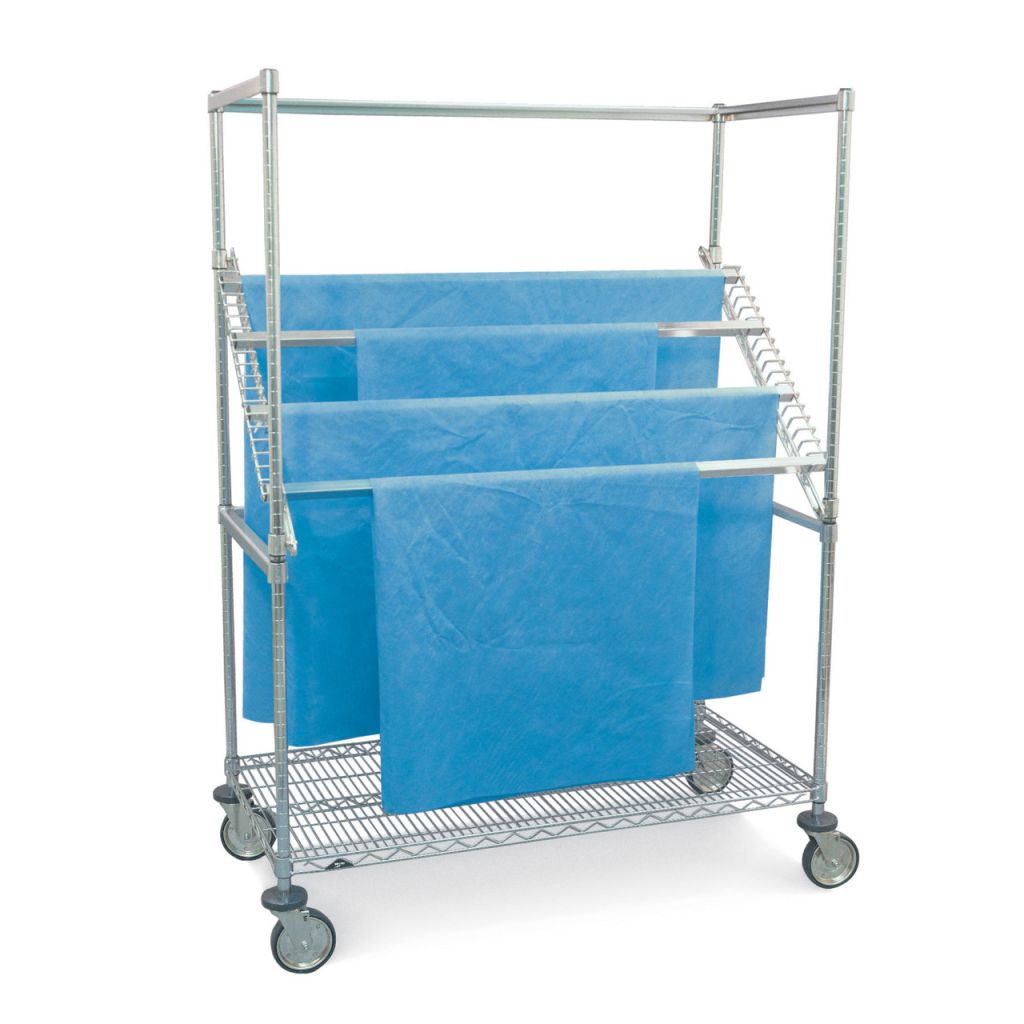
Sterile processing is scrutinized hardest, because package integrity is the point. Open versus solid: open wire and open-grid polymer is the default in sterile storage — air moves, dust does not settle on a pan, staff see the shelf above. Exceptions are the bottom shelf, often solid, and staging shelves. Wrapped trays should not be compressed or dragged across a grid that snags wrap, so wrap racks and shelf pitch matter more than shelf count.
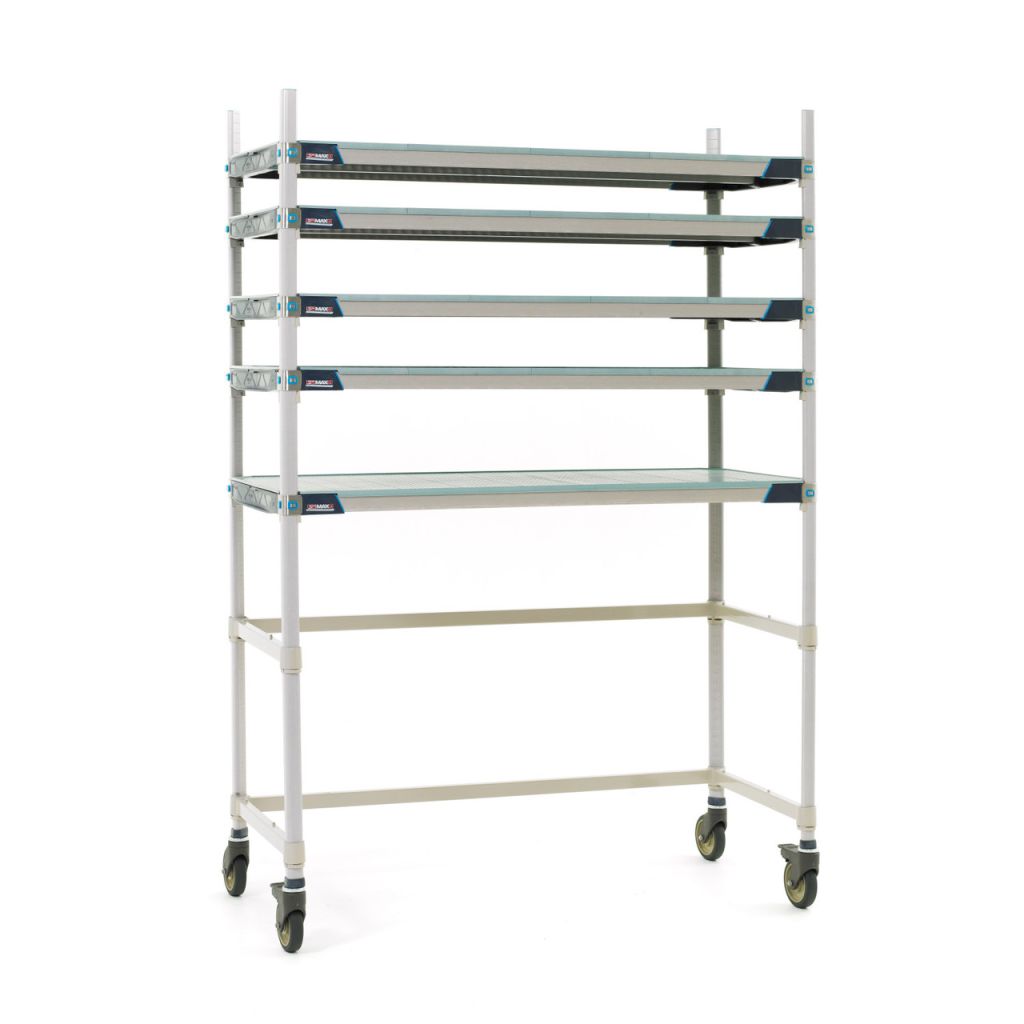
Wall-mounted versus mobile. SmartWall and cantilevered SmartLever get storage off the floor, speeding cleaning and recovering footprint in a narrow prep-and-pack room. Mobile units win where layouts change.
Cleanability. Removable polymer mats can be cleaned off the unit — the biggest difference from welded wire in a wet room. Epoxy and Metroseal handle humidity better than chrome; stainless handles the harshest routines. If a unit sees a cart wash, posts and casters must be specified for it too.
| Storage need in SPD | What we usually specify | Why |
|---|---|---|
| Sterile wrap staging | Super Erecta high-profile wrap rack | Holds wrap flat; solid bottom protects the lowest level |
| Decontamination side | Polymer shelving with removable mats, epoxy or stainless | Mats come off to clean; finish survives a wet room |
| Cart-wash / high-heat | Swaged stainless posts, autoclave stem casters | Standard posts and casters are not specified for it |
Med-Surg Supply Rooms and Two-Bin Replenishment
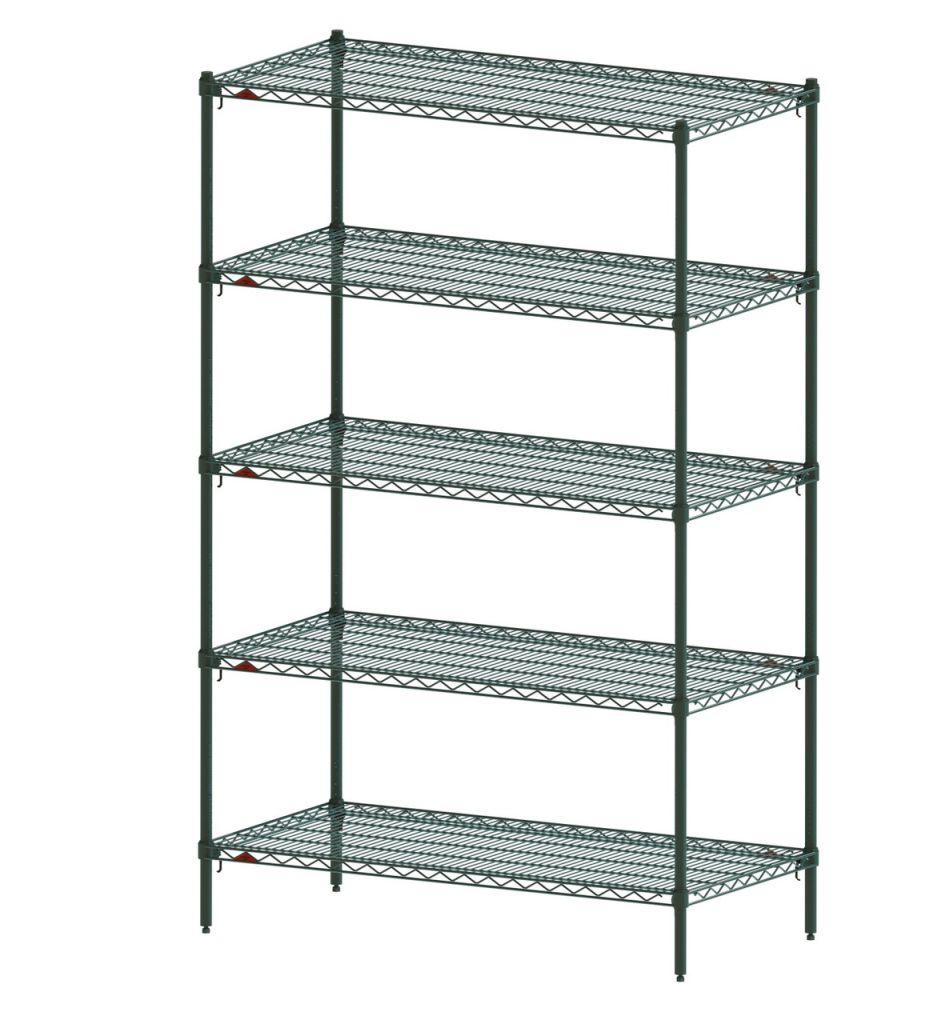
A clean supply room is a distribution center restocked by someone with twelve other rooms to do. The pattern that works: one item per location, labeled at the shelf edge, quantity visible from the aisle, heavy product at waist height.
Two-bin kanban. Each item gets a front bin in use and a back bin in reserve; when the front empties it comes forward as the replenishment signal and the reserve slides in. That needs shelf depth for two bins nose-to-tail, dividers so lanes do not merge, and shelf-edge labels that survive wiping.
Sizing rules. Shelf width to the room, not the catalog: measure wall to wall and subtract for door swing and sinks. Keep the top shelf reachable without a stool, the bottom shelf clear for a scrubber, and posts inside the sprinkler clearance your facility enforces.
Pallet loads and bulk backstock are a different problem from par-level stock.
Count case dimensions, not SKUs
The common mistake is planning by item count: ten SKUs arriving in 24-inch cases need more linear shelf than forty small boxes. Send the par list with case dimensions and we size the bays first.
Nurse Server Storage and Exam Room Supply
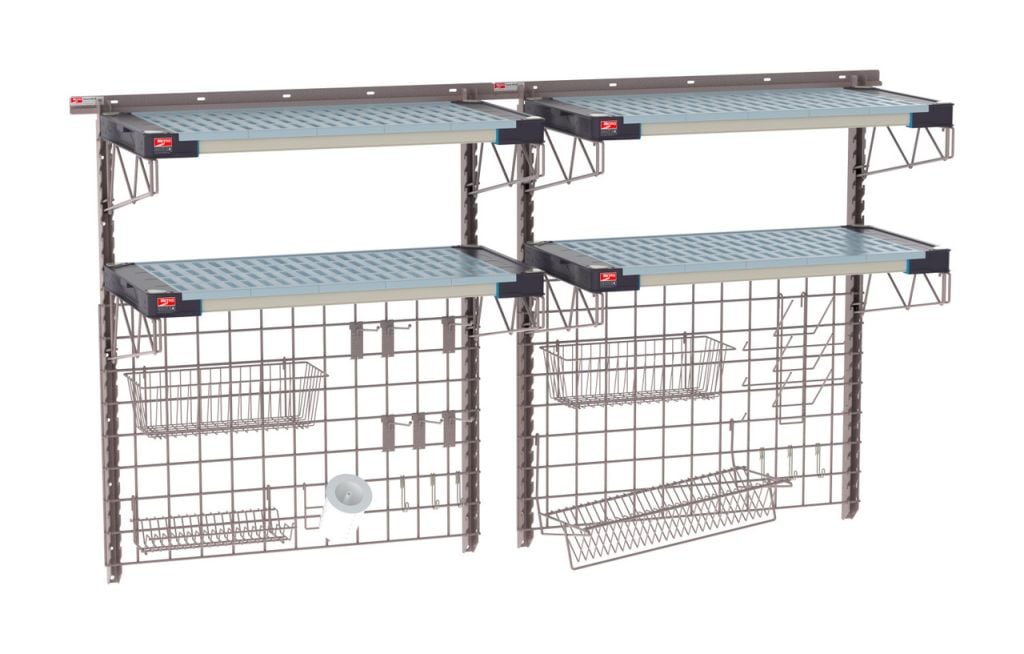
Nurse-server storage — supply held at or just outside the patient room rather than centrally — removes walking from every task. It is easy to get wrong: the space is tiny and the item list is not.
Two approaches, usually combined. Wall-hung shelving and cantilever systems put a defined item set on the wall in the alcove or inside the room, with nothing on the floor to clean around. A mobile cart parks in the alcove, carries a deeper list and rolls out to be restocked. What decides is who owns replenishment and whether the corridor can hold a parked cart without affecting egress — a call for your safety team.
For clinic exam rooms the practical version is a compact cart: work surface, two to four shallow drawers, one deeper drawer for bulk, an accessory rail with sharps bracket and glove box holder, and a lock only if the contents justify it.
Pharmacy Shelving and IV Room Storage

Pharmacy storage optimizes for shelf density and retrievability in a room that is always too small: tighter shelf pitch than anywhere else, narrow aisles, labeling legible without moving a box.
Shelving. Wire and polymer both work; the deciding factors are whether the room is wet-cleaned, whether small vials tip through a grid, and how often shelf heights get re-set. Super Adjustable Super Erecta earns its keep because pharmacy shelf heights change with the formulary.
Secure storage. Controlled and high-value stock needs an enclosure, not a shelf. Metro security shelving wraps a standard unit in enclosure panels with a hinged or SlideSecure door, stationary or mobile, in chrome, epoxy, Metroseal and stainless. On carts, locking drawers plus keyless-entry or PIN locks cover the same need at the point of use.
IV and staging carts. A secure IV cart holds prepared doses and supplies where they are used, with a work surface, braking casters and a lock.

Procedure, Isolation and Transport Carts: What to Spec

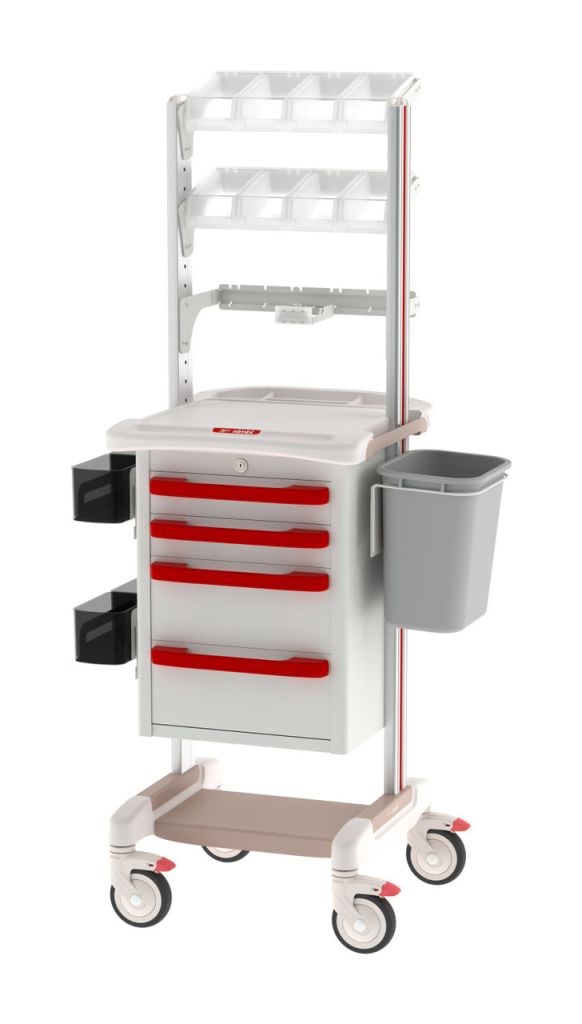
Metro’s cart lines: Flexline general use, procedure and phlebotomy carts on a modular drawer system; Starsys general use, biomedical and secure IV carts; Nimbl supply, workstation and endoscopy carts; myCart and MW utility carts. The line matters less than the configuration: a cart wrong on drawers or locks is wrong every shift for ten years.
Drawers first. Group the list by depth. Shallow 3-inch drawers hold high-frequency consumables and stop staff digging; 6-inch and 9-inch drawers take bulk, tubing and kits. Divider kits keep a drawer from becoming a bin; coloured pulls and labels make a shared cart legible.
Hardware. A top ledge so nothing rolls off in a corridor. Casters sized for thresholds and elevator gaps, at least two braking; high-temperature casters only if the cart truly sees wash heat. Push handles at a height that lets someone see over the load. Accessory rails: sharps bracket, glove box holder, covered bins, IV pole, waste bin, monitor mount. Locks: drawer locks, seal lock bars and seals for tamper evidence, push-button, keyless touchpad or electronic PIN, plus LockView cart management software where an audit trail is wanted.
| Cart use | Typical configuration | Watch out for |
|---|---|---|
| Med-surg supply cart | Tall cart, mostly shallow drawers, braking casters | Over-deep drawers become unsearchable bins |
| Procedure / treatment | Mixed 3in / 6in / 9in drawers, work surface, sharps bracket | No accessory rail means everything lands on top |
| Isolation cart | Parked at the room, PPE drawers, waste bin, wipeable surfaces | Corridor clearance and egress — ask your safety team |
| Crash cart alternative storage | Individually locking drawers, seal lock bars, coded pulls | Contents and checks follow your clinical policy |
| Light transport / clinic | myCart or MW utility cart, two or three shelves | A utility cart is not a secure cart |
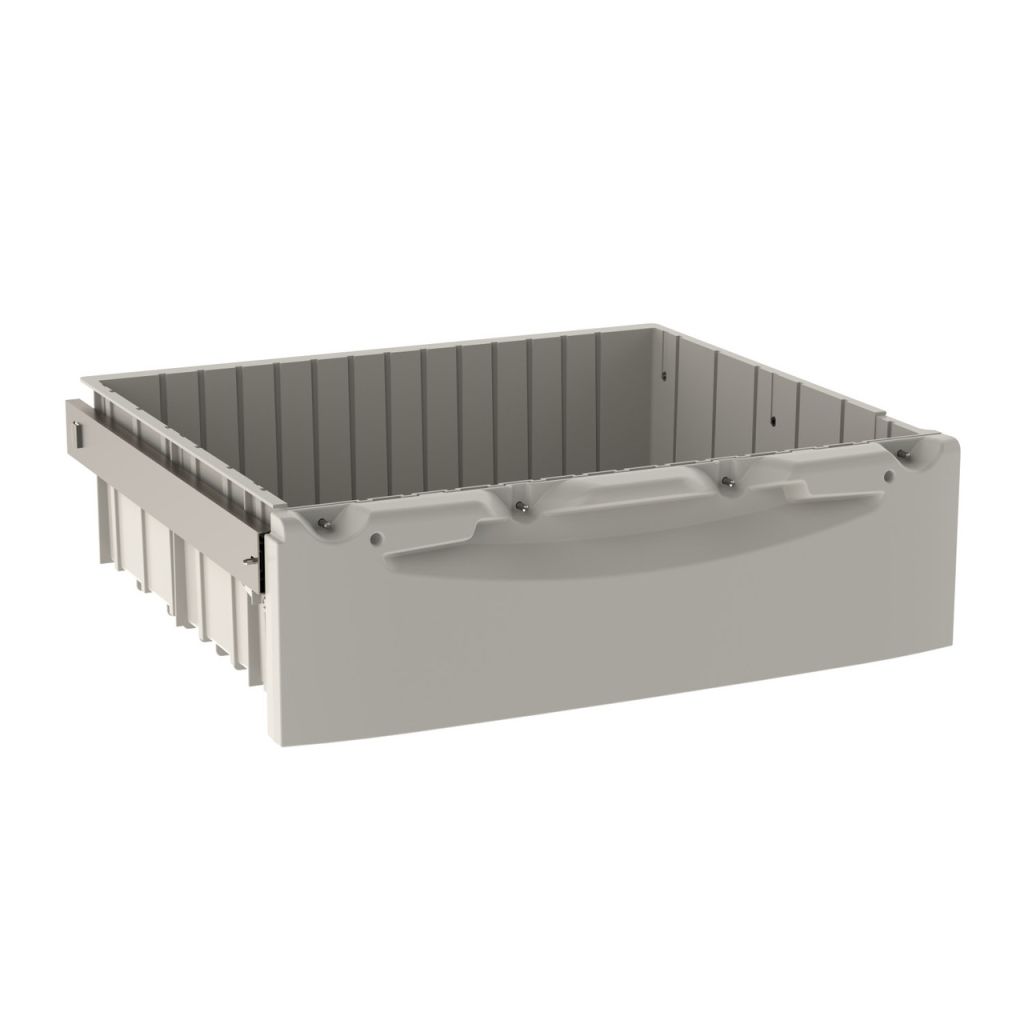 Modular DrawersDrawer heights that match the item list.
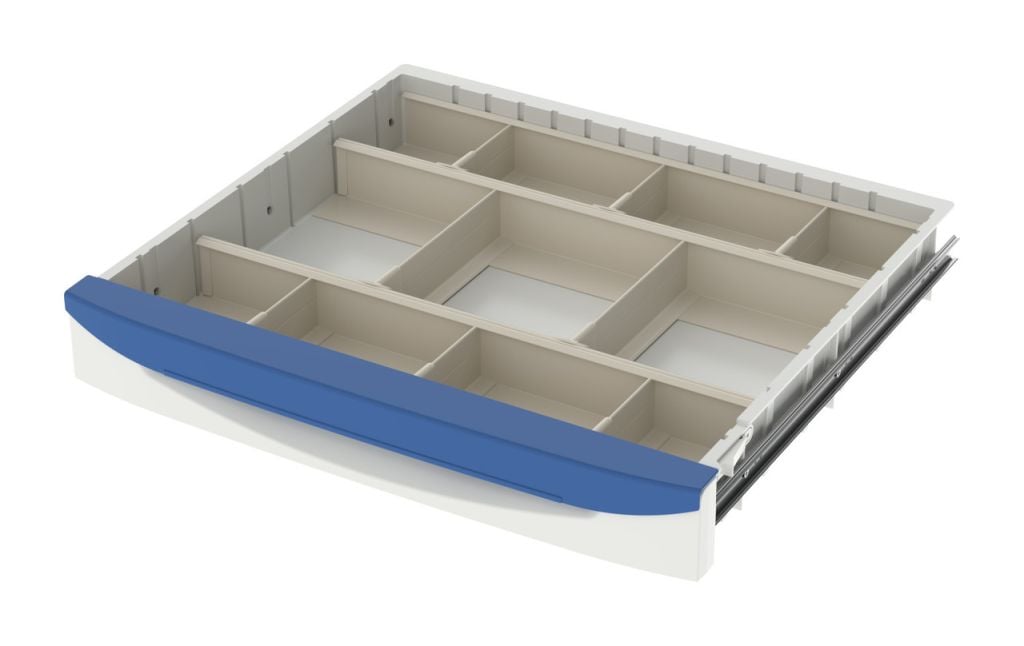 Divider & Tray KitsFour-compartment, high-capacity and egg-crate kits.
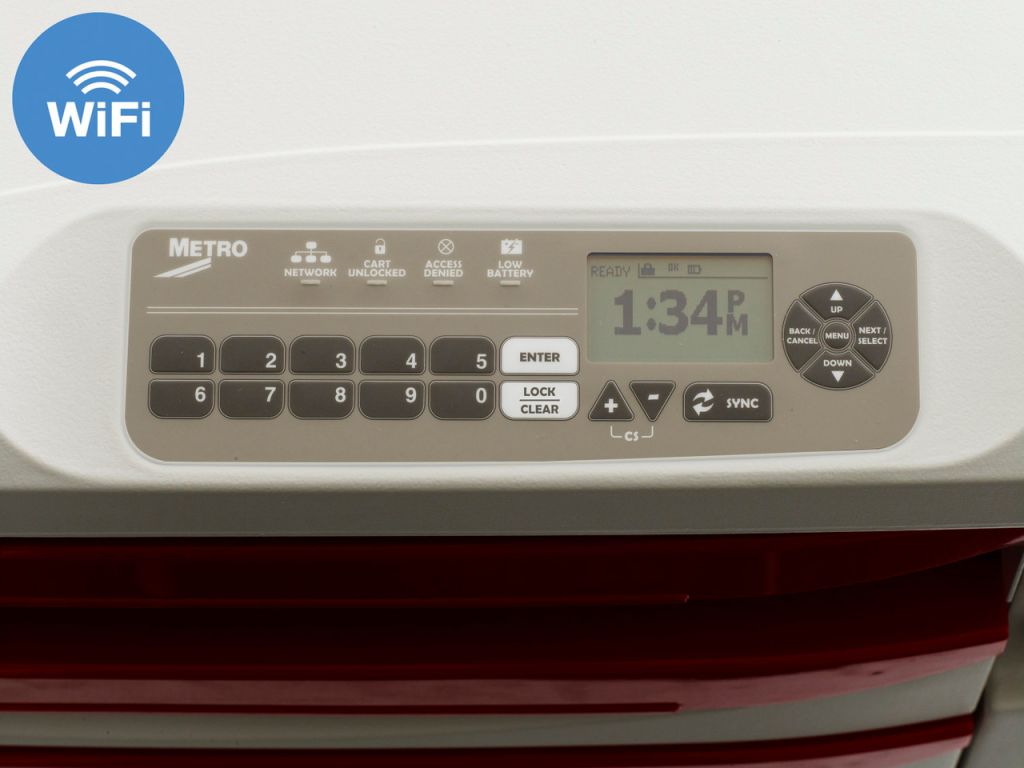 Locks & AccessKeyless touchpads, PIN locks, drawer locks, seal lock bars, seals.
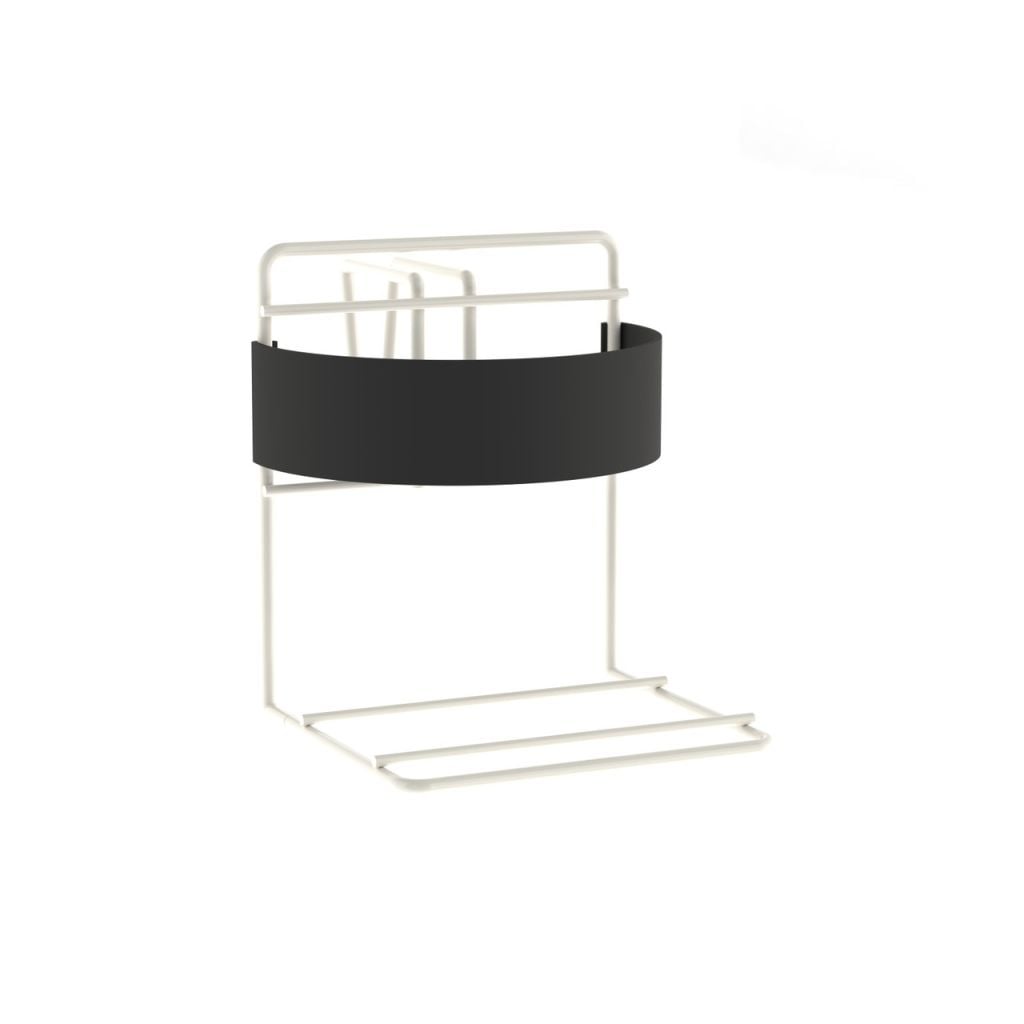 Accessory Rail HardwareSharps brackets, covered bins, monitor mounts, keyboard trays.
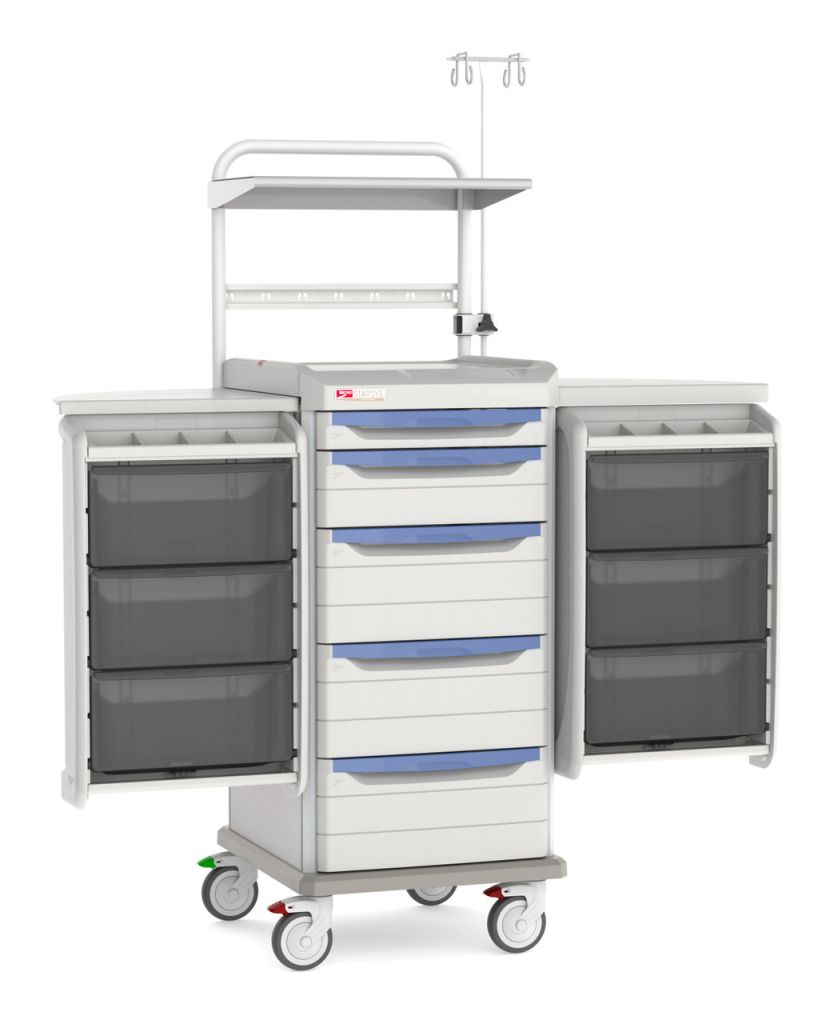 Starsys Specialty CartsBiomedical, general use and secure IV configurations.
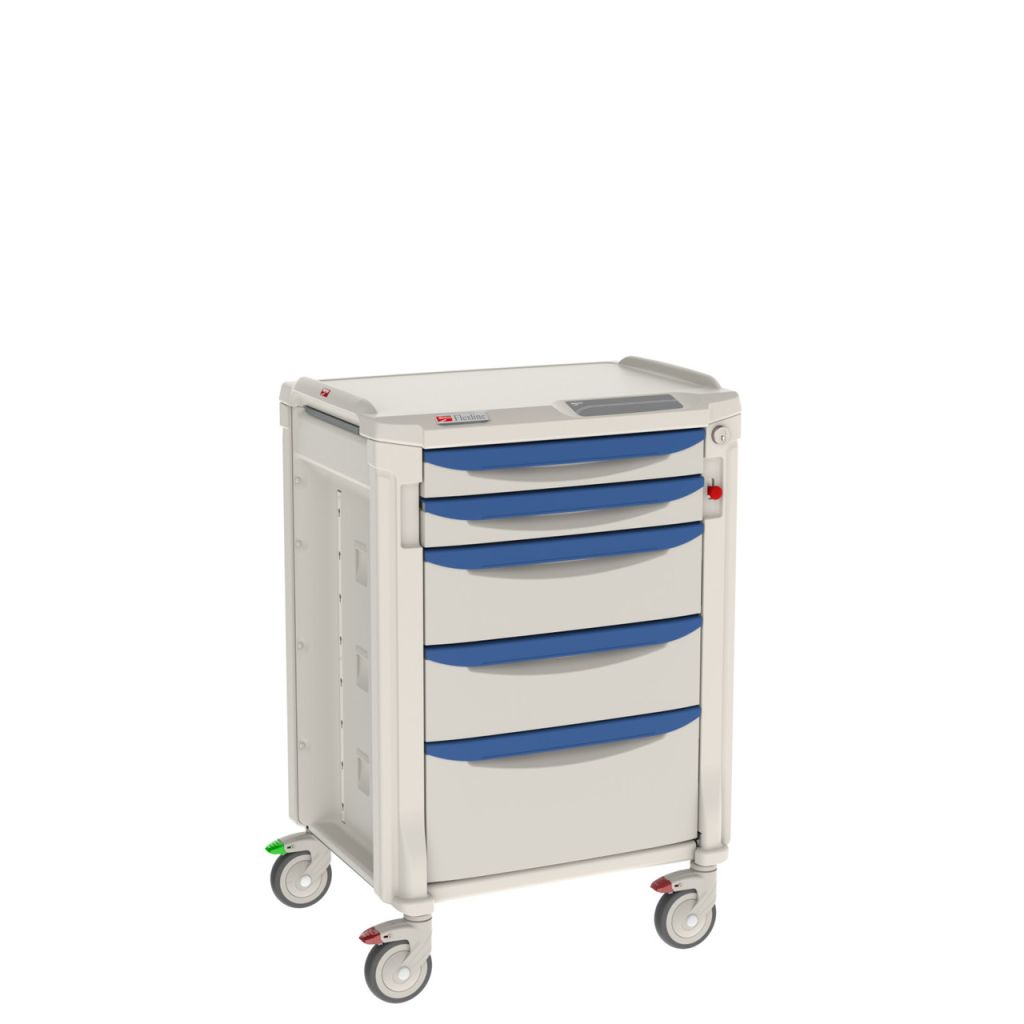 Precaution & Staging CartsWipeable carts for PPE and isolation staging at the room.
Mobile High-Density Storage vs Static Shelving
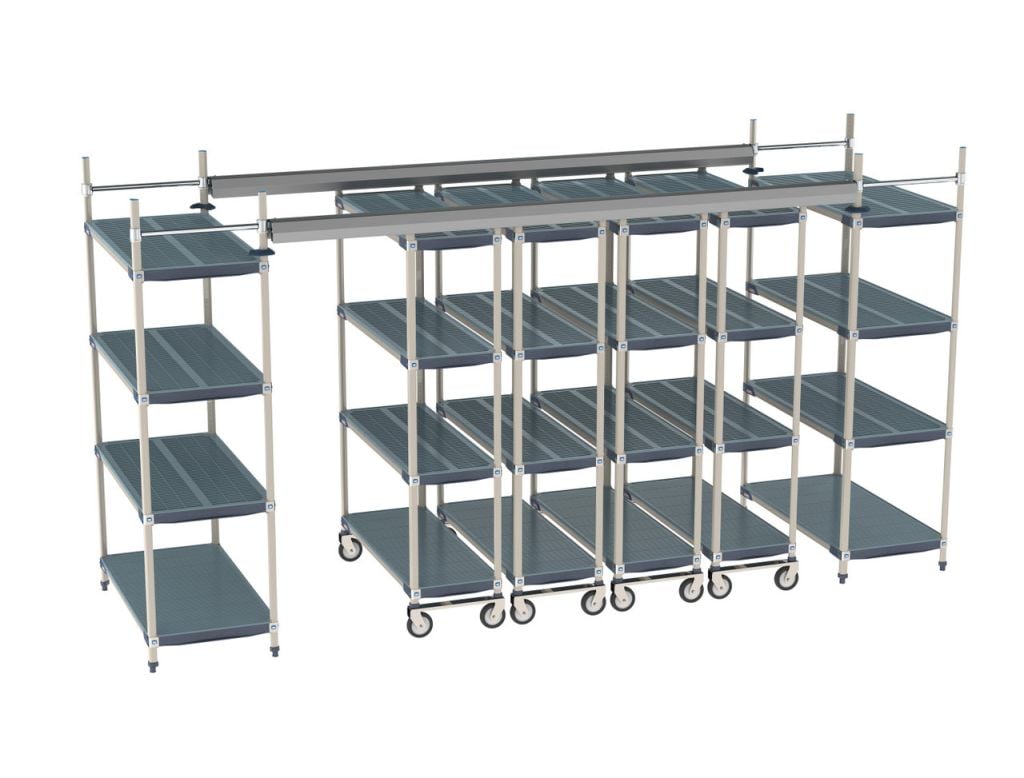
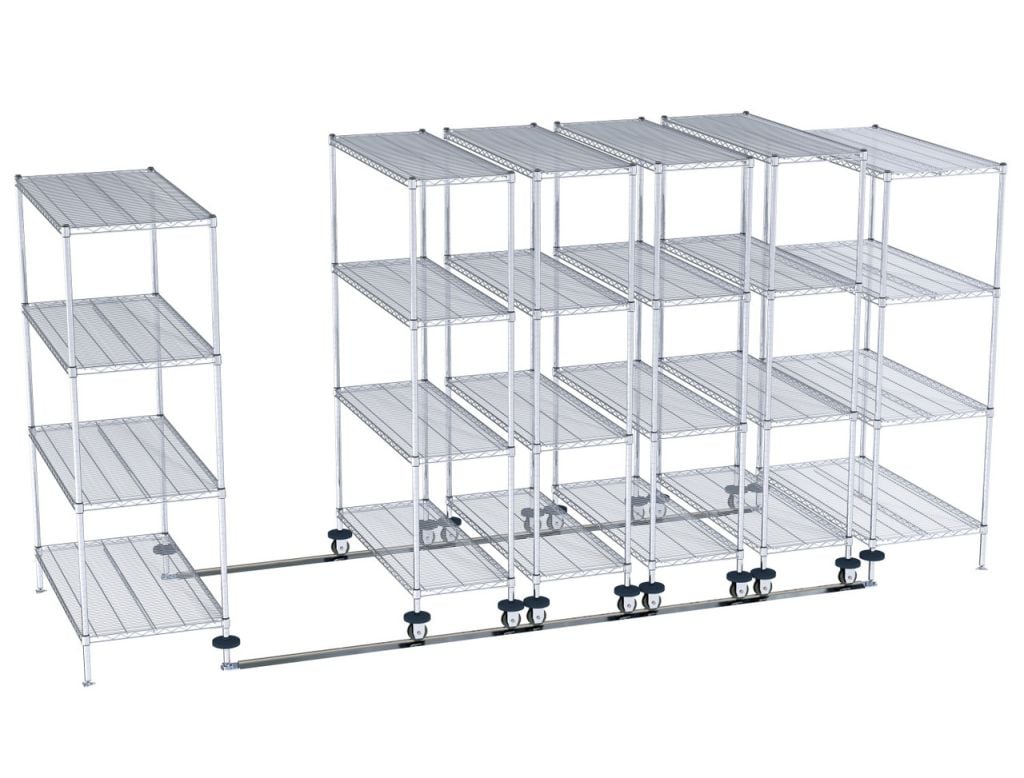
When sterile storage or clean supply is full, the instinct is more shelves. Usually the room is spending its space on aisles: static layouts need an aisle at every bay, while high-density systems put units on tracks so a group of bays shares one movable aisle.
Top-Track hangs units from an overhead track and leaves the floor clear — the usual choice in sterile storage. qwikTRAK runs on a floor track, simpler where the ceiling cannot carry one. Both suit Super Erecta wire and MetroMax polymer shelving.
Rough check: a room with three static bays and three aisles usually frees floor for one to two more bays — a 30–60% gain in the same walls. The caveat is a step added to every retrieval. High-density track systems are covered across brands in our mobile shelving category.
Mobile-ready is the middle path: many units can be ordered on stem casters, so they roll out for cleaning without committing to track.
Cleaning and Wipe-Down as a Housekeeping Practice

This is housekeeping practice and equipment selection — not a certification, an infection-prevention protocol or a medical claim. Your infection prevention and environmental services teams own the protocol, and cleaning products must follow facility policy and the care instructions for the finish. Equipment choice can make it easier to follow:
- Removable shelf mats — polymer mats lift off to be cleaned away from the unit.
- Fewer catch points — open grid and smooth surfaces hold less dust than pans with seams.
- Roll-under clearance — a high bottom shelf, or a unit that rolls out, lets a scrubber reach the floor.
- Finish by room — chrome for dry rooms, epoxy and Metroseal for humid areas, stainless for wet or hot routines. Chrome in a decon room is the classic mistake.
- Hard, non-porous surfaces — no fabric or unsealed wood on a cart wiped between rooms.
Metro offers Microban product protection on selected lines; we identify by model where it applies and make no health claim. Listings are model-specific — send your model list and we confirm status in writing.
How to Plan a Supply Room Layout
A layout takes an hour to do properly and saves weeks of frustration:
Measure honestly
Wall to wall both ways, door swing, sinks, outlets, sprinkler heads, drains.
Par list with case sizes
Case dimensions and par quantities convert into shelf feet. SKU counts do not.
Zone by frequency and weight
Fast movers at hand height near the door, heavy at waist height.
Lay out bays and aisles
Shelf depth first (18in or 21in), then bay widths that fit the wall, then static versus track.
Labeling and dividers
Shelf-edge label holders, dividers for two-bin lanes, shelf heights set to the tallest case.
Access and delivery
Corridor width, elevator size, delivery hours, who assembles.
Questions to Ask Before You Order
- Exact wall-to-wall dimension — and does a sink or door swing intrude?
- Open grid or solid at each level, and does the bottom shelf hold product?
- Static, mobile-ready, wall-mounted or track — and the narrowest door and elevator?
- Which items must be enclosed and locked, and who controls access?
- Per cart: drawers, work surface, lock, casters, handles, accessory rail?
Send us your room dimensions and par list
Email a dimensioned sketch, your par list with case sizes and a photo of the room. We return a layout, cart configuration sheet, model numbers, lead times and freight.
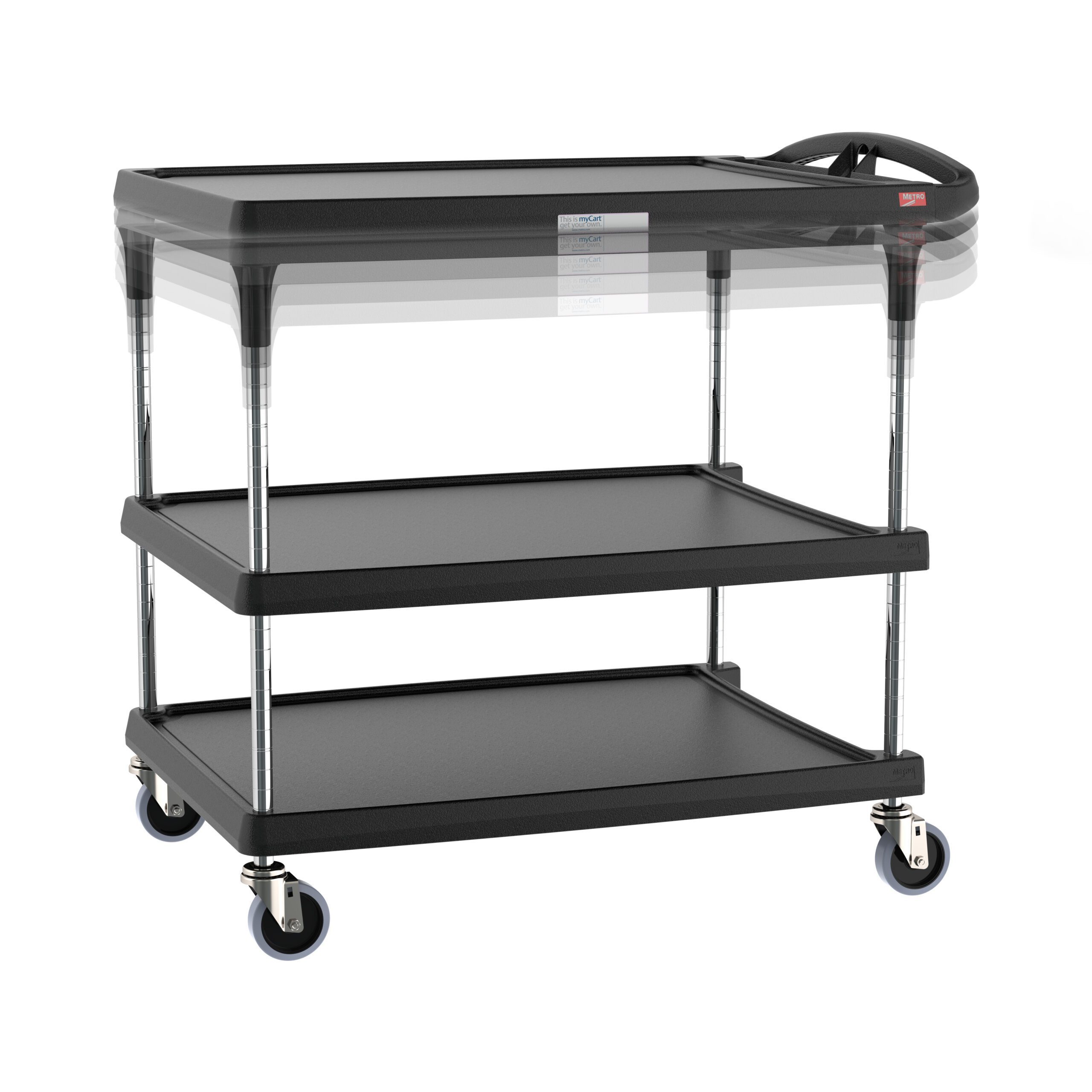
Shop Metro Utility Carts Online
Buy select Metro carts from our online store, or request a quote for medical cart configurations and healthcare shelving packages.

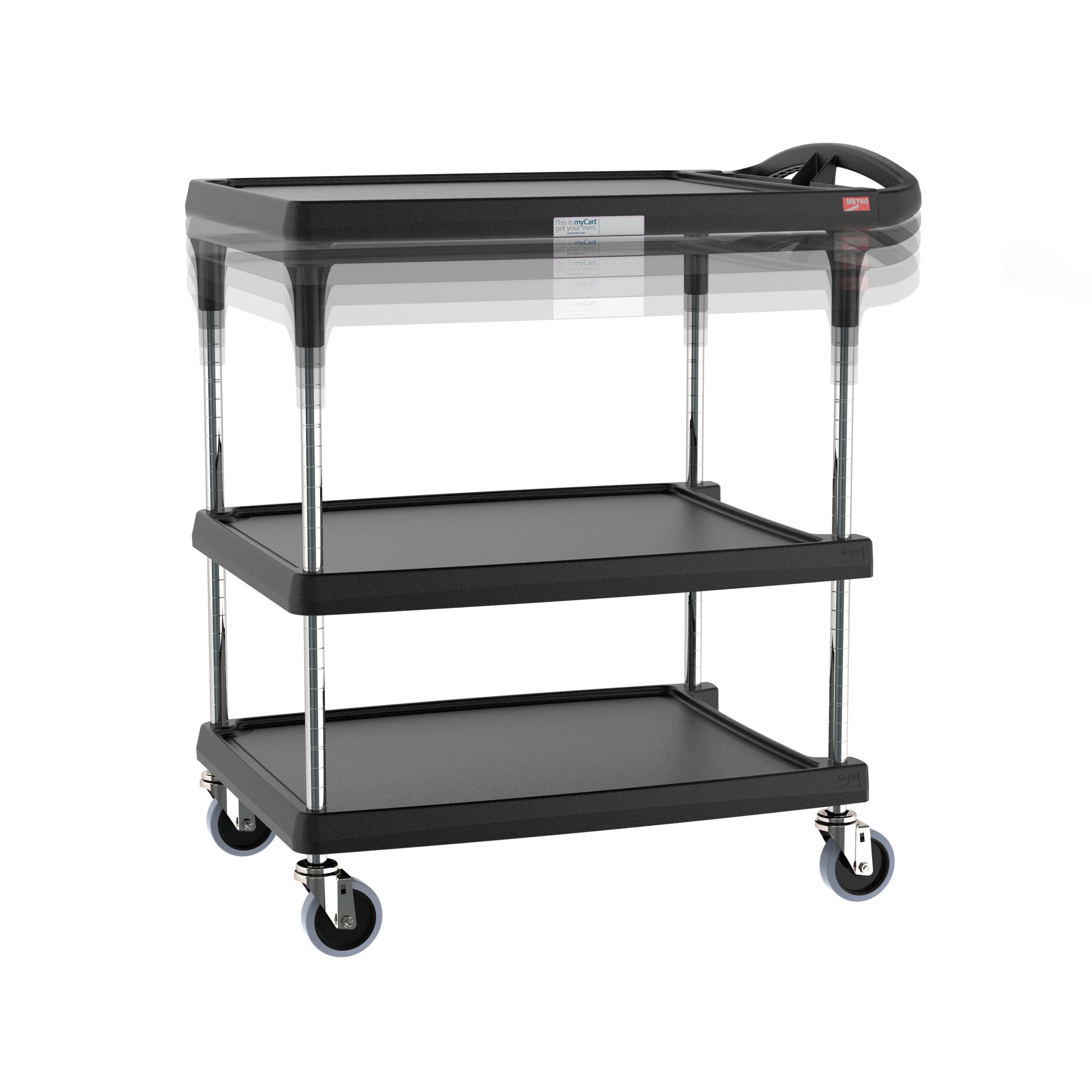

Design & price it online: Metro Medical Supply Carts & Storage Configurator
Configure case carts, par-level exchange carts and sterile supply storage in our free Metro Medical Supply Carts & Storage configurator — build the layout, see a full bill of materials and save or send the quote in minutes. Need a different Metro product? Browse all 17 tools in the Metro configurator hub. Related guide: Metro case carts guide · Flexline anesthesia & procedure carts.
Frequently Asked Questions
Does MH-USA sell Metro medical carts and healthcare shelving?
Should a hospital supply room use open wire or solid shelving?
What should I specify on a procedure or isolation cart?
Are Metro healthcare products certified, and what about product protection?
Does mobile high-density shelving really recover space?
How do these carts and shelves get cleaned?
Get Your Metro Healthcare Storage Quote
Send the room dimensions, par list or cart requirements. We configure it, catch the conflicts and get it to your facility.