
Metro Case Carts: CaseVue, Open & Exchange Carts
A buyer’s guide to surgical case carts and supply exchange carts for the OR, sterile processing and nursing units — sizes, doors, shelves, cart-wash compatibility — then design and price them in the Metro Supply Carts BuildQuote.

3
CaseVue lengths
2
Cart heights
125 lb
Per roller shelf
17
Metro online designers
Why Case Carts Are Specified Differently

A surgical case cart carries a complete procedure — instrument trays, supplies and implants — from sterile processing to the OR and the soiled set back again. That round trip is what drives the specification. The cart has to protect clean contents on the way in, contain contaminated contents on the way out, survive a cart washer every cycle, fit the elevator and the OR door, and still be light enough for one person to push.
Hospitals and surgery centers usually end up with a mix: closed stainless case carts for the main OR route, a few open case carts for short runs inside the suite, and wire or polymer exchange carts for supply distribution to the floors. This guide covers each, and the questions that decide which one you need.
We represent Metro (InterMetro Industries, founded 1929 in Wilkes-Barre, Pennsylvania) from Salt Lake City and have served hospitals, surgery centers and clinics across the West since 1997. When you know roughly what you need, the Metro Supply Carts BuildQuote builds a valid configuration with freight to your dock.
Metro CaseVue Closed Case Carts
CaseVue is Metro’s stainless steel closed case cart. The core choices are length, height, door type and options, and Metro’s model grammar follows those choices directly.
| Choice | Options | What it decides |
|---|---|---|
| Length | 24, 36 or 48 inch (body about 33½, 45½ or 57½ inches wide, 28 inches deep) | How many instrument trays per case; elevator and door fit |
| Height | Low (about 40⅝ inches) or High (about 58¼ inches) | Capacity versus visibility over the cart while pushing |
| Doors | Solid stainless or clear polycarbonate | Clear doors let staff see contents without opening the cart |
| Door count | 24 inch carts have a single door; longer carts have double doors | Access in tight OR cores |
| Handle | Swing-up push handle (standard on High carts) | Ergonomics on long transport routes |
| Status flags | Optional five-colour flag set | Clean / dirty / case-ready signalling at a glance |
| Travel version | Door-gasketed cart for off-site transport (solid doors) | Moving sets between buildings or campuses |
Two rules cause most CaseVue re-quotes. First, the 48 inch length is offered in the Low height only. Second, a fifth-wheel steering caster is available on the 36 and 48 inch carts, but not on 24 inch or Travel carts. Every CaseVue rides on a biohazard-identified wheel set so a cart in soiled service is recognisable.
Interior roller shelves must match the cart length, adjust in about 2¼ inch increments and are rated about 125 pounds each. Plan shelf count by tray height: two shelves in a Low cart and up to three in a High cart is the usual practical limit.
Cart-wash compatibility
Metro publishes cart-wash guidance for CaseVue: wash water roughly 140–180°F for up to about 30 minutes and drying up to about 200°F for up to about 15 minutes. Check your washer’s cycle against the spec sheet before you standardise; we confirm the current sheet in writing with every quote.
How to Size a Case Cart Fleet
Start with the largest standard procedure, not the average one. Count the instrument trays and bulky supplies a full case needs, translate that into shelf count and length, then check the route.
- Largest case: number of trays, tray footprint and total weight
- Shelf count per cart and spacing between shelves for the tallest tray
- Route: narrowest door, elevator car depth, corners and ramps — measured, not assumed
- Number of carts in circulation: cases per day × turnaround time, plus a cart-wash and repair buffer (commonly 15–25% extra)
- Door type: clear for visibility in the core, solid where contents must be concealed
- Colour flags or labels for status, and whether carts are assigned to a specialty
- Travel carts if any sets move between buildings
Design & price it online: Metro Supply Carts & Storage BuildQuote
Choose case transport, par-level, SPD, IV, catheter or point-of-use bins, pick a construction and size, and the Metro Supply Carts designer validates the CaseVue rules (length, height, doors, fifth wheel, roller shelves), adds accessories, and rates freight to your ZIP. Save and share the quote with your SPD manager.
Design & Price It Online All Metro Designers Call (800) 326-4403
Open Case Carts and When They Make Sense
Open stainless case carts trade containment for speed. They suit short runs inside a sterile core, staging outside an OR, or carrying covered containers that already provide containment. They are lighter and cheaper to wash, but contents are exposed; if your infection-prevention team requires enclosed transport through public corridors, specify closed CaseVue carts for that route.
Transport & Exchange and Par-Level Carts
Supply distribution to nursing units usually runs on an exchange system: a full cart replaces the depleted one on a schedule and goes back to central supply for restock. Par-level carts stay in place and are topped up to a set quantity. Both are built on Metro shelving frames, in chrome or epoxy Super Erecta wire or in MetroMax i polymer.
 Wire exchange cartOpen wire shelves for visibility and airflow on dry supply routes.
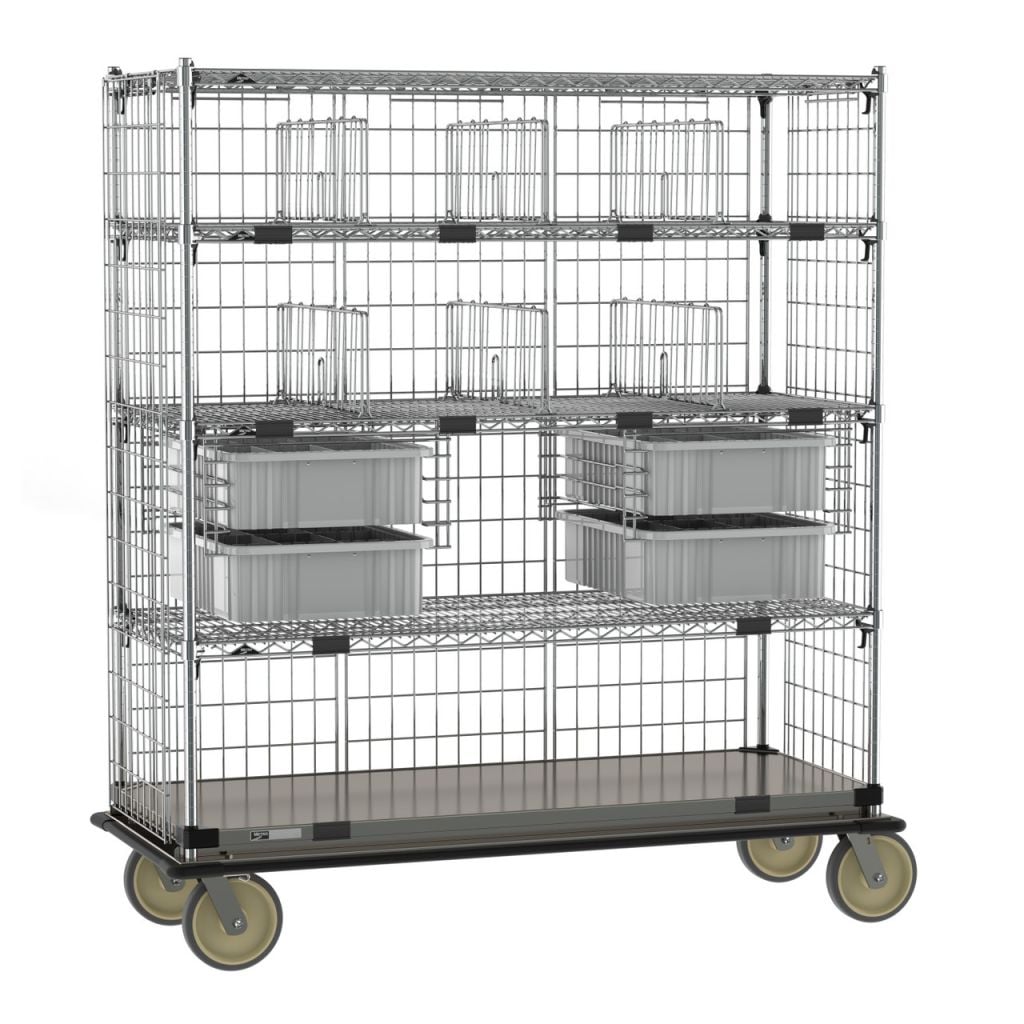 Deluxe wire exchangeAdds a cover and accessories for protected transport.
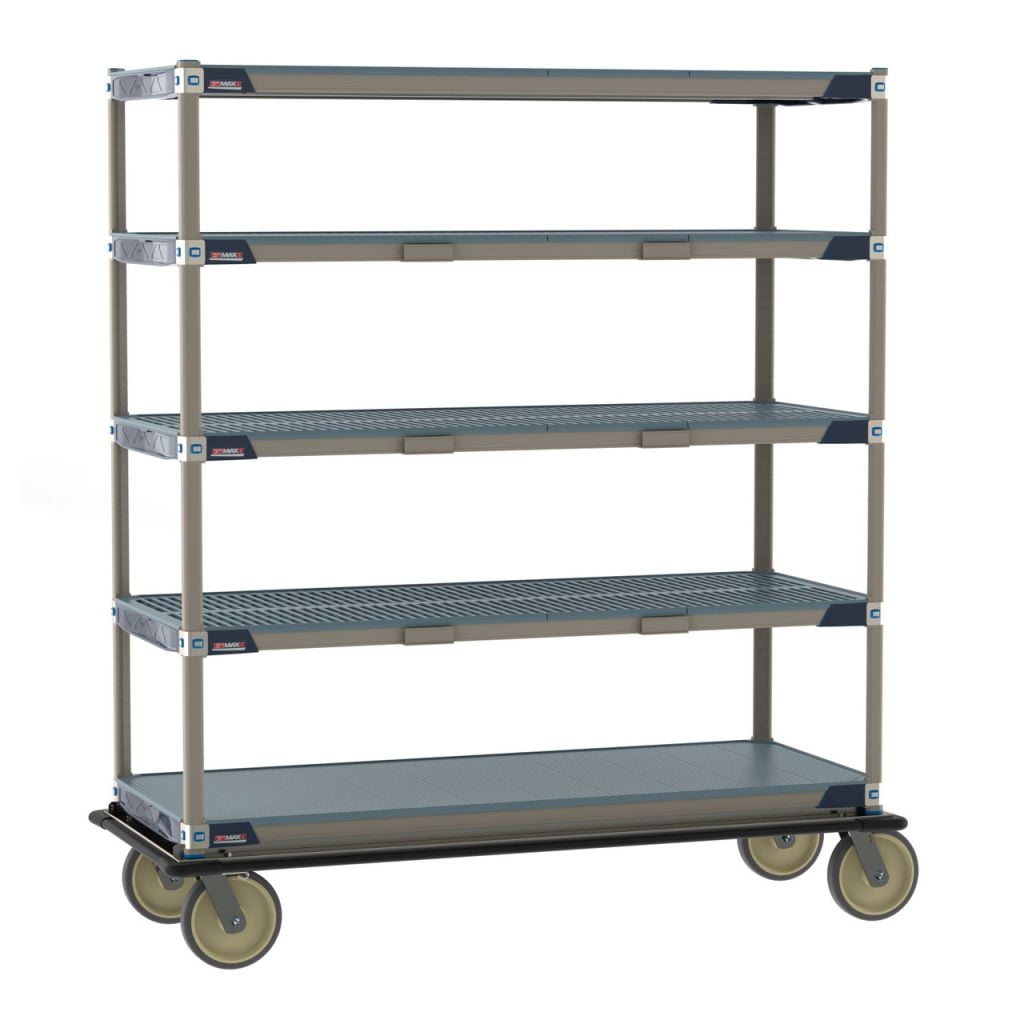 MetroMax i exchangePolymer shelves with removable mats for wash-down and wet areas.
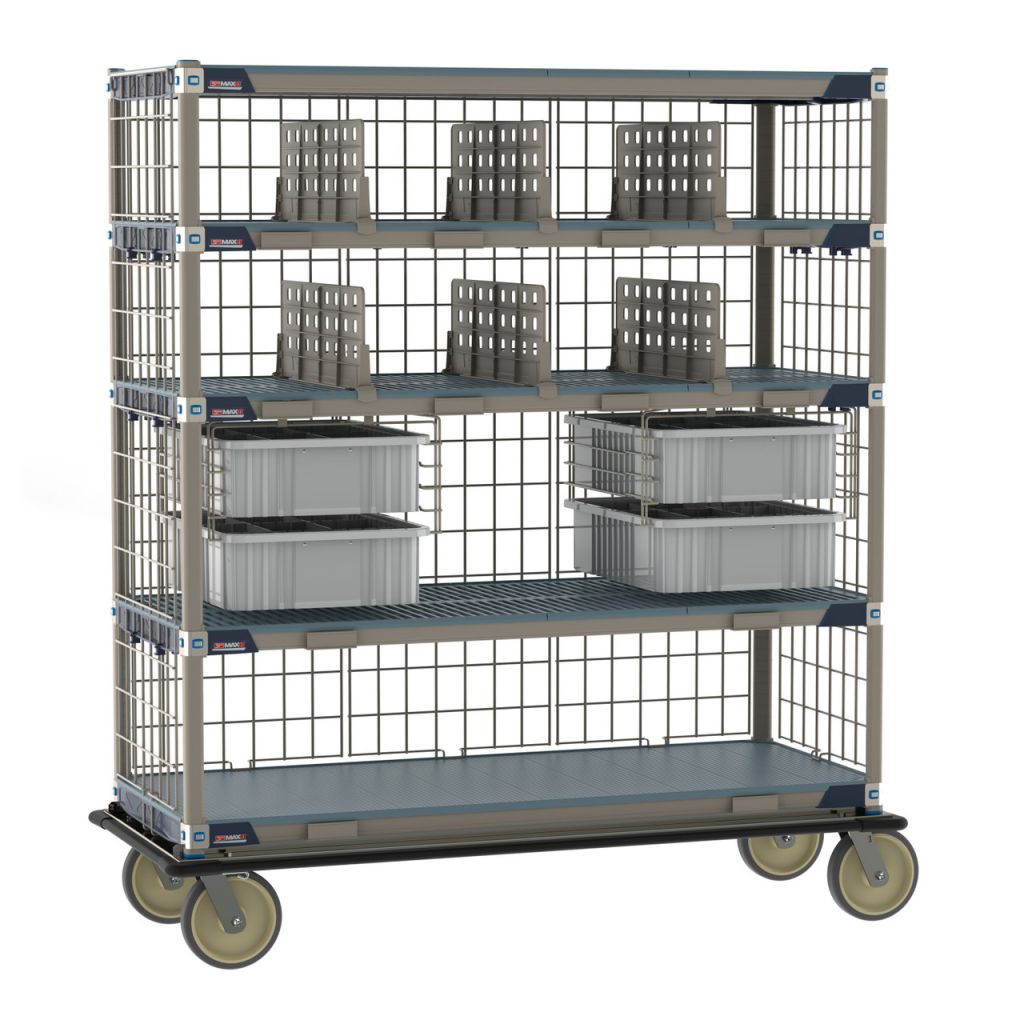 Deluxe MetroMax iCovered polymer cart for clean supply moved through public halls.
 Wire par-level cartStays in the supply room; restocked to par.
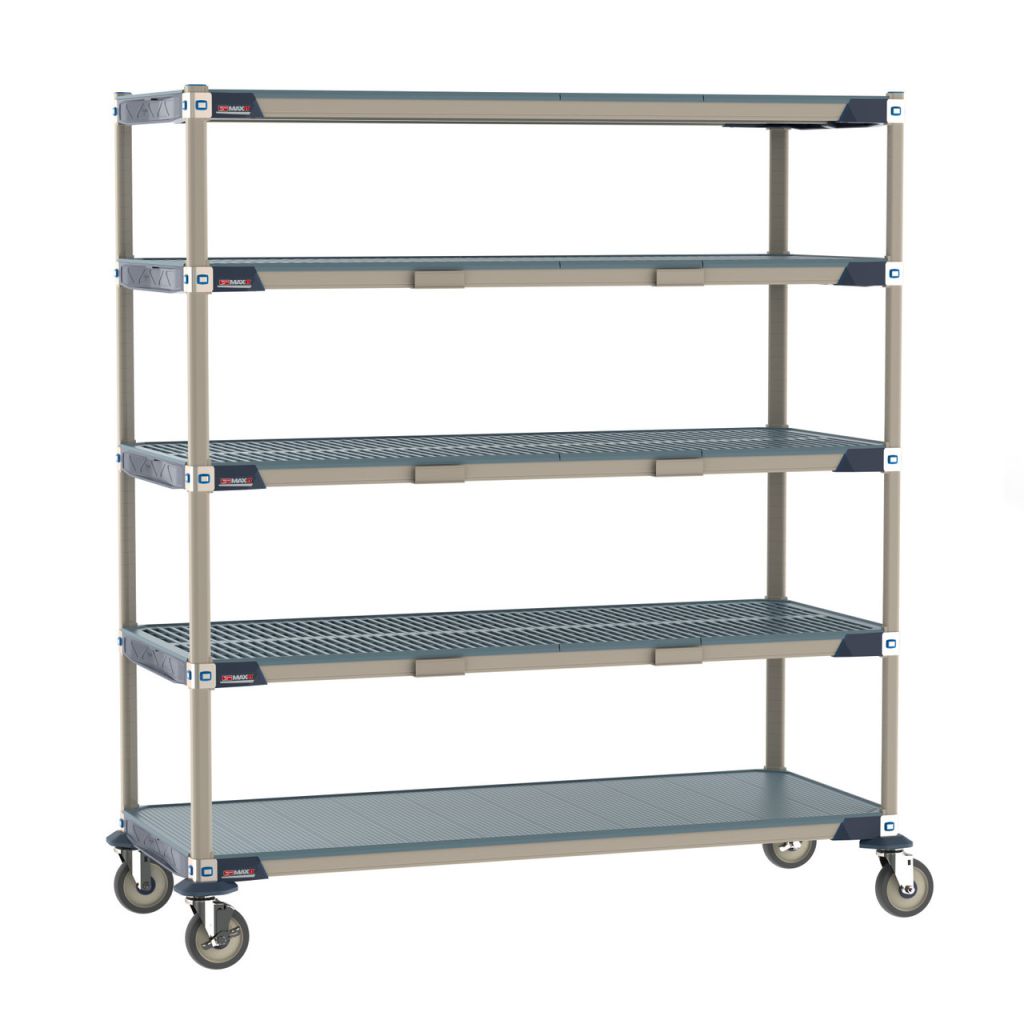 MetroMax i par-levelPolymer par cart for clean utility rooms.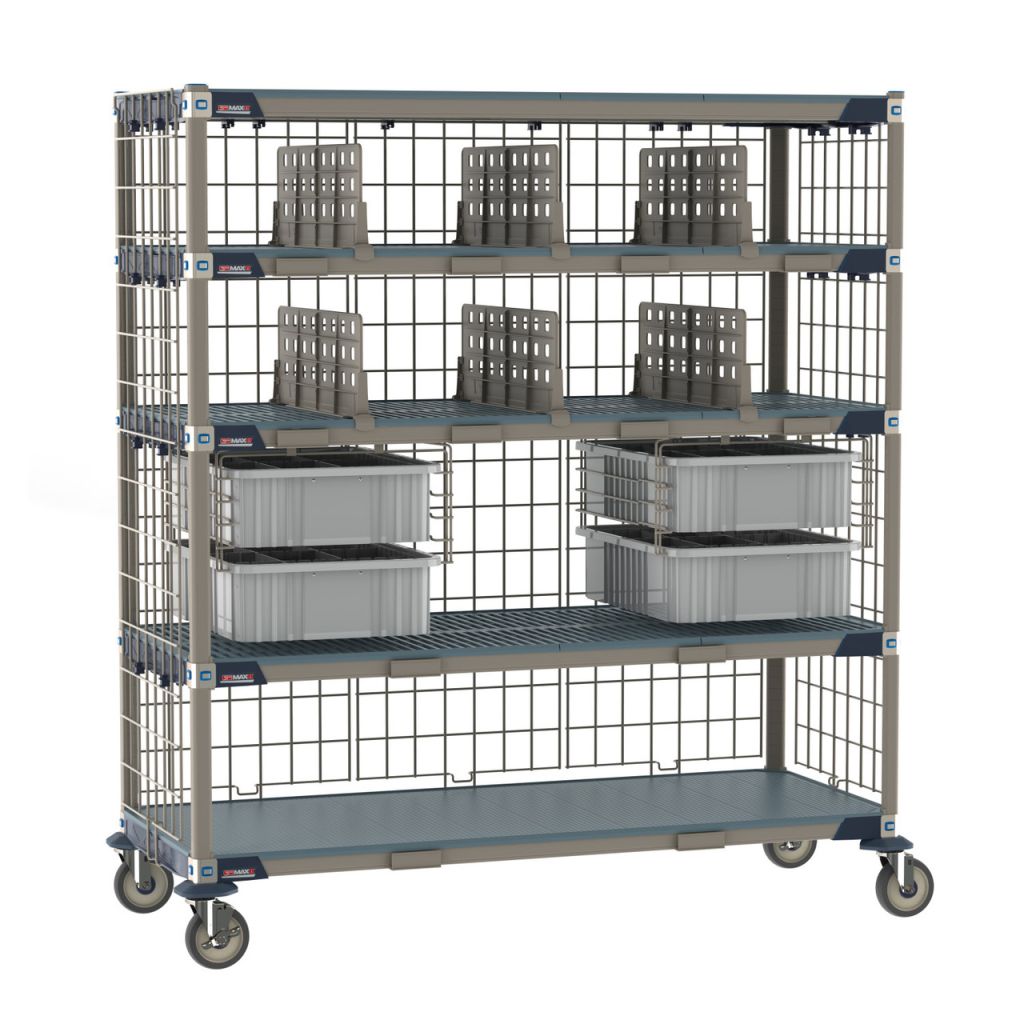
Wire or polymer? Wire is lighter and suits dry supply rooms. MetroMax i polymer resists corrosion, and its open-grid mats lift out for washing, which makes it the usual choice where carts are hosed down, go through a cart washer or sit in humid areas. For a deeper comparison see MetroMax polymer shelving and Metro wire shelving.
Covers matter for exchange carts that travel through public corridors with clean supplies. Plan label holders on every shelf so restock staff can work to the par list without opening packages.
Sterile Processing, Wrap Racks and IV Storage
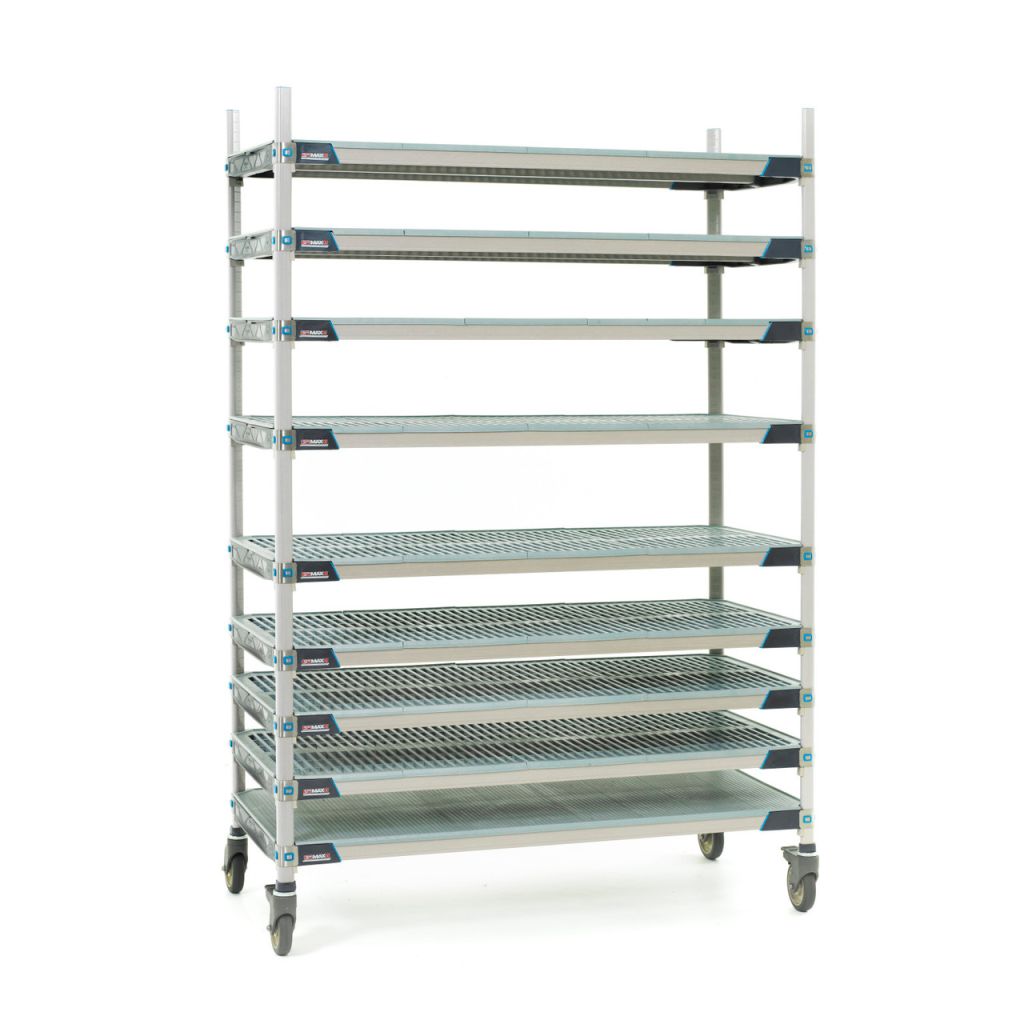
Sterile processing departments use mobile shelving to stage instrument sets between the sterilizer and storage. MetroMax i five- and nine-shelf SPD units roll sets on polymer shelves; high-profile Super Erecta sterile wrap racks hold rolls of sterilization wrap at the packing table. Keep wrap racks beside the assembly stations and size SPD units to a full sterilizer load.
IV and catheter storage needs a different kind of organisation — many small, identifiable items. Starsys secure IV carts and catheter cabinets lock, while qwikSIGHT basket shelving gives open, labelled point-of-use storage.
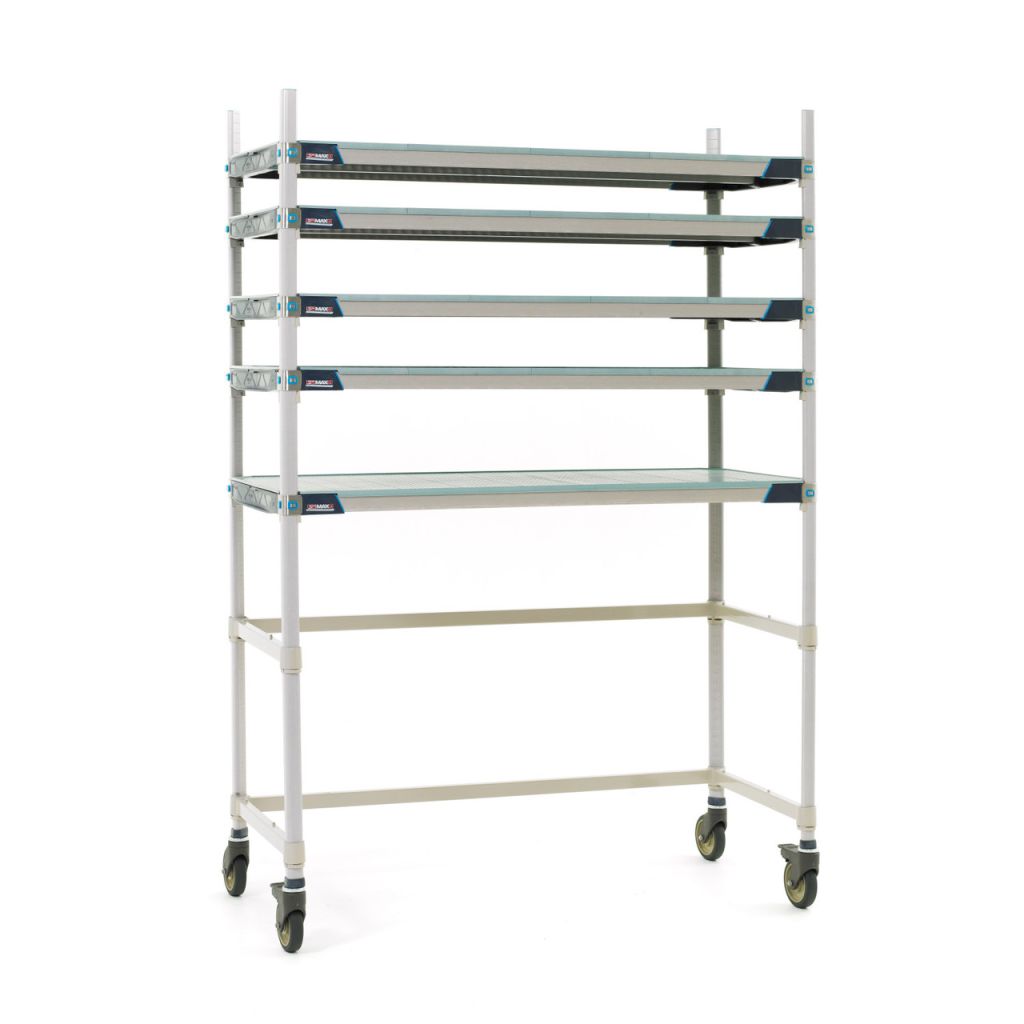 SPD unit, 5-shelfRoll-under base for staging sets.
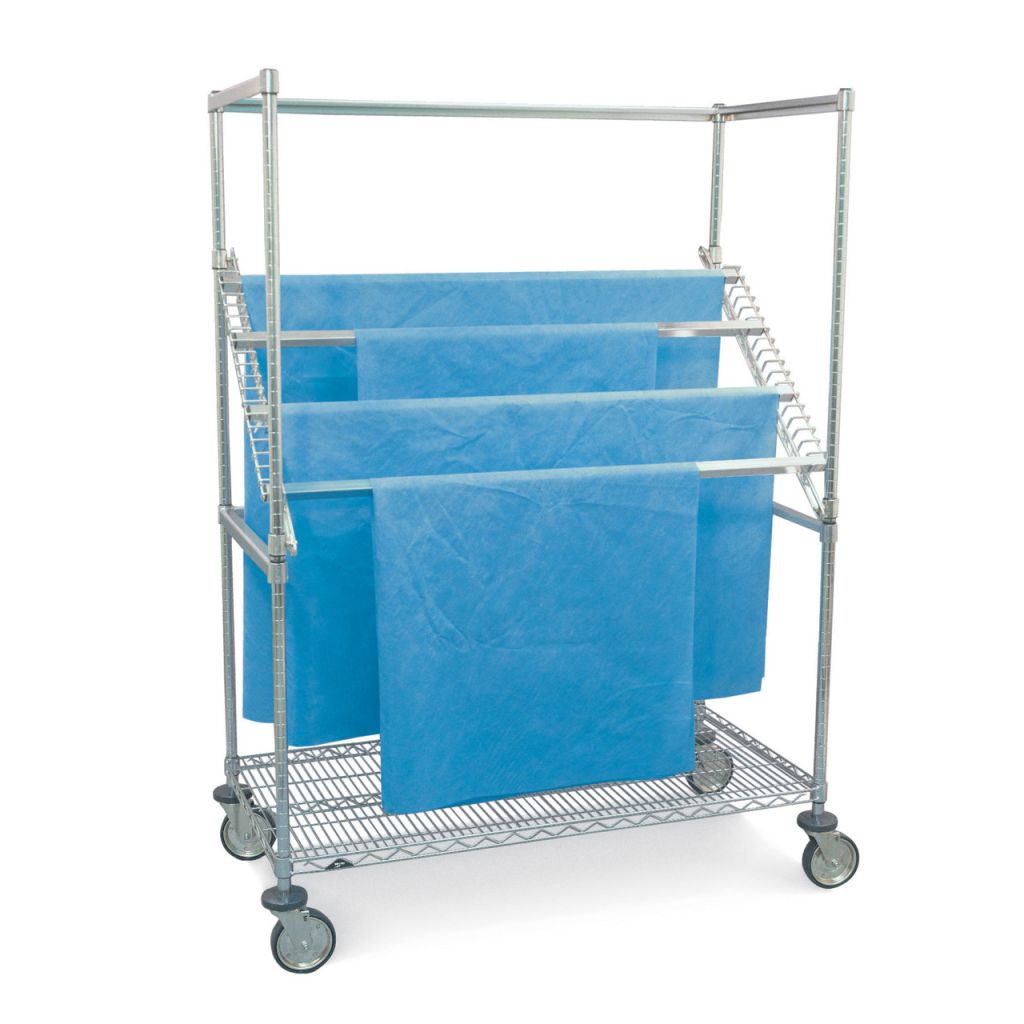 Sterile wrap rackRolls of wrap at the packing table.
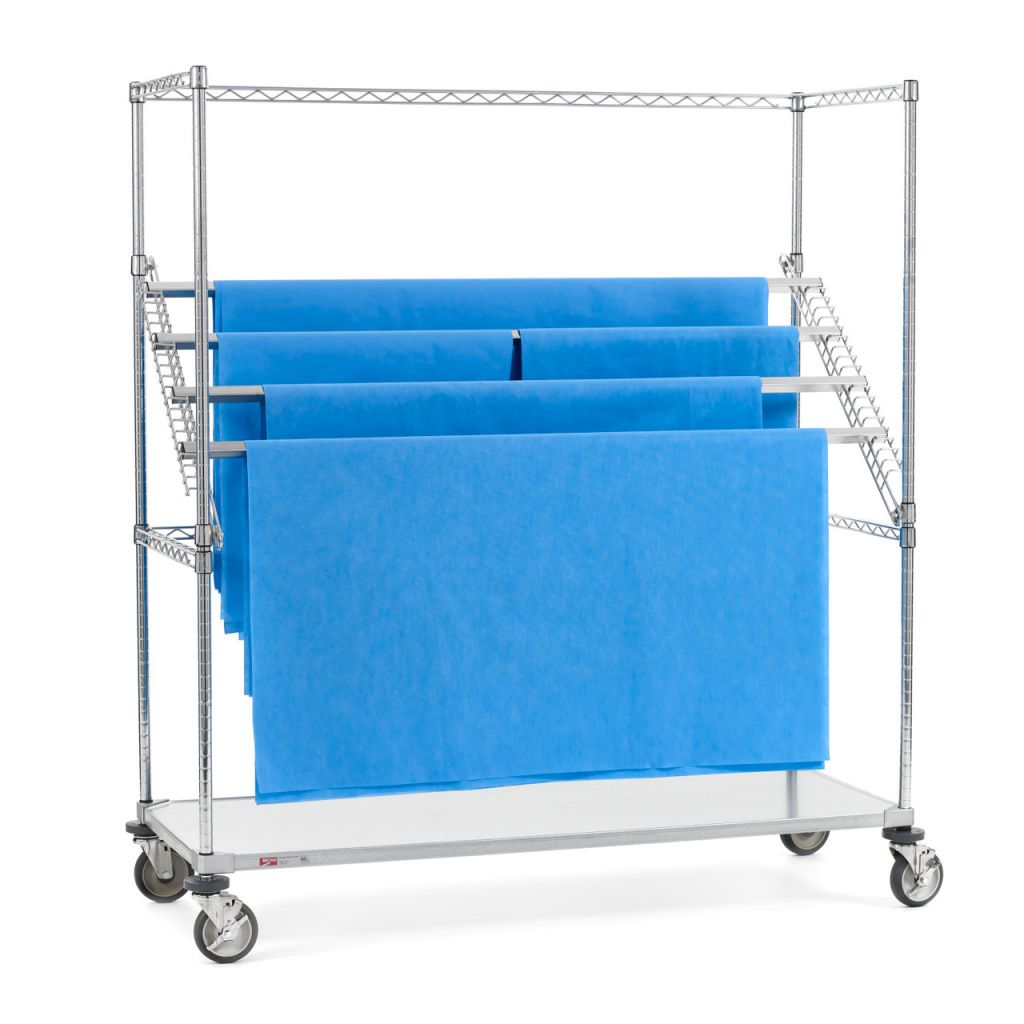 Wrap rack, solid shelfSolid bottom shelf for supplies.
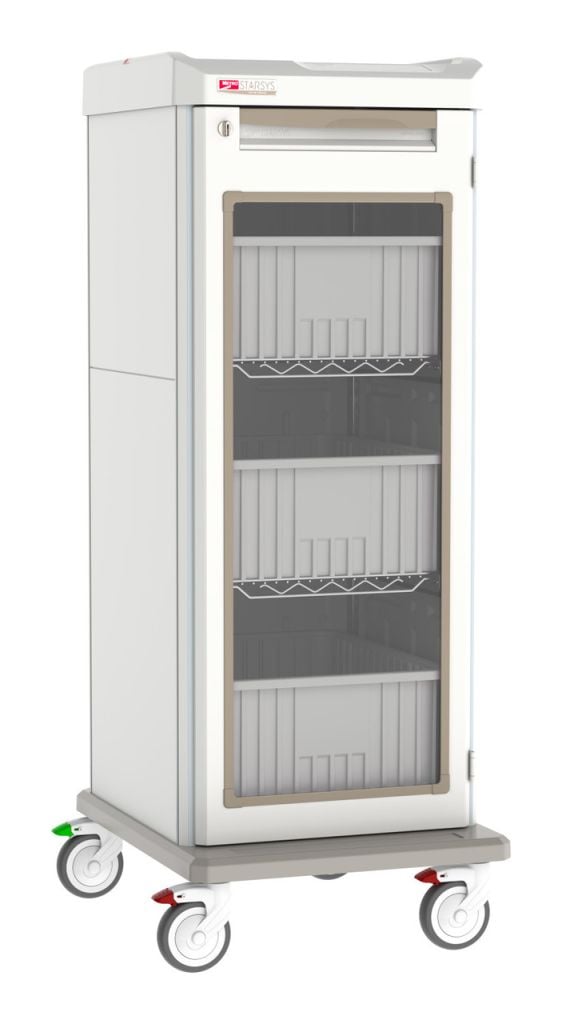 Secure IV cartLocking Starsys IV storage.
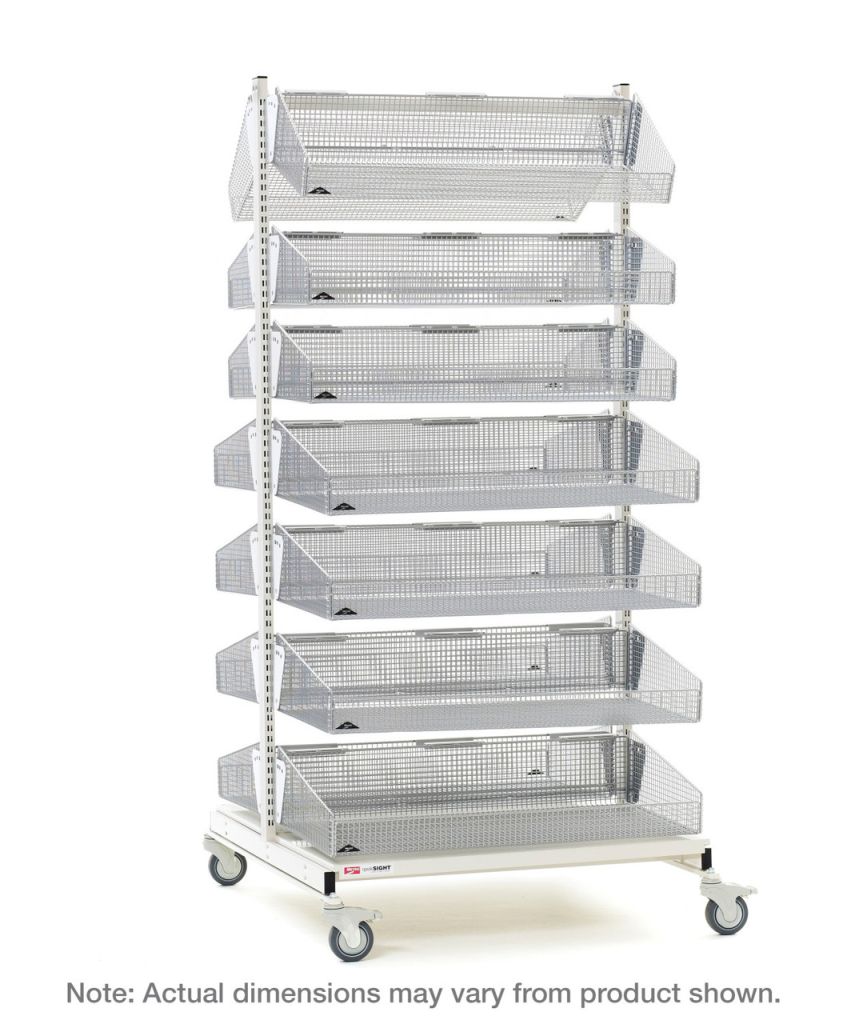 qwikSIGHT mobileDouble-sided basket shelving.
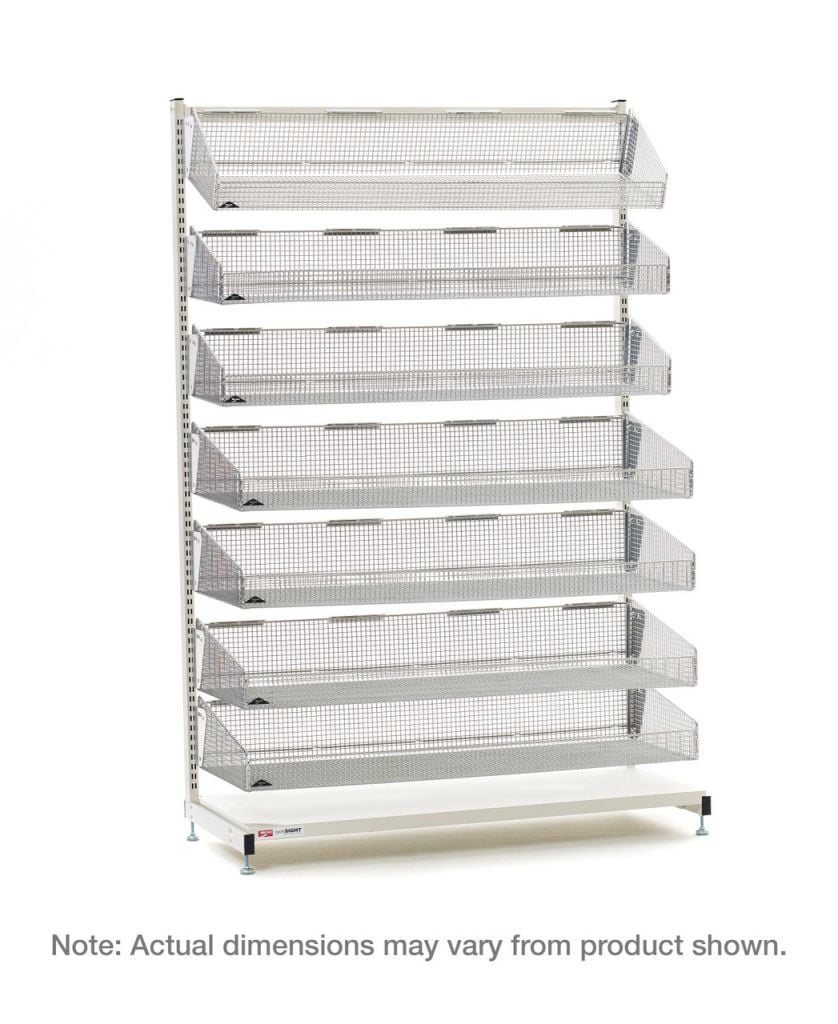 qwikSIGHT stationarySingle-sided basket storage.
Case Cart and Supply Cart Comparison
| Cart | Containment | Cart-wash use | Best route |
|---|---|---|---|
| CaseVue closed (solid doors) | Fully enclosed | Designed for it | SPD ↔ OR through public corridors |
| CaseVue closed (clear doors) | Enclosed, contents visible | Designed for it | SPD ↔ OR where visibility speeds pulls |
| CaseVue Travel | Door gaskets for off-site moves | Check spec sheet | Between buildings or campuses |
| Open stainless case cart | Open | Easy to wash | Inside the sterile core |
| Wire exchange / par cart | Open or covered | Not typical | Dry supply to nursing units |
| MetroMax i exchange / par cart | Open or covered | Wash-down friendly | Wet, humid or washed routes |
Case Cart Specification Checklist for Your Quote
Sending these details with a quote request avoids most revisions. The same questions are built into the BuildQuote, so if you work through the designer you will have answered them already.
| Question | Why it matters | Typical answer |
|---|---|---|
| Largest standard case (tray count and tray size) | Sets cart length and shelf count | Orthopedic and spine sets usually push carts to 48 inch Low |
| Route measurements (doors, elevator car, ramps) | Decides length and whether a fifth-wheel caster helps | Measure the narrowest door and the elevator depth with the doors closed |
| Door type | Visibility versus concealment | Clear doors inside the core; solid for public corridors and travel |
| Cart washer model and cycle | Confirms compatibility and wheel choice | Match wash and dry temperatures to the CaseVue spec sheet |
| Status signalling | Avoids sending a soiled cart to the OR | Five-colour flags or a labelling scheme by specialty |
| Fleet size | Cases per day times turnaround plus a buffer | Usually 15 to 25% above the daily peak |
| Off-site moves | Travel carts need gasketed solid doors | Only for sets moving between buildings |
Plan maintenance from day one as well. Casters and door hardware are the parts that wear on a case cart, so keep a small stock of replacement wheels and check them at a set interval, for example every quarter. Carts that roll badly get pushed harder, which damages door frames and slows the route. Labelling carts with a number lets your SPD team track which units are due for service and which are out of circulation.
Case Carts in Ambulatory Surgery Centers
Surgery centers often have sterile processing next to the OR, no elevator and a smaller case mix. That changes the answer: a few 36 inch Low CaseVue carts with clear doors, plus open stainless carts for in-suite moves, usually covers the volume. Exchange or par-level carts then hold disposables in the clean core. If space is tight, a MetroMax i SPD unit can double as sterile storage beside the sterilizer.
Shop Metro Supply Carts Online
Buy select items directly from our online store, or request a quote for volume, custom sizes and freight-rated orders.


Metro Case Cart FAQ
What sizes do Metro CaseVue case carts come in?
Can CaseVue carts go through a cart washer?
Should I choose clear or solid doors?
How many case carts do I need?
What is the difference between exchange and par-level carts?
Wire or MetroMax i for supply carts?
Can I price case carts online?
Do case carts need a fifth-wheel caster?
Configure Your Case Carts
Design them in the Metro Supply Carts BuildQuote or ask a specifier to review your route and fleet size. Call (800) 326-4403 or request a quote online.