Quick answer
The best workbenches for Utah auto repair and fleet maintenance shops are stiff welded steel benches sized to the biggest part you handle, set at a height that fits the work, and placed so technicians can reach them without crossing a lift or a vehicle path. Pick the top for salt, oil and solvents. Anchor any bench that carries a grinder or other fixed machine. Then match drawers and storage to the tools each station really uses.
Most shop bench problems start with a catalog photo instead of the job. A technician clamps a seized caliper bracket, gives it a hit, and the whole bench rocks. Drawers rattle open. Parts end up on the floor or on a fender. A good bench fixes that. It holds still under force, keeps the right tools close, and fits the bay without blocking anyone.
This guide is for owners and managers buying workbenches for Utah auto repair and fleet maintenance shops. It covers bench types, real load needs, working height, tops that survive road salt, vise and grinder mounting, bay layout, and what to send for a quote. Material Handling USA supplies industrial workbenches and automotive storage solutions across Utah and the Mountain West.
What a Utah Service Bay Asks of a Workbench
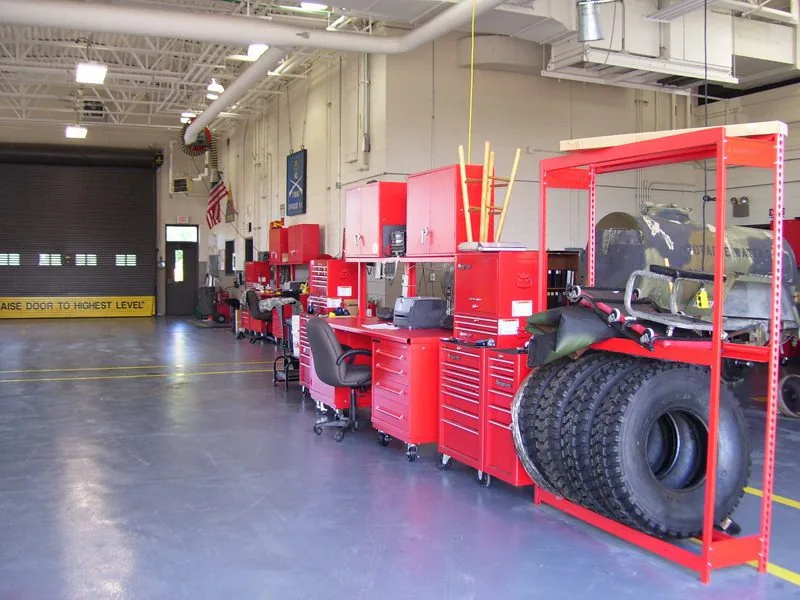
A Utah service bay is busy and tight. A vehicle sits on the lift. Parts come from the stockroom. One repair can send a technician from the wheel hub to the vise, the grinder and the scan tool and back again. The bench is in the middle of all of it.
Winter adds a second problem. UDOT spreads more than 200,000 tons of salt on state roads in a typical winter. That salt rides into the shop on every truck and car. It ends up on parts, in drawer slides and on the bench top, mixed with slush, oil and brake cleaner.
So a shop bench has three jobs:
- Hold still under force. Hammering, pressing, prying and vise work push and twist the frame. A light table can rack, flex or walk across the floor.
- Keep tools and parts close. The right drawers and shelves stop technicians from staging parts on the floor, on carts or on a hood.
- Survive the mess. The top and finish have to handle salt, water, oil and solvents and still wipe clean.
Simple test: If the bench moves when a technician leans on the vise handle, it is the wrong bench for that job.
Workbench Types for Auto Repair and Fleet Shops
Not every station needs the same bench. A vise station, a diagnostic desk and a parts staging table do very different work. Here are the main types and where each one fits.
| Bench type | Best fit in a repair or fleet shop | Watch for |
|---|---|---|
| Heavy-duty welded steel bench | Vise work, brake and suspension parts, pressing, light fabrication | Frame stiffness, top thickness, where the vise can mount |
| Closed-leg bench (drawers or doors below) | Technician stations that keep tools and consumables at the bench | Drawer layout, locks, drawer swing into the walkway |
| Teardown bench | Disassembly where fluids drain off parts | Fluid handling and a place to stage removed parts |
| Tech bench (organized drawers and upper storage) | Diagnostics, electrical and small component work | Outlets, lighting, room for a scan tool or laptop |
| Open-leg bench with drawer pedestals | Seated or mixed work where knee room matters | Pedestal placement so legs and stools fit |
| Wall-mounted bench | Narrow bays and spots where legs would collect debris | Wall strength and anchoring, no heavy striking |
| Mobile bench on casters | Shared tasks that move from bay to bay | Caster locks, movement during clamping |
| Boltless or rivet bench | Parts staging, packing, storage rooms | Not a vise or press bench, check side loads |
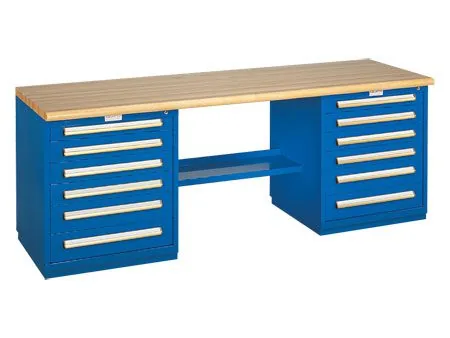
For most repair shops the core is a heavy steel bench at each vise station, plus storage benches for the techs. Our Equipto workbenches come in three main families that line up well with shop work: the closed-leg workbench with storage below the top, the teardown bench for disassembly where fluids drain off parts, and the tech bench for diagnostic and detailed work. When a station needs overhead storage, bins and power built in, look at industrial workcenters instead of a single bench.
Fixed, adjustable or mobile

A fixed-height bench is usually the stiffest choice, and stiffness is what you want under a vise. Adjustable workstations help when people of different heights share one station or when tasks change during the day. If you choose one, make sure the height setting locks solid. A mobile bench on casters is great for jobs that move between bays, but casters can let a bench shift during clamping or striking. Lock them, and keep pressing and heavy hits on a fixed bench.
For staging parts, packing returns or building out a parts room, a boltless workbench is a low-cost option. It is not a vise bench. Keep striking and pressing off it.
Not sure which bench fits each bay?
Send us your floor plan and a list of what happens at each station. We will mark up bench sizes and locations and quote it line by line. Upload a floor plan for a free layout review or call (800) 326-4403.
Load Capacity: Why the Label Is Only the Start
Bench capacity numbers are real, but they describe weight sitting still on the top. Shop work is not still. Here is what published guides say:
- One steel workbench material guide lists heavy-duty benches for automotive repair at 1,500 to 3,000 pounds, with reinforced frames and oil-resistant tops.
- An auto repair bench buying guide suggests a top of at least 36 x 24 inches, 48 inches or more for bigger assemblies, and a rating of at least 600 pounds for welding or heavy tooling.
- A workbench capacity and stiffness guide lists catalog bench ratings from 2,750 to 16,000 pounds, and points out that benches rarely fail from too much parked weight. They become hard to work at because the top flexes and the frame vibrates.
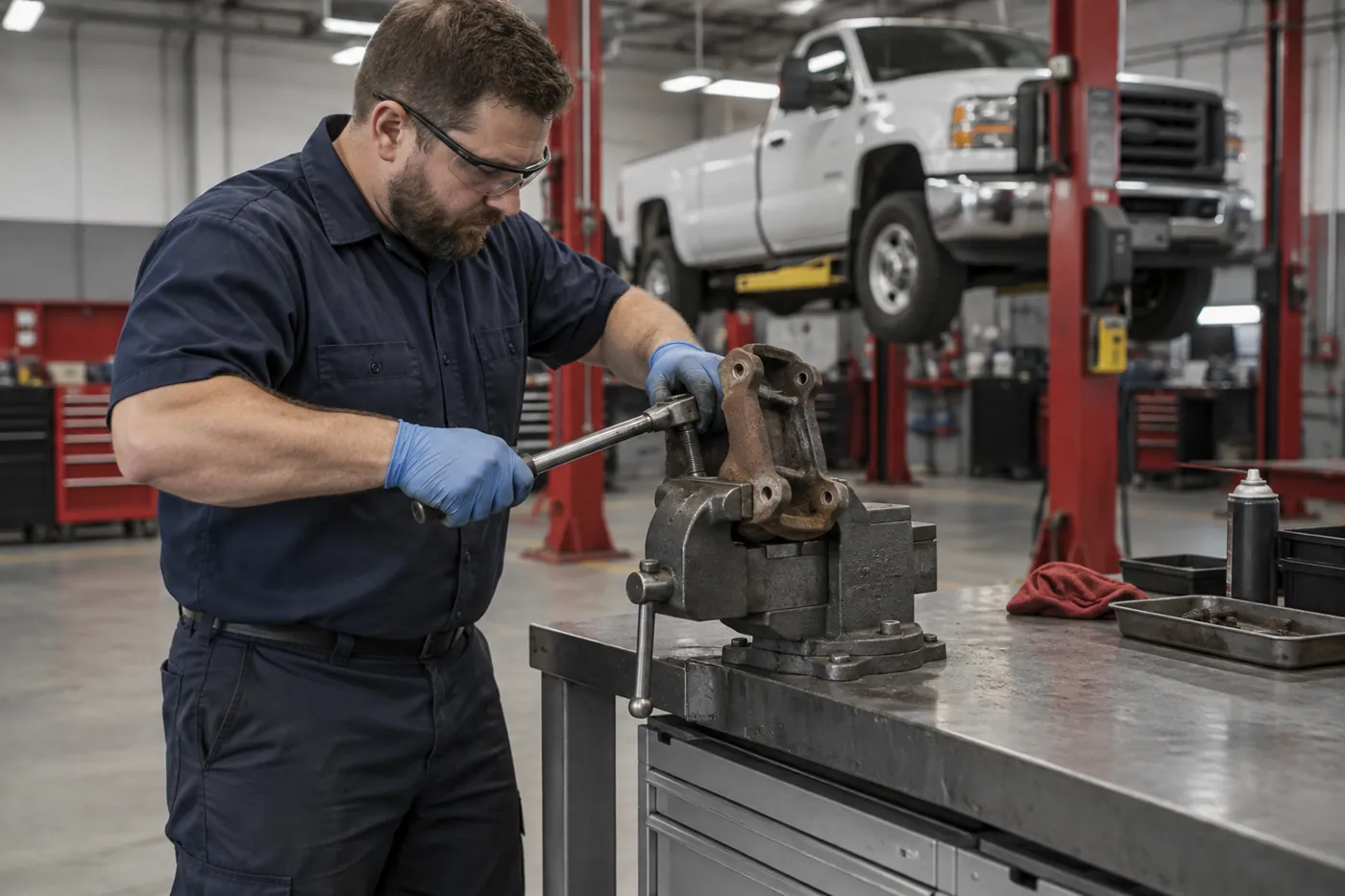
That last point is the one that matters in a repair shop. When a technician hits a seized part or leans on a long breaker bar in a vise, the load is sudden and off to one side. A bench with a high rating but thin legs can still bounce and ring. When you compare benches, ask about frame construction, top thickness and leg bracing, not just the capacity.
Mounting a vise the right way
- Mount the vise over a leg or frame member, not in the middle of an unsupported span.
- Set it so the fixed jaw clears the front edge. Long parts like axle shafts and tie rods can then hang straight down.
- Through-bolt it with the hardware the vise maker calls for. Check the bolts during routine housekeeping.
- Give the vise station a fixed bench. Do not put a heavy vise on a boltless or caster bench.
Working Height for Technicians
Bench height affects backs, shoulders and wrists over a long shift. The right height depends on the task and the person. Alberta’s guide to work surface height says to set light mechanical work just below elbow height. For heavy work that needs downward force, it says to set the surface about 4 to 10 inches (10 to 25 cm) below elbow height.
In practice, many benches are bought at one standard height whether it fits the work or not. The same stiffness guide notes that most workbenches are bought at 34 inches and lists heavy metalworking at about 34 to 37 inches standing. Also remember that a vise raises the working point. The jaws can sit several inches above the top, so a bench that is right for hand work may be too high for vise work.
A few simple fixes help. Use a lower bench or a platform for heavy vise work, an adjustable station where several techs share a spot, and good task lighting so people do not hunch over. For a wider look at the rest of the workspace, this piece on practical ergonomics for teams and our guides to warehouse ergonomics and lighting, ergonomics and safety in automotive parts rooms are useful.
Storage at the Bench: Drawers, Bins and Tool Walls
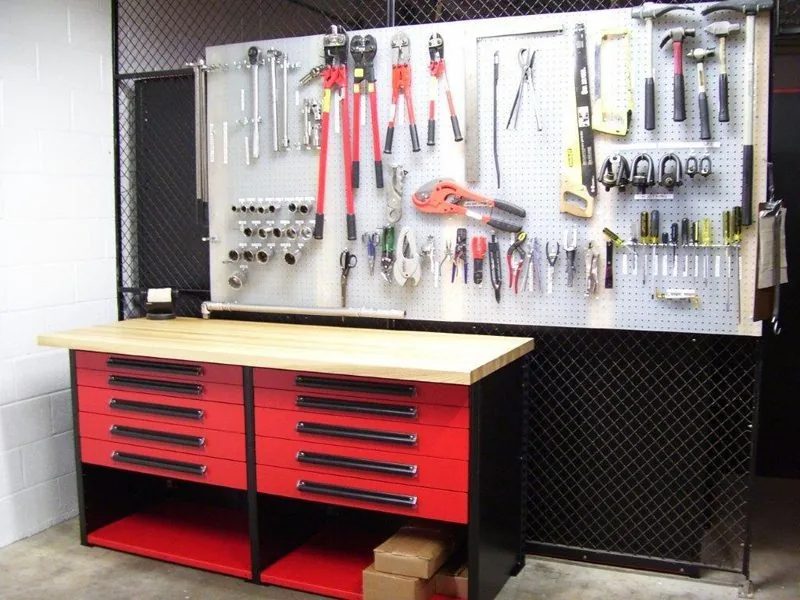
Start by listing what each technician reaches for during a normal job. Then build the storage around that list.
- Small parts and fasteners: shallow drawers with dividers keep clips, fittings and bolts sorted and easy to see.
- Diagnostic tools: lockable drawers protect scan tools, meters and laptops when the bay is empty.
- Heavy parts: hubs, calipers, pumps and rotors need a strong lower shelf or a nearby rack, not a drawer.
- Fluids and cleaners: keep them on an open shelf or in a cabinet away from the top and away from electrical tools.
- Shared tools: a rolling tool cart or a tool wall can serve two bays without crowding either bench.
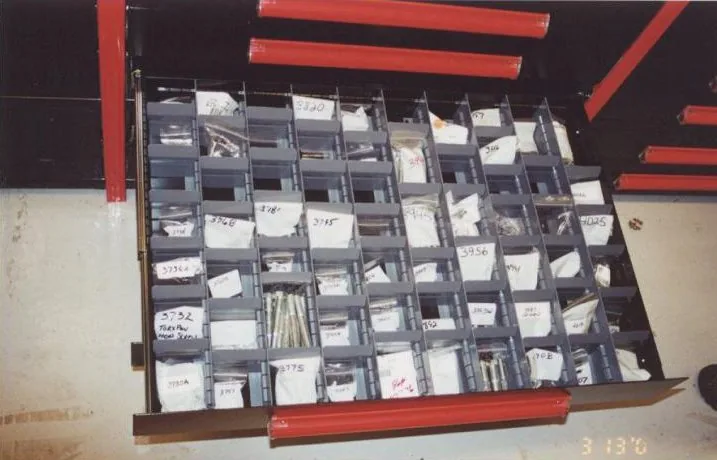
For heavier storage under or beside the bench, automotive modular drawers and Equipto modular drawer cabinets hold a lot in a small footprint. Special tools that every bay shares often belong in a central room. See our ideas for service department tool storage and for securing a tool crib with wire partitions.
The bench also has to work with the parts room. Our parts room organization checklist connects bench storage to receiving, kitting and restocking, and our automotive parts room organization tips cover the room itself. Fleet shops can see how Flexi-Bin shelving for fleet maintenance shops and mobile shelving for fleet parts storage in Herriman keep parts close to the bays.
Tops and Finishes for Salt, Oil and Solvents

Pick the top by what lands on it, not by looks. A vise station, a parts washing area and a diagnostic desk each need something different.
| Top surface | Good for | Keep in mind |
|---|---|---|
| Steel | Vise work, teardown, hot parts and heavy hits | Paint can chip; wipe off salt and fluids so bare spots do not rust |
| Stainless steel | Wet, salty or solvent-heavy stations, parts washing areas | Costs more; still clean it, since salt left on any metal is not good |
| Hardwood or bonded wood | Assembly and parts that should not be scratched | Keep standing oil and water off; refinish when it wears |
| Masonite or hardboard overlay | Light work and a top you can replace | Swap the overlay when it gets soaked or gouged |
| Particle board or laminate (boltless) | Packing, staging and storage tasks | Swells if it stays wet; not for fluids or heavy striking |
For the frame, a good powder coat finish holds up well as long as it stays intact. Chips and scratches are where rust starts, so touch them up. Hardware matters too. Hinges, drawer slides, handles and fasteners near a bay door see the most salt and moisture.
Simple care that makes benches last
- Wipe salt and slush off the top and drawer fronts at the end of each shift in winter.
- Check vise bolts, frame joints, drawer slides and caster locks during routine housekeeping.
- Touch up chipped paint the way the bench maker recommends.
- Keep benches near bay doors for jobs that can handle the mess, and put clean work deeper in the shop.
Grinders, Buffers and Anchoring
Many shop benches end up carrying a bench grinder or buffer. That changes the rules. OSHA has explained that a bench or pedestal with no fixed machine on it does not have to be anchored. But when a grinder or buffer is mounted on a bench, the machine must be secured to the bench and the bench must be secured to the floor, unless another effective method keeps it from moving.
Grinders also have their own guard rules. OSHA’s abrasive wheel machinery standard requires the work rest to be kept within one-eighth inch of the wheel, and the gap at the top tongue guard can never be more than one-fourth inch. Plan the grinder spot with room for a person to stand square to the wheel, away from walkways and fuel or solvent storage.
How to Plan Workbench Placement in a Service Bay
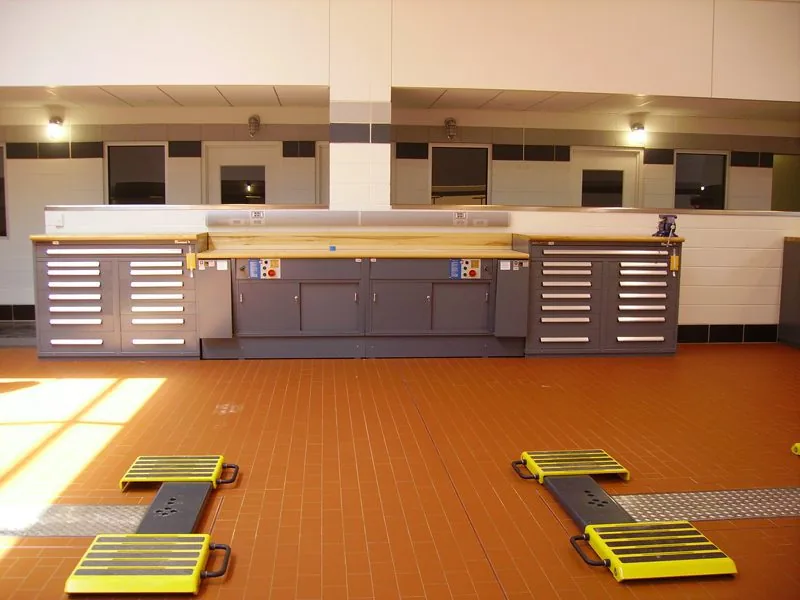
A bench that fits on paper can still block a technician when a truck is on the lift and a cart is parked beside it. Fleet facility planners lay out the bay first and the equipment second. One fleet maintenance facility planning example lists a 36 x 60 x 34 inch metal workbench and a 36 x 144 x 34 inch metal workbench in the same equipment plan as two 12,000 pound two-post lifts. The lesson is to plan benches, lifts and walls together. Use these steps:
- Draw the bay. Sketch it to scale with walls, doors, columns, outlets, air drops and drains.
- Mark lifts and vehicle paths. Add the lift posts, the arm swing, open vehicle doors and the route vehicles use in and out.
- List the tasks. Write what each station is for, the heaviest part, and any vise, press or grinder.
- Place the benches. Put each one where the tech can reach it in a few steps without crossing a lift or a vehicle path.
- Check drawer and door swing. Drawers and cabinet doors should open fully without blocking the walkway or hitting a lift post.
- Plan power, air and light. Line up outlets, air and task lighting with the bench so cords and hoses stay out of walkways.
- Tape it out and test. Tape the bench footprints on the floor and walk a real job through the bay before you order.
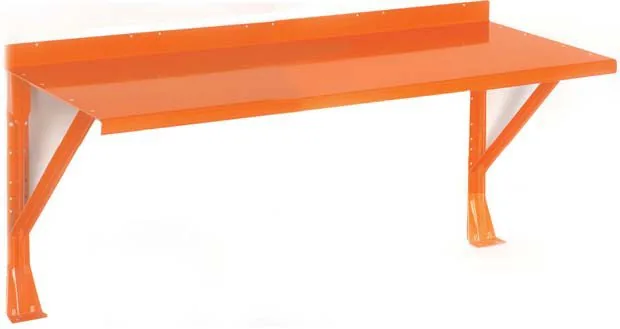
In a narrow bay, a wall-mounted bench keeps the floor open for sweeping and for jacks. Floor color zones and marked walkways help too. For help with the whole room, our automotive parts room design service and the free Parts and Kitting Storage Planner can lay out storage that feeds the bays. Dealer service departments can also use our dealership parts room layout guide.
Choosing Benches by Shop Size

| Shop type | Typical starting point | Add if needed |
|---|---|---|
| Small independent shop (1 to 4 bays) | One heavy steel bench with a vise and drawers, plus a mobile bench | Wall-mounted bench in a tight bay, tool cart per tech |
| Mid-size fleet shop | A repeat station per technician with the same drawer layout | Teardown bench, tech bench for diagnostics, shared press station |
| Large fleet or municipal garage | Rows of matched stations planned with the parts room and tool crib | Dedicated welding and fabrication bench, lockable tool storage |
Repeat stations pay off in fleet shops. When every tech has the same drawer layout, anyone can work any bay and tools come back to the right place. A short read on fleet management strategies shows why uptime and preventive maintenance depend on an organized shop. For a fuller view of storage across the garage, see fleet and municipal garage parts storage and auto repair and body shop storage.
Buying test: Write down the heaviest task, the most common task and the tightest spot in the bay. The bench you pick has to handle all three.
What to Send for a Workbench Quote
- A floor plan or sketch with wall lengths, doors, columns and lift locations
- What each station is for and the heaviest part it will handle
- Any vise, press, grinder or other machine that mounts on the bench
- Working height needs and how many people share each station
- Top material, drawer and cabinet needs, and any locking storage
- Exposure: salt, water, oils, solvents, or a spot near a bay door
- Delivery address, door sizes, and whether you need installation
Ask whether benches ship assembled or in pieces, and plan where they will be staged so service is not interrupted. Lead times depend on the model and options, so our team confirms current timing with each quote. Planning early leaves room to adjust before anything ships.
Frequently Asked Questions
What size workbench should an auto repair shop use?
Size the bench to the largest part you work on, plus room for the vise and tools. One buying guide suggests at least 36 x 24 inches, with 48 inches or more for bigger assemblies. A fleet planning example used 36 x 60 inch benches and a 36 x 144 inch bench. Measure the wall, the lift arms and the walkway before you pick a length.
How much weight should an automotive workbench hold?
Published guides put heavy automotive benches at about 1,500 to 3,000 pounds of rated capacity. Treat that as a floor, not a target. Hammering, pressing and an edge-mounted vise load the bench much harder than parts that just sit on it, so a stiff frame matters as much as the number on the label.
What is the right workbench height for mechanics?
There is no single right height. For heavy work that needs downward force, ergonomic guidance puts the surface about 4 to 10 inches below the worker’s elbow. Light mechanical work sits just below elbow height. Many shop benches end up near 34 to 36 inches, so check the height against your crew, not the catalog.
Is a fixed-height or adjustable-height bench better?
A fixed-height bench is usually the stiffer, simpler choice for vise and press work. Adjustable benches help when several people share one station or when tasks change. If you go adjustable, make sure the legs lock solid and do not shift when someone strikes a part.
Do I need a stainless steel top in a Utah shop?
Not always. Stainless suits wet, salty or solvent-heavy stations and is easy to wipe down. A steel top fits most vise and teardown work. Hardwood is kind to parts and tools but should stay away from standing fluids. Match the top to the task at each station.
Does a workbench have to be bolted to the floor?
Under OSHA, a plain bench with nothing fixed to it does not have to be anchored. If a grinder, buffer or other fixed machine is mounted on the bench, OSHA says the machine must be secured to the bench and the bench secured to the floor, or held by another effective method.
Can boltless workbenches work in a repair shop?
Yes, for parts staging, packing, light assembly and storage around the shop. For vise work, pressing and heavy teardown, a welded steel bench is the safer choice. Ask what each bench is rated for and how it handles side loads before you put a vise on it.
What should I send to get a workbench quote?
Send a floor plan or sketch with wall lengths, doors, columns and lift locations. Add the tasks at each station, the heaviest part, any vise or grinder, the top you want, drawer needs, and the delivery address. Our team will confirm sizes, options and current lead times from there.
Get the Right Workbenches for Your Utah Shop
Free layout review and quote
Material Handling USA supplies workbenches, drawer storage and parts room systems for repair shops, dealerships and fleet garages across Utah. Send your bay layout and station list, and we will recommend bench types and sizes and quote them line by line.
- Upload a floor plan for a free layout review
- Compare industrial workbenches
- Request a workbench quote
- See all free design tools
Prefer to talk it through? Call (800) 326-4403 or email Sales@MH-USA.com.
Plan the Rest of the Shop With Our Free Tools
- Free floor plan review for bench, shelving and storage placement
- Parts and Kitting Storage Planner for parts that feed the bays
- Shelving configurator for parts room and stockroom shelving
- Automotive parts room design for layout and workflow