A dealership usually decides to fix the parts room after the losses are already visible. A technician is parked at a stall waiting on a filter kit. The advisor is trying to close the RO. The counterperson is twenty steps into the back for a part that should have been within reach. By then, the automotive dealership parts room layout is affecting labor throughput, parts capture, and customer wait time.
That is the actual cost of a poor layout. Every extra minute spent walking, searching, rechecking bins, or correcting a pick error slows the repair cycle and limits how many profitable jobs the store can push through in a day. Fixed ops benchmarks often point to targets like $2.00 in parts sold per $1 of labor and 12.7 ROs per day per service advisor in stronger-performing stores, as noted in dealership parts layout benchmark guidance. A room that drags picking speed by even a small margin can pull those numbers down. Over a month, that means missed parts revenue, lower technician output, and labor hours that never convert into billed work.
Good layout work improves order and cleanliness, but that is not the main reason to do it. The payoff is measurable. Faster picks support more labor sales. Better slotting reduces missed add-on parts. Clearer storage cuts mis-picks, returns, and write-offs. Better use of square footage can delay an expansion or let the department carry the right inventory mix without choking the room.
I have seen dealerships spend heavily on service capacity while leaving the parts room to absorb the strain. That decision usually shows up in lower productivity before it shows up in the financial statement. The stores that treat layout as an operating asset usually get the return faster than expected.
What makes a good automotive dealership parts room layout
At 8:15 on a busy service morning, the layout either helps the department make money or it slows everything down. A technician is waiting on two filters and a set of pads. The advisor is building the next repair order. The counterperson has a line forming. If those parts are close, clearly labeled, and easy to pick, the job moves. If they are buried in overflow, mixed with dead stock, or stored in the wrong zone, labor stalls and parts sales stall with it.
An effective automotive dealership parts room layout reduces touches, travel, and confusion. That is the standard. The room should support the way parts move through the department, from receiving to put-away to picking to dispatch, with the shortest practical path for the highest-frequency work. I start with movement history, bin accuracy, and counter demand because layout decisions should show up in technician productivity, fill rate, and sales per repair order.
ABC slotting still matters, but the point is not the label. The point is giving prime space to the parts that earn it. Fast movers belong closest to the service counter and in the easiest pick range. Mid-volume items can sit one step farther out. Slow movers and reserve stock can take the less convenient positions, denser shelving, or higher and lower levels. If a dealership gives premium access to old stock while common maintenance parts sit across the room, it is spending payroll on walking.
Practical rule: If the parts picked every hour are not the parts reached with the fewest steps, the layout is costing the store money.
The best rooms also separate functions cleanly. Receiving needs a defined landing area so inbound product does not block aisles or mix with picked orders. Primary picking should sit near the service parts counter. Bulk storage should hold case quantities and backup stock without interfering with daily picks. Dispatch and will-call should stay distinct so retail pickup activity does not slow service work. Those boundaries sound simple, but they are where many dealerships either protect flow or lose it.
Signs the layout is doing its job
You can usually spot a good room in one walk-through.
- Fast movers are in prime positions: Common filters, fluids, bulbs, brake items, clips, and shop supplies are close to the counter and stored between knee and shoulder height.
- Put-away is disciplined: New stock has a clear receiving zone and moves into assigned locations instead of sitting on carts or in aisles.
- Location control is easy to read: Shelf, section, and bin labels make sense without relying on one experienced employee’s memory.
- Traffic paths stay open: Staff can pick, restock, and move returns without squeezing around floor stacks or parked totes.
- Will-call is isolated: Customer orders are easy to find without crossing into the service picking path.
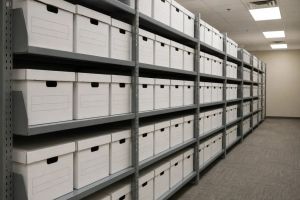
Storage choice matters too, but only if it matches the inventory. Open shelving works well for visible carton storage and fast hand picks. Heavier boxed parts need shelving that can take the load without sagging or forcing unsafe stacking. Small parts need bin control. Reserve stock needs bulk storage that uses cube efficiently without choking access. High-density storage can save a room that has run out of footprint, but it also adds time if it is used for parts that should be picked quickly.
That is the trade-off buyers need to evaluate during planning. A layout can maximize storage capacity and still underperform if it adds steps to every common transaction. The right design balances density with speed, because the full return comes from more billed labor hours completed, more parts captured on each repair order, and fewer labor minutes wasted inside the room.
Common parts room problems dealerships run into
At 10:15 on a busy service morning, the room looks full but still cannot support the shop. A technician is waiting on a filter kit that should take seconds to pull. A counterperson leaves the dispatch window to hunt through mixed cartons. Receiving is parked in the aisle because there is no clean put-away path. Nothing has failed outright, but labor time is already leaking out of the building.
That is how weak layouts show up in dealerships. The room gets built around habit, open shelf space, and whoever remembers where things went last month. Over time, slotting breaks down, prime locations get taken by parts that barely move, and common picks drift farther from the service counter. The cost is not just frustration. It is fewer technician hours turned, more interruptions at the counter, and missed parts capture on repair orders when the path to the part takes too long.
As noted earlier, even short delays per repair order add up fast. In a shop processing 50 repair orders a day, a 30-second delay on each one burns about 25 minutes of productive time. That can equal roughly one billable labor hour across the day, and in many stores that is well over $100 in lost revenue before you count the ripple effect on technician idle time and customer delivery promises.
A parts room rarely fails in one obvious moment. It loses money in small, repeated delays that become normal.
Problems that show up in day-to-day work
- Technicians waiting at dispatch: The counter backs up because high-frequency parts are not close enough to the pick path.
- Poor slotting discipline: New SKUs get dropped into any open location, which creates extra search time and weakens inventory accuracy.
- Mixed storage methods: Bins, cartons, loose items, and floor stacks in the same area slow picks and raise the chance of mis-pulls.
- Receiving without control: Inbound product sits on carts or in aisles, delaying put-away and blocking access to active locations.
- Weak labels and location logic: Staff depend on memory instead of a location system that any trained employee can read.
- Overflow with no plan: Obsolescence, seasonal stock, and growth inventory end up in borrowed corners that add walking and hide sellable parts.
The hidden trade-off
Capacity problems usually get management attention first. Speed problems cost more.
I see this often. A dealership adds denser storage to get more inventory into the same footprint, but the underlying issue is that the wrong inventory is getting the best access. High-density storage has a place, especially for reserve stock and slow movers. It becomes expensive when it is used for parts touched all day long. Every extra reach, turn, or search shows up in labor efficiency, counter throughput, and sales per repair order. The better test is simple. If a storage decision saves square footage but adds time to common picks, the room is paying for that choice every day.
How to zone a dealership parts room by part type and movement
At 8:15 a.m., the service drive is full, technicians are waiting, and the parts team is burning time crossing the room for items they pull every hour. That is a zoning problem, not a staffing problem. A good zone plan cuts walking, shortens pick time, and protects the shelf positions that produce the most labor and sales throughput.
The right way to zone a dealership parts room is to sort inventory by three factors at once: how often the part moves, how it is handled, and how much space it consumes. If one of those factors is ignored, the room usually drifts into a layout that looks organized on paper and performs poorly during the day.
A practical layout usually breaks into four working zones.
Primary picking zone
This is the highest-value space in the room. Put the parts here that support the daily repair mix and get picked repeatedly from open to close. Keep them close to the counter, dispatch path, or technician handoff point, and store them between knee and shoulder height whenever possible.
Use this area for:
- Fast-moving service parts: Filters, belts, bulbs, fluids, sensors, clips, and common maintenance kits
- Small boxed parts: Items that need clear visibility and quick counting
- Day-level forward stock: Enough quantity to support active picking without turning the zone into back stock
This zone should feel a little expensive. That is the point. If a shelf location saves seconds on a part touched dozens of times a day, that location has higher earning power than a slot used for something picked twice a month.
Secondary storage zone
This zone supports regular demand without taking premium access away from the fastest movers. Place medium-velocity parts here, still in logical sequence and still easy to read, but a few steps farther from the main pick path.
Standard shelving, divided shelves, and carton storage usually work well in this area. The goal is controlled access, not prime access.
Bulk and reserve storage zone
Reserve the back of the room, upper levels, and less convenient positions for deep stock, oversized cartons, larger assemblies, and slower-moving inventory. Seasonal parts also belong here if they do not support current repair demand.
My observations frequently reveal money left on the table. Dealers give bulky reserve stock the same convenience as active pick stock, then force the parts team to travel farther for the items that drive daily output. The layout should do the opposite. Easy access goes to high-frequency demand. Density goes to low-frequency demand.
Special-use zones
Some categories need their own rules because they create handling, safety, or staging problems if they get mixed into general shelving.
Set separate zones for:
- Fluids and chemicals
- Long or awkward parts
- Tires and large round items
- Battery storage
- Will-call staging
- Returns and core holding
These zones keep the rest of the room stable. They also reduce hidden losses such as damaged product, blocked aisles, delayed will-call pickup, and cores that sit too long to process.
A zoning plan should also match replenishment habits. Forward pick locations need fast refill access from reserve stock, or the counter staff will start hoarding extra inventory in the wrong places. That breaks slotting discipline and slowly erodes the gains from the redesign.
The test is simple. If the layout gives the shortest travel path and best reach positions to the parts that move the most, the room will usually support better technician uptime, stronger counter throughput, and higher sales per repair order. If it does not, the dealership is spending labor to work around its own layout.
Best shelving and storage systems for dealership parts rooms
The wrong storage system raises labor cost every day. I see it when a dealership puts high-frequency small parts on plain open shelves, then wonders why counter staff spend extra time searching, mis-picks go up, and technicians wait on parts that are supposedly in stock.
A good storage mix reduces touches, shortens search time, and uses cubic space without making daily picks harder. One system rarely solves the whole room. Most dealership parts departments need standard shelving for general stock, bin shelving for small active inventory, bulk shelving for reserve and larger cartons, and selective high-density equipment only where floor space is tight enough to justify the trade-off.
| Storage type | Best for part size | Picking speed | Visibility | Space efficiency | Expansion flexibility | Ideal use case | Budget range |
|---|---|---|---|---|---|---|---|
| Standard shelving | Mixed cartons and medium parts | Good | Good | Moderate | Good | General stock rooms with varied inventory | Moderate |
| Bin shelving with dividers | Small boxed parts and loose small items | Very good | Very good | Good | Very good | Fast-pick small parts organization | Moderate |
| Bulk shelving | Larger boxes and reserve stock | Moderate | Moderate | Good | Good | Back stock and larger packaged items | Moderate to higher |
| High-density storage systems | Dense small parts or constrained footprints | Varies by design | Varies by design | High | Moderate | Space-limited rooms needing more storage in the same footprint | Higher |
Where each system works best
Wire shelving fits locations where staff need quick visual confirmation and better airflow. It works well for lighter packaged parts, but it is a poor choice for tiny items unless you add bins or dividers. Without that control, small parts drift, labels get harder to trust, and pick time rises.
Steel shelving handles heavier boxed components better and usually gives a cleaner long-term slotting structure. It is the default choice for many medium-size dealerships because it balances strength, adjustability, and cost. For general stock, it usually returns better value than trying to force specialty equipment into every aisle.
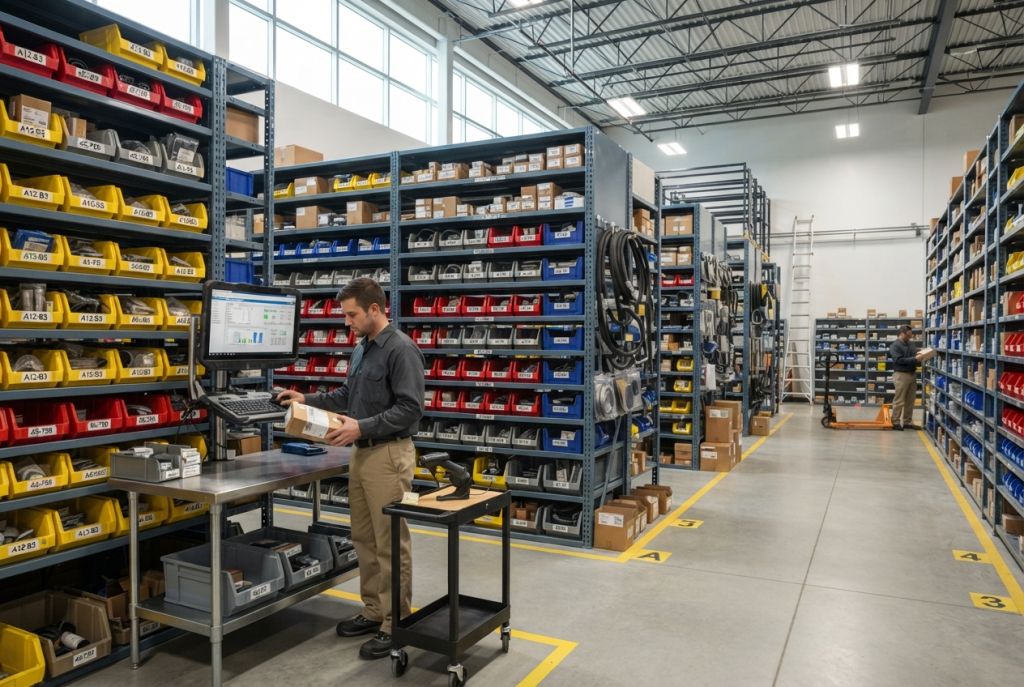
Bin shelving with dividers earns its keep in active picking zones. Clips, fasteners, seals, bulbs, connectors, and similar parts should not sit loose on flat shelves. Clean bin locations improve pick accuracy and reduce the re-checking that slows both front counter and shop support. That has a direct effect on technician uptime and parts sales captured on the repair order.
Bulk shelving belongs in reserve storage and with larger packaged items. It holds case quantities, oversized cartons, and slower stock well, but it should not take over prime picking space. If bulk shelves crowd the front of the room, the dealership gives high-value travel positions to inventory that does not drive daily output.
Verticalandspecialized racks solve storage problems standard shelves create. Long mouldings, pipe-like parts, batteries, and awkward components need dedicated handling. Storing them correctly reduces damage, keeps aisles open, and prevents staff from building unsafe workarounds.
High-density systems can make sense in a small footprint, but they are not an automatic upgrade. They save floor space and may delay an expansion project, yet they can also slow access if too much active inventory is stored inside them. The right question is financial. Does the added density save enough space or defer enough building cost to offset any loss in picking speed?
Material Handling USA offers factual planning support for dealerships comparing shelving, bin systems, bulk storage, and layout options at https://mh-usa.com/contact/.
Fast-moving vs slow-moving inventory storage strategies
A technician is waiting on a common filter, wiper blade, or sensor, and the counter person has to walk past dead stock to get it. That layout choice shows up in labor hours, bay throughput, and parts sales per repair order. Fast-moving inventory should earn the best positions because it affects daily revenue. Slow-moving inventory should give up prime space because it does not.
Movement-based slotting is one of the clearest ROI decisions in a dealership parts room. The goal is not tidier shelves. The goal is fewer steps per pick, faster dispatch to the shop, and less time spent hunting for the items that leave the shelf every day.
Fast-moving inventory
Store high-frequency parts where they cost the least to pick and replenish:
- Closest to dispatch or the main pick path
- Between knee and shoulder height
- In forward pick locations sized for daily demand
- With reserve stock nearby for quick refill
This is where layout starts paying back. If a part is picked dozens of times a week, every extra step repeats all month. I usually tell managers to protect those front-row locations for maintenance items, common repair parts, and any SKU that supports quick-turn service work. Giving those positions to low-demand stock is expensive, even if the room looks full and organized.
Slow-moving inventory
Low-frequency parts belong in locations that preserve prime space for active demand:
- Farther from the main pick path
- Higher shelves or secondary aisles
- Bulk or reserve storage if carton quantities make sense
- Dedicated storage for awkward or damage-prone items
That does not mean slow movers should be buried carelessly. They still need a fixed address, safe access, and enough logic that staff can find them without stopping the room. The difference is economic. A slow-moving part can tolerate a longer walk because that walk happens far less often.
A good test is simple. If a location near dispatch is holding inventory picked once a month while a daily-use SKU sits in the back, the room is subsidizing wasted travel. Re-slotting those parts usually improves response time in the shop without adding staff.
Measure shelf space by labor impact and revenue support, not by cubic capacity alone.
How to improve picking speed, visibility, and accuracy
At 8:10 a.m., the shop is already stacked with waiting repair orders, a technician is at the counter asking for the same filter twice because the first pick was wrong, and the parts team is losing minutes to shelves they have seen a thousand times. That is not a staffing problem first. It is a layout and control problem, and it shows up in labor hours, bay throughput, and sales per repair order.
Picking speed improves when every location answers three questions immediately: what belongs here, how much belongs here, and what nearby items are typically picked with it. Accuracy improves when the room makes the wrong pick harder to make.
Use labels, dividers, and location discipline
Every active location needs a clear address that can be read fast from the aisle. The format matters less than consistency. If one aisle uses bay-shelf-bin and another uses handwritten shorthand, staff start relying on memory, and memory breaks under rush conditions.
Dividers do more than keep shelves tidy. They protect pick accuracy by giving each SKU a physical boundary. Without them, similar boxes slide together, labels get covered, and fast picks turn into double-checks, recounts, or returns from the shop.
Set minimum slotting rules and enforce them:
- One part number per forward pick location
- Visible label at the pick face
- No overflow stuffed into the wrong slot
- Refill stock separated from pick stock
- Damaged or questionable packaging pulled immediately
Those controls sound basic because they are. They also pay back quickly. A picker who saves a few seconds on each line item gives that time back to the counter, the shop, and same-day customer orders all day long.
Group parts by job logic
Parts should sit near the items they are commonly picked with, not just near parts that look similar or arrived in the same shipment. I usually group the room around repair activity because that reduces second trips and missed add-on parts.
A practical layout often includes:
- Maintenance items together: Filters, plugs, common chemicals, and service kits
- Brake-related parts in one zone: Pads, hardware, wear sensors, clips
- Electrical small parts together: Relays, fuses, connectors, terminals
- Dedicated will-call storage: Separate from technician and counter picks
This is one of the clearest layout-to-revenue connections in a dealership. If related parts are stored in the same neighborhood, staff are more likely to complete the full pick on the first pass and less likely to miss a small companion item that should have been sold on the repair order.
Reduce visual noise
Too many dealerships accept crowded shelves, faded labels, mixed totes, and random handwritten notes as normal. They are expensive.
Visibility gets better when the room has fewer exceptions. Standard bin sizes help. Consistent label placement helps. So does removing dead stock from active pick faces. If a picker has to slow down to confirm every slot, the room is charging labor for visual clutter.
Test accuracy in live work
Do not judge the redesign by how clean it looks on Friday afternoon. Judge it during the Monday morning rush.
Run real repair orders through the new layout. Watch where picks stall, where staff hesitate, and where the same aisle gets hit twice for one job. If errors still show up, the cause is usually easy to trace: poor adjacency, weak labels, mixed locations, or too much overflow in the forward area.
A parts room is accurate when an average employee can pick it correctly at speed. If the layout only works for the one veteran who knows every shelf by memory, it is still underperforming.
Space-saving ideas for small or crowded parts rooms
At 8:15 on a busy service morning, a cramped parts room shows up on the financial statement. A counterperson is waiting on one bin, a technician is blocked by a receiving cart, and two minutes disappear on every repair order because there is no clean place to stage, store, and pick. In a small room, space problems become labor problems first.
The goal is not to pack the room tighter at any cost. The goal is to get more usable storage per square foot without hurting access to the parts that drive daily sales and technician uptime.
Use vertical space where access still makes sense
Many dealership parts rooms waste the top third of the room and overload the bottom third. That forces active inventory into aisles, on top of cabinets, or into loose overflow areas that create extra touches.
Vertical storage fixes that only when it matches the part and the pick frequency. Reserve stock, seasonal items, and bulky cartons can move up. Fast-moving SKUs should stay in the easiest reach zone. Long, narrow parts such as mouldings, trim, and tubes often store better in vertical racks because they stop consuming horizontal shelf runs and are less likely to get bent or buried behind cartons.
Mezzanines, taller shelving runs, and enclosed high-density systems can add capacity, but they are not automatic wins. They cost money, change replenishment work, and can slow picks if managers put daily-demand parts too high or too far from the counter. The right question is simple: does the added storage lower travel, reduce off-site overflow, or avoid an expansion?
Pull staging and nonstock activity out of prime pick space
Small rooms usually break down because too many functions compete for the same footprint. Receiving lands in an aisle. Returns sit on a cart for three days. Will-call grows across a shelf section that should hold active inventory.
That setup cuts capacity and slows every pick.
A better compact layout gives each task a defined footprint, even if the footprint is small:
- Use divided shelving or binning for active small parts
- Move reserve cartons and case stock to bulk shelving above or behind the forward pick area
- Carve out a tightly controlled will-call zone with time limits
- Keep returns, cores, and receiving carts out of primary pick aisles
- Eliminate floor storage except for short-term, marked inbound handling
I have seen small rooms gain more usable capacity by removing mixed-purpose clutter than by buying another row of shelving. That is usually the cheaper win.
Reduce the cost of dead space
Corners, aisle ends, overhead areas, and the space above worktables often go underused. Some of that space can hold reserve stock, specialty items, or supplies that do not belong in the main pick path. Narrow-profile shelving, end-of-aisle storage for small ancillary items, and overhead storage for low-demand materials can recover capacity without making the room harder to work in.
Do not force every empty spot to hold inventory. Some open space earns its keep by protecting travel paths, ladder access, and staging discipline. In crowded parts rooms, the best space-saving move is often to preserve a clear aisle so picks happen faster and replenishment does not interrupt the counter.
A small parts room performs well when every square foot has a job, and the highest-value space is reserved for the inventory that turns fastest. That is where redesign produces measurable return. Less walking, fewer touches, faster repair order completion, and more room for the parts that sell.
Common layout mistakes to avoid
Most layout mistakes are easy to identify after the fact and expensive to live with before then.
Mistakes that keep showing up
-
Ignoring inventory data
Teams slot by habit instead of movement. That puts prime space in the wrong hands. -
Using one storage type for everything
Small parts, long parts, tires, fluids, and heavy cartons don’t belong in one generic system. -
Allowing floor storage
It clogs travel paths and creates safety and housekeeping issues. -
Skipping validation
A room may look better and still pick poorly if no one tests it against real orders. -
Forgetting ergonomics
Heavy or frequent picks placed too low or too high wear out staff and slow the process.
An underserved issue in parts rooms is worker strain. Background guidance on ergonomic design points to the importance of battery racks, reach reduction, and safer access, even though many layout discussions still focus only on capacity and speed (ergonomic parts room considerations).
How to plan for growth, overflow, and future inventory changes
A parts room usually feels adequate right after a reset. Six months later, a model change, accessory push, or service volume increase starts pushing cartons into aisles and temporary bins. That is when layout decisions start hitting the income statement through slower technician support, more counter hunting, and lower parts sales per repair order.
Good growth planning protects capacity without turning the room into a warehouse of empty shelves. In dealership work, I usually reserve buffer space for the inventory swings that come with seasonal tires, recall campaigns, accessory programs, and pack-size changes from suppliers. A common rule is to hold back roughly 20% of usable capacity sotheroom can absorb change without breaking picking flow.
Practical decision scenarios
Small dealership with limited backroom space
Use the room for active inventory first, not for every unit of reserve stock. Divided shelving should carry the day-to-day pick faces, while deeper bulk storage handles backup quantities. A separate will-call corner matters here because every square foot lost to mixed-purpose storage adds walking, mispicks, and time at the counter.
High-volume service department needing faster picking
Growth planning in a busy shop is really labor planning. If service volume is rising, the layout has to support more lines picked per hour with the same staff or close to it. Keep expansion space near the fastest-moving zones so added SKUs or greater depth do not push high-frequency parts into secondary locations. That preserves technician productivity and protects gross profit when the shop gets busier.
Dealership that outgrew old shelving
Outgrowing shelving often signals a slotting problem, not just a capacity problem. Before buying more steel, review which SKUs deserve primary pick locations, which should move to reserve storage, and which should be reduced or removed. I have seen stores postpone a room expansion by separating forward pick faces from backup stock and clearing obsolete inventory that had been occupying premium space for years.
Team trying to reduce lostormisplaced inventory
Future growth increases the cost of poor location control. As SKU count rises, informal storage breaks down fast. Expand with fixed location logic, readable labels, and clear overflow rules so temporary stock still has an assigned home. That cuts write-offs, reduces search time, and keeps cycle counts from turning into a manual investigation.
Dealer storing many small boxed parts, accessories, and fluids
These categories rarely grow at the same rate, so they should not share the same assumptions. Small boxed parts often need more pick faces as assortment expands. Fluids need controlled storage and room for replenishment. Accessories can spike with promotions or model launches, which means they need flexible space that does not disrupt service parts. Plan each category by expected volatility, not just by what fits today.
Department planning both stock storage and will-call storage
Will-call volume tends to rise with online ordering, wholesale activity, and accessory sales. If that area has no room to expand, it starts borrowing space from stock locations and creates confusion for both pickers and counter staff. Set a defined will-call zone with room for growth, aging controls, and clear ownership. That keeps sold parts from clogging the main storage area and protects fill speed for the shop.
Final planning checklist
Use this checklist before you order shelving or redraw the room.
Seven-step checklist
-
Run ABC analysis
Identify your true fast, medium, and slow movers. -
Map core zones
Receiving, primary picking, bulk storage, dispatch, and will-call should each have a purpose. -
Match storage to part type
Use divided shelving for small parts, bulk shelving for larger cartons, and specialized racks for awkward items. -
Set location addresses
Every shelf, section, and bin should have a readable code. -
Protect the golden zone
Put common parts in the easiest reach range near dispatch. -
Reserve room for growth
Leave expansion capacity sotheroom doesn’t choke on future inventory. -
Test with live orders
Walk actual repair orders through the room and adjust bottlenecks before calling the project complete.
Frequently asked questions
What is the first step in an automotive dealership parts room layout project
Start with inventory stratification. Until you know what moves fastest, you can’t assign space correctly.
How should fast-moving parts be stored
Keep them close to dispatch, visible, and in the most ergonomic shelf range for fast picking.
What shelving works best for small dealership parts
Bin shelving with dividers is usually the cleanest option for small boxed parts and loose service items. Standard shelving still works well for mixed cartons.
Should will-call be in the main stock area
It’s better as a separate zone. That reduces mix-upsand keeps stock picking cleaner.
Is wire shelving or steel shelving better
It depends on the load and the part type. Wire shelving helps with visibility. Steel shelving is often better for heavier boxed inventory.
How often should a parts room be re-slotted
Re-slot when inventory patterns change enough that your fastest movers no longer sit in prime space. It’s also smart after major service growth or brand mix changes.
Can a small parts room still be efficient
Yes, if the room uses vertical space well, separates active stock from reserve stock, and avoids floor clutter.
What should buyers ask a shelving supplier
Ask about shelf adjustability, load capacity, accessories, layout support, lead times, and how the system handles future expansion.
A dealership that fixes its parts room early usually gets better planning options, fewer installation headaches, and a smoother path to growth. A dealership that waits usually ends up reorganizing under pressure, when service volume already demands more from the room.
The right automotive dealership parts room layout supports speed, accuracy, safety, and better use of labor. It gives fast movers the space they’ve earned, keeps slow movers from stealing prime locations, and turns storage into a working part of fixed ops performance. If you’re planning a new room or cleaning up an overcrowded one, Request a Quote or Contact Us for layout help. If you want to talk through shelving, bin systems, or storage options with a real person, call (800) 326-4403.
Frequently Asked Questions
Does Material Handling USA offer free quotes?
Yes. Material Handling USA provides free, no-obligation quotes for all warehouse storage and material handling projects. Contact us online or call 801-328-8788.
Do you handle delivery and installation?
Yes. Material Handling USA provides professional delivery and installation for pallet rack, shelving, mezzanines, security cages, and all warehouse equipment. Our team manages the project from layout to final walkthrough.
Related Solutions
Need Help Choosing the Right Solution?
Material Handling USA provides free warehouse design consultations, competitive pricing, and expert project management from layout to installation.
Get a Free Quote or call 801-328-8788
Related Resources
- Mobile Storage Systems — Maximize parts room capacity with compact mobile shelving
- Electric Mobile Shelving — Power-assisted systems for heavier automotive parts storage
- Security Cages — Secure high-value parts and inventory with wire partitions
Online Store
Shop at MaterialHandling-USA.com
Organize your parts room with bins, labels, shelving, and more:
Bins & Totes
Shipping Labels & Tags
Work Tables & Workbenches
Storage Cabinets
Shop parts room supplies →