
Guard Booths: Choosing the Right Booth for Your Site
From a construction-site checkpoint to a staffed distribution-center gate, the right guard booth depends on how it’s used, staffed and sited. Here’s how to choose — stationary or trailer-mounted, rent or buy — and where to go for the details on each option.

Stationary or mobile
Concrete-pad booths vs. trailer-mounted units you can tow
Rent or buy
Short-term project needs vs. a permanent checkpoint
Sized to the site
Occupancy, equipment, glazing and utility needs vary by use
A guard booth (also called a guard shack, gatehouse or security booth) is a small prefabricated structure that shelters an attendant controlling access at a gate, parking lot, construction site or facility entrance. Guard booths are one of the smaller structures in MH-USA’s broader prefabricated modular buildings line, sharing the same insulated steel-panel construction and factory-built approach used for larger modular offices and equipment enclosures, just scaled down for a one- or two-person checkpoint.
The right guard booth for a project depends on a handful of practical questions: Is the checkpoint permanent or temporary? Will the booth need to move to a different site later? How many people staff it, and what do they need inside? What’s the local climate, and what utilities are already at the site? This page walks through those decisions and points to the detailed pages below for each booth type MH-USA covers.
Guard Booth Types
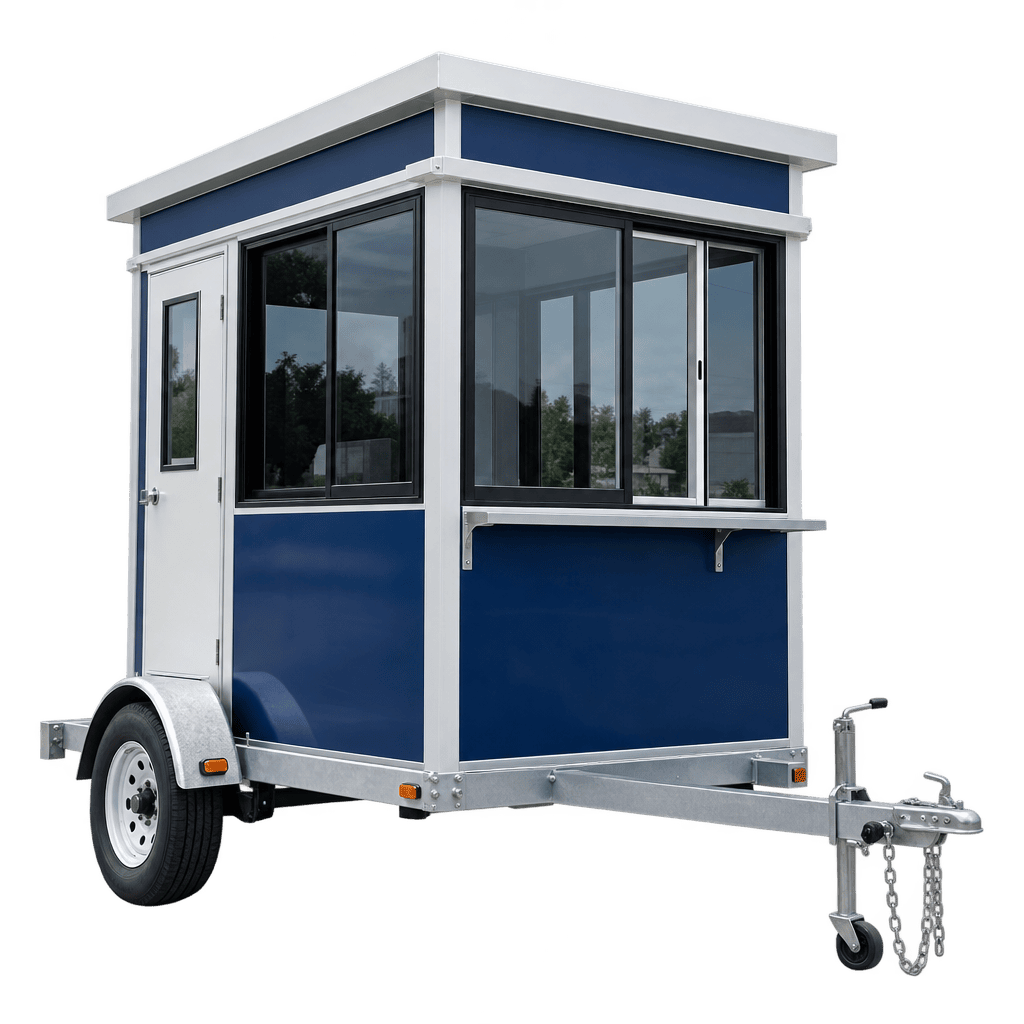 Mobile & Portable Guard BoothsTrailer-mounted and skid-mounted booths that can be delivered, towed and relocated without a foundation — built for construction sites, temporary checkpoints and projects that may move.
 Utah Guard BoothsGuard booths specified and delivered for Utah sites, with the insulation and heating needed for the state’s winter conditions at distribution centers, campuses and industrial gates.
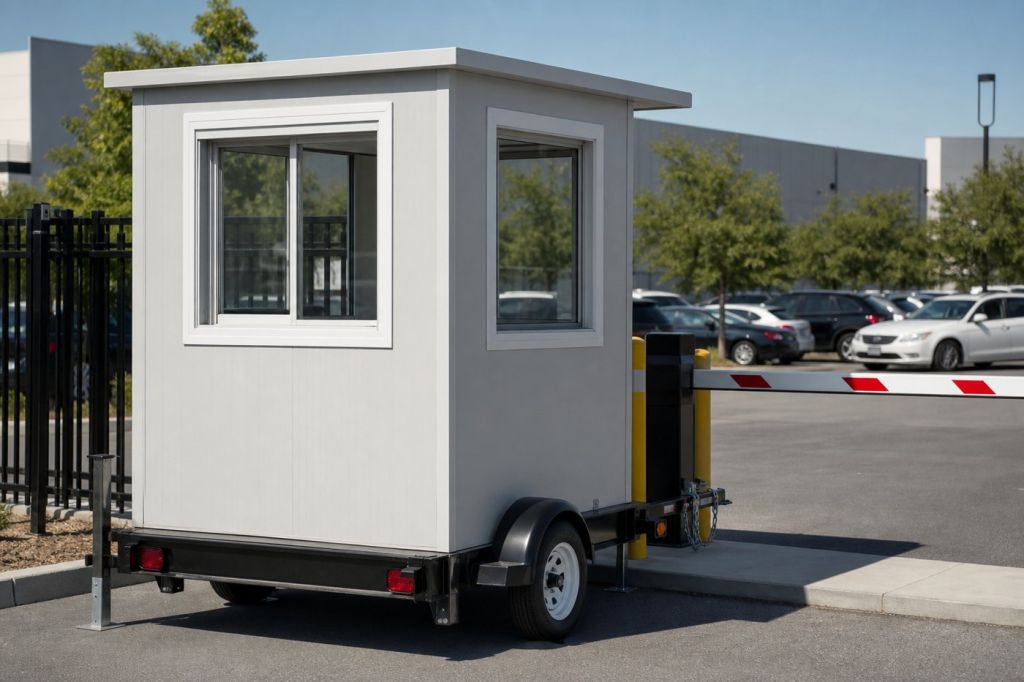 Guard Shack Mounted on a TrailerA closer look at trailer-mounted guard shacks specifically — towing, leveling, hookups and how they compare to a stationary booth for a site that needs mobility.
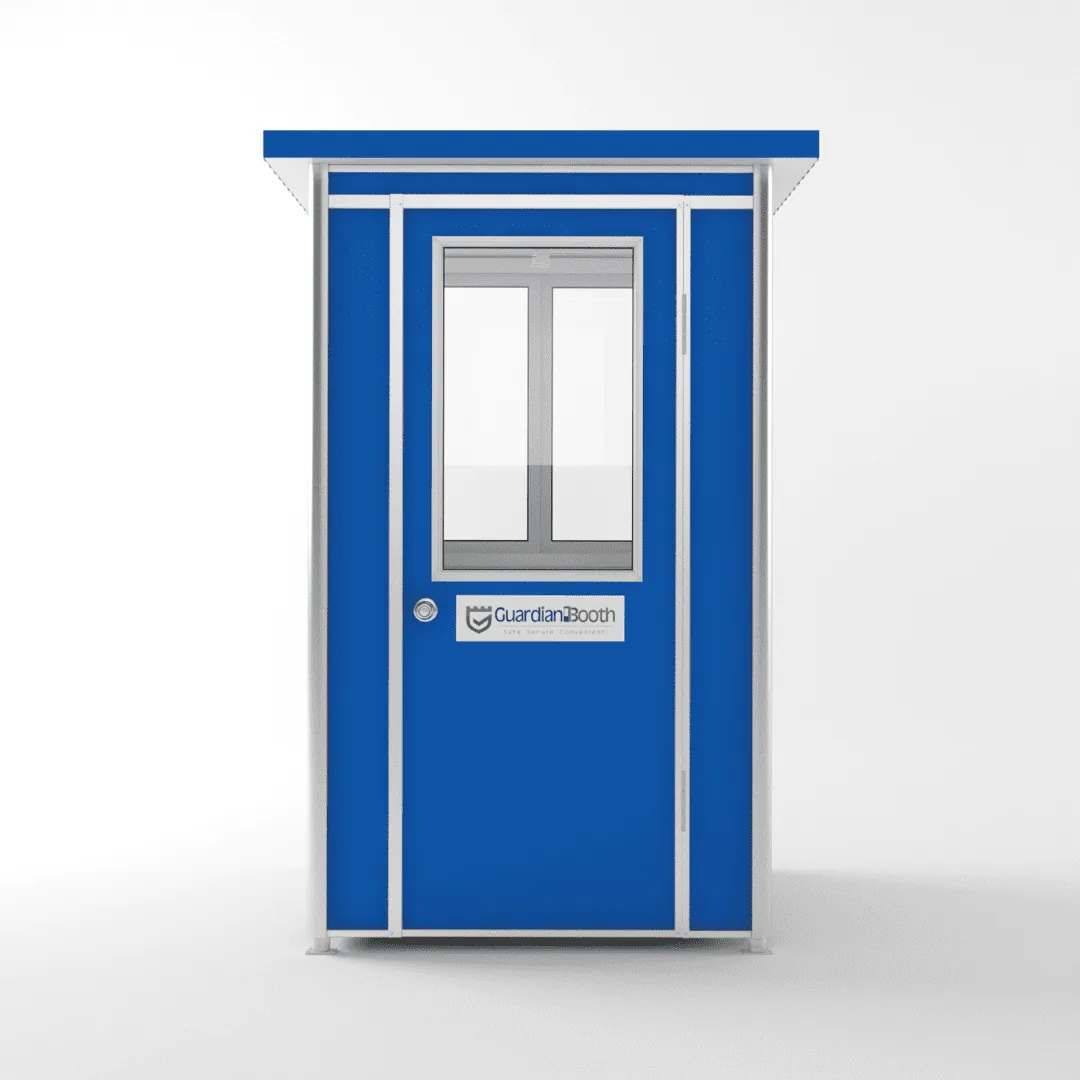 Parking Booths & Attendant StationsCashier and attendant booths sized for parking lots and garages, where sightlines to the gate arm and payment equipment matter as much as shelter from the weather.
Stationary vs. Trailer-Mounted: How to Decide
The first fork in the decision tree is whether the booth needs to stay in one place for years or whether it might move. A stationary prefabricated booth is typically set on a concrete pad with anchor bolts, connected to permanent electrical and data service, and built for a specific site’s wind and climate requirements. It’s the right call for a permanent gate at a distribution center, corporate campus or government facility where the checkpoint location is fixed.
A trailer-mounted guard booth is built on its own axle and hitch, so it can be towed to a site, leveled on jacks, and connected to shore power without foundation work — then towed to a new location later if the project moves. That flexibility makes it the common choice for construction sites, temporary event access control, and any checkpoint where the exact location isn’t permanent yet. See guard shack mounted on a trailer for the towing, leveling and hookup details.


Where Guard Booths Are Used
Staffed access control shows up in a wide range of facilities, and the right booth often differs by industry:
- Construction sites — a temporary checkpoint at the site entrance to log deliveries, check in subcontractors, and control who enters an active job site. Trailer-mounted booths are the common choice here because the checkpoint moves as the project does. See mobile & portable guard booths.
- Distribution centers and warehouses — a gate booth that checks trucks in and out, verifies bills of lading, and controls yard access. These are usually permanent, staffed around the clock or in shifts, and sized for that duty.
- Corporate and industrial campuses — a visitor and employee checkpoint at the main entrance, often paired with a gate arm, license-plate camera or badge reader that the attendant operates from inside the booth.
- Government and military sites — checkpoints with higher security specifications, sometimes including impact-resistant glazing and reinforced construction; requirements vary widely by agency and site classification.
- Parking facilities — a cashier or attendant station at the entry lane, where sightlines to the gate arm, ticket dispenser and payment equipment matter as much as shelter from weather. See parking booths & attendant stations.
Climate is a factor across every one of these uses. A booth specified for a mild coastal site and one specified for a cold, high-altitude gate — like many Utah facilities — need different insulation and heating capacity even if the footprint is identical. See Utah guard booths for how that plays out in practice.
Renting vs. Buying
Renting makes sense for a defined-length project — a construction job, a temporary event, or piloting a new checkpoint before committing to a permanent one. Rental units are typically a standard configuration delivered quickly, with the supplier handling delivery, pickup and basic maintenance.
Buying makes more sense once the checkpoint is expected to stay in service for years, because a purchased booth can be specified for the site’s actual climate, occupancy and utility needs rather than accepting a generic rental configuration. It’s also generally the lower total cost over a multi-year deployment, though that depends on how long the booth will actually be in use and what condition a rental unit is available in.
Construction Site Guard Booths and Pre-Assembled Units
A construction site guard booth usually has to be working the week the gate goes up, so most job sites use a standard, pre-assembled booth rather than a custom build. These units arrive assembled, pre-wired and with HVAC already installed; once set in place they only need a power connection. Some common sizes are in stock at select manufacturers, subject to confirmation, so share your start date and delivery ZIP code when you ask for a quote. The same standard booth also works as a parking cashier or ticket booth.
A typical compact pre-assembled booth (about 4′ × 6′) includes:
- Shell — 3″ insulated steel wall panels with a polystyrene core and 1/8″ diamond-plate flooring that stands up to muddy, high-traffic sites
- Power — pre-wired lighting and outlets fed from a small main-lug load center, plus a device charging station
- Climate — a through-wall HVAC unit mounted under the counter
- Visibility — a front picture window, sliding windows on both sides and a half-glass rear door
- Workstation — an 18″ stainless steel countertop for sign-in sheets, radios and a laptop
What to Specify When Ordering a Guard Booth
| Decision | Why it matters |
|---|---|
| Occupancy (1 vs. 2+ people) | Drives interior floor space, desk/counter layout and whether a restroom is needed |
| Stationary or trailer-mounted | Determines foundation work, utility hookup method and whether the booth can relocate later |
| Glazing & sightlines | Window placement and size need to give the attendant a clear view of the gate arm, vehicle lane and any card reader or intercom |
| HVAC & insulation level | Should match the local climate — a booth for a hot, sunny lot has different cooling needs than one in a cold-winter region like Utah |
| Power & data | Outlets, lighting circuit, and any data/phone line needed for a gate control system, camera feed or intercom |
| Security level | Ranges from a basic weather shelter to a booth built with impact-resistant glazing for higher-security sites |
| Ship-to ZIP code (wind rating) | Booths are engineered to the wind and code requirements of the ZIP code they ship to. Sites in Florida and the Caribbean islands need a Florida-rated, high-wind booth, which costs more than a standard booth, so share the delivery ZIP before comparing quotes |
More Guard Booth and Ticket Booth Guides
Mobile, government, high-wind and ballistic booths, plus design guidance for your project.
Project example: a ticket booth for a water park.
Get a free quote
Tell us what you are storing, the room size and your timeline. A project specialist will follow up with layout options and pricing. Prefer to talk? Call (800) 326-4403.
Frequently Asked Questions
What is the difference between a guard booth and a guard shack?
Should I rent or buy a guard booth?
Do guard booths need a permanent foundation?
What size guard booth do I need?
Can a guard booth be moved once it’s installed?
What utilities does a guard booth need?
What is a guard booth typically made of?
Need a Guard Booth for Your Site?
Tell us how it will be used — stationary or mobile, rented or purchased — and we’ll help you spec the right booth.