
Rack Damage Photo Assessment
Document damaged rack the way a technician needs it: one record per bay with location, load status, visible condition and photos. You get an organised, prioritised worklist you can act on today and send to us for a qualified site inspection.
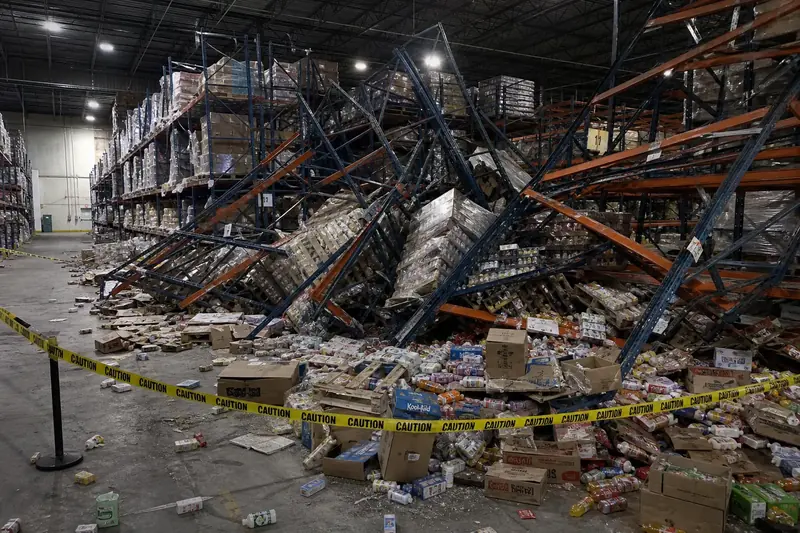
Damaged rack usually gets reported as a photo and a shrug
The way rack damage normally travels through a building is a phone photo sent to a supervisor with the message “aisle 4 looks bad.” There is no bay number, no note about whether the bay is loaded, no indication of which of five different conditions is actually present, and no record of when it was seen. Weeks later nobody can find the photo and nobody knows whether it was fixed.
That matters because the different conditions are not equivalent. A slightly bowed brace and a torn upright column on a fully loaded bay are separated by a very large safety gap, and the second one needs somebody to stop using that bay today — not after a quote.
This tool gives that information a structure. You record each affected location once, with what you can actually see and whether it is holding product. It returns a prioritised worklist, flags the combinations that should be unloaded and isolated immediately, tells you what information a repair will need, and gives you one organised package to send for a real inspection.
Who this is for
- Warehouse supervisors and safety coordinators who found damage on a walk-through
- Facilities and maintenance teams building a repair scope
- Operations managers who need a record for their own safety documentation
- Anyone who has just had a forklift strike and needs to know what to do in the next hour
What you need to hand
- Where each damaged location is — aisle, bay and level if you have them
- Whether that bay is loaded, partially loaded or empty right now
- Which conditions you can see, from a plain-language checklist
- Photos: a full-height shot of the bay, a close-up of the damage, and one of the base and anchors
- The rack manufacturer if you can identify it, and what caused the damage if known
Don’t have all of it? Every field that can be left blank, can be — the tool tells you which missing number would change the answer most.
Document each damaged location
Your worklist is produced on this page immediately. Contact details are only needed if you want it emailed to you, sent in for a site inspection, or priced for repair parts.
Prefer a full window? Open the rack damage assessment in a new tab.
How it works
Record each location
One entry per affected bay. Aisle, bay and level are what a technician navigates by, so they matter more than a long description.
Say whether it is loaded
This single answer changes the priority more than anything else. A serious condition on a loaded bay is an immediate action, not a scheduled repair.
Add photos
Full height, close-up, and the base. Photos are used only for your report and our review and are never published.
Send it for a real inspection
The worklist becomes the agenda for a qualified person on site. That inspection — not the photos — is what determines whether a bay is safe to use and what the repair actually is.
How the priorities are decided
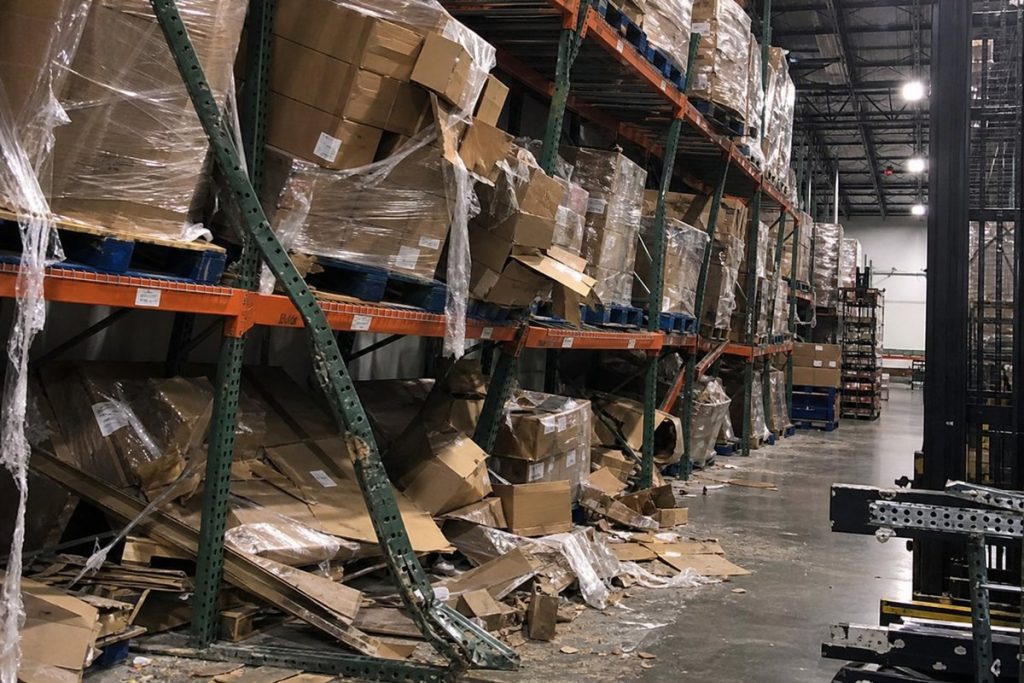
Unload and isolate now is assigned when you have reported a condition that can affect the frame’s capacity — a torn upright, a disconnected beam, base or anchor damage, damage at a column splice, or a visibly sagging beam — and the bay still has product on it. That combination is the one that should not wait, and the report says so plainly.
Priority repair covers those same serious conditions on an empty bay, and bays with several conditions at once. These need a qualified assessment quickly, but they are not holding load while you arrange it.
Scheduled repair is a single lesser condition on an empty bay — real work that belongs in a planned repair scope rather than an emergency.
Every entry also lists what is missing — usually the manufacturer, the beam and frame configuration, or a photo of the base. Those are precisely the details that decide whether a repair kit exists for your system, so gathering them now removes a round trip later.
What this tool does not do
This is an organised summary of what you reported. It is not a rack inspection, and it is not a structural or safety evaluation.
- No image review — ours or anyone’s — can determine hidden damage, weld condition, anchorage integrity, slab condition or safe residual load capacity.
- The tool performs no analysis of your photographs; priority comes only from the conditions and load status you selected.
- Nothing in the output certifies compliance with OSHA, ANSI MH16.1, or any manufacturer’s damage criteria.
- If a bay looks unsafe, treat it as unsafe: unload and isolate it and get a qualified person to look at it.
Rack repair, protection and inspection
Pallet racking systems and components
Qualified on-site inspection and repair of damaged storage rack.
Pallet rack systems
Replacement frames, beams and components for damaged systems.
Pallet rack safety inspections and OSHA considerations
What a real inspection covers and why photographs are not a substitute.
Rack protection and guarding
Where repeat impacts in the same positions point to a traffic or clearance problem.
Cantilever rack
Long-load storage, often damaged by the same traffic patterns.
Request a quote
Send the worklist in and we will identify parts and price the repair.
Common questions
Does this tell me whether my rack is safe?
How many photos should I take per bay?
We do not know who made our rack. Does that matter?
Should we keep using a damaged bay until it is repaired?
Is this an OSHA inspection?
What happens after I submit it?
Get a qualified person on the documented locations
Send the worklist in and we will arrange an inspection, identify the parts your system needs, and price the repair.