
Pallet Rack Repair & Inspection Services
Report rack damage, get it assessed and choose the right fix: identical replacement parts or an engineered bolt-on upright repair kit that can often go in without unloading the bay. We coordinate inspection, parts and the repair scope for your actual rack.
Isolate
First step when damage is found
MH16.1
RMI/ANSI rack spec repairs must meet
Under 45 min
Low/Row Guard kit install, per SpaceGuard
Up to 13 ft
Centurion High Guard repair height
Found Rack Damage? Isolate the Area First
A bent upright, damaged beam, missing connector lock or distressed base connection is not something to clear for continued use from a quick photo or a rule of thumb. Follow your facility’s incident-response procedure and keep people and equipment away from the affected area.
The Rack Manufacturers Institute recommends isolating the affected area and having a storage rack design professional evaluate the damage. That professional directs whether and how the rack should be unloaded, repaired or replaced. Do not send someone into an unstable area to unload it or take closer pictures.
MH-USA can help assemble the rack information and coordinate an inspection or repair proposal. A quote, photograph or parts listing is not authorization to reload damaged rack.
Pallet Rack Repair vs. Replacement: When Each Makes Sense
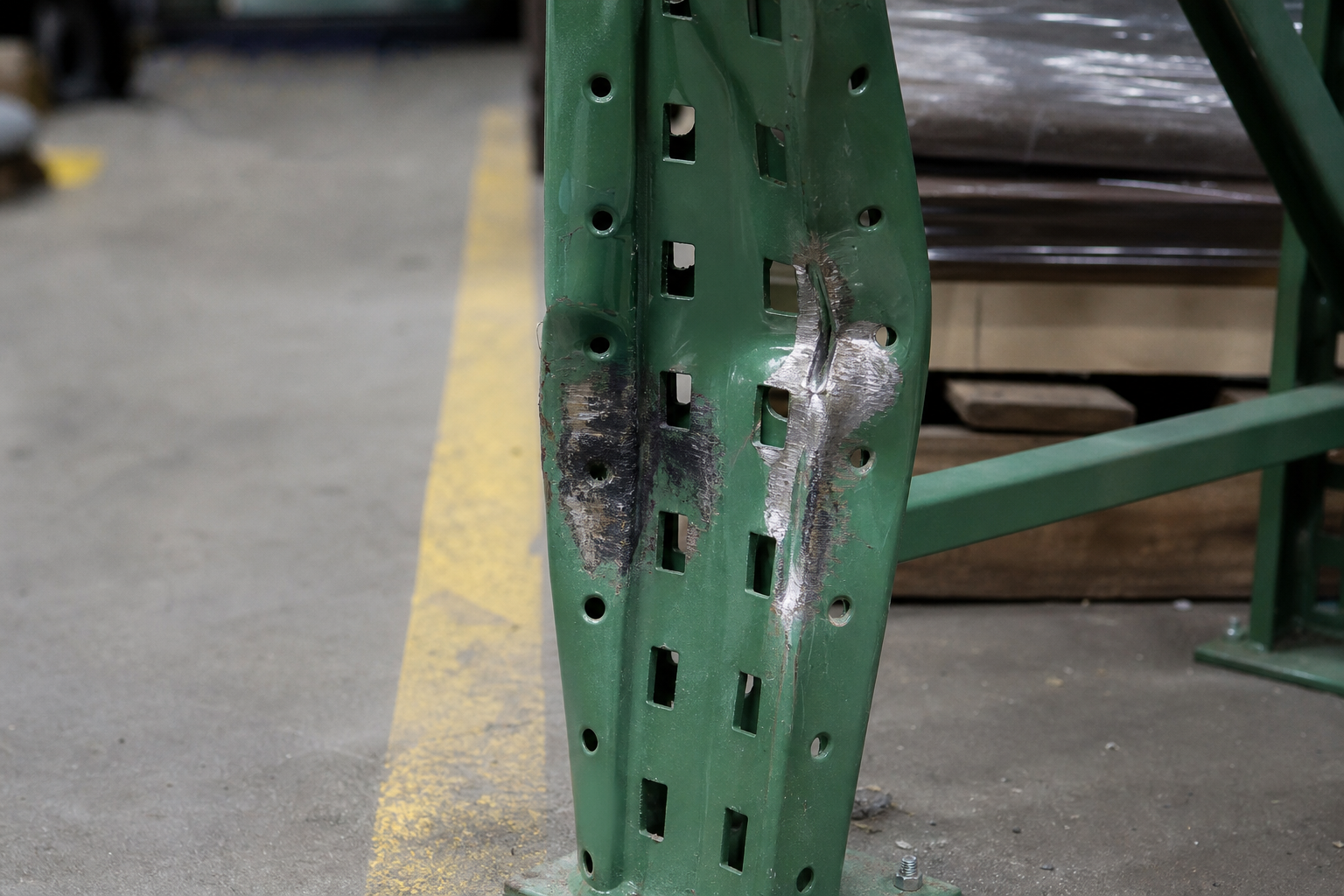
Most rack damage happens low on the front column, where lift trucks, forks and pallets make contact. The steel above the impact zone is often still sound. That is why the choice is rarely “new frame or nothing”: RMI guidance lists several remedies, and the right one depends on the component, the damage, the rack’s documentation and its loading.
ANSI MH16.1, the RMI specification for industrial steel storage racks, tells owners to regularly inspect for damage, immediately isolate damaged areas, and have a storage rack design professional evaluate it. Damaged columns, beams or other structural components are then unloaded, replaced or repaired as that professional directs, to restore the system to at least its original design capacity.
RMI’s Guidelines for the Assessment and Repair or Replacement of Damaged Rack (v3.0, 2023) adds that the repair design must consider all loads on the damaged area (static, seismic and others), not only the strength of the piece being fixed. Do not assume every dent is harmless, or that every damaged part can be restored with an off-the-shelf kit.
The four repair routes in RMI guidance
| Route | When it fits | What to watch |
|---|---|---|
| Replace with identical OEM parts | The manufacturer is identifiable and original or revised engineering documents exist. | Similar-looking parts from another manufacturer are not interchangeable. Non-identical replacements need an engineering evaluation. |
| Engineered repair kit | The damage is a localized section of an upright, often near the floor. The damaged section is removed and a pre-engineered kit is bolted or welded in and anchored. | A supervising engineer evaluates the configuration and loads at that location. Each load configuration is evaluated separately and the kit must meet building codes. |
| Component straightening | Only when expressly approved by the supervising engineer. | The process must keep the steel’s load-carrying properties, including residual-stress effects. Never bend a part back by eye. |
| Welded field repair | Where replacement or kits are not an option. | Supervised by the engineer and performed by a certified welder to AWS standards. RMI lists added field-welding risks. |
Replacing the upright frame vs. a bolt-on upright repair kit
| Factor | Replace the upright frame | Engineered bolt-on repair kit |
|---|---|---|
| Unloading | Usually the bay (and often adjacent bays) is unloaded so beams can be released and the frame removed. | The column is supported while the damaged section is cut out; SpaceGuard states its Centurion kits install without offloading the rack. |
| Downtime | Aisle closure for unloading, teardown, reinstallation and reloading. | Work is limited to the damaged column; SpaceGuard lists under 45 minutes per Low Guard or Row Guard kit. |
| Steel sent to scrap | The whole frame: both columns, bracing and base plates. | Only the cut-out damaged section; the sound upper column stays in service. |
| Parts | Must match the original manufacturer, profile, gauge and hole pattern; older or discontinued rack can be hard to source. | Kits adapt to teardrop and structural hole patterns in 3, 4 and 5 in. wide uprights (Centurion Mid Guard and Low Guard). |
| Engineering | Identical OEM parts keep the existing LARC drawings valid. | Supervising-engineer review of the repair at that location; drawings and plaques updated as directed. |
When replacement is usually the better call
- Damage outside a kit’s range: bends higher on the column than the available kit height, or damage to beams, connectors or long runs of bracing that a column kit does not address.
- Unknown or changed rack: no identification, missing drawings, or a configuration that has been moved or reloaded since installation. Engineering comes first.
- Widespread or severe damage: several damaged members in one frame, torn steel, or an out-of-plumb structure the engineer will not accept for repair.
- Repeat hits in the same spot: fix the traffic or clearance problem too, whichever remedy you choose.
Replacement components are sourced to match your rack (we have access to some common sizes in stock at select manufacturers, subject to confirmation). A similar color, hole pattern or nominal dimension is not proof that a substitute is acceptable.
After any repair or replacement: the RMI checks
RMI’s guideline points to ANSI MH16.1 Section 4.11: loaded rack should be plumb and straight within 0.5 in. per 10 ft of height, checked over the full frame height after the work. Replacement anchors go in the same hole or a new hole at least 3 times the larger anchor diameter from old holes. Update LARC drawings and load capacity plaques whenever the configuration or capacity changes.
Repair Keeps Sound Steel in Service: Less Scrap, Less Downtime
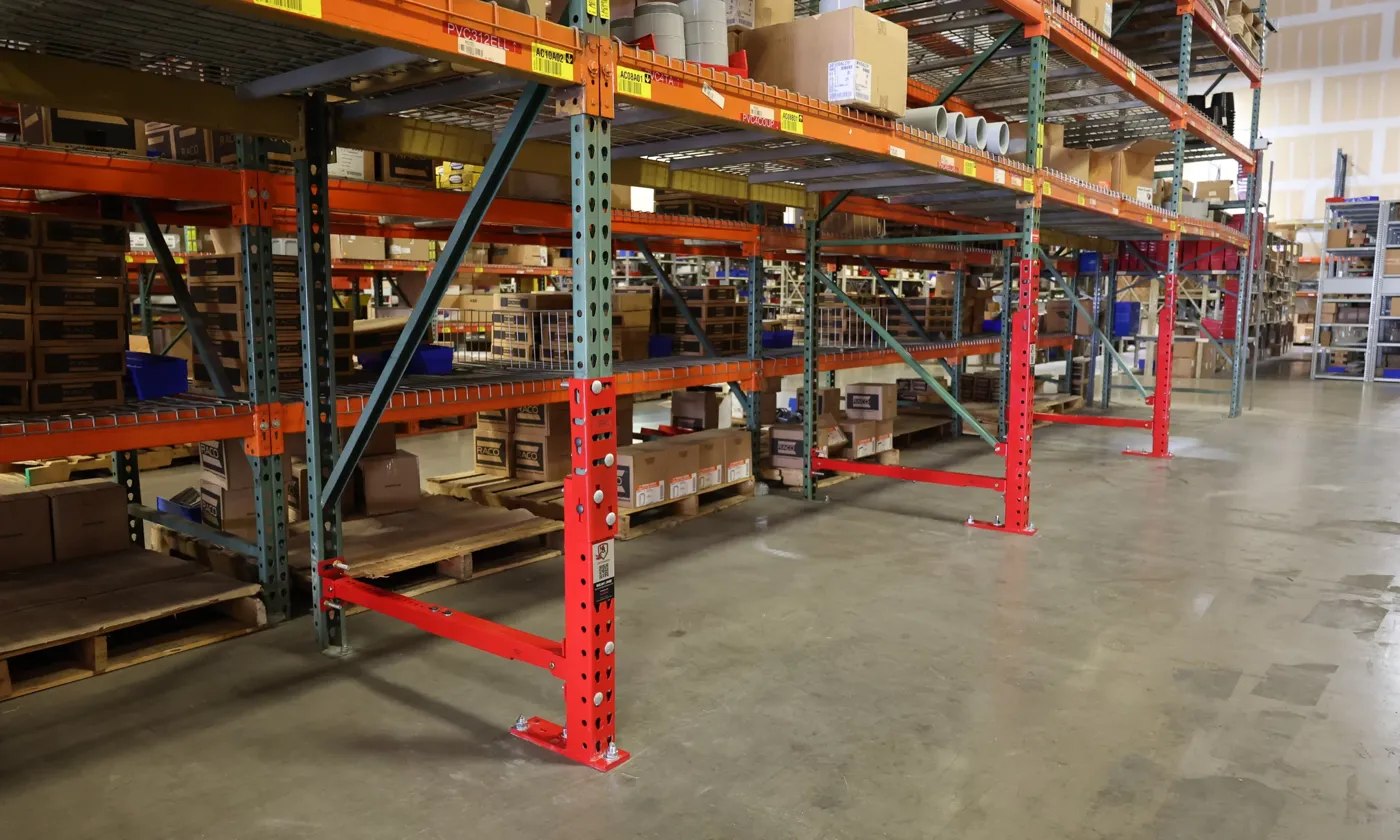
The traditional response to a hit upright is to unload the bays, pull the frame and install a new one. SpaceGuard points out that this sends large volumes of steel to scrap and shortens the life of racks that are sound apart from localized damage near the floor.
Repairing only the impact zone keeps the undamaged column, bracing and beams in service. Less new steel is made and shipped, less material goes into the waste stream, and the rack returns to work sooner. For facilities reporting progress on waste or sustainability goals, documented repairs are an easy, measurable line item.
Centurion Engineered Upright Repair Kits
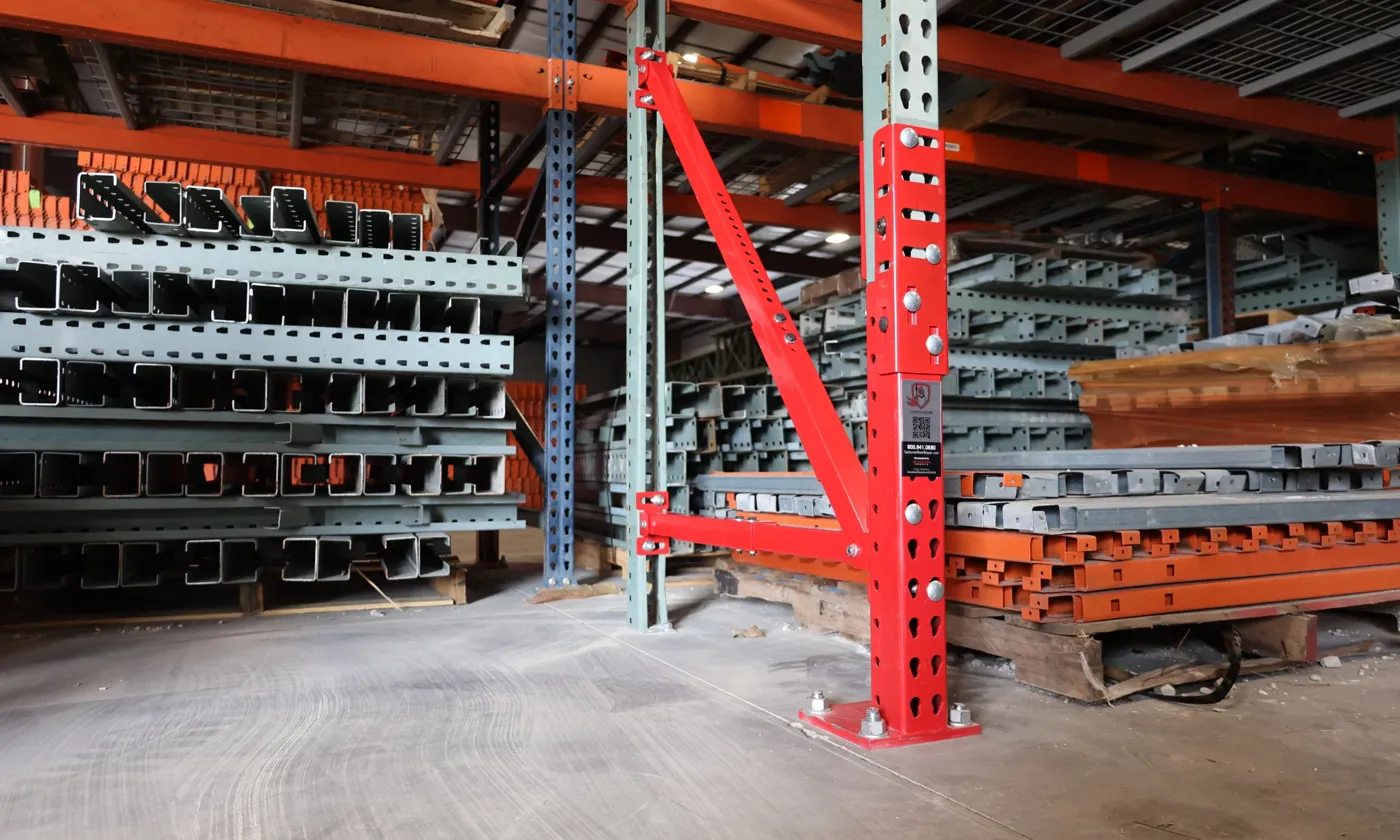
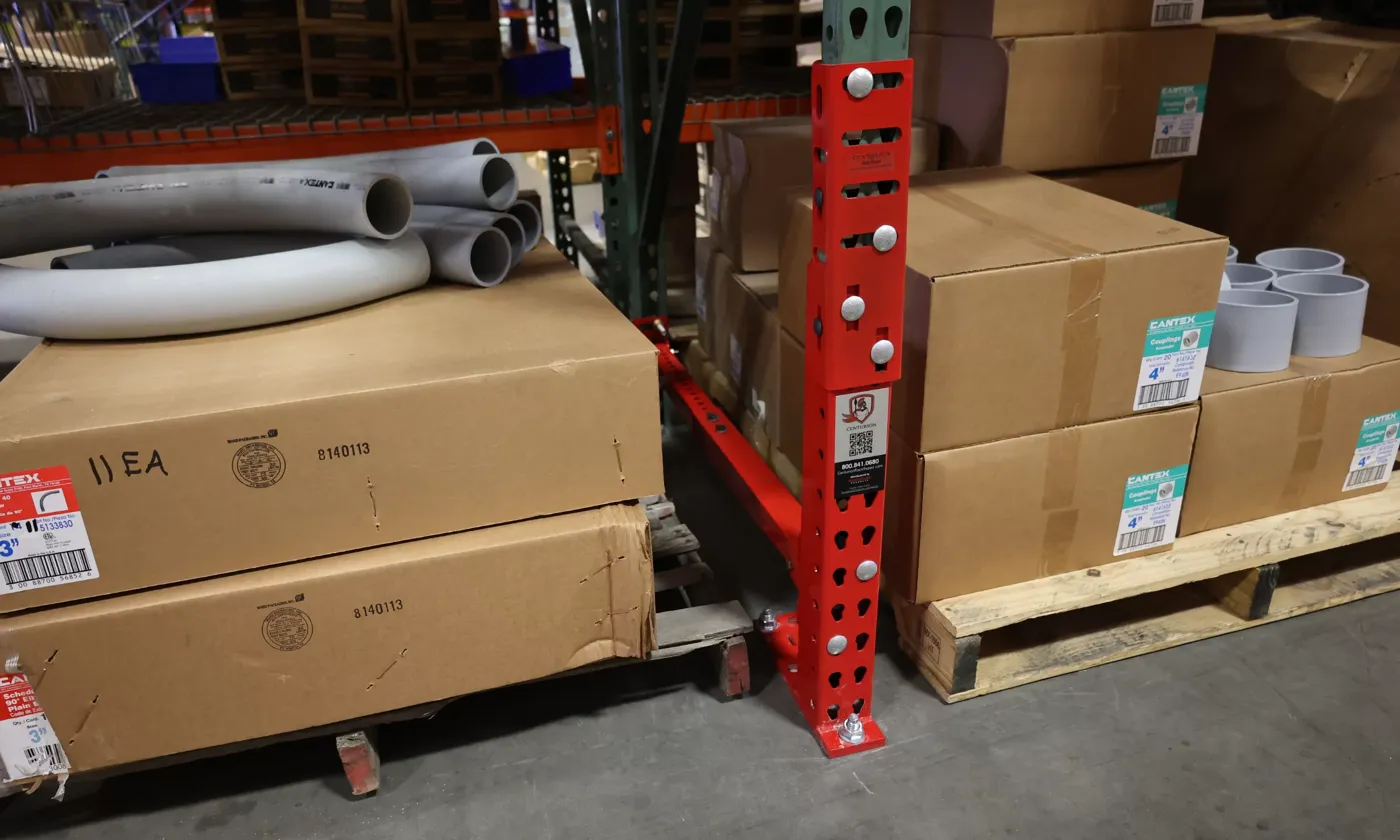
Centurion™ from SpaceGuard Products is a modular, engineered pallet rack repair system for damaged uprights. Instead of scrapping the frame, the damaged section of the column is replaced with a heavy-duty solid tube section and bolted back to the sound steel above it. SpaceGuard states the repairs meet or exceed RMI/ANSI MH16.1 specifications. MH-USA can quote Centurion kits and coordinate the assessment and installation scope.
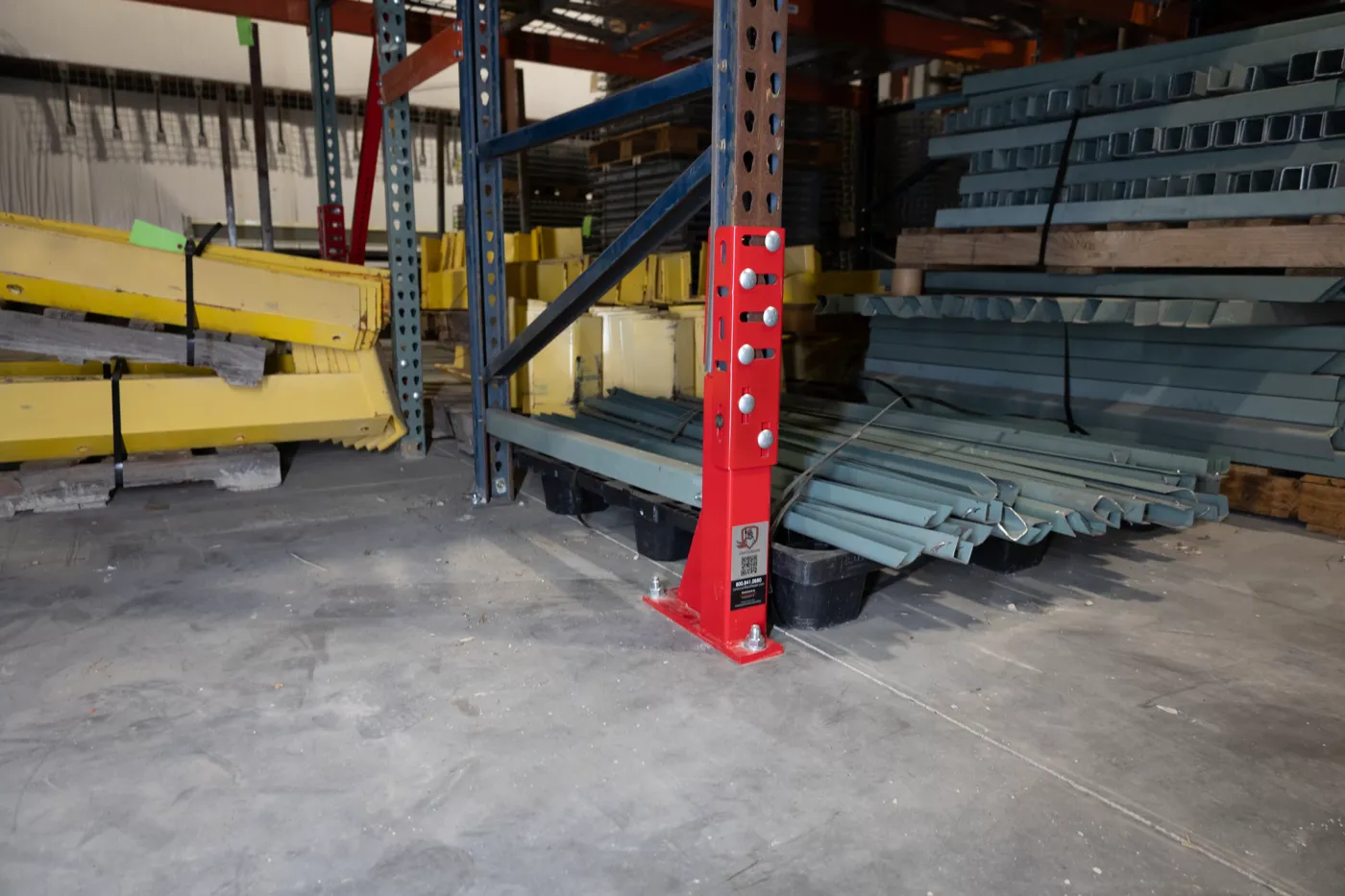 Centurion Low GuardFor damage in the bottom 16 in. of the upright or at the base plate. Fits 3, 4 or 5 in. uprights.
 Centurion Mid GuardField-adjustable height up to 48 in. Teardrop or structural hole patterns, 3, 4 and 5 in. uprights, with adjustable bracing.
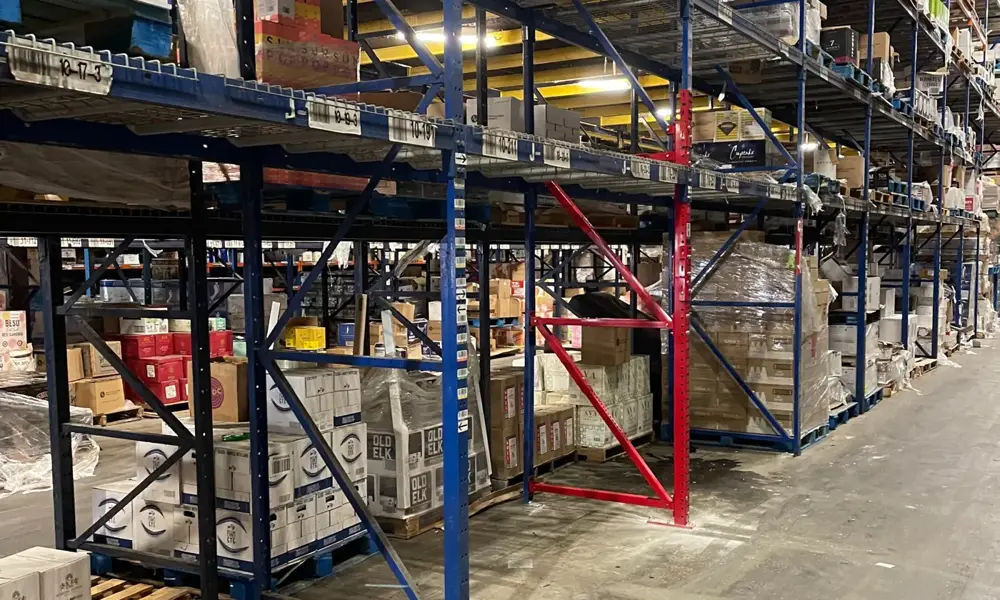 Centurion High GuardExtends the Mid Guard so upright damage can be repaired up to 13 ft high.
 Centurion VanGuardRepairs damaged double-reinforced columns and adds impact resistance to standard columns, alone or with a Centurion kit.
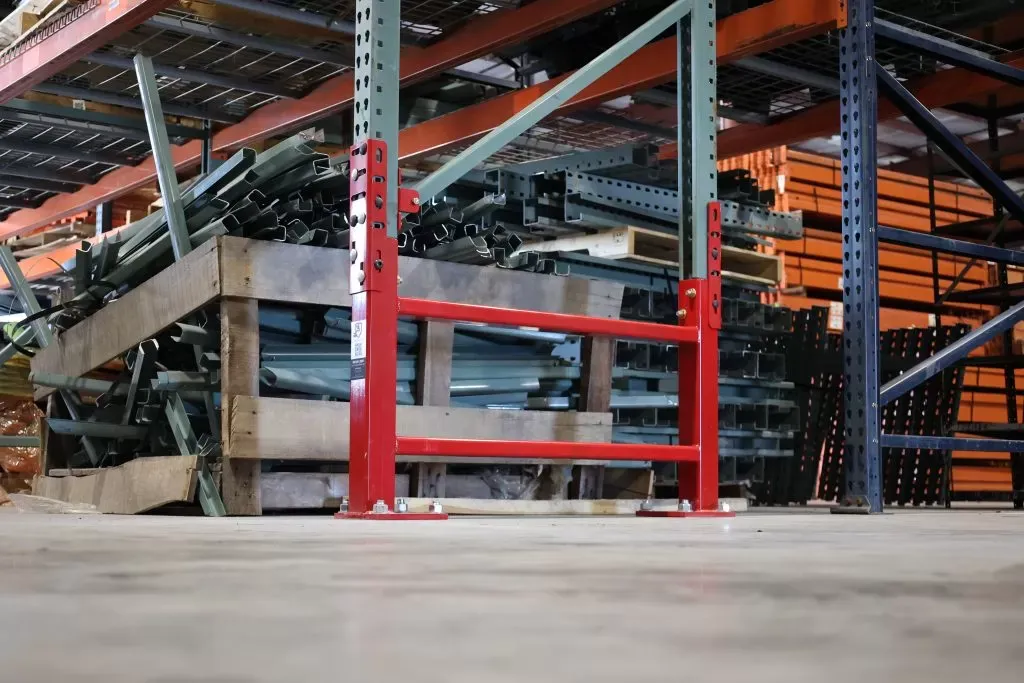 Centurion Row GuardEnd-of-row solution that protects and repairs both front and rear uprights; custom made to your rack size.
Features that make the kits fit existing rack
- Bolt-on cuff: adapts to the column’s hole pattern without in-field reaming; SpaceGuard says it fits 99% of uprights.
- Solid tube frame: cut to the repair height in the field and finished with a drop-in top cap.
- Base plate options: in-line or seismic, to suit the facility.
- Cuff plate: clamps from the back of the column for a secure fit.
- Telescoping adjustable brace: matches the frame depth.
- Horizontal and diagonal bracing: angle and depth adjust; a saddle brace pivots for either member.
- Adjustable beam reconnection: beams reconnect without drilling, for teardrop and structural rack.
- Beam dodger plates: bracing connects without moving beam levels.
Availability
Centurion kits are specified to your upright width, profile and repair height. Some common sizes are in stock at select manufacturers, subject to confirmation. We confirm the kit, lead time and installation responsibilities with the quote.
How a Bolt-On Upright Repair Works
The sequence below follows SpaceGuard’s published Centurion installation guides. Installers follow the manufacturer’s instructions and the supervising engineer’s direction for your specific rack.
Assess and specify
The damage is documented and the kit type, upright size, hole pattern and repair height are confirmed against the rack’s loads.
Close the aisle, support the column
The aisle is taped off. The column is supported with a jacking system so stored loads can stay in place.
Cut out the damaged section
The damaged lower part of the column is removed with fine-tooth metal cutting tools.
Set the kit and cuff
The kit is assembled with its cuff, and the column is lowered so it rests flush and square on the kit.
Bolt, brace and torque
The cuff is bolted to the column (roll-formed, structural or open C-channel), bracing reconnected, and hardware torqued to spec.
Plumb, anchor and record
Plumbness is checked, the base is anchored (5/8 in. concrete anchors, 90 ft-lb, 2-3/4 in. minimum embedment) and the work is recorded.
What to expect on site. Repair crews need a clear aisle, access to the damaged column and a work window agreed with your operations team. Kits are matched to the column before the visit, so most of the time on site is cutting, setting and bolting.
Keep the closeout records with your rack file: the location, kit type and repair height, installer and date, and any updated drawings or load plaques. That record makes the next inspection faster and shows what was repaired if the same location is hit again.
What a Rack Inspection Should Cover
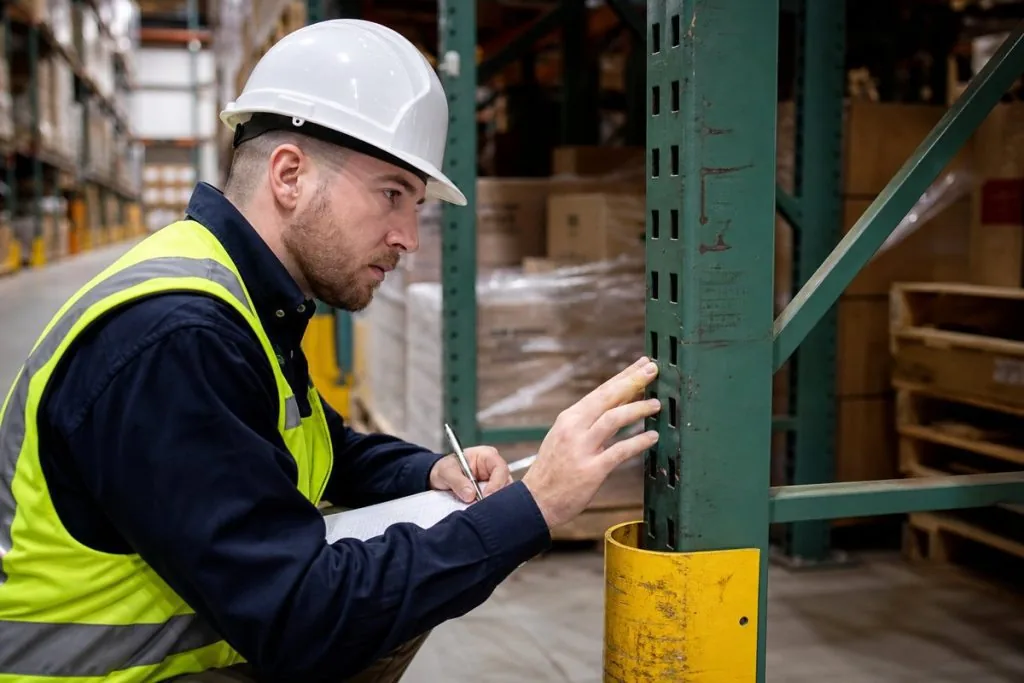
Confirm the inspection scope and deliverables before scheduling. The review needs to connect observed damage with the rack’s identity, configuration, loading and site conditions, not just produce a list of dented parts.
| Area | Information to document |
|---|---|
| Uprights and bracing | Affected bay/column location, bends, tears, corrosion, damaged bracing and connections. |
| Beams and connectors | Beam identification, visible bowing or damage, connector condition and locking devices. |
| Base plates, anchors and floor | Loose or missing anchors, plate damage, cracking, previous holes and changes in floor condition. |
| Configuration and loads | Current beam levels, stored-load details, load plaques and available layout or engineering records. |
| Operating conditions | Known impacts, forklift routes, handling changes and access needed for the inspection. |

Ask for a dated record of findings, photos where safe to obtain, the basis for each recommended action (repair kit, replacement or engineering review), unresolved questions and responsibilities.
Agree on who supplies any engineering review and who approves the return to service. These records support a maintenance program; they do not by themselves certify compliance with every workplace or building requirement. RMI’s “Discovered rack damage? Here’s what to do next” summarizes the owner’s inspection and reporting duties under ANSI MH16.1-2023.
What to Send Before We Quote the Work
Start with information you already have. Do not climb rack, remove a connector, disturb stored loads or enter the isolated area to complete this checklist.
- Identification: Manufacturer/model, original quote or part numbers, and available rack drawings with revision dates.
- Upright details: Column face width (for example 3, 4 or 5 in.), hole pattern (teardrop or structural) and frame depth, if known.
- Location: A bay or aisle reference and an overview showing which parts are affected, taken from a safe position.
- Damage history: When it was noticed, any known impact or change, and what your team has done to control access.
- Current loads: Maximum load, pallet or container type, contact pattern and relevant load-plaque information.
- Photos: Safe overview and detail photos of affected beams, uprights, connectors, bracing or base connections, including the height of the damage.
- Work scope: Site location, occupied work hours, access restrictions and who can coordinate equipment and a work window.
If the rack is unidentified or the documents do not match its current arrangement, say so. That may require additional identification or engineering before parts or kits can be specified. For a complete layout change, begin with Pallet Rack Design Services; a repair review is not a replacement for new-site planning.
Moving Existing Rack or Replacing a Single Damaged Upright
Two requests come up often that a full new-layout design project does not quite cover: moving rack you already own, and fixing one damaged upright without tearing down the whole run.
Relocating existing rack. If the rack itself is sound and you are changing floor location, aisle configuration or building, we can help plan the move: confirming the existing configuration matches the new floor plan, checking anchor and floor requirements at the new location, and coordinating disassembly, transport and reinstallation. Send the current layout, target floor plan and any known damage so repairs can be scoped with the move instead of discovered mid-move. See Pallet Rack Relocation, Teardown & Reinstall for scheduling and what to clear beforehand.
Fixing a single upright or column. A damaged upright does not always require dismantling an entire bay. Depending on the load, connection type and extent of damage, a qualified rack design professional may specify a column replacement or a bolt-on upright repair kit that replaces only the damaged section while the rest of the run stays intact. It still starts with the isolate-and-inspect process above: send the location, photos and load information so the scope can be confirmed before parts are ordered.
Reduce Repeat Damage and Keep a Useful Record
Repairing a component does not address the reason it was hit or overloaded. Review forklift routes, aisle clearance, operator practices, pallet condition and changes in stored goods alongside the repair.
Column protection and end-of-row guarding can help manage impact exposure when selected and positioned for the application; see rack guards. Centurion Row Guard and VanGuard add protection at the same time as repair. Netting or containment panels address a different risk: goods falling toward people or work areas.

Set inspection frequency through your facility’s safety program and the applicable manufacturer, engineering and regulatory guidance. Operating conditions and incidents may call for checks between scheduled inspections. Give staff a clear way to report damage immediately and identify who controls the affected area. Keep the original findings, approved repair scope, installed-part or kit information and closeout records together. If loads or beam levels change later, have the changed arrangement reviewed rather than treating an old inspection as permanent approval.
Shop Rack Protection & Frame Parts Online
Catalog parts that often go with a repair or re-layout: column protection, row spacers and Interlake add-on bays. Repair kits are quoted separately. Confirm the exact product your repair scope or engineering documentation specifies before ordering.

Pallet Rack Repair & Inspection FAQ
What is a pallet rack repair kit?
Do you have to unload the rack to repair a damaged upright?
Is a repaired upright as strong as the original?
Is rack repair more sustainable than replacing uprights?
My beams are bowing—what information should I send?
How often should pallet rack be inspected?
Can damaged rack be repaired instead of replaced?
What changes the repair price?
Can I keep using the rack while waiting for parts?
What documentation should I request?
Can you help move our existing rack to a new location?
Do you have to tear down the whole rack run to replace one bent upright?
Plan the Full Repair Scope
Compare rack project costs, confirm installation responsibilities, and review rack guarding and anchor selection. For upright sizes and hole patterns, see our pallet rack upright guide. In Utah, see pallet rack in Salt Lake City and a local pallet rack repair project. Return to Pallet Rack Systems for the complete product and planning hub.
Need Pallet Rack Repair or an Inspection?
Send the rack information, upright details and photos of the affected area. We will help identify the review, parts or repair kit and service scope needed.