
Pallet Rack Column Guards & Upright Protectors
Column guards take the forklift and pallet hits that would otherwise dent the front of your rack uprights. Compare floor-mounted, bolt-on and wrap-around upright protectors, size them to your columns and footplates, and put them where impacts actually happen.
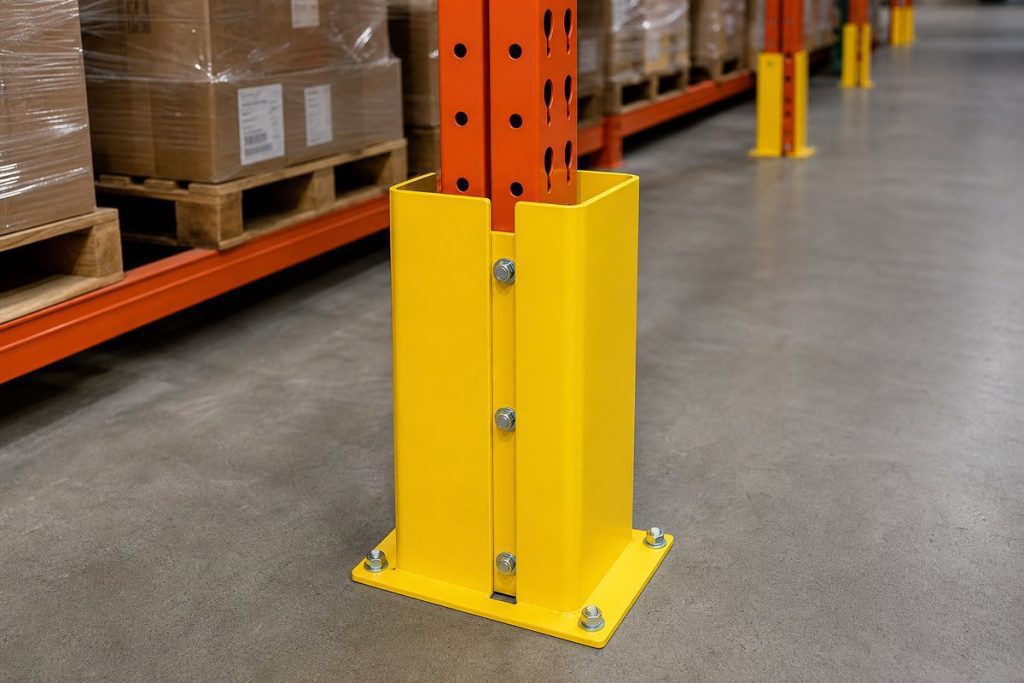
Aisle-side
Columns at highest risk, per RMI
20+
Guarding options listed by RMI
12–36 in
Guard heights in our online catalog
3 mounts
Floor, column + floor, or strap-on
Shop Pallet Rack Column Guards & Upright Protectors
Floor-mounted, bolt-on and wrap-around upright protectors from our online store. Match the guard to your column width, profile and footplate before ordering; ask us if you are unsure.


Browse more sizes: rack guards and upright protectors · protective barriers and column protectors
Why Pallet Rack Columns Need Guards
The Rack Manufacturers Institute (RMI) names impacts from forklifts and other motorized vehicles as one of the biggest causes of accidental rack damage, and says the exposed columns facing the aisle are at the highest risk. Damage to a column can significantly reduce the load-bearing capacity of the rack and raise the risk of collapse.
A column guard (also called an upright protector, post protector or rack leg protector) puts sacrificial steel or an energy-absorbing shell in front of the column, so routine bumps from forks, pallets and truck chassis land on the guard. RMI notes guards can be added to a new installation or retrofitted to existing rack.
What column guards will not do
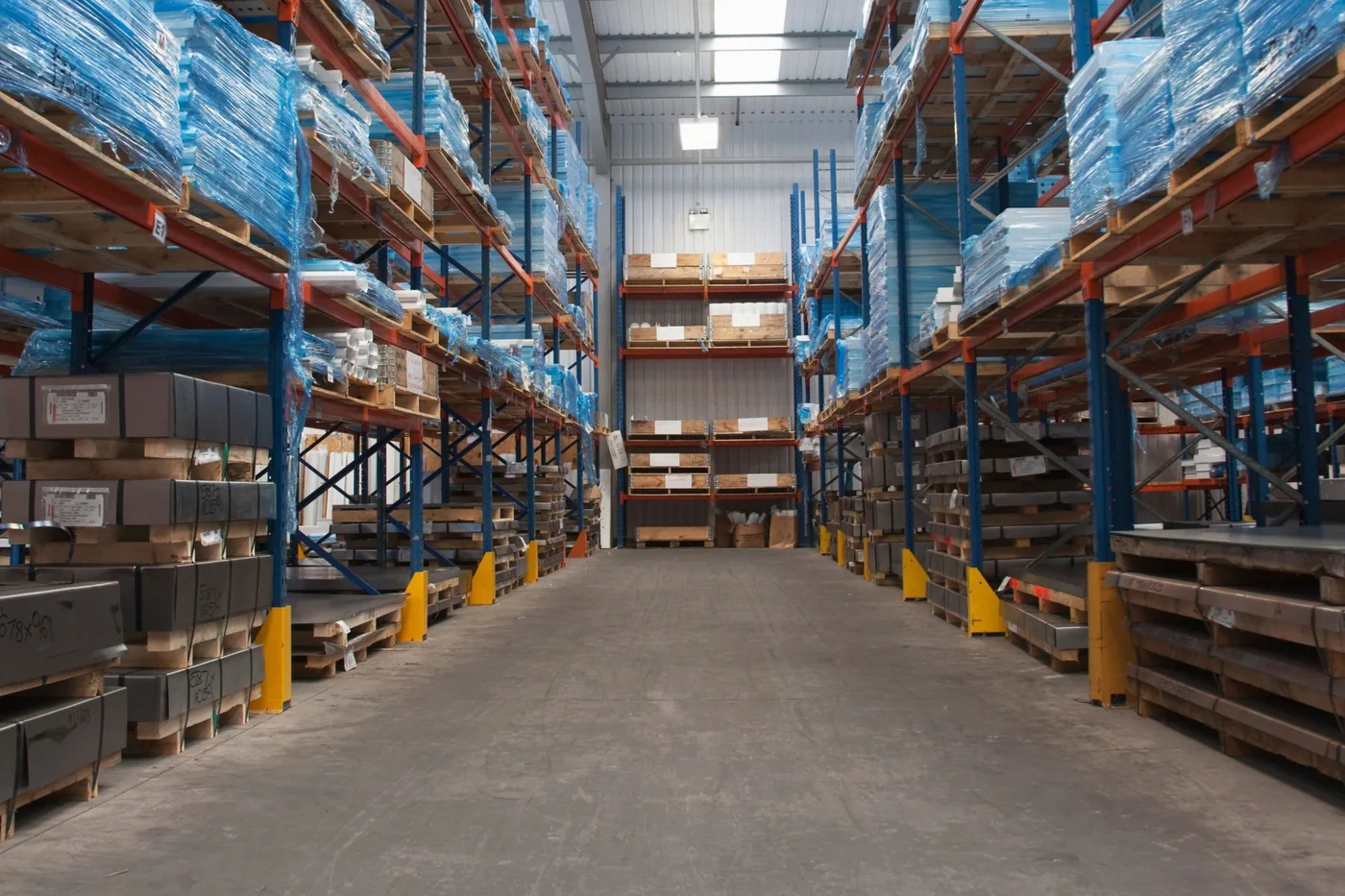
RMI is clear that column protection reduces the chance that minor, day-to-day impacts cause a collapse, but no add-on will stop a rack from failing in a major collision. Guards also do not replace operator training and traffic management.
Types of Column Guards and Upright Protectors
RMI’s column-guard guidance groups aisle-side upright protection by how it is attached. The attachment method decides how impact energy is handled, how much floor and aisle space the guard takes, and how easy it is to replace.
| Type | How it attaches | Typical use |
|---|---|---|
| Free-standing floor-mounted guard | Formed steel wraps the face and sides of the column and is anchored to the floor only; it does not touch the column. | Standard aisle-side protection where there is room for the base plate and anchors. |
| Column-and-floor (bolt-on) guard | Bolted to the column and anchored to the floor, often with a nose or bumper at the front. | Where the guard must stay tight to the upright to save aisle space. |
| Factory-welded guard or reinforcement | Welded to the column when the rack is manufactured; related options are column doublers and column inserts. | New rack specified for heavy-traffic aisles. |
| Strap-on, snap-on or wrap-around protector | Steel, foam or plastic attached directly to the column with bolts, rivets or straps; no floor anchors. | Retrofits, light traffic, or floors where drilling is a problem. |
| Engineered column reinforcement | Bolted onto the column as an added layer of impact protection (for example SpaceGuard Centurion VanGuard). | Uprights that keep getting hit, or after a repair. |
Floor-mounted steel column guards
The classic yellow column guard is a formed steel channel welded to a base plate and anchored into the slab in front of and around the upright. Because it is fixed to the floor, impact energy goes into the slab instead of the rack. Our catalog’s Interlake column protector, for example, is 16 in. tall with four anchor holes and hardware included.
Check two things before ordering: the guard opening must clear your upright and its footplate, and the base plate needs space for its own anchors without hitting the rack anchors. MHI’s RMI guidance adds that thicker steel withstands more impacts before the guard itself fails.

Wrap-around and strap-on upright protectors

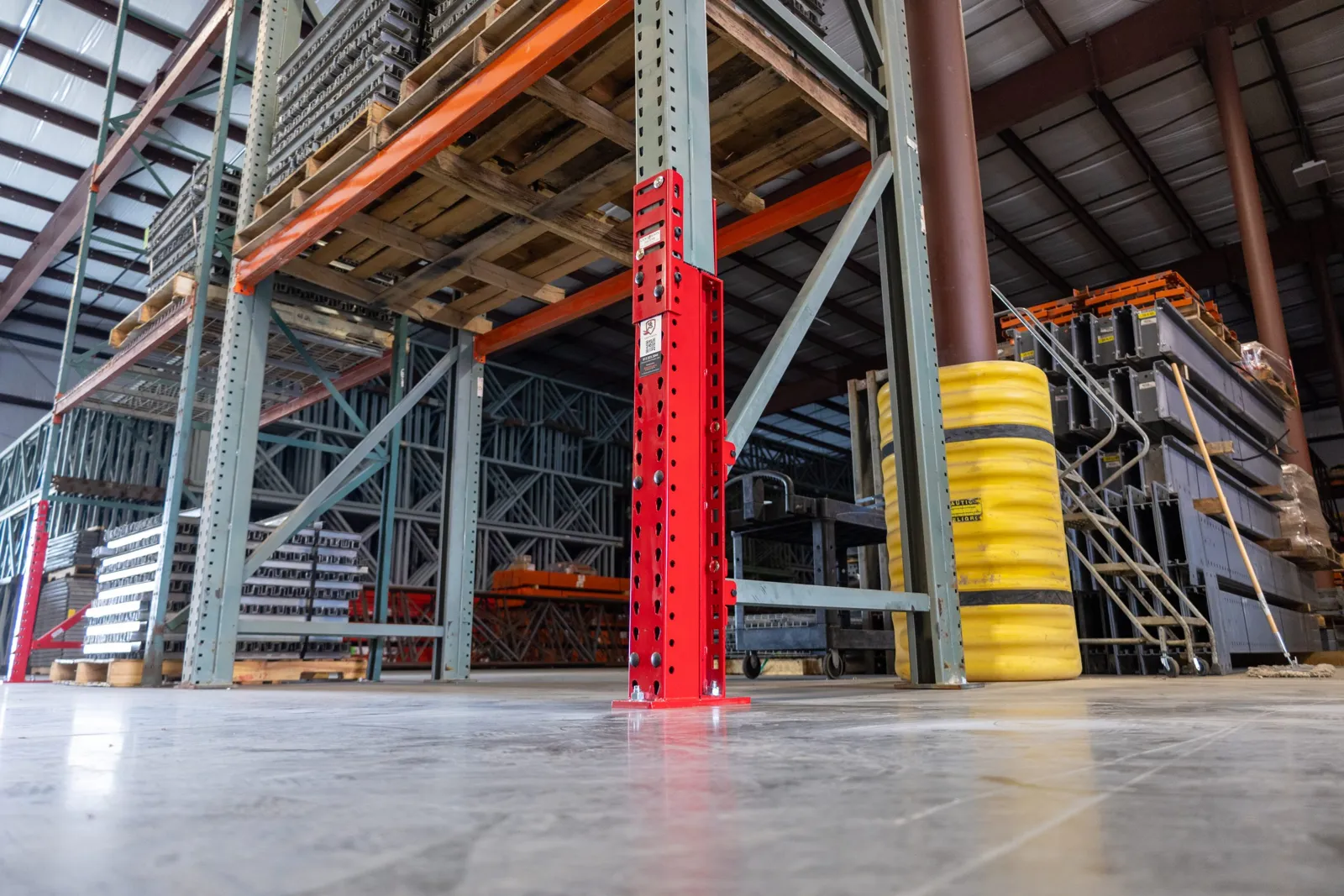
Wrap-around protectors clamp or strap directly to the column, usually from high-visibility polymer, foam or steel with a rubber insert. They go on without drilling the floor, so they suit retrofits, leased buildings and post-tensioned slabs where new anchors need approval.
The Vestil rack guard with rubber bumper insert in our shop, for example, wraps the column, includes its hardware and installs with a wrench or socket with no concrete drilling. Wraps are slim, which helps keep pallet entry and aisle clearance, but they do not move impact load into the floor the way an anchored guard does.
Column-mounted reinforcement for repeat hits
Where the same uprights get hit again and again, a bolted reinforcement can do more than a guard. SpaceGuard’s Centurion VanGuard installs on standard rack columns, on its own or with a Centurion repair kit, to add impact resistance. It is also used to repair damaged double-reinforced columns.
RMI also lists factory options for new rack in high-traffic areas: column doublers welded to the aisle-facing column, and column inserts from 12 in. to 5 ft. tall inside the bottom of the column. Heavier bracing below the first beam level helps too. Specify these with the rack, not after it is loaded.
Plastic vs. Steel Column Protectors
Both work when they suit the traffic. The choice comes down to how hard the hits are, whether you can anchor into the floor, and how much aisle space you can give up.
| Factor | Steel (floor-mounted or bolt-on) | Plastic, foam or rubber wrap |
|---|---|---|
| Attachment | Anchored to the slab, or bolted to the column and anchored | Straps, clips, bolts or rivets on the column; usually no floor anchors |
| Where impact energy goes | Into the floor (free-standing) or shared by floor and column | Absorbed by the shell and passed into the column |
| Best for | Counterbalance forklifts, heavy loads, busy aisle entries and row ends | Pallet jacks, light traffic, retrofits, floors that cannot be drilled |
| Aisle and bay space | Base plate and nose project into the aisle; check clearances | Slim profile; less intrusion into the aisle or pallet opening |
| After a hit | Dented steel shows the impact clearly; replace when deformed | May spring back, so check the column behind it carefully |
| Floor work | Anchor holes and spacing must clear rack anchors and slab joints | None in most designs |
Rule of thumb
Where counterbalance trucks turn into the aisle, use anchored steel. Inside aisles with lighter equipment, or where you cannot drill, a wrap-around protector is a reasonable retrofit. Either way, inspect the upright behind the guard after any impact.
How to Size a Column Guard to Your Uprights
Most ordering mistakes are fit problems. Measure the rack you actually have; do not size from a catalog photo. Gather these before you order:
- Column face width and depth: measure the upright you are protecting (for example a 3 in. or 4 in. face). Wrap and bolt-on styles must match the column profile.
- Profile and hole pattern: teardrop roll-formed, other slotted styles, or structural C-channel. Our catalog lists Vestil structural rack guards for 6 in. and 8 in. C-channel.
- Footplate size: a floor-mounted guard must clear the rack footplate. Seismic or enlarged footplates need a guard with a wider opening.
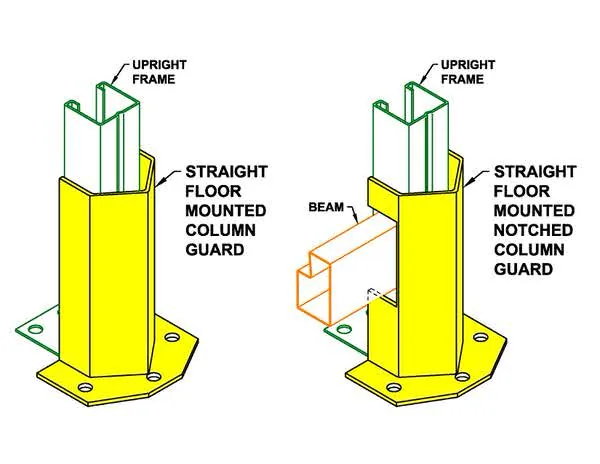
- Guard height vs. first beam level: RMI says to position guards so they do not interfere with load beams. Choose a height that stays below the first beam, or a notched guard where the beam sits low.
- Anchor spacing: confirm there is room for the guard’s anchors without hitting rack anchors, slab joints or old holes.
- Aisle and pallet clearance: in narrow and very narrow aisles, a guard anchored in front of the upright can obstruct traffic. Keep handling clearances.
Heights and footprints in our online catalog
| Product family | Listed sizes | Mounting |
|---|---|---|
| Vestil low profile rack guard | 8 x 3 in. and 10 x 3 in. footprints; about 12, 18, 24 and 36 in. tall | Two-hole floor mount; mounting kit sold separately |
| Vestil structural rack guard | For 6 in. and 8 in. C-channel; 12, 18, 24 and 36 in. tall, with or without rubber bumper | Four-hole floor mount; hardware sold separately |
| Vestil rack guard with rubber bumper insert | 24 in. and 36 in. | Wraps the column; hardware included; no concrete drilling |
| Interlake pallet rack column protector | 16 in. tall, two colors | Four anchor holes; hardware included |
| Vestil rack upright guard | Yellow, fits the foot of the upright | Protects the front and wraps the sides of the upright |
Sizes come from the product listings linked in the shop row above. Some common sizes are in stock at select manufacturers, subject to confirmation. Send us your upright dimensions and footplate size if you want a second check.
Where to Place Column Guards

RMI places guards in two main locations: the aisle-side face of rack columns, where uprights are hit by an approaching load or a reversing truck, and the ends of rack rows, which see the most traffic entering and leaving aisles. RMI also notes that protection is most often added to the aisle-facing columns of interior uprights, and to both columns of end-of-row and tunnel-bay crossover uprights.
Start with the columns that already show damage, then every aisle entry, cross-aisle and tunnel bay. In busy aisles, consider guarding every aisle-side upright rather than only the ones already damaged.
A simple placement plan
Map the hits
Walk the aisles and mark every dented, scraped or out-of-plumb column. Damage history shows where trucks actually make contact.
Cover the row ends
Protect both columns of every end frame, cross-aisle and tunnel bay, the highest-traffic corners.
Cover aisle-side uprights
Add guards to the aisle-facing column of interior uprights along busy pick and putaway aisles.
Check clearances
Confirm aisle width, pallet entry and beam levels still work with the guard in place, especially in narrow aisles.
Anchor and record
Install per the guard maker’s instructions and log the locations so inspections can check each one.
For guard anchors and rack anchors in the same slab, see our pallet rack anchor bolts guide. For upright sizes and hole patterns, see the pallet rack upright guide and pallet rack uprights.
Inspect the Guard and the Column After Every Impact
A dented guard has done its job, but it is now weaker for the next hit. RMI says routine rack inspections should include column guards and other protective devices, and any damage to them should be noted, reported and promptly repaired or replaced.
Always look at the upright behind the guard as well. If the column is bent, dented or out of plumb, RMI guidance is to isolate the area and have a storage rack design professional evaluate it before the rack is reloaded.

- Guard: deformed steel, cracked or split plastic, missing bumpers, loose straps or bolts.
- Anchors: loose, pulled or sheared anchors and cracked concrete around the base plate.
- Column behind it: dents, bends, torn steel or twist, especially in the lower few feet.
- Footplate and rack anchors: shifted footplates and damaged rack anchors.
- Plumb: any visible lean in the upright frame after the hit.
If the upright is damaged, see pallet rack repair and inspection. A bolt-on upright repair kit can often replace only the damaged lower section, and a stronger guard or reinforcement can be added in the same visit.
Beyond the Column: End-of-Row and Aisle Protection
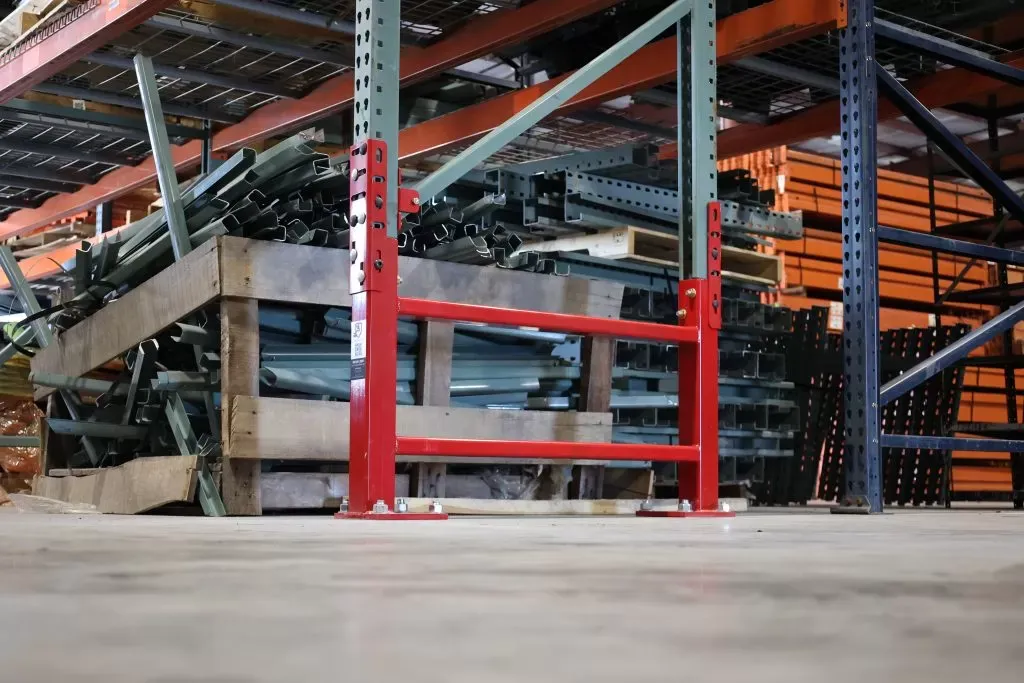
Column guards protect single uprights. Row ends, cross-aisles and walkways usually need more: end-of-aisle guards that span the full frame depth, guardrail, bollards or rack backing. SpaceGuard’s Centurion Row Guard replaces a traditional end-of-row guard. It protects and repairs both front and rear uprights, is custom made to your rack size, and takes back floor space.
For a side-by-side comparison of every option, including end-of-aisle guards, guardrail, bollards, rack backing and the Centurion Row Guard, see our forklift pallet rack protection guide.
Pallet Rack Column Guard FAQ
What is a pallet rack column guard?
Where should column guards be installed?
How tall should a pallet rack column guard be?
Do column guards fit every upright?
Are plastic column protectors as good as steel?
Do floor-mounted column guards need to be anchored?
Are column guards required by OSHA or ANSI?
What should I do after a column guard is hit?
Can I add column guards to existing rack?
Do you sell column guards online?
Related Pallet Rack Guides and Tools
Compare all forklift pallet rack protection options, plan rack repair and inspection, and review anchor bolts, wire decking and structural pallet rack. Planning new rack? Design it in 3D with the Pallet Rack Configurator or build and price your pallet rack, then add column protection to the quote. Return to Pallet Rack Systems for the full product hub.
Need Column Guards for Your Rack?
Send your upright size, footplate size and the aisles you want to protect. We will help you choose and quote the right guards.