
Structural Pallet Rack Systems
Heavy-duty hot-rolled steel channel construction that withstands extreme forklift impact, freezer temperatures, and high-throughput abuse — built to last decades in the toughest warehouse environments. For a worked example, see how we specify structural pallet rack in an automotive component plant across raw material, work in process and finished goods.
Talk with a pallet rack specialist. Call (800) 326-4403 or Email Sales@MH-USA.com
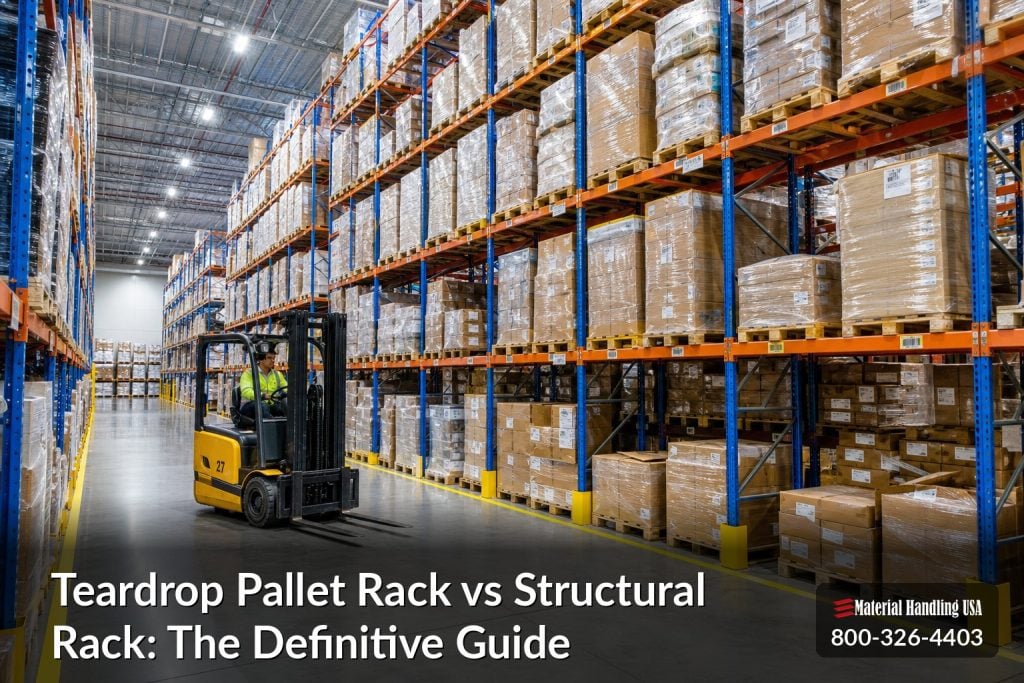
What Is Structural Pallet Rack?
Pallet rack built from hot-rolled structural steel C-channels and wide-flange beams — the heaviest, most durable rack construction available. Designed for environments where standard roll-formed rack can’t survive.
Structural pallet rack uses hot-rolled steel channel columns (typically C3, C4, or C6 channels) bolted together with structural angle bracing. Load beams are wide-flange or C-channel members connected to uprights with heavy-duty bolted hardware. The result is a rack system that weighs more, costs more, and lasts significantly longer than roll-formed (teardrop) rack.
Where roll-formed rack uses thin-gauge steel bent into shape, structural rack uses thick, heavy sections of steel produced at the mill. This gives structural rack dramatically higher impact resistance — the #1 reason operations choose it. A forklift strike that would collapse a roll-formed upright often leaves a structural column with only a dent.
Material Handling USA designs, supplies, and installs structural pallet rack in selective, drive-in, push-back, pallet flow, and double deep configurations for cold storage, beverage, food processing, heavy manufacturing, and high-throughput distribution.
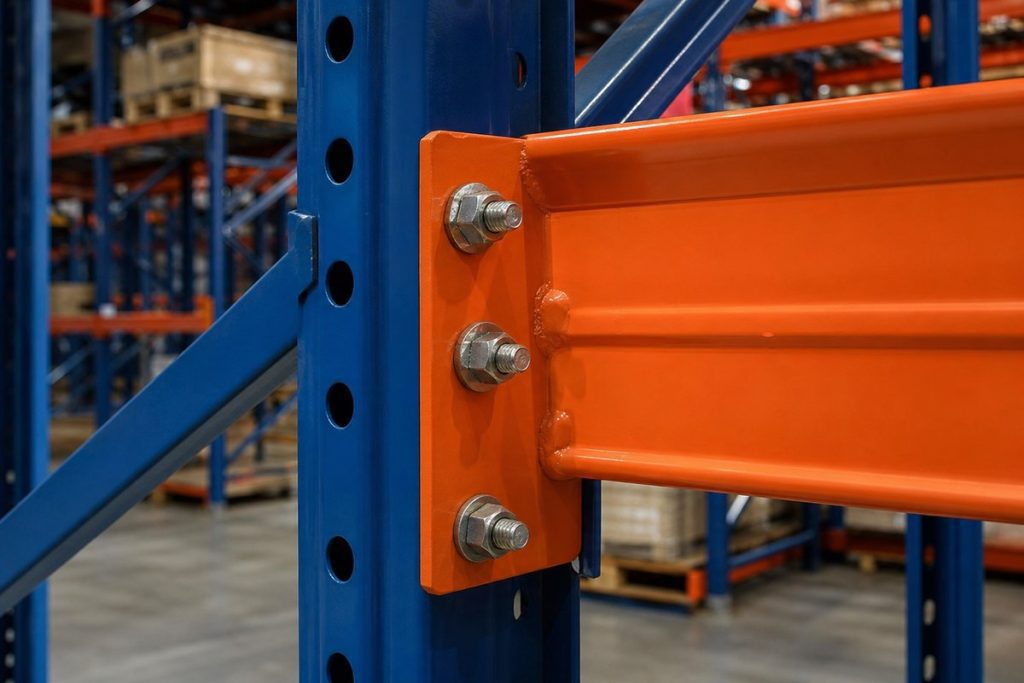
Structural vs. Roll-Formed (Teardrop) Rack

| Feature | Structural Rack | Roll-Formed (Teardrop) Rack |
|---|---|---|
| Material | Hot-rolled steel C-channel (50 KSI min.) | Cold-rolled steel sheet, bent into shape |
| Column Profile | C-channel (open section, very thick) | Closed tubular or open hat section (thin gauge) |
| Connection | Bolted with structural hardware | Teardrop clip-in connectors |
| Impact Resistance | Excellent — absorbs hits, repairable | Moderate — severe hits require replacement |
| Field Repair | Unbolt damaged member, bolt on replacement | Replace entire upright frame assembly |
| Cold Storage | Ideal — handles sub-zero temps | Works but more impact-sensitive cold |
| Lifespan | 50+ years | 15–25 years typical |
| Cost | Higher initial cost | Lower initial cost |
| Best For | High-impact, cold storage, heavy loads | General warehousing, cost-sensitive projects |
Rule of thumb: If your operation experiences frequent forklift impacts, operates in freezer temperatures, or needs rack to last 30+ years with minimal maintenance — structural rack delivers lower total cost of ownership despite higher upfront price.
Structural Rack Configurations
Structural Selective
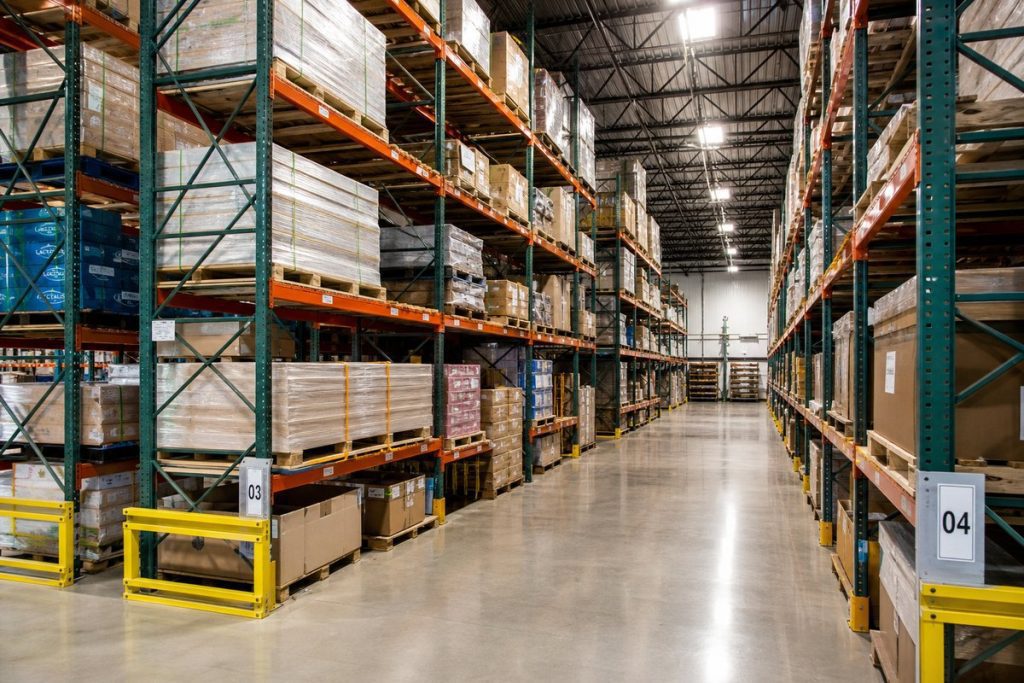
The most common structural configuration. Same layout as standard selective rack but built with structural steel for maximum durability. Every pallet is individually accessible. Used in beverage, food, and heavy manufacturing.
Best for: High-throughput DCs, beverage warehouses, operations with frequent forklift impacts
Structural Drive-In

Drive-in and drive-through rack built entirely from structural steel. Essential for drive-in because forklifts operate inside the rack structure — structural steel absorbs the inevitable impacts. The dominant choice for cold storage drive-in.
Best for: Cold storage, freezer DCs, high-density bulk storage
Structural Push-Back & Flow

Push-back and pallet flow systems built on structural steel frames. The combination of high-density storage with structural durability makes these ideal for the most demanding warehouse environments.
Best for: High-volume beverage, food processing, heavy industrial
Technical Specifications
| Parameter | Structural Pallet Rack | Notes |
|---|---|---|
| Column Material | Hot-rolled C-channel (C3, C4, C6) | 50 KSI min. yield, structural grade |
| Bracing | 1-1/2″ × 1-1/2″ × 1/8″ structural angle | Diagonal and horizontal bracing |
| Beam Material | Wide-flange or C-channel | Bolted connections, 65 ft-lb min. torque |
| Deflection | L/180 maximum | Per RMI specifications |
| Safety Factor | 1.92 (ASD) / LRFD compliant | Allowable Stress Design |
| Cross Bars | 2″ × 2″ × 1/8″ structural angle | Prevents misplaced pallets, increases beam capacity |
| Foot Plates | Punched for 1/2″ anchors | Multiple configurations available |
| Protection | Heavy bottom horizontals, doublers, column protectors | Reduces forklift impact damage |
| Paint | Baked enamel finish, 8+ standard colors | Formulated for warehouse environment |
| Compliance | RMI / ANSI MH16.1 | Seismic engineering for all U.S. zones |
Applications & Industries
❄️ Cold Storage & Freezer

The #1 application for structural rack. Sub-zero temperatures make steel more brittle — structural steel’s thicker sections resist cracking. Forklift operators wearing heavy gloves in freezers have less precision, making impact resistance critical.
🍺 Beverage & Grocery
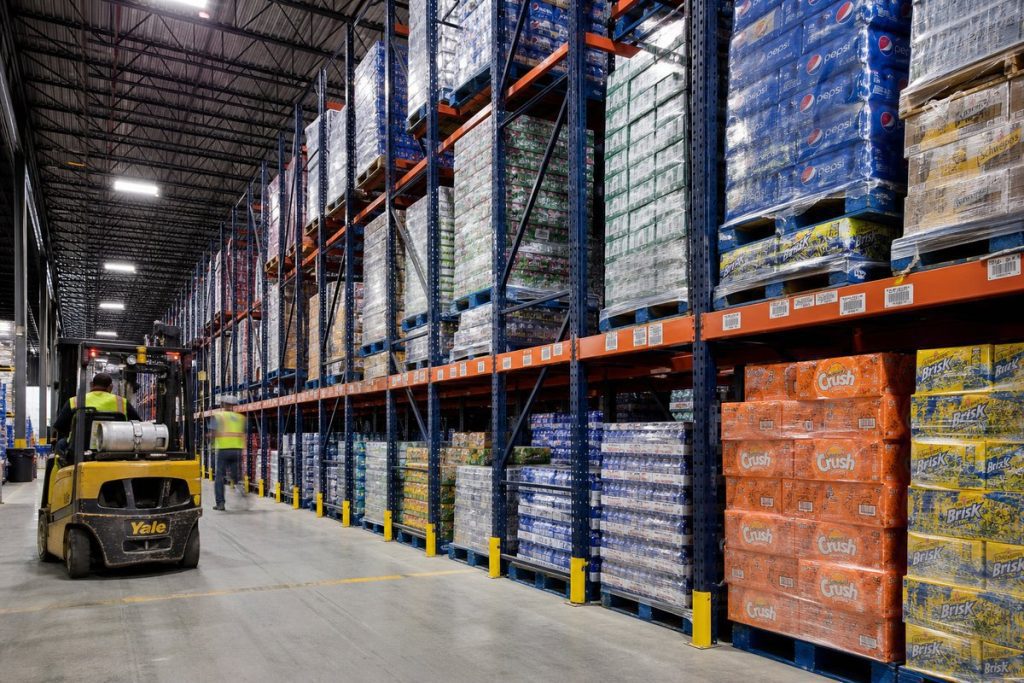
Beer, soft drinks, bottled water — extremely heavy pallets moved at high speed. Structural rack handles the weight and survives the inevitable impacts in high-tempo beverage DCs.
🏭 Heavy Manufacturing

Automotive, steel, building materials, chemicals — industries with heavy products and aggressive forklift usage. Structural rack was designed for exactly this environment.
🏗️ High-Bay / AS/RS

Rack-supported buildings and automated storage/retrieval systems. Structural rack forms the building structure itself — supporting the roof and walls. Heights to 100’+ in AS/RS applications.
📦 High-Throughput 3PL

Third-party logistics with 24/7 operations, multiple shifts, and high forklift traffic. Structural rack reduces maintenance costs and downtime from rack repairs over the facility’s life.
🔧 Pick Modules

Multi-level pick module systems where the rack supports mezzanine-level catwalks, conveyor systems, and order picking stations. Structural steel provides the strength for these complex integrated systems.
Why Choose Structural Rack?

- Superior impact resistance — absorbs forklift hits that would destroy roll-formed rack
- Field-repairable — unbolt and replace individual components, no downtime
- 50+ year service life — lower total cost of ownership over time
- Cold storage rated — handles freezer temperatures without becoming brittle
- Seismic engineered — structural connections handle lateral forces in earthquake zones
- Bolted connections — easier to reconfigure, repair, and inspect vs. welded frames
- Rack-supported buildings — can serve as the building structure itself
- 8+ standard colors — baked enamel finish for every warehouse environment
- All configurations — selective, drive-in, push-back, flow, double deep, AS/RS
- 70% repeat customers — operations that try structural rack don’t go back
When to Choose Structural Pallet Rack
Structural pallet rack uses hot-rolled C-channel steel columns and bolted beam connections instead of the lighter roll-formed steel used in standard rack. When conditions demand the absolute strongest storage system, structural is the answer.

When Structural Is the Right Choice
- Extremely heavy loads — Loads exceeding 5,000 lbs per pallet position or where load weights are inconsistent. Steel coils, engine blocks, heavy machinery, and dense materials
- High-impact environments — Warehouses with frequent forklift traffic, aggressive loading, or operators who are hard on equipment. Structural rack absorbs impacts that would damage or destroy roll-formed rack
- Cold storage & freezer — Sub-zero temperatures make standard steel brittle. Structural’s thicker gauge withstands temperature cycling and maintains integrity in -20°F to -40°F environments
- Outdoor exposure — When rack is exposed to weather, UV, temperature swings, and moisture, structural’s heavier steel and galvanizing options provide far longer service life
- High seismic zones — In earthquake-prone areas like Utah, structural rack’s bolted connections and heavier columns provide superior seismic resistance compared to roll-formed systems at the same height
Structural vs. Roll-Formed — Key Differences
| Feature | Roll-Formed | Structural |
|---|---|---|
| Column type | Rolled steel with teardrop slots | Hot-rolled C-channel |
| Beam connection | Clip-in (teardrop + safety pin) | Bolted (through-bolts + nuts) |
| Impact resistance | Moderate — dents/creases on impact | Very high — absorbs without failure |
| Repairability | Replace damaged sections | Often repairable in place |
| Cost | Lower initial cost | 25–50% more upfront |
| Lifespan | 15–25 years typical | 25–40+ years typical |
💡 Lower Lifetime Cost
While structural costs 25–50% more upfront, its dramatically longer lifespan and lower repair/replacement costs often make it cheaper per year of service than roll-formed rack — especially in high-abuse environments where roll-formed rack needs frequent column and beam replacements.
Bolted Connections & Structural Engineering
The bolted connection is what makes structural rack fundamentally different — and fundamentally stronger — than roll-formed systems.
Why Bolted Connections Matter
In roll-formed rack, beams hang from the column via a teardrop slot and gravity. A hard enough forklift impact can knock a beam loose — potentially collapsing the loaded bay. In structural rack, beams are through-bolted to the column with grade 5 or grade 8 bolts. The connection is a mechanical lock that can’t be dislodged by impact.
Moment Connections
Structural beam-to-column connections can be designed as moment connections — meaning they resist rotation, not just vertical load. This creates a rigid frame that resists lateral forces from seismic events or forklift impacts without additional bracing.
Weld-Free Assembly
All connections are bolted — no field welding required. This makes structural rack fully adjustable and reconfigurable despite its heavy-duty nature. Beam heights can be changed, sections added or removed, all with standard tools.

⚠️ Seismic Advantage in Utah
Utah sits along the Wasatch Fault, making seismic design critical for any pallet rack installation. Structural rack’s bolted moment connections provide inherently better seismic resistance than roll-formed clip-in connections. For tall installations (20+ feet) in seismic zones, structural rack often requires less additional bracing than roll-formed — which can partially offset the higher material cost.
Harsh Environment Applications
Structural rack excels where standard rack fails. These environments destroy roll-formed rack prematurely but structural keeps working for decades.
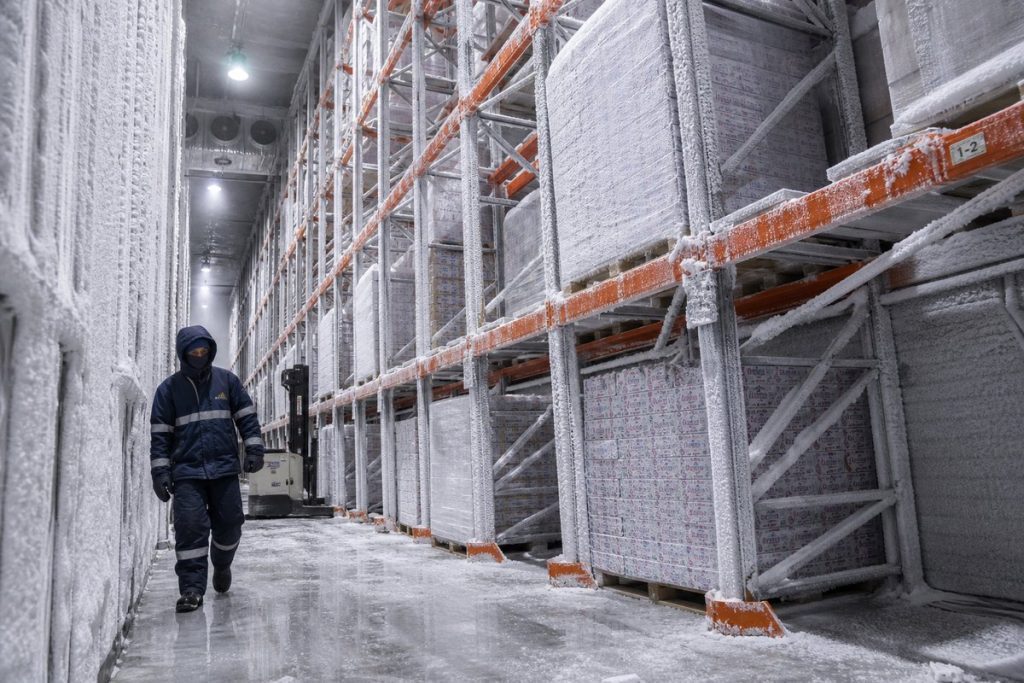
❄️ Cold Storage & Freezer
Sub-zero temperatures (-20°F to -40°F) make thin-gauge steel brittle. Structural’s heavier gauge steel maintains ductility and impact resistance at extreme cold. Temperature cycling (dock doors opening/closing) causes condensation and frost — structural resists the corrosion this creates far better than roll-formed.
🧪 Chemical & Corrosive
Chemical plants, fertilizer storage, and salt-environment facilities need rack that resists corrosion. Structural channels can be hot-dip galvanized (zinc coating inside and out) for maximum corrosion protection. The thicker steel also provides a larger corrosion allowance before structural integrity is compromised.
🌧️ Outdoor & Semi-Exposed
Lumber yards, building supply, and outdoor distribution need rack that handles rain, snow, UV exposure, and temperature extremes. Galvanized structural rack with weather-rated hardware provides 30+ year service life outdoors — vs. 5–10 years for painted roll-formed rack in the same conditions.
💡 Food & Beverage / FDA Compliance
Food processing and beverage facilities subject to FDA and USDA inspection need rack that’s easy to clean and won’t harbor bacteria in damaged sections. Structural rack’s smooth C-channel surfaces are easier to sanitize than roll-formed rack’s open perforated columns. Many food-grade facilities specify structural for compliance reasons alone.
What Affects Structural Rack Cost?
Structural rack is a premium product. Understanding what drives the cost helps you determine where the investment makes sense — and where standard rack is sufficient.

⚙️ Steel Weight
Structural rack uses 2–3× more steel per bay than roll-formed. The C-channel columns, structural beams, and heavy hardware all weigh more. Steel is priced by the pound — more steel = higher cost. Current steel market prices directly affect structural rack pricing.
🔩 Connection Hardware
Bolted connections require machined connection plates, through-bolts, nuts, and washers at every beam-to-column point. Roll-formed uses simple clip-in connectors. The hardware cost per connection is higher, and installation labor takes longer (bolting vs. clipping).
🛡️ Finish & Coating
Standard structural rack comes powder-coated or painted. For harsh environments, hot-dip galvanizing adds 15–30% to the steel cost. Specialized coatings for food-grade or chemical-resistant applications add further premium. Choose the coating that matches your environment — overspecifying wastes money.
Inspection & Maintenance for Structural Rack
Structural rack is tougher than roll-formed, but it still requires regular inspection. The good news: damage is usually repairable without full component replacement.
Inspection Checklist
| Component | Check For | Frequency |
|---|---|---|
| Bolt torque | Loose bolts at beam-to-column connections | Semi-annually |
| Column plumb | Lean or deflection from vertical | Quarterly |
| Beam deflection | Permanent sag under load (should spring back when unloaded) | Quarterly |
| Impact damage | Dents, bends — structural usually bends rather than tears | Monthly visual |
| Corrosion | Coating failure, rust spots, especially at bolt holes and welds | Semi-annually |
| Base plate anchors | Anchor integrity, concrete cracking (heavier loads than roll-formed) | Semi-annually |
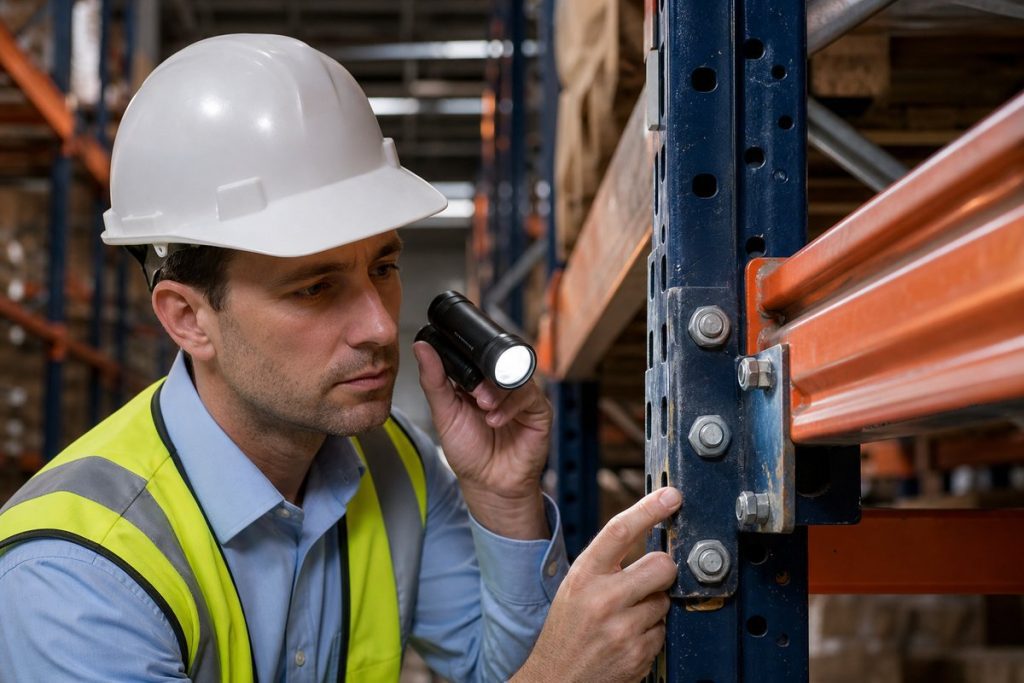
🔧 Repair vs. Replace
One of structural rack’s biggest advantages is repairability. When a forklift impacts a roll-formed column, the thin steel crumples and the section must be replaced (often requiring unloading the entire bay). Structural C-channel typically bends rather than crumples — and can often be straightened in place by a qualified structural repair team. This saves thousands per incident. Schedule a structural rack inspection →
Frequently Asked Questions
Pallet rack built from hot-rolled structural steel C-channels rather than thin-gauge roll-formed steel. It’s heavier, stronger, and more impact-resistant — designed for the most demanding warehouse environments.
In high-impact environments (cold storage, beverage, heavy manufacturing), structural rack’s longer lifespan and lower repair costs often make it cheaper over 15–20 years than replacing roll-formed rack multiple times.
Structural rack uses its own beam connection system (bolted), which is different from teardrop clips. The two are not interchangeable. However, Material Handling USA can design hybrid systems where needed.
Not required, but strongly recommended — especially for drive-in configurations. Cold temperatures make steel more brittle, and forklift operators in freezer gear have less precise control. Structural rack handles both factors better.
Typically 20–40% more per position than roll-formed rack, depending on configuration and engineering requirements. Contact Material Handling USA at (800) 326-4403 for detailed pricing.
Explore More Pallet Rack Solutions
Need Rack That Can Take a Hit?
Material Handling USA designs, supplies, and installs structural pallet rack for cold storage, beverage, manufacturing, and high-throughput operations nationwide.
Ready to configure your pallet rack system?
Use our guided BuildQuote tool to choose the right configuration, review your parts and submit it for checkout or a formal quote.