
Selective Pallet Rack Systems
The most widely used warehouse storage system in the world — providing direct forklift access to every pallet position for maximum picking speed and inventory flexibility.
Talk with a pallet rack specialist. Call (800) 326-4403 or Email Sales@MH-USA.com
What Is Selective Pallet Rack?
The standard, general-purpose racking system found in warehouses, distribution centers, and industrial facilities worldwide.
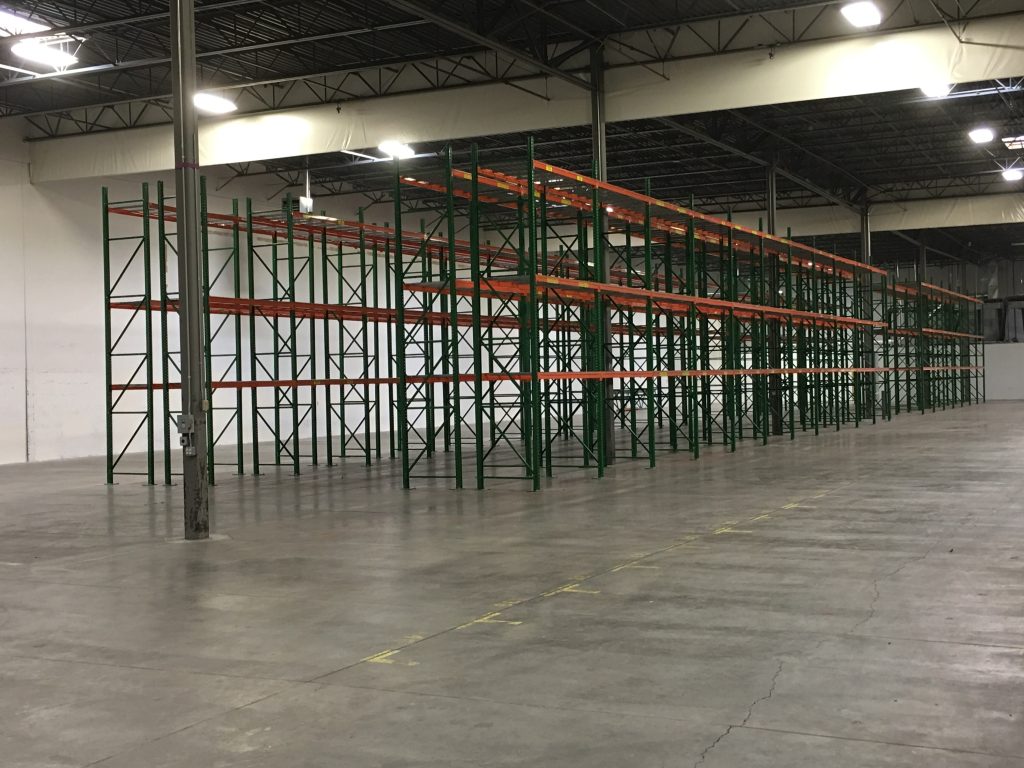
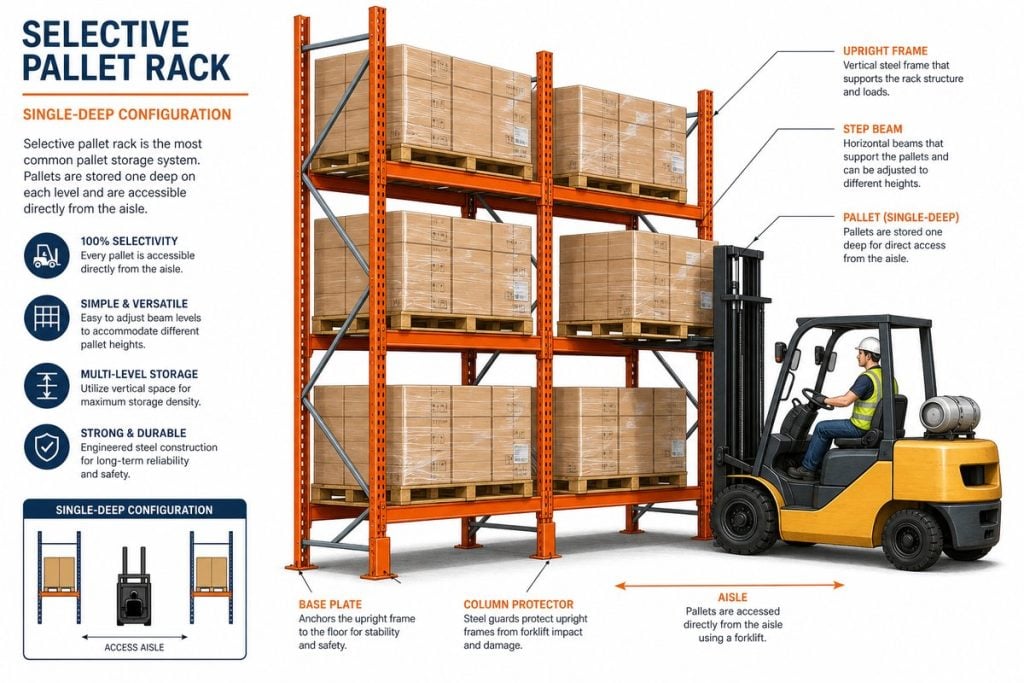
Selective pallet rack uses vertical uprights (frames) connected by horizontal beams to create open shelf levels where pallets are stored and retrieved by forklift. The defining feature is 100% selectivity — every single pallet position is directly accessible from the aisle without moving any other pallets. This makes it ideal for operations that store a wide variety of SKUs and need fast, efficient picking.
Selective rack is the most cost-effective pallet storage solution per position and adapts to virtually any warehouse layout, pallet size, or load weight. Material Handling USA designs, supplies, and installs selective pallet rack systems for warehouses across the United States — from single-row wall runs to full multi-aisle distribution center buildouts.
How Selective Pallet Rack Works
A selective rack system consists of upright frames positioned in rows with horizontal step beams connecting them at adjustable heights. Pallets are placed on the beams by forklift from the aisle side. The standard teardrop connection system allows beams to be repositioned in 2-inch increments, so shelf heights can be adjusted to accommodate different pallet and product sizes without tools.
Systems can be configured as single-deep (one pallet deep on each side of the aisle) or back-to-back (two rows positioned frame-to-frame for double the storage along each run). Row spacers and anchoring hardware secure the system to the warehouse floor for stability and seismic compliance.

Selective Rack Configurations
Selective pallet rack systems can be configured to match any warehouse layout, inventory profile, and material handling equipment.
Single-Deep Selective
The most common setup. One pallet deep on each side of the aisle. Every position is directly accessible. Best for high-SKU operations where each product needs its own location.
Best for: General warehousing, parts distribution, retail backstock
Back-to-Back Rows
Two single-deep rows placed frame-to-frame. Eliminates the flue space between rows to maximize storage density while maintaining 100% selectivity. Connected with row spacers for stability.
Best for: Maximizing floor space in wide-open warehouses
Double-Deep Selective
Two pallets stored deep on each side with a reach truck or deep-reach forklift. Increases storage density by ~40% over single-deep while maintaining good selectivity. Requires specialty lift equipment.
Best for: High-volume facilities with fewer SKUs per product
Wall-Mounted Runs
Single rows mounted along warehouse walls. Uses otherwise wasted vertical space above dock doors, staging areas, or work zones. Typically 1–3 beam levels high.
Best for: Small warehouses, overflow storage, staging areas
Roll-Formed (Teardrop)
The industry standard. Uprights are cold-formed from 12–16 gauge steel with teardrop-shaped connector holes. Compatible across major manufacturers. Fast installation, no bolts required.
Best for: Most applications, quick installation, future flexibility
Structural Bolt-Together
Uses hot-rolled structural steel C-channels and I-beams bolted together. Heavier duty than roll-formed, higher impact resistance, and often required in high-seismic zones or very heavy load applications.
Best for: Heavy industry, cold storage, seismic zones
Technical Specifications
Selective pallet rack components engineered to handle demanding warehouse loads from leading manufacturers.
Upright Frames
| Specification | Range | Details |
|---|---|---|
| Column Profile | 3″ × 3″ | Standard teardrop profile; 4″ columns available for heavy-duty |
| Frame Depths | 36″, 42″, 48″ | 42″ standard for 48″×40″ pallets; 48″ for oversized loads |
| Frame Heights | 8′ to 28′ (96″–336″) | Standard heights in 24″ increments; custom available |
| Steel Gauge | 15 ga, 14 ga, 12 ga | Heavier gauge = higher capacity; 14 ga most common |
| Steel Grade | 55 KSI minimum | High-strength structural steel |
| Base Plates | 5″×8″ and 8″×8″ | Welded; 8″×8″ for heights over 18′ |
| Horizontal Bracing | Every 42″ | Provides lateral stability; welded connections |
| Connection Type | Teardrop | Universal compatibility across major brands |
| Compliance | RMI / ANSI MH16.1 | Rack Manufacturers Institute certified |
Step Beams
| Beam Length | Capacity (per pair) | Pallets per Level |
|---|---|---|
| 48″ (4′) | Up to 5,200 lbs | 1 pallet |
| 72″ (6′) | Up to 5,200 lbs | 1–2 pallets |
| 96″ (8′) | Up to 7,700 lbs | 2 pallets (standard) |
| 108″ (9′) | Up to 7,700 lbs | 2–3 pallets |
| 120″ (10′) | Up to 10,500 lbs | 3 pallets |
| 144″ (12′) | Up to 10,500 lbs | 3–4 pallets |
Capacities based on uniformly distributed loads. Actual capacity depends on upright gauge, beam height, and seismic requirements. Contact MH-USA for engineered load calculations.
Key Components of a Selective Rack System
A complete selective pallet rack installation includes these essential components.
Upright Frames
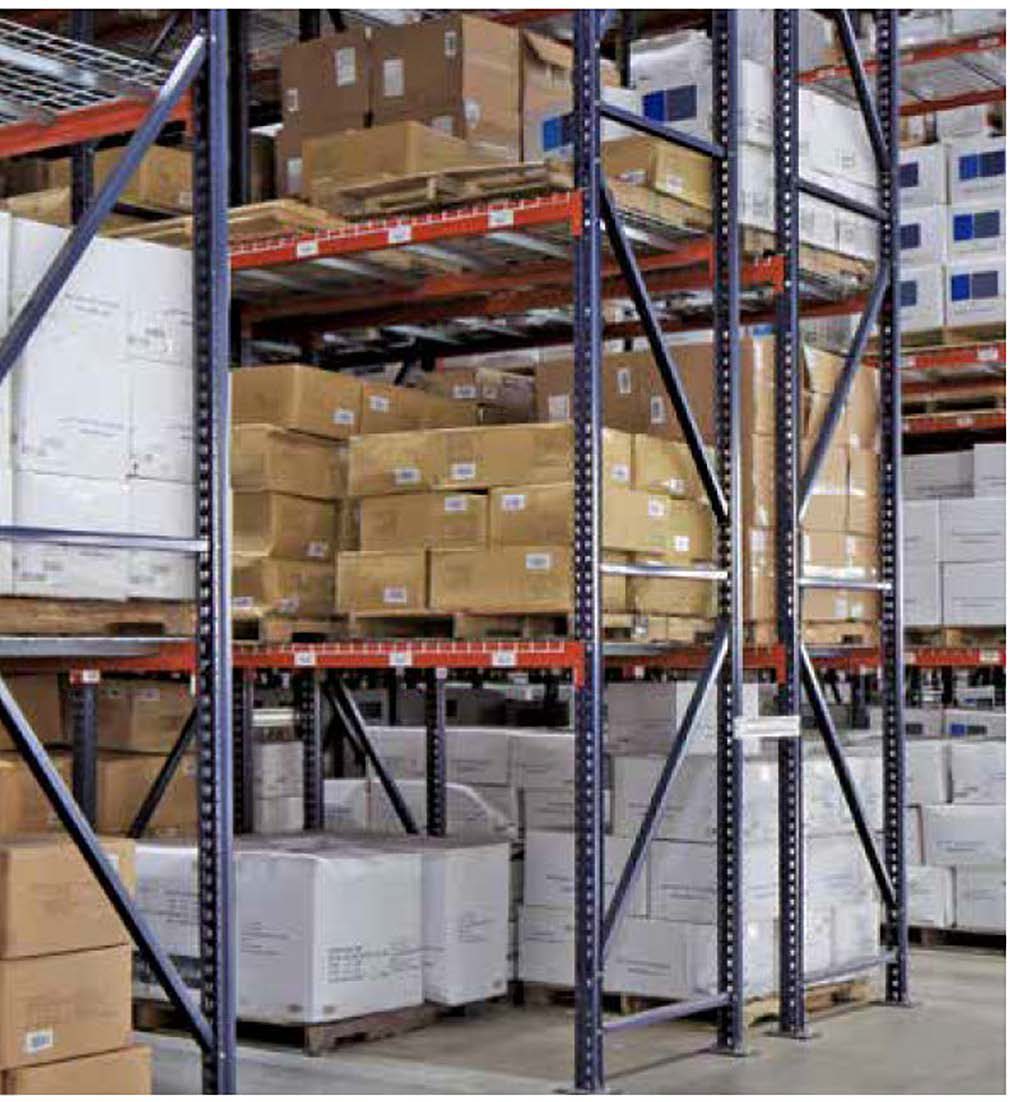
The vertical structure. Two columns connected by horizontal and diagonal bracing with welded base plates. Available in multiple depths, heights, and steel gauges to match your load requirements.
Step Beams
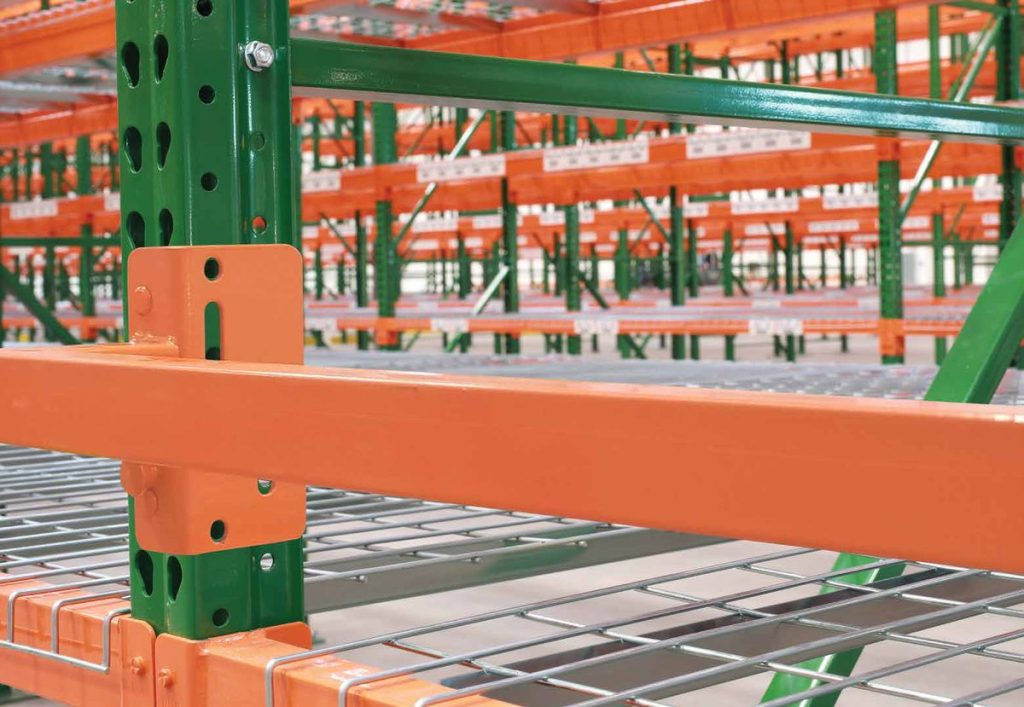
Horizontal load-bearing members that connect to uprights via teardrop connectors. “Step” design creates a lip to hold wire decking or pallets. Available in 4″ and 5″ face heights.

Wire Decking
Welded wire mesh panels that sit on beams to provide a shelf surface. Allows sprinkler water penetration for fire code compliance. Standard sizes match beam lengths. Required by most fire marshals.

Anchor Bolts
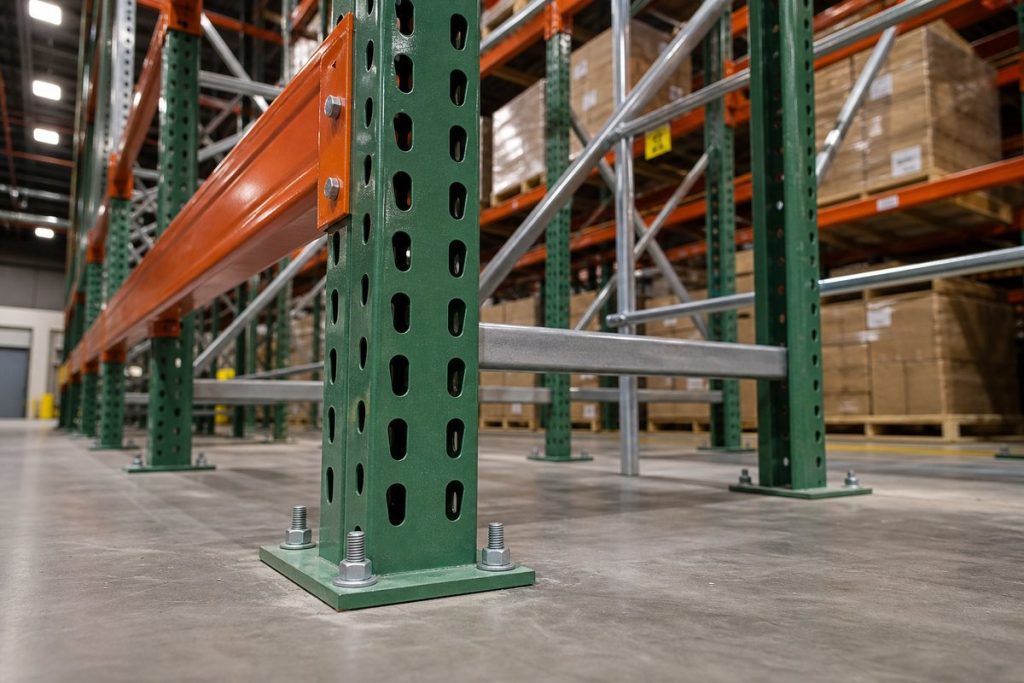
Concrete expansion anchors that secure upright base plates to the warehouse floor. Required by building code and essential in seismic zones like Utah. Typically 1/2″ or 5/8″ diameter.
Column Protectors
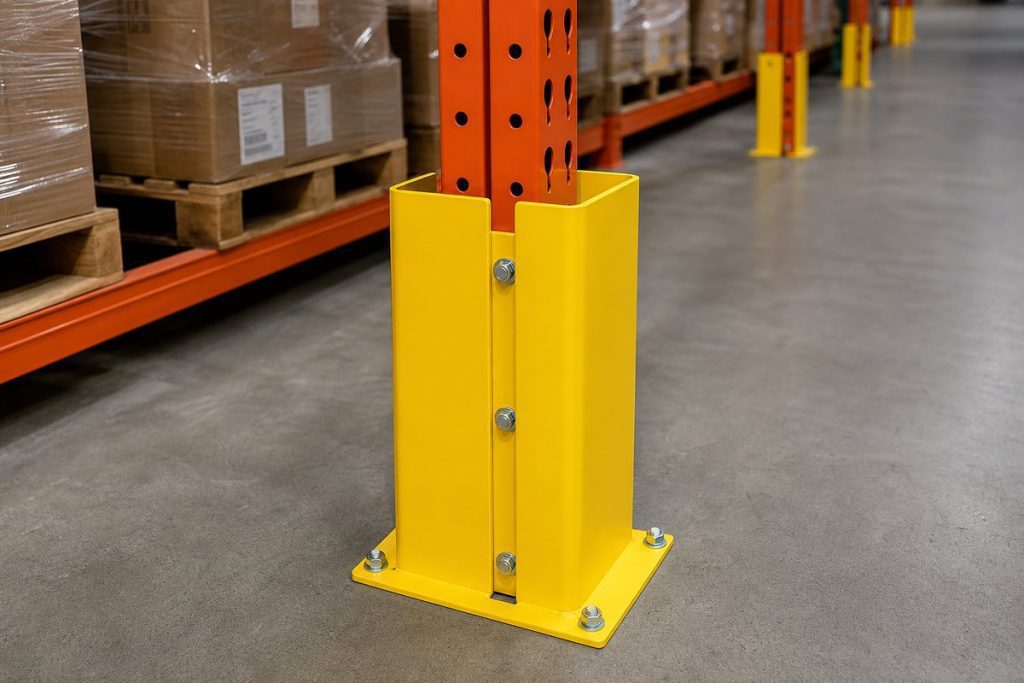
Steel or polymer guards that bolt to the floor around upright columns. Absorb forklift impacts to prevent costly frame damage. A small investment that prevents expensive rack repairs.
Row Spacers & Shims
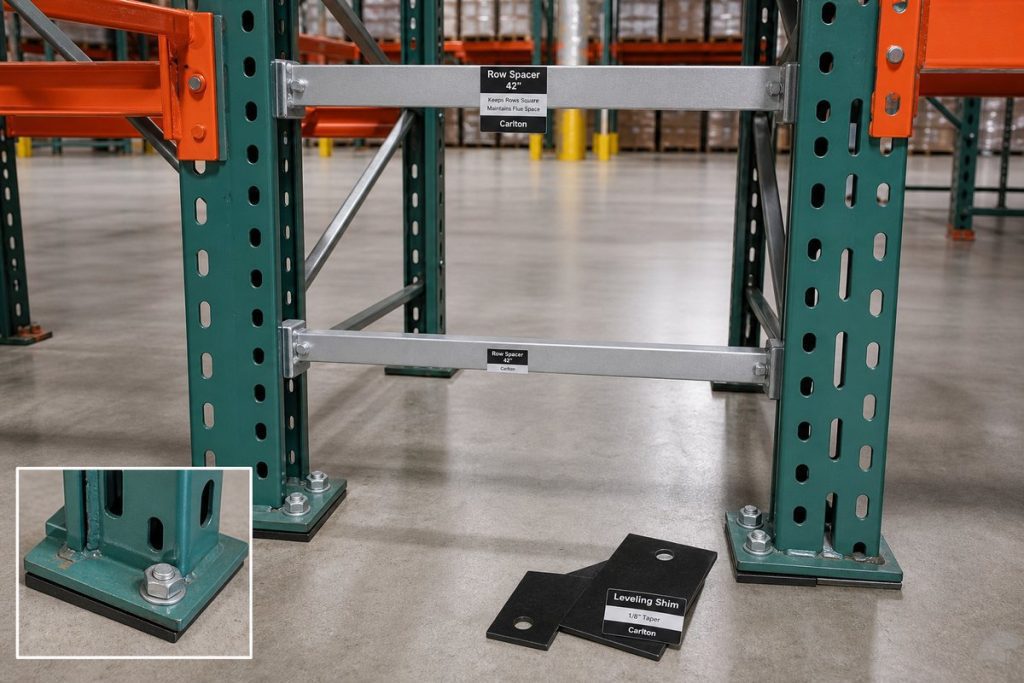
Hardware that ties back-to-back rows together for stability. Row spacers maintain consistent flue space. Shims level base plates on uneven floors.

Teardrop beam connector — the industry standard connection system used in selective pallet rack
Applications & Industries
Selective pallet rack is the most versatile storage system available — used across nearly every industry that handles palletized goods.
Manufacturing & Production
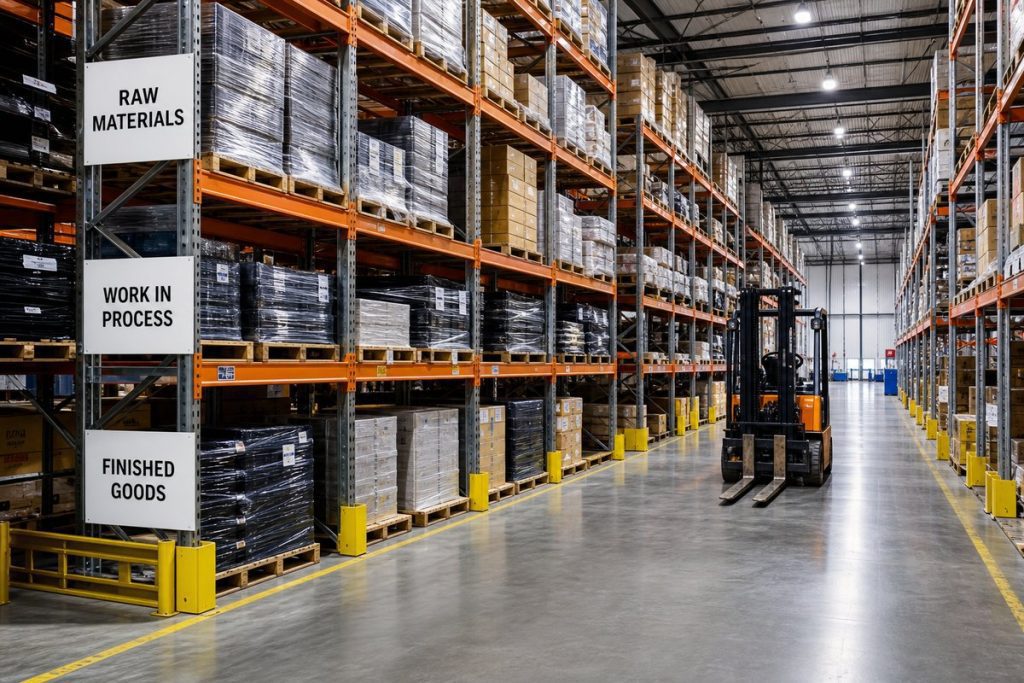
Store raw materials, work-in-process inventory, and finished goods. Selective rack gives production teams fast access to any component without disrupting other stored materials. Common in automotive, electronics, aerospace, and consumer goods manufacturing. For a worked example, see how an auto parts warehouse uses teardrop selective pallet racking to keep thousands of slow- and fast-moving SKUs pickable from the aisle face.

Distribution & Fulfillment
The backbone of distribution center storage. High SKU count operations need 100% selectivity — every product accessible at any time. Selective rack supports both full-case and each-pick operations with carton flow on lower levels.
Retail & E-Commerce
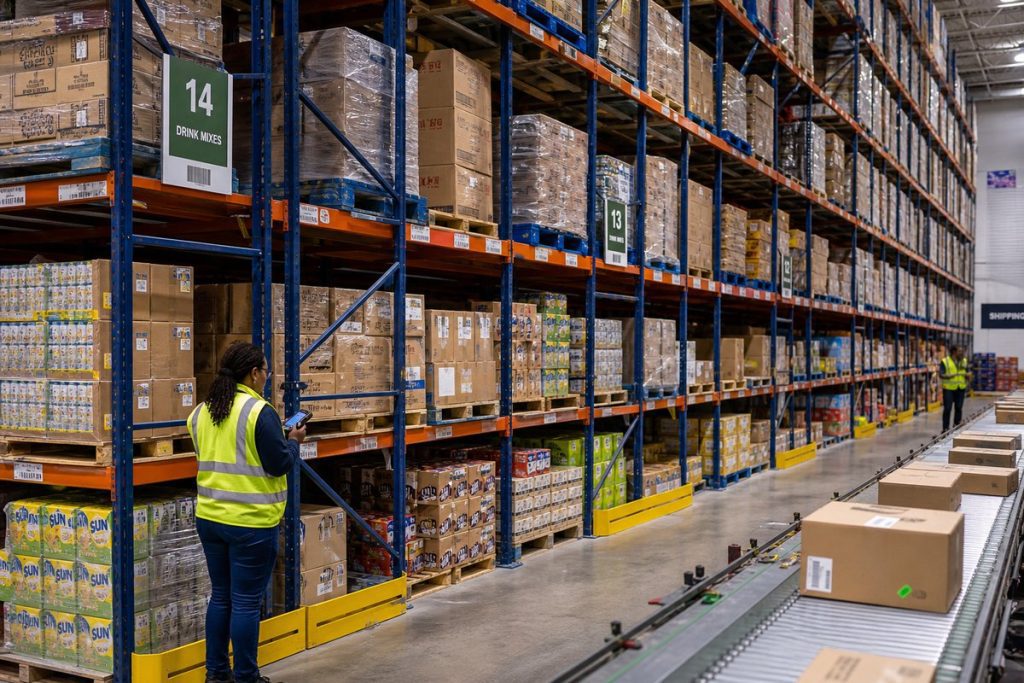
Backstock storage for retail stores, regional distribution centers, and e-commerce fulfillment warehouses. Adjustable beam heights accommodate seasonal inventory changes and varying product sizes throughout the year.

Cold Storage & Food/Beverage
FDA and USDA facilities use selective rack for temperature-controlled storage. FIFO inventory management is natural with selective systems — oldest product is always accessible first. Structural rack is often specified for freezer applications.

Automotive & Parts
OEM parts rooms and aftermarket distributors store thousands of different part numbers. Selective rack with wire decking organizes parts by category, vehicle, or frequency of pick while keeping everything accessible by forklift.
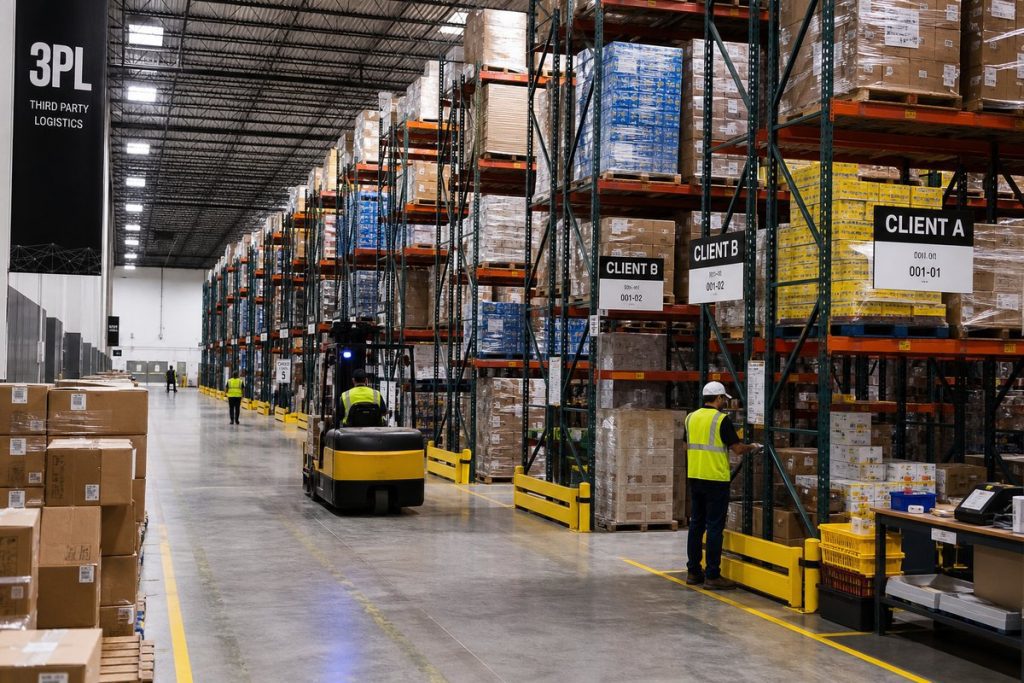
3PL & Third-Party Logistics
3PL operators manage inventory for multiple clients with constantly changing product mixes. Selective rack’s adjustability and 100% selectivity makes it the default choice — beam heights and configurations change as client needs evolve.
Advantages of Selective Pallet Rack
The most popular warehouse storage system for good reason.
- 100% pallet selectivity — access any pallet without moving others
- Lowest cost per pallet position — most affordable racking system to purchase and install
- Simple installation — teardrop connections require no bolts or special tools
- Adjustable shelf heights — reconfigure in 2″ increments as inventory changes
- Universal compatibility — teardrop system works across major manufacturers
- Works with any forklift — counterbalanced, reach trucks, order pickers
- FIFO inventory flow — natural first-in-first-out with single-deep access
- Easy to inspect and maintain — open design makes damage visible
- Scalable — add bays, extend runs, or add levels as your business grows
- Proven reliability — decades of engineering refinement and code compliance
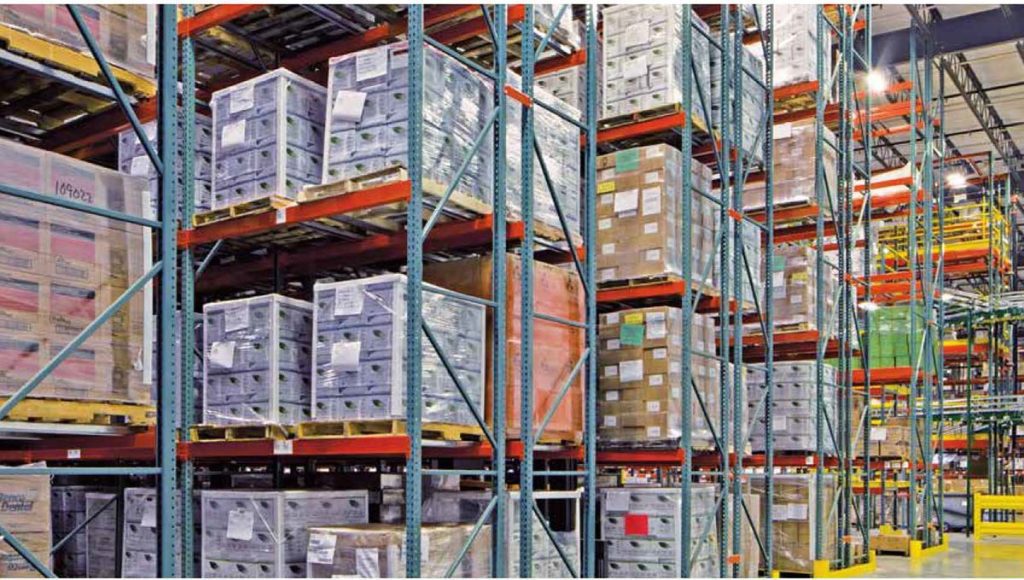
Selective Rack vs. Other Pallet Rack Systems
Selective rack is the right choice for most warehouses, but higher-density systems make sense when you have fewer SKUs and higher pallet volumes.
| System | Selectivity | Density | Inventory Method | Best When |
|---|---|---|---|---|
| Selective | 100% | Standard | FIFO | Many SKUs, fast picking, mixed inventory |
| Drive-In | Low | High | LIFO | Few SKUs, bulk storage, same product per lane |
| Push-Back | Medium | High | LIFO | Moderate SKUs, 2–6 deep, high throughput |
| Pallet Flow | Medium | High | FIFO | Perishables, date-sensitive inventory |
| Cantilever | 100% | Low | FIFO | Long/bulky items — lumber, pipe, furniture |
| Narrow Aisle | 100% | Higher | FIFO | Selective + density (narrower aisles, VNA trucks) |
Quick Decision Guide
Choose selective rack if: You have 50+ SKUs, need fast picking, require FIFO inventory rotation, use standard forklifts, or want the most cost-effective solution per pallet position.
Consider alternatives if: You store fewer than 10 SKUs in very high volume (drive-in or push-back may save floor space), or you handle date-sensitive perishables in bulk (pallet flow ensures perfect FIFO).
Not sure? Request a free warehouse design consultation — we’ll analyze your inventory profile and recommend the right system.
How to Choose the Right Selective Rack System
Sizing a pallet rack system correctly prevents wasted space, safety hazards, and costly re-work. Here’s what to evaluate before you buy.
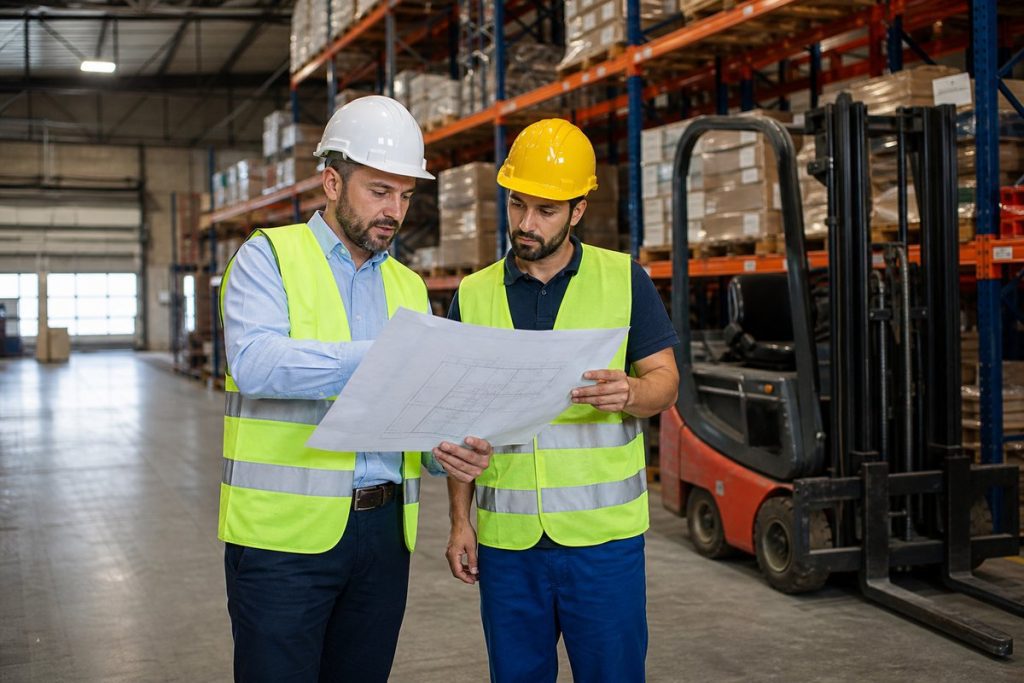
1. Measure Your Pallets
Start with your pallet dimensions and weight. Standard GMA pallets are 48″ × 40″, but your products may overhang or use non-standard sizes. Measure the loaded height of your tallest pallet — this determines beam spacing. Weigh your heaviest load — this determines beam and upright capacity.
2. Map Your Building
Clear height, column spacing, dock door locations, fire suppression, and floor condition all affect layout. Rack heights must stay 18 inches below sprinkler heads (NFPA requirement). Floor flatness matters — uneven slabs can prevent uprights from plumbing correctly at heights above 20 feet.
3. Count Your SKUs
Selective rack provides one pallet deep per position. If you carry 100+ SKUs, selective gives you instant access to every one. If you carry fewer than 10 SKUs in very high volume, a hybrid layout with selective + push-back or drive-in may make better use of your footprint.
4. Choose Your Forklift
Your forklift type determines aisle width. Standard counterbalanced forklifts need 12-foot aisles. Reach trucks cut that to 8–10 feet. Turret trucks and order pickers work in 5–6-foot aisles. Narrower aisles = more rack rows in the same building. Factor in the cost of specialized equipment vs. the storage gains.
5. Plan for Growth
Selective rack is modular — you can add bays later. But it’s cheaper to overbuild by 15–20% now than to retrofit later. Plan for 3–5 years of inventory growth. If you’re in a lease, consider whether rack will transfer to your next facility.
6. Don’t Forget Accessories
Wire decking, pallet supports, column protectors, end-of-aisle guards, safety netting, and rack labels aren’t optional — they’re essential. Wire decking allows sprinkler water to reach lower levels (fire code requirement in most jurisdictions). Column protectors prevent forklift damage that voids the rack warranty.
💡 Pro Tip — Get a Free Layout Before You Buy
Material Handling USA provides free CAD warehouse layouts before you commit. We’ll measure your building, map your inventory, and design a system that maximizes storage and picking efficiency. Request your free layout →
Installation, Permitting & Seismic Requirements
Proper installation is as important as the rack itself. Here’s what goes into a professional pallet rack installation.

The Installation Process
Site Survey & Engineering
We measure your facility, assess floor conditions, map columns and obstructions, and confirm clear heights. Our engineers produce stamped drawings showing rack layout, load ratings, and seismic calculations.
Permitting & Approval
Most cities and counties require building permits for pallet rack over 8 feet tall. We handle permit applications, submit engineered drawings, and coordinate fire marshal inspections. Utah jurisdictions typically require PE-stamped seismic calculations.
Professional Installation
Our crews anchor uprights to the slab, level frames, install beams at specified heights, add wire decking and accessories, then plumbandshim every frame. A post-install inspection confirms load capacity labels are in place.
Seismic Design — Critical for Utah
Utah sits in a seismically active zone. The Wasatch Fault runs through Salt Lake City, Provo, and Ogden — meaning pallet rack systems must be engineered to resist lateral seismic forces.
IBC (International Building Code) and RMI (Rack Manufacturers Institute) standards require:
- Seismic force calculations based on site-specific soil class and spectral response
- Base plate anchorage rated for calculated uplift and shear forces
- Cross-aisle bracing sized for down-aisle drift limits
- PE-stamped calculations submitted with permit applications
- Post-install inspection confirming anchor torque values
⚠️ Warning — Don’t Skip Seismic Engineering
Rack collapse during an earthquake can cause fatalities, destroy inventory, and trigger OSHA citations exceeding $150,000 per violation. In Utah, unpermitted rack installations can result in code enforcement action and void your property insurance. Material Handling USA includes seismic engineering on every Utah project.
What Affects Selective Pallet Rack Cost?
Every project is priced individually. Here are the factors that drive your total investment.

📐 System Size
Number of pallet positions, upright height, beam lengths, and number of levels. Taller systems require heavier-gauge uprights which cost more but store more pallets per square foot — often reducing your cost-per-position.
⚖️ Load Capacity
Heavier loads require thicker beam gauges and heavier upright columns. A system rated for 2,000 lb/pallet costs less than one rated for 5,000 lb/pallet. Specifying accurate load weights prevents over-engineering (wasted money) or under-engineering (safety risk).
🔩 Steel Gauge & Finish
Standard roll-formed teardrop rack is the most cost-effective. Structural bolt-together rack costs more but handles abuse better and lasts longer in high-traffic environments. Powder-coat finishes and food-grade coatings add cost but are required in some industries.
🧩 Accessories
Wire decking, pallet supports, column protectors, end-of-aisle guards, row spacers, backstops, and safety netting. These add 15–30% to the base rack cost but are required by code in most applications. Skipping them risks fines and damage.
🏗️ Installation
Professional installation includes delivery, unloading, assembly, anchoring, leveling, and labeling. Cost depends on building access, floor condition, project timeline, and whether the warehouse is operational during install (phased installs cost more).
📋 Engineering & Permits
PE-stamped drawings, seismic calculations, permit fees, and fire marshal inspections. In Utah, permit costs vary by city but typically range from $200–$2,000 depending on project size. We handle the entire permit process.
💰 New vs. Used — Is Used Rack Worth It?
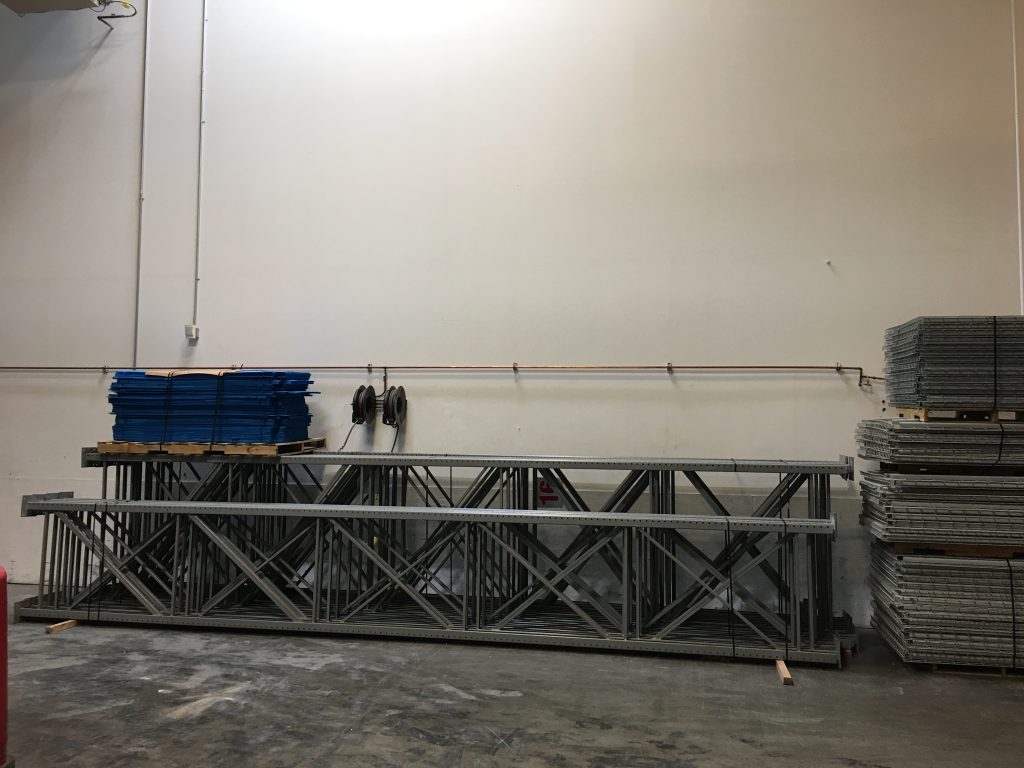
Used selective rack looks cheaper on the pallet, but the savings are usually used up by the time it is installed. Frames and beams that have been taken apart and trucked rarely fit back together well, and the installer time it takes to straighten things out and make them fit often ends up costing more than new rack would have. If you already own the rack: reusing it can work, but even then new is sometimes the lower total once the fix-up time is counted. Call our sales team and send a few pictures and we will help you decide which option is the better buy.
Inspection, Maintenance & Rack Safety
Pallet rack is a structural system — it requires regular inspection and maintenance to stay safe and code-compliant.
OSHA & ANSI Requirements
OSHA’s General Duty Clause (Section 5(a)(1)) requires employers to maintain a workplace free from recognized hazards — including damaged pallet rack. ANSI MH16.1 provides specific rack safety standards:
- Load capacity signs posted on every row showing maximum weight per beam level and per upright frame
- Annual professional inspections by a qualified rack engineer
- Monthly walk-through inspections by warehouse staff using a standardized checklist
- Damaged components unloaded and replaced immediately — never bent back into shape
- Modification restrictions — no field-drilled holes, no welding, no cutting without engineering approval
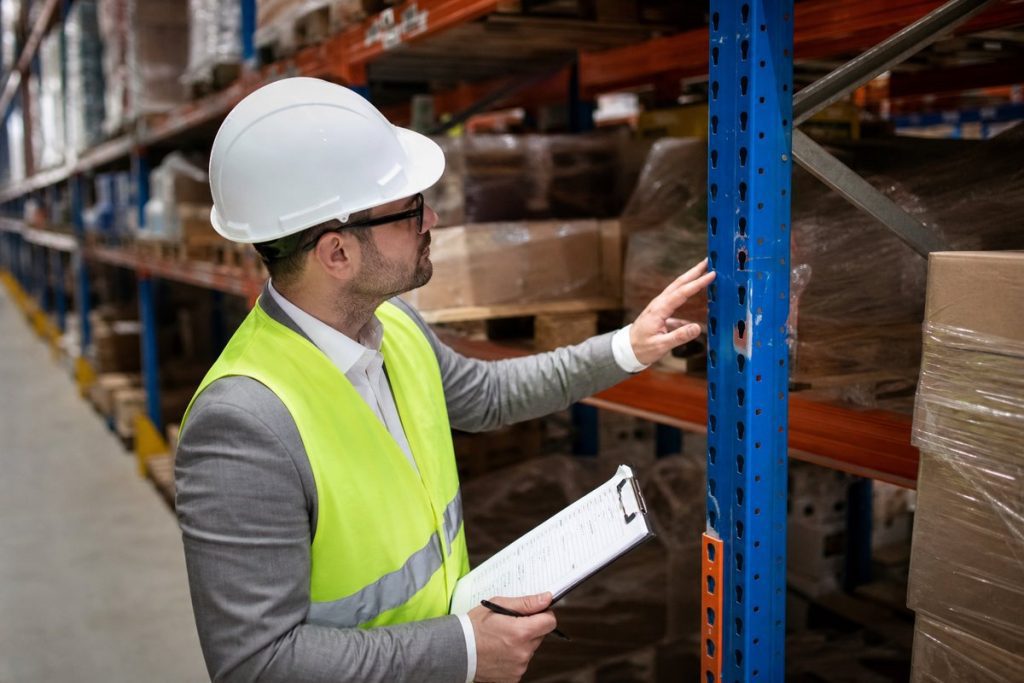
Common Damage & What to Look For
| Damage Type | Signs | Risk Level | Action |
|---|---|---|---|
| Upright dents/bends | Visible deformation in column face or side | High | Unload immediately, replace upright |
| Beam deflection | Beam sagging more than L/180 (span/180) | Medium-High | Remove load, verify beam capacity, replace if bent |
| Missing safety clips | Beam connectors lack safety pins/locks | Medium | Install replacement clips immediately |
| Anchor bolt failure | Loose, missing, or sheared base plate anchors | High | Unload frame, re-anchor or replace base plate |
| Rust/corrosion | Surface pitting, flaking, or structural thinning | Low-Medium | Monitor; replace if structural integrity compromised |
| Overloading | Loads exceeding posted capacity, pallets too wide/heavy | High | Remove excess load, retrain operators, verify capacity labels |
🔧 MH-USA Rack Repair & Inspection Services
We provide professional rack inspections, damage assessments, and repair services throughout Utah and nationally. Our team can replace damaged uprights, beams, and accessories — often without unloading adjacent bays. Schedule a rack inspection →
Load Capacity Planning
Getting load capacity right is the most important engineering decision in a pallet rack system. Under-sizing is dangerous. Over-sizing wastes money.
Understanding Rack Load Ratings
Every pallet rack system has three critical load ratings:
- Beam capacity — the maximum weight per beam pair (the shelf). Rated as UDL (uniformly distributed load) for a given beam length.
- Frame capacity — the maximum total weight the upright frame can support across all levels. Determined by column gauge, height, and bracing pattern.
- Floor slab capacity — the concrete must support the concentrated point loads at each base plate. A professional installation includes floor assessments.
Common Load Scenarios
| Application | Typical Pallet Weight | Beam Capacity Needed |
|---|---|---|
| General retail/e-commerce | 800–1,500 lbs | 3,000–4,000 lbs/pair |
| Food & beverage | 1,500–2,500 lbs | 5,000–6,000 lbs/pair |
| Manufacturing/heavy parts | 2,500–4,000 lbs | 8,000–10,000 lbs/pair |
| Cold storage/frozen | 2,000–3,500 lbs | 6,000–8,000 lbs/pair |
These are general guidelines. Always have your system engineered for your specific loads.
📊 Free Load Capacity Analysis
Not sure what capacity you need? Send us your heaviest pallet weight, pallet dimensions, and number of levels — we’ll engineer the right beam and upright combination. Request a load analysis →
Selective Pallet Rack Installations by MH-USA
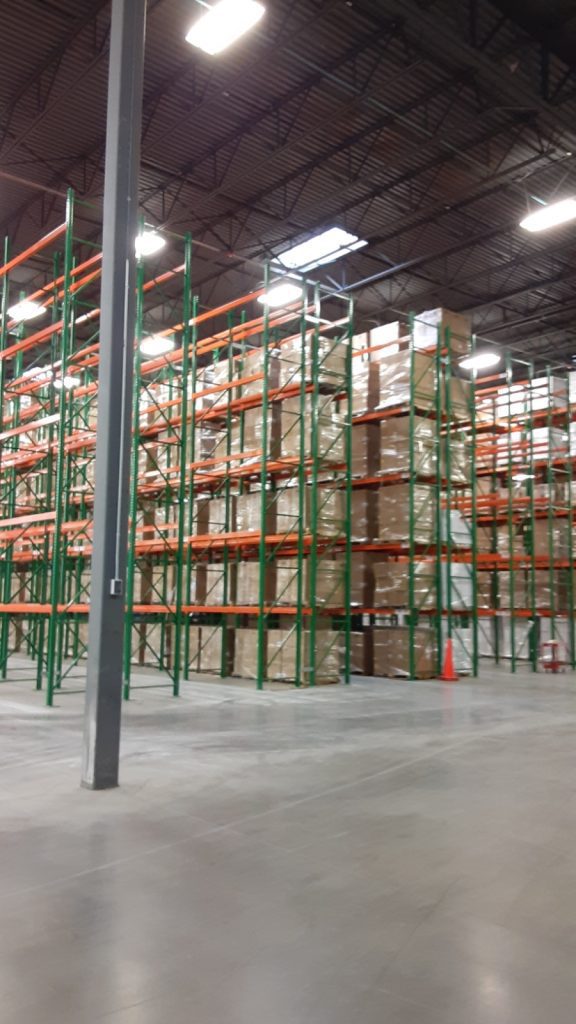
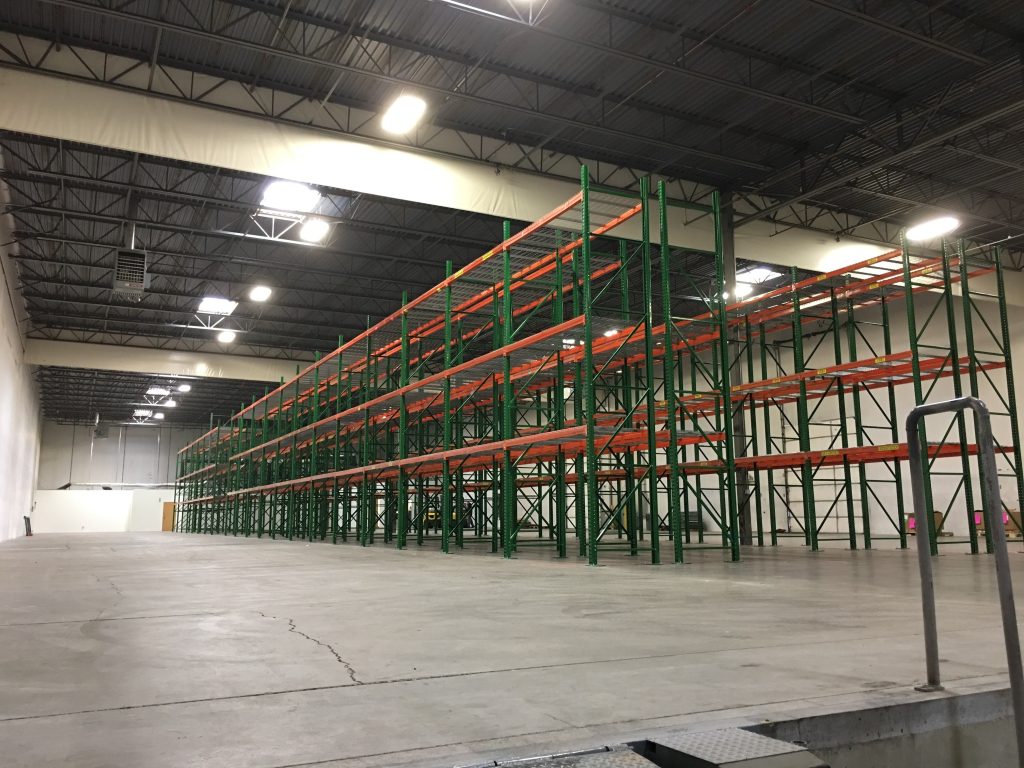
Real projects designed, supplied, and installed by Material Handling USA.


Frequently Asked Questions
Selective pallet rack is the most common warehouse racking system. It uses vertical upright frames connected by horizontal beams to create storage levels for pallets. The key feature is 100% selectivity — every pallet position is directly accessible by forklift from the aisle, without needing to move any other pallets. This makes it ideal for operations with many different products (SKUs) that need fast, efficient picking.
Beam capacities range from approximately 2,500 lbs per pair for light-duty systems up to 14,000+ lbs per pair for heavy-duty configurations. The actual capacity depends on beam length, beam height (4″ or 5″ face), upright gauge (12–16 gauge steel), and the number of beam levels. A standard 96″ (8-foot) beam pair in 14-gauge steel typically supports 5,000–7,700 lbs of uniformly distributed load. Material Handling USA provides engineered load calculations for every installation.
The most common configuration uses 42″-deep upright frames (to accommodate standard 48″×40″ pallets) with 96″ (8-foot) beams that hold two pallets per level. Upright heights typically range from 10 to 20 feet for standard warehouses, though heights up to 28+ feet are available for high-bay facilities. Beam heights are adjustable in 2-inch increments to fit your specific pallet and product dimensions.
Teardrop (roll-formed) rack uses cold-formed steel columns with teardrop-shaped connector holes — beams hook in without bolts for fast assembly. Structural rack uses hot-rolled steel channels and I-beams that are bolted together. Structural rack is heavier, more impact-resistant, and more expensive. Most warehouses use teardrop rack. Structural is specified for heavy-duty applications, cold storage/freezer environments, high-seismic zones, and situations where impact damage is a major concern.
Yes. Building codes and ANSI/RMI MH16.1 standards require pallet rack to be anchored to the concrete floor with expansion anchors. This is especially critical in seismic zones — Utah, for example, requires engineered seismic design with properly sized and installed anchors. Typical anchor bolts are 1/2″ or 5/8″ diameter concrete wedge anchors installed through the upright base plate.
Selective pallet rack is the most affordable racking system per pallet position. Costs vary based on height, gauge, beam capacity, accessories (wire decking, column protectors), and quantity. For an accurate quote tailored to your warehouse, contact Material Handling USA at (800) 326-4403 or email Sales@MH-USA.com — we provide free warehouse design consultations and detailed pricing.
Yes. Teardrop is the industry-standard connection system used by most major pallet rack manufacturers. Beams from one brand generally fit uprights from another brand. This interchangeability gives you flexibility when expanding or replacing damaged components. Always verify connector compatibility before mixing brands in load-bearing applications.
Standard counterbalanced forklifts work with selective rack when aisle widths are 10–13 feet. Reach trucks allow narrower aisles (8.5–10 feet) while accessing heights up to 30+ feet. Very narrow aisle (VNA) turret trucks or order pickers can operate in aisles as tight as 5–6 feet. Your forklift type determines your aisle width requirements, which directly impacts how many rows of rack fit in your warehouse.
Explore More Pallet Rack Solutions
Ready to Design Your Warehouse?
Material Handling USA designs, supplies, and installs selective pallet rack systems nationwide. Free warehouse design consultations, competitive pricing, and professional installation.
Ready to configure your pallet rack system?
Use our guided configurator to choose the right configuration, review your parts and submit it for checkout or a formal quote.