
Double Deep Pallet Rack
Store two pallets deep from a single aisle — doubling density over standard selective rack while maintaining direct access with a deep-reach forklift. The simplest, most cost-effective step up from selective.
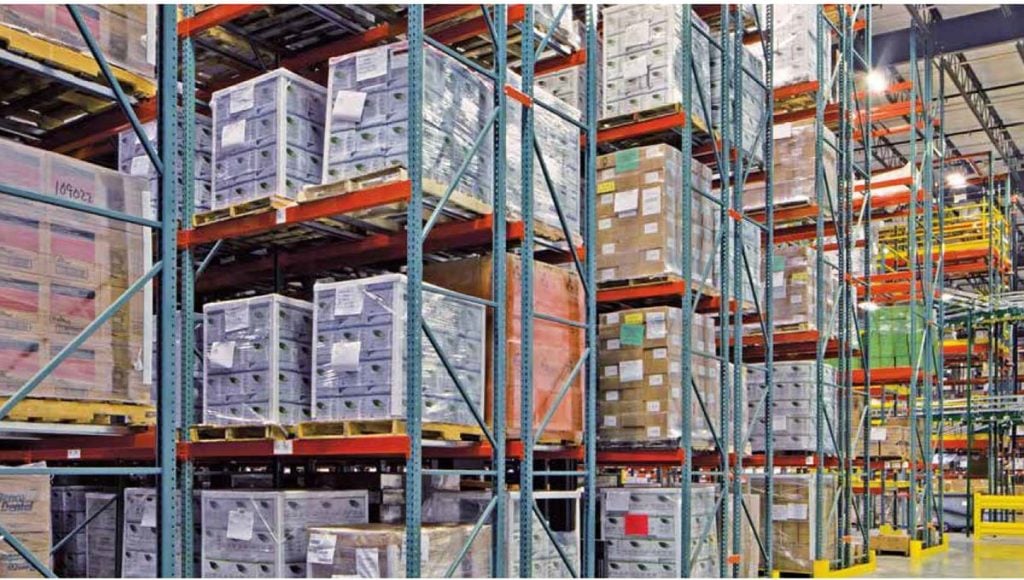
What Is Double Deep Pallet Rack?
Standard selective rack frames set two rows deep — accessed with a deep-reach forklift from a single aisle. The simplest way to increase density without changing your rack type.
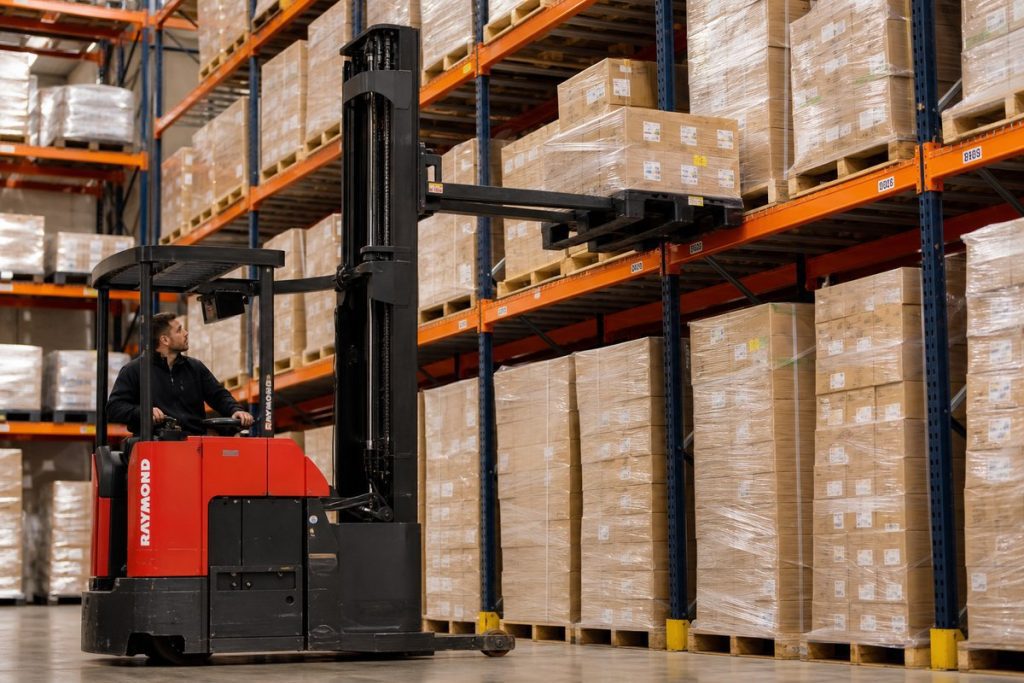
Double deep pallet rack is exactly what it sounds like — two rows of standard selective rack placed back-to-back, accessed from one aisle using a deep-reach forklift. The reach truck extends its forks through the front pallet position to place or retrieve the rear pallet.
This configuration eliminates one aisle for every two rows of rack, increasing pallet storage capacity by approximately 40% compared to standard selective rack in the same building footprint. It uses the same teardrop uprights, step beams, and wire decking as selective rack — the only addition is a specialized deep-reach forklift.
Double deep is the most popular first step for warehouses that have outgrown selective rack but aren’t ready to invest in drive-in, push-back, or flow systems. It maintains most of the flexibility of selective rack while significantly improving space utilization.
How Double Deep Rack Works
Layout: Two rows of selective rack face each other back-to-back with no aisle between them. A working aisle on each side provides access. The deep-reach truck places the first pallet in the front position, then reaches over or through it to place the second pallet in the back position.
Retrieval: When picking, the operator first retrieves the front pallet (if present), then reaches through to get the back pallet. This creates a modified FIFO/LIFO situation — the back pallet position is technically last-in-first-out unless managed by the WMS.
Double Deep Configurations
Standard Double Deep

Two back-to-back rows of selective rack accessed from one aisle. Uses standard teardrop uprights and beams. Requires a deep-reach forklift with extended fork capability.
Best for: General warehousing with moderate SKU count and high volume per SKU
Double Deep + Selective Hybrid

Mix double deep rows for high-volume SKUs with selective rows for fast-moving picks. The most common configuration — maximizes density for bulk items while keeping top movers in selective positions.
Best for: Distribution centers with mixed velocity inventory
Double Deep with Structural Rack

Structural steel frames instead of roll-formed for heavy-duty applications. Used in freezer environments, seismic zones, or facilities with very heavy loads (3,000+ lbs per pallet). Higher initial cost, greater durability.
Best for: Cold storage, heavy loads, high-impact environments
Technical Specifications
| Parameter | Double Deep | Notes |
|---|---|---|
| Depth Per Position | 2 pallets deep (4 pallets back-to-back) | Both aisles serving same back-to-back rows |
| Rack Type | Standard selective (teardrop) | Same components as selective rack |
| Forklift Required | Deep-reach truck | Extended forks reach 8’+ deep |
| Aisle Width | 8’6″ to 10’6″ | Narrower than standard reach truck aisles |
| Selectivity | ~50% (front pallet blocks rear) | WMS manages pallet rotation |
| Density Gain | 40%+ over selective | Eliminates one aisle per two rows |
| Inventory Rotation | Modified LIFO/FIFO | Rear pallet accessed after front |
| Compliance | RMI / ANSI MH16.1 | Seismic engineering included |
Applications & Industries
📦 Distribution Centers

The most common application. High-volume DCs with 50–200 SKUs benefit from the density increase. WMS directs putaway and retrieval to manage the two-deep pallet positions efficiently.
❄️ Cold Storage & Freezer

Maximize expensive cold storage cube. Double deep with structural rack is a popular freezer configuration. Fewer aisles means less cold air escape when doors open. Deep-reach trucks work well in cold environments.
🏭 Manufacturing

Raw materials and finished goods buffer storage. Same SKU stored in both positions simplifies picking. Works well for operations with predictable demand and moderate SKU count.
🍔 Food & Beverage
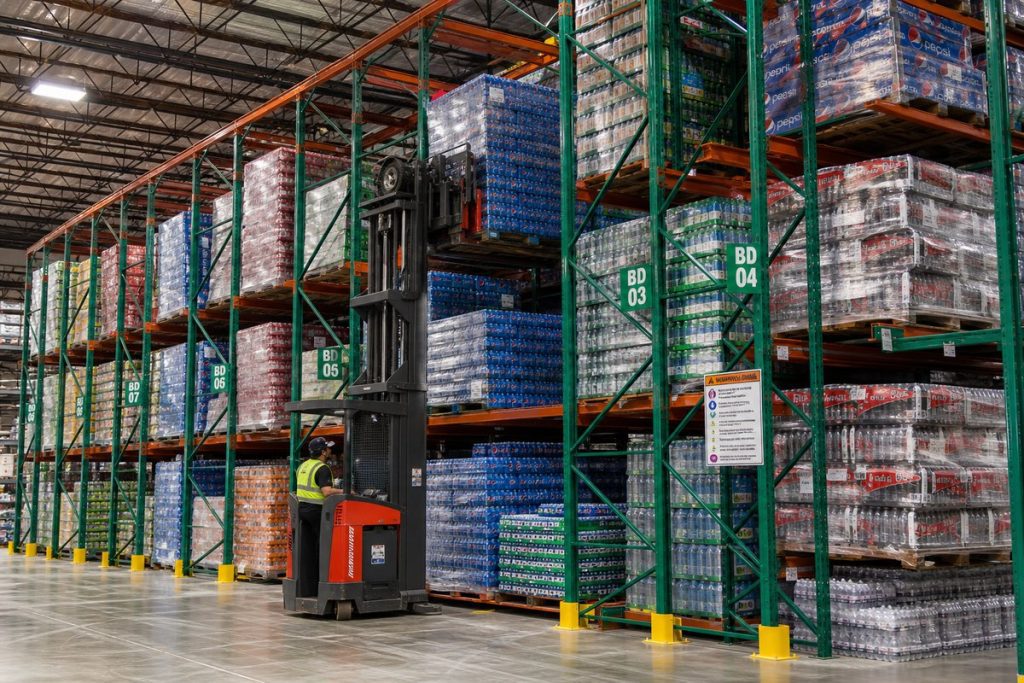
Canned goods, bottled products, dry goods — items with longer shelf life where modified FIFO is acceptable. Double deep is widely used in grocery distribution for moderate-velocity SKUs.
📋 3PL Warehousing
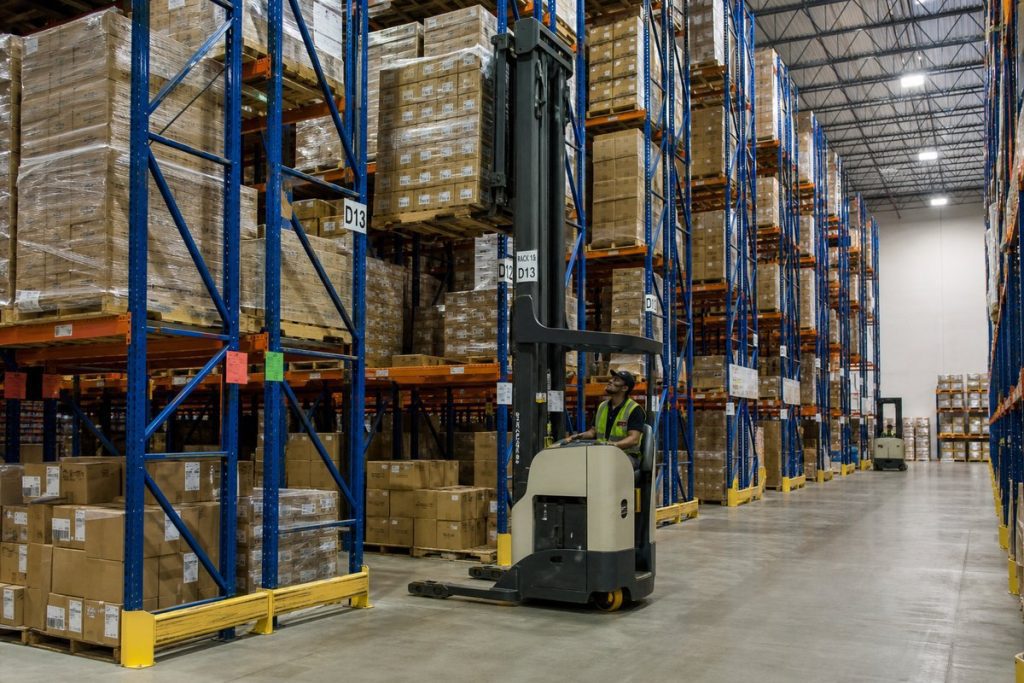
Third-party logistics facilities that need to maximize client storage per square foot. Double deep provides density without the higher cost of push-back or flow systems. Standard components mean easy reconfiguration.
🛒 Retail Distribution

Seasonal products, promotional inventory, and everyday replenishment stock. Double deep handles the volume while selective rows handle fast picks. Common in retail DC hybrid layouts.
Double Deep vs. Other Storage Systems
| System | Selectivity | Density | Forklift | Best For |
|---|---|---|---|---|
| Double Deep | ~50% | 40%+ over selective | Deep-reach | Moderate SKUs, simple density boost |
| Selective | 100% | Standard | Standard reach | Many SKUs, fast picking |
| Drive-In | Low | Very high | Standard | Few SKUs, bulk storage |
| Push-Back | ~75% | High | Standard | More density + better access |
| Pallet Flow | 100% (per lane) | Very high | Standard | FIFO required, perishables |
Choose double deep if: You need more density than selective but want to keep using standard rack components. You have moderate SKU count with multiple pallets per SKU. You’re willing to invest in a deep-reach forklift.
Consider alternatives if: You need more than 2 pallets deep (push-back or drive-in), strict FIFO is required (pallet flow), or you can’t justify a deep-reach forklift purchase.
When to Choose Double Deep Pallet Rack
Double deep rack is the simplest density upgrade from selective — it doubles your storage depth with minimal changes to your existing warehouse layout.
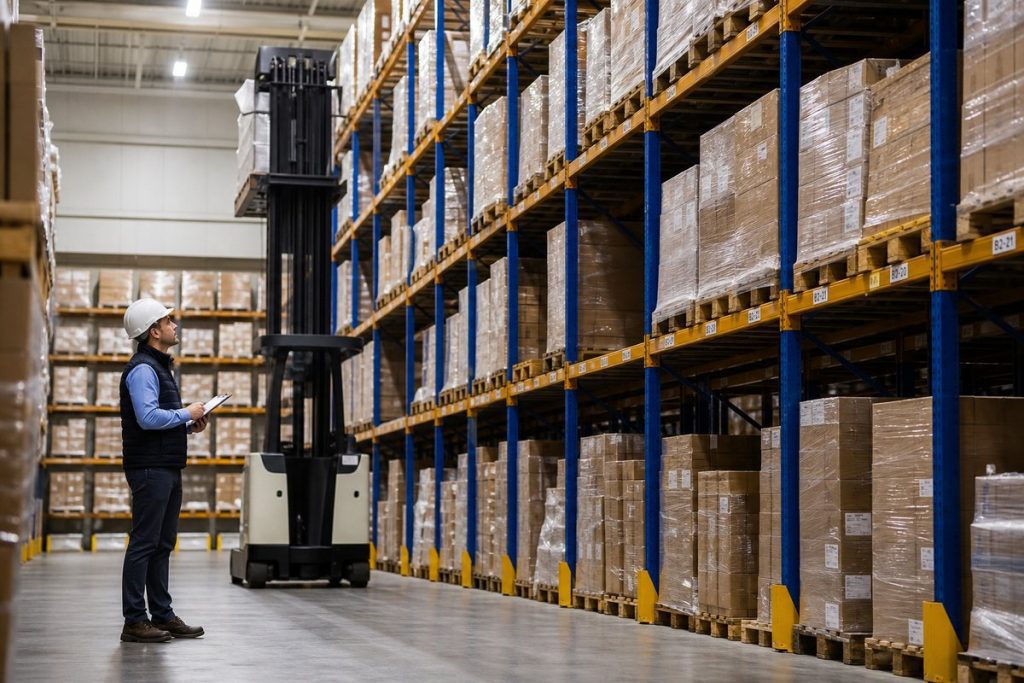
Ideal Conditions for Double Deep
- You already have selective rack — Double deep uses the same uprights and beams. You can convert one side of an existing selective aisle to double deep without replacing the rack structure
- 2+ pallets per SKU is common — Each double deep position holds two pallets of the same SKU. If most SKUs only have one pallet at a time, selective is better
- You want more density without complexity — No carts, no rollers, no special mechanisms. Just standard beams two rows deep. Simplest high-density system to operate and maintain
- You already own or plan to buy reach trucks — Double deep requires a deep-reach forklift (reach truck with extended scissors or pantograph). Standard counterbalance forklifts cannot access the rear pallet
- LIFO for back position is acceptable — The rear pallet can only be accessed after removing the front pallet. For many operations this is fine since both pallets are the same SKU
Double Deep vs. Selective — The Math
| Factor | Selective | Double Deep |
|---|---|---|
| Pallets per bay | 3 per level | 6 per level (3×2 deep) |
| Selectivity | 100% | 50% (front pallet only) |
| Aisle space needed | ~50% of floor | ~35% of floor |
| Density increase | Baseline | +25–40% |
| Forklift type | Any | Deep-reach truck required |
💡 The Hybrid Approach
Most warehouses get the best results by converting one side of each aisle to double deep (high-volume SKUs) while keeping the opposite side as selective (low-volume SKUs). One aisle serves both density and selectivity needs.
Reach Truck Requirements for Double Deep
The forklift is the key to double deep. Without the right reach truck, you can’t access the back pallet — and the entire system’s value is lost.
What You Need
- Deep-reach truck — Standard reach trucks extend 24–30 inches. Double deep reach trucks extend 48–54+ inches using a pantograph or scissor mechanism to reach the second pallet position
- Capacity at full extension — Load capacity drops significantly when forks are fully extended. A truck rated at 3,500 lbs may only handle 2,200 lbs at full double-deep reach. Verify capacity at maximum extension before specifying
- Aisle width — Deep-reach trucks typically need 9.5–11 feet of aisle width (vs. 10–12 feet for standard reach trucks). The truck is slightly wider due to the extended carriage mechanism
- Operator training — Placing a pallet behind another pallet with zero visibility requires skill and practice. Camera systems on the forks help operators see the rear position
⚠️ Don’t Forget Fork Camera Systems
When placing the rear pallet, the operator can’t see the beam level or pallet position. Fork-mounted cameras with a cab display let operators see exactly where the forks are relative to the beams — reducing beam impacts and pallet damage significantly.
Layout & Space Planning
Double deep rack changes your warehouse geometry. Here’s how to plan the layout for maximum benefit.

📐 Back-to-Back Configuration
The most common double deep layout places two rows of rack back-to-back, creating four pallets deep from either aisle. This maximizes density but means the center two pallets are only accessible from one side each. Flue spaces between back-to-back rows must meet fire code requirements.
🔥 Fire Code & Sprinklers
Double deep rack stores pallets closer together with less open air space between them. Fire suppression calculations change — in-rack sprinklers may be required where selective rack didn’t need them. Verify fire code compliance before converting. The cost of adding in-rack sprinklers can affect the project’s ROI.
🏗️ Seismic Considerations
Double deep rack is heavier than selective because it stores twice the pallets per bay. Seismic forces on the anchor bolts and base plates are correspondingly higher. In Utah, PE-stamped seismic engineering is required — MH-USA includes this on every project.
📊 Free Layout Comparison
How many more pallets could you fit by converting selective to double deep? Send us your building dimensions and current layout — we’ll design a double deep option and show you exactly how many pallet positions you gain. Request your free comparison →
What Affects Double Deep Rack Cost?
Double deep rack uses standard selective rack components — the cost premium comes from the additional row of rack and the specialized forklift requirement.
🏗️ Rack Structure
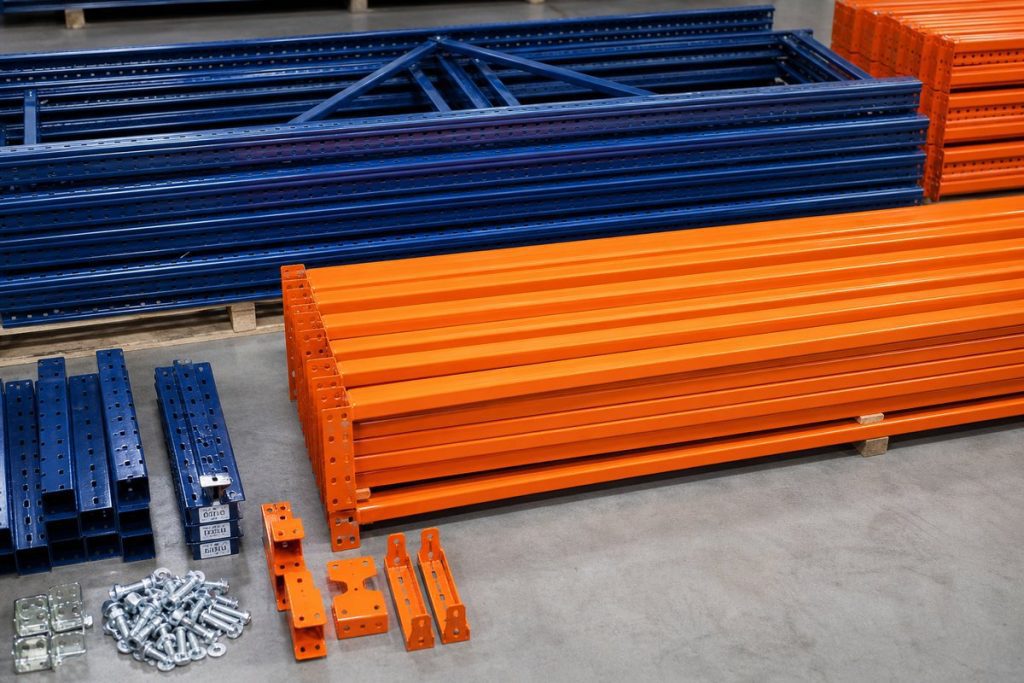
Double deep uses the same uprights, beams, and connectors as selective. The structural cost per bay is nearly identical. The additional cost is the second row of beams and any extra uprights needed for the rear positions. Typical structural premium: 15–25% over selective for the same number of pallet positions.
🚛 Deep-Reach Truck
If you don’t already own deep-reach trucks, this is the biggest cost factor. A new deep-reach truck costs $35,000–$55,000+ more than a standard reach truck. However, if you already run reach trucks, the incremental cost for the deep-reach option on your next truck purchase is more modest.
🔥 Fire Suppression
In-rack sprinklers may be required depending on your commodity class and storage height. This is an often-overlooked cost that can add $2,000–$5,000+ per bay. Check fire code requirements early in the planning process — before committing to a layout.
Inspection & Maintenance for Double Deep Rack
Double deep rack has a unique challenge: the rear beam level is hidden behind the front pallet. Damage can go unnoticed longer than in selective rack.
Inspection Focus Areas
| Component | Check For | Frequency |
|---|---|---|
| Front beams | Deflection, connector engagement, surface damage | Monthly |
| Rear beams | Same checks — requires empty position to inspect | Quarterly (during cycle count) |
| Uprights (front) | Dents, bends, plumb, forklift impact damage | Monthly |
| Uprights (rear/interior) | Impact from extended forks, connection integrity | Quarterly |
| Base plates & anchors | Loose anchors, cracked concrete, higher loads than selective | Quarterly |
🔧 The Hidden Damage Problem
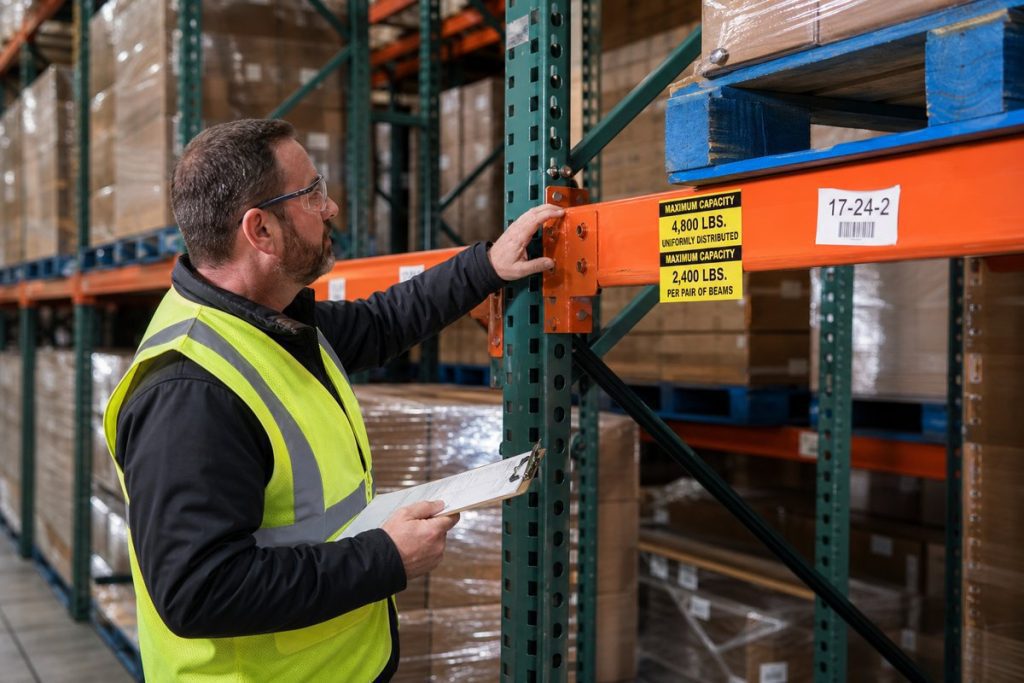
When a reach truck extends to place or retrieve the rear pallet, the forks can impact the rear beams and interior uprights. Because these components are hidden behind the front pallet, damage often goes undetected until a formal inspection. Schedule rear-position inspections during cycle counts when positions are temporarily empty. Schedule a double deep rack inspection →
Frequently Asked Questions
What forklift do I need for double deep pallet rack?
You need a deep-reach forklift (also called a double-deep reach truck). This specialized truck extends its forks 8+ feet to access the rear pallet position through or over the front position. Standard reach trucks and sit-down forklifts cannot access the back pallet.
Can I convert my existing selective rack to double deep?
In many cases, yes. If your building depth allows it, you can rearrange existing selective rack rows into back-to-back double deep configurations. The rack components stay the same — you just reorganize the layout and add a deep-reach forklift. Material Handling USA provides free layout design to show you the conversion potential.
Does double deep rack maintain FIFO inventory rotation?
Not automatically. The rear pallet is only accessible after the front pallet is removed, creating a modified LIFO situation within each two-deep position. However, a WMS can manage rotation across multiple positions of the same SKU to maintain effective FIFO at the SKU level.
How much more storage does double deep provide?
Typically 40% or more pallet positions in the same building footprint compared to selective rack. The gain comes from eliminating one aisle for every two rows. Exact gains depend on your building dimensions, pallet sizes, and clearance requirements.
What are the downsides of double deep rack?
Three main trade-offs: (1) you need a deep-reach forklift ($30K–$60K), (2) selectivity drops to ~50% since the rear pallet is blocked, and (3) picking speed is slightly slower because the truck must extend further. For most operations, the 40%+ density gain outweighs these trade-offs.
Explore More Pallet Rack Solutions
Ready to Maximize Your Warehouse Density?
Material Handling USA designs double deep rack layouts that maximize your building’s storage potential. Free layout design, competitive pricing, and professional installation.
Ready to configure your pallet rack system?
Use our guided BuildQuote tool to choose the right configuration, review your parts and submit it for checkout or a formal quote.