
Narrow Aisle & Very Narrow Aisle Pallet Rack
Increase pallet storage capacity by 40–50% by reducing aisle widths from 12 feet down to as narrow as 5 feet — storing more pallets in the same building without sacrificing selectivity.
Talk with a pallet rack specialist. Call (800) 326-4403 or Email Sales@MH-USA.com

What Is Narrow Aisle Pallet Rack?
A selective pallet rack layout that reduces aisle widths from the standard 12 feet down to 5–8 feet — dramatically increasing pallet positions in existing warehouse space while keeping 100% selectivity.
Narrow aisle (NA) and very narrow aisle (VNA) pallet rack use the same selective rack structure you already know — uprights, beams, wire decking — but the aisles between rows are significantly narrower. Instead of 12-foot aisles sized for standard counterbalanced forklifts, narrow aisle systems use 8-foot aisles with reach trucks, or as narrow as 5–6 feet with turret trucks and order pickers.
The result: 40–50% more pallet positions in the same building footprint. Every pallet remains individually accessible (100% selectivity), and inventory rotation can be FIFO, LIFO, or any sequence your WMS dictates.
Material Handling USA designs, supplies, and installs narrow aisle and VNA pallet rack systems for distribution centers, 3PLs, e-commerce fulfillment, manufacturing, and any operation that needs to store more pallets without expanding the building.

Narrow Aisle vs. Very Narrow Aisle (VNA)
Narrow aisle (NA) typically means aisles between 8 and 10 feet wide, served by reach trucks. This is the most common step up from standard selective — minimal investment in new equipment while gaining 25–30% more storage.
Very narrow aisle (VNA) reduces aisles to 5–6 feet using turret trucks (swing-reach trucks) or order pickers that operate within the aisle without turning. Wire-guidedorrail-guided systems keep the truck perfectly centered. VNA maximizes density — up to 50% more positions than standard layouts.
System Configurations
Narrow Aisle with Reach Trucks
8–10 foot aisles using standard reach trucks. The simplest upgrade from conventional selective layouts. Reach trucks are widely available, operators are easier to train, and rack specifications remain standard.
Best for: Warehouses upgrading from wide aisle, moderate height (up to 30′), general distribution
VNA with Turret Trucks

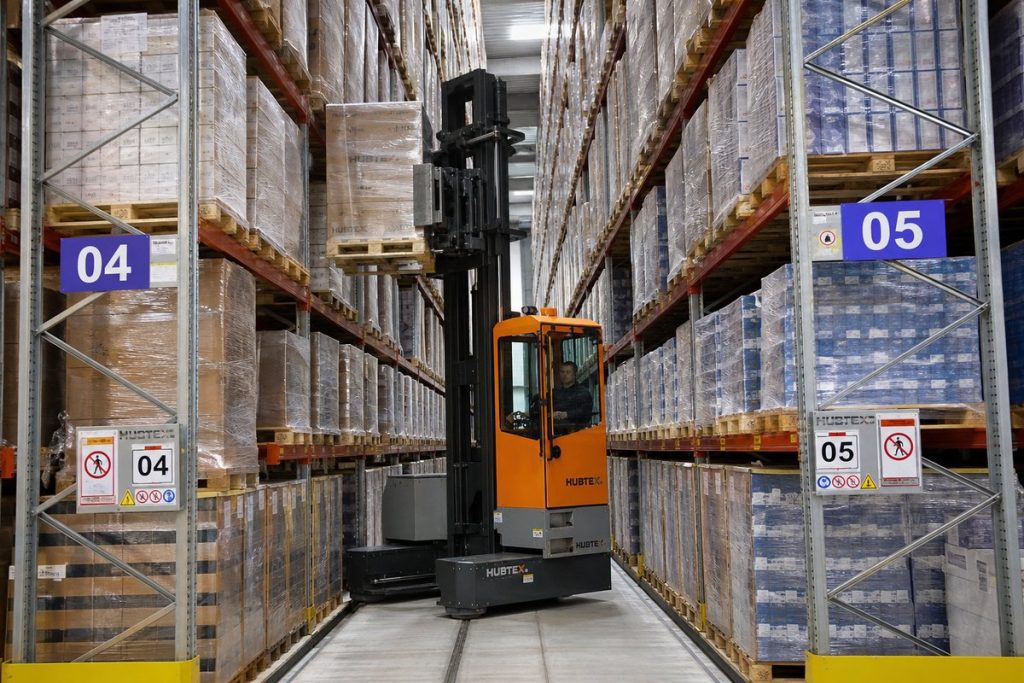
5–6 foot aisles using turret trucks (swing-reach). The truck never turns in the aisle — the mast rotates to place and pick pallets on either side. Wire-guidedorrail-guided for precision. Heights to 40’+.
Best for: Maximum density with full selectivity, high-bay warehouses, automated facilities
VNA with Order Pickers
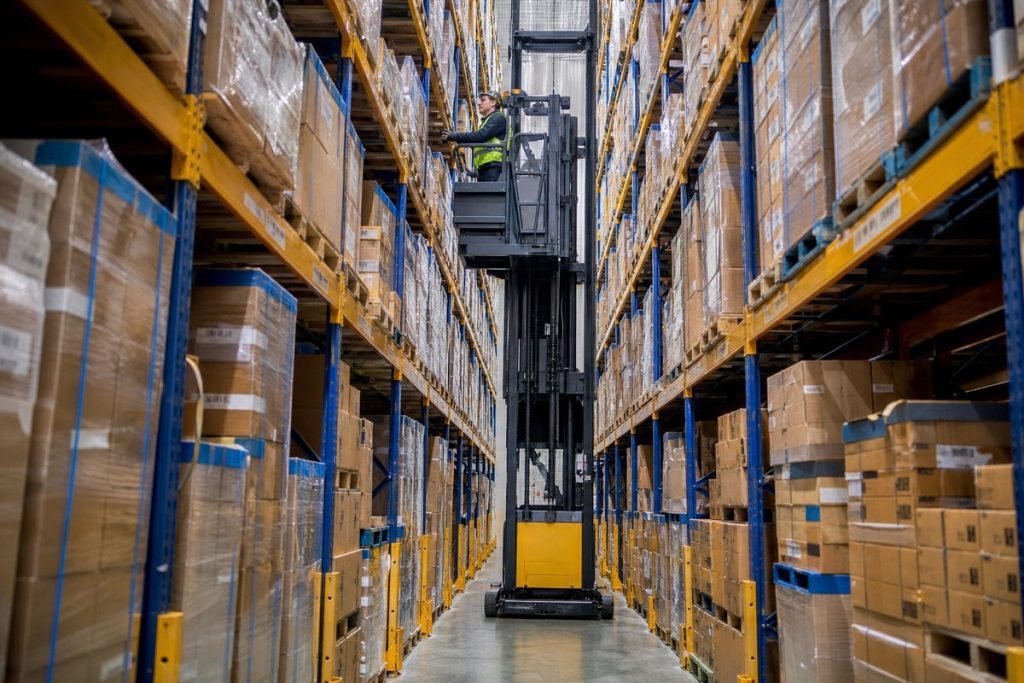
5–6 foot aisles with man-up order picker trucks. The operator rides up with the forks to pick individual casesoritems from each pallet position. Ideal for case-pick and piece-pick operations.
Best for: E-commerce fulfillment, case picking, piece picking, high-SKU distribution
Technical Specifications
| Parameter | Narrow Aisle (NA) | Very Narrow Aisle (VNA) |
|---|---|---|
| Aisle Width | 8’–10′ | 5’–6′ |
| Forklift Type | Reach truck | Turret truckororder picker |
| Guidance System | None required | Wire-guidedorrail-guided |
| Max Rack Height | 25’–30′ | 35’–45’+ |
| Selectivity | 100% | 100% |
| Storage Density Gain | 25–30% over standard | 40–50% over standard |
| Rack Type | Standard selective (roll-formed or structural) | Selective — tighter tolerances required |
| Floor Requirements | Standard warehouse floor | Super-flat floor (Fmin 50+ recommended) |
| Inventory Rotation | Any (FIFO, LIFO, random) | Any (FIFO, LIFO, random) |
| Compliance | RMI / ANSI MH16.1 | RMI / ANSI MH16.1 |
Applications & Industries
📦 Distribution & 3PL
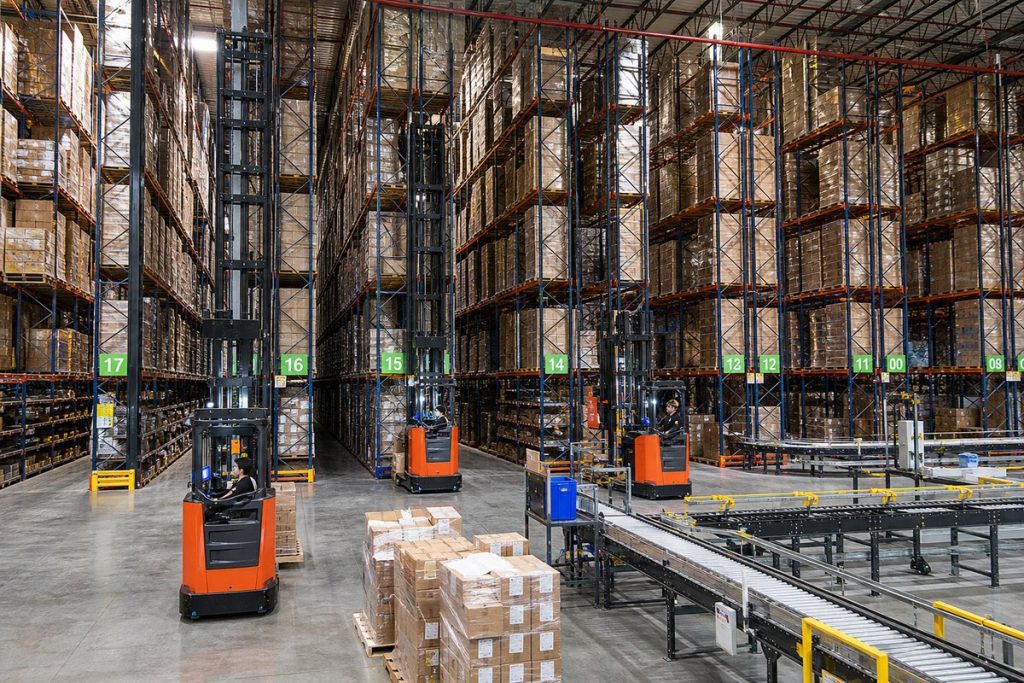
Third-party logistics and distribution centers maximize client storage without expanding buildings. Narrow aisle gives more pallet positions per square foot — directly increasing revenue per square foot for 3PLs.
🛒 E-Commerce Fulfillment
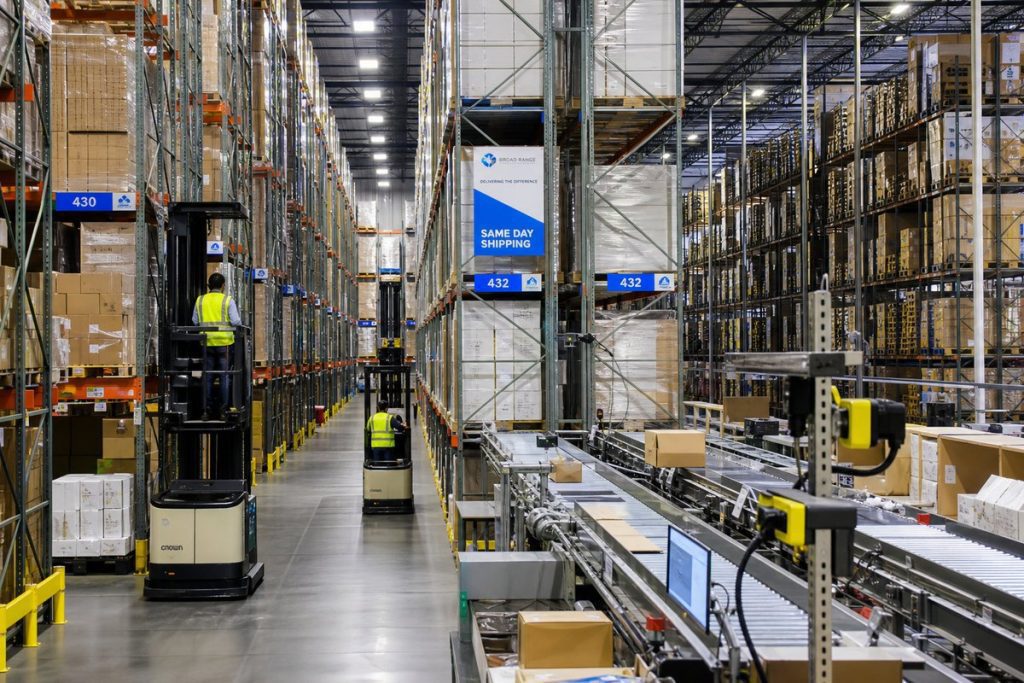
High-SKU, high-velocity operations where every pallet must be individually accessible. VNA with order pickers enables case-level and piece-level picking directly from rack positions.
🏭 Manufacturing
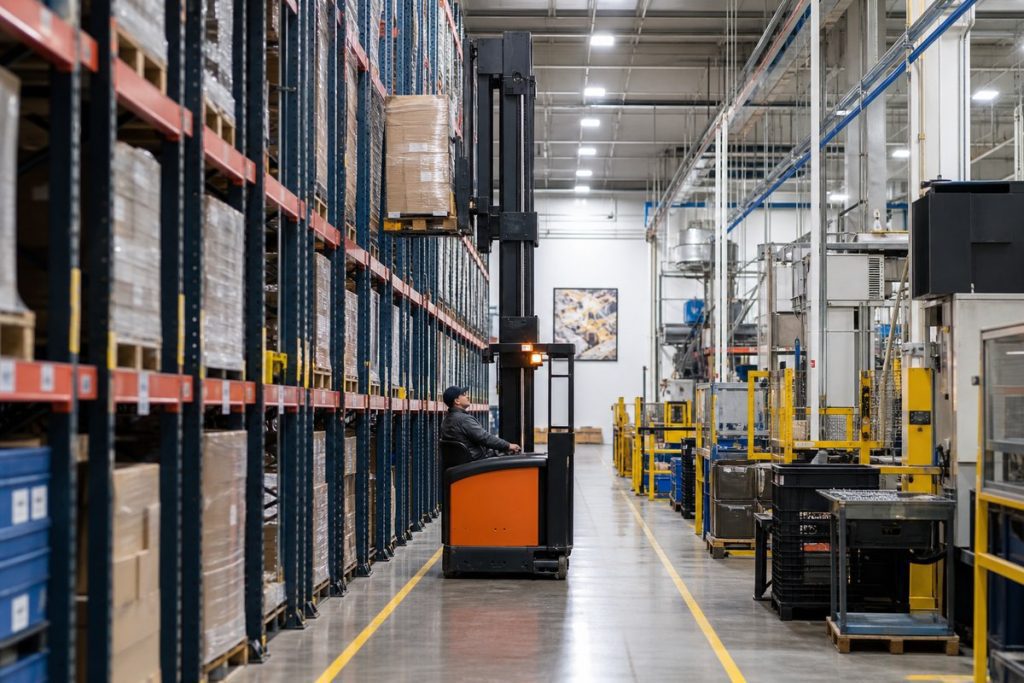
Raw material and finished goods warehouses. Narrow aisle stores more material adjacent to production lines without building expansions. Standard reach trucks make it easy to adopt.
❄️ Cold Storage
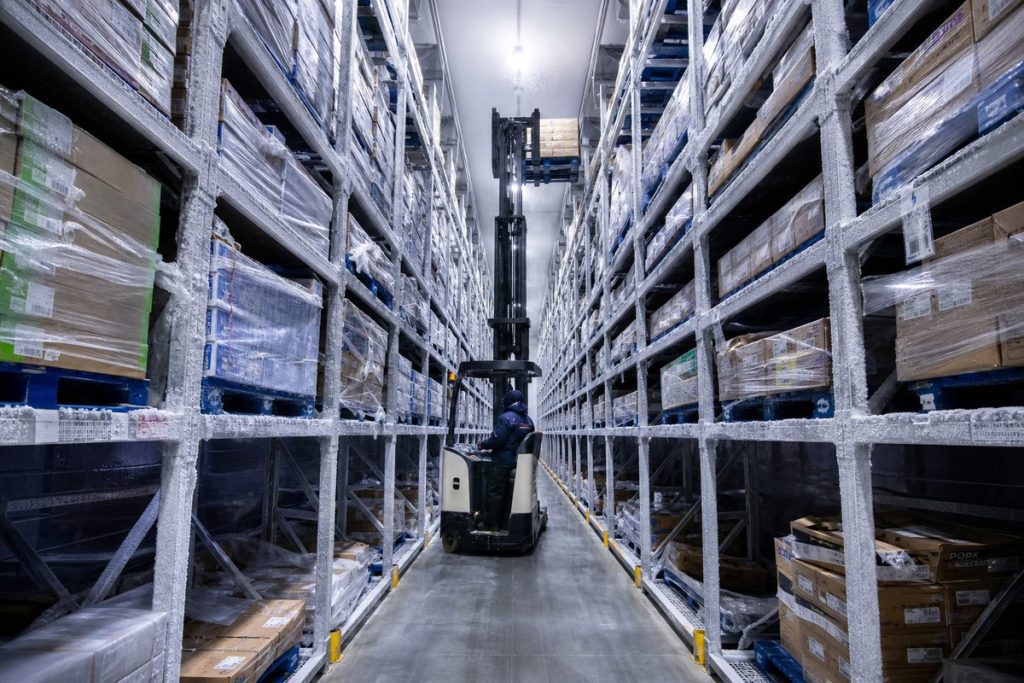
Refrigerated and freezer warehouses where cubic footage is 3–5× more expensive than ambient. Narrowing aisles from 12′ to 8′ immediately adds 25–30% more pallets in the same cooler.
🏢 High-Bay Warehouses
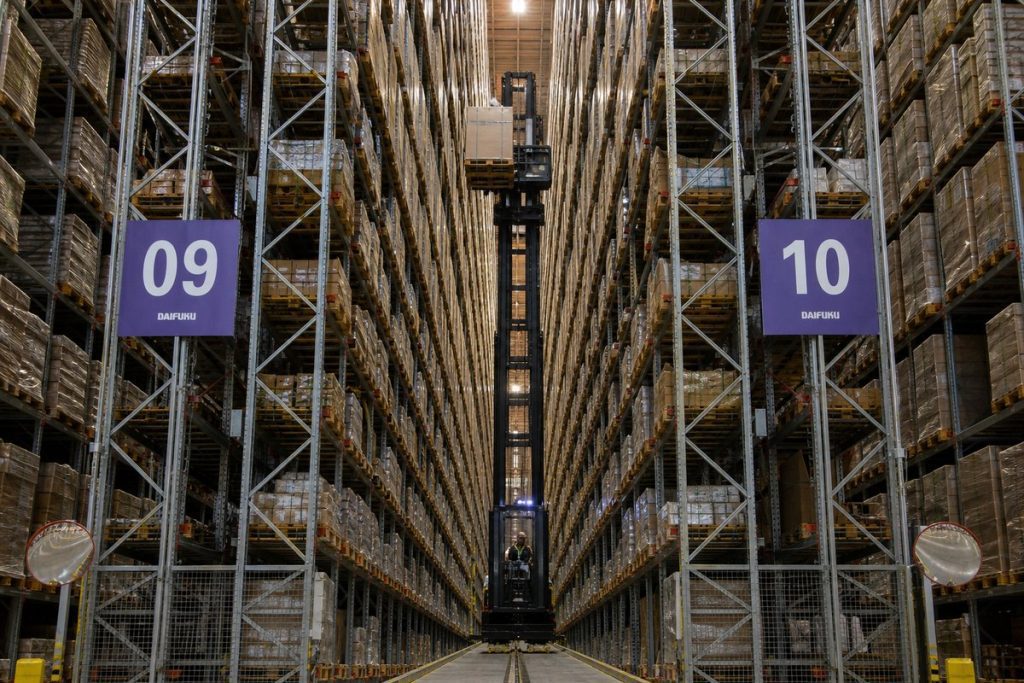
Buildings with 40’+ clear heights. VNA turret trucks exploit the full vertical cube. Combined with narrow aisles and tall rack, storage density is maximized in three dimensions.
💊 Pharmaceutical & Healthcare

Lot-tracked, temperature-controlled inventory with full selectivity requirements. Narrow aisle maintains 100% access to every pallet while maximizing cleanroomorcontrolled storage.
Advantages of Narrow Aisle Rack
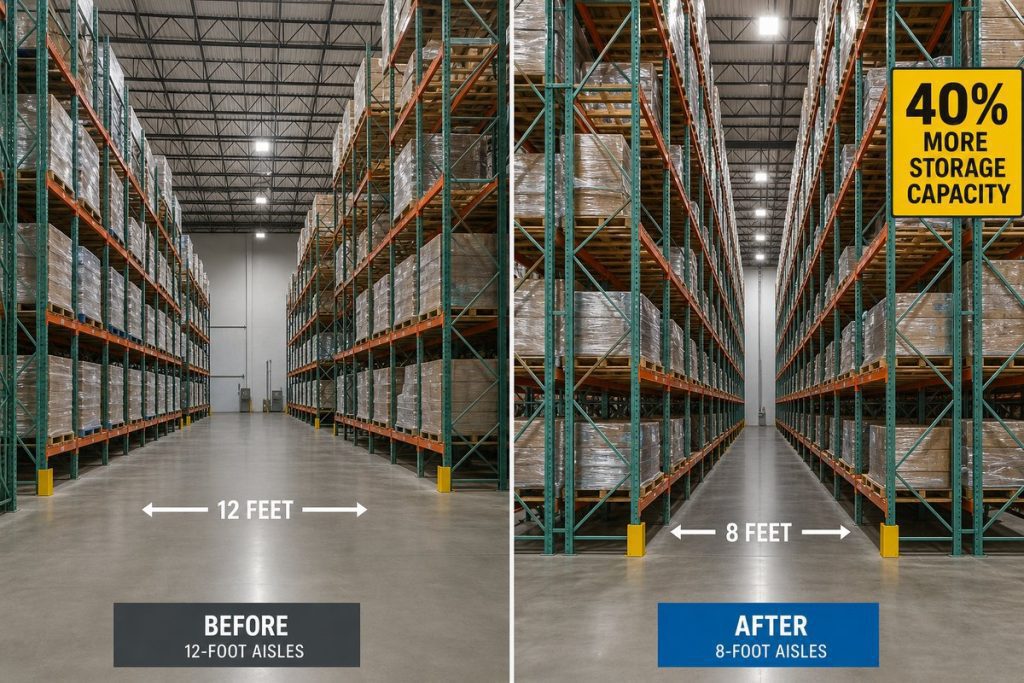
- 40–50% more pallet positions — in the same building footprint
- 100% selectivity maintained — every pallet individually accessible
- Lower real estate cost per pallet — avoid building expansionornew construction
- Any inventory rotation — FIFO, LIFO, or random access
- Works with existing rack — same selective rack components, just tighter layout
- Scalable — convert one aisle at a time from wide to narrow
- High-bay capable — VNA turret trucks reach 40’+ heights
- Automation-ready — wire-guided VNA is a step toward AS/RS
- Cold storage optimized — maximize expensive refrigerated cubic footage
- Proven ROI — storage gains often pay for equipment upgrades in 12–18 months
Narrow Aisle vs. Other Storage Systems
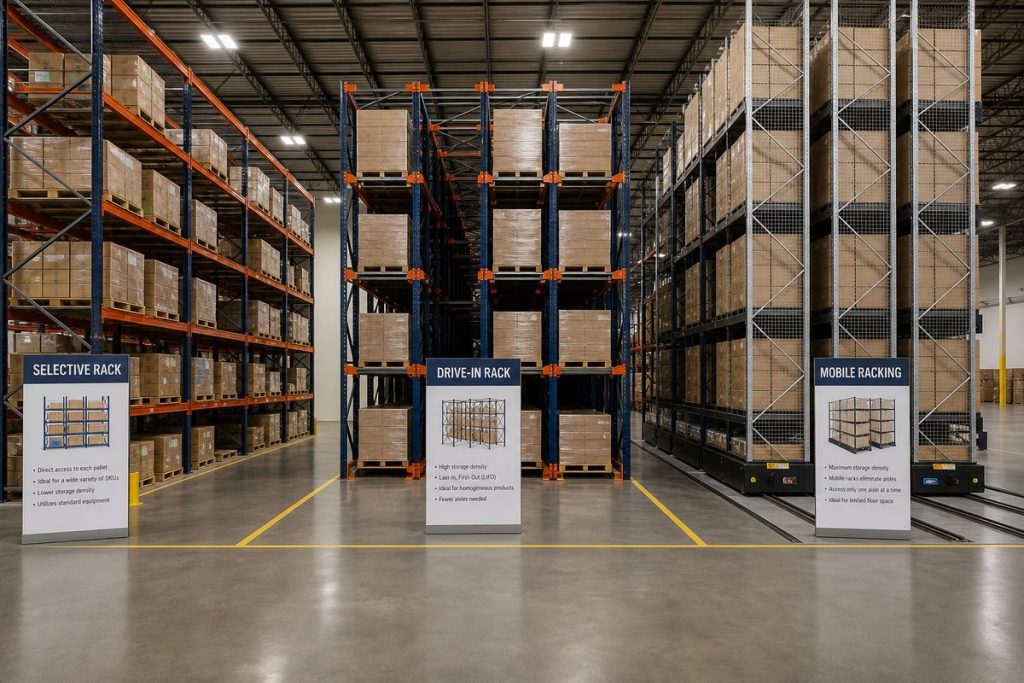
| System | Aisle Width | Selectivity | Density Gain | Best For |
|---|---|---|---|---|
| Narrow Aisle (NA) | 8’–10′ | 100% | +25–30% | Simple upgrade, reach truck |
| Very Narrow Aisle (VNA) | 5’–6′ | 100% | +40–50% | Maximum selective density |
| Standard Selective | 12’+ | 100% | Baseline | Versatility, any forklift |
| Double Deep | 10’–12′ | ~50% | +30–40% | Moderate density, paired SKUs |
| Drive-In | N/A | Low | +75–100% | Few SKUs, max density |
| Push-Back | 10’–12′ | ~75% | +40–60% | Moderate SKUs, fast cycles |
Choose narrow aisle if: You need more storage capacity but must maintain 100% pallet selectivity and flexible inventory rotation. Ideal when your building footprint can’t expand.
Consider alternatives if: You have very few SKUs and can sacrifice selectivity for maximum density (drive-in), or need only modest density gains (double deep).
When to Choose Narrow Aisle & VNA Rack
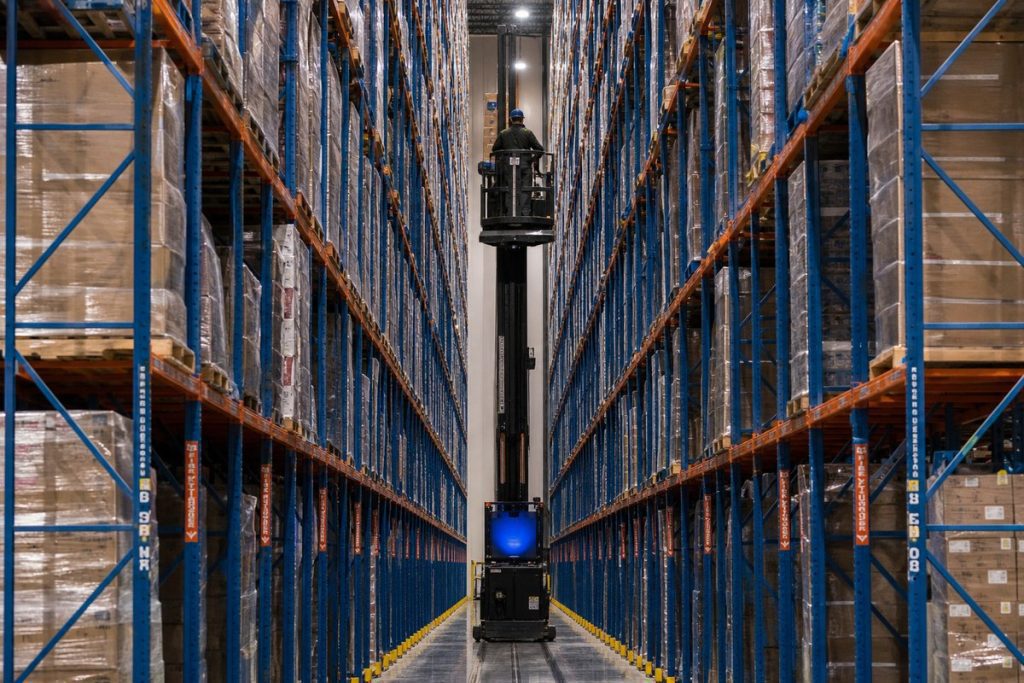
Narrow aisle and very narrow aisle (VNA) systems deliver the highest combination of selectivity and density — 100% pallet access with up to 50% more storage than conventional selective.
Ideal Conditions for VNA
- High SKU count + high density needed — You need 100% selectivity (like selective rack) but can’t waste 50% of your floor on aisles. VNA aisles are 5–6 feet vs. 10–12 feet for standard reach truck aisles
- Tall clear height available — Buildings with 30–40+ foot clear height get maximum ROI from VNA because you’re storing pallets at heights standard forklifts can’t reach
- Space is extremely expensive — When building expansion costs $80–$150+ per square foot, converting aisle space to storage with VNA often costs a fraction of the alternative
- FIFO or LIFO both work — 100% selectivity means every pallet is directly accessible, so inventory rotation method is flexible
- Willing to invest in specialized equipment — VNA turret trucks cost $80,000–$200,000+ and require wire or rail guidance. The system only makes economic sense at scale
Narrow Aisle vs. VNA — What’s the Difference?
| Feature | Narrow Aisle | Very Narrow Aisle |
|---|---|---|
| Aisle width | 8–10 feet | 5–6 feet |
| Equipment | Reach trucks, narrow-aisle forklifts | Turret trucks (man-uporman-down) |
| Max height | 30–35 feet | 40–55+ feet |
| Guidance system | Optional | Required (wire or rail) |
| Density increase | +20–30% over selective | +40–50% over selective |
| Investment level | Moderate | High — but highest ROI per sq ft |
💡 Start with Narrow Aisle, Upgrade to VNA Later
Many operations start with narrow aisle racks and reach trucks, then upgrade to VNA turret trucks when they outgrow their space again. The rack itself is the same — only the aisle width and forklift type change. MH-USA can design your system for either configuration.
Turret Trucks & Guidance Systems
VNA systems depend on specialized equipment that standard warehouses don’t use. Here’s what you need to know.
Turret Truck Types
Man-Down Turret Trucks
The operator stays at floor level while the mast and fork carriage rotate to placeorpick pallets at height. Faster ground-level travel, lower cost ($80K–$120K). Best for operations with moderate pick frequency at height.
Man-Up Turret Trucks
The operator rides up with the forks, giving direct visibility at every rack level. Essential for case-pickorpiece-pick operations at height. Higher cost ($120K–$200K+) but enables order picking from pallet positions.
Guidance Systems
Wire Guidance
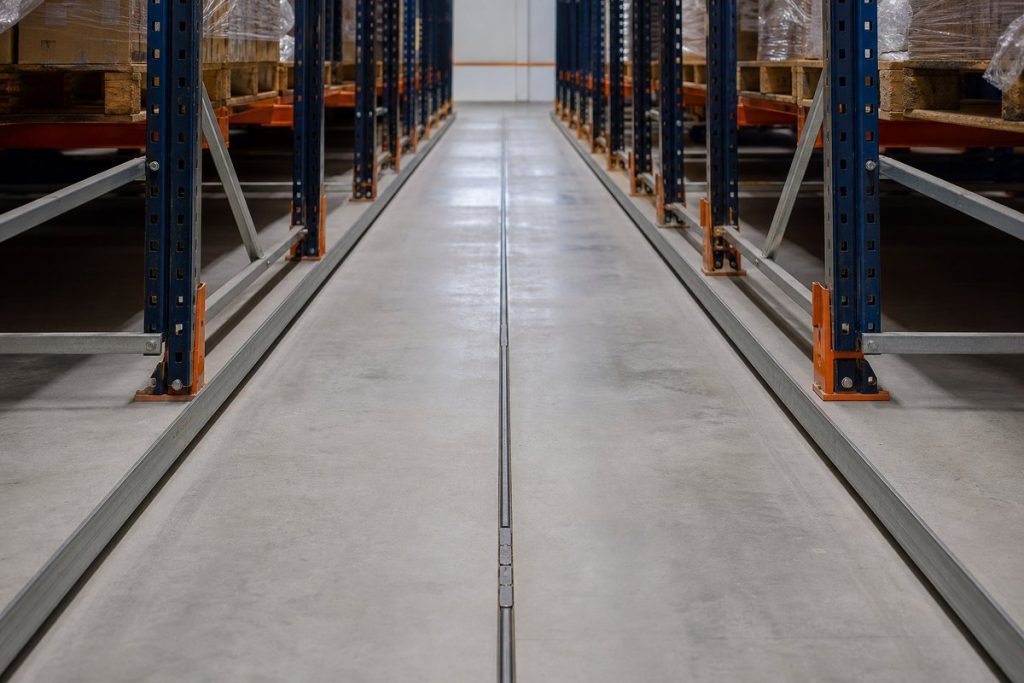
Wires embedded in the floor emit a signal that the truck follows. Most common, very reliable, minimal maintenance. Requires cutting grooves in the concrete during installation.
Rail Guidance
Steel guide rails mounted on the floor along each aisle. The truck’s guide rollers ride along the rails. No floor cutting needed, easier to modify, but takes up slightly more floor space.
Choosing between wire and rail guidance is one part of a larger sizing exercise. See our guided aisle pallet racking buyer’s guide for a full walkthrough of aisle width targets, floor requirements, fire code flue space, and cost factors before you request a quote.
Floor & Building Requirements
VNA systems have the strictest floor and building requirements of any pallet storage system. These requirements must be met — they’re not optional.
📐 Floor Flatness
VNA requires superflat floors (FF50/FL30 minimum, FF100/FL50+ preferred). At 40+ feet high, even minor floor variations cause the mast to sway inches at the top — making it impossible to place pallets accurately. Floor grindingorre-surfacing may be required for existing buildings.
🏗️ Clear Height
VNA’s ROI increases with building height. You need at least 28–30 feet of clear height to justify VNA economics. The ideal building is 36–45+ feet clear. Account for sprinkler clearance (18″ minimum below the lowest sprinkler), lighting, and top-of-load clearances.
🌊 Seismic Engineering
VNA rack systems at 35–45+ feet create enormous seismic forces. The tall, narrow profile amplifies earthquake motion. PE-stamped seismic calculations are mandatory in Utah. Column sizes, anchor bolt specifications, and bracing requirements are all significantly heavier than standard selective at the same height.
⚠️ Check Your Building Before Planning VNA
Many VNA projects fail in the planning stage because the building can’t support the system. Before committing, verify: floor flatness (F-numbers), clear height, column spacing (building columns can conflict with rack layout), floor load capacity (slab thickness and soil conditions), and fire code requirements. MH-USA provides free building assessments for VNA projects.
What Affects VNA Rack System Cost?
VNA is the most capital-intensive pallet storage system — but for the right operation, it delivers the highest storage value per square foot of any racking solution.

🚛 Equipment
Turret trucks ($80K–$200K+ each) are the largest cost component. Most operations need at least 2 trucks per shift (plus a spare). Wire guidance installation adds $15,000–$40,000+ depending on the number of aisles. Battery charging infrastructure adds further cost.
📐 Rack Height & Gauge
VNA rack at 40+ feet requires heavy-gauge uprights, deeper columns, and more bracing than standard height rack. The structural steel cost per bay can be 2–3× standard selective at the same number of levels simply due to the additional height and seismic requirements.
📐 Floor Preparation
If your existing floor doesn’t meet superflat specifications, grindingorre-surfacing can cost $2–$8+ per square foot. For a 50,000 sq ft warehouse, that’s $100,000–$400,000+. New construction should specify superflat floors from the start — it’s dramatically cheaper than retrofitting.
💰 The Space Savings Calculation
VNA typically stores 40–50% more pallets than selective in the same building footprint. At commercial warehouse lease rates of $8–$15/sq ft/year, the avoided rent from not needing a larger building can pay back the VNA investment in 3–5 years. For owned buildings where expansion would cost $80–$150/sq ft to build, VNA often pays for itself in 18–30 months. Request a free VNA feasibility analysis →
Inspection & Maintenance for VNA Systems
At 35–45+ feet, rack damage is harder to spot and more dangerous than in standard-height warehouses. Proactive inspection programs are essential.
Critical Inspection Points
| Component | Check For | Frequency |
|---|---|---|
| Upright plumb (full height) | Lean, twist, deflection — magnified at height | Monthly |
| High-level beams | Deflection, connector pins, turret truck impacts | Monthly (man-up inspection) |
| Wire guidance | Signal strength, damaged wire sections, floor cracks | Quarterly |
| Rail guidance | Rail alignment, loose bolts, truck guide roller wear | Monthly |
| Base plates & anchors | Critical — tall rack amplifies any base movement | Monthly |
| Floor condition | Cracks, settlement, surface wear in traffic lanes | Quarterly |
🔧 Height Makes Everything Harder
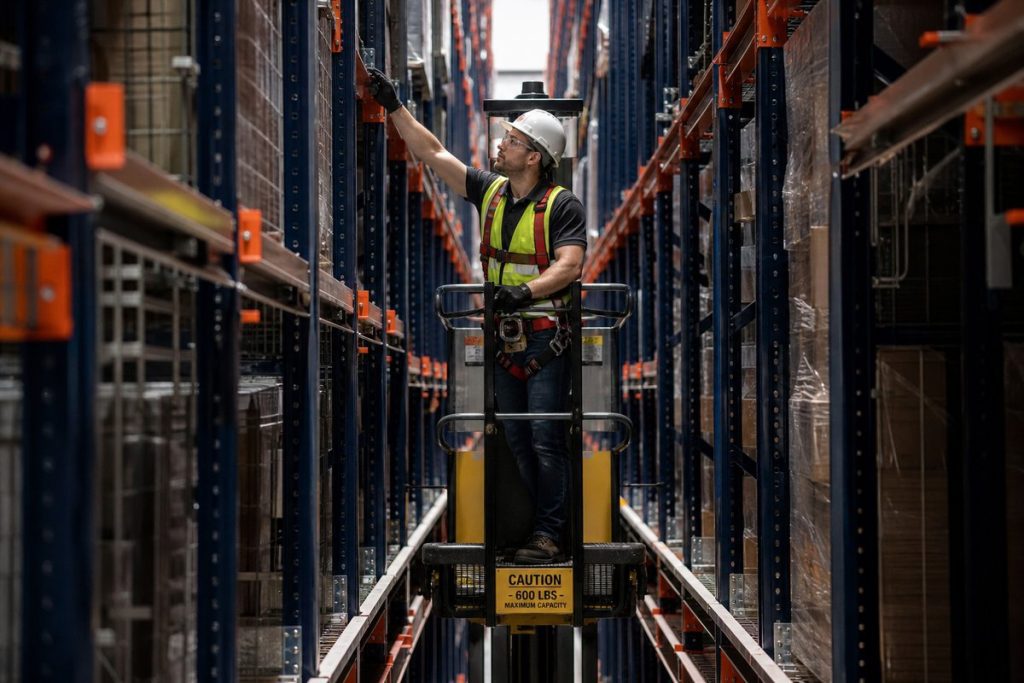
A damaged beam at 40 feet is invisible from the floor. Man-up turret trucksoraerial lifts are required for high-level inspections. Many VNA operators implement a formal inspection program using man-up order pickers during off-shifts to systematically check every beam and upright connection at height. Schedule a VNA rack inspection →
Frequently Asked Questions
Narrow aisle layouts typically add 25–30% more pallet positions. Very narrow aisle (VNA) adds 40–50%. The exact gain depends on your current aisle width and building dimensions.
For narrow aisle (8–10′ aisles): reach trucks. For VNA (5–6′ aisles): turret trucks (swing-reach) or man-up order pickers. Your existing counterbalanced forklifts will still be used for dock and staging operations.
VNA turret trucks require a flatter floor than standard forklifts — typically Fmin 50 or better. Material Handling USA includes floor assessment in every VNA design consultation.
Often yes. If your current selective rack is structurally sound, we can reconfigure the layout to tighter aisles. The rack itself may not need to change — just the row spacing and forklift type.
Yes. Wire-guided and rail-guided VNA systems actually reduce rack strikes by keeping trucks perfectly centered. Narrow aisle systems often have fewer forklift-to-rack impacts than standard wide-aisle warehouses.
The rack itself costs the same as standard selective. The additional investment is in reach trucksorturret trucks and potentially floor improvements for VNA. Contact us at (800) 326-4403 for a detailed cost analysis.
Explore More Pallet Rack Solutions
Need More Pallet Positions Without Expanding?
Material Handling USA designs narrow aisle and VNA pallet rack layouts that fit 40–50% more pallets in your existing building. Free layout consultation and competitive pricing.
Ready to configure your pallet rack system?
Use our guided configurator to choose the right configuration, review your parts and submit it for checkout or a formal quote.