
Pallet Rack Systems
Every type of pallet rack — designed, supplied, and installed by Material Handling USA. From standard selective to high-density mobile systems, we help warehouses, distribution centers, and manufacturers store more in less space.
Talk with a pallet rack specialist. Call (800) 326-4403 or Email Sales@MH-USA.com

Find the Right Pallet Rack for Your Operation
Not every warehouse needs the same rack. Your SKU count, throughput requirements, available floor space, and budget determine which pallet rack system delivers the best ROI.
Material Handling USA designsand installs pallet rack systems for warehouses, distribution centers, cold storage facilities, manufacturing plants, and 3PL operations across the United States. We work with the industry’s top manufacturers to provide the right system — whether you need the universal flexibility of selective rack or the extreme density of mobile and drive-in systems.
Below you’ll find every type of pallet rack we offer, with detailed guides to help you understand the differences, compare systems, and choose the best solution for your facility.
Pallet Rack Types
Click any system below for a full guide including specs, applications, comparisons, and FAQ.
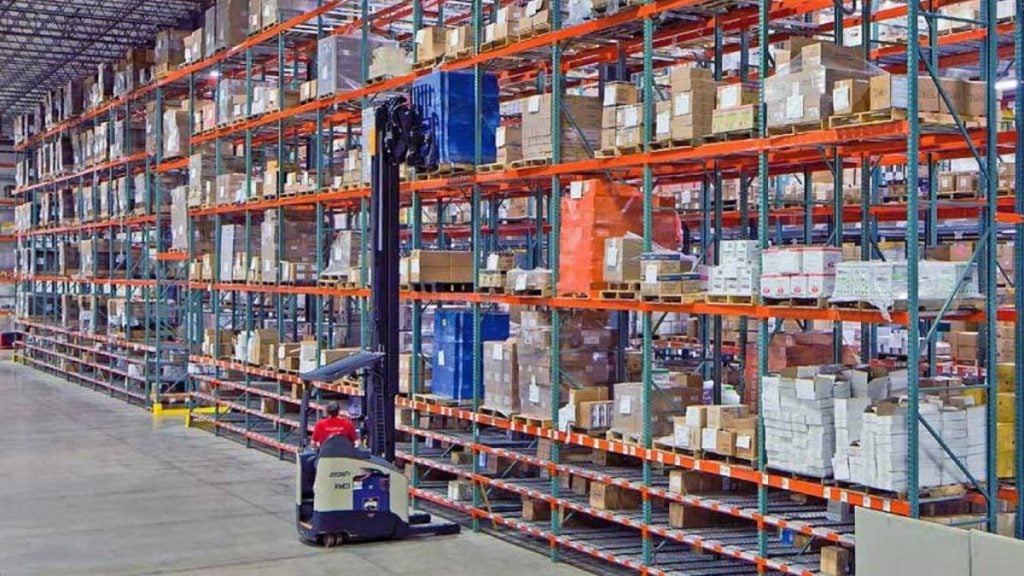
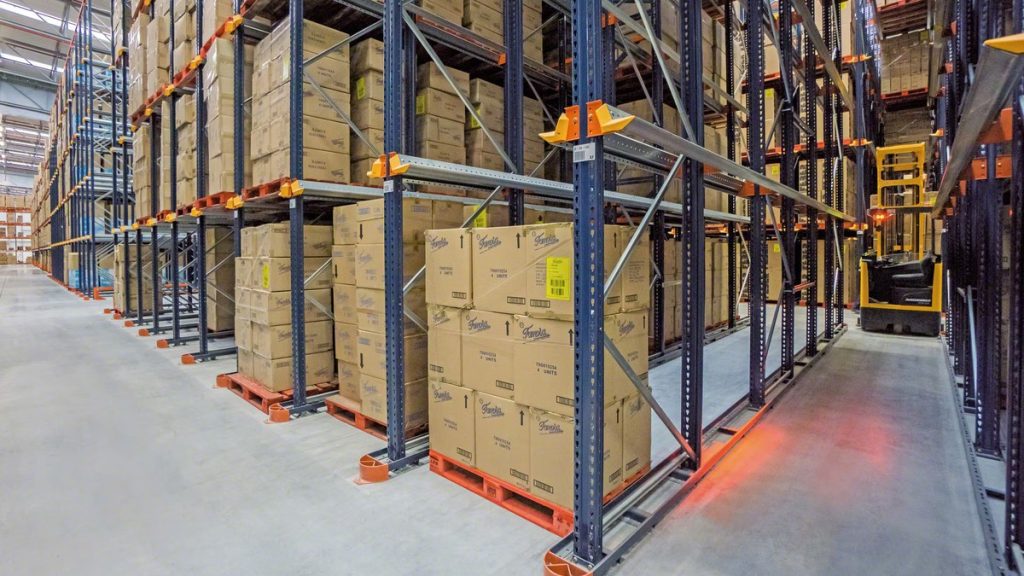
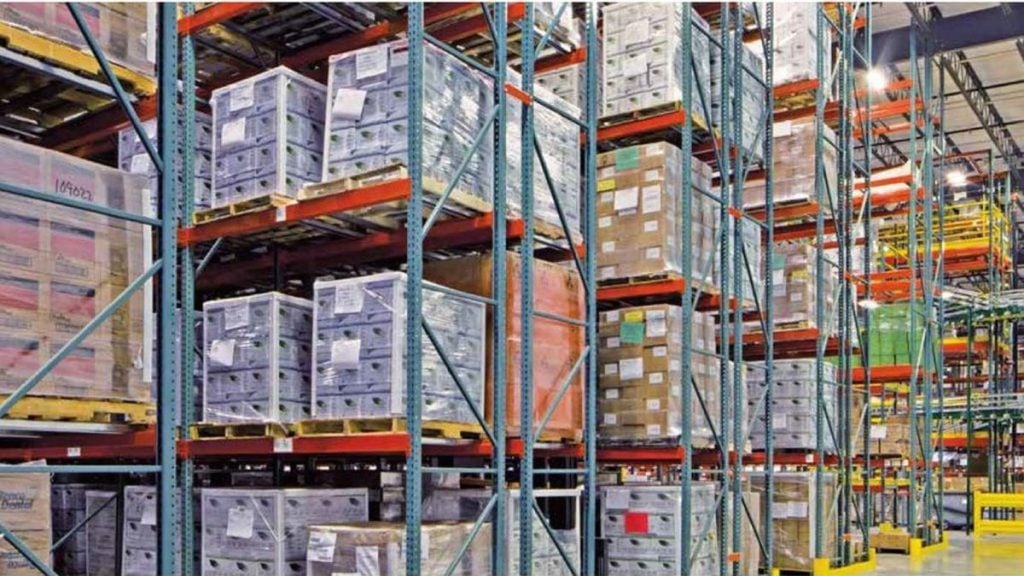
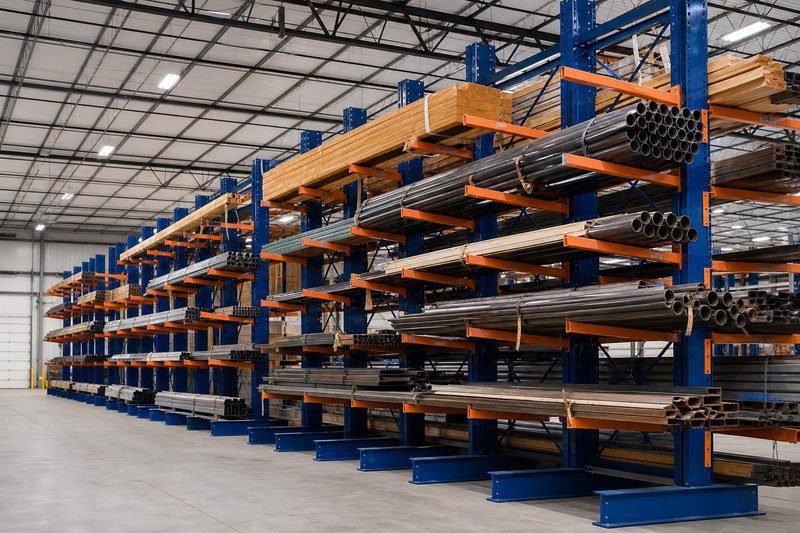

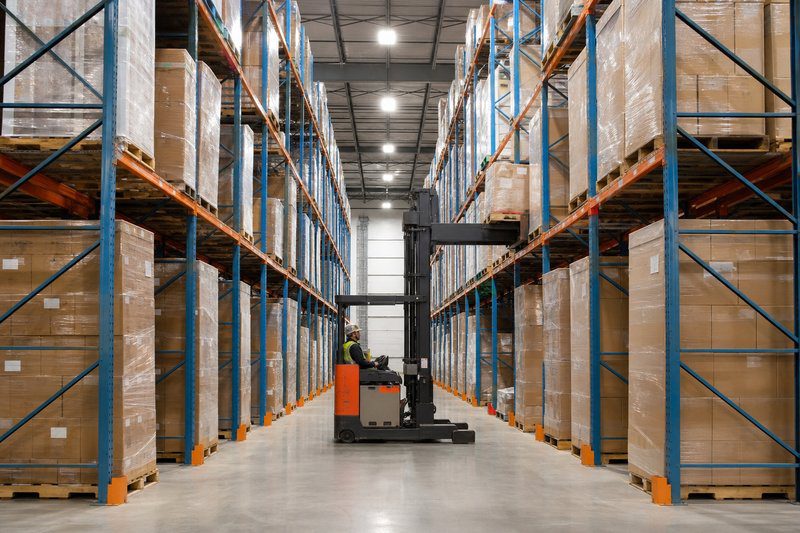
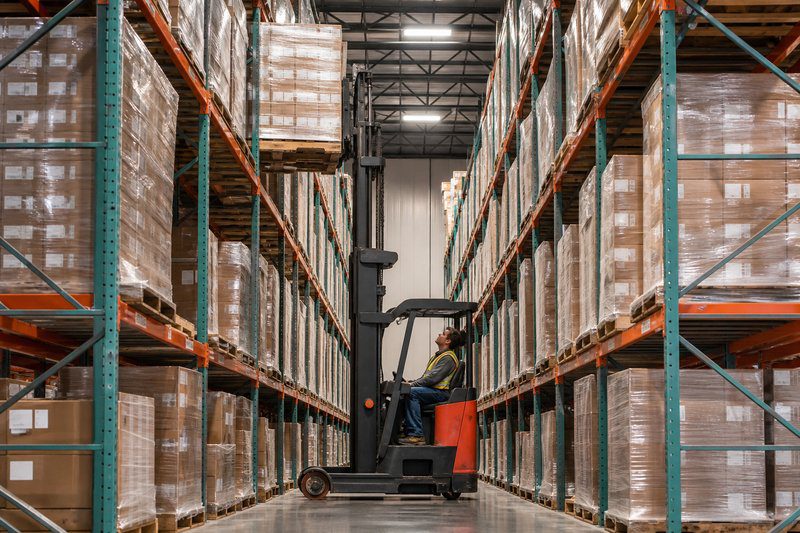

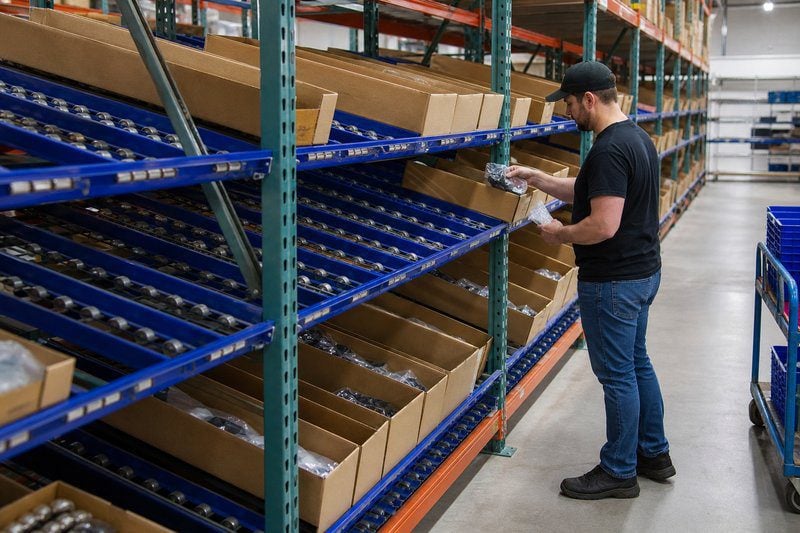
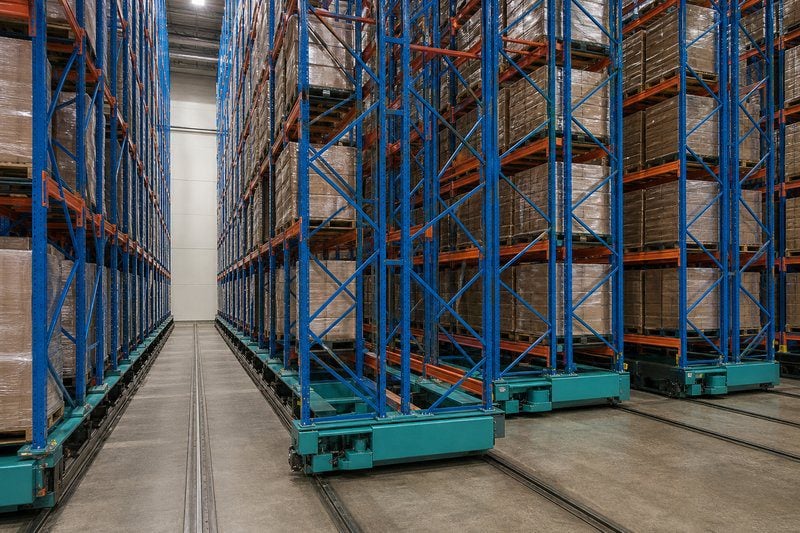
How to Choose the Right Pallet Rack
The best pallet rack system depends on four factors: how many SKUs you store, how fast you need to move pallets, how much floor space you have, and your budget.
High SKU Count + High Throughput
You need every pallet instantly accessible. Start with Selective Rack. If floor space is tight, upgrade to Narrow Aisle for 40–50% more positions without losing selectivity.
Few SKUs + Maximum Density
Fewer products stored in bulk. Drive-In Rack eliminates aisles entirely. Push-Back or Pallet Flow offer better selectivity with strong density.
FIFO Required (Food, Pharma, Perishable)
Pallet Flow Rack guarantees first-in, first-out rotation automatically via gravity rollers. Essential for expiration-dated goodsand lot-tracked inventory.
Long / Oversized Loads
Cantilever Rack is purpose-built for lumber, pipe, bar stock, furniture, and anything that doesn’t fit a standard pallet bay.
Cold Storage / Freezer
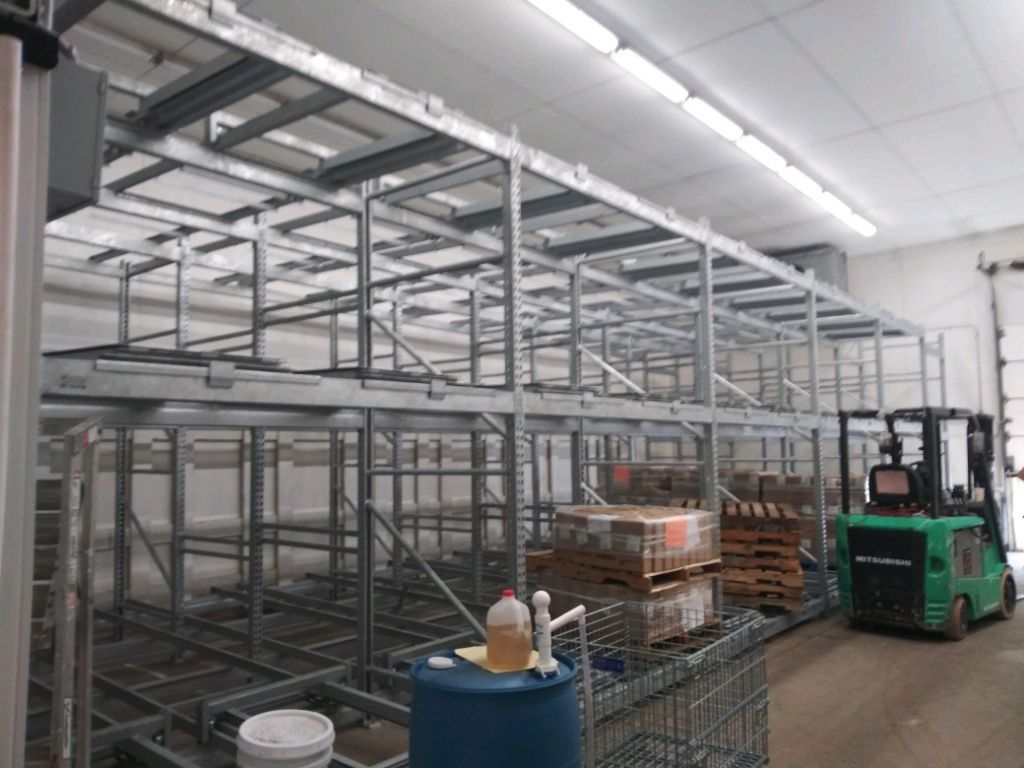
Structural Rack handles the abuse and temperature extremes. Pair with Mobile bases to maximize the most expensive real estate in your operation.
Can’t Expand the Building
Mobile Pallet Rack nearly doubles capacity in the same footprint. Or go vertical with VNA to use every cubic foot above.
Pallet Rack Comparison Chart
Side-by-side comparison of all nine pallet rack systems we design and install.
| System | Selectivity | Density | Throughput | FIFO | Forklift Type | Best For |
|---|---|---|---|---|---|---|
| Selective | 100% | Baseline | ★★★★★ | Yes | Standard | General warehousing |
| Drive-In | Low | ★★★★★ | ★★ | LIFO | Standard | Bulk storage, few SKUs |
| Push-Back | ~75% | ★★★★ | ★★★★ | LIFO | Standard | Moderate SKUs, fast cycles |
| Pallet Flow | ~70% | ★★★★ | ★★★★ | FIFO ✓ | Standard | Food, pharma, perishables |
| Cantilever | 100% | ★★★ | ★★★★ | Yes | Standard / Side-loader | Lumber, pipe, long items |
| Double Deep | ~50% | ★★★ | ★★★ | No | Deep-reach | Moderate density step-up |
| Narrow Aisle | 100% | ★★★★ | ★★★★★ | Yes | Turret / Order Picker | High throughput + density |
| Structural | 100% | Baseline | ★★★★★ | Yes | Standard | Cold storage, heavy duty |
| Mobile | 100% | ★★★★★ | ★★★ | Yes | Standard | Max density + selectivity |
| Carton Flow | 100% | ★★★★ | ★★★★★ | FIFO ✓ | Manual pick | Case/carton picking |
Why Material Handling USA?
Complete Turnkey Service
We don’t just sell rack. We design your layout, source the right system from top manufacturers, handle permitting, deliver, and install. One point of contact from concept to completion.
Free Warehouse Design
Every project starts with a free warehouse layout and design consultation. We’ll analyze your inventory profile, throughput needs, and building constraints to recommend the best system — not the most expensive one.
Top Manufacturer Partners
We work with the industry’s leading rack manufacturers. This means competitive pricing, fast lead times, and systems engineered to your exact specifications — not one-size-fits-all solutions.
Why Buy New
New pallet rack is built to your exact sizesand weight capacities. Used rack comes in odd dimensionsand may not handle the loads you need — costing more in the long run. See our full comparison →
Professional Installation
Our installation crews are experienced, insured, and OSHA-trained. We install to manufacturer specificationsand RMI guidelines — no shortcuts, no liability for you.
Nationwide Coverage
Based in Utah, serving the entire United States. Whether you’re building a new distribution center in Texas or retrofitting a freezer in Ohio, we’ve done it.
Our Process
Consultation
We discuss your inventory, throughput, building specs, timeline, and budget to understand your requirements.
Design & Quote
Our team creates a warehouse layout, recommends the right system, and delivers a detailed quote with options.
Manufacture & Ship
We coordinate manufacturing, quality checks, and delivery logistics. Your rack ships direct from the manufacturer to your dock.
Install & Inspect
Professional installation to RMI and manufacturer specs. Final walkthrough and sign-off before we leave.
Frequently Asked Questions
Selective pallet rack accounts for roughly 85% of all pallet rack installations. It provides direct forklift access to every pallet position and works for nearly any warehouse operation.
Three primary strategies: (1) Narrow aisle or VNA rack to reduce aisle widthsand gain 40–50% more positions, (2) Mobile pallet rack to eliminate aisles entirely for up to 80% more positions, or (3) high-density systems like drive-in or push-back for bulk storage.
Structural pallet rack handles temperature extremesand forklift impact best. Many cold storage operations also use mobile rack on structural frames to maximize expensive refrigerated space.
Standard selective rack uses roll-formed (bent sheet metal) components. Structural rack uses hot-rolled steel C-channelsand I-beams — heavier, more impact-resistant, and better suited for abusive environments like cold storage and beverage distribution.
Yes. Material Handling USA designsand installs pallet rack systems across the entire United States. We’re based in Utah and serve clients from coast to coast.
Cost varies by system type, height, capacity, and configuration. Selective rack starts at roughly $150–$300+ per pallet position — and every component is engineered to your exact specifications. High-density systems like mobile rack cost more upfront but deliver lower cost per pallet position. Call (800) 326-4403 for a free quote based on your requirements.
FIFO (first in, first out) means the first pallet loaded is the first one picked — essential for perishables. Pallet flow rack provides automatic FIFO. LIFO (last in, first out) means the most recently loaded pallet is picked first — used in drive-in and push-back systems.
Pallet rack cost per position varies by system type. Selective pallet rack typically costs $40–$80 per pallet position for a standard 3-level setup. High-density systems like push-back and pallet flow cost more per bay but can deliver a lower cost per position because each bay stores more pallets. The best way to compare is to calculate total project cost divided by total pallet positions. Visit our cost and pricing guide for detailed breakdowns, or call (800) 326-4403 for a free project estimate.
Roll-formed pallet rack uses cold-rolled steel that is bent into shape — lighter, less expensive, and suitable for most standard warehouse applications. Structural pallet rack uses hot-rolled steel C-channels and I-beams with bolted connections — heavier, more impact-resistant, and better for abusive environments like cold storage, beverage distribution, and high-traffic forklift areas. Structural rack costs 20–40% more than roll-formed but lasts significantly longer in demanding applications. Material Handling USA supplies both types and will recommend the right one for your environment.
Pallet rack load capacity involves three calculations: (1) Beam capacity — the weight each pair of beams can support, determined by beam size, length, and steel gauge (typically 2,000–12,000 lbs per pair). (2) Frame capacity — total load each upright column can bear, based on column gauge, height, and bracing pattern (typically 15,000–30,000 lbs). (3) Connection capacity — the strength of beam-to-column connectors. All three must be checked, and the lowest value governs. Never load rack beyond its rated capacity — always check the manufacturer capacity label on each frame. Material Handling USA provides engineering calculations and stamped capacity labels with every rack project.
Permit requirements vary by jurisdiction. Many cities and counties require building permits for pallet rack installations over a certain height (commonly 8 or 12 feet), especially in seismic zones. In Utah, most commercial rack installations over 8 feet require a building permit and may need stamped engineering drawings. California, Washington, and other seismically active states have strict permitting requirements. Material Handling USA handles permitting as part of our turnkey installation service — we prepare engineering documents, submit permit applications, and coordinate inspections so you do not have to.
The Rack Manufacturers Institute (RMI) recommends a formal rack inspection program that includes: (1) Daily walk-throughs by forklift operators to spot obvious damage. (2) Monthly documented inspections by a trained employee checking uprights, beams, connections, anchors, and load placement. (3) Annual professional inspections by a qualified rack engineer or inspector who evaluates structural integrity, plumb and level, capacity compliance, and seismic components. Any damaged component should be unloaded and tagged immediately until repaired or replaced. Visit our repair and inspection page for more details.
The most common pallet rack beam sizes are 8-foot (96 inches) and 9-foot (108 inches) in length, designed to span a bay width that accommodates two standard 40×48-inch GMA pallets with clearance for forklift handling. Beam depth (height) typically ranges from 3 inches to 6 inches — deeper beams carry heavier loads. Step beams (with a recessed top flange) are used with wire decking, while box beams provide a flat surface for direct pallet placement. Material Handling USA sizes beams to your specific pallet dimensions and weight requirements — not every warehouse uses standard pallets, and custom beam lengths are available for non-standard applications.
Pallet Rack Buying Guide: How to Choose the Right System
Choosing the right pallet rack system is one of the most important decisions a warehouse manager can make. The wrong system wastes space, slows throughput, and costs more over time. This guide walks you through every factor that matters.
Selective vs. High-Density: The Fundamental Choice
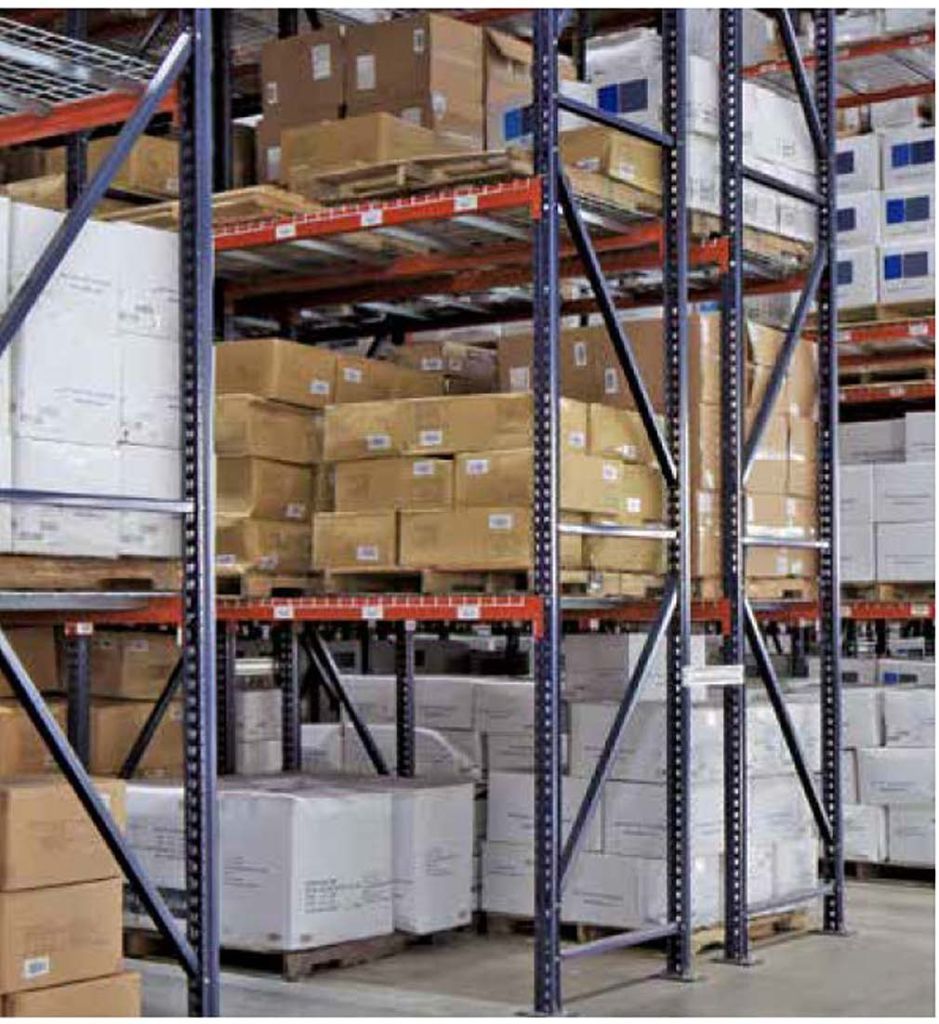
Every pallet rack decision starts with one question: do you need to access every pallet instantly, or can you trade some selectivity for more storage density?Selective pallet rack gives you 100% access to every pallet position — forklifts reach straight in from the aisle. It accounts for roughly 85% of all rack installations because it works for nearly any operation. High-density systems like drive-in, push-back, and pallet flow sacrifice some selectivity but store 40–80% more pallets in the same footprint.
If you handle fewer than 20 SKUs in high volume, high-density rack usually wins. If you manage hundreds of SKUs with rapid picks, selective or narrow aisle rack is the better investment. Most operations use a combination — selective for fast-moving picks and high-density for bulk reserve storage.
Pallet Rack System Comparison: Which Type Fits Your Operation?
| System Type | Selectivity | Space Savings | Best SKU Count | Rotation | Avg. Cost/Bay |
|---|---|---|---|---|---|
| Selective | 100% | Baseline | Unlimited | Any | $150–$350 |
| Drive-In | Low | Up to 75% | 1–10 | LIFO | $300–$600 |
| Push-Back | ~75% | Up to 60% | 10–50 | LIFO | $400–$800 |
| Pallet Flow | ~70% | Up to 65% | 5–30 | FIFO | $500–$1,200 |
| Double Deep | ~50% | Up to 30% | 20–100 | Any | $200–$400 |
Load Capacity Considerations
Pallet rack capacity is determined by three components: beam capacity (weight per beam pair, typically 2,000–12,000 lbs), frame capacity (total weight per upright column, typically 15,000–30,000 lbs), and floor slab capacity (concentrated point loads on your concrete). Every pallet rack system must be engineered to handle your specific loads with appropriate safety factors — typically 1.67:1 per ANSI/RMI MH16.1 standards.
In seismic zones (including Utah, California, and the Pacific Northwest), pallet rack requires additional engineering for lateral forces. Structural pallet rack is often specified for seismic applications because of its welded connections and superior rigidity. Material Handling USA provides stamped seismic engineering calculations with every project that requires them.
Sizing Guide: Bay Width, Depth & Height
Standard pallet rack bay widths are 8′ (96") or 9′ (108"), sized to fit two standard 40"×48" pallets with clearance. Bay depth is typically 36" or 42" for standard pallets and 48" for deep pallets. Height depends on your building clear height, forklift reach capacity, and local building code limitations — most systems range from 10′ to 40′+. Taller systems require heavier gauge uprights and may need seismic bracing. Our 3D Pallet Rack Designer tool helps you visualize configurations before you buy.


Wire Decking vs. Solid Decking
Wire decking is the most popular pallet rack accessory and is required by most fire codes when storing goods on rack. It provides a solid support surface between beams, allows sprinkler water penetration for fire suppression, improves visibility for inspections, and prevents product from falling through beam levels. Standard wire decks support 2,000–2,500 lbs per level.
Solid steel decking or plywood decking is used when storing small items that would fall through wire mesh, or when you need a completely flat surface for hand-stacking. However, solid decking blocks sprinkler water flow and may require fire code exceptions. Most operations benefit from wire decking as the default, with solid decking only where specifically needed.
Pallet Rack Cost Guide
Transparent pricing information to help you budget your pallet rack project. Actual costs depend on system type, height, capacity, and quantity — contact us for a project-specific quote.
Average Cost Ranges by System Type
Pallet rack pricing varies significantly depending on the system type, load capacity, and height. A standard 3-level selective rack bay section (two uprights + three beam pairs + wire decking) typically runs $150–$350 per bay section. High-density systems cost more due to additional engineering: drive-in rack runs $300–$600 per bay, push-back rack $400–$800 per bay, and pallet flow rack $500–$1,200+ per bay depending on depth and roller configuration.
When comparing costs, always calculate cost per pallet position rather than cost per bay. A selective rack bay that holds 6 pallets at $300 costs $50/position. A push-back bay holding 15 pallets at $600 costs just $40/position — a better value if density is your priority. For a detailed breakdown, visit our cost and pricing guide.

New vs. Used Pallet Rack
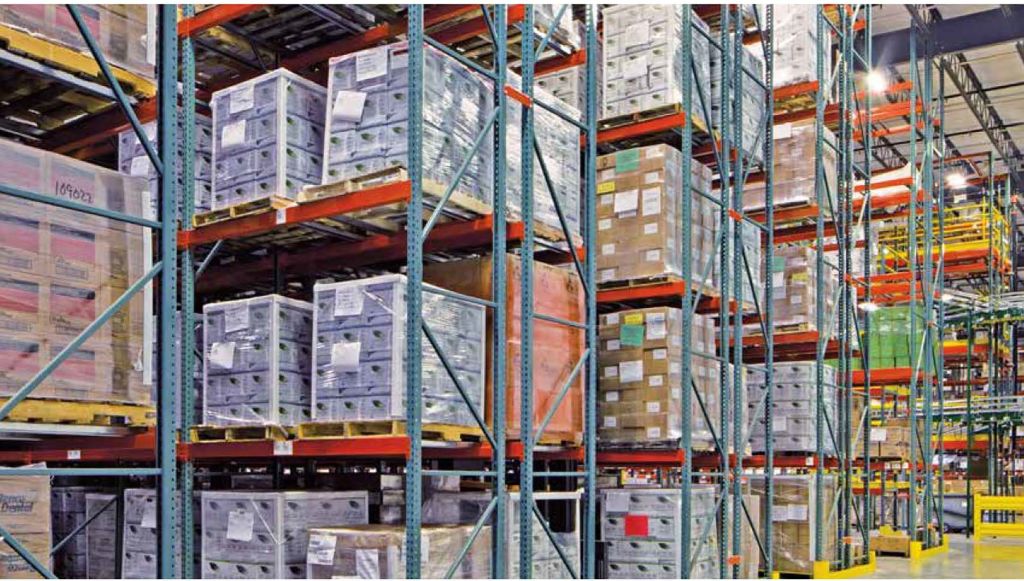
Used pallet rack can seem attractive at 40–60% of new rack pricing, but there are significant trade-offs. Used rack comes in fixed, non-standard sizes that may not fit your pallet dimensions or building height. It may have hidden structural damage from forklift impacts, missing safety clips, or non-matching components from different manufacturers. Capacity ratings may be unknown or unreliable. Most importantly, used rack rarely comes with engineering certifications — a liability issue if a collapse occurs.
New pallet rack is built to your exact dimensions and load requirements. It ships with manufacturer-stamped capacity labels, comes with full warranties, and meets current seismic codes. When you factor in the cost of adapting used rack to fit your space — plus the risk of an uninspected system — new rack typically provides better total value. Read our full new vs. used comparison.
Installation Cost Factors
Professional pallet rack installation typically adds $3–$8 per square foot of rack footprint, depending on system complexity, height, seismic anchoring requirements, and site access. Drive-in, push-back, and pallet flow systems require more installation labor than selective rack due to additional components and tighter tolerances. Seismic anchoring (required in most western states) adds material and labor cost. Material Handling USA includes installation estimates in every project quote — no hidden fees.
Pallet Rack Safety & Compliance
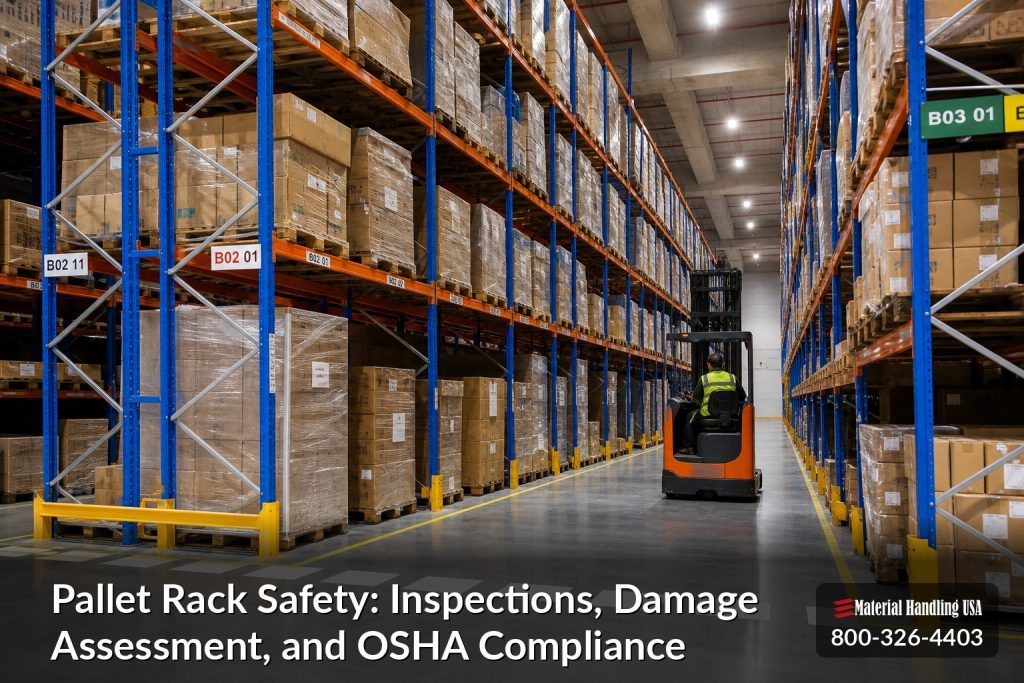
Pallet rack safety is not optional — it is a legal requirement. OSHA, RMI, and local building codes set specific standards for rack design, installation, and ongoing maintenance. Here is what you need to know.
OSHA Pallet Rack Requirements
OSHA does not have a single, dedicated pallet rack standard — instead, requirements fall under General Duty Clause (Section 5(a)(1)), OSHA 1910.176 (Handling Materials), and OSHA 1910.159 (Automatic Sprinkler Systems). Under these regulations, employers must ensure that storage racks are in safe condition, loads do not exceed rated capacity, and damaged rack is repaired or replaced promptly. OSHA citations for rack failures can result in penalties up to $16,131 per violation (or $161,323 for willful violations).
RMI (Rack Manufacturers Institute) Standards
The Rack Manufacturers Institute publishes ANSI/RMI MH16.1, the industry specification for designing and testing steel storage racks. This standard defines load capacities, safety factors (minimum 1.67:1), seismic design requirements, column deflection limits, and connection strength testing. All pallet rack supplied by Material Handling USA is designed and manufactured in compliance with ANSI/RMI MH16.1 — and we provide engineering calculations and capacity labels for every project.


Pallet Rack Solutions by Industry
Every industry has unique storage challenges. Here is how we configure pallet rack systems for the sectors we serve most.

📦 E-Commerce & Fulfillment
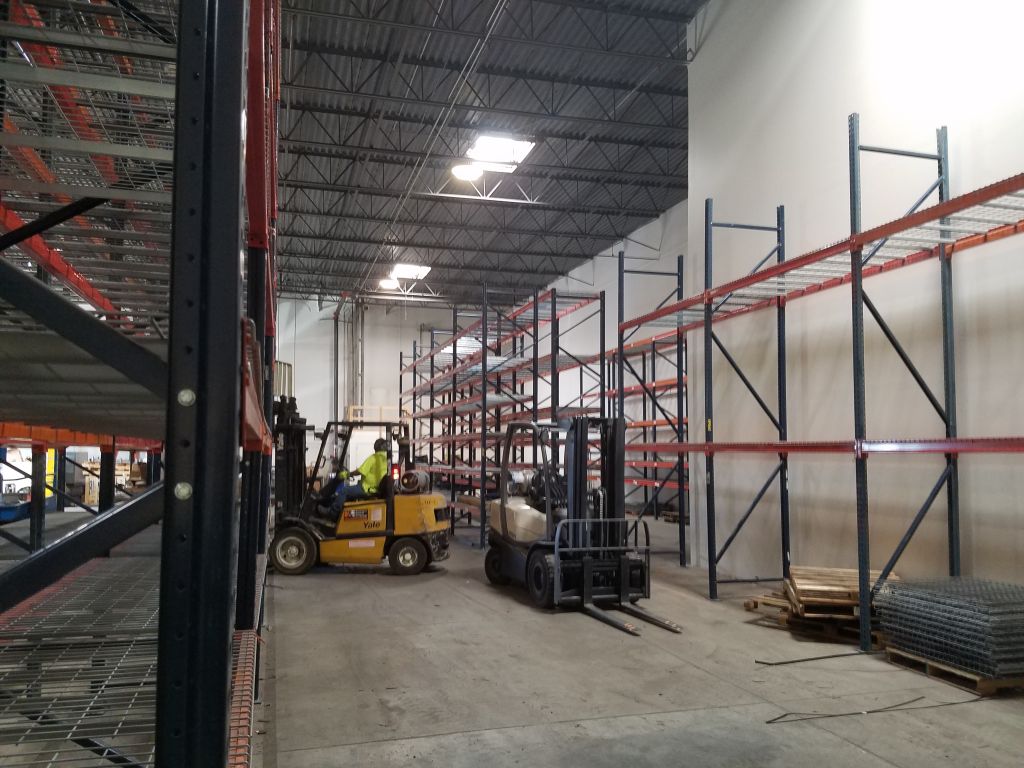
E-commerce fulfillment centers demand fast picks and high SKU density. We configure selective rack for pallet reserve storage with carton flow integrated into the first pick level. Narrow aisle systems maximize positions when floor space is limited. Boltless shelving works well for smaller items and light-duty bin storage. E-commerce solutions →
🏪 Retail Distribution
Retail distribution centers handle massive seasonal swings in volume. We design flexible rack layouts with selective rack for everyday throughput and push-back rack zones for seasonal overflow. Wire partitions secure high-value merchandise areas. Cross-dock staging areas use low-profile rack or floor-stacking bays for rapid turn. Contact us for a custom retail distribution rack design.
Pallet Rack Service Areas
Based in Salt Lake City, we supply and install pallet rack systems throughout Utah. Visitour local pages for area-specific information, permitting guidance, and delivery details.
Pallet Rack by Location
We deliver and install pallet rack systems throughout Utah, Idaho, and the western United States.
Pallet Rack by Industry
Industry-specific racking solutions with the right configuration for your operation.
Pallet Rack Buyer Resources
Everything you need to make an informed purchasing decision.
Pallet Rack Accessories
Essential components for safety, compliance, and functionality.
Ready to Design Your Pallet Rack System?
Material Handling USA designs, supplies, and installs every type of pallet rack — nationwide. Free warehouse design consultations, competitive pricing from top manufacturers, and professional installation.
Explore Our Pallet Rack Resources
Find the right rack type, accessories, and services for your warehouse — organized by category.
Industry Solutions
Buyer Resources
Local Service Areas
Pallet Rack Case Studies
See real pallet rack installations completed by Material Handling USA:
- Ragnar Events — Salt Lake City, UT
- Tellworks Communications — Salt Lake City, UT
- Marathon Petroleum — Loving, NM
- Sanmina — Salt Lake City, UT
- Cambria USA — Salt Lake City, UT
- RC Hobbs 3PL Warehouse
- Enlinx 3PL — West Valley City, UT
- GE Healthcare — Salt Lake City, UT
- Motion Industries — Salt Lake City, UT
- Ogden’s Flooring & Design — Roy, UT
- Rise Broadband — Lindon, UT
- Superior Tile & Marble — Salt Lake City, UT
- Petzl Distribution Center — Salt Lake City, UT
- Inno-Vita Warehouse — Ogden, UT
Online Store
Shop at MaterialHandling-USA.com
Need rack components or warehouse supplies? Shop online for fast delivery:
Warehouse Equipment & Supplies
Pallets
Stretch Wrap & Shrink Film
Shipping Labels & Tags
Shop pallet rack & accessories →