
Used vs. New Pallet Rack
Used pallet rack looks cheaper on the truck, but the savings are usually used up by the time it is installed. Parts rarely fit back together well after disassembly, and the installer time to straighten them out and make them fit often costs more than new would have. Here is how the two options really compare.

New vs. Used Pallet Rack: What Actually Differs
The honest comparison isn’t “new is always safe, used is always risky.” New rack offers a direct path to current product specifications and order documentation; used rack may require more work to recover its identity, records and handling history. Either way, confirm the specifics for your own order rather than assuming a general rule applies. The biggest difference most buyers miss is installation: used rack that has been taken apart and trucked rarely goes back together as cleanly as new, and that labor is where the savings go. Here’s where the two options actually differ.
| Factor | New Pallet Rack | Used Pallet Rack |
|---|---|---|
| Documentation | Manufacturer capacity ratings and model documentation are typically available for new orders — confirm exactly what’s included with your specific quote. | May or may not include original capacity documentation for the exact parts — request it in writing before you buy, not after. |
| Warranty | Manufacturer warranty coverage is generally available on new rack — confirm the scope and terms for your specific order before you buy. | Typically sold as-is; ask directly whether any warranty applies rather than assuming none does. |
| Compatibility | Can be ordered to a configuration confirmed against the manufacturer’s current specifications for your project. | Compatibility with existing rack or between different lots has to be confirmed against the manufacturer’s exact specifications for those parts — it isn’t established by similar appearance or a shared general connector style. |
| Condition | Ships as new manufactured stock — inspect on delivery for freight or handling damage, the same as any shipment. | Ranges from lightly used to structurally compromised; condition has to be inspected component-by-component rather than estimated from age or price. |
| Installed cost | Higher material price, but parts fit together as designed, so install labor is predictable. Confirm current freight and lead time with your quote. | Lower material price, but the savings are usually used up at installation: parts rarely fit back together well after disassembly, and the installer time to straighten and fit them often costs more than new. Freight, inspection and missing parts add on top. |
| Availability | Can be ordered to your specified height, depth, capacity, and quantity, subject to normal production and freight lead times. | Limited to whatever a seller currently has in stock; sizes, finishes, and quantities may not match your layout. |
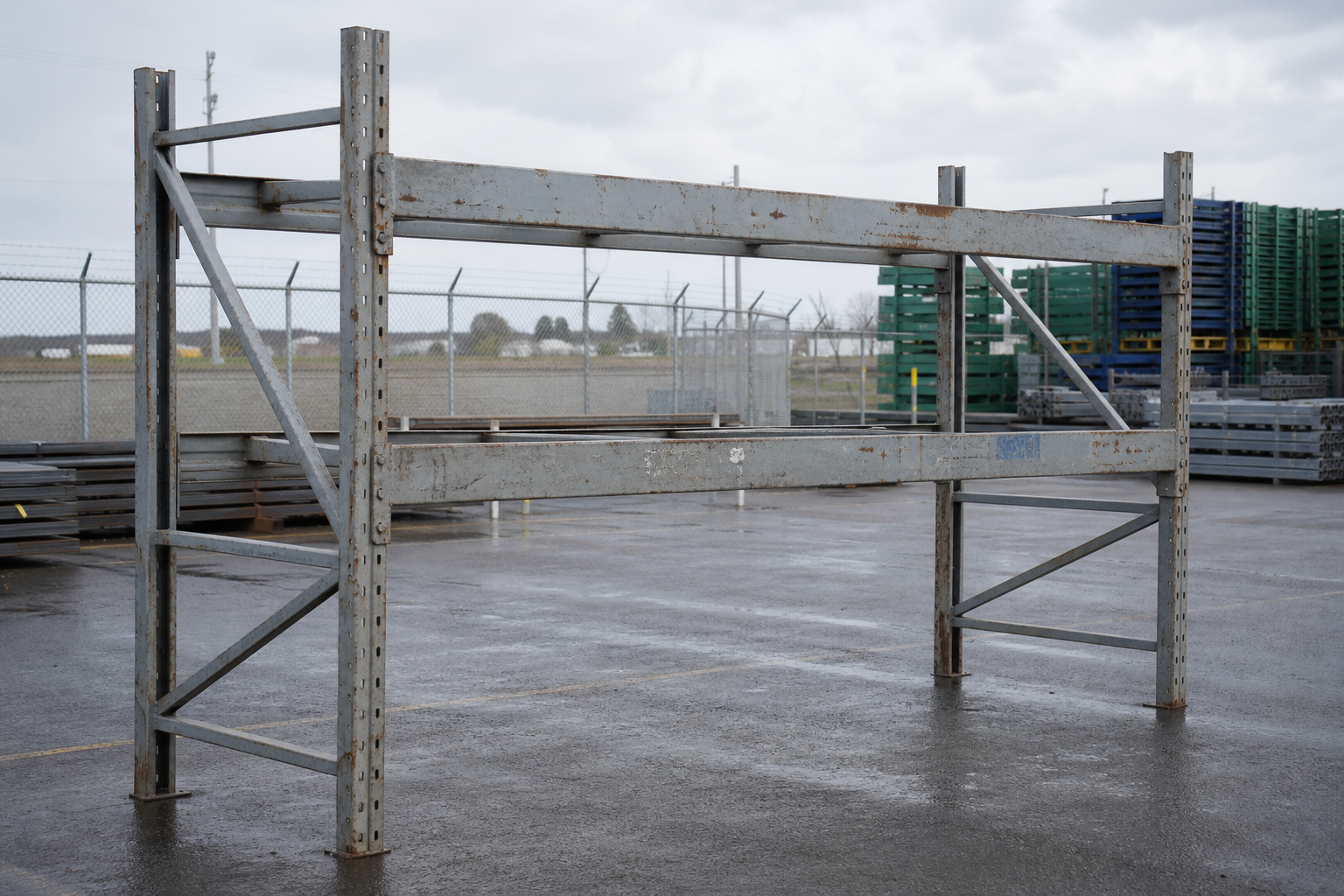

When Used Rack Can Work, and Why It Usually Costs More
Buying used rack to save money usually does not work out. The savings from the lower purchase price are typically used up by the time it is installed, because parts generally do not fit together well after disassembly, and the time it takes an installer to straighten things out and make them fit ends up costing more than new would have. Used rack can work out if you already own it, but even then new sometimes costs less in the end once the extra fix-up time is counted. If you are still weighing it, all of the following need to be true at once:
- The seller can produce — or you can independently verify against the manufacturer’s own specifications — capacity documentation for the exact components in the lot.
- A qualified inspection has checked the frames, beams, and connectors for bends, cracks, weld failures, and anchor damage before purchase.
- Every component you’re buying has been checked against the manufacturer’s specifications for that model — including where it will connect to any rack already installed — rather than assumed compatible from appearance.
- The complete installed cost — freight, inspection, any missing parts, and reinstallation — still compares favorably to a new-rack quote for your project once you add it up.
- Your building department or insurer will accept the documentation you can actually provide for that specific installation.
Even when those conditions hold, the savings on paper tend to shrink or disappear once installer time, inspection, missing parts and rework are added in. A quick call to our sales team with a few pictures of the rack can often tell you which option is the better buy before you spend anything.

What to Check Before You Buy Used Rack
Check both structural condition and practical purchase gaps before the truck leaves. Work through these before you commit:
Missing or substituted parts. Used lots can arrive short a few connector pins, footplates, or bracing pieces, or with parts substituted from a different frame. Count and match every piece against the actual frame and beam models in the lot — a stated capacity assumes the complete, correct hardware, not a partial or substituted set.
Receiving and handling condition. Rack that’s been disassembled, stacked, and trucked in can pick up new bends and connector wear that a listing photo won’t show. Inspect again on arrival, not just before you agree to buy — this applies to new rack shipments too.
Engineering and design review. The intended configuration, load, and installation site should be evaluated by a qualified rack designer or engineer as part of the purchase decision — this isn’t limited to loads near rated capacity or installations that happen to require a permit. RMI’s published guidance on repairing versus replacing a damaged rack component is a useful reference for the kind of assessment a qualified reviewer performs.
Compatibility across sources. Mixing components from more than one lot, era, or manufacturer requires confirmation of the exact proposed combination and its design basis. Connector, profile and material details help identify the parts, but a visual match is not fit approval. Have the manufacturer and appropriate rack design professional confirm the combination before installation and loading. Our pallet rack identification & compatibility guide explains what to gather before that review.
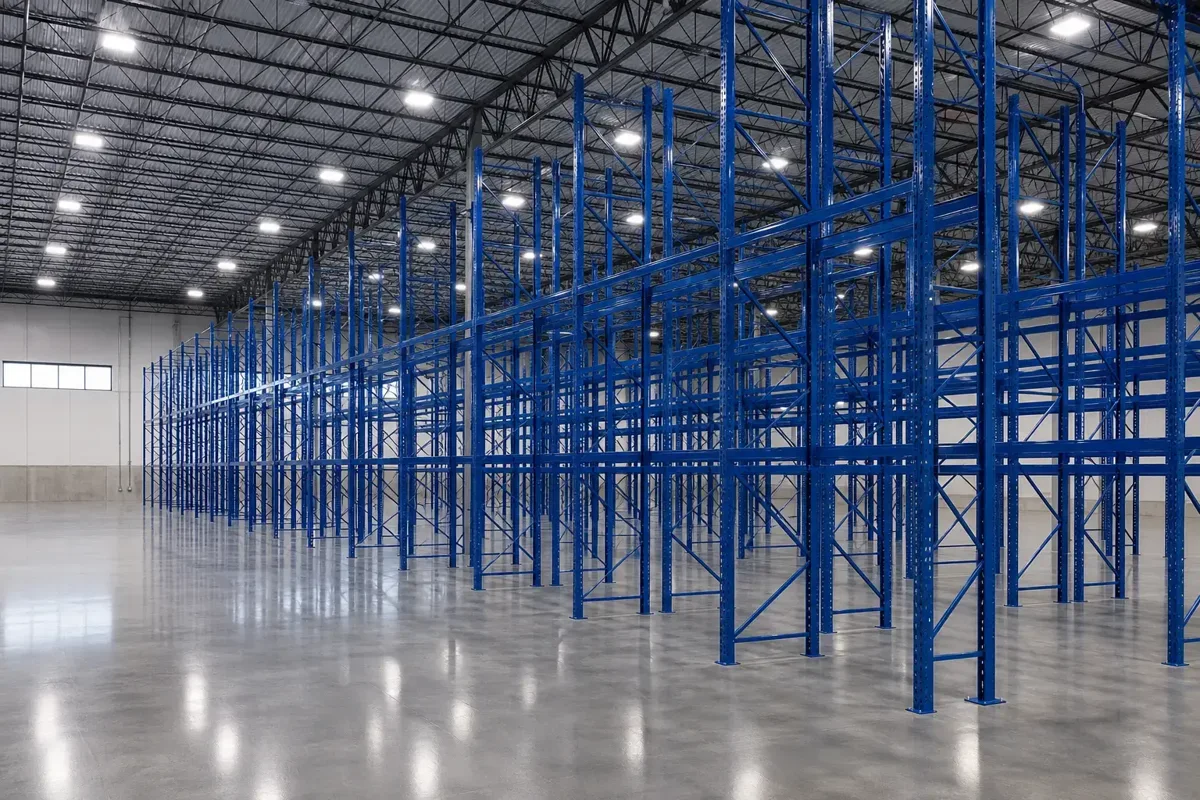
Why New Pallet Rack Simplifies the Decision
New rack doesn’t make an installation automatically code-compliant or damage-proof — layout, load, and seismic design still need to be engineered correctly, and any shipment should be inspected on delivery. What new rack does simplify, compared with used, is most of the verification work:
- Traceability. New components can be ordered with manufacturer model numbers and load documentation tied to your specific order — confirm what’s included when you request a quote.
- Spec options. You can order the height, depth, capacity, and beam spacing your layout calls for, instead of adapting your layout to whatever used inventory happens to be available (we have access to some common sizes in stock at select manufacturers; availability must be confirmed).
- Warranty scope. New rack typically carries manufacturer warranty coverage on material and workmanship — ask what it covers and for how long, since terms vary by manufacturer and product.
If you’re also considering used rack from another source, ask about compatibility and documentation requirements when you request a new-rack quote so both options are evaluated on the same terms.
Shop New Pallet Rack Starter and Add-On Sections
Compare new Interlake starter and add-on sections in our online catalog. A starter has two upright frames; an add-on uses one new frame and connects to an approved compatible existing bay. These are new-product listings, not used inventory or installed-system prices. Confirm the selected configuration, decking, freight, availability and installation scope before ordering.
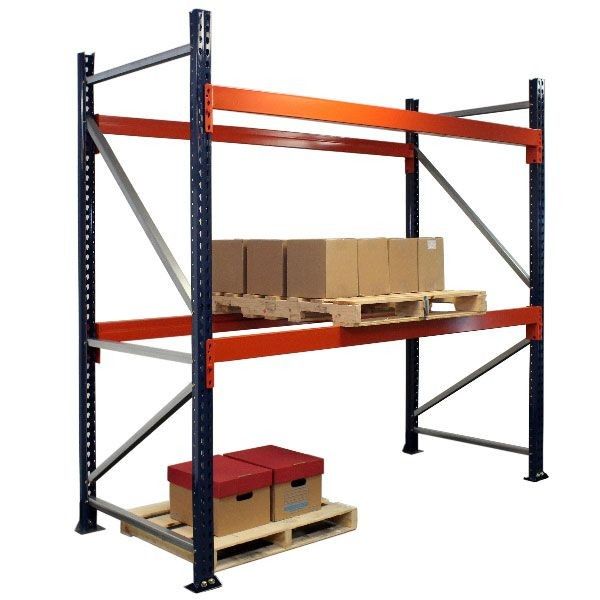 Interlake Pallet Rack Starter Section$459.92–$1,187.79 — Start a new row with a two-frame bay. Select the required dimensions and load levels; contents shown are not included.
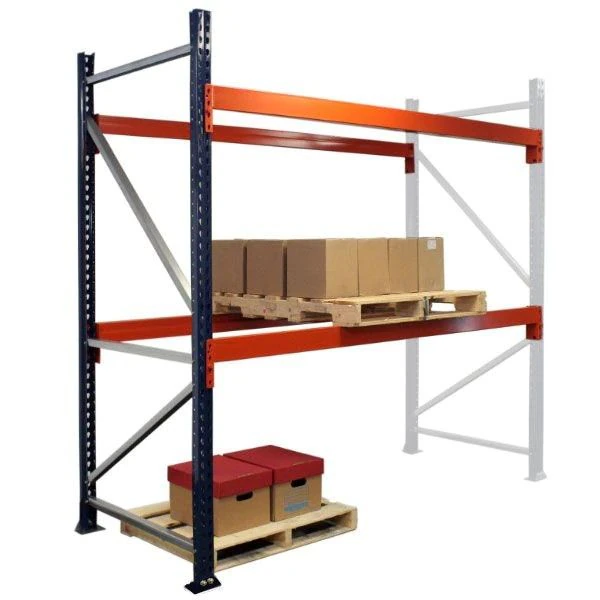 Interlake Pallet Rack Add-On Section$346.32–$918.81 — Extend an approved compatible row with a one-frame bay. An add-on is not a freestanding starter.
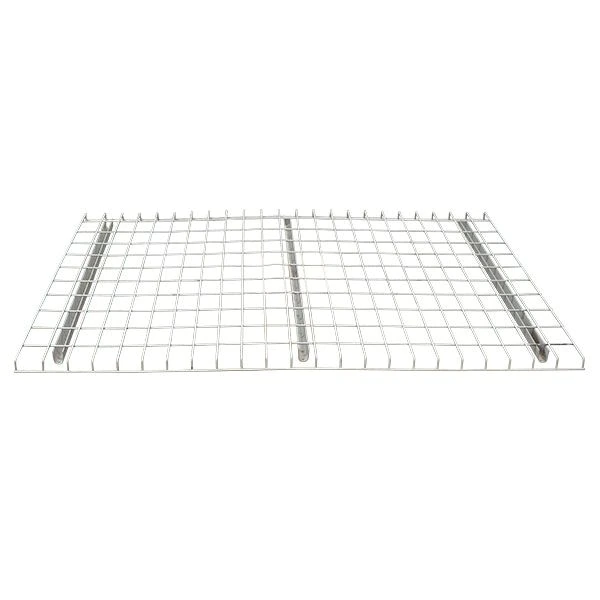 Interlake Wire Deck for Pallet Rack$95.38–$143.02 — Confirm panel dimensions, beam fit and the actual loading application.
Used vs. New Pallet Rack FAQ
Is used pallet rack ever a good choice?
How much less does used pallet rack cost than new?
We already own used rack. Should we reuse it?
Will used rack pass a building inspection?
What should I include when comparing a new-rack quote with used rack?
Can used and new rack be mixed in the same run?
Does MH-USA buy or sell used pallet rack?
What can we do with pallet rack we no longer need?
Need Help Comparing Your Options?
Call our sales team and send a few pictures of the used rack you own or are considering. We can often tell you quickly whether it will go back together well or whether new will cost less installed, and we will quote new pallet rack for the same load and layout.