
Structural Pallet Rack in an Automotive Component Plant: Means Industries
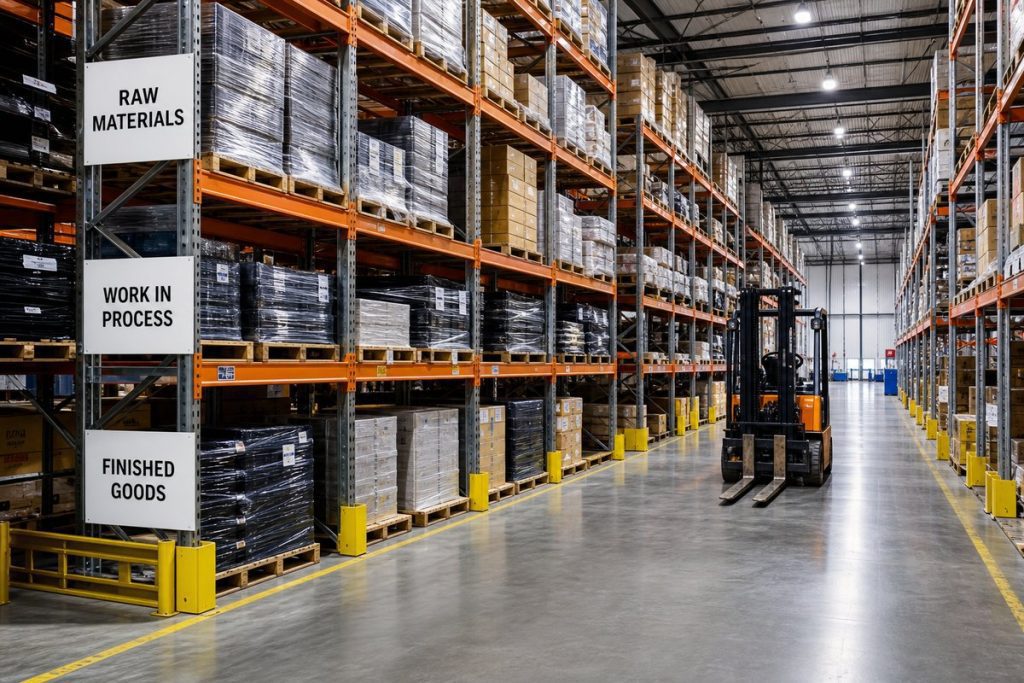
A parts plant stores three inventories with three different rules — raw steel, work in process and finished goods — inside a building full of forklift traffic. Here is how we plan heavy-duty racking for automotive manufacturing.
2020 – 2024
Years Means Industries worked with us on pallet rack
Automotive
Component manufacturing, not distribution
3 inventories
Raw material, WIP and finished goods under one roof
Heavy & cyclic
The load case structural rack is built for
Plan your layout before you buy
Configure upright height, beam width, bay count, and load levels in our free 3D Pallet Rack Designer, then get an instant bill of materials and request a quote.
The project
Means Industries is an automotive component manufacturer. Material Handling USA supplied pallet rack for the company across a series of projects between 2020 and 2024, and wire mesh partitions alongside the rack in two of those years. The client, those years and the product categories are the only project specifics we publish.
A manufacturing plant is a fundamentally different racking problem from a distribution centre, and the difference is not size — it is that a plant’s storage exists to feed a process that must not stop. Rack in a warehouse serves orders. Rack in a parts plant serves machines, and the cost of a wrong position is measured in line downtime rather than a late shipment.
This page sets out how we approach pallet rack systems for a component manufacturing operation: the three separate inventories, why structural rack often wins, and what plant traffic does to steel over a decade.
What we publish
We publish the client, the years we worked together and the product categories supplied. We never publish plant layouts, room dimensions, production volumes, part information, storage quantities or contract values.

Three inventories that need three different rules
Almost every component plant runs raw material, work in process and finished goods through the same building, and the single most useful thing a storage design can do is stop treating them as one inventory.
Raw material is heavy, arrives in bulk from a small number of suppliers, and is consumed in a predictable pattern. It rewards density and heavy-capacity positions near the receiving door and the first operation.
Work in process is the awkward one. It moves constantly, is usually in returnable containers or on stillages rather than standard pallets, and its storage requirement is really a buffer between operations that run at different rates. WIP wants accessibility and short travel far more than it wants cube.
Finished goods behave like a distribution inventory: shipped to schedules, often with lot traceability, and staged against truck departures. This is where rotation discipline and clean addressing pay.
Designing one uniform rack layout across all three is how plants end up with heavy steel stored at the far end of the building and WIP blocking an aisle.
Structural or roll-formed? In a plant, ask twice
In a clean distribution centre, roll-formed teardrop rack is usually the right economic answer. In a component plant the calculation shifts, and often lands on structural pallet rack.
Three plant-specific pressures drive that:
| Pressure | What it does to rack | Why structural helps |
|---|---|---|
| Constant forklift traffic | Uprights take repeated low-level impacts | Heavier hot-rolled sections tolerate impact far better |
| Very heavy unit loads | Beam deflection and upright capacity govern | Higher capacities at the same bay footprint |
| Bolted-in accessories | Guards, decking and stops get added over time | Bolted connections accept modification cleanly |
| Long service life | Plants keep rack for decades | Repairable, and less sensitive to minor section damage |
| Wash-down or oily floors | Corrosion at the base plate | Galvanised structural options available |
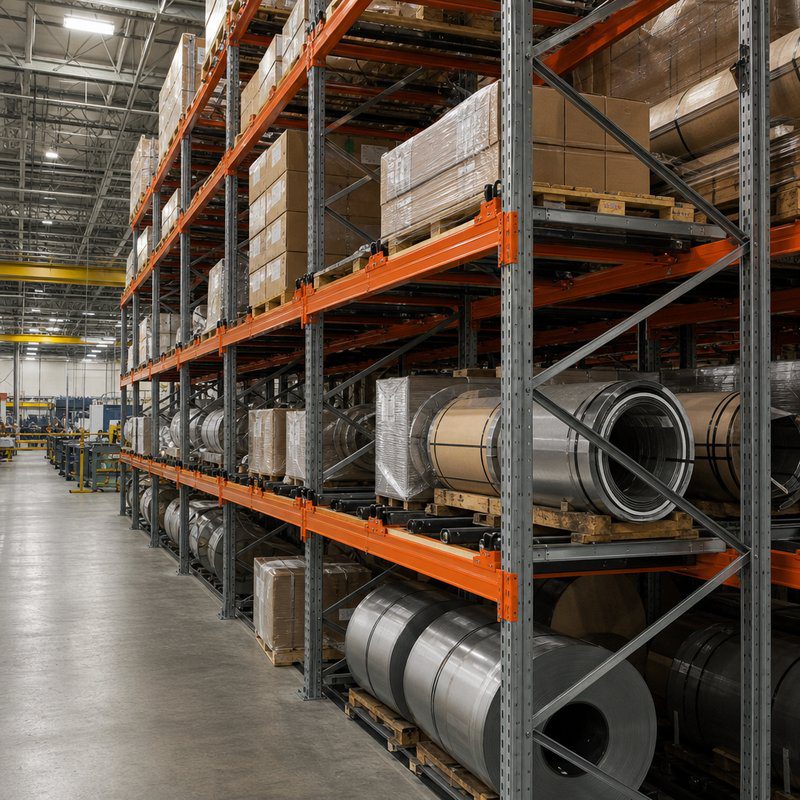
None of that makes roll-formed rack wrong in a plant. Teardrop selective racking is quicker to reconfigure, cheaper per position and perfectly adequate in low-traffic areas such as finished goods staging or a supply store. The right answer in most plants is mixed: structural where the traffic and the loads are, roll-formed where they are not.
What matters is that the choice is made deliberately, per zone, from the actual unit loads and the actual traffic — not applied uniformly across the building because one bid was cheaper per bay.
Do not skip the deflection check
Capacity is the headline number, but in heavy manufacturing storage the visible problem is usually deflection: beams that carry the rated load while sagging enough to worry operators and to make placement awkward. Ask for the deflection over the span at the design load, not just the capacity, and compare alternatives on both numbers.
Raw material and coil storage
Raw stock is where the heaviest numbers in the plant live, and where the storage method has to match the handling method rather than the other way round.

Cranes and rack have to be designed together
In a plant with overhead cranes, the rack layout is constrained by the crane’s hook approach, runway and lift height, and the rack cannot be braced into crane columns without engineering review. Get the crane envelope on the rack drawing before ordering steel.

WIP, returnable containers and buffers
Work in process is the inventory that most plant rack designs get wrong, because it is planned as storage when it is really flow control.
Design to the container, not to the pallet. Returnable plastic containers, steel stillages and custom racks rarely match a 48×40 footprint. Beam length, depth and deck type should come from the actual container, including how it stacks and whether it nests when empty. Empty container storage is a real requirement that is almost always forgotten at design time.
Buffer where the rate changes. A buffer belongs between two operations that run at different speeds, physically close to both. Rack positioned at the point of use beats a bigger central store almost every time.
Make the level layout match the handling. If containers are placed by a counterbalance truck, elevations follow the mast. If they are moved by a walkie stacker or hand cart, the practical elevations are much lower and the number of usable levels drops.
Keep it addressable. WIP that lives in “wherever there was space” is what turns a five-minute retrieval into a twenty-minute search. Aisle-bay-level addressing applies to the plant floor just as much as to the warehouse.
Finished goods, traceability and shipping
The finished-goods end of a component plant is where manufacturing meets logistics, and the design priorities change again.
Rotation and traceability. Automotive supply chains take lot traceability seriously. Single-deep selective positions with disciplined labelling make lot control simple. Where volume justifies density, pallet flow lanes enforce first-in, first-out physically rather than relying on operator memory — which is exactly why they suit date- or lot-controlled finished goods.
Stage against the truck, not against the wall. Finished goods positions should be closest to the shipping doors, with floor-marked staging that cannot creep into the aisle.
Protect the pick and load face. The bays nearest the dock take the most traffic and the most damage. That is where guards earn their money.
Segregate what needs segregating. Quality holds, customer returns and rework need their own clearly bounded positions — physically separate, obviously labelled, and where required, secured behind wire mesh partitions.
- One addressing scheme for the whole building — raw, WIP and finished goods included.
- Quality hold and rework positions physically separated and labelled, not improvised.
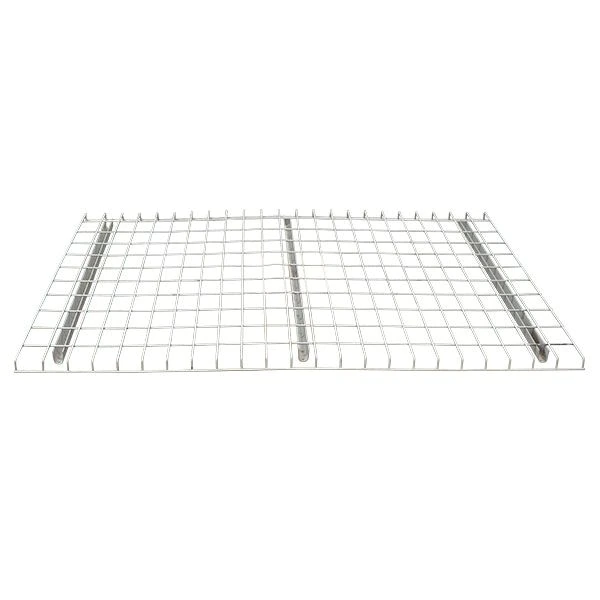
- Full-width wire decking anywhere boxed, binned or non-palletized loads are placed.
- Staging areas floor-marked, with a rule about how long material may occupy them.
- Empty container storage designed in, not discovered later.
Impact, anchorage and inspection in a plant environment
Plant rack takes more punishment than warehouse rack. Traffic is continuous, aisles are shared with tuggers and hand carts, and material handling happens on every shift, not just at receiving and shipping times.
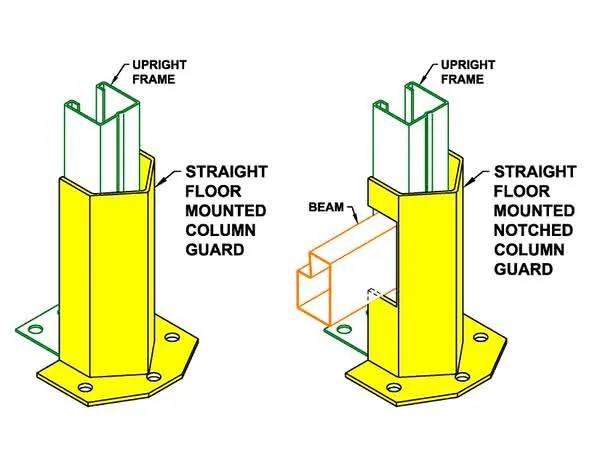
Guard the predictable impact points. Column guards, end-of-row protectors and bollards at aisle ends, corners, dock approaches and anywhere a route crosses a rack line. Floor-mounted guards absorb the energy that would otherwise deform an upright at the point where it carries the most load.
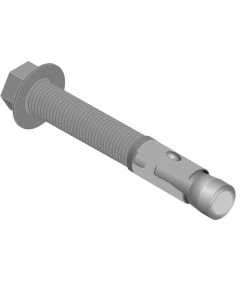
Anchor to the engineered design. Anchor type, embedment and count come from the rack engineer’s drawings, and along the Wasatch Front the seismic design category makes that anchorage load-bearing rather than nominal. Our anchor bolt guidance covers the practical detail. Rack design itself follows ANSI MH16.1 from the Rack Manufacturers Institute at MHI.
Report, unload, evaluate. Any contact with rack is reported immediately, the bay is unloaded, and it stays out of service until it has been assessed through a documented rack inspection and repair process. In a plant this rule has to survive shift changes and contractor traffic, which means it has to be written down.
Keep capacity information current. OSHA’s materials-handling requirement, 29 CFR 1910.176(b), requires stored material to be stacked and secured against collapse. When a beam level is moved to suit a new container, the posted capacity is recalculated with it.
Shop Pallet Rack Accessories Online
Protect and finish your pallet rack installation with these in-stock accessories, or request a quote for custom-sized rack, freight and volume pricing.

Manufacturing plant racking FAQs
Is structural pallet rack worth it in a manufacturing plant?
How should a plant store raw material, WIP and finished goods?
How do you store returnable containers and stillages on pallet rack?
Can pallet rack be installed under an overhead crane?
What is the most common rack mistake in an automotive plant?
How often should plant pallet rack be inspected?
Does moving a beam level change the rack’s rated capacity?
Planning storage for a plant or production facility?
We design, supply and install manufacturing storage rack, structural pallet rack and rack protection across Utah and the Intermountain West, and we install what we sell.
Rack That Keeps a Production Line Fed
Material Handling USA designs, supplies and installs heavy-duty pallet rack for automotive, aerospace and industrial manufacturers across Utah and the Intermountain West.
Ready to configure your pallet rack system?
Use our guided BuildQuote tool to choose the right configuration, review your parts and submit it for checkout or a formal quote.