
Metro Flexline Anesthesia & Procedure Carts
How to specify Flexline anesthesia, procedure and phlebotomy carts: body height, drawer schedule, lock level and accessories — then design and price your cart online in the Metro Medical Carts Configurator.

4
Flexline body heights
3–12"
Drawer heights
10+
Lock & access options
17
Metro online configurators
What Makes Flexline Different From a Fixed Cart
Most medical carts are sold as a finished package: one body, one drawer stack, one lock. Metro Flexline works the other way. It is a modular polymer cart platform in which the body height, body width, drawer mix, lock type and side-rail accessories are chosen separately, so the same family can become an anesthesia cart in the OR, a procedure cart in a treatment room, a phlebotomy cart on lab rounds or an isolation cart outside a patient room.
That flexibility is the reason buyers search for “Metro anesthesia cart” or a specific Flexline procedure-cart package and then stall: there are hundreds of valid combinations, and a few invalid ones that look fine on paper. This guide explains the rules that matter, the choices that usually get missed, and how to turn a clinical request into a buildable bill of materials. When you are ready, the Metro Medical Carts Configurator enforces every rule for you and gives you a saved, shareable quote.
We represent Metro (InterMetro Industries, founded 1929 in Wilkes-Barre, Pennsylvania) from Salt Lake City and have supplied hospitals, surgery centers, clinics and labs across the West since 1997. For the broader category — crash, isolation, medication and supply carts from several manufacturers — see our medical carts guide.
Specifying a Flexline Anesthesia Cart
An anesthesia cart lives beside the anesthesia machine for the whole case. It has to hold airway supplies, IV start kits, syringes, and a controlled-substance drawer, and it has to be restocked fast between cases. The specification questions are therefore about reach, segregation and access control rather than raw capacity.

1. Choose the body height first
Flexline bodies come in 36, 39, 42 and 45 inch heights in a standard or narrow width. The usable drawer space is the body height minus about 15 inches, so a 39 inch body leaves 24 inches of drawers and a 45 inch body leaves 30 inches. Anesthesia providers usually prefer a 39 or 42 inch top so the worksurface sits close to the machine table height and the top drawer is visible without bending.
2. Build the drawer schedule to fill the space exactly
Drawers come in 3, 6, 9 and 12 inch heights, and the stack must add up to the available drawer space — no gaps, no overhang. A typical anesthesia layout front-loads several shallow 3 inch drawers for small, high-turnover items (syringes, needles, labels, ampule breakers), then 6 inch drawers for IV start and airway kits, and a deep 9 or 12 inch drawer at the bottom for bulky circuits and bags.
3. Decide where controlled substances live
If the cart holds controlled substances, specify an individually locking 3 inch narcotic drawer inside the main lock, and a lock level that records who opened the cart. That combination is the most common reason an anesthesia cart quote has to be redone.
Rule that trips people up
Electronic locks and the narcotic drawer have dependencies. On Flexline, electronic keypads mount on the key-lock body, and the electronically locking narcotic drawer needs the LCD touchpad. Order a passive-seal body with an electronic lock and the build will not work. The configurator flags this before you can add it to a quote.
Procedure, Treatment and Phlebotomy Configurations

Procedure carts serve a room rather than a provider. They need broad visibility of contents, a clean worksurface and accessories on the side rails — sharps container, glove box, waste, IV pole — so the clinician never turns away from the patient. Flexline procedure packages pair a mid-height body with mostly 6 inch drawers and a keyless touchpad so staff can open the cart with gloved hands.
Phlebotomy carts on lab rounds are a different problem: they travel all day. Choose a narrow body for corridor and room clearance, shallow drawers for tubes and labels, a covered utility bin for transport, and a lock that auto-relocks when the cart is left in a hallway. Treatment rooms in clinics often use the same narrow body with a pull-out writing shelf.
Isolation carts sit outside the room and hold PPE; they rarely need a lock but benefit from wide, shallow drawers and a top that wipes down quickly.
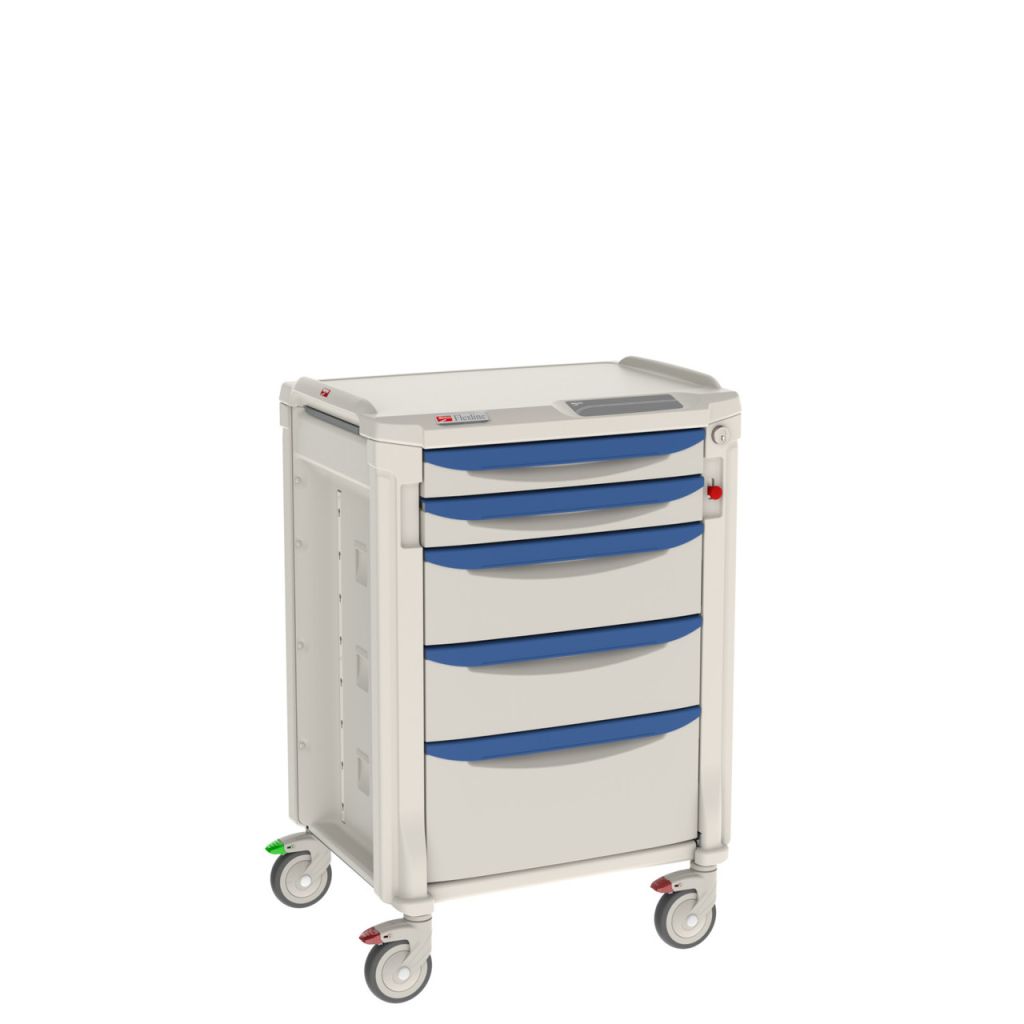
 Narrow bodyFor phlebotomy, treatment rooms and tight procedure bays where turning radius matters.
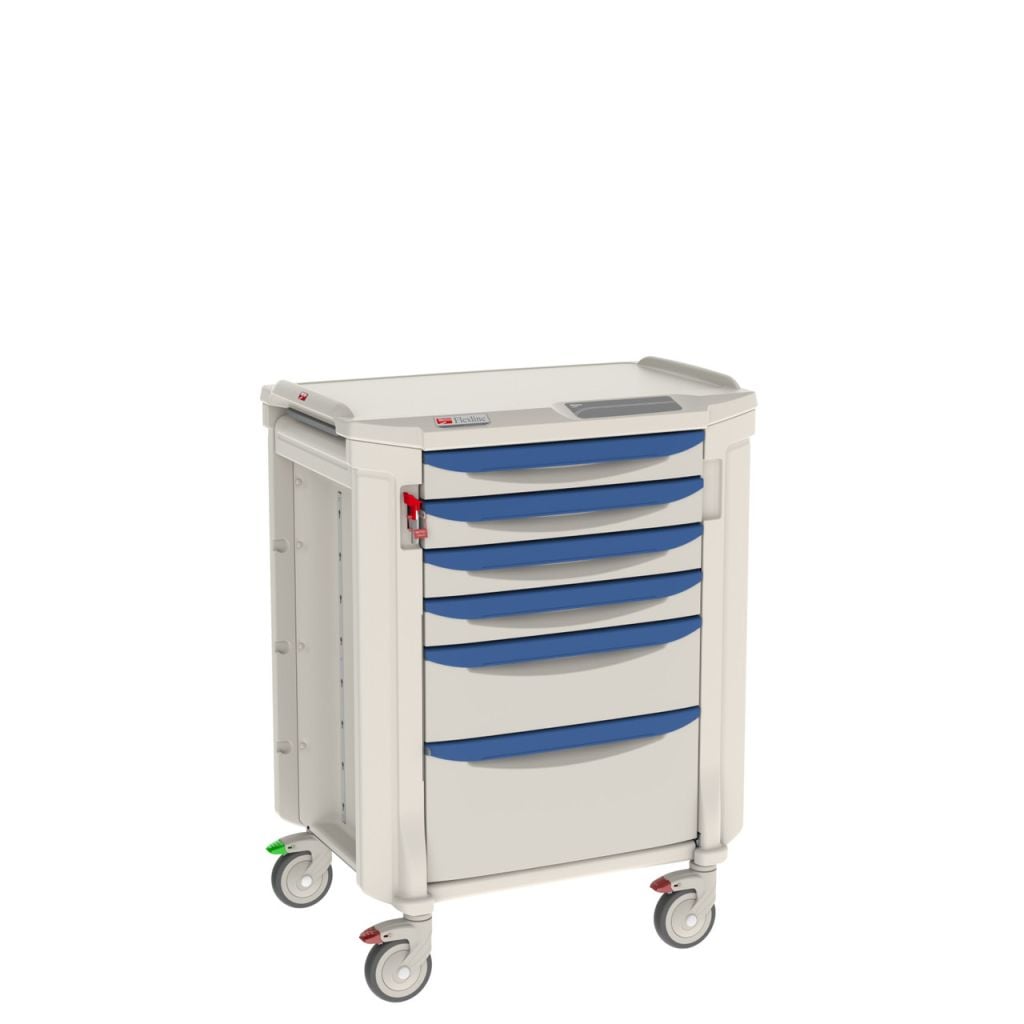 Tall body45 inch bodies give the deepest drawer stack for supply-heavy procedure rooms.
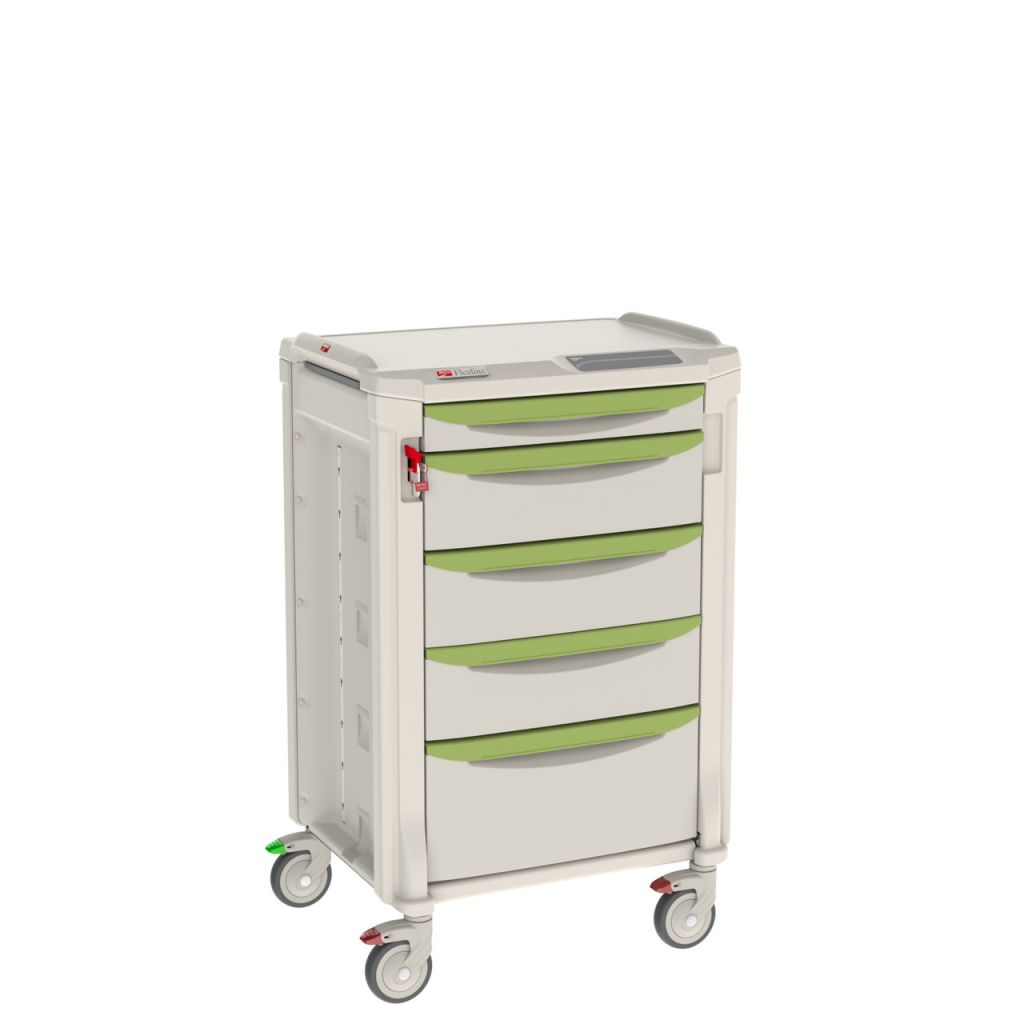 Passive-seal bodyBreakaway seal security where tamper evidence matters more than access logging.
Drawers, Dividers and Organization
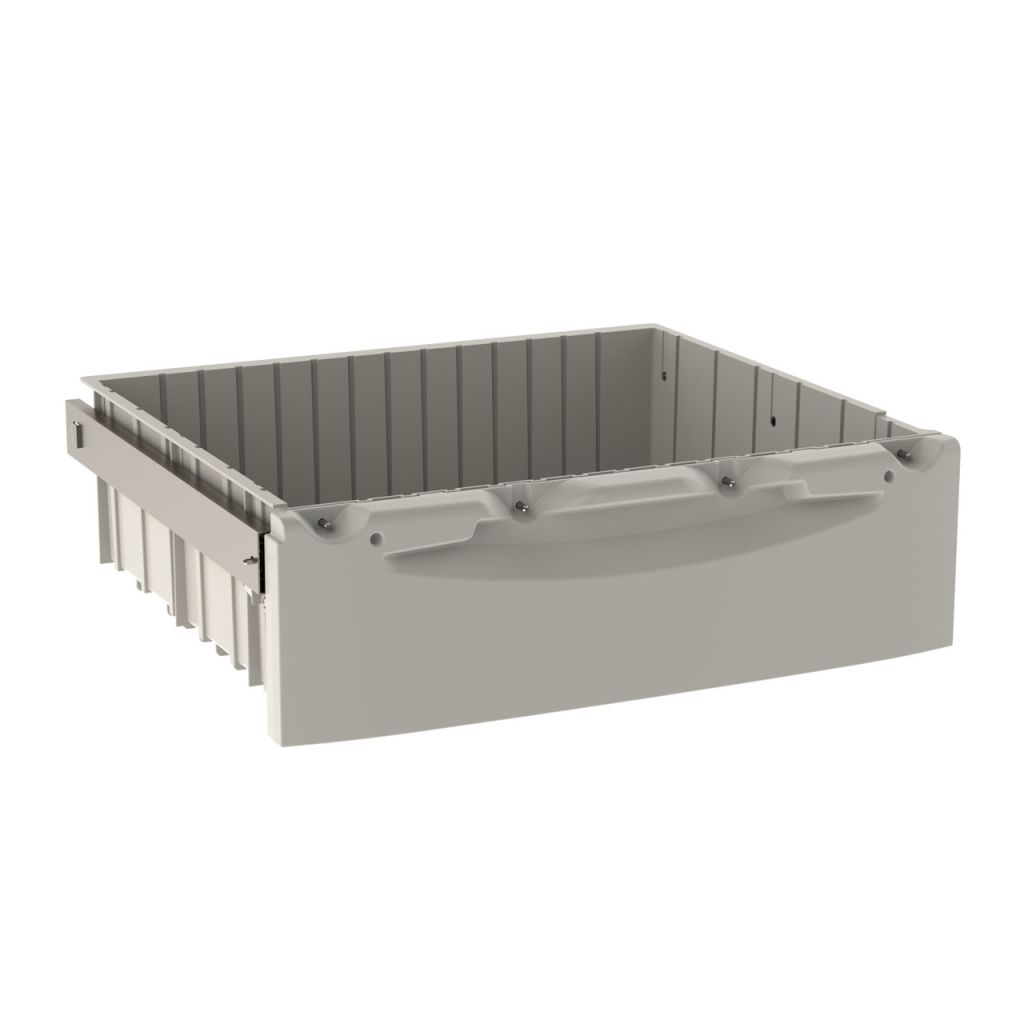
Drawer choice decides how fast a cart can be checked and restocked. Shallow drawers keep small items in a single visible layer; deep drawers are for bulky items only. Each height has its own load rating, so heavy fluids belong in the lower 9 or 12 inch drawers, never in a 3 inch drawer near the top.
Dividers matter as much as the drawers. Metro divider kits split drawers into fixed compartments or adjustable lanes so every item has a labelled home — which is what makes a par-level restock checklist possible. Specify the divider kit with the drawer, not afterwards, because kit sizes follow drawer height.
Drawer pulls are colour-coded. General-use carts ship with one pull colour; other colours are ordered as separate pull kits. Use colour to separate adult and pediatric carts, or anesthesia and procedure carts that share a corridor.
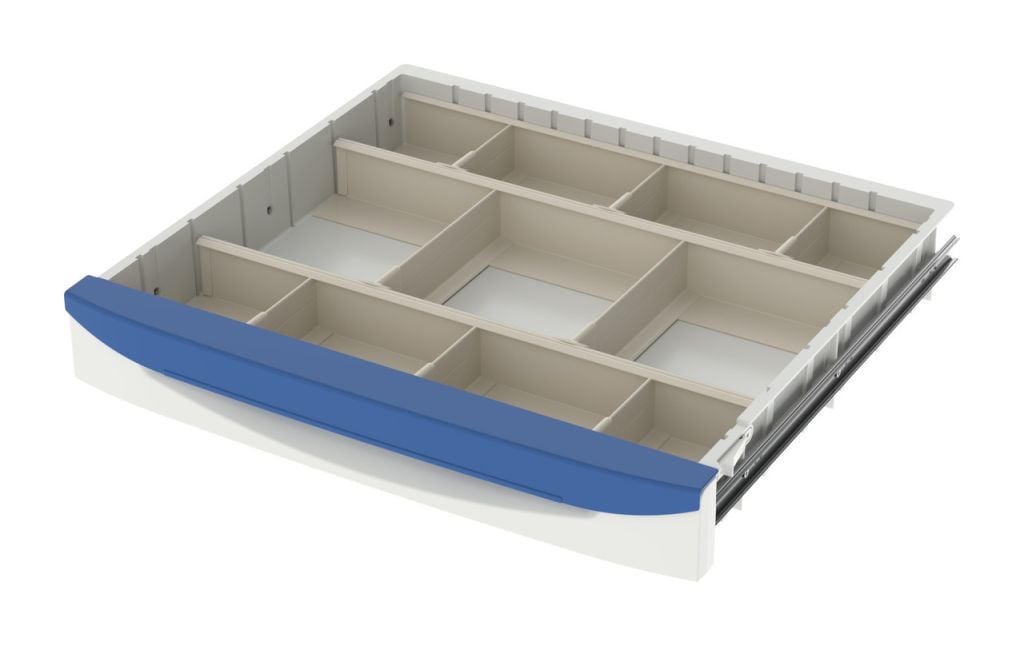
A practical anesthesia schedule on a 42 inch body: four 3 inch drawers (including one narcotic drawer), two 6 inch drawers and one 9 inch drawer — exactly 27 inches. A procedure schedule on the same body might be one 3 inch, three 6 inch and one 6 inch drawer with dividers. Both are valid because both fill the space exactly; the configurator shows a red drawer-sum warning until your stack fits and offers an auto-fill per application.
Lock and Access Options
The lock is a clinical-policy decision, not a hardware afterthought. Ask who must open the cart, whether you need a record of each opening, and how fast access must be in an emergency.
| Lock level | How it works | Best for | Watch out for |
|---|---|---|---|
| None / open | No lock | Isolation and PPE carts | Not for medications |
| Key lock | Central keyed lock | Low-risk supply and treatment carts | Key control on multi-shift units |
| Passive breakaway seal | Numbered plastic seal on a lock bar | Tamper evidence where fast access matters | Needs seal stock and a check routine |
| Electronic PIN | Keypad with user codes | Procedure carts shared by a team | Mounts on key-lock bodies only |
| Keyless touchpad with auto-lock | Touchpad that relocks after a set time | Phlebotomy and hallway carts | Battery and code management |
| LCD touchpad with audit | Individual user codes with an access log | Anesthesia carts with controlled substances | Required for the electronic narcotic drawer |
| Card / proximity reader | Badge access added to a touchpad | Facilities standardised on badge access | Reader needs a compatible touchpad |
 Electronic PIN lockShared-team access without keys.
 Keyless touchpadAuto-relock for carts left in corridors.
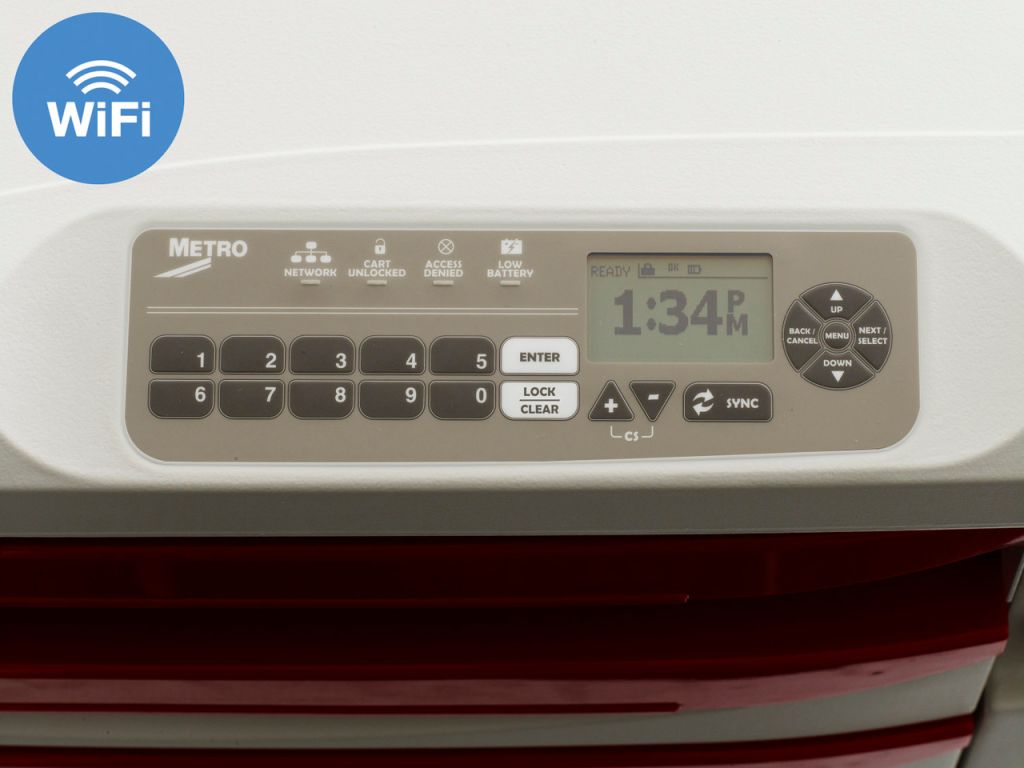 LCD touchpadUser codes and an access record for anesthesia carts.
Design & price it online: Metro Medical Carts Configurator
Pick anesthesia, procedure, phlebotomy or isolation, choose body height and lock level, and the Metro Medical Carts configurator builds a valid Flexline drawer stack, adds compatible locks and accessories, and gives you a full bill of materials with freight to your ZIP. Save it, share it with your nurse manager, or send it to us for review.
Design & Price It Online All Metro Configurators Call (800) 326-4403
Accessories That Make the Cart Work
Side-rail accessories turn a drawer cabinet into a workstation. Plan them by side — left, right and top — so they do not block drawers or collide with the anesthesia machine.
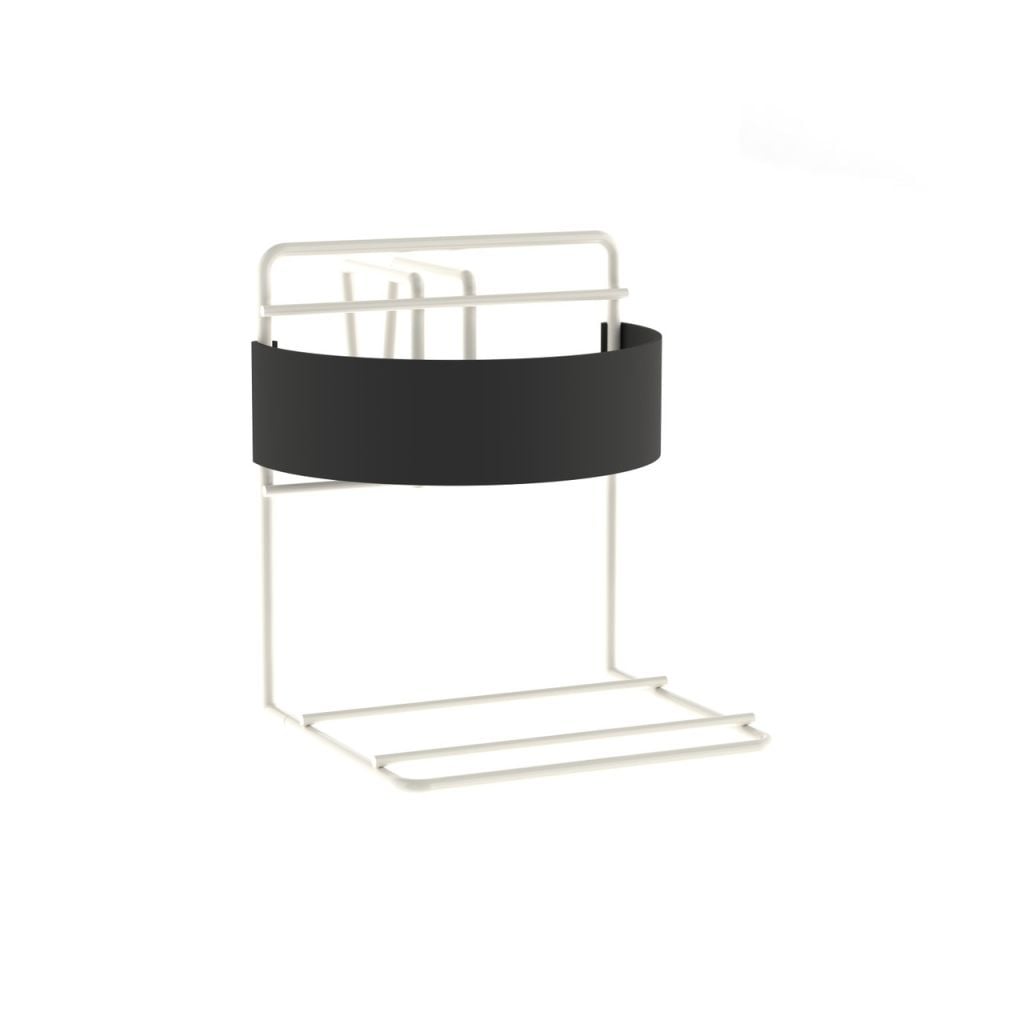 Sharps bracketKeeps the sharps container at the point of use.
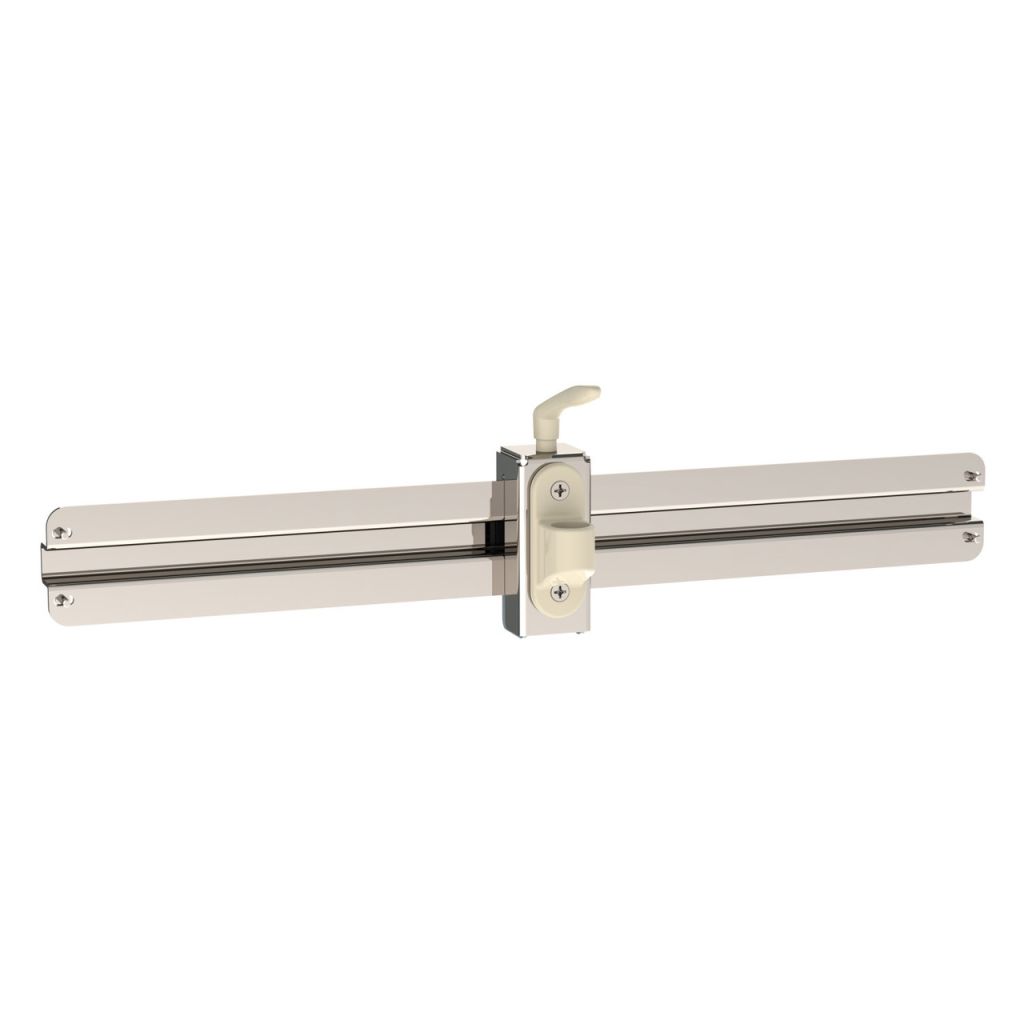 Monitor mountMounts a display on the overbridge for documentation.
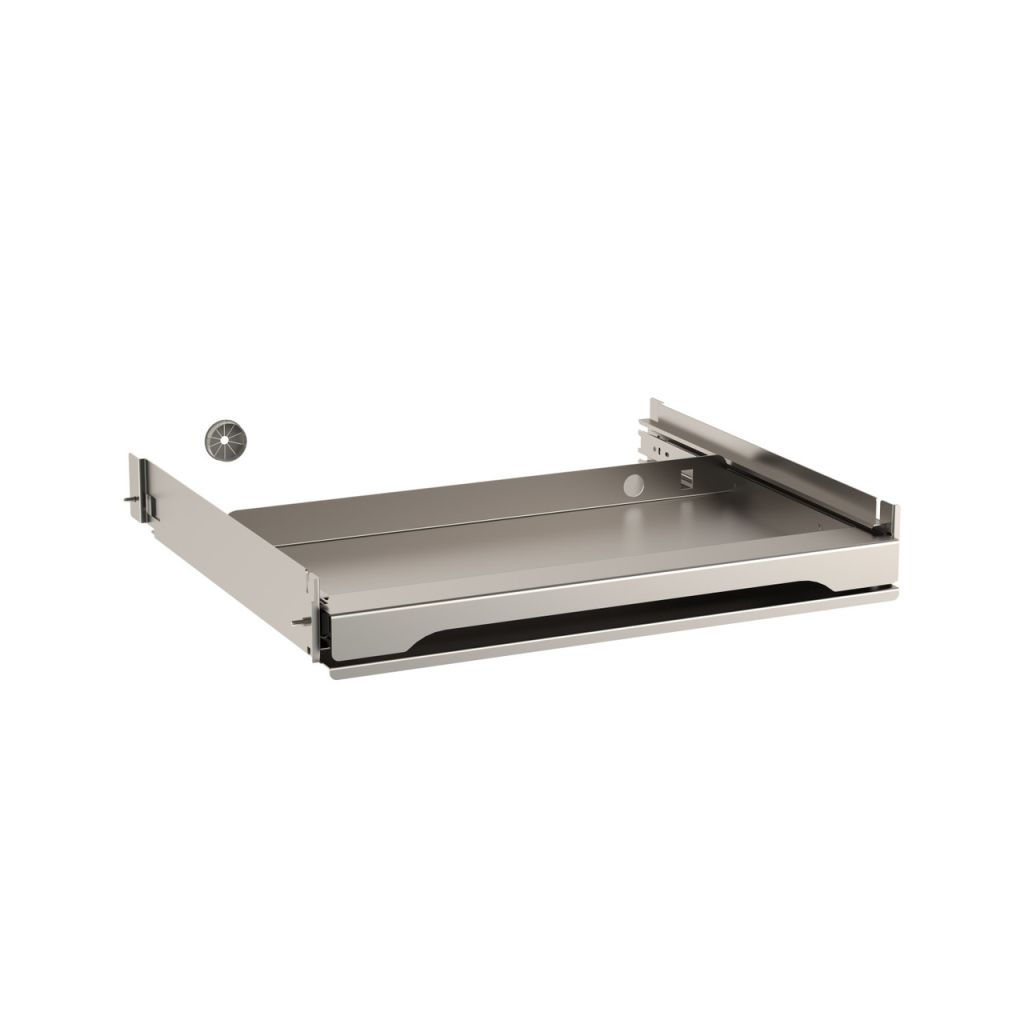 Keyboard trayCharting at the cart without a separate workstation.
 Pull-out shelfExtra writing or prep surface that stows away.
 Power stripPowers devices mounted on the cart.
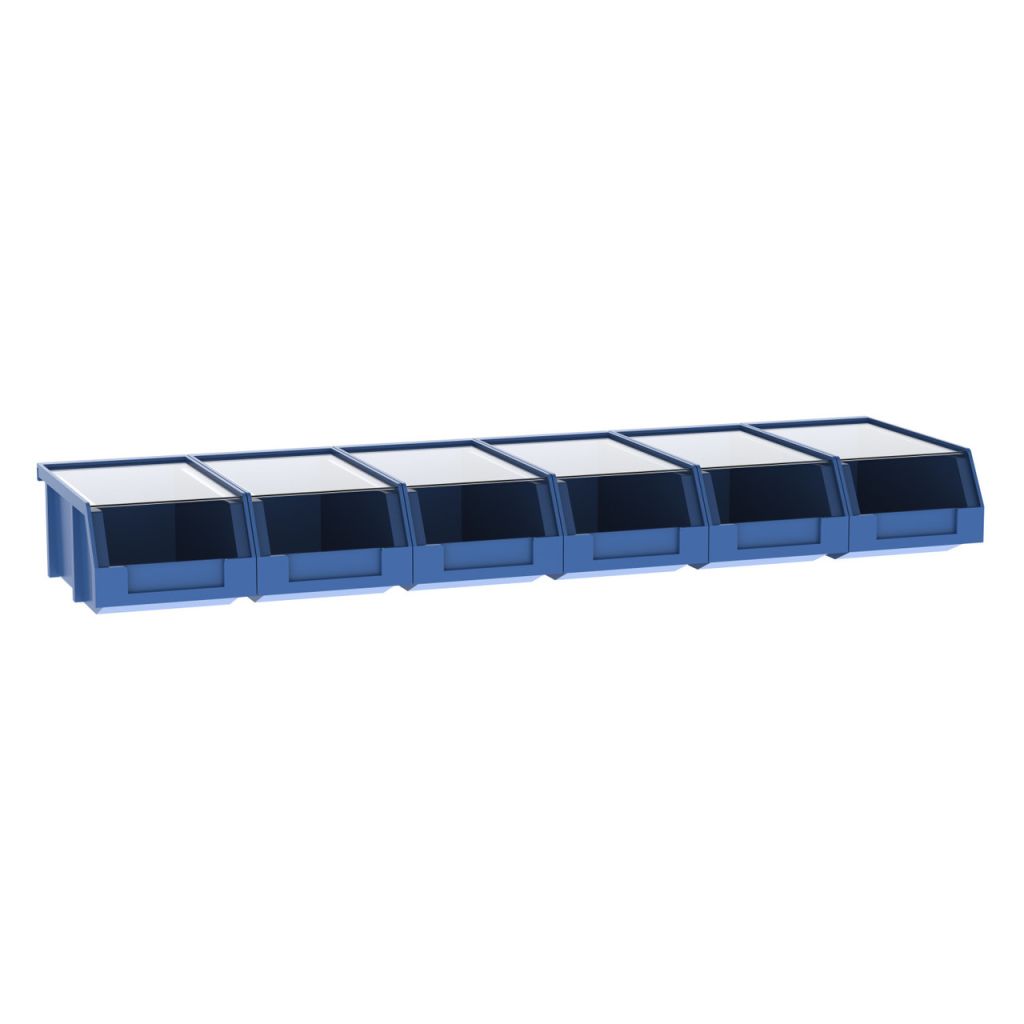 Utility binsCovered side storage for gloves, swabs and labels.
Some accessories require others: monitor mounts need an overbridge, and certain side bins are not available on narrow bodies. Long-body-only accessories exist too. The configurator groups accessories by purpose and holds any that depend on a missing part.
Flexline vs Lifeline vs Starsys vs Basix
Metro sells several medical cart lines. Flexline is the configurable workhorse, but it is not always the right answer.
| Line | Construction | Strength | Choose it when |
|---|---|---|---|
| Flexline | Modular polymer body, selectable drawers | Most configurable; drawer, lock and accessory freedom | You need anesthesia, procedure, phlebotomy or medication layouts |
| Lifeline | Purpose-built emergency cart | Code-cart features standard (seal system, O2 holder) | The cart is a crash or pediatric code cart |
| Starsys | Polymer cabinet and undercounter carts | Clean modular storage that docks under counters | Supply and undercounter storage in clinics and labs |
| Basix | Steel cart packages | Rugged, cost-conscious steel bodies | You want a fixed package and steel construction |
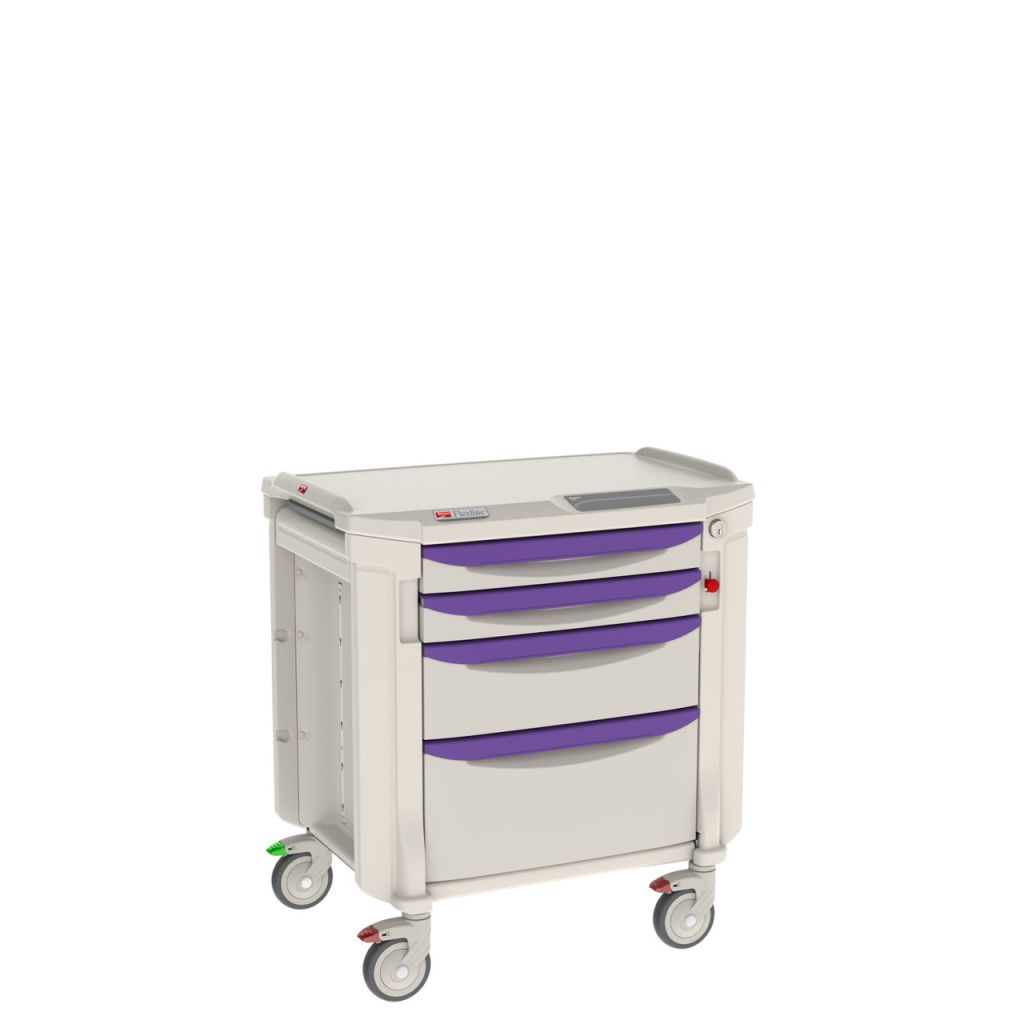
For crash carts, read our Lifeline crash carts page. For case carts, par-level exchange carts and sterile storage, see Metro healthcare storage and the Metro Supply Carts Configurator.
Mixed fleets are common: Lifeline for code carts, Flexline for anesthesia and procedure, Starsys for undercounter supply. Keeping drawer pulls, locks and accessories consistent across them simplifies training and restocking.
Flexline Specification Checklist
- Application: anesthesia, procedure, treatment, phlebotomy, isolation or medication
- Body width (standard or narrow) and height (36, 39, 42 or 45 inches)
- Drawer schedule that fills the drawer space exactly, with divider kits per drawer
- Lock level, and whether a narcotic drawer and access log are required
- Pull colour scheme across the fleet
- Accessories by side: sharps, gloves, waste, IV pole, monitor, keyboard, power
- Quantity per unit, delivery address and dock or elevator constraints
Shop Metro Flexline Carts & Accessories Online
Buy select items directly from our online store, or request a quote for volume, custom sizes and freight-rated orders.


Get a free quote
Tell us what you are storing, the room size and your timeline. A project specialist will follow up with layout options and pricing. Prefer to talk? Call (800) 326-4403.
Flexline Anesthesia & Procedure Cart FAQ
What is a Metro Flexline anesthesia cart?
How do I know my drawer layout will fit?
Can I add an electronic lock to any Flexline cart?
What is the difference between a procedure cart and an anesthesia cart?
Should I choose Flexline or Lifeline for a crash cart?
Can I get a quote online?
Do you confirm certifications and listings?
Design Your Flexline Cart Today
Build it in the Metro Medical Carts Configurator or talk it through with a specifier. Call (800) 326-4403 or request a quote online.