
Metro Totes, Bins, Dish Carts & MetroTrux
A buyer’s guide to Metro polypropylene totes (conductive, static-dissipative and natural), tote racks, clear shelf bins, dish dollies and tray carts, and MetroTrux polymer trucks. Then design and price the setup in the Metro Bins and Ware Handling configurators.
3
Tote materials: conductive, dissipative, natural
1–3
Bay mobile tote racks
5–12 in.
Plate sizes for dish dollies
2
Metro configurators
One Guide for the Small Containers and the Carts That Move Them
Shelving and carts get the attention in a storage project, but the containers on them decide how well a room actually works. A part or supply that sits in the right tote, on the right rack, at the right height gets picked quickly and counted accurately. One that sits loose on a shelf gets lost, damaged or reordered by mistake. Metro makes a family of containers and transport products for exactly this layer: polypropylene totes for electronics and parts, mobile tote racks, clear bins for supply rooms, dish and tray carts for food service, and MetroTrux polymer trucks for bulk linen and material.
This page puts them together because buyers usually shop them together. A search for a Metro polypropylene tote is often really a question about what will fit a shelf or rack that is already in the room, and whether the tote needs to protect electronics from static. We cover each product family, how to size it, and which Metro configurator to use.
We have supplied Metro equipment from Salt Lake City since 1997. To design and price, use the Metro Bins, Totes & Trays Configurator for containers and the Metro Ware Handling & Material Transport Configurator for tote racks, dish carts and trucks. Each one validates the build, totals the bill of materials and rates freight to your ZIP code.
Metro Polypropylene Totes: Sizes and Materials
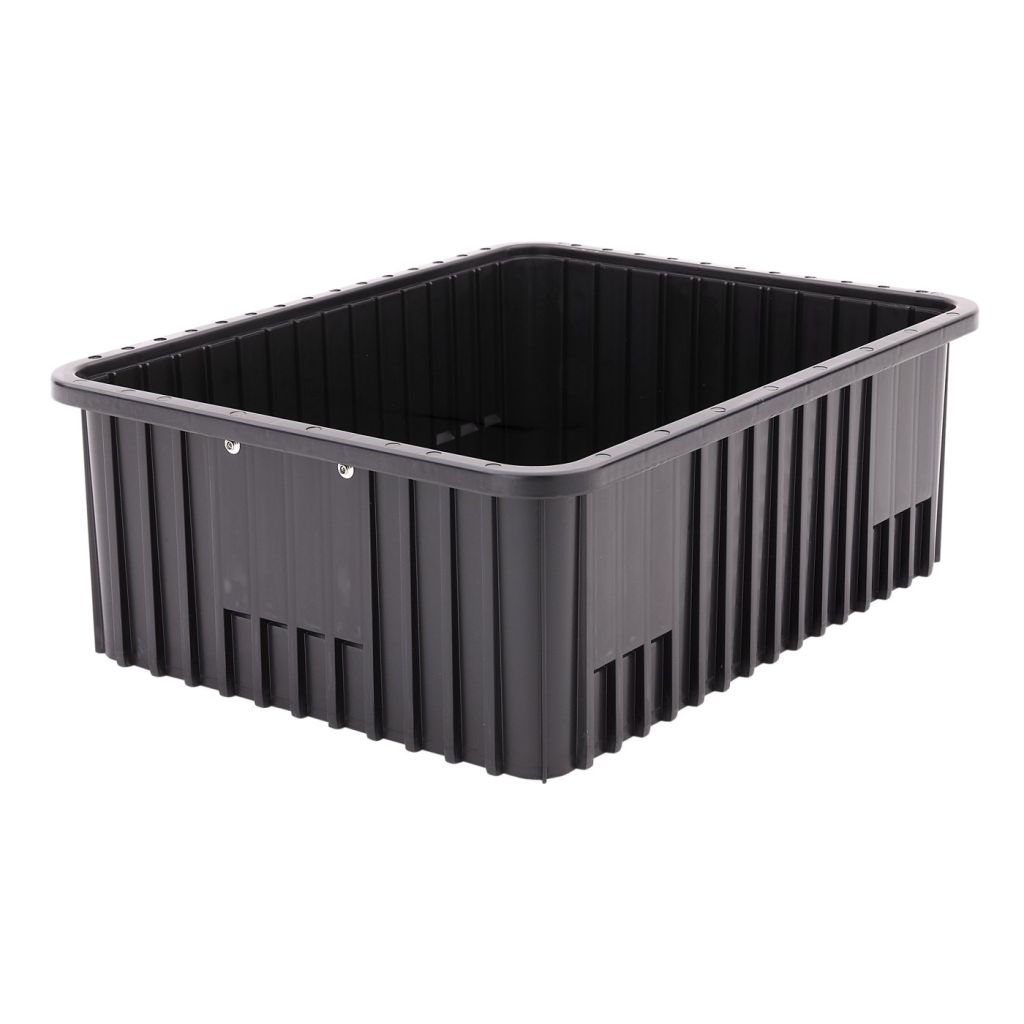
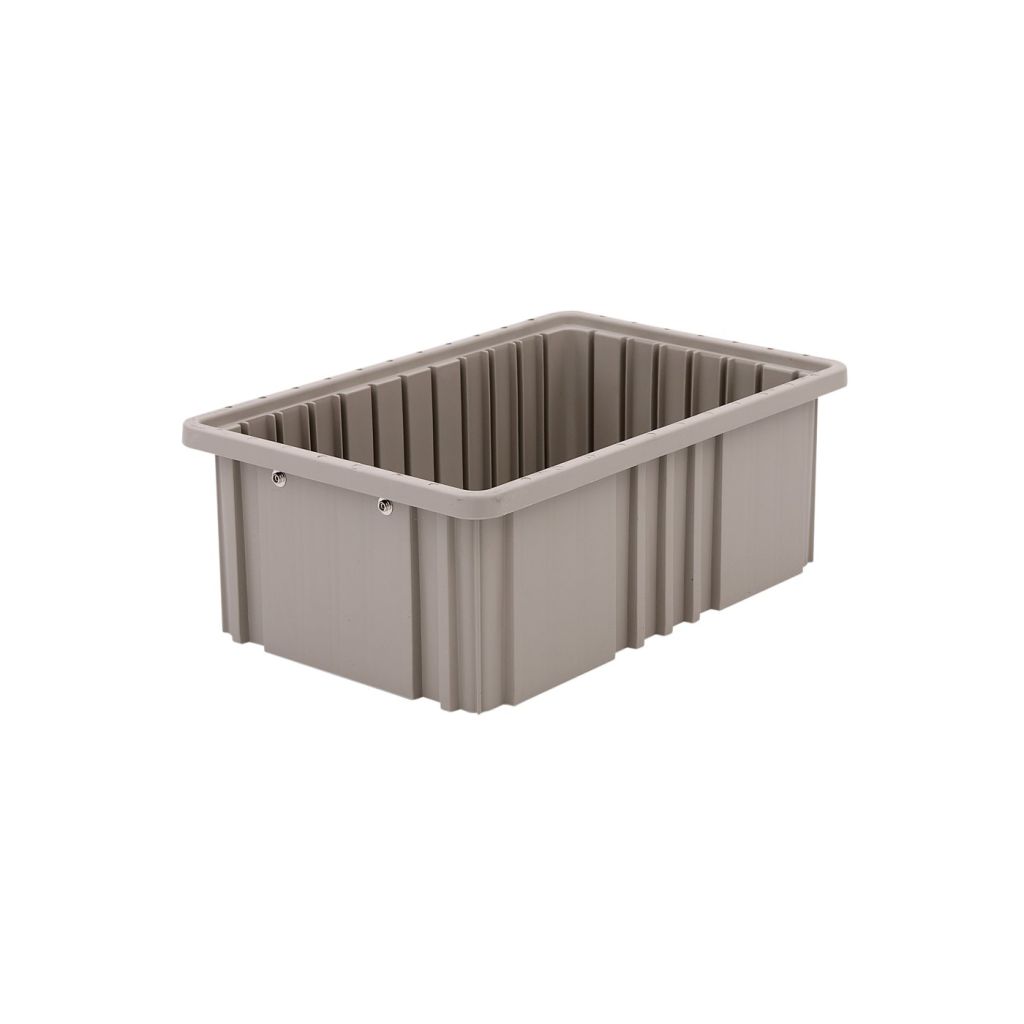
Metro’s TB9 series totes are ribbed polypropylene containers, the kind of tote that slides into tote racks, sits on shelves and stacks for transport. The model number tells you most of what you need. The material code at the end separates the three versions: CAS totes are black conductive polypropylene, BAS totes are blue static-dissipative polypropylene, and NAT totes are natural gray polypropylene with no ESD rating. The middle digits group the footprint and depth.
| Example model | Material | Listed size (L x W x H) | Typical use |
|---|---|---|---|
| TB91035CAS | Conductive, black | 8.25 x 10.875 x 3.5 in. | Small components, kits, trays inside larger totes |
| TB92060BAS | Static dissipative, blue | 16.5 x 10.875 x 6 in. | Boards and assemblies at ESD workstations |
| TB92060NAT | Natural polypropylene, gray | 16.5 x 10.875 x 6 in. | General parts, hardware, non-ESD supplies |
| TB93050CAS | Conductive, black | 22.5 x 17.5 x 5 in. | Larger assemblies, shipping between departments |
| TB93080CAS | Conductive, black | 22.5 x 17.5 x 8 in. | Deep loads of sensitive parts |
| TB95050BAS | Static dissipative, blue | 26.25 x 6.25 x 5 in. | Long, narrow items such as cables or rails |
Sizes above are from Metro’s product names; confirm the current spec sheet for the exact model before you plan shelf openings around a fraction of an inch. Many of these totes take dividers, and the same footprints repeat across materials, so a room can mix conductive totes for sensitive work with natural totes for everything else and still use one rack layout.
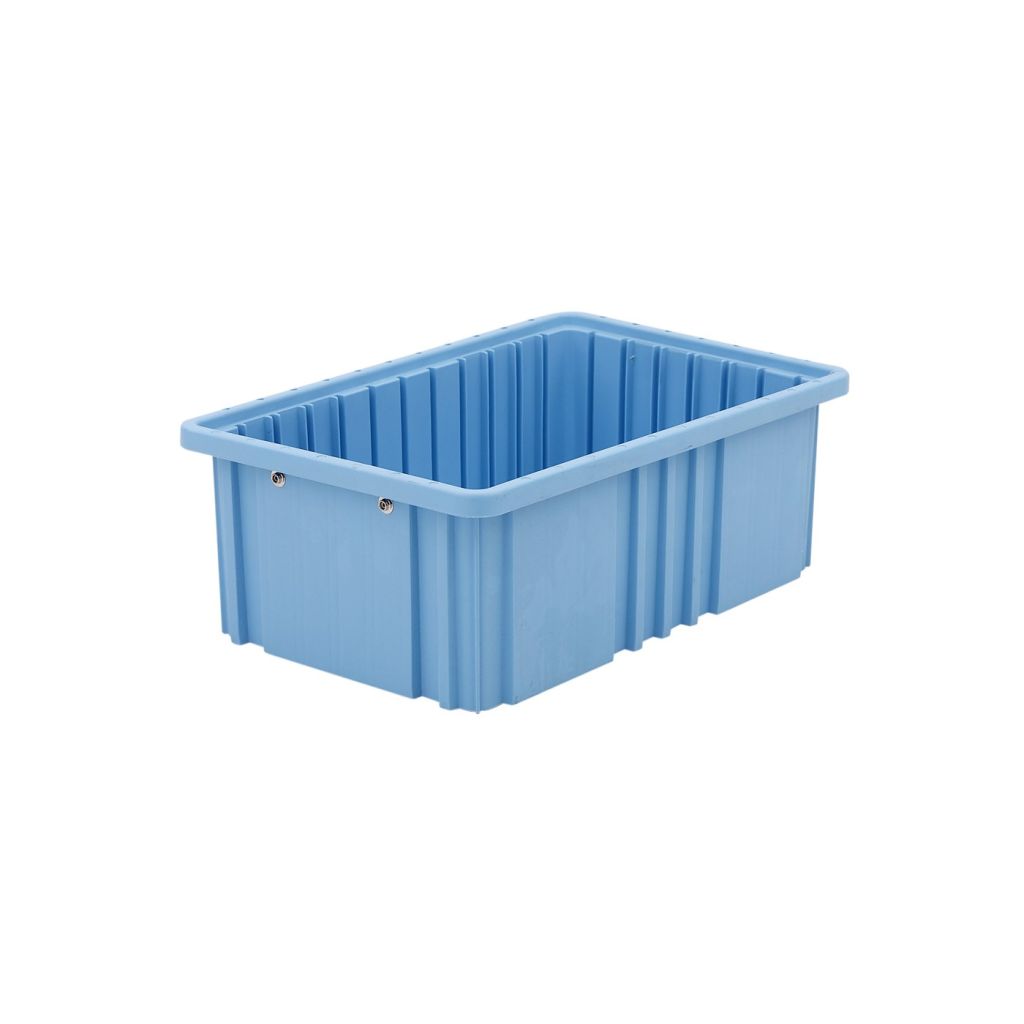 Static dissipative (BAS)Blue totes for controlled discharge.
 Long narrow tote26.25 inch tote for cables and rails.
 Clear hanging binFor louvered panels and grids.
Conductive vs Static-Dissipative vs Natural Totes
The most common question behind a search for a Metro conductive tote is which material a program actually needs. The short answer: conductive material lets charge flow away quickly, so it suits shielding and grounded handling of the most sensitive devices. Static-dissipative material lets charge bleed off more slowly and is widely used at ESD workstations where a sudden discharge would be its own risk. Natural polypropylene has no ESD rating and belongs outside the electrostatic protected area.
| Factor | Conductive (CAS, black) | Static dissipative (BAS, blue) | Natural (NAT, gray) |
|---|---|---|---|
| Charge behavior | Moves charge away quickly | Bleeds charge off in a controlled way | Not rated for ESD |
| Where it is used | Storing and moving sensitive devices, often closed or covered | Work in process at ESD benches and carts | Hardware, general parts, non-ESD supplies |
| Color cue | Black | Blue | Gray |
| Program note | Follow your ESD control plan | Follow your ESD control plan | Keep out of the protected area if your plan requires |
Your ESD program sets the rule
Material choice follows your facility’s ESD control plan and the resistance ranges it specifies. Metro publishes resistance data for each tote; confirm it against your plan, and remember a tote only protects parts when the shelving, cart and people handling it are grounded too.
For the shelving and carts that complete an ESD setup, see our Metro ESD shelving and carts page, which covers grounded wire shelving, ESD tray carts and the hardware that ties them to ground. Pairing static-dissipative totes with ungrounded chrome shelving is one of the most common gaps auditors find.
Metro Mobile Tote Racks

A tote rack holds totes on slides so each one pulls out like a drawer, and on casters the whole rack becomes a kitting or work-in-process cart. Metro’s PT series racks come as single, double and triple bays. From the product names, the PT1C single bay is about 22.6 inches wide, the PT2C double about 41.75 inches and the PT3C triple about 60.9 inches, all 26 inches deep and 68 inches tall. The suffix sets the casters: 5MP models use polyurethane casters and 5M models use resilient rubber.
The APT1C adjustable single-bay rack has a width that adjusts from roughly 20.6 to 29.4 inches, so one frame can be set for different tote footprints. Slides are bought separately (Metro’s S3C combination single slide is one option) and the racks ship without totes, which lets you match tote sizes and materials to the job.
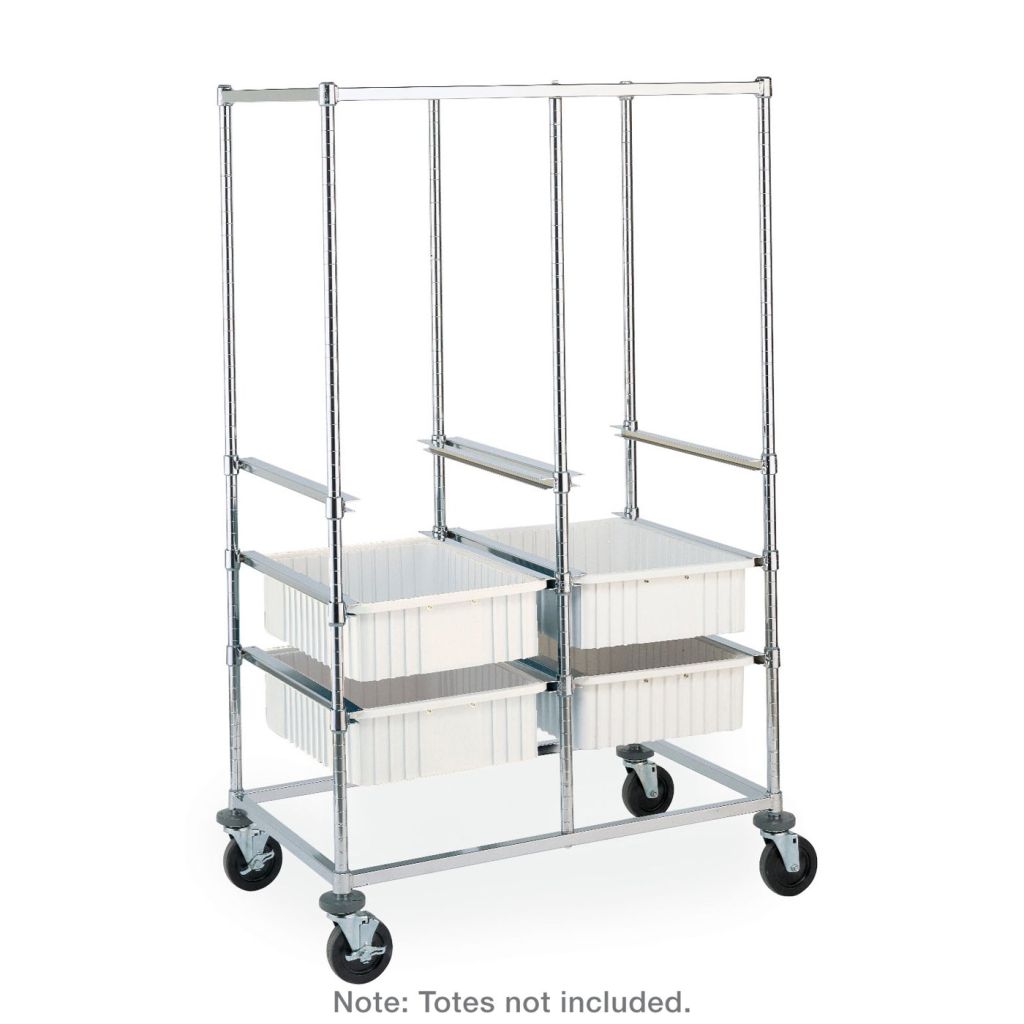 Double-bay rackTwo columns of totes on one mobile frame.
 Adjustable single bayWidth adjusts for different totes.
 Large stacking binClear bin for bulky supplies.
Polyurethane casters roll quietly on smooth floors and do not mark them, which suits labs, clinics and electronics assembly. Resilient rubber casters cushion loads over rougher floors and thresholds. If the rack serves an ESD area, ask about conductive caster options and drag chains, because a rack on non-conductive casters is not grounded through the floor.
Metro Clear Bins: Will It Fit My Shelf?

Metro’s MB3 series bins are clear plastic supply bins designed for shelving, louvered panels and grids. The clear body lets staff see contents and counts at a glance, which is why they are popular in hospital supply rooms, pharmacies and labs. There are three families. Nesting shelf bins (MB301xx) are long, low bins about 4 inches high made to sit on a shelf and nest when empty. Stacking and hanging supply bins (MB302xx) have a hanging lip for louvered panels and stack on shelves. Large stacking bins (MB3028x) hold bulky supplies.
The question we get most is whether a bin fits a given shelf. Work from the shelf depth first. A nesting shelf bin listed at 17.8 inches long fits an 18-inch-deep shelf; a 23.6-inch bin needs a 24-inch shelf. Then check height: subtract the shelf thickness from the opening and leave a finger gap above the bin so it slides out without lifting the bin above.
| Shelf depth | Nesting bin lengths that fit | Notes |
|---|---|---|
| 14 in. | 11.6 in. bins | Short bins for shallow shelves and carts |
| 18 in. | 11.6 or 17.8 in. bins | Most common supply-room depth |
| 24 in. | 11.6, 17.8 or 23.6 in. bins | Two short bins front to back, or one long bin |
Fits above are planning guidance from the listed bin lengths; shelf trim, posts and ledges can change the usable depth. Dividers sold for the nesting bins split them into smaller compartments, which suits small items such as syringes, connectors or fasteners. For bins from other manufacturers and in other materials, see our general storage bins page.
Metro Dish Dollies and Dish & Tray Carts
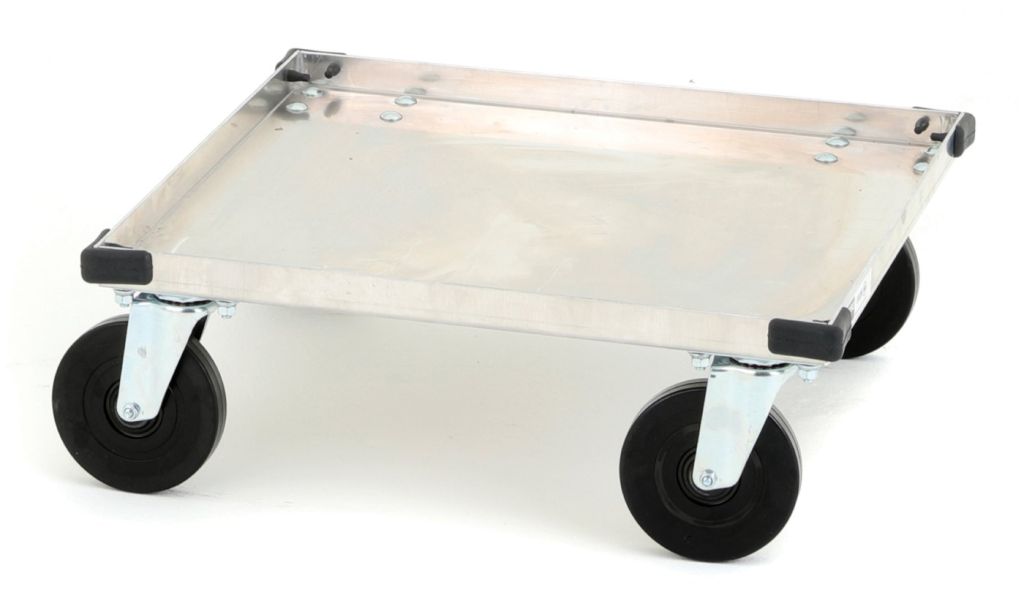
In food service, ware handling means moving plates, racks and trays between the dish room, storage and the line without breakage or extra lifting. Metro’s options cover the main jobs. A dish rack dolly such as the D2020N is a low wheeled base that carries a stack of standard dish racks, so washed ware moves in its rack instead of being restacked by hand. A handle (Metro lists the H2020C) makes it easier to steer.
A poker chip dish dolly holds stacks of plates upright in round columns. Metro makes PCD models for plates from 5 to 12 inches, with an adjustable PCD11A version and vinyl dust covers. The plates load straight from the dish machine and roll to the line.
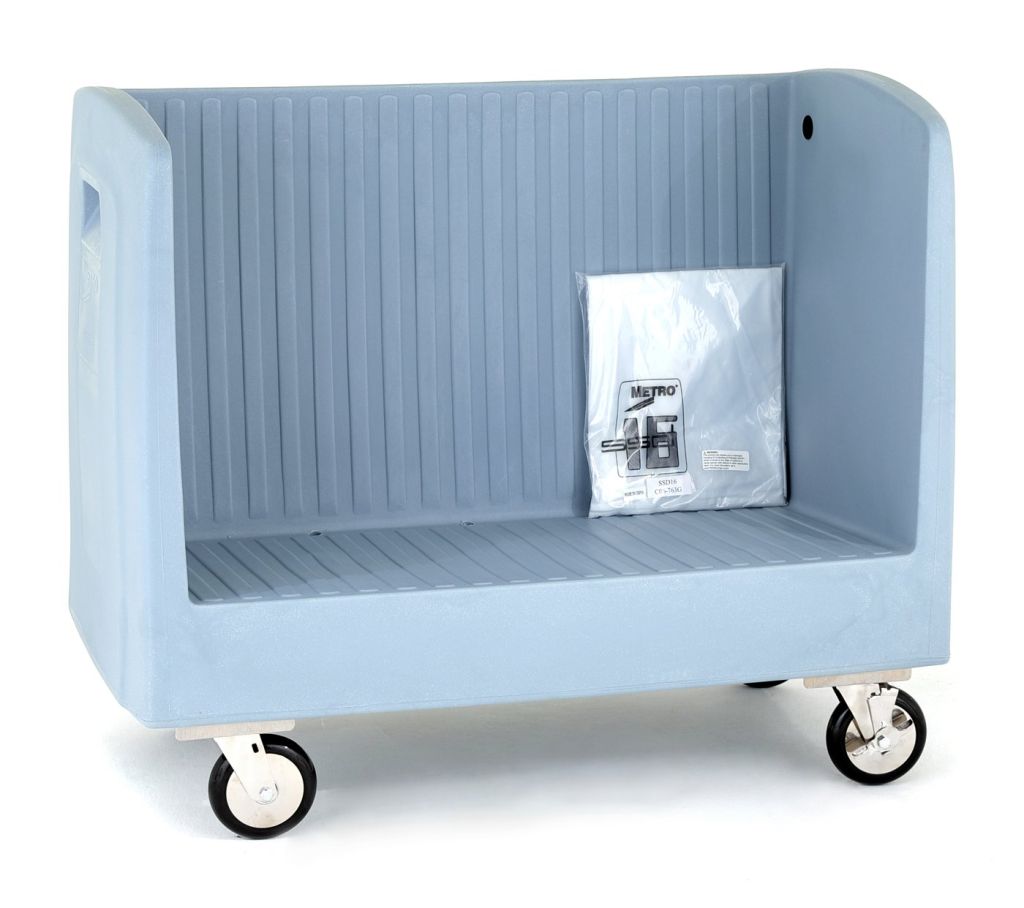
A side-load dish and tray cart such as the SSD16 is a polymer cart with dividers that hold plates and trays on edge, loaded from the side. It suits banquet, cafeteria and hospital tray service, and the polymer body tolerates washing and does not dent like steel.
Choose by what you move most. If ware stays in dish racks, a rack dolly is the simplest choice. If plates go straight to a line or pass, a poker chip dolly saves handling. If you move mixed plates and trays to banquet rooms, a tray cart with dividers protects them in transit.
 Poker chip dish dollyUpright plate columns, 5 to 12 inch plates.
MetroTrux Polymer Trucks
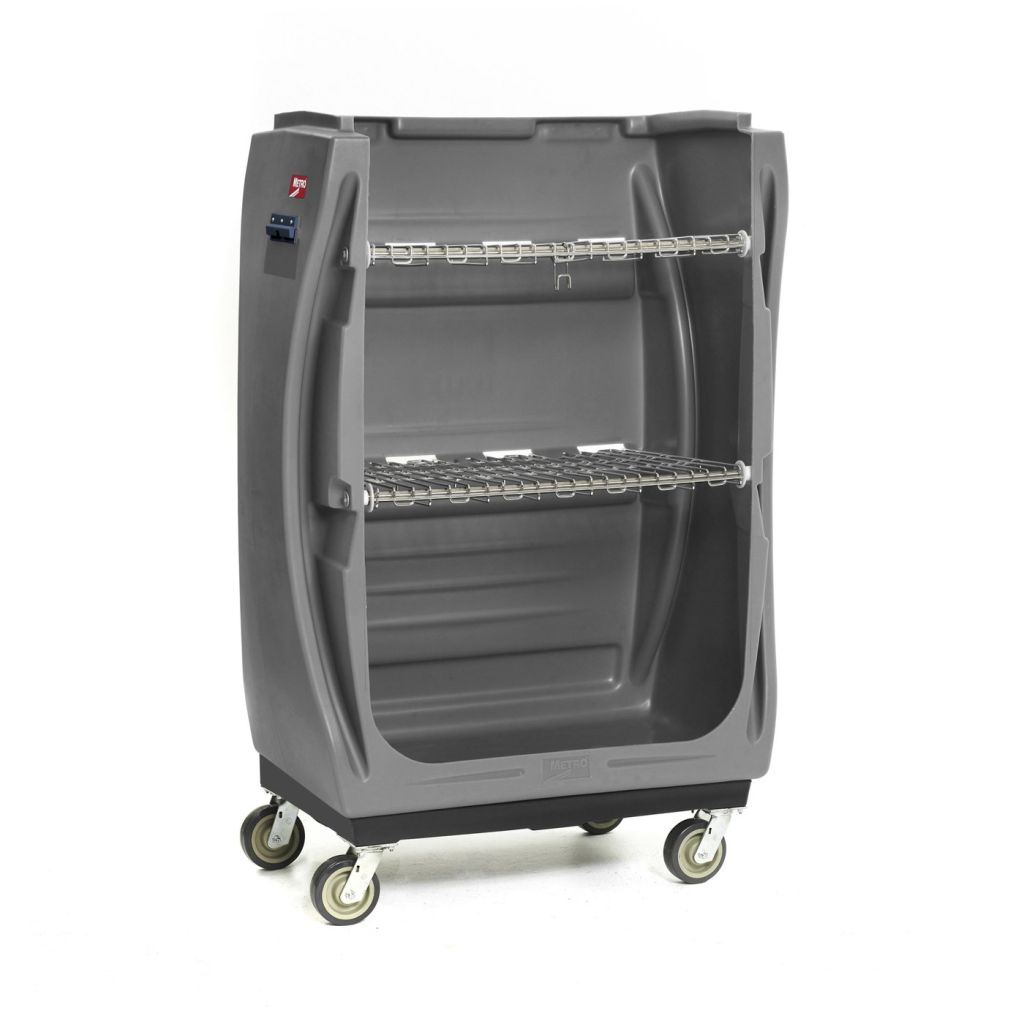
MetroTrux are rotationally molded polymer trucks for bulk linen, laundry and general material. Polymer bodies do not rust, resist dents and clean easily, which makes them common in hospitals, hotels and laundries. Metro’s line includes a convertible linen truck, which can be set up with internal shelves for clean linen distribution, a bulk linen truck with an open body for soiled or bulk loads, and a bulk security truck with a locking cover for items that must stay secure in transit.
A and B versions are listed for each body. They differ by configuration, so check the details of each model before ordering. Covers, caster options and capacities also vary by model; confirm the current spec sheet for the one you choose.
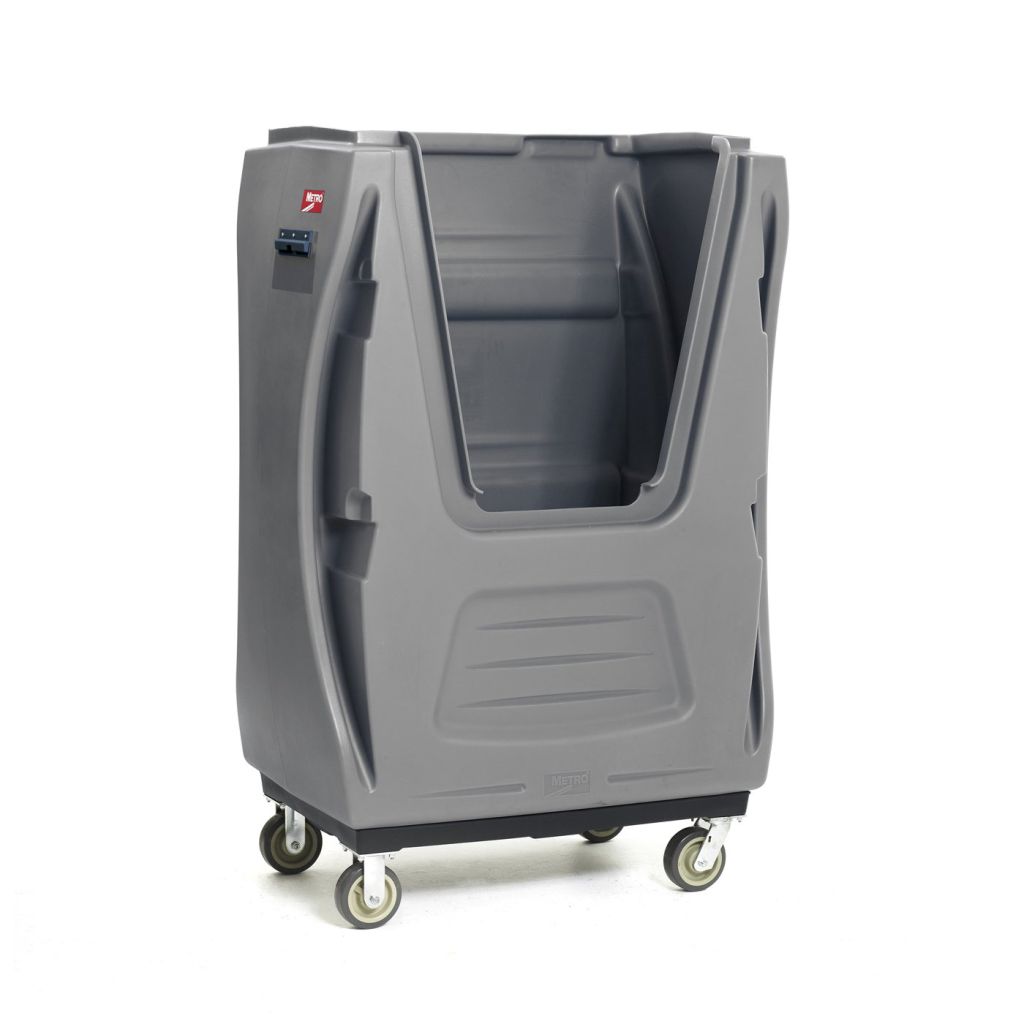 Bulk linen truckOpen body for soiled or bulk loads.
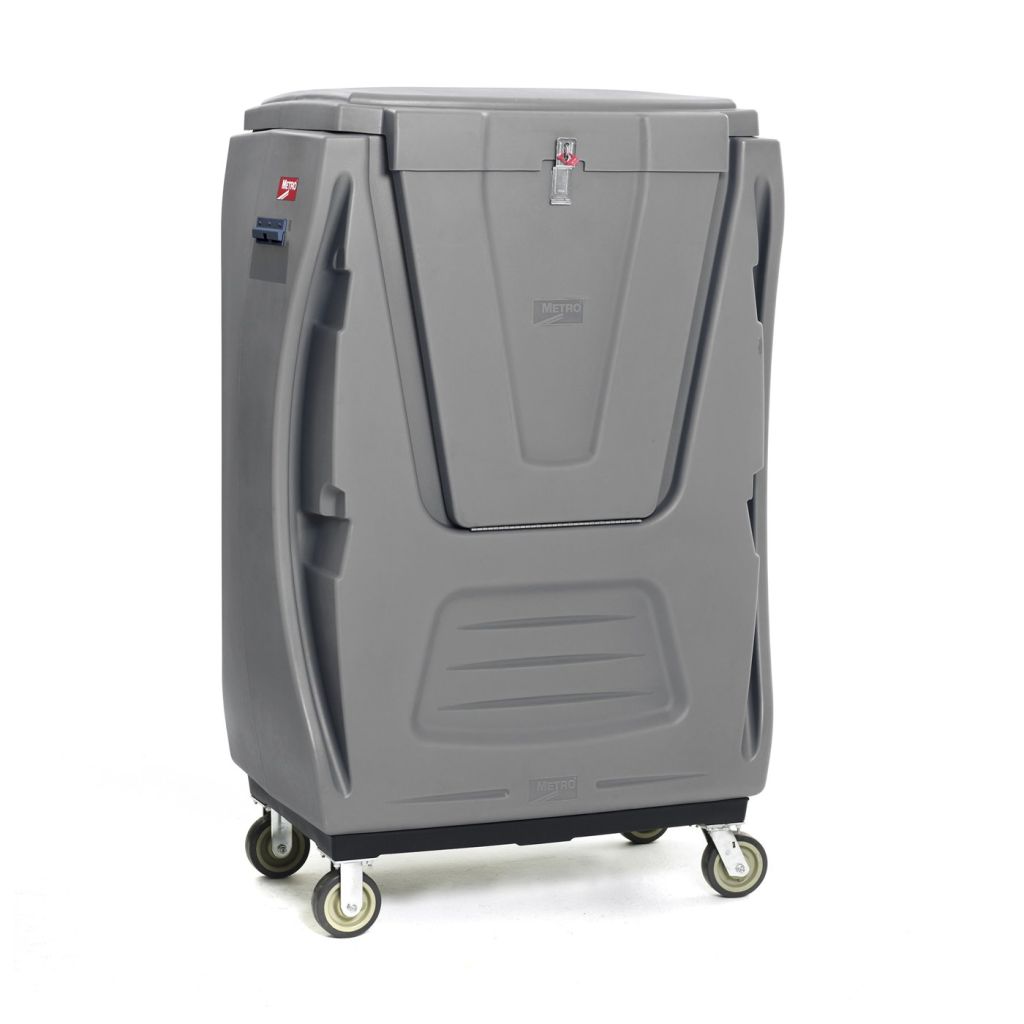 Bulk security truckLocking cover for secure transport.
Hospitals often run separate trucks for clean and soiled linen, with color or labeling that makes it obvious which is which. If trucks cross between buildings or travel through public corridors, the security version keeps contents covered and locked.
Planning Totes, Bins and Ware Handling
| Job | Usual Metro pick | Configurator |
|---|---|---|
| ESD work in process | Static-dissipative or conductive totes on a mobile tote rack | Bins, then Ware Handling |
| General parts kitting | Natural polypropylene totes on PT racks | Bins, then Ware Handling |
| Hospital or pharmacy supply room | Clear nesting and hanging bins on shelving | Bins |
| Dish room to line | Dish rack dolly or poker chip dish dolly | Ware Handling |
| Banquet or tray service | Side-load dish and tray cart | Ware Handling |
| Linen and bulk material | MetroTrux convertible, bulk or security truck | Ware Handling |
- List what goes into each container or cart and its weight
- Measure shelf depths and openings, or rack bays, before choosing tote or bin sizes
- Check your ESD control plan for the required tote material and grounding
- Confirm floor type and thresholds for caster choice
- Measure doors, elevators and corridors on the cart route
- Plan cleaning: polymer and polypropylene products tolerate washing, but follow the cleaner guidance on the spec sheet
Design & price it online: Metro Bins, Totes & Trays Configurator
Pick tote and bin models, quantities and dividers, and the configurator totals the order and rates freight to your ZIP. Save and share the quote with your team.
Design & Price It Online All Metro Configurators Call (800) 326-4403
Design & price it online: Metro Ware Handling & Material Transport Configurator
Configure tote racks, dish dollies, tray carts and MetroTrux trucks, and the configurator validates the build, totals it and rates freight to your dock.
Design & Price It Online All Metro Configurators Call (800) 326-4403
Common Mistakes to Avoid
- Buying blue totes for an ungrounded rack. A static-dissipative tote cannot drain charge if nothing it touches is grounded.
- Sizing bins to the shelf nominal. Posts, trim and ledges reduce usable depth. Measure the real opening.
- Ordering racks without slides. Tote racks ship without totes and slides are separate items; add both to the quote.
- Choosing rubber casters for an ESD floor. Ask for conductive casters or a drag chain where grounding is required.
- Mixing clean and soiled linen trucks. Label or color-code MetroTrux trucks by use.
Lead times vary by product and quantity. Common tote and bin sizes often ship quickly, while large orders and specific rack configurations may take longer, so ask for current lead times with your quote. Call (800) 326-4403 if you want a specialist to check sizes against your shelving before you order.
Get a free quote
Tell us what you are storing, the room size and your timeline. A project specialist will follow up with layout options and pricing. Prefer to talk? Call (800) 326-4403.
Metro Totes, Bins & Ware Handling FAQ
What is a Metro polypropylene tote?
What is the difference between conductive and static-dissipative totes?
Do Metro tote racks come with totes?
Which Metro bins fit an 18 inch deep shelf?
What is a poker chip dish dolly?
What is MetroTrux?
Can I price totes, bins and carts online?
Plan Your Totes, Bins and Carts
Design it in the Metro configurators or ask a specialist to match totes and bins to your shelving. Call (800) 326-4403 or request a quote online.